Down, The App Formerly Known As Bang With Friends, Relaunches On The iPhone

down

Following a trademark dispute with Zynga, the team behind the hookup app Bang With Friends rebranded as Down, adjusted their approach, and launched on Android. Now those changes have come to iOS as well, with an update that was quietly released earlier this week.

I never tried Bang With Friends (that’s my story and I’m sticking to it), but in addition to a revamped user interface, it sounds like the new Down app differs in two big ways.

First, it’s no longer just focused on, well, banging. Instead, users are asked to distinguish between people they want to date and those they just want to hook up with – they swipe up to “get date”, swipe down to “get down”, and swipe left to skip. (People are only notified of your response if they say they’re interested too.)

In addition, Down has expanded its potential matches, so it doesn’t just show you Facebook friends but also friends of friends. That doesn’t just expand the pool, but may also make the “get down” dynamic feel a little less awkward. (I felt pretty mortified when I opened the app for the first time and was immediately asked about my interest in various Facebook friends.) Plus, you can now search through friends and friends of friends by name.

Founder Colin Hodge told me via email that many of the changes came “directly from our female users.” For example, here’s how he explained he expansion to friends of friends (for readability, I’ve tweaked some of the spacing and capitalization):

One of the things women told us they loved in the first version is that it feels safer than other dating apps because you already know the other person is real and you’re connected to them (you are friends on Facebook). We took this to heart when thinking about the best way to expand everyone’s dating pool. Now many users have thousands of potential dates or hookups because we expanded it to people your friends know. By looking at who your Facebook friends are connected to, we can show you real people who likely have lots in common with you – and at a minimum, you run in the same circles.

The company says that the new version on Android has already encouraged repeat usage of the app, with more than 300 percent growth in two-day retention and 200 percent growth in one-day retention.

You can read more about the apps and download them here.

Gillmor Gang: Dreamforce 2013 Live

gillmor-gang-test-pattern_excerpt

The Gillmor Gang – Robert Scoble, Adam Bosworth, John Taschek, John Rymer, and Steve Gillmor – gathered at Dreamforce 2013 to celebrate what @scobleizer called the maturing of mobile. On the Salesforce Live TV set, it was hard to hear each other over the bustle and roar of the show floor. But not so hard to miss the excitement as Salesforce rolled out the Salesforce1 platform.

The Gang – a collection of Salesforce employees (Taschek and Gillmor), analyst (Forrester’s Rymer), industry veteran who led the boot-up of XML and Web Services (Bosworth), and Rackspace’s Chief Scobleizer Officer – spent a too-short 24 minutes marveling at the speed with which mobile is transforming the tech industry and our lives. Normally, I don’t talk much about what we’re doing at Salesforce, but now that it’s shipping it’s game on.

@stevegillmor, @adambosworth, @scobleizer, @johnrymer, @jtaschek

The Gillmor Gang is produced and directed by Tina Chase Gillmor @tinagillmor

The Gillmor Gang on Facebook

NSA Has 50,000 ‘Digital Sleeper Agents’ Via Computer Malware, Says Latest Snowden Leak

nsa-verizon-phone-records.jpeg1-1280x960

Sleeper agents are among the most sinister spy assets: they lie in wait, wolves in sheep’s clothing, and then deliver a critical blow when activated. The NSA has 50,000 of those waiting for the literal push of a button, according to the latest batch of leaked Snowden documents, as seen by Dutch daily evening newspaper NRC. But these aren’t people, like Keri Russel and Matthew Rhys in The Americans – these are computers, infected with malware and untroubled by conscience or the risk of going native.

The NSA reportedly infected 50,000 computer networks worldwide with malicious software with the sole aim of harvesting sensitive information it wasn’t privy to, which is basically what you’d call textbook spy work in the digital age, from an agency tasked with spying. That’s not to excuse or dismiss the significance of this revelation, but we’ve heard from the Washington Post previously that the NSA was working on this sort of thing and that at least 20,000 computers had been infected by the program as of 2008. So to hear from Snowden documents via the NRC that it’s now climbed to 50,000 is hardly surprising.

New details brought to light indicate that operations from its so-called “Computer Networks Exploitation” program are active around the world, and can remain active for many years without being detected in some parts of the world like Venezuela and Brazil. All the malware can we watched and controlled remotely, and turned on and off “with a single push of a button.” A New York Times report published yesterday also asserts that the NSA has been pushing to stretch its surveillance powers even further, with the aim of catching up to the spread and reach of digital technology and online communications.

The truly amazing thing about this is just how pedestrian the NSA’s efforts are – according to NRC, they’re essentially running the same kind of phishing scams with false email requests that you’ll see from any other purveyor of malicious software. As an example, NRC points to how the British GCHQ used false LinkedIn pages to lure and infect Belgacom network employees. Just one more good reason to never click on anything sent from anyone ever.

The ongoing NSA debacle is like a Breugel painting, with more and more detail emerging every time you look at it anew. Yahoo and Google’s networks were apparently compromised in a similar fashion, documents revealed in late October, and with up to 200,000 documents in total potentially taken by Snowden and shared with reporters, it’s unlikely we’re anywhere near seeing the whole picture at this point.

The NSA declined to comment on this story or the original report.

Couric Get Would Mean Yet Another Chase Of The Online Video Carrot For Yahoo

yahoo-couric

Yahoo is reportedly going to make its Katie Couric-hosted talk show announcement on Monday, according to a new report from AllThingsD’s Kara Swisher, supported by an earlier article from the NYT. Swisher is known for having an inside track on Yahoo information, and previously reported that a partnership between the two was in the works. This would mark the second high-profile news media talent get for Yahoo, after it picked up longtime NYT tech columnist David Pogue in October.

Until now, Yahoo under CEO Marissa Mayer has seemed primarily focused on product, with a sweeping revamp of the Internet pioneer’s mobile apps and web-based properties, but content and a push for video content in particular seems to be the new priority for Mayer, alongside ongoing product building efforts. As for Couric, she’s currently hosting Katie on ABC, after establishing her success as an anchor personality on NBC’s Today Show. Couric’s show is set for another season, but recent reports suggest she’s ready to move on to something else once the ABC contract is up come summer, if ratings don’t improve.

There’s a lot of competition to be the broadcast giant of online web video right now, with efforts ongoing at Yahoo competitor AOL (disclaimer: AOL owns TechCrunch) to build on its AOL On live video platform. Recently, AOL started experimenting with original programming via its AOL On Originals series, which to some extent puts it in competition with Netflix and Amazon, too.

AOL Originals include a million dollar content deal with Heidi Klum that featured her dressing up as an old lady once and pretty much nothing else noteworthy, and Nicole Ritchie reminding us why she should never have been famous to begin with. Great gets AOL. Just hanging out at the pseudo celebrity unemployment center pays off, I guess.

The web series is not a new thing, but major content portals getting into producing them in-house is a relatively recent strategy. It’s attractive because video presents tremendous opportunity for advertising that static web pages and digital display ads just can’t match, in terms of reach and the ability to capture audience focus. If you’re a content player on the web currently, you have to be looking at video, and it’s especially attractive because it’s a problem no one has really come up with a great solution for just yet.

AOL Live, for instance, has run into a snag as its chief as the company recently departed, and the debut of its first series was put on hold. HuffPost Live, the other big AOL-owned live video property, recently had a broadcast cross-publishing deal put on hold, and the closure of its LA studio earlier this year resulted in layoffs as operations were redirected to New York.

People have been chasing the online video carrot for years now, but Yahoo looks to be tying its hopes to attracting big name broadcast talent for original programming. It’s an interesting bid that could become even more interesting paired with Yahoo’s renewed focus on mobile, but I’m still skeptical it will do much to really move the needle on original online programming. Still, it’s a start and Yahoo doesn’t seem to be slowing down the pace on product and content news.

Patent Application For Touch ID Shows How Apple Secures Fingerprint Information On iPhone 5s

TOuch ID

A new patent application published by the USPTO (via MacRumors) shows some more detail around Apple’s use of Touch ID and the fingerprint sensor in the iPhone 5s. Apple has been mostly quiet about the specifics of how the tech works, while generally asserting that the fingerprint information never goes to a server, and only remains on the phone itself in a “secure enclave” which isn’t accessible by the rest of the system or third-party devs.

The patent describes a system that not only siloes data on the Touch ID “enclave” section of the A7 processor, but that also encrypts the fingerprint maps registered on the device to make it that much more difficult for any thieves to even attempt to pull the data off in any kind of usable form. The enclave is a one-way street, too: the system can check new fingerprints against the stored ones, but there’s no way to check or call up the stored fingerprints at all for external examination once they’re registered.

Otherwise, the system works likely as you’d expect it to, checking against stored profiles for possible matches (and using stored lower resolution templates based on variables like different angles to make it more likely to correctly ID your finger). But another patent also published this week shows a breakdown of all the components within the Touch ID hardware, and explains how the actual sensor hardware can be hidden behind an opaque lens that’s been printed with an “ink assembly.” It’s likely this needs to be uniform to read correctly, however, as Apple notably left off its small rounded square icon on the 5s home button, after that has graced each since the iPhone’s initial introduction.

These patents provide a little more clarity on what exactly is going on when you rest your finger or thumb on that 5s home screen and have it magically unlock, and it’s reassuring to see just how much thought Apple has put into making sure the info truly is secure.

Let’s Kill The Aid Industry

un-aid

Long have I nursed a healthy contempt for the aid industry. As I spent much of a decade wandering around the planet, taking local public transit through poor and/or unstable nations1, I kept encountering aid workers in their flashy white branded 4x4s, and was almost invariably resoundingly unimpressed. As I’ve written elsewhere:

Most development aid is actively harmful. Selling goods for less than production cost is dumping, a business practice condemned as predatory; aid is just dumping with the price set to zero.

The horror stories are legion. Donated clothes decimate local textile industries. Shells of buildings, silted dams, and unfinished “pilot projects” dot the African landscape. Young white people flock to expensive hotels for useless “conferences” that amount to paid exotic vacations. Peace Corps yahoos are flown out at great cost to teach Western hairdressing […] But aid’s worst consequence is the continuation, and amplification, of the attitude that change must always come from outside. My friend Gavin Chait calls it “the recolonization of Africa through aid.”

To be clear, I’m criticizing the $120 billion per year spent on development aid, not disaster aid, which is critically important and saves many lives; furthermore, many medical crises, such as HIV and malaria in sub-Saharan Africa, are essentially ongoing slow-motion disasters. These folks:


(photo credit: yours truly, Port-au-Prince, Haiti, 2007)

are absolutely on the side of the angels.

I believe we in the rich West have both a moral obligation and a practical incentive to help the world’s desperately poor. (After all, you can’t trade with someone who’s broke.) I’m hardly the first to criticize the development-aid industry, and observe that, even more than most industries, it is a hive of waste and bureaucracy, largely devoted to its own self-perpetuation. I accept that some individual aid projects are beneficial, and a few in the industry have of late been trying to innovate; in particular, moving towards simply giving needy recipients cash, in a few specific cases.

That’s a start. But it’s time to move faster towards finishing the job: to wit, eliminating aid as we know it, in favor of simply sending money directly to the poor and letting them spend it as they will. It’s both a moral imperative and the most efficient possible use of aid money.

Again, I’m far from the first to make this argument. But what I don’t see others noting is that we’re rapidly approaching the time when technology finally makes this possible on a massive scale.

Run the numbers. An estimated 2.4 billion people live on less than US$2/day. If we simply sent the today’s aid money to them directly, a family of six would receive an extra $300/year – a huge amount, relative to their baseline of extreme poverty. So why wouldn’t we? If both direct transfers and aid-as-we-know-it are viable options, then the latter essentially consists of taking money away from those who need it the most and giving it to the unelected aid industry instead, to spend on their alleged behalf. How can that possibly be justified?

The only answers boil down to patronizing neo-colonialism: “those weak/ignorant/stupid poor people don’t know how to spend money, so we have to spend it for them.” It’s a distressingly popular argument. Fortunately, recent evidence – including, in particular, an MIT study in western Kenya (PDF) – strongly indicates that this is not the case:

Transfers allow poor households to build assets … Transfers reduce hunger … Transfers do not increase spending on alcohol and tobacco … Transfers increase investment in and revenue from livestock and small businesses … Transfers increase psychological well-being of recipients and their families … We ?nd suggestive evidence that cash transfers reduce domestic violence and increase female empowerment in both recipient households and other households in the same village.

I think even most aid workers would agree, if pressed, that cash transfers to the people who (by definition) need money above all else are vastly preferable to haphazard aid projects, which may or may not help, and/or supporting corrupt governments / bureaucratic multilateral institutions. But can we actually make that happen? Sure, it may work in a carefully designed study in a single small village in Kenya, but the $128 billion question is – as it is so often these days – how does this scale?

Actually it’s already scaling, on a national level. Brazil’s Bolsa Familia is a much-lauded direct-cash-transfer program which reaches an estimated 46 million. Earlier this year India launched a direct-transfer program tied to its Unique ID biometric identification scheme; hundreds of millions have already been registered. If these two famously fractious nations can implement direct cash transfers, then why can’t that extend to international aid?

In many places the tools are already in place. All you’d really need, technically, is a mobile banking network – Kenya’s M-Pesa is the most famous and most successful example, but there are a myriad of others around the world – combined with an international payment processor like Xoom or (soon enough, I expect) Stripe.

I suppose you’d want to add biometric identification if you were worried about widespread fraud, eg with something like a one-time Touch ID registration at an M-Pesa booth. But for the most part, all we really need to do is follow mobile phones as they metastasize around the world into the hands of even the poorest people, and extend the reach of mobile banking in nations where it’s not yet as widespread as M-Pesa is in Kenya.

Let me address a few possible objections:

  • Remember, we’re talking about $120 billion a year in total aid; relative to that sum, the setup and maintenance costs for direct transfers would not be at all prohibitive.
  • Should the transfers be conditional (eg only go to families who keep their children in school) or unconditional? This is an issue about which reasonable people can disagree, but I side with the unconditional camp, because the differences in outcome seem fairly minimal, and unconditional transfers will be much easier to scale.
  • It’s true that we’d be eliminating the infrastructure projects built by aid – but if that same amount of money started bubbling up from the poor, rather than trickling down from the rich, communities and governments would be able finance those themselves. (I could also be convinced that replacing aid to NGOs and governments with direct cash transfers, but leaving eg World Bank contributions alone, would be a good first step.)
  • Yes, recipients’ governments would be able to tax this money – but there would be fewer layers of corruption and middlemen than exist now in most poor countries, and direct cash transfers would be far more transparent. Donors could credibly threaten to turn off the money tap if too much was taxed and wasted. Also, governments taxing income is no bad thing, as long as they are somewhat accountable to their populace…and being reliant on money which actually comes from their citizens, rather than directly from foreign governments, would drastically increase that accountability.
  • What’s more, this would also improve people’s opinions of the rich world; instead of citizens seeing Western money propping up their often-corrupt governments, that money would come directly to them.
  • Biometric identification of recipients, and master lists of accounts, are worrying potential surveillance-state tools, but this can be mitigated with the right technology (eg, off the top of my head, hashing fingerprints with passwords and storing those hashes rather than actual fingerprints.)
  • To forestall potential local-currency hyperinflation (I’m still scarred by witnessing prices double in a few weeks during my last stint in Zimbabwe) I’d be inclined to investigate the possibility of transferring money, and maintaining accounts in, foreign/hard currency. Or, OK, fine, true believers, maybe someday Bitcoin or the like, but not until it settles down.
  • Of course this change would be detrimental to some people, not least aid workers. The question is whether it would be a significant benefit for the world as a whole.

Software is eating the world; the technological mantra of our age. I for one am in favor of it eating that white elephant called the aid industry, as soon as possible –

– and while we’re at it, let’s take a real, hard, serious look at implementing an unconditional basic income scheme in the West, too. Efficiency – and moral obligation – may not begin at home…but let’s hope it returns here eventually.

Image credit: Wikimedia.

1 I have ridden battered taxis, creaking colonial-era trains, overcrowded minibuses, and pickup trucks laden with livestock through Albania, Colombia, the Congo, Ethiopia, Guatemala, Haiti, Mali, Myanmar, Papua New Guinea, Rwanda, Tibet, and Zimbabwe, to name a few nations in no particular order.


Gift Guide: For The Tech-Happy Fashionista

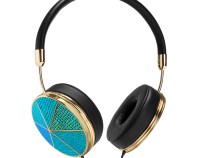
FRENDS_TAYLOR_ MINKOFF 1

The holidays truly are the most magical time of the year. The twinkly lights, the spiked eggnog… the designer collaborations on your favorite tech products. It warms the heart.

For those who are shopping for the style-savvy technophiles in their lives – or those who just want to shop for themselves, no judgment – here’s a look at a few products that fit the bill. Note that this list eschews cute iPhone cases, because there actually are just too many of them to count. That could take up its own list and then some.

Clare Vivier for Apple Laptop Case ($199.95-$219.95)

There are a lot of rad laptop and iPad cases out there. Very few are a collaboration between an established handbag designer and Apple, though. According to WWD, Apple approached Vivier two years ago with the idea for a laptop case partnership, and the results are truly good. They’re available three sizes (11″, 13″, and 15″) in a black basketweave, cobalt, and a cement grey – those last two made a bit more festive with pops of bright red. If you’re one of those who likes a full suite of Apple products, think of this as a fashiony extension of that same aesthetic.

They’re available in select Apple stores in NYC (SoHo, Upper West Side, 5th Ave), Palo Alto (Stanford, Palo Alto), Santa Clara (Valley Fair), San Francisco, Los Angeles (Third Street Promonade), Chicago (North Michigan Ave), Toronto (Eaton Center), and Boston (Boylston). They just hit retail stores a few days ago, so fly, my turtledoves! Fly!

Rebecca Minkoff x FRENDS With Benefits Headphone Caps ($249)

Also in the Apple Store right now (what? They have good taste): Rebecca Minkoff teamed up with the headphone maker Frends on a new collection of changeable headphone caps called “FRENDS With Benefits,” and they make sweet, sweet shiny aquamarine hologram embossed leather music together. You heard us right. Frends headphones were already ridiculously pretty – see their rose gold and “oil slick” versions – and these take that to the next level. Black or gold headphones plus the Rebecca Minkoff caps come in at $249 and are available on Nordstrom.com, Apple.com, or select Nordstrom stores.

Jawbone MINI Jambox ($179.99)

Goddammit, Jawbone. You sexed up your ads and had Juergen Teller shoot them, and I fell for it hook, line, and sinker. It’s like the time that Mr. Teller shot the Marc Jacobs Daisy print ads, and I bought the perfume without even smelling it. It was all right, and mostly I wore it out of guilt for having spent money on it. Such is the power of the media, ladies and gentlemen.

Anyway, the Jawbone MINI Jambox is pretty sweet, regardless of its new fashion cred. And, handily, purse-sized.

Bow & Drape ($UpToYou.00)

A gift from Bow & Drape, the fashion startup that allows women to create their own custom clothing and accessories, could go one of two ways. If your beloved (friend, flame, or otherwise) is the DIY sort, a gift card would let her play fashion designer and create her own looks. If you’re feeling brave, go ahead and make something just for her, be that a cocktail dress ($278), a blinged out sweatshirt ($68), or a 3D printed belt ($38-$98).

The AUUG iPhone Grip And App Turns Your Body Into A Musical Instrument

auug

Anything that encourages people to stop hunching over their iPhones like a tech-literate Mr. Burns is a good thing–especially when it also looks cool and makes fun noises. The AUUG Motion Synth, a grip that attaches to your iPhone or iPod touch and creates sound by tracking your movements through its app, was designed for electronic musicians, but I can see other people using it, like dancers, artists or music teachers looking for an engaging way to teach kids music scales. It recently launched on Kickstarter and is scheduled to start shipping in April if it reaches its fundraising goal.

The AUUG platform, which consists of an aluminum grip with an elastic strap, app and cloud-based platform, can wirelessly control software on a PC or non-wireless music hardware with a MIDI cable. It was developed at product engineering studio SGW Designworks by a team led by neuroscientist Joshua Young, who wanted to release electronic musicians from their laptops and give them a more expressive way of creating sounds and connecting with audiences.

The AUUG app doesn’t product its own sounds, but instead gives users a wide array of options by converting motion data from their iPhones or iPod Touches into signals that are then transferred to other sound apps or external devices. Its performance screen has 8 buttons that line-up with the AUUG grip’s overlay and let musicians play diatonic scales like C Major. Once the AUUG launches, users will be able to connect at www.auug.com to share app presets or setup ideas in an online forum.

More information and to see samples made by electronic musicians with AUUG, check out its Kickstarter page or Web site.

Coursera Adds Another $20M To Its Already Massive Series B

Online education

Back in July, Coursera announced a $43 million series B. Now the round has grown to an even more impressive $63 million with the addition of funding from three undisclosed university partners.

The education startup told AllThingsD that the delay was due to the new investors’ longer due diligence process. The round also includes additional funding from existing investors GSV Capital and Learn Capital.

Coursera has now raised a total of $85 million to fuel its ambitious mission of offering Ivy League-caliber education online for free. The startup competes with other MOOCs (massive open online courses) companies like Udacity and EdX. Udacity recently launched an comprehensive degree track program meant to compete with a much more expensive online master’s program in data science from UC Berkeley and 2U, while EdX partnered with Google to launch MOOC.org, which will allow teachers and businesses to create their own digital courses.

In addition to its VC funding, Coursera’s competitive advantages include its sheer size (it currently has 5.5 million students signed up for classes from 100 institutions) and its Signature Track program, which lets students pay for verified certificates so they can prove that they have completed one of Coursera’s online classes. A verified certificate obviously does not have the same cachet as a university degree, but Coursera’s agreement with the American Council on Education (ACE) to evaluate a subset of courses to see if students can use them to qualify for credits toward a degree is an important step as the company seeks to radically redefine higher education.

Image source

Phabulous

Phabulous

Straddling the line between a smartphone and a tablet also means having to deal with inherent trade-offs that come with these larger screened devices. If those compromises seem minor to you, then the Nokia Lumia 1520 should definitely be on your shortlist.


Deezer Will Launch In The U.S. Next Year And Fight Head-To-Head With Music Streaming Giants

3605234342_1f967cb39a_o

Already available in hundreds of countries, French startup Deezer finally announced that the music streaming service will become available to American users in 2014.

“The launch date is not final yet. But 2014 will be an American year for us,” co-founder and CTO Daniel Marhely told the news agency AFP.

Yet, the company has voluntarily avoided entering the U.S. market, stating that there is too much competition – other countries, such as Brazil or Germany, present bigger opportunities for Deezer. But it’s all about to change.

The U.S. remains by far the largest music market in the world, and it’s an unavoidable step for most music startups. For example, one year after its American launch, Spotify reported one million paid subscribers in the country alone. Recently, Spotify and Deezer respectively announced 6 and 5 million paid subscribers.

As the Rdio layoffs have told us, the music industry is a tough industry with razor-thin margins. It’s hard to make people pay – revenue opportunities are limited.

That’s why Deezer is looking for a partner for its U.S. expansion. In order to become widely available and to make a dent in this new competitive market, the company could reproduce its existing strategy.

For example, as Orange is a shareholder, the telecom company provides a premium subscription with many smartphone plans in France. It’s a great way to boost Deezer’s revenue. At the same time, Orange communicates on this competitive advantage to attract new subscribers. If AT&T, Verizon and others are not interested, Deezer is willing to partner with other companies outside of the telecom industry as well.

Last year, the company raised a $130 million Series D round to fuel its international growth.

It took Spotify multiple years to sign the content deals before launching in the U.S. in 2011. Initially, the company expected to have the deals in place in a much shorter time, often saying that the deals and the launch were just a few weeks away. Labels were particularly reluctant to allow free ad-supported accounts.

Things have changed since then, and many companies now offer all-you-can-eat streaming services, including Google and Microsoft. Let’s hope that Deezer wasn’t too optimistic with its launch and will have a smoother ride with the music labels.

(Image credit: pasukaru76)

Vine Focuses On Global Expansion With 19 New Languages

vine

Twitter’s six-second video sharing app, Vine, today launches in a number of new languages. 19, to be exact.

New languages include Danish, Dutch, Finnish, French, German, Indonesian, Italian, Japanese, Korean, Malay, Norwegian, Portuguese (Brazil), Russian, Spanish, Swedish, Simplified Chinese, Traditional Chinese, Thai and Turkish on both the iOS and Android apps, as well as Filipino and Polish on the Android app.

In the future, the company is also focused on filtering the trending and popular videos based on country. That way, users in a certain country will have the option to see what’s popular with their fellow countrymen as opposed to global popularity.

Here’s what Vine had to say about the release:

Now, it’s even easier for people around the world to watch and share posts that make us laugh, teach us something new or help us find out what’s happening in the world.
We’re also beginning to explore ways to surface Vine videos that are popular in a particular country. Wherever you are in the world –– be it Japan, Brazil or somewhere in between –– we hope this update makes it easier for you to discover and create videos that bring us all closer together.

Vine recently updated its app with a few new editing features, including the ability to remove earlier clips from the Vine and save drafts, two features that were made available on Instagram Video.

But Vine continues to push despite competition from the Facebook-owned behemoth. Earlier this month, Vine launched on Windows Phone.

In August, Vine topped 40 million users. The app’s growth rate certainly increased after launching on Android in June, when the company had 13 million users.