Windows Phone’s 2013: A Year In Perspective

Screen Shot 2013-12-20 at 1.32.51 PM

Windows Phone, Microsoft’s smartphone platform has ground out its place at the mobile table employing a combination of tenacity, marketing dollars, improving firmware, and, at last, a world-class device lineup.

It has not been an easy road for Microsoft, who launched Windows Phone 7 Series straight from the ashes of Kin, a time in which your uncle had more credibility in the mobile market. It came to the public nearly 2 years before Windows 8 did the same, for perspective.

And yet, following the release of Windows Phone 8 at the end of last year, along with new hardware from Nokia that could match, at last, rival devices, Windows Phone has outlasted BlackBerry, made market share progress, bolstered its app store depth, and has more or less become the accepted third place mobile platform.

Or, as Paul Thurrott wrote recently, “We’re number three. And no, that doesn’t suck.” But is that right?

The Struggle

It is something like vindication to see Windows Phone walk on its own two feet. If you were around when user interface experiments landed on Zune helped set the groundwork for much of Windows Phone’s GUI, there is a historical element at play in this narrative.

And, personally, I loved the idea behind Windows Phone the first time we got a taste, eventually calling for Microsoft to release a Windows Phone tablet in the pre-Windows 8 days. They did, but they called it Surface.

Still, we need to be careful. That Microsoft has answered the  ”can we beat BlackBerry and become an accepted mobile player” question aside, most of its work still remains ahead of the company.

As Thurrott notes, Windows Phone ended 2012 with 2.8% global market share. It is concluding 2013 with 3.6%, a mere 28.57% increase in a year that we in the media are generally heralding as pivotal in the best possible sense for the company.

So, what gives? The mobile market is growing, and while Windows Phone is growing more quickly — hence its market share improvements — it is hardly tearing up the charts, and Android is increasingly taking on the mantle of smartphone hegemon.

Android

Thurrott details the precise issue that I think could constrain Windows Phone’s forward momentum, perhaps lowering a ceiling onto to how far it can grow in 2014 and beyond:

2013 was, alas, the year that Android became the Windows of the mobile world. Android surpassed 80 percent market share in Q3, which was a big story.

I completely agree with the above.

Here’s a question that you should have an answer to: If Android can show up late to Apple’s game, and utterly crush its market share around the world, what chance does the scrappy, and far smaller Windows Phone have?

It depends on what we decide to call success. Surely 5% market share is not success for Microsoft. 10% could be, but Apple won’t cede that space, and still builds the best smartphone hardware, while Android has been all but unstoppable in recent years. I again agree with Thurrott here, who says “Windows Phone needs double digit market share globally before we can truly declare success.”

So, where to next is my question for Windows Phone. If it manages another year of 28% market share growth, it will end 2014 with around 4.6% share of the global smartphone market. That’s soft, and won’t provide enough increased unit volume to really get developers excited.

So, Microsoft needs to greatly accelerate its unit volume to at once lower the gap between it and Apple — this would greatly drive developer interest, I think — and manage to slow Android before it becomes not just the de facto mobile smartphone platform, but merely that in fact.

So while we have seen a great year for Windows Phone, its new targets will be harder to mark than BlackBerry. In fact, you could very easily make the argument that Windows Phone’s ascent is almost the result of BlackBerry’s implosion, lessening its implicit internal momentum.

It is without a doubt that this moment is the healthiest we have ever seen Windows Phone. But as we shift the perspective from which we view it from the bottom up to the top down, scale changes, and we must now treat the platform as the want-to-be big player that it now is.

Top Image Credit: Flickr

Zimperium Raises $8M For Mobile Security That Turns The Tables On Attackers

wifi

Let’s say you’re at the airport, checking your email on your iPhone over the wifi. Well, you’ve already made your first mistake. You’ve trusted the airport network to be secure enough to protect you from hacker attacks.

Zimperium announced today it has raised $8 million from Sierra Ventures to build out its mobile technology designed to protect you from those attacks at the airport or wherever else you might be.

The company also has a tool for IT administrators to monitor all those devices registered to the network. The company now has a super secret project in the works to turn the tables on the hackers. To do that, they are going to hire more hackers, which obviously makes sense. That should not be too difficult, considering Kevin Mitnick, one of the most famous hackers in the world, sits on the company’s board of advisors.

Zimperium has a mobile app called “zAnti” that is meant to give the every day user the ability to test networks to see if they have vulnerabilities such as the danger of “man in the middle,” attacks. These attacks hijack a user’s session and then act as a silent eavesdropper masquerading as a trusted participant.

For example, Frank and Veronica know and trust each other. But their network has gotten hacked and this dude, Lester, has put himself in the middle, pretending to be Veronica. Frank is so happy to check out the link from Veronica, and that’s all it takes. Lester has succeeded in taking over the conversation and gaining access to Veronica’s network of taco truck apps — or whatever the info she has that Lester now seeks to exploit. Lester has convinced Frank to give access to his network as well by sending him a link that he knows Frank will be enticed to open.

The people behind Zimperium are no joke. CEO Itzhak “Zuk” Avraham spent three years with the Israeli Defense Forces (IDF). So you can just imagine what he worked on while there.

It’s no surprise then that Avraham would boast that this new top-secret project will be able to stop attacks such as Stuxnet, the computer worm designed to attack nuclear operations.

Mobile — the next frontier — is a gold mine for the security pros. Angel List has 108 companies listed that specialize in mobile security. But Zimperium has already proven it has the chops. Now it has to show it can be a bad-ass business, too.

Viki Launches On China’s Baidu To Expand Further In The World’s Biggest Online Video Market

Viki on Baidu Screen Capture _ Innocent Lilies[1]

Video streaming site Viki, which allows users to write subtitles in over 160 languages, is expanding in China’s online video market by launching on Baidu, the country’s biggest search engine, with around 237 million monthly active users of its video service.

Over the past 18 months, Viki has been pushing aggressively in China’s online video market. Some of the recent alliances signed by Viki include content distribution partnerships with Renren (the Facebook of China), Sohu and LeTV to offer Chinese content in the rest of the world.

As part of this alliance, Viki will offer movies and shorter programs from the U.S., UK, Taiwan, Korea, Japan and ten other countries to Baidu video viewers in China.

Razmig Hovaghimian, CEO and co-founder of Viki, said he was encouraged to launch on Baidu after seeing the success of streaming popular sci-fi series “Falling Skies” across Renren, LeTV and Xunlei Kankan (video-on-demand sites).

For its part, Baidu has been pushing to sell more premium advertising, especially after it acquired  PPS in May this year to create China’s largest online video platform as defined by number of mobile users and video viewing time.

“We knew we were onto something when we released the TNT sci-fi show ‘Falling Skies’ over the summer and it began receiving four times the ratings than it did in the US,” said Hovaghimian.

The show was the most searched U.S. series on Baidu Video, outranking “The Big Bang Theory,” “Vampire Diaries,” “Under the Dome” and “The Walking Dead.” In addition,  “Falling Skies” generated more than 5.7 million posts on Weibo, China’s Twitter-like social media platform.

“The show ranked number one on Baidu search results for US shows. We’re looking to replicate this success and build a pipeline of the best of global content for Chinese fans.” Viki on Baidu will launch with Falling Skies and hundreds of other titles on Thursday.

With over 25 million viewers a month, Viki is also looking to enter the Indian market. As for the competition from YouTube, Hulu and Netflix, Hovaghimian said there’s no direct rivalry.

“On many occasions, Viki has partnered with YouTube to stream its content and Viki shows can be found on our YouTube channels. We also have distribution deals with Netflix and Hulu – where we power their Korean dramas and other unique shows,” he said.

Viki crowdsources subtitling of movies and other shows in over 160 languages, and earns revenue by selling premium ads on its streaming video service. Three months ago, Viki was acquired by Japan’s e-commerce giant Rakuten.

That Yahoo Siri/Google Now Competitor Video Is Fake

Earlier today a video began circulating that showed what appeared to be a Yahoo project that would be aimed at the virtual assistant market currently dominated by Siri and Google Now. The video, which was posted earlier today by Android Police, shows a man driving around speaking to an app which recognizes his voice.

We did some digging and sources familiar with Yahoo’s internal projects tell us that the video is fake. Whoever made it has some interesting ideas, and a bit of video making chops, but that’s about it.

Currently, Yahoo’s acquisitions are being integrated into its product teams very quickly, on the average of 4-6 weeks rather than a months-long integration process. The company has begun integrating people and technology at a fairly rapid clip, pointing to purpose-built acquisitions.

That’s why it didn’t seem too outlandish when the Android Police story mentioned Yahoo’s SkyPhrase acquisition as something that could be behind this kind of product. We’re not sure exactly what SkyPhrase is doing at Yahoo, but this project is not it — because it’s not a Yahoo project at all.

<br /><a href=”http://www.dailymotion.com/video/x18j9t5_yahoo-voice-assistant_tech”>Yahoo! Voice Assistant</a> <i>by <a href=”http://www.dailymotion.com/lamIaml”>lamIaml</a></i&gt;

The video displays an app that hovers over the top of the Android home screen in a manner similar to Facebook Messenger’s Chat Heads. We became suspicious of the video due to its amatuer-ish nature (we understand that most Yahoo project videos, even internal ones, are far more polished than this). The Yahoo logo is also incorrect, which led us to believe that someone had comped something together out of unofficial resources.

So, is Yahoo working on a virtual assistant project? Maybe. Is this video it? Nope. I’d personally welcome a large — somewhat agnostic — third party version of Google Now and Siri that worked everywhere without a platform agenda behind it. The more options the better.

Bionym’s Vision For A Future Where Secure Account Holders Are Their Own Credentials

Nymi

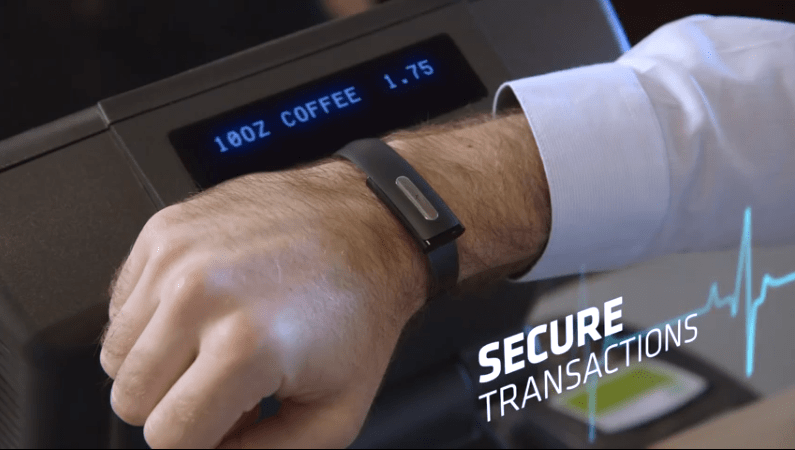
Toronto-based Bionym turned heads with its concept for wearable hardware that authenticates a user based on their heartwave signature, which could turn the whole world of digital security on its head. It’s a key tied to your person in a very intimate sense, meaning it can’t really be stolen or lost like even a current standalone unique passkey generator can.

We met with Bionym CEO and co-founder Karl Martin at their headquarters in Toronto, where the engineering team shares relatively limited space with the rest of the folks. The team is growing at a rapid clip, however, and the plan is to move into a more accommodating space in the near future. As it stands, however, it’s kind of nice to see people soldering and testing brand new circuit boards right next to those arranging future partnerships and doing developer outreach.

Martin filled us in on the progress his startup has made since launchings its pre-order campaign back in September, and it sounds as if things are on track. Final design is still mostly up in the air, but as you can see, things have come a long way from the original prototype that Martin and his co-founder Foteini Agrafioti developed first only roughly a year ago. It’s also very interesting to hear Martin articulate exactly where he sees Nymi’s tech headed – including a long-term goal where it becomes a wearable you won’t even notice you’re wearing.

Stride, A Bootstrapped CRM Service, Acquired By The Founders of KISSmetrics and Crazy Egg

5043044413_2a54f25299_b

Stride, a bootstrapped CRM company out of Seattle, has been sold to Neil Patel and Hiten Shah, the longtime investor partners behind KISSmetrics and Crazy Egg. Terms of the deal were not disclosed.

The company, which targets freelancers and small businesses, is designed a bit differently than a CRM platform like Salesforce.com. Instead of managing contacts, its architecture is built to help small companies manage their deal flow, the opportunities that have value tied to them – rather than simply managing a database of contacts, said Andrew Dumont, one of the creators of the service in an email interview. Each deal has a contact assigned to it, but contact management, in a traditional sense, isn’t the purpose of the product.

“Currently CRM companies are focusing on building tools for sales teams, but yet we feel you don’t have to have a sales team to use a CRM tool,” Patel told TechCrunch. “That’s where we see an opportunity. For example, marketers and customer support can be using a CRM to help manage the customer lifecycle. Stride is a great tool for companies who are doing sales, but don’t have a sales team. For example, Crazy Egg doesn’t have a sales team, but yet we still use a CRM because we have customers and we need to manage our relationship with them. Our goal with Stride is to provide people with a CRM tool who can’t afford Salesforce nor do they need all of the features that Salesforce has to offer.”

More emphasis will go into marketing the Stride service and making it easier to use, Patel said.

The idea for Stride came from Nathan Carnes, according to a blog post written last year by TechCrunch’s Sarah Perez.  It was built by Dumont, Adrian Pike, and Amiel Martin who decidedly did not want to develop a service for the salesperson who needs in-depth complex reports.

They also wanted the service to be simple to use. It is an alternative to a service such as Salesforce.com which is known for its complex user interface. Dumont calls Stride a consumerized version of sales tracking

Stride has a little over 300 customers including HootSuite and Intercom, and about 1,300 active users. It has a number of small design and creative agencies like 47deg and Design Commission that use it for new client prospecting. Pricing is $19 – $79 per month.

Image via Flickr

I Guess It Was My Turn To Get A Creepy Pitch Video

santa plotagon

[12/18/13, 5:12:24 PM] Bob Patterson: so this creepy santa video
[12/18/13, 5:12:28 PM] Bob Patterson: was that sent to you?
[12/18/13, 5:13:16 PM] Anthony Ha: yes
[12/18/13, 5:13:41 PM] Bob Patterson: I feel like you get an unusually large percentage of this crazy pitch email
[12/18/13, 5:13:54 PM] Anthony Ha: nope! that’s just what a lot of PR people are like
[12/18/13, 5:14:05 PM] Bob Patterson: also you may be sexually assaulted by a creepy santa is what i got out of that video
[12/18/13, 5:15:57 PM] Bob Patterson: you should write a post about how awesome xtranormal is
[12/18/13, 5:16:15 PM] Bob Patterson: if that even still exists
(Editor’s note: It doesn’t.)
[12/18/13, 5:16:19 PM] Anthony Ha: well xtranormal was used by a techcrunch writer
[12/18/13, 5:16:27 PM] Anthony Ha: to create the greatest PR-related video ever
[12/18/13, 5:18:41 PM] Bob Patterson: if I was that PR dude I would definitely go the next step and send you some coal if you didn’t write
[12/18/13, 5:19:02 PM] Bob Patterson: start leaving threatening heavy breathing voicemails, the whole 9 yards
[12/18/13, 5:19:15 PM] Bob Patterson: That’s just how business is done

(Transcript edited for brevity; video created by Plotagon.)

Low Surface Inventory Could Hamper Microsoft’s Q4 Hardware Results

2013-12-18_14h51_15

Demand for Microsoft’s new Surface 2 and Surface Pro 2 computers is outstripping supply, with shortages being noted online and off.

Over the past few days, reports have cropped up that stock of the new Surface 2 and Surface Pro 2 tablet hybrids has become quite tight. A quick search around the Internet confirms this. Mashable wrote about the lack of stock a few days ago, with one Best Buy employee telling the publication that the devices were “extremely popular”.

That article noted low Amazon supply, and tweets from annoyed customers asking when the devices would be back in stock. Not a single Best Buy near me has Surface 2 inventory in stock, according to the company’s website.

Today, the online Microsoft Store itself ran out of devices as well, with Neowin noting that “all of the second generation Surface tablets are ‘out of stock’, one week before Christmas.”

What’s going on? Two things, I think: Demand for Microsoft’s hardware is up, and supply is down. After taking a massive, and deathly embarrassing $900 million charge for building too many first generation Surface devices, Microsoft seems to have built fewer this time around. However, whatever its projected number was, it was too low.

Not having enough of a product is a fine problem to have, but it’s a real issue for Microsoft given how high the stakes are for its new line of devices. With the company now reporting Surface revenue each quarter, we have a public measuring stick for its performance as an OEM. After its prior mistakes with Surface, Microsoft wants the first revenue figure for its new devices to be as large possible.

By underbuilding Surface devices, Microsoft is hampering its ability to dial up Surface revenue, something that investors may chide it for. After all, mis-estimating demand for a second year running could be taken as indicative of a certain immaturity in the company’s work as an OEM.

Put another way: Surface revenue is a key metric for Microsoft’s progress as a device company, half of its new business model. And it’s a cutthroat business without shooting yourself in the foot.

Taken all together, Microsoft’s efforts to be a ‘devices’ company appear to be coming together. Windows Phone has never been stronger, the Xbox One sold out, and now Surfaces are hard to come by. That’s good. But watching Microsoft get in its own way with the Surface line (again) is somewhat painful.

Consumers can buy other Windows 8.1-based devices of course, perhaps boosting Microsoft’s OEM partners, but what the company wants is a Surface on every desk, and not to run out a week before Christmas.

In its most recent quarter, Microsoft had $400 million in Surface revenue. So, in the quarter before new devices and the holiday season, Microsoft’s Surface top line sat 20% under a half billion dollars. How much revenue can Surface drive in the current quarter? Your guess is as good as mine, but we know one thing: Whatever number Microsoft reports will be smaller than it could have been if it built more of the darn tablets.

What a difference a year can make.

Top Image Credit: Flickr

This Week On The TechCrunch Droidcast: What To Get The Android Lover Who Has Everything

droidcast18-banner

After a whirlwind trip in Toronto, my co-host Darrell Etherington and I are back in our respective countries and ready to talk about what’s new with Android. But first, a heartrending disclaimer — we were not wearing festive sweaters while recording the show like the image would indicate, but we did get a little festive talking about Google’s new Play Edition devices, what’s new in the world of Google Glass, and our picks for last minute Android-centric gifts. That’s got to count for something right?

And as for next week? Christmas does indeed land on Droidcast day, and the two of us may just sneak away from our families to spend a few moments discussing what (if any) Android goodies were left under the tree for us. Why would we do that? Because we love you thiiiiiiiiiiis much.

We invite you to enjoy weekly Android podcasts every Wednesday at 5:30 p.m. Eastern and 2:30 p.m. Pacific (generally speaking), in addition to our weekly Gadgets podcast at 3 p.m. Eastern and noon Pacific on Fridays. Subscribe to the TechCrunch Droidcast in iTunes, too, if that’s your fancy.

Intro music by Kris Keyser

Direct download available here.


Google’s Location History Browser Is A Minute-By-Minute Map Of Your Life

location 2

Quick! Where were you last Tuesday at 6:35 PM?

If you’re anything like me, your answer is probably along the lines of “I… have absolutely no idea.” Most people’s brains just don’t work that way.

But odds are, Google knows. They probably know where you’ve been most other days, too. And they’ll happily show you, letting you relive your life one step at a time.

If you carry any Google-filled gear (like, say, an Android phone or tablet), there was a prompt during the initial setup that asked if Google could transmit your location data back to the mothership. This is that data. You know how Google Now can auto-magically figure out where you work and warn you about traffic? This is the data that makes that possible (or at least a good chunk of it.)

Now, something to note: if you’ve been paying close attention, you might have seen this before. It’s not new. In fact, it’s been around for years. And yet, I had a helluva time finding many people who knew about it, even when I asked amongst my geekier circles. So consider this a public service announcement of awesomeness. A PSAoA, if you will.

I use “awesome”, here, instead of “terrifying and creepy”, because this is all opt-in. It’s a bit spooky in its scale, of course; it’s mindblowing to think about just how much data they’re gathering. But any data that’s there is there because you gave them the thumbs up at some point, even if it was while mindlessly clicking through the setup of a new device. If you’re suddenly realizing that there’s a location or two that you’d rather weren’t sitting in your history (hey, I’m not judging), you can wipe it on a day-by-day basis or clean your entire location slate in one fell swoop.

Google launched the first version of this tool around the same time that they launched Latitude. After they killed Latitude off, they kept their location browser around, polishing it up and adding new little tricks as time went on.

One particularly cool bit: scrub your mouse cursor over the graph at the bottom. The map above will play back your day, movement-by-movement. I spent well over an hour yesterday reliving the last month of my life, trying to remember what each stop was for.

Oh, and that graph? It’s charting your distance over time relative to where you began your day (so, in most cases, your home), along with a readout of your furthest distance traveled for each day. Fun(/kind of depressing) fact: for 3 days after Grand Theft Auto IV came out, the furthest distance I went was the Jack In The Box across the street.

If you missed the link above, here’s the link to the location history browser.

Revamped PrivacyStar App Uses Color Coding To Help You Avoid Telemarketers

privacystar color coding

PrivacyStar released a version of its Android app today aimed at making it easier for users to avoid calls from aggressive telemarketers and debt collectors.

The previous PrivacyStar app already provided real-time caller ID, as well as call and text blocking. (You can watch an old TechCrunch TV interview with the company’s CEO here.) It also allows users to report abusive calls and texts. Now, according to Chief Marketing Officer Jonathan Sasse, it’s using that data to create a color-coded “alert system” for calls.

In other words, when you get a call from a number that would normally be unknown to you, PrivacyStar won’t just try to tell you who it is, but also identify the caller with a color that indicates how likely they are to be an annoying telemarketer. Here’s how the company described the system:

  • Green: For callers not in the address book and not known to be telemarketers or debt collectors
  • Yellow: A reported telemarketer or debt collector, but not on the PrivacyStar list of reported offenders
  • Red: For callers who are telemarketers or debt collectors that are on the PrivacyStar list of reported offenders
  • Scammer: Known scammers, calls and texts from these numbers will be automatically blocked before reaching the user and a notification will alert the user that a scammer has been blocked

The “offenders” mentioned above are those who have allegedly violated the Telephone Consumer Protection Act or the Fair Debt Collection Practices Act. In fact, the updated PrivacyStar even includes an option to report offenses directly to the Federal Trade Commission from directly within the app.

I wasn’t able to test the app out, since the new features are available on Android only (Sasse said that’s because developers don’t have access to many call blocking features on the iPhone), plus I actually get very few telemarketing-type calls.

PrivacyStar is available in both free and paid versions, but the new features are available in both. You can download the app here.

Obama’s NSA Task Force Recommends Major Reforms

124659356_bbe1e5b661_z

Today, the much-anticipated findings of President Obama’s National Security Agency task force have hit the wire [PDF]. The non-binding 200 page report of 40-plus recommendations calls for the end of many of the most controversial programs.

Here are the big takeaways:

1. The government would no longer hold on to phone records in bulk. Instead, phone companies might warehouse the data for individual requests from the government. The recommendations say that the government should only access such data with a specific purpose, so it’s unknown how the NSA would continue to mine networks for patterns — or if it would be allowed to at all.

Here’s the important quote, “We recommend that legislation should be enacted that terminates the storage of bulk telephony meta-data by the government.”

2. Stop undermining global security standards. The NSA likes to maintain undiscovered hacking tools (“zero-day exploits“) and force loopholes in Internet security standards. The work it’s doing to crack basic encryption falls along those lines as well. It helps them monitor more traffic, but makes the web overall a less safe place.

3. No tech company “backdoors”. Google and other major tech companies have vigorously denied that they create special backdoor access for NSA spying, but the report recommends they cease this supposedly non-existent practice anyway. It is unclear whether such backdoors were currently being built out or already in existence.

4. Organizational changes: The director of the NSA should be confirmed by the Senate and open to civilians, there should be a new privacy board to review strategies, and the secret court should have a special public advocate. This differs from previous leaks to the Wall Street Journal, which implied that the panel recommend a civilian director.

5. More transparency: The government should disclose the number of users who the NSA has requested to examine.

The panel follows a torrent of new developments, any of which may significantly alter the way U.S. intelligence agencies gather private data en masse. This week, a federal judge declared bulk collection of phone records to be unconstitutional, though the decision will likely have to wait for the Supreme Court’s ruling.

Members of congress aren’t sitting idly by for the courts; several groups have proposed various limitations on U.S. spying, broadly supported by the major tech companies, to end all bulk collection and disclose the number of users being spied on.

The Internet hive mind is collectively combing through the 200 page report. We’ll have more soon.

[Image Credit: Flickr user nolifebeforecoffee]

Video: A Window Into BTCChina And The Rise Of Bitcoin In Asia

Shanghai Oriental Pearl China Chinese flag

If you’re looking for a little background on bitcoin in China – and speak Chinese – this video from our TechCrunch event in Shanghai last month may be of interest. Featuring BTCChina CEO Bobby Lee as well as bitcoin luminaries Xu Mingxing, Celso Pitta, Wang How, and Mark Mai. During the time I was there I saw a lot of excitement in regards to bitcoin but many Chinese saw it as just another fad.

Not surprisingly the panel was quite bullish on the currency and many of them recommended the viewers buy bitcoin, touting like infomercial pitch men. It’s fun viewing but, without the benefit of the live translation it will probably be useless to those who haven’t brushed up on their Chinese.