Boxbee Launches A Sharing Library To Spark Peer-To-Peer Lending Of Unused Goods

Boxbee-share-feature-2

San Francisco-based storage startup Boxbee was founded on the idea of using technology to change the way people thought about urban storage. By providing its users with an inventory system and an ultra-easy way to get boxes for storage picked up and delivered, the company made it so that stored stuff didn’t just disappear into a black hole, never to be seen again.

Now, the company is using those same tools to allow its users to share stuff they’ve stored with their friends who might want to use it.

Boxbee, which is available in San Francisco and New York City, provides standard sized boxes to users who fill them with stuff that they don’t need at any given moment. Since launching in March, Boxbee has had more than 4,100 items added to storage.

For $6 per box per month in SF and $9 per month per box in NYC, Boxbee will take stuff off your hands and put it in secure storage until you needed it again. When the time came to reclaim your things, the company would deliver goods back to users for $15 plus $2 per box.

But how would you know which box you’d want back?

The genius in Boxbee’s system is that it allows users to keep an inventory of the items that are available in their boxes. That lets them request a certain box at any time, instead of having to take all boxes out of storage and rifle through them looking for just a few items.

But this system also lends itself — pun intended — to making those goods available to others who might want to use them. With the new Boxbee “sharing library,” users can do just that. Imagine, for instance, putting ski equipment you’re not going to use this season into Boxbee storage and then having the option to let a friend borrow it instead.

That type of model is the true essence of the “sharing economy,” in which stuff I might not need at a certain time can be used by my peers.

Boxbee’s sharing library isn’t just for sharing with friends, though. To get its customers used to the idea of short-term borrowing and lending, the company is making its own library of goods available to users.

That is, anyone with a Boxbee account can borrow shared items from the company itself — stuff like camping goods, for instance — rather than renting them from traditional sporting goods stores or other lenders. The stuff is free to borrow to users, who need only pay the $15 delivery fee for the goods dropped off to their homes.

Keen On… 2013: Robert Scoble’s Person And Company Of The Year

2013 has been kind to one of Silicon Valley’s most iconic characters – the blogger, tech evangelist and writer Robert Scoble. He published a well received new book, Age of Context: Mobile, Sensors, Data and the Future of Privacy, with Shel Israel, that not only has already sold 10,000 copies but has also received corporate sponsorship from ten technology companies including Rackspace and Microsoft.

So how, I asked Scoble, will we look back at the year? What’s been the biggest deal about 2013?

“The maturation of mobile,” Scoble says. We’ll remember 2013 as the year in which “smartphone dominance” and the emergence of portable products like Google Glass and Fitbit reshaped the industry. Which is why Scoble made Tapingo, the e-commerce app, the most interesting new company of 2013. But his Person of 2013 has less to do with mobile. It’s Elon Musk. “Elon is the man”, Scoble says, not only because he is revolutionizing the car industry, but because he is pioneering space travel too.

According to Scoble, however, not everything has been rosy in Silicon Valley in 2013. He’s worried about the new inequality – “Two Californias” he calls it – dividing a small rich tech class from everyone else. And this is “going to get worse”, Scoble warns, as scale enables startups like Snapchat to establish massive user bases with a tiny number of employees.

2014 is just around the corner. So stay tuned in a couple of weeks for Scoble’s preview of 2014 and his take on the technologies, companies and individuals which are going to make it big next year.

Crowdfunding: Figure Out What Success Looks Like And Plan Backwards From There

blueshft-lifestyle_project-body

This is a guest post by Sam Beck, creator of Helium, a super capacitor-powered speaker, as part of our ongoing coverage of crowdfunding in real-world situations.

This is what happened during my first crowdfunding project, which is currently sitting at 97% of its goal with two days left on the clock. Our campaign’s goal was to cover the launch cost of our first product, a supercapacitor-powered portable speaker which would cost about $8,000 in compliance & overhead costs. The next time I do something like this, I’m going to make a giant poster of that baseline number – $8,000 or whatever it is – and hang it right in front of my face. The biggest mistake I made during this campaign was forgetting that number.

Here’s how I messed up.

About 90% of my planning was very realistic. I built a simple, conservative model, and set the variables so that if things went according to plan, we would make a bit of money on top of covering those costs. And then, I started imagining what it would be like to make two times the goal, or ten times. We almost failed because while there was a definite goal, I was thinking about a different number. That is my biggest takeaway from the whole project. There is only one goal; your objective is to meet it. Everything else is gravy.

So that’s the first half of success in crowdfunding: know what success looks like. So this is how to plan once you know what you’re planning for.

The first thing is to see what your market looks like. 4 First Names has built an awesome set of open source tools to see the shape of your potential market – a very pretty Unity 3D visualization of the data from Kickstarter. They also scraped all the data from every Kickstarter project to make it work. Each dot is a project – the bright diagonal is the fact that projects that get close tend to meet their goal.

KDP

The visualization is cool, but having the data from every project is awesome. For our working data set, we took the whole list and filtered it down to only Product Design and Technology projects that had raised over $2000, of which there were 2085. We were pretty sure we’d get over $2000 in pledges from friends and family on day one – if you can’t hit 5% of your goal within your private network, you are probably in a bad spot.

Now, with this list of similar projects, we used simple statistics to think about our funding goal. 45% of these projects with goals $25-$35k were successful vs. only 35% of projects with goals $36k-50k. Getting even more specific, within audio projects, only 21% of projects aiming for over $30k have been successful.

We settled on $30k as a goal, believing that our idea was in the top quartile of audio projects in terms of how much interest, media coverage, and organic traffic it would generate.

With an idea of the goal in mind, it was time to set prices. We started out our price planning with a simple survey, run through Facebook & SurveyMonkey. It cost about $20 – but if I were going to do it again, I’d probably use SurveyMonkey’s paid audience feature instead of Facebook ads to (hopefully) get a better sample.

Our survey used the Van Westendorp method: show potential customers the product, explain it, and then ask for four prices from each respondent, in order:

1. Too expensive to consider
2. Too cheap to believe in
3. Getting expensive
4. Great value

Take the set of answers for each question, graph them in rank order, and you end up with a set of four curves that show how much people are or are not willing to pay.

This helped to validate our initial guess that $300 was a pretty good price that many people would be willing to pay. It also showed how much demand would drop off as the price increased – in the neighborhood of 30% less demand for each $50 price increase.

This survey gave us a slope for our demand curve, but no reference point. So we put together this chart: reward prices vs. number of backers from 12 related Kickstarter audio projects. It was enough to make an educated guess about how many units we might sell. This still left a continuous range of possible price and goal coordinates – the final decision was based on where I thought the product should be priced in the long term.

Now we had informed guesses on a plausible funding goal, a plausible unit retail price, and how many units might sell at a given price. We knew our overhead costs and our per unit costs, including US shipping and 8% fees (3% credit card + 5% for the site). So we built a simple model and tweaked the pricing and goal until we would break even at the funding goal.

This is where I made the big mistake.

My idea on pricing was to have prices increase through the campaign. I remain convinced this is a good idea, but I messed up the implementation. The prices need to convince people they are getting a good deal, but they also need to present a sense of urgency.

Initially the campaign was set up with 25 pledges at the first level (best price / earliest delivery). These sold out in six days, which was pretty good, about what I had hoped for. Then the price went up to the second tier (+$50), and the campaign came to a dead stop.

The problem was that my carrot-stick pricing model was off. A $50 discount (carrot) was indeed a strong incentive to buy early, but conversely a strong disincentive to buy later. If demand had been high enough that the second tier (100 units) started selling out quickly, maybe it would have worked – but instead, it just sat there, telling people there was no need to buy today because there were 97 left.

This probably would have killed the campaign completely, but we got a large cash donation on day 16, which allowed us to subsidize/add more pledges at the carrot level. Moral: if you’re going to do tiered pricing, make sure the tiers are small enough that they start filling in quickly! I thought that having a nominal ‘regular price’ as a stick would help to push the middle tier along, but the tier had to many slots for the stick to be credible.

The last part, and probably the hardest part, is planning for traffic. I initially thought we needed to get 10,000 hits on the site to make the goal – turns out it was really more like 20,000. Our conversion rate at present is about 0.5%. Most of those conversions ultimately come from Facebook and direct traffic, but very few originated from Blueshift’s Facebook posts.

It was serious a challenge to get enough media coverage. Doing this again, I would find a way to build demo units to send to the press – otherwise, you’re basically asking people to write about your press release (no matter how many times you reword the email). The only times that the campaign is “news” are the first day, the day you make your goal, and the last few days. Use those days wisely and reach out early. When you are not a news item, you need to find alternative means of generating traffic.

We got a fair amount press, about 30 postings – but each bit of coverage brings only a small number of visits, and a smaller number of sales. I was surprised to see how few clicks some coverage generated: for example this article on Digital Trends got 650 likes on Facebook, but only 350 clicks to our CrowdSupply page.

We were really lucky to get a big donation – if that had not happened, the project would have been effectively dead a few weeks ago. If I were going to do this again, I would have left out the international option, which would have saved us some money – we could have set a lower goal, and we have very few international pledges.

Beyond that, making this work took me being a full-time marketer/internet fiend for about two months. Honestly, I just want to get the product built – but I don’t know of another way I could have gotten the money together, so we’ll call it a victory. Assuming it has gotten funded by the time you read this.

Photos+: A Better, Gif Friendly, Camera Roll For iPhone

IMG_3037

I get a lot of crap every time I say that my main camera is my iPhone. The sensor snobs and glass hogs come out of the woodwork to tell my why I’m an idiot for using it as my primary shooter. But the truth is I don’t give a crap — I’ve used the best lenses and cameras in the business and I know good from great from amazing.

The iPhone’s camera is best for me, personally, and I’ve worked within its limitations to create a lot of pretty fun and memorable photos over the past few years. My SLRs and compacts (dozens at last count) are still there and I head to the Canon if I need the power for some reason or I’m doing a family portrait session. But most of my shooting is done on the iPhone. (I’d do it on Android but most of the cameras suck, and the Lumia 1020 has a great camera but it’s slow and I think Windows Phone needs a refresh). IMG_3263

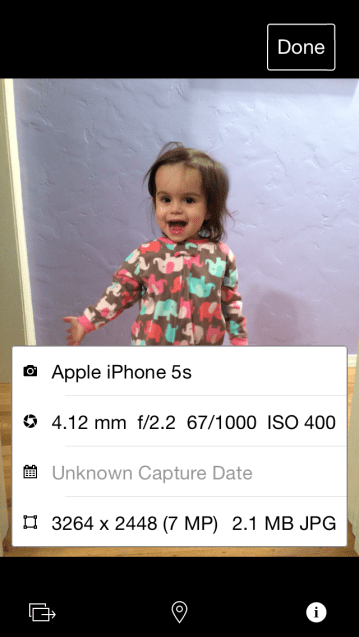
Which is where Photos+ comes in. It’s a camera roll replacement app for iPhone, it runs $3 bucks and it’s pretty great. It displays photos larger and in a more pleasant configuration than Apple’s camera roll and offers me, as a reformed pro photographer, quick access to my EXIF data to see what the camera is doing when I’m shooting from the hip.

The tiled layout means that it’s able to present photos in their original ratios and orientations without a ton of white space. Vertical images alongside horizontal and square images in one continuous flow that utilizes every pixel of screen real-estate while still showing you your entire image. This is a camera roll that’s been re-imagined with a ‘device first’ view, rather than being beholden to an arbitrary crop, like Apple’s app. There’s not much more irritating than having to pop in and out of a cropped image just to check to see if it’s the exact one you want to share. IMG_3265

Tapping on icons in the image view will toggle on or off a location map and a pane with EXIF data like aperture, shutter speed and ISO. This also means that you’re able to easily ID images you’ve imported from other cameras if you’re into that sort of thing.

And, to top it off, the app supports gifs right in stream. I save and share a lot of gifs and love that iMessage now handles them natively, but I’m always miffed that I can’t see them play back in the camera roll. Photos+ fixes that, which is fun.

Developer Justin Williams, who also makes my favorite text editor for iPad, Elements, says that he’s trying out a different kind of pricing model for the app. There’s a fixed price, but there is already one pack of upgrades that allow you to share to more networks than the standard Facebook, Twitter, Flickr, iMessage and email options.

“I’m doing a model more akin to buying a car,” Williams told TechCrunch. “$2.99 up front to get the base model but in subsequent releases I’ve got some IAPs planned to “trick out” the app for more pro users. “

Other features planned for the future include IPTC search, with custom fields, more sharing services and importing from Dropbox, Loom, Instagram or other services.

“The idea being to do mini ‘spikes’ so that the app can sustain itself longer without having to do a new ‘for pay’ version yearly because that sucks for everyone,” says Williams.

Williams likens the take to an auto enthusiast who likes his car, but wants to add items on to trick it out over time.

My one dream feature for Photos+ is the ability to delete images on the fly. Because it offers a complete view of the image in the stream view, you’re able to make easier editing choices and deleting would be much easier. Unfortunately, Williams says, Apple’s current APIs do not allow for that behavior. One can hope for the future.

Photos+ is on the App Store now for $2.99.

Hey Uber, Lyft Is Growing Faster Than You

mustache

Uber’s revenue numbers, which were leaked to Gawker just a few weeks ago, look bold at roughly $20 million per week.

But there isn’t necessarily a definitive market winner yet in the peer-to-peer space, as the entire field is on a rising tide. Lyft, which started peer-to-peer ride-sharing after Uber’s black cars on demand, is seeing its revenues grow at a rate of about 6 percent every single week, according to raw data and revenue dashboards that Lyft co-founder John Zimmer shared exclusively with TechCrunch.

That growth rate is more than double Uber’s growth pace, which averaged about 2.8 percent in the five weeks of data leaked to Gawker. Compounded over a year, Lyft is seeing 20X growth.

“I think there will be a black car winner at the high end and a peer-to-peer winner at the affordable price point for the mass market,” Zimmer said. “Lyft is already the leader in peer-to-peer, which is the fastest growing on-demand transportation segment.”

You could argue that because Lyft is growing from a smaller revenue base, its growth rate would naturally be higher. But Lyft says it is already doing one-third of the weekly ride volume Uber was doing across all of its product lines when they raised their last round at a $3.5 billion valuation (if you back out Uber’s leaked numbers to June 2013).

Zimmer’s data and revenue dashboards last week revealed a more than $100 million gross run rate.

Uber, for its part, says that growth rates vary drastically in different seasons, with the summers being slower than the holiday season. November, in particular, is a weaker month so they argue you can’t extrapolate growth rates back. (That said, Lyft shared revenue dashboards for the same time period.)

“I’d love to tell you how much bigger we are than them, but I can’t do that,” said Uber CEO Travis Kalanick. “We’re the leader right now, but we take competition seriously. We don’t dismiss it.”

We estimated Uber’s gross revenue run rate at $1 billion from the leaked Gawker dashboard. That is 10X Lyft’s size and Uber said many of the cities it serves on its own have already passed the $100 million gross revenue mark. Kalanick adds that the company has also seen 20 percent month-over-month growth in the last two months, despite growing from a larger revenue base.

But they don’t just do peer-to-peer ride sharing. They have multiple product lines covering black cars, taxis, peer-to-peer ride-sharing and SUVs. Uber is also international, covering 66 cities in 24 countries, compared to Lyft’s U.S.-based 20 markets. (Lyft also doesn’t do 7X surge pricing.)

Then there is a slew host of other companies competing to offer on-demand transportation from your phone like Sidecar, Hailo, Gett, and China’s Didi Dache.

But these competitors are generally much smaller than Lyft and Uber, which are fighting for peer-to-peer in the U.S. market. It’s not clear from Uber’s leaked numbers how big their peer-to-peer business is compared to the original black car or taxi business lines. Kalanick declined to break this out, but he said black car fares are generally only 1.8 times higher than the peer-to-peer fares.

The competition between the two companies has become increasingly cutthroat, with Uber resorting to aggressive campaigns to undercut Lyft’s supply of drivers. They’ve offered $50 gas vouchers to recruit Lyft drivers and have run advertising campaigns urging drivers to “Shave The Stache.”

Kalanick defended these tactics, “It’s important for us to have as much supply as possible. When you’re small, you don’t need that many drivers to make it work. But when you’re big, you’re talking about taking in thousands, if not tens of thousands of drivers. It’s important that if there are good drivers out there, they know they have options.”

Amid Uber’s more competitive tactics, Lyft has stayed focused on growing its core community of drivers and users without poaching from rivals.

“By focusing on community, we’re able to attract the highest quality drivers. It makes sense that our competitors would try to recruit them as they try to catch up in peer-to-peer, but we’re not seeing an impact on our loyal driver base or our ride growth numbers.” said Zimmer, who added that the “Shave the Stache” campaign actually ended up educating more prospective passengers and drivers about Lyft.

The Bitcoin Swan Dive Was Utterly Predictable

2013-12-18_09h46_06

Bitcoin took a pounding in the last 24 hours, dropping below the $500 mark on the popular Mt.Gox exchange before rebounding. As TechCrunch’s John Biggs wrote this morning, “China’s biggest Bitcoin exchange, BTCChina, has stopped accepting deposits in Chinese yuan,” which added to the currency’s decline.

However, the fall of Bitcoin’s value has been underway for some time, making the Chinese news merely component to the larger story: Bitcoin is losing momentum.

What pushed Bitcoin to $1,200 is the precise quantity that is taking it down. Hype, media interest, and speculative hope drove it up, and a lack of hype, media disinterest, and falling speculative buys are driving it down.

Bitcoin is trading at $606 at the time of writing. I made fun of Bitcoin when it initially hit $645: “Currently trading around $645 per coin, it has never been worth more, or generated more headlines that I can recall. The two are likely connected.” Yes.

The rise of Bitcoin was a classic bubble. Here’s the Mt.Gox chart of Bitcoin’s price on a daily basis:

2013-12-18_09h36_34

So, to see a huge Bitcoin price correction isn’t surprising in the slightest. Let’s go over a few past entries on why Bitcoin was, and is a bubble:

The current rally is being fueled by the usual combination of presumed scarcity, an overzealous investor class, and truckloads of optimism. So, things will calm down in a bit, with a decent price correction. History teaches us that much. Also, can I sell you this tulip bulb.

And:

People keep saying this isn’t a bubble, and it confuses me. Of course this is a bubble. It’s a far too rapid increase in the price of a financial instrument that is unmoored from any inherent value that is being bid up by aggressive individual speculation. What else is that?

Bitcoin has risen up to $621 from $606 since I started writing this short blog post. That doesn’t matter.

What does matter is that the price of Bitcoin has long outstripped the utility that it can provide. This became far more true after the implosion of Silk Road. Until Bitcoin has benefits commensurate with its price, it will remain overvalued. For now, the dollar cost of each coin is far higher than the value you can derive from it — its use for things that you can’t use other currencies for, or wouldn’t want to — aside from its status as an instrument of speculation.

Speculative demand never keeps the value of an asset class high over time.

And Bitcoin is hardly even an asset class.

Top Image Credit: Flickr

Mention Becomes A Full-Fledged Media Monitoring Tool With Buffer Integration

Screen Shot 2013-12-18 at 17.56.33

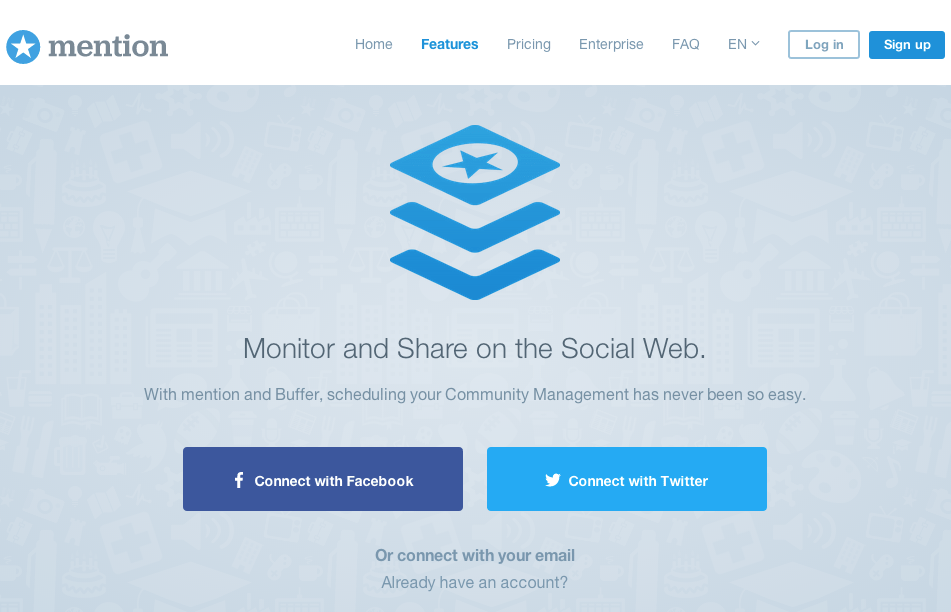
French startup Mention just received an important update that should make it more compelling to its user base. Whenever Mention users receive a new alert, they can share it on their social channels using Buffer, lining up status updates to share later. As a reminder, Mention is a media monitoring tool that works a lot like Google Alerts with a web interface to skim through your alerts. It is mostly targeted toward business users.

While there was a way to tweet and share individual alerts on Facebook, you had to do it manually throughout the day. With today’s update, you can spend a few minutes every now and then to see all your alerts regarding your company or product, and decide what to share. Then, everything will happen automatically — your social feeds will stay active with updates about what you are doing.

Combining Mention with Buffer makes a lot of sense. Mention’s strengths were its monitoring tools, not its social features. Instead of making a Buffer copycat to fill this gap in the product offering, it partnered with Buffer. In the meantime, Buffer users will be able to get an alert stream right from the Buffer dashboard.

So far, Mention has attracted 150,000 users and 2,500 paying subscribers, including CrunchBase, GitHub or Microsoft. It is tiny compared to Buffer’s 1 million users, but media alerts feel more like a niche product — the new partnership will help both user bases grow. The company has received $800,000 in seed funding. Converting more users to its paying plan will probably be the next challenge for the startup.

Pebble’s Official Appstore Coming “Early 2014,” Will Be Built Into Android And iOS Pebble Apps

All Devices (Full Size)

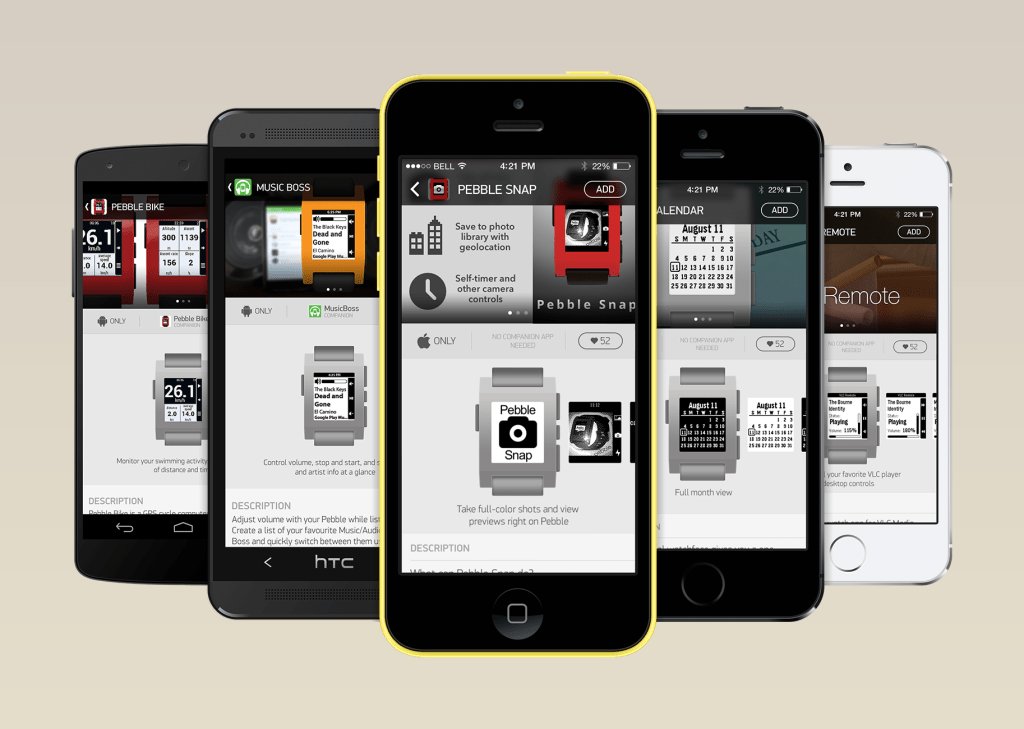
Pebble is finally getting around to creating an official app marketplace for software devs build for its platform. The Pebble Appstore, as it will be known, is going to debut sometime early next year according to the company, and it’ll be integrated directly into the existing iPhone and Android applications for the smartwatch.

Third-party app and watchface discovery tools have existed for Pebble basically since it became available, including MyPebbleFaces.com. Those will continue to exist, Pebble says, and will be able to distribute Pebble software just as before. At the same time, however, the company notes in a blog post today that “[for developers, the Pebble App Store is the best way to promote and distribute your Pebble applications to users.”

The new official Pebble app store doesn’t support paid apps at launch, though devs can obviously still charge for their companion apps on iOS and Android (and theoretically offer Pebble support as a paid upgrade via in-app purchase. Developers will be able to publish apps to the Pebble App Store via a web-based portal, which is completely free to use, and apps will be chosen as featured by the dev support team. There won’t be any advanced screening of apps published to the Pebble Appstore, but Pebble does reserve the right to take down any apps that violate its developer agreement.

At launch the Pebble Appstore will feature seven different categories for apps: Daily, Remotes, Games, Notifications, Tools & Utilities, Sports & Fitness and Watchfaces. These are a little different from what we’re used to seeing in mobile software marketplaces, of course, but that’s to be expected from a device that has been a pioneer in the wearable computing category, and which is essentially working without a model to build from.

Pebble only just revealed its 2.0 Software Development Kit, which adds a lot of functionality but also requires that 1.0 apps get updated before they can be compatible with the 2.0 firmware. The pre-announced storefront, along with the ambiguous consumer launch, is probably designed to give the Pebble team and its developer partners time to update the existing library and get a good crop of new apps available so that the Appstore isn’t a ghost town when it arrives.

Google Glass Getting A Face Recognition App This Month, But It Won’t Get Google’s Blessing

Screen Shot 2013-12-18 at 10.55.44 AM

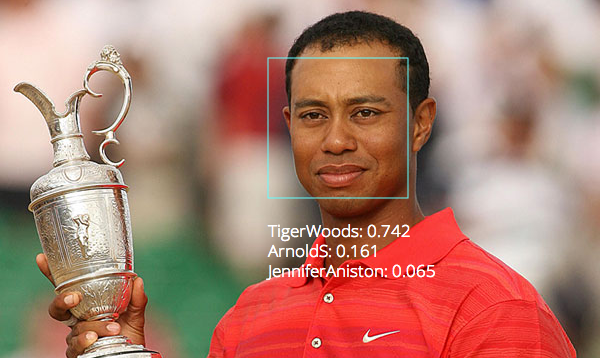
Google Glass use cases are many, but one that inevitably comes to mind is facial recognition. Google already does a lot with reverse image searching and identifying faces in photos, so it would not be such a leap to imagine it doing something like comparing the faces of those you meet at networking events to publicly available photos from Google+ and other sources to make sure you never again forget a name. But Google has forbidden that kind of software in the official Glassware app store. Still, startup Lambda Labs and its founder Stephen Balaban are building that software anyway, for installation via sideloading.

That workaround means the app, called FaceRec, will only ever make it onto a fraction of Glass devices, and a Google spokesperson had this to say when contacted for comment as confirmation it’ll never get broad distribution through any official channels:

As our Glass Developer Policies make clear, we will not be approving any Facial Recognition Glassware.

A subset of the Explorer crop can’t add up to many installs, but that’s exactly who it’s intended for, Lambda tells Forbes. The app works by storing a record of every face that a user encounters while wearing glass, on a cycle that refreshes to capture new faces every ten seconds. In this early version, it can’t ID faces in real-time, and doesn’t have a reference database from which to draw. Instead, like with iPhoto and other services, you can tag pictures with names so that they’ll be recognized the next time you see them. Users can also roll their own script for mining data from their Facebook network for automatic identification, but it’s not built into the product since it violates Facebook’s rules of usage.

The first version of Lambda’s Glass facial recognition app might be limited, but it’s a first step to something more on par with what we might expect from sci-fi examples, where you glance at someone and get a profile of them, shared interests and more provided via a heads-up display. Which is great, because getting to know people the old fashioned way through conversation and a gradual deepening of mutual understanding is for the birds.

Seriously though, there does seem to be a general level of anxiety around the idea of Google Glass and facial recognition. But over time we’ve proven ourselves to be quite changeable on the definition of what is and isn’t acceptable when it comes to how much information we share with others via the web, and facial recognition could become something that people grow more comfortable with time. It definitely has a range of positive possible use cases, including for treatment of genuine medical conditions like prosopagnosia or the aftermath of strokes.

Google may eventually relax its privacy restrictions to make this kind of app officially supported on its Glass platform, but Lambda is also building its own Android-based wearable device called the “Lambda Hat” that will be available for pre-orders Friday. This and other platforms developed outside of Google likely won’t carry similar strictures about face recognition tech, so Balaban’s concept of a world where we can know people just by looking using computer vision might come to pass regardless of Google’s reservations, and the serious privacy implications such a concept entails.

This may be a particularly interesting example of unauthorized Glass software, but software outside the bounds of platform restrictions is nothing new. Apple has a far-reaching and active iOS jailbreak community, after all, and Android devs have created many apps that can be sideloaded but don’t make it into the Play Store. Glass is bound to play host to a few of those as well, but novel technology makes for novel takes on what constitutes ‘out-of-bounds’ software. None of these unauthorized apps really make it beyond outlier or curiosity status, unless policies change and they gain access to official channels, but they can still be worth watching as barometers of what users find interesting and/or acceptable in specific examples of mobile software.

Build a Bot

Build a Bot

WIRED Amazingly fun to build and program. Sensors and motors worked well. Plenty of extra apps for iOS and Android. Tons of variety in what you can build and do. TIRED No copy and paste in the programing app. There’s room to allow more experienced hackers — er, programmers to go beyond the basics. The […]


Hard to Handle

Hard to Handle

WIRED Cheap for a machine in this class. Looks pretty. Built-in, touchless Motion Control navigation is a neat add-on. TIRED A trio of deal-killers on a laptop in this category: Rotten keyboard, primitive touchpad, budget screen. It’s a tall order. Build a capable laptop, thin and light, with a touchscreen, and keep the price at […]


Too Different, Not Different Enough: Why Instagram Direct May Fail

Instagram Direct Crop

My friends aren’t using Instagram Direct, at least not yet. I’ve received just two IGD messages since it launched Thursday. In the meantime, over 20 close friends I regularly message with elsewhere have posted publicly to Instagram, and I’ve received about 60 Snapchat Snaps from 18 different people. It’s obviously early, but right now, I’m more inclined to bet against Instagram Direct than on it.

Yes, this is all anecdotal, but I have a few theories to back it up.

It’s not that you can’t teach an old dog new tricks. I’ve seen pretty strong adoption of Instagram Video in my network. It’s that you can’t teach an old dog to be a cat.

Instagram found a place in our hearts as an app for broadcasting moments. Take a photo (or later a video) and share it publicly, and specifically, to people who follow you. Now Instagram wants us to use it for private sharing. Take a photo or video and send it to one person or a small group. Those are entirely distinct species of communication.

presspage-decConvincing a userbase to break their ingrained behavior pattern and use an app for something completely different is a tough sell. And it’s a lot tougher if that “something different” is actually “something you can do elsewhere”.

If I want to share a photo with a few friends, I can text it, email it, or Facebook message it. These each let me get friends’ reactions and have a conversation around the photo. In fact, they’re all more flexible than Instagram Direct in that I can reply with another photo — the absence of that feature is my biggest gripe about IDG. It also suffers from a creation interface that’s too slow for sharing to such a limited audience. Filtering and adding a witty caption bog down the flow, making Instagram Direct too time intensive to be a rapid-fire visual communication tool.

And of course, if I want to private message someone a photo or video, I can Snapchat them. Snapchat has carved out a purpose and following with ephemerality — something that’s actually different. I can’t send a photo that disappears with any other major messaging service, so I go to Snapchat when I have something silly or racy to share.

So really, the problem is that Instagram Direct is too different from Instagram, and not different enough from everything else.

You’d think Facebook would have learned these lessons. Poke, its attempt at visual communication and beating Snapchat failed because it both demanded we change our behavior but didn’t offer something new. When we think of Facebook, we think of sharing something permanently, either on our timeline or in a message. Ephemeral messaging through Facebook didn’t feel entirely natural, and the company’s history of privacy stumbles made it hard to trust with such sensitive content. Meanwhile Poke was just a blatant Snapchat clone without much unique value to add.

Instagram InboxLast week I argued that if Instagram wasn’t building private messaging, it should have been. But in its execution, Instagram has produced what seems like a tired, tacked on alternative instead of a spacial complementary backchannel. Rather than letting you communicate back and forth with photos like a conversation or talk about photos already shared publicly, Instagram Direct messages are more like private posts with comment reels. Rather than providing an experience you can’t get anywhere else, it’s currently just another way to do the same.

Instagram changed photography by attaching a social network to the camera itself. Instagram Direct hasn’t because we’ve had a phone attached to our cameras for a while now.

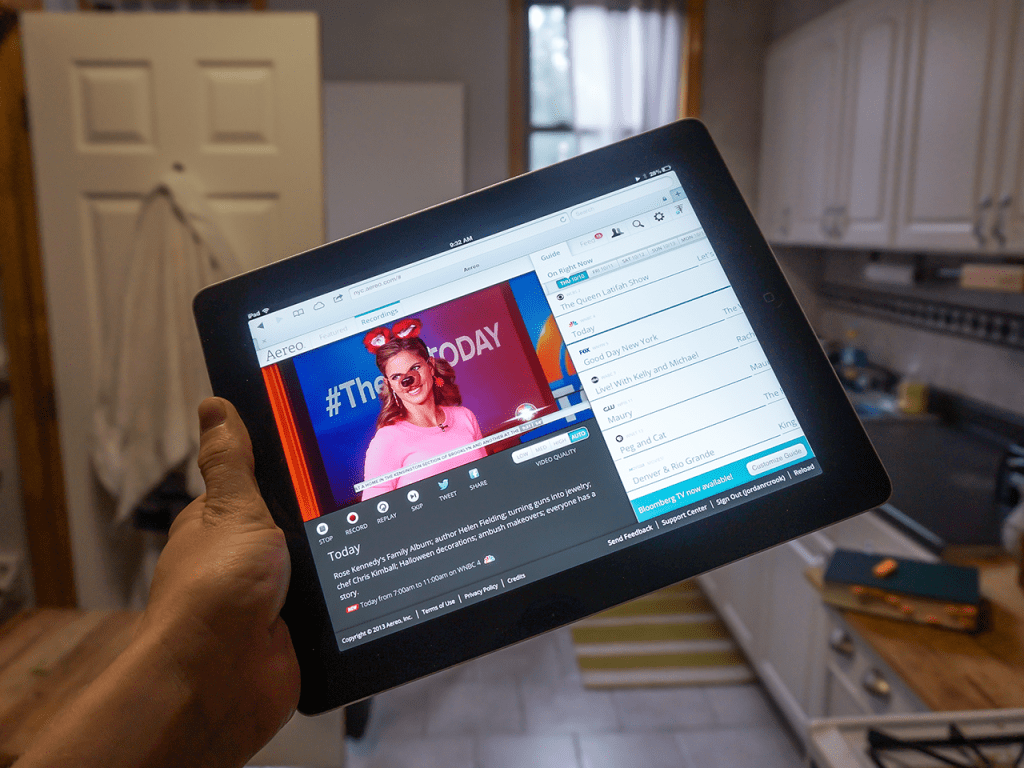
Aereo Founder Explains Delayed Expansion Plans

aereo-app

Streaming TV startup Aereo has had a big week. The company agreed to take an arduous legal battle with major network broadcasters to the Supreme Court.

To discuss the move and the growth of the company, we sat down with Chet Kanojia, CEO and founder.

Regarding the decision to move ahead with the Supreme Court, Kanojia expressed that Aereo is fully confident it operates within the law. So far, the company has won out twice as broadcasters pushed for preliminary injunctions, accomplishments that only further validate the company’s position.

A win in the federal courts would put the legality of Aereo to rest, and simultaneously destroy the obstacle posed by Aereo clone FilmOn. FilmOn is currently operating in California and Washington DC, two of the toughest markets for copyright disputes, and has lost lawsuits in both of them. Because FilmOn has claimed to operate in a similar manner to Aereo, Aereo risks being taken down with the ship in those markets.

That said, the decision to push for a federal decision (especially after a few major wins) makes perfect sense.

But Kanojia did admit that the lawsuits were expensive and distracting.

Still, that’s not the reason he gave for slower expansion than promised. At the beginning of the year, Aereo pledged to hit 18 new markets by the end of 2013. A little later, the company extended that promise to 22 markets, but has only gone live in 10 markets over the year.

Kanojia says that Aereo should launch in a few more before the end of January 2014, but that setting high goals is one of the benefits of being a private company.

Instead, it was technical difficulties moving Aereo technology (which has always been used indoors) to rooftops in new markets, as well as the steps to get outdoor-friendly technology regulatory approval.