Following its Q2 earnings call this week, Tesla representatives confirmed previous reports that its commercial EV project, Semi, will be delayed until 2022. The company cites both the ongoing global processor shortage and its own currently-limited battery production capability for the new 4680 style cells as contributing to its decision.
On the plus side, Tesla executives also confirmed that development of the highly-anticipated Cyber Truck continues apace. What's more,they explained that once production fully ramps up for the Model Y in the new Berlin and Texas plants, Tesla intends to launch production lines to begin the Semi line. For the full story, watch the video above, and for continuing coverage of all things Tesla, stay tuned to Engadget!
Samsung wants to teach you about the history of electronics, as long as you can stay awake long enough to sit through the dull lessons. Through its Innovation Museum, the company is releasing five animated videos about inventions that shaped society. If the first episode is anything to go by, they might as well be classified as sleep aids.
The series premiere delves into the history of telecommunications, starting with Morse code and how it paved the way for more recent innovations such as smartphones, 3G, 4G and (would you believe it?) 5G. The tone and narration is Atacama Desert dry, though. Even the name of the series is melatonin-inducing: "The History of the Electronics Industry That Changed the World."
There's no denying the importance of Morse code, including how it's helped save the lives of many who were able to send an SOS message when they were in peril. But Samsung could have presented the story in a much more interesting way. For what it's worth, the episode is educational. But, if you're going to create a video in which "some aspects have been fictionalized," at least make it fun.
Upcoming installments will cover John Logie Baird's TV, telephone inventor Alexander Graham Bell, James Harrison's refrigerator and William Shockley and the semiconductor. Perhaps those will be more compelling, but it's hard to imagine anyone excitedly dashing off a telegram to a friend about it.
As July comes to a close, a number of laptops, earbuds, games and more have gone on sale across the web. Students planning their back-to-school shopping list have a few ways to save on Apple products — the latest MacBook Air M1 is $150 off at Amazon (that's better than Apple's own education discount) and the iPad Air remains $100 off as well. All capacities of Samsung's T7 portable SSD have been discounted, so you can grab one for as low as $70, while Microsoft's Xbox Ultimate Game Sale knocks up to 80 percent off console and PC titles. Here are the best tech deals from this week that you can still get today.
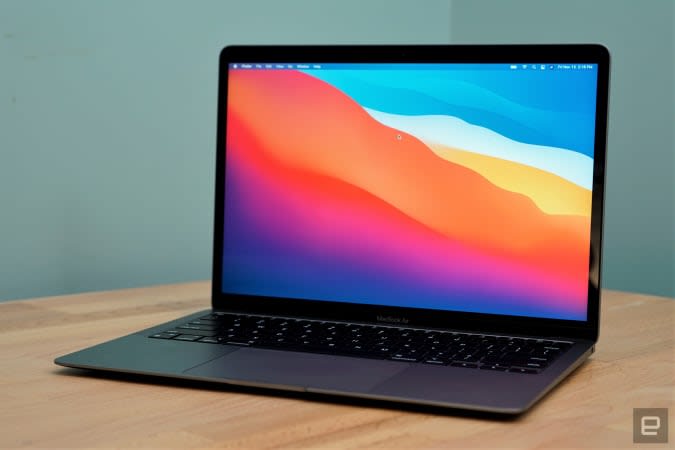
MacBook Air M1
The latest MacBook Air M1 is down to $850 at Amazon, or $150 off its regular price. The 512GB model has the same discount, so you can grab it for $1,099. It's one of the best laptops for most people, and it's a great option for students going back to school. The Air M1 earned a score of 94 from us for its incredibly fast performance, excellent keyboard and trackpad, good battery life and lack of fan noise.
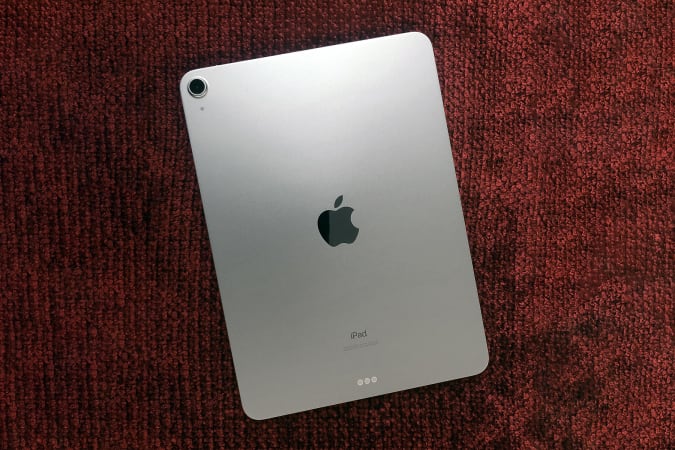
The latest iPad Air is down to the best price we've seen it, just $500 for the base model. That's $100 off its normal price and a great deal on what we think is the best iPad for most people. We gave the slab a score of 90 for its fast performance, speedy WiFi, healthy battery life and support for the second-generation Apple Pencil.
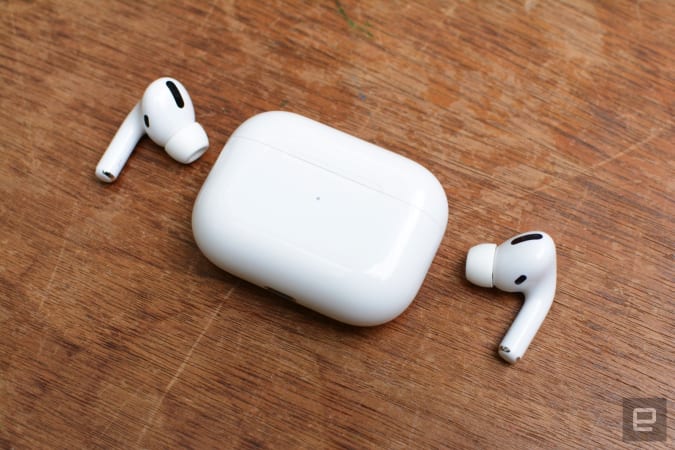
The AirPods Pro are back on sale for $190, or $60 off their normal price. While not a record low, it's still one of the best prices we've seen all year. The AirPods Pro earned a score of 87 for their improved audio quality, comfortable fit, solid ANC and IPX4 water resistance.
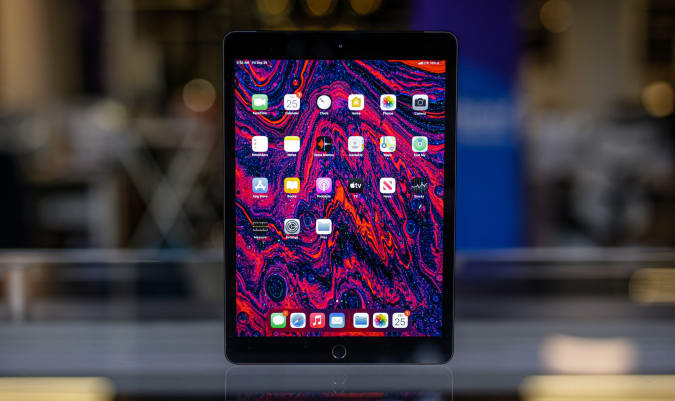
Apple's 10.2-inch iPad is still on sale for $299, or $30 off its normal price. It's arguably the best iPad for new tablet owners and we liked its improved performance, familiar design and support for the first-generation Apple Pencil.
Nintendo's Mario Kart Live: Home Circuit game for the Switch is down to $75, or $25 off its normal price. This add-on set lets you bring the action of Mario Kart into your real-life living room, creating your own racetracks and zooming around them using a tiny kart driven by either Mario or Luigi.
Samsung's T7 portable SSD in 500GB is down to a record-low of $70, or $30 off its normal price. Other capacities are on sale, too — you can get a 1TB model for $150 and a 2TB model will set you back $300. We like these drives for their portability, durable design and speedy performance.
Amazon's latest Echo Buds are on sale for $80, which is a discount we saw last during Prime Day. You can also get the buds with their wireless charging case for only $100. We gave these a score of 80 for their improved sound quality, good ANC and smaller, comfortable design.
Amazon's first-generation Echo Show 5 returned to its all-time-low price of $45 at Best Buy. If you're looking for a smart alarm clock of sorts, this is the best option if you already use Alexa as your primary voice assistant. The second-generation Echo Show 5, which came out recently, has a few minor differences, but we think the first-generation remains a solid buy — especially at half off its original price.
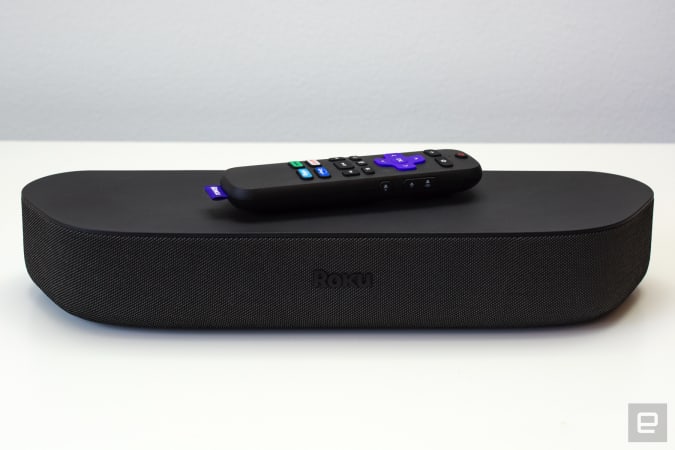
A bunch of Roku devices are on sale at Amazon, including the Roku Streambar, which is down to a record low of $99. This compact soundbar is a convenient gadget to get if you want to upgrade your home theater system without spending a ton of money. We gave it a score of 86 for its space-saving design, Dolby Audio support and built-in 4K streaming technology. If you want to spend even less, a handful of Roku streamers have been discounted, including the Express ($25) and the Streaming Stick+ ($39).
The Thermapen Mk4 has been discounts to $69 as ThermoWorks makes room for the new Thermapen One thermometer. The Mk4 is the best instant-read thermometer we've used so far —the backlit display makes it easy to read in almost any situation and the display rotates depending on how you're holding the pen. Plus, you never have to remember to turn it off because the pen automatically turns on when you pick it up and will shut off after some time of no use.
Through December 8, you can enter to win four-day passes to San Diego Comic-Con 2022. Along with the passes, you'll get access to a special preview night, reserved seating in Hall H, a personal concierge, a private tour of the Comic-Con Museum, dinner in Balboa Park and tickets to the "Night at the Comic-Con Museum" event. It's free to enter, but funds from this sweepstakes will go to the San Diego Comic Convention.
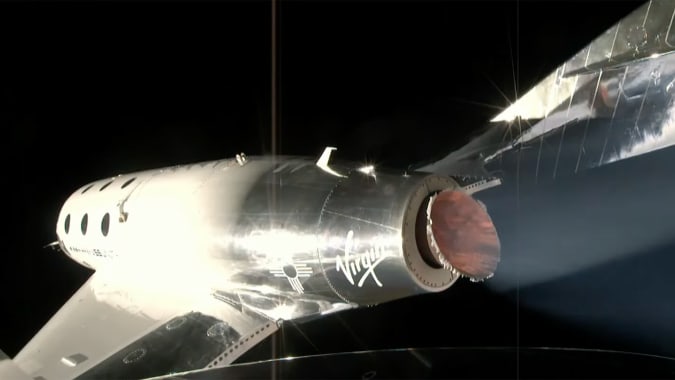
In this Omaze giveaway you can win two seats on one of the first Virgin Galactic flights to space. In addition, you'll go on a tour of Spaceport America in New Mexico with Richard Branson. You don't have to pay to enter, but funds from all paid entries will support Space for Humanity, an organization that hopes to make space more accessible for all.
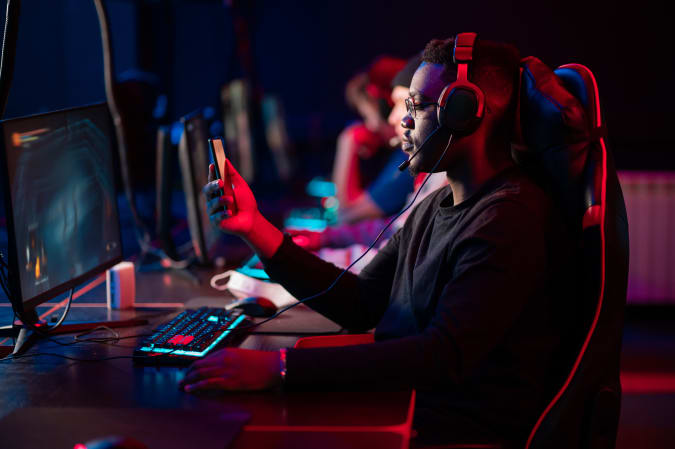
Omaze is giving away another $20,000 to build your ultimate gaming PC. This sweepstakes is free to enter, but funds donated with purchased entries will benefit Schools on Wheels, an organization that provides free tutoring and mentoring services to children experiencing homelessness across Southern California.
Pricing and availability is subject to change. No donation or payment necessary to enter or win this sweepstakes.See official rules on Omaze.
New tech deals
DJI OM4
DJI's OM4 smartphone gimbal is $20 off right now, bringing it down to $129. It uses 3-axis stabilization to let you shoot smooth video with your smartphone, and it's new, magnetic quick-release makes it easy to snap your phone in and out of it. It also supports gesture control and Active Track 3.0, which lets you lock on to the subject you're filming with better accuracy.
Mirror's summer sale knocks $400 off its high-tech fitness system when using the code JULY400 at checkout. The discount breaks down to $150 off the mirror device itself, plus free delivery and installation. Just know that the sale is only on the product itself, not on the subscription needed to take the Mirror's fitness classes.
Arturia has knocks 50 percent off all of its individual software titles through August 8. That means you can get some of our favorite music software, including Pigments and Analog Labs, for $99 each. This is a good opportunity to add new synths and other software instruments to your collection for less.
One of our recommended VPNs is running a good sale on a two-year subscription. You can sign up for NordVPN for only $89 for the first two years, which comes out to $44.50 per year — and an additional summer promotion adds three free months on top of that. We like NordVPN for its speed, its no-logs policy, the thousands of servers it has to choose from and that one account supports up to six connected devices.
If Gary Numan had heard a different sound the first time he encountered a synthesizer, we might not have had “Cars,” “Are 'Friends' Electric?” or even Gary Numan (he was born Gary Webb before adopting his stage name). The New Wave movement might have been little more than a ripple, Synth Pop may have never happened and, in a roundabout way, Calvin Harris might never have known what we came for.
But Numan did hear that all-important sound, the one that lit up his brain and switched him on to technology as a music-making tool, paving the way for electronic music to go mainstream. That’s just one of many accidentally influential moments to be found in Watch the Sound with Mark Ronson — a documentary jaunt through the cornerstones of music technology that’s streaming now on Apple TV+.
Ronson is, perhaps, best known for his work with Amy Winehouse — a decidedly analog, brassy affair. But his love of technology is abundantly clear as Watch the Sound serves up easily digestible bites of musical history around key technological themes: Sampling, drum machines, synths and beyond. Along the way, Ronson casually drops in on such luminaries as Paul McCartney, Quest Love and the aforementioned Numan, along with contemporary artists such as Charlie XCX and King Princess. If the series doesn’t inspire you to google around for a MIDI controller by the end of it then nothing ever will.
Apple TV+
Unlike Netflix’s fast-paced This is Pop, Watch the Sound leans more histrionic. Each episode starts with Ronson recounting his own first experience with whatever this episode is about (a sampler, distorted guitars and so on). He then spends time with artists that popularized that sound, asking pensive questions and generally nerding out about music as only someone with Ronson’s wide palette of influences really can.
This sense of a journey through Ronson’s musical interests gives Watch the Sound a more intimate feel than This is Pop’s more talking heads approach. “I think what's important is that there is a familiarity between the episodes, there is a kind of a guiding force. And that was always going to be Mark's personal experience,” executive producer Mark Monroe told Engadget.
This sense of “experience” is perhaps no more apparent when Ronson spends time with Sean Ono Lennon. Lennon talks candidly about his father’s own struggle with the sound of his voice. He then adroitly reinvents a recording of Lennon senior with Harmony Engine (that Ronson describes as “autotune on steroids”) in what turns out to be a surprisingly tender moment. Lennon junior is visibly moved by this brief yet intimate musical encounter.
Of course, the show is about the machines as much as the people that made them important. Watching DJ Premier’s absolute mastery of the MPC, for example, is as impressive as it is frustrating (at least to anyone else who’s had a go on one and could barely peck out a beat). Later on, watching Ronson take a box cutter to a speaker cone with David Grohl feels like it should have been an outtake until… goddammit, why is he somehow good at everything? (You’ll have to watch it to find out why they did this.)
Other humorous moments are, perhaps, less intentional. Ronson at one point finds himself in a full miner’s jumpsuit, and he’s never looked so uncomfortable. In episode one, we enjoy a rare, albeit slight crack in his golden touch as he struggles to make anything remotely musical with autotune (he rectifies that later, naturally).
If there were an enduring message in Watch the Sound (and many other series of its ilk) it’s that perfection and talent are rarely what creates something magical. Most of the technology featured was either misused, misunderstood or reappropriated through necessity. Legends were born thereof and this is just how we do things now.
It’s refreshing, if not invigorating to know that you don’t have to aspire to perfect pitch or even really have any formal musical training to be a pioneer. In fact, it’s easy to convince yourself that knowing your scales might even hold you back sometimes if you find yourself trying to only play by the rules.
This sentiment is solidified in the episode about synthesizers. Here, the cast of heroes is more at home with an oscilloscope than with an oboe. The band of misfits (and, let history show, many, many more women than are ever given credit) effectively reinvented what music could be from the ground up.
Apple TV+
Monroe said that was something that became apparent during filming, too. “Digging into synthesizer and really kind of understanding what a disruptor it was … what an opportunity for the people on the outside of the music business … and not just to gain a foothold, but to become, you know, legendary.”
Even if you don’t have an interest in how music is made, the show will have you jotting down the names of bands and songs you want to explore further and delight you with a sense of possibility. Or in my case, vindication. The episode on sampling recounts the abhorrent push-back that this new technology received. “That’s not real music” someone remembers being told. If, like me, you grew up listening to Fear of a Black Planet and the countless artists it inspired, it’s hard not to do a mental fist-pump to yourself for not being one of those jerks.
By the end of the show, you might find yourself motivated to dig out that guitar from the loft, or fire up your laptop. Apple, it seems, knew this might be the case. To coincide with the show’s launch, the company has created a “companion experience” for GarageBand via an exclusive Producer Pack.
That said, once you discover how the Beastie Boys achieved their iconic vocal sound on "So What’Cha Want" or how Sonic Youth creatively used drumsticks on their guitars, you might realize you don’t even need any fancy software to do something different.
Watch the Sound with Mark Ronson premieres on Apple TV+ today.
New York City capped food delivery app fees to help restaurants survive the COVID-19 pandemic, and it's keeping those limits in place as the recovery begins. Gothamistreports the City Council has passed a bill that extends caps on delivery app fees until February 17th, 2022. The limits were due to expire in August and kept fees no higher than 15 percent for deliveries, plus 5 percent for other services. Apps could have charged up to 35 percent without the fee ceiling.
Queens Council Member Francisco Moya claimed a return to higher fees would "completely" hobble businesses just starting to recover from the pandemic.
Other bills passed at the same time require apps to get written approval before listing businesses and to share customer data with restaurants. Delivery services have faced criticism, lawsuits and legislation after listing restaurants in their apps without permission.
The app creators have opposed New York City's new measures. GrubHub claimed the caps were "arbitrary price controls" that would allegedly damage businesses and the economy. DoorDash, meanwhile, suggested that data sharing with restaurants should be opt-in rather than enabled by default. The company was determined to "protect the privacy" of users, a spokesperson said.
The companies haven't been completely opposed to reduced fees. DoorDash, GrubHub, Uber Eats and others started cutting and waiving some fees as the pandemic began. Their concern, as you might guess, is that these caps might become permanent and restrict the apps' long-term viability. It's not an unfounded fear — San Francisco's Board of Supervisors recently voted to permanently cap delivery app fees in the city.
At the same time, there's little doubt that restaurants are eager to avoid a return to pre-pandemic fees. Some eateries were only reluctantly listing themselves in these apps due to the large fees, and in many cases have offered incentives to customers who order directly. While NYC's extension won't necessarily ensure a given restaurant's survival, it could help that restaurant maintain familiar profits or keep prices in check.
Amazon has been handed its largest ever privacy fine in the EU by Luxembourg's data watchdog. The CNPD fined the company €746 million ($888 million) on July 16th for violating the bloc's strict data privacy laws, known as GDPR. Amazon disclosed the ruling in an SEC filing on Friday in which it slammed the decision as baseless, adding that it intended to defend itself "vigorously in this matter."
“There has been no data breach, and no customer data has been exposed to any third party,” Amazon told Bloomberg. “These facts are undisputed. We strongly disagree with the CNPD’s ruling.” It added that it plans to appeal the decision. Amazon has its EU headquarters in Luxembourg, tasking the local data regulator with overseeing its compliance.
The penalty is the result of a 2018 complaint by French privacy rights group La Quadrature du Net, which filed numerous lawsuits against Big Tech companies on the behalf of 12,000 people shortly after the GDPR was established that year.
Among those was a case involving Google's Android operating system that led to France's CNIL regulator slapping the search giant with a $57 million fine in January, 2019 — the biggest GDPR fine to date. The watchdog ruled that the company had violated the GDPR due to its failure to obtain legal consent for data collection related to its ad targeting practices.
The record penalty comes amid heightened scrutiny of Amazon's business in Europe. Its use of data is also at the heart of the EU's antitrust investigation. Following a year-long probe, officials in November reached a preliminary decision that Amazon had breached competition rules by using third-party seller data to boost its own products. At the same time, they launched a second investigation into its alleged preferential treatment of its own products on its site and those of its partners.
This week, Cherlynn and Devindra dive into the toxic mess at Activision Blizzard with Senior Editor Jessica Conditt. California is suing the company over its frat boy culture, something we’ve seen at many gaming companies over the years. What’s actually going on, and what does it mean for the gaming industry as a whole? Tune in for our thoughts! Also, we chat about Facebook’s metaverse ambitions, some new chip plans for Intel and… Xbox Krispy Kreme donuts.
Listen below, or subscribe on your podcast app of choice. If you've got suggestions or topics you'd like covered on the show, be sure to email us or drop a note in the comments! And be sure to check out our other podcasts, the Morning After and Engadget News!
Credits Hosts: Cherlynn Low and Devindra Hardawar Guest: Jessica Conditt Producer: Ben Ellman Livestream producers: Julio Barrientos, Owen Davidoff, Luke Brooks Graphics artists: Luke Brooks, Kyle Maack Music: Dale North and Terrence O'Brien
A group of scientists has discovered two unusually red objects in the asteroid belt between Jupiter and Mars, and they may have originated from farther in the solar system. These objects — called 203 Pompeja and 269 Justitia — are redder than the reddest known objects in the asteroid belt and may have migrated to the area from beyond Neptune. If that's true, then they could provide insight into the chaos of the early solar system and into how the solar system as we know it today came to be.
The team led by JAXA's Sunao Hasegawa identified the objects through observations collected at the Infra-red Telescope Facility and Seoul National University Astronomical Observatory, according to the paper they published. As The New York Times points out, most objects in the inner solar system tend to reflect blue light, because they're devoid of or have very little organic materials. Objects from the outer solar system such as the Kuiper belt, however, tend to be redder. That's because they have a lot of organics like carbon and methane, which may have been the building blocks of our planet. As you may know, the Kuiper belt is the region extending from the orbit of Neptune where you can find remnants of our solar system's formation.
If Pompeja and Justitia truly were transplants from beyond Nepture, then they'd serve as evidence for the hypothesis that a fraction of the asteroids between Jupiter and Mars came from the Kuiper belt. They'd also support the set of theories, called the Nice Model, on how our gas giants settled into their orbits. The Nice model says our giant planets formed closer to the Sun until an instability forced Neptune, Uranus and Saturn to move outwards and Jupiter to move inwards. The event would've caused asteroids rich in organic materials to scatter and move around the solar system.
Of course, more observations and evidence are needed to be able to prove that the two objects are from the Kuiper belt. The good thing is that since the asteroid belt is much closer to us than Neptune, it would take a spacecraft less time to reach them if ever Earth's space agencies decide to send a probe to study them more closely.
The BBC has announced that Chris Chibnall (pictured, center), Doctor Who’s executive producer, and its star, Jodie Whittaker (pictured, right), will leave the series in 2022. A trio of specials through next year would herald the pair’s departure from the long-running series. This, then, seems like an ideal time for Doctor Who to undergo the radical shakeup it so desperately needs. I don’t agree with The Guardian’s recent piece saying that the series needs to be off the air for a while, but it is very clearly time for the show to evolve again.
This is in part because Doctor Who under Chibnall has been such a waste: the showrunner’s work before taking the job, while popular and award-winning, had always left me cold. My initial apprehension was calmed, somewhat, by the news emerging from the production of the revived series’ 11th run. Chibnall also deserves credit for hiring the first two writers of color in the show’s nearly sixty year history. The fact that many of the episodes had an explicit focus on material social history suggested a bright new direction for the series. The Woman Who Fell To Earth, too, was a blisteringly confident debut and all seemed well.
And then, yeesh. As good as Chibnall is at birthing some truly inspired ideas, the quality of his execution is terrible. He struggled to flesh out the quartet of lead characters and failed to offer them real stakes to deal with. And for all of the era’s emphasis on diversity, the content of each episode seemed to be far more backward-looking. I’ve written before about Chibnall often appearing to make the argument opposite to the one he thinks he’s making. Unless he intended to say that polite protest is the only good protest, Amazon’s treatment of its staff is good, actually, and that we can all benefit from the spoils of colonialism.
Naturally, the casting of a woman in the central role encouraged the usual petulance from those corners of the internet. Sadly, I think that the actors involved have all performed miracles trying to make anything Chibnall writes remotely believable. And Whittaker’s departure before she could work with another executive producer will be yet another tragically wasted opportunity in this era. I hope that this bad-faith criticism doesn't force the production team to make a “safe” choice for the next Doctor.
The big secret to Doctor Who’s endurance is both the malleability of its premise and its knack for reinventing itself. Every few years, often as the show’s creative team changed, it would become an almost entirely different show. You could argue that this lack of sentimentality has been the case since the show’s first mission-switch, which happened in its fifth episode. The revived show has been using a version of the Buffy the Vampire Slayer template since 2005, and it’s starting to wear a bit thin.
It didn’t help that while Series 11 was designed to avoid any of the show’s dense backstory, Series 12 was at times incomprehensible to anyone but die hard fans. Chibnall, after all, devoted his series arc to validating a production gaffe in an episode that aired on January 24th, 1976. (And, in doing so, made the Doctor the Time Lord equivalent of Jesus, contradicting everything that we’d learned over the last six decades.) This was the worst kind of self-indulgent fan fiction, and hardly a bold new direction for a mainstream drama.
Unfortunately, the media landscape has changed, and competition has intensified beyond all belief. The BBC no longer has a monopoly on the conversation as it did — at least here in the UK — and is dwarfed by the streaming giants. Netflix, Amazon, Disney and others also have the wealth to offer the sort of creative freedom that once made the non-commercial BBC stand out among the crowd.
The knee-jerk reaction, I’m sure, will be to demand Doctor Who jumps on the bandwagon driven by Marvel’s recent streaming shows. That would be a mistake, because Who is at its best when it pushes away from whatever genre show is cresting into the mainstream that year. Financially, the BBC can’t compete with these mega-franchises, but the quality of its writing and its unique sensibilities, can. The one thing that the series could learn from those shows, however, is how to build every episode into an event.
This could mean that the show becomes a run of occasional specials with a longer running time, like a glorified movie of the week. Or it could, like the COVID-influenced 2021 season, be a shorter run of tightly-interconnected episodes. Chibnall may indeed stumble onto the template that helps revitalize the show going forward, but I’m personally hoping for something more radical.
For instance, if Doctor Who can’t succeed as a glossy, hour-long standalone drama, then why not go back to being a series of short serials? Netflix’s Russian Doll and the BBC’s I May Destroy You are both examples of (excellent) half-hour dramas that offer a break from the current prestige-drama template. It helps, too, that Doctor Who was run in this format for 25 of its first 26 seasons, and offers new — or at least different — methods for structuring a story.
It may also make it easier to binge during its long second life on a streaming platform. Think about it: how many times have you ducked watching a long episode of The Crown because it’s too much time to invest out of your day, but you’ll happily burn through four episodes of Brooklyn Nine-Nine without complaint. You could even get Michaela Coel to write it, although at this point I’ll settle for anyone who isn’t named Chris Chibnall.
Yes, you can finally upgrade your SSD storage on the PS5 — a console that already demands pretty huge game file sizes. It’s a whole lot more complicated than plugging in a USB drive, however. First up, you have to be a PS5 beta user in the US, Canada and parts of Europe. Then, you need a PCIe Gen4 SSD for read speeds of 5,500MB/s or higher — there are options from Samsung, Western Digital and Seagate.
But that’s not the end of things. Sony notes in its guide to SSD upgrades that you also need to factor in the PS5's cooling mechanism. This means you might have to add a heatsink to your SSD or choose a compatible SSD with the cooling structure built-in.
Aaron Souppouris/Engadget
Oh, it has to be the right-sized heatsink, too. And Sony suggests doing the whole installation in a well lit room, flashlight “optional.” It literally says that.
Did you buy a next-gen console so you didn’t have to think too much about these kinds of things? Well, sorry. It’s time to measure a heatsink. The feature will roll out to non-beta PS5 users later this year.
(TLDR: The Western Digital Black SN850 heatsink model should work if you want to upgrade your PS5 storage.)
Intel’s very own desktop PC series gets a little more compelling. The new NUC 11 Extreme, AKA Beast Canyon, is a lot like last year’s NUC 9 Extreme. But it's a bit cheaper and more flexible, thanks to its faster 11th-gen Intel CPU and support for full-sized GPUs. It’s bigger, yes, but that ability to work around full-sized GPUs makes it a genuine, if expensive, gaming PC desktop option. Devindra Hardawar puts it through its paces. Continue reading.
Finally, a game you play as a cat. After being teased in 2020, we finally get to see the game in action — and news it will arrive next year. Gameplay involves using physical abilities as a cat to navigate the environment and solve puzzles. You can also scratch furniture. Continue reading.
Nothing’s long-teased launch product is almost here. Its transparent-cased wireless earbuds look cool, ring in at $100 and, perhaps a little surprisingly, sound pretty good. The Ear 1s are a little temperamental with connectivity — and pricier headphones sound better — but Nothing has delivered some stylish buds that will come to the US next month. Mat Smith tests them out. Continue reading.
The simultaneous release will reportedly cost Johansson over $50 million.
Jay Maidment/Marvel Studios
Black Widow star Scarlett Johansson is suing Disney over the company's decision to release the movie in theaters and on Disney+ simultaneously. Johansson claims this was a breach of contract. In the suit, Johansson says Black Widow was supposed to be released exclusively in theaters, per her deal with Marvel. A large portion of Johansson's salary was tied to its box office success.
The move to launch the film on Disney+ may have impacted Black Widow's performance in theaters. According to Variety, it’s on track to become one of the lowest-grossing Marvel movies to date, based on box office sales. Continue reading.
A 13-tonne Tesla Megapack caught fire on Friday morning at a battery storage facility in south-east Australia. The blaze occurred during testing at 10 -10.15am local time, according to Victorian Big Battery. The regional fire service said a specialist fire crew had been dispatched to the site in Geelong, Victoria. Firefighters were using a hazmat appliance designed for hazardous chemical spills and specialist drones to conduct atmospheric monitoring, according to Fire Rescue Victoria.
JUST IN: Fire crews are currently on the scene of a battery fire at Moorabool, near Geelong. Firefighters are working to contain the fire and stop it spreading to the nearby batteries. https://t.co/5zYfOfohG3#7NEWSpic.twitter.com/HAkFY27JgQ
The site was evacuated and there were no injuries, Victorian Big Battery said in a statement. It added that the site had been disconnected from the power grid and that there will be no impact to the electric supply. French energy company Neoen, which operates the facility, and contractor Tesla are working with emergency services to manage the situation.
As a result of the fire, a warning for toxic smoke has been issued in the nearby Batesford, Bell Post Hill, Lovely Banks and Moorabool areas, reports The Sydney Morning Herald. Residents were warned to move indoors, close windows, vents and fireplace flues and bring their pets inside.
The Victorian Big Battery site, a 300 MW/450 MWh battery storage facility, is viewed as key to the Victorian government's 50 percent renewable energy target by 2030. It follows the success of Neoen and Tesla's 100 MW/129 MWh battery farm in Hornsdale in South Australia, which was completed ahead of schedule and has resulted in multi-million dollar savings for market players and consumers. Both sites essentially provide a regional power backup for when renewable energy is not available, effectively filling the gap when the sun isn't shining and the wind isn't blowing.
In February, Neoen announced that the Victorian Big Battery would utliize Tesla's megapacks — utility-sized batteries produced at the company's Gigafactory — and Autobidder software to sell power to the grid. Victorian Big Battery has a contract with the Australian Energy Market Operator (AEMO). As part of the pact, the site will provide energy stability by unlocking an additional 250 MW of peak capacity on the existing Victoria to New South Wales Interconnector over the next decade of Australian summers.
The Boeing Starliner's trip to the International Space Station has hit another hurdle. The craft was scheduled for a second uncrewed test flight to the ISS today, July 30th, after its first attempt went awry back in late 2019. But, it will have to wait a bit longer for take off. NASA and Boeing have decided to push back the launch to the tentative date of Tuesday, August 3rd.
The delay comes after the thrusters on the ISS' new Russian module Nauka accidentally activated causing the station to move out of orientation. Though ground teams managed to regain control and motion of the ISS, NASA is proceeding with caution.
"The International Space Station team will use the time to continue working checkouts of the newly arrived Roscosmos Nauka multipurpose laboratory module and to ensure the station will be ready for Starliner’s arrival," the agency said in a statement.
The completion of the second test flight is a critical part of the Starliner's development phase that will be followed by the first of six crew rotation missions. NASA added that launch preparations would resume pending a final decision from the ISS and Commercial Crew Program teams.
In the meantime, staff are assessing whether to move the United Launch Alliance Atlas V rocket — atop which the Starliner is placed — from the launch pad at the Cape Canaveral Space Force Station back to the Vehicle Integration Facility. While both are mission-ready, the move is seen as a mitigation measure to protect them from weather damage.
The delay is the latest in a series of setbacks that have thus far prevented the Starliner from reaching the ISS. In December 2019, the Boeing craft suffered an automation issue during its first test flight that caused it to miss its planned orbit. While the second test flight has been held up since late last year due to ongoing software checks.
Back in 2019, Tesla pushed an over-the-air update to its Model S sedans following an incident wherein the vehicle caught fire in a Hong Kong parking lot. As CNBC notes, it said at the time that the update will revise "charge and thermal management settings" on Model S and Model X vehicles to "help further protect the battery and improve battery longevity." Some Model S owners claimed, however, that the update reduced their maximum battery voltage, prompting them to take Tesla to court. Now, the automaker has agreed to pay $1.5 million to settle the class action lawsuit filed against it.
According to Reuters, the court documents show that the software update affected 1,743 Model S sedans in the US. The voltage limitation was temporary, but the plaintiffs experienced a 10 percent battery reduction for three months and a seven percent reduction lasting for another seven months, the plaintiffs' lawyers said. Tesla rolled out the final update that fully corrected the issue in March 2020. Among the affected vehicles, 1,552 had their max battery voltage restored, while 57 vehicles had battery replacements. The settlement documents said that any vehicle still experiencing battery throttling problems would have their maximum voltage restored over time.
While the company has agreed to pay $1.5 million, a huge chunk of that would be used to cover lawyers' fees: Owners are expected to get only $625 each from the settlement. Affected owners in Norway could get a much bigger payday after a court in the country ordered the company to pay them $16,000 each to settle a lawsuit over the same issue. In the US, aside from agreeing to pay up, Tesla has also agreed to provide battery-related diagnostics and notifications for cars under warranty whenever battery repairs may be needed.
Dish Network is finally offering HBO, Cinemax and HBO Max to its subscribers after kicking HBO off its network nearly three years ago. It's the first time Dish subscribers will be able to watch HBO shows like Mare of Easttown and Euphoria since the carriage dispute began on October 31st, 2018. However, the new agreement doesn't cover Dish subsidiary Sling TV's distribution of HBO or HBO Max.
When Dish removed HBO and Cinemax channels, it accused then-parent AT&T of using HBO as an "economic weapon." At that time, HBO was only a straight cable station, but AT&T launched HBO Max as a Netflix-like streaming service in July of 2019. With the situation now resolved, Dish becomes the last major pay TV distributor to add HBO Max to its lineup.
The resolution follows a major shakeup with HBO's parent, WarnerMedia. In May 2021, AT&T announced that it was spinning off that division and merging it with Discovery in a $43 billion deal. That effectively removed a conflict of interest as AT&T is a direct competitor to Dish in the satellite video service provider space. The parties haven't disclosed the terms of the new agreement.
With an accord now in pace, Dish customers get a free 10-day free of HBO and Cinemax from Aug. 6-15. Dish users can subscribe to the HBO Max ad-free plan for $12 rather than the regular price of $15 per month for up to 12 months if they act before Oct. 27, 2021. They'll get HBO Max access on supported devices like iOS, Android, Roku, Apple TV and Fire TV, along with live channels including HBO, HBO Family and HBO Signature. Dish TV customers can also get Cinemax for $10 per month.
Amazon's first-gen Echo Show 5 dropped down to $45 from its original price of $80 ahead of Prime Day back in June. If you missed the chance to get the Alexa-powered smart display at a discount, though, now's your chance to get one: It's available for $45 again on Best Buy. That's the lowest price we've seen for the device, even on Amazon, where it's been selling for around $50 these past months. It's also $40 cheaper than the second-gen Echo Show 5, which isn't that much different from the first-generation device anyway.
As we mentioned in our review for the newer smart display, the changes are pretty minor. The second-gen Echo Show 5 has a 2-megapixel camera instead of a one-megapixel, and it comes in a light blue color in addition to black and white. However, it still has a much lower resolution than the Echo Show 8, and it doesn't support a lot of the bigger smart display's capabilities.
If you're not bothered with the one-megapixel camera difference and the lack of an extra color option, you can just get the first-gen Echo Show 5. Its 5.5-inch screen has the same 960 x 480 resolution as its newer counterpart, it has a fabric-wrapped speaker and it has several clock faces to choose from. The device supports Amazon Prime, NBC and Hulu, so you can use it to watch shows, as well as to display images and videos.
If you find its screen too small for serious bingeing, though, you can also use it as an alarm clock with several clock faces to choose from. It even comes with a sunrise feature, which slowly brightens the screen fifteen minutes prior to your alarm time to mimic the effects of daylight's arrival. While the device isn't available in blue like its newer sibling, you can get either the "Charcoal" (black) or the "Sandstone" (white) color options for $45 on Best Buy.
Follow @EngadgetDeals on Twitter for the latest tech deals and buying advice.