#1 FB Dating App Zoosk’s New Model: Seducing Couples With Advice and Date Discounts

Zoosk Nerd Couple

Every time a dating site succeeds in making a match, it loses two users. To offset churn, Zoosk tells me that tomorrow it’s announcing a new business model that complements subscriptions with date discounts, expert relationship advice, gift ideas, holiday reminders and online scrapbooks. The products could convince users to pay even after they’ve found their sweethearts. If users fall in love with the new revenue streams, the whole dating industry could start courting happy couples.

Zoosk now has 15 million monthly active users across its site, mobile, and Facebook app. It also has a $90 million annual sales run rate, up from $20 million in 2009. Still, it’s had to raise $40.5 million to buy ads and failed dating sites so it could replace the users who canceled their subscriptions once they’ve found a mate. Most users don’t want to look like losers by sharing their Zoosk activity on Facebook or Twitter, so the service misses out on the organic virality enjoyed in other verticals.

But Zoosk may have found a way out of this downward spiral. While a $12-$30 monthly subscription may seem expensive, singles, and men in particular, are used to forking over cash to impress dates with dinners, drinks, and nightlife. Zoosk could grow profits if it captured some of this spend by offering discount package dates similar to romantic experience subscription service BeCouply.

Once a couple emerges from the high-priced date honeymoon period, Zoosk could sell them on reminders and gift ideas. It could take cut of spend on birthdays, Valentine’s Day, and the winter holidays, as well as digital scrapbooks.

Finally, Zoosk could identify couples on the verge of breakup through on-site behavior analysis that surfaces users returning to their profiles for the first time in months. Then it’s as simple as targeting them with in-house ads about how true love never dies and they’ll never find someone better.

[Image Credit: iStockPhoto]

Hack Makes Nook Touch E-Ink Display Almost As Responsive As LCD

nook

As you probably know, bistable or passive displays like the E-Ink ones in e-readers focus on battery life and readability rather than color and interactivity. The latest devices have been optimized for fast page refreshes and touch operation, but generally you’re still waiting a half a second or so for the screen to flip over to the next page, menu, or what have you.

But that’s not all they’re capable of. We’ve seen hacks before, but this one definitely takes the cake. Check out this video of a Nook Touch from XDA hacker marspeople:

Bear in mind this is strictly a hack and not a full-on release or commercially developed product. Most people wouldn’t want to use the device in this state: it’s not consistent in how fast it responds, there are graphical glitches, and it probably drains the battery like crazy. But the fact is they’ve got a passive display refreshing ~15-20 times per second and responding to touches instantly like a normal tablet.

The possibilities for this generation of readers are limited: few people are going to install a hack like this, and even if they did, not much content is really designed to be consumed this way. Pages are a natural way to read books, and scrolling constantly is kind of a pain. But it’s amazing to see these displays, usually so slow and static, being used so actively. Here’s hoping the next displays from E-Ink (or Bridgestone, or whoever) are capable of even more. Despite what people might say, the passive display still has a lot of potential to grow and evolve.

[via The Digital Reader]


HP Q1 Revenue Down 7 Percent To $30B, Net Income Down 44 Percent, Software Sales Up 30 Percent

HP

HP just reported mixed first quarter earnings. The company posted non-GAAP diluted earnings per share of $0.92, down 32 percent from the prior-year period (GAAP diluted earnings per share were $0.73, down 38 percent from the prior-year period). First quarter net revenue came in at $30 billion, down 7 percent from the previous year. Analysts expected earnings of $0.87 cents a share on revenue of $30.7 billion. GAAP Net Income was down 44 percent to $1.5 billion.

“In the first quarter, we delivered on our Q1 outlook and remained focused on the fundamentals to drive long-term sustainable returns,” Meg Whitman, HP president and chief executive officer, said in a statement. “We are taking the necessary steps to improve execution, increase effectiveness and capitalize on emerging opportunities to reassert HP’s technology leadership.”

In the Americas, first quarter revenue was $13.2 billion, down 9 percent year over year. Europe, the Middle East and Africa revenue of $11.7 billion was down 4 percent year over year, and revenue in Asia Pacific was $5.2 billion, representing a 10 percent decrease year over year.

Revenue from outside of the United States in the first quarter accounted for 66 percent of total HP revenue. BRIC countries (Brazil, Russia, India and China) generated revenue of $3.1 billion, down 13 percent from the year-ago period, and representing 10 percent of total HP revenue. Revenue in HP’s commercial businesses declined 4 percent year over year. Revenue in HP’s consumer businesses, within PSG and IPG, was collectively down 23 percent year over year.

In terms of specific product lines, the Personal Systems Group (PSG) revenue declined 15 percent year over year, and services revenue of $8.6 billion grew 1 percent year over year with a 10.5 percent operating margin. Imaging and Printing Group revenue declined 7 percent year over year. Consumer hardware revenue was down 15 percent year over year.Enterprise Servers, Storage and Networking (ESSN) revenue declined 10 percent year over year.

On the bright side, software revenue grew 30 percent year over year with a 17.1 percent. HP says software revenue was driven by 12 percent license growth, 22 percent support growth and 108 percent growth in services.


AdRoll Hires Google Sales Director Suresh Khanna

S_IMG_9950_2

Aiming to become one of the giants of online advertising, ad retargeting startup AdRoll has hired Googler Suresh Khanna as its vice president of sales.

In nearly six years at Google, Khanna held a number of roles. Most recently, he was director of new advertiser sales, where he says he led the North American team for acquiring mid-market and larger advertisers. Until now, Khanna says AdRoll hasn’t had anyone focused on building out the sales team, so one of his big goals is to “attract rock stars.” He also says that he wants to help AdRoll build relationships with larger advertisers and ad agencies.

“I think it’s very early days on retargeting,” Khanna says. “We’ve got 3,500 customers but, again, I think the opportunity is in the millions of advertisers.”

Retargeting, where ads are delivered based on your past online behavior, sometimes get a bad rap. Khanna himself admits that he had a similar “knee jerk” reaction when he heard about AdRoll, thinking of it as a system where, say, someone abandons an e-commerce shopping cart with kitchen knives, then suddenly finds that they’re bombarded with kitchen knife ads wherever they go online. The key, he says, is to expand the definition of retargeting from that narrow use case to thinking “more strategically” about taking advantage of “all the data you have on all your customers.”

“I think that’s classic early days,” he says. “When you’re on the bleeding edge, that’s what the first round of people in the space might have done, but we need to push beyond that.”

AdRoll recently announced that it quadrupled revenue last year and was profitable for the first time.

(I also see, via LinkedIn, that Khanna is the co-founder and co-owner of Kasa Indian Eatery, one of my favorite restaurants in San Francisco.)


Tabber Adds An LED Light Show To Any Guitar

tumblr_lz7c1oXWEV1rp9qvy

Tabber is an upcoming Kickstarter project that essentially adds an LED light show to your guitar and, more importantly, allows you to learn to play chords and solos by following the lights on the fretboard.

The idea is definitely not new. The Fretlight guitar beat these guys to the punch and I wonder what patent issues they will have to deal with. However, as an idea, it’s pretty ingenious. The Tabber is a “sleeve” that fits over the neck of your guitar and it should work, as the folks at Tabber reiterate, on any git-fiddle in your possession.

The project uses an open source Arduino board and open source software to drive the lights and/or create an active light show for guitarists who don’t need TAB help and are instead interested in looking like Peter Frampton in the year 2020.

The project is launching soon on Kickstarter and should be an interesting addition to the gigger’s bag of tricks.

Project Page


Sociable Labs’ EverShare Adds FB Auto-Sharing And Pinterest Boards To Any Site

Sociable Labs Pinbook

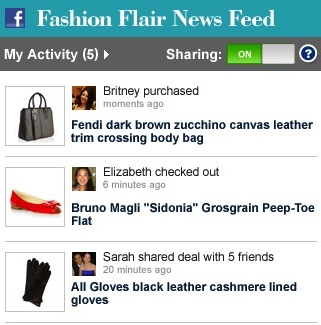
Referral traffic is pouring out of Pinterest and Facebook’s Open Graph frictionless sharing. With Sociable Lab’s licensable EverShare you can snatch their functionality without any serious development work and soak up some page views. EverShare lets you host your own Pinterest-style product or content boards to give your users their social curation fix. It also instantly roots your site into Facebook’s confusing APIs so purchases, comments, reviews, and pins are automatically blasted at friends of your visitors.

Pinterest’s simple, stable sharing canvas has struck a chord with ecommerce shoppers and middle America’s women in particular. You could add Pin It buttons to your site and hope they get clicked, but great websites steal, they don’t borrow. Sociable Labs licenses a website personalization SaaS to sites that want to instantly get social. EverShare Gallery mimics Pinterest’s home page activity board, but only displays trending products and those shared by a user’s friends.

I’ve spoken to several developers and they want to add Frictionless Sharing, but they’ve found the Facebook developer docs confusing. Considering how most sites and apps that integrates it see traffic go through the roof, there’s surely plenty of sites looking for a turnkey hose into the Facebook Ticker, Timeline, and news feed. EverShare Connector makes it as easy as writing a check.

Once integrated, users don’t even have to go back to Facebook to see what friends are sharing. The sidebar activity feed also includes the option to turn off sharing, for those who don’t want friends to know how many shoes they buy.

Virality best practices are developing faster than most companies can employ them. Meanwhile, good developers and designers are in short supply. For content sites, buying referral traffic might not produce big ROI. But for ecommerce sites, a monthly SaaS subscription could pay for itself quickly since Sociable Labs says socially sourced traffic converts 250-300% higher.


The Tesla Bricking Story? It’s Nonsense

vita-3

Here’s a fun fact: Batteries and cars require maintenance. The Tesla Roadster runs on batteries that require lots of maintenance. Out of the 2,200 Roadster owners, apparently at least five didn’t read the manual on their new toy and let the car sit off the charger for several months – or so says one regional service manager. This is a no-no according to Tesla. The result? The battery packs completely died and needed to be replaced at the owner’s expense.

This is not unique to the $100k Tesla Roadster. Batteries stop working without a charge. It just so happens that the battery pack in question isn’t a $100 laptop battery. The latest owner with a bricked Tesla is reportedly going to have to pay $40,000 to replace the battery pack in his Roadster.

Tesla notes in a released statement today that the Roadster can sit for weeks or months without a problem — if the car is originally fully charged. Problems arise if, say, if an owner took a Roadster for a drive, depleted the battery and then parked it in his seaside bungalow while he went yachting. Car and bike enthusiasts will attest that batteries die when not maintained. Trickle chargers are often employed to prevent batteries from dying while vehicles are in storage. Nissan advises Leaf owners to plug in the vehicle within 14 days of depleting the battery. Tesla says to do it immediately with the likely cause being the Roadster has several low-level systems that run even when the car is not in use.

The Tesla differs from traditional vehicles in that it does not have a combustion engine but rather an electric motor. There is a lot less to worry about. Electric motors have fewer fault points and a lot less fluid circulating inside. Tesla does recommend replacing Roadsters’ transmission fluid every 30k miles or once a year. But that’s about it. Well, besides maintaining the battery.

The Tesla Roadster is an intelligent vehicle. It warns the owner when the battery is low. The latest version of the Roadster can even alert Tesla itself if the battery level is too low. But apparently these owners decided to ignore those warnings and park their expensive electric cars for extended periods of time.

Tesla Motors released a statement today in response to TheUnderstatement’s scaremongering story.

All automobiles require some level of owner care. For example, combustion vehicles require regular oil changes or the engine will be destroyed. Electric vehicles should be plugged in and charging when not in use for maximum performance. All batteries are subject to damage if the charge is kept at zero for long periods of time. However, Tesla avoids this problem in virtually all instances with numerous counter-measures. Tesla batteries can remain unplugged for weeks (or even months), without reaching zero state of charge. Owners of Roadster 2.0 and all subsequent Tesla products can request that their vehicle alert Tesla if SOC falls to a low level. All Tesla vehicles emit various visual and audible warnings if the battery pack falls below 5 percent SOC. Tesla provides extensive maintenance recommendations as part of the customer experience.

This fully-drained situation is also possible with the upcoming Model S sedan and Model X CUV. They use a similar lithium-ion battery pack. Tesla will no doubt seek to increase awareness of this potential issue, though.

The Roadster is a first generation electric vehicle. Since its introduction in 2008 it has enjoyed a life free from many public controversies. This battery nonsense will blow over and the Roadster can get back to causing real drama by embarrassing Porsche 911s everywhere.


New Update Brings Collaborative Editing To Google Docs Android App

It’s safe to say we’ve all been in a situation where a few extra pairs of eyes could come in handy, and the folks at Google know just how that feels. In an effort to give people that backup when they need it, they’ve just pushed out a useful new update to the Google Docs Android app.

The update’s biggest draw is the addition of live, multi-user editing — after sharing the document with your closest confidantes, any changes made will carry over to each person’s device in real time. To help with the mobile editing process, Google has also added the ability to pinch-zoom between page and paragraph views, not to mention some much-needed formatting tweaks. Need to bold a particularly thoughtful passage, or point out a lousy turn of phrase with some red ink? Now you can.

Of course, there’s nothing like a human slant to make even the most utilitarian updates grab you by the heartstrings. Google’s demo video tells the charming story of a guy doing some last-minute prep on a speech, and I half-expected it to highlight the other side of the collaborative editing coin: that more voices involved doesn’t always lead to a better final product.

It didn’t, of course, but I could definitely imagine a few of my friends clogging up a heartfelt speech with off-color jokes if I were in the same spot.

The moral of the story? Keep your friends close, and your collaborative editors even closer.


New From The Makers Of Nosh: NoshList, A Free Waitlisting App For Restaurants

screenshot-2

Firespotter Labs, makers of the food photo-sharing app Nosh (and more recently, the hilarious spoof app Jotly), is launching its latest creation today called NoshList, a new waitlisting application for restaurants. The app, designed for the iPad, ties into to the company’s consumer-facing Nosh mobile app, which allows users to rate and review restaurants and dishes from their mobile phones.

While the integration between the two apps (Nosh & NoshList) is limited – customers just receive text messages about their reservation with links to download Nosh – it would make sense for deeper integrations to arrive in the future. NoshList’s venue analytics are calculated in real-time, for example, and could be integrated into the Nosh consumer app to provide current wait times. Consumers could then see those wait times and add their name to the waitlist within Nosh, which could tie back into the iPad app.

Those features aren’t live yet, but given Firespotter’s background, it would be right in their wheelhouse to move down this path. The company was started by GrandCentral co-founder and CEO Craig Walker, and GrandCentral, as you may recall, was acquired by Google in 2007 where it became Google Voice. Walker left the Google Voice team in late 2010, and later founded Firespotter Labs. In other words, this team knows a thing or two about telephony, and keeping costs low.

Currently, when a customer’s table is ready, they’re alerted by either text or phone through the NoshList platform.

The app also allows the restaurant to easily manage parties – adding, seating and removing them as necessary – just by pushing a button. To add walk-up customers, NoshList users simply enter in a name, phone number and tap a button for the party size. There are even different icons for gender and age groups (i.e., blue for boys, pink for girls, and an icon that looks sort of like Darth Vader for “unknown”).

At the bottom of the screen, NoshList shows the current wait times by party size for at-a-glance information, as well as the number of total guests waiting and the total seated.

NoshList has a lot of competition in the restaurant customer management space – besides OpenTable, there are startups like LivebookingsTimeviewTableistaNoWait, DinerConnection, WaitList Manager, TurnStar and dozens (dozens!) of others. But Firespotter is offering its app for free for now, with monetization to come later on. Although the company isn’t talking about forthcoming features, things like improved analytics and 2-way paging (meaning customers could text back to the restaurant) are obvious next steps.

Prior to today’s launch, the company has been testing the app in several restaurants in the San Francisco Bay area, like Unami Burger, for example.

The app is live now on the iTunes App Store here.


WinZip iOS App Tops 500K Downloads In 8 Days

Screen shot 2012-02-21 at 5.58.56 PM

The WinZip iOS app, which lets you crack open .zip files from your iDevice, has only spent a short time on the App Store (and by short, I mean, like, a week). But there’s already plenty to brag about.

The app saw over 30,000 downloads on Day One, and nearly 150,000 on Day Two. As of last night, WinZip has blown by the 500,000 download hurdle with approximately 512,000 installs.

Let’s put this into some perspective, yes?

Social to-do app Any.DO saw over 500,000 downloads in its first thirty days of availability on the Android Market. Meanwhile, Kevin Rose’s micro-recommendation app Oink clocked in at 100k downloads in its first three weeks or so on iOS.

Who knew Apple loyalists needed a way to open .zip files so desperately? (Other than WinZip, of course.)

I spoke with WinZip president Patrick Nichols to see just how these crazy numbers came to be, and surprisingly there wasn’t much to it.

“It was really organic,” said Nichols. “The reality is that we just wanted to build a good application and get the word out.”

And apparently it worked: 500,000-strong on the download front, and more to come. Nichols said that an Android version of the app will be available around spring.


50 Cent Gets Into the Headphone Game

Photo: Ariel Zambelich/Wired.com

50 Cent is primarily known for two things: cranking out club hits and surviving a nonuple shooting.

Now the rap mogul is trying out a new hustle: ultra-luxe, musician-marketed headphones.

Mr. Cent is hardly the first to venture into this star-studded pool of mediocrity. But here’s where the gambit gets interesting: Cent’s Sync by 50 wireless headphones aren’t a crass vanity project. Under all the requisite swagger is a disarmingly decent pair of cans packed with nifty amenities.

Under all the requisite swagger is a disarmingly decent pair of cans packed with nifty amenities.

My porcelain-white review unit was surprisingly sturdy and flexible. The leather earcups added some heft, but the padded headband and bendable frame ultimately made for a very comfortable fit. A week in my mosh pit of a messenger bag didn’t even produce scratches or cracks — an admirable feat for non-foldable headphones.

If the stunning white shell isn’t enough, the Syncs literally beg for attention via a pair of brightly flashing SMS logos on the earcups. They send an alert to everyone in the vicinity: “I am listening to music!” Passersby repeatedly stopped me to ask what was up. Each time, I had to awkwardly explain that they were 50 Cent’s new wireless headphones(tm), and that I honestly had no idea why they blinked every six seconds. As it turns out, the headphones have an “Airplane Mode” that takes care of the peripheral light show. But let’s be honest — having to dial back a default annoyance on a product is rarely indicative of good design.

If you can get past the flashy exterior, there are actually a ton of great features here. First off, both the headphones and the included wireless transmitter have integrated batteries that charge over micro-USB. As a lover of wireless gadgets (and an owner of many rechargeable batteries), the quick 90-minute charge time for each was incredibly convenient. And though the rechargeable option is welcome, the lack of a unified charging/base station meant the headphones and transmitter were just dangling while charging.

Setup is simple: I plugged the transmitter (about the size of a Tic Tac box) into my headphone jack, hit a sync button on each end, and I was up and running in a few seconds. The dongle uses Kleer’s 2.4 GHz lossless streaming tech to deliver high-fidelity CD-quality sound. You can walk about 40 feet away from the transmitter before the signal starts to hiccup, and you can sync up to four pairs of Kleer-compatible headphones (of any stripe) to each dongle.

Unlike other celeb-endorsed wireless headphones that treat audio quality as an afterthought, the Syncs actually deliver. Inside the buttery-soft earcups are two custom 40mm drivers. Though they aren’t especially warm, they are surprisingly balanced without being overly bassy. The trifecta of these solid drivers, the “THUMPP” bass boost feature (activated by clicking a button on the right earcup), and a playlist stacked with lossless audio files are where the Syncs really start to shine.

A Jacket That Controls Your Climate

Generally, the better a jacket is at keeping the wet out, the better it is at keeping the wet in. While the wind whips and the rain pelts, you stay dry … until your body temperature climbs and that muggy, wrapped-in-plastic feeling sets in.

Waterproof-yet-breathable fabric technologies are abundant in the outerwear world, but even with rain jackets marketed as “ultra-breathable” (as most are) some condensation still builds up inside the shell, leaving you clammy, wet, and wondering why you wore a jacket in the first place.

With its new Jammu jacket, The North Face is the latest manufacturer to tackle this elusive unicorn of a truly breathable, truly weatherproof piece of outerwear. The special sauce inside the Jammu is Polartec’s NeoShell membrane, which claims to possess the industry’s highest levels of clam-free waterproofing.

The Jammu is an expensive jacket ($400), but the price is made less painful by a handsome look and a smart design. The cut is just generous to allow for light layering underneath, while the soft shell fabric provides enough stretch to keep you from feeling claustrophobic. Pockets placed high on the body allow easy access when wearing a pack harness, and the helmet-compatible hood adjusts to fit anybody’s dome. It seems best suited to hiking, camping, skiing or snowboarding in above-freezing conditions.

The outer layer is complemented by a soft fleece inner lining that gives the jacket a warm, cozy feel. Sandwiched between the two is Polartec’s NeoShell fabric. Thin, waterproof, and super air-permeable, Polartec claims the NeoShell membrane pulls sweat vapor out of the jacket at an extremely low pressure. The result? Heat and moisture supposedly get vented before you get a chance to feel it.

Even though every foul-weather jacket on the market claims to be the most breathable ever, the fact is, it’s pretty hard to test how much moisture a jacket retains when you’re out in the field. Many of the “most breathable jackets in the world” feel very much the same, and most of my tests end with a limp “meh.”

On a testing day that began with rain that turned into snow and ended with an inexplicably hot sun, the Jammu eliminated “meh” from my lexicon.

The outer shell is remarkably tough, especially given how soft it is. Rain beaded up and rolled off, and snow brushed off without soaking. Foliage couldn’t scuff it; I waded through shoulder-high brush several times, but the tough polyester exterior looked as good as new by the end of the day.

And, as it turns out, the Polartech NeoShell layer is the secret to the Jammu’s success. I built up a decent amount of heat chugging uphill with a 30-pound pack, but the jacket never felt overly hot. The sun eventually poked its head out, but I didn’t want to take off my pack to strip off the Jammu, so I just opened up the pit zips and kept going. I never felt anywhere near clammy.

On a sunny, windy day hike in Lake Havasu, the Jammu repelled 20-plus mile-per-hour gusts all day. But despite the afternoon sun, I never overheated. I was even able to run the last mile down the trail without feeling like I was wearing a sauna suit.

WIRED Breathes amazingly well. Blocks rain like a hard shell. Excellent fit. Fuzzy lining adds warmth and soft touch. Performs well in a multitude of conditions.

TIRED Costs more than a PlayStation 3. No media cord ports. At 1 pound, 10 ounces, it may be too heavy for ultralight backpackers.

Photos: Ariel Zambelich/Wired.com

Ammado Raises $9m To Solve Global Giving Problem

team-ammado

Following the trend towards global platforms for raising money, such as Kickstarter, Ammado, which connects charities with donors, has raised €7 million ($9m), and signed up several multinational partners. The investment round was led by Belgiun-based Saffelburg Investments, which put in €5.5m and John Ryan, founder of Rovi, who put in about €1.5m. Set up in 2005 by Anna Kupka and Peter Conlon, the latter has put in €8.7m to date. which means Ammado has raised a total of €15.7m so far.


Report: Fujitsu To Launch Handsets In Europe. U.S. Next?

infobar01

Fujitsu once said that it didn’t have any plans to launch mobile handsets outside of Asia, but that strategy appears to be changing rapidly. Today comes a report that the Japanese handset maker — which makes both Android and Windows Phone-based devices — is planning to start selling its devices in Europe, with a debut to take place next week at Mobile World Congress in Barcelona.

The news comes after Fujitsu said that it also planned to sell devices in the U.S. market either this year or 2013.

It’s not clear whether Fujitsu will lead on an Android or Windows Phone line of devices — or whether it will opt to sell both. A story in the FT that reported the European launch did not specify which devices would lead the charge. There are pros and cons to both:

Android is by far and away the most popular smartphone OS at the moment — with more than 50 percent market share as of Q4, according to Gartner — but while that means good news in terms of apps and other services for users, it would also pose a challenge for Fujitsu to create something that stands apart from the pack.

Microsoft’s Windows Phone, meanwhile, is a lot less common, leaving more room for Fujitsu to shine — but it’s also significantly less popular with developers and the consumer public. Gartner’s Q4 figures gave it a 1.9 percent share, while the Windows Phone app storefront currently only has around 50,000 apps, compared to the hundreds of thousands for Android.

The issue of needing to be distinctive when entering new markets is not one that has gone unnoticed by Fujitsu itself: “We don’t want to be just another mobile phone,” senior EVP Hideyuki Saso told AllThingsD back in January. “We want to be special.”

Fujitsu was one of the first handset makers to sign on to Windows Phone “Mango”, and it was actually the first handset maker to ship a Mango device. It’s been a key partner for Microsoft in its bid to make more of an impact on consumers in the Asian market. Some of the more innovative and “different” elements of its hardware, though, have come through on Android: waterproofing, very thin devices, and zany colors, like pink.