Glasses-Free 3-D Ain’t Cheap

Photo by Jon Snyder/Wired

3-D video without the glasses: It’s the Great White Hope of the consumer electronics world, but early attempts at commercializing the technology haven’t completely panned out. For example, the most visible glasses-free 3-D product to date, the Nintendo 3DS handheld, has sold only 4.5 million units in the United States.

Where’s the love for glasses-free 3-D? The problem isn’t just that people remain largely uninterested in home 3-D at all (glasses or no), but that glasses-free 3-D still looks pretty shoddy, especially when compared to the active, glasses-based version. That’s pretty much the case with Toshiba’s Qosmio F755-3D150, not the first glasses-free 3-D laptop, but a vanguard in this newly growing niche.

Let’s talk first about the 3-D performance. The F755 supports 3-D Blu-ray discs and can upgrade 2-D DVDs to 3-D (but not 2-D Blu-ray discs). There is no support for other 3-D content, just optical discs, so you won’t be glasses-free 3-D gaming on this system. Quality is exactly what you think it will be: decent with 3-D Blu-ray, iffy with 2-D conversions, and never much better than mediocre even at its best. The F755 uses the webcam to track where your eyes are and adjusts its stereoscopic display accordingly, but this is just not that effective. The slightest movement of your head introduces a disorienting screen door effect to the video, and moving away from dead center causes the 3-D to break down. Things look better the further you get from the screen, but then glare becomes a real challenge — and the immersive illusion of 3-D becomes pointless.

It’s not every day you can completely charge and drain your laptop’s battery twice before lunch.

Unfortunately, the Qosmio F755 doesn’t exactly impress on other fronts, either. Though it’s packed with a 2.5GHz Core i5, 6GB of RAM, and a 750GB hard drive, its benchmark scores were significantly depressed versus other machines in its price and size class. The Nvidia GeForce GT 540M GPU included just isn’t up to the task of modern gaming. Frame rates are fine on older titles, but it struggled with newer fare like S.T.A.L.K.E.R.: Call of Pripyat. Graphics aren’t switchable, either, so even if you don’t need the GPU juice, your battery still takes the hit.

Speaking of batteries, the F755′s longevity is paltry to the point of laughability: A standard 2-D optical disc playback gave me just 50 minutes of running time, something I’ve only ever seen on 13-pound gaming beasts that aren’t really meant to be unplugged, ever. I didn’t think this was possible, so I ran the test more than once, with the same results. It’s not every day you can completely charge and drain your laptop’s battery twice before lunch.

At 7 pounds even, the F755 flirts with portability but has at least a pound on other 15.6-inch laptops on the market. For this you do gain a very high-res (1920 x 1080 pixels) display and, of course, the 3-D technology. The numeric keypad is a nice addition, audio is nicely loud, and even the fan is reasonably quiet. On the downside, the strangely shiny, ziggurat-esque keyboard keys are tough for touch typing, and there’s a strange looseness in the touchpad buttons: When you tap on the pad, the buttons rattle around, inspiring a bit of worry.

Other 15.6-inch laptops with similar specs cost considerably less — $450 or so – making that a hefty premium just for a 3-D system with which you just aren’t likely to be satisfied.

WIRED Glasses-free 3-D has “gee-wow” factor that will impress anyone under the age of 11. Bright screen with great resolution.

TIRED The 3-D tech is still not ready for prime time. Disappointing performance at this price level. Touch-sensitive buttons (mute, Wi-Fi, 3-D, et cetera) don’t indicate whether the feature is off or on. Pretty darn red. One hour of battery life? Ferrealz?

Note: Toshiba this week announced the Qosmio X875 — a high-performance notebook outfitted with a new Ivy Bridge processor and a 3-D screen as options — but it won’t be available until the end of June. Look for our review when that machine hits shelves.

Right Before Acquisition, Instagram Closed $50M At A $500M Valuation From Sequoia, Thrive, Greylock And Benchmark

Screen Shot 2012-04-09 at 10.33.03 AM

I’m as shocked as you are, namely because I was working on this as a funding story all morning. Anyways, right before its billion dollar acquisition from Facebook, Instagram closed a $50 million Series B round from Sequoia, Josh Kushner’s Thrive Capital, Greylock and Benchmark at a $500 million valuation. The round was led by Sequoia, as first reported by AllThingsD’s Liz Gannes.

Investors, many of whom didn’t know about the Facebook acquisition, literally doubled their money (which was wired to Instagram last Thursday) overnight.


Updating.


Facebook Buys Instagram For $1 Billion, Turns Budding Rival Into Its Standalone Photo App

Instagram_logo

Facebook has just finished a deal to acquire mobile photo sharing app Instagram for approximately $1 billion in cash and stock. Instagram will remain a standalone app from Facebook, but the services will have increasing ties to each other. The transaction should go through this quarter pending some standard closing procedures

Last year, documents for a standalone Facebook mobile photo sharing app were attained by TechCrunch. Now it seems Facebook would rather buy Instagram which comes with a built-in community of photographers and photo lovers, while simultaneously squashing a threat to its dominance in photo sharing.

At 27 million registered users on iOS alone, Instagram was increasingly positioning itself as a social network in its own right — not just a photo-sharing app. And it was clear that some users were doing more of the daily sharing actvities on Instagram rather than Facebook’s all-in-one mobile apps, which had to be cluttered with nearly every feature of the desktop site.

With the Android launch last week, Instagram was going to get to 50 million registered users in a heartbeat after racking up more than 1 million in the first 24 hours. And with that kind of momentum, Facebook felt like it had to move — fast.

Whatever you think of the price given the fact that Instagram had no revenues, the reality is it was going to be worth whatever Mark Zuckerberg felt like paying for it. Both Google and Facebook had approached Instagram several times over the past 18 months, but the talks clearly didn’t result in a deal. So Facebook was going to have to offer a huge premium over the last valuation for Systrom and the board to take any deal seriously.

With the deal, Instagram will gain massive design and engineering resources by joining forces with Facebook, a big change after running as a famously lean company with just a handful of employees. Still, the deal seems to let Instagram stay somewhat independent and maintain some of its company culture.

This is a really big departure from the way Zuckerberg has historically run Facebook as a single product. He has always been insistent that everything feed back into Facebook itself. Keeping Instagram as a separate product and brand is reminiscent of what Google has done with keeping YouTube and Android as separate fiefdoms within the company following their acquisitions.

Instagram’s investors included Benchmark Capital, Greylock Capital, Thrive Capital and Andreessen Horowitz, along with angel investors including Quora’s Adam D’Angelo, Lowercase Capital’s Chris Sacca and Square and Twitter’s Jack Dorsey.

The early investors must be thrilled with the price. From our understanding, the later investors, who put capital into the company at a $500 million valuation, seem happy with basically getting a 2X in a few days after the money was wired last Thursday.

Mark Zuckerberg posted the following letter to his Timeline about the purchase:

I’m excited to share the news that we’ve agreed to acquire Instagram and that their talented team will be joining Facebook.

For years, we’ve focused on building the best experience for sharing photos with your friends and family. Now, we’ll be able to work even more closely with the Instagram team to also offer the best experiences for sharing beautiful mobile photos with people based on your interests.

We believe these are different experiences that complement each other. But in order to do this well, we need to be mindful about keeping and building on Instagram’s strengths and features rather than just trying to integrate everything into Facebook.

That’s why we’re committed to building and growing Instagram independently. Millions of people around the world love the Instagram app and the brand associated with it, and our goal is to help spread this app and brand to even more people.

We think the fact that Instagram is connected to other services beyond Facebook is an important part of the experience. We plan on keeping features like the ability to post to other social networks, the ability to not share your Instagrams on Facebook if you want, and the ability to have followers and follow people separately from your friends on Facebook.

These and many other features are important parts of the Instagram experience and we understand that. We will try to learn from Instagram’s experience to build similar features into our other products. At the same time, we will try to help Instagram continue to grow by using Facebook’s strong engineering team and infrastructure.

This is an important milestone for Facebook because it’s the first time we’ve ever acquired a product and company with so many users. We don’t plan on doing many more of these, if any at all. But providing the best photo sharing experience is one reason why so many people love Facebook and we knew it would be worth bringing these two companies together.

We’re looking forward to working with the Instagram team and to all of the great new experiences we’re going to be able to build together.

[Additional reporting by Kim-Mai Cutler]


Former Clearwell And CenterRun CEO Aaref Hilaly Joins Sequoia Capital As Partner

Aaref Hilaly

Sequoia Capital is announcing a new partner today—former Clearwell and CenterRun CEO Aaref Hilaly. At Sequoia, Hilaly will focus on investing and working with enterprise, internet, and mobile companies.

Hilaly was formerly the CEO of enterprise-class eDiscovery management platform maker Clearwell systems, which was acquired by Symantec last year for $410 million. While at Clearwell, Hilaly helped the company grow from small group of engineers into a profitable company with over $80 million in annual revenue.

Prior to leading Clearwell, Hilaly was the Founder and CEO of data center automation company CenterRun, which was acquired by Sun Microsystems in 2003. Hilaly is no stranger to Sequoia—both Clearwell and CenterRun had raised funding from the firm. Considering Hilaly’s success rate and experience in the enterprise, sounds like a talent win for the firm.


Patent Sale Pushes AOL Stock Up 45 Percent

tim armstrong

It looks like investors are ecstatic about the news that AOL has sold 800 patents to Microsoft for $1.056 billion.

AOL (which owns TechCrunch) made the announcement this morning, and as of 12:45pm Eastern, its stock was trading at $26.76 per share. That’s a 45 percent increase from Friday’s closing price, and the highest that AOL stock has been since November 2010.

AOL CEO Tim Armstrong started talking up the patents in March, following (coincidentally or not) Yahoo’s patent lawsuit against Facebook. It’s not clear what Microsoft will do with these patents (the deal is supposed to close by the end of this year), but this does seem to neutralize the threat to Facebook, since Microsoft is a major shareholder. AOL, meanwhile, says it’s still holding on to more than 300 patents.


Netflix Updates Xbox 360 App, Adds Single Sign-On, Improved Facebook Sharing Outside The U.S.

netflix-xbox360-hires

Netflix is rolling out a major update to its Xbox 360 application today, which is the biggest update to arrive since the integration of Kinect gestures and voice control back in December of last year. The updated app brings a number of new features and enhancements, but the most notable changes involve improvements to Facebook sharing in select markets and single sign-on support using your Xbox LIVE credentials. Single sign-on means you can now sign using your own Xbox LIVE account in order to watch Netflix movies on consoles other than your own.

Also included in the app’s refresh are improvements to the Skip Forward and Skip back buttons, a zoom function that lets you enlarge letterboxed video to full screen mode, and better contrast, which Netflix says will make colors more vivid and blacks more pure.

For international users, Netflix has improved Facebook integration for members in Canada, Latin America, the U.K or Ireland. This allows Netflix users to see what shows their friends have watched and rated on Netflix. Users also have more control over what shows and movies they’ve viewed when sharing to Facebook. Unfortunately, these social features are not available in the U.S. at this time due to legal issues surrounding the 1988 Video Privacy Protection Act, which prevents users’ movie rental activity from being shared.

Changes to that act have been making their way through Congress, however, which could allow Netflix to include the social sharing options within its Xbox 360 app in the U.S., as well as offer an Open Graph-enabled application on Facebook itself.

As for now, current Netflix users will automatically receive the updated the next time they go to launch the app on their gaming console. New users can download the app from the Xbox LIVE Apps Marketplace instead.

Update: We’ve reached out to Netflix for more details on how the Facebook sharing options have been improved.


Yext Spins Off Pay-Per-Call Ad Business As Felix

Felix-color-logo 300DPI[3]

Yext has made the famous startup pivot, shifting focus from its pay-per-call advertising service to a new product called PowerListings. But rather than simply abandoning its old business, the company is announcing today that it’s spinning off the pay-per-call part of the company into a wholly-owned subsidiary called Felix.

Yext CEO Howard Lerman says the pay-per-call business was doing just fine (it’s supposedly profitable and on-track to bring in nearly $30 million in revenue this year), but he saw an even bigger opportunity in PowerListings, a service that helps businesses update and synchronize their listings across more than 40 local search services in real-time. Now, he says that splitting the two companies seems like the best way to “maximize the value of both.”

The two teams were already working on separate floors, so in some ways this is just making the split official. At the same time, Lerman says the pay-per-call business has been neglected recently in favor of PowerListings, so with this news, we should see some “new momentum” behind the older product.

Another bonus: Until now, a technical bug meant that businesses could only sign up for either PowerListings or pay-per-call advertising. Starting tomorrow, they can sign up for both.

So why “Felix”? Yext co-founder Brent Metz, who will serve as CEO of the new company, compares the name to Siri, the mobile personal assistant technology that was acquired by Apple. Felix, Metz says, is a different kind of voice-activated intelligent agent — instead of helping you accomplish basic tasks on your iPhone, it listens to customer phone calls and determines which ones were actually good for your business. Metz wants to build out this technology further, to help businesses understand which calls are leading to sales, which ones aren’t, and why.

Yext itself, meanwhile, will continue to focus on PowerListings, which Lerman says has grown to more than 40,000 paid subscriptions in less than a year. The company was one of the startups launching products at the TechCrunch50 conference in 2009, a demo that led to a $25 million funding led by Institutional Venture Partners.


Pinvolve Converts Facebook Pages Into Pinterest Pinboards, Increases Repins By 150%+

pinvolve

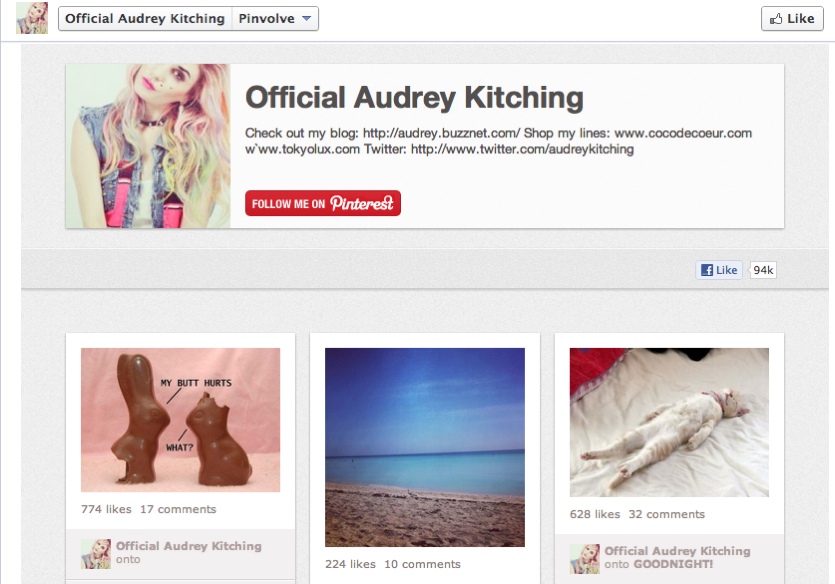
The folks behind a forthcoming fashion catalog for the iPad, Bazaart, have launched an interesting side project in their downtime (what’s that?) from their participation in DreamIt’s new Israel-based startup accelerator program. In need of something similar for themselves, the company launched a Facebook app called “Pinvolve” which converts Facebook Pages into Pinterest pinboards.

To use Pinvolve, you have to first be logged into Facebook as one of the page’s admins before installing the app. Once up-and-running, Pinvolve creates a new section on your Facebook page which presents all your photo posts in a Pinterest-like fashion – that is, in the typical image pinboard style that’s now associated with the popular social networking service.

The app also pulls in the Facebook likes and comments associated with each post, as well as the comments’ text. If a post has a lot of comments, however, only the first few will be listed on the main Pinvolve page, with a link to the rest provided below. When clicked, that link will take you to the photo’s page on Facebook.

However, Pinvolve isn’t just about re-displaying Facebook content with a Pinterest look-and-feel, it also provides tools that let you and the page’s fans re-share those posts over on Pinterest. When you hover over an image on the Pinvolve pinboard, Pinterest’s “Pin it” button appears. Clicking this will then re-post that content to Pinterest itself.

You can see an example of Pinvolve in action now, over on fashion model, blogger and designer Audrey Kitching’s Facebook Page here.

According to Bazaart co-founder Dror Yaffe, the idea for Pinvolve came from his team’s own need to market their content on what’s now the third most popular social network.

“We’ve been marketing our applications on Facebook and Twitter, but when Pinterest became a major player we were baffled,” he says. “As a young startup, our resources are very limited and it takes a lot of effort to market on another social network. So, as a side project, we’ve developed Pinvolve.”

Despite the fact that the company has done very little marketing or media outreach, (save for a bit coverage by Israeli sites), the app is already installed on over 1,000 Facebook Pages as of today. Using Pinvolve on its own page, Yaffe says they’ve increased their re-pins by over 150%, and this figure is consistent across the app’s early adopters.

Although the basic version is being made available for free, Facebook page owners are offered an option to upgrade to Pinvolve’s white label plan, which removes the “Get Pinvolve Now” button from the page, and allows you to customize the “like” button, the cover photo, and lets you link from the app directly to your Pinteret profile. For now, this option is available for the (pretty much no-brainer) price of $9.99. It will later bump up to $19.99.

To try out Pinvolve for yourself, head over to the app’s page here: http://apps.facebook.com/pinvolve.


Topps: Iconic Trading Cards Brand Goes Beyond Cardboard With First-Ever Mobile Apps

Screen shot 2012-04-09 at 7.17.02 AM

Topps, the company best known for its Bazooka bubble gum and for essentially inventing and popularizing trading cards in the 1950s, is today releasing its first-ever mobile apps in conjunction with the start of the 2012 Major League Baseball season. That’s right. People of all ages may remember collecting and trading their favorite players’ cards as youngsters, and though trading cards don’t quite enjoy the same level of ubiquity as they did in decades past, Topps’ cards remain iconic for most sports fans.

Over its 60 year history, Topps has moved beyond baseball, not only producing trading cards for all the major sports, but comic books and games as well. Yet if the trading cards and chewing gum company is ever going to get serious about becoming part of the digital era, mobile has to be a part of that strategy. And trading cards may just lend themselves well to a digital reincarnation — or so the company hopes, as today it moves beyond cardboard with the launch of its first iOS apps, Topps BUNT and Topps Pennant.

With its new iOS apps, Topps aims to leverage the sizable inventory of statistics, images, facts, and figures it has developed over the years, combining the history of the game with modern tech. Topps Pennant, the company tells us, presents a “modern box score” on both the iPhone and iPad, allowing fans to recreate more than 60 years of baseball — every team, season, game, and play going back to 1952.

Topps Pennant enables baseball fans to view box scores and live play-by-play of games from this season as well as from over 115K games from the past. While this is something that ESPN and others have been doing now for quite some time, Topps offers users the ability to view its exhaustive catalog of historical stats in good-looking, interactive infographics. The company has taken its time in developing apps that leverage all the capabilities of the iPad, so that even if you already have an app you use for box scores, this one’s worth checking out.

Topps BUNT, the company’s second iOS app, aims to bring fans a more user-friendly, accessible version of fantasy baseball, with a social game meant to act as a companion to the ongoing baseball season. As to how it works? Users create an account with Facebook or Twitter, pick a name and a personalized avatar, and then choose nine of their favorite players.

Users earn points based on how well those players perform, competing against other players, with scores being presented in a giant, multi-zone leaderboard. Users also get to check out game updates to track how their players are performing on the field in realtime, and trade the players that are batting below the Mendoza line.

Topps BUNT is really designed to be fantasy baseball for more casual fans, those who aren’t ready to commit to the more demanding, 162-game fantasy season. The team describes it as a mix between fantasy baseball, and popular iOS apps Turntable.fm and Draw Something. Having tested it out, the app definitely offers a fun, quirky baseball experience that could appeal to younger fans, especially those having grown up in the ubiquity of casual, Facebook-based social games.

To help bring its brand into the smartphone era, Topps hired the former Head of Product at Nokia (and five-year product veteran at Microsoft) Michael Bramlage. The VP of Digital tells us that, in the sports media landscape, most of the apps out there are from broadcasters or the leagues themselves, so that once fans get past MLB and ESPN apps, there’s not a lot quality outside of geeky, fantasy baseball apps. In other words, apps for the number crunchers and serious fans.

In my experience, this is true; there’s plenty of room for new and better ways to explore stats and interact with the game, especially for younger audiences who spend a lot of their time on mobile devices. For MLB.com, for example, more than 50 percent of traffic emanates from mobile.

Topps is leveraging its close relationship with the MLB Players Association and unique archive of player data and photos to go after newer, more casual fans in what Bramage calls a big “game mechanics play.” In that sense, Topps is not just looking to digitize baseball cards. The company put a lot of research into what cards represented to baseball fans emotionally and is reconstituting the figurative elements on the iPad — not just porting, but trying to re-imagine what player cards will mean to a younger generation.

In terms of the apps, Topps Pennant will be priced at $3.99 for a universal app that includes optimized versions for iPhone and iPad. However, Apple is currently running a launch special that puts the app at $2.99. Topps BUNT is available for free (on the iPad).

For more, check out Topps at home here, or the videos on the apps below:


Reminder: The TC DC Mini-Meetup Is Tonight

virginia-is-for-lovers

Just a reminder: today is the most important day of the year. It’s TC DC Mini Meet-up Night! We’re here in DC and we’re looking forward to meeting with you all at RFD (810 7th St NW) at 6pm for some networking, some fun, and some start-up talk.

I’ve been doing these things in the US and Europe for a few years now and my style is very laid back and very organic. This is a very informal event – we won’t be having speeches, panels, or wonkery. We’re here to hear pitches, talk tech, and discuss what you’ve been up to. Come along even if you have nothing to launch. After all, maybe you’ll meet your next start-up partner tonight.

As a special bonus, DC meet-up folks will get to meet our new co-editor, Eric Eldon, who is coming in from San Francisco and who will be in Virginia with us that evening. It will be, as they say in Virginia, a hoot.

Furthermore, we are in Norfolk on Tuesday, and Richmond on Wednesday. You should have already RSVPed (did you?), you should have already picked out what you’re going to wear (did you?), and you should have your pitch ready (do you?).

Thanks to all those who helped out in organizing this and a huge thank you to our sponsors. We’re really looking forward to this opportunity to meet with you guys in the tech corridor. Feeling left out? Fear not. We’ll be hitting other cities this summer.

Tweet us at @johnbiggs or @jordanrcrook if you have questions or concerns.

Monday, April 9 – DCRFD810 7th St NW – 6pm-10pm (??) – Our first event will be at RFD in NW. These guys have a huge selection of beers on tap and, if we play our cards right, we’ll have a few hours of open bar. If you haven’t RSVPed hop over to Plancast or email me at [email protected] with the subject “RSVP DC.” Try to include a rough headcount.

Sponsors

Canvas.co is DC’s largest co-working community; designed for creatives, freelancers, independents and start-ups to be an inspiring environment in which to work and collaborate. There are no closed doors here; it’s true co-working for community-centric creativity and collaboration. It’s more than just space, beyond sharing and no one gets incubated here. Boasting 6,000 square feet of open-space, completely custom designed, from floor to ceiling. We believe that creativity comes from inspiration and that inspiration starts with your surroundings; you won’t find any carpets, water-coolers or Ikea here.

Create Digital is a privately held Richmond, Va. based social agency that provides community management, web development and digital campaigns for Fortune 500 companies. Since 2010, Create Digital has consistently improved the web presences, customer engagement and online brands of its clients.

HomeSnap is the most intuitive real estate app you’ll ever use. Simply snap a photo of any home to find out all about it, including its current value, last sale date & price, local schools and more. HomeSnap works for over 90 million homes across the USA.

Higher Logic’s mission is to provide your members, constituents, donors and volunteers with innovative ways to think together, share and collaborate. Higher Logic delivers solutions so you can extend your organizational value and attract a new generation of global members and constituents.

Applied Predictive Technologies (APT) is the world leader in helping organizations harness the potential of Test & Learn, a powerful fact-based approach for choosing, targeting, and tailoring strategic and tactical actions for maximum impact and profitability.

WeddingWire is one of the fastest growing wedding and event sites in the country. They say that “necessity is the mother of all invention” which is exactly why WeddingWire was created: to create efficiency and transparency in the wedding and event space.

Tuesday, April 10 – NorfolkWe Are Titans Offices259 Granby St 3rd Floor – 6pm-10pm – We will begin the night at the We Are The Titans offices, kindly provided by a team of titans who work there, and the perhaps we can move to another location later. Please RSVP here or email me at [email protected] with the subject “RSVP NORFOLK.” Try to include a rough headcount. We are also looking for sponsors, so please let me know in a separate, non-RSVP email if you’re interested.

Here’s a little bit about our first Norfolk sponsor:

We Are Titans is a product development shop that helps startups and established businesses worldwide build custom web and mobile applications. We have a track record of turning great ideas into profitable and effective products, and we’re big on candid communication over intimidating geek speak. Headquartered in Norfolk, Virginia, our team looks forward to talking with you about your project, and how The Titan Way can help bring the right product to reality, while saving you time and money.

Also sponsoring Norfolk is Create Digital.


Wednesday, April 11 – RichmondSnagAJob HQ – 6pm-10pm – 4851 Lake Brook Dr – Finally, we’ll meet in Glen Allen, outside of Richmond, for our final meet-up. Thanks to SnagAJob for donating a space with a bar and some booze. We’re still looking for Richmond sponsors as well, so please email me directly. RSVP here or email me at [email protected] with the subject “RSVP RICHMOND.” Try to include a rough headcount.

Here’s a bit about our first Richmond sponsor:

Snagajob, the largest hourly employment network for job seekers and employers, is the only company to provide both sourcing and talent management solutions to the hourly industry. With more than 30 million registered job seekers and the leading hourly-focused talent management system, Snagajob has been fulfilling the dreams of hourly workers and those who employ them since 2000. Headquartered in Richmond, Va., Snagajob has been named the No. 1 Best Small Company to Work for in America by the Great Place to Work Institute. To find out more, visit snagajob.com and www.snagajob.com/employer-solutions.

Also sponsoring Richmond is Create Digital.

Create Digital is a privately held Richmond, Va. based social agency that provides community management, web development and digital campaigns for Fortune 500 companies. Since 2010, Create Digital has consistently improved the web presences, customer engagement and online brands of its clients.


U.S. Consumer Financial Protection Bureau Gets Open Source, Publishes on GitHub

cfpb-logo

I’ve been harping for a while here on TechCrunch about the benefits of open source software. I often quote Canonical’s Technical Architect Allison Randal, who said “Free software is a fundamentally superior model for developing software.” Free and open source software enabled much of the innovation we write about here at TechCrunch, but it’s been slow to move into established enterprises, let alone the U.S. Government. That’s starting to change today with an announcement from the U.S. Consumer Financial Protection Bureau that states, unequivocally, “We use open source software, and we do so because it helps us fulfill our mission.”

The announcement goes on to state that “when we build our own software or contract with a third party to build it for us, we will share the code with the public at no charge.” The CFPB is making it clear that they get it with respect to open source software: they have a GitHub account for hosting their works and are sharing their open source policy as a GitHub gist in addition to a static HTML document on their own website.

According to Chris Willey, CIO at the Consumer Financial Protection Bureau, “Using open source software isn’t innovative compared to the outside world, and having a policy that says so probably seems odd to many in the tech community. But many federal agencies avoid open source software because they don’t have internal policies and procedures that allow it.” He observes, however, that the policy to share by default is absolutely brand new within the federal government. “Some tech-inclined agencies like NASA, NOAA, NSA and FCC share code selectively,” said Willey. “We want to share everything we make.”

We are a citizen-facing agency, so keeping pace with the rest of the world is a high priority. We think our online presence should be on par with the web’s most popular tools and communities. Enabling outside developers to contribute to our products makes that goal more attainable.

I asked Willey what kind of advocacy — if any — the CFPB was doing (or planning to do) for open source software within the government. He shared that they’re using GitHub Enterprise internally, and have fielded a number of questions from other agencies about how they procured that and set it up. “It’s hard for us to have these conversations with other agencies without implicitly advocating an open source philosophy,” Willey told me. “So instead of trying to sell open source to other agencies on principle, we’re finding that it’s a lot easier to prove the value of open source software by showing our colleagues the great results it has gotten us.”

I was curious whether the CFPB’s policy is the natural result of more digital natives taking government jobs. According to Willey, it was “simply the byproduct of building a government organization from scratch in the information age: we are able to craft our technology philosophy with a modern perspective.”

“We wrote this policy to make sure that our team always has the freedom to use [open source] tools,” Willey continued. “It’s a freedom that many other federal agencies do not have, and that’s because they lack a policy–or, in some cases, because they have policies that strictly forbid open source software.”

Hopefully more government agencies — in the U.S. and around the world — will start to adopt similar policies for the benefit of citizens everywhere.


Indian Government To Launch BlackBerry Messenger Snooping System ‘Soon’

04-BBM-6

BlackBerry fans in India had best stay on the up-and-up lest they want to draw unwanted attention from the country’s security agencies. India Today reported over the weekend that the country’s government is on the verge of being able to capture messages sent though RIM’s formerly iron-clad BBM service.

Unnamed Indian officials were quick to point out to India Today that their forthcoming ability to capture and crack BBM messages will be used strictly on snoop on devices whose users are suspected of engaging in criminal or terrorist activity.

Thankfully, there seems to a be a fairly rigorous approval process that needs to take place before the snooping can commence — the Union Home Ministry must essentially issue a warrant to the agency in question (eight of them authorized to tap communications), who then must request access to the data from the trackee’s service provider.

Given their focus on facilitating communication between employees, the government is less concerned with snooping on messages that pass through BlackBerry enterprise servers. That isn’t to say that they can’t do it — they would have to intercept the messages before the were encrypted by the BES, which they view as more an unnecessary hassle than a technical impossibility.

If some of this sounds familiar, it’s probably because RIM and India have had a long, and at times contentious relationship. The whole convoluted story first began to unfold in March 2008, when the Indian government began seeking a way to “lawfully intercept” emails and messages sent by BlackBerry users. India was (and remains) so wedded to the idea that they eventually threatened to shut down RIM’s network within the country entirely if they didn’t fork over that access. RIM fought the good fight for nearly two months, but eventually backed down rather than let themselves be shut out of the Indian market entirely.

The Indian government was unhappy with RIM’s initial offer but finally got their wish back in October, when RIM (perhaps reluctantly) installed a facility in Mumbai that would effectively allow the government to poke around in user data as needed. And, well, here we are. BlackBerrys (and perhaps BBM in particular) have proven to be a useful method for people to communicate in the midst of chaos and confusion, but whether or not the Indian government’s newfound powers will help as much as they think remains to be seen.


The Lumia 900 Becomes Amazon’s Best Selling Phone, Topping The RAZR MAXX And Galaxy Nexus

amazon

And we’re off! Even though the Nokia Lumia 900 launched yesterday and was largely unavailable thanks to the Easter Bunny, the phone quickly skyrocketed to the top of Amazon’s best sellers list. The phone hovered around the 5th spot yesterday but jumped to the first and second spot today with the black version preferred over the cyan edition. This puts the Nokia’s large Windows Phone over top of Android’s star players, the Droid RAZR MAXX and Galaxy Nexus.

Part of the instant popularity likely comes from Amazon’s price of $50 with a two-year service plan. That’s $50 less than AT&T’s price and $150 less than the previously most popular phone from Amazon, the Droid RAZR MAXX.

The other factor could be that for some reason AT&T and Nokia launched the phone in the US on Easter Sunday. Brian X. Chen of of the NYT’s Bits blog found most NYC-based AT&T stores and resellers were understandably closed, making the phone rather difficult to find in person. Launching a pivotal phone on a Sunday is strange but launching it on a major national holiday is downright idiotic.

Amazon has long been friendly to Windows Phone. Out of the top 100 best rated cell phones, the top three are slightly older Windows Phones with Verizon’s HTC Trophy occupying the top spot. Judging by the Lumia 900′s current high rating, Nokia’s Windows Phone could soon join the rest of the family on that list as well.


Zoomingo’s New App Turns Spotting And Rating Deals Into A Game

zoomingo-hot-or-not

Shopping discovery service Zoomingo, which helps you find nearby sales using your mobile phone, is out with a new iPhone app that introduces a gamification element to its platform. Local shoppers are now being encouraged to share the unreported sales they spot in the wild as well as rate those spotted by others.

By playing the new “Hot or Not” game within the app to rate deals, shoppers earn points while also training the service’s branded “ZoomSense” recommendation engine to present more deals matching their interests.

Points can be totaled up for a chance to win a weekly prize, too. For example, the weekly prize following the game’s first week was a Tory Burch Tote. (You can see it over here on Zoomigo’s Facebook page).

Zoomingo, for those unfamiliar with the service, is a mobile shopping platform from language learning service Livemocha’s co-founders, Shirish Nadkarni (Zoomingo CEO) and Krishnan Seshadrinathan (CTO). The company launched back in October with a focus on clothes, shoes, jewelry, handbags, beauty and home products – products that appeal to the everyday bargain shopper, not necessarily the daily deal seeker.

Sales data for the app is compiled from over 70,000 retail outlets, including Nordstrom, Macy’s, JC Penney, Williams Sonoma, Target, Kohl’s, Dillard’s, Wal-Mart and more.

Explains Nadkarni of the new Hot or Not game, it not only helps Zoomingo showcase more deals like those from smaller boutiques and local shops – areas where its data-sourcing techniques are limited – it also serves the dual purpose of helping customize the app to cater to shopper’s interests. The more you play (in theory), the better the recommendations will become.

The game itself is really simple – you just tap the “thumbs up” or “thumbs down” to rate an item, or, if you have no opinion, you can tap “skip this” instead. Each rating translates to 5 points. The top 50 points earners for the week are entered into the contest (a raffle).

Nadkarni says that today, Zoomingo users are rating over 20,000 deals every day, and are saving thousands of items to their shopping lists daily. The app is also listed in the top 10 of iTunes “Catalogs” category in the App Store. However, although the community may be engaged, it’s still relatively small – the service has over 100,000 to date.

The new iPhone version is available here.

Zoomingo has $1.3 million in funding from Naya Ventures, Benaroya Capital and several angels.


Dow Jones Says Q1 2012 U.S. Venture Fundraising Up 5 Percent, NVCA Reports 35 Percent Decrease

dow jones

Thanks to big raises from venture firms like Andreessen Horowitz, U.S. venture capital fund-raising increased to $7 billion across 47 funds in the first quarter of 2012, which is a 5% increase in capital raised and a 34% increase in fund closings from the same period last year according to Dow Jones.

The report says that 23 early-stage funds raised $1.6 billion, which is a 35% increase in fund closings and nearly triple the amount of capital raised during the first quarter of last year. Dow Jones says that just three early-stage funds accounted for 79% of the total, and 12 funds targeting $50 million or less in fundraising held final closings during the first quarter.

TechStars’ David Cohen recently raised $28 million for a new fund, and SoftTech VC also raised $55 million.

Multi-stage fund-raising was strong for the quarter, with 17 funds raising $5 billion, a 13% increase in fund closings and 19% increase in capital raised. In early January, Andreessen Horowitz raised $1.5 billion for its Fund III. Dow Jones says that Andreessen Horowitz and Tiger Global Management, which raised $1.5 billion in March, accounted for more than half of the capital raised. In the past quarter, Charles River Ventures also raised $375 million for a new fund, as Bain Capital Ventures raised $600 million.

Capital committed to later-stage funds fell 77% to $449 million despite seven funds holding closings in the first quarter, compared to three in the same period last year.

“A few big firms continue to have no trouble raising large funds, as limited partners are sticking with what they see as safe bets when making their venture allocations,” said Zoran Basich, editor of Dow Jones VentureWire. “But small firms are also finding some receptive LPs interested in investing in niche spaces, such as education, or specific geographic areas.”

Thomson Reuters and the National Venture Capital Association (NVCA) have a different set of data that actually show a decrease in the amount raised by U.S. venture firms in Q1. Forty-two U.S. venture capital funds raised $4.9 billion in the first quarter of 2012, according to the report. This is a 35 percent decrease by dollar commitments and a 9 percent decline by number of funds compared to the first quarter of 2011, which saw 46 funds raise $7.6 billion during the period.

NVCA says the top five funds accounted for nearly 75 percent of total fundraising this quarter as the number of funds raising money during the quarter fell to its lowest levels since the third quarter of 2009, when 36 venture capital funds saw new capital commitments.

What accounts for the discrepancy? Perhaps NVCA isn’t accounting for early-stage funds, as Dow Jones is (which could account for the difference in number of VC funds raised). Also, NVCA says that classifications are based on the headquarter location of the fund, not the location of venture capital firm.

Additionally, the NVCA says there were 31 follow-on funds and 11 new funds raised in the first quarter of 2012, a ratio of 2.8-to-1 of follow-on to new funds.

In terms of outside the U.S., Dow Jones reports that European venture funds raised $954 million for 11 funds, an 8% increase in capital raised with the same number of fund closings compared to the first quarter of last year. In Europe, early-stage funds garnered most of the capital, raising $769 million across eight funds, an 8% decline in capital committed from the same period last year. Capital committed to multi-stage funds more than doubled to $105 million for two funds.