With Over 15M Sites Built, Weebly Launches New Planner And Mobile Editor, Brings Website Creation Service To Android

1zI1XyZYtMmNXkvJmpoUm2eD4asrTf5z3lArZBjiox8

In this day and age, if you own a small business, you need a web (and mobile) presence. It’s just the way it is. Some might opt just to go for a social media approach, a Twitter account and a Facebook page, but the likelihood is that you want something a little more flexible, high-quality and something that gives you more control over the user experience. More and more, people are turning to Wix and Weebly. The two big “W’s” in the website creator world.

For those unfamiliar, Weebly is a service that lets you, your mom, grandmother, four-year-old cousin and anyone you know create a quality website for free. Launched out of Y Combinator in 2007, Weebly has had over 15 million sites created using its service to date, which collectively attract more than 100 million unique visitors each month. This week, Weebly has kicked its service up a notch with an all-new overhaul to its website builder — one that’s been a year in the making — and the launch of an interactive “Site Planner.”

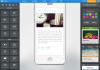
This new site planner is designed to help give people ideas and a little lightbulb-style inspiration that will help them walk through the creative process and vision for the site. Plus, Weebly now offers an HTML5 site creator that offers new themes and pre-fab building blocks to customize their new site, and, most importantly, a new mobile new editor that helps them optimize their site for mobile devices, along with a now-globally available Android app.

In the lead-up to the big launch, co-founder David Rusenko tells us, Weebly surveyed several million consumers and found that about 56 percent of them, understandably, don’t trust a business that doesn’t have a website. And, yet, 58 percent of businesses don’t have a website. Pretty eye-opening in today’s world, when over a billion people are on Facebook and hundreds of millions have so much computing power in their pockets.

Ask the Weebly founders who their core audience is and they’ll tell you, proudly, that it’s entrepreneurs — people who are trying to build their own small businesses, across every industry, not just techies. And, regardless of technical proficiency, the problem that most small business owners struggle with is how daunting it can be to face that blinking cursor, the blank page. It’s the same issue we scribblers deal with in cases of “writer’s block.” When building websites, people want ways to test out their ideas, lay out their vision, and help bring it to life.

So how does it all work?

The new Weebly site planner offers people ideas and inspiration to help ‘em plan and think through the vision for their site, which is pretty cool, as it offers a step-by-step, interactive guide to help them identify goals, organize and layout their pages. According to the founders, 55 percent of people who visit Weebly have never built a website before, so the HTML5 site creator is designed to help make that process easy on n00bs and experts alike, give their site a personalized, unique design, photos, text and so on.

The new mobile site lets users customize how their site looks for their visitors on computers, phones and tablets, allowing them to create a separate design for mobile using a distinct theme, while editing their site in a mobile viewer. As they go, they can switch between different views to see how it will look on both Android and iOS.

In turn, the company’s new Android app basically brings everything that was already native to the Weebly experience to Android, including the ability to create blog posts on the go with drag and drop mobile blogging, add photos and text to their blog, social sharing, push notifications, commenting and analytics.

“For the first time, entrepreneurs around the world have a single place where they can easily
start a site that works across computers, phones and tablets,” said Roelof Botha, partner at Sequoia Capital who led Sequoia’s investments in YouTube, Square, Tumblr and more. “We believe demand for Weebly’s site creation tool is just beginning.”

Users can sign up for Weebly in a minute, pick their site address, whether or not they want to use the free service or a premium plan which starts at $4/month, and jump in. The service now helps you plan the layout, create the site, drag-and-drop-style and publish to the address of your choice. Weebly takes care of the cross-platform optimization and SEO, leaving you to do the rest. Pretty cool.


Ask A VC: Index Ventures’ Mike Volpi On What To Look For In A Board Member And More

images-1

In this week’s Ask A VC episode, we sat down with Index Ventures partner Mike Volpi.

Volpi, who makes investments in both enterprise software and consumer internet companies, serves on a number of boards, including Path, Sonos, Lookout, Hortonworks, Soundcloud, Big Switch Networks, Zuora, Foodily, and Storsimple. We asked Volpi what his biggest challenge is as the board member of a startup, and what entrepreneurs should be looking for in a board member.

He also had some interesting perspective on the latest buzz word du jour, big data, and where we’ll see the most innovation taking place in the enterprise data space.

Tune in above for more!

Audience Development Startup LinkSmart Raises $5 Million From Foundry And Costanoa

LinkSmart logos_high-res_1157x276

A little less than a year ago, a little company called LinkSmart launched to help publishers use text links to get their readers reading more. Now it has raised $5 million in Series B funding to take its technology for growing audiences and make it more widely available. The financing was led by Foundry Group and Costanoa Venture Partners, which was recently founded by former Sutter Hill Ventures managing director Greg Sands.

LinkSmart was founded by former DailyCandy CEO Pete Sheinbaum, to help publishers grow audiences through in-text links. While web content creators have spent the last several years shoe-horning in all sorts of banners and sidebars and widgets, the actual text of most web pages is where audiences are usually most engaged.

With that in mind, LinkSmart wants to give publishers the tools to better take advantage of that engagement, by providing a smarter way to analyze and link between content that they’ve created. There are three main aspects to its technology: analytics, to show publishers which pages could use more links and which they should link to; management tools to redirect links; and even technology to automatically add links to stories if publishers choose to use it.

As someone who just manually adds links to web content all day, I can see the appeal of a system which would not only reduce my need to do so, but would also make links that are put in more relevant to the article, and would drive more clicks. Getting those clicks to go to relevant pages in the publisher’s site is even more of a plus.

With more money in its coffers, LinkSmart is plans to use the funding to expand headcount in places where publishers live. The company has 18 employees, with its tech team based Boulder, Colo., but it’s looking to hire sales and support people in places like New York, L.A., San Francisco, and Chicago.

Roelof Botha On Why Sequoia Isn’t Giving Its Billion-Dollar Companies IPO Pressure [TCTV]

roelof2

A funny thing has happened in tech in recent years. It used to be that you could expect a venture-backed company to file for an IPO soon after a few rounds of funding — after, say, its Series C or Series D raise. But now we’re seeing companies’ venture capital investments go well into the hundreds of millions, and valuations cross over into the 10-figure range, with no S-1 filing in sight. Sequoia Capital, for instance, is said to have a dozen portfolio companies with valuations of more than $1 billion who are still private entities.

So when we had the opportunity to sit down with Sequoia’s Roelof Botha backstage at Disrupt NY this week, we asked him what his perspective is on this trend and why Sequoia is so patient regarding the IPO route.

We also talked about where the PayPal Mafia for the current generation of techies might be forming, how “brain drains” can lead to the next wave of innovation, and more. Check it all out in the video above.

With New Service, Any Device Could Run Almost Any Program From Anywhere

images (41)

In the near future, the only difference between a smartphone, tablet, and a laptop will be the size of the screen. Hardcore gamers could play 3D intensive games in a smartphone, and Michael Bay could render “Transformers 4″ from his iPad. Otoy, an LA-based software company, has discovered a way to stream any application to any device, completely through a web browser. It’s difficult to overestimate the potential disruptiveness of Otoy, as a breakthrough streaming service could, in the near future, end the need for app stores and computer upgrades (see a demo below).

Otoy has a habit of impressing the tech press with its surprising ability to stream 3D intensive graphics to devices that shouldn’t be able to run them. Since Otoy’s 2009 demo, there’s been a rush of companies in the ever more crowded “cloud” services industry, such as Onlive’s streaming video gaming. Up until now, video games were shackled to certain consoles, mobile apps to particular app stores, and software to particular operating systems. If we didn’t own an iPhone, Windows, and or an Xbox, we couldn’t use a lot of cool applications.

But, every device runs Internet browsers, and specifically, the JavaScript which Otoy utilizes to render the software. Soon, the monopoly that iOS, Windows, and Xbox wields over users will end, and the freedom to use any piece of software on any device will become the norm.

Even cooler, we may no longer need to shell out $3,000 on a high-end laptop to run games or graphics software. At Otoy’s media event with Mozilla and Autodesk at San Francisco headquarters, we saw the graphics-hungry first person shooter, Unreal, run seamlessly on an iPhone. In essence, Otoy brings a supercomputer to your phone or tablet.

“That’s going to have huge implications in my business” said celebrity talent agent and Otoy investor, Ari Emanuel, who sees the ability of more filmmakers to make movies in less time and for less money. Currently, it takes an entire day to render movie-quality scenes. With Otoy, globally distributed teams could work in real time (some at the beach) without having to stagger their work for an entire day between revisions.

So, how much will it cost if Otoy completely replaces my computer needs? About $300, estimates Urbach, based on 8 hours of use per day for consumer applications (Otoy charges by computing power and is currently targeting artists).

There is one more implications of note: Otoy could dramatically reduce Internet congestion. Cellular networks are overloaded, in part, because multimedia takes up a huge chunk of the available bandwidth. Netflix, alone, hogs an estimated 32% of total U.S. bandwidth during peak hours. Otoy and Mozilla estimate that the enhanced streaming technology could reduce the total bandwidth needs by a sizable 25%.

In order for Otoy, or any cloud rendering service, to completely service all our computing needs, the Internet must get much more reliable. At the demo, a standard 4G cell network could stream a video game. But, spotty coverage around cities, on airplanes, and in rural areas will be a serious bottleneck for Otoy. Additionally, it’s unclear whether current U.S. bandwidth could actually handle everyone moving to the cloud.

So, while we don’t know the implications in the short term, the implications a few years down the road are very exciting.

We’ve Heard A Similar Reaction To Google Glass Somewhere Before

20130417_111359_200 (1)

Google Glass is finding its way to developers and others and the reaction has been, well, predictable.

So far, there are those who think that Glass will absolutely change the world, that it’s our version of the flying car. Those people are full of shit. On the other side of the coin, there are those who say that Glass will never find a place in the hearts of consumers, that it’s unnecessary and that Google is just trying to be cool. Those people are also full of shit.

The problem is that when new things are introduced, people don’t know how to react, so they go to what they know. There’s either delirious glee or there’s immediate doom and gloom. The fact of the matter is that nobody knows what the future of Glass looks like. Not even Google. This is the very reason why the device was seeded with developers first: Their applications will be what makes the product interesting or not. If iPhone developers had been the only ones with an iPhone, then they would have been called names, too. It’s just the nature of the tech beast.

I was around for the launch of the iPhone, the device that some, including Steve Jobs, said would revolutionize the way we do everything. For the most part, it has in many ways. When it launched, I remember handing my precious cellular device to people who couldn’t wait to take it for a spin. They spent about five minutes tapping around and then handed it back, saying things like “Oh, well I guess that’s cool.” It wasn’t until the App Store was introduced until the real power of the iPhone came into play. Surfing the web, checking stock and weather information and reading your email wasn’t all that amazing and magical.

Here’s CNET’s “Bottom Line” on the original iPhone in 2007:

Despite some important missing features, a slow data network, and call quality that doesn’t always deliver, the Apple iPhone sets a new benchmark for an integrated cell phone and MP3 player.

Is that how you’d explain the iPhone now? Not really.

Then, you had this wonderful moment…

During that clip, Steve Ballmer showed himself to lack the vision to even think about creating a device that could unlock the potential of so many different people, be it developers or consumers. That’s exactly the reaction I’m seeing on the doom-and-gloom side of the coin for Glass.

Just today, Business Insider wrote “The Verdict Is In: Nobody Likes Google Glass.” There were some fair points raised in that piece, but like most things that have been written about Glass, the broader points are being missed. What will Glass do for developers who are looking to stretch their brains, and talents, on a platform that could be on the face of consumers in the next year or so? It’s too early to tell, of course.

There will be a killer app for Glass, mark my words. I have no idea what it will be. There was a killer app for the iPhone very early on, one called Urbanspoon. Get this, you could shake your phone and you’d get a random suggestion on where to eat. That action and experience could never be done on a phone until the iPhone. You’re going to see the same types of applications pop up for Glass, ones that we’ve never imagined.

Until these apps start being built, we’re stuck with people trying to get attention by wearing the device in the shower and swearing to never take them off, or people trying to predict how it will completely bomb and never see store shelves at all. It’s a time that we went through once before, with the iPhone. Apple stayed the course, navigated its way through those bumpy times and came out on the other side. Will Google be able to do the same? There’s no reason to think they can’t, and there’s no reason to think they can.

We’re just going to have to wait.

If you haven’t noticed, waiting isn’t a strong suit of those in the tech space. However, Ballmer should have waited until he shared his opinion on the iPhone publicly, but then again…it was pretty predictable.

Here’s What The Large Hadron Collider Looks Like Through Google Glass

glass ride

If Google is worried about Google Glass being too nerdy, they probably wouldn’t be sending people rockin’ the Glass into the heart of the most gloriously nerdy thing in the world, the Large Hadron Collider.

Fortunately, Google doesn’t seem to care (nor should they) if their amazing little experiment gets a few knocks along the way. As a result, we get videos like this one.

In a just released “Explorer Story” video, Google sends physics teacher/aspiring astronaut/really cool guy Andrew Vanden Heuvel some 500 feet below Switzerland for a Glass-ified tour of the world’s biggest particle accelerator.

As if a bit of first-person footie of the LHC wouldn’t be enough, Andrew got to pipe-in his brother’s physics class through a Google Hangout, allowing students a few thousand miles away to join in on the adventure.

Andrew dives a bit deeper into his experiences with Google Glass in a blog post here. While he mostly focuses on his personal experiences during the trip, he grazes an important topic: “It’s not about the technology, but what you can do with it.”

Look. I’ve used Google Glass. Quite a bit, actually. Would I pay $1500 for it? Probably not. But do I think that Google is doing something worthwhile here? Absolutely.

The criticisms that keep popping up as of late — that it’s a waste of Google’s time, that it’s too nerdy/dorky/whatever — are a depressing affront to a group that’s actually trying to do something new. We demand innovation, then mock an attempt at something novel… even when that attempt has been clearly labeled as an experiment since day one. Blyeck.

Hell, this is probably a post of its own worth writing. Lets just watch the video and enjoy our Friday.

Gentry Underwood On How The Overnight Success Of Mailbox Came From Years Of Working On Orchestra

gentry underwood

After being launched to the public earlier this year, Mailbox appeared to be an overnight success, with hundreds of thousands of users signing up to be a part of its waiting list. But the quick adoption of the app only came after the team behind it spent years developing and iterating on a productivity app called Orchestra. In a conversation backstage at Disrupt NY 2013 earlier this week, co-founder Gentry Underwood walked me through how Mailbox came to be.

“Mailbox is really version 2 of Orchestra, a shared to-do list that we put in the app store in the fall of 2011,” Underwood told me. “Inside the company we were in an endless cycle of prototyping and releases that eventually evolved into Mailbox.”

The road to Mailbox, he said, came as the startup realized that the idea of the to-do list was fundamentally broken. Instead of helping users to organize tasks, they inevitably became a nagging reminder of things people hadn’t yet accomplished. “Everybody fills up to-do lists with things to do, and that’s a great moment because you’re getting your life organized,” he said. “The more people use them, the more they get full of stuff that never gets done.”

The daunting nature of to-do lists ended up providing one of the key features that would eventually make its way into Mailbox — the snooze button. Instead of having an item just staring up at you constantly, snoozing it allows users to file it away to be tackled later. While working on orienting their productivity tool around that, the team realized that most people had a ton of their tasks trapped in their email inbox.

All of that led to a “What if?” moment in March last year, where the team asked themselves, “What if all of your email was somehow all inside Orchestra?” Rather than building that feature into their existing product, they decided to create an entirely new product instead. That app eventually became Mailbox, which launched in January.

Check out the full interview above, where Underwood talks about creating Mailbox, the app’s reservation system, and what’s coming next.

Everyone! Look! Acer!

DSC00337

When was the last time you talked about Acer? Never? Me too. The company, which is the fourth largest PC maker in the world by the way, announced the Acer Aspire R7 this morning. It’s a mighty morphing Windows 8 portable. Like the Lenovo Yoga, it features versatile hinges that allow the computer to take different forms.

The Aspire R7 is not the next big thing. No one is going to buy this thing. But that’s probably just fine.

The Acer Aspire R7 is a halo device. It’s an attention grabber. It’s advertising in the form of product. It’s Acer’s proof to the other big players and startups alike that the company can still hang. It’s designed to sit pretty in the showroom window and entice buyers to come inside to the dealership. It is, in automotive terms, the Chevy Corvette of Acer’s lineup.

Dealerships prominently position the Corvette outside their doors. It’s not around back with the Chevy Econoboxes. It’s right out front. It draws attention. It gets buyers near the door and talking about the brand. It will never outsell the Impala. In fact it’s designed to help sell the Impala.

Expect to see the Acer Aspire R7 on electronic store retailers’ end-caps and nowhere else. Just maybe, with this hot portable occupying prime real estate in Best Buy, more buyers will view Acer as a serious computer company rather than a list of competitive specs available at good price.

Every company produces these high-end products to get the blood moving again. Remember the Dell Adamo XPS? That $2,200 netbook was once displayed at CES on a turntable protected by a bulletproof cube of glass. It was “technically” available for sale, but Dell didn’t expect it to sell en masse. Sony had the uber-high end Qualia line from 2003 to 2005. With prices ranging from $1,400 (MiniDisc player) to $25,000 (SXRD video projector), these products were more of a design exercise than legitimate push into the upper echelon of consumer electronics.

Back to Acer.

The company’s Wikipedia page says it best: Acer sells “inexpensively-targeted” computer electronics. The products are available from nearly every retailer. Acer is, in short, the Lee Jeans of computer: They’re perfectly acceptable, available at Walmart but not a brand that generates excitement.

Now there’s the Acer Aspire R7. The Internet is excited about this computer. Gizmodo says they’re not ready for its level of crazy. But crazy is good. Crazy gets attention. And crazy sells.

Acer is losing marketshare. The company was the second most prolific computer maker in 2009, second to only HP in global sales. It ended 2012 in fourth place, after HP, Lenovo, and Dell. Worse yet, sales and shipments are still trending down.

The consumer marketplace has changed a lot since Acer was near the top. Like Giz said, we’re not ready for the R7′s radical design. But I for one can’t wait to see what else the firm is capable of producing. I would be totally on board with a similar Windows 8 computer albeit one that’s a touch less crazy. And now I’m looking to Acer to provide that where I wouldn’t have even considered the company before.

Oh, and Acer did announce new lower-end notebooks today. Engadget covered them. They’re good, but nothing exciting — which is just about right for Acer.

New VC Firm Happens Right Under Our Nose

IMG_1977

My old boss used to say that a story is something you’d tell someone in a bar or at lunch, so I’m going to tell you guys the tale I’ve been telling people at bars and lunches. Yesterday, Aol Ventures head Mike Brown announced through Dan Primack that he’d be leaving Aol to start his own VC firm, Bowery Capital.

The most interesting part of this story is that Bowery Capital was actually hatched at 670 Broadway in New York, which has the distinction of ALSO BEING THE TECHCRUNCH NEW YORK OFFICES. I’m sitting here right now, and it’s pretty hard to miss the presence of the new firm. Seriously, the Bowery Capital swag and logo is everywhere, and there is literally a pamphlet for their CRO conference on my desk (see below).

In fact, the snazzy team headshots on the new Bowery Capital website were actually taken by a TC videographer. As a favor!

Brown told Aol he wanted to do this last April, and started raising his $33 million fund in October. So, it’s been in the works for a year. When asked why they never got curious as to what was going on beneath their noses and report the story — like what usually happens — one TechCrunch New York staffer said, “I don’t know.”

Well I don’t know whether to laugh or to cry.

Bowery Capital head Mike Brown literally 15 feet away from my desk.

Bowery Capital swag.

A mug with a logo that isn’t Aol Ventures’.

Business cards with a logo that isn’t Aol Ventures’.

A folder, also with a non-Aol Ventures logo.

You left your pamphlet on our desk, somebody.

The FitBark Pet Activity Monitor Is A Reasonable Device For Pet Owners

FitBark

I don’t want to awaken the ire of any committed pet owners — because I think you can do whatever you want with your pets (and your money) — but I would be lying if I said I didn’t cringe a little bit when I hear about extreme pet products and services like doggie treadmills, pet psychiatrists or pet fitness centers and the like.

In a quick conversation behind the stage at TechCrunch Disrupt, an unofficial, unscientific, non-statistically sound poll indicated that “if you don’t have time to walk your dog and need to outsource that to a health club…maybe you just shouldn’t have a dog.”

I concur with those results.

Still, I came across FitBark on the floor of the Hardware Alley at TechCrunch Disrupt NY 2013 and while it could, at first, seem “extreme” I found that after talking to these guys and hearing their explanation, their little device actually seems pretty reasonable.

What is the FitBark? From a technological standpoint, it is a wearable accelerometer that you put on your dog’s collar to monitor their activity. In most ways the product is very similar to products like the Nike Fuel + Band or the FitBit, however the strategy behind it — and this is the reasonable part — is quite different.

FitBark is not designed to be a performance indicator or weight loss utility or competitive device for animals. Instead, it’s just an activity monitor so loving pet owners can make sure their dogs are getting enough activity.

How it works is that, as the dog moves about, their activity is captured and stored on the device (up to three weeks of data can be stored).

Whenever the FitBark comes into the proximity of the owners iPhone’s or optional homebase unit — via Bluetooth 4 or Wi-Fi — the data is transferred off of the FitBark, passed through the FitBark app on the iPhone and transferred up to the cloud where that data is stored.

The historical data can then be visualized on any of the iOS devices that are allowed to view the data. In this way, dog owners can have real-time info about the pet’s activity.

Another hint that the FitBark is reasonable is their one-time pricing model. There are no ongoing monthly service fees or memberships required. You buy the hardware device upfront ($99 from their Kickstarter page), and you get the data it produces for free. I”’m guessing they have worked their data hosting costs into the hardware price.

In this way, it really seems like a tool for care and not a stingy racket for recurring fees.

I’m not sure this is a product I myself would ever use, as I tend to think dogs are evolutionarily equipped to survive living in what James Brown would call “a man’s world.” However I can see how loving, caring and yes, reasonable pet owners might like to see this data about their dogs. Because of that, the FitBark seems like a useful piece of hardware.

And The Winner Of TechCrunch Disrupt NY 2013 Is… Enigma!

enigma-win2

Ladies and gentlemen, we have a winner.

This year’s crop of Disrupt NY Battlefield startups has been one of our strongest yet, but out of the 30 that entered the fray only seven would go on to the final round. HealthyOut, Enigma, Floored, Glide, HAN:DLE, SupplyShift, and Zenefits emerged from the pack as our seven finalists, and their respective teams were faced with another challenge.

They had to take the stage one more time to present and face even more intense scrutiny from our judges, Sequoia Capital partner Roelof Botha, Allen & Co. managing director Nancy Peretsman, SV Angel managing partner David Lee, KPCB partner Chi-Hua Chien, CrunchFund partner (and TechCrunch founder) Michael Arrington, and TechCrunch co-editor Eric Eldon.

Our judges sequestered themselves backstage at the Manhattan Center for quite some time, but they eventually settled on one ambitious startup.

Disrupt NY Battlefield winner: Enigma

Enigma, founded by Marc DaCosta, Hicham Oudghiri, Jeremy Bronfmann, and Raphaël Guilleminot, is a web service that allows its users to dig into a vast amount of publicly available (but hard-to-obtain) data. The service pulls its data from more than 100,000 data sources, but the process of sifting through all this information is deceptively simple — a quick search for a person’s name and company brings up multiple previewable tables of information, and jumping in and playing with data is thoughtfully executed.

Thinking of Enigma as a sort of Wolfram Alpha for public data gets you close, but Enigma is much smarter when it comes to finding connections between seemingly disparate data points. To date, Enigma has raised $1.45 million in seed stage funding, and has locked up partnerships with the Harvard Business School, research firm Gerson Lehrman Group, S&P Capital IQ, and newly-minted strategic investor the New York Times.

You can read more about Enigma here

And the runner-up: Handle

Handle (or HAN:DLE), founded by Shawn Carolan and Jonathan McCoy, is a so-called “priority engine” available as a web app and iOS app that aims to make users become more productive. And how do the apps do that? By basically folding the functionality of an email client and a task manager into a single service. Users are able to “triage” their emails, as well as archive them for later perusal, but they’re also able to create tasks and schedule them for completion on a given day.

The web app is full of power-user shortcuts (hitting the ‘A’ key archives an email, while ‘R’ opens a response) — that coupled with the overall focus on forming a clear picture of what needs to be accomplished on any given day makes for a potentially powerful tool for the chronically busy. So far, Handle raised $4 million from Menlo Ventures (where Carolan is managing director).

You can read more about Handle here.

David Karp: Ten Out Of Ten Of The Biggest Hollywood Studios Now Advertise On Tumblr

Screen shot 2013-05-01 at 6.29.42 PM

Today, at TechCrunch Disrupt NY, Tumblr founder David Karp and Sequoia partner (and Tumblr investor) Roelof Botha took the stage to talk to TechCrunch founder Mike Arrington about how the blogging platform’s plans to take over the world. After a conversation about the merits of building a startup in New York City versus Silicon Valley, the talk turned to how Tumblr plans to monetize their platform.

What’s going to differentiate Tumblr’s advertising over the big honchos of online advertising? Karp says that, unlike the bigs, Tumblr is going after the “top of the funnel,” in other words, advertising that actually inspires you to go out and buy. That’s all well and good, but is it actually working? “Ten out of ten Hollywood studios are buying advertising space on Tumblr,” Karp says. Tumblr is seeing high six-figures per campaign, and “budgets are starting to ramp up.”

In fact, Tumblr really began its monetization push back in May of last year, when it first launched ads on its network. “We’ve had great early traction on our network,” Karp told Arrington, “because our story stands apart from the other big ad networks out there.”

When Mike asked just what it was that made Tumblr stand out, Karp said that he thinks most of the big networks are really focused on bottom-of-the-funnel intent — that is to say, harvesting intent by hitting viewers with blasts of those little blue links that take them to the website of the “right asbestos attorney.”

New media platforms building ad networks are using intent from demographic targeting, timeliness and other roughshod ways of serving the right ad to users, but really they just end up being a group of little blue links designed to convert. In other words, Karp isn’t exactly a fan of search advertising. Sorry, Google.

Instead, Karp wants Tumblr to offer advertisers their own canvas and the space they need to create ads that will actually win awards, he says, the kind of content that one would find in traditional advertising. “We want to give them the space to do anything, a four-second loop, an hour and a half video, a high-res panorama, whatever they need to help them build amazing, interactive ads.”

The problem is that creative brand advertising hasn’t had anywhere to live on the Web, the Tumblr founder says, and the startup wants to build tools to do that — and to build ad space that’s a comfortable fit for social advertising.

Yahoo Acquires 4M-User ‘To Do’ App Astrid, Will Shut It Down In 90 Days

Screen Shot 2013-05-01 at 6.22.21 PM

“Happier, healthier, more productive.” That was the goal of mobile app Astrid, and now Yahoo is taking up the mission as it’s just acquired the to-do app developer. Co-founded by a former Palantir engineer, Tim Su, Astrid says that it has four million users, who as of September 2012 logged 30 million plans on the platform.

Terms of the deal were not disclosed. Astrid had only raised $400,000 from investors that included Google Ventures, Nexus Venture Partners, Jack Herrick and TMT Ventures.

The app will remain online for another 90 days before it’s shut down by Yahoo. In the meantime, it’s not accepting any new users.

It’s unclear whether this is an acqui-hire or whether Yahoo intends to use some of Astrid’s technology for its bigger mobile strategy.

With Astrid, Yahoo is picking up Tim Su’s big data expertise but also skills from Jon Paris, the co-founder and CEO, who before Astrid had also founded another startup, Graceful Tools, an event-planning site. And before that, according to his CrunchBase entry, Paris had been a minister, with one previous role including Campus Director for the Stanford Chapter of InterVarsity, the Christian student group.

“We’re really excited to join the mobile team and continue this work with Yahoo!’s goal of ‘making the world’s daily habits more inspiring and entertaining,’” Paris notes on behalf of the Astrid team in a note on the site.

Launched back in 2008, Astrid was a pioneer in the email management and to-do app space. Now it runs on iPhone, iPad, Android, Windows and desktop and mobile web. The app lets you create lists, reminders, and its Siri integration on iOS lets it act as a voice-based command system.

If some of Astrid’s technology does end up getting used at Yahoo, the acquisition gives Yahoo a potential lever to compete with apps like Mailbox, Evernote and Wunderlist. On the email front, one of the features that Astrid touts is that it can help users clean up their inboxes in 30 minutes.

Angel Investor, Spotify Fixer Shakil Khan Launches Coindesk, A Bitcoin Resource

shakil-khan

Shakil Khan, an angel investor and advisor to Spotify, just launched Coindesk, a Bitcoin resource and news site, amid a boatload of hype and VC interest in the crypto-currency.

Khan says Coindesk was a project he conceived of about four weeks ago, around when Bitcoin was surging to an all-time high. It’s now trading at around $124.38, or about half as much as it was trading at a few weeks ago.

“I was just sitting there and I literally had five e-mails that day from very seasoned entrepreneurs, asking me — what do you know about Bitcoin?” said Khan, who has invested in the space. He was part of a roughly half-million dollar round in Bitpay, which is trying to make it dead simple for merchants to incorporate Bitcoin as a payments method.

“There’s a lack of transparent information. Where do you go to read what’s right or wrong?” said Khan, who has been a head of special projects for Spotify for five years. He was also briefly a head of special projects for Path too.

No, Khan’s not starting a Bitcoin media business. (That would be a head-scratcher.)

“I have absolutely no desire to be publisher,” he said. “That is not my goal. I am just fascinated by the digital currency space.”

Khan says that existing resources out there like Bitcoin Magazine and other message boards are too technical for a more mainstream audience. While helping put together the deal to sell Summly to Yahoo over the last couple weeks, he got together a team of people and part-time writers to publish news about the Bitcoin ecosystem.

But he adds that building a news site is not just a side project either. “CoinDesk, Bitcoins and digital currencies are way, way more than a hobby for me,” he said.

Khan has personally vetted about 15 deals in the Bitcoin space, and moved forward with just one.

“The early guys who are having the ideas have not necessarily run businesses before. They’re looking at it more from an idealist perspective or vision,” he said, explaining why he didn’t go in on other deals.