File Transfer And Sync Service Pi.pe Launches Pi.pe Prints, Offering Photo Printing Options For Over A Dozen Cloud Services

Pi.pe

Pi.pe, the file transfer and synchronization service which emerged from San Francisco-based Pixelpipe, has previously served as one of the only serious utilities to move photos and other media files between all the various cloud services. Since its launch a little over a year ago, Pi.pe’s focus has been primarily on backup and sharing. But it was missing an option for ordering prints – something which most services focused on photo management today offer. Today, that changes.

The company is now launching Pi.pe Prints, which allows users to print photos hosted all over the cloud to locations like Walgreens, CVS, and soon Shutterfly, Tesco, and Fuji Film, too – the latter likely in about a month’s time. Pricing for Walgreens and CVS is the same as is listed on their own websites (e.g. 4×6 is $0.19), but through the integrations Pi.pe will earn 10 to 15 percent of the sale price from its printing partners.

At launch, the new printing service includes support for images stored on Facebook and Facebook Pages, 500px, Flickr, Google Drive (soon), Instagram, Mixi (Japan), MySpace, Trovebox (OpenPhoto), Picasa, Shutterfly, SmugMug, and VK (Russia).

And as before, photos and videos can also be exported to other cloud services including 500px, Amazon Glacier, Box, CX, Dropbox, Evernote, Facebook, Facebook Pages, Flickr, Google Drive, Mixi, MySpace, Orkut, Photobucket, Picasa, Shutterfly, Smugmug, Sugarsync, Trovebox, VK, Walgreens, YouSendIt, and YouTube.

This new printing option places Pi.pe into a different category of services. Before, the startup’s primary competitor was something like IFTTT, as it too allows users to copy and automate the moving of photos from one service to the next. But unlike IFTTT, which offers ways to automate a wide variety of web-based tasks, Pi.pe has been singularly focused on moving and syncing files, generally photos.

The company still has plans to merge its earlier photo-only uploader service Pixelpipe into Pi.pe, to reflect its growth beyond “just pixels,” but that hasn’t yet come to pass. Pixelpipe and its accompanying mobile application lineup still operate independently. But CEO Brett Butterfield tells us the new Pi.pe Android and iOS applications are now just about completed, and both will include printing support at launch.

From the apps, users will be able to print from their phone’s photos, as well as the third-party services Pi.pe supports. That will make it one of the more robust options in terms of ordering prints from your mobile, as current competitors tend to limit themselves to bigger players like Facebook and Instagram.

Pi.pe may not have been the kind of service that users would turn to regularly – you would either use it during a large migration between services, or to enable scheduled syncs between cloud locations as a way to back up files – a sort of “set it and forget it” kind of thing. By offering printing, the company may see more regular engagement among its users who have now transferred over 50 million files to date, up from just 8 million last October.

Between the two services, Pi.pe has just over 1.2 million users, and the average Pi.pe user imports around 700 files and exports over 850, often backing up from Flickr or Picasa to Dropbox or Google Drive, for example. Over 35 percent of users are return users, Butterfield also notes.

That being said, though the service is powerful, it still suffers from a very utilitarian look-and-feel, and a user interface that’s lacking some polish. Scrolling through a large collection – like several years’ worth of Flickr photos, for instance – can be a little slow. Unless you have either a significant number of photos to print, or a fragmented library spanning a variety services, there are a slew of lightweight mobile app alternatives for prints, including things like Shutterfly, Snapfish, Kicksend, Printic, as well as Walgreens’ own app, plus photo book, card, or gift options available through apps like Mosaic, SimplePrints, Sincerely, Magic Moments, and many more.

However, Butterfield says that the eventual plan is to expand Pi.pe’s lineup of print output partners and types, including adding support for options beyond photo printing for things like books, cards, documents, and even backup DVDs. If that’s the case, however “pretty” the app may be would be of a secondary concern, really, because it will be one of the few that can do this sort of heavy lifting.

Interested users can try out the new print option from Pipeprints.com now.

TheFind Draws From Facebook Likes And Past Shopping History To Personalize Product Search

3307v10-max-250x250

Shopping search engine TheFind is debuting a more personalized search feature today. Personalized search sifts through the millions of online products available to give you personal results based on a combination of both your Facebook “Likes” and past shopping searches and clicks on TheFind.com.

TheFind, which launched back in 2006, is a comparison shopping site that surface and categorize more than 500 million product offers from 500,000 stores. The company was recently granted a patent (the seventh in TheFind’s portfolio of patents) for the “Method for Relevancy Ranking of Products in Online Shopping,” and as the company’s CTO Shashikant Khandelwal explains, TheFind wants to rank products based on your social and shopping habits to give you exactly what you want faster.

For people who sign in with Facebook Connect, personalization of your results is based both on your demographics (gender, age etc) and your Facebook Likes and also activity on TheFind. Obviously, the more active you are on TheFind and Facebook, the more tailored the search results will become. So if you are searching for jeans, you’ll see the stores that your friends liked and results from those stores will rank higher than others.

This isn’t the first time TheFind has attempted to incorporate social data into the shopping experience. Back in 2010, TheFind debuted Facebook Connect, and last year debuted Glimpse, a Pinterest-like Facebook shopping discovery app. Now TheFind is hoping adding social to the search experience will help conversions. Another startup playing in the similar space is Lish, the new social shopping app from Payvment.

Identity Platform about.me Buys Wefollow To Boost “Interest” Search

Screen Shot 2013-05-07 at 10.15.57 AM

Startups of a feather flock together. Wefollow, a company that was spun out of Digg, has been acquired by about.me, a company that was spun out of Aol.

And get this, there’s more: Lead about.me investor Kevin Rose was also a co-founder of Wefollow (though hasn’t been involved in the project since 2010), and about.me co-founder Tony Conrad was the lead investor in Rose’s Milk — which sold to Google and eventually staffed up Google Ventures. No conflict, no interest.

Right now Wefollow is a discovery tool which allows people to search for Twitter users based on interests. And about.me is a profile creation platform about to double down on its own user search, which is also based on interests. So a merger makes sense, vision-wise. “As more and more people use the search tool to find and get to know other about.me users,” Conrad tells me,”It’s super important to serve up the right results algorithmically.”

Wefollow’s technology will be used to refine the order in which users will show up in search and its prominence scores will eventually be incorporated into the about.me product.

“Wefollow’s goal is to be on the receiving end of any search for a person known for something,” Wefollow co-founder Jeff Hodsdon says, on why the two products are strategically sympatico, “about.me’s primary goal is to provide context of a person describing who they are with a single page. Which they do beautifully.”

“One great thing Wefollow does is expose lesser known people in niche interests that are starting to come online,” he continues, “People known in their respective interests that are much smaller than whats in our tech world. e.g. Florists, Falconry, Cabinetry, Metal Working, Timelapse Photography, etc. Wefollow is a good directory but doesn’t do people justice like an about.me page does when you land on the person you’re looking for.”

Wefollow had been generating revenue at the time of its acquisition, through a “cost per follow” and featured placement functions. “People are willing to pay to promote themselves in their respective interests. And that is an obvious fit with about.me,” Conrad asserted.

Neither company would disclose the terms of the deal, but about.me has raised $5.7 million from True Ventures, SoftTech VC, Google Ventures, CrunchFund* and others to take the road less traveled by and go it alone sans Aol. Conrad eventually views the platform as a place where people will define themselves with an eye towards “calls to action,” competing with Facebook Graph Search, Google and a slew of other products to define your identity or as Conrad puts it, “provide the best set of tools to present yourself on the web.”

“We designed about.me with a movement around identity in mind – to reach a broad audience – to do so, we knew it needed to be nimble, flexible, easy to understand, easy to use and beautiful,” Conrad explains, “The fundamental power of about.me is its simplicity – you know, the person with no tech experience as well as the uber coder, both can have an equally profound, pertinent experience.”

*Disclosure: Crunchfund, you know the drill.

Facebook Blocks Path’s “Find Friends” Access Following Spam Controversy

20130504-152320.jpg

Facebook’s social graph went missing from yesterday’s update to Path‘s smartphone app, and Facebook now confirms it has restricted Path’s API access. Path can no longer look up your Facebook friends, which prevents it from sending them invitations or suggesting you follow them. The move may be in response to Path spamming user’s contacts with invites last week.

Facebook tells me Path can still use Facebook as a login option and share posts to Facebook. However, its “Find Friends” access has been shut off similar to how Facebook disabled the option for In March for MessageMe, right after shutting off Voxer’s access to the social graph, even though Voxer connected to Facebook for well over a year.

However, those apps were formally cited as competitors. Facebook didn’t say exactly why Path lost access, leading me to believe the spam controversy may have been responsible. It was caught sending out text message invitations to users contacts at 6am last week, leading to significant backlash. Facebook hates being associated with spam, and its platform policies say it can remove API access from apps it thinks are being too aggressive. We’ve reached out to Path for its side of the story.

Until now, Path has let users invite their Facebook friends to download the app, and easily follow friends who already use it. But while you can still invite people from your Contact Book or Gmail contacts in the new 3.0.4 version of Path, the options for Facebook vanished. Oddly, Path’s own customer portal still bears the image of the old app, with Facebook plain to see.

Suffice it to say that losing the ability to invite Facebook friends could hinder the growth of Path, which hit 10 million registered users last week. The more networks the merrier, right? But people can invite their closest friends via text message or email. The bigger issue may be that it’s now harder to develop a micro-social graph on Path because you can’t just choose a subset of your Facebook friends. If you don’t follow or get followed by the right people, Path isn’t nearly as fun, and you won’t use it as much.

Possibly in an attempt to fill the void, Path has added Twitter, which could be quite fruitful for bringing in new users. Currently, Twitter users have no ability to create a more private network for close friends – unless they choose to lock their account – which is hardly the point of Twitter, a network which thrives on the oxygen of the public sphere. Twitter’s userbase skews more toward early adopters who might be interested in Path than Facebook users.

Despite the replacement, Facebook dropping the hammer is a serious blow to Path. Considering many believe it has a high churn rate and it refuses to provide active user counts, Path probably needs to be pulling in users however it can.

Additional reporting by Mike Butcher

[Image Credit: RGBstock / Mzacha Aginnt]

What Games Are: Ok Glass, Let’s Talk Games

wesley

Editor’s note: Tadhg Kelly is a veteran game designer, creator of leading game design blog What Games Are and creative director of Jawfish Games. You can follow him on Twitter here.

It’s very much in its infant phase, the time when the design looks a bit silly and people take photos of those who have one. Yet the Google Glass project is now a real (at a whopping $1500) toy. The reasonably familiar faces of the Valley tech scene are abuzz with the possibilities. Robert Scoble’s even taken a photo of himself showering while wearing one, presumably as some demonstration of the awesomeness of waterproofing.

There are many potentially useful applications. News headlines, tweets, your email on the go and location-aware maps are a good start. Contact recognition, ambient information about people and places and so on. And there’s even the creepy-cool stuff like video surveillance, possibilities for dating applications and so on.

Even if you do look like a dork walking around saying “Ok Glass, where’s the nearest sushi bar?”, it’s still pretty interesting. I suspect that pairing your Glass with your mobile device will be a more common way that users interact with it, because if Kinect and Siri have taught us anything, it’s that voice recognition is rarely perfect. But that too will be great. Imagine, for example, loading up a turn-by-turn map on your phone that then transfers to your Glass. Voila, turn-by-turn cycling and running navigation.

But while these are the sorts of features that gives tech bloggers the squees, for most people they lose their delight factor quickly. It’s amazing how being able to have your calendar on-the-go became something taken for granted, or how mobile email went from being exotic to humdrum in just a couple of years. Remember when it was awesome that you could check Facebook on the bus? These days you expect to be able to do that, but it’s not that exciting. If wearable computers like Glass mostly boil down to yet another notification platform, the average user might think them more annoying than amazing.

Unless they’ve got good games.

Eugene Jarvis, the seminal game designer who gave the world Defender, once famously said “The only legitimate use of a computer is to play games.” And often I agree. For most of us, computing largely boils down to being productive in the office, browsing the web, storing data and playing games. Of all of the above, games are the most genuinely compelling.

Games drive the adoption of platforms in ways that utility software rarely does. Games make computers exciting, and players then talk about their excitement. Few people ever tap you on the shoulder and ask “What app is that?” while you’re typing a document. But when you’ve got some crazy new iPad game, they do. They want to know what that cool thing you’re doing is, and where they can get one. When an Angry Birds moment happens, they do so in droves.

Games market a platform as sexy and give the user an emotional reason to buy in. Look at, for instance, the impact of games on the smartphone and tablet. While the original iPhone was cool for tech fans, for many it only came to life when the App Store happened. And what really drove apps? Games. What drives kids to want to learn to program? Games. What made Facebook go stratospheric? Games. What’s the most interesting app that you’re likely to download on your iPad this week? It’s probably a game.

So when I say that Google needs to be serious about the gaming applications of its Glass platform, I don’t mean it flippantly. Games are what will make wearable computing stick, whether in the form of smart watches, glasses or some other neat device. Fortunately Google seems to agree and has recently hired Noah Falstein to be its chief game designer.

The question then becomes: What kinds of game will fit Glass?

Some folks will immediately jump toward meta-game-y ideas and start to talk about next-generation Foursquares. Augmented reality, location gaming, gamification, digital larping and passive games (like Nintendo’s Streetpass system) all seem more achievable when the user has the ambient awareness of a screen at all times. The idea of playing a large massive-multiplayer real world roleplaying game likewise. I can see half a hundred game executives using the line “What if The Matrix was real?” to pitch that very idea in the coming months.

But meta-games are not going to get the job done. After the novelty of playing one or two wears off, the thinness of meta-games usually becomes apparent, and so they are only ever a fad. For wearable gaming to catch on, the games will have to be a bit more meat-and-potatoes than that. Simple games like puzzles, word searches, hangman, quizzes and original casual games are far more likely to be compelling over the long term.

Figuring out novel ways to use the system’s interactions (such as the touch-sensitive bridge, or the voice system) are where the really interesting stuff might happen. Using your smartphone as a controller, or your Glass as a second screen, might also prove interesting. Ultimately the future may look a little bit like a particularly terrible episode of Star Trek: The Next Generation, where Riker brings a wearable game onto the Enterprise, and it turns out to be a brainwashing device. We may spend our days riding the bus while playing miniaturized versions of Snake, saying “Ok Glass, left. Ok Glass, right. Ok Glass, left. No I said left. LEFT!”

And who knows, that may turn out to be quite a lot of fun.

People Are Speaking, Markets Are Reacting, Fears Are Falling And Hackers Are Gonna Hack!

hackers

Editor’s note: Howard Lindzon is co-founder and CEO of StockTwits, a social network for traders and investors to share real-time ideas and information. You can read his full bio here and find him on Twitter @howardlindzon.

The markets are not changing so much as the technology that makes markets move. The technology has enabled machines to ping each other at speeds that give them an edge over humans (at least in the very short-term) and people are connected to other machines and people in ways that can’t be quantified. The social web and the leverage from these connections have the media confused, and it seems angry, if not completely wrong.

The New York Times $NYT and the rest of the financial media continue to butcher story after story about the social web (media) and financial markets. This week it was this stupid, stupid headline and first sentence:

Twitter Speaks, Markets Listen and Fears Rise
Could the global economy hinge on 140 characters?

The writers of the article have ignored reality, facts and the state of the markets. It is the people who are speaking, and it is Twitter providing the fantastic black canvas of the time. The global economy does not hinge on any one person or event, let alone 140 characters.

The reality is that information is not behind the walls all neat and tidy like Bloomberg, public companies and the wires would like it to be. People who want to be tapped in now follow the right people on Twitter and obviously other networks like Stocktwits that offer communication, context and community. The markets in the real short-term do a real horrific job of listening. They are too big. They react.

The $VIX (one widely accepted measure of market volatility) has been in a steady decline since the social web began its boom in 2009. Here is a chart:

VIX data by YCharts

It makes sense. Everyone is connected, not just the people “in the know.” Of course with everyone holding hands in this new world, the reactions like the AP hacking will be more volatile and the recoveries that we saw after just as fast.

The hackers know this. Hackers are impossible to stop. You just force them to step up their game as the technology improves. Mark Cuban had this to say about the change in markets from technology:

“There’s just no new names, no new energy, no new opportunities, and that’s a problem,” said Mark Cuban, an avid trader, entrepreneur and owner of the Dallas Mavericks. “That’s a reflection of the lack of trust, the fact that we don’t know what business the markets are in, and there’s so much algorithmic trading and technology-driven trading it’s created downstream problems.”

More rules are not going to help. Better enforcement of the existing rules and punishing the thieves that break them is the solution.

We are still paying for awful regulations that were a reaction to past hacks on the financial system from the likes of Enron (which led to Sarbanes-Oxley Act) and the investment banks and mortgage panic (Frank Dodd).

If we let guys like Bart Chilton get his way around this type of shoddy headline writing, the walls will get higher around the financial world, not lower, and we will go backwards.

Napster For Pirated 3D Printing Templates?

2012-04-25_1239

Buy it in a store, laser-scan it at home, upload it to the web, print it anywhere. 3D printing is poised for the mainstream, but what happens when one person’s finely hand-crafted designs can be pirated and reproduced by anyone? Will 3D-printing-piracy social networks arise? And how will manufacturers lobby to stop them?

The ideas came out of my conversation at TechCrunch Disrupt NY with Alex Winter, director of the new documentary about Napster called “Downloaded”. While The Economist pondered these questions last year, and The Pirate Bay has coined the term “physibles” for 3D-printed objects, Winter takes the next step. He suggests a Napster for 3D printing models is inevitable.

I believe it. The way the music industry was unprepared for the mp3 revolution, the manufacturing industry seems similarly behind the curve. It might even be worse off. At least the record companies had the Digital Millennium Copyright Act to fall back on. As of now, physible designs could be interpreted as falling into a gray area between art and media protected by the DMCA, and what can be patented. 3D printing template marketplaces like 3DLT could also get sideswiped by piracy.

I imagine this situation will lead to the rise of a Napster for 3D printing models along with websites like The Pirate Bay’s physibles section. People will build up curated collections of designs, pass them back and forth, and you’ll be able to print cheap versions of expensive objects from tools to jewelry, furniture to toys, and even guns. The idea of people being able to download an array of weapon designs could be terrifying or liberating depending on your perspective.

Eventually, the old manufacturing industry will wise up, and independent designers will band together to try to thwart physible piracy. They might aim for changes to the laws to make this kind of piracy more clearly illegal with stiff penalties. They might also aim for some sort of digital rights management standard. Imagine if pirated designs could be added to a blacklist and the most popular 3D printers like Makerbots, Printrbots, and Cubes wouldn’t allow you to print them.

However it all plays out, it’s sure to be exciting. It’d be a shame to see piracy erode the livelihood of craftsmen and women the way some believe it does for musicians and game designers. As amateur 3D printing turns from science fiction to destiny to reality, a new set of challenges will emerge for meatspace artists whose work can be boiled down to ones and zeros.

[Image Credit: The 7 Stars]

Salesforce Joins Datahug’s $4M Series-A, While Valley VCs Love Its ‘Who Knows Who’ Platform

Screen Shot 2013-05-04 at 17.53.57

Last October, Datahug, a ‘business networking automation’ startup, which is also being used by VCs, secured a €2.5 million Series A financing led by European VC DFJ Esprit. But it’s now adding to that pot. We’ve confirmed Salesforce has decided to join that round in an “expansion” of its Series A, which includes original investors Draper Fisher Jurvetson (in the US), DFJ Esprit (UK), Oyster Capital and leading Valley investor Ron Conway. The full A-round is now $4m and brings the total raised to $5.5M over two rounds.

Datahug was founded in 2010 in Ireland and is expanding sales aggressively into the US market. Current customers include European VCs Balderton Capital and DFJ Esprit as well as Grant Thornton, Plantronics, BDO and CPL. Commenting, T Paul Thomas, CEO and cofounder with Connor Murphy of Datahug, says he’s been “impressed with the extremely positive response from US investors and customers.”

The startup estimates that it finds around 400 contacts per person that aren’t captured in any existing CRM system or database. The solution works by indexing existing communication logs – such as emails, contacts and calendar data – to create an enterprise-wide picture of “who knows who”. The platform then attributes a ‘HugRank’ score to show how well they know them. It requires no data entry to capture the relationships and connections that exist, making it pretty easy to use.

Gillmor Gang: Glass Onion

gillmor-gang-test-pattern_excerpt

The Gillmor Gang — Robert Scoble, Kevin Marks, Keith Teare, and Steve Gillmor — well, we talked Google Glass. @scobleizer has certainly made the case for the life-altering shower-taking scenarios, but what the Gang got into was what happens next. Do we wait for the actual launch early next year, or is the die already cast with this alpha rollout? One thing for sure: there’s plenty to unravel in this second Glass hour in a row.

What lurks beneath the actual hardware and the choices Google has made in terms of enhanced reality – no, and an atomization of some key aspects of the phone – yes, is the stark choice the search company must make in playing open with Android. @scobleizer reports switching about 30% of his notifications and alerts from iOS to Android, understandable as the Glass interface is the first point of contact for audio chimes and call announcements but not the visual. Glass is in reality more of an audio device with some visual renderings and recorders.

But will the price point Scoble suggests they need to meet — $200 — really be reachable to them unless they can get mass data to subsidize some significant portion of the hardware? More likely, they will open the hardware to iOS much like they just did with Google Now (part of the Search app) and make their stand with turn by turn against Siri. Both Google and Apple will face an increasingly sophisticated customer base that can see just how far voice and facial recognition can really go without mass data from across what used to be called the Web.

In a way, Glass is Google’s response to the iPad Mini, which has rolled up an enormous part of the existing tablet market by cannibalizing its big tablet and adding a large percentage of the 7-inch minis. At several Gartner conferences this week, the number of Minis was reminiscent of what happened when the iPad first broke through on planes. In one fell swoop, Apple captured the lion’s share of the unique gestures made possible by the Mini form factor, which makes it easy to do 90% of both enterprise and social computing in conjunction with the phone. Glass does the same thing for Android, creating a pool of unique gestures that can be expanded upon with advanced services that connect Glasses together.

The common wisdom is that Google doesn’t get social, but Glass is an opportunity for them to get out front with the phone, just as Apple has with the Mini. If Google doesn’t interoperate with the Mini, it will provide an opening for Apple and the nextgen iPhone. More importantly, Glass has to reach the broad market as Search, Gmail, Apps, and Maps have done to feed the data monster it sells off as realtime advertising. Apple’s common wisdom Achilles Heel, not getting the Web and massive Cloud scale, means they will continue to open their platform to Google to maintain market while exploiting their lead in media integration. They lose data they can’t yet handle, but maintain their hold on developer and media revenue and buy much needed time.

@stevegillmor, @scobleizer, @kteare, @kevinmarks

Produced and directed by Tina Chase Gillmor @tinagillmor

Live recording chat stream

Celebrate Star Wars Day By Blinding General Grievous, Losing R2

3UP_R2A6_Photo_watermark

Beep boop boop bee squeee! Happy May 4th aka Star Wars Day (say the date out loud and you’ll figure out why). In celebration, quite a few hardware vendors have released special gear for the day, thereby allowing you to celebrate the magic of George Lucas in proper Mandalorian fashion.

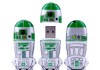
First we have a charming facsimile of R2-A6, a green R2 unit that is a favorite of the Naboo security forces. Made by Mimobot, this sassy little droid you’re looking for comes with built-in content, including desktop backgrounds and icons. They also make a Jar Jar Binks USB key if you’re so inclined.

Next we have something from Lucasfilm lawsuit recipient Wicked Lasers whose Arctic laser looks like everything but a replica of a light saber. To celebrate May 4th, the company has released the $75 Phosforce that turns the Arctic laser into a white LED flashlight that can pump out an Ewok-blinding 500 lumens, allowing you to swing your thing around in the dark swamps of Dagoba or the back alleys of Coruscant.

To be clear, the Phosforce attachment must be purchased in addition to the $299 laser body and the adapter turns the Arctic’s decidedly dangerous blue laser light into eye-safe white light. It is not exactly an LED flashlight in the traditional sense but instead uses white-emitting phosphor. Also, to be clear, you can burn the heck out of your eyes if you mess with this thing wrong, so be careful.

Happy fourth and remember: Han shot first. May you live long and prosper.

How To Go From $0 To $1,000,000 In Two Years

million-dollars

Editor’s note: James Altucher is an investor, programmer, author, and several-times entrepreneur. His latest books are I Was Blind But Now I See and 40 Alternatives to College. Please follow him on Twitter @jaltucher.

A few weeks ago I wrote a post about how this was the year you had to quit your job. I gave the reasons why. It wasn’t a gung-ho “you have to be an entrepreneur” article. It was more: bad shit is happening in the corporate world and bit by bit you’re going to feel the urge to quit.

Correctly, many people asked, “Well, what’s next? What should I do?”

I’ve begun asking people who did it. What did they do? How do you quit your job and basically, make a million dollars?

Not everyone is Mark Zuckerberg or Larry Page. Not everyone is going to drop out of college and create an iPhone or a time machine or a toilet that resizes itself automatically depending on who is sitting on it (although that would be pretty cool).

Some people would simply like to quit their jobs and make a good living. Some people would simply like to quit their jobs and make a million dollars. In that movie (the Justin Timberlake vehicle), JT says, “A million’s not cool. A BILLION is cool.”

Well, actually, very often a million is pretty cool. Not everyone is going to be a VC-funded $100 million hotshot. Sometimes it’s nice to make a million dollars, be your own boss, and use that financial freedom to catapult to success.

So  I called Bryan Johnson, who started a company called Braintree. You might not have heard of Braintree but you’ve heard of their customers. They provide credit card transactions or payment services for companies like  OpenTable, Uber, Airbnb, etc.

Completely ripped from the OpenTable blog. Apparently they were using OpenTable.

I’ve never spoken with Bryan before. I am not an investor in Braintree. As far as I know I’m not even an investor (unfortunately) in any of the clients of Braintree. I like to call people who I think have interesting stories and hear what they have to say. That’s the way I build my network of not only financial contacts but potential friends. I’m shy and ugly and don’t have many friends.

But I knew Bryan had an interesting story of how he set up Braintree and I figured it would fit this category of “what do I do next?”

In 2007, Bryan was a manager at Sears. He quit his job and within two years was making over a million a year. Eventually Braintree grew much bigger and raised $70 million from Accel and others, but that wasn’t what was interesting to me.

“How did you do it?” I asked him. “What are the initial steps.” And he told me. So I will tell you.

“I really disliked my job,” he said, “and I never believed in the idea of getting a fixed wage. I had been a salesman before in the credit card processing business where I would go out and get merchants like restaurants and retailers to switch their business to the company I was selling for. So I figured I could do this but work for myself instead of another company.”

Rule No. 1: Take out the middleman. Instead  of Bryan going back to the company he used to sell for, he cut out the middleman and went straight to a credit card processor, worked out his own reselling agreement with them, and did all of this BEFORE leaving his job at Sears.

Many people ask me, “I”m at a job, should I raise VC money yet?” NO, of course not! First you have to hustle. VCs want to back someone who shows a little oomph!

Rule No. 2: Pick a boring business. Everyone is always on the lookout for “the next big thing.” The next big thing is finding rare earth minerals on Mars. That’s HARD WORK. Don’t do it! Bryan picked a business that every merchant in the world needs and he also knew that it was an exploding business because of all the online stores that were opening up. You don’t have to come up with the new, new thing. Just do the old, old thing slightly better than everyone else. And when you are nimble and smaller than the behemoths that are stuck with bureaucracy, you can often offer better sales and better service, and higher touch to your customers. Customers will switch to you.

Rule No. 3: Get a customer! This is probably the most important rule for any entrepreneur. I’ve written about this before (“The Easiest Way To Succeed As An Entrepreneur”). People want to go the “magical path” – i.e. get VC money, quit their jobs, build a product, and then suddenly have millions of customers. It NEVER works like that.

Bryan found 10 customers (out of the first 12 he approached) who would switch their credit card processing to him. He figured he needed to make $2,100 a month to quit his job. With his first 10 customers he was making $6,200 a month, so he had margin of safety. He quit his job and suddenly he was in business.

Rule No. 4: Build Trust While You Sleep. This rule is often “Make Money While You Sleep.” But Bryan already was making money while he slept. He was making money on every credit card purchase with his first 10 customers.

“I didn’t want to be going up and down the street looking for customers,” Bryan said. “I needed to find a way to get online businesses as customers. Someone suggested that I needed to blog. And to blog well you need to be totally transparent or it won’t work. So I started blogging about what was really happening in the credit card industry, including all the unscrupulous practices and how merchants were being taken advantage of.  Then I’d put my posts on the top social sites at the time: Digg, Reddit, and StumbleUpon, and sometimes the posts would get to the top of these sites and my website would get so much traffic that it would crash.

“But I became a trusted source about credit card processing. So before long all these online sites that had previously had a hard time navigating this industry would start contacting me to switch their payment services.”

So a couple of things there.

Rule No. 5: Blogging is not about money. Blogging is about trust. You don’t sell ads on your blog (rarely), you don’t get the big book deal (rarely), but you do build trust and this leads to opportunities. In Bryan’s case it led to more inflow, rather than him going door to door, and it also led to his biggest early opportunity. My own blog has made me a total of zero cents but has created millions in opportunities for me.

“Basically, OpenTable called me and they wanted a software solution to handle storing credit cards, handing the data to restaurants, and being compliant from a regulatory standpoint. I signed a three year deal with them that allowed me to build a team of developers and we built them a solution. We now had more services to sell to customers.”

Rule No. 6: Say YES! He started out just connecting merchants with a credit card processor. Then OpenTable asked him to do software development when he’s never developed software before. He said YES! He got software developers, built a great product, and quadrupled his income or more. And then it put his business in a whole new stratosphere of services he offered customers. Suddenly, word of mouth was spreading and other online companies started using Braintree’s services: Airbnb, Uber, etc. And the VCs started calling because all of their clients were saying Braintree was providing all of their payment services. It’s not that easy for startup online companies to get payment services.

“When I first started, for each new customer we’d put together an entire package for our credit card processor on why we thought the customer could be trusted and would be a legitimate merchant.” Which leads to…

Rule No. 7: Customer Service. You can treat each customer, new and old, like a real human being. “We intuitively sort of knew what we didn’t like in customer service everywhere else: automated calling trees, slow response times, poor problem solving, etc., so we made sure there was as little friction as possible between the customer contacting us and actually getting their problem solved.” When you are a small business, there’s no excuse for having poor customer service. Your best new customers are your old customers, and the best way to touch your old customers is to provide quick help when they need it. Customer service is the most reliable touch point to keep selling your service to them.

By year 2 two, Bryan was making over a million a year and was doubling every year. They couldn’t hire fast enough.

In 2011, after four years in business, Braintree took in its first dime of money – $34 million in a Series A round. And right now, according to CrunchBase, they process over $8 billion worth of credit card transactions annually.

Not bad for someone who quit his job and just wanted to figure out a way to get his bills paid.

[See also, “Why Do People Hate Their Jobs”, or …follow me on Twitter @jaltucher]

Google’s Cloud Is Eating Apple’s Lunch

8245100091_ac0edd66c8

A new front has opened in the smartphone war, and for the first time in many years, Apple is both outnumbered and outgunned.

I’m not talking about the phones themselves. iOS is still better than Android, although the gap has narrowed. The next iPhone will doubtless be the best phone in the world when it’s released, as ever. It won’t be as customizable – no Swype, no Facebook Home – but those remain relatively minor inferiorities.

The new battlefront is different. The new battlefront is the cloud: Google Maps vs. Apple Maps, Siri vs. Google voice search, iCloud vs. Dropbox et al, and Google Now vs…well, nothing at all, yet. This is a big deal. As we grow accustomed to an always-online world of ubiquitous computing, your phone becomes less a device in and of itself and more a gateway to its cloud services. And it’s very hard to argue that Apple is anything but the serious underdog here.

You know they have a problem when even die-hard Apple supporter John Gruber is linking to pieces like “Apple’s Broken Promise: iCloud and Core Data,” which is replete with quotes like “If they couldn’t get iCloud working, who can?” … “It just doesn’t work” … “Many of these issues take hours to resolve and some can permanently corrupt your account” … “A developer’s worst nightmare.”

Remember when Siri was introduced, and people were pronouncing it a serious threat to Google Search itself? No, really. Haven’t heard that one in a while, have you? And not without reason; Siri seems to have stagnated, while over in Mountain View, Google is doing some truly phenomenal things with many-layered neural networks — and superior voice search is just one of the applications.

Can Apple match that? Who knows — but it’s safe to say that this kind of thing, cutting-edge technology beyond great hardware and superb design, isn’t their core strength. It’s Google’s. As is shown by Google Now, which is inexplicably treated as nothing more than Google’s answer to Siri by hordes of writers who apparently can’t think beyond simple dichotomies. It’s much more than that; until Siri tells you what you should do before you ask, there’s really no comparison.

Meanwhile, Google Now has been released to iOS, continuing Google’s ongoing battle to dominate the iPhone app space. (They’ve been quite successful; the two most-downloaded iOS apps are YouTube and Google Maps.) As TC’s Semil Shah has pointed out, thanks to Apple’s iOS restrictions, no third party could build a true iOS competitor to Google Now on Android. Only Apple itself has that power.

But will they succeed? And by the time they do, will Google have outstripped them again? Again, nobody has a crystal ball; but Google has a long history of building superb, scalable, reliable, (mostly) developer-friendly, and technically groundbreaking web services. Apple…does not.

That said, a bet against them is by no means a guaranteed win. Consider Apple Maps, which has taken great strides since its initial stumbles. And as my friend Lunatic (no, really) pointed out while debating this post with me on Twitter, it’s a bit rich to call Apple overmatched while iOS’s share of the American smartphone market still seems to be increasing, and

@rezendi At least it's actual data, rather than anecdotes. & more adept at skating to where the puck is going to be: Apple/Google? Arguable.—
Lun Esex (@LunaticSX) April 30, 2013

But at the very least, on this new cloud-services battlefront, Apple is in the unfamiliar position of underachieving underdog up against the mighty Google war machine. With Google I/O and Apple WWDC both only weeks away, we can expect to find out soon whether either has a new secret weapon. Let’s hope they both do, because the great thing about this war is that when these two giants do battle, everyone else usually wins.

Image credit: Clouds over SoMa, by yours truly, on Flickr.

Silicon Valley And The Reinvention Of Food

soylent

Fake meats have been around for years, but a new crop of Bay Area startups backed by tech investors think they can make meat substitutes good enough to compete with the real deal. Beyond Meat — backed by Twitter founders Evan Williams and Biz Stone via their company Obvious Corp — created an eerily accurate chicken substitute, for example.

But the most ambitious project is Rob Rhinehart‘s cheekily named “Soylent,” an attempt to replace food entirely with a liquid shake that has all the protein, fat, carbohydrates and micronutrients you need. The only ingredients recognizable as food are salt and olive oil. He claims to have lived exclusively on the stuff for a month. He says he has started eating real food again, but two months later he still gets 92 percent of his meals from Soylent.

Rhinehart makes an unlikely food scientist. He’s an engineer fresh off a stint at a Y Combinator-backed networking startup called Level RF that never exited stealth mode. He says he doesn’t have a background in chemistry. “Formally no more than an undergraduate level, but I am a huge proponent of self-study, online courses, and textbooks,” he says.

He decided to create Soylent because he was tired of spending so much time and money on food. “It takes me about five minutes to portion out all the ingredients at this point,” he says. “Without water it keeps for years so I could make it far in advance to save this time.”

He’s still working out the kinks. For example, he recently posted that he had run into some trouble with sulfur deficiency. Next Rhinehart is looking to do controlled experiments with a much larger sample base. “I have spoken to no biologist that doubts the feasibility of this,” he says.

But mainstream dietitians remain skeptical. “My short answer is that I don’t know any more about this product than the limited information provided on the product website,” says Diane Stadler, PhD, RD — a registered dietitian and assistant professor of medicine at Oregon Health & Science University. Stadler warns that although we know many of the essential nutrients in food, we don’t know everything and there’s a strong possibility that an elemental diet like this could miss something critically important. “I would not promote this type of diet to the general public, as there are many ways that it can go wrong, especially if consumed long-term,” she says.

Rhinehart’s defense is that people who don’t eat well are probably already missing important nutrients. But he admits it needs more testing. He’s already selling the mix to several people, and is seeking funding. “I need funding to scale up production and conduct more controlled testing,” he says. “I have received orders of magnitude more requests than I can possibly fulfill, which is lost revenue.”

There are already many meal replacement shakes on the market, but Rhinehart plans to offer cheaper, customizable products. “An athlete would need a lot of protein, an elderly woman doesn’t need many calories, and a coder or engineer type could elect to have nootropics included, if desired,” he says. “Meal replacement products can be even more expensive than traditional food. Soylent is already much cheaper, and due to the lack of real food sources, scales very well in manufacturing.”

Given the Valley’s current penchant for food startups, I wouldn’t be surprised to see him land a round. Besides Obvious Corp, Khosla Ventures and PayPal founder and venture capitalist Peter Thiel’s Breakout Labs are also in the game.

Khosla is backing Hampton Creek Foods, which has a product called “Beyond Eggs.” It’s also backing a few other food and agricultural companies, including artificial salt company Nu-Tek Salt and fake meat company Sand Hill Foods. Last year at TechCrunch Disrupt San Francisco Khosla went so far as to say that the artificial beef, which is made from soy protein, is still “beef.” At any rate, Anthony was pretty impressed with Beyond Eggs earlier this year. Khosla also has investments in a company working on alternatives to salt and a beef substitute. Breakout Labs has invested in Modern Meadow, a company that aims to “print” lab-grown meat and leather.

All of these companies are challenging the common nutrition advice to eat whole foods and vary your diet. In fact all these projects fly in the face of current food trends that advocate whole, unprocessed foods. Both the Michael Pollan, “eat food, not too much, mostly plants” set and the Paleo set both agree that it’s best to avoid processed food and just eat what nature gave us.

But the implications could be wide for the world. I try to eat natural whole foods, but I always feel a bit uncomfortable hearing from organic food zealots and the anti-GMO crowd. Fresh organic food is expensive, and cooking meals from scratch is time consuming. And there are, y’know, starving people out there who would love to get at some highly processed, genetically modified soy.

“I think humanity has been running on the equivalent of crude oil for ages,” Rhinehart says. “Imagine creating an efficient source of fuel for every living human, alleviating global hunger and malnutrition, reducing the environmental impact of farming, performing research on poorly understood biological mechanisms and potentially bringing agricultural societies in to the global economy.”