
The P7s are the first over-the-ear headphones B&W has ever made, and of course, the build quality and the choice of materials is exquisite, bordering on decadent.
     |
Blancer.com Tutorials and projects
Freelance Projects, Design and Programming Tutorials
hacking,system security,protection against hackers,tech-news,gadgets,gaming
The P7s are the first over-the-ear headphones B&W has ever made, and of course, the build quality and the choice of materials is exquisite, bordering on decadent.
| |
![Term Sheet Gavel_thumb[3]](http://tctechcrunch2011.files.wordpress.com/2011/09/term-sheet-gavel_thumb3.jpg?w=322)
Editor’s note: David A. Boag is the founder of BOAG | LAW, PLLC, a boutique intellectual property law firm based in SoHo. Follow him on Twitter @boagip.
Just over a week ago, the House passed the Innovation Act (H.R. 3309), an innocuous-sounding bill that contains sweeping changes to U.S. patent law motivated in large part by “the troll problem.”
Here’s what you need to know about patent trolls: I once defended an international restaurant chain that trades in pancakes, in a patent matter. That actually happened — and more than once. Absurd patent assertions are legion, and many are left scratching their heads with one hand, demand letter in the other, asking, “why me?”
The patent troll sometimes goes by the less pejorative label, “NPE” or “non-practicing entity.” The distinction between troll and NPE is a fine one since not all NPEs are trolls (a university might be an NPE but not a troll), but let’s use “NPE” to be consistent with prevailing usage.
NPEs (the bad ones) are undeniably a problem. By one estimate, companies that have been targeted by NPEs spend $29 billion a year in direct costs, with $83 billion a year in lost wealth, an amount that the authors concede is conservative. So Congressman Bob Goodlatte (R-Va.) took action.
The Goodlatte Bill (Didn’t We Just Do This?)
The House Judiciary Committee has taken a renewed interest in NPEs, and on October 23, Goodlatte introduced the Innovation Act, a wide-ranging patent-reform bill aimed at making it more difficult for NPEs (the bad ones) to operate.
What’s notable is that the act made it from committee introduction to full vote in about 43 days, which is fast for any piece of legislation.
Patent attorneys still talk about the 1952 Amendments (some of us are not good dinner party company) because we don’t do this very often, and for good reason. Patent law is one of the more complex areas of the law and when you tinker with that law, even with the best of intentions, sometimes you break things. When I was 10 my parents had a Sony Betamax VCR that I decided to “fix.” We upgraded to VHS the next day. Best of intentions.
For that reason, changes to the Patent Act tend to be slow and deliberate, and include hearing the opinions of a wide range of those that will be affected. The last major change to the patent system, the 2011 America Invents Act, took almost six years to come together, but it failed to rein in abuses by NPEs.
Looking Under the Hood
The act (summary) includes a number of provisions that intend to make it difficult for NPEs to operate, either by increasing costs or risk or requiring a more detailed pre-suit investigation. Some of the more controversial points include making the loser pay the other side’s litigation fees, requiring far more up-front technical detail in support of the infringement claim, and halting all discovery until after the court interprets the patent claims.
The act also provides for staying a case against customers where there is a pending action against the manufacturer, and requiring transparency of ownership of the litigated patent. A few NPEs are notorious for playing a hide-the-owner shell game.
The act includes a number of cleanup changes to the 2011 America Invents Act. Sometimes you need to fix what you break. We’re looking at you, 112th Congress.
Everyone’s Got An Opinion
With this much money at stake, there are a lot of opinions in the room. The Hon. Paul Michel, the former chief judge of the Federal Circuit (the court in charge of hearing nearly all patent appeals) was succinct in his criticism, saying that the act will “punish the innocent to corral the guilty, without really addressing the bad behavior of the guilty.”
The American Intellectual Property Law Association (a 15,000-member trade group of lawyers, judges, USPTO employees and the like) published an open letter to the House leadership calling for a balanced approach that preserves the rights of traditional patent owners and preserving the discretion of the courts to manage the cases before them.
The Federal Judicial Conference, American Bar Association, and IEEE, among others, all voiced their concerns to the Committee.
These “nays” say that the best long-term fix to the problem is to improve the quality of patents issued by the USPTO by fully funding the office and not diverting fee revenue to other agencies (the USPTO sometimes takes in more than it spends).
In the other corner (the “yays”) is a roster of tech heavyweights that includes Apple, Google, Twitter, Yahoo, Microsoft, Oracle — companies who bear the brunt of abusive NPE litigation.
The Electronic Frontier Foundation, a stalwart defender of free speech, privacy, innovation, and consumer rights, called the act “the best shot we’ve had at meaningful patent reform yet,” making the world harder for trolls and “safer for true innovators.” Companies with an Apple-sized litigation budget may be less concerned with more expensive access to the courts, something that would be felt most by small inventors, small businesses, nonprofits, and the like.
Is the Building On Fire?
So who’s right? NPE litigation is a very real problem for companies both large and small, and it’s a drain on the economy. With the stakes so high, getting this right should be the first priority.
In his testimony before the committee, David Kappos, the former head of the USPTO (who is now in private practice), questioned the urgency in the room: “Caution also calls for us to ask: is the building on fire? Do we have an emergency that requires immediate action? No. The building is not on fire.”
The concerns of the leading alliance of patent practitioners, the former head of the USPTO, and former chief judge of the nation’s highest patent-specific court should cause everyone to stop for a moment and consider whether this is the best approach. In a laudable attempt to discourage abusive NPE litigation, the act increases costs for everyone and ties the hands of the judges who are at the front lines of the problem. Everyone, not just Intellectual Ventures and its subsidiaries, are discouraged and inhibited from availing the resources of the federal courts.
Next Stop: The Senate
Meanwhile, next door in the Senate, the Patent Transparency and Improvements Act of 2013 has been introduced. The act (here’s a handy summary) lacks the fee-shifting, loser-pays, and discovery limitation provisions of its House counterpart, but keeps a version of transparency of ownership and invokes the FTC in the fight.
A press release from Sen. Pat Leahy D-Vt. (and a sponsor of the act) voiced the same concerns as Judge Michel and the AIPLA so this might take a while.
Hearings begin December 17.


Although the Chinese government believes that smog “unifies people, makes China more equal, and makes people funnier,” we all know it also can kill you. That’s why Birdi is so interesting. It’s a dedicated air quality sensor that hides out on your wall, looking to all the world like a simple smoke detector. However, instead of telling you about something is imminently killing you, it tells you about the smog that is slowly killing you.
The team is asking for $99 for the early bird Birdi. They are working closely with PCH International’s Highway 1 incubator, a hardware-only accelerator based in San Francisco and led by Brady Forrest. This is one of the first companies to launch out of the group.

Birdi can sense multiple environmental factors including temperature, CO2 level, carbon monoxide levels, as well as standard smoke. It also senses humidity and particle density, which is important in smoggy locales. It will notify you when it’s out of power and all of the sensors connect to your phone via a contract-free web service. This means when the Birdi senses a problem you get a notification on your iOS or Android phone and you can track statistics over time.
The group has hit $10,000 in pledges out of a $50,000 goal. It’s led by Mark Belinsky and Justin Alvey and is based in New York. They write:
I’ve been seeing more and more of these standalone air quality sensors and it’s quite interesting. Because smog is a problem even in areas where there is little visible evidence of heavy pollution – and especially considering the conditions in Shanghai and Beijing, it makes a lot of sense to start thinking about air quality as a worldwide problem. Hopefully the Birdi can save us before we cough our way to an early grave.


After a week of Yahoo Mail outages that began four days ago, CEO Marissa Mayer has posted an apology to the company Tumblr. In it, she gives some details about the issue, which was apparently related to a hardware failure — and says that the issue affected 1% of Mail users.
“For many of us, Yahoo Mail is a lifeline to our friends, family members and customers,” reads Mayer’s apology. “This week, we experienced a major outage that not only interrupted that connection, but caused many of you a massive inconvenience — that’s unacceptable and it’s something we’re taking very seriously. “
The issue began on December 9th late in the evening, when a hardware outage alerted the engineering team to an issue with storage that served 1% of Yahoo’s users. The issue, says Mayer, was a ‘particularly rare’ one. Mayer also notes that a confusing ‘scheduled maintenance’ error which some users had seen during the emergency was in error.
Mayer says that, as of this afternoon, Yahoo has restored access to ‘almost everyone’ and delivered the queue of messages that was held up from being delivered. IMAP access has not been completely restored, nor has the complete inbox states of users with folders and ‘star’ statuses. So if you log in to your inbox and see that stuff still missing, it’s theoretically coming. Yahoo says it will be reaching out to individual users on the status of their inboxes.
“Above all else, we’re going to be working hard on improvements to prevent issues like this in the future. While our overall uptime is well above 99.9%, even accounting for this incident, we really let you down this week,” Mayer’s note concludes. “We can, and we will, do better in the future.”
The outage began suddenly and has gone on for an extremely long period of time, especially for a critical service like email. We reported on the issues on Wednesday, noting that the issues were affecting small business owners.
“Yahoo is so overwhelmed they cannot answer phone calls or reply to emails,” one user told TechCrunch. “I’ve been on hold for hours and hours since last Sunday, spoke twice to a real person who in both instances sent me to another number that is absolutely unreachable.”
“They have shut down the websites of countless businesses. The last person I talked with [via phone] acknowledged they have no idea how many people they’ve impacted.”
While we found Yahoo’s recent Mail redesign to be pleasant, and to carry over some nice design cues from its mobile efforts, not everyone felt the same. Many users were irritated by its changes and the loss of some well-liked features. Yahoo Mail SVP of communications products Jeff Bonforte also sent an internal email that noted that the majority of internal Yahoo staffers had not yet switched to the new Mail product.
And just yesterday, Yahoo’s imaging site flickr also suffered an outage, going offline and remaining so for several hours.
Yahoo and Mayer have faced criticism over how they handled this outage, with All Things D’s Kara Swisher calling them out for what she said was poor communication. Mayer also published a brief update to her personal blog on Wednesday with the title Yahoo Mail restored and a link to a help doc, but the restoration had not in fact been completed.

In this week’s episode of Ask A VC, DFJ Managing Director Josh Stein joined us in the studio to talk about his investing strategy, and much more.
Stein, who has backed and invested in Box, Chartbeat, LendKey, Selligy, SugarCRM, Swell, AngelList, Redfin, Tremor Video, and Twilio, explained that DFJ is often the first institutional money in a startup. At that stage, Stein talked about what he looks for in an entrepreneur and an idea, speaking specifically about Box’s Aaron Levie and Dylan Smith, as well as Redfin’s Glenn Kelman.
He tells us, “It’s about great people who are motivated less by money but by wanting to change some problem and are really persistent. It’s really hard to build a startup so we want people who are going to stick with it.”
Check out the video above for more.


Ford’s Alan Mulally was going to save Microsoft from obsolescence through his storied leadership and management skills. Until he wasn’t. For a hot minute Qualcomm COO Steve Mollenkopf was on the list. Until he, too, was not – about seven seconds later.
As Bloomberg noted before Qualcomm hung a “hands off” sign around its executive: “Mollenkopf is on a list of several candidates who are under serious consideration [….] [the] list also includes Microsoft executive Satya Nadella and other outside candidates.”
What’s interesting is that, through several rotations of CEO bingo, Nadella has managed to remain a leading candidate, as others fell in the stakes. AllThingsD’s Kara Swisher notes, for example, that incoming executive president Stephen Elop has seen his fortune slip:
Elop was considered the top contender (by me, at least), after Microsoft bought the mobile phone division of Nokia. But — for a variety of reasons — he soon fell behind two other internal candidates, Bates and Nadella.
Nadella, in the meantime, is on something of a media tour, speaking at LeWeb about his vision for cloud computing and the future of Microsoft. He also gave an interview to Quartz. You can divine this flash of face time as a comically timed fluke, but Microsoft’s board must be watching to see how Nadella performs with a far bigger spotlight on his back.
And how is he doing? Well, Nadella’s a nerd, which is a pretty good thing at a technology company. He’s certainly warm in person, at least in my experience. That said, he does speak like what he is: An experienced technology executive working on cloud computing.
Apart from his core domain, Nadella can meander a bit. His talk at LeWeb included an answer about Xbox that made me giggle:
Recently, Xbox One shipped, and we have Forze Motor 5, and there’s this one feature of it which is just stunning, right, so you are playing, you are racing, [and] it’s learning how you race, it creates a digital avatar, that then on behalf of you, races with others, and you get points for it.
Nadella manages to look at the new Xbox One console from a data analytics perspective. Later on he did discuss the console more holistically, but it was a humorous way to start his thoughts.
With his technical chops all but unimpeachable, Nadella’s prowess is less-proven prowess with consumers. During his time working with the Online Services Division, he had surface area with consumers, but it certainly isn’t the bulk of his experience.
However, the simple answer to that argument is that if it were perfectly acceptable for Mulally to not be a technologist, the fact that Nadella might not be a hep cat about phones doesn’t matter.
One interesting facet of the most recent Microsoft reorg is that anyone who steps in to lead the company will find a competent leader at each of the company’s divisions (how competent in each case is your own value judgment). So, as Mulally would have had to lean heavily on his captains to run the ship, Nadella simply being better at cloud than Xbox isn’t much of a critique.
While Microsoft turns over Nadella in its head, we in the public get to enjoy watching a company select its next head, a person that is widely expected to serve for a decade. It’s no small choice, which I believe is why Microsoft gave itself a full year to make the choice.
Some are starting to question the process’s length, which I don’t understand. To get a person of the caliber that Microsoft wants — needs, even — takes time. People with resumes that strong are in short supply, and have an annoying tendency to be currently employed.
Nadella would make a fine Microsoft CEO in my estimation, but there are others who could also find success in the role. For now, the 44-year-old Nadella’s public profile has never been larger.
Top Image Credit: Flickr


You need an SD card for your brand new camera. Do you save some scratch and go with the cheapest SD card, or do you splurge and opt for one of those expensive versions that come with names like Ultra or Extreme?
| |

Twitter has introduced a new blocking policy that is materially different from the one that they’ve had in the past. Blocked users can now see your tweets while logged in and continue to follow you on the service, allowing potential harassers or abusers to continue to track your updates on the network, even though you’ve explicitly blocked them.
This greatly reduces the effectiveness of some aspects of the block functionality on Twitter and opens the door for those who have been harassed or stalked on social networks to have their updates monitored more easily. Blocked users can now retweet your tweets, fave them and RT them while logged into their account.
TechCrunch spoke to Twitter about the changes, and the company says that the change, which does not notify or alert the person you’ve blocked in any way, was done to prevent a scenario of retaliation. The company said that they had seen situations where users, once they discovered that they had been blocked — because they could no longer view tweets or interact with tweets — would find other ways to attack or harass the blocker or even be spurred to greater abuse.
This new method means that the only way to prevent someone from following you or interacting with your tweets is to make your account completely private. This will prevent anyone you block from seeing your tweets.
It’s worth noting that you could previously view the public tweets of users that had blocked you while logged out of the service — and by visiting a profile page. But now they can do it while logged in and interact with them. If you’ve blocked them, you will not see these interactions, but others will, and those you have blocked will still be able to fave tweets, for instance, and see those in a list of tweets that they’ve faved.
This new blocking method is more of a mute filter that prevents you from seeing any tweets or interactions from a blocked follower. But those interactions still happen. In some ways, this new method is actually a more accurate picture of what happens with a Twitter account when you block someone. They could always see your tweets and manually RT them to their followers by copying and pasting text. Now, however, they can do so within the constructs of Twitter — you just cannot see them. Though their followers and anyone searching for your name can.
Twitter notes that those tweets may also show up in your searches.
Here is the current blocking policy:
If you block another user, you will no longer see:
Twitter also notes the following:
If your account is public, blocking a user does not prevent that user from following you, interacting with your Tweets, or receiving your updates in their timeline. If your Tweets are protected, blocking the user will cause them to unfollow you.
And here’s the previous policy:
Privacy note: If your Tweets are public (i.e., not protected), they will still be visible on your public profile page to anyone, regardless of whether they have a Twitter account or not.
We do not send notification to a user when you block them, but because they will no longer be able to follow you, they may notice that they’ve been blocked.
The changes to Twitter’s policy may indeed prevent some immediate knowledge that a user has been blocked, though they didn’t get a notification before and still won’t get one now. It could cause a lag between the time that they get blocked and when they realize it — but the scenario by which this could prevent retaliation once discovered gets blurrier.
Many Twitter users who have been abused and who undergo continuous harassment on Twitter — especially women — will likely not be pleased that their tweets can now be easily favorited and re-tweeted within the confines of Twitter’s platform. Yes, their tweets were never truly private because Twitter is a public service — but a policy that makes it easier to interact with tweets and add commentary to them (even if it’s not visible to you, personally) seems like it will cause many to cry foul.

In 2012, just over half of all Internet traffic came from bots and, according to the latest data from security CDN service Incapsula, this year the number has increased to 61.5 percent.
At first glance, this sounds like this means the number of nefarious attacks is up, but Incapsula actually notes that the bulk of growth in this number is due to what it calls “good bots.” Visits from certified agents from search engines and similar tools increased from 20 percent to 31 percent, for example. According to Incapsula, many search engines have lately increased their sampling rates. In addition, the SEO tools that try to help websites rank higher once they are crawled, also now often visit sites more often than ever before.
About a third of bots, the company argues, are malicious, but thanks to Google’s Penguin update making comment spam relatively useless as an SEO technique, the number of spam bots has decreased from 2 percent in 2012 to just 0.5 percent this year.

What’s up, though, is the number of bots that try to impersonate a real use. Incapsula believes most of these are “automated spy bots, human-like DDoS agents or a Trojan-activated barebones browsers.”
One thing to note here is that Incapsula gathered this data by looking at stats from its own 20,000 customers. The companies that sign up for the kinds of security services the company offers may not be exactly representative of the Internet as a whole. Not every site, for example, has to deal with regular DDoS attacks and needs Incapsula to mitigate these. Still, the company’s data clearly shows that the number of bots is on the rise, though the numbers for your own site will likely be quite a bit different.


A recent change to the way that Gmail displays images will have an effect on marketers, but it won’t be as dramatic as others have suggested, according to a Google spokesperson.
The company announced earlier today that when Gmail users open an email with images, they’ll no longer have to click the “display images below” button to actually see the pictures. Instead, those images will just load automatically.
Seems like a nice-but-minor improvement, right? Maybe for consumers, but not for marketers, according to Ars Technica. The issue is that (as Google notes in its blog post) the pictures are now loading from Google’s servers rather than the senders’. Ars writes:
E-mail marketers will no longer be able to get any information from images — they will see a single request from Google, which will then be used to send the image out to all Gmail users. Unless you click on a link, marketers will have no idea the e-mail has been seen. While this means improved privacy from e-mail marketers, Google will now be digging deeper than ever into your e-mails and literally modifying the contents.
But a Google spokesperson I emailed said that’s not entirely correct. (The spokesperson declined to be quoted.) Instead, they said marketers who track open rates through images will still be able to do so — indeed, they suggested that the data might be more accurate now since open rates will count users who read the emails but don’t load the images. What won’t get tracked, however, is other user data like users’ IP address. So this seems to do more to protect privacy without leaving marketers totally in the dark.
Email marketing company MailChimp suggests something similar in its blog post on the subject:
Using cached images is a fine idea for Gmail, but it has the potential to mess with open tracking for ESPs. Fortunately, MailChimp can still detect the first request for the open-tracking pixel. This won’t interfere with the count of “unique opens” you get in your reports, but it could prevent us from seeing multiple opens per subscriber. …
In Gmail’s announcement today, they said image caching allows them to securely turn on images by default. Image caching still lowers our ability to track repeat opens, but turning those images on means we’ll be more accurate when tracking unique opens. At least, theoretically it should work that way.


Procrastinating party throwers in San Francisco have options to toss together a soirée in short order. Let me restate that: You can have whiskey delivered all but into your glass without the need to put pants on.
Launching today is a company called Lasso, which will deliver high-end meat, cheese, wine, and booze to your apartment in a few hours’ time. But Lasso isn’t the first company in San Francisco capable of providing you with Whiskey as a Service (WaaS). Instacart, the popular grocery-delivery service, is back to the booze game, which presents us with a conundrum:
So which should you use to get your tipple on?
Lasso has a decent, if limited selection of whiskeys to choose from. As you expected, it has Bulleit (both rye and bourbon), Glenlivet 12 year, and Jack Daniels. On the lower end you can get Evan Williams, and more towards the top – comparatively – Macallan 12 year.

However, only 17 options are at your disposal.
Heading over to Instacart, it’s hard to directly compare the two services, as Instacart will bring you booze in San Francisco from four different stores, including its own Instacart Plus option. So, we’re really comparing what Whole Foods, Safeway, and Costco have compared to the brand-new, smaller, and higher-end Lasso.

Instacart Plus has 25 whiskey bottles up for sale, Safeway has 59, Whole Foods has zero, and Costco has 7. This means that when it comes to raw options, Instacart blows Lasso away. Still, Lasso and Instacart are different services with ostensibly distinct goals. Let’s keep looking.
Let’s compare Bulleit’s bourbon, Glenlivet 12 year, and Jack Daniels to get a feel for the list price differential between the two services [Whole Foods is redacted given that it’s not into the whiskey game on Instacart’s platform]:
Bulleit [750 ml]
Glenlivet 12 year [750 ml]
Jack Daniels
Given the disparities between what is offered around the various stores, it’s hard to line up a one:one:one:one comparison, but I think that we can see a reasonable trend that Lasso’s booze prices are either commensurate with the competition, or better. Far better, in the case of Bulleit when compared to Instacart’s offering.
So, if Instacart has better selection, and Lasso is a bit better on pricing, we turn to delivery to get our hands around which service you should use to get your cirrhosis on.
Because Lasso is new, it’s not charging for delivery at the moment. This is incredibly dangerous for us in the public, as it lowers the marginal cost of single malt. Instacart, an established company with what appears to be settled unit economics, isn’t leaning on short-term strategies such as free delivery to grow its customer base.
So for the moment, Lasso is cheaper than Instacart when it comes to delivering your booze.
For example, 1.75 liters of Jack Daniels at Lasso will set you back $36.99, with no delivery costs, and tax of $3.24. Total tally? $40.23.
That same bottle will cost you $42.59 through Instacart, not including $3.99 in delivery costs, and $3.73 in tax. (Also, if you don’t tip your Instacart delivery person you are a bad human, so that’s another $3 through the app. But you would tip your Lasso delivery person the same amount in cash, so the cost balances out.)
So, the tally comes out to $50.31 on Instacart against $40.23 on Lasso, disregarding tip. Until Lasso starts to charge for delivery, which it will in the future, on some whiskey bottles it looks like a deal. Instacart’s far greater selection, however, might be worth more to you than the price delta.
–
San Francisco, there are two mobile services that will deliver you booze. Stand proud. This is what being lucky feels like.
Side note: Why does Lasso eventually have to start charging for delivery? Simply this: It doesn’t want to go the way of Rewinery.
Top Image Credit: Flickr


Bring on the school holiday pageants, local baseball games and armchair poetry slams… YouTube today announced that it is expanding its live video services to the masses. Everyone who has a verified account can now stream live video on YouTube, and verified accounts can now create a Google+ Hangout on Air.
The company today has not given an update on how much take-up the live service has seen overall, but big-name, high-profile live events have proven to be major draws on the platform. The Red Bull Stratos Mission, for example, drew 8 million concurrent viewers.
Live events give Google a way to complement the role it plays as the archive of the long-tail and keeper of viral clips. “Appointment” viewing around live events presents specific kinds of advertising opportunities and helps YouTube position itself more securely as a TV alternative.
Whether that positioning can work in the context of long-tail content that may not attract that many concurrent users is another question. On the other hand, it presents particular opportunities for hyperlocal advertising that complements Google’s pitch as a one-stop marketing shop for smaller businesses.
The YouTube live video service has been in a “beta” mode for the last year, with selected accounts in specific categories like music, gaming, sports, news given the facility for live streams. The service was extended to accounts with at least 100 followers in August of this year. Before that, the limit was 1,000 followers.
YouTube says all verified accounts in good standing are now eligible, regardless of the number of followers.
The feature is getting rolled out internationally over the next few weeks. Those who are interested can check to see if it’s been turned on for them here. Your Video Manager status will also indicate when it’s been turned on.
This service might drive more YouTube users to go through the process of verifying themselves on the platform — thereby giving Google much more data on how people are using the service, and to suggest things to you in particular. Similarly, the other feature getting announced today could help Google drive more users to Google+.
The Google+ Hangout On Air, which lets users create two-way video broadcasts, is another way to drive more usage to Google+.
You can launch a Google+ Hangout on Air directly from the YouTube Live events manager. “This gives you a simple way to reach your fans live and is the ideal way to to invite participants to join your show,” writes Satyajeet Salgar, product manager, and Tim James, software engineer, in their blog post.
Image: Middle School Musical, Breaking Bad

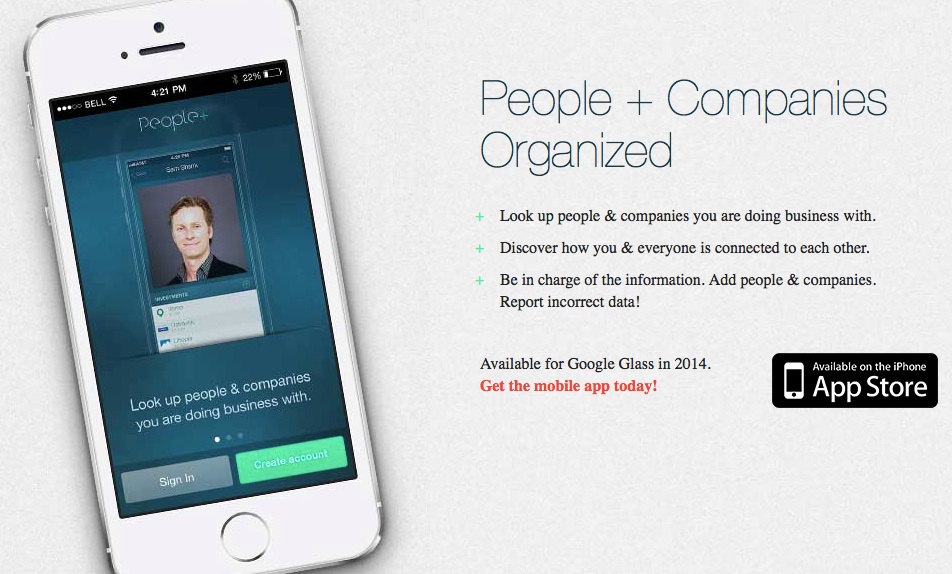
Following a legal dispute with Pro Populi, the company behind startup database People+, CrunchBase is announcing new terms of service. CrunchBase data will now be available through a Creative Commons Attribution-NonCommercial 4.0 license.
CrunchBase President Matt Kaufman also told me, “People+ has agreed to operate under our revised Terms of Service,” which presumably ends the legal fight.
(Conflict of interest alert: As the names imply, CrunchBase and TechCrunch have always had close ties, and we’re part of the same team at AOL.)
The dispute arose when CrunchBase tried to stop the startup from using its data, suggesting that People+ was just creating a copycat competitor. The position taken by People+, and then by the Electronic Frontier Foundation, was that CrunchBase had the right to decide who accesses its data through its API, but People+ had the right to continue using the data it had already collected, because it was licensed under Creative Commons.
Put another way: The CrunchBase team ended up looking like it didn’t really understand how Creative Commons worked, or at least what the vast majority of online commentary suggested.
But like I said, it seems like the legal situation is resolved, and the new terms will hopefully prevent similar conflicts in the future. As I understand it, the big change is that the data is only available under Creative Commons for non-commercial use. If the use is commercial, you’ll need to get a license from CrunchBase.
This is how Kaufman explained the change in an email:
Our position is that the old terms made that clear, but EFF and People+ argued that you cannot leverage Creative Commons while attaching additional terms (found in the TOS and license) to Creative Commons. It’s a “spirit” vs. “letter of the law” debate with no resolution. The new terms make our position unambiguous.
Meanwhile, People+ co-founder and director of product Kate Scisel told me:
We have been overwhelmed and thankful for the support of EFF and the tech community particularly Hacker News and some of the original team who created CrunchBase. We are thrilled with the outcome and are looking forward to continue growing our product and the company far beyond this controversy.


Aereo, a TV streaming service backed by media mogul Barry Diller, is in the middle of a fierce legal battle. The company uses remote, miniature antennas to pull free over-the-air signals from broadcast networks like Fox, ABC, NBC and 27 others, delivering the stations to customers’ connected devices for $8 per month.
Not surprisingly, broadcasters and media executives are not pleased with these methods and have tied the company up in legal battles. In New York, major broadcasters like ABC, NBC, Fox and others have taken their case to the Supreme Court, and have asked the court to appeal decisions made by the lower circuits, which ruled in Aereo’s favor.
Today, however, Aereo has filed a response with the court, agreeing with the opposition’s petition for the Supreme Court to hear the case.
The company released this statement today:
We have decided to not oppose the broadcasters’ petition for certiorari before the United States Supreme Court. While the law is clear and the Second Circuit Court of Appeals and two different federal courts have ruled in favor of Aereo, broadcasters appear determined to keep litigating the same issues against Aereo in every jurisdiction that we enter. We want this resolved on the merits rather than through a wasteful war of attrition.
“The long-standing landmark Second Circuit decision in Cablevision has served as a crucial underpinning to the cloud computing and cloud storage industry. The broadcasters’ filing makes clear that they are using Aereo as a proxy to attack Cablevision itself.
“Aereo provides to consumers antenna and DVR technology. With Aereo, a consumer tunes an individual, remotely located antenna and makes personal recordings on a cloud DVR. The Aereo technology is functionally equivalent to a home antenna and DVR, but it is an innovation that provides convenience and ease to the consumer. The plaintiffs are trying to deny consumers the ability to use a more modern antenna and DVR by trying to prevent a consumer’s access to these technologies via the cloud.
“Consumers have the right to use an antenna to access the over-the-air television. It is a right that should be protected and preserved and in fact, has been protected for generations by Congress. Eliminating a consumer’s right to take advantage of innovation with respect to antenna technology would disenfranchise millions of Americans in cities and rural towns across the country.
“We are unwavering in our belief that Aereo’s technology falls squarely within the law and we look forward to continuing to delight our customers.”

As it turns out, the anti-Aereo crowd is having a tough time winning in court. First, Aereo was hit with two separate lawsuits from major broadcasters like PBS, Univision, Fox, NBC, and ABC in the Southern District Court of New York. The judge denied their motion for a preliminary injunction against Aereo. When the same networks brought that decision to an appeals court, they refused to reconsider the decision.
Then, Hearst (which happens to be an ABC affiliate) filed a similar lawsuit in Boston after the company rolled out service in that market. The court did not grant Hearst a preliminary injunction, nor did it grant Aereo’s request to move the lawsuit to the New York courts, where Aereo had already received a favorable ruling. And in what is becoming an obvious pattern, Fox Broadcasting Co. filed a lawsuit against Aereo in Utah just after the service landed there.
Aereo was built with a specific ruling in mind, a precedent set by Cablevision. In a case a few years ago, a similar question was brought up by broadcasters who weren’t fond of Cablevision’s remote DVR service, which stored recorded and on-demand content in the cloud rather than on the customers’ box set.
The court eventually sided with Cablevision, which has been a determining factor in Aereo’s current legal battle.
With this latest filing in the Supreme Court, the broadcasters are trying to have the Cablevision precedent overturned. So again, why would Aereo agree to have this case heard on a federal level?
Well, it partially comes down to one billionaire. Heir to the Coca-Cola Hellenic shipping and bottling company, Alki David is a media entertainment mogul who owns companies such as Channel 3 Dish Networks in California and Nevada, Channel 8 Los Angeles, and KILM Channel 64 Los Angeles. He also happens to be the founder of a company called FilmOn, previously named AereoKiller.
FilmOn claims to offer Aereo-like technology, though that has yet to be confirmed or clarified by anyone. Still, the broadcast networks are equally displeased with the streaming TV company’s existence and have filed lawsuits against FilmOn in California and Washington D.C.
In the California case, the networks didn’t investigate into FilmOn technology beyond what David had claimed, which was that his technology was “Aereo-like.” A decision is currently pending on that case in the Ninth Circuit.
In the conspiracy theory version of this story, Alki David is secretly working with the networks to purposefully lose lawsuits and be deemed illegal by markets who have historically been strict on copyright issues. That way, Aereo (which is on the record as being similar to FilmOn) would be banned in those markets.
In the non-paranoid version, Alki David is simply a competitor who is throwing stones in the road before Aereo.
Either way, David’s FilmOn has left Aereo no choice but to go federal.
If FilmOn didn’t exist, Aereo might be able to enter into California or D.C. or other markets with a few W’s on the record, making individual lawsuits easier to win. But if FilmOn continues to lose on a case by case basis, things get much more difficult for Aereo.
With a win in the Supreme Court, lawsuits against FilmOn or any other “Aereo-like” technology will be irrelevant as Aereo will be deemed nationally legal.
Aereo had plans to expand to 22 new markets by the end of 2013, and has only made it into nine of them. But with all the legal fuss, the delay makes sense. Perhaps with a win in the Supreme Court, 2014 will be a smoother year for the disruptive TV startup.

I like to write. A lot. I write a lot for TC, and then when I’m done here, I like to write non-fiction, and most recently, fiction. I just finished a novel – and “finished” is a very loaded term when it comes to writing, but let’s say I’ve completed the story – and now I’m crowdfunding it. I’m going to write about my experience here on TC because I’ve been an avid supporter of both crowdfunding and new publishing paradigms for years but I’ve never put my money where my mouth is.
So here goes.
I just launched my Indiegogo campaign, and with the help of a few friends it got off to a good start. I’ve hit $1,600, mostly in paperback sales, but I got one whale who paid $500 to appear in the next book in the trilogy. I almost worried that I priced the campaign too high. I’m looking for $8,000 to publish the book mostly because I’d like to get some economies of scale if I’m able to sell a few hundred print copies (and maybe a few more electronic copies.) In retrospect I should have shot for lower, but I’ve seen that $8,000 is about the advance you get for a first-time fiction book these days and I wanted to see if a relatively lucky dude could make that on his own. In order to recreate the full publishing experience, I wanted to aim for something close to that to see if I could actually “earn out,” as they say in the business. It’s a bold experiment that could backfire.
I’ve also discovered that social media is awful for sales conversions. My posts have been retweeted and tweeted to millions of people (I got a shout out from Jim Gaffigan, which was amazing) but I don’t think I’ve gotten a single bite from someone I don’t know personally. Like the grumpy dad who funds his daughter’s crowd funding project on Portlandia, this is mostly a friends and family round.
Portlandia: Kickstarter by IFC-Official
I’ve also chosen to price my ebooks at or around Amazon prices simply because selling them for $4 or even 99 cents doesn’t seem like a solid decision, especially this early in crowdfunding. The paperback book price should allow me to break even on the printing but I am afraid of the hardback version pricing, although everyone has assured me that printing is not as drastic an expense as I thought. What I’m really excited about, oddly enough, is producing a special edition of the book for backers that will be more a work of art than a hardback. Although I don’t believe in the future of print, it sure is fun to hold a nicely done book, and I hope to offer that to my backers.

I did a very straightforward video with a DSLR and a nicely lit room. I also had our own Bryce Durbin help with a few illustrations for the book, which has really added a great deal in terms of personalizing the product. The kind folks at Indiegogo gave me a few pointers, including the suggestion that readers want to know, personally, who they’re pledging to. To that end I added a bit about my inspiration and some personal history.
This is actually quite frightening. Throughout my tenure at TC I’ve become increasingly supportive of the little guy. I don’t like the Sonys and Random Houses of the world, I like the mad tinkerers who create smartwatches, cameras, and guitars out of whole cloth without huge budgets or even much experience. This is the era of the informed amateur making it big, at least in hardware, software, and media. Instead of waiting to turn pro in some cubicle farm somewhere or slaving away namelessly on a trunk novel, amazing people are doing amazing things in their basements and garages.
I’m realistic about this. It’s a novel aimed at young adults but I hope it will appeal to older folks as well. I’ve seen only a few sales in the few days the campaign has been live and I honestly have no idea how this will end. I know I’m very lucky. I get to talk about my project to a huge audience and I’ve also been lucky to have a fairly large social presence online. But I know this will be hard. I’ll be posting intermittent updates over the next forty-five days and then, if I’m funded, post what I learned while getting a book published from the comfort of my keyboard. If you have any specific questions drop me a line at [email protected] or tweet me. Until then, here’s hoping the world doesn’t hate what I made.
You can read more about my project, as I post updates, here.
