Game Frame Puts Pixel Art On Display In The Coolest Possible Way

gameframe

Displaying pixel art at larger sizes in your house can be as simple as making a large print, but that means you’re stuck with a single image. San Francisco’s Jeremy Williams wants to make something a little more dynamic, so he has created the Game Frame, a square box with 256 LED lights that’s designed to make it easy to show off pixel art and OG video game art.

game-frame

The Game Frame calls to mind a simpler time, when we used graph paper to create most digital art, and if you could assemble colored squares, you could help build a AAA video game title. It’s also a modern interpretation, however, and a way to display either your own original creations or those that live in your fondest memories.

gameframe

Pre-installed on the Game Frame are 40 new animations from pixelart legend eBoy, but you can easily move your own over via SD storage using BMP files with a maximum resolution of 256 pixels (or 16×16, though larger images are supported via panning). The SD card can potentially store thousands of images, according to Williams, and the frame itself is Arduino-based and works with all existing Adafruit libraries, plus it’s fully modable, and has a playable Breakout clone pre-loaded, so it’s not just for showing off pretty art.

imagesBackers can pre-order a unit at $210 fully assembled, or less if you want to supply some of your own parts plus some elbow grease. They’re going to ship in June, according to the project page, in batches of 300 per month. Ideally, someone buys a bulk order and opens a gallery using these things, because they’re pretty awesome.

Ephemeral And ‘Anonymish’, Wut Is About Mass-Texting Friends Without Revealing Your Identity

wut-3

Somewhere between Snapchat’s rise and the NSA spying revelations, it became en vogue not to have our daily adventures and thoughts etched in stone on a timeline or profile page.

Capitalizing on this trend were Whisper, Confide and then Secret.

Now there’s Wut, from one member of Square’s founding team, Paul McKellar.

It’s a very, very, very simple app. Just a text screen with a fluorescent background. You type in what you want to say, and then it shoots out as a push notification to all of your friends. You never reveal who you are. (But people might be able to guess because they’re your friends, after all.)

“It’s an ambient pulse of what your friends are doing and using,” said McKellar, who quietly launched the app a few weeks ago with Beamer Wilkins.

Like Secret, it riffs off Frank Warren’s PostSecret project.

But Wut’s updates are even more transient than Secret’s. They live on the lockscreen, and then they disappear. You can’t go into the app to find them.

“Wut’s messages don’t build up over time. You don’t have to go back and read 47,000 tweets. The most you can see at any time is five messages,” McKellar said.

The app’s deceptively simple design — no content in a feed and nothing to look at inside — made it difficult for Apple’s app store reviewers to understand Wut’s purpose. They kept sending it back to McKellar until he had to literally record a video of himself using two phones for it to make sense.

The messages I get on Wut are pretty frivolous (see the attached screenshot where I asked a bunch of people to send me messages. Wut wut?!).

Occasionally, memes run through the community. Last week, it was about saying who you were having dinner or coffee with that day or night.

Wut’s push notifications are also silent, meaning the app won’t interrupt you if you aren’t looking at the screen.

“You’d never get woken up in the middle of the night by this,” said McKellar, who was most recently an entrepreneur-in-residence at SV Angel after leaving Square.

The hope is that this might take off amongst teens, who are used to being bombarded with messages all day long and get the idea of self-destructing content from products like Snapchat. Wut is currently bootstrapped.

Newly Discovered Snapchat Weakness Could Allow Hackers To Crash Your Phone

snapchat

With great power comes great responsibility, and as Snapchat continues to grow rapidly, security researchers grow increasingly interested in the security of the platform.

Security researcher Jamie Sanchez has today exposed a vulnerability within Snapchat that opens up the app to a denial-of-service attack. By overloading an inbox with messages, hackers can freeze and crash the iPhone, requiring the user to reset their device. For Android devices, the attack doesn’t crash the device, but does make it noticeably slower, according to the Los Angeles Times.

“We are working to resolve the issue and will be reaching out to the security researcher who publicized the attack to learn more,” said Snapchat in a statement.

The original report explains that hackers can reuse tokens (that are generated by the app to verify user identity) to send hundreds of messages within seconds, which could be used by spammers to take down large groups of Snapchat users, or individual accounts.

Sanchez notified the Los Angeles Times of the vulnerability before notifying Snapchat, claiming that Snapchat “has no respect for the cyber security research community.”

And he kind of has a point.

Over the holidays, Snapchat was notified by security researchers that a security hole opened up the app to hackers who might want to expose user data. When the notification was ignored, hackers proceeded to publish the phone numbers of 4.6 million users to prove their point.

If you want to see the DoS go down, the LATimes has a demo video of the attack right here.

We’ve reached out to Sanchez for clarity, and will update the post as soon as we know more.

Secret Hits A Hot App Milestone With Discovery Of First Security Issue

secret-hacked

Well that didn’t take long. The new anonymous sharing app Secret, which has morphed into Silicon Valley’s “blind item” (and a great place to troll reporters, apparently) has been hacked. Don’t worry, it’s not that serious. The hack doesn’t expose who said what – though we’re sure someone is already working on that because, hey, nothing is ever really anonymous.

However, the hack does expose that Secret may have less than ideal security measures in place, which may be concerning to those spilling their guts or trash-talking on the service. (Unless all your friends already know which secrets are yours, of course.)

The hack allows users to make requests under the context of another user, which is possible because the server doesn’t do any authentication to check that you have the correct user token. What that means, in practice, is that a user could do something like comment on another person’s post, despite it being clearly marketed as “Public Comments Disabled.”

For background, the way Secret works is by obscuring the identities of those on its service. The app asks you for your phone number and email when you sign up, and then uses your address book to tell you when something has been posted by a friend a friend of friend, or if it’s something that just became popular on Secret which made it available for all to see. In the latter case, Secret displays the item’s location, like “California” or “New York.”

You can’t typically comment on those items, since you’re not in the poster’s friend network, but the hack changes that. Here’s how it works:

[Note that in the video, I’m asking him to angle his phone so I can get a better look at the screen, which was in a separate video stream. I could see the comment he was able to post, but the quality of that video was sub-par. I’m including a screenshot instead.]

Here’s the hacked post, as referenced in the video:

photo-secret

The person who pointed out these apps’ faults is someone who has an app in the same broader messaging space. That’s why they were poking around. “I’m not even a security researcher,” he admitted. “Anybody can do what I’m doing.”

To be fair, the hack in question, in and of itself, is not a significant threat. And finding security holes in social apps has become par for the course these days, it seems. Just look at all the problems surrounding Snapchat, for example.

In addition, as Secret.ly co-founder David Byttow points out when we alerted him to the findings, “public comments are disabled to uphold the quality of the conversation, not as a security measure. It may change at any time.”

That may be true, but when companies are promising anonymity and privacy, we should hold them to higher standard. In other words, you shouldn’t be able to change the way software behaves in a matter of seconds with a rudimentary set of skills. (Note that manipulating and using Secret’s internal API is against its Terms of Service, would-be hackers.)

But Byttow stands firm in saying that there is no security risk here. “This is not a security issue. It’s a product decision that was obviated by misuse of our internal API, and since been fixed. We may lift the product restriction at any time to enable people to comment on any secret, after we all learn a little more about the platform.”

Lest this news has you running for Secret competitor Whisper, be aware they they might not be all that secure either. That company’s traffic is transferred un-encrypted over HTTP, including user tokens and location data.

whisperheaders

whisper

Sigh.

India’s MakeMyTrip Acquires EasyToBook In A Push To Grow Online Hotel Bookings

20140208-021207.jpg

Indian travel booking site, MakeMyTrip, has acquired EasyToBook, an Amsterdam-based hotel booking portal for around $5 million. With this acquisition, MakeMyTrip is hoping to increase its proportion of revenue earned through online hotel bookings, and also target inbound customers traveling to Asia.

“With the ETB acquisition, we are expanding our presence beyond South East Asia,” MakeMyTrip founder Deep Kalra told me.

“One of our key company objectives is to continue growing the share of the hotels and packages business in our overall revenue mix,” he added.

MakeMyTrip is among the early online businesses in India. It became the poster child for the country’s growing Internet population after raising $70 million in a Nasdaq public offering in August 2010. Since then, MakeMyTrip has experienced a roller coaster ride. In the year ending March 2013, it even posted loss of $1.9 million.

The company has been pushing to go beyond just online travel, and even explore markets outside India. In 2011 for instance, MakeMyTrip acquired two companies — Singapore-based Luxury Tours & Travels and travel search engine Ixigo.com. In November of that year, it also bought Delhi-based MyGuesthouse Accommodations for $1 million.

As this Businessweek story highlighted, the Indian online businesses are facing challenges in growing the base of people who actually transact online.

MakeMyTrip’s biggest challenge will be to not only grow its business in India by acquiring new customers, but also identify opportunities to expand beyond the country.

“We have been open to inorganic growth and acqua-hiring. Other than niche travel tech firms and specialist travel firms, we also look for opportunities in ‘supplier disintermediation’,” Kalra said.

Google Search App For Android Adds New Voice Commands, “Time To Leave,” And Olympics Google Now Cards

sochi_card

Google is rolling out an update to its Google Search for Android app today, and with this, it is introducing a number of new features for Google Now as well.

Google Now already tells you to leave for work so you can arrive on time, and it will now do the same thing for your trips to the airport, event and dinner reservations. Basically, any Google Now card that used to only remind you when you needed to be somewhere (flights, calendar events with locations and times, restaurant reservations, movie and concert tickets) can now also tell you when you should leave to get there on time. You’ll be able to specify whether you’re taking public transport or driving, and how early you would like to arrive (which comes in pretty handy when you’re driving to the airport).

Time To LeaveIn addition to this, Google’s voice recognition feature now lets you make calls and send texts. Just say “call John” or “send text to my brother” and the app will pull the right contact up for you. If you have a few John’s in your contacts, it will check who you want to call and if you have multiple numbers, it will ask you about that, too.

As Google has previously said, it wants to be your personal assistant. And just like some of its other voice features, these new features allow you to have a relatively complex interaction with your device without ever touching the keyboard.

Other new features in this release include a new Google Now card for the Sochi Olympics, with easy access to medal standings, news and upcoming events.

The team has also increased the number of languages users can use to set reminders by voice in Google Now. The app now supports, French, German, Japanese or Korean, so if you feel inclined to do so (and you are in Germany), you can now say “Erinnere mich daran um 12 Uhr Rolf anzurufen” and Google will indeed remind you of your call at noon.

TheFamily Launches Koudetat+, A Saturday School For Aspiring Entrepreneurs In Paris

1653569_497772280332030_871057564_n

Paris-based startup accelerator and fellowship TheFamily recently unveiled a side-project called Koudetat+. From March to July, anyone can pay and attend a day-long class targeted specifically towards aspiring entrepreneurs.

As TheFamily’s baseline suggests, it “nurtures entrepreneurs with education, unfair advantages & capital.” According to the team, entrepreneurs are made, not born — and that’s why creating this special program makes sense for those who are not quite ready to make the jump to the startup world.

Every saturday from 10am to 6pm, participants will attend very practical classes about fundraising, legal, business models, design and more. There will be pitching sessions, cases and more general classes as well to teach attendants the right mindset to become an entrepreneur.

For $680 or $820 a month (€500 and €600, respectively, depending if you pay upfront or monthly), you can attend the classes in person. For $270 a month (€200), you get access to the live stream.

TheFamily itself is a sort of accelerator that selects and takes a one percent stake in its startups in exchange for access to events, classes, contacts, mentors and more. Startups like Mindie, Bunkr and Algolia come from TheFamily.

In other words, it tries to provide a stimulating environment so that entrepreneurs can make the right decisions for their startup. With Koudetat+ you can get a taste of this environment.

Here’s What Would Make Google’s Smartwatch Awesome

google-nexus-smartwatch-970x0

Google is reportedly putting considerable brain power into a smartwatch and we couldn’t help wondering just what they’d add to the burgeoning technology. More than any other company, Google is positioned to solve the single biggest shortcoming in wearable technology: pattern recognition. What is it about our daily activities makes us fatter, more alert? What helps us get better sleep and be more productive?

Buried within the big data of our everyday decisions are gems of truth about how we can become the best versions of ourselves. Last Summer, Google’s new head of engineering and artificial intelligence pioneer, Ray Kurzweil, let me know his plans to build everyone a “cybernetic friend”.

So, we know Google wants build the perfect lifestyle recommendation engine; a watch that tracks our vital signs and movement could do just that. Here are two things it would need:

Connecting Devices – If I walk an extra 2,000 steps per day, but get less sleep at night, do I still lose weight? It’s really hard to tell, because humans are not naturally good at intuitively assessing cause and effect when there’s more than one variable involved (i.e. we love a good and bad guy).

Self-improvement tech has consumers up to their eyeballs in smart scales, watches, headbands, and apps. Only a device that vacuums up this data and mines it for patterns could make these devices useful.

In the (very) near future, health devices are going to able to assess our productivity and eating habits as well. The Muse, for instance, is a brain-wave sensing headband that can monitor our levels of concentration throughout the day. Google’s watch could easily sync with the muse and let me know if my focus goes up on days that I do interval sprints or go to bed earlier.

We hope Google puts the lion’s share of its brain power into the software of the Smartwatch.

The Latest In Vital Sign Monitoring  Steps taken, body temperature, resting heart rate, heart rate variability, motion tracking–all of these measures can be combined to learn essential aspects of our fitness. For instance, the Basis B1 smartwatch is the only wrist health tracker on the market to measure the stage of sleep associated with alertness, Rapid Eye Movement, since it has a laser that measures resting heart rate.

Similarly, Polar’s pending smartwatch for athlete’s purports to know when users are under or overtraining based on the variability in heart beats.

Samsung’s Galaxy Smartwatch can even automatically count reps during a workout. The Focus Trainer app assigns users a calisthenic workout and can sense how many pushups are done during each set. I got an early demo and it did a pretty good job sensing my movements.

Over the next year, there will be more devices that won’t even need to be told when users are working out–it’ll just automatically count each rep. Even better, it’ll tell users if they’re form is off.

To date, wearables have been resigned to self-improvement nuts. To mainstream, it’ll have to do the heavy mental lifting for us. Google’s mission is to organize the world’s information. Every decision we make about our health and productivity is a data point–data points that desperately need simplification.

[Image Credit: T3]

HTC Will Pay Nokia Licensing Fees As Part Of Patent Dispute Settlement

HTC_One_Google-FEATURED

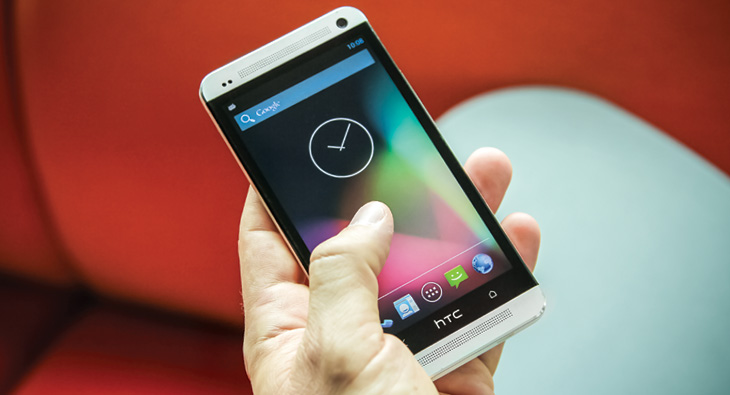
Smartphone maker HTC will have to pay up to Nokia to continue peddling its wares (via Android Central), as part of a patent license agreement set out by the two companies today. The settlement means that all pending litigation between the two companies is dismissed as of today, and the extent of the payments made by the Taiwanese company isn’t being made public.

Nokia has been racking up wins with regards to HTC’s use of what it views as its intellectual property. First, HTC was found to be in violation of a key microphone tech patent held by Nokia, and then the HTC One Mini was banned from sale in the UK over the use of certain chipsets (which was stayed), and finally the HTC One faced an injunction in Germany, too.

The deal will see HTC also share rights to its own LTE patent portfolio, meaning Nokia probably just generally won overall. It also sounds like future considerations are included in the deal, as evidenced by the suggestion that the two companies will “explore future technology collaboration opportunities.”

HTC is no stranger to paying up to use key mobile patents related to Android smartphones: It also signed a licensing agreement with Microsoft back in 2010 to avoid similar infringement claims. This new arrangement with Nokia seems like it’s probably a sort of 11th hour concession of defeat, coming as it does on the heels of a loss to the Finnish company by the District Court of Mannheim published earlier this week which would’ve seen HTC forced to rethink its device design. HTC had indicated at the time that it would seek to appeal the decision, but now, with all ongoing cases resolved in the deal, that’s off the table.

HTC can’t seem to catch a break, but with a rumored new flagship launch on the horizon, it’s probably best that the company take its licks and move forward rather than continue to be distracted by ongoing legal battles.

This Week On The TC Gadgets Podcast: Sony Vaio, Samsung Galaxy S5, And Wearables?

gadgets140207

Sony’s Vaio PC business is no more, with the company confirming reports that it will sell the PC division.

But a forthcoming Samsung Galaxy S5 will soon arrive and comfort you during this very difficult time. After all, it’s smartphone season with MWC right around the corner.

We discuss all this and more on this week’s episode of the TC Gadgets Podcast, featuring John Biggs, Matt Burns, Jordan Crook, Natasha Lomas and Darrell Etherington.

Enjoy!

We invite you to enjoy our weekly podcasts every Friday at 3 p.m. Eastern and noon Pacific. And feel free to check out the TechCrunch Gadgets Flipboard magazine right here.

Click here to download an MP3 of this show.
You can subscribe to the show via RSS.
Subscribe in iTunes

Intro Music by Rick Barr.

Last Call To Apply For The ATL And NOLA Pitch-Offs

903918_4760847109700_983257075_o

TechCrunch is about to roll into Atlanta and New Orleans. You only have a few days left to apply for each meetup’s 60-second pitch-off. If you’re a budding startup in these cities, apply below to pitch to close to a thousand of your local peers. It’s free to apply and pitch. The deadline for applications is Monday, February 10th.

For the pitch-off, we will have 3-5 judges, including TechCrunch writers and local VCs, who will decide on the winners of the Pitch-off. First place will receive a table in Startup Alley at the upcoming TechCrunch Disrupt NY; second place will receive two tickets to TechCrunch Disrupt NY; and third place will receive one ticket.

If accepted, you’ll meet with John, Jordan or myself the day of the pitch-off. We can talk about your pitch, your company, or my love of the Midwest. It’s your time.

These meetups are an amazing time. They’re a mashup of networking event, drinking party and rowdy pitch-off. Load your pitch deck on a phone, stuff your blazer with business cards and come party with TechCrunch. Tickets are only $5 to attend. 21 and older only, please.

Then, in March, we’re hitting the road again and holding similar events in DC and NYC. After holding close to 25 of these events over the last two years, we can attest that they’re unique and a must-attend for the local scene. Come meet your neighbors. Introduce yourself to local investors. It’s a great night.

Loading…
Loading…

Atlanta tickets

New Orleans tickets

Russia Bans Bitcoin

bitcoin-thorns

Russia doesn’t do things by halves — Bitcoin can no longer be used by individuals and legal entities anymore. If you have a Bitcoin wallet on your computer, you are now breaking the law. The Central Bank of Russia reiterated that the official currency is the Ruble, and that it considers Bitcoin a money substitute. That’s why the cryptocurrency is now banned.

The reasons behind this move is that Bitcoin is reportedly used for money laundering and other criminal activities. Moreover, the Russian institution thinks that it’s a purely speculative currency and that there is a great risk of value losses.

Yet, banning Bitcoin doesn’t mean that people will stop using Bitcoin overnight. As Bitcoin doesn’t rely on any physical institution but the network of miners around the world, you can’t prevent Russians from using Bitcoin.

But companies that are based in Russia and are working in the Bitcoin industry should at least consider relocating. They will probably be the first target of the Russian government.

While harsh, this decision shouldn’t come as a surprise. Bitcoin was designed to be unregulated. But over time, many countries and official institutions have decided to try and regulate it.

For example, in August, a federal judge in Texas has declared that Bitcoin is a currency and should be regulated just like euros or U.S. dollars.

Similarly, New York’s financial services stated that Bitcoin companies should respect the current financial regulatory guidelines. By doing that, the authority wanted to protect Bitcoin holders and companies. Moreover, New York’s top banking regulator is currently writing a new set of rules to decrease illegal Bitcoin activities.

Finally, following a parliamentary inquiry, Germany stated that Bitcoin should be considered as “private money.” It has many implications, starting by paying sales tax (VAT). This rule is hard to implement, but it gives an idea of how the German government feels.

For all these reasons, Bitcoin won’t be able to remain an unregulated currency for long. In Russia, today’s ban is another step in that direction, and it’s a radical step.

OpenIDFA, A Solution To IDFA-Related App Store Rejections, Debuts

iPhone-5s-front-apps

Following Apple’s crackdown on mobile apps’ usage of IDFA (Identifier for Advertisers) – that is, it’s rejecting apps which are pulling the identifier for non-advertising related purposes – Appsfire is proposing an alternative solution. Called “OpenIDFA,” the technology allows for the type of tracking use cases that Apple’s ban could prevent, while still protecting end user privacy by offering built-in expiration that prevents the possibility of long-term tracking.

For background, starting last week, Apple began to reject apps that were pulling the IDFA identifier, but were not showing any ads. Likely, this is an effort to prevent apps from tracking their users and warehousing that data for a variety of purposes, ranging from retargeting campaigns to building user profiles. These are thing that Apple (and potentially the government’s regulatory bodies) could see as eroding user privacy.

But the change affects other common uses of the IDFA too. Publishers are the only ones who are supposed to access the IDFA, not advertisers. But because ad networks charge advertisers based on installs that are run by end users, the advertiser passes the identifier to the ad network for tracking purposes, explained a blog post by Tapstream about the rejections. This use case, apparently, may not be okay.

Also, as explained on the OpenIDFA Github page, “IDFA allegedly is ok for its initial intent: ad conversion tracking. Advanced advertising techniques, however, need to start tracking earlier, and therefore need the actual IDFA despite not showing an ad then and there.”

OpenIDFA, as it stands at launch, is designed to allow for a handful of specific advertising-related use cases which Apple’s changing policy could have otherwise affected, including:

  • Server-side frequency capping: use OpenIDFA to minimize exposure of a given ad by counting how many times a given identifier (or a trio, see below) has been exposed to it.
  • Conversion tracking: use OpenIDFA to record an impression, a click (tap) event, and then once the advertised app is installed and launched, match the current OpenIDFA to attribute the source.
  • Pre-impression event tracking for re-engagement and re-targeting: use OpenIDFA to track e-commerce events inside the advertiser app; then match the OpenIDFA on the publisher’s side to present a higher impact advertisement.

Screen Shot 2014-02-07 at 1.45.34 PM

Or, if you’re just following the news a high-level, OpenIDFA is aiming to offer a way for publishers and ad professionals to continue to perform various tasks surrounding ad tracking, while still taking into account the need for consumer privacy.

In Apple’s world, users are able to reset their device’s Advertising Identifier at any time, but it’s an option in iOS’s Settings many users are unaware of, or don’t understand. With OpenIDFA, there’s built-in expiration which prevents data hoarding and long-term tracking – the very real privacy concerns Apple is presumably trying to address with its policy changes. OpenIDFA can only be accessed by those that call it within a day, making it more ephemeral than Apple’s counterpart, while respectful of Apple’s (supposed) intent surrounding these recent changes.

The OpenIDFA technology itself is free to use, interoperable, decentralized, but is not open source. Instead, it’s distributed under the Creative Commons license (Attribution BY + NoDerivatives ND).

Yann Lechelle, Appsfire’s co-founder and CTO, thought up OpenIDFA “over a few sleepless nights,” and has now shared his creation on Github.

Appsfire, you may recall, has a history of quickly shipping solutions to the developer and advertising community following Apple policy changes to serve as interim solutions. For instance, it rolled out OpenUDID back in 2011 after Apple’s decision to phase out usage of this more unique identifier. A number of mobile ad companies soon supported the technology, and later Apple released its own solutions, with IDFV (Vendor ID) and IDFA.

LinkedIn Axing Clever But Ill-Advised “Intro” Feature And Slidecast Product

Screen Shot 2014-02-07 at 11.01.14 AM

LinkedIn is axing its feature that intercepted emails to iOS devices to inject them with information from the site. The announcement was made via email to customers today, where the company detailed steps on removing the feature if users had enabled it.

“We strive to deliver product experiences that delight our members and add value to their professional lives,” reads an email sent to LinkedIn user Nicholas Shulman. “This sometimes means shutting down certain products or features to focus on the most relevant offerings for our members.”

LinkedIn has also put up a blog post about shutting down the feature.

“We are making large, long-term investments on a few big bets, and in order to make them successful, we need to concentrate on fewer things,” a LinkedIn spokesperson told TechCrunch. “With that in mind, we’ve taken a look at our product offerings and made the decision to shut down Intro, Slidecast as well as older versions of our iPad and iPhone apps.”

intro_drawer

Slidecast was an audio presentation tool and that will be shut down on April 30th. LinkedIn is also shutting down versions of its iOS app that support versions older than 6.0 as of February 18th.

LinkedIn says that it’s retiring Intro for iPhone on March 7th and provides a list of instructions to ‘uninstall’ Intro. The notice also points out that you’ll be unable to send or receive email from your enabled email accounts until you uninstall Intro, highlighting the invasive nature of the feature that caused us to throw up a red flag about it when it was launched.

Essentially, Intro passed all of your emails through an intermediary proxy server run by LinkedIn. This server opened the mail, injected LinkedIn profile information and then sent it along to you. All of this was opt-in of course, but we pointed out that adding an intermediary server that modified the contents of your email was a Very Bad Idea capital letters.

There was simply too little benefit gained from having a link to a LinkedIn profile in your email to justify the additional security risk of passing every email through a proxy server.

Though we were clear to state that we believed LinkedIn had the best of intentions — to provide a better experience for their users — they didn’t think it through to the customer stage.

Intro was a clever engineering hack that that produced a nifty result, but it should never have been shipped out to the public. And now it’s being axed.

Here are the instructions for removing Intro, from Shulman’s email:

  • From your iPhone home screen, tap the iPhone Settings app.
  • Tap the General section. If you weren’t taken to the main page of your iPhone settings, tap the navigation arrow in the top left until you get back to the main settings page.
  • Scroll down and tap the Profiles section.
  • Tap all profiles that start with Intro to remove. It’s important to remove all of them.
  • To verify that your previous mail accounts are turned on, return to iPhone Settings, tap “Mail, Contacts, and Calendar” then tap on your mail account. Make sure the Mail switch is toggled to green for “On”.

Image Credit: Sheila Scarborough

Yahoo Confirms It Has No Plans To Update Flickr’s Windows Phone App

Screen Shot 2014-02-07 at 9.51.31 AM

Yahoo has no current intention to update its Flickr application for Windows Phone. A user request for the company to both update its extant, but quite dated Windows Phone app, and perhaps build one for Windows 8 (another user requested a Windows 8.1 app separately) was met with a terse, if friendly response:

Thank you for this feedback. At this point, we are focusing our mobile development efforts on iPhone and Android apps. If this changes, we’ll let you know in the forum here.

Yahoo confirmed the decision with TechCrunch. The company provided a second short statement:

We can confirm that we currently have no plans to update our Flickr Windows Phone app. At times, we have to make tough decisions and prioritize our efforts. This change will allow us to spend more energy on improving our Flickr mobile experience.

Microsoft did not respond with comment in time for publication. (Update: Microsoft declined to comment.)

To sum, Yahoo is focusing its resources on the two largest smartphone platforms — iOS and Android — and is not pushing cash or hours toward Microsoft’s Windows Phone effort. To quote WMPowerUser, who brought the initial Yahoo response to our attention, “Yahoo released [a] Flickr app for Windows Phone devices back in [the] WP7 days. After a period of time, the app was never updated and Yahoo never showed any interest in revamping the app.”

Microsoft’s hard-fought, and earned position at number three in the smartphone game has brought the firm increasing mobile presence and credibility. Yet that doesn’t mean, as we can see here, that all players are now willing to spend to cater to its audience.

That Yahoo, a now purportedly mobile-first company would choose to avoid Windows Phone makes the decision all the more salty for Microsoft.

Yahoo itself took some razzing over the choice. Flickr users, in response to the company’s stated decision, lit the firm up. A sampling from the thread:

“I will be taking back all my photos now. sticking them in to skydrive until a proper upload service can be created for the 1020. one I can upload over the air.”

“Congratulations to Flikr, a service that is failing fast, in ignoring the fastest growing mobile platform and one that has some of the best mobile photography devices on the market.”

“yahoo has been buying out so many dev studios and you can’t afford to buy one that already has windows phone expertise? for shame.”

The only parties winning in this situation are Android and iOS users that are Flickr fans. Microsoft loses face and status, Windows Phone users have to do without, and Yahoo itself has irked a minority of its user base.

Image by Flickr user Vernon Chan under CC By 2.0 license (image has been cropped)