Bill Gates Explains His New Role At Microsoft, Says Nadella Asked Him To “Pitch In”

Screen Shot 2014-02-10 at 12.10.17 PM

Last week Microsoft announced that its new CEO is Satya Nadella, and that its first CEO, Bill Gates, would be spending time at the company helping with product decisions. It was the culmination of a long bout of CEO bingo.

The role that Gates will now play at the company he founded is interesting: Will he help Nadella’s strategic vision? Would he help the re-org solidify?

We have a better answer to that question today, as Gates took again to Reddit to answer the Internet’s questions. Asked directly what his new role at Microsoft will entail, Gates elaborated on what he sees coming up in technology, noting that Nadella specifically asked him to help out:

I am excited about how the cloud and new devices can help us communicate and collaborate in new ways. The OS won’t just be on one device and the information won’t just be files – it will be your history including being able to review memories of things like kids growing up. I was thrilled Satya asked me to pitch in to make sure Microsoft is ambitious with its innovation. Even in Office there is a lot more than can be done.

This is essentially the current Microsoft approach: A single OS core across device and form factors, a focus on services and cloud collaboration, and Office, in some capacity.

So, it seems that Gates’ vision is in tune (Intune?) with the current Microsoft strategy. That’s not surprising, given that he was active on the board during the current play’s invention and early implementation.

Nadella will make the decisions as to what Microsoft becomes, and it appears that his closest ally has a similar vision. Keep in mind: In Redmond, Gates is still god, and Nadella can use god’s backing to make sure that his dictums are law.

Also asked in almost joking terms “Yeah… Bill, I gotta ask you, what would you say you do there?” Gates gave the high-level view of his work at the company:

I make sure we pick ambitious scenarios and that we have a strong architecture to deliver on them. I encourage good work (hopefully).

Given the sheer magnitude of change going on inside of Redmond, that’s a decent mix.

IMAGE BY FLICKR USER ALAN DEAN UNDER CC BY 2.0 LICENSE (IMAGE HAS BEEN CROPPED) 


Flickr At 10: 1M Photos Shared Per Day, 170% Increase Since Making 1TB Free

flickr-1

Social photo sharing site Flickr is now 10 years old, marking a decade since Caterina Fake and Stewart Butterfield founded the originally Vancouver-based startup. The site was acquired by Yahoo back in 2005, a little over a year after its founding, and reportedly paid around $35 million for the startup, which at the time had around 1 million very loyal and consistent users.

Flickr has grown to the point where it now has 92 million users, spread across 63 countries, who contribute to almost 2 million groups and share around 1 million photos every day. The site has weathered its fair share of criticism, especially among those who worried that its ability to impress and innovate would peter out after the Yahoo purchase. A major product redesign across mobile and desktop under Marissa Mayer impressed critics and users alike, however, and silenced many of those prognosticating an early death for the photo sharing site.

One other recent change has driven a lot of growth, too: Flickr says that photo uploads on the site are up 170 percent since it made 1TB of storage a free, standard feature for all users back in May 2013. One more big change is that the iPhone is now the most popular camera on the platform, and smartphones in general are popular. The iPhone took over the top spot back in 2011, and new models have risen quickly to the top of the heap ever since.

Apple Copyright Complaints Get Android Customization App “Themer” Pulled From Google Play

themer3

Themer, the Android customization app from MyColorScreen which last fall raised a half a million in seed funding, has been pulled from the Google Play marketplace following a copyright complaint from Apple in reference to one of the app’s 200-plus available themes. Themer was pulled down on February 2nd, and the app has been in limbo ever since, they now say, despite having resolved the issue with regard to the errant theme.

The theme in question is the “Seven” theme, which Apple says uses several icons that infringed on its own patents, explains Ashvin Dhingra, co-founder and CEO at Themer.

For background, Themer’s app allows users to browse a selection of custom-designed Android homescreen themes which can be installed with a push of a button. The high-quality themes are generally purchased from designers who, before Themer, were simply releasing their creations on the MyColorScreen website, a social service where users can share and comment on photos of Android customizations. It’s something like a Dribbble.com for Android designers, in fact.

Themer-seven theme“We immediately removed [the Seven] theme and thought that, at worst, Themer would be back on Play in a few days. But now a week later, we’re facing the possibility that a few days might turn into a few weeks,” Dhingra explains in an email to TechCrunch (and soon to be blog post on the company’s website.)

“We’ve spoken to legal representatives from Apple (who have been very nice, reasonable, and helpful), and they have no remaining concerns. But apparently, Google has a process for these things, and there’s nothing we can do to accelerate that process. Unfortunately, we still have not heard from anyone at Google.”

His missive aims to address the concerns of the community, who have been distraught over the app’s disappearance, and asking about its return. Themer, notes Dhingra, has been downloaded a million times in less than four months after its public beta debut this fall.

The company seems to be confused about what to do in this kind of situation, saying that Google lacks a developer advocate or single point of contact, which has had the team at Themer attempting to reach out to “random people, who may or may not be able to assist,” Dhingra laments. Google actually lists a variety of resources on its Android developers site, but apparently isn’t proactive about outreach in situations like this. (We’ve asked Google for comment on this, and will update the post if we hear back.)

The company says it doesn’t know when Themer is expected to return at this point, but there are no plans at this time to circumvent the Play store by releasing an APK, as a sideloaded app would lose out on the benefit of receiving automatic updates – critical as Themer moves toward its public 1.0 release.

In the meantime, current users can continue to receive support with any software issues via support.themerapp.com, notes the company. Below, the letter from Google.

Letter From Google:

This is a notification that your application, Themer Beta, with package ID com.mycolorscreen.themer, has been removed from the Google Play Store.

REASON FOR REMOVAL: Alleged copyright infringement (according to the terms of the Digital Millenium Copyright Act).

All violations are tracked. Serious or repeated violations of any nature will result in the termination of your developer account, and investigation and possible termination of related Google accounts. If your account is terminated, payments will cease and Google may recover the proceeds of any past sales and the cost of any associated fees (such as chargebacks and payment transaction fees) from you.

Please review the Developer Distribution Agreement and Content Policy to ensure that your applications are compliant with our policies.

The DMCA is a United States copyright law that provides guidelines for online service provider liability in case of copyright infringement. Click here for more information about the DMCA, and see http://www.google.com/dmca.html for the process that Google requires in order to make a DMCA complaint.

Google may reinstate your application into the Google Play Store upon receipt of a counter notification pursuant to sections 512(g)(2) and (3) of the DMCA. Click here for more information about the requirements of a counter notification and a link to a sample counter notification. If you have legal questions about this notification, you should retain your own legal counsel.

Please note that we have included a text copy of the Infringement Notice we received for your reference.

The Google Play Team

Text copy of DMCA complaint:

subject_lr_dmca: Your Request to Google
full_name: xxxx
companyname: xxxx
represented_copyright_holder: Apple Inc.
contact_email_noprefill: xxxx
country_residence: US
location_of_copyrighted_work: The original artwork for the following
infringed iOS7 app designs may be viewed on any iDevice running the iOS7
operating system:

Notes (Copyright Reg. No. VA1871602)
Stocks (Copyright Reg. No. VA1871786)
Newsstand (Copyright Reg. No. VA1871650)
Maps (Copyright Reg. No. VA1871438)
Camera (Copyright Reg. No. VA1871668)
Photos (Copyright Reg. No. VA1871779)
Settings (Copyright Reg. No. VA1871669)

description_of_copyrighted_work: Apple Inc. is the sole and exclusive owner
of the copyright in the original artwork for the app designs in its iOS 7
operating system. The foregoing application being distributed on Google
Play intentionally includes unauthorized reproductions of Apple’s
copyrighted apps, including its icon designs for Notes (Copyright Reg. No.
VA1871602), Stocks (Copyright Reg. No. VA1871786), Newsstand (Copyright
Reg. No. VA1871650), Maps (Copyright Reg. No. VA1871438), Camera (Copyright
Reg. No. VA1871668), Photos (Copyright Reg. No. VA1871779), Settings
(Copyright Reg. No. VA1871669) and other features. This application
violates Apple’s copyrights, in addition to other Apple IP rights. (This
app developer’s unauthorized reproduction of Apple’s multiple copyrights
may be viewed in-app by first downloading and installing the app, allowing
Themer to create widgets on one’s device, and loading the “Seven” theme
from the list of the “Most Popular” category under the Browse Themes.)

Image credits: Themer; theme via Androidtapp.com

Google Brings Its Apps Admin App To iOS

ipad - users

About a year ago, Google launched an Android app that allows Google Apps administrators to manage their users and services right from their Android phones and tablets. Today, it is bringing this app to iOS, too.

Google Admin for iOS offers the same kind of features as the Android app, which means you’ll be able to create and manage users, reset passwords, edit profiles and suspend users right from your iPhone and iPad. The tool also allows you to manage groups and review account activities. In addition, Google Apps for Business admins can use the app to contact Google support.

Just like with the Android app, admins have to ensure that they have API access enabled. As far as I can tell, there aren’t any major differences between the iOS and Android app. Still, not every Google Apps admin is on Android, so it’s good to see that Google has finally brought this app to iOS, too.

The Google Apps admin console still offers a few more features than the mobile app, though. It doesn’t look like you can manage devices from the app, for example, and you can’t manage your Google Apps subscription from the app, either.

ipad - users

Team Behind Facebook For Feature Phones Launches Chaatz, A Mobile Messaging App Aimed At Emerging Markets

IOS_hardware

A team with extensive experience working with the OEMs, carriers, and platform makers in the mobile industry, and who was most recently tasked with the creation of the Facebook mobile experience for feature phones, is now preparing to take its former client head-on with a new, multi-platform social messaging app called Chaatz. Like Facebook, Chaatz will also target both developed and emerging markets, but aims to differentiate itself from the social networking giant with features that allow for more privacy, separate profiles for work and play, and a virtual phone number, similar to something like Google Voice.

The smartphone version of Chaatz, the first of many iterations of the app, arrives first on iOS with an Android launch planned for a week or so from now.

Chaatz was founded by Richard Cheung (CEO), Michael Wong (CTO), and Arnie Chaudhuri (Biz Dev), and includes a 20-plus person team in both Hong Kong and Singapore. Their location, combined with the team’s experience in the mobile industry, is what they hope will give them the advantage in a crowded mobile messaging landscape. In addition to Facebook for feature phones, the team has previously helped build app stores for Nokia, LG and Samsung, for example, and claim to have a deep understanding of everything mobile from the manufacturers and carriers to the chipsets and the platforms.

screenshot_multiple_profile

Explains Chaudhuri, they realized there was the potential for something like Chaatz to take off after the launch of Facebook for feature phones, which the team, then as another company, built in conjunction with Facebook. Facebook’s app did well in these emerging markets, prompting the group to think that there was a gap that could be filled. “Maybe we are the guys who understand platforms so well, and chipsets so well, and the market so well – maybe we are the guys who should be filling up that gap?” Chaudhuri says the team wondered.

With Chaatz, the company wants to reach consumers worldwide, “regardless of where they live in the world or whether they have a smartphone or not,” he adds.   

Though the smartphone application is out now, the company’s larger focus is on the under-served feature phone market which they plan to reach via deals with OEMs and carriers. Already, they’ve sealed feature phone partnerships with Intex Mobile and Rage, and a global partnership with TCL Alcatel. Other deals are in discussions now too, with a carrier in Indonesia, and two other manufacturers in the Philippines, and another in Vietnam.

In many cases, Chaatz will be provided to end users through pre-loads, as feature phones don’t often have a way to load apps directly, Chaudhuri says.

As for the Chaatz app itself, it’s fairly standard, allowing for things like text, photo-sharing, and voice, like many mobile messaging competitors on the market today. However, what makes Chaatz notable is its support for multiple identities – that is, you can create different profiles, including anonymous ones – in order to connect with family, friends, co-workers and others using the service.

These can also be associated with an (optional) voice number, which helps to protect user privacy by not revealing a person’s actual cell phone number.

screenshot_chaatz_number

That makes Chaatz workable for children, too, points out Chaudhuri, who notes that kids could chat about their homework assignments with others, including teachers, without having to disclose their more private information, like their cell number (or parents’ cell). The number can even be transferred to non-cellular devices, such as the iPad or Android tablets, to offer connectivity even when away from a phone.

Further down the road, the company sees Chaatz being available on all platforms, including wearables like smartwatches, where it wouldn’t even require an accompanying smartphone to sync its messages.

Chaatz for iOS is available for download here, with Android to follow. The feature phone app will debut sometime in mid-Q2 to early Q3, we’re told.

The company is backed by an undisclosed amount of angel funding from local mobile industry investors and is somewhere “above six figures.”

Dyson Puts £5M Into Robotics Vision Research With Imperial College London

Image (2) dyson.jpg for post 123065

Robot eyes. That’s a terrifying sentence. But robotics vision is an immense area of research interest, and a key technological field in terms of building the future of a wide variety of devices. That’s why it’s very interesting that Dyson is putting a sizeable investment into robotics vision via a joint robotics lab being launched in collaboration with Imperial College London.

The investment is worth £5 million (or around $8 million U.S.) and covers a five-year period. The lab will be working on robotics vision systems that are designed to help the next-gen of robots not only see things the way that humans do, but also process that visual information in a manner that better approximates human understanding.

For those unfamiliar with the field, it covers a broad range of potential uses: A friend with a graduate degree in robotics vision engineering helps design systems for production lines that inspect the products being built for quality assurance purposes. Typically, these offer up margins of error that are tiny compared to the standards established by human inspectors.

Dyson is no stranger to conducting robotics research – the company has been exploring that area of interest for the past 15 years, according to the company. With Imperial College London specifically, it’s been working on developing systems that can view, interpret and “logically navigate” their surroundings. This applies to robotic vacuums in terms of Dyson’s business interest (the company mentions this product category specifically, so watch out Roomba) but it’s not their only goal in terms of applied robotics.

What this signals for Dyson is a graduation of sorts, as the company moves from thinking about robotics as an area of sustained but relatively light interest, into something it would like to ramp up on the production side. Hopefully at the end of these next five years, we’ll all be living with an army of Dyson home cleaning automatons, but at the very least we should see some advancements in terms of the ocular powers of our robotic friends.

Gone But Not Forgotten: Flappy Bird Clones Fill The App Store’s Top Charts

flappypants

Flappy Bird creator Dong Nguyen may have pulled down his simple but maddening mobile game from the App Store and Google Play on Sunday, but that hasn’t stopped the swelling interest in the success of the seemingly impossible little app – success which, apparently, became too overwhelming for Nguyen to handle. Since then, the game has popped up on a number of places, including torrent sites, phones listed on eBay for $99,999 (I can’t believe those are serious bids), in a statement provided by Nintendo to counter rumors that they’re to blame for the game’s demise (it’s fine Nguyen copied Super Mario’s pipes, really!), and elsewhere.

But the absence of the official version of the Flappy Bird game has also led to the take-off of several would-be competitors and general clones, which are now filling the App Store’s and Google Play’s top charts. (And even the Pebble Appstore, I kid you not.)

In spots #1, 2, 5, and 20 on iTunes are Flappy Bird look-a-likes “Fly Birdie,” “Ironpants,” “Flappy Bee,” and “Flappy Plane,” respectively. And they’re only the ones that have risen to the top of the heap. A search for keyword “Flappy” on the App Store reveals even more developers – 81 in total now, and counting – who are looking to take advantage of the still strong interest in the title. Some of these include other Flappy Bird wannabes like “Flappy Penguin,” for example, while others are simply stuffing unrelated apps with the “flappy” keyword, like several camera apps now appear to be doing.

As with Flappy Bird itself, the charts for the clones show similar impressive growth trends, driven not by bots and paid downloads (though some would disagree) but rather the continuation of the viral growth that is the “Flappy Bird fiasco of 2014.”

flappy-birdie

ironpants

flappy-bee

Meanwhile, on Google Play, “Ironpants” has climbed to spot No. 11 and is trailed by “Clumsy Bird” at No. 19.

The question now is how long will our Flappy Bird obsession last? Does the app’s rise to the top of the App Store foreshadow a renewed interest in more basic mobile games that anyone can play with a few seconds to spare? That’s something that may only be answered in time, of course, but it’s worth pointing out that Flappy Bird itself may have tapped into a previously under-served demographic: children with smartphones.

When Nguyen spoke to TechCrunch, he had noted that, while he didn’t know how his app had become so popular, it was strong in the children’s demographic. “Most of my players are kids in schools,” he had said.

With ever-younger children getting smartphones that are being added to families’ shared data plans, and as the costs for those plans also come down, it’s possible that Flappy Bird was the first of many apps yet to come that is able to tap into schoolyard word-of-mouth, the way that apps before it have instead set their sights on college campuses.

In the future, will “it’s a hit on all the playgrounds,” be the new “it’s spreading among university students?” I guess we’ll soon find out.

Microsoft’s Power BI For Office 365 Comes Out Of Preview, Simplifies Data Analysis And Visualizations

Power Map

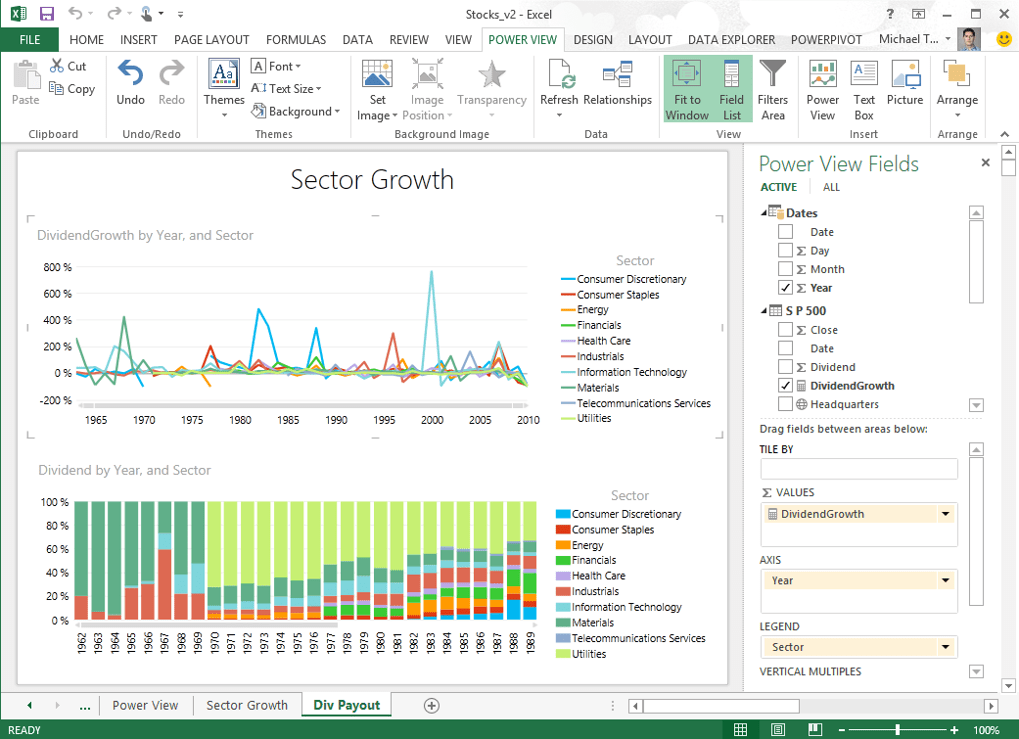
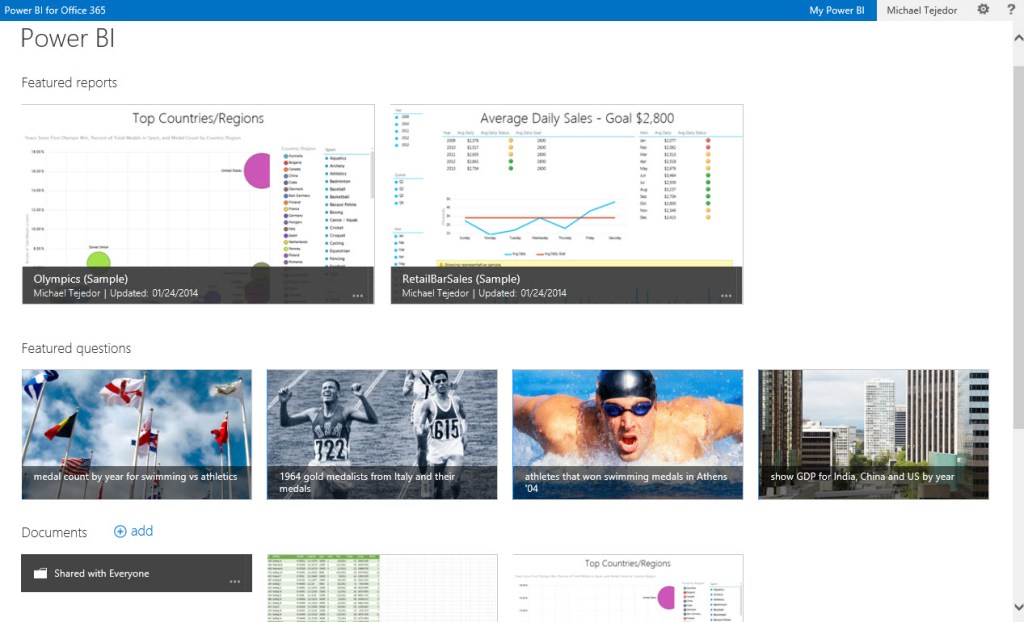
After more than half a year in limited preview, Microsoft today launched Power BI for Office 365, its Business Intelligence for Office 365 Enterprise subscribers. In combination with Excel, Power BI allows users to model and analyze their data and query large datasets with complex natural-language queries. The tool also allows users to easily visualize their data in Excel with the help of Power View and Power Map.

As Eron Kelly, Microsoft’s general manager for SQL Server product marketing, told me, most business users feel so comfortable using Excel, that the company decided not to build a new dashboard for Power BI. “We want to make use of the ubiquity of Excel,” he said, and Power BI will allow far more users access to critical business intelligence tools than ever before.

Power View

Instead of having to go to IT and ask for data, wait for it, and then probably ask IT to slice the data in a different way again, tools like Power BI allow for self-service business intelligence. The barrier to entry is relatively low, and as the volume of available data increases and companies look to make their processes more data-driven, Microsoft hopes that Power BI will become the go-to choice for enterprises.

Despite the self-service model, though, IT still remains in control of what data is shared. Microsoft allows IT admins to set up data sources for their users, but what makes the tool especially powerful is that this data can be mixed with publicly available data, too. That can come from Microsoft’s Azure Marketplace, but for advanced users, the tool will also allow you to query any REST API or service that uses OData, too.

The stand-out feature of Power BI, however, is its Q&A tool. This allows you to ask a question about your data in natural language. Say you are looking at public data about New York you’ve pulled in from the city’s open APIs. With Power BI, you can now ask for “noise complaints on Superbowl Sunday compared to an average day” and the tool will happily give you the answer. The technology behind this feature is based on a combination of work done by Microsoft Research and the Bing team.

As a part of Office 365, Power BI is only available through a subscription and only available as an add-on to Office 365 Enterprise customers.

Power BI Sites

Social Promotion Network CoPromote (Formerly Headliner.fm) Raises $1.8M

copromote

Headliner.fm, a site where users promote each other’s content, is taking on a new name, CoPromote, and announcing that it has raised $1.8 million in seed funding.

If you’re a CoPromote user, the site recommends content that’s relevant to your interests, which you can then share on Facebook, Twitter, and other networks. You can enter your own content into the system too, where it’s promoted in a similar fashion by other users. The system uses a virtual currency called Karma Cash, which you receive for promoting other people’s content and pay to promote your own.

Founder and CEO Mike More said the site was originally designed for musicians, but it now serves a variety of creators and marketers, such as bloggers, charities, app developers, small businesses, and online video producers. The “fm” in the company name continues to confuse some people, making them think it’s still limited to musicians, which is why the company is now rebranding as CoPromote.

More acknowledged that there are other services, such as Klout, trying to sell businesses on getting posts and tweets from social “influencers”, but he said they’re mostly focused on large brand advertisers, not the smaller content creators and content marketers that CoPromote is targeting. He added that advertising on a site like Facebook, Twitter, or YouTube doesn’t make sense for these marketers, because “they do not deliver the one action which content marketers value the most: shares or retweets in a manner which [makes] economic sense.”

The worry, I suppose, is that people feel incentivized to just spam their followers with random links, but that’s why More emphasized CoPromote’s ability to match relevant content with the right users, as well as the effectiveness of the company’s campaigns. The product is supposedly used by 45,000 people daily, and that it leads to 26 times more sharing of a post.

You can use the service for free, but you have to pay for features like the ability to run more than one campaign at once.

The funding was led by ff Venture Capital (which recently raised a new fund of its own) with participation from Correlation Ventures, AlphaPrime Ventures, The Social Internet Fund, and Greg Raifman, president of Rubicon Project.

Shazam Revamps iPhone App In Hope Of Increasing Engagement

shazam14-02

Shazam’s iPhone app is getting an overhaul, starting with a release that puts a larger focus on TV results, music videos and lyrics, the company is announcing today. The update is the first of what Shazam describes as “a larger refresh of the app,” which is expected to roll out over the month ahead.

In the new version arriving today, the app, which now reaches 150 million iPhone users, will see a new tag result experience – tagging, meaning here the process of identifying a piece of audio and matching it to its source. The idea with the refreshed design and user interface is to encourage users to take additional steps after that identification has taken place. That’s arguably been one of Shazam’s weaker spots to date, as the app has struggled to break free of its more utilitarian aspects involving music identification, to become more of a social network or music discovery service of its own.

Now the company is making over what happens after the music (or TV show) is found with a new user interface that more heavily emphasizes the tools allowing users to preview the track on streaming services like Rdio and Spotify, watch the lyrics roll by in real-time, share the music on social networks, or purchase the track from iTunes. The app will also point users directly to music videos, when relevant, and recommendations of other songs to check out.

Most notably, to end users, is the updated look-and-feel, which presents things in more of a card-style interface reminiscent of something like Google Now. However, the features Shazam is highlighting with the release are not new in and of themselves – they’re only being revamped and rearranged.

The updated app will arrive on iTunes, with the Android version to follow in a few weeks.

Old:

photo

New:

shazam

[Note: as of the time of writing the updated app had not hit iTunes, but it should arrive shortly.] 

Urb-E, The Fold-Up Electric Scooter, Goes Live On Indiegogo

Screenshot 2014-02-10 08.56.58

Back at CES in January, among all the fun and interesting new projects we investigated, one gadget stood out among the rest. That gadget was Urb-E.

And today, almost a month later, the Urb-E scooter is live on Indiegogo. As part of the campaign, the company is launching two separate models to consumers.

The first is the Urb-E commuter, which has three wheels instead of two, making for a more reliable and smooth ride. The Urb-E GP, on the other hand, only has two wheels and can thus make sharper turns, though both models have the same speed and power specifications.

The Urb-E folds up to the size of a rollerboard suitcase for easy handling, and weighs just under 30 pounds making it an easy last-leg vehicle for urban commuters.

Topping out at 15mph, the Urb-E can last up to 20 miles on a single charge. And to top it all off, the Urb-E is easily customizable thanks to inserts that fit within the frame, giving the Urb-E a nice accent color alongside the metal.

Plus, Urb-E comes with a compartment to charge your phone and check in on the charge of your Urb-E through a dedicated Urb-E app.

According to creator Grant Delgatti, Indiegogo felt like a better fit than Kickstarter for this type of product, which he believes will be highly appreciated by the Indiegogo community.

The Urb-E campaign has just begun, with a goal of $150k in 40 days. The lowest price point to secure an actual Urb-E is $1,599, for ultra-early adopters. However, Delgatti says that the final price will be closer to $1,799, with shipments expected to go out at the end of this summer.

If you’re interested in participating in the e-vehicle revolution, head on over to the Indiegogo campaign and check it out.

Ask A VC: Storm Ventures’ Jason Lemkin On Inbound Vs. Outbound Enterprise Sales

In this week’s episode of Ask A VC, Storm Ventures’ managing director Jason Lemkin joined us in the studio to talk about enterprise, sales models and more.

Lemkin, who sold his e-signature company EchoSign to Adobe in 2011, talked about inbound sales vs. outbound sales in an enterprise company, and which types of sales model SaaS companies should choose. Lemkin also talked about the differences between being a CEO and a VC, and what he misses about being an operator.

Check out the video above for more.

Today In Dystopian War Robots That Will Harvest Us For Our Organs…

dystopian-war-robots12

A merry TIDWRTWHUFOO to you and yours! This week’s installment brings you some DIY, some dangerous, and some fun. Can you guess which is which? Probably not, because all of these robots will eventually eat your eyes like lychee jellies.

First up we have this autonomous Ardiuno robot that looks fairly harmless. Created by a cool Redditor, the robot can go around objects using a very basic bit of logic and some sensors. The code for the robot is right here and the video is unique in that the robot’s creator expresses heartfelt joy at his creation and he is not screaming in terror as the robot mauls his couch.

Then we have this autonomous boat that can map hard-to-access rivers and lakes and features an on-board laser scanner and autonomous quad-copter that can get a bird’s eye view. These robots can get into places humans can’t and, more importantly, a fleet of them coupled with an army of robotic sharks with laser teeth can terrorize most of San Diego (the wet parts).

Created by Uninova in Portugal, the product hopes to make river mapping far more efficient… and deadly.

Finally we have the UK’s Taranis, a search and destroy drone that is really and truly dangerous. Writes TheTreeLaws:

The Taranis, taking its namesake after a Celtic god of thunder, has a wing span of about 9 meters, is 11-meter long and weighs in at 8 tons. It’s a “semi-autonomous” drone which is designed to execute intercontinental flights alongside lethal aerial and ground strikes which has cost around £185 million with funding from the UK Ministry of Defence alongside companies such as Rolls Royce and General Electric (of which BAE Systems is a subsidiary).

To paraphrase that great old song, “Boom boom boom let’s go back to my room and hide from this grey-skinned helldemon from above!”

Firefox’s Chrome-Like Australis Redesign Arrives In Aurora Release Channel

australis_menu_001

2014-02-07_1439

This has been a long time in the making, but after almost three months of testing in the highly experimental Firefox Nightly release channel, Firefox’s new Australis user interface has now found its way into the pre-beta Aurora channel. The new user interface, which the company has been working on for a long time, gives the browser a more Chrome-like look. As in Chrome, the settings and options are now behind the same kind of drawer menu next to the URL bar as in Google’s browser and rounded tabs at the top of the screen.

These similarities with Chrome is likely the first thing users will notice. Indeed, if you quickly switch back and forth between the two, you’ll likely get confused about which one is which.

The team also completely redesigned the menu too, and added a large number of customization options that aren’t available in most other browsers. While Firefox was always pretty customizable, this new version makes it far easier to discover these customization options and use them. Just click on ‘customize’ in the menu and drag and drop menu items around to improve your user experience.

australis_menu_001If you always want to have the developer tools accessible in the URL bar, for example, that’s now easy to do.

As Mozilla’s VP of Firefox engineering Jonathan Nightingale told me last year, the idea behind the redesign was to give users a browser that is simpler to use, with a cleaner and more intuitive design. As you open more tabs, for example, those that aren’t in the foreground fade into the background “to make it faster for you to find and focus on the tab you want.”

Now that Australis is part of Firefox’s regular release channels, it will slowly find its way into the beta and stable channels, too. It’s unclear when exactly this will happen. Mozilla often holds back features from graduating to the next channel until it feels they are ready for a wider release, and this new user interface will surely spark some interesting discussions among Firefox’s users.

As part of today’s update, Mozilla is also launching Firefox Accounts, which will offer access to the latest update of Firefox Sync and other tools. While Mozilla has long offered users a way to sync their bookmarks, add-ons, passwords and open tabs across machines, it never offered users an easy way to just sign up and sign in to access all the integrated services across its products.

Firefox Accounts are now available in the Aurora release channel, too, so if you want to try both the new user interface and these new tools, just head over here and install the Aurora release. It won’t overwrite your existing Firefox install.

Shutterstock Adds 4K Video

Shutterstock, the publicly traded stock photography and video site, has quietly launched support for 4K video. As the company tells us, it has already amassed a catalog of over 11,000 videos that are now available for anybody who needs ultra high-res images of somebody scrolling on an iPad or having a fun meeting in the office.

There is a very slim chance that you have a 4K screen on your desk or in your living room, but it’s really just a matter of time (years?) before you will. As demand for 4K content increases, demand for 4K stock video will also surely increase, and the company is trying to position itself as an early leader for users who need this kind of video content for their projects.

At just over 10,000 videos, the 4K library is still a small slice of Shutterstock’s overall video catalog, of course. The site features well over 1.3 million HD video clips, after all, and about 150,000 low-res clips. The HD library is growing at about 12,000 videos per week, according to Shutterstock, and it is also adding 4K videos at a rapid clip.

4K_Chart_New

“With so much attention on 4K electronics, there’s becoming a need for higher resolution video for businesses, brands, filmmakers and content producers,” said Shutterstock VP of new business Ben Pfeifer. ”Similar to our existing stock footage collection, we’re building the best 4K library of its kind, with clips sourced from top contributors around the world. More and more we’re seeing videographers capturing content in 4K so they’re ready for the next wave of demand.”

As for the content, Shutterstock tells me that the company expects it to mirror its HD collection, but with an increased concentration of time-lapse videos.

It’s worth noting that 4K video on Shutterstock is significantly more expensive than other formats. A 10-second clip, which weighs in at about 600MB, can quickly set you back $299, while the HD version just costs $79.