We need 1000 links to the website. Pay $50 dollars (Budget: $30-$250 USD, Jobs: Internet Marketing, Link Building, Marketing, SEO)

Freelance Projects, Design and Programming Tutorials
We need 1000 links to the website. Pay $50 dollars (Budget: $30-$250 USD, Jobs: Internet Marketing, Link Building, Marketing, SEO)
I am looking for engineer or researcher who will describe me what is inside magic mirror box. You can see example on youtube link http://www.youtube.com/watch?v=x5Lr6yW9QbQ I know that this is movement sensor control which recognize distance and I want to build something similar… (Budget: $30-$250 USD, Jobs: Electrical Engineering, Electronics)
Hi there, I need the following link building/SEO package: 50 BMR posts 500 words each (needs to pass copywrite) 4 packages of UAW and SYA 20 Blog posts 500 words each (needs to pass copywrite)… (Budget: £20-£250 GBP, Jobs: Articles, Blog, Internet Marketing, Link Building, SEO)

A little more than a week ago, the Clik smartphone app launched, resulting plenty of press coverage and more than 100,000 downloads on iOS (at least according to Clik). But there was one area where the launch fizzled — in the Android Market, where the Clik app is apparently invisible to searches.
“Over the weekend, as we get all this hype, nobody could find our app,” says CEO Ted Livingston.
Even today, if you search for “clik” in the Market, the app doesn’t show up in the first five pages of results. (It may be hidden even more deeply than that, but that’s as far as I went.) It’s not clear what’s going wrong, but I’m guessing that the Android Market assumes you made a typo and searches for “click” instead — hence search results that are topped by “1-click cleaner.”
Whatever the reason, Livingston says Clik’s absence from Android search results “really hurt us” — on Android, the app has only seen 1 or 2 percent of the downloads that it has on iOS. The company has been tinkering with its Android Market listing and reached out to Google for help, but there’s no solution yet
“It’s pretty ironic — the king of search can’t do search,” Livingston says.
I”ve emailed Google about this post and will update if I hear back.
Clik was created by the same company as the Kik Messenger app, and it allows smartphones to play and control YouTube videos on any screen with a Web browser. (There’s more information about how it works in my initial coverage.) Livingston’s goal is to turn Clik into a platform for video, photo, music, and game services. If you’ve been searching unsuccessfully for the Android app, you can download either version of the app here.

Editor’s note: Jordan Kurzweil is Co-CEO of Independent Content, an agency that helps media companies launch new digital products and businesses. Prior to starting Independent Content Jordan worked at AOL running original programming, and News Corp bringing its traditional brands to digital. You can follow him on Twitter @jordankurzweil.
It’s been said before, but it needs saying again (and again and again): PRINT IS DEAD. Across the publishing industry, year-over-year declines in revenue, subscriptions and circulation, are well documented. Yes, there have been a few quarters of blood-stanching flatness (yay!), but – you heard it here first (or few weeks ago from The Annenberg School, or over the summer from Clay Shirky) – print periodicals are going to go away – forced out of this world by the march of technology and changing tastes, and replaced by new powerhouse brands – TMZ, Buzzfeed and HuffPo to name a few — which are poised to own the future, because they know how to adapt to (and even anticipate!) evolving user behavior. As John Paton, CEO of one of the largest newspaper companies in the U.S., put it recently “‘You’re gonna miss us when we’re gone’ is not much of a business model.”
Just this week, Gannett gave us a stunning reminder of just how little it understands the world it lives (and dies) in, and how myopically it views its business when it announced its $100M bet on establishing paywalls in all 80 of its local newspaper markets. A gambit predicated on “the public’s strong desire for local news and in readers’ longtime trust in Gannett’s papers,” according to Gannett’s CEO Gracia Martore. Oh my. The paywall, whether for Gannett or other publishers, is a finger in the dyke, a cover-up for tectonic shifts in their businesses. For Gannett, local paper audiences are old (that’s what “longtime trust” means), and may well age out of relevance before Gannett’s gosh-darned paywall gets erected. And where’s the proof that the public wants local news? Readership is declining, local news website traffic is infinitesimal, and even pure digital plays like Patch can’t seem to find readers or revenue. The fact is, the thirst for local news can be sated by a single hometown blog, run pretty much by a single entrepreneurial blogger (granted they’d be very busy – and underpaid).
What can Old Print do to survive?
To use a trite metaphor (or two) – stop rearranging the deck chairs on the Titanic, grow a pair, and change your businesses. Pivot out of the corner and reclaim your heavyweight title. RUMBLE, Old Man, RUMBLE:
1. Face reality:
– The audiences of traditional print brands on paper and pixel are aging.
– Digital upstarts are capturing the new audiences, and stealing your least loyal current readers.
– The cost structures of Old Print companies are out of whack with the times.
– New technology is further commoditizing content, and fragmenting audience.
– In-house digital innovation at Old Print companies is largely non-existent, stymied by outmoded, editorial-first ego at the top, and fearful protectionism of current revenue sources: print subscriptions, ad pages and banner impressions.
2. Start thinking like startups.
Actually, start thinking like well-capitalized start-ups – pirates with a war chest. Lose the fear and deploy some of your profits to incubate new ideas (like The Washington Post) and go after whitespaces. Consider pure-play digital products and platforms you have the brand permission to create, and that leverage your current audiences to build new ones. Be aggressive; invest in your own technology and talent – and buy what you can’t cultivate.
3. Gut and retool your staff and cost structure.
Take a disciplined approach to justifying every position and business expense in your organization. Eradicate all unnecessary fluff, and all employees with meta jobs and not enough to do. Everyone in your organization should be a doer, contributing 100% of her/his work hours to either making things (content, technology, digital and physical products and services) or selling things (to consumers and advertisers). Keep your good editors. They are some of the sharpest, most creative people on the planet. They’ve simply been given a flat and narrow palette to work from. Put their imaginations to work. And bring in new, energetic digitally literate talent around them. While you are at it, delete your entire company’s Outlook calendar database. Start everyone off fresh without meetings. The people who are doers will automatically fill their time with more doing, and the people who suddenly have nothing to do are the ones you can cut. Act like a P.E. firm that’s just bought your company, before they show up at your doorstep.
4. Stop thinking that technology serves content.
The anachronistic mentality that technology is just a means to an end for getting content in front of readers is going to kill you. Technology and content need to be seen as one and the same, each working with the other to delight and engage your users. To that end…
5. Update your web platforms.
To a publication, the flagship websites of print publishers are too unaware of the web-at-large. They put content and page views first, and appear to consumers as static, opaque and uninviting. There are a host of technology and design tactics that can be deployed to improve and open up your sites, making them more enjoyable to use, and enabling deeper connections with your audience. Watch what Lewis D’Vorkin is doing over at Forbes, and read everything he writes. (Disclosure: I worked with Lewis at AOL). Or, look at what Marcus Brauchli of The Washington Post is doing with that product suite. Remember, when it comes to digital, you’re creating a living, breathing application, not just republishing (or even “repackaging”) a magazine or a newspaper.
6. Use data to inform your editorial and product decisions.
Search and social chatter are the paths to finding audience. Install listening stations on editor’s desktops. Require real-time and forensic reviews of content and headline performance to teach your editors social and search engine biorhythms – so they can learn what their audience wants, and what content connects with them. Deploy machine learning and data analysis technologies on your publishing platforms to dynamically adjust metadata and tagging to improve SEO and content discovery.
7. Add great digital product people to the executive suite.
Your future is digital, and digital thinking needs to start at the very top. Digital product people are not your classic CTOs or CIOs; they’re people who think creatively about how to use technology to create digital experiences, and marry editorial with functionality. Put a priority on hiring the best talent to take you forward, and to work with your star editors to re-imagine your businesses. Together they can set a course for the future. Look for people from outside who are uninhibited by print tradition, can spot trends and have an innate ability to create and execute in the digital sphere. Just as importantly, empower them to hire and inspire great, nimble and creative tech teams, and teach technology – how the web works – to employees at all levels of your organization.
8. Break down the wall between editors, writers and readers.
If you do one thing, make your editors and contributors work like bloggers. Espouse transparency and accessibility. This is what builds trust and connection with your audience. Nudge writers off the cliff into the cacophony of social media, and redefine enterprise journalism to encompass not only reportage, but also building an audience of followers, and responsibility for driving traffic to their own work product.
9. Consider your most cherished asset – content – as currency, not the end-all, be-all, but a means to an end.
It’s the way to get your audience in the door and engaged on a larger scale. Ask: If content is your conduit, what can your audience do, and what will give them more value once they have engaged with your product? And I don’t mean: read another article, search our newly digitized library of old content, or print this page. We’re talking about what service or product experience, what self-sustaining platform, what new thing can you get your audience to try, share and love.
[image via flickr/NS Newsflash]

Editor’s note: Jeffrey Glueck is the CEO of mobile browser company Skyfire. Prior to Skyfire he was CMO at Travelocity. Follow him on Twitter at @JeffGlueck.
LL Cool J began his 1991 song “Mama Said Knock You Out” with the famous lines “Don’t call it a comeback/I’ve been here for years.” Today in the world of telcos and wireless operators, it’s a similar time — will it be comeback or knock out?
For decades, the big telcos called the shots in their industry, but lately they are having to adjust to a new power dynamic, with the “big four” of the new establishment (Apple, Google, Facebook, and Amazon) setting the trends, and coming “over the top” to eat at their margins and consumer mindshare. Can they mount a comeback and regain more control over their destiny? From my perspective, no one should count them out.
The U.S. mobile operators’ empire of controlling content, distribution, and policy suffered its biggest blow in 2007, when Apple introduced the iPhone, which was one of the first devices in the U.S. where consumers did not start up on a carrier-owned device screen. This was a huge inflection point and symbolized the carriers, such as AT&T and Verizon, being pushed towards the proverbial “dumb pipes” they have long dreaded becoming.
But don’t count out carriers yet. They still have significant room to maneuver, huge war chests, trusted brands, and will be making some serious moves in the next twelve months to stay relevant. Let’s look at four areas in which network providers could start a comeback in 2012:
1. Operating Systems and Devices: Carriers are feeling threatened by the increasing dominance of Apple, Google’s Android, and Samsung across the mobile ecosystem. For example, Verizon and other carriers have to pay Apple billions of dollars in subsidies (Verizon alone $5B in 2011) in order to sell the iPhone. Of course, the popularity of the iPhone and iPad meant Verizon viewed these subsidies as a good investment to win subscribers and their data plans, but looking to the longer term, these big carriers do not want to sit and accept a duopoly of Apple and Google setting the rules of the game, and even dictating pricing and subsidies (all the more so as Google enters the Smartphone manufacturing business with the Motorola acquisition closed).
Look for carriers to seek ways to rebuild a third OS ecosystem as a counter-balance, starting with promoting devices from the Nokia-Microsoft alliance, like the newly released Nokia Lumia 900, in an attempt to wean some consumers off Android and iOS. And if RIM can ever make a respectable consumer device (not likely in the short term), carriers would love to see them make a comeback.
Remember that in the U.S. the carriers have big marketing budgets (look what Verizon did for the “Droid” introduction), retail stores, call centers, and pricing tools. Google tried once to sell its Nexus Android device direct to consumers, and quickly abandoned the effort, as the device cost over $500 without carrier subsidy.
2. Apps and App Stores: Carriers will also be looking to further integrate themselves into the app store game, particularly on Android. With the Android Market now crowded and unsupervised (compared to Apple’s approval process), consumers face a challenge finding quality, trustworthy, malware-free applications from some half million apps available. Carriers are launching their own app stores on device home screens as an alternate to Android Market, betting that preloaded carrier store buttons, plus a more curated, safe, and vetted-for-quality approach, will win user adoption. Verizon recently announced a partnership with app discovery engine Chomp in September 2011 to help power Verizon Apps, its recently redesigned apps storefront. (That deal may not for continue for too long, given Chomp’s acquisition by Apple.) Carriers will not want to miss the boat at being influencers and recommenders (and advertising and promotional sellers) around apps and content.
The emergence of HTML5 as a web-based platform is another boon for carriers, and will be an important trend to watch. Operators will look to use HTML5 apps to reach consumers without having to go through Apple or Android, beating them at their own over-the-top game. In fact, AT&T recently announced their own HTML5 app store at CES, with Verizon rumored to be working on the same.
3. Mobile Payments:An even bigger long-term opportunity for the carriers may lie in mobile payments. Here as well “Over the Top” players such as Google and PayPal are several years ahead of the operators in product development. Google Wallet, while very impressive, is currently only available on one phone in the US. Once again the carriers have some real leverage in their arsenal. Verizon and other carriers have blocked Google Wallet from their devices, on the grounds that the carrier expects to be compensated for selling devices with special chipset and secure OS partitions to support NFC.
Verizon AT&T and T-Mobile instead have favored their own NFC joint venture, Isis, which will launch pilot programs in Salt Lake City and Austin in 2012. The carriers will open Isis to the existing credit card issuers, and plan to generate per-device fees, and access to valuable data, coupon programs, and advertising screen real estate. Carriers want to be tied into the ecosystem (and be paid for it); they will use their leverage to ensure they are not locked out of the multi-billion dollar M-payments push.
4. Network Management:If operators want a shot at regaining control of the mobile ecosystem, they have to start with taking back control of their own network. The amount of mobile data surging through carrier networks globally will grow 18-fold from 2011 to 2016, according to the widely-quoted Cisco VNI study just released in February 2012. A tsunami of app and browsing traffic, especially from cloud and on-demand streaming video, will strain network capacity tremendously. Video will account for 71% of all wireless data traffic by 2016. Think your dropped calls and video buffering times are bad now? Just wait.
Moreover, the formats of video being popularized by players like Apple and Google are particularly hard on networks. In HTML5, for instance, the dominant video format is the MP4. MP4 is a progressive download format, which means it is the opposite of “adaptive bit rate” formats that adjust to network bandwidth availability. We estimate MP4 now accounts for over half of all mobile video and growing, which means the strain on networks will get worse and worse. In a recent study of the Alexa Top 100 Global Video Publishers, our research at Skyfire found that only 18 of 100 are using adaptive video formats.
4G LTE networks will help, but won’t solve the worsening data crunch, as data is projected to grow over 18-fold, and 4G will only increase network capacity by around four-fold. Operators can mount a comeback by turning to smart network solutions to regain control over their networks from the Over the Top assault. Carriers will increasingly deploy data and video optimization solutions that can on-the-fly detect congestion in cell zones and adapt video to the available bandwidth, ensuring a good delivery experience for all users.
To sum up, will the carriers mount a successful comeback, enough to control their destinies and avoid “dumb pipe” status? That remains to be seen. The network providers may look bloodied and down for the count, but like Rocky they are still in the fight, with the strength and will to punch back. Then again, depending on your perspective, you may also see this as The Empire Strikes Back – either way, don’t count the service providers out just yet.

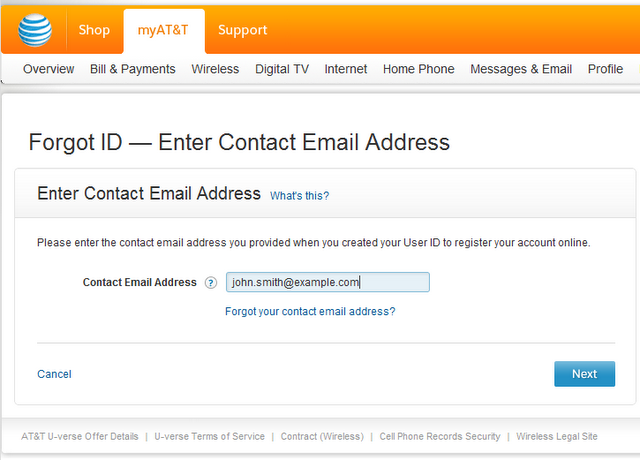
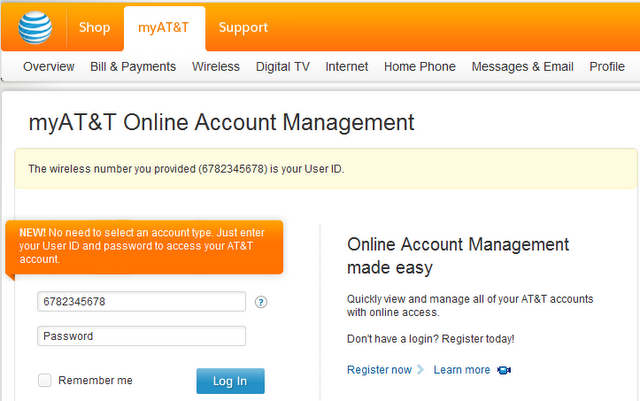
A vulnerability has been discovered on AT&T’s website which allows anyone to look up the phone numbers of AT&T subscribers, provided they have the subscriber’s email address. The issue involves a form on AT&T’s site where a subscriber can input their email address in order to recover their forgotten AT&T User ID. Except instead of simply emailing the User ID to the email address provided, the following page reveals the wireless phone number associated with that account.
UPDATE: AT&T says the vulnerability has been removed. See below.
According to security consulting company Errata Security, which reported the problem this morning, it’s clear that AT&T never intended for anyone to abuse this feature – it’s meant to be helpful to those who have simply forgotten their account information. But unfortunately, the feature is incredibly easy to abuse. Not only is it accessible to those without any technical skills, it’s also “trivially easy” for hackers to create a script that will extract useful information, explains Robert David Graham of Errata.
The problem was first unveiled late Friday night in a posting on Reddit (but of course). According to the comments there, some Reddit users have already created working scripts that return a list emails followed by the associated wireless phone number. But the vulnerability seems to be hit or miss, in terms of whether or not it reveals the complete number or any number at all. It doesn’t appear to work for Business Accounts, one commenter noted, but in another case, it worked for someone who wasn’t even an AT&T subscriber anymore.
To see if the hack works for you, visit https://www.att.com/olam/enterEmailForgotId.myworld, enter in an email address, click next, and see if a phone number is returned.
For what it’s worth, it didn’t work for me (an AT&T subscriber), but that may be because it doesn’t seem to work for those who have already established AT&T User ID’s, as I have. At the very least, that should protect some of the potentially affected AT&T subscriber base from having their personal information revealed.
To be clear, for this issue to be a threat, a hacker would have to have your email address in order to retrieve your phone number from the website. These days, however, obtaining lists of personal emails is not hard for hackers to do. Thanks to a number of well-publicized security breaches in recent months, including the most recent attack on YouPorn, there are several lists containing customer email addresses floating around the web. In addition, earlier security breaches on Zappos.com, Sony Playstation’s network, at marketing firm Epsilon (whose customers included TiVo, Walgreens, Disney, HSN, several banks, Marriott and more) and elsewhere, have managed to affect a wide swatch of the U.S. online population.
AT&T itself has faced similar security issues before. In 2010, for example, a security flaw in one of AT&T’s customer-identification scripts allowed hackers to extract as many as 114,000 email addresses of iPad owners.
We’ve reached out to AT&T for confirmation and asked whether or not a fix is underway. We’ll update if/when we hear back.
UPDATE: AT&T says it has removed the vulnerability from the website. Below is a statement issued by an AT&T spokesperson:
“We are dedicated to protecting our customer’s personal information. While the function was intended to help improve customer experience, we have removed it from our site to prevent misuse.”
(Image credits: Errata)

Velti plans to announce two new initiatives aimed at helping mobile advertisers get ahead of data collection and privacy concerns, according to a source who was briefed by the company.
My source says Velti, a publicly traded mobile ad company, is working on the first “Do Not Track” list built for mobile. Consumers should be able to direct their smartphone browsers at a specific Do Not Track website, which will build a “fingerprint” for that phone adding it to a list of devices that will be blocked from ad targeting. Velti is working with partners to finalize these plans, but it might announce the Do Not Track feature this week, at the Mobile World Congress event in Barcelona.
Attention has been growing around this issue, especially in the last few days, with the Obama Administration proposing a Privacy Bill of Rights that encourages Do Not Track efforts. A number of technology companies have been talking up their support for Do Not Track (probably because self-policing within the industry is more attractive than government regulation). For example, mobile ad network Jumptap noted that it already supports Mozilla’s version of this technology.
At the same time as it’s working on a way for consumers to opt out, my source says Velti has also developed plans for a new way to track smartphone owners — specifically one that doesn’t require a UDID (the long string of letters and numbers that’s unique to each iPhone).
Last fall, Apple revealed that it would be phasing out the use of UDIDs (presumably in response to security and privacy concerns). That could become a serious hurdle for mobile ad networks, which use UDIDs to identify their users, as well as other mobile technologies. A number of companies have been trying to find workarounds. Velti’s new technology will allow for ad targeting without a UDID, my source says.
Velti declined to comment on this story.

We’re on the ground here in Barcelona for the 2012 GSMA Mobile World Congress and are happy to report that, according to the GSMA press release, the planned strike by Metro subway workers has been staved off. An agreement has been reached.
The Bus workers, however, are apparently still negotiating.
The metro workers from TMB have announced that they have reached agreement with the government and have voted overwhelmingly not to strike. The metro system will operate as normal during the GSMA Mobile World Congress, held 27th February through 1st March 2012.
There has not yet been a resolution between the bus workers and the government, and therefore the contingency plans announced at 9:00 am CET on Saturday, 25th February remain in place. The GSMA will update attendees should further information become available.
I’m sure there are sighs of relief being heaved by the event organizers and the city government as well.
One thing is for sure — it will be much easier to cover the event and bring you the latest news as many events are held off site from the Fira de Barcelona which hosts the main event.

Almost none of the stuff on the radar of the silicon valley echo-chamber is innovative or solves any real human needs. They won’t cure anyone of disease, feed a child, improve the environment, or radically improve manufacturing…
Pinterest? Quora? Other social apps. It’s all a big distraction, it’s entertainment…
It’s all well and fine to pursue these avenues for making money. But don’t pretend there’s anything really innovative going on, that 50 years from now someone’s going to look back like we look back at Einstein, Darwin, or Newton and say ‘thanks’.
That’s from a comment written by one Ray Cromwell, regarding a week-old TechCrunch post about Pinterest — and I have to admit, it struck a chord. And I’m clearly not alone: lamentations re the paucity of meaningful innovation in today’s Valley are growing increasingly common. PayPal founder Peter Thiel, in a recent interesting conversation with Francis Fukuyama, actually questions “whether we’re still living in a technologically advancing society at all.”
Pinterest is the pinup poster child for this kind of skepticism. Digital scrapbooking is hardly revolutionary, but it’s definitely the flavor of the month, purely because of the money pouring into it, and its extraordinary traffic numbers:
Sometimes late at night, when I'm all alone, I just look at: siteanalytics.compete.com/pinterest.com/—
Aaron Levie (@levie) February 22, 2012
Of course! you may say. So what? It’s incredibly popular and it’s raised a ton of money. Why shouldn’t it be getting all the hype? Isn’t that the way it’s supposed to work?
Well, call me a corny idealist, but — no. I like to imagine that the Valley is a little better than that. We in the tech world like to look down our noses at Wall Street and Hollywood. After all, we invent the future! But if money and popularity are our only criteria for success, then are we really any different? Shouldn’t we care more about game-changing, world-changing, and real innovation? And shouldn’t we care less about sites and services that don’t have any real prospect of any of the above?
Your mobile phone has more computing power than all of NASA in 1969. NASA launched a man to the moon. We launch a bird into pigs.—
George Bray (@GeorgeBray) March 22, 2011
That’s why I’m still fond of Google, for all the flak they’ve taken of late. Love or hate their far-out projects like augmented-reality goggles and self-driving cars, you can’t complain that they’re not trying to change the world. Again. Just as Apple has, and Facebook has, and Twitter.
But Pinterest? Don’t get me wrong, they’re a great service, and may yet grow into a great business. But I can’t see them becoming something that actually matters.
Steve Jobs famously convinced John Sculley, then the CEO of Pepsi, to come join Apple with the pitch “”Do you want to sell sugar water for the rest of your life? Or do you want to come with me and change the world?” Well, that was then; this is now. Of course, there are still people out there trying to do more than lure a huge audience and make a lot of money. Elon Musk leaps to mind. But I’m finding it hard to shake the sense that the Valley has become a frothy sea of sugar water, interrupted only occasionally by islands of meaningful innovation.
Image credit: parl, Flickr

Editor’s note: James Altucher is an investor, programmer, author, and entrepreneur. He is Managing Director of Formula Capital and has written 6 books on investing. His latest book is I Was Blind But Now I See. You can follow him @jaltucher.
I just gave up all parenting responsibilities this weekend to Mark Cuban. Meaning, my kids and I watched eight straight episodes of “Shark Tank”.
For the past two years, people have been begging me to watch “Shark Tank”. One friend of mine, who has co-invested with me on two deals, has given me two pieces of advice in life. One is: “you never know what someone is worth until they declare bankruptcy”. The point is, we all speculate that someone is worth $100 million or a billion or whatever, and the next day you read in the newspaper that they declare bankruptcy. Now you know.
The second thing my friend and co-investor was always telling me was that “James, you need to watch Shark Tank”. Now, after watching every episode, I can say I agree with him.
For those of you who don’t know what Shark Tank is, it’s the best reality TV show I’ve seen. 5 investors sit on a stage, keeping them slightly higher than the supplicants who come in asking for money. Then, one by one, aspiring entrepreneurs are led into the “Shark Tank” where they pitch their products and the Sharks, right then and there, decide whether or not to give them money. The entrepreneurs are often humiliated, laughed at, insulted, ask the stupidest questions I’ve ever heard, but occasionally get some good advice and even better, walk away with a check if one or more of the “Sharks” think their business is a good idea.
“The Sharks” as the show describes them, “are filthy rich” and invest their own money. It’s not always the same sharks each show. Mark Cuban is often a shark. (See also, “How I Helped Mark Cuban Make a Billion Dollars“) And the rest of the often rotating cast includes Barbara Corcoran, of real estate fame, Kevin O’Leary, who started and sold “The Learning Company” for $3.2 billion to Mattel. Robert Herjavec, who I had never heard of but he’s sold “companies worth $350 million”, Daymond John who started Fubu and “has sold $6 billion worth of products” and Jeff Foxworthy, the comedian who has created an empire out of making fun of rednecks. Power to him. God bless them all.
I’m never jealous of any of these people. Money doesn’t buy happiness but it certainly solves your money problems. It’s up to you after that to be happy or not. To not self sabotage at every opportunity. I can tell you this: I am very good at making money but have often had a talent for self sabotage. A talent I have been hoping these past few years to suppress.
So I think highly of the people who have learned through experience not to sabotage their successes.
So what have I learned from the show. Some items are good for investors, some for entrepreneurs, some for me, and some for my kids.
First,
Math: The first thing that happens when an entrepreneur enters is: “Hi, my name is ABC and I’m asking for a $100,000 for 10% stake in my company.” At this point we would pause the show and I’d ask my kids how much the company is worth. Any trader, investor, entrepreneur, does this math instantly and I wanted my kids to get good at it.
And they did. At first the answers (from either kid) would be a nervous “I don’t know”. Then they’d start to figure it out but still be nervous “one ….million?” And then finally, by the last episode, they were doing it in their head and blurting it out before I even hit pause.
But sometimes the entrepreneurs would present confusing numbers like, “I’m asking for $85,000 for 15% of my company.” And then they’d launch straight into their story. To be honest, I can’t even do this accurately and quickly in my head. I always wondered if these entrepreneurs did this on purpose, so that the sharks would focus more on the product than the specific valuation.
Second,
Not everything is as it appears. This is a TV show. Not a venture capital firm (where, also, by the way, not everything is as it appears. In fact, in all of life, nothing is as it appears but this is never more true than a “reality” TV show.) For instance, in the beginning intro the show says “Barbara Corcoran took a $1,000 loan and turned it into a real estate empire worth hundreds of millions.” Except she sold her “hundreds of millions” company for “60 million”, which they don’t say.
I’m not saying she’s poor. She’s incredibly smart and successful. But the TV show hypes it up. There’s subterfuge like that throughout the show. Kevin O’Leary, who plays it up as the most obnoxious member of the Sharks, is described as someone who “built a software company in his garage and sold it for $3.7 billion”. That’s true. He built The Learning Company and sold it to Mattel. What they don’t say is how much he owned of it (so we can estimate his worth). He clearly made some money on it. But he bought hundreds of companies first. So each company, assuming it was bought in part for stock, diluted his share. So his stake might have been tiny.
And then, Mattel repeatedly missed their earnings estimates because of the acquisition of his company. In fact, the acquisition has been described as “one of the worst acquisitions in history” in various articles about it. But, fair enough. Kevin turned this “success” into having a role at a venture capital firm. I am guessing it’s his firm’s money (rather than his personal money) which he uses when writing checks on the show.
I went through this exercise with each “Shark” and in every case it was not how they described it on the show (except in the case of Mark Cuban).
My only guidance for the people who are going on the show, or for anyone who pitches any investor, is to carefully study every aspect of the background of the people you are pitching. There are many ways you can use that to your advantage in the actual pitch. And because these guys, in particular, have very public personas, there are a lot of venues you can research their net worth, their successes, their failures, their interests, their distastes, and so on.
Third,
Sell the Dream, not the Sales. Many of the entrepreneurs go in there and say, “I sold $11,000 of this product last year from my garage.” These are the people that get either the worst deals or no deal at all. Nobody cares about $11,000 in sales. Sometimes the Sharks didn’t even care about close to $1 million in sales over the last year. (A great example was games2u.com which I thought was an excellent company but walked away with no deal).
And yet some companies with no sales walked away with a great deal. Here’s what the Sharks, or any investor, want to really understand: Do you have a great product? Do you know what the size of your market is? Do you have some sense of a business model? And, in some cases, do you have big breasts?
How do they know if you have a great product? They can tell by your background, they can tell by the technical expertise you needed to make the product, they can tell if you have a patent, and they can tell if you say, “I have 3 distributors about to send me purchase orders for the product.” You might not have a dime of sales but if you show that people are interested and that your product is special, you’ll get an offer. If you also say, “and for the last three years I’ve had a total of $53,000 in sales even though I’ve had a full time job” then you will definitely not get a deal.
Sell the dream. Better not to have sales unless you are going to blow them away with your sales numbers.
Fourth,
Don’t Nickel and Dime. It’s not so bad to “nickel plus dime” and I’ll explain that in a moment. But if you went in there and said, “I’d like $100 for 25% of my company” and you have no sales and one of the Sharks says, “I’ll give you $100 for 40% of your company” then just say yes. What do you care about the percentage? As Cuban said in one of the episodes, “better to have 20% of a $100 million company than 100% of nothing.”
With one successful company I sold I wanted my partner to take 10%. Instead they asked for 50%. I gave it to them and sold the company 4 months later. To them! Because with 50% they had to care. With 10% maybe they would not have cared.
However, you should nickel plus dime. If Mark Cuban offers you $100k for 30% of your company push forward and ask for a few more nickels. Price is often the least important part of a negotiation. Ask him: can you introduce me to Netflix, can you get me a promotional deal with the Dallas Mavericks, are there any distributors you can help me license my product to?
Get value out of every deal aside from the money. Money won’t save or help your business for more than a short time. But the right deal and connections will make or break you. So while they are playing around with the dimes, make sure you collect as many nickels that they may have left lying on the floor.
If you want a deal, then take a deal. Unless…
Fifth
Don’t Take the ‘Hail Mary’ Deal
Kevin O’Leary is famous for this deal. He waits for the other Sharks to say “I’m Out” and then he knows he’s the only possibility left for the entrepreneur. So then it suddenly doesn’t matter at all what they are asking for. Let’s say the entrepreneur is growing, they have profits, they have one million in sales, etc. Kevin O’Leary doesn’t care at all.
Instead, he makes the Hail Mary offer. Let’s say they were asking for $500k for 10% of their company, valuing their company at $5 million. Even if the company could be reasonably valued at that, he doesn’t care.
He’ll say “I’ll take 51% of your company for $500k”.
It doesn’t matter to him if they say “yes” or “no”. If they say “yes”, then it’s a great deal for him. He just bought control of a company he knows is worth a lot more. If they say “no”, then no problem, one out of ten will say “yes” and he just has to wait it out. It’s the same concept as the story of the guy who wants to have sex so he stands on a street corner and asks every woman who passes him to have sex with him. Obviously every girl will say “no” to him. Except for maybe one out of 200. He’s just standing there waiting for that one. And he’ll get it. Unless it’s me. Then its one out of three thousand.
Sixth
Be the Source
Kevin O’Leary has two other techniques as a Shark that I have to admire, despite his persona as very obnoxious on the show. That persona becomes an asset in various ways because the entrepreneur is instantly trying to get on his good side. But that’s not the technique I admire (by the way, that technique of being obnoxious first—a technique I would never be able to pull off is similar to Neil Strauss’s “negging” technique in his book “The Game” when he talks about seducing women.)
One technique Kevin does is he sits there while one or two of the Sharks make their offer. Then he asks the entrepreneur to leave the room. Then he turns to the Sharks who made the offer and says, “Lets join forces and do this one together”. Then the entrepreneur comes back and whereas before they had 2 or 3 competing offers (an auction environment is always what you want), now they have only one combined offer. They have a minute to decide, and the offer is worse than the lowest offer they had before. Kevin takes charge of the auction, makes it an “all or nothing” deal and again places himself in a can’t-lose situation.
The other technique he uses is to be the Source for the entrepreneur. Almost as if they are his friend. Three or four of the Sharks might make an offer and are competing. Kevin will then say, “Ok, to summarize, here are your four offers.” So he’s being a source of information. He’s “the bank” all of a sudden, seemingly in control of all four offers, and he can spin them in any way he pleases and quiet the Sharks who protest because he behaves as if it’s a legitimate part of the show. When you are the Bank, it gives you a slight edge over your competitors because the customer wants to do business with the Bank.
Seventh,
The Deal Doesn’t Close Until The Money Hits
Many times the entrepreneur will strike a great deal. He comes in asking for $100 for 10% of his company and he might get $300 for 5% of his company. At the end, the Shark who made the deal and the entrepreneur will smile and shake hands (or hug, in the cases when the entrepreneur has big breasts and the Shark is a male). It’s all good. Then, in typical Mark Burnett reality show-style, there’s the post session interview where the entrepreneur is whooping it up and saying, “Yeah! I just made a deal with the Shark Tank! Yeah!”
My guess is most of these deals don’t close. I only have anecdotal evidence. But I looked up several of the companies afterwards and there’s no mention of their new co-investor. There’s only mention of “see us on ABC’s Shark Tank this Tuesday!”
One deal, Hyconn, got $1.25mm for 100% of his company, from Mark Cuban, with a three year employment agreement and a royalty. He sold some sort of contraption which made it easy to attach your hose to the faucet or whatever you call it. But when you go to his facebook page he talks about another group of investors and he says, the deal with Mark Cuban didn’t work out. No other details.
Any deal in life goes through several stages: sales, initial questions, the auction (if there is one), the accepted offer, the honeymoon period, due diligence, legal contracts, potential buyer/seller remorse, and then cash getting wired. The TV show only takes us through “the accepted offer” but at any point there’s the chance the deal can fail. This is important to remember in any deal at all, including personal relationships.
Eighth,
Know What You Are Good At
When an entrepreneur first steps through the door, we would try to figure out which investor/Shark was good for the entrepreneur and we were usually right. If it was a clothing idea then if the FUBU guy didn’t like it, it was all over. If a product looked like it would be ideal for an infomercial (a pushup machine that makes pushups easier) and the informercial expert didn’t like it then no deal. If it was an Internet play and Mark Cuban didn’t like it, then no deal.
This is useful to me as an investor. I don’t like to think very hard when I invest in private companies. I like to know that expert investors who are experts in the space of the company are co-investing alongside of me. In fact, another Kevin O’Leary trick: he would stay silent, but if he saw that the informercial king was investing, he’d try to get in on the action and partner with him because he knows the infomercial king would make an infomercial, get it on TV, and do all the hard work. It’s also useful to entrepreneurs. Pitch to the right guy. Don’t just throw it out there to Barbara Corcoran, the real estate queen, if you have a product that you are going to sell to fire stations.
Which leads me to
Ninth,
Get Advice When You Can
Some of the pitching entrepreneurs simply had bad ideas. If you’re selling a pair of jeans, for instance, and the FUBU guy doesn’t want to buy it, then that tells you right there that you probably have a bad idea. But I only once on the show heard anyone ask, “what did I do wrong in this pitch” asking for advice. And even then, when they gave him advice, he was defensive and insulting to them. If you don’t get the deal, learn what you did wrong, and either modify your product, your approach, or just start a new business. This is not the end of your life if you don’t get some crappy deal on Shark Tank.
Finally,
Tenth
Who Cares?
You just presented your product for 15 minutes on a nationally broadcasted TV show that will be re-aired at least two or three times and sell a ton of shows on itunes. That sort of advertising would cost about a million dollars or more. So who cares if you get a deal? Make sure your website is ready for publicity, for the onslaught of traffic and orders no matter how good or bad the product is, and be thankful for the free publicity. Some of these people were crying when they couldn’t get a deal. An entrepreneur takes advantage of every situation and opportunity. A million dollars worth of free advertising plus great advice from a bunch of insulting billionaires is a great experience for you and your business. Make the most of it.
These ten lessons are for my daughters, because I told them at the end of our marathon Shark Tank session that if they don’t have an idea by next week that they can build into a business then “No Christmas this year and no summer vacation!” Which would make my life infinitely easier. That’s the way I roll. Take it or leave it.

Editor’s note: Contributor Ashkan Karbasfrooshan is the founder and CEO of WatchMojo, he hosts a weekly show on business and has published books on success. Follow him @ashkan.
Leadership in management is the art and science of getting others to do what they don’t necessarily want – or don’t understand why they’re being asked – to do. Doing it at a startup is accomplishing all of that in the face of uncertainty and with little resources. Now imagine doing that without the war chest supplied to you by VCs as you bootstrap. Good times, but also a pain in the ass.
First: Yes, the Usual Clichés
Without a doubt, the mere minimum you need to do to recruit and retain talent is to show respect, empower, provide feedback and be a generally good person to want to work for. Treat employees not just like partners, but also how you want to be treated as an employee.
But, hiring during boom times is very different than during a downturn. Depending on your industry, your company might be grounded due to the inability to hire.
Your Business Isn’t a Fortune Cookie
“Hire slow, fire fast” is a great sound bite, but it’s usually wrong, especially if you lack the cash to hire anyone you want.
Either way, not everyone is a visionary or sees the lay of the land; a lot of people need direction and to be cast in a role. I am not recommending you to hire a putz and promote him, but if you saw something in a candidate and things aren’t working out at first, chances are they may be really good at something else.
Vegetable Lasagnas Need Not Apply
Hire a bunch of plain-vanilla yes-men and I promise you your company is DOA. But that doesn’t mean that you need to go out and try to hire a number of all-stars, because that’s not really how championship teams are built, either.
Life is all about team dynamics and balance.
The Ego Has Landed
Realistically, everyone has an ego, and in all honesty, that’s not a bad thing. As a boss you need to differentiate between self-centered people who place personal objectives ahead of the common good versus those who take pride in their work and will in turn set a good example for others. In fact, those two things are not even mutually exhaustive, so as long as the latter outweighs the former, you should check your own ego and live and let live.
Also, Don’t Lie to Yourself
Moreover, while you as the leader are driven to succeed and may have virtuous and altruistic objectives, ultimately you stand to gain financially when others help you achieve your goals, so you cannot be disingenuous in at least recognizing that others may have their own reasons for participating in your adventure.
But More Importantly, Don’t Lie to or Disrespect Others
The golden rule is candor, because people don’t like to be ridiculed or made fun of. If Maslow’s hierarchy were modified to reflect something other than needs, I’d argue that pride and self-esteem would place rather high. Respect everyone on your way up, even those who have what society perceives to be lower-ranking jobs and functions.
When you’re on a date, for example, a woman will pay particular attention to how you treat a waiter or doorman, because it will say a lot about you. Similarly, if you’re having lunch with a potential hire and you’re rude to the waiter, it sends a red flag to the person you’re trying to recruit.
You Are Neither Il Duce Nor George Washington
The key is to manage like it’s a democracy but to remember that it’s not. After a series of “bad” CEOs, P&G chose nice guy John Pepper as CEO. He had a tendency to agree with the last person he spoke to. That doesn’t work in startups, where everyone has their own ideas of what to do but, but enough resources to do the one thing you need to do properly.
You’re Only As Weak As Your Strongest Link
Saddam Hussein had a peculiar habit of balancing his sons’ powers. While you shouldn’t take management lessons from the Butcher of Baghdad, the reality is that you need to build a team that is balanced, so having one superstar is a recipe for disaster regardless of whether that employee leaves or stays.
The Psychological Value of Equity
Those that have equity tend to envy those with high salaries, and those who have high salaries crave ownership. Equity, as such, isn’t simply a financial motivational tool, but a golden pass that truly aligns and bonds employees to your company and mission statement. That being said, you never know how people’s roles will evolve over time, so despite what some may suggest, be conservative to leave you with more options down the road. Equity is the most important lever you have to offset your lack of money; it’s your lifeline as the bootstrapped CEO.
Creative People, Be It Artistic or Technical, Can’t Be Told To Be Creative In a Sandbox
Not only can’t you micro-manage the best people, but you also can’t kid yourself and think that you can hire the Crazies and expect them to remain successful within a tight, narrow sandbox you create for them.
The best employees are thinking and performing at a level that you can’t imagine even in your wildest dreams. That is why you hire them. If your ego can overcome that, you’re well on your way to greatness.
Perfectionists vs. Shippers
Of course, you can have the big thinkers, the smooth talkers, as well as the perfectionists; unless they actually deliver the goods and ship – or walk the walk – then you’re back to square one. Always go with results and achievers.
You don’t go to war with the army you want, you go with the army you have. But if you play your cards right, you’ll realize that they can be one and the same despite the lack of resources.
(image: Everett Collection, shutterstock)

Editor’s note: Guest author Gang Lu is the editor of TechNode, a bilingual blog based in China.
ChinaBang conference, an annual two-day event with a focus on local startups, innovation and entrepreneurship, was held last weekend in Beijing. With a mixture of keynote and panel discussions from local startup founders and entrepreneurs, the awards ceremony recognized the best Chinese startups and founders in 2011 and featured a startup launchpad contest. Organized by TechNode, ChinaBang’s Launchpad competition had 16 teams pitch to 14 judges (from GSR Ventures, IDG, Qiming, Matrix Ventures, Atomico, Singtel, Paypal, Innovation Works, CyberAgent, Rovio, Infinity Ventures, Taishan, CSDN) and a live audience. Each team was given 10 minutes to present on stage – five minutes pitch time and five minutes for answering judges’ questions. The judges scored each team on a scale of 10 points. The teams were then ranked by point average to result in the top three, who all would be walking away with prizes including cash and overseas trips.
Here is the rundown of all startups presented on stage in the launchpad.
First Prize: TukeQ – Won RMB10,000 and A Trip to Finland, the home of Angry Birds
Founder Alex Su presented an attractive demo of his social web and mobile travel organizer app, TukeQ. TukeQ has already been recognized for its big potential as a former incubatee of Innovation Works. In his presentation, Alex demonstrated the ability for users to intuitively and quickly drag-and-drop activities or places of interest into an itinerary. Brilliantly, the map automatically populates the route from A to B to C. For example, if you were in Sydney, Australia and wanted to go from Bondi Beach to Circular Quay to Chinatown, your itinerary would show you when and where to go and map out the path. The most compelling thing is its ability to leverage social connections. Meaning, people in my network can recommend places to visit and things to see. You can see the recommendations, and drag them into your own plan. People on TukeQ can connect using Sina Weibo. Kelly Poon of Atomico suggested TukeQ consider creating an English version for foreigners to organize their travel to China, but Alex clearly defined his market as the burgeoning crowd of newly-rich Chinese travelers, looking to explore and experience the world.
As the winner, TukeQ took away the biggest cash prize of RMB10,000 sponsored by Silicon Valley Bank and a trip to Finland, the original land of Angry Birds, co-organized by Rovio and presented by Paul Chen, CEO of Rovio China.
Second Prize: Mugeda – Won RMB5,000
As web and mobile are converging, HTML5 is quickly becoming the bridge between the two. Knowing that everyone will need a web and mobile strategy, Mugeda is a cloud-based animation generator, where you can create, share, and publish organic HTML5 animation content all in your browsers, without any download or installation. The target use cases are for the creation of advertising, games, tutorials and cartoons and can be easily viewed across PC, smartphones and tablet devices. As this is very new, some of the examples on the site look very basic but the potential to create sophisticated animation is big.
Interestingly, although the team is based in China, the site is in English and presumably targeting the foreign market. It is based on a freemium model where advanced users are charged for extra services like cloud-storage and technical support.
Third Prize: Smart Album – Won RMB5,000
Incubated by Shanda, SmartAlbum is an innovative technology which organizes Android smartphone contacts and photo albums by people’s faces rather than just their names. For most people, remembering someone’s face is much easier than their name. For this reason, it makes more sense to be able to just find someone’s face then click to call them. By using face recognition even in your Android smart-phone’s photo album, you can also click to call or message directly there, saving time and effort.
YinXiangMa
Ever get tired of discerning distorted characters from CAPTCHAs that prevent websites from being cracked by bots, but sometimes drive people to madness? Qingdao city-based startup Yinxiangma smartly solves the issue by transforming CAPTCHAs into advertising. Here’s how it works: when signing into a website, Yinxiangma’s “ImpressionAd” is substituted for the original twisted, barely-recognizable characters. ImpressionAd usually consists of an image or video ad with accompanying text (see example below), the image/video could be any type of product, the text could be any relevant keyword, e.g. price and so on. So instead of typing in CAPTCHA words, web users can now easily input the keyword, such as a smartphone’s price, company slogan, etc., and then get access to whatever he intends to visit, smartly and subtly turning CAPTCHAs into ads.
MadeiraCloud
MadeiraCloud raised an angel investment last June to better organize cloud applications. CEO Dan O’Prey and CTO Zhao Peng call themselves the Microsoft Visio of cloud computing. Their WYSIWYG web GUI enables users to simply drag and drop their cloud resources onto a canvas and connect them visually to configure the ports. Once the architecture has been designed, a template (stack) of the whole setup can be saved for reuse and launched multiple times into live applications, without having to worry about conflicts in configuration. The main business case is leveraging the public cloud to take advantage of on-demand resources to demo proof of concept (PoC) software to potential clients. Madeiracloud’s closest competitor is a small startup called AppCara. However they don’t see them as a big threat as they “believe that we are a lot further down the development cycle and our product has superior usability and functionality.” The business model will work like many other SaaS. There is no initial set up fee, but a free package – limited to two running applications; a pro package – limited up to 10 running applications for $99/month; and an enterprise package – with pricing depending on requirements.
VKU
A report estimates the number of mobile video users in China will reach 282 million by 2013. At the same time, online video, mobile Internet and online payment were deemed the three Internet trends with the most potential in the Chinese Internet sector. VKU (or ??), taps into these trends with its mobile video sharing tool/community that combines both mobile Internet and online video. Anyone can shoot short clips (no longer than 30 seconds) easily and share them with friends through popular social media platforms like Sina Weibo and so forth. VKU is also a powerhouse for shooting and making short video clips. Underpinned by its strong technical team, VKU supports some unique and awesome features like realtime filtering and editing, video effects, subtitling and dubbing, all on your smartphone. Especially, with its pre-installed effects like LOMO, black and white, old times and so on, you can produce high quality professional footage with just a few clicks.
Gates2Asia
Founded in March last year, Gates2Asia (G2A) is a B2B cooperative buying site for international based SME’s to buy directly from low cost Asian suppliers like China. Essentially, it’s like a Groupon for SMEs, meaning when teaming up with other SMEs to buy the same things in bulk, it leads to lower costs and greater competitiveness. The market size is evidently big. In 2009, SMEs imported $124 billion in goods from China alone and 80 percent of SME imports were from wholesalers and non-manufacturing companies. Such a big opportunity was not neglected when Japan-based Infinity Ventures and SOS Ventures, invested $3 million into OrderWithMe.com, the winner of TechCrunch Disrupt Beijing in 2011. The process is fairly simple. SMEs can join G2A, state what they want to buy and in what quantities. After sourcing and negotiating with suppliers, they post the details on a board. Other SME buyers can join the co-operative and when there is enough, the purchase order is made. Of course everyone saves money because the total order is large.
ShenBian
Shenbian, the innovator of weibo-based social IM is pushing the frontier of mobile communication further by capitalizing on the social power of Sina Weibo and the real-time fun of ambient communication. Shenbian, differentiates itself from other location-based mobile social networks in the Weibo-binding and group chatting. People who log in with their Sina Weibo credential will be able to find other weibo connections (followed, followers) around them. And you can easily switch between private chatting and group chatting whenever you want. You can imagine its group chatting feature as a location-based Weibo-user-only chat room.
MobileMoMo
MobileMoMo takes a lightweight approach to mobile social networking in product design by leveraging 3G and your phone book. All your phone book contacts will become your MobileMoMo friends automatically (with privacy concerned, though), and you can send text messages, files and share your location with contacts even though they have no MobileMoMo client installed in their phone. All the information will be displayed on your mobile browser. The receiver could directly reply to your text or download the file from the browser.
Qiyu
Qiyu is a location-based elastic social networking service aiming to help people in the same area get connected. The app also encourages users to transform their connection from online to offline with real-life gatherings, using it is like starting an adventure, you never know what’s gonna happen next, said Gao Cao who designed the product. Qiyu launched the first version early last December, as of now the service has more than 60,000 users while more than 13 percent of them are in Taiwan, which according to Gao Cao is quite an interesting surprise, because there’s nothing similar in Taiwan.
Groupcells
Groupcells claims itself the world’s first group-based sCommerce (social commerce). Every node in its social network is a photo group which is based on users’ location or interests. Every user can share and sell everything to the most precise crowd by uploading photos. All groups can be created automatically and flexibly, there are no group owners and anyone can join and leave multiple groups freely.
Fit of Daily Workout
Fit of Daily Workout is an iOS social application which helps make exercising at home free and fun. You basically hold your cell phone, choose from a collection of body exercises, turn around your body, and the application will use its patent-pending technology to automatically calculate the time of exercise, exercising strength and weight loss. You can share the fun with your friends and family through the Facebook, Twitter, Weibo and Soybean, etc. You can even compete with other users to see who is having better results!
Yikuair
Founded in early July of last year, Beijing-based Yikuair (or ??????) is trying to leverage the power of social media to reshape the online marketplace. Being the first, and as of now the only company to build upon Sina Weibo’s virtual currency Sina Weibi (????), Yikuair has developed a marketplace combining social, local, mobile and commerce in an effort to help connect online/offline merchants and consumers and to offer them special deals through a distinct micro-payment system powered by Sina Weibo, the No. 1 Chinese twitter-like service. As of now Sina Weibo has more than 250 million registered users, a huge user pool that Yikuair could tap into. And besides social media like Weibo, the marketplace is also considering coming up with its own mobile app and weibo app to help merchants reach out to more customers.
Pandai
Online consumer finance or Peer to Peer (P2P) is a very new concept in China, where cash still dominates most transactions. Founded by Roger Ying, a Stanford Graduate who grew up in South Africa, Pandai.cn delivers next generation online financial services by providing credit loans for borrowers and high fixed-income products for lenders on a safe, transparent and easy-to-use online platform. Moreover, Pandai will be the only company in China that will allow its customers to build tailored credit and price loans.
Duanzumi
Duanzumi simply could be described as a Chinese-AirBNB, a website to list rooms for short-term rental. The short-term rental space is starting to get competitive with existing property portals such as Youtx.com from Soufan.com and Mayi.com from Ganji.com (a Chinese classifieds site). Of course, this occurred after AirBNB became one of the hottest start-ups from Silicon Valley and has been valued at over $1 billion. However, many of these sites have been criticized for simply taking existing property from their parent sites and listing them on a per-night basis without the landlords knowledge. Similar to Airbnb, Duanzumi charges a transaction fee to the room owner and it is only collected after the guest has arrived.
Botata
Traditional live webcasting is both time and money intensive. You need to buy or rent expensive live broadcasting equipment, hire operational professionals and negotiate with solution providers to make sure all your customized needs are met. Botata, a turn-key live webcasting service provider, has a simple and cost-effective solution to free live webcasters from all these pitfalls. Founded May 2011, the Beijing-based company built a cloud-based live webcasting client device (with the shape and weight of a conventional laptop) that takes the input from a camera-ready Internet-connected device like a smartphone or tablet and outputs it to an Internet-connected device via a cloud-based content distribution system. It currently supports H.264 video coding standard and 1080i, 1080p and 720p image quality.
In addition, ChinaNetCloud sponsored all top seven teams with one year’s free cloud server hosting management.
Although not officially one of the Launchpad finalists, a four-person gaming company, Walnut Company Limited, presented their attractive game production and development skills. Their game, Final Fury, is similar to Gun Bros and impressed Akio Tanaka of Infinity Venture Partners. As a prize, Akio selected Walnut to attend the next Infinity Ventures Summit in Japan with flight and accommodations paid for.
Photo is courtesy of Chris Tow

Here are some recent stories on TechCrunch Gadgets:
Intelligent Design And The Modern Cellphone
Dumb Buyer Beware: Chinese State Police Seize Hundreds Of Fake Apple iPhone… Gas Stoves
Microsoft To Replace “Live” Branding With “Microsoft Account” In Windows 8
Looking For A Classy Or Offbeat iPad Case? Here Are 16

The long-running “Live” name Microsoft has placed on its many connected services (Mail, messenger, photos, etc) is coming to an end in Windows 8, as part of their ongoing, major brand rehaul. Zune, of course, has been on its way out for some time, but will receive the coup de grace in Windows 8.
Their main services are being rolled into bundled applications with a native Metro look and simpler names — Mail instead of Windows Live Mail, Photos instead of Windows Live Photo Gallery, and so on. The new apps will be tightly integrated, as we’ve seen in demos, and will retain much of the Live cross-service functionality. They’ll be unified by a single “Microsoft Account.”
But Live isn’t going away entirely: the name is too strong to take away from Xbox Live and its subsidiary components, and in fact Xbox Live may be coming to Windows as the main entertainment brand — for music, games, and video content. This will replace Zune, which Microsoft has been gradually sweeping under the rug over the past two years. Zune fans mustn’t despair, though: Zune pass functionality will remain intact, and chances are the old desktop player and Zune hardware will continue to be supported in some way. And the fact is that Zune has left an indelible mark on Microsoft’s operations, pioneering the look and feel found in Windows Phone 7 and Windows 8.
Smaller services, like Writer and Games for Windows Live, will likely be rolled into existing products. It’s in major brand shakedowns like this that one starts to realize just how many platforms and pieces of software Microsoft actually has and supports. This coalescence of services is probably coming as a huge relief to the company, though the labor involved in repurposing them is, naturally, Herculean.
Conspicuously absent from the lineup mentioned is Messenger, which may be seeing some integration with Skype. A multi-service messenger/video-chat app with Skype built in seems likely, though Skype would definitely have to have a discrete presence as well for power users.
No doubt they’ll leave behind many irate users who want things to remain the same — and indeed how Microsoft intends to accommodate these legacy users isn’t clear. Their new clean-break approach maroons many people on the old Windows XP/7 mainland, where they’ll likely remain until the launch quakes of Windows 8 clear away and the new land is safe for colonization.
(This failed to publish earlier in the day, which accounts for its lateness)