80% of the 22 million comments on net neutrality rollback were fake, investigation finds

Of the 22 million comments submitted to the FCC regarding 2017’s controversial rollback of net neutrality, some 18 million were fake, an investigation by the New York Attorney General’s office has found. The broadband industry funded the fraudulent creation of about 8.5 million of those, while a 19-year-old college student submitted 7.7 million, and the remainder came from unknown but spurious sources.

The damning report, issued today, is the result of years of work; it set up a tip line early on so people could report fraudulent comments, and no doubt received plenty, as people were already independently finding themselves, dead relatives and other obviously fake submissions among the record.

It turns out that a huge number of these comments were paid for by a consortium of broadband companies called Broadband for America, which laid out about $4.2 million for the purpose. They contracted with several “lead generator” companies, the kind of shady operations that offer you free trials of “male enhancement pills” or the like if you fill out a form — in this case, asking the person to write an anti-net-neutrality comment.

As if that wasn’t bad enough, the lead-generation companies didn’t even bother plying their shady trade in what passes for an honest way; instead they fabricated the lists and comments with years-old data and, in one case, with identities stolen in a major data breach. The practice was near universal:

In all, six lead generators funded by the broadband industry engaged in fraud. As a result, nearly every comment and message the broadband industry submitted to the FCC and Congress was fake, signed using the names and addresses of millions of individuals without their knowledge or consent.

The broadband companies are off the hook on a technicality, since they were careful to firewall themselves from the practices of those they were contracting with, even though the record shows it was plain that the information being collected and used was fraudulent. But because the actions were, ostensibly, independently taken by the enterprising lead generators, the buck stops there.

Notably, these scams were also involved in more than a hundred other advocacy campaigns, including submitting over a million fake comments for an EPA proceeding and millions of other letters and digital comments.

The wholesale undermining of the processes of government earned fines of $3.7 million, $550,000 and $150,000 for Fluent Inc., React2Media and Opt-Intelligence, respectively. There are also “comprehensive reforms” imposed on them, though it may be best not to expect much from those.

Internet rights advocacy organization Fight for the Future issued a king-size “I told you so” noting that they had flagged this process at the time and helped bring it to the attention of both government officials and ordinary folks.

Another 7.7 million fake comments were submitted by a single person, a California college student who simply combined a fake name generation site with disposable email service to provide plausible identities. The person automated an individual comment submission process, and somehow the FCC’s systems didn’t flag it. Another unknown person used similar means to submit another 1.6 million fake comments.

Acting FCC Chairwoman Jessica Rosenworcel said in a statement that “Today’s report demonstrates how the record informing the FCC’s net neutrality repeal was flooded with fraud. This was troubling at the time because even then the widespread problems with the record were apparent. We have to learn from these lessons and improve because the public deserves an open and fair opportunity to tell Washington what they think about the policies that affect their lives.”

Indeed, at the time, Rosenworcel suggested delaying the vote, joining many in the country who felt the scale of the shenanigans warranted further investigation — but then-Chairman Ajit Pai brushed aside their concerns, one of many decisions that have considerably tarnished his legacy.

Altogether it’s a pretty sad situation, and the broadband companies and their lobbyists get off without so much as a slap on the wrist. The NY AG report has a variety of recommendations, some of which no doubt have already been implemented or suggested as the FCC’s comment debacle became clear, but the bad guys definitely won this time.
Virgin Orbit’s LauncherOne is returning to space in June

Orbital launch company Virgin Orbit has scheduled its next mission to space.

Virgin Orbit will be returning its LauncherOne rocket to orbit in June to deliver payloads for the U.S. Department of Defense Space Test Program, SatRevolution and the Royal Netherlands Air Force.

The manifest includes three CubeSat satellites as part of the DoD’s Rapid Agile Launch Initiative; a CubeSat satellite called BRIK II, Norway’s first military satellite to go to space; and two optical imaging satellites from SatRevolution for Earth observation. DoD awarded the launch to Virgin Orbit’s defense-focused subsidiary VOX Space last April.

LauncherOne will take its payload to a target orbit of around 310 miles above Earth.

This will be LauncherOne’s first take-off since a demonstration mission in January, during which the LauncherOne carried satellites to low Earth orbit on behalf of NASA. That most recent demonstration was the first time Virgin Orbit proved that its unique hybrid aircraft/orbital rocket system actually works. The first try, which took place in May of last year, ended after the rocket initiated an automatic safety shutdown after detaching from the Boeing 747 that takes it to launch altitude.

The mission will be conducted from the Mojave Air and Space Port in California on a yet-to-be-announced date in June. The rocket will be shipped out to the Mojave site “in the coming days” for prelaunch operations, the company said. Virgin Orbit will offer a public livestream of the mission on its website.

Virgin Orbit is part of a small cohort of private orbital launch companies that have actually sent payloads to space. As opposed to providers like SpaceX, which uses massive rockets similar to legacy designs from agencies like NASA, LauncherOne is essentially a 747 that’s been retrofitted with a rocket. Besides being smaller and able to take off from traditional airplane runways, the 747 saves on costs by being completely reusable.

Virgin Orbit was spun out of Virgin Galactic in 2017, with the latter focusing exclusively on commercial human spaceflight services. In homage to its beginnings as a humble record company, the mission has been christened “Tubular Bells, Part One,” so named after the first track on the first album ever released by Virgin Records.

Chinese EV maker Nio is stepping outside of China for the first time

Chinese electric vehicle maker Nio has chosen Norway — an EV hotspot — for its first foray into international markets. Nio Norway will offer a European version of ES8, Nio’s flagship electric SUV, to Norwegian customers from September this year. The ET7 sedan will follow in 2022.

“The decision to have Norway as our first destination overseas is backed by long-term thinking,” Nio founder William Li explained at an event Thursday. “Norway is the most EV-friendly company.” Among the European countries, Norway is the biggest adopter of battery electric vehicles. The company’s relationship with Norway stretches back to 2018 when Norges Bank, the country’s sovereign fund, gave the automaker “critical support” during its initial public offering, Li said at the event. Nio signed a strategic partnership agreement with the Norwegian EV Association, also in 2018.

That high EV adoption rate also means Nio will be making its pitch to a growing consumer base of savvy EV owners. In Norway, Nio will face competition from Chinese automakers like XPeng, international rivals Tesla and European automakers such as Volkswagen and Audi.

In addition to vehicle sales, the company also detailed plans to open dedicated service centers, vehicle charging stations and its Nio Power Swap battery swapping stations in Norway. The company aims to build four battery swapping stations around Oslo by the end of 2021, with additional swapping stations coming to the Norwegian cities Bergen, Trondheim, Stavanger and Kristiansand in 2022. Nio’s Norway team is composed of around 15 people, but that number is expected to grow to around 50 by the end of 2021, according to the company.

The Chinese automaker has had a slow start since its founding in 2014, but started gaining ground in the second half of 2020 through the latest quarter. Nio reported deliveries of 20,060 vehicles in the first quarter, a 422.7% jump from the same period last year when COVID-19 was busy upending the economy on a global scale. Sales in the first quarter of 2021 were also 15.6% higher from the fourth quarter. It has delivered 102,000 vehicles to date. These deliveries helped the company increase its vehicle sales by 489% compared to the first quarter of 2019.

Still, Nio is losing money, albeit the gap between revenues and net loss continues to narrow.

The boost in sales was likely due in part to the January debut of the ET7, its flagship electric sedan and the first vehicle model to be fitted with its so-called “Nio Autonomous Driving” software. The company has been an outlier when it comes to charging, adopting a battery-swap option in addition to traditional plug and charge stations. Nio has already completed more than 2.4 million swaps for Chinese users, Li said — a number that’s growing by 10,000 every day. Last August, the company also debuted its “battery-as-a-service” purchasing option, which allows drivers to lease the battery from the company and only purchase the vehicle.

Following Apple’s launch of privacy labels, Google to add a ‘safety’ section in Google Play

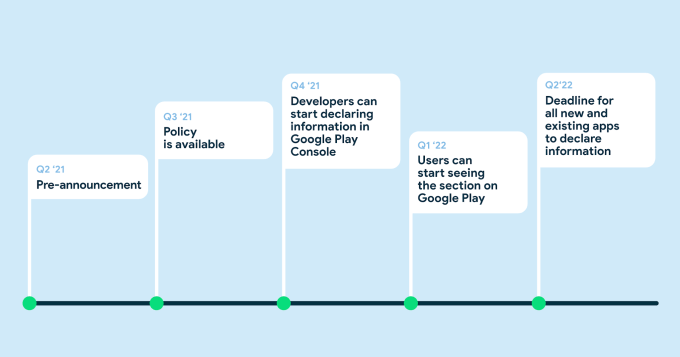
Months after Apple’s App Store introduced privacy labels for apps, Google announced its own mobile app marketplace, Google Play, will follow suit. The company today pre-announced its plans to introduce a new “safety” section in Google Play, rolling out next year, which will require app developers to share what sort of data their apps collect, how it’s stored and how it’s used.

For example, developers will need to share what sort of personal information their apps collect, like users’ names or emails, and whether it collects information from the phone, like the user’s precise location, their media files or contacts. Apps will also need to explain how the app uses that information — for example, for enhancing the app’s functionality or for personalization purposes.

Developers who already adhere to specific security and privacy practices will additionally be able to highlight that in their app listing. On this front, Google says it will add new elements that detail whether the app uses security practices like data encryption; if the app follows Google’s Families policy, related to child safety; if the app’s safety section has been verified by an independent third party; whether the app needs data to function or allows users to choose whether or not to share data; and whether the developer agrees to delete user data when a user uninstalls the app in question.

Apps will also be required to provide their privacy policies.

While clearly inspired by Apple’s privacy labels, there are several key differences. Apple’s labels focus on what data is being collected for tracking purposes and what’s linked to the end user. Google’s additions seem to be more about whether or not you can trust the data being collected is being handled responsibility, by allowing the developer to showcase if they follow best practices around data security, for instance. It also gives the developer a way to make a case for why it’s collecting data right on the listing page itself. (Apple’s “ask to track” pop-ups on iOS now force developers to beg inside their apps for access user data.)

Another interesting addition is that Google will allow the app data labels to be independently verified. Assuming these verifications are handled by trusted names, they could help to convey to users that the disclosures aren’t lies. One early criticism of Apple’s privacy labels was that many were providing inaccurate information — and were getting away with it, too.

Google says the new features will not roll out until Q2 2022, but it wanted to announce now in order to give developers plenty of time to prepare.

Image Credits: Google

There is, of course, a lot of irony to be found in an app privacy announcement from Google.

The company was one of the longest holdouts on issuing privacy labels for its own iOS apps, as it scrambled to review (and re-review, we understand) the labels’ content and disclosures. After initially claiming its labels would roll out “soon,” many of Google’s top apps then entered a lengthy period where they received no updates at all, as they were no longer compliant with App Store policies.

It took Google months after the deadline had passed to provide labels for its top apps. And when it did, it was mocked by critics — like privacy-focused search engine DuckDuckGo — for how much data apps like Chrome and the Google app collect.

Google’s plan to add a safety section of its own to Google Play gives it a chance to shift the narrative a bit.

It’s not a privacy push, necessarily. They’re not even called privacy labels! Instead, the changes seem designed to allow app developers to better explain if you can trust their app with your data, rather than setting the expectation that the app should not be collecting data in the first place.

How well this will resonate with consumers remains to be seen. Apple has made a solid case that it’s a company that cares about user privacy, and is adding features that put users in control of their data. It’s a hard argument to fight back against — especially in an era that’s seen too many data breaches to count, careless handling of private data by tech giants, widespread government spying and a creepy adtech industry that grew to feel entitled to user data collection without disclosure.

Google says when the changes roll out, non-compliant apps will be required to fix their violations or become subject to policy enforcement. It hasn’t yet detailed how that process will be handled, or whether it will pause app updates for apps in violation.

The company noted its own apps would be required to share this same information and a privacy policy, too.

Shauntel Garvey of Reach Capital will join us to judge this year’s Startup Battlefield

TechCrunch’s Startup Battlefield is one of the most popular parts of our annual TechCrunch Disrupt conference which is happening on September 21-23 this year. Now we’re very excited to reveal one of the fine people who will be judging Startup Battlefield at this year’s all-virtual event in September: Shauntel Garvey, a general partner at Reach Capital, a VC specializing in the world of education technology.

Startup Battlefield sees startups applying far and wide for a chance to pitch their ideas to a panel, and to all of us in the audience, giving the finalists a lot of exposure and a shot at winning the grand prize of $50,000. Startups: You can apply to be a part of the action here.

Edtech has seen a huge surge of interest in the last year of pandemic living, and that’s led to a pretty notable rise in education startups, more funding for education technology and a lot more attention paid to voices in edtech.

That’s because not only is edtech of huge importance to society and our economy, but those in the field have picked up a lot of learnings that apply well outside of edtech.

They know firsthand about engagement and how to get it; connecting with larger ecosystems of stakeholders; learning to work with public and private bodies; and the ins and outs of tapping into the latest innovations in areas like streaming, artificial intelligence and graphics to get the most out of a concept.

All of this makes Garvey a great person to have as a judge, someone with specific-area knowledge but very aware of how it relates to the wider challenges and opportunities in tech.

Garvey is a co-founder and general partner at Reach Capital, a Silicon Valley VC focused on the wider opportunity within the educational spectrum, backing the likes of ClassDojo, Springboard, Outschool, Handshake, Winnie and many more. Garvey herself currently sits on the boards of Riipen, FourthRev, Holberton School and Ellevation Education.

Her experience in edtech extends back years. Before Reach, she was a partner at the NewSchools Seed Fund and she has invested in more than 40 early-stage edtech companies, including Newsela, Nearpod and SchoolMint. She is also not all about edtech: Before turning to education and startups, Garvey trained and worked as a chemical engineer. We’re really looking forward to her input as a Startup Battlefield judge.

If you haven’t gotten your tickets yet, TechCrunch Disrupt is coming up around the corner, September 21-23. This will be our second year of having the conference in an all-virtual format, and we have a lot of great speakers, networking opportunities and other things planned — free of physical constraints, we can fly! — and we really hope you’ll join us.

Google reveals a slate of Chromebook docks as it pushes to appeal to enterprise users

Chromebooks have been having banner quarter after banner quarter for the past year. While PC and tablet sales in general have been doing well as people shifted to remote working and learning, Google’s operating system has been leading the charge, in terms of the growth. That’s due in large part to the company’s wins in education.

With an extremely solid foothold in that category, Google is pushing to make a big play in enterprise — a category traditionally dominated by Microsoft (and, to a lesser degree, Apple). Today the company is announcing the launch of a new series of docks as part of the Works With Chromebook certification program it launched last year.

Launch partners including Targus, Belkin, Acer and Hyper. The hope is pretty clear: making the traditionally limited hardware more capable for a work setting. There are two different types of docks — one designed for remote working and the other for office/enterprise. Per Google:

Employees can benefit from two types of docks: larger docks capable of extending up to 3 external displays via HDMI, DP or USB-C, and smaller docks that extend to one external HDMI display for those in need of a more compact, travel-friendly docking solution.

More details are forthcoming from the third parties, which will be releasing the devices “in the coming months.” The Hyper system (pictured at top of the post), for instance, launches in August for $240, which put it around as much as some Chromebooks.

Among the upshots are the fact that these will also be compatible with PCs and Macs, to some degree — an upshot for enterprise buyers.


AI is ready to take on a massive healthcare challenge

Einat Metzer
Contributor

Einat Metzer is CEO and co-founder of Emedgene, a leading precision medicine intelligence company.

Which disease results in the highest total economic burden per annum? If you guessed diabetes, cancer, heart disease or even obesity, you guessed wrong. Reaching a mammoth financial burden of $966 billion in 2019, the cost of rare diseases far outpaced diabetes ($327 billion), cancer ($174 billion), heart disease ($214 billion) and other chronic diseases.

Cognitive intelligence, or cognitive computing solutions, blend artificial intelligence technologies like neural networks, machine learning, and natural language processing, and are able to mimic human intelligence.

It’s not surprising that rare diseases didn’t come to mind. By definition, a rare disease affects fewer than 200,000 people. However, collectively, there are thousands of rare diseases and those affect around 400 million people worldwide. About half of rare disease patients are children, and the typical patient, young or old, weather a diagnostic odyssey lasting five years or more during which they undergo countless tests and see numerous specialists before ultimately receiving a diagnosis.

No longer a moonshot challenge

Shortening that diagnostic odyssey and reducing the associated costs was, until recently, a moonshot challenge, but is now within reach. About 80% of rare diseases are genetic, and technology and AI advances are combining to make genetic testing widely accessible.

Whole-genome sequencing, an advanced genetic test that allows us to examine the entire human DNA, now costs under $1,000, and market leader Illumina is targeting a $100 genome in the near future.

The remaining challenge is interpreting that data in the context of human health, which is not a trivial challenge. The typical human contains 5 million unique genetic variants and of those we need to identify a single disease-causing variant. Recent advances in cognitive AI allow us to interrogate a person’s whole genome sequence and identify disease-causing mechanisms automatically, augmenting human capacity.

A shift from narrow to cognitive AI

The path to a broadly usable AI solution required a paradigm shift from narrow to broader machine learning models. Scientists interpreting genomic data review thousands of data points, collected from different sources, in different formats.

An analysis of a human genome can take as long as eight hours, and there are only a few thousand qualified scientists worldwide. When we reach the $100 genome, analysts are expecting 50 million-60 million people will have their DNA sequenced every year. How will we analyze the data generated in the context of their health? That’s where cognitive intelligence comes in.

Fewer than 24 hours to save $100 to attend TC Sessions: Mobility 2021

Calling all frazzled procrastinators, feet-draggers, lollygaggers and last-minute decision makers. The best price on passes to TC Sessions: Mobility 2021, which takes place on June 9, disappears in mere hours.

It’s now o’clock, baby. Shift your EV into gear, hail a robotaxi or tell Mr. Scott to beam you up — whatever it takes to buy your pass before the early-bird deadline expires tonight, May 6, at 11:59 pm (PT).

TC Sessions: Mobility 2021 gathers the very best people in the mobility startup ecosystem to discuss the rapidly evolving trends, opportunities and challenges that come from inventing new ways to move populations — and all their stuff — around the planet and beyond.

This one-day deep dive will help you drive your startup forward, understand emerging trends and gain insight on what investors want and where they’re placing bets. Engage in hyper-focused networking and discover opportunities anywhere in the world.

We have a great lineup, and here are just a few examples of the interviews, inter-active panel discussions and breakout sessions waiting for you. Don’t forget to check out the event agenda here:

  • Mobility’s Robotic Future: Automotive manufacturers are looking to robotics as the future of mobility, from manufacturing to autonomy and beyond. We’ll be speaking with James Kuffner, CEO, Toyota Research Institute – Advanced Development, the head of robotics initiatives at one of the world’s largest automakers, to find out how the technology is set to transform the industry.
  • The Rise of Robotaxis in China: Silicon Valley has long been viewed as a hub for autonomous vehicle development. But another country is also leading the charge. Executives from three leading Chinese robotaxi companies (that also have operations in Europe or the U.S.) will join us to provide insight into the unique challenges of developing and deploying the technology in China and how it compares to other countries.
  • Will Venture Capital Drive the Future of Mobility? Clara Brenner (Urban Innovation Fund), Quin Garcia (Autotech Ventures) and Rachel Holt (Construct Capital) will discuss how the pandemic changed their investment strategies, the hottest sectors within the mobility industry, the rise of SPACs as a financial instrument and where they plan to put their capital in 2021 and beyond.

What are you waiting for? It’s now o’clock and time to save $100 — but only if you purchase your pass to Mobility 2021 before the price increase goes into effect tonight, May 6 at 11:59 pm (PT). Let the learning, networking and scaling begin!

Is your company interested in sponsoring or exhibiting at TC Sessions: Mobility 2021? Contact our sponsorship sales team by filling out this form.


BigBrain aims to bring live mobile trivia back to glory

If you ask Nik Bonaddio why he wanted to build a new mobile trivia app, his answer is simple.

“In my life, I’ve got very few true passions: I love trivia and I love sports,” Bonaddio told me. “I’ve already started a sports company, so I’ve got to start a trivia company.”

He isn’t kidding about either part of the equation. Bonaddio actually won $100,000 on “Who Wants To Be A Millionaire?”, which he used to start the sports analytics company numberFire (acquired by FanDuel in 2014).

And today, after a period of beta testing, Bonaddio is launching BigBrain. He’s also announcing that the startup has raised $4.5 million in seed funding from FirstRound Capital, Box Group, Ludlow Ventures, Golden Ventures and others.

Of course, you can’t mention mobile trivia without thinking of HQ Trivia, the trivia app that shut down last year after some high-profile drama and a spectacular final episode.

BigBrain

Image Credits: BigBrain

But Bonaddio said BigBrain is approaching things differently than HQ in a few key ways. For starters, although there will be a handful of free games, the majority will require users to pay to enter, with the cash rewards coming from the entry fees. (From a legal perspective, Bonaddio said this is distinct from gambling because trivia is recognized as a game of skill.)

“The free-to-play model doesn’t really work for trivia,” he argued.

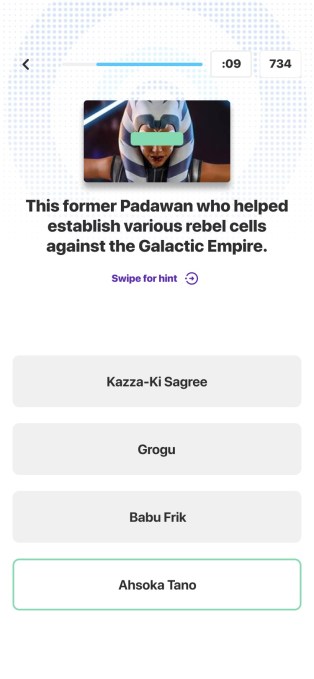
In addition, there will be no live video with a live host — Bonaddio said this would be “very, very difficult from a technical perspective and very cost ineffective.” Instead, he claimed the company has found a middle ground: “We have photos, we have different interactive elements, it’s not just a straight multiple choice quiz. We do try to keep it interactive.”

Plus, the simpler production means that where HQ was only hosting two quizzes a day, BigBrain will be hosting 20, with quizzes every 15 minutes at peak times.

Topics will range from old-school hip hop to college football to ’90s movies, and Bonaddio said different quizzes will have different prize structures — some might be winner take all, while others might award prizes to the top 50% of participants. The average quiz will cost $2 to $3 to enter, but prices will range from free to “$20 or even $50.”

What kind of quiz might cost that much money to enter? As an example, Bonaddio said that in a survey of potential users, he found, “There are no casual ‘Rick and Morty’ fans … They’re almost completely price sensitive, and since they’ve seen every episode, they can’t fathom a world where someone knows more about ‘Rick and Morty’ than they do.”

Uber and Arrival partner to create an EV for ride-hail drivers

Arrival, the electric vehicle manufacturer that’s attempting to do away with the assembly line in favor of highly automated microfactories, is partnering with Uber to create an EV for ride-hail drivers. 

Arrival expects to reveal the final vehicle design before the end of the year and to begin production in the third quarter of 2023. Uber drivers have been invited to contribute to the design process to ensure the vehicles are built to suit their needs.

Uber is trying to make good on a promise it made last year to become a fully electric mobility platform by 2025 in London, 2030 in North America and Europe and platform-wide by 2040. The company recently launched Uber Green, which gives passengers the opportunity to select an EV at no extra cost and drivers a chance to pay a lower service fee, part of an $800 million initiative to get more drivers in EVs

To reach its aims of doubling the number of EV drivers by the end of 2021, Uber is kicking its incentives for drivers into gear by helping them purchase or finance new vehicles. The Arrival Cars might be among those recommended to Uber drivers who want to make the switch to electric, especially drivers in London who are eligible for “EV Assistance” via the company’s Clean Air Plan, which launched in 2018, but an Uber spokesperson declined to confirm how the Arrival Cars will be made available. Last September, Uber partnered with General Motors in a similar deal to provide drivers in the United States and Canada discounted prices for the 2020 Chevrolet Bolt. 

“Uber is committed to helping every driver in London upgrade to an EV by 2025, and thanks to our Clean Air Plan more than £135m has been raised to support this ambition,” Jamie Heywood, Uber’s regional general manager for Northern and Eastern Europe said in a statement. “Our focus is now on encouraging drivers to use this money to help them upgrade to an electric vehicle, and our partnership with Arrival will help us achieve this goal.” 

London, where Arrival is based, aims for its entire transport system to be zero emission by 2050, and will create zero emissions zones in central London and town center from 2025, expanding outward to inner London by 2040 and city-wide by 2050. If Uber drivers want to be able to work in the hottest parts of the city, they’ll have no choice but to go electric. 

The partnership with Uber marks Arrival’s first foray into electric car development. Because Arrival focuses on the commercial space rather than commercial sales, its existing vehicle models are vans and buses. The British EV company already has an order from UPS for 10,000 purpose-built vehicles.

Arrival wants to change the way commercial electric vehicles are designed and manufactured. By designing its own batteries and other components in-house and building vehicles through multiple microfactories, which are much smaller than traditional manufacturing facilities, Arrival says it produces vehicles quicker, cheaper and with far fewer environmental costs.

The company began publicly trading in March following a SPAC merger with CIIG, one of many EV companies to hit the markets via the SPAC route as opposed to the traditional, and slower, IPO route.

The Daily Crunch: TechCrunch’s parent company sold for $5B, Duolingo’s origin story

To get a roundup of TechCrunch’s biggest and most important stories delivered to your inbox every day at 3 p.m. PDT, subscribe here.

TechCrunch’s new home

The original plan was to spend a minute today explaining that the Daily Crunch is now being put together by a new and expanded team. I, your friend Alex, will be writing and collecting the main sections from here on out. We’ll also have input from Walter and Annie on the Extra Crunch side of things (like today’s Exchange column!), along with community notes from Drew and more. It’s going to be great.

But with the news out today that TechCrunch’s parent company’s parent company is selling our parent company to a new parent company, we can’t do anything but admit that our newsletter shakeup is hardly the biggest news story of the day.

You can read more of TechCrunch’s coverage of the deal here. We will have more on the matter in the coming weeks. You’ll learn more about it as we do.

I am beyond excited about getting the chance to write to you every day. A big thank you to Anthony Ha, who ran this fine newsletter for so long. But there is a lot of startup and tech news to get through today, so let’s put aside private equity buyouts of legacy media assets for the moment and get into the stuff we care about the most.

The big story: The Duolingo EC-1

TechCrunch has covered the explosive edtech sector extensively over the last year (some examples here and here), largely thanks to Natasha’s work. She joined the TC team just before the pandemic, making her focus on education technology instantly prescient as the world went into lockdown. Remote education became the default, and several billion dollars in venture capital quickly chased the trend.

Now, on perhaps the other end of the COVID era, Natasha just published a deep dive into one of the most fascinating companies in the edtech arena: Duolingo. Per her reporting in her brand-new EC-1 investigating the company, Duolingo has scaled to 500 million users and $190 million in 2020 bookings.

Edtech is now big business, and after a history of being a place where venture capital goes to die, it’s instead a red-hot sector with a . I’m still chewing on the 10,000+ words that we just shipped on Duolingo, but it’s clear already that Natasha crushed this particular assignment.

Startups and venture capital: Either NFTs are the next big thing or a lot of people are very wrong

Let’s talk startups, yeah? Turning to the day’s news, I found a few gems for your delectation.

We’ll start with Zoomo, an Australian e-bike company (formerly Bolt Bikes) that wants delivery folks to snag a subscription to its two-wheeled zoomers. As TechCrunch recently reported, you may have heard of the company after it “made a name for itself through partnerships with Uber Eats and DoorDash to help delivery workers access e-bikes through weekly subscriptions at discounted rates.”

It has since expanded to 10,000 bikes internationally and wants to work with companies of all sorts on getting their workers kitted about with its hardware. And it just raised $12 million. Let’s see how far its new capital allows the company to, er, scoot ahead.

Next up is Gatheround, which just raised $3.5 million in a seed round. The company, formerly known as Icebreaker, helps remote teams conduct engaging video meetings. Which is not a bad idea, as sometimes you need a little help to break the damn ice.

Per our own Mary Ann Azevedo, “Homebrew and Bloomberg Beta co-led the company’s latest raise, which included participation from angel investors, such as Stripe COO Claire Hughes Johnson, Meetup co-founder Scott Heiferman, Li Jin and Lenny Rachitsky.”

Finally, it is impossible to cover startups in 2021 without NFTs cropping up somewhere, so let’s allow Lucas Matney to tap our brains into the cryptoverse:

The creators behind CryptoPunks, one of the most popular NFT projects on the web, just revealed their latest project called Meebits. The project boasts 20,000 procedurally generated 3D characters that are tradeable on the Ethereum blockchain.

I won’t lie, why not procedurally generate 200,000? Or 2,000,000? Or 20? A lot of my friends are tweeting about bored apes and breeding digital horses. Meanwhile, I sit around a stack of paper books feeling at once like a caveman and an oracle able to see what won’t last. Either way, it’s the year of non-fungible digital ownership of proof of digital ownership of fungible images.

Further reading:

The tech giants: Twitter vs. Clubhouse

Turning to the Big Tech companies, there was a good chunk of news today, the most important of which is that Twitter’s push into live audio is no joke. Nor is it some sort of side project that never really gets the full attention of the social giant’s product team. Instead, Twitter announced today that “it’s making Twitter Spaces available to any account with 600 followers or more, including both iOS and Android users,” Sarah reports.

Even more, the company also “officially unveiled some of the features it’s preparing to launch, like Ticketed Spaces, scheduling features, reminders, support for co-hosting, accessibility improvements and more.” Get hype, kids; Twitter versus Clubhouse is now in its second round and we’re pretty hype about it.

Two more things for your reading pleasure: When it comes to the biggest tech companies, a key topic — and the current theme of a lawsuit between Team Fornite and Team Dongle — has been the cut of revenues that app stores of all stripes get to take. Long stuck at 30%, a rate that Apple is apparently determined to stick to regardless of how poorly it makes them look, there’s movement on the matter.

Today, Epic Games bought ArtStation and instantly cut its commission rate from the 30% that it was to the 12% that Epic now charges on its own games store. Microsoft previously reduced its cut to 12%. That sound you hear is Apple screaming as some of its record net income is slowly eroded by more creator-friendly business practices.

Finally, in the world of Big Tech, Dell is selling Boomi to help cover the debts it accrued by buying EMC. Ron Miller has the details.

Twitter at CES 2020

Image Credits: TechCrunch

Advice and analysis from Extra Crunch

Analytics as a service: Why more enterprises should consider outsourcing

As KPIs go, return on experience (RoX) ranks near the top of the list. Unfortunately, many startups have no way to measure RoX — doing so requires a holistic approach that exceeds the capacity of most growth-focused, early-stage companies.

Startups that need to develop a data strategy while conserving engineering resources are driving growth in the analytics-as-a-service (AaaS) market. If you’re looking for insights into winning customers over strategically, cutting technical costs and making better decisions faster, AaaS can help you set realistic expectations.

How to attract large investors to your direct investing platform

A changing regulatory environment and pandemic-fueled growth has created a lot of new wealth and increased interest in direct investing.

In a guest post for Extra Crunch, investor David Teten examined several online platforms that serve as market-makers to get a better sense of how they attract investors and increase engagement.

These companies play for high stakes, says Teten, because a competent direct-investing platform must be able to operate as seamlessly as a traditional fund.

(Extra Crunch is our membership program, which helps founders and startup teams get ahead. You can sign up here.)

Community

Come hang out on our shiny new Extra Crunch Discord server. Why do we have a Discord server? Great question; glad you asked. TechCrunch writers, company founders, investors and everyone in between can’t keep up with noisy Twitter banter in a meaningful way, so now we have a home to chat about just about anything that’s on your mind. Join us!

We’re absolutely thrilled to have FirstMark Capital Managing Partner Rick Heitzmann and Orchard CEO Court Cunningham join us on an upcoming episode of Extra Crunch Live. The event takes place on May 5 at 3 p.m. EDT/noon PDT. Register for free here.

Image Credits: Orchard / FirstMark Capital


Amazon’s over-the-top business, including IMDb TV and Twitch, tops 120M monthly viewers

Amazon’s free, ad-supported streaming service IMDb TV is getting its own mobile app. The company announced the news today at its first-ever NewFronts presentation to advertisers, where it also shared that its over-the-top streaming businesses combined — meaning, IMDb TV, Twitch, live sports like Thursday Night Football, Amazon’s News app and others — have now grown to more than 120 million monthly viewers.

This over-the-top business, or Amazon OTT as it’s called, includes anywhere ads show up alongside content on the IMDb TV app, Twitch’s game streaming site, during live sports Amazon streams through Prime Video, its 3P network and broadcaster apps and its Amazon’s News app for Fire TV.

IMDb TV viewership, in particular, jumped 138% year-over-year, Amazon noted.

The ad-supported service, which likely benefited from the same pandemic bump that drove streaming service viewership higher across the board last year, is something of a rival to other free, ad-supported streamers, like Fox’s Tubi, ViacomCBS’s Pluto TV or Roku’s The Roku Channel. However, more like Roku’s hub, Amazon leverages IMDb TV to help it sell its own media devices by promising users easy access to free, streaming content.

Today, that’s resulted in the IMDb TV app seeing the majority of its usage on Fire TV. But over the past several months, the app has become more broadly available, with launches on Roku, Chromecast with Google TV, PlayStation 4 consoles, Xbox One and Series X devices, LG Smart TVs, Nvidia, Sony Android TV and TiVo Android TV devices, Amazon says.

Now it will get its own dedicated mobile app, as well, instead of only a small section inside the IMDb app where the service’s content can be found today on smartphones. The new standalone app will arrive this summer on both iOS and Android, says Amazon.

Amazon also told advertisers about IMDb TV’s current user base, noting that 62% were in between ages 18 and 49. And they spend 5.5 hours per week on the app, on average.

The forthcoming mobile launch was one of several announcements Amazon made today at its Newfronts presentation today.

The company also detailed its upcoming IMDb TV slate, including unscripted series “Luke Bryan: My Dirt Road Diary,” “Bug Out” and “Untitled Jeff Lewis Project” as well as scripted releases “Blessed and Highly Favored,” “Greek Candy,” “Primo,” “The Fed,” and “The Pradeeps of Pittsburgh, PA.” Music duo Tegan and Sara’s memoir “High School” will be adapted as an original series for IMDb TV. IMDb TV also announced a new crime drama, “Leverage: Redemption,” and police drama, “On Call.”

IMDb TV parent company Amazon, meanwhile, expanded its deal with the NFL for Thursday Night Football, which now runs 11 seasons, starting with the 2022 season instead of the following year.

Ford, BMW lead Solid Power’s $130M Series B round

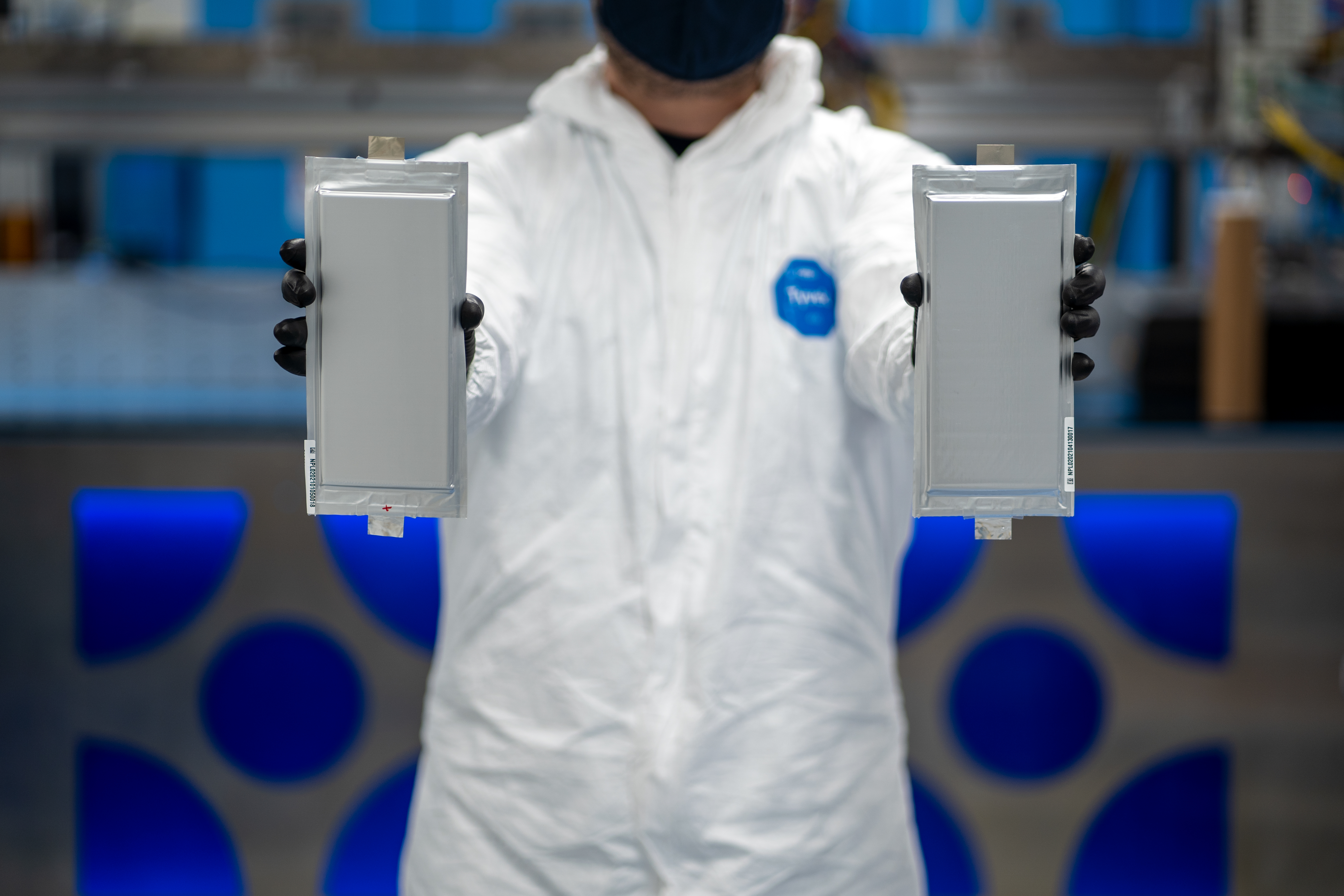
A Solid Power manufacturing engineer holds two 20 ampere hour (Ah) all solid state battery cells for the BMW Group and Ford Motor Company. The 20 ampere hour (Ah) all solid state battery cells were produced on Solid Power’s Colorado-based pilot production line. Source: Solid Power.

Solid state battery systems have long been considered the next breakthrough in battery technology, with multiple startups vying to be the first to commercialization. Automakers have been some of the top investors in the technology, each of them seeking the edge that will make their electric vehicles safer, faster and with increased range.

Ford Motor Company and BMW Group have put their money on battery technology company Solid Power.

The Louisville, Colorado-based SSB developer said Monday its latest $130 million Series B funding round was led by Ford and BMW, the latest signal that the two OEMs see SSBs powering the future of transportation. Under the investment, Ford and BMW are equal equity owners, and company representatives will join Solid Power’s board.

Solid Power received additional investment in the round from Volta Energy Technologies, the venture capital firm spun out of the U.S. Department of Energy’s Argonne National Laboratory.

Solid state batteries are so named because they lack a liquid electrolyte, as Mark Harris explained in an Extra Crunch article earlier this year. Liquid electrolyte solutions are usually flammable and at risk of overheating, so SSBs are considered to be generally safer. The real value of SSBs versus their lithium-ion counterparts is the energy density. Solid Power says its batteries can provide as much as a 50% to 100% increase in energy density compared to rechargeable batteries. Theoretically, electric vehicles with more energy-dense batteries can travel longer distances on a single charge.

This latest round of investment will help Solid Power boost its manufacturing to produce battery cells with the company’s highest ampere hour (Ah) output yet. Under separate joint development agreements with Ford and BMW, it will deliver to the OEMs 100 Ah cells for testing and vehicle integration from 2022.

Until this point, the company has been manufacturing cells with 2 Ah and 20 Ah output. “Hundreds” of 2 Ah battery cells were validated by Ford and BMW late last year, Solid Power said in a statement. Meanwhile, it is currently producing 20 Ah solid state batteries on a pilot basis with standard lithium-ion equipment.

As opposed to the 20 Ah pilot-scale cells — which are composed of 22-layers at 9×20 cm — these 100 Ah cells will have a larger footprint and even more layers, Solid Power spokesman Will McKenna told TechCrunch. (“Layers” refers to the number of double-sided cathodes, McKenna explained — so the 20 Ah cell has 22 cathodes and 22 anodes, with an all-solid electrolyte separator in between each, all in a single cell.)

Unlike Solid Power’s manufacturing, traditional lithium-ion batteries must undergo electrolyte filling and cycling in their production processes. Solid Power says these additional steps account for 5% and 30% of capital expenditure in a typical GWh-scale lithium-ion facility.

This isn’t the first time Solid Power has landed investments from the automakers. The company’s $20 million Series A in 2018 attracted capital from BMW and Ford, as well as Samsung, Hyundai, Volta and others. It’s part of a new wave of companies that have attracted the attention of OEMs. Other notable examples include Volkswagen-backed QuantumScape and General Motors, which has put its money on SES.

Ford is also independently researching advanced battery technologies and is planning to open a $185 million R&D battery lab, the company said last week.

Sony announces investment and partnership with Discord to bring the chat app to PlayStation

Sony and Discord have announced a partnership that will integrate the latter’s popular gaming-focused chat app with PlayStation’s own built-in social tools. It’s a big move and a fairly surprising one given how recently acquisition talks were in the air — Sony appears to have offered a better deal than Microsoft, taking an undisclosed minority stake in the company ahead of a rumored IPO.

The exact nature of the partnership is not expressed in the brief announcement post. The closest we come to hearing what will actually happen is that the two companies plan to “bring the Discord and PlayStation experiences closer together on console and mobile starting early next year,” which at least is easy enough to imagine.

Discord has partnered with console platforms before, though its deal with Microsoft was not a particularly deep integration. This is almost certainly more than a “friends can see what you’re playing on PS5” and more of a “this is an alternative chat infrastructure for anyone on a Sony system.” Chances are it’ll be a deep, system-wide but clearly Discord-branded option — such as “Start a voice chat with Discord” option when you invite a friend to your game or join theirs.

The timeline of early 2022 also suggests that this is a major product change, probably coinciding with a big platform update on Sony’s long-term PS5 roadmap.

While the new PlayStation is better than the old one when it comes to voice chat, the old one wasn’t great to begin with, and Discord is not just easier to use but something millions of gamers already do use daily. And these days, if a game isn’t an exclusive, being robustly cross-platform is the next best option — so PS5 players being able to seamlessly join and chat with PC players will reduce a pain point there.

Of course Microsoft has its own advantages, running both the Xbox and Windows ecosystems, but it has repeatedly fumbled this opportunity and the acquisition of Discord might have been the missing piece that tied it all together. That bird has flown, of course, and while Microsoft’s acquisition talks reportedly valued Discord at some $10 billion, it seems the growing chat app decided it would rather fly free with an IPO and attempt to become the dominant voice platform everywhere rather than become a prized pet.

Sony has done its part, financially speaking, by taking part in Discord’s recent $100 million H round. The amount they contributed is unknown, but perforce it can’t be more than a small minority stake, given how much the company has taken on and its total valuation.

How to lead a digital transformation — ethically

Angela Love
Contributor

Angela Love is the founder of The Daymark Group, a leadership development consulting firm — she helps create clarity and success for leaders and teams in startups to Fortune 50 companies.

The fact that COVID-19 accelerated the need for digital transformation across virtually all sectors is old news. What companies are doing to propel success under the circumstances has been under the spotlight. However, how they do it has managed to find a place in the shadows.

Simply put, the explosive increase in innovation and adoption of digital solutions shouldn’t be allowed to take place at the expense of ethical considerations.

This is about morals — but it’s also about the bottom line. Stakeholders, both internal and external, are increasingly intolerant of companies that blur (or ignore) ethical lines. These realities add up to a need for leaders to embrace an all-new learning curve: How to engage in digital transformation that includes ethics by design.

Simply put, the explosive increase in innovation and adoption of digital solutions shouldn’t be allowed to take place at the expense of ethical considerations.

Ethics as an afterthought is asking for problems

It’s easy to rail against the evils of the executive lifestyle or golden parachuting, but more often than not, a pattern of ethics violations arises from companywide culture, not leadership alone. Ideally, employees act ethically because it aligns with their personal values. However, at a minimum, they should understand the risk that an ethical breach represents to the organization.

In my experience, those conversations are not being held. Call it poor communication or lack of vision, but most companies rarely model potential ethical risks — at least not openly. If those discussions take place, they’re typically between members of upper management, behind closed doors.

Why don’t ethical concerns get more of a “town hall” treatment? The answer may come down to an unwillingness to let go of traditional thinking about business hierarchies. It could also be related to the strong (and ironically, toxic) cultural message that positivity rules. Case in point: I’ve listened to leaders say they want to create a culture of disruptive thinking — only to promptly tell an employee who speaks up that they “lack a growth mindset.”

What’s the answer, then? There are three solutions I’ve found to be effective:

  1. Making ethics a core value of the organization.
  2. Embracing transparency.
  3. Proactively developing strategies to contend with ethical challenges and violations.

These simple solutions are a great starting point to solve ethics issues regarding digital transformation and beyond. They cause leaders to look into the heart of the company and make decisions that will impact the organization for years to come.

Interpersonal dynamics are a concern in the digital transformation arena

Making digital shifts is, by nature, a technical operation. It requires personnel with advanced and varied expertise in areas such as AI and data operations. Leaders in the digital transformation space are expected to possess enough cross-domain competency to tackle tough problems.

That’s a big ask — bringing a host of technically minded people together can easily lead to a culture of expertise arrogance that leaves people who don’t know the lingo intimidated and reluctant to ask questions.

Digital transformation isn’t simply about infrastructure or tools. It is, at its heart, about change management, and a multifunctional approach is needed to ensure a healthy transition. The biggest mistake companies can make is assuming that only technical experts should be at the table. The silos that are built as a result inevitably turn into echo chambers — the last place you want to hold a conversation about ethics.

In the rush to go digital, regardless of how technical the problem, the solution will still be a fundamentally human-centric one.

Ethical digital transformation needs a starting point

Not all ethical imperatives related to digital transformation are as debatable as the suggestion that it should be people-first; some are much more black and white, like the fact that you have to start somewhere to get anywhere.

Luckily, “somewhere” doesn’t have to be from scratch. Government, risk and compliance (GRC) standards can be used to create a highly structured framework that’s mostly closed to interpretation and provides a solid foundation for building out and adopting digital solutions.

The utility of GRC models applies equally to startup multinationals and offers more than just a playbook; thoughtful application of GRC standards can also help with leadership evaluation, progress reports and risk analysis. Think of it like using bowling bumpers — they won’t guarantee you roll a strike, but they’ll definitely keep the ball out of the gutter.

Of course, a given company might not know how to create a GRC-based framework (just like most of us would be at a loss if tasked with building a set of bowling bumpers). This is why many turn to providers like IBM OpenPages, COBIT and ITIL for prefab foundations. These “starter kits” all share a single goal: Identify policies and controls that are relevant to your industry or organization and draw lines from those to pivotal compliance points.

Although getting started with the GRC process is typically cloud-based and at least partially automated, it requires organizationwide input and transparency. It can’t be effectively run by specific departments, or in a strictly top-down fashion. In fact, the single most important thing to understand about implementing GRC standards is that it will almost certainly fail unless both an organization’s leadership and broader culture fully support the direction in which it points.

An ethics-first mindset protects employees and the bottom line

Today’s leaders — executives, entrepreneurs, influencers and more — can’t be solely concerned with “winning” the digital race. Arguably, transformation is more of a marathon than a sprint, but either way, technique matters. In pursuing the end goal of competitive advantage, the how and why matter just as much as the what.

This is true for all arms of an organization. Internal stakeholders such as owners and employees risk their careers and reputations by tolerating a peripheral approach to ethics. External stakeholders like customers, investors and suppliers have just as much to lose. Their mutual understanding of this fact is what’s behind the collective, cross-industry push for transparency.

We’ve all seen the massive blowback against individuals and brands in the public eye who allow ethical lapses on their watch. It’s impossible to fully eliminate the risk of experiencing something similar, but it is a risk that can be managed. The danger is in letting the “tech blinders” of digital transformation interfere with your view of the big picture.

Companies that want to mitigate that risk and rise to the challenges of the digital era in a truly ethical way need to start by simply having conversations about what ethics, transparency and inclusivity mean — both in and around the organization. They need to follow up those conversations with action where necessary, and with open-mindedness across the board.

It’s smart to be worried about innovation lag in a time when enterprise is moving and shifting faster than ever, but there is time to make all the proper ethical considerations. Failing to do so will only derail you down the line.