Silicon Valley companies are undermining the impact of artificial intelligence

Leveraging machine learning and artificial intelligence to glean information from large data sets is the greatest technology opportunity of a generation. After a decade of acquiring talent from startups and research universities, tech companies like Facebook, Google and Uber have amassed some of the best AI teams in the world.

However, we are not seeing the impact we deserve beyond the tech sector. Unfortunately, progress in other industries has become collateral damage to the tech sector’s race for AI talent, and this issue has received little attention.

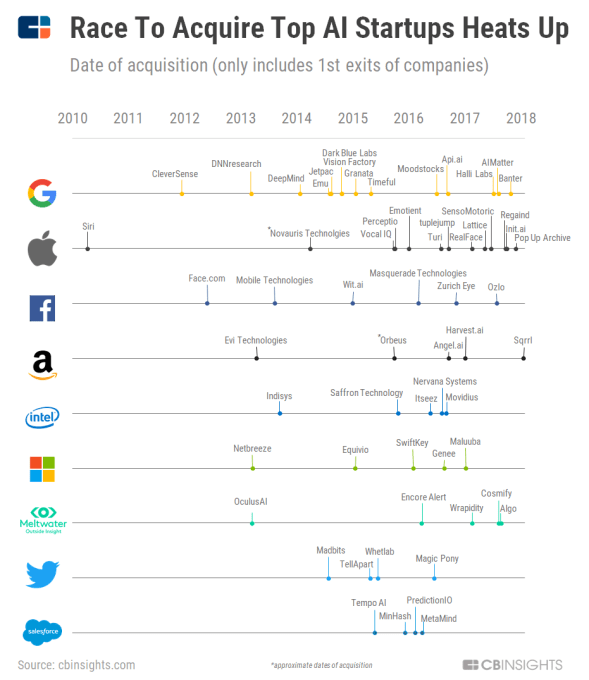
Over the last five years, 90 percent of AI startups in Silicon Valley have been acquired by leading tech companies. These acquisitions have been largely unrelated to a successful product: Often, companies are in nascent stages and their products are either shelved by the acquiring company altogether, or the technology is embedded as a feature in another core offering. Outside of a few highly targeted cases, it’s a strategy aimed first at getting the talent in-house, then figuring out what to do with them.
Source: CB Insights

On a micro-level, this is a highly rational strategy across the tech innovation ecosystem. Leading technology companies have the capabilities, cash and scale to leverage this talent and technical expertise into profitable products down the road. For their part, venture capitalists feel safer investing at higher prices in early-stage AI companies because a lucrative technology or team acquisition provides downside protection if they are unable to build a big business. Lastly, management teams may be tempted by early acquisition offers that are priced much higher than non AI-centric companies with equivalent product maturity or market traction.

In the AI arms race, though, the name of the game is not just getting ahead, but depriving competitors of the AI talent that could make them competitive. While tech companies compete for the promise of future AI-based offerings, they are not just depriving their competition of talent, but the rest of the economy, as well.

On a macro-level, this hoarding strategy is undercutting 95 percent of the impact AI could have on the global economy and society at large. Aggregate revenue of the five leading U.S. tech companies (Apple, Alphabet, Microsoft, Amazon, Facebook) represent less than 5 percent of total U.S. GDP. Yet tech giants are buying up companies and directing them to focus on R&D, rather than building AI applications for specific, non-tech industry problems that can have an impact today.

Some argue that tech incumbents are best suited to bring industry-specific solutions to bear. Just look at cloud computing and how many industries have used it to increase their productivity — maybe the same will be done for AI and data services. I don’t believe this is likely to happen quickly, for two reasons: (1) tech companies have plenty of their own purposes in mind, and (2) the best AI solutions are designed around a specific problem and workflow.

You can see this already playing out in a few ways:

Today, your Facebook photos are automatically tagged. This is a core feature enhancement designed to increase customer engagement. Recommendations on everything from Google to Netflix to Amazon are increasingly likely to result in increased customer purchases as a result of leveraging machine learning to scan a broader array of profile information. Both of these represent core needs for major tech companies and are not likely to translate into relevant offerings for other industries. Personally, I think it’s a shame that so many great AI minds are working on comparatively incremental feature enhancements.

There is a huge opportunity for AI-based products and companies targeting applications in industries outside the tech sector.

Second, tech companies are building up AI workforces as part of their moonshots and experimental labs that are focused on reimagining incumbent industries on tech terms and building the core IP and research that could make this possible. History indicates that when tech companies set out to reinvent entire categories, many commonly fail at first (recall Webvan, or Marc Andreesen’s LoudCloud). Incumbents don’t react quickly enough (consider Safeway’s response to Webvan, and IBM or HP’s reaction to LoudCloud).

Finally a new disruptive effort eventually succeeds a decade or two later (to complete this example, consider Amazon regarding groceries, and AWS or Opsware regarding cloud computing). In this arena, consumers and tech companies ultimately win, while major incumbents that should have had the inside track are leapfrogged because of the talent and technology gap accumulated during the initial efforts.

Even when specific projects fail, tech incumbents’ research labs reap a side benefit in recruiting power: they get AI talent in through the door and allow them to continue their research, publicizing it and adding to the narrative that tech companies are the best place to conduct research (you get free lunch and dinner!).

The net result of this situation is that, today, AI talent and technology are largely denied from companies outside of tech. Incumbent industries, like insurance, won’t see improvements to their bottom line because a computer can win at Go. This is unfortunate, because although industry applications may seem less “disruptive,” they could have a far more significant impact on a shorter timescale.

So what can other industry leaders do? Incumbent industries must respond aggressively or risk being cut out of the next decade of innovation, which will be largely driven by AI and data analytics. This means (1) acknowledging what is at stake, (2) creating an environment to attract, retain and focus the type of talent required and (3) aggressively seeking said talent.

We’ve begun to see action in a few areas:

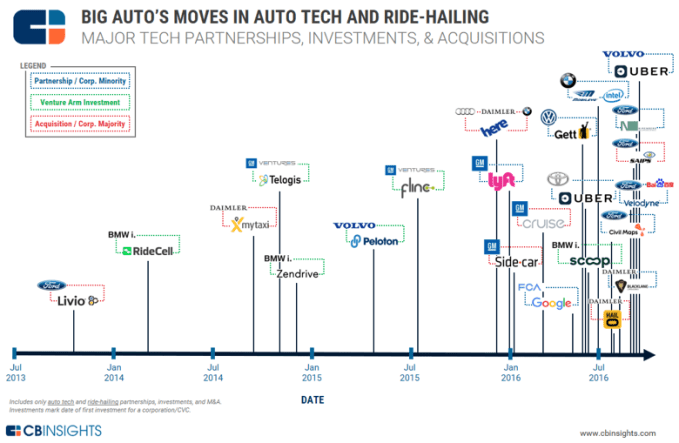
With the prospect of self-driving cars, the automotive industry faces an existential risk.  Jon Lauckner at GM has been at the center of some bold moves forward, including the $1 billion acquisition of Cruise and a $500 million investment in Lyft. Ford and Delphi have also been active with acquisitions like Argo AI and NuTomony.
Source: CB Insights

Agriculture also presents a good example of action in recognition of what’s at stake: Two major AI acquisitions have happened in the last five years. Monsanto acquired Climate Corporation to advance their effort into a data-driven future wherein they can provide customized insights and advice to farmers for planting crops. This past year, John Deere acquired Blue River Technology, which takes this a step further, leveraging computer vision to deliver customized insight and action on every individual plant in real time as a tractor moves through the field.

To be sure, acquiring talent is far from the only means to advance as an incumbent, but building the core talent, technology and business model for future success has proven challenging for entrenched incumbents. Netflix is one of the few examples of success, innovating their way from a DVD-based business to a streaming one. Still, it was a painful transition, taking tremendous vision, cannibalization of their own sales and a 75 percent drop in share price before their fortunes turned skyward.

Right now, there is a huge opportunity for AI-based products and companies targeting applications in industries outside the tech sector, and there is relatively little competition in the short and intermediate term — moonshots at major tech companies have a spotty record and largely target a distant future. In the meantime, incumbents have historically failed to capitalize on major technology transformations, and outside of the few examples mentioned, history appears poised to repeat itself unless companies take proactive measures.

Lightning Labs just raised millions from Jack Dorsey and others to supercharge blockchain transactions

Lightning Labs, a young, Bay Area-based startup, is trying to make it easier for users to send bitcoin and litecoin to each other without the costly and time-consuming process of settling their transactions on the blockchain.

It has investors excited about its work, too. The company is announcing today that it has raised $2.5 million in seed funding to date from a kind of list of big names in payments and beyond, including Square and Twitter co-founder Jack Dorsey, Square exec Jacqueline Reses, serial-founder-turned investor David Sacks, Litecoin creator Charlie Lee, Eventbrite co-founder Kevin Hartz, BitGo CTO Ben Davenport and Robinhood co-founder Vlad Tenev, along with The Hive, Digital Currency Group and others.

In an enthusiastic tweet earlier today, Sacks characterized the company as “one of the most important projects in crypto overall.”

Why is it notable, exactly? For starters, Lightning Labs works off Lightning Network, a protocol that’s sometimes called the second layer of bitcoin. (Think of it a little like HTTP.) Champions of this newer layer, including Lightning Labs, see it as a way to exponentially boost the number and speed of transactions of the bitcoin blockchain without increasing the size of blocks — batches of transactions that are confirmed and subsequently shared on bitcoin’s public ledger.

It’s all a little confusing to people still trying to get a handle on how the blockchain works, but the Lightning protocol essentially aims to let two or more people — and eventually machines — create instant, high-volume transactions that still use the underlying blockchain for security.

Here’s how it works: Let’s take two people. They assign funds on the blockchain into an entry that requires both to sign off on what they plan to spend. Say this is $20. After that transaction is recorded, they can transact that amount of money between each other as many times as they want. If they want to change the amount of that spend, they just update the entry on the blockchain. If they want to involve more people in this transaction, they can do this, too.

If you’re wondering whether there’s room for grift if these transactions move further from the blockchain, so were we. But one of the core tenets of Lightning Labs’s technology, it says, is that it allows you to do away with counter-party risk. You don’t have to trust someone you are transacting with because — ostensibly, anyway — no one can steal your cryptocurrency.

First, a so-called cryptographic “proof” is created when users initially broadcast that first transaction (and updated versions of it) to the blockchain. And that proof ensures that if one party tries to steal from another, not only will it be incapable of doing so, but as a penalty for trying, the thief’s currency will be awarded to the person they were trying to swindle.

As for people who try hopping offline in the middle of a transaction with the aim of stealing someone else’s cryptocurrency, there are separate safety measures in place in the form of time-out periods that, when they expire, ensure that the currency sender gets back his or her money. The blockchain acts as a kind of unbiased arbiter.

As for sending money to multiple parties, that’s called multi-hop routing and payments are conditional upon knowledge of a random number. Either the entire payment goes through across all participants or it’s canceled, so no one party can compromise the transactions.

Lightning Labs isn’t the only outfit that has sprung up around these smart Lightning contracts, but it’s the furthest along, suggests co-founder and CEO Elizabeth Stark, who says more than 1,800 developers are part of her company’s Slack channel and that thousands of volunteers helped Lightning’s seven-person team find glitches in the alpha version of its open-source software.

That outside help enabled Lightning to, starting today, roll out a beta version that’s open to anyone.

It’s only truly developer friendly at this point. (You have to write command code to use it. Stark says a much friendlier user interface will be available down the road.) Stark also suggests that because the beta version is just being released that people only transact with the amount of money they might carry in their wallet. In fact, there are limits on how much you can transact using its software, which Stark says is less to protect users from theft than from them “putting their life savings in bitcoin on Lightning.” (The presumption: that people will actually start using bitcoin as a currency instead of a commodity to hang onto, thanks to the Lightning protocol.)

Finally, Lightning Labs’s technology — which is enabling people to transact with bitcoin and litecoin for now — is available on desktops only, though a mobile version is coming.

We asked Stark yesterday about the origin of the company. A former lecturer at Stanford and Yale who taught about digital copyrights, she said she realized in 2016 that if bitcoin was going to be “used by the entire world, it couldn’t happen on blockchain.” Like a lot of people, too, Stark says she got excited by the prospect of micropayments, including for artists and musicians.

When she separately edited a paper about the Lightning protocol and realized it might be possible to send high volumes of small payments — for there to be a genuine currency of the web — she suggests she jumped in with both feet with co-founder and CTO Olaoluwa Osuntokun.

“He’s the genius behind our software,” she says of Osuntokun, who has two computer science degrees from UC Santa Barbara and who graduated in 2016.

To learn more, you might check out this talk that Stark gave on the seeming importance of the layers that Lightning Labs and others are building atop the blockchain.

Volley’s voice games for smart speakers have amassed over half a million monthly users

The rapid consumer adoption of smart speakers like Amazon Echo and Google Home has opened opportunities for developers creating voice apps, too. At least that’s true in the case of Volley, a young company building voice-controlled entertainment experiences for Amazon Alexa and Google Home. In less than a year, Volley has amassed an audience north of 500,000 monthly active users across its suite of voice apps, and has been growing that active base of users at 50 to 70 percent month-over-month.

The company was co-founded by former Harvard roommates and longtime friends, Max Child and James Wilsterman, and had originally operated as an iOS consultancy. But around a year and a half ago, Volley shifted its focus to voice instead.

“When we were running the iOS business, we were always sort of hacking around on games and some stuff on the side for fun,” explains Child. “We made a trivia game for iOS. And we made a Facebook Messenger chatbot virtual pet,” he says. The trivia game they built let users play just by swiping on push notifications — a very lightweight form of gameplay they thought was intriguing. “Voice was sort of the obvious next step,” says Child.

Not all their voice games have been successful, however. The first to launch was a game called Spelling Bee that users struggled with because of Alexa’s difficulties in identifying single letters — it would confuse a “B,” “C,” “D” and “E,” for example. But later titles have taken off.

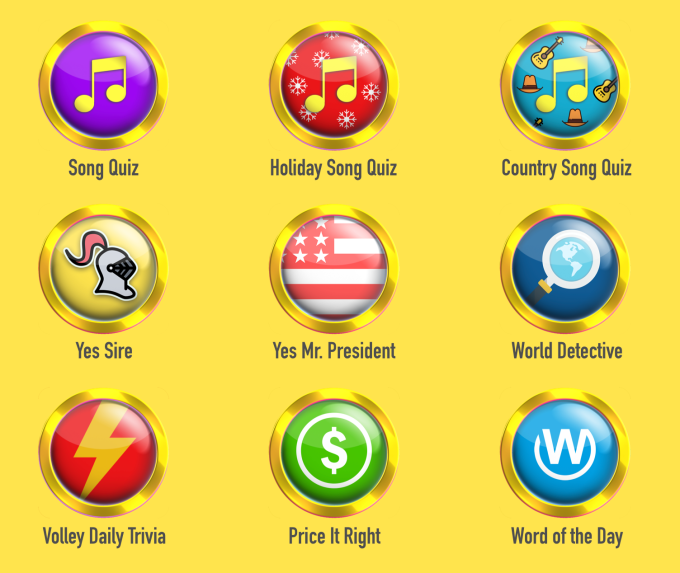
Volley’s name-that-tune trivia game “Song Quiz” was its first breakout hit, and has grown to become the No. 1 game by reviews. The game today has a five-star rating across 8,842 reviews.

Another big hit is Volley’s “Yes Sire,” a choose-your-own-adventure style storytelling game that’s also at the top of Alexa’s charts. It also has a five-star rating, across 1,031 reviews.

The company says it has more than a dozen live titles, with the majority on the Alexa Skill Store and a few for Google Assistant/Google Home. But it only has seven or eight in what you would consider “active development.”

Unlike some indie developers who are struggling to generate revenue from their voice applications, Volley has been moderately successful thanks to Amazon’s developer rewards program — the program that doles out cash payments to top performing skills. While the startup didn’t want to disclose exact numbers, it says it’s earning in the five-figure range monthly from Amazon’s program.

In addition, Volley is preparing to roll out its own monetization features, including subscriptions and in-app purchases of add-on packs that will extend gameplay.

The company’s games have been well-received for a variety of reasons, but one is that they allow people to play together at the same time — like a modern-day replacement for family game night, perhaps.

“I think a live multiplayer experience with your family or people you’re good friends with, where you can have a fun time together in a room is fairly unusual. I mean, I don’t know about you, but I don’t crowd around my iPhone and play games with my friends. And even with consoles there are significant barriers in understanding how to play,” says Child.

“I think that voice enables the live social experience in a way that anyone from five years old to 85 years old can pick up immediately. I think that’s really special. And I think we’re just at the beginning. I’m not going to say we’ve got it all figured out — but I think that’s powerful and unique to these platforms,” he adds.

Volley raised more than a million in seed funding ahead of joining Y Combinator’s Winter 2018 class, in a round led by Advancit Capital. Other investors include Amplify.LA, Rainfall, Y Combinator, MTGx, NFX and angels Hany Nada, Mika Salmi and Richard Wolpert.

The startup is currently a team of six in San Francisco.


Teacher in Ghana who used blackboard to explain computers gets some Microsoft love

Teaching kids how to use a computer is hard enough already, since they’re kids, but just try doing it without any computers. That was the task undertaken by Richard Appiah Akoto in Ghana, and his innovative (and labor-intensive) solution was to draw the computer or application on the blackboard in great detail. His hard work went viral and now Microsoft has stepped in to help out.

Akoto teaches at Betenase Municipal Assembly Junior High in the small town of Sekyedomase. He had posted pictures of his magnum opus, a stunning rendition of a complete Microsoft Word window, to Facebook. “I love ma students so have to do what will make them understand wat am teaching,” he wrote. He looks harried in the last image of the sequence.

The post blew up (9.3K reactions at this point), and Microsoft, which has for years been rather quietly promoting early access to computing and engineering education, took notice. It happened to be just before the company’s Education Exchange in Singapore, and they flew him out.

Akoto in Singapore.

It was Akoto’s first time outside of Ghana, and at the conference, a gathering of education leaders from around the world, he described his all-too-common dilemma: The only computers available — one belonging to the school and Akoto’s personal laptop — were broken.

“I wanted to teach them how to launch Microsoft Word. But I had no computer to show them,” he said in an interview with Microsoft at the event. “I had to do my best. So, I decided to draw what the screen looks like on the blackboard with chalk.”

“I have been doing this every time the lesson I’m teaching demands it,” he continued. “I’ve drawn monitors, system units, keyboards, a mouse, a formatting toolbar, a drawing toolbar, and so on. The students were okay with that. They are used to me doing everything on the board for them.”

Pursuing such a difficult method instead of giving up under such circumstances is more than a little admirable, and the kids are certainly better off for having a teacher dedicated to his class and subject. A little computer literacy can make a big difference.

“They have some knowledge about computers, but they don’t know how to actually operate one,” Akoto said. So Microsoft has offered to provide “device and software support” for the school (I’ve asked for specifics, though they may depend on the school’s needs), and Akoto will get a chance to go through Microsoft’s educator certification program (which has other benefits).

Obviously if this school is having this issue, countless more are as well, and could use similar support. And as Akoto himself eloquently pointed out to NPR when his post first went viral, “They are lacking more than just equipment.”

But at least in this case there are a couple of hundred students who will be getting an opportunity they didn’t have before. That’s a start.

Google spent about $270K to close pay gaps across race and gender

Google says there are currently no “statistically significant” pay gaps at the company across race and gender. This is based on the company’s most recent pay analysis, where it looked at unexplained pay discrepancies based on gender and race and then made adjustments where necessary, Google wrote in a blog post today.

In total, Google found statistically significant pay differences for 228 employees across six job groups. So, Google increased the compensation for each of those employees, which came out to about $270,000 in total before finalizing compensation planning. That group of 228 employees included women and men from several countries, including the U.S., as well as black and Latinx employees in the U.S.

In its analysis, Google says it looked at every job group with at least 30 employees and at least five people for every demographic group for which Google has data, like race and gender. You can read more about Google’s methodology on its blog.

Earlier this year, Google was hit with a revised gender-pay class-action lawsuit that alleges Google underpaid women in comparison with their male counterparts and asked new hires about their prior salaries.

The revised lawsuit added a fourth complainant, Heidi Lamar, who was a teacher at Google’s Children Center in Palo Alto for four years. The original suit was dismissed in December due to the fact the plaintiffs defined the class of affected workers too broadly. Now, the revised lawsuit focuses on those who hold engineer, manager, sales or early childhood education positions.

Prior to the class-action lawsuit, the Department of Labor looked into Google’s pay practices. Last January, the DoL filed a lawsuit against Google in an attempt to gain compensation data, as part of a routine compliance evaluation. In April, the DoL testified in court that pay inequities at Google are “systemic.”

Google, however, denied the DoL’s claims that the pay inequities at the company were systemic. In June, an administrative law judge sided with Google, ruling that it did not need to hand over all of the data the DoL requested.

Rihanna calls out Snapchat for tone-deaf ad that made light of domestic violence

Rihanna is not happy with Snap for the tone-deaf ad the company let run on Snapchat. A couple of days ago, an advertisement on Snap appeared that alluded to Chris Brown’s violent assault on Rihanna back in 2009.

The advertisement, which was for a game called “Would You Rather,” asked if people would “rather slap Rihanna or punch Chris Brown.” Snap has since removed the advertisement, but Rihanna today said she’s concerned about the message it sends to other survivors of domestic violence.

Here’s what she said in an Instagram story:

Now SNAPCHAT I know you already know you ain’t my fav app out there! But I’m just trying to figure out what the point was with this mess! I’d love to call it ignorance, but I know you ain’t that dumb! You spent money to animate something that would intentionally bring shame to DV victims and made a joke of it!!!! This isn’t about my personal feelings, cause I don’t have much of them…but all the women, children, and men that have been victims of DV in the past and especially the ones who haven’t made it out yet….you let us down! Shame on you. Throw the whole app-oligy away.

In a statement to TechCrunch, Snap apologized for the ad ever going up in the first place. When directly asked about Rihanna’s message, Snap called the advertisement “disgusting.”

“We are so sorry we made the terrible mistake of allowing it through our review process,” a Snap spokesperson said. “We are investigating how that happened so that we can make sure it never happens again.”

Snap has also since blocked the maker of “Would You Rather” from advertising on its platform. On Monday, when people first noticed the ad, Snap said it was reviewed but approved in error.

“We immediately removed the ad last weekend, once we became aware,” Snap said earlier this week.

This massive fail by Snap comes shortly after both Snapchat and Instagram had to remove their Giphy GIF sticker features after a racist GIF appeared as an option.

To be clear, this ad never should have been approved in the first place, according to the company’s advertising policies. Here’s Rihanna’s Instagram post:

Facebook launches Express Wi-Fi app for its local-operated hotspots

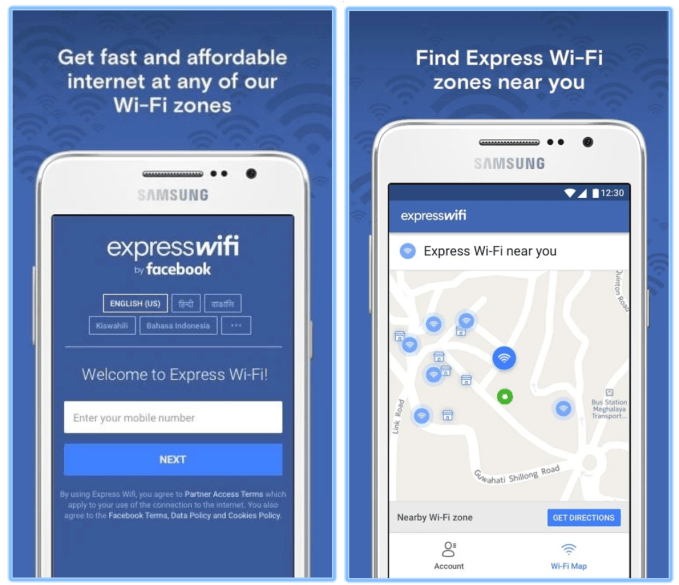
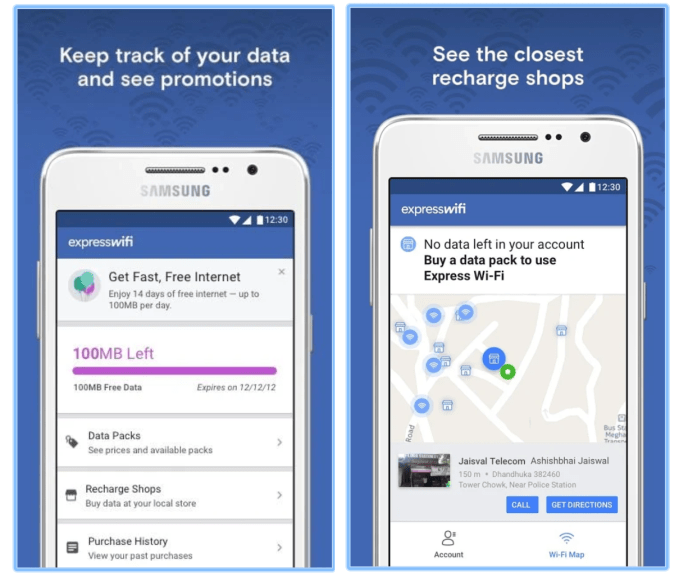
Facebook wants you to pay for internet. This week TechCrunch was tipped off that Facebook had quietly launched an Express Wi-Fi Android app in the Google Play store that lets users buy data packs and find nearby hotspots as part of Facebook’s distributed Wi-Fi network. The company’s Express Wi-Fi program is live in five developing countries that see local business owners operating Wi-Fi hotspots where people can pay to access higher-speed bandwidth via local telecoms instead of paying steep prices for slow cellular data connections.

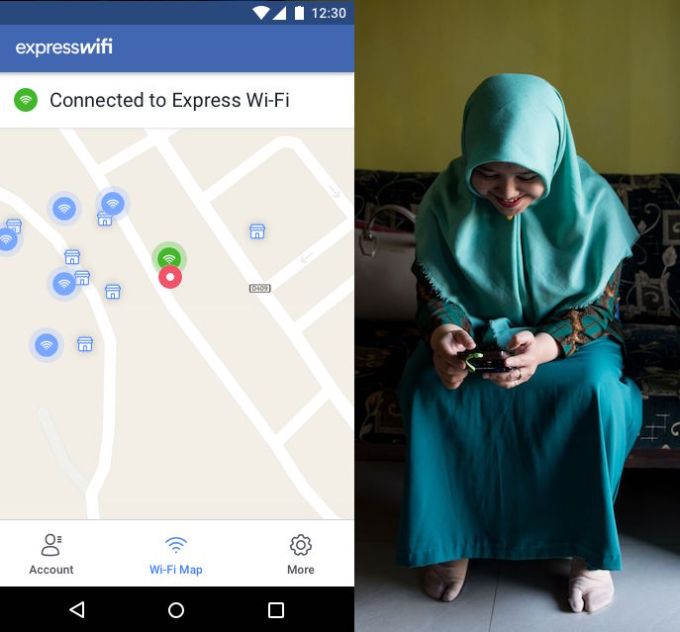
Previously, Express Wi-Fi users had to dig out a mobile website, or directly download an app from a telecom that required reconfiguring a phone’s settings. There wasn’t any way to look up where hotspots were located. The new Google Play app can be downloaded the normal way. It’s now live in Indonesia with bandwidth from telecom partner D-Net, and in Kenya through Surf. The app can also tell if a user’s Wi-Fi is turned on to help with set up, and they can file reports to Facebook about connectivity or retailer issues.

The launch signals Facebook expanding its pursuit of developing world audiences that first need internet access before they can become lucrative Facebook users. Unlike its much-criticized zero-rating program called Free Basics (formerly Internet.org), Express Wi-Fi offers a full, unrestricted version of the web for a price instead of only low-bandwidth services approved by Facebook. This strategy could help it achieve its mission of getting more disconnected people in the developing world online without the net neutrality concerns. Making Express Wi-Fi an actual business might save Facebook from backlash about it masking a user growth driver inside a philanthropic initiative.

Facebook confirmed the launch to TechCrunch, with a spokesperson telling us, “Facebook is releasing the Express Wi-Fi app in the Google Play store to give people another simple and secure way to access fast, affordable internet through their local Express Wi-Fi hotspots.” Sensor Tower first tipped us off to the app.

Weak or expensive connectivity is a huge barrier to Facebook deepening its popularity in the developing world at a time when it’s reaching saturation or even shrinking in some developed world nations. Facebook saw its first user loss ever in the U.S. and Canada region in Q4, with daily active users decreasing by 700,000 in part because of News Feed changes that reduced the presence of engagement-drawing viral videos.

Facebook needs user growth more than ever, and the developing world is where it can find it. That’s why it’s developing advanced technologies like the Aquila solar drone and satellites that can beam down connectivity. It’s also working with telecoms that use microwave towers to beam backhaul bandwidth to its Express Wi-Fi units.

Monetizing the international market has been a big focus for the company. It’s launched new region-specific and low-bandwidth ad units like click-to-missed-call and slideshows. It’s paid off. From 2012 to 2016, average revenue per user grew 4X in the Rest of World region. And that revenue grows even faster when people can load Facebook quickly and cheaply thanks to strong Wi-Fi access. The more accessible Facebook makes this program, the more it could see those internet users turn into social networkers.

Ford is changing the way it builds vehicles

Ford is a 115-year-old company and has changed much over the years. The car maker seems ready to change again.

Today, Ford gathered several hundred journalists in a theater deep in its Dearborn, MI development center. The building is surrounded by engineering labs and test facilities. A Ford proving ground is across the street, the HQ is down the road and the parking lot overlooks The Henry Ford Museum. We were in Ford country.

During the briefing, half of which was on the record and half of which was off, the company laid out its product strategy, including revealing never-before-seen concepts (that was the off-the-record part). CEO Jim Hackett sat in front of the journalists and laid out the company’s evolving plan since he took over for Mark Fields, which includes embracing a shorter development cycle to partnerships with foreign auto makers.

Ford is moving away from talking about vehicle platforms. Traditionally, automakers build vehicle platforms, which can support several different models. Some platforms underpin everything from small sedans to SUVs. By talking about platforms, automakers can show their flexibility by building more than one model on top of similar parts. Going forward, Ford intends on building off different vehicle architectures.

This is a small, but important change in language and methodology, which Ford says will cut development time from sketch to showroom by 20 percent.

There will be five flexible vehicle architectures: body-on-frame, front-wheel-drive unibody, rear-wheel-
drive unibody, commercial van unibody and BEV. These will be paired with electric or internal combustion packages to complete the configurations.

Ford said today it’s aiming to deliver $4 billion in engineering efficiencies and this approach will go a long way in achieving that goal. Auto makers have always shared parts and engines and structures across vehicles, but this approach seems to set up Ford with more flexibility, which should result in more unique models, including the Ford Explorer ST shown above.

Ford says its electric SUV will be famous without having to shoot it into space

Ford is committed to electric vehicles and today revealed more details about its upcoming performance electric SUV. Jim Farley, President of Ford Global Markets, speaking a media event today, called the upcoming vehicle low-slung like a Mustang. The company is targeting 2020 release and Farley promised that it will be famous without having to shoot it into space — clearly taking a shot at Elon Musk’s recent stunt.

It’s likely this upcoming SUV will be a Mustang in more than just performance numbers.

The Mustang is halo car. The two-seater is not for everyone, but it represents the Ford brand of practical, affordable performance. A Mustang can bring people into a showroom. That’s part of its job and this upcoming performance EV SUV will likely be tasked with the same role: bring people into dealerships and leave with a Ford even if it’s not the swanky new EV SUV.

This vehicle will be the first of six electric vehicles Ford plans on producing by 2022 as part of the company’s plan to invest $11 billion into electric vehicles. A performance EV SUV sits nicely in Ford’s overall line up. The automaker said today that SUVs are driving Ford Performance sales, which are on track to grow another 71% by 2020.

Ford promised more details about the upcoming model at a later time. Expect the auto maker to expect to get a lot of publicity mileage out of this EV.

Ford takes aim at Toyota’s hybrid market lead with its new SUV lineup

Ford detailed a bunch of its roadmap for the next few years at a special media event today, and one of the key takeaways is that it’s going all-in on hybrids with its SUV lineup. Ford estimates that SUVs could make up as much as half the entire U.S. industry retail market by 2020, and that’s why it’s shifting $7 billion in investment capital from its cars business over to the SUV segment. By 2020, Ford also aims to have high-performance SUVs in market, including five with hybrid powertrains and one fully battery electric model.

These will include brand new versions of the Ford Escape and Ford Explorer that are coming next year, and two entirely new off-road SUVs, including a new Bronco, and a small SUV that has yet to be named. There’s also that “performance battery electric utility” that will make up part of its overall SUV lineup, which is set for a 2020 release and will spearhead a plan to release six electric vehicle models by 2022.

With this big hybrid push on the SUV side, Ford expects to go from second to first-place in the U.S. hybrid vehicles market by sales, surpassing current leader Toyota by 2021, thanks also to the forthcoming hybrid Mustang and F-150.

Repl.it lets you program in your browser

No matter whether you are a seasoned programmer or you simply want to take your first steps in writing code, Repl.it wants to help you get from idea to result as fast as possible — without complicated installs and setup procedures getting in your way.

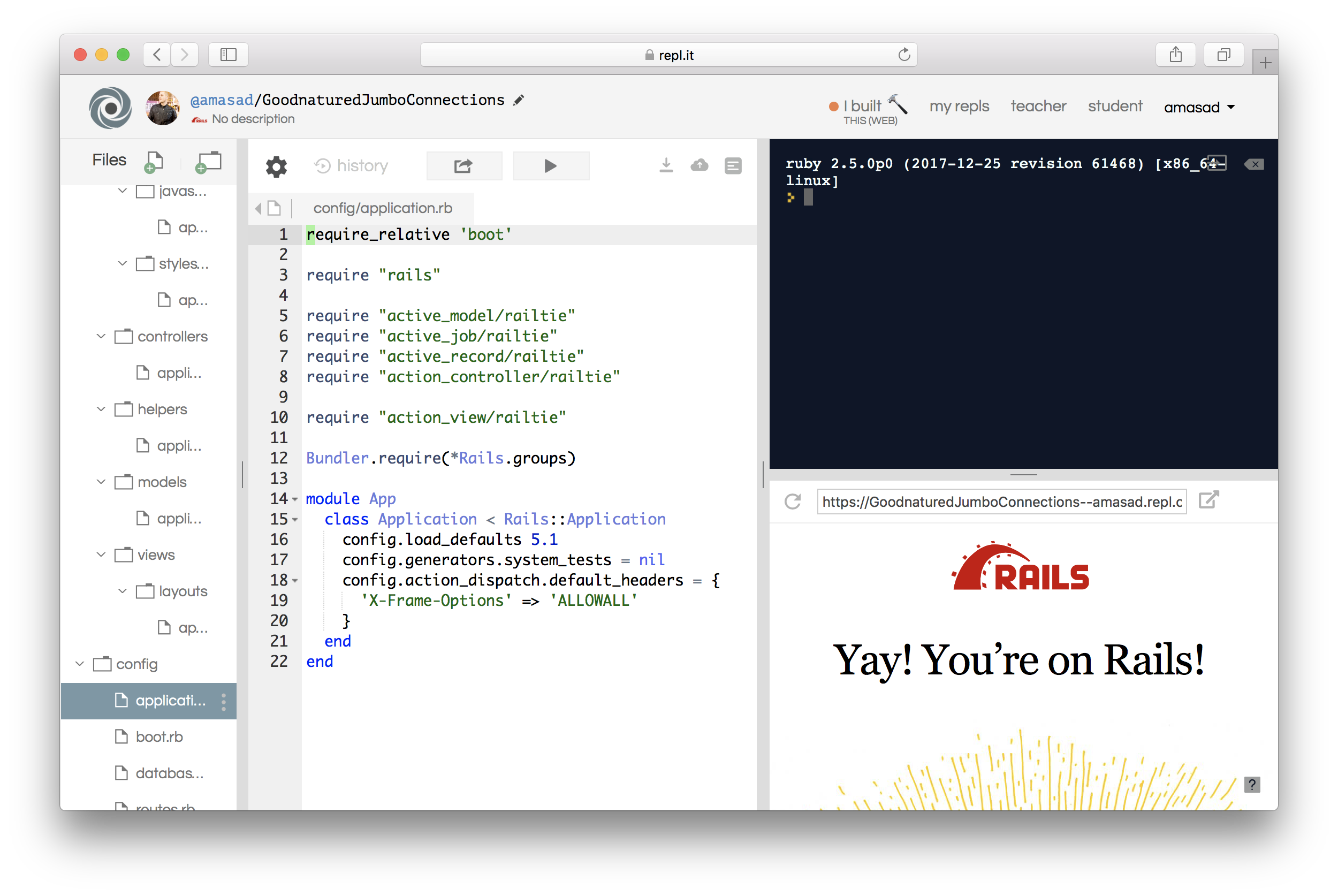
The Y Combinator-funded project, which released version 1.0 of its service this week, gives you an easy to use programming environment in the browser, which slowly reveals its complexity as you write your code. The acronym REPL stands for read-eval-print loop and basically provides a programmer with an interactive programming environment. Unsurprisingly, that’s exactly what Repl.it gives you, too, and with 200,000 weekly active developers on the platform already, there is clearly a demand for this service.

Repl.it already supports virtually every programming language you can think of, no matter whether that’s JavaScript, Python, PHP or QBasic, as well as popular frameworks like Django, Ruby on Rails and Sinatra. And if you want to hurt yourself and write in Brainfuck, you can do that, too.

The nice thing here is that you can get started for free and every Repl instance, which runs in its own container, gets a permalink to allow you to get back into your code quickly. What’s nice here is that you can go from playing with a language to writing a fullstack app (maybe across multiple Repls) without ever leaving your browser. And if you need to search for the libraries on Repl, require them in your code and they will automatically install them for you.

Every language gets a slightly different environment because they all obviously have their own needs and quirks. As you start programming, though, the IDE slowly reveals itself, which makes Repl.it quite different from the likes of Cloud9, the browser-based IDE Amazon acquired in 2016 (and not the esports team).

Repl.it co-founder and CEO Amjad Masad, who started the project together with Haya Odeh, told me that the idea behind the service is actually a few years old now. Back in 2009, though, Masad was actually trying to write every programming language in JavaScript, which was probably a great learning experience, but not practical. Over time, he found an open-source project that let him compile languages to JavaScript, but by then, he had become the first employee at Codecademy and started working in other things there (though it’s worth noting that Codecademy’s code tools include a REPL-like environment, too). After a few years there, and later Facebook, Masad was looking for a new project, and he and Odeh decided to revive the old idea of a programming environment in the browser.

“We wanted to have a real environment and not something emulated in the browser,” he told me. Thankfully, containers now make this far easier and affordable. “We can give a container to every user and, given that they load very fast, we can do it cheaply,” he said. To make this work — and make the environments spin up quickly — the team considered Kubernetes and other tools but then actually wrote its own container orchestration systems to fit its specific needs. Masad likened the result to a stateful serverless platform.

In the early days, the team, which now consists of six people, mostly focused on the educational market, and the service still has plenty of high school and college students among its users. That’s a tough market to sell to, though, both when it comes to individuals and institutions.

These days, the focus has shifted a bit more to professional developers and Repl.it offers a number of different pricing plans for them, including a $7/month “Hacker” plan that allows for private Repls and also gives developers access to faster machines and more storage space.

Given the needs of professional developers, I asked Masad if the team was planning to integrate the service with any of the major continuous delivery and integration systems. Right now, that’s not in the works. Instead, Masad wonders if what the team built here isn’t more akin to a new computing primitive for stateful serverless apps where the same repl and code you built can be deployed and run in production.

Airbnb makes service more accessible to people with disabilities

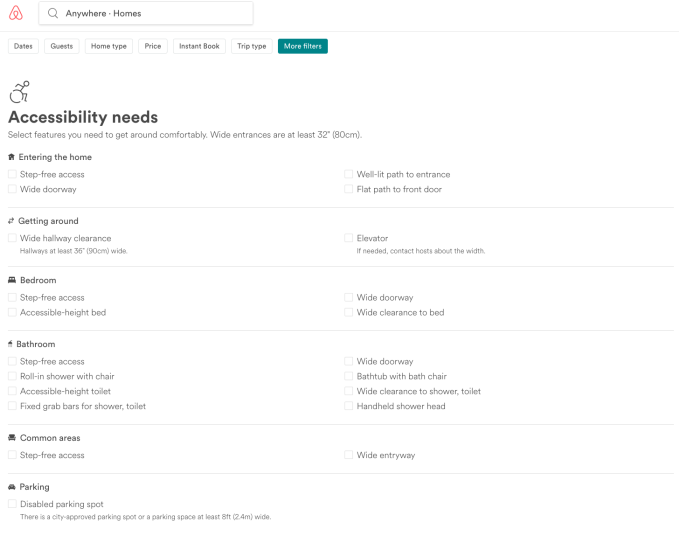
Airbnb has made some changes to its platform in order to make it easier for people with disabilities to find accommodations that suit their needs. The 21 new accessibility filters Airbnb has added enable people to find homes and apartments that have step-free entry to rooms, entryways wide enough to accommodate a wheelchair, elevators, roll-in showers with a chair and more.

Airbnb guests were previously able to search for wheelchair accessible listings, but that was it. In order to determine the appropriate filters, Airbnb worked with the California Council of the Blind, California Foundation for Independent Living Centers and the National Council on Independent Living.

Airbnb’s willingness to be inclusive of people with disabilities comes in light of Lyft and Uber facing lawsuits over the lack of options available for people who use wheelchairs. Moving forward, Airbnb says it will work with its hosts and guests to ensure the filters are useful and accurate.

“The introduction of the new accessibility features and filters to all hosts and guests is just the first stage in our journey to improve accessibility at Airbnb,” Airbnb Accessibility Product and Program Manager Srin Madipalli said in a blog post. “We encourage everyone to use them and send through their feedback.”

Salesforce will acquire enterprise e-commerce software startup CloudCraze

 Salesforce is set to buy CloudCraze, an enterprise e-commerce solution built on its cloud-based customer relationship management platform. Based in Chicago, CloudCraze announced on its site that it’s signed a definitive agreement to be acquired by Salesforce. The deal’s financial details were not disclosed. Read More

Qualcomm’s pivotal shareholder meeting is bumped up following Broadcom hostile takeover block

 After getting delayed by at least a month or so following a regulatory investigation just days before the meeting was scheduled to take place, Qualcomm’s timetable to hold the meeting is now bumped up to ten days from now — and possibly before Broadcom may complete its move to the U.S. The new change is coming as part of a presidential order by the Trump administration to block… Read More

Toshiba shows off an AR headset running on Windows 10

 Today, Toshiba showed off an AR headset for the enterprise world called the dynaEdge. The unsexy headset is pretty unremarkable in most regards, what distinguishes it is the fact that there’s actually a full-blown Windows 10 Professional PC attached to it. Coming in a $1,899 package, the product essentially weds a Google Glass-like heads-up display from Vuzix and a tethered… Read More