Automakers recall cars all the time, but Tesla just doesn’t need any more problems right now.
Category: Tech news
hacking,system security,protection against hackers,tech-news,gadgets,gaming
Moment lenses — the DSLR killer?
I travel with a Canon DSLR and two primes, a 35mm f1.4 and an 85mm f1.2 (endearingly nicknamed, “the fat kid”). Switching lenses is cumbersome and not ideal in certain environments, like a Saigon street market, densely crowded with vendors, tourists and thieves.
After lugging this camera kit through six countries last year, I upgraded my iPhone to the X in hopes of replacing the DSLR as a travel camera. Despite our Editor in Chief’s praises for the iPhone X’s camera, it wasn’t enough for me. I needed more creative control and didn’t want to rely on mobile software.
The first few Google search results for “best iPhone lens” led me to Moment, a company that started off with a 2014 Kickstarter fund and since has grown into a well-respected smartphone lens manufacturer.

Moment recently released a new version of their four lenses: Superfish (fisheye), Wide, Tele Portrait and Macro. The update includes a new attachment interface where the lenses are slightly larger in diameter to provide a more secure attachment to the Moment smartphone cases. Their Wide lens also received a glass upgrade to a multi-element aspherical design for edge to edge clarity.
Prices range from $89.99 to $99.99, with an additional cost of $29.99 for the Moment smartphone case — you’ll need it to attach your lens.
Hardware
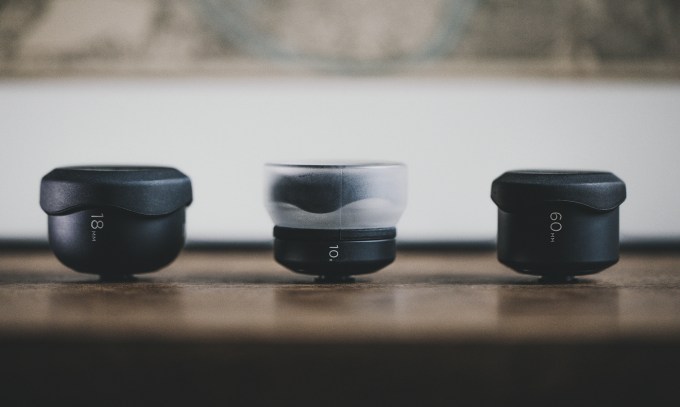
These lenses are not cheaply made of plastic, mass-produced in some dingy factory. They’re heavy little nubs handcrafted with aerospace-grade metal and the same high-end glass used in 4K film lenses.


They mount to the Moment case using a twist and lock system. Snapping it in was quite simple and I roughly shook the phone to make sure the lens was secured — it was.
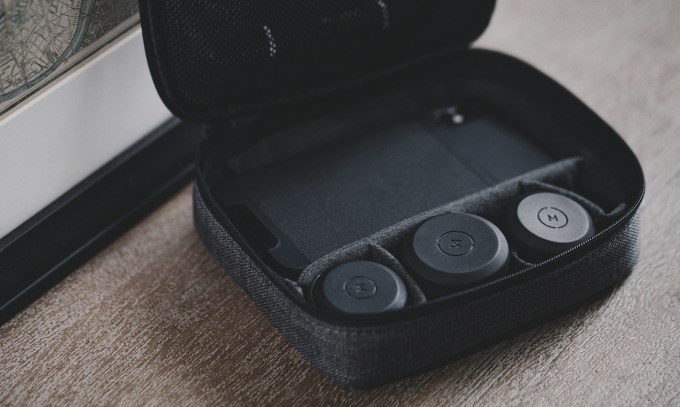
I opted out of the Superfish lens (it’s not really my aesthetic) and packed the other three with me on a recent trip to Little Corn, a remote island several miles off the Nicaraguan coast.
Although I had planned to extensively use the lenses, the week was spent mostly napping in hammocks and eating lobster tacos, as one does when on a tropical island far away. I did, however, spend a couple afternoons testing them out.
New Wide Lens
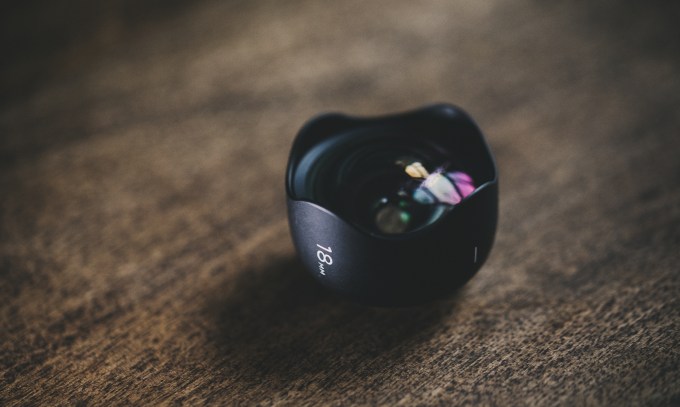
By far, this was my favorite of the three. The images produced were clear, dynamic and without much edge distortion.

L: iPhone X lens, R: Moment Wide Lens

L: iPhone X lens, R: Moment Wide Lens

It’s ideal for landscapes and cityscapes, but I would probably use it as an everyday lens; it adds character and a certain quirk to portraits.
New Macro Lens
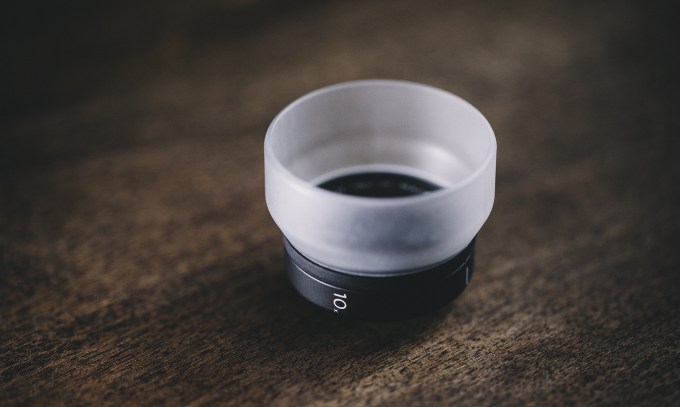
With the macro lens, I was able to capture the tiniest details, from the filaments of a hibiscus flower to its petal veins. The removable diffuser hood softened the light so whites weren’t blown out.

L: iPhone X lens, R: Moment Macro Lens

L: iPhone X lens, R: Moment Macro Lens
Image quality is almost on par with my Canon macro lens, which also happens to be about 9x its cost. On the London map below, the letters in the street names are approximately 1mm tall.

L: Canon EF 100mm f2.8 Macro, R: Moment Macro lens (blur on the top left corner due to a slight tilt when I took the photo)
There’s one drawback to the Macro Lens: you have to get close to the subject, real close (less than an inch away).
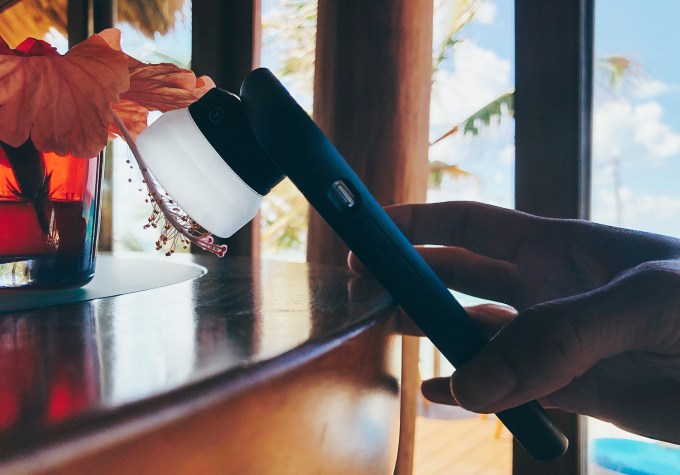
I would not recommend using this lens on a black widow or rattlesnake.
New Tele Portrait Lens

As a portrait lens, I was disappointed. I took pictures of Sam in several locations around the beachfront and wasn’t thrilled with any of them. Bokeh was barely noticeable and I’m pretty sure I could’ve just taken a few steps closer to achieve similar results.

L: iPhone X lens, R: Moment Tele Portrait Lens
After finishing the first draft of this review, I decided to try the lens again before I made a hasty assessment. I was wrong; moving a few steps closer doesn’t achieve similar results. I had forgotten about distortion when up close on iPhone X’s semi-wide lens; however, the difference is subtle.

L: iPhone X lens (apprx. one foot away), R: Moment Tele Portrait Lens (apprx. two feet away)
I’ve actually grown fond of this lens after testing it out one rainy morning in Brooklyn. While the 60mm focal length gets you closer to subjects without having to resort to digital zoom, the blurred edges add a nostalgic element similar to film cameras.


The iPhone X has a built-in telephoto lens, so I did a quick comparison.

L: iPhone X telephoto lens, R: Moment Tele Portrait Lens
There’s a faint, faint difference. If you’re on an iPhone X and are fussed about soft edges, skip this lens. On smartphones that don’t have built-in telephoto lenses, this would be my second choice to break away from sterile smartphone picture-taking.

Moment lenses add a bit of charm and perspective to mobile photography, to the point where you can trick the average person into believing the pictures were taken on a real camera.
I can’t completely switch over to a Moment lens mounted iPhone X as a travel camera just yet. It has nothing to do with Moment. Their lenses are impressive, but they’re not going to magically transform smartphone photos into DSLR-quality images. (I had naively hoped for this.) The iPhone X’s camera is great for daily snapshots, but the image files lack enough detail and information for my anal retentive Lightroom and Photoshop workflow. For now, I’ll stick with my clunky 5D.

For everyone else, step up your Instagram game. Moment’s reputation for producing the best smartphone camera lenses is well deserved.
ClearVoice helps freelance writers show off their portfolios
ClearVoice recently launched a new feature to give freelancers a better way to show off their work and get new jobs.
CV Portfolios offer an easier alternative to personal websites that are often sparsely populated, out-of-date or otherwise neglected.
Thanks a technology that the company is calling VoiceGraph, writers no longer have to keep the pages updated themselves. Instead, co-founder and CEO Joe Griffin said VoiceGraph indexes stories from the top publishers online (about 250,000 currently) and matches them to their authors. It also aggregates metrics around social sharing and connecting to the authors’ own social media accounts.
“At the end of the day, what we want to do here is give freelancers very robust tools that make it as simple as possible to address one of the biggest hurdles freelancers were having: creating a portfolio and maintaining it,” Griffin said.
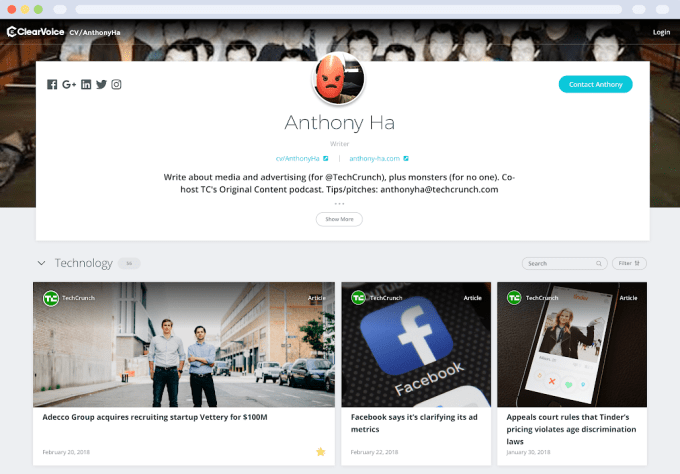
So for example, you can visit my CV Portfolio to see many of my latest TechCrunch articles. Granted, that’s not that so exciting, since you can do the same thing on my TechCrunch author page, but this could be pretty useful if I was a freelancer with a variety of publishers, or if I wanted to highlight articles I wrote for past employers.
There were around 400,000 automatically generated CV Portfolios at launch. Authors can claim their profiles, then edit them by creating new sections, moving articles around, deleting work that they’re not proud of, adding links or uploading files. And again, it’s a lot easier because they’re starting with a portfolio that’s already populated and automatically updated with new stories.
(And yes, if you’re a freelancer with an automatically generated portfolio that you don’t want on ClearVoice, Griffin said you can just delete it.)
The product is free. Sure, you can can use your CV Portfolio to promote yourself on ClearVoice’s talent marketplace, where freelancers get hired by companies to help with content marketing. But Griffin said he’s perfectly fine if people just want to create CV Portfolios and don’t participate in the market at all.
Gadget Lab Podcast: What the New iPad Means for Consumers, and for Students
This week, we ask: Can Apple re-win the hearts and minds of educators?
Twitch lays off some employees as part of ‘team adjustments’
Twitch, the Amazon-owned live-streaming platform for gaming, laid off “several” people yesterday, Polygon first reported.
It’s not clear how many people were let go, but according to Polygon, probably no more than 30 people. Twitch has since confirmed the layoffs to TechCrunch.
“Coming off the record-setting numbers shared in our 2017 Retrospective, Twitch is continuing to grow and advance with success stories from Overwatch League to Fortnite’s milestone-setting streams,” a Twitch spokesperson told TC. “In order to maintain this momentum, we have an aggressive growth strategy for 2018 with plans to increase our headcount by approximately 30%. While we’ve conducted team adjustments in some departments, our focus is on prioritizing areas most important for the community.”
As marketing data proliferates, consumers should have more control
At the Adobe Summit in Las Vegas this week, privacy was on the minds of many people. It was no wonder with social media data abuse dominating the headlines, GDPR just around the corner, and Adobe announcing the concept of a centralized customer experience record.
With so many high profile breaches in recent years, putting your customer data in a central record-keeping system would seem to be a dangerous proposition, yet Adobe sees so many positives for marketers, it likely believes this to be a worthy trade-off.
Which is not to say that the company doesn’t see the risks. Executives speaking at the conference continually insisted that privacy is always part of the conversation at Adobe as they build tools — and they have built in security and privacy safeguards into the customer experience record.
Ben Kepes, an independent analyst says this kind of data collection does raise ethical questions about how to use it. “This new central repository of data about individuals is going to be incredibly attractive to Adobe’s customers. The company is doing what big brands and corporations ask for. But in these post-Cambridge Analytica days, I wonder how much of a moral obligation Adobe and the other vendors have to ensure their tools are used for good purposes,” Kepes asked.
Offering better experiences
It’s worth pointing out that the goal of this exercise isn’t simply to collect data for data’s sake. It’s to offer consumers a more customized and streamlined experience. How does that work? There was a demo in the keynote illustrating a woman’s experience with a hotel brand.
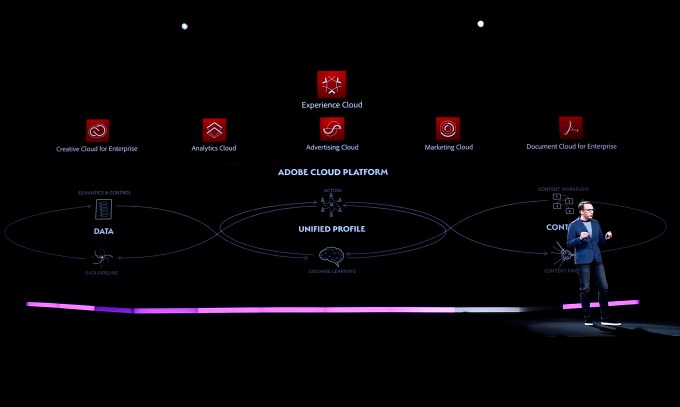
Brad Rencher, EVP and GM at Adobe Experience Cloud explains Adobe’s Cloud offerings. Photo: Jeff Bottari/Invision for Adobe/AP Images
The mythical woman started a reservation for a trip to New York City, got distracted in the middle and was later “reminded” to return to it via Facebook ad. She completed the reservation and was later issued a digital key to her room, allowing her to bypass the front desk check-in process. Further, there was a personal greeting on the television in her room with a custom message and suggestions for entertainment based on her known preferences.
As one journalist pointed out in the press event, this level of detail from the hotel is not something that would thrill him (beyond the electronic check-in). Yet there doesn’t seem to be a way to opt out of that data (unless you live in the EU and will be subject to GDPR rules).
Consumers may want more control
As it turns out, that reporter wasn’t alone. According to a survey conducted last year by The Economist Intelligence Unit in conjunction with ForgeRock, an identity management company, consumers are not just willing sheep that tech companies may think we are.
The survey was conducted last October with 1,629 consumers participating from eight countries including Australia, China, France, Germany, Japan, South Korea, the UK and the US. It’s worth noting that survey questions were asked in the context of Internet of Things data, but it seems that the results could be more broadly applied to any types of data collection activities by brands.
There are a couple of interesting data points that perhaps brands should heed as they collect customer data in the fashion outlined by Adobe. In particular as it relates to what Adobe and other marketing software companies are trying to do to build a central customer profile, when asked to rate the statement, “I am uncomfortable with companies building a “profile” of me to predict my consumer behaviour,” 39 percent strongly agreed with that statement. Another 35 percent somewhat agreed. That would suggest that consumers aren’t necessarily thrilled with this idea.
When presented with the statement, Providing my personal information may have more drawbacks than benefits, 32 percent strongly agreed and 41 percent somewhat agreed.
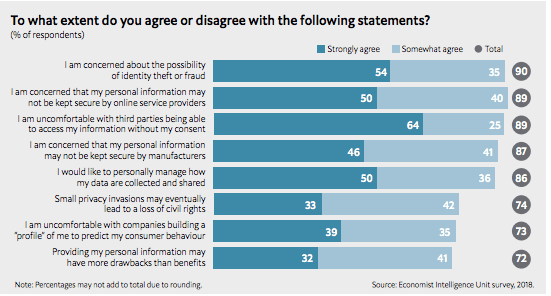
That would suggest that it is on the brand to make it clearer to consumers that they are collecting that data to provide a better overall experience, because it appears that consumers who answered this survey are not necessarily making that connection.
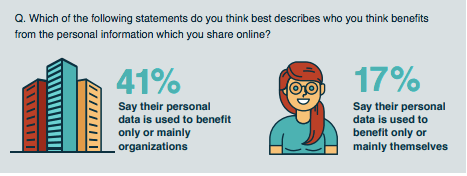
Perhaps it wasn’t a coincidence that at a press conference after the Day One keynote announcing the unified customer experience record, many questions from analysts and journalists focused on notions of privacy. If Adobe is helping companies gather and organize customer data, what role do they have in how their customers’ use that data, what role does the brand have and how much control should consumers have over their own data?
These are questions we seem to be answering on the fly. The technology is here now or very soon will be, and wherever the data comes from, whether the web, mobile devices or the Internet of Things, we need to get a grip on the privacy implications — and we need to do it quickly. If consumers want more control as this survey suggests, maybe it’s time for companies to give it to them.
Huawei says it’s still committed to the U.S., in spite of, well, everything
A funny thing happened the last couple of times I was briefed on a Huawei flagship product: news was breaking about some major roadblock for the company’s U.S. distribution plans. First it was AT&T backing out in the midst of CES and then it was Best Buy’s decision to drop the company just ahead of the big P20 launch (though a rep for the company told me the States were never part of its plans for that handset).
It’s been one thing after another as the Chinese hardware maker has worked to establish a meaningful presence here in the States. In spite of all of this fallout from government pushback, however, the company insists that it’s not going anywhere.
In an email to CNET, the company’s consumer CEO reaffirmed that commitment. “We are committed to the U.S. market and to earning the trust of U.S. consumers by staying focused on delivering world-class products and innovation,” Yu writes. “We would never compromise that trust.”
The sentiment echoes statements Yu made on-stage at CES in the wake of the AT&T deal implosion — albeit much more measured this time around. Most of Yu’s followup reinforced his earlier assertions that, in spite of multiple warning from various US security departments, this whole thing is blow entirely out of proportion.
“The security risk concerns are based on groundless suspicions and are quite frankly unfair,” Yu adds. ”We welcome an open and transparent discussion if it is based on facts.”
Even if the company’s intentions are as stated, Huawei’s got an epic uphill climb if it’s going to make any sort of dent in the world’s third-largest mobile market. The company’s carrier play is non-existent in a country where most phones are purchased through telecoms. And abandonment by the biggest big box store in the States was insult to injury.
And if the company does manage to reverse those trends, it will still be a hard sell for U.S. consumers after several warnings from the country’s defense departments.
Where China’s Tiangong-1 Won’t Land (And Where It Still Might)
Large swaths of Earth are already safe from falling space debris.
Uber and Taxify are going head-to-head to digitize Africa’s two-wheeled taxis
Global ride-hailing rivals Taxify and Uber have launched motorcycle passenger service in East Africa. Customers of both companies in Uganda and Taxify riders in Kenya can now order up two-wheel transit by app.
uberBoda, as its branded, is Uber’s first motorcycle service offering in Africa, and second globally after Asia. For Taxify, it’s the first two-wheel launch in any of the company’s 20 plus international markets.
The moves come as Africa’s moto-taxis — commonly known as boda bodas in the East and okadas in the West –upshift to digital.
Taxify’s “Boda” button
For Taxify, the reasons for entering the market were twofold, according to Kenya Operations Head Chisom Anoke. “We noticed there was a need for this service because boda boda’s haven’t been very well organized or regulated,” he told TechCrunch from Taxify’s Nairobi office.
“The other thing was people had to go search for boda bodas. We want to bring the convenience we brought to regular taxis to the boda bodas,” said Anoke.
The company has upgraded its Kenya and Uganda apps with a “Boda” button to order a two-wheel taxi.
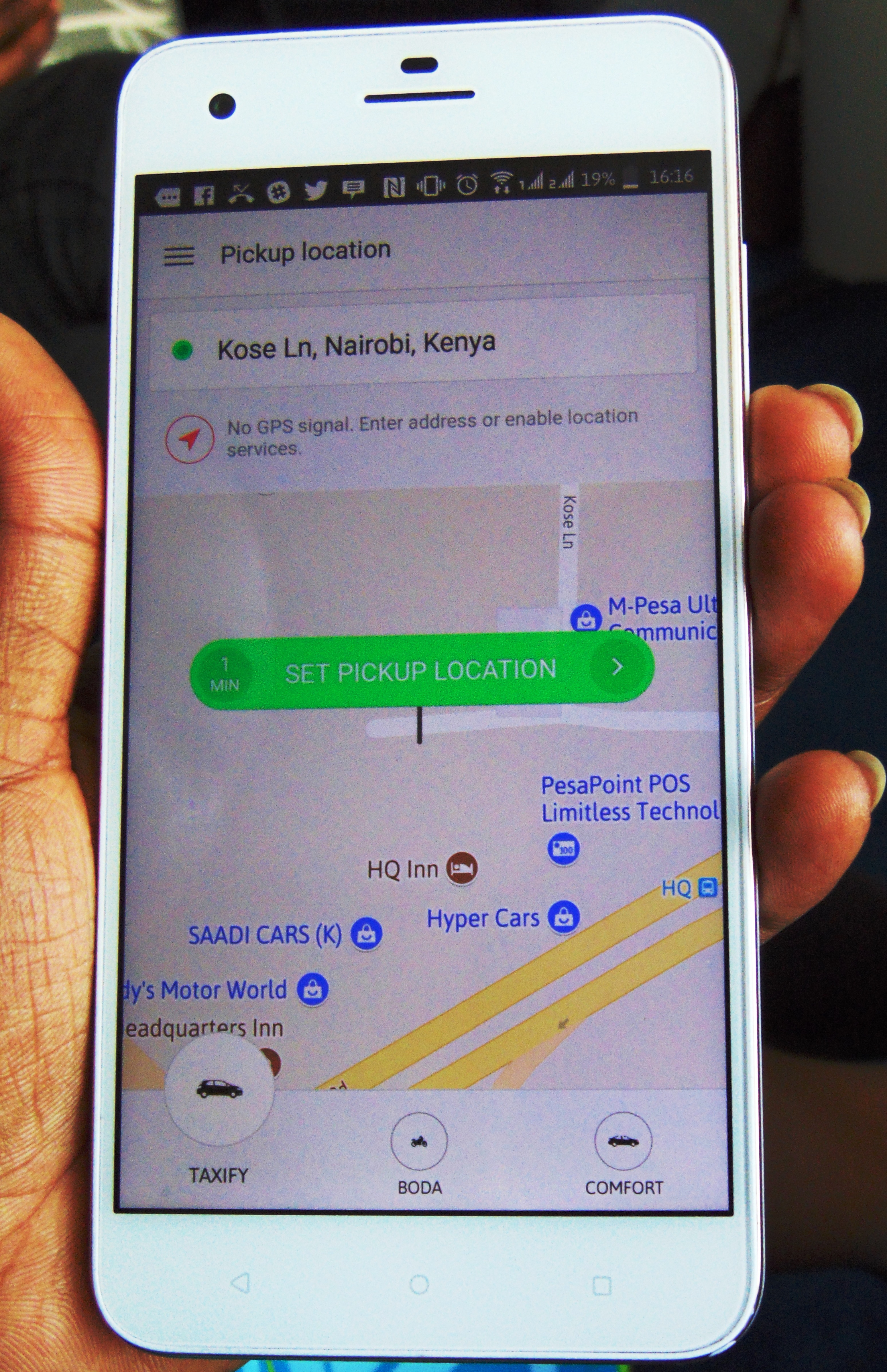
Taxify also aims to bring the average boda boda ETAs in Nairobi to under four minutes, the current norm for its car services.
Boda boda rates for Kenya will be 30 Shillings base then 15 Shillings per kilometer (? $.30 and $.15) compared to 85 and 30 for normal car service. Taxify takes a 15 percent cut, according to Anoke.
On safety, the Taxify will only hire boda boda taxi riders licensed by Kenya’s National Transport and Safety Authority (NTSA) and who have at least three years of experience.
Taxify will require their boda boda drivers have 2015 or later motorcycles that pass a company inspection “to ensure the quality is on point and our clients are safe,” said Anoke.
Riders using Taxify will navigate via direction voice prompts and headphones (from Google maps and other services). All riders will carry two yellow helmets and reflective jackets. Taxify is also working on a rider training program pilot with Kenya’s NTSA.
uberBoda
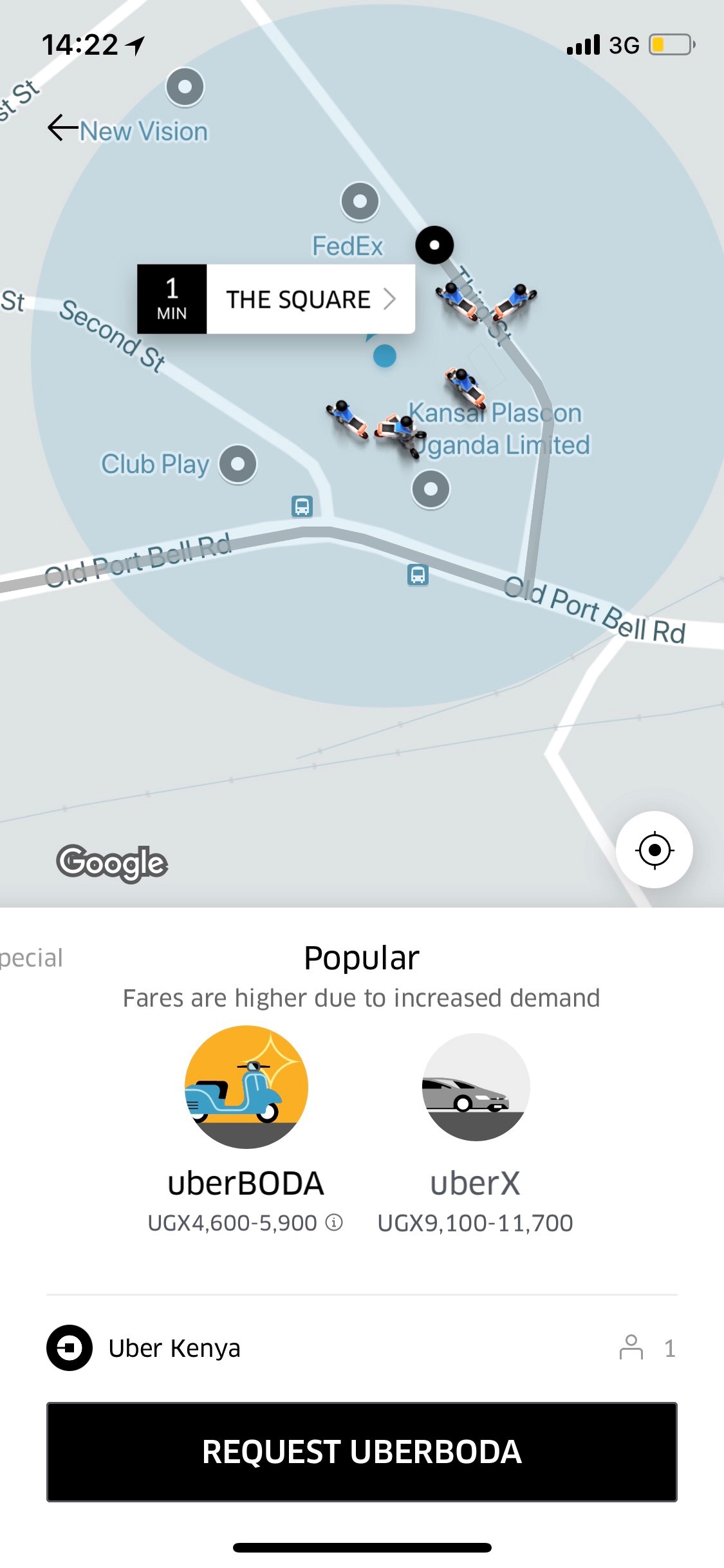
The prominence of motorcycle taxis in Uganda prompted Uber to launch uberBoda there, according to Africa GM Alon Lits. “We’re all about localization and boda moves Kampala,” he told TechCrunch on a call from Cape Town. “If we’re going to be a part of the mobility solution in Kampala, we can’t do that without having a boda product.”
Uber’s Uganda app will include an uberBoda request icon. uberBoda drivers must have proper motorcycle vehicle and taxi licenses to work with Uber, according to Lits. “In addition, we’re ensuring all drivers have two helmets and reflective jackets for their riders,” he said.
Uber expects uberBoda passenger costs to average roughly a dollar per fare. Lits estimates “there are nearly 2 million weekly boda trips happening in Kampala.” The uberBoda motorcycle service is starting with around 100 drivers.
As they gather research from early activity, both Taxify and Uber in Africa said they plan to look more deeply into motorcycle financing plans for drivers, expanded rider training, and ways to build more safety into the two-wheel taxi markets.
“By forcing Taxify boda boda riders to follow existing rules, like not riding more than two passengers at a time, it will rub off and have the kind of positive market disruption we want to see on the boda boda industry,” said Taxify’s Anoke.
“As we get more data as to drivers’ track records, that becomes a proxy for credit, which we’ll look to roll out to the boda industry,” said Uber’s Lits. As TechCrunch reported, Uber Africa experiments with many things the company doesn’t always do globally, such as cash payments and recently launching moto-rickshaw service in Tanzania.
Other players
Uber and Taxify aren’t the only companies to enter Africa’s motorcycle ride-hail market. Nigeria has startup Max.ng, which is actually more focused on last-mile delivery service.

And in Rwanda, where taxi-motos are highly used and tightly regulated, startup SafeMotos has been active since 2015. The company offers its app to drivers and passengers to pinpoint pickup spots, meter fares, and facilitate payments. SafeMotos also plans to expand all woman boda boda services and into Kinhasa DRC, co-founder Barrett Nash told TechCrunch recently in Kigali.
Rwanda also has Yego Moto, a Singapore based motorcycle ride-hail company. Yego Moto has 680 drivers and has logged 426,382 trips and 2.1 million kilometers on its Rwanda platform, according to a company spokesperson.
Market expansion
On Taxify’s plans to expand its boda boda service to other Taxify African cities and markets, “definitely, we plan to scale it out,” said company spokesperson Loreen Ajaimbo, though she wouldn’t name any specific countries at the moment.
Uber Africa’s Alon Lits said the company would look to expand uberBoda first in Uganda to Entebbe. He also mentioned Rwanda as a potential new market.
As for earning potential of East Africa’s boda bodas, Taxify’s Chisom Anoke referred to a recent study by the Motorcycle Assemblers Association of Kenya. It pegged that country’s 2017 two-wheel taxi revenues at $2.1 billion, surpassing the income of the Kenya’s largest telco, Safaricom.
Of course, disrupting that market may not be welcomed by everyone. Both Uber and Taxify’s moves into Africa’s four-wheel taxi spaces have brought protests by traditional drivers over the last several years. Time will tell how Kenya and Uganda’s non-digital boda boda pilots respond to their new ride-hail competition.
Google will make real-time Final Four predictions this weekend, air them as halftime TV ads
Google wants to put its data science chops to the test – in real-time. This weekend, the company is going use data analytics techniques and machine learning during the Final Four in San Antonio to figure out what it thinks will happen next in the live games. And after doing so, it will hand off its predictions about the game’s second half to be aired as a halftime TV ad.
The company detailed its plans in a blog post this morning, explaining how the idea grew out of the existing relationship it had with the NCAA regarding statistical game and competition data analysis using Google’s cloud technology. Google then decided it wanted to challenge itself further to see what else it could do with NCAA data.
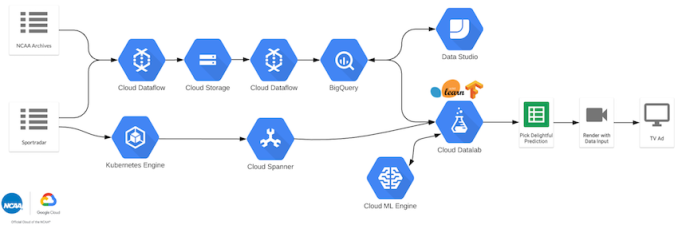
A team including data scientists, technicians, and basketball enthusiasts was assembled, and Google built a data processing workflow using Google Cloud Platform and technologies like BigQuery and Cloud Datalab. It was able to uncover all sorts of insights, like who blocked the most shots per minute or whether teams with animal mascots caused more upsets. And then Google decided it wanted to try to predict what happens during a live game.
This weekend, it will analyze the data from the first half of the Final Four games in real-time, and turn that prediction into a television ad in a matter of minutes.
The way this works is that Google Cloud team will be on site during the games, and will feed in the data from the first half into its workflow where it’s analyzed against NCAA historical data. When halftime begins, the team will crunch the data and come up with its predictions. The technical teams regarding its workflow have been shared here, on the Google Cloud Big Data and Machine Learning blog.
Before halftime ends, Google will hand off a newly created TV ad to CBS and Turner that will air right before the second half starts.
“This is likely the first time a company has used its own real-time predictive analytics to create ads during a live televised sporting event,” notes Google.
The experiment is a clever way to advertise Google Cloud and other technology, but it’s not the only tech company doing Final Four predictions.
All the virtual assistants are making their own predictions too, including Google’s own Google Assistant, Alexa, Cortana, and Siri. But their answers are sometimes more like editorialized opinions and not true data science.
You can keep track of Google’s NCAA experiment on the dedicated site, cloud.withgoogle.com/ncaa.
Singapore says Uber-Grab deal may violate competition laws
Uber’s exit from Southeast Asia is under scrutiny from regulators in Singapore who believe that Grab’s purchase of the U.S. firm’s business in the region may violates competition laws.
Singapore-based Grab, Uber’s chief rival in the region, announced the acquisition of Uber’s Southeast Asian business on Monday. In return, Uber is taking 27.5 percent of the Grab business, which is valued at over $6 billion, in a move that appears to be a win for both parties.
Grab plans to shutter the Uber app in less than two weeks and migrate passengers and drivers to its services. It will also integrate Uber Eats into its nascent food delivery service.
The coming together has already concerned consumers, who believe that prices may rise without two companies competeting head-to-head, and now the Competition Commission of Singapore (CCS) has announced that it is looking into the deal.
The organization said it has “reasonable grounds” to suspect that the deal may fall foul of section 54 of Singapore’s Competition Act.
It added:
CCS is generally of the view that competition concerns are unlikely to arise in a merger situation unless:
The merged entity has/will have a market share of 40 percent or more; or
The merged entity has/will have a market share of between 20 percent to 40 percent and the post-merger combined market share of the three largest firms is 70 percent or more.
That might make the deal a little tricky to explain for Grab, which claims over 90 million downloads and more than five million drivers and agents for its transportation and fintech services.
In a first for Singapore, the CCS said it has proposed an Interim Measures Directions (IMD) that requires both Grab and Uber to “maintain pre-transaction independent pricing, pricing policies and product options.” The commission also directed Grab to not take confidential information from Uber nor lock Uber drivers into driving for Grab.
The commision defines the space not as ride-hailing — where Grab would appear to hold a significantly dominant position by acquiring Uber’s business — but instead as “chauffeured personal point-to-point transport passenger and booking services.”
In that respect, taxi companies in Singapore — which allow booking by SMS and phone call, and also offer ride-hailing apps in some cases — may be considered competition which might water down Grab’s marketshare. Likewise, Grab’s case may be helped by Singapore carpooling service Ryde’s plan to add private car services in an effort to fill some of the gap post-Uber.
Lim Kell Jay, head of Grab Singapore, argued in a statement that the deal with Uber allows consumers a choice against “the dominant taxi industry” and that Grab has already committed to freezing its prices. He added that Grab would work with the CCS and other authorities over the deal as required.
Five years ago, consumers were not able to flag or book taxis easily as supply was a problem. Grab innovated to improve the point-to-point transport within the overall transportation industry, particularly the availability and quality of both taxi and car services. Improving services for commuters and drivers will always be our priority, and we urge the government to allow us to freely compete and complement the dominant taxi business. To address consumer concerns, we have voluntarily committed to maintaining our fare structure and will not increase base fares. This is a commitment we are prepared to give the CCS, and to the public. We have and will continue to work with the CCS, LTA and other relevant authorities, and will propose measures to reassure the CCS, our driver-partners and consumers.
Grab has conducted its comprehensive due diligence and legal analysis with its advisers before entering into and concluding the transaction. We had engaged with the CCS prior to signing and continue to do so. Even though not required by the law, we have informed the CCS that we are making a voluntary notification no later than 16 April 2018 to continue to cooperate and engage with the CCS.
The CCS said it has the power to unwound or modify a deal if it sees that its completion will substantially weaken competition, but it is unclear what that might mean for a regional business like Grab.
Grab and Uber operate in eight markets in Southeast Asia, but Singapore — which is where Grab is headquartered and registered as a business — is the first country where a competitive agency is pouring over the deal.
How I Fell for an Academic Vanity Honeypot Hacking Scheme
WIRED columnist Virginia Heffernan on how a hacker flattered his way into taking over her Twitter account.
How Feminists in China Are Using Emoji to Avoid Censorship
There are other ways to write #MeToo.
The SamSam Ransomware That Hit Atlanta Will Strike Again
Atlanta isn’t the SamSam ransomware strain’s first victim—and it won’t be the last.
This Week in the Future of Cars: Back to Normal?
A ban for Uber, a challenge to Tesla, and Jaguars for Waymo.