Gillmor Gang: Nothing Was Delivered

Somehow it’s Bob Dylan’s 80th birthday this week. Some of you may not think that’s a big deal, but I do. The fact of his talent pretty much drowns out most other ideas of what to write about, but here’s to the birthday boy. Keep up the good work.

Back then, we wondered why Dylan kept changing, refusing to be pinned down, going electric, photographed at the Wailing Wall, you name it. We sure were hungry for direction, it seemed. Growing up in the Sixties, everything was possible. After Trump, we’re rethinking that. Crypto is a grift, better than gold, down 50%, up a third. If I wanted to throw money away, just stand on the corner and hand out NFT’s.

As much as this stuff makes my head hurt, it does make it easier to second guess the Discovery/WarnerMedia and Amazon MGM deals. In a nutshell, streaming has shaken the media world into a massive upheaval. The linear TV big three — NBC, CBS, and ABC — have lost control of our TV sets. Netflix has replaced the idea of advertising supported product (Gray’s Anatomy, This Is Us) with binge drop shows about chess. No advertising, a monthly subscription fee, and oh, by the way, free shipping. That last one is Amazon Prime, which throws in a version of Netflix with everything we get delivered during the pandemic, which is everything. When we get to the vaccinated New Normal, it will still mean everything.

Many acronyms later, the cable networks look like this: you can go through NBCUniversal now known as Comcast for all your TV plus broadband for all your Internet, or dump all that TV and just use broadband to get to the new TV, now known as streaming. Amazon bundled delivery with streaming (Prime) and studio (MGM). Google bundled streaming (YouTube TV) with advertising (search). Verizon, AT&T, and T-Mobile bundled broadband with cash, and the first two tried to buy up the studios and talent. 5G is the carrier Waterloo, drowning broadband in debt as it overtakes the previous cable/content cartel.

This is an oversimplified and inaccurate picture of where we are about to be. But central to the shakeout is what we do with this puzzle. The speed with which vaccinations are being distributed suggests a timetable for success in restoring the economy and bridging the gap to 5G and a hybrid bundle of delivery and digital restructuring. Here’s a trick question: if California has already vaccinated 81% of its population, will Gavin Newsom be recalled as Governor? Here’s another: who will be the winners of the streaming media reboot? Spoiler alert: the answers to both are related.

As we ease our way into the new vaccinated protocols, we start with our families and build out to our colleagues and friends. In effect, we are building a new cohort that speaks to the dynamics of the digital acceleration. A year ago, delivery was a wartime necessity, not an economic choice. Today, the choice of a restaurant or an event will be made based on the intuitive messages sent by the services. If one venue deals with masking and distancing as a transitional choice for its customers, the underlying message is of an evolving strategy based on changing information. Each day we experience more confidence in science and less fear of the unknown is validation of the new cohort we’re forming.

Do we miss the movie theater experience? Sure, but not enough to forego the play-from-home cohort we’ve gotten used to the past year. As our confidence grows, even Zoom calls become more productive and a way of planning for the days when we can reconnect in person. In this cohort process, we build muscle for a new normal that draws strength from both virtual and physical worlds.

Now the dynamic of vaccine success kicks in. Every day, week, month that the virus recedes is marked by the accumulation of a new normal: the more things don’t change, the better things are. Public officials take credit for backing the right horse. Kids go back to school; companies find the right combination of home office, collaboration room Thursdays, and business travel right-sizing. The new normal cohort develops discounts and incentives for its trailblazers and influencers. Special bundles emerge in subscription streaming, blending advertising-supported discounts in return for bigger production budgets. News subscription services provide cohort access to notification streams, replacing repetitive fear-based programming with science-based alerts and business strategy updates.

Answers: No. California is a blue state. And, we will be the winners of the streaming consolidation — as creators remind Hollywood of their power to validate the direction of how we live in the near present. On this episode of the Gang, I mention a new streaming network, Buki, that has emerged to challenge the old alphabet TV networks with a heady brew of ad-supported binge goodness. Brent Leary interrupts to complain that he doesn’t have Buki. That’s because I made it up. Buki, keep up the good work.

from the Gillmor Gang Newsletter

__________________

The Gillmor Gang — Frank Radice, Michael Markman, Keith Teare, Denis Pombriant, Brent Leary and Steve Gillmor. Recorded live Friday, May 14, 2021.

Produced and directed by Tina Chase Gillmor @tinagillmor

@fradice, @mickeleh, @denispombriant, @kteare, @brentleary, @stevegillmor, @gillmorgang

Subscribe to the new Gillmor Gang Newsletter and join the backchannel here on Telegram.

The Gillmor Gang on Facebook … and here’s our sister show G3 on Facebook.
Tesla has activated its in-car camera to monitor drivers using Autopilot

Tesla has enabled the in-car camera in its Model 3 and Model Y vehicles to monitor drivers when its Autopilot advanced driver assistance system is being used.

In a software update, Tesla indicated the “cabin camera above the rearview mirror can now detect and alert driver inattentiveness while Autopilot is engaged.” Notably, Tesla has a closed loop system for the data, meaning imagery captured by the camera does not leave the car. The system cannot save of transit information unless data sharing is enabled, according to Tesla. The firmware update was cited by a number of Tesla owners,  industry watchers and bloggers who are active on Twitter.

Tesla has faced criticism for not activating a driver monitoring system within the vehicle even as evidence mounted that owners were misusing the system. Owners have posted dozens of videos on YouTube and TikTok abusing the Autopilot system — some of whom have filmed themselves sitting in the backseat as vehicle drives along the highway. Several fatal crashes involving Tesla vehicles that had Autopilot engaged has put more pressure on the company to act.

Until now, Tesla has not used the camera installed in its vehicles and instead relied on sensors in the steering wheel that measured torque — a method that is supposed to require the driver to keep their hands on the wheel. Drivers have documented and shared on social media how to trick the sensors into thinking a human is holding the wheel.

Delivery was super smooth. Summon and lane departure avoidance disabled for now, increased follow distance, hard cap at 75, requires auto brights or kicks out of AP, cabin camera for driver monitoring.. nothing unexpected yet. pic.twitter.com/gKIkHSGNI7

— Kevin Smith (@spleck) May 27, 2021

“Consumer Reports has been calling for camera-based driver monitoring systems for automation systems like Tesla’s AutoPilot for years,” Jake Fisher, senior director of auto testing at CR told TechCrunch. “Tesla’s current system of sensing torque on the wheel cannot tell if the driver is looking at the road. If the new system proves effective, it could help prevent distraction and be a major improvement for safety – potentially saving lives. We hope that other cars are updated soon, and are looking forward to evaluating them.”

Tesla didn’t share details about the driver monitoring system — for instance, is it tracking eye gaze or head position — or whether it will be used to allow hands-free driving. GM’s Super Cruise and Ford’s Blue Cruise advanced driver assistance systems allow for hands-free driving on certain divided highways. Their systems use a combination of map data, high-precision GPS, cameras and radar sensors, as well as a driver attention system that monitors the person behind the wheel, to ensure drivers are paying attention.

Tesla vehicles come standard with a driver assistance system branded as Autopilot. For an additional $10,000, owners can buy “full self-driving,” or FSD — a feature that CEO Elon Musk promises will one day deliver full autonomous driving capabilities. FSD, which has steadily increased in price and capability, has been available as an option for years.

However, Tesla vehicles are not self-driving. FSD includes the parking feature Summon as well as Navigate on Autopilot, an active guidance system that navigates a car from a highway on-ramp to off-ramp, including interchanges and making lane changes. Once drivers enter a destination into the navigation system, they can enable “Navigate on Autopilot” for that trip.

The move comes just a week after Tesla tweeted that its Model Y and Model 3 vehicles bound for North American customers are being built without radar, fulfilling a desire by Musk to only use cameras combined with machine learning to support Autopilot and other active safety features.

Automakers typically use a combination of radar and cameras — and even lidar — to provide the sensing required to deliver advanced driver assistance system features like adaptive cruise control, which matches the speed of a car to surrounding traffic, as well as lane keeping and automatic lane changes. Musk has touted the potential of its branded “Tesla Vision” system, which only uses cameras and so-called neural net processing to detect and understand what is happening in the environment surrounding the vehicle and then respond appropriately.

The decision to pull radar out of the vehicles has caused some blowback for the company. Consumer Reports no longer lists the Model 3 as a Top Pick and the Insurance Institute for Highway Safety said it plans to remove the Model 3’s Top Safety Pick+ designation. The National Highway Traffic and Safety Administration has said that Model 3 and Model Y vehicles built on or after April 27, 2021 will no longer receive the agency’s check mark for automatic emergency braking, forward collision warning, lane departure warning and dynamic brake support.

Dismantling the myths around raising your first check

As startups and venture capital grow in tandem, fundraising has gone from a formal affair on Sand Hill Road to a process that can happen anywhere from Twitter to Zoom.

While fundraising may no longer require a trip to California, it might depend on whether you got an invite to a private audio app. And while you may not need to be an insider, second-time founders — largely male and white — still have a competitive advantage.

If your intention is to build a company that you want to own and run indefinitely, and/or to grow more slowly and take fewer risks, traditional venture capital is not right for what you want to build.

The growing complexity of fundraising has the opportunity to make tech either inclusive or exclusive. For new founders looking to raise money, let’s dismantle the myths about raising your first check and instead focus on how investors and other successful founders describe the nuance needed to secure money.

What makes my business venture-worthy?

This question is existential, but it should be at the forefront throughout your journey as a founder. Elizabeth Yin, founding partner of Hustle Fund, says startups should be able to hit one of two goals: Reach $100 million ARR by its fifth year or get to $1 billion in valuation in the same time period.

“This is hard to do. And most businesses will never get there — not for a lack of trying — but there’s a lot of luck whether your idea has that much demand that quickly,” she added.

“I think you will know in the first year or two how ‘easy’ or ‘hard’ it is to get customers and whether you think on that trajectory you can get to $100 million a year in a few years,” Yin said. “And if it’s really hard, it doesn’t mean you throw in the towel. … There are many great companies that are not VC-backable where the founders will make a lot of money, but it just means you need to think through where to get your financing. Perhaps it’s from angels. Perhaps it’s from revenue-based financing funds. Perhaps it’s from customer crowdfunding.”

While VC is the flashy gold medal, the rapid growth of emerging fund managers means that a first check can be piecemealed together from a variety of different sources. The options for financing are seemingly endless: syndicates, public crowdfunding, VC firms, accelerators, debt financing, rolling funds, and, for the profitable few, bootstrapping.

“When people go around saying, ‘Do you want to run a VC-backable company?’ that feels weird — you don’t necessarily get to pick how fast you can grow — the market just may or may not be there,” Yin said. “There’s a lot of luck with that.”

Leslie Feinzaig, founder of Female Founders Collective, said that beyond economics, the hardest part of knowing whether your startup makes sense as a VC-backed business is understanding your own goals as an entrepreneur.

Daily Crunch: Saving-investing app Acorns files to go public in $2.2B SPAC deal

Hello and welcome to Daily Crunch for Thursday, May 27. From the home desk, TechCrunch has a few notes to share. First, we’re hosting a virtual meetup in Pittsburgh as part of our national tour spotlighting neat startup markets. And if you are a super early-stage founder, you can still apply to take part in the upcoming Battlefield competition at Disrupt. Do it. It’s going to be a blast. See you at both! — Alex

The TechCrunch Top 3

Startups and VC

We have our usual mix of funding rounds below, but first a note on diversity in the venture capital world. Collab Capital this week announced a $50 million fund to invest in Black founders, which TechCrunch covered here. And today we wrote about a $250 million growth fund that will reserve half its profits to donate to historically Black colleges and universities. More of this, please.

Now, the day’s hottest funding rounds:

Breinify raises $11M to bring data science to marketing: A good theme in tech recently has been bringing capabilities previously reserved for the technically trained to teams of nontechnical folks. No-code does this at times, for example. Breinify is doing something related, namely “working to apply data science to personalization, and do it in a way that makes it accessible to nontechnical marketing employees to build more meaningful customer experiences,” according to TechCrunch. For marketing teams currently stuck waiting for the engineering team to get back to them, this will prove more than welcome.

RevenueCat raises $40M to help developers leverage in-app subscriptions: RevenueCat now has a huge new check at a $300 million valuation, but more than that, it’s changed its cost structure, offering different tiers of service that are priced not on a per-head basis, but on how much revenue a company is tracking at any given point in time (on-demand pricing is hot). RevenueCat, you can math out, costs 0.8% to 1.2% cut of tracked revenue, depending on what sort of functionality a company needs. For anyone building in-app subscriptions and looking for help, RevenueCat wants to be cheap to start and lucrative as its customers scale.

And then there were robots: Our own Brian Heater compiled a super great look at the world of robotics startups and their recent fundraising. TerraClear recently raised $25 million for its rock-picking-up tractor-robot. Bowery Farms recently raised $300 million as we noted here at Daily Crunch, but we failed to mention how “robots, sensors and AI are a big part of [its] vertical farming approach.” Very cool.

Heater has more notes in the posts, but the key takeaway is that not every robot comes from the weird place between Uncanny Valley and Boston Dynamics.

SaaS needs to take a page out of the crypto playbook

It seems like a great time to launch a SaaS startup, but the landscape is crowded with well-designed applications that promise “blazingly fast and delightfully simple” experiences.

Most of these will fail, but not because of a marketing campaign or server downtime. In most cases, SaaS startups fall victim to what seed-stage investor John Chen of Fika Ventures calls “the myth of frictionless onboarding.”

Despite the hype, enterprise companies are always asking us to learn how to use new tools. “Just like with a new fitness program, participants feel good after completing the workout, but it takes a lot of activation energy to start and hard work to get there,” says Chen.

Instead of putting the onus on customers to roll up their sleeves, SaaS startups should learn from cryptocurrency culture and find ways to “incentivize users to do the necessary work to have the right experience.”

(Extra Crunch is our membership program, which helps founders and startup teams get ahead. You can sign up here.)

Big Tech Inc.

Today we’re mostly talking about Twitter, but before we do, is Ford about to win a chunk of the electric vehicle market? Two years ago I would have scoffed at the notion, but between what feel like strong pre-orders for its electric pickup and a huge bet on internal battery R&D, it’s now a question worth asking.

On the Twitter front, there are two things to know. First, that Twitter is not taking incoming fire from the current Indian government sitting down. And, second, that Twitter’s product work has been pretty fast-paced lately, which is more than welcome.

Regarding India, TechCrunch’s Manish Singh reports that “Twitter called the recent visit by police to its Indian offices a form of intimidation and said it was concerned by some of the requirements in New Delhi’s new IT rules.” Good.

Here at Daily Crunch, we called the matter attempted intimidation, so it’s nice to see the company also stating the obvious. And fighting back. The Indian government’s push to censor Twitter smacks of a CCP-style crackdown on speech that the ruling regime deems too true to be read. Down with that sort of thinking.

On the product front, Twitter is rolling out its Clubhouse-competing Spaces product to desktop machines. Normally I’d skip such an incremental Twitter feature, but in this case it fits into the recent rapid-fire product cadence from the social network, which was famously slow for years and years. Then something changed, allowing the company to ship all sorts of products and services. The company’s even moving toward some sort of email newsletter-subscription-audio-tipping product amalgamation that could prove to be very, very interesting to creators.

Who expected to be excited by Twitter’s dev team this year? It’s a nice surprise.

TechCrunch Experts: Email Marketing

Intellect illustration

Image Credits: Getty Images

TechCrunch Experts is still collecting survey responses to help us identify the top email marketers in tech!

At this time, we’re not looking for self-nominations — we’re only seeking nominations from clients. We want to hear all about your experience and how you found the right expert for your needs. Fill out the survey here.

We’re excited to move this project forward. Visit techcrunch.com/experts to find out more!

Darryl Finkton Jr. closes $200M to go from asset management to poverty eradication

Darryl Finkton Jr. is a man on a mission.

He believes there’s enough money in the world to help put an end to poverty. But only if it’s distributed differently than it is today.

Earlier this year, the investor left a career in asset management to launch a $1 billion venture fund aimed at eradicating poverty. It’s an ambitious goal, but Finkton Jr. has a plan. And now he’s raised $200 million as an initial close to help execute that plan.

Finkton aims to raise $1 billion with the fund to provide venture capital to entrepreneurs from disadvantaged and underrepresented backgrounds who are working to solve the pressing problems facing their communities. He is managing the fund, and has invested $500,000 of his own capital to launch it.

Finkton grew up in housing projects in Indianapolis, Indiana, and went to Harvard to study neurobiology. He then attended Oxford as a Rhodes Scholar and got involved in economic development before founding a VC firm focused on health tech investments. Most recently, Finkton worked as a partner at a hedge fund.

But his upbringing was never far from his mind, and Finkton knew that he wanted to do more to help people who didn’t have the same opportunities or access as others.

“In my household, we often struggled to make ends meet and put food on the table. More family members than I care to count have died from the dire circumstances that extreme poverty creates,” Finkton recalls. “Although I was able to overcome obstacles and ultimately graduated from both Harvard and Oxford, I remain intimately aware of the countless difficulties one faces when your next meal is not promised.”

So earlier this year, he left his job as a hedge fund partner to promote the adoption of a universal basic income to end poverty in the U.S. with the help of venture dollars via his EPMT (End Poverty. Make Trillions.) fund.

All fund profits will be reinvested into helping the country’s poorest communities, he said.

This summer, he plans to lead a 60-day tour of several dozen cities, towns and Native American reservations with “the poorest ZIP codes in America” with the goal of drumming up support for a universal basic income at the federal poverty guidelines (UBI@FPG).  (He also intends to create a documentary of the process).

In addition to supporting state and local efforts, Finkton is also pushing for federal legislation guaranteeing a universal basic income at or above the federal poverty guidelines.

So far, the EPMT fund has invested in 15 companies, including Elpidatec, a telehealth platform aimed at treating opioid addiction; Commissary Club, a job site and social network for people with criminal records; Snowball Wealth, which offers free student loan planning to help people tackle debt; and Maia Life Sciences, which is working to develop evidence-based, culturally informed group interventions for underrepresented and vulnerable populations.

Finkton believes that the U.S. is spending “trillions” on perpetuating the poverty cycle through various programs such as welfare. Instead, he wants to empower people in poverty to work their way out.

“These programs treat the symptoms of poverty, not the root cause — which is not having money,” he told TechCrunch.

Finkton maintains that a universal basic income at the federal poverty guidelines (UBI@FPG) can end financial poverty.

“The economic costs of childhood poverty alone are $1 trillion a year. If we provide UBI@FPG to every American and simply tax back that income for those already well above the federal poverty guideline, the net cost for eradicating poverty drops to below $200 billion,” Finkton maintains. “That is an annual return of $800 billion. Over 10 years, UBI@FPG would generate a return of over $8 trillion, save 1.7 million lives, and lift 34 million Americans out of poverty.”

There are some who may argue that lower-income populations will just use any money they get to buy drugs or alcohol.

Finkton believes it’s the opposite.

“We’ve done a lot of pilots and when someone is so poor, they can’t afford food, clothing or shelter, that’s the first thing they do, when they get money,” he told TechCrunch. “These communities often use drugs as a way to cope,” he said. “Once you give them hope and opportunity, they’re not as depressed and there’s actually less alcohol, drug and tobacco use.”

Chad Doe, founder and CEO of EPMT portfolio company Maia Life Sciences, tells TechCrunch that his biotech startup aims to initially investigate the potential of psychedelics to help people with substance abuse issues via facilitated group clinical trials. The ultimate goal of the three-year-old Los Angeles-based company is to receive FDA approval so that people with addictions, globally, can have more options. Those clinical trials, he said, will be conducted by mostly women of color and include participants that are not mostly white or of European descent.

In many cases, he said, trial participants and investigators “are not representative of the real world.”

Doe also believes that more money is spent on surveillance, policing and punishment tactics that disproportionately target and impact people of color, low-income people and non-citizens rather than toward actually helping them emerge from their situations.

“The War on Drugs is really a war on the poor,” he said. “At Maia, we’re placing women and underserved populations at the center of the research and development to find effective treatments for substance use disorders.”

Box beats expectations, raises guidance as it looks for a comeback

Box executives have been dealing with activist investor Starboard Value over the last year, along with fighting through the pandemic like the rest of us. Today the company reported earnings for the first quarter of its fiscal 2022. Overall, it was a good quarter for the cloud content management company.

The firm reported revenue of $202.4 million, up 10% compared to its year-ago result, numbers that beat Box projections of between $200 million to $201 million. Yahoo Finance reports the analyst consensus was $200.5 million, so the company also bested street expectations.

The company has faced strong headwinds the past year, in spite of a climate that has been generally favorable to cloud companies like Box. A report like this was badly needed by the company as it faces a board fight with Starboard over its direction and leadership.

Company co-founder and CEO Aaron Levie is hoping this report will mark the beginning of a positive trend. “I think you’ve got a better economic climate right now for IT investment. And then secondarily, I think the trends of hybrid work, and the sort of long-term trends of digital transformation are very much supportive of our strategy,” he told TechCrunch in a post-earnings interview.

While Box acquired e-signature startup SignRequest in February, it won’t actually be incorporating that functionality into the platform until this summer. Levie said that what’s been driving the modest revenue growth is Box Shield, the company’s content security product and the platform tools, which enable customers to customize workflows and build applications on top of Box.

The company is also seeing success with large accounts. Levie says that he saw the number of customers spending more than $100,000 with it grow by nearly 50% compared to the year-ago quarter. One of Box’s growth strategies has been to expand the platform and then upsell additional platform services over time, and those numbers suggest that the effort is working.

While Levie was keeping his M&A cards close to the vest, he did say if the right opportunity came along to fuel additional growth through acquisition, he would definitely give strong consideration to further inorganic growth. “We’re going to continue to be very thoughtful on M&A. So we will only do M&A that we think is attractive in terms of price and the ability to accelerate our roadmap, or the ability to get into a part of a market that we’re not currently in,” Levie said.

A closer look at the financials

Box managed modest growth acceleration for the quarter, existing only if we consider the company’s results on a sequential basis. In simpler terms, Box’s newly reported 10% growth in the first quarter of its fiscal 2022 was better than the 8% growth it earned during the fourth quarter of its fiscal 2021, but worse than the 13% growth it managed in its year-ago Q1.

With Box, however, instead of judging it by normal rules, we’re hunting in its numbers each quarter for signs of promised acceleration. By that standard, Box met its own goals.

How did investors react? Shares of the company were mixed after-hours, including a sharp dip and recovery in the value of its equity. The street appears to be confused by the results, weighing the report and working out whether its moderately accelerating growth is sufficiently enticing to warrant holding onto its equity, or more perversely if its growth is not expansive enough to fend off external parties hunting for more dramatic changes at the firm.

Sticking to a high-level view of Box’s results, apart from its growth numbers Box has done a good job shaking fluff out of its operations. The company’s operating margins (GAAP and not) improved, and cash generation also picked up.

Perhaps most importantly, Box raised its guidance from “the range of $840 million to $848 million” to “$845 to $853 million.” Is that a lot? No. It’s +$5 million to both the lower and upper-bounds of its targets. But if you squint, the company’s Q4 to Q1 revenue acceleration, and upgraded guidance, could be an early indicator of a return to form.

Levie admitted that 2020 was a tough year for Box. “Obviously, last year was a complicated year in terms of the macro environment, the pandemic, just lots of different variables to deal with…” he said. But the CEO continues to think that his organization is set up for future growth.

Will Box manage to perform well enough to keep activist shareholders content? Levie thinks if he can string together more quarters like this one, he can keep Starboard at bay. “I think when you look at the next three quarters, the ability to guide up on revenue, the ability to guide up on profitability. We think it’s a very very strong earnings report and we think it shows a lot of the momentum in the business that we have right now.”

On-demand grocery startup Food Rocket launches in the Bay Area, goes up against delivery giants

On-demand grocery startups like Gorillas are invading Europe right now, but although on-demand-everything is kinda old-hat in the Bay Area, a new startup thinks it might just be able to do something new.

Food Rocket says it has raised a $2 million investment round from AltaIR Capital, Baring Vostok fund and the Angelsdeck group of business angels, including Philipp Bashyan, of Russia’s Yonder, who has joined as an investor and advisor.

Yes, admittedly, this tiny startup is competing with DoorDash, GoPuff, InstaCart and Amazon Fresh. Maybe let’s not get into that…

Using the company’s mobile app, users can order fresh groceries, ready-to-eat meals and household goods that will be delivered within 10-15 minutes, says the startup, which will be servicing SoMa, South Park, Mission Bay, Japantown, Hayes Valley and other areas. The company hopes to open 150 “dark stores” on the West Coast as part of its infrastructure.

Vitaly Aleksandrov, CEO, and co-founder of Food Rocket, said: “The level of competition in this market in the U.S. is still manageable, which is why we have the opportunity to become leaders in the sphere of fast delivery of basic products and household goods. We aim to replace brick-and-mortar supermarkets and to change consumers’ current habits in regards to grocery shopping.”

What can we say? Good luck?

FM Capital steps up automotive investments with new $150M fund

First Move Capital, the Boulder-based venture firm that has invested in used car marketplaces Frontier Auto Group and Vroom as well as mobility-as-a-service startup Via, has closed a new $150 million fund that will focus on the automotive and transportation sectors.

Existing strategic investors such as OEMs, dealers, distributors, fleet management, remarketing, insurance and software providers as well as family offices have backed the fund. Proceeds from the round will be exclusively allocated to new investments, the company said Thursday.

FM Capital has already made seven investments from the oversubscribed fund, including autonomous vehicle startup Gatik, cloud-based automotive retail platform Tekion and e-commerce startup Revolution Parts.

“We hit our hard cap in the max that we could raise, but have deployed a minority of that amount so we’re still very much, actively investing and will be for the next couple of years,” Managing Partner Mark Norman said in a recent interview.

FM Capital launched in 2012 with a $40 million fund that invested in auto commerce and dealership technologies as well as other broader retail and enterprise software startups. Its second fund, which more than doubled to $90 million, is when FM Capital became an automotive-focused VC interested in auto commerce, autonomy and sensors, connectivity, electrification and shared mobility. FM Capital typically invests between $5 million to $10 million in companies with what the partners view as “transformative solutions in transportation” typically at the Series A stage. FM Capital will sometimes do a later seed round where there’s commercial traction and revenue, said Norman, who noted that in this new fund the firm has already completed one seed deal out of the seven investments it has made so far.

FM Capital has backed a total of 40 companies based in North America, Europe and Tel Aviv.

Looking ahead, Norman sees opportunities stemming from the rising number of EVs and other forms of propulsion besides internal combustion engines.

“We see there’s just a huge transformation going on with propulsion, a lot driven, of course, by government mandates around the world,” Norman said. “Alternative fuels and distribution and related service infrastructure is going through a ton of flux right now. That’s everything from the technology going into propulsion in vehicles — that shift from internal combustion to in large part, EVs — and how that affects downstream service infrastructure, how it affects marketplaces like residual values, and how you estimate that and understand what a vehicle is worth over its lifecycle.”

For instance, Norman pointed to FM Capital’s latest investment into a startup called Indigo Technologies, which has developed a vehicle platform with an in-wheel motor and suspension that frees up space.

There also continues to be a lot of software opportunities, especially as more vehicles hit the marketplace with embedded connectivity, Norman said. He also noted additional opportunities in enterprise software.

“What had been a very fragmented retail environment continues to consolidate — whether we’re talking about car rentals, car dealers or fleet management — and their appetite for centrally driven tools and data is also much higher than that in the past. That’s real opportunity on the enterprise software side of things.”

See what’s new from Wejo, CMC, iMerit, Plus, oVice & Michigan at TechCrunch’s mobility event

We’re in the final run-up to TC Sessions: Mobility 2021 on June 9, and the great stuff just keeps on coming. We’ve stacked the one-day agenda with plenty of programming to keep you engaged, informed and on track to build a stronger business. You’ll always find amazing speakers — some of the most innovative minds out there — on the main stage and in breakout sessions.

Dramatic pause for a pro tip: Don’t have a pass yet? Buy one here now for $125, before prices go up at the door.

“I enjoyed the big marquee speakers from companies like Uber, but it was the individual presentations where you really started to get into the meat of the conversation and see how these mobile partnerships come to life.” — Karin Maake, senior director of communications at FlashParking.

We have another exciting bit of news. We’re hosting a pitch session for early-stage startup founders who exhibit in the expo at TC Sessions: Mobility. Each startup gets one minute to pitch to attendees in a breakout session. Remember, this conference has a global reach — talk about visibility! Want to pitch? Buy an Early Stage Startup Exhibitor Package — we only have two packages left.

Alrighty then…let’s look at some of the breakout & main stage sessions waiting for you at TC Sessions: Mobility 20201.

Innovating Future Mobility for Global Scale

Wednesday, June 9, 10:00 am -10:50 am PDT

Learn how the CMC’s (California Mobility Center) model of bringing their clients’ new technologies to market is new and innovative, going beyond a typical demonstration or pilot program, to the point of product launch and sustaining market viability. Hear from an expert panel about how the CMC’s programming is unique, innovative and game-changing.

  • Neal Best, Director of Client Services, California Mobility Center (CMC)
  • Bill Brandt, Business Development Advisor, Zeus Electric Chassis
  • Mark Rawson, Chief Operating Officer, California Mobility Center (CMC)
  • Scott Ungerer, Founder and Managing Director, EnerTech Capital

Public-Private Partnerships: Advancing the Future of Mobility and Electrification

Wednesday, June 9, 10:45 am -11:05 am PDT

The future of mobility starts with the next generation of transportation solutions. Attendees will hear from some of the most innovative names on opportunities that await when public and private entities team up to revolutionize the way we think about technology. Trevor Pawl, Michigan’s Chief Mobility Officer, will be joined by Nina Grooms Lee, Chief Product Officer of May Mobility.

  • Nina Grooms Lee, Chief Product Officer, May Mobility
  • Trevor Pawl, Chief Mobility Officer, State of Michigan

Delivering Supervised Autonomous Trucks Globally

Wednesday, June 9, 12:40 pm – 1:00 pm PDT

Plus is applying autonomous driving technology to launch supervised autonomous trucks today in order to dramatically improve safety, efficiency and driver comfort, while addressing critical challenges in long-haul trucking — driver shortage and high turnover, rising fuel costs and reaching sustainability goals. Mass production of our supervised autonomous driving solution, PlusDrive, starts this summer. In the next few years, tens of thousands of heavy trucks powered by PlusDrive will be on the road. Plus’s COO and co-founder Shawn Kerrigan will introduce PlusDrive and our progress of deploying this driver-in solution globally. He will also share our learnings from working together with world-leading OEMs and fleet partners to develop and deploy autonomous trucks at scale.

  • Shawn Kerrigan, COO and Co-Founder, Plus

How Edge Cases and Data Will Enable Autonomous Transportation in Cities Across the U.S.

Wednesday, June 9, 11:00 am – 11:50 am

Data will play a vital role in solving the critical edge cases required to gain city approval and deploy autonomous transportation at scale. Pilot projects are underway across the U.S., and cities such as Las Vegas are leading the way for progressive policies, testing and adoption. But, how do these projects involving a limited number of vehicles gain city approval, expand to larger geographic areas, include more use cases and service more people? Join our expert panel discussion as we examine the progress, challenges and road ahead in harnessing data to enable multiple modes of autonomous transportation in major cities across the U.S.

  • Chris Barker, Founder & CEO, CBC
  • Radha Basu, Founder & CEO, iMerit
  • Michael Sherwood, CIO, City of Las Vegas

Making Mobility Data Accessible to Governmental Agencies to Meet New Transportation Demands

Wednesday, June 9, 1:45 pm – 2:05 pm

Wejo provides accurate and unbiased unique journey data, curated from millions of connected cars, to help local, state, provincial and federal government agencies visualize traffic and congestion conditions. Unlock a deeper understanding of mobility trends, to make better decisions, support policy development and solve problems more effectively for your towns and cities.

  • Brett Scott, VP of Partnerships

Will Remote Work Push Japan’s Rural Mobility Forward?

Wednesday, June 9, 1:45 pm – 2:05 pm

With remote work becoming the new normal and the mass movement from the city to the Japanese countryside, the trend of private car ownership is growing day by day. During this session, we’ll be hearing from Sae Hyung Jung, serial entrepreneur, founder and CEO of oVice. oVice is an agile communication tool that facilitates hybrid remote and virtual meetups. Most notably, a hope that can trigger a sudden expansion in the Japanese mobility and vehicle infrastructure.

  • Sae Hyung Jung, Founder & CEO, oVice

Zero-gravity space fridge could keep astronaut food fresh for years

Regular supply launches keep astronauts aboard the ISS supplied with relatively fresh food, but a flight to Mars won’t get deliveries. If we’re going to visit other planets, we’ll need a fridge that doesn’t break down in space — and Purdue University researchers are hard at work testing one.

You may think there’s nothing to prevent a regular refrigerator from working in space. It sucks heat out and puts cold air in. Simple, right? But refrigerators rely on gravity to distribute oil through the compressor system that regulates temperature, so in space these systems don’t work or break down quickly.

The solution being pursued by Purdue team and partner manufacturer Air Squared is an oil-free version of the traditional fridge that will work regardless of gravity’s direction or magnitude. It was funded by NASA’s SBIR program, which awards money to promising small businesses and experiments in order to inch them toward mission readiness. (The program is currently on its Phase II extended period award.)

In development for two years, the team at last assembled a flight-ready prototype, and last month was finally able to test it in microgravity simulated in a parabolic plane flight.

Initial results are promising: The fridge worked.

“The fact that the refrigeration cycles operated continuously in microgravity during the tests without any apparent problems indicates that our design is a very good start,” said Leon Brendel, a Ph.D. student on the team. “Our first impression is that microgravity does not alter the cycle in ways that we were not aware of.”

Short-term microgravity (the prototype was only weightless for 20 seconds at a time) is just a limited test, of course, and it already helped shake out an issue with the device that they’re working on. But the next test might be a longer-term installation aboard the ISS, the denizens of which would no doubt like to have a working fridge.

While the prospect of cold drinks and frozen (but not freeze-dried) meals is tantalizing, a normal refrigerator could be used for all kinds of scientific work as well. Experiments that need cold environments currently either use complicated, small scale cooling mechanisms or utilize the near-absolute-zero conditions of space. So it’s no surprise NASA got them aboard the microgravity simulator as part of the Flight Opportunities program.

Analysis of the data collected on the flights is ongoing, but the success of this first big test validates both the approach and execution of the space fridge. Next up is figuring out how it might work in the limited space and continuous microgravity of the ISS.

SaaS needs to take a page out of the crypto playbook

John Chen
Contributor

John is a principal at Fika Ventures in Los Angeles.

By the time I joined Box in late 2012, the “consumerization of the enterprise” movement was well underway. The playbook was clear: The lessons and tactics from the rise of consumer apps — viral loops, social referrals, frictionless onboarding — could be distilled, packaged and ported over to enterprise.

And the promise was subversive — great products could galvanize a loyal user base and wrest free the fates of multimillion-dollar contracts from suited salespeople peddling unusable software behind closed doors.

While the consumerization of SaaS has taught us how to more effectively get in front of users, this next decade will be about how to properly incentivize them to do the necessary work to have the right product experience.

A decade later, this promise has largely proven true. The consumer playbook contributed to the meteoric rise of Slack, Zoom, Airtable and others, specifically around user acquisition and onboarding. They are beautiful products that are discovered from the bottom up, self-serve, free to start and pay as you grow.

But while this might seem like one of the best times to build a SaaS company, one look at Product Hunt might paint a different story. For every success story like Airtable, there are a dozen lookalikes employing the same consumer-inspired playbook that are getting drowned out.

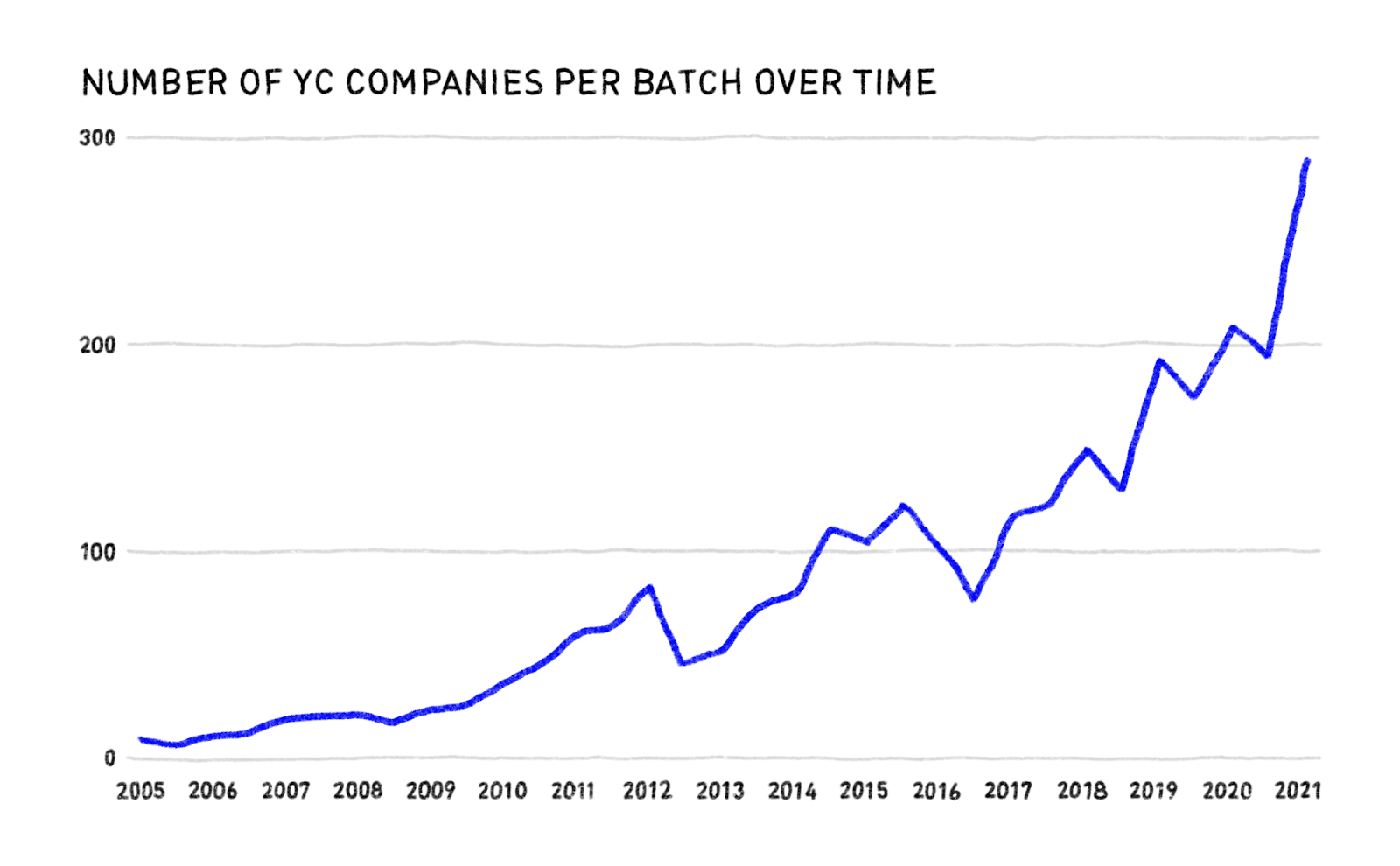
And for any first-mover startup in a new category thinking they’re reaching escape velocity, there are a dozen copycats in YC waiting around the corner, complete with their beautifully designed apps, and the promise of being “blazingly fast and delightfully simple.”

Image Credits: Fika Ventures

Conventional wisdom suggests that many of these newcomer apps will fall short because they don’t clearly communicate their differentiation, or their signup process isn’t streamlined enough, or they have poor documentation and tutorial videos, or they haven’t courted the right influencers on Twitter, or just plain poor execution.

While some (or all) of these might be true on the individual app level, there is something bigger happening on the aggregate level, and it comes back to one insidious assumption carried over from the consumer playbook: the myth of frictionless onboarding.

The reality is that onboarding is never frictionless. In fact, it’s quite the opposite — it demands that the user uproot their old habits and switch to this new way of being or doing. Just like with a new fitness program, participants feel good after completing the workout, but it takes a lot of activation energy to start and hard work to get there. Similarly, it takes work on the user’s part to get results, and most apps expect users to do this work for free.

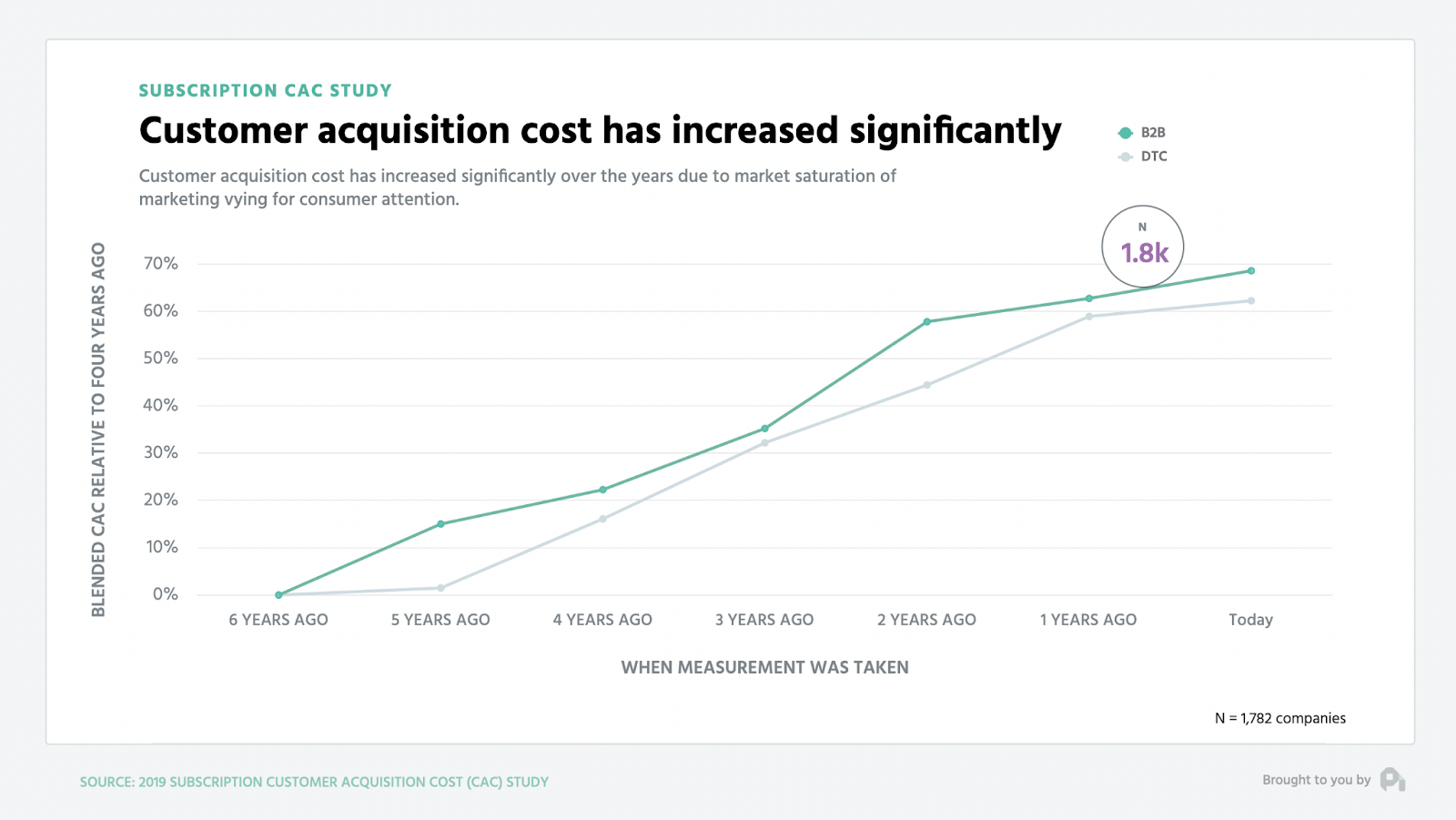
But in a crowded marketplace with infinite alternatives, the only way to capture and hold a user’s attention is to directly incentivize them to experience the product, not just be exposed to it. Today’s growth playbook overindexes on spending ad dollars (with diminishing returns) to get premium placement and eyeballs on Google, Facebook or Product Hunt, but very few have tried putting those dollars to work toward ensuring users are actually having the experience they are supposed to.

2019 subscription customer acquisition cost study. Image Credits: Profitwell

To do this, SaaS needs to take a page out of the crypto playbook. So while the past decade of the consumerization of SaaS has taught us how to more effectively get in front of users, this next decade will be about the cryptofication of SaaS and how to properly incentivize users to do the necessary work to have the right experience with your product.

Orbiit raises seed funding to automate the interactions within an online community

Orbiit, a startup that automates the interactions within an online community, has raised a $2.7 million round led by Bread and Butter Ventures, with participation from new investors High Alpha Capital, LAUNCHub Ventures and Company Ventures. Existing investors Founders Fund, which led Orbiit’s $1 million pre-seed round, Acceleprise and other angels also participated. The capital will be used to build out the Orbiit product and engineering team.

Orbiit says its platform handles the communications, matching, scheduling, feedback collection and analytics for people connecting with each other in an online community. The idea is that the communities therefore learn and network better, engage more and share more knowledge.

CEO and co-founder Bilyana Freye said: “Tailored 1:1 connections allow members to discuss difficult topics, be vulnerable and share learnings with one another. Those 1:1 connections are the hardest to execute, but when you start investing in them, with the help of Orbiit, you see engagement feeding into all other initiatives and a vibrant, active community that truly delivers on the promise to its members.”

Bread and Butter Ventures Managing Partner Mary Grove added: “This age-old question of how to leverage technology at scale to drive meaningful connections across communities both internal to an organization and across the globe is a problem we’ve been actively seeking a solution to for a decade. Orbiit brings the perfect blend of tech-enabled software with human curation to create strong connections and provide insights back to community managers.”

The platform is being used by startup communities at True Ventures, GGV and Lerer Hippeau; private networking groups such as Dreamers & Doers; and customer communities, like the CFO community run by fintech leader Spendesk.

Founders Fund Principal Delian Asparouhov said: “We see Orbiit as a key platform for peer learning within companies and communities, unlocking untapped knowledge through curated matchmaking.”

LAUNCHub Ventures participated in the round, following the recent first close of its new $70 million fund.

CorrActions raises $2.7M to help avoid errors in human-machine interactions

CorrActions, a noninvasive neuroscience startup that uses sensor data to evaluate a user’s cognitive state due to drowsiness, alcohol, fatigue and other issues, today announced that it has raised a $2.7 million seed round. Early-stage fund VentureIsrael, seed fund Operator Partners and the Israeli Innovation Authority are backing the company, which is based out of OurCrowd’s Labs/02 incubator.

The idea here is to use touch sensors wherever humans may interact with machines, be that in a fighter jet’s cockpit, a car or anywhere else where knowing a user’s cognitive state could prevent potentially catastrophic errors. CorrActions promises that its proprietary algorithms can identify the user’s cognitive state and detect errors 150 milliseconds before they occur by “decoding unconscious brain signals through body motion monitoring.” For the most part, the system is use-case agnostic since it’s basically a generic platform that is independent of where it is implemented.

“Using sensors that already exist in nearly every electronic device like smartwatches, smartphones and even steering wheels and joysticks, CorrActions is the first in the world to be able to read a person’s cognitive state at any given moment by analyzing micro changes in their muscular activity,” explained Eldad Hochman, the company’s co-founder and CSO. “It is enough for the person to come in contact with an electronic device for two minutes and we can accurately quantify cognitive state and even predict a rapid deterioration, which may lead to failure or accidents. We can see this coming seconds before it occurs. This means that we can quantify the level of fatigue, intoxication, exhaustion or lack of concentration at any given moment.”

A lot of modern cars already feature sensors that can monitor your alertness, of course, and so it’s maybe no surprise that CorrActions is already working on proofs of concept with a few players in the automotive industry. In addition, it is also working on projects with the defense industry to show that its systems can assess a pilot’s performance, for example. But Hochman also believes that the company’s algorithms may be able to alert athletes or the elderly when they may be at risk of injury and falls.

The company says it will use the new funding to further develop its algorithms and support its current deployment partners, especially in the automotive industry.

“We are developing, and already seeing significant results for a technology which has the potential to save companies man-hours and money by preventing basic operational errors,” said CorrActions co-founder and CEO Zvi Ginosar. “Moreover, the application of our platform can be used to save lives, and prevent thousands of accidents and errors. In the next months we hope to be able to report more ground-breaking results and proof of concept trials, and this funding will greatly help us reach this goal.”

Augmented reality NFT platform Anima gets backing from Coinbase

Augmented reality and non-fungible tokens, need I say more? Yes? Oh, well NFTs have certainly had their moment in 2021, but the question of what they do or what can be done with them has certainly been getting voiced more frequently as the speculative gold rush begins to cool off and people start to think more about how digital goods can evolve in the future.

Anima, a small creative crypto startup built by the founders of photo/video app Ultravisual, which Flipboard acquired back in 2014, is looking to use AR to shift how NFT art and collectibles can be viewed and shared. Their latest venture is an effort to help artists bring their digital creations to a bigger digital stage and help find what the future of NFTs looks like in augmented reality.

The startup has put together a small $500K pre-seed round from Coinbase Ventures, Divergence Ventures, Flamingo DAO, Lyle Owerko and Andrew Unger.

“As NFTs move away from being a more speculative market where it’s all about returns on your purchases, I think that’s healthy and it’s good for us specifically because we want to make things that are more approachable,” co-founder Alex Herrity says.

Their broader vision is finding ways for digital objects to interact with the real world, something that’s been a pretty top-of-mind concern for the AR world over the last few years, though augmented reality development has cooled more recently as creators have sunk into a wait-and-see attitude toward new releases from Apple and Facebook. Both the AR and NFT spaces are incredibly early, something Anima’s co-founders were quick to admit, but they think both spaces have matured enough that the gimmicks are out in the open.

“There’s a context shift that happens when you see AR as a vehicle to have a tactile relationship with something that you collected or that you see is a lifestyle accessory versus the common thing now where it’s a little bit more of an experiential gimmick,” co-founder Neil Voss tells TechCrunch.

The team has worked with a couple artists already as they’ve made early experiments in bringing digital art objects into AR and they’re launching a marketplace late next month based on ConsenSys’s Palm platform, where they hope to showcase more of their future partnerships.


Japanese space company ispace aims to send landers to the moon

Tokyo-based ispace has been selected to deliver rovers from Canada and Japan to the lunar surface after they launch aboard SpaceX rockets. The company will use its recently revealed Hakuto-R lander for both missions, currently scheduled for 2022 and 2023.

The Canadian Space Agency selected three private Canadian companies, each with separate scientific missions, to ride the lander. Mission Control Space Services, Canadensys and NGC are the first companies to receive awards under the CSA’s Capability Demonstration program, part of the agency’s Lunar Exploration Accelerator Program. LEAP, unveiled by the Canadian government in February 2020, earmarks $150 million over five years to support in-space demonstrations and science missions from Canadian private industry.

As part of the mission, the ispace lander will deliver the United Arab Emirates’ The Mohammed Bin Rashid Space Centre (MBRSC)’s 22-pound rover, “Rashid.” The rover will be equipped with an artificial intelligence flight computer from space robotics company Mission Control Space Services. Mission Control’s AI will use deep-learning algorithms to recognize lunar geology as the Rashid rover traverses the surface.

ispace will carry cameras “to capture key events during the mission” for Canadensys. The Japanese company will also collect lunar imagery data for demonstration of NGC’s autonomous navigation system.

“We are honored that all three of the companies awarded by CSA have each entrusted ispace’s services to carry out their operations on the lunar surface,” ispace founder and CEO Takeshi Hakamada said in a statement. “We see this as a show of the trust that ispace has developed with CSA over the past years, as well as a recognition of ispace’s positive position in the North American market.”

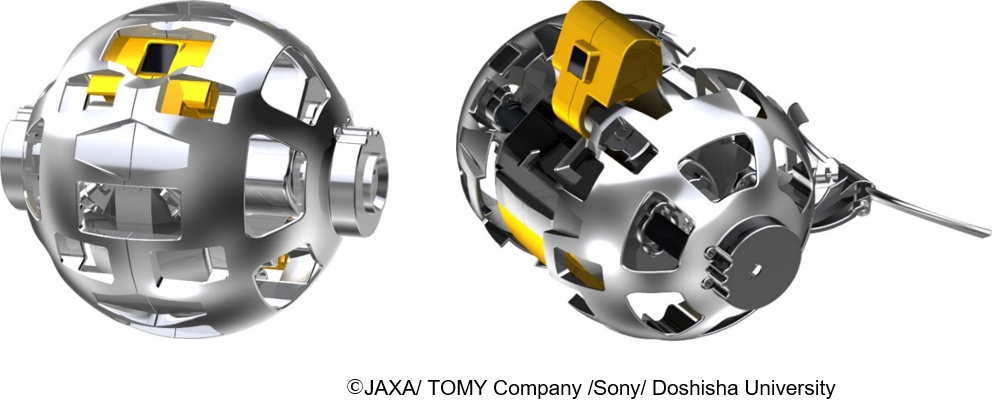
ispace will also be transporting a transformable lunar robot payload to the moon for the Japan Aerospace Exploration Agency (JAXA), in addition to conducting operations and providing lunar data. The data collected on this mission, Mission 2, will be used to aid the design of a future crewed pressurized rover.

JAXA’s lunar robot will be only around 80mm in diameter before it transforms to its surface form and will weigh only around 250 grams. That mission is scheduled to take place in 2023. ispace did not disclose the financial terms of the deals.

“While the robot travels on the lunar surface, images on behavior of the regolith, and images of lunar surface taken by the robot and the camera on the lunar lander will be sent to the mission control center via the lunar lander,” JAXA said in a news release. “The acquired data will be used for evaluation of the localization algorithm and the impact of the regolith on driving performance of the crewed pressurized rover.”

ispace unveiled their Hakuto-R lander design in July 2020. The Hakuto project was born out of the Google Lunar XPRIZE competition, in which teams competed to be the first to send a lunar rover to the moon, have it travel 500 meters and send back to Earth photos and video. None of the five finalists, including Hakuto, were able to complete a launch, and the competition subsequently ended in 2018 without a winner.

The MBRSC and JAXA rovers will have different deployment mechanisms from the landers, though Hakamada did not provide further details during a media briefing Wednesday.

The landers are being assembled in Germany and the assembly phase has just started, Hakamada said. “So we’re very confident we will meet this schedule,” he added.

Using water on the lunar surface is one of ispace’s long-term objectives. The company hopes to have more capability in the future to sustain resource utilization activities, Hakamada said.

This is only one of several lunar missions launching on SpaceX rockets. NASA announced in April that the space startup was selected to send humans to the lunar surface as part of its Artemis project, at a total award value of $2.89 billion. SpaceX will also be taking payloads from Firefly Aerosapce to take up its lunar lander in 2023.