Tesla brings on new VP of engineering from Snap

Tesla announced a number of new hires today, including Stuart Bowers, who is joining as VP of engineering. Bowers is joining Tesla from Snap, where he worked as VP of monetization engineering. Other new hires include Neeraj Manrao, who left Apple to become Tesla’s director of energy manufacturing, and Kevin Mukai, who is now director of product engineering at Tesla’s Gigafactory.

“We’re excited to welcome a group of such talented people as we continue to ramp Model 3 and accelerate towards a more sustainable future,” Tesla wrote on its blog. “We’ll be announcing more hires in the coming days, so stay tuned.”

These new hires come following a couple of departures. In April, Tesla VP of Autopilot Jim Keller left for Intel, with Pete Bannon serving as Keller’s replacement. Bannon is a former Apple chip engineer who helped design Apple’s A5-AP chips. Earlier this month, Sameer Qureshi left a senior manager Autopilot role at Tesla to lead Lyft’s autonomous driving efforts.

Here’s the full list of new hires, via Tesla’s blog:

  • Stuart Bowers is joining as VP of Engineering, responsible for a broad range of Tesla’s software and hardware engineering. Stuart has 12 years of software experience and a background in applied mathematics, and is joining Tesla from Snap. There, he was most recently VP of Monetization Engineering, leading the team with a focus on machine learning and ad infrastructure. Prior to Snap, Stuart was the eighth engineer hired at Facebook’s Seattle office where he worked on data infrastructure and machine learning for search.
  • Neeraj Manrao has joined Tesla as Director of Energy Manufacturing. Neeraj comes from Apple, where he led the technical operations team.
  • Kevin Mukai has started as Director of Production Engineering at Gigafactory. Kevin was most recently at ThinFilm Electronics, where he served as Senior Director of Process Engineering, and before that at SunPower as Director of Process & Equipment Engineering. Kevin has extensive experience in advanced factory design and development.
  • James Zhou started last month as CFO, China. James previously served as CFO for Asia Pacific and India for Ingersoll Rand, and prior to that held a number of financial leadership positions at General Electric and General Motors.
  • Alexandra Veitch joined last month as Senior Director for North American Government Relations and Policy. Alexandra comes to Tesla from CSRA. Before that, she served as Special Assistant to the President and Legislative Affairs Liaison in the White House under the Obama Administration. Her government service also includes time at the Department of Homeland Security and as a staff member in both the U.S. Senate and House of Representatives.
  • Kate Pearson is our new Director of Field Delivery Operations. She previously worked as VP of Digital Acceleration at Walmart eCommerce, where she led online grocery and last-mile delivery.
  • Mark Mastandrea started earlier this month as Director, Vehicle Delivery Operations. He comes from Amazon, where he was their Director of Logistics Operations, leading last-mile delivery in North America and working on the design and development of AmazonFresh pickup.
  • Myriam Attou recently started as Regional Sales Director in EMEA. Coming from La Perla, and before that Burberry, she has a long track record of delivering strong results in sales, customer experience and service excellence.

Facebook has a very specific Pepe the Frog policy, report says

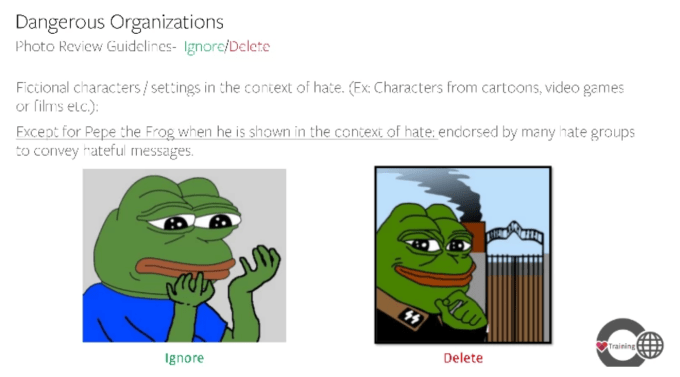
Facebook doesn’t ban fictional characters with hateful content as a rule, but interestingly Pepe the Frog is well enough established as a hate speech symbol that Facebook has a very particular policy devoted only to the cartoon frog.

Motherboard got their hands on some content moderation policy documents from Facebook that show Pepe, a cartoon frog harmlessly created by cartoonist Matt Furie, has earned himself the bizarre honor of being the only cartoon that employees reviewing content are encouraged to delete when depicted in “the context of hate.”

documents obtained by Motherboard

While Pepe’s popularity as a meme seems to be waning, the policy was likely born out of the classification of the frog as a hate symbol by the ADL and other orgs. Pepe was a generic meme long before he was adopted by the alt-right, but an army of internet photoshoppers managed to produce a lot of messed up stuff in a short amount of time. It’s interesting that Facebook has put such an emphasis on this cartoon alone while not having an issue with characters like Homer Simpson having Nazi imagery illustrated alongside them, as also depicted in the internal docs.

We’ve reached out to Facebook for more details.

Jury finds Samsung owes Apple $539M in patent case stretching back to 2011

A patent case that began back in 2011 has reached a conclusion, with Samsung ordered to pay about $539 million to Apple over infringements of the latter’s patents in devices that are now long gone. The case has dragged on for years as both sides argued about the finer points of how much was owed per device, what could be deducted and so on. It’s been eye-wateringly boring, but at least it’s over now. Maybe.

The patents in question are some things we take for granted now, UI cues like “rubber-banding” at the bottom of a list or using two fingers to zoom in and out. But they were all part of the “boy have we patented it” multi-touch gestures of which Steve Jobs was so proud. In addition there were the defining characteristics of the first iPhone, now familiar (black round rectangle with a big screen, etc.). At any rate, Apple sued the dickens out of Samsung over them.

The case was actually decided long ago — in 2012, when the court found that Samsung had clearly and willfully infringed on the patents in question and initial damages were set at a staggering $1 billion. We wrote it up then, when it was of course big news:

Since then it’s all been about the damages, and Samsung won a big victory in the Supreme court that said it only had to pay out based on the profit from the infringing component.

Unfortunately for Samsung, the “infringing component” for the design patents seems to have been considered by the jury as being the entire phone. The result is that a great deal of Samsung’s profits from selling the infringing devices ended up composing the damages. It sets a major precedent in the patent litigation world, although not necessarily a logical one. People started arguing about the validity and value of design patents a long time ago and they haven’t stopped yet.

CNET has a good rundown for anyone curious about the specifics. Notably, Samsung said in a statement that “We will consider all options to obtain an outcome that does not hinder creativity and fair competition for all companies and consumers.” Does that mean they’re going to take it as high as the Supreme Court (again) and drag the case out for another couple of years? Or will they cut their losses and just be happy to stop paying the legal fees that probably rivaled the damages assigned? Hopefully the latter.

Snapchat launches less creepy Send and Request Location features

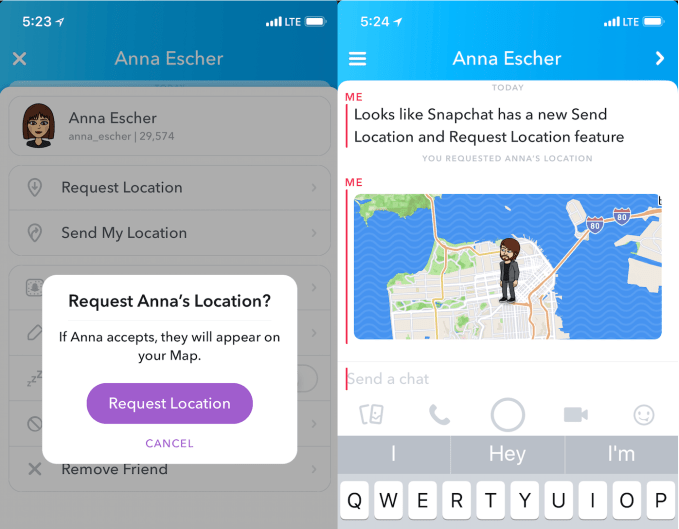
Snapchat is taking another shot at location after its always-on coordinate-broadcasting Snap Map proved a bit invasive for some users. Snapchat now lets you send your ongoing real-time location to a friend, or request theirs, which show up on the Snap Map and within your message thread.

Essentially, this is location sharing built for the intimacy people love about Snapchat, rather than the foreign and a little freaky idea of giving a wide swath of your contacts access to your whereabouts through Snap Map. As Facebook, Instagram and WhatsApp ruthlessly exploit their clones of Stories, it’s the more private, close friends features like this and ephemeral messaging that are Snapchat’s best shot at staying relevant.

TechCrunch was tipped off to the location feature by our reader Chand Sethi (thanks!) and now Snapchat confirms it’s been slowly rolling out to iOS and Android users over the past few weeks. Snap Map, which launched last June, has always offered the option to only share with specific friends instead of all of them. Still, the whole idea of location broadcasting might have scared some users into staying in only-me Ghost Mode. This new feature is Snap’s chance to get them on board, one friend at a time.

Now when you long-press on a friend’s name or hit the three-line hamburger button on a chat thread, you’ll get the option to Send Location or Request Location. It only works with bi-directional friends, so you can’t ask for the spot of your favorite Snap star if they don’t follow you back, and you can turn off getting requests in your settings if people are spamming you.

Location shared through this feature will only update live for eight hours after you last open the app. You can cancel someone’s access at any time through the Snap Map. And if you’ve never enabled it, you’ll go through the location consent flow first.

By letting users dip their toes in, Snapchat could get more users active on Snap Map. After its June 2017 launch, it hit 35 million daily viewers, but that number was at 19 million and sinking by November, according to leaked data. In February, when it launched on web, Snapchat said it had 100 million monthly users — but as Snap never shares monthly user numbers and instead relies on daily counts, the fact that it had to go with a monthly stat here showed some insecurity about its popularity.

Along with Discover, Snap Map represent one of the app’s best differentiators. Investing in improvements here is wise. After all, it might only be a matter of time before we see an Insta Map.

Andy Rubin’s Essential is reportedly up for sale and has cancelled work on its next smartphone

Essential, the smartphone company helmed by Android co-creator Andy Rubin, is trying to sell itself and has cancelled development of its next phone, Bloomberg reports.

The report states that Essential has hired Credit Suisse Group AG to advise them on potentially selling itself. The company raised $330 million from investors, including Rubin’s own Playground Global, Tencent Holdings and the Amazon Alexa Fund. The news of a potential sale accompanies news that the company has ended development on its next smartphone, a major blow for a company aimed to challenge companies like Apple and Samsung with a device that it hoped would hold its own.

“We always have multiple products in development at the same time and we embrace canceling some in favor of the ones we think will be bigger hits,” an Essential spokesperson told TechCrunch. “We are putting all of our efforts towards our future, game-changing products, which include mobile and home products.”

The Essential phone went on sale in August for $699 with a bold, reduced bezel design that was soon present on a variety of smartphones. A report from IDC suggested that the company only sold 88,000 phones in 2017. Sluggish sales prompted the company to slash $200 off the price of the phone just months later, earning it a price that one of my colleagues called the “best deal in smartphones.”

Though Essential’s smartphone is still on sale, without a clear plan to continue their smartphone line, it’s pretty dubious how they’ll continue their dream of a unified experience centered around the company’s ambient OS. The company has already detailed some of their work on Essential Home, a home assistant hub that would include a circular display that could also deliver visual notifications.

Essential was always setting itself up for a David/Goliath battle, but it seems that nine months after showing off their flagship smartphone they’ve realized they weren’t quite ready to go up against the giants.

OpenStack in transition

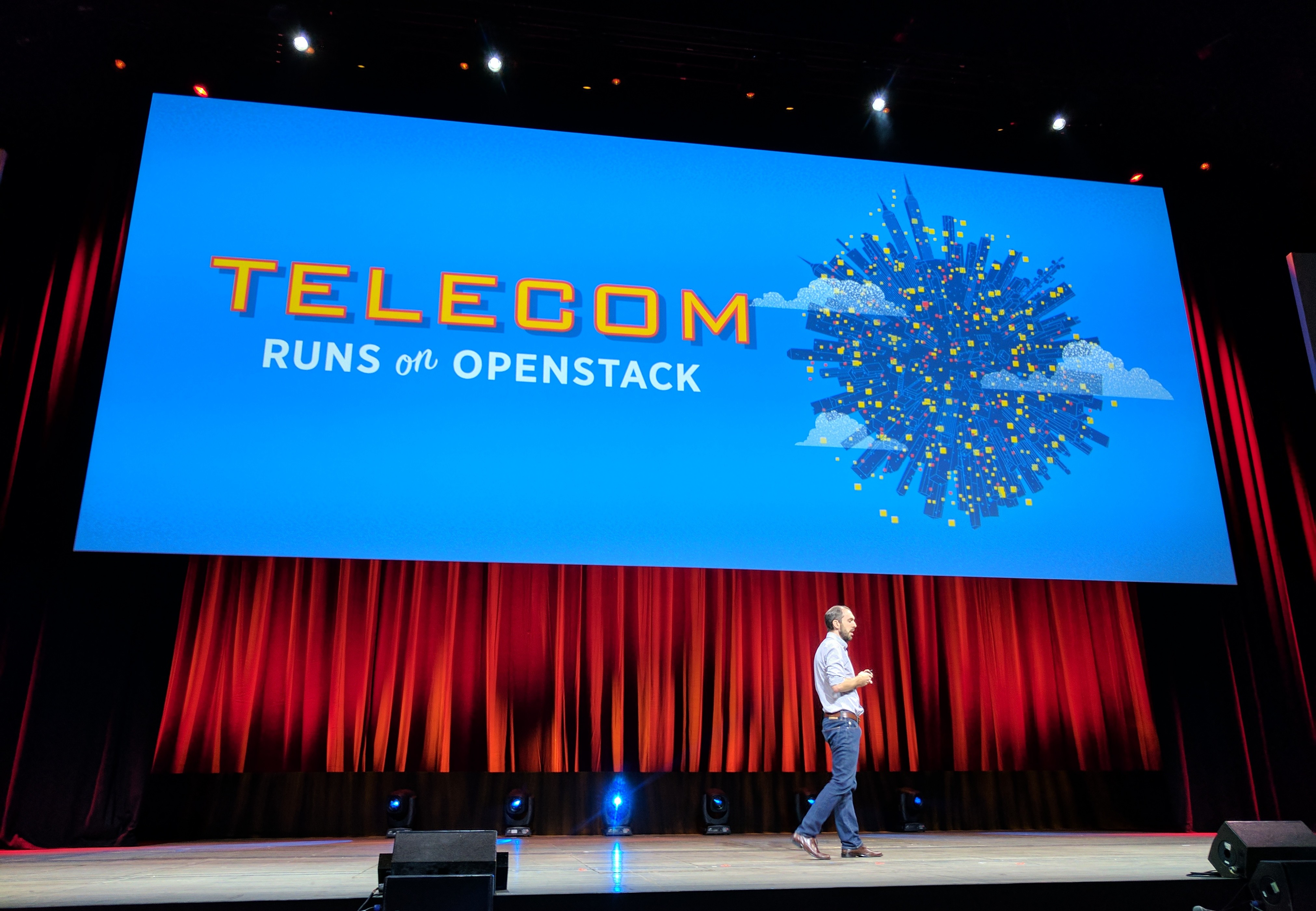
OpenStack is one of the most important and complex open-source projects you’ve never heard of. It’s a set of tools that allows large enterprises ranging from Comcast and PayPal to stock exchanges and telecom providers to run their own AWS-like cloud services inside their data centers. Only a few years ago, there was a lot of hype around OpenStack as the project went through the usual hype cycle. Now, we’re talking about a stable project that many of the most valuable companies on earth rely on. But this also means the ecosystem around it — and the foundation that shepherds it — is now trying to transition to this next phase.

The OpenStack project was founded by Rackspace and NASA in 2010. Two years later, the growing project moved into the OpenStack Foundation, a nonprofit group that set out to promote the project and help manage the community. When it was founded, OpenStack still had a few competitors, like CloudStack and Eucalyptus. OpenStack, thanks to the backing of major companies and its fast-growing community, quickly became the only game in town, though. With that, community events like the OpenStack Summit started to draw thousands of developers, and with each of its semi-annual releases, the number of contributors to the project has increased.

Now, that growth in contributors has slowed and, as evidenced by the attendance at this week’s Summit in Vancouver.

In the early days, there were also plenty of startups in the ecosystem — and the VC money followed them, together with some of the most lavish conference parties (or “bullshit,” as Canonical founder Mark Shuttleworth called it) that I have experienced. The OpenStack market didn’t materialize quite as fast as many had hoped, though, so some of the early players went out of business, some shut down their OpenStack units and others sold to the remaining players. Today, only a few of the early players remain standing, and the top players are now the likes of Red Hat, Canonical and Rackspace.
And to complicate matters, all of this is happening in the shadow of the Cloud Native Computing Foundation (CNCF) and the Kubernetes project it manages being in the early stages of the hype cycle.

Meanwhile, the OpenStack Foundation itself is in the middle of its own transition as it looks to bring on other open-source infrastructure projects that are complementary to its overall mission of making open-source infrastructure easier to build and consume.

Unsurprisingly, all of this clouded the mood at the OpenStack Summit this week, but I’m actually not part of the doom and gloom contingent. In my view, what we are seeing here is a mature open-source project that has gone through its ups and downs and now, with all of the froth skimmed off, it’s a tool that provides a critical piece of infrastructure for businesses. Canonical’s Mark Shuttleworth, who created his own bit of drama during his keynote by directly attacking his competitors like Red Hat, told me that low attendance at the conference may not be a bad thing, for example, since the people who are actually in attendance are now just trying to figure out what OpenStack is all about and are all potential customers.

Others echoed a similar sentiment. “I think some of it goes with, to some extent, what’s been building over the last couple of Summits,” Bryan Thompson, Rackspace’s senior director and general manager for OpenStack, said as he summed up what I heard from a number of other vendors at the event. “That is: Is open stack dead? Is this going away? Or is everything just leapfrogging and going straight to Kubernetes on bare metal. And I don’t want to phrase it as ‘it’s a good thing,’ because I think it’s a challenge for the foundation and for the community. But I think it’s actually a positive thing because the core OpenStack services — the core projects — have just matured. We’re not in the early science experiment days of trying to push ahead and scale and grow the core projects, they were actually achieved and people are actually using it.”

That current state produces fewer flashy headlines, but every survey, both from the Foundation itself and third-party analysts, show that the number of users — and their OpenStack clouds — continues to grow. Meanwhile, the Foundation is looking to bring up attendance at its events, too, by adding container and CI/CD tracks, for example.
The company that maybe best exemplifies the ups and downs of OpenStack is Mirantis, a well-funded startup that has weathered the storm by reinventing itself multiple times. Mirantis started as one of the first OpenStack distributions and contributors to the project. During those early days, it raised one of the largest funding rounds in the OpenStack world with a $100 million Series B round, which was quickly followed by another $100 million round in 2015. But by early 2017, Mirantis had pivoted from being a distribution and toward offering managed services for open-source platforms. It also made an early bet on Kubernetes and offered services for that, too. And then this year, it added yet another twist to its corporate story by refocusing its efforts on the Netflix-incubated Spinnaker open-source tool and helping companies build their CI/CD pipelines based on that. In the process, the company shrunk from almost 1,000 employees to 450 today, but as Mirantis CEO and co-founder Boris Renski told me, it’s now cash-flow positive.

So just as the OpenStack Foundation is moving toward CI/CD with its Zuul tool, Mirantis is betting on Spinnaker, which solves some of the same issues, but with an emphasis on integrating multiple code repositories. Renski, it’s worth noting, actually advocated for bringing Spinnaker into the OpenStack foundation (it’s currently managed on a more ad hoc basis by Netflix and Google).

“We need some governance, we need some process,” Renski said. “The [OpenStack] Foundation is known for actually being very good and effectively seeding this kind of formalized, automated and documented governance in open source and the two should work together much closer. I think that Spinnaker should become part of the Foundation. That’s the opportunity and I think it should focus 150 percent of their energy on that before it builds its own thing and before [Spinnaker] goes off to the CNCF as yet another project.”
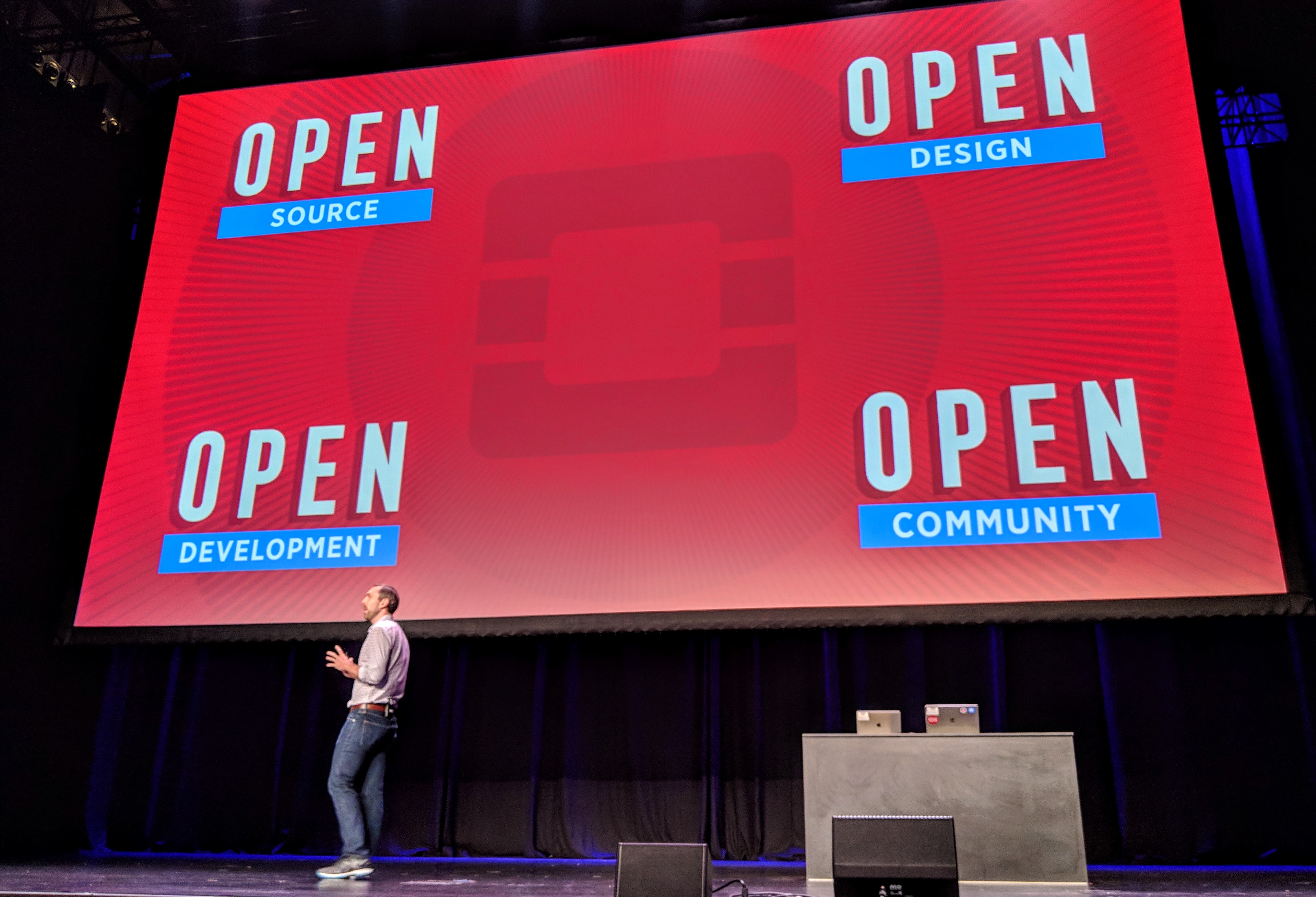
So what does the Foundation think about all of this? In talking to OpenStack CTO Mark Collier and Executive Director Jonathan Bryce over the last few months, it’s clear that the Foundation knows that change is needed. That process started with opening up the Foundation to other projects, making it more akin to the Linux Foundation, where Linux remains in the name as its flagship project, but where a lot of the energy now comes from projects it helps manage, including the likes of the CNCF and Cloud Foundry. At the Sydney Summit last year, the team told me that part of the mission now is to retask the large OpenStack community to work on these new topics around open infrastructure. This week, that message became clearer.

“Our mission is all about making it easier for people to build and operate open infrastructure,” Bryce told me this week. “And open infrastructure is about operating functioning services based off of open source tool. So open source is not enough. And we’ve been, you know, I think, very, very oriented around a set of open source projects. But in the seven years since we launched, what we’ve seen is people have taken those projects, they’ve turned it into services that are running and then they piled a bunch of other stuff on top of it — and that becomes really difficult to maintain and manage over the long term.” So now, going forward, that part about maintaining these clouds is becoming increasingly important for the project.
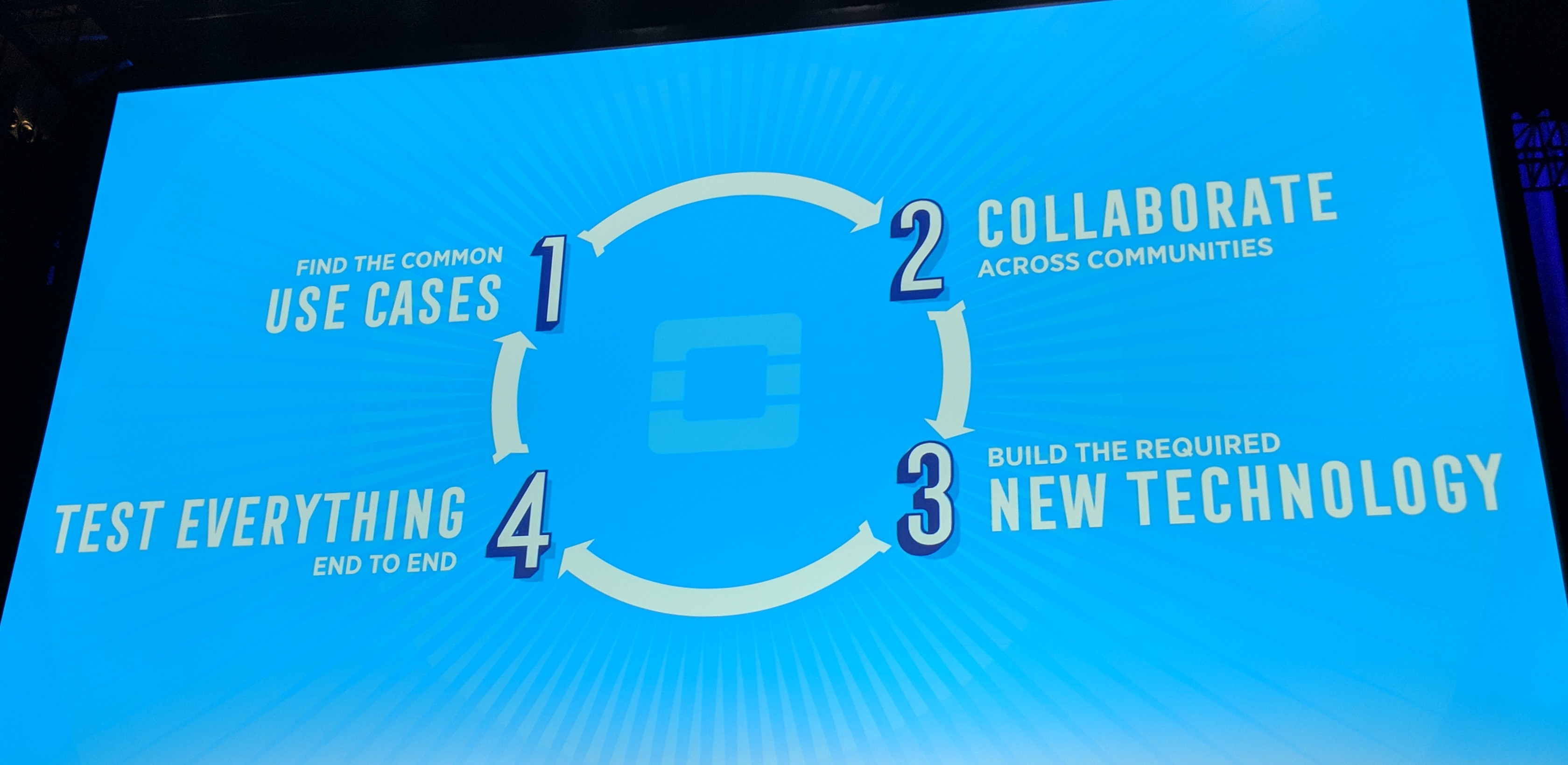
“Open source is not enough,” is an interesting phrase here, because that’s really at the core of the issue at hand. “The best thing about open source is that there’s more of it than ever,” said Bryce. “And it’s also the worst thing. Because the way that most open source communities work is that it’s almost like having silos of developers inside of a company — and then not having them talk to each other, not having them test together, and then expecting to have a coherent, easy to use product come out at the end of the day.”

And Bryce also stressed that projects like OpenStack can’t be only about code. Moving to a cloud-native development model, whether that’s with Kubernetes on top of OpenStack or some other model, is about more than just changing how you release software. It’s also about culture.

“We realized that this was an aspect of the foundation that we were under-prioritizing,” said Bryce. “We focused a lot on the OpenStack projects and the upstream work and all those kinds of things. And we also built an operator community, but I think that thinking about it in broader terms lead us to a realization that we had last year. It’s not just about OpenStack. The things that we have done to make OpenStack more usable apply broadly to these businesses [that use it], because there isn’t a single one that’s only running OpenStack. There’s not a single one of them.”

More and more, the other thing they run, besides their legacy VMware stacks, is containers and specifically containers managed with Kubernetes, of course, and while the OpenStack community first saw containers as a bit of a threat, the Foundation is now looking at more ways to bring those communities together, too.

What about the flagging attendance at the OpenStack events? Bryce and Collier echoed what many of the vendors also noted. “In the past, we had something like 7,000 developers — something insane — but the bulk of the code comes down to about 200 or 300 developers,” said Bryce. Even the somewhat diminished commercial ecosystem doesn’t strike Bryce and Collier as too much of an issue, in part because the Foundation’s finances are closely tied to its membership. And while IBM dropped out as a project sponsor, Tencent took its place.

“There’s the ecosystem side in terms of who’s making a product and selling it to people,” Collier acknowledged. “But for whom is this so critical to their business results that they are going to invest in it. So there’s two sides to that, but in terms of who’s investing in OpenStack and the Foundation and making all the software better, I feel like we’re in a really good place.” He also noted that the Foundation is seeing lots of investment in China right now, so while other regions may be slowing down, others are picking up the slack.

So here is an open-source project in transition — one that has passed through the trough of disillusionment and hit the plateau of productivity, but that is now looking for its next mission. Bryce and Collier admit that they don’t have all the answers, but if there’s one thing that’s clear, it’s that both the OpenStack project and foundation are far from dead.

GOAT launches electric scooters in Austin

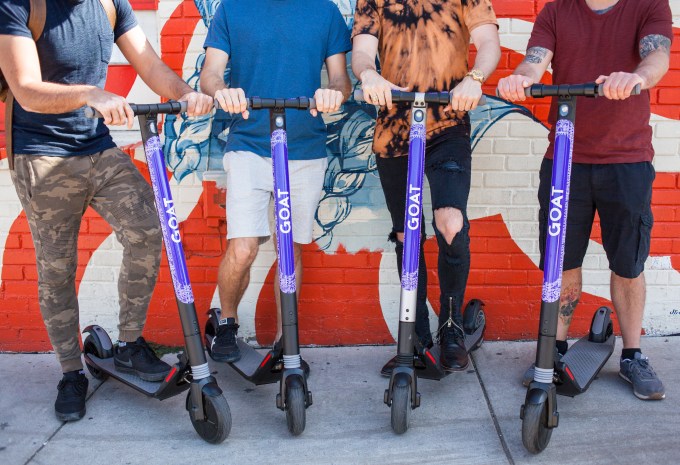
Dockless electric scooter company GOAT has launched in Austin after receiving official permits from the city’s transportation department for its pilot program. Unlike what’s happened in San Francisco with startups Bird, Lime and Spin, GOAT says it wants to work in tandem with city officials in Austin. GOAT is currently bootstrapped, but says it plans to continue partnering with local cities to launch its electric scooter service across the nation.

GOAT has permission to launch up to 500 scooters as part of the pilot program, but is currently incrementally deploying scooters 20 at a time. The company tells TechCrunch it’s also working with other cities in pursuing permits in multiple areas.

“In April we watched two California-based companies enter our market, ignore the balance, and exploit the policies and patience of our local city government but today we’re thankful for the due diligence the City of Austin put into place to ensure dockless mobility is a viable option to support their long-term objectives that we’ve worked to support,” GOAT CEO Michael Schramm said in a statement. “Since the City of Austin’s rules were established our team has worked tirelessly to prepare for a launch in our city that meets all of the criteria set forth by the ordinance for dockless mobility.”

Similar to other scooter services, GOAT costs $1 to ride and 15 cents for every minute. GOAT says it also works to educate users around rider safety, red zones and local parking rules. GOAT also offers free helmets to “active” riders, according to its website. And, for those of you wondering, GOAT is indeed going for “greatest of all time.”

“Every time you ride GOAT, we want it to lead you to the best the city has to offer, so each experience with GOAT has the opportunity to be the greatest of all time,” GOAT CMO and co-founder Jennie Whitaker said in a press release. “Coming into the market during the ‘wild west’ of electric scooters is an adventure on its own, so focusing on what makes us unique will guide our brand. By combining our tech competencies with a sincere desire to do good for the people and communities we serve, we look forward to the places GOAT will go as we help solve short distance transportation issues with integrity.”

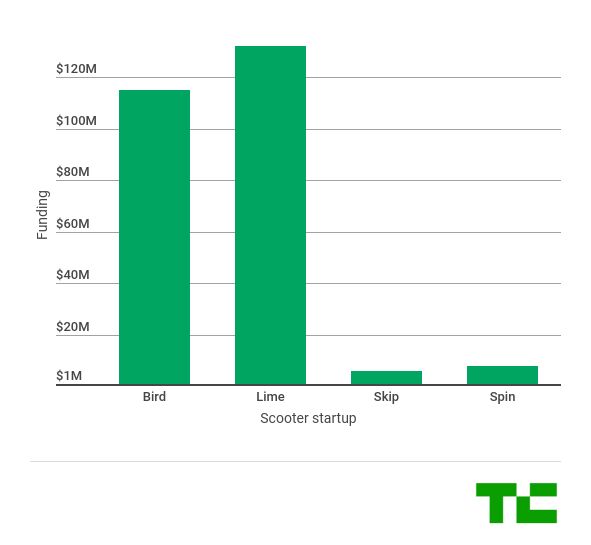
For reference, here’s how GOAT stacks up to other scooter companies in terms of financing.

Netflix magic market number larger than big cable company’s magic market number

Netflix’s market cap is now larger than Comcast, which is pretty much just a symbolic thing given that the companies are valued very differently but is like one of those moments where Apple was larger than Exxon and may be some kind of watershed moment for technology. Or not.

A couple notes on this largely symbolic and not really important thing:

  • Netflix users are going up. That’s a number that people look at. It’s why Netflix’s magic market number is going up.
  • People are cutting cable TV cords. Netflix has no cable TV cords. It does, however, require a cord connected to the internet. So it still needs a cord of some sort, unless everything goes wireless.
  • Netflix is spending a lot of money on content. People consume content. Cable is also content, but it is expensive content. Also, Comcast will start bundling in Netflix into its cable subscriptions.
  • They have a very different price-to-earnings ratio. Comcast is valued as a real company. Netflix is valued as a… well, something that is growing that will maybe be a business more massive than Comcast. Maybe.
  • Comcast makes much more money than Netflix. Netflix had $3.7 billion in revenue in Q1. Comcast had $22.8 billion and free cash flow of $3.1 billion. Netflix says it will have -$3 billion to -$4 billion in free cash flow in 2018.

Anyway, Netflix will report its next earnings in a couple months, and this number is definitely going to change, because it’s pretty arbitrary given that Netflix is not valued like other companies. The stock price doesn’t swing as much as Bitcoin, but things can be pretty random.

In the mean time, Riverdale Season 2 is on Netflix, so maybe that’s why it’s more valuable than Comcast . See you guys in a few hours.

Twitter unveils new political ad guidelines set to go into effect this summer

Following the unrelenting wave of controversy around Russian interference in the 2016 presidential election, Twitter announced new guidelines today for political advertisements on the social networking site.

The policy, which will go into effect this summer ahead of midterm elections, will look towards preventing foreign election interference by requiring organizations to self-identify and certify that they are based in the U.S., this will entail organization registered by the Federal Elections Committee to present their FEC ID, while other orgs will have to present a notarized form, the company says.

Orgs buying political ads will also have to comply with a stricter set of rules for how they present their profiles. Twitter will mandate that the account header, profile photo and organization name are consistent with how the organization presents itself online elsewhere, a policy likely designed to ensure that orgs don’t try to obfuscate their identity or present their accounts in a way that would confuse users that the account belonged to a political organization.

In a blog post, the company noted that there would also be a special type of identifying badge for promoted content from these certified advertisers in the future.

Back in April — in the midst of Facebook’s Cambridge Analytica scandal — Twitter publicly shared its support for the Honest Ads Act. This Political Campaigning Policy will be followed up by the company’s work on a unified Ads Transparency Center which the company has promised “will dramatically increase transparency for political and issue ads, providing people with significant detail on the origin of each ad.”

The AI in your non-autonomous car

Sorry. Your next car probably won’t be autonomous. But, it will still have artificial intelligence (AI).

While most of the attention has been on advanced driver assistance systems (ADAS) and autonomous driving, AI will penetrate far deeper into the car. These overlooked areas offer fertile ground for incumbents and startups alike. Where is the fertile ground for these features? And where is the opportunity for startups?

Inside the cabin

Inward-facing AI cameras can be used to prevent accidents before they occur. These are currently widely deployed in commercial vehicles and trucks to monitor drivers to detect inebriation, distraction, drowsiness and fatigue to alert the driver. ADAS, inward-facing cameras and coaching have shown to drastically decrease insurance costs for commercial vehicle fleets.

The same technology is beginning to penetrate personal vehicles to monitor driver-related behavior for safety purposes. AI-powered cameras also can identify when children and pets are left in the vehicle to prevent heat-related deaths (on average, 37 children die from heat-related vehicle deaths in the U.S. each year).

Autonomous ridesharing will need to detect passenger occupancy and seat belt engagement, so that an autonomous vehicle can ensure passengers are safely on board a vehicle before driving off. They’ll also need to identify that items such as purses or cellphones are not left in the vehicle upon departure.

AI also can help reduce crash severity in the event of an accident. Computer vision and sensor fusion will detect whether seat belts are fastened and estimate body size to calibrate airbag deployment. Real-time passenger tracking and calibration of airbags and other safety features will become a critical design consideration for the cabin of the future.

Beyond safety, AI also will improve the user experience. Vehicles as a consumer product have lagged far behind laptops, tablets, TVs and mobile phones. Gesture recognition and natural language processing make perfect sense in the vehicle, and will make it easier for drivers and passengers to adjust driving settings, control the stereo and navigate.

Under the hood

AI also can be used to help diagnose and even predict maintenance events. Currently, vehicle sensors produce a huge amount of data, but only spit out simple codes that a mechanic can use for diagnosis. Machine learning may be able to make sense of widely disparate signals from all the various sensors for predictive maintenance and to prevent mechanical issues. This type of technology will be increasingly valuable for autonomous vehicles, which will not have access to hands-on interaction and interpretation.

AI also can be used to detect software anomalies and cybersecurity attacks. Whether the anomaly is malicious or just buggy code, it may have the same effect. Vehicles will need to identify problems quickly before they can propagate on the network.

Cars as mobile probes

In addition to providing ADAS and self-driving features, AI can be deployed on vision systems (e.g. cameras, radar, lidar) to turn the vehicle into a mobile probe. AI can be used to create high-definition maps that can be used for vehicle localization, identifying road locations and facades of addresses to supplement in-dash navigation systems, monitoring traffic and pedestrian movements and monitoring crime, as well as a variety of new emerging use cases.

Efficient AI will win

Automakers and suppliers are experimenting to see which features are technologically possible and commercially feasible. Many startups are tackling niche problems, and some of these solutions will prove their value. In the longer-term, there will be so many features that are possible (some cataloged here and some yet unknown) that they will compete for space on cost-constrained hardware.

Making a car is not cheap, and consumers are price-sensitive. Hardware tends to be the cost driver, so these piecewise AI solutions will need to be deployed simultaneously on the same hardware. The power requirements will add up quickly, and even contribute significantly to the total energy consumption of the vehicle.

It has been shown that for some computations, algorithmic advances have outpaced Moore’s Law for hardware. Several companies have started building processors designed for AI, but these won’t be cheap. Algorithmic development in AI will go a long way to enabling the intelligent car of the future. Fast, accurate, low-memory, low-power algorithms, like XNOR.ai* will be required to “stack” these features on low-cost, automotive-grade hardware.

Your next car will likely have several embedded AI features, even if it doesn’t drive itself.

* Full disclosure: XNOR.ai is an Autotech Ventures portfolio company.