Alibaba’s Ant Financial fintech affiliate raises $14 billion to continue its global expansion

Ant Financial, the financial services affiliate connected to Alibaba which operates the Alipay mobile payment service, has confirmed that it has closed a Series C funding round that totals an enormous $14 billion.

The rumors have been flying about this huge financing deal for the past month or so, with multiple publications reporting that Ant — which has been strongly linked with an IPO — was in the market to raise at least $9 billion at a valuation of upwards of $100 billion. That turned out to be just the tip of the iceberg here.

The money comes via a tranche of U.S. dollar financing and Chinese RMB from local investors. Those names include Singapore-based sovereign funds GIC and Temasek, Malaysian sovereign fund Khazanah Nasional Berhad, Warburg Pincus, Canada Pension Plan Investment Board, Silver Lake and General Atlantic.

Ant said that the money will go towards extending its global expansion (and deepening its presence in non-China markets it has already entered), developing technology and hiring.

“We are pleased to welcome these investors as partners, who share our vision and mission, to embark on our journey to further promote inclusive finance globally and bring equal opportunities to the world. We are proud of, and inspired by, the transformation we have affected in the lives of ordinary people and small businesses over the past 14 years,” Ant Financial CEO and executive chairman Eric Jing said in a statement.

Alibaba itself doesn’t invest in Ant, which it span off shortly before its mega-IPO in the U.S. in 2014, but the company did recently take up an option to own 33 percent of Ant’s shares.

Ant has long been tipped to go public. Back in 2016 when it raised a then blockbuster $4.5 billionlittle did we know it would pull in many multiples more — the company has been reportedly considering a public listing, but it instead opted to raise new capital at a valuation of $60 billion.

It looks like the same again, but with higher stakes. This new Series C round pushes that valuation up to $100 billion, according to Bloomberg. (Ant didn’t comment on its valuation.) So what has Ant done over the past two years to justify that jump?

It has long been a key fintech company in China, where it claims to serve offer 500 million consumers and offers Alipay, digital banking and investment services, but it has begun to replicate that business overseas in recent years. In particular, it has made investments and set up joint-ventures and new businesses in a slew of Asian countries that include India, Thailand, Korea, Indonesia, Hong Kong, Malaysia, the Philippines, Pakistan and Bangladesh.

The company was, however, unsuccessful in its effort to buy MoneyGram after the U.S. government blocked the $1.2 billion deal.

On the business-side, Ant is said to have posted a $1.4 billion profit over the last year, suggesting it is more than ready to make the leap to being a public firm.

Despite that U.S. deal setback, Ant said today that its global footprint extends to 870 million consumers. I’d take that with a pinch of salt at this point since its business outside of China is in its early stages, but there seems little doubt that it is on the road to replicating its scale in its homeland in many parts of Asia. Raising this huge round only solidifies those plans by providing the kind of capital infusion that tops most of the world’s IPOs in one fell swoop.

What to expect from Microsoft, Nintendo and Sony at E3 2018

It’s June, so that means it’s time to spend some quality time in downtown Los Angeles. E3 doesn’t actually begin in earnest until next Tuesday, but much of the big news will actually drop over the weekend, during press conferences from Microsoft, EA and Bethesda.

Starting Saturday, the video game news will be arriving fast and furious. We’ll be on the ground at the Staples Center to cover all things E3, but in the meantime, here’s a breakdown of what we expect to see at one of the gaming world’s biggest events.

Microsoft

Microsoft’s press conference is the first of the big three. The bad news: The company just confirmed a recent report that Crackdown 3 has been delayed until February. Bummer. Bad news for those aching to get their hands on the open-world action-adventure, but the title will almost certainly get some love during the event, regardless. After all, Microsoft has been talking up the title since way back in 2014.

It wouldn’t be a proper Microsoft E3 event without a Halo title of some kind. Halo 6 seems like a possibility — if not a certainty. The latest rumor has the upcoming game titled Halo Infinity, which may or may not be the first direct follow-up to 2015’s lukewarmly received Halo 5: Guardians.

New Gears of War and Forza titles have also been rumored for the big show.

Microsoft’s event kicks off at 1PM PT on Sunday.

Nintendo

One thing we know for sure: A Super Smash Bros. title is coming to the Switch. Based on Nintendo’s recent habit of focusing on a key game at E3, it seems a safe bet that the beloved fighting game will get the lion’s share of the company’s attention.

Metroid Prime 4 and Yoshi seem like no-brainers for the big event, along with recently announced Pokémon titles Let’s Go, Pikachu and Let’s Go, Eevee. Oh, and did someone say Fortnite for the Switch? The rumor mill has also suggested a Star Fox racing title and even an N64 Classic Edition.

Nintendo is set to open the show at 9AM PT on Tuesday with a pre-recorded presentation.

Sony

Sony has already curbed speculation by announcing to the gaming world that there will be no hardware news at this year’s event. That said, there’s still going to be plenty of software firepower.

Hideo Kojima’s Death Stranding has been appearing at these shows since way back in 2016. Even so, the game remains something of a mystery. Expect to see a fair bit more next week, as the title becomes something of a tentpole for Sony’s presentation. Kojima has certainly been talking it up on social media, including, compellingly, a tribute to late Joy Division frontman, Ian Curtis.

After debuting it at last year’s show, Sony has confirmed that Last of Us Part II will be making another appearance at E3. The eagerly awaited sequel appears to be largely focused on Ellie’s quest for revenge.

With a slated September release, Marvel’s Spider-Man also seems like a no-brainer for some serious stage time. Peter Parker will return as the webslinger this time out, and there will be a number of notable cameos for Spider-Fans, including Miles Morales and Mary Jane Watson, who will serve as a playable character.

Sony gets started at 6PM PT on Monday.


Limited Siri support for music apps like Spotify is possible in iOS 12

Apple is finally getting a bit more friendly with third party music-streaming apps when it comes to Siri.

Music-streaming companies like Spotify will soon be able to let users utilize Siri controls to play music through their apps thanks to Apple’s newly-announced Siri Shortcuts feature in iOS 12.

At a WWDC developer session, the company detailed a new “Play Media” intent it was introducing to developers with Siri Shortcuts that will let users summon audio and video media from third-party apps. The integrations would operate much less seamlessly than controls for Apple Music through Siri, but you would theoretically be able to direct Siri on the iPhone or HomePod to a designated playlist or artist on a service like Spotify, functionality that was previously not possible.

The big caveat here is that this is a developer tool and support relies on apps like Spotify and others integrating these new changes into their apps with iOS 12. In other words, don’t go bothering Siri quite yet.

What you probably won’t be able to do is ask Siri to play a specific artist or song that you haven’t already built a shortcut for. So, yeah, it’s not perfect, but it’s a start.

Developers are already playing around with how the functionality could work in the iOS 12 beta release, though without official Spotify app support things are still a bit rough.

Well that's awesome pic.twitter.com/4iP9phUHcR

— Finn Gaida (@fga) June 5, 2018

With proper integrations the feature would launch the app in the background so you could keep your phone in your pocket while the tunes automatically started playing. At that point, Siri would also be able to handle playback controls for the app.

The “Play Media” intent boasts full HomePod support as well but you still have to set up the shortcut on your iPhone before querying Siri on HomePod directly.

Last week, I wrote about how Apple needed to open up its compatibility with Spotify at WWDC and while this certainly isn’t full support from the company, it is a peace offering to Spotify and other music-streaming apps which could now build functionality for users to do things like summon their playlists from Siri on the iPhone and HomePod through Siri Shortcuts.

The damage from Atlanta’s huge cyberattack is even worse than the city first thought

More than two months after a cyberattack hobbled many of its critical municipal systems, the city of Atlanta is still sorting through the wreckage of what is likely the worst cyberattack targeting a U.S. city to date.

On March 22, Atlanta’s connected systems city-wide were hit with a ransomware message locking their respective files and demanding an approximately $50,000 payment in bitcoin (the price has fluctuated since). The ransomware is believed to be from the group known as SamSam, which has been operating and executing similar attacks since at least 2015.

In the days following the March 22 incident, Atlanta residents were unable to do simple city system-dependent tasks like paying parking tickets or utility bills. City employees didn’t get the all-clear to turn on their computers until five days later and many city systems still have not recovered.

On Wednesday during a budget meeting, Daphne Rackley, Atlanta’s Interim Chief Information Officer and head of Atlanta Information Management, disclosed new details about the extent of the damage. As Reuters reports, at least one third of the 424 software programs that the city runs remain offline or partially inoperable. Almost 30 percent of those programs are deemed “mission critical” by the city meaning that they control crucial city services like the court system and law enforcement. In the meeting, Rackley explained that the city initially believed only 20 percent of the city’s software programs to be affected by the attack, none of which affected critical systems.

While reporting the updated numbers, Rackley estimated that $9.5 million would need to be added to the department’s $35 million budget to address the remaining damage. That amount is on top of the more than two million dollars in emergency procurements sought by Atlanta Information Management following the attack.

TechCrunch has reached out to Atlanta Information Management about how that additional $9.5 million for recovery from the attack would be allocated and will update if we learn further details. Earlier this week, Atlanta’s Police Chief disclosed that the cyberattack destroyed “years” worth of police dash cam video footage.

Atlanta has been regarded as a frontrunner for Amazon’s second headquarters in some analyses, though it’s not immediately clear how the cyberattack will affect the city’s odds.

Coinbase is acquiring a securities dealer in order to trade your startup tokens

Every day, tech investors and reporters are pitched on new services that intend to generate digital tokens that its creators expect will trade . . . somewhere.

Perhaps unsurprisingly, Coinbase, known currently for trading a handful of the largest cryptocurrencies, wants to be that somewhere. To that end, it’s acquiring securities dealer Keystone Capital, a California-based FINRA-registered broker-dealer that, according to the WSJ, can operate as a registered investment and run an alternative trading system.

Coinbase said the move sets it on a path to “offer future services that include crypto securities trading, margin and over-the-counter trading.”

Terms of the deal weren’t disclosed. Coinbase will need regulatory approval to operate under the Keystone licenses, and its COO Asiff Hirji told the WSJ that it expects to take several months after those approvals are obtained to integrate Keystone’s operations.

More than $13 billion has been raised by startups via so-called initial coin offerings since the beginning of last year — a whopping $6.3 billion of that raised in just the first three months of 2018. That represents a huge opportunity for a company like Coinbase, particularly as more startups submit to regulatory oversight and, as a result, produce what are called “security” tokens. (Startups also sometimes sell “utility” tokens, which are designed to represent future access to a company’s product or service rather than as an investment, though the SEC has repeatedly signaled it’s belief that these tokens are similarly expected by purchasers to rise in value.)

Coinbase, which has so far raised $225 million from investors, isn’t alone in its interest and along with sizable contenders abroad, it’s facing growing competition in the U.S.

Robinhood, for example, the free stock trading app, is also a FINRA-approved broker-dealer that recently began offering cryptocurrency trading; one can imagine it getting into the business of token trading in the not-too-distant future, fueled in part by the $363 million in new funding it disclosed last month that it had raised (at a reported $5.6 billion valuation).

Circle, a trading desk for cryptocurrencies, also has strong financial backing, including $110 million Series E funding that the company announced last month. Like Coinbase, it also has very big ambitions, as evidenced in part when, in February, it acquired Poloniex, one of the world’s most active cryptocurrency exchanges. According to the WSJ, Circle is also currently seeking a banking license.

Cambridge Analytica’s Nix said it licensed ‘millions of data points’ from Acxiom, Experian, Infogroup to target US voters

The repeat grilling by the U.K. parliament’s DCMS committee today of Alexander Nix, the former CEO of the now ex company Cambridge Analytica — aka the controversial political and commercial ad agency at the center of a Facebook data misuse scandal — was not able to shed much new light on what may or may not have been going on inside the company.

But one nugget of information Nix let slip were the names of specific data aggregators he said Cambridge Analytica had bought “consumer and lifestyle” information on U.S. voters from, to link to voter registration data it also paid to acquire — apparently using that combined database to build models to target American voters in the 2016 presidential election, rather than using data improperly obtained from Facebook.

This is more information than Cambridge Analytica has thus far disclosed to one U.S. voter, professor David Carroll, who in January last year lodged a subject access request with the U.K.-based company after learning it had processed his personal information — only to be fobbed off with a partial disclosure.

Carroll persisted, and made a complaint to the U.K.’s data protection watchdog, and last month the ICO ordered Cambridge Analytica to provide him with all the data it held on him. The deadline for that passed yesterday — with no response.

14/ Section 7 DPA required disclosure of Axciom, Experian as data sources. SCL Election failed to disclose it. More evidence that my Subject Access Request was not adequate. This is the basis of my ICO complaint and high court claim. [break]

— David Carroll ? (@profcarroll) June 6, 2018

The committee questioned Nix closely over responses he had given it at his earlier appearance in February, when he denied that Cambridge Analytica used Facebook data as the foundational data set for its political ad targeting business.

He had instead said that the work Dr. Aleksandr Kogan did for the company was “fruitless” and thus that the Facebook data Kogan had harvested and supplied to it had not been used.

“It wasn’t the foundational data set on which we built our company,” said Nix today. “Because we went out and we licensed millions of data points on American individuals from very large reputable data aggregators and data vendors such as Acxiom, Experian, Infogroup. That was the cornerstone of our data base together with political data — voter file data, I beg your pardon — which again is commercially available in the United States. That was the cornerstone of our company and on which we continued to build the company after we realized that the GSR data was fruitless.”

“The data that Dr. Kogan gave to us was modeled data and building a model on top of a model proved to be less statistically accurate… than actually just using Facebook’s own algorithms for placing advertising communications. And that was what we found out,” he added. “So I stand by that statement that I made to you before — and that was echoed and amplified in much more technical detail by Dr. Kogan.”

And Kogan did indeed play down the utility of the work he did for Cambridge Analytica — claiming it was essentially useless when he appeared before the committee back in April.

Asked about the exact type of data Cambridge Analytica/SCL acquired and processed from data brokers, Nix told the committee: “This is largely — largely — consumer and lifestyle data. So this is data on, for instance, loyalty card data, transaction data, this is data that pertains to lifestyle choices, such as what car you drive or what magazines you read. It could be data on consumer habits. And together with some demographic and geographic data — and obviously the voter data, which is very important for U.S. politics.”

We’ve asked the three data brokers named by Nix to confirm Cambridge Analytica was a client of theirs, and the types of data it licensed from them, and will update this report with any response.

Fake news committee told it’s been told fake news

What was most notable on this, Nix’s second appearance in front of the DCMS committee — which is investigating the role and impact of fake news/online disinformation on the political process — were his attempts to shift the spotlight via a string of defiant denials that there was much of a scandal to see here.

He followed a Trumpian strategy of trying to cast himself (and his former company) as victims — framing the story as a liberal media conspiracy and claiming no evidence of wrongdoing or unethical behavior had been produced.

Cambridge Analytica whistleblower Chris Wylie, who Nix had almost certainly caught sight of sitting in the public gallery, was described as a “bitter and jealous” individual who had acted out of resentment and spite on account of the company’s success.

Though the committee pushed back against that characterization, pointing out that Wylie has provided ample documents backing up his testimony, and that it has also taken evidence from multiple sources — not just from one former employee.

Nix did not dispute that the Facebook data-harvesting element of the scandal had been a “debacle,” as he put it.

Though he reiterated Cambridge Analytica’s previous denial that it was ever the recipient of the full data set Kogan acquired from Facebook — which Facebook confirmed in April consisted of information on as many as 87 million of its users — saying it “only received data on about 26 million-27 million individuals in the USA.”

He also admitted to personally being “foolish” in what he had been caught saying to an undercover Channel 4 reporter — when he had appeared to suggest Cambridge Analytica used tactics such as honeytraps and infiltration to gain leverage against clients’ political opponents (comments that got him suspended as CEO), saying he had only been talking in hypotheticals in his “overzealousness to secure a contract” — and once again painting himself as the victim of the “skillful manipulation of a journalist.”

He also claimed the broadcaster had taken his remarks out of context, claiming too that they had heavily edited the footage to make it look worse (a claim Channel 4 phoned in to the committee to “heavily” refute during the session).

But those sole apologetic notes did not raise the tone of profound indignation Nix struck throughout almost the entire session.

He came across as poised and well-versed in his channeled outrage. Though he has of course had plenty of time since his earlier appearance — when the story had not yet become a major scandal — to construct a version of events that could best serve to set the dial to maximum outrage.

Nix also shut down several lines of the committee’s questions, refusing to answer whether Cambridge Analytica/SCL had gone on to repeat the Facebook data-harvesting method at the heart of the scandal themselves, for example.

Nor would he disclose who the owners and shareholders of Cambridge Analytica and SCL Group are — claiming in both cases that ongoing investigations prevented him from doing so.

Though, in the case of the Information Commission’s Office’s ongoing investigation into social media analytics and political campaigning — which resulted in the watchdog raiding the offices of Cambridge Analytica in March — committee chair Damian Collins made a point of stating the ICO had assured it it has no objection to Nix answering its questions.

Nonetheless Nix declined.

He also refused to comment on fresh allegations printed in the FT suggesting he had personally withdrawn $8 million from Cambridge Analytica before the company collapsed into administration.

Some answers were forthcoming when the committee pressed him on whether Aggregate IQ, a Canadian data company that has been linked to Cambridge Analytica, and which Nix described today as a “subcontractor” for certain pieces of work, had ever had access to raw data or modeled data that Cambridge Analytica held.

The committee’s likely interest in pursing that line of questioning was to try to determine whether AIQ could have gained access to the cache of Facebook user data that found its way (via Kogan) to Cambridge Analytica — and thus whether it could have used it for its own political ad targeting purposes.

AIQ received £3.5 million from leave campaign groups in the run up to the U.K.’s 2016 EU referendum campaign, and has been described by leave campaigners as instrumental in securing their win, though exactly where it obtained data for targeting referendum ads has been a key question for the enquiry.

On this Nix said: “It wouldn’t be unusual for AIQ or Cambridge Analytica to work on a client’s data sets… And to have access to the data whilst we were working on them. But that didn’t entitle us to have any privileges over that data or any wherewithal to make a copy or retain any of that data ourselves.

“The relationship with AIQ would not have been dissimilar to that — as a subcontractor who was brought in to assist us on projects, they would have had, possibly, access to some of the data… whether that was modeled data or otherwise. But again that would be covered by the contract relationship that we have with them.”

Though he also said he couldn’t give a concrete answer on whether or not AIQ had had access to any raw data, adding: “I did speak to my data team prior to this hearing and they assured me there was no raw data that went into the Rippon platform [voter engagement platform AIQ built for Cambridge Analytica]. I can only defer to their expertise.”

Alexander Nix just stated in live testimony that what I found was not raw voter data.
Here's the truth: I purposely refrained from accessing the raw databases. I found the usernames, passwords, and network locations. All out in the open.

— Chris Vickery (@VickerySec) June 6, 2018

Also on this, in prior evidence to the committee Facebook said it did not believe AIQ had used the Facebook user data obtained via Kogan’s apps for targeting referendum ads because the company had used email address uploads to Facebook’s ad platform for targeting “many” of its ads during the referendum — and it said Kogan’s app had not gathered the email addresses of app installers or their friends.

(And in its evidence to the committee, AIQ’s COO Jeff Silvester also claimed: “The only personal information we use in our work is that which is provided to us by our clients for specific purposes. In doing so, we believe we comply with all applicable privacy laws in each jurisdiction where we work.”)

Today Nix flat denied that Cambridge Analytica had played any role in the U.K.’s referendum campaign, despite the fact it was already known to have done some “scoping work” for UKIP, and which it did invoice the company for (but claims not to have been paid). Work which Nix did not deny had taken place but which he downplayed.

“We undertook some scoping work to look at these data. Unfortunately, whilst this work was being undertaken, we did not agree on the terms of a contract, as a consequence the deliverables from this work were not handed over, and the invoice was not paid. And therefore the Electoral Commission was absolutely satisfied that we did not do any work for Leave.EU and that includes for UKIP,” he said.

“At times we undertake eight, nine, 10 national elections a year somewhere around the world. We’ve never undertaken an election in the U.K. so I stand by my statement that the U.K. was not a target country of interest to us. Obviously the referendum was a unique moment in international campaigning and for that reason it was more significant than perhaps other opportunities to work on political campaigns might have been which was why we explored it. But we didn’t work on that campaign either.”

In a less comfortable moment for Nix, committee member Christian Matheson referred to a Cambridge Analytica document that the committee had obtained — described as a “digital overview” — and which listed “denial of service attacks” among the “digital interventions” apparently being offered by it as services.

Did you ever undertake any denial of service attacks, Nix was asked?

“So this was a company that we looked at forming, and we never formed. And that company never undertook any work whatsoever,” he responded. “In answer to your question, no we didn’t.”

Why did you consider it, wondered Matheson?

“Uh, at the time we were looking at, uh, different technologies, expanding into different technological areas and, uh, this seemed like, uh, an interesting, uh, uh, business, but we didn’t have the capability was probably the truth to be able to deliver meaningfully in this business,” said Nix. “So.”

Matheson: “Was it illegal at that time?”

Nix: “I really don’t know. I can’t speak to technology like that.”

Matheson: “Right. Because it’s illegal now.”

Nix: “Right. I don’t know. It’s not something that we ever built. It’s not something that we ever undertook. Uh, it’s a company that was never realized.”

Matheson: “The only reason I ask is because it would give me concern that you have the mens rea to undertake activities which are, perhaps, outside the law. But if you never went ahead and did it, fair enough.”

Another moment of discomfort for Nix was when the committee pressed him about money transfers between Cambridge Analytica/SCL’s various entities in the U.S. and U.K. — pointing out that if funds were being shifted across the Atlantic for political work and not being declared that could be legally problematic.

Though he fended this off by declining to answer — again citing ongoing investigations.

He was also asked where the various people had been based when Cambridge Analytica had been doing work for U.S. campaigns and processing U.S. voters’ data — with Collins pointing out that if that had been taking place outside the U.S. it could be illegal under U.S. law. But again he declined to answer.

“I’d love to explain this to you. But this again touches on some of these investigations — I simply can’t do that,” he said.


Instagram plans to launch Snapchat Discover-style video hub

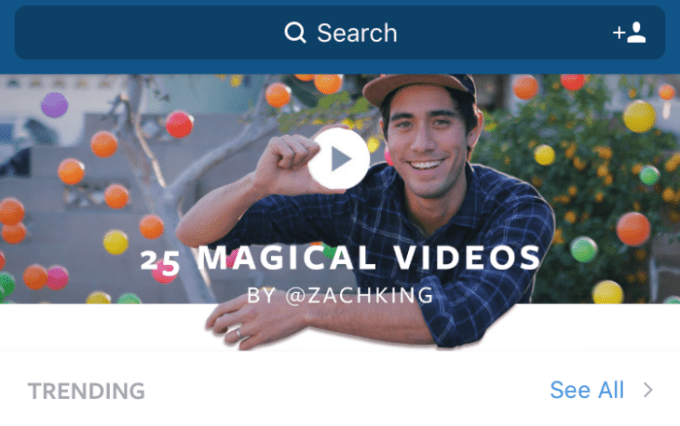
Instagram is preparing to unveil a home for longer-form video — a YouTube competitor and its take on Snapchat Discover. According to multiple sources, Instagram will offer a dedicated space featuring scripted shows, music videos and more in vertically oriented, full-screen, high-def 4K resolution. Instagram has been meeting with popular social media stars and content publishers to find out how their video channels elsewhere would work within its app. It’s also lining up launch partners for an announcement of the long-form video effort tentatively scheduled for June 20th.

The public shouldn’t expect Netflix Originals or HBO-level quality. This is not “InstaGame of Thrones.”  Instead, the feature is more focused on the kind of videos you see from YouTube creators. These often range from five to 15 minutes in length, shot with nice cameras and lighting but not some massive Hollywood movie production crew. Average users will be able to upload longer videos too, beyond the current 60-second limit.

Instagram intends to eventually let creators and publishers earn money off the longer videos, though it hasn’t finalized how accompanying ads like pre-rolls and mid-breaks or revenue splits would work. It is not paying creators up-front for shows like Facebook Watch, either. But the videos will each feature a swipe-up option to open a link, which creators can use to drive traffic to their websites, e-commerce stores or event ticketing. Thanks to Instagram’s 800 million-plus users, the video section could be a powerful marketing tool beyond generating cash for creators directly.

The long-form video section will spotlight a collection of popular videos, and provide a “continue watching” option since users might view long clips over the course of several sessions. Users will also see the long-form clips featured on authors’ profiles near the Stories Highlights bubbles. Creators won’t be able to shoot and post long-form videos, as the section will only allow pre-made video uploads.

Instagram has previously offered Spotlight Collections that assemble multiple videos into a non-stop viewing experience

This new information from TechCrunch’s sources comes after a brief initial report by The Wall Street Journal yesterday that Instagram was talking to content publishers about a vertical video feature. The WSJ’s article focused on the ability for average users to post up to hour-long clips, but the real story here is Instagram launching a professionally produced video entertainment hub. Instagram declined our request for comment.

It’s unclear what the new video feature will be named, or where it will appear. It could possibly live in the Explore tab, get its own tab or even be spun out into a separate app. Our sources didn’t know how the videos would work with the main Instagram feed, where they could appear full-length or show up as previews to alert a publisher’s fans to their newest long-form clip. The announcement date or feature details could still potentially change.

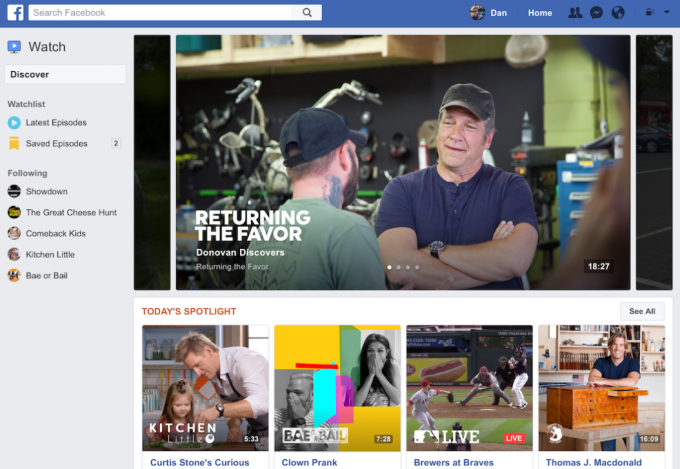
Facebook’s Watch section of long-form video hasn’t proven popular

Facebook hasn’t had much luck with its own original long-form video section it launched in August 2017, Facebook Watch. Mediocre, unscripted reality shows and documentary clips haven’t proven a draw for the social network, which is now expanding into scripted programs and news shows. Instagram may prove a more natural home for lean-back entertainment content.

InstaTube

The Instagram long-form video section will be Facebook’s answer to two competing social video destinations it’s yet to successfully clone.

Snapchat’s Discover section offers exclusive, professionally produced vertical video shows from an array of publishers as an alternative to shaky user-generated Stories. But with sagging user growth endangering viewership, backlash to the redesign that buries Discover and a policy shift to stop paying Discover publishers up front, Instagram and its massive user count may be able to seduce publishers to bring longer videos to its app instead.

YouTube is the stronger foe. Its ad revenue sharing agreements and massive engagement have made it the go-to platform for video makers. Still, creators are always looking to build their fan bases, earn more money and promote their other online presences. Instagram’s wildfire growth and the familiarity of following people there could make the long-form video section worth embracing.

The feature has big potential as long as it’s not too interruptive of people’s entrenched feed-scrolling and Story-tapping behavior patterns. Instagram will also have to convince creators to shoot their content vertically or find ways to gracefully crop it, and some may be apprehensive if they typically shoot in landscape for traditional video players.

The Facebook family of apps might never be able to match the breadth and depth of YouTube’s video catalog. But Instagram has an opportunity here to skim the best content off the top of the sprawling creator/publisher ecosystem and curate it coherently for casual audiences. That could get us spending more time with Instagram, even if our friends are boring.

Valve says removing controversial games from Steam is hard so it’s not going to

Internet platforms removing objectionable content from their sites has been one of the more difficult challenges for tech companies in recent years. Valve has also determined that it’s a pretty difficult challenge in their Steam gaming store, but unlike some of the other major platforms on the web, they’ve decided they’re not going to do anything unless the content is actually illegal or, as they put it, “straight up trolling.”

The company has also asserted that “the games we allow onto the Store will not be a reflection of Valve’s values…”

Here’s exactly what else Valve employee Erik Johnson said in a company blog post, which you should read in full here:

Valve shouldn’t be the ones deciding this. If you’re a player, we shouldn’t be choosing for you what content you can or can’t buy. If you’re a developer, we shouldn’t be choosing what content you’re allowed to create. Those choices should be yours to make. Our role should be to provide systems and tools to support your efforts to make these choices for yourself, and to help you do it in a way that makes you feel comfortable.

This post is largely in response to the company’s actions regarding a school shooting simulator (pictured above) that caused the ire of many. Valve removed the title from the store, but said it did so because the creator was previously banned and was a “troll.”

There are certainly plenty of those in the gaming community who would hold tightly to the idea that people will buy what they want to and Valve shouldn’t decide which content makes it onto their PC. Honestly, that could be a pretty ideologically defensible position if you didn’t think about the money changing hands here. The problem is Valve takes a pretty big cut of the revenue from titles sold through the store, so when it says that it doesn’t agree with content, that doesn’t mean that it doesn’t want the money it makes from it.

If Valve wants to find objectionable content and then forego their cut while keeping the games available for download that’s one thing, and they can probably stick by the words in their blog post a bit more as a result.

Finding the line in terms of what is okay and what isn’t in gaming is admittedly painfully difficult. You can kill cops and mow down pedestrians in Grand Theft Auto V, which has brought in billions of dollars in revenue single-handedly, but ultimately I think its maker, Rockstar Games, would at least say that they can stand by their game. If Valve isn’t willing to stand by the games they sell as part of their “values,” do they even have values as a company that… sells games?

YouTube is having what seems to border on an existential crisis right now as they have to decide how to monetize videos on their site that contain “objectionable content.” Valve can hide from this kind of a crisis, but they can’t avoid it. Ad-supported models tend to obscure the money exchanging hands, but when someone buys a game on Steam, money goes directly to Valve as an effect.

Valve can ultimately do what it wants here; they can decide that they want to allow ugly content on their store or not, but they can’t act like Steam is just some giant bucket inside of which games just sit. Valve is a multi-billion-dollar business that inhales revenues from every paid title it sells.

Free expression on the web is an awesome thing, even if it seems to suck sometimes, but stores should be responsible for the items they stock on their shelves.

Apple Design Award winner Florence breaks new ground in mobile gaming

Designer Ken Wong’s app Florence isn’t exactly a game. Or a comic. It’s a little bit of both — a new experience in storytelling using a mobile device.

The app — or game, if you prefer — comes from the mind of Ken Wong, best known before Florence’s release as Monument Valley’s designer — another app which broke new ground in mobile gaming by creating a visually stunning world that ended up winning the title of Apple’s Game of the Year in 2014, as well an Apple Design Award.

Now Wong has won for his work again on his first venture post-Monument Valley with an Apple Design Award for Florence.

We sat down with the designer on the sidelines of Apple’s Worldwide Developer Conference in San Jose this week to talk about how Florence came to be, and what Wong has planned next.

Wong had left ustwo Games (Monument Valley’s publisher) before its sequel, Monument Valley II, because he wanted to try something new.

“I kind of said what I wanted to. The best thing for Monument Valley would be to have other people take over and expression their vision for it,” he says.

Wong moved back to his home country, Australia, from London, to Melbourne, where there’s a thriving indie gaming scene, to launch his new company Mountains.

The team at Mountains is small — just a programmer, producer and artist in addition to Wong.

The company partnered with Annapurna, a film studio behind hits like “Her” and “Zero Dark Thirty,” that now runs its own games division. The studio backed Mountains on the Florence project, but also gave the team advice and input along the way.

As part of this arrangement, Annapurna shares in Florence’s revenue. (Florence sells for $2.99.)

Unlike traditional games, you don’t play the “game” Florence with a goal of getting a high score or achieving goals of some kind.

Instead, you tap your way through the interactive story where a young woman, Florence, meets someone, falls in love and has a relationship. You live through it with her, dealing with everything from parental pressure over her single status, to then first dates and moving in together.

Music is a key part of the experience, and helps the game invoke an emotional response.

When the relationship ends, you’ve been invested in this story and characters, and probably will feel sad.

That’s the point, says Wong.

“A lot of people think of games as things you can win — things that involve luck or skill. But…in video games — or, largely, the digital interactive space — there’s so much that you can do,” he says.

“It seems like we’re surrounded by stories of love and romance and relationships…but it felt like that was a blind spot for mobile games. We wanted to tap into that and see how far we could take a romance game on mobile,” Wong explains.

Wong says he was inspired by stories from friends, as well as his own personal experience, when building Florence, as well as movies about relationships like “Eternal Sunshine of the Spotless Mind,” and “500 Days of Summer.”

Like those, Florence is also a portrait of a relationship that’s both light and dark, both joyful and painful.

“It’s my job to provide stimulating material. I just want to move people. And I think moving people in itself can be a goal. What they take out of it is really up to the individual,” he says.

Now that Florence is out there, on both iOS and Android, Wong says he hopes it will inspire other developers to take what the team introduced in terms of the app’s interface design, and use that to tell their own stories.

As for Mountains, however, the team is now considering what stories they want to tell next. They’re not announcing the details of those discussions, but they have some ideas around telling other types of stories that aren’t represented today through mobile gaming.

We might not see those come to life for some time — it took Florence 15 months to go from idea to launch, and the next title will likely take just as long.

But Wong knows what kind of stories they probably won’t do, he says.

“There are so many other studios out there exploring your traditional power fantasies, like combat and fighting and such,” he says.

“I think where we can really contribute is telling stories that are less explored — human experiences that have to do with family or identity. I think that’s who we are.”

Synack is the latest cybersecurity company to offer state elections its services for free

The cybersecurity firm Synack will offer its penetration testing services to states for free in an effort to secure election systems for the 2018 midterms.

Synack, founded by two former NSA analysts, is best known for its bug bounty program that allows its carefully curated stable of researchers to probe a client’s systems for vulnerabilities. The researchers then disclose those soft spots through Synack’s platform.

The company’s offerings are already tuned to the needs of sensitive government clients, and Synack has worked with IRS and the Department of Defense through its “Hack the Pentagon” bug bounty program. States wary of bug bounties should have some peace of mind knowing that Synack emphasizes the intense vetting and low acceptance rate of its research team.

From now until November 6, Synack will offer free penetration testing for voter registration sites and voter databases through its “Secure the Election” initiative.

The offer’s fine print:

Each eligible recipient will be limited to one (1) free 14-day Synack Crowdsourced Vulnerability Discovery Test of an online voter registration website or remotely-accessible database that is expected to be used in the November 2018 mid-term election.

It’s possible that states wary of the federal government’s involvement in state and local elections will be less skittish of help coming from the private sector. The Department of Homeland security has stepped up its role in securing elections, but federal resources, including cybersecurity audits, remain opt-in.

Synack isn’t the only security company talking to states about securing elections. In late 2017, Cloudflare announced that it would extend it DDoS protection for free to states for their voter databases, voter registration sites and election result sites through what it calls “the Athenian Project.” In April, enterprise security firm Centrify offered states its services at a discount in a similar “Secure the Vote” program.

“Synack’s pro bono service looks for vulnerabilities in remotely-accessible voter registration databases and online voter registration websites from a hacker’s perspective,” the company said in a press release.

“Synack’s crowd of researchers discovers vulnerabilities left undetected by other solutions and then helps to remediate them before an adversary can exploit them on election day.”

Parrot responds to the Mavic Air with its own folding drone

This morning, Parrot unveiled the Anafi, a new drone clearly targeted at DJI’s Mavic line. According to the French company, the new portable UAV is the product of two years of development and a “wish list of user feedback and a biomimetic design inspired by insects.”

Like the Mavic, the 0.7-pound drone is foldable, for maximum portability, so photographers can stash it away along with the rest of their equipment for travel — or just keep it in a jacket pocket. There’s a 4K HDR camera on-board, and a 21-megapixel still unit mounted on a gimbal.

Parrot estimates battery life at 25 minutes — which is pretty solid, as far as this class of drone is concerned. It also can be swapped out with additional batteries, which run $99 a pop. The company also claims the drone is the quietest in its class. It’s not silent, of course, but that buzzing lawn mower sound has been reduced by about a third compared to earlier models from the company.

The drone has a controller that plugs into an iPhone or Android device, for touchscreen visualizations via the FreeFlight 6 app. And like the Mavic line, it features a number of different control modes focused on capturing different camera content, including an option for following a subject and, yes, a selfie mode.

The price certainly seems right here. At $699, it’s $100 less than the Mavic Air. Though, at first glance, it appears as though it might not be as advanced as DJI’s latest stab at creating a truly mainstream drone. The Anafi is due out July 1 through Parrot, Amazon and “select retailers.”

Hackers, sign up for Disrupt SF Virtual Hackathon today

Calling all creative hackers, coders and programmers around the world. We’ve cooked up a special Virtual Hackathon to celebrate TechCrunch Disrupt San Francisco 2018 — our biggest Disrupt event ever. Think of it as a Hackathon without borders. Teams from across the globe can submit their most impressive hacks. Sign up for the Hackathon right now, and start creating today.

In previous Disrupt Hackathons, teams had only 24 hours to work their magic. But when you call for thousands of worldwide competitors to join the fun, well, you gotta give them a bit more time. That’s why we’re launching today — plenty of time to form your team, come up with an idea and get your hack on in the run-up to Disrupt SF 2018, which takes place on September 5-7.

Here’s how the virtual Disrupt SF Hackathon works. Our expert judges will review, evaluate and score every eligible submitted hack. The 70 highest-scoring teams will receive 5 Innovator passes to TechCrunch Disrupt SF 2018.

From that group, the top 30 teams will exhibit their hacks in our Hackathon Demo area at Disrupt SF to over 10,000 attendees and a separate panel of judges who will determine the 10 teams that get to demo their creation on The Next Stage. Out of those 10, the judges will choose one winner to be our very first Virtual Hackathon Champion. Oh, yeah — the winner gets the $10,000 cash prize.

Now a Disrupt Hackathon, virtual or otherwise, wouldn’t be a Hackathon without lots of very real sponsored prizes, cash and swag. You won’t be disappointed on that front, trust us. We have some great prizes from TomTom, BYTON and Viond on tap so far, and many more to be announced in the coming weeks.

Need more inspiration? Disrupt Hackathons have resulted in some pretty sweet hacks. Just take a look at the range of products the grand-prize winners of Hackathons-past created:

  • Disrupt London 2016: The Emotion Journal — a voice journaling app that performs real-time analysis to assess and track the user’s emotional state over time
  • Disrupt NY 2017: reVIVE — a VR product that provides diagnostic and treatment mechanisms for ADHD
  • Disrupt SF 2017: Alexa Shop Assist — lets you ask Alexa to locate products in a store
  • Disrupt Berlin 2017: Quick Insurance — a simple way to purchase insurance for all your valuable stuff

They created these awesome hacks in a mere 24 hours. Now just imagine what thousands of tech coders, creators, hackers and programmers from around the world can create between now and when Disrupt SF ’18 kicks off on September 5. The mind boggles.

Disrupt San Francisco 2018 takes place September 5-7. The Virtual Hackathon starts now. Do you have the raw tech talent and creativity to win it all? There’s only one way to find out. Sign up for the Hackathon today.