Apple’s new Mac ads show that even Grimes uses dongles

Apple has launched a new advertising campaign for the Mac called “behind the Mac”. In this campaign, the company is sharing user stories of people using Mac for work, creative projects and accessibility reasons.

The Mac is a versatile platform. People use it for boring tasks, such as checking emails and browsing the web. But you can also use it for countless of other things. Apple wants to show you what you can do with a Mac beyond Word and Excel.

Apple has shared 4 videos today. The first is a 60-second recap of the three other videos. Each standalone video is a portrait of someone who is using a Mac every day. There will be 12 portraits in total on Apple’s website.

Peter Kariuki is a developer who created an iPhone app to improve road safety in Rwanda. Bruce Hall is a photographer who is legally blind and uses photography to see more details of the outside world. And Grimes is one of the most interesting music artists out there.

There are a few interesting things to note. All three are using laptops. It’s clear that MacBooks have become the most popular computers from Apple. It doesn’t mean that Apple should abandon the iMac, iMac Pro, Mac Mini and Mac Pro. But only a fraction of Apple’s customers will buy them.

It’s also interesting to see that none of the Macs have been updated in the last twelve months. Apple has nothing new to sell on the Mac front. And it’s a bit worrying that the company is starting a new advertising campaign right now. Maybe there won’t be any Mac update for at least a few months.

And if you’re currently using a recent MacBook or MacBook Pro, you might be using stupid dongles right now to plug accessories to USB-C and Thunderbolt 3 ports. The good news is that, yes, even Grimes has to use dongles.

YC alum Modern Health, a startup focused on emotional wellbeing, gets $2.26M seed funding

About one year ago, a note from a CEO thanking his employee for using sick days to take care of her mental health went viral. It was a reminder to Alyson Friedensohn of what she wants to accomplish with Modern Health, the emotional health benefits startup she founded last year with neuroscientist Erica Johnson.

“We want that to be normal. We want the email she sent to be normal, to be able to be that open,” Friedensohn tells TechCrunch.

Modern Health, a Y Combinator alum, announced today that it has raised $2.26 million in seed funding for hiring, accelerating the development of its healthcare platform and growing its network of therapists, coaches and other providers. Offered as a benefit by companies, Modern Health’s services are meant to improve employee well-being and retention rates. The round was led by Afore, with participation from Social Capital, Precursor Ventures, Merus Capital, Maschmeyer Group Ventures, Y Combinator and angel investors.

Friedensohn, Modern Health’s chief executive officer, says several employers have already signed up for its platform, which includes services like counseling and career and financial coaching. One of its newest customers, human resources startup Gusto, hit a 43% utilization rate of its services, including connecting employees to coaches and therapists, among registered users just four days after it began offering the platform. 

The startup is especially proud of the fact that Modern Health’s team is currently all female and Friedensohn wants to parlay their points of view into services that address issues affecting women. For example, the platform already works with providers who specialize in postpartum depression and infertility.

“People don’t talk about what working moms are dealing with and countless things like that,” says Friedensohn, who previously worked at health tech companies Keas and Collective Health. “People don’t want to talk about it because they are worried it will jeopardize their careers, but it makes a difference.”

Several other tech startups are working on mental health care platforms for employers to offer as a benefit, including Ginger.io, Lyra Health and Quartet, which have all have received significant amounts of funding from prominent investors. The space is especially important, given the alarming rise in the United States’ suicide rate and the fact that about 6.7% of all adults in the U.S. have experienced at least one major depressive episode.

One of Modern Health’s priorities is to reach employees before they hit a crisis point. Since many people are daunted by the idea of therapy, the platform connects them to coaches instead to focus on specific issues, like their careers, or overall emotional wellbeing. This helps referrals, Friedensohn notes, because it makes the service feel more approachable.

“They can say to friends, I have this awesome Modern Health coach, versus saying I have a therapist, so it’s way easier for people to engage,” she says.

Modern Health also makes its services more accessible by offering several ways to use the platform: texting, video calls or, for people who don’t want to talk to a therapist or coach yet, meditation apps and other digital tools created by the company. Friedensohn adds that it’s not uncommon for people to write essays on their sign-up forms when registering because it’s the first time they’ve been able to unload their problems.

“People like that it’s coaching,” she says. “What we found is that by focusing on that point, the biggest thing is lowering the barrier to entry, so that people who are depressed are also comfortable reaching out.”

Coinbase opens its crypto index fund to accredited U.S. investors

Fresh from revealing plans to add Ethereum Classic to its exchange, crypto giant Coinbase today announced that its cryptocurrency index fund — first revealed in Marchis open to investors in the U.S..

The company said in a blog post that it has see “overwhelming” interest from investors, and now it is reaching out to those who want to invest between $250,000 and $20 million. For now, the company said, participation is limited to the U.S. and those who are accredited investors.

That’s a pretty big caveat since crypto, by default, is open to anyone — although many ICOs tread carefully in markets like the U.S. — but Coinbase is very specifically target institutional capital, having recently added services for Wall Street-like professional investors.

The pitch is that it knows the market, its service covers the most stable assets and it won’t charge the kind of rates that existing funds do, as Coinbase CEO Brian Armstrong explained on Twitter.

Investing in Coinbase Index Fund is the easiest way to get exposure to a broad range get of crypto assets.
Much cheaper than 2 and 20% charged by most crypto hedge funds, and you get new assets automatically added to the fund as they become available on Coinbase. No rebalancing. https://t.co/TyOnDuFMT9

— Brian Armstrong (@brian_armstrong) June 13, 2018

Here’s more:

Coinbase Index Fund gives investors exposure to all assets listed on our exchange, weighted by market capitalization. As we announced yesterday, the fund will be rebalanced to include Ethereum Classic, and more assets when they are listed by Coinbase in the future.

Coinbase did say that it is working to launch other funds that are “accessible to all investors and cover a broader range of digital assets” so, if you’re not an accredited U.S. investor, there might yet be opportunities for you depending on what comes next. However, given that Coinbase is striving to be SEC-compliant — and the SEC is in the middle of a major crypto investigation — it might take some time to reach the longer tail of retail investors.

Stay tuned, though, we’ll be asking questions to two key people at Coinbase over the coming months and this topic is sure to be on the menu. CTO Balaji Srinivasan will appear at our blockchain event in Zug next month, while CEO Amstrong is among the guests who will take to the stage at TechCrunch Disrupt San Francisco in September.

Southeast Asia’s Grab lands $1B from Toyota at a $10B valuation

Grab, the ride-hailing firm that acquired Uber’s Southeast Asia business earlier this year, is raising a new round of funding and it just announced that it will be led by Toyota, which is committing $1 billion in capital. The deal values Grab at over $10 billion, a source close to the company told TechCrunch.

In return for its capital, Toyota will also get a board seat and the opportunity to place an executive within Grab’s team. Grab said it plans to work with its new investor “to create a more efficient transport network that will ease traffic congestion in Southeast Asia’s megacities” and help its drivers increase their income. In particular, that will involve close collaboration with the Toyota Mobility Service Platform (MSPF), which is working on areas such as user-based insurance, new types of financial packages and predictive car maintenance.

“Going forward, together with Grab, we will develop services that are more attractive, safe and secure for our customers in Southeast Asia,” said Toyota executive vice president Shigeki Tomoyama in a statement.

Toyota put money into Grab via its Next Technology Fund last year, but this time around the capital comes directly from the parent company. Hyundai is another automotive firm that has backed Grab.

The new round follows a $2.5 billion investment that was jointly led by SoftBank and China’s Didi, two long-time investors put an initial $2 billion up for the round last year. That round quietly closed at the start of 2018, Grab has confirmed but so far it hasn’t said who put up the additional money.

The company’s valuation had been $6 billion but, unsurprisingly since the Uber deal, it has jumped by a further $4 billion based on Toyota’s investment.

Grab now claims over 100 million downloads of its app across eight countries in Asia, including Singapore, Indonesia, Vietnam, Thailand and more. The firm said its annual revenue run rate has now surpassed $1 billion, although it declined to provide profit or loss numbers.

While it did remove Uber from the region by acquiring its business — although the deal didn’t go as smoothly as had planned — that exit prompted new entrants to jump into the region with Indonesia’s Go-Jek, in particular, looking like the key foe. Go-Jek, which is valued at some $4.5 billion, recently announced plans to expand to four new markets having itself raised a significant $1.5 billion round.

Aside from competition, Singapore-based Grab has kept its busy in recent years expanding its services from point-to-point taxis and private car hailing to include mobile payments, food delivery and dock-less bicycles. Earlier this month it officially unveiled Grab Ventures, a unit focused on helping building out an ecosystem through investment and mentoring.

Grab Ventures is not a VC arm, but it does plan to make 8-10 investments over the next two years while it will also open an accelerator program for “growth-stage” startups — although that doesn’t include equity investments for cash. The division will also focus on incubating new business ideas, which include its recently launched Grab Cycles product which aggregates on-demand bikes from a range of companies.

Check out this adorable Bluetooth controller for the Nintendo Switch

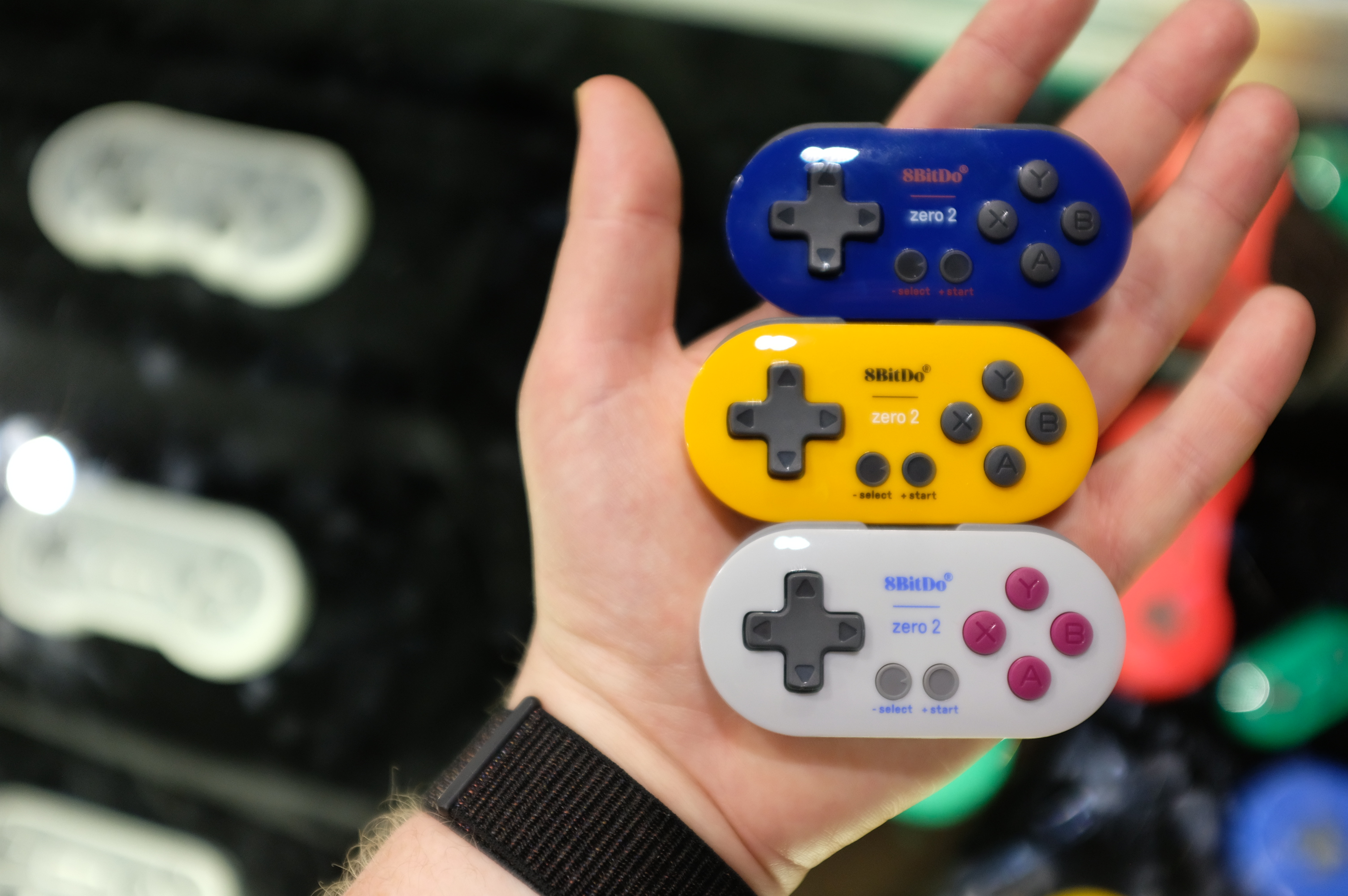
8bitdo debuted a bunch of gaming controllers at E3 this week, but honestly, we only care about one. The Zero 2 is an adorable little Bluetooth controller that fits in the palm of your hand. It’s compatible with all sorts of systems, including desktop computers and Android devices, but the size makes it perfect for playing the Nintendo Switch on the go.

And as you can see by the “classic” color scheme above, the peripheral maker was clearly interested in evoking some serious Nintendo nostalgia, with a device that looks a lot like a Super Nintendo controller at first glance.

The Zero 2 sports four number buttons, select, start and a D-pad on the front, with L and R buttons up top, flanking a microUSB port. All have a solid click to them, though the company didn’t have a full operational unit we could play with (the controller isn’t coming out until the end of the year).

I suspect that the diminutive size means it won’t be ideal for long gaming marathons, but it does beat having to hold the Switch for an extended period. Better still, it can be connected to a keychain, so you’ll never lose the thing.

No pricing has been announced.

Valve sets sights on Discord with updates to Steam Chat

Discord has risen among the ranks of gamers as the most common choice for game-related communications. And it’s easy to see why: it works well and the competition is pretty dismal. But Valve is looking to keep users in-house with an overhaul of the chat options on its game platform Steam .

It’s a welcome change, one of many that Steam’s users have surely been asking for — the platform, while convenient in many ways, is also incredibly outdated in others. The friend and communications options may as well be ICQ, and let’s not get started on the browser.

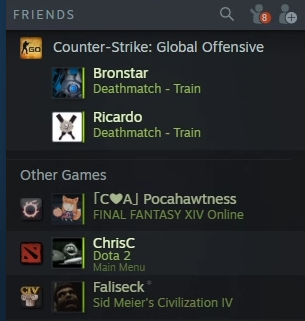
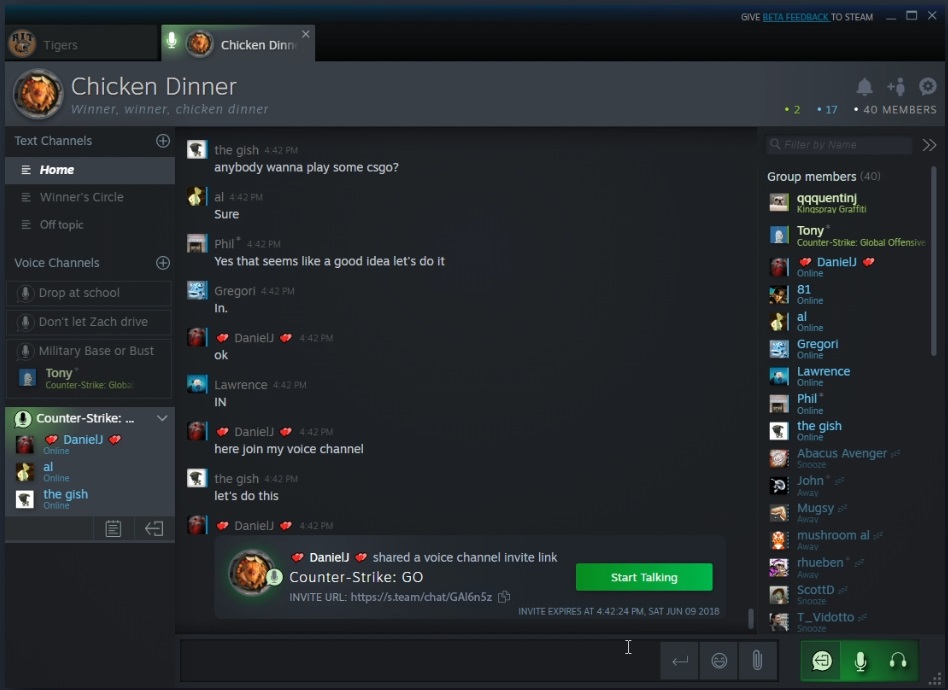
Today’s news suggests that Valve has not failed to hear gamers’ cries. The revamped chat is very Discord-like, with text and voice channels listed separately, in-game details like map and game type listed next to friends and a useful quick list for your go-to gaming partners. There’s also a robust web client.

Voice and text chat is all encrypted and passed through Steam’s servers, which prevents the NSA competition from monitoring your squad’s tactics during PUBG games and griefers from tracing your IP and ordering a hundred pizzas to your door (or worse).

It’s long past due for a platform like Steam, but more importantly it lets them keep Discord in check. The latter, after all, could conceivably grow itself a game store or promotions page in order to subsidize its free services — and that would be stepping on Valve’s turf. Unforgivable.

That said, it’s far too late for Steam to steal away Discord’s users — it’s been adopted by far too many communities and the benefits of switching aren’t really substantial. But for people who have not yet installed Discord, the presence of a robust chat and voice client within Steam is a powerful deterrent.

It’s currently in beta, but you can request access here (web) and here (Steam). No word on whether they are developing a whole system of chat icons based on those wiggly little egg-people in the top image. (Please.)

How Nintendo regained its footing with the Switch and smartphones

As recently as a couple of years ago, Nintendo very much felt like a company at a crossroads. The Wii U presented a rare major misfire for the gaming giant, while its executives stubbornly clung to a strategy that actively excluded smartphones.

The Nintendo of 2018, however, feels newly invigorated. In January, the company announced that the Switch had blown past the Wii’s record to become the fastest selling U.S. console, with 4.8 million units moved in 10 months. These days, that number is closer to 5.9 million in the States, with 17.79 million units sold globally as of April, by NPD’s count.

“We learned from previous launches,” Nintendo executive Doug Bowser (different Bowser) said in an interview with TechCrunch upstairs at the company’s E3 booth. “We made sure we launched with great content. And then we’ve had a steady drumbeat of new titles.”

The company addressed that issue with the launch of the flagship Zelda title Breath of the Wild, alongside the console. This time two years ago, the company’s booth was awash with Zelda imagery, made up to look like a small-scale version of Hyrule. In 2018, Super Smash Bros. Ultimate is the clear focus, as its E3 presence has shifted to something more tournament style, with large screens displaying the mega-crossover fighting game.

For the company, those two titles represent the company’s first-party play for an “active gamer” segment — a more direct take on the likes of PlayStation and Microsoft. Nintendo’s family-friendly approach is still present in those titles it produced in-house, but things have softened a bit, perhaps, when it comes to embracing third-party titles.

“Our goal with Nintendo Switch is to appeal to a broad audience,” said Bowser. “That goes well beyond family-friendly titles, and obviously with some of the third-party content we’ve brought to the platform, there’s more mature content. We want to make it accessible, but clearly when it comes to our own IP, it’s in a more family-friendly arena.”

Today’s release of Fortnite for the Switch is a pretty clear example of this. It’s a big win for both parties, as the fast-selling console gets access to the large cross-platform title. But even that is a far cry from some of the extreme gore we saw on the big screen last night at Sony’s big kick-off event.

For younger players, the 3DS/2DS is still going surprisingly strong for an eight-year-old system. 2017 actually saw a jump in consoles sold over the year prior. “Younger consumers are coming in through our 2DS and 2DS XL platforms,” said Bowser. “It’s a great entry point for us. As long as consumers are voting, we’ll continue to support it.”

And for all of its early foot-dragging, mobile has clearly been a boon for the company. First-party games like Super Mario Run and third-party partnerships like Pokémon GO have gone a ways toward spreading the gospel of Nintendo IP. Late last month, Niantic announced that its AR game had hit a staggering 800 million downloads.

The newly announced Switch titles Let’s Go Pikachu and Let’s Go Eevee represent another step toward a more open, cross-platform Nintendo, as well. The Poké Ball Plus peripheral lets users capture Pokémon on the mobile title and utilize them into the Switch game. It’s a compelling bit of synergy that could point a ways forward, wherein smartphones and the Switch play even more nicely together.

Jane.ai raises $8.4M to bring a digital assistant into your office software

Even as AI assistants delve deeper into consumer hardware, companies still seem a bit reticent to bring them deep into their office software workflows.

Jane.ai is aiming to bring natural language processing and intelligence into an employee-facing solution that lets people query a digital assistant to give them information about documents, meetings and general company knowledge.

The St. Louis startup announced today that it is raising an $8.4 million Series A from private investors to power this vision.

Jane lives inside apps like Slack and Skype for Business (in addition to its own web app) where users are already chatting with co-workers and may need to surface information quickly that they don’t have ready access to. With Jane, employees can just message the assistant directly and the system will comb through information and apps that were uploaded and connected to the system in order to find answers. You can ask for a file by name and quickly get a link. You can ask for a specific department’s phone number and Jane will slack it to you.

The startup currently supports integrations with Office 365, Slack, Salesforce and Zenefits, and has more partnerships “on the horizon.”

The big focus will be outsourcing some of the more basic questions that you would ordinarily ask HR or IT so you don’t have to bombard the same person’s email to get the latest phone number for the workaround for a particular problem.

The Jane.ai team

The basic goal of the system is to learn over time and give appointed admins the ability to be called on to answer certain questions when Jane doesn’t have an answer so that Jane will learn from the company experts and get more informed over time.

“Pitting humans against machines is one of the big design flaws of a lot of AI systems,” Jane.ai CEO David Karandish told TechCrunch.

The startup will also have a general knowledge base where users can call on some quickly available info that will also grow over time. It takes time for these solutions to gather the information to be accessible enough to turn to, but Jane.ai is hoping that by ensuring that data is cleaned up for every customer, a lot of employees’ frequent questions are answered on day 1.

Gaming leans into diversity at E3, but not hard

To say the gaming community is not known for its friendliness to women and minority groups is something of an understatement. But we’re starting to see developers abandon the usual excuses of tradition, demographics and, the most absurd of all, “realism,” in favor of making gaming more inclusive. Kind of.

This has been an ongoing theme for years, of course. But it feels like this year it was a little less self-congratulatory and a little more self-motivated.

The fun started early, well ahead of E3, with the apparently devastatingly diverse front lines in Battlefield V, which takes place during World War II. The predictable objections as to “historical accuracy” appeared — unironic, despite the utter lack of historical accuracy in pretty much any of these games. The way the war was fought, the locations and situations, the weapons and vehicles have all been liberally massaged to turn the worst thing in history into a fun multiplayer game.

But it was EA’s chief creative officer, Patrick Soderlund, who made the headlines with a searing riposte in an interview with Gamasutra. Citing the historical record of women and people of color in the war, he called out the peanut gallery as both incorrect and irrelevant.

What’s the most unrealistic part about Battlefield V? It ain’t her.

“These are people who are uneducated,” he said. “They don’t understand that this is a plausible scenario, and listen: this is a game.”

A game, he added, intended to surface stories that have been hitherto relatively seldom told, including the roles of those groups.

“This is something that the development team pushed. And we don’t take any flak. We stand up for the cause, because I think those people who don’t understand it, well, you have two choices: either accept it or don’t buy the game. I’m fine with either or. It’s just not OK.”

Then E3 got started. As a pleasant early surprise, Gears of War 5 has you playing a female protagonist in what has long been a mainstay of grizzled space-marine mandom, and your companion is a black guy. Of course you have the new Tomb Raider, a solid franchise with an increasingly strong, well-written female lead.
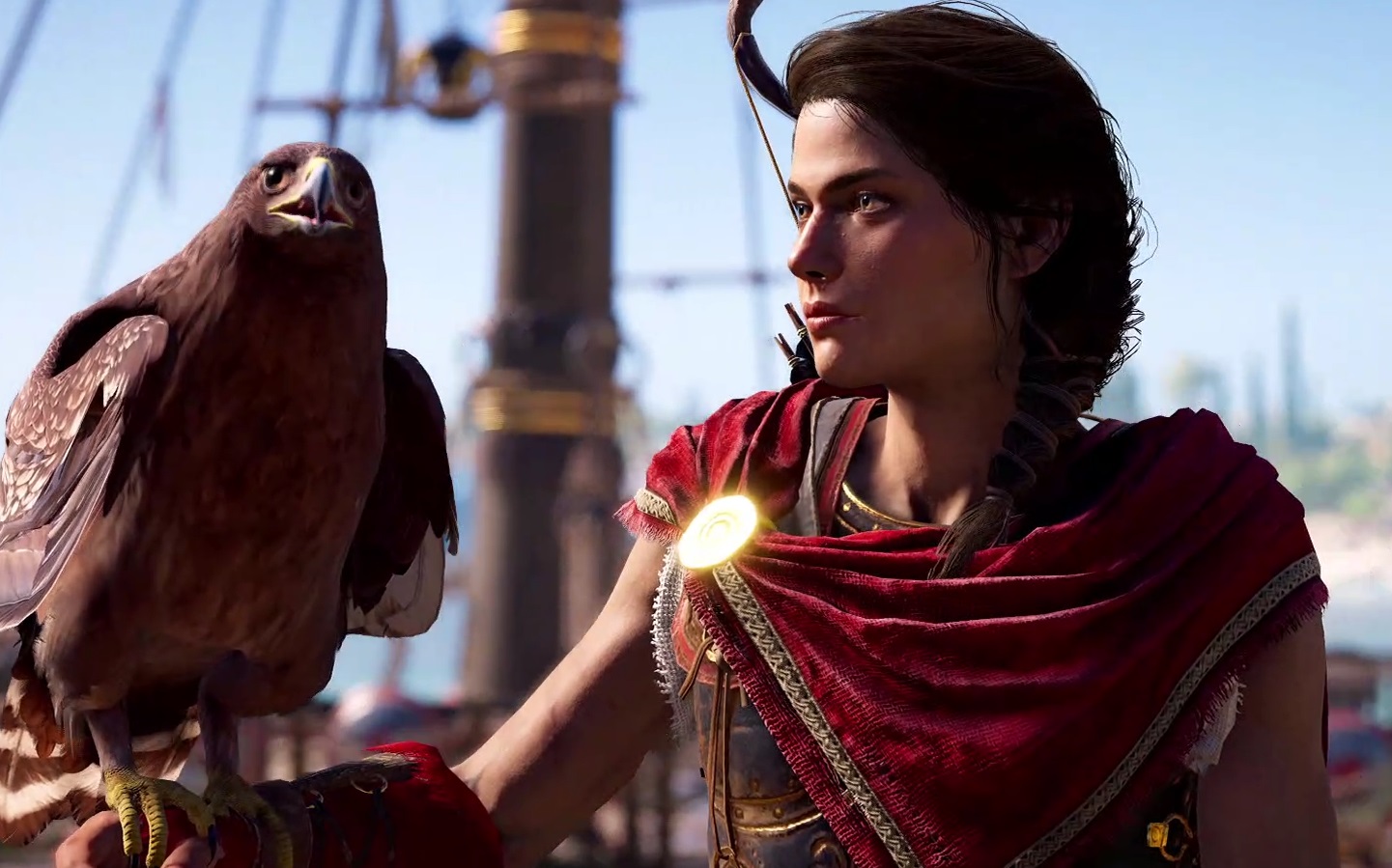
In Assassin’s Creed Odyssey, Ubisoft went so far as to twist the lore of the series to accommodate the player’s choice of character: Alexios or Kassandra, between whom there are no real differences — including romance options, a quietly provocative decision.

The Last of Us Part Two has a badass young woman as its protagonist, defending herself with shocking brutality in a post-apocalyptic hellscape. (Yet you can be sure it’s the kiss shared with a girl on the dance floor that will generate more controversy.)

Nintendo offered a variety of customization in the new Smash Bros. for Switch, with male and female options for all kinds of characters, including Pikachu. Even Cuphead has a playable lady in it now.

Elsewhere we saw diversity on display in something as simple as having men and women of all races represented as pirate captains, commanders of futuristic forces, medieval knights (a nice Joan of Arc feel from For Honor’s trailer) and futuristic jet pilots. (My favorite outfit was in Control, by the way.)

What it felt like to me, though, was not that these companies were fulfilling some kind of diversity quota — that bogeyman so often invoked by critics — but rather the simple acknowledgement that the world of games should resemble the world of gamers.

Of course, when you pull back a little bit, it becomes extremely clear that the majority of games are still very much dominated by the garden variety grizzled white male protagonist. But that’s fine. We have a similar problem in film, TV and other fiction as well, right? Moving on from outdated ideas of race and gender in the world of media is an ongoing concern and it won’t happen all at once.

But at least at this E3 we’re seeing indications that developers and publishers are moving in the right direction.

As for the people playing — well, that’s a different story. Whatever the flexibility of your choices in the latest crop of AAA games, female gamers and people of color will still be ruthlessly harassed, abused and otherwise targeted. Developers can’t change the bigoted minds of toxic players — but they can ban them. Here’s hoping that side of things is getting equal attention.

Netflix and Alphabet will need to become ISPs, fast

This week completely scrambled the video landscape, and its implications are going to take months to fully understand.

First is the district court’s decision to approve the merger of AT&T and Time Warner announced just moments ago. That will create one of the largest content creation and distribution companies in the world when it closes. It is also expected to encourage Comcast to make a similar bid for 21st Century Fox, further consolidating the market. As Chip Pickering, CEO of pro-competition advocacy org INCOMPAS put it, “AT&T is getting the merger no one wants, but everyone will pay for.”

But the second major story was the final (final final) repeal of the FCC’s net neutrality rules yesterday that will allow telecom companies like AT&T to prioritize their own content over that of competitors. In the past, AT&T didn’t have all that much content, but the addition of Time Warner now gives them a library encompassing Warner Bros. to TBS, TNT, HBO and CNN. Suddenly, that control over prioritization just got a lot more powerful and profitable.

The combination of these two stories is spooking every video on demand service, from YouTube to Netflix . If Comcast bids and is successful in buying 21st Century Fox, then connectivity in the United States will be made up of a handful of gigantic content library ISPs, and a few software players that will have to pay a premium to deliver their content to their own subscribers. While companies like Netflix and Alphabet have negotiated with the ISPs for years, the combination of these two news stories puts them in a significantly weaker negotiating position going forward.

While consumers still have some level of power — ultimately, ISPs want to deliver the content that their consumers want — a slow degrading of the experience for YouTube or Netflix could be enough to move consumers to “preferred” content. Some have even called this the start of the “cable-ification” of the internet. AT&T, for instance, has wasted no time in creating prioritized fast lanes.

That world is not automatic though, because Alphabet, Netflix and other video streaming services have options on how to respond.

For Alphabet, that will likely mean a redoubling of its commitment to Google Fiber. That service has been trumpeted since its debut, but has faced cutbacks in recent years in order to scale back its original ambitions. That has meant that cities like Atlanta, which have held out for the promise of cheap and reliable gigabit bandwidth, have been left in something of a lurch.

Ultimately, Alphabet’s strategic advantage against Comcast, AT&T and other massive ISPs is going to rest on a sort of mutually assured destruction. If Comcast throttles YouTube, then Alphabet can propose launching in a critical (read: lucrative) Comcast market. Further investment in Fiber, Project Fi or perhaps a 5G-centered wireless strategy will be required to give it to the leverage to bring those negotiations to a better outcome.

For Netflix, it is going to have to get into the connectivity game one way or the other. Contracts with carriers like Comcast and AT&T are going to be more challenging to negotiate in light of today’s ruling and the additional power they have over throttling. Netflix does have some must-see shows, which gives it a bit of leverage, but so do the ISPs. They are going to have to do an end-run around the distributors to give them similar leverage to what Alphabet has up its sleeve.

One interesting dynamic I could see forthcoming would be Alphabet creating strategic partnerships with companies like Netflix, Twitch and others to negotiate as a collective against ISPs. While all these services are at some level competitors, they also face an existential threat from these new, vertically merged ISPs. That might be the best of all worlds given the shit sandwich we have all been handed this week.

One sad note though is how much the world of video is increasingly closed to startups. When companies like Netflix, which today closed with a market cap of almost $158 billion, can’t necessarily get enough negotiating power to ensure that consumers have direct access to them, no startup can ever hope to compete. America may believe in its entrepreneurs, but its competition laws have done nothing to keep the terrain open for them. Those implications are just beginning.