Beat the clock and apply for TC Top Picks at Disrupt SF 2018

Time is running out on one of the best ways for an early-stage startup to experience Disrupt San Francisco 2018, September 5-7 at Moscone Center West. We’re designating 60 pre-Series A companies to be a TC Top Pick. If we select your company, you get to experience Disrupt SF in all its techno-glory for free. That’s right, people: F-R-E-E. Applications close on June 29, so get a move on and apply right now.

Here’s the low-down on how the TC Top Pick program works. First off, it’s a highly competitive process. The TechCrunch editorial team carefully evaluates every application before selecting the winning startups to represent each of these 12 tech categories: AI, AR/VR, Blockchain, Biotech, Fintech, Gaming, Healthtech, Privacy/Security, Space, Mobility, Retail or Robotics.

Each TC Top Pick finalist receives a free Startup Alley Exhibitor Package. The package includes a one-day exhibit space in Startup Alley and three Founder passes (good for all three days of the show). You’ll get to participate in CrunchMatch — our investor-to-startup matching platform — to simplify finding and making appointments with potential investors, and you’ll have access to the full event press list.

Earning a TC Top Pick designation also gets you a three-minute interview on the Showcase Stage with a TechCrunch editor — and we’ll promote that video across our social media platforms. That’s promotional gold right there, my friend.

One of the other fabulous opportunities for any startup exhibiting in Startup Alley (including Top Picks) is the chance to be voted the Startup Battlefield Wildcard by Alley attendees and TechCrunch editors. If that happens, you get to compete for the $100,000 Startup Battlefield prize. Yowza! Wait, you don’t think that could happen? Guess again. After being voted the Wildcard at Disrupt NY 2017, RecordGram won the Startup Battlefield.

Disrupt San Francisco 2018 takes place on September 5-7. The TC Top Pick deadline is June 29. Don’t miss your opportunity to exhibit in Startup Alley for free. Apply for TC Top Picks today.

US Armed Forces is getting a Space Force over the objections of the Secretary of Defense

President Donald J. Trump intends to create a new Space Force within the U.S. Armed Forces. The surprise announcement came today at the third meeting of the White House’s newly reconvened Space Council.

“We are going to have the Air Force and we are going to have the Space Force — separate but equal. It is going to be something. So important,” the president said.

Defense Secretary James “Mad Dog” Mattis voiced opposition to the creation of new branch of the military last year when the idea was first proposed by Congress.

Congressional leadership first floated the creation of sixth branch of the armed forces focused on space combat (sadly, not against invading alien insects though) last year… and Mattis promptly blasted the idea.

In a letter to Ohio Representative Mike Turner, one of the leaders of the Space Force initiative in Congress, Mattis wrote:

At a time when we are trying to integrate the Department’s joint warfighting functions, I do not wish to add a separate service that would likely present a narrower and even parochial approach to space operations.

Apparently, the president has come around on the subject in the intervening months.

Trump is now “directing the Department of Defense and Pentagon to immediately begin the process necessary to establish a space force as the sixth branch of the armed forces.”

The House Armed Services Committee began pushing for the creation of a space corps last year as part of the last spending authorization bill for the military. The new military force would fall under the purview of the Air Force in the same way that Marines work with the Navy, according to the proposal.

That spending authorization bill was ultimately approved, but the space corps proposal was left on the cutting floor.

Now the proposal is taking flight at the highest levels of the Trump administration. The newly reconvened Space Council is helmed by Vice President Mike Pence. At today’s announcement were celebrity astronauts like Jack Schmitt, Buzz Aldrin and Eileen Collins. Also in attendance were Gwynne Shotwell, Wes Bush of Northrup Grumman and Bob Smith, the chief executive of Jeff Bezos’ Blue Origin.

“When it comes to defending America, it is not enough to merely have an American presence in space. We must have American dominance in space,” the president said.

For the president, the establishment of the Space Force is of a piece with a strategy to create a lasting American presence on the Moon — and eventually Mars.

“This time, we will do more than plant our flag and leave our footprints. We will establish a long-term presence, expand our economy, and build the foundation for the eventual mission to Mars — which is actually going to happen very quickly,” Trump said. “And, you know, I’ve always said that rich guys seem to like rockets. So all of those rich guys that are dying for our real estate to launch their rockets, we won’t charge you too much. Just go ahead. If you beat us to Mars, we’ll be very happy and you’ll be even more famous.”

The announcement also put to rest any questions about where the Trump administration would move policy around space exploration.

“I am instructing my administration to embrace the budding commercial space industry,” Trump said. “We are modernizing out-of-date space regulations. They’re way out of date. They haven’t been changed in many, many years. And today we’re taking one more step to unleash the power of American ingenuity.”

The statement from the president also included a discussion of the current administration’s policy of separating children from parents at the U.S. border.

“The United States will not be a migrant camp and it will not be a refugee holding facility. It won’t be. If you look at what’s happening in Europe, if you look at what’s happening in other places, we can’t allow that to happen to the United States — not on my watch,” the president said.

The U.S. is currently operating holding facilities for more than 1,000 migrant children who have been separated from their parents as part of the current administration’s efforts to get tough on immigration and push policy reform.

“We have the worst immigration laws in the entire world. Nobody has such sad, such bad, and actually, in many cases, such horrible and tough. You see about child separation; you see what’s going on there,” the president said.

Currently there is no law on the books in the United States that requires the separation of children from their parents. The policy is one that was enacted by the president’s appointed attorney general, Jeff Sessions, and is being implemented by the president’s appointed director for the Department of Homeland Security.

Prisma co-founders raise $1M to build a social app called Capture

Two of the co-founders of the art filter app Prisma have left to build a new social app.

Prisma, as you may recall, had a viral moment back in 2016 when selfie takers went crazy for the fine art spin the app’s AI put on photos — in just a few seconds of processing.

Downloads leapt, art selfies flooded Instagram, and similar arty effects soon found their way into all sorts of rival apps and platforms. Then, after dipping a toe into social waters with the launch of a feed of its own, the company shifted focus to b2b developer tools — and we understand it’s since become profitable.

But two of Prisma’s co-founders, Aleksey Moiseyenkov and Aram Hardy, got itchy feet when they had an idea for another app business. And they’ve both now left to set up a new startup, called Capture Technologies.

The plan is to launch the app — which will be called Capture — in Q4, with a beta planned for September or October, according to Hardy (who’s taking the CMO role).

They’ve also raised a $1M seed for Capture, led by US VC firm General Catalyst . Also investing are KPCB, Social Capital, Dream Machine VC (the seed fund of former TechCrunch co-editor Alexia Bonatsos), Paul Heydon, and Russian internet giant, Mail.Ru Group.

Josh Elman from Greylock Partners is also involved as an advisor.

Hardy says they had the luxury of being able to choose their seed investors, after getting a warmer reception for Capture than they’d perhaps expected — thinking it might be tough to raise funding for a new social app given how that very crowded space has also been monopolized by a handful of major platforms… (hi Facebook, hey Snap!)

But they also believe they’ve identified overlooked territory — where they can offer something fresh to help people interact with others in real-time.

They’re not disclosing further details about the idea or how the Capture app will work at this stage, as they’re busy building and Hardy says certain elements could change and evolve before launch day.

What they will say is that the app will involve AI, and will put the emphasis for social interactions squarely on the smartphone camera.

Speed will also be a vital ingredient, as it was with Prisma — literally fueling the app’s virality. “We see a huge move to everything which is happening right now, which is really real-time,” Hardy tells TechCrunch. “Even when we started Prisma there were lots of similar products which were just processing one photo for five, ten, 15 minutes, and people were not using it because it takes time.

“People want everything right now. Right here. So this is a trend which is taking place right now. So we’re trying to give it to them.”
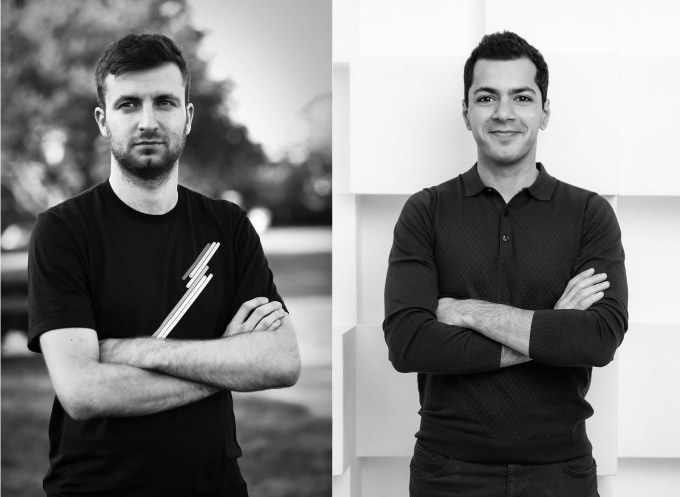
“Our team’s mission is to bring an absolutely new and unique experience to how people interact with each other. We would like to come up with something unique and really fresh,” adds Moiseyenkov, Capture’s CEO (pictured above left, with Hardy).

“We see a huge potential in new social apps despite the fact that there are too many huge players.”

Having heard the full Capture pitch from Hardy I can say it certainly seems like an intriguing idea. Though how exactly they go about selectively introducing the concept will be key to building the momentum needed to power their big vision for the app. But really that’s true of any social product.

Their idea has also hooked a strong line up of seed investors, doubtless helped by the pair’s prior success with Prisma. (If there’s one thing investors love more than a timely, interesting idea, it’s a team with pedigree — and these two certainly have that.)

“I’m happy to have such an amazing and experienced team,” adds Moiseyenkov, repaying the compliment to Capture’s investors.

“Your first investors are your team. You have to ask lots of questions like you do when you decide whether this or that person is a perfect fit for your team. Because investors and the team are those people with whom you’re going to build a great product. At the same time, investors ask lots of questions to you.”

Capture’s investors were evidently pleased enough with the answers their questions elicited to cut Capture its founding checks. And the startup’s team is already ten-strong — and hard at work to get a beta launched in fall.

The business is based in the US and Europe, with one office in Moscow, where Hardy says they’ve managed to poach some relevant tech talent from Russian social media giant vk.com; and another slated to be opening in a couple of weeks time, on Snap’s home turf of LA. 

“We’ll be their neighbors in Venice beach,” he confirms, though he stresses there will still be clear blue water between the two companies’ respective social apps, adding: “Snapchat is really a different product.”

Photomyne raises $5 million for its A.I.-powered photo scanning app

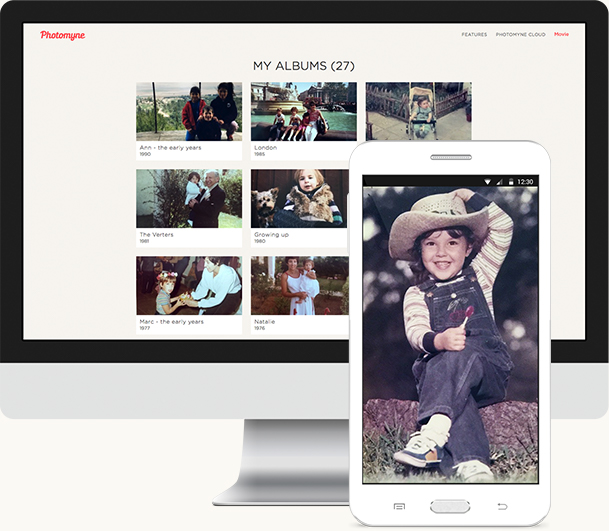
Tel Aviv-based Photomyne, an A.I.-powered app that helps you bring your old photo prints online, has been benefitting from the subscription app boom to the tune of $5 million in Series A funding. Today, the app is used by a million people every month, and 250,000 people pay the $20 annual subscription for the expanded service. This adds a handful of additional features, including the option to build a family website where all your photos are uploaded immediately after being scanned.

There is something of a limited lifetime for apps that convert physical media to digital – at some point, everyone who wants to transition their old media to the web will have done so. Another issue is that some people will make scanning photos a one-time project. They’ll then save all their photos to their own device and cloud storage, and cancel their subscription.

And as those users drop off, physical media will continue to die out.

For those reasons, Photomyne will eventually need to expand into other areas – perhaps scanning other things beyond photos. As it has a couple of patents for things like scanning business cards, documents, and sticky notes, it’s clearly thinking about this, too.

But in the meantime, there’s still an audience of self-appointed family historians, who are making old photos available to their extended families, as well as older folks who grew up in the pre-smartphone era and now want to bring their memories online, too.

By leveraging A.I. technology which runs locally, in real-time, on mobile devices, Photomyne is able to speed up the fairly tedious process of photo scanning using a handheld device. That is, instead of having to focus on one photo – as with Google’s PhotoScan, for example – Photomyne lets you scan multiple photos in a single shot as you flip through the pages of old albums.

It then breaks those up into individual photos by auto-detecting the boundaries.

It also auto-rotates sideways photos, crops the photos, corrects the photo perspective, and saves them in a digital album where you can further filter them, share, or – with the subscription – save locally, backup to the cloud, sync to other devices, or publish to a family website.

The ability to scan more photos in one shot makes the app appealing to those who want to upload their entire collection of old photos to the web, instead of picking and choosing specific photos to import.

In addition, the app’s A.I.-based technology improves over time the more you use it, says Photomyne’s co-founder and CFO Yair Segalovitz.

And soon, the company plans to roll out other advanced features, too, he notes.

“We are focused on a new set of exciting features that we expect to release in the very near future. We intend to offer automatic color correction – such as fixing color decay – and the ability to search interesting photos in our 70 million-plus photo archive,” says Segalovitz.

To date, Photomyne has been downloaded 7 million times and is largely used in the U.S. and in Western Europe, though it’s starting to see growth in China, too.

The Series A round was led by Luxembourg-based Maor, a co-investment tech fund from Philippe Guez and Eric Elalouf. It also included participation from Israeli investors and others from its seed round a couple of years ago. 

With the new funding, the company plans to expand its team of 16 to around 25 and scale the business in Japan and South East Asia, in particular.

Photomyne is a free download on iOS and Android, but the full range of feature is only available to subscribers.

Oval Money app launches its investment products for millennials

Back in April Oval Money launched with the idea of combining expense tracking, saving, and investing into one app, while also adding a social element by enabling its community of users to share tips and suggestions to one another. The idea is to help users grow their savings in less time by teaching them to monitor spending habits and make saving virtually automatic. The company has raised €1.2M in funding, largely from Italian investors.

The startup is launching a raft of investment products for socially-conscious savers.

Beginning with three funds – supporting gender diversity in boardrooms, flexible working and the brands that millennials trust – the investments marketplace will be available to customers in the smartphone app this summer.

The “Women at the Table” fund will allow investors to support companies that ensure that at least 20% of board members are women, while a “Belong but Work Remote” fund promotes the growing flexible jobs economy.

“Generation Millennials” will track the leading consumer brands that millennials are into most.

The three are the first of 20 cause-themed products to be released in the marketplace.

Oval co-founder Benedetta Arese Lucini said: “Young people want to invest in the causes they care about. We’ve been listening to millennials for a long time, and these products will mean not only can we help people start to save towards their futures, but we can provide them with the opportunity to invest in companies which are really making a difference in the world.”

Oval Money uses machine learning to review the individual spending habits of its users, and adjusts saving automatically.

A beta-test of the marketplace begins today. By updating the app, Ovalers will be able to go through an initial set of questions about what type of investor they are and will be encouraged to share with friends. The users that share the most will get a privileged access to the beta

The firm will also launch opportunities to invest in cryptocurrency, insurance and other alternative finance products over the rest of the year.

Also today, it has launched its product to 20,000 tobacconists across Italy via Intesa SanPaolo Group’s bank Banca 5, reaching a so-far-unserved demographic of immigrants and young people. Banca 5, which already provides a physical banking experience through tobacconists, will now be able to offer consumers new, online services through Oval Money’s app.

YouTube rolls its music subscription services into 12 more markets

YouTube has rolled out its music streaming service to a bunch more international markets, adding 12 new countries today, and also launching the premium music video version of the service across the full 17 markets.

In February CEO YouTube chief executive Susan Wojcicki discussed the company’s ambitious expansion plans for the service, saying it was intending to expand to as many as 100 countries.

The first markets for YouTube Music were the U.S., Australia, New Zealand, Mexico and South Korea. The additional markets being added today are: Austria, Canada, Finland, France, Germany, Ireland, Italy, Norway, Russia, Spain, Sweden, and the United Kingdom.

YouTube launched the streamlining revamp of its subscription service offerings in May, routing a streaming music service, called YouTube Music, in pay monthly and ad-supported flavors (the latter with pared back features), to replace Google Play Music; and also announcing YouTube Premium (formerly called YouTube Red) — for music with video streaming.

It also announced new apps and web player in tandem with the service restructuring — which includes features such as dynamic custom recommendations; expansive search options (search by lyrics or generic description); and “thousands” of playlists across genre, mood and activity.

The audio only YouTube Music offering — which in the US is priced at $9.99 monthly (or $14.99 for a family plan) — is intended to compete with the likes of Spotify and Apple Music. While YouTube Premium includes a full video service, albeit for $2 more ($11.99) per month than the YouTube Red service it replaced. (Or $17.99 per month for a Family Plan.) Though it’s currently running a promotion offering the premium service free for the first three months.

As well as offering ad-free music streaming, YouTube Premium includes background listening/playing and downloads across all the platform. Members also get access to all YouTube Originals shows and movies.

The company says current members of YouTube Red and Google Play Music members (including family plans) in the U.S., Australia, New Zealand, and Mexico will automatically receive access to YouTube Premium at their current price.

While Google Play Music subscribers in all other countries will automatically receive access to YouTube Music Premium at their current price as it becomes available in their markets. It also claims nothing is changing for subscribers of Google Play Music — saying users will still be able to access all their purchased music, uploads and playlists.

Execs from DJI, 3DR and Skydio to discuss drones at Disrupt SF 2018

Just how big are drones? According to Gartner, industry revenue topped $6 billion last year and is on track to hit $11.2 billion by 2020. Unmanned aerial vehicles are a huge industry with a broad swath of applications, from hobbyists to agriculture to the military.

At Disrupt SF in September, we’ll be bringing together executives from some of the biggest names in the industry, including enterprise drone software maker 3D Robotics, startup Skydio and the industry leader in commercial and consumer drones, DJI.

Chris Anderson is the CEO of 3DR, the creator of drone analytics enterprise software platform Site Scan. Prior to cofounding the company as a resource for drone hobbyists, Anderson was the long-time editor-in-chief of Wired. 3DR was an early entrant into the consumer drone space but recently left the market and started building software for commercial drone use.

Adam Bry is the found and CEO of Skydio, a Bay Area-based startup that has generated considerable excitement — and funding — with a drone that sports impressive motional tracking for action shots. Bry is a graduate of MIT’s CSAIL program, who previous worked on Google’s Project Wing fixed-wing drone program.

Arnaud Thiercelin is the head of U.S. R&D for DJI. DJI overwhelming dominates making and selling drones and Thiercelin leads teams tasked with implementing technology for developers and enterprise.

We’re excited to have these industry leaders speak at Disrupt. There are countless opportunities in the drone space right now and these leaders are best positioned to discuss to the challenges facing founders entering the market.

Disrupt is September 5-7 at the Moscone Center in San Francisco. Get your tickets today.

The long Cocky-gate nightmare is over

I’ve been wanting to write about Cocky-gate for some time now but the story – a row between self-published authors that degenerated into ridiculousness – seems finally over and perhaps we can all get some perspective. The whole thing started in May when a self-published romance author, Faleena Hopkins, began attempting to enforce her copyright on books that contained “cocky” in the title. This included, but was not limited to, Cocky Cowboy, Cocky Biker, and Cocky Roomie, all titles in Hopkins oeuvre.

Hopkins filed a trademark for the use of the word Cocky in romance titles and began attacking other others who used the word cocky, including Jamila Jasper who wrote a book called Cocky Cowboy and received an email from Hopkins.

After taking up the cause on Twitter and creating a solid example of Streisand Effect, Jasper changed the title of her book to The Cockiest Cowboy To Have Ever Cocked. But other authors were hit by cease and desist letters and even Amazon stepped in briefly as well and took down multiple titles for a short time.

From the Guardian:

Pajiba reported on Monday that the author Nana Malone had been asked to change the title of her novel Mr Cocky, while TL Smith and Melissa Jane’s Cocky Fiancé has been renamed Arrogant Fiancé. Other writers claimed that Hopkins had reported them to Amazon, resulting in their books being taken down from the site.

This went on for a number of weeks with the back and forth verging on the comical…

Hubby: What ya doin' honey?
Me: Working on a dystopian short story inspired by #cockygate.
Hubby: Is it called The Cocky Were-Rooster?
Me:…
Me: Dammit! Now I have to write that!

True Story.
It wound up being "Diary of a Cocky Werecock" https://t.co/qU5XR4Ol4g

— Lara Grey (@authorlaragrey) June 16, 2018

to the serious.

I am so freakin' pissed. Candace Blevins' new book, Cocky Queen, was removed from B&N, iBooks, and Kobo.

IT'S NOT EVEN IN ROMANCE, IT'S WOMEN'S FICTION! #CockyGate pic.twitter.com/LkXl9Ypo3w

— Bianca-Quietly Loud-Sommerland ????? (@BSommerland) June 18, 2018

Hopkins went to court to defend her trademark and then bumped up against the powerful Author’s Guild who supported three defendants including a publicist who was incorrectly named as the publisher of one of the offending titles, The Cocktales Anthology.

“Beyond the obvious issues with the merits, it is evident from the face of the complaint that Plaintiffs failed to conduct a reasonable pre-filing investigation before racing to the courthouse. Indeed, the number and extent of defects alone call into question whether the filing was made in good faith. Plaintiffs’ lack of due diligence failed to uncover the stark difference between a publisher and a publicist, i.e., non-party best-selling author Penny Reid is the former, while Defendant Jennifer Watson is the latter (Ms. Watson’s website even states that she provides “publicist and marketing services” and nowhere indicates that she writes or publishes books),” wrote Judge Alvin Hellerstein of the Southern District of New York. “In sum, there is nothing meritorious about Plaintiffs’ situation, let alone urgent or irreparable. Defendant Watson cannot offer Plaintiffs the relief they seek as she bears no responsibility for The Cocktales Anthology they wish to enjoin from further publication. Defendant Crescent’s first allegedly infringing book was published over nine months ago. Plaintiffs have admitted that her use of “cocky” in titles would not likely cause confusion as to source or affiliation; moreover, she has publicly stated that she has not suffered lost sales.”

Online communities are wonderful but precarious things. One or two attacks by bad – or even well-meaning – actors can tip them over the edge and ruin them for everyone. In fact, Cocky-gate has encouraged other authors to try this tactics. One writer, Michael-Scott Earle, has attempted to register the words “Dragon Slayer” in a book title and there is now a Twitter bot that hunts for USPTO applications for words in titles.

Now that the cocky has been freed, however, it looks like the romance writers of the world are taking advantage of the opportunity to share their own cocky stories.

? COCKY QUICKIES ?

You’ve heard about the scandal, you’ve read all of the reports. Now it’s time to forget all that hoopla and dive into these short, emotionally charged reads filled with cocky men and women in Cocky Quickies. https://t.co/Wi81M6SnXO #cocky #cockygate pic.twitter.com/UEirCxRdzC

— ? Nicole Morgan ? (@AuthorNicMorgan) June 17, 2018

Google’s Datally app adds more ways to limit mobile data usage

In November, Google introduced Datally, a data-saving app largely aimed at emerging markets where users often rely on prepaid SIM cards, and don’t have access to all-you-can-eat unlimited data plans. The app lets users granularly control which apps can use data, which resulted in a 30% savings on data usage during pilot testing and now saves users 21%, on average. Today, Google is giving Datally an upgrade with several new features that will help users cut data usage even further.

One key feature is the introduction of daily limits, which allow you to control your data usage on a per-day basis. This one is more about creating better habits around data consumption, so you don’t accidentally burn through too much data in a day, then end up without any data left before the month ends.

This also ties into to Google’s larger push to give users more insights into their own behavior when using mobile devices, and more tools to combat the addictive nature of smartphones.

The company in May announced new time management features for Android users, as well as new features to help users silence their phones and wind down at bedtime. It also has software for parents to limit screen time for their children.

While the Datally feature is primarily about conserving data, it acknowledges that it’s often easy to get sucked into your smartphone and lose track of how much time – and then, consequently, how much mobile data – you want to spend.

Another new Datally feature lets you enable a guest mode where you control how much data someone borrowing your phone can use – helpful in those situations where phones are shared among family members.

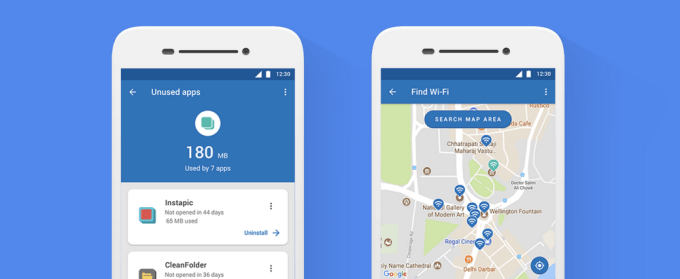
The “Unused Apps” feature, meanwhile, highlights those apps you’ve stopped using but could still be leaking data. Google notes that, for many people, 20 percent of mobile data is from apps using data in the background that haven’t been opened for over a month. Unused Apps will find those culprits so you can uninstall them, it says.

And finally, a new Wi-Fi Map shows all the nearby Wi-Fi networks so you can find those with a good signal and stop using your mobile data.

Though Datally is aimed at helping the “Next Billion Users” come online, it’s not limited to emerging markets. Anyone concerned with data usage can give it a shot.

The new additions are rolling out to Datally today, says Google.

The Android app, which has been downloaded over 10 million times, is free on Google Play.

iOS 12 will automatically share your iPhone’s location with 911 centers

Apple this morning announced a new feature in iOS 12 which will automatically share your location with first responders when U.S. users dial 911 using their iPhone. The move is meant to address the problems with dialing emergency services from a cell phone, where outdated infrastructure has made it difficult to obtain a mobile caller’s location quickly and accurately, Apple says.

Approximately 80 percent of 911 calls come from cell phones, however, which is why it’s critical to fix this system.

In 2015, Apple launched HELO (Hybridized Emergency Location), which would estimate a caller’s location using GPS and Wi-Fi Access points. Today, Apple said it will additionally use RapidSOS’s Internet Protocol-based data pipeline to securely share this HELO location data with 911 centers, to improve the response times even further.

RapidSOS’s technology integrates with existing software installed at many 911 centers, which is how they’ll receive the data.

Apple also noted the FCC is requiring mobile operators to locate callers within 50 meters at least 80 percent of the time by 2021. Its location services exceed this requirement today, and now 911 centers will have access to the same accuracy.

In typical Apple fashion, the company stressed the new feature’s data privacy. User location data cannot be shared for non-emergency purposes, and only the 911 center will have access to the location during the call itself.

The 911 support was not announced during Apple’s software-heavy WWDC keynote earlier this month, where a number of other privacy, security and A.I.-powered features were introduced as coming later this year in iOS 12. Typically, the new version of Apple’s mobile operating system is release to the public during September, and that should hold true for iOS 12 as well.

“Communities rely on 911 centers in an emergency, and we believe they should have the best available technology at their disposal,” said Tim Cook, Apple’s CEO, in a statement about the new feature. “When every moment counts, these tools will help first responders reach our customers when they most need assistance.”


Toss, Korea’s top payment app, raises $40M from Sequoia China and Singapore’s GIC

The largest payment app in South Korea, Toss, has pulled in $40 million in fresh investment from Singapore sovereign wealth fund GIC and Sequoia China.

The deal for Viva Republica, Toss’s parent company, comes just over a year after it raised $48 million from payment giant PayPal and others. There’s no disclosed valuation for this newest round, but we do know that it is a ‘bridge’ intended to bring new investors in and help accelerate the business for a large raise further down the line. (It is also the first Korean investment for both GIC and Sequoia China.)

Not that the business seems to need much more impetus for acceleration, growth is already strong. Viva Republica says that Toss’s registered user base has doubled over the past year to each eight million consumers, while it claims the app is processing $1.4 billion in transaction volume per month. The company forecasts that its annual transaction run rate will surpass $18 billion.

Back in 2017 when we reported on the PayPal -backed round, founder and CEO SG Lee — a dentist until he saw the potential for a mobile payment service — told us that Toss had begun to introduce additional services beyond peer-to-peer payments. That’s included consumer financing products, like loans, micro-insurance and cross-border payments.

Toss doesn’t have Korea to itself, its main rival is Kakao, the country’s most popular messaging app. In recent times Kakao, a $7 billion company, had opened business units in a range of industries including ride-hailing, content and payment. Its Kakao Pay business is backed by Alibaba, and it plugs into Kakao the chat app to allow peer-to-peer transfers with other consumer finance services.

Lee, the Viva Republica CEO, previously said he doesn’t fear Kakao since in his mind it is creating a b2b business while Toss is focused wholly on the consumer experience. Now it has a couple more seasoned backers in its corner too, courtesy of this new investment.

Note: The original version of this article has been updated to correct that transaction volume is $1.4 billion, while Toss sees “a total trackable monthly transaction volume of about $10 billion.” That latter figure represents all transactions made from accounts linked to Toss, i.e. the total transaction volume possible if all Toss users routed their money via the service. That, paired with transaction volumes, shows Toss is around the 15 percent mark for covering all transactions from linked bank accounts on average.

This simple robot offers more cowbell

Fellas, you’re gonna want that cowbell. And what better way to get that cowbell than with an automatic cowbell-playing robot that uses simple components to create a musical experience like no other. The system, built over at Adafruit, includes a simple Arduino controller, a potentiometer to control the speed of the cowbell hammer, and a few audio systems to play back some BÖC and the immortal words of The Bruce Dickinson: “More cowbell.”

It even includes a controller to activate a fog machine for a little extra rock and roll.

You can download the code for the system here and there is a full build guide here. Ultimately this is one of the silliest DIY projects I’ve seen in a while but, as you may recall, the only prescription for certain fevers is obviously more cowbell.