Google Maps is no longer #flatearth

Go to Google Maps and zoom out. Halfway out, the map’s perspective changes from a traditional flat map view to an interactive globe. Zoom all the way out and the Earth is presented as a globe with landmasses of the appropriate size. Greenland is no longer the size of Africa and all is right with the world.

On flat maps, it’s impossible to represent land mass size on a relative scale. Objects in the north and south become distorted as the flat map compensates for the flattening of the globe. This is most evident in the commonly used Mercator projections that properly represents the size of land around the equator but super-sizes land in the Arctic and Antarctic.

Now, when Google Maps is used on Desktop, users will see the appropriate size of land masses. The update is great but I have yet to find the giant ice wall that’s preventing all of life from sliding off the side of the flat earth and onto the back of the giant turtle we’re riding through the vast emptiness of space.

With 3D Globe Mode on Google Maps desktop, Greenland's projection is no longer the size of Africa.

Just zoom all the way out at https://t.co/mIZTya01K3 ?? pic.twitter.com/CIkkS7It8d

— Google Maps (@googlemaps) August 2, 2018

Epic Games sidesteps the Play Store with Fortnite for Android launch

Epic Games continues to spread the love… to consumers, at least.

Following the launches of Fortnite Battle Royale on iOS earlier this year and Fortnite for the Nintendo Switch earlier this summer, Epic Games is now confirming that the Android version of the game will be available exclusively through the Fortnite website.

Users can visit Fortnite.com and download the Fortnite Launcher, which will then allow them to load Fortnite Battle Royale onto their devices.

When asked why Epic would choose to distribute the game via their own website instead the more official channel of the Google Play Store, Epic Games CEO Tim Sweeney told TechCrunch in an email:

On open platforms like PC, Mac, and Android, Epic’s goal is to bring its games directly to customers. We believe gamers will benefit from competition among software sources on Android. Competition among services gives consumers lots of great choices and enables the best to succeed based on merit.

Of course, Sweeney didn’t mention the 30 percent fee that goes to Google each time a user makes an in-app purchase, but it’s hard to imagine that’s not a factor in the decision.

In-game purchases are a huge source of revenue for Epic. After all, Fortnite Battle Royale is still a free download across all platforms. That said, Epic Games has already made more than $1 billion on the game through in-game purchases alone. For context on that 30 percent fee, Epic Games is making approximately $2 million per day as of July, according to Sensor Tower.

Using a virtual currency called V-Bucks, players can buy skins, pick axes, gliders and emotes, none of which offer a competitive advantage. Epic declined to clarify if mobile users have the same purchasing behavior as PC and console players. But if they do on Android, Epic will make 100 percent of the revenue.

Epic Games also declined to give an exact date for the launch, still simply saying that the game will launch this “summer.”

That said, you can expect to see the same game, and the same cross-play compatibility, on the Android version of Fortnite Battle Royale when it launches.

One potential drawback to the launch will be security. As Android Police points out, loads of people will enable unknown sources in settings, forgetting to turn it off after, which could end up being a problem down the line.

We’ll be sure to let you know more specific information around the launch date and supported devices as soon as we hear more from Epic Games.

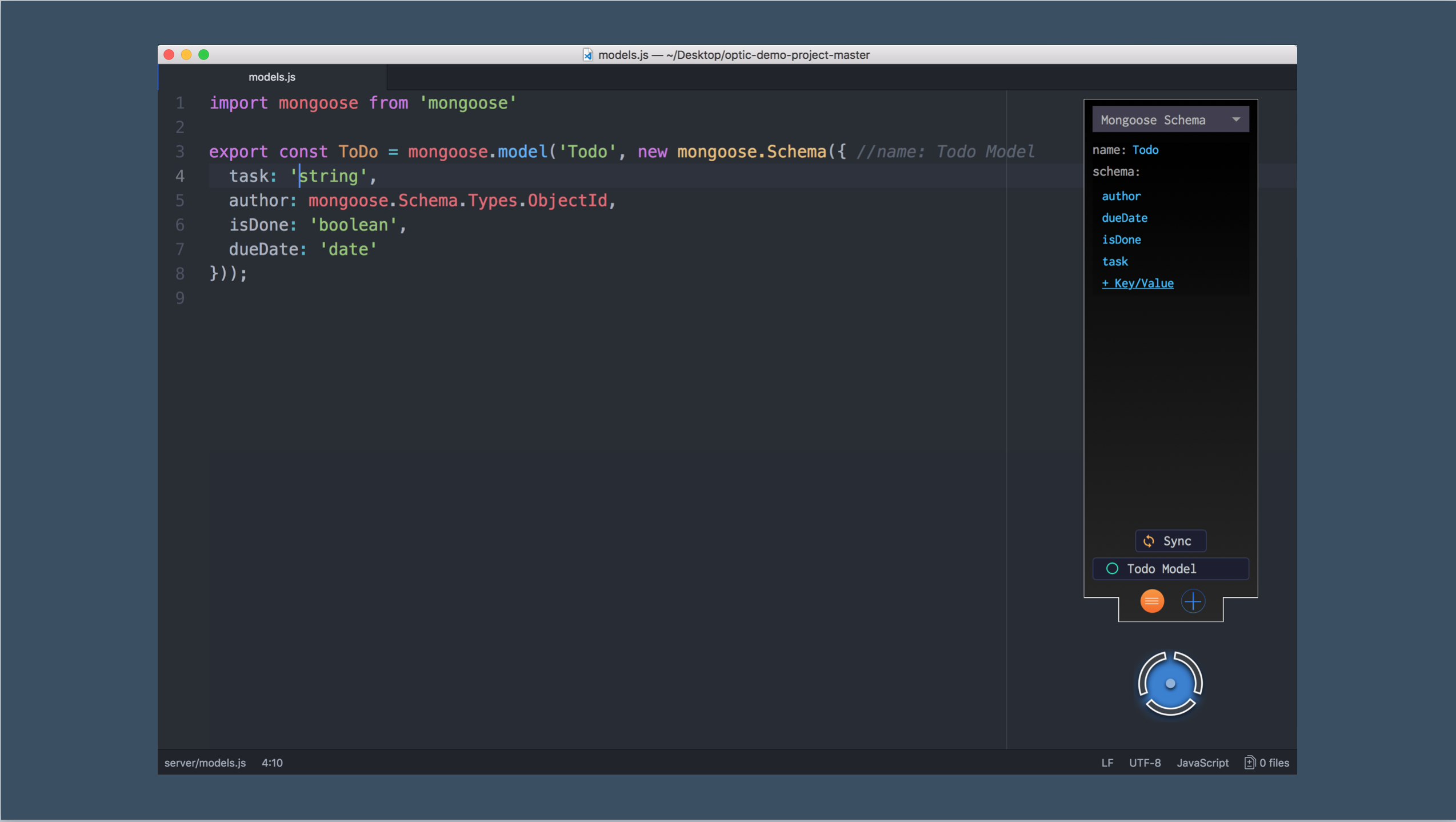
Optic wants to help developers drop boilerplate code into their development flow

Stack Overflow and other various sites and tools have made it easy to Google search for solutions — or code snippets — to the easier parts of putting together an app or program for developers, but Aidan Cunniffe wants to take that one automated step further.

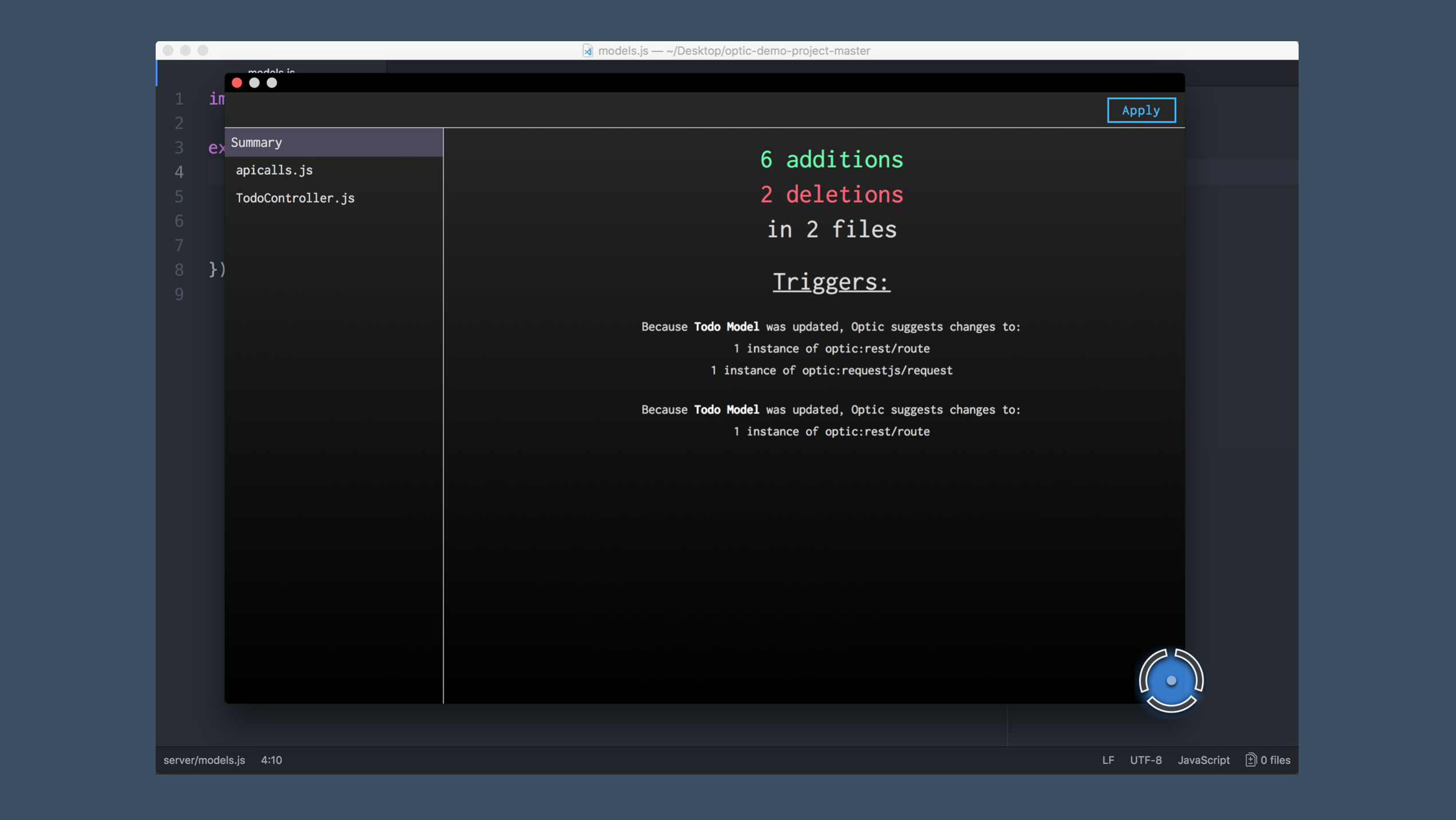
That’s the premise behind Optic, which gives developers a way to grab very common coding use cases that they can drop right into their code. It works by finding the sort of routine additions developers might need, like how to create a form that will add a user to a database, as well as all the ancillary parts that come with that like tests. Optic works within a developer’s IDE, so they don’t have to look externally for the code they need, which is compiled together from online sources. Right now it works for JavaScript, with Python next on the docket. Optic is coming out of Y Combinator’s summer 2018 class.

“The biggest problems are when people have a bunch of systems that have to talk together,” Cunniffe siad. “Optic’s really good at syncing that code. If you change something on the backend, it’ll update the front end. That’s a big problem that anyone who develops anything complex. We generate a lot of unit tests for people, speed up the development of new features, and larger companies are using us as an advanced linter to ensure developers write code that conforms to their standards.”

Optic works as a little Clippy-like object within an IDE, where developers can search for things to add to a slice of code. The processing is all done locally, and the project itself is open source with a free version (in addition to a paid version for larger teams). While there are a number of other code-generating tools, Cunniffe says Optic competes primarily with those kinds of Google searches for Stack Overflow results, and one of the primary reasons it’s better is that any changes on any part of the code will propagate through existing code throughout a system.

“Code generators had been around for a long time,” Cunniffe said. “There’s a ton of tradeoffs to tools that existed, people wanted stuff that was useful but didn’t change their workflow. They could also only be used once, so there’s not as much utility, and there wasn’t work to maintain the code. [Code search engines] are really useful, but the biggest drawback they have is it’s not your code. What sets us apart is it’ll help you generate those snippets but it’ll do that in a smart way. All the args and parameters are variables in your own code.”