YC-backed Sterblue aims to enable smarter drone inspections

As government regulation for commercial drone usage seems to be trending in a very positive direction for the companies involved, there is an ever-growing opportunity for drone startups to utilize artificial intelligence to deliver insights without requiring much human effort.

Sterblue, a French drone software startup that is launching out of Y Combinator’s latest class of companies, is aiming to get off-the-shelf drones inspecting large outdoor structures up close with automated insights that identify anomalies that need a second look.

The startup’s software is specifically focused on enabling drones to easily inspect large power lines or wind turbines with simple automated trajectories that can get a job done much quicker and with less room for human error. The software also allows the drones to get much closer to the large structures they are scanning so the scanned images are as high-quality as possible.

Compared to navigating a tight urban environment, Sterblue has the benefit of there being very few airborne anomalies around these structures, so autonomously flying along certain flight paths is as easy as having a CAD structure available and enough wiggle room to correct for things like wind condition.

Operators basically just have to connect their drones to the Sterblue cloud platform where they can upload photos and view 3D models of the structures they have scanned while letting the startup’s neural net identify any issues that need further attention. All and all, Sterblue says their software can let drones get within three meters of power lines and wind turbines, which allows their AI systems to easily detect anomalies from the photos being taken. Sterblue says their system can detect defects as small as one millimeter in size.

The startup was initially working on their own custom drone hardware but decided that their efforts were best spent supporting off-the-shelf devices from companies like DJI, with their software solution sitting on top. The founding team is composed of former Airbus employees that are focusing early efforts on utility companies, with some of the first customers based in Europe, Africa and Asia.

Incentivai launches to simulate how hackers break blockchains

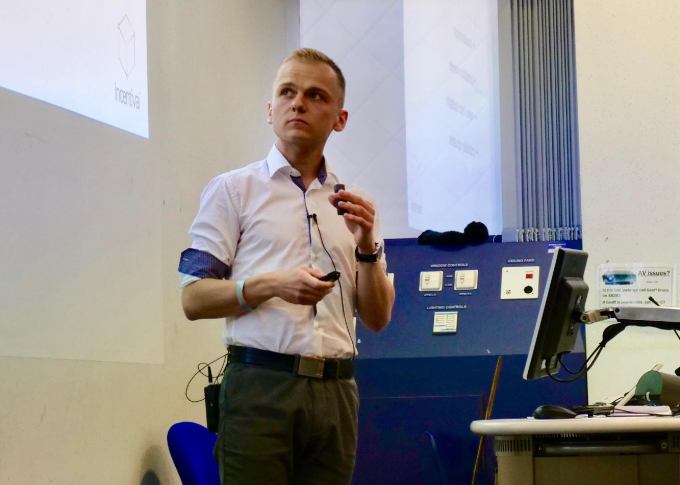
Cryptocurrency projects can crash and burn if developers don’t predict how humans will abuse their blockchains. Once a decentralized digital economy is released into the wild and the coins start to fly, it’s tough to implement fixes to the smart contracts that govern them. That’s why Incentivai is coming out of stealth today with its artificial intelligence simulations that test not just for security holes, but for how greedy or illogical humans can crater a blockchain community. Crypto developers can use Incentivai’s service to fix their systems before they go live.

“There are many ways to check the code of a smart contract, but there’s no way to make sure the economy you’ve created works as expected,” says Incentivai’s solo founder Piotr Grudzie?. “I came up with the idea to build a simulation with machine learning agents that behave like humans so you can look into the future and see what your system is likely to behave like.”

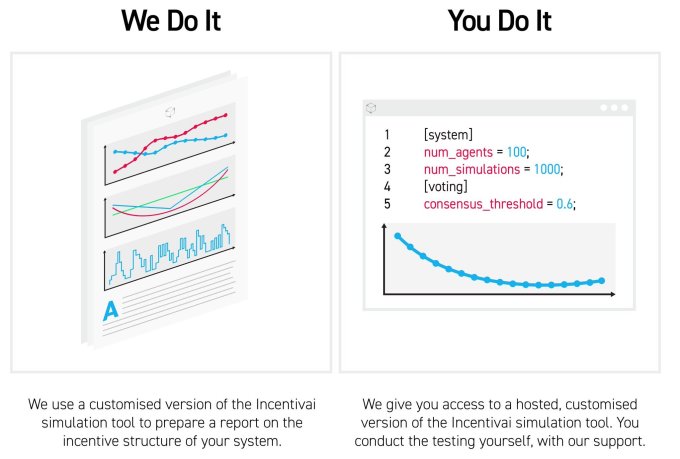
Incentivai will graduate from Y Combinator next week and already has a few customers. They can either pay Incentivai to audit their project and produce a report, or they can host the AI simulation tool like a software-as-a-service. The first deployments of blockchains it’s checked will go out in a few months, and the startup has released some case studies to prove its worth.

“People do theoretical work or logic to prove that under certain conditions, this is the optimal strategy for the user. But users are not rational. There’s lots of unpredictable behavior that’s difficult to model,” Grudzie? explains. Incentivai explores those illogical trading strategies so developers don’t have to tear out their hair trying to imagine them.

Protecting crypto from the human x-factor

There’s no rewind button in the blockchain world. The immutable and irreversible qualities of this decentralized technology prevent inventors from meddling with it once in use, for better or worse. If developers don’t foresee how users could make false claims and bribe others to approve them, or take other actions to screw over the system, they might not be able to thwart the attack. But given the right open-ended incentives (hence the startup’s name), AI agents will try everything they can to earn the most money, exposing the conceptual flaws in the project’s architecture.

“The strategy is the same as what DeepMind does with AlphaGo, testing different strategies,” Grudzie? explains. He developed his AI chops earning a masters at Cambridge before working on natural language processing research for Microsoft.

Here’s how Incentivai works. First a developer writes the smart contracts they want to test for a product like selling insurance on the blockchain. Incentivai tells its AI agents what to optimize for and lays out all the possible actions they could take. The agents can have different identities, like a hacker trying to grab as much money as they can, a faker filing false claims or a speculator that cares about maximizing coin price while ignoring its functionality.

Incentivai then tweaks these agents to make them more or less risk averse, or care more or less about whether they disrupt the blockchain system in its totality. The startup monitors the agents and pulls out insights about how to change the system.

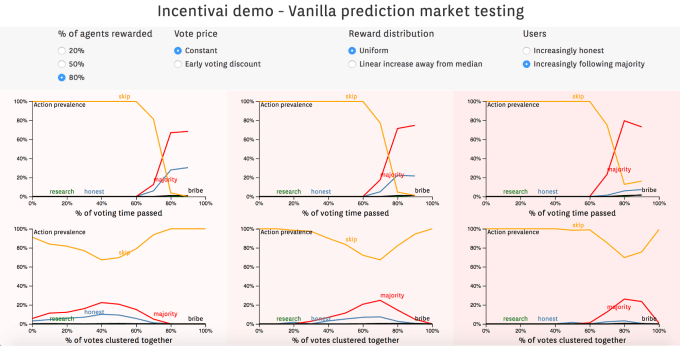
For example, Incentivai might learn that uneven token distribution leads to pump and dump schemes, so the developer should more evenly divide tokens and give fewer to early users. Or it might find that an insurance product where users vote on what claims should be approved needs to increase its bond price that voters pay for verifying a false claim so that it’s not profitable for voters to take bribes from fraudsters.

Grudzie? has done some predictions about his own startup too. He thinks that if the use of decentralized apps rises, there will be a lot of startups trying to copy his approach to security services. He says there are already some doing token engineering audits, incentive design and consultancy, but he hasn’t seen anyone else with a functional simulation product that’s produced case studies. “As the industry matures, I think we’ll see more and more complex economic systems that need this.”

Sino-US investment firms are targeting over $4 billion for new funds launched this year

As limited partners increasingly demand greater exposure to emerging market opportunities, venture capital firms with a focus on Asia are bulking up their funds and chasing deals in an increasingly competitive race to own stakes in the next generation of local startups with global aspirations.

Over the last year, firms, including DCM Ventures, GGV CapitalMatrix Partners China and Qiming Venture Partners, have all significantly increased the targets for their new funds. If each firm hits their targets, there’s roughly $4.4 billion in new capital that could be flooding into an already scorching market for investment into Chinese startups, according to SEC filings.

The largest of these new funds, by far, is GGV Capital, which has registered a new $1.8 billion fund with the Securities and Exchange Commission. Qiming Ventures has targeted $900 million for its latest fund, while DCM Ventures and Matrix Partners China are each looking for $750 million for their own new investment vehicles, according to securities filings.

Managing partners at the firms did not respond to a request for comment.

These four firms are among the last standing from the initial flood of U.S.-based venture capital firms that poured into Asia (and China specifically) in the first decade of the new millennium.

While marquee names like Kleiner Perkins, DFJ and others foundered in China, these four firms (along with global venture capital juggernauts like Sequoia Capital and NEA) put down deep roots and notched notable wins with investments in startups like Didi Chuxing, Kuaidi, Meituan-Dianping, Xiaomi and many more.

In part, these massive new funds are simply a response to the new world that venture investors find themselves in thanks to the massive amounts of capital raised by SoftBank with its $100 billion Vision Fund, or Sequoia with its $9 billion new investment vehicle.

Firms are also under pressure to raise more capital from limited partners, who want to reduce their exposure and consolidate their own investments around venture firms with track records of success and the ability to deploy capital into larger checks.

Couple those facts with the (still) low cost of capital given where interest rates are, and the sustained growth of technology companies across emerging market geographies, and you have a more willing pool of investors that want to commit more capital to emerging technology ecosystems (this is happening in Latin America, too).

But there are also some contours of China’s competitive environment that are pushing these venture capital firms to raise increasingly larger funds.

One is the sheer size of the opportunity that exists for new technology companies in China. As the WeChat messaging service increasingly evolves into a new operating system, there are opportunities to scale quickly with larger infusions of capital to capture the market.

Like their peers in the U.S., Chinese companies are also delaying their public offerings and spending more time to build a better outcome with their IPOs. That’s putting pressure on earlier-stage investors to raise capital so they don’t get crowded out in those later-stage rounds.

Chinese entrepreneurs are also often putting in their own money to finance companies at the earliest stages, which means startups are more mature when they’re seeking their first round. It’s this phenomenon that leads to the $100 million Series A and B rounds that crop up in the Chinese market more regularly than in the U.S.

Netflix tests video promos in between episodes, much to viewers’ dislike

Netflix is testing video promos that play in between episodes of shows a viewer is streaming, the company confirmed to TechCrunch. The promos are full-screen videos, personalized to the user, featuring content Netflix would have otherwise suggested elsewhere in its user interface – like on a row of recommendations, for example. The promos also displace the preview information for the next episode being binged, like the title, description, and thumbnail that previously appeared on the right side of the screen.

The test was first spotted by Cord Cutters News, following a Reddit thread filled with complaints. A number of Twitter users are angrily tweeting about the change, too. (See below examples.)

We understand the introduction of promos in between the episodes is not a feature Netflix is rolling out to its subscribers at this time.

Instead, it’s one of the hundreds of tests Netflix runs every year, many of which are focused on how to better promote Netflix’s original programming to its customers.

This test is currently live for a small percentage of Netflix’s global audience.

And unlike some prior tests, the promos may feature any content in Netflix’s catalog – not just its original programming.

There is some misinformation about the way the test works out there because of what may be user error on the part of the original Reddit user, or an undocumented bug.

Image credit: Reddit user WhyAllTheTrains via this post

The original Reddit post said these new video promos are “unskippable,” noting there’s a Continue button with a countdown timer on it that looks similar to the one you’d see on a YouTube ad.

But we understand that the test in question does allow users to push that Continue button at any time to move forward to the next episode.

The promos, in other words, are interruptive, but they are not unskippable.

Needless to say, consumer reaction to these promos – which consumers perceive as advertisements – has been fairly critical so far. Netflix is a paid subscription service, not an ad-supported one like Hulu with Limited Commercials. That means customers expect on-demand viewing with no ads. And they think of anything that disrupts their viewing as an advertisement, as a result.

But Netflix is always trying to figure out how to better showcase its content for subscribers, in order to help them discover new shows and keep them engaged.

It has run many experiments like this over the years, not all of which pan out. For example, last year it toyed with pre-roll video previews, and more recently it began a test that promotes its shows on the background of the login screen.

Only when Netflix sees data that proves a test increases user engagement or another metric it cares about will it roll out the feature to all subscribers. That’s been the case with those auto-playing trailers, for instance. While not necessarily beloved, they seem to be doing the job.

The company’s longer-term goal is to make its user interface more video-rich and personalized, so it’s not surprising that it’s finding new ways to insert video into that experience.

Netflix, reached for comment about the new test, offering the following statement:

At Netflix, we conduct hundreds of tests every year so we can better understand what helps members more easily find something great to watch. A couple of years ago, we introduced video previews to the TV experience, because we saw that it significantly cut the time members spend browsing and helped them find something they would enjoy watching even faster. Since then, we have been experimenting even more with video based on personalized recommendations for shows and movies on the service or coming shortly, and continue to learn from our members.

In this particular case, we are testing whether surfacing recommendations between episodes helps members discover stories they will enjoy faster. It is important to note that a member is able to skip a video preview at anytime if they are not interested.

Tweets from testers:

@netflix REALLY just played an ad between episodes of Grey’s Anatomy. Netflix officially ain’t shit. Ads AND they don’t have One Tree Hill? Bye Felicia. That’s it. I’ve had both for a while but @hulu has now taken over my household.

— Sierra C. Johnson (@si8erra) August 17, 2018

@netflix for the record, this new ad setup that you have between episodes is stupid. It does not make me want to watch more shows, it just irritates me that I can’t read the preview for the next episode. Get rid of this shit!

— Starfox51315 (@Starfox51315) August 17, 2018

.@netflix make it stop! Make the ads after a show I watch stop!!!

— Frank Remley (@FrankRemley) August 17, 2018

Hey @netflix I can tolerate the ads at the top of my list of shows but between every episode I watch is getting stupid

— Lee (@dogmeat707) August 17, 2018

Wow. @netflix added ads for their shows inbetween episodes. #really

— Rowena Slytherin (@SaucySlytherin) August 16, 2018

@netflix did you seriously just hit me with an ad for your trash anime what the fuck

— Intergalactic Tham (@Tham1700) August 17, 2018

@netflix, I don't need ads in between episodes.

— Stacey (@stascream) August 17, 2018

@netflix I don’t like these ads you’ve started sliding in between my episodes of The Office! I’m well aware of what originals are on Netflix – don’t interrupt my binge watching to shove them down my throat!

— Googie (@MaximumGoogie) August 17, 2018

@netflix if you bring ads to your programming, I will have no reason to continue. I pay for your programming to avoid commercials. Just a customers input.

— JennyB (@itsgonnabfine) August 17, 2018

@netflix Please don't start forcing me to look at ads in-between episodes. It's bad enough I'm forced to watch a clip of some original show every time I open Netflix. I don't want to watch Orange is the New Black or Insatiable or The Package.

— Carol Ann (@hiicatc) August 17, 2018

https://t.co/KmtwCphVMu Exactly my reaction ?? Please don't @netflix ? #netflix #ads via @comicbook https://t.co/d8TenOdOp4

— Chris Giddings (@cgidz89) August 17, 2018

This is new and I don't like it one bit. @netflix you have put drops/ads for content you've produced between episodes of whatever I'm watching. Don't I already pay for your service and see your content first when I load your app?

— Matt Postma (@TD_Postie) August 17, 2018

Hey @netflix putting ads for your other shows between episode of something I am watching ruins what makes Netflix good. It makes me want to switch to other services. Please stop.

— Adam Cullen (@Fictonia) August 17, 2018

Gillmor Gang: Private Lives

The Gillmor Gang — Frank Radice, Keith Teare, Michael Markman and Steve Gillmor . Recorded live Tuesday, August 7, 2018.

Waiting for the midterms, Twitter meets the Constitution, uncommon carriers, straw man superheros.

G3: Helping Hands — Elisa Camahort Page, Francine Hardaway, Maria Ogneva and Tina Chase Gillmor. Recorded live Friday, August 3, 2018.

@stevegillmor, @fradice, @mickeleh, @kteare

Produced and directed by Tina Chase Gillmor @tinagillmor

Liner Notes

Live chat stream

The Gillmor Gang on Facebook

G3: Helping Hands

G3 chat stream

G3 on Facebook

Kiiroo launches an adventure in bi-directional teledildonics

In the future everyone will be naked for fifteen minutes. It’s with this novel thought in mind that I connect with a model named Nazanin who will walk me through the new world of bi-directional teledildonic cam life.

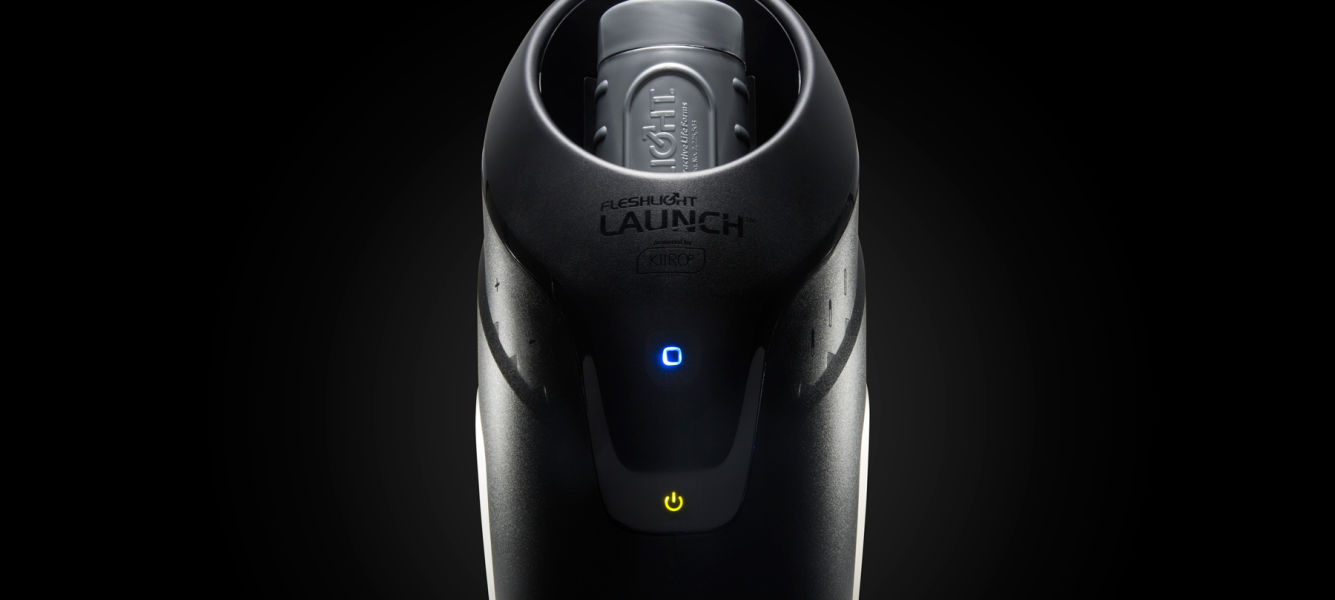
I was there to test a new device from Kiiroo called the Kiiroo Launch. This novel sex jar connects with a Flashlight – essentially a masturbator – and can send and receive signals from a remote dildo. When I first explored the Kiiroo system three years ago and found it fascinating although, arguably, it was like having sex with a 3D printer. And so I was ready to work with Nazanin.

This is going to be NSFW by the way.

Bi-directional, you say?

In the world of cam-based teledildonics the models usually wear some sort of vibrator connected to a tipping system. When the viewer tips them the model’s vibrator vibrates, adding a frisson of interactivity to what is usually a one-way street. This became the norm for most cam sites and the Lush from Lovense is a popular choice in the current cam world.

What Kiiro has done is add that level of interactivity to its offerings. The Launch, for example, can send sensations to other devices including the OhMiBod, the We-Vibe, and the Kiiroo Pearl. You can either vibrate any of these things with tips or, in some cases, send signals from the Launch to the vibrator which sort of mimic your movements in real time.

Cam site Flirt4Free is the first site to enable this functionality and was also one of the first to enable Kiiroo in general, allowing models to send sensations to viewers using a robotic sex jar.

I told you this would be NSFW.

Sex jar, you say?

The experience, for the most part, was quite pleasant. The Launch is an excellent device – Engadget loved it – and it is far superior to the original Kiiroo Onyx I reviewed a few years ago. The Launch is a massive thing that holds an entirely separate sex toy inside it and it literally looks like a giant black egg sack.


I connected with the model using an app called Feel Connect that uses QR codes to link two phones or devices. In this case I linked to Nazanin’s room directly during a private session. Private sessions on Flirt4Free are paid in credits and you get 1050 credits for $100. Each model sets up their own pricing system – 40 credits per minute, for example – and once you’re in private you can talk, flirt, and show each other your bits.

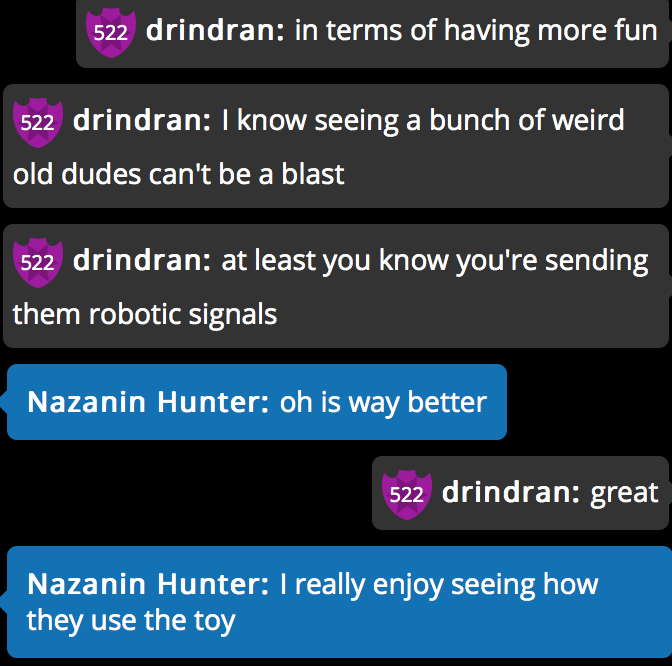
In this case we were testing a device for science so Nazanin and I began a mating dance involving the swapping of QR codes and the preparation of various robotic attachments. The game proceeded apace with my signals reaching her and hers reaching me and I found myself asking fewer and fewer journalistic questions as the interview continued. She said she liked the feelings I was sending and I enjoyed the feelings she sent. It was, in the end, like a Slack room but naked.

“Up until now, performers have been using ‘read-only’ interactive devices, which react to the wildly popular tip-by-sound functionality,” said Flirt4Free President Greg Clayman.
“With compatible devices, clients can now play with their device, causing the model’s device to react- and the model can also control their device, resulting in the most realistic, mind-blowing experience ever!”

Ultimately I suspect most of us will have something like this in the home. Given the prevalence of masturbation in the human mammal and our lifelong dedication to technology, I can imagine this being just another way for all of us to get off. While it’s not perfect – my battery went dead during the session – nothing really is and I suspect the camaraderie and hearty hail-fellow-well-met nature of video sex will make a few converts over the next few years.

Ultimately tech touches everything. The fact that I’m able to send a message – be it an email or a vibration – around the world is fascinating. And as tech enters our lives more and more completely tools like the Launch will become commonplace. We trade a lot for this evolution of pleasure, to be sure, but we gain much as well. Nazanin said she liked it too, which was nice.

I told you this was going to be NSFW, didn’t I?

Google gives its AI the reins over its data center cooling systems

The inside of data centers is loud and hot — and keeping servers from overheating is a major factor in the cost of running them. It’s no surprise then that the big players in this space, including Facebook, Microsoft and Google, all look for different ways of saving cooling costs. Facebook uses cool outside air when possible, Microsoft is experimenting with underwater data centers and Google is being Google and looking to its AI models for some extra savings.

A few years ago, Google, through its DeepMind affiliate, started looking into how it could use machine learning to provide its operators some additional guidance on how to best cool its data centers. At the time, though, the system only made recommendations and the human operators decided whether to implement them. Those humans can now take longer naps during the afternoon, because the team has decided the models are now good enough to give the AI-powered system full control over the cooling system. Operators can still intervene, of course, but as long as the AI doesn’t decide to burn the place down, the system runs autonomously.

The new cooling system is now in place in a number of Google’s data centers. Every five minutes, the system polls thousands of sensors inside the data center and chooses the optimal actions based on this information. There are all kinds of checks and balances here, of course, so the chances of one of Google’s data centers going up in flames because of this is low.

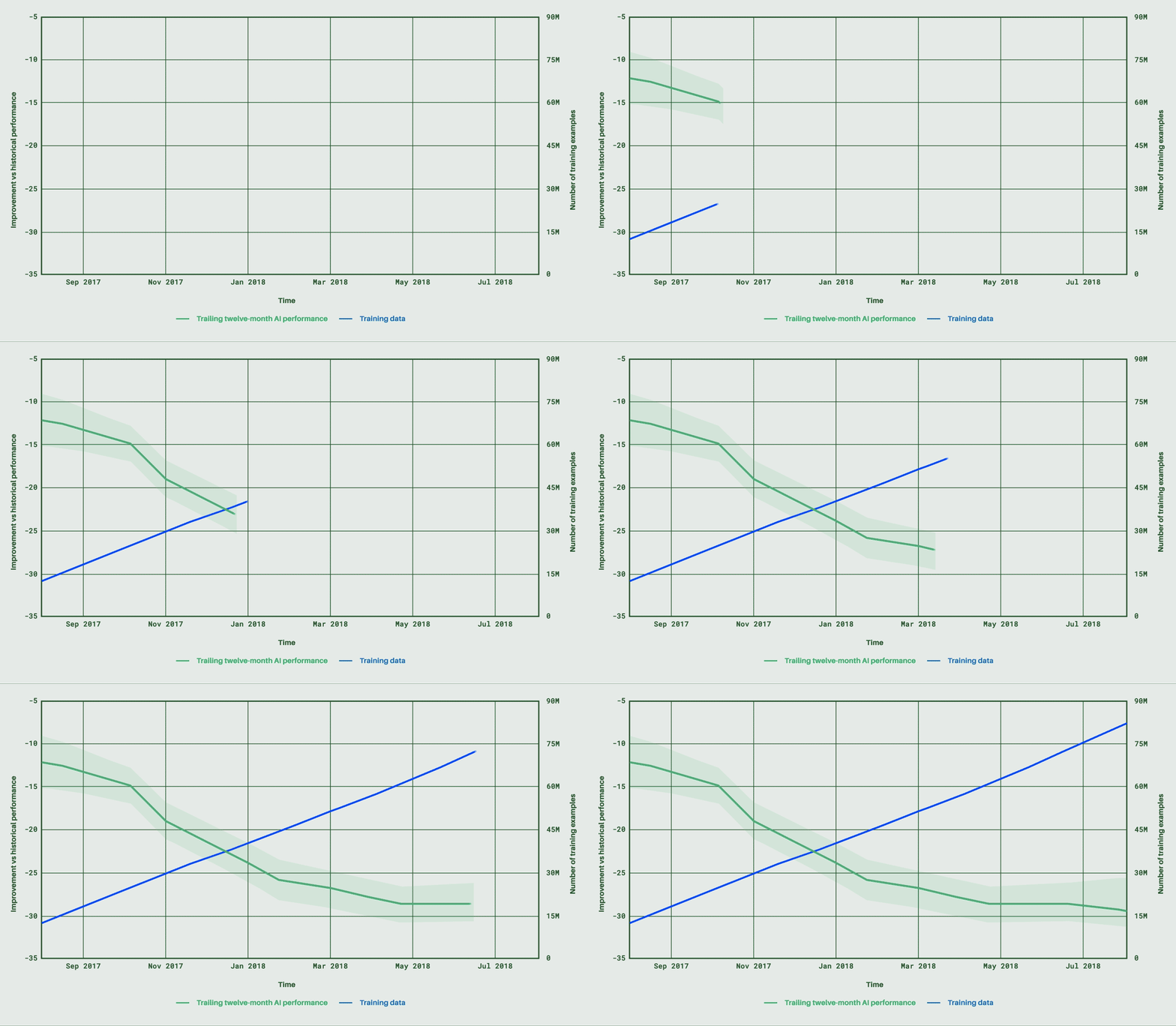
Like most machine learning models, this one also became better as it gathered more data. It’s now delivering energy savings of 30 percent on average, compared to the data centers’ historical energy usage.

One thing that’s worth noting here is that Google is obviously trying to save a few bucks, but in many ways, the company is also looking at this as a way of promoting its own machine learning services. What works in a data center, after all, should also work in a large office building. “In the long term, we think there’s potential to apply this technology in other industrial settings and help tackle climate change on an even grander scale,” DeepMind writes in today’s announcement.

Tweetbot loses several key features ahead of Twitter’s API change

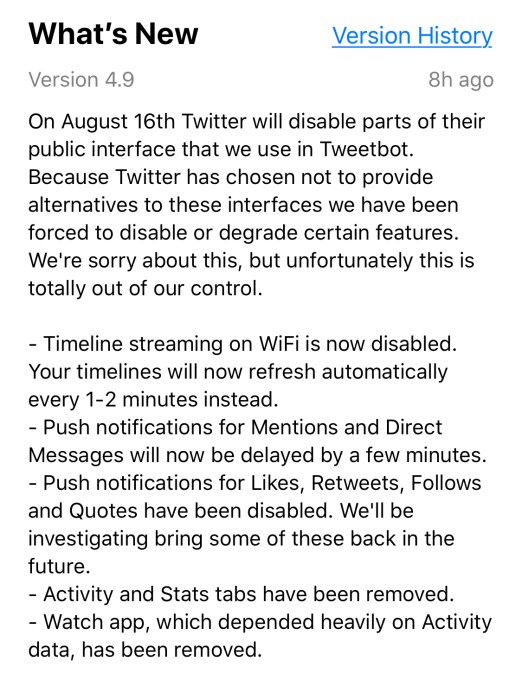
Twitter’s API changes won’t come out until tomorrow, but its ramifications are already being felt. Tapbots released an update today to Tweetbot for iOS that loses many of the Twitter client’s most popular or essential features. It also removed its Apple Watch app. In Tweetbot’s App Store release notes, Tapbots explained “on August 16th Twitter will disable parts of their public interface that we use in Tweetbot. Because Twitter has chosen not to provide alternatives to these interfaces we have been forced to disable or degrade certain features. We are sorry about this, but unfortunately this is totally out of our control.”

The changes mean that Tweetbot’s timeline streaming is now disabled, so timelines will refresh every one to two minutes instead–a loss for people who want to see new tweets in real-time. Push notifications for Mentions and Direct Messages will also be delayed by a few minutes, while push notifications for Likes, Retweets, Follows and Quotes have been disabled altogether (Tapbots’ release notes say they are looking at how to reinstate some of those in the future). Tweetbot’s Activity and Stats tabs have been removed.

As part of an effort to tighten control over how its services are used by third-party developers, Twitter announced in April 2017 that it will shut down User Streams, Site Streams and other APIs to prepare for the arrival of its new Account Activity API and other products.

Other third-party Twitter clients that will likely be affected by the API changes include Twitterific, Tweetings and Talon, which along with Tweetbot protested in April that they hadn’t been given enough time or information to prepare for the release, which was originally schedule for June 19. In response, Twitter extended the deadline to August 16. Other apps that have already been impacted include Favstar, which went offline in June as a result of the API changes.

Powered by $25 million, Arcadia Power looks to expand its distributed renewable energy services

As renewable energy use surges in the U.S. and the effects of global climate change become more visible, companies like Arcadia Power are pitching a nationwide service to make renewable energy available to residential customers.

While states like New York, California and regions across the upper Midwest have access to renewable energy through their utilities and competitive marketplaces, not all states in the country have utilities that are building renewable power generation to offset coal and natural gas energy production.

Enter Arcadia Power and its new $25 million in financing, which will be used to redouble its marketing efforts and expand its array of services in the U.S.

Right now, renewable energy is the fastest growing component of the U.S. energy mix. It’s grown from 15 percent to 18 percent of all power generation in the country, according to a 2018 report from Business Council for Sustainable Energy and Bloomberg New Energy Finance.

And while Arcadia Power is only accounting for 120 megawatts of the 2.9 gigawatts of new renewable energy projects initiated since 2017, its new $25 million in financing will help power new projects.

When we first wrote about the company in 2016, it was just developing solar projects that would generate power for the grid to offset electricity usage from its customers.

Now the company is expanding its array of services. All customers are automatically enrolled in a 50 percent wind energy offset program, where half of their monthly usage is matched in investments in wind farms — and they can upgrade to fully offset their energy usage with wind power. Meanwhile, community solar projects are also available for free or customers can then purchase a panel and receive a guaranteed solar savings on each monthly power bill.

Reduced prices are given to customers through the consolidation of their buying power across multiple competitive energy markets.

Finally, Arcadia is offering new home efficiency upgrades like LED lighting and smart thermostats, along with smart metering and tracking services to improve customers’ payment options, the company said.

“The electricity industry hasn’t changed much in the last hundred years, and we believe that homeowners and renters want a new approach that puts them first. Our platform places clean energy, home efficiency and data insights front and center for residential energy customers in all 50 states,” said chief executive Kiran Bhatraju.

Kiran Bhatraju, chief executive officer Arcadia Power

Funding for the new Arcadia Power financing was led by G2VP, the investment firm that spun out from Kleiner Perkins cleantech investing, ValueAct Spring Fund, McKnight Foundation, Energy Impact Partners, Cendana Capital, Wonder Ventures, BoxGroup and existing investors, according to the company. As a result of the investment, Alex Laskey, Opower’s founder and president; Ben Kortlang, a partner at G2VP; and Dan Leff, a longtime investor in energy technology companies, will all join the Arcadia board of directors.

“We’re taking a piece of the savings that is a part of the power purchase agreement,” says Bhatraju. “Customers get a 5 percent guaranteed savings against the utility rate. In competitive markets like Ohio or Maryland, it’s a shared savings model.”

Beyond the savings, the offsets can do something to reduce the carbon emissions that are exacerbating the problems of global climate change.

“When you build community solar projects you are displacing former fossil fuel plants from being used because these of customers,” Bhatraju said. But the entrepreneur recognizes that they have a long way to go to make a difference. “120 MW is not nearly enough,” Bhatraju said. “We’ve got a long way to go.”

Tesla whistleblower tweets photos of allegedly damaged batteries

Martin Tripp, the former Tesla employee who was fired from Tesla and then sued by the company, has tweeted a number of photos that allegedly show damaged batteries and flawed practices at Tesla’s battery factory, CNBC first reported.

In an attempt to corroborate some of his claims, Tripp has posted photos of vehicle identification numbers that he says were delivered with faulty, punctured battery cells.

“As we’ve said before, these claims are false and Mr. Tripp does not even have personal knowledge about the safety claims that he is making,” a Tesla spokesperson told TechCrunch via email. “No punctured cells have ever been used in any Model 3 vehicles in any way, and all VINs that have been identified have safe batteries. Notably, there have been zero battery safety issues in any Model 3.”

Here's what many of your M3 modules look like before and after, because they are generally reworked! Aren't they beautiful? pic.twitter.com/QyoM0K2ozf

— Martin Tripp (@trippedover) August 15, 2018

Are any of these VIN's YOUR car? If so, you have a module(s) that IS punctured/dented/damaged. #TSLA #TSLAQ @elonmusk (Subsidy Fraud-Boy) pic.twitter.com/pOZWDeeXcO

— Martin Tripp (@trippedover) August 15, 2018

In one tweet, Tripp shows what he alleges is proof that Tesla stores waste and scraps in open parking lots and trucks at the Gigafactory, instead of properly storing them in temperature-controlled warehouses.

Hmmm.. #TSLA commented several times that all their scrap/waste is being stored in climate controlled warehouses…could this be true?! Let these pics speak for themselves: HUNDREDS of trailers at the new parking lot at GF1… pic.twitter.com/4Agz80j5Ow

— Martin Tripp (@trippedover) August 15, 2018

Tesla sued Tripp in June for $1 million alleging he leaked information with the intent to sabotage Tesla and its CEO, Elon Musk. Tripp then filed a formal whistleblower tip to the U.S. Securities and Exchange Commission alleging the company has misled investors and put customers at risk.

Check out TechCrunch’s coverage of the Tripp versus Tesla saga below.

Shelf Engine uses machine learning to stop food waste from eating into store margins

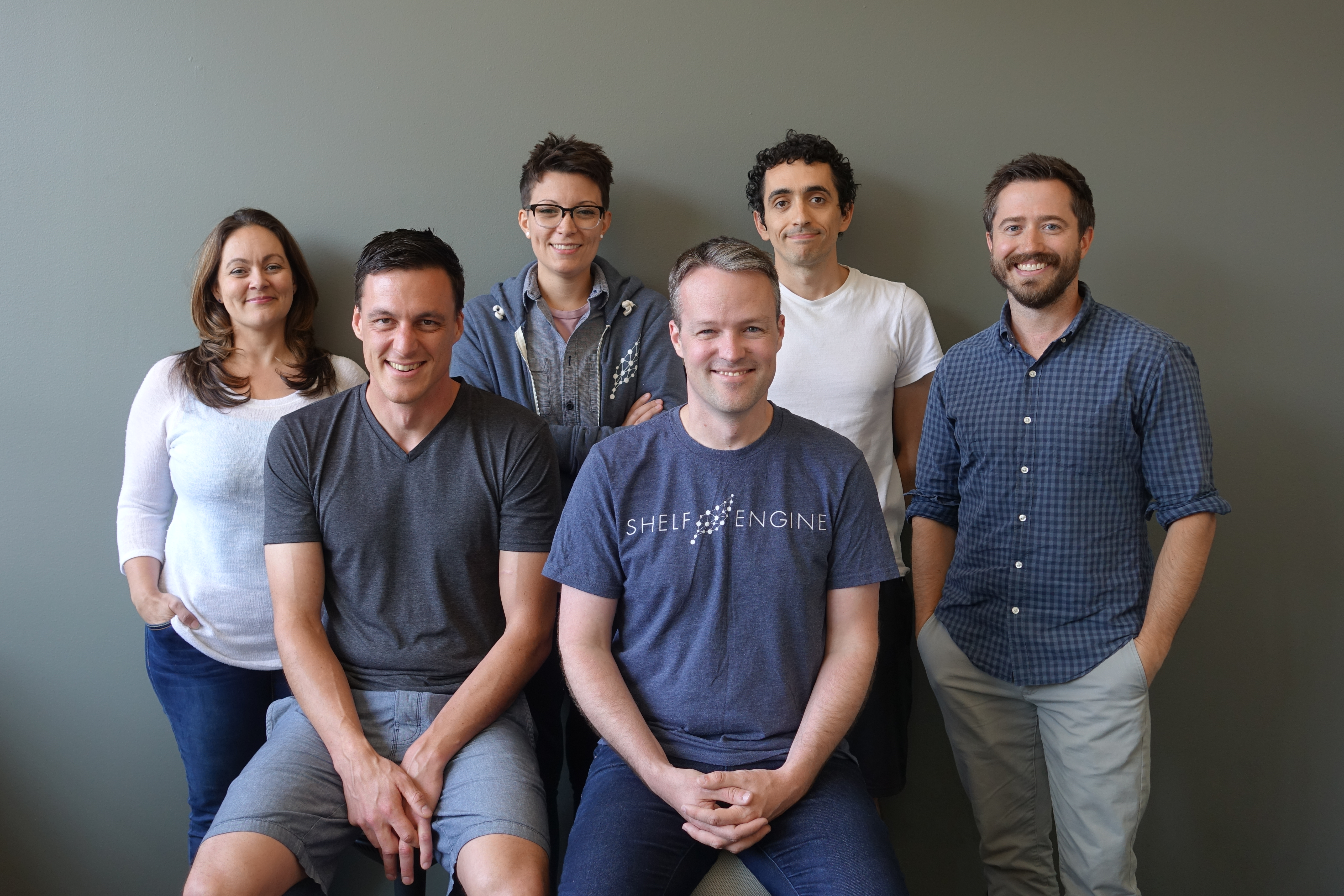
Shelf Engine’s team

While running Molly’s, the Seattle-based ready meal wholesaler he founded, Stefan Kalb was upset about its 28 percent food wastage rate. Feeling that the amount was “astronomical,” he began researching how to lower it — and was shocked to discovered Molly’s was actually outperforming the industry average. Confronted by the sheer amount of food wasted by American retailers, Kalb and Bede Jordan, then a Microsoft engineer, began working on an order prediction engine.

The project quickly brought Molly’s percentage of wasted food down to the mid-teens. “It was one of the most fulfilling things I’ve ever done in my career,” Kalb told TechCrunch in an interview. Driven by its success, Kalb and Jordan launched Shelf Engine in 2016 to make the technology available to other companies. Currently participating in Y Combinator, the startup has already raised $800,000 in seed funding from Initialized Capital, the venture capital firm founded by Alexis Ohanian and Gerry Tan, and is now used at more than 180 retail points by clients including WeWork, Bartell Drugs, Natural Grocers and StockBox.

Shelf Engine’s order prediction engine analyzes historical order and sales data and makes recommendations about how much retailers should order to minimize waste and increase margins. The more retailers use Shelf Engine, the more accurate its machine learning model becomes. The system also helps suppliers, because many operate on guaranteed sales, or scan-based trading, which means they agree to take back and refund the purchase price of any products that don’t sell by their expiration date. While running Molly’s, Kalb learned what a huge pain point this is for suppliers. To alleviate that, Shelf Engine itself buys back unsold inventory from the retailers it works with, taking the risk away from their suppliers.

Kalb, Shelf Engine’s CEO, claims the startup’s customers are able to increase their gross margins by 25 percent and reduce food waste from an industry average of 30 percent to about 16-18 percent for items that expire within one to five days. (For items with a shelf life of up to 45 days, the longest that Shelf Engine manages, it can reduce waste to as little as 3-4 percent).

The food industry operates on notoriously tight margins, and Shelf Engine wants to relieve some of the pressure. Running Molly’s, which supplies corporate campuses, including Microsoft, Boeing and Amazon, gave Kalb a firsthand look at the paradox faced by retail managers. Even though a lot of food is wasted, items are also frequently out of stock at stores, annoying customers. Then there is the social and environmental impact of food waste — not only does it raise prices, food rotting in landfills is a major contributor to methane emissions.

A store manager may need to make ordering decisions about thousands of products, leaving little time for analysis. Though there are enterprise resource planning software products for food retail, Kalb says that during store visits he realized a surprisingly high number still rely on Excel spreadsheets or pen and paper to manage reoccurring orders. The process is also highly subjective, with managers ordering products based on their personal preferences, a customer’s suggestion or what they’ve noticed does well at other stores. Sometimes retailers get stuck in a cycle of overcorrecting, because if customers complain about missing out on something, managers order more inventory, only to end up with wastage, then scaling back their next order and so on.

“Americans want selection at all times, we get furious when a product is sold out, but it’s a really hard decision to make about how much challah bread to stock on a Monday,” says Kalb. “Yet we are doing that ad hoc.”

When retailers use Shelf Engine’s prediction engine, it decides how many units they need and then submits those orders to their suppliers. After products reach their sell-by dates, the retailer reports back to Shelf Engine, which only charges them for units they sold, but still pays suppliers for the full order. As time passes, Shelf Engine can make more granular predictions (for example, how precipitation correlates with the sale of specific items like juice or bread).

In addition to providing the impetus for the creation of Shelf Engine, Molly’s also helped Kalb and Jordan, its CTO, build the startup’s distribution network. Kalb says Shelf Engine has benefited from the network effect, because when a retailer signs up, their suppliers will often mention it to other retailers that they serve. Kalb says the startup is currently hiring more engineers and salespeople to help Shelf Engine leverage that and spread through the food retail industry.

“It’s a world I got to know and I came into the world fascinated with healthy food and making delicious grab-and-go meals,” says Kalb. “It turned into a fascination with this crazy market, which is so massive and still has so many opportunities to be maximized.”

VR optics could help old folks keep the world in focus

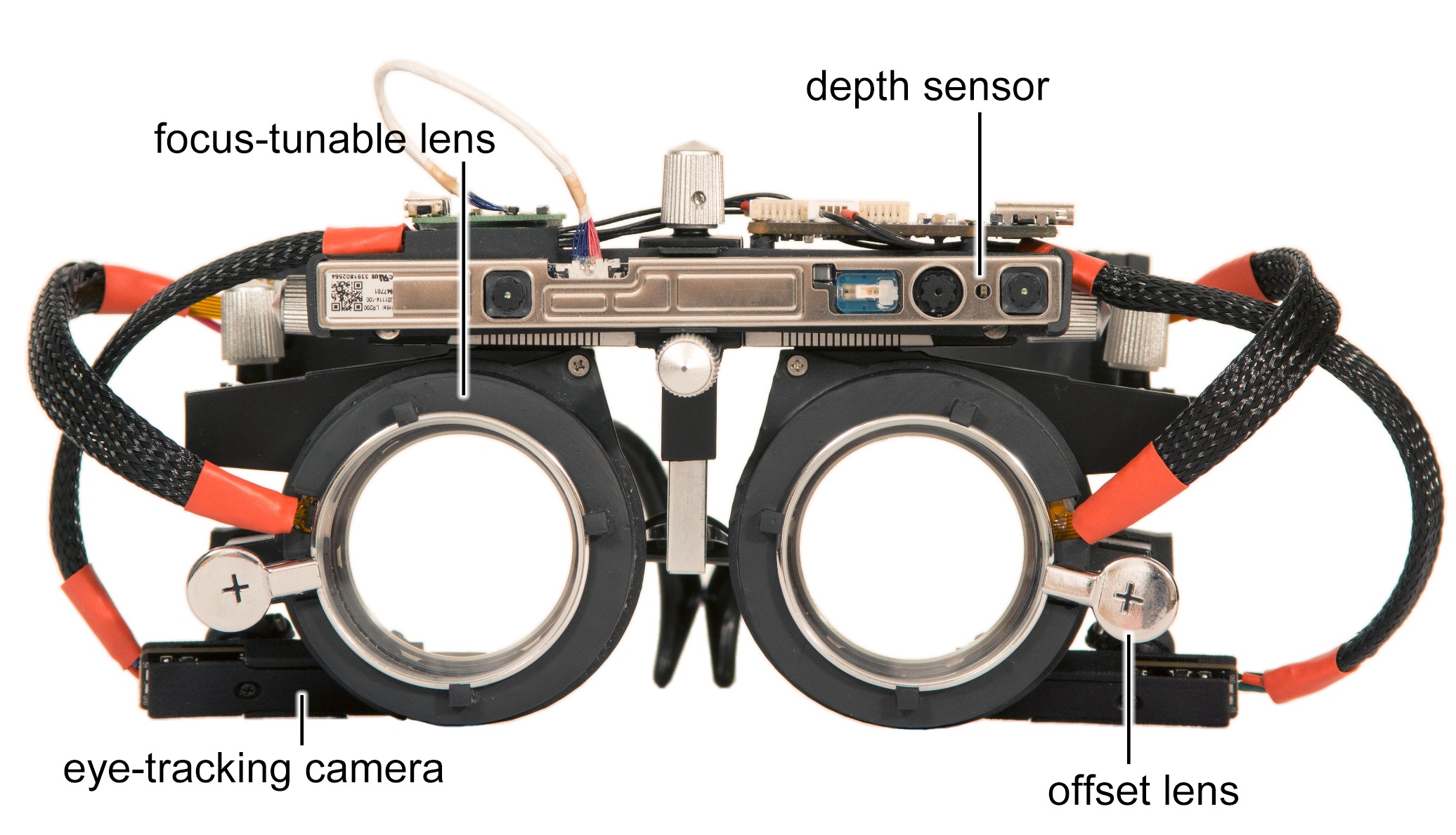
The complex optics involved with putting a screen an inch away from the eye in VR headsets could make for smartglasses that correct for vision problems. These prototype “autofocals” from Stanford researchers use depth sensing and gaze tracking to bring the world into focus when someone lacks the ability to do it on their own.

I talked with lead researcher Nitish Padmanaban at SIGGRAPH in Vancouver, where he and the others on his team were showing off the latest version of the system. It’s meant, he explained, to be a better solution to the problem of presbyopia, which is basically when your eyes refuse to focus on close-up objects. It happens to millions of people as they age, even people with otherwise excellent vision.

There are, of course, bifocals and progressive lenses that bend light in such a way as to bring such objects into focus — purely optical solutions, and cheap as well, but inflexible, and they only provide a small “viewport” through which to view the world. And there are adjustable-lens glasses as well, but must be adjusted slowly and manually with a dial on the side. What if you could make the whole lens change shape automatically, depending on the user’s need, in real time?

That’s what Padmanaban and colleagues Robert Konrad and Gordon Wetzstein are working on, and although the current prototype is obviously far too bulky and limited for actual deployment, the concept seems totally sound.

Padmanaban previously worked in VR, and mentioned what’s called the convergence-accommodation problem. Basically, the way that we see changes in real life when we move and refocus our eyes from far to near doesn’t happen properly (if at all) in VR, and that can produce pain and nausea. Having lenses that automatically adjust based on where you’re looking would be useful there — and indeed some VR developers were showing off just that only 10 feet away. But it could also apply to people who are unable to focus on nearby objects in the real world, Padmanaban thought.

This is an old prototype, but you get the idea.

It works like this. A depth sensor on the glasses collects a basic view of the scene in front of the person: a newspaper is 14 inches away, a table three feet away, the rest of the room considerably more. Then an eye-tracking system checks where the user is currently looking and cross-references that with the depth map.

Having been equipped with the specifics of the user’s vision problem, for instance that they have trouble focusing on objects closer than 20 inches away, the apparatus can then make an intelligent decision as to whether and how to adjust the lenses of the glasses.

In the case above, if the user was looking at the table or the rest of the room, the glasses will assume whatever normal correction the person requires to see — perhaps none. But if they change their gaze to focus on the paper, the glasses immediately adjust the lenses (perhaps independently per eye) to bring that object into focus in a way that doesn’t strain the person’s eyes.

The whole process of checking the gaze, depth of the selected object and adjustment of the lenses takes a total of about 150 milliseconds. That’s long enough that the user might notice it happens, but the whole process of redirecting and refocusing one’s gaze takes perhaps three or four times that long — so the changes in the device will be complete by the time the user’s eyes would normally be at rest again.

“Even with an early prototype, the Autofocals are comparable to and sometimes better than traditional correction,” reads a short summary of the research published for SIGGRAPH. “Furthermore, the ‘natural’ operation of the Autofocals makes them usable on first wear.”

The team is currently conducting tests to measure more quantitatively the improvements derived from this system, and test for any possible ill effects, glitches or other complaints. They’re a long way from commercialization, but Padmanaban suggested that some manufacturers are already looking into this type of method and despite its early stage, it’s highly promising. We can expect to hear more from them when the full paper is published.

Reports indicate that Tesla has been subpoenaed over Elon Musk’s tweets

The long week for Tesla is getting even longer as the company has now been subpoenaed by the Securities and Exchange Commission, according to multiple reports.

First reported by the Fox Business Network and confirmed by The New York Times, federal regulators appear to be interested in Elon Musk’s August 7 tweet regarding his plans for privatizing the electric car manufacturer and his claims to have found investors committed to finance the transaction.

From later statements it has become clear that Musk had not actually secured financing, and has only had preliminary talks with investors.

Federal securities regulators have served Tesla with a subpoena, according to a person familiar with the investigation, increasing pressure on the electric car company as it deals with the fallout from several recent actions by its chief executive, Elon Musk.

For Musk, the ill-advised tweet was either a drug-induced bit of foolishness or a short-sighted attempt to address the hordes of short-sellers who have swarmed over the stock, angling to make millions of dollars off any perceived misfortune in the market.

Tesla declined to comment for this article.

According to the Times, regulators were interested in Tesla even before Musk began his erratic tweeting. They were already questioning Tesla whistleblower Martin Tripp (according to the Times), who has claimed that the company knowingly manufactured batteries with punctured holes, which could impact hundreds of cars; misled the public about the number of Model 3s actually being produced by as much as 44 percent; and lowered vehicle specs so the company could use waste and scrap material in vehicles.

While Tripp’s allegations are explosive enough, they’re now being overshadowed by the current drama over Musk’s tweets, which sent the stock price of his company soaring.

While Tesla has now retained Goldman Sachs to arrange financing for a privatization, at the time of Musk’s tweets last week, no financing had been secured.

That could land the serial entrepreneur in a lot of hot water.