The RED Hydrogen One won’t arrive until October, so here are some pictures instead

After a delay, RED’s Hydrogen One was scheduled to arrive this month. And then it got delayed again until October/November. If and when the phone actually does arrive, however, odds are pretty good you’re not going actually buy the thing. After all, $1,295 is nearly half an Aibo. For most of us, these first official full pictures are the closest we’ll get to RED’s first smartphone, so enjoy them, I guess.


Say what you will about the excessiveness of it all (and there’s plenty to say on that front), but the high-end camera maker is certainly shaking things up here. In addition to the 5.7 inch “holographic display” and the fact that it can double as a viewfinder for one of the company’s upcoming cameras, the design definitely sets the handset apart. 

RED’s bucking the nearly industry-wide trend toward minimalistic design language with all sorts of chrome. The sides, as CNET notes, are serrated like a knife — ostensibly to make the thing easier to hold, but mostly just to make it look cool. It’s the kind of phone design that screams, “please ask me what kind of phone I’m using, strange person on the street.” Then prepare yourself for a five minute explanation of what “holographic display” means.

RED will start to seed a developers model of the phone in a small batch of users at the end of the month. Preorder customers will start receiving the phone on October 9, and it will arriving in carrier stores (AT&T, Telcel, Verizon) on November 2.

PayPal revamps its app to remove clutter, add more personalization

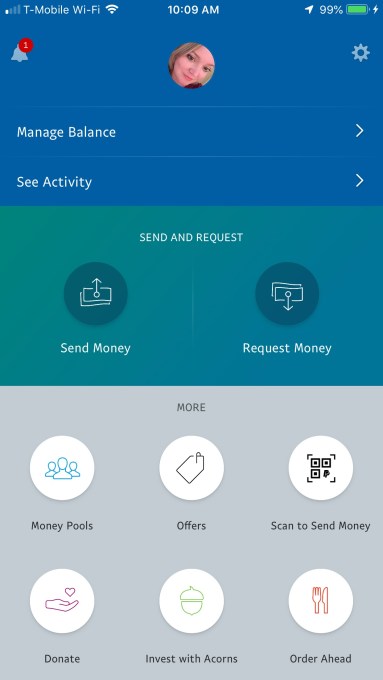
PayPal is revamping its mobile app. Again. In an effort to keep pace with newcomers like the bank-owned Zelle, PayPal says its new app will focus on making it easier to use its core features – that is, sending and requesting money. That means many of the app’s homescreen buttons – like Offers, Donate, Order Ahead and others are being tucked away underneath a new “More” menu to eliminate some of the clutter.

The PayPal homescreen had gotten a little too busy with all the extra features it has been promoting, which aren’t central to the PayPal experience. For example, it threw in a button suggesting “Invest with Acorns,” after taking a stake in the mobile investing app that rounds up purchases and automatically invests the extra change on your behalf. It has been pushing its Order Ahead functionality for years, even though no one thinks to launch a payments app when they’re hungry. Now these buttons no longer get top billing and valuable homescreen space.

Above: PayPal’s app today, before the update

However, even though PayPal is removing a lot of these extras from the homescreen, it’s not actually giving its “Send” and “Request” buttons more room. In fact, they’re getting a little less.

Today, those buttons are in the center of the homescreen, hosted in a big, greenish-blue banner. The updated app relocates them to a bottom bar.

However, it reverts the app’s color scheme to PayPal’s more familiar dark blue-and-white branding, so the relocated buttons are actually easier to see.

The homescreen instead dedicates most of its room to a new personalized notifications section.

Here, users will see alerts about money they’ve received or payment requests from others in big, blue cards you can swipe through horizontally. Below this, is a strip of profile icons and names of those you’ve recently paid – the theory being that PayPal is often used among the same set of family, friends or businesses. This makes it easier to make your next payment to one of your “regulars.”

Beneath this strip, your PayPal balance is displayed, while other notifications and settings are accessed through small buttons at the top of the screen, as before.

The overall design feels more in tune with PayPal’s brand than the last update. Though the prior big revamp, which was over two years ago, modernized things up a bit, it did so with too-light icons, small fonts and odd, off-brand color choices.

PayPal says the new app is rolling out now on Android to select markets, including Australia and Italy. It will then roll out to the U.S. and other markets worldwide, followed by a release on iOS.

T-Mobile says hackers stole customer data in data breach

T-Mobile has confirmed hackers breached its systems.

The cell giant, currently merging with Sprint, said in a statement that hackers customer stole names, billing zip codes, phone numbers, email addresses, account numbers, and account type — such as if an account was prepaid or postpaid — in what the company described as an “unauthorized capture of data.”

No customer financial or billing data was compromised, the company said.

It’s not known when the breach occurred but the unauthorized access was detected and shut down on Monday.

A T-Mobile spokesperson told TechCrunch that the breach was “discovered and stopped very quickly,” and “affected a small number” of customers. But Motherboard reported that a spokesperson said about 3 percent of the company’s 77 million users were affected — some 2 million accounts.

T-Mobile began notifying customers of the breach Friday morning with a text message sent to affected accounts. But that drew ire from some, who said the shortlink in the text message looked like phishing.

So @TMobile have been sending out a breach alert (a legit one) using a short URL and a number of people think it’s #phishing.

Why? BECAUSE IT LOOKS LIKE PHISHING! https://t.co/5fZJxaKszd

— ?????? ????? ? (@olihough86) August 24, 2018

This is the latest in a string of security incidents at T-Mobile in the past year.

In May, a security researcher found a security weakness in a T-Mobile subdomain used by staff, which returned customer data without requiring a password. It was similar to a vulnerability found in another T-Mobile system reported by Motherboard some months prior, which exposed customers’ email addresses, their billing account numbers, and the phone’s IMSI numbers.

T-Mobile and other carriers earlier this year were also forced to stop sharing customer location data with third-parties, after Democratic senator Ron Wyden criticized the cell giants for the practice.

Zoox loses its CEO, Eventbrite is going public, and megarounds for Slack, One Medical, and Getaround

Hello and welcome back to Equity, TechCrunch’s venture capital-focused podcast where we unpack the numbers behind the headlines.

This week we had a full house which was super great. TechCrunch’s Connie Loizos and Sarah Buhr held down the fort in San Francisco along with our guest, Susan Mac Cormac, a partner at Morrison Foerster where she works on some of the most interesting deals in the private capital space. I dialed in from the home office in Providence.

It was good that we had eight hands on deck as there was more than enough news to go around. We started with the recent executive changes at Zoox, an autonomous car company that came up on the show a few weeks back when it raised $500 million.

The firm is now down its CEO after he was ousted after the round. In the founder-friendly era that we find ourselves in at the moment, this is High Drama.

Next up was the #breakingnews concerning Eventbrite, which filed to go public just before we recorded. My initial notes are here, but we’re still far from knowing where the unicorn will price. That means it’s hard to say much today, aside from the fact that the company appears to be in more than rude enough health for a flotation.

And then, the megarounds. There were three:

  • Slack is richer and more valuable than ever after raising over $400 million at a valuation of more than $7 billion. The news surprised precisely no one, but it’s again amazing to see how the enterprise chat app and budding productivity platform can raise as much as it wants, whenever it wants. The new round, of course, came after Slack put $250 million in its pockets last year. (Here’s some quick math on its new valuation, just for fun.)
  • One Medical picked up $350 million of its own, though the company doesn’t get all the money. It’s $220 million for One Medical itself, and $130 million for extant shareholders in the premium medical service.
  • Getaround raised $300 million led by SoftBank (which also invested in Slack, of course). SoftBank’s 2017 and 2018 investment cadence are already the stuff of legend. How the firm will do when returns are tallied isn’t settled, though some early wagers are bearing fruit as we noted on the show. Getaround faces competition from rival peer-to-peer car sharing service Turo, which also raised this year.

All that and we managed 1.7 jokes and 2.3 puns.

We’ll be back in a week, and don’t forget that we are coming to you live at Disrupt in about two week’s time. Stay cool!

Equity drops every Friday at 6:00 am PT, so subscribe to us on Apple PodcastsOvercast, Pocket Casts, Downcast and all the casts.

Japanese fintech startup Paidy lands strategic investment from Visa

A month after announcing its $55 million Series C, Japanese fintech startup Paidy has snagged a strategic investment from payment giant Visa.

Paidy didn’t disclose how much Visa put into its business, which has raised over $80 million to date, but it did say that it will work with the credit card giant to develop “new digital payment experiences” in Japan.

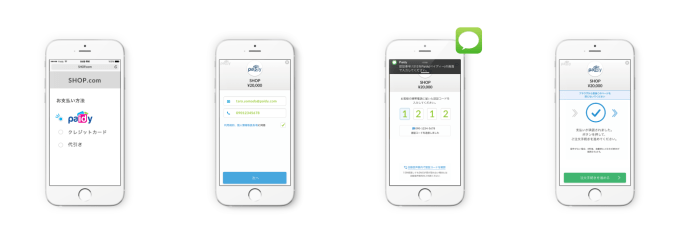
For those in need of a refresher, the Paidy service is aimed at making it easier to shop online in Japan, which is the world’s fourth largest e-commerce market with high credit card penetration but yet many consumers opt for cash on delivery.

The startup asserts that cash accounts for some 40 percent of the country’s 16.5 trillion yen ($148 billion) annual e-commerce spend because credit card payments are cumbersome and cash is just more simple. It’s certainly true that whipping out your card and keying in digits is a pain, while Japanese systems layer on other security checks that make the process more tedious.

Paidy’s answer is an account tied to a customer’s phone number or email address that sits as a payment option at e-commerce checkouts. Payment itself requires entry of a confirmation code, and that’s it. Added to the simplicity, Paidy also offers various payback options to effectively give users the features of a credit card.

The company claims there are 1.5 million active Paidy accounts and it is aiming to grow that figure to 11 million by 2020. The main rocket for reaching that ambitious target is onboarding large retailers who integrate the service into their online sales process. That’s a tactic that has worked well for Paidy so far, but it’s also clearly an area where Visa’s network can be massively beneficial, especially if they are joint products on offer.

With Paidy operating like a virtual credit card system that rivals plastic cards, Visa has seen enough to warrant coming on board the project, according to Chris Clark, Visa’s Asia Pacific regional president.

“We have been following Paidy’s progress and the enhanced shopping experience they provide at the time of purchase. In Japan there is enormous opportunity to bring consumers more options to pay, whether all at once or in instalments, especially when shopping across multiple channels,” Clark said in a statement.

Paidy counts Itochu Corporation, Goldman Sachs, Eight Roads — the investment arm of Fidelity — SBI Holdings, SBI’s FinTech Business Innovation LPS, Arbor Ventures and SIG Asia as existing investors.

Alibaba’s Lazada begins to offer financing for online retailers in Southeast Asia

Alibaba’s Lazada is introducing new credit options for SMEs as it aims to boost the number of retailers in Southeast Asia, the region with 650 million consumers.

The firm announced a partnership with Finaxar that will see the fintech offers its services to Lazada sellers in Singapore. There are plans to expand the arrangement to cover other parts of Southeast Asia in the future.

Two-year-old Finaxar offers a range of financial products in Southeast Asia but now it has teamed up with the e-commerce company to provide a credit line option for Lazada sellers, as opposed to more structured financing such as loans. The credit line can last for up to six months, with up to SG$5,000-SG$1 million ($3,650-$730,000) on offer, the companies said.

The service is priced at 0.7-1.5 percent every 30 days and at a rate that is pro-rated. Finaxar said all fees are shown transparently in the service to avoid the unwanted surprise of hidden add-ons.

Finaxar founders Vihang Patel and Sian Tan told TechCrunch that a credit line gives companies the flexibility to dip into additional cash when needed, for example during peak season to buy more product, and also pay parts back when significant payment volumes come in, without the commitment of more formalized lending.

The financial assessment, they explained, comes via a one-click integration with Lazada seller dashboard. When clicked, that sends the merchant to the Finaxar where they are asked to provide information; a credit assessment is delivered in under five minutes.

Patel said Finaxar is currently assessing expansion to two undisclosed markets, which he said would include launches in collaboration with Lazada and potentially as soon as before the end of this year. That’s pretty crucial for the partnership to make an impact for Lazada, since most of its 300,000 retailers are located outside of Singapore.

Alibaba has pumped billions into Lazada since it took a majority investment in 2016. Most recently it injected $2 billion in March in a move which also saw Alibaba install Lucy Peng, one of its original 12 founders and the former Chairwoman of Lazada and ex-executive chairman of Ant Financial, as Lazada CEO.

Lazada is in a dogfight with Shopee, the e-commerce firm of U.S.-listed Sea, to become the dominant e-commerce platform in Southeast Asia. Sea recently pumped $500 million of newly-raised capital into Shopee, while this week its latest earnings revealed that the service’s quarterly revenue has grown to $58.8 million. Alibaba doesn’t reveal comparable figures for Lazada.

Lazada’s collaboration with Finaxar comes after Aspire Capital, an SME financing startup founded by an ex-Lazada executive, announced it had raised $9 million.

Russian arms manufacturer Kalashnikov unveils its answer to Tesla

The Russian weapons manufacturer Kalashnikov, best known for making the AK-47 machine gun* gas-operated – rotating bolt rifle with automatic capabilities, has unveiled a fleet of electric and hybrid cars, buggies and motorcycles this week — including an electric vehicle that the company says will rival Tesla.

While it’s a noble goal to take competitive aim at the world’s most famous electric vehicle brand, the retro-styled concept car, dubbed the CV-1, bears a closer resemblance to another, more infamous car from the Soviet era… the Trabant.

That’s a vehicle, by the way, whose Fahrvergnügen is best illustrated by the Conan O’Brien’s demonstration below.

The CV-1 is based on the retro-IZH-21252 model known as the “Combi” and is a test bed for Kalashnikov’s electric drive train, which the company said was developed in-house. The Combi has a cruising range of 350 kilometers and can go from 0 to 100 kilometers in roughly 6 seconds, so says the company.

Batteries for the new electric vehicle from Kalashnikov have a capacity of 90 kilowatts per hour.

At the same gun show where the new EV was unveiled, Kalashnikov also showed off a hybrid buggy and an electric motorcycle to complete its hattrick.

The four-seat buggy can purportedly achieve speeds of up to 100 kilometers per hour and has separate electric engines for its front and rear wheels, along with hydraulic shock absorbers. According to Russian news agency RT, the vehicles are a relatively recent addition to the Russian military’s mobility arsenal.

Kalashnikov’s new electric motorcycle for police units

Kalashnikov may have Tesla in its sights, but the car company likely has more to fear from U.S. regulators than it does from a Russian competitor. At this point, the weapons manufacturer might find more of a market for another machine it debuted at the Russian military trade show — its golden, metal-plated killer robot (!!).

Here’s a selection of images below, courtesy of Kalashnikov, of the new electric vehicle.

*A helpful reader pointed out on LinkedIn “the AK (AK-47) is a Gas-Operated – Rotating Bolt Rifle with automatic capabilities and it is not a machine gun.”

With assistance from Jon Russell

Facebook and Twitter remove hundreds of accounts linked to Iranian and Russian political meddling

Facebook has removed hundreds of accounts and pages for what it calls “coordinated inauthentic behavior,” generally networks of ostensibly independent outlets that were in fact controlled centrally by Russia and Iran. Some of these accounts were identified as much as a year ago.

In a post by the company’s head of cybersecurity policy, Nathaniel Gleicher, the company described three major operations that it had monitored and eventually rolled up with the help of security firm FireEye. The latter provided its own initial analysis, with more to come.

Notably, few or none of these were focused on manipulating the 2018 midterm elections here in the states, but rather had a variety of topics and apparent goals. The common theme is certainly attempting to sway political opinion — just not in Ohio.

For instance a page may purport to be an organization trying to raise awareness about violence perpetrated by immigrants, but is in fact operated by a larger shadowy group attempting to steer public opinion on the topic. The networks seem to originate in Iran, and were promoting narratives including “anti-Saudi, anti-Israeli, and pro-Palestinian themes, as well as support for specific U.S. policies favorable to Iran,” as FireEye describes them.

The first network Facebook describes, “Liberty Front Press,” comprised 74 pages, 70 accounts, and 3 groups on Facebook, and 76 accounts on Instagram. Some 155,000 people followed at least one piece of the Facebook network and they had 48,000 Instagram followers. They were generally promoting political views in the Middle East and only recently expanded to the States; they spent $6,000 on ads beginning in January 2015 up until this month.

A related network to this one also engaged in cyberattacks and hacking attempts. Its 12 pages and 66 accounts, plus 9 on Instagram, were posing as news organizations.

A third network had accounts going back to 2011; it was sharing content in the Middle East as well, about local, U.S., and U.K. political issues. With 168 pages, 140 Facebook accounts, and 31 Instagram accounts, this was a big one. As you’ll recall, the big takedown of Russia’s IRA accounts only amounted to 135. (The full operation was of course much larger than that.)

This network had 813,000 accounts following it on Facebook and 10,000 on Instagram, and had also spent about $6,000 on ads between 2012 and April of this year. Notably that means that Facebook was taking ad dollars from a network it was investigating for “coordinated inauthentic behavior.” I’ve asked Facebook to explain this — perhaps it was done so as not to tip off the network that it was under investigation.

Interestingly this network also hosted 25 events, meaning it was not just a bunch of people in dark rooms posting under multiple pseudonyms and fake accounts. People attended real-life events for these pages, suggesting the accounts supported real communities despite being sockpuppets for some other organization.

Twitter, almost immediately after Facebook’s post, announced that it had banned 284 accounts for “coordinated manipulation” originating in Iran.

Working with our industry peers today, we have suspended 284 accounts from Twitter for engaging in coordinated manipulation. Based on our existing analysis, it appears many of these accounts originated from Iran.

— Twitter Safety (@TwitterSafety) August 22, 2018

The Iranian networks were not alleged to be necessarily the product of state-backed operations, but of course the implication is there and not at all unreasonable. But Facebook also announced that it was removing pages and accounts “linked to sources the U.S. government has previously identified as Russian military intelligence services.”

The number and nature of these accounts is not gone into in detail, except to say that their activity was focused more on Syrian and Ukrainian political issues. “To date, we have not found activity by the accounts targeting the U.S.,” the post reads. But at least the origin is relatively clear: Russian state actors.

This should be a warning that it isn’t just the U.S. that is the target of coordinated disinformation campaigns online — wherever one country has something to gain by promoting a certain viewpoint or narrative, you will find propaganda and other efforts underway via whatever platforms are available.

Senator Mark Warner (D-VA) issued a brief I-told-you-so following the news.

“I’ve been saying for months that there’s no way the problem of social media manipulation is limited to a single troll farm in St. Petersburg, and that fact is now beyond a doubt,” he said in a statement. “We also learned today that the Iranians are now following the Kremlin’s playbook from 2016. While I’m encouraged to see Facebook taking steps to rid their platforms of these bad actors, there’s clearly more work to be done.”

He said he plans to bring this up at the Senate Intelligence Committee’s grilling of Facebook, Twitter, and Google leadership on September 5th.

CardMunch founder returns with HiHello, a new app aiming to replace business cards

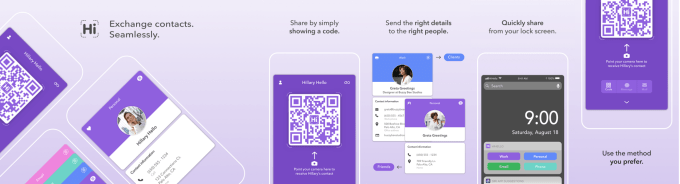
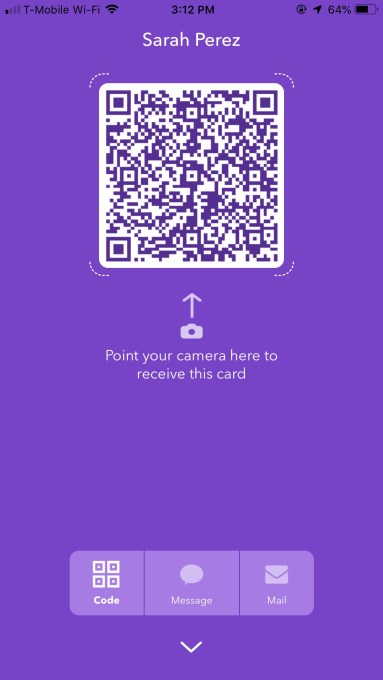
A new app called HiHello is taking aim at business cards. While plenty of apps in the past have tried to kill the business card, they never achieved critical mass. Mainly, this is because most required that both parties — the business card holder and recipient — have their app installed. HiHello is different. Instead of forcing everyone to download its app, it simply generates a QR code that can be scanned by anyone with a modern smartphone.

HiHello specifically takes advantage of the fact that today’s smartphones now have QR code readers built in — users no longer need to download a separate QR code scanner app to exchange information over this format.

On iPhone, you can use the native iOS Camera app to scan QR codes. And on Android, Google Lens (a part of Google Assistant) offers similar functionality. (Although this should really be in its camera, too, ahem.)

What this means is that when a HiHello user wants to share their contact information with another person, all they need to do is have the recipient scan the QR code the HiHello app generates. The recipient doesn’t have to download or install anything, and is able to quickly save the contact information right into their phone’s address book.

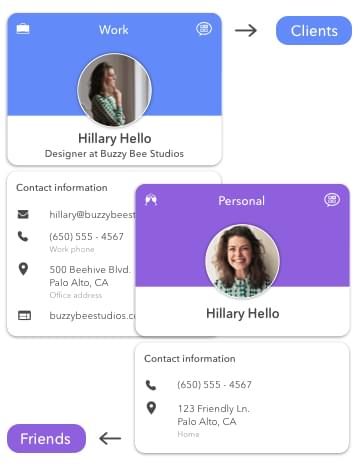
HiHello also allows you to create different types of cards with different information on them.

For example, you could have one card for your business, one for your side hustle and one for personal connections. This way, you can keep some of your information private, as needed.

You could create a card without your cell number for those contacts you didn’t want to be able to reach you by phone; or you could create a card with your virtual number (e.g. a Skype line or Burner) for dating prospects. You could create a card with your home address, cell and personal email for your family and friends. Or you could make one with your office address, work email, fax and office line for business contacts. And so on.

The idea for the app comes from K9 Ventures founder Manu Kumar, who along with co-founder and Caltech and Columbia alum Hari Ravi, and a small team of fewer than half a dozen, has been working on the app following the release of iOS 11, which introduced the QR code reader functionality in the native camera app.

Kumar, in particular, has been trying to solve the problem of business cards for years. In 2009, he co-founded CardMunch to turn business cards into digital contacts. The company was sold to LinkedIn a few years later, but LinkedIn abandoned it and shut it down.

“LinkedIn…failed to recognize the potential for what this could do for them, and in a typical big company fashion proceeded to ruin and eventually kill the product,” Kumar wrote in a blog post about HiHello’s launch. “Yes, I’m still peeved,” he added. (So are we.)

Kumar also noted that another problem with business cards is that people have to carry around different ones to represent their different roles or jobs.

“The information you choose to share with someone is often dependent on the context in which you are meeting that person,” he said.

To address this issue, HiHello allows users to create multiple cards with different information on them, which can be shared via the QR code scan in person, or sent out via text message or email — without exposing the email or phone number tied to your phone.

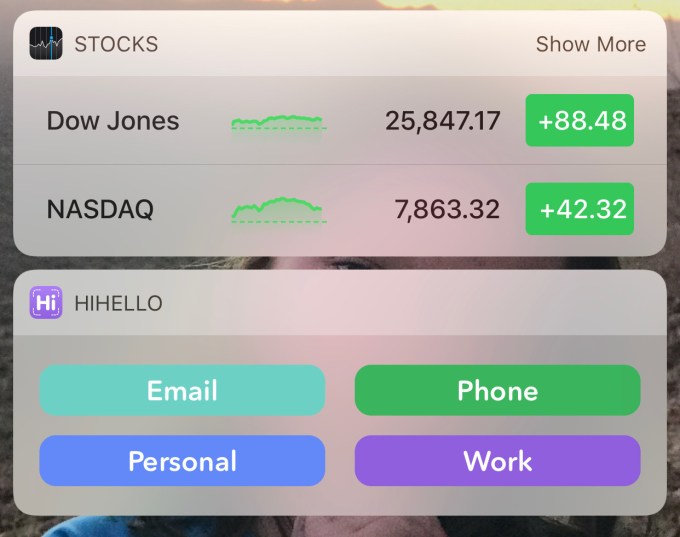
HiHello has also made it easy to find the right card quickly through its iOS and Android widgets that let you choose which card you want to share with just a tap.

The app is straightforward to set up and use. You’re first walked through a form where you enter your basic contact information to get started, and can then proceed to customize the different card types like “work” and “personal,” for example. You also can just choose to share your phone or email. (See above photo).

When someone scans the QR code, it launches a website hosted on hihello.com where there’s a link to save the information directly to their phone’s contacts. This link can be sent in other ways right from the QR code screen as well, thanks to buttons at the bottom for “Message” and “Mail.”

The new app is the first step in a bigger vision the company has for contact and relationship management, Kumar notes. In the near future, this will include premium features aimed at business users.

“We’re not trying to become a social network,” said Kumar. “We do have aspirations of being a ‘Business Relationships Network.’…As we build and are ready to introduce new features, we will unlock new pieces of the puzzle that show how this will be valuable to users. It goes back to the fundamental premise of believing that who you know is often more important than what you know,” he added.

Palo Alto-based HiHello, a team of five, is backed by Kumar’s K9 Ventures. The app is a free download on iOS and Android.*

* There is currently a registration bug affecting 20% of users. The bug is being resolved and affected users will be emailed when there’s a resolution. 

Announcing the latest additions to the agenda for Disrupt SF (Sept. 5-7)

TechCrunch Disrupt SF (September 5-7), we said from the start, was going to be the most ambitious ever, and when it comes to programming, there’s no question the Disrupt SF agenda eclipses anything we’ve done in the past. There are two BIG stages, plus two speaker Q&A stages, workshops and a Startup Showcase stage, where the top exhibiting startups will tell their stories. We published the agenda back in early July, but we’ve also added dozens of sessions since then for a total of 77 on the Disrupt stages. You can always check out the complete and up-to-date agenda. Here is a sampling of what you might have missed since we originally posted the agenda.

On the Disrupt stages:

  • Alex Stamos, former head of security at Facebook and Yahoo, on security in an insecure world
  • Aileen Lee (Cowboy Ventures), Megan Quinn (Spark Capital) and Sarah Tavel (Benchmark) on the state of venture
  • Dario Gill (IBM) and Chad Rigetti (Rigetti Computing) on quantum computing
  • Laurie Yoler (Zoox), Reilly Brennan (Trucks VC) and Chris Urmson (Aurora) on all things autonomous
  • Jason Robbins (DraftKings) on the changing worlds of online fantasy and gambling
  • Hans Tung (GGV) and Ti Wang (Liulishuo) on the Chinese startup road to U.S. markets
  • Rachel Haurwitz (Caribou Biosciences) and Trevor Martin (Mammoth Biosciences) on CRIPSR
  • Rich Mahoney (Seismic) on wearable (and fashionable) robotics
  • Rob Coneybeer (Shasta Ventures), Tess Hatch (Bessemer) and Matt Ocko (Data Collective) on investing in space
  • Robin Berzin (Parsley Health) and Aaron Patzer (Vital Software) on the future of health
  • Colin Angle (iRobot) on the next generation of home robotics
  • Brian Brackeen (Kairos), Patrick Ball and Kristian Lum (HRDAG) on data and human rights

In the 30 audience-driven Q&A sessions with speakers, including..

  • Building on DLT: Mance Harmon (Hedera) and Brian Behlendorf (Hyperledger)
  • From Funding to Fintech: Nikolay Storonsky (Revolut)
  • Inside the Blockchain: Joe Lubin, Amanda Gutterman and Sam Cassatt (ConsenSys)
  • Building Brands: Emily Heyward (Red Antler), Philip Krim (Casper) and Tina Sharkey (Brandless)
  • Gaming’s Culture: Jason Citron (Discord) and Delane Parnell (PlayVS)
  • Healthtech on the Horizon: Robin Berzin (Parsley Health) and Aaron Patzer (Vital Software)

In the workshops:

  • All Raise‘s Women Founders Roundtable and AMA
  • Verizon 5G: The Fourth Industrial Revolution (Sponsored by Verizon)
  • Bringing NASA Technology Down to Earth (Sponsored by NASA)
  • Hacking Human Performance (Sponsored by Red Bull)
  • Running a Node on a Distributed Ledger: Live Demo (Sponsored by Constellations Labs)

This is just a fraction of what you’ll be able to experience at Disrupt SF. There’s still time for you to grab your pass and save up top $500 — get yours here today.

Study ties Facebook engagement to attacks on refugees

A study of circumstances and demographics attendant on attacks against refugees and immigrants in Germany has shown that Facebook use appears to be deeply linked with the frequency of violent acts. Far from being mere trolling or isolated expressions of controversial political opinions, spikes in anti-refugee posts were predictive of violent crimes against those groups.

The study was conducted by Karsten Müller and Carlo Schwarz of the University of Warwick. Their theory was that if country-wide waves of “right wing anti-refugee sentiment” result in subsequent waves of actual crime, these waves would travel the way any others do, via TV, word of mouth, radio and, of course, social media.

Now, if the anti-refugee rhetoric spreads via social media, then we can expect more crimes to occur in areas where there is more social media use, right? And specifically, areas where there is more activity among anti-refugee groups would see the most.

To test this theory, Müller and Schwarz used activity on a pair of major Facebook pages in Germany to measure social media use in general and specific to right-wing groups. For right-wing activity they looked at the page of the “Alternative for Germany” party, the most popular anti-immigration political faction in the country and one that does not attempt to control the conduct on its threads. As a measure of overall Facebook use, they used Nutella’s popular public German page.

With hundreds of thousands of posts and comments broken down by area, the researchers were able to identify overall patterns of social media use, and then isolate anti-refugee sentiment within that. Their findings are unambiguous:

Using these measures, we find that anti-refugee hate crimes increase disproportionally in areas with higher Facebook usage during periods of high anti-refugee sentiment online. This effect is especially pronounced for violent incidents against refugees, such as arson and assault. Taken at face value, this suggests a role for social media in the transmission of Germany-wide anti-refugee sentiment.

A quick estimate on their part suggests that the social media activity may have increased attacks by 13 percent or so — not a number to be quoted as definitive, but rather an indicator that we are not quibbling over half a percent here and there but meaningful numbers.

But the researchers are also careful both to carefully define the scope of those findings:

We do not claim that social media itself causes crimes against refugees out of thin air. In fact, hate crimes are likely to have many fundamental drivers; local differences in xenophobic ideology or a higher salience of immigrants are only two obvious examples. Rather, our argument is that social media can act as a propagating mechanism for the flare-up of hateful sentiments. Taken together, the evidence we present suggests that quasi-random shifts in the local population’s exposure to such sentiments on social media can magnify their effect on refugee attacks.

…and to account for the many confounding variables that may invisibly affect the data.

Correlation versus causation

No doubt many readers will be skeptical of any study like this one; after all, these are very complex issues with many moving parts, and correlations may appear between things regardless of whether those things directly cause or effect one another. Fortunately, the researchers foresaw this objection and were circumspect in their delineation of the link between social media use and attacks.

There are a handful of prominent possible alternative explanations, which the paper deals with in various ways.

First is the possibility that attacks are just more likely in areas where there is heavier social media use. This was my first thought: where are conflicts likely to occur? In places with dense and diverse populations, which seem likely to also have more internet and social media use.

This is dispatched in several ways. In the first place, the study looks at changes in violence levels within an area, not across the whole of Germany. In other words, the pattern of anti-immigrant posts preceding anti-immigrant violence is seen whether it takes place in a smaller town with low levels of social media engagement, or in larger cities where Facebook use is much more frequent.

Next, the Nutella control group provides a measure of social media activity independent of political issues — so patterns of use for a broad swath of users associated with seasons, weekly rhythms, holidays and so on can be identified down to the level of the county. When a population deviates from that pattern, you can be reasonably sure that something about that population is driving that deviation.

Something they couldn’t exactly control but is nonetheless useful is seeing how various internet and Facebook outages affect the patterns. It turns out that internet disruptions completely eliminate the increases in violence normally seen during a country-wide wave of anti-immigrant sentiment. Furthermore, they write, “the effect of refugee posts on hate crimes essentially vanishes in weeks of major Facebook outages.”

Spikes in activity expressing negative feelings toward other frequently targeted groups, for instance Jews, were not associated with increases in refugee-related violence, so it isn’t just that people lash out when they are feeling especially hateful.

Lastly, the researchers showed that other coverage of refugee-related issues, like that by major news outlets, drives local engagement in the form of protests, but does not seem to predict violent acts.

As the researchers say, Facebook isn’t just plain causing violence to happen. The places where it happens are often historically right-wing places that have had higher incidence of violence and hate crimes in the past. But it seems inescapable that Facebook is nevertheless an important way that refugee-related hatred and vitriol in particular is spread, as evidenced by the lack of increases in violence when the social network is unavailable.

The connection seems clear: Hateful content spreads via Facebook and where it is engaged with the most, there you find the most violence. On its face this doesn’t seem like something Facebook can moderate away — it’s a natural consequence of how the fundamental social media ecosystem pioneered by Facebook works. Having it repeatedly and systematically connected with increases in violence isn’t a good look.

Why the next CryptoKitties mania won’t be about collectables

Kyle Wood
Contributor

Kyle Wood is senior counsel in Perkins Coie’s Blockchain Technology & Digital Currency industry group in the Dallas office.

Taylor Lindman
Contributor

Taylor Lindman is an associate in Perkins Coie’s New York office focusing on fintech, distributed ledger technology, payments and finance matters.

In recent months, the CryptoKitties fad that had users buying and selling tens of thousands of dollars of blockchain-based collectable cats has settled down considerably. That is not to say that CryptoKitties hasn’t spawned numerous copycats (see CryptoPuppies, CryptoCountries and many more). Unfortunately, the immense popularity of CryptoKitties is unlikely to be repeated, at least not by clones hoping to cash in on the novelty of blockchain-based crypto collectables.

The legacy of CryptoKitties is still in development, but most can agree that the project raised awareness (and attracted development talent) to new uses for blockchain tokens. In particular, CryptoKitties introduced many to the concept of non-fungible tokens, or “NFTs,” which might impact more than the world of cryptocurrencies.

NFTs are unique blockchain tokens that can be transferred to other people, similar to cryptocurrencies (e.g. Bitcoin and Ethereum), but they ordinarily cannot be replaced by another token of equal value — this is because each NFT has its own unique token identifier (and often, associated reference metadata).

Today, most NFTs are used in blockchain-based collectible games; however, use cases of NFTs are only just beginning to be explored. This article briefly discusses the origin of NFTs, explores several flavors of NFTs in the blockchain ecosystem and highlights some potential legal hurdles facing NFT developers.

Collectible origins

The physical collectible trade emerged in the 1860s with the first baseball trading cards. Since that time, physical collectibles have dominated the collectible market. Ownership of physical collectibles is straightforward: When a collector buys a physical collectible, the collector has complete ownership and can sell or trade the collectible at will. Collectors are only prevented from infringing on a collectible’s underlying intellectual property rights. Thus, collectors can buy, sell or trade, but not copy, physical collectibles.

In the late 1990s and early 2000s, in-game collectibles, or virtual assets, emerged. Virtual assets are those goods only found in virtual worlds. Like physical collectibles, there is a robust market for virtual assets. Unlike physical collectibles, however, gamers who find virtual assets in the virtual world do not own them: Large game developers and publishers often license virtual assets to gamers through contractual terms. Thus, the exchange of virtual assets is cabined to authorized in-game trading or illegal trading via auction sites like G2G.

With the emergence of the ERC-721 token standard, new digital collectibles (like CryptoKitties) or tokenized goods, have changed collectible ownership discussions. Specifically, NFTs are revolutionizing digital asset ownership. NFTs allow for the complete ownership of tokenized goods: Collectors own their tokenized goods in perpetuity and can buy, sell and trade their tokenized goods at will. Thus, tokenized goods are a unique hybrid between physical collectibles and virtual assets, in that they offer complete ownership of digital wares. Even though in practice NFT owners have property rights in their tokenized goods, it is unclear if an owner’s property rights are recognized under U.S. property law.

Evolution: ERC-721 and exotic tokens

ERC-721

The first and most prevalent NFT is the ERC-721 standard, primarily due to the success of CryptoKitties. Developers are experimenting with ERC-721 for everything from digital collectibles to securitized investment products. The development of ERC-721 token-based collectible games and the subsequent explosion of speculative interest by investors has put a spotlight on several important legal issues, including issues related to ownership, privacy and money transmission.

In games like CryptoKitties, ownership of the token is clear-cut because each CryptoKitty is a newly developed piece of intellectual property. However, if larger game developers and publishers adopt NFTs, we could quickly revert to the well-worn path of virtual goods, where the token holder is deemed a licensee instead of an owner and is therefore unable to transfer or sell the virtual good to others off platform.

ERC-721 token-based games often play with the “tokenMetadata” function to create various permutations and combinations of characteristics (e.g. breeding in CryptoKitties). Depending on the application, this reference data may be stored in a centralized database or cache folder outside the control of the token owner, which may result in disputes over ownership, particularly when the intellectual property rights for the reference data and the token belong to separate owners.

NFTs can include functionality that may subject NFT businesses to FinCen registration because the same wallet that accepts NFTs can also accept ERC-20 fungible tokens. NFT businesses need to pay special attention to how they structure their tokens and the functionality of wallets that hold them.

Additionally, a tokenized asset exchange may qualify as an investment contract and thus a security. For example, suppose an application developer developed a tokenized asset, like a unique digital weapon, before the application or game in which the tokenized asset could be used has been developed. The application developer then decides to sell the tokenized asset for money to raise profits for the development of the application itself. This transaction may be deemed an investment contract and therefore an unregistered security.

ERC-721 collectable tokens currently dominate the NFT landscape, but we expect this trend to shift as new and more robust use cases come to the forefront. The development of other exotic token standards may also eat into ERC-721 market share; however, a diverse offering of NFT standards should help bolster the NFT ecosystem.

Exotic tokens

More exotic token standards, such as ERC-420 and ERC-998, offer insights into the potential of NFTs and quasi-NFTs. Tokens compliant with these exotic token standards will have unique functions that make them well suited for a variety of use cases. For example, in games, ERC-998-compliant tokens could represent characters that carry consumable rations (ERC-20 tokens) and non-fungible weapons (ERC-721 tokens) or, in commerce, classes of these tokens could be used for tiered membership programs or in the creation of markets in securities products.

While perhaps not the most politically correct use of NFTs, “Rare Pepes,” or rare digital art based on Pepe the Frog, allows users to create, trade and sell their artwork for “Pepecash.” Rare Pepes utilize ERC-420-compliant tokens (the “dank standard”), which demonstrates how NFTs can be used to establish limited editions of digital artwork. This type of quasi-NFT could also be used to offer multiple series of limited-subscriber investment products.

Exotic tokens are just emerging, and we expect to see additional standards and use cases come to market frequently over the coming years.

Conclusion

From the humble origins of the baseball card, NFTs, which offer many of the same features of physical collectibles and virtual assets, are the next evolutionary leap of this industry. NFTs also have many potential use cases outside the world of digital collectibles in everything from artwork to securitized investment vehicles. Although they are still in their very early days, we expect NFT’s to have a bright future.


HI, TECHCRUNCH HERE WITH AN AMAZING NEW PRODUCT, BRIZZLY

Are you trying to stay off social media, but just can’t seem to stop yourself from posting?

When random thoughts pop into your head, do you find yourself launching Twitter and typing before you remember you’re trying to quit?

Well, now there’s a better way.

Hello, Brizzly.

Brizzly is a revolutionary new app designed just for social media quitters. 

With Brizzly, you can satisfy your over-sharing urges with its all-natural social media substitute.

It’s just like the real thing!

There’s a website! A cute logo with a cartoon bear! A text input box!

All you have to do is type what you’re thinking and hit SEND.

It’s that easy!

No more late-night cravings!

No more dopamine withdrawals!

No more oops-I-shouldn’t-have-tweeted-that-before-boarding-an-airplane regrets!

With Brizzly, you can enjoy all the benefits of social media without any of the downsides.

No begging for favs and retweets. No notifications blowing up your phone.

No stalkers! No bots! No spam! No Russian hackers!

No fighting! No bigotry! No harassment!

No abuse reports that do nothing!

No low-IQ basement dwellers arguing about the validity of historical facts!

And best of all, no Alex Jones!

Can you believe it? It really works! Post for yourself and see how easy it is to feel like you shared!

And all this without any of the repercussions that come from supporting platforms that turn a blind eye to the mess they’ve created with their ridiculous and naive policies!

I’ve been using Brizzly for a whole hour now, and I can tell you it works!

You can scratch that itch to share something no one cares about — what you had for lunch, your dumb political opinions, what you’re doing RIGHT NOW — and get back to your life. In seconds!

Brizzly works on any device — it’s just a website!

It’s live now and entirely free!

What are you waiting for?

so… I bought https://t.co/RknyHLZOWy back.

— Jason Shellen (@shellen) August 21, 2018

* Footnote, for the thoroughly confused:

This is a joke, but Brizzly was a startup back in the day that served as a third-party Twitter client. The app launched in 2009 from the team at Thing Labs, founded by Jason Shellen, most recently, head of Platform at Slack. Shellen has been involved with social apps for years. He co-founded and sold Hike Labs to Pinterest; worked with Blogger before its acquisition by Google; and is still well-known as the founding PM at Google Reader. He began Thing Labs after leaving Google, where Brizzly was created. AOL bought Thing Labs, and he ended up working there on the rebranding of AIM.

Shellen today tweeted he bought back Brizzly, which he turned it into this silly website for now.

The posts really do go nowhere — it’s not a trick. The code is just a form reset. 

Shellen tells us he may end up using the Brizzly domain for something else in the future — he has a few ideas — but is nowhere close to launching anything at present. 

On Tesla’s path to privatization, Morgan Stanley halts equity coverage of electric automaker

Morgan Stanley is no longer providing equity coverage on Tesla’s stock, the second firm to drop its stock rating on the electric automaker since CEO Elon Musk announced plans via Twitter to take the company private.

Tesla declined to comment. Morgan Stanley could not be reached for comment to explain why it dropped Tesla. However, some speculate that the brokerage firm could be playing some role in Tesla’s plan to become a private company.

Morgan Stanley’s website no longer shows a stock rating or target price on Tesla. Tesla stock was previously rated at “equal weight.” The move, which was reported by Bloomberg, caused Tesla shares to rise Tuesday. Shares closed at $321.90, about 3.6 percent higher than its opening price.

Morgan Stanley analyst Adam Jonas, a longtime bull of Tesla, had a $291 price target on the company. In his last research note on August 7, Jonas explained Morgan Stanley placed an equal weight rating on the company because it supports a near fair value and “not a more attractive investment on a risk-adjusted basis than the average stock under our NA coverage.”

Last week, Goldman Sachs Group dropped its Tesla rating and price target, although it gave an explanation for the move. The company is stepping in to advise Musk and the Tesla board on taking the company private.

Musk’s tweet August 13 provided more details, including that the company is working with Silver Lake and Goldman Sachs as advisors. The company has hired Wachtell, Lipton, Rosen & Katz and Munger, Tolles & Olson as legal advisors.

I’m excited to work with Silver Lake and Goldman Sachs as financial advisors, plus Wachtell, Lipton, Rosen & Katz and Munger, Tolles & Olson as legal advisors, on the proposal to take Tesla private

— Elon Musk (@elonmusk) August 14, 2018

Musk first floated the idea of taking Tesla private at $420 a share on August 7 via a tweet that prompted the U.S. Securities and Exchange Commission to investigate.