Alex Jones’ Infowars gets banned from Apple’s App Store

Another domino has fallen in Alex Jones’ media empire. Apple confirmed with TechCrunch this week that it’s pulled the controversial conspiracy theorist/provocateur from the App Store this week, banning the Infowars app over violations to its “objectionable content” rules.

Slightly more specifically, the host was determined to have violated the TOS around “defamatory, discriminatory, or mean-spirited content, including references or commentary about religion, race, sexual orientation, gender, national/ethnic origin, or other targeted groups, particularly if the app is likely to humiliate, intimidate, or place a targeted individual or group in harm’s way.”

There’s been a cascade effect with many of the major platforms Jones has used to distribute his video content. Facebook, Google and Spotify have all pulled Infowars content from their respective platforms. This week, Twitter and Periscope banned him after widespread criticism.

Among other controversial comments, Jones has come under fire for suggesting that the Sandy Hook shooting, which resulted in the deaths of 20 elementary school students, was a hoax.


Nima launches food sensor to detect peanuts

I’m deathly allergic to nuts, so I felt super excited when I heard about the Nima peanut sensor. I’ve ended up in the emergency room numerous times because there were nuts in something I thought did not contain nuts. With Nima, I could’ve tested those specific foods before consumption and probably avoided a trip to the ER.

Nima, a TechCrunch Battlefield alum, is gearing up to launch a peanut sensor, its second product, on September 12. The sensor is able to detect even the tiniest trace (10 parts per million) of peanut protein. To use Nima, you insert the food into a disposable test capsule, which goes into the device to figure out if there’s any peanut protein in the food. In under five minutes, the Nima sensor will tell you if your food is peanut-free.

The device connects to your phone via Bluetooth to enable the app to show your testing history, records of all the packaged foods yo’ve tried and a map of restaurants that Nima has tested for peanuts. To be clear, this sensor is just for peanuts. It does not test for all nuts, but Nima founder Shireen Yates told me the plan is to enable testing for additional nuts in the future.

The idea with Nima is not to suddenly ditch your Epi-Pen, an epinephrine shot designed to treat anaphylactic allergic reactions, but to provide one extra way to be confident about what you’re eating before you eat it. Based on two rounds of internal testing, Nima says there is a 97.6 percent accuracy rate.

Nima retails for $229 while the sensor plus 12 test capsules retails at $289. Nima launched its first product tested for gluten sensitivity. Check out the video at the top to learn more about Nima.

What you need to know ahead of the EU copyright vote

European Union lawmakers are facing a major vote on digital copyright reform proposals on Wednesday — a process that has set the Internet’s hair fully on fire.

Here’s a run down of the issues and what’s at stake…

Article 13

The most controversial component of the proposals concerns user-generated content platforms such as YouTube, and the idea they should be made liable for copyright infringements committed by their users — instead of the current regime of takedowns after the fact (which locks rights holders into having to constantly monitor and report violations — y’know, at the same time as Alphabet’s ad business continues to roll around in dollars and eyeballs).
Critics of the proposal argue that shifting the burden of rights liability onto platforms will flip them from champions to chillers of free speech, making them reconfigure their systems to accommodate the new level of business risk.

More specifically they suggest it will encourage platforms into algorithmically pre-filtering all user uploads — aka #censorshipmachines — and then blinkered AIs will end up blocking fair use content, cool satire, funny memes etc etc, and the free Internet as we know it will cease to exist.

Backers of the proposal see it differently, of course. These people tend to be creatives whose professional existence depends upon being paid for the sharable content they create, such as musicians, authors, filmmakers and so on.

Their counter argument is that, as it stands, their hard work is being ripped off because they are not being fairly recompensed for it.

Consumers may be the ones technically freeloading by uploading and consuming others’ works without paying to do so but creative industries point out it’s the tech giants that are gaining the most money from this exploitation of the current rights rules — because they’re the only ones making really fat profits off of other people’s acts of expression. (Alphabet, Google’s ad giant parent, made $31.16BN in revenue in Q1 this year alone, for example.)

YouTube has been a prime target for musicians’ ire — who contend that the royalties the company pays them for streaming their content are simply not fair recompense.

Article 11

The second controversy attached to the copyright reform concerns the use of snippets of news content.

European lawmakers want to extend digital copyright to also cover the ledes of news stories which aggregators such as Google News typically ingest and display — because, again, the likes of Alphabet is profiting off of bits of others’ professional work without paying them to do so. And, on the flip side, media firms have seen their profits hammered by the Internet serving up free content.

The reforms would seek to compensate publishers for their investment in journalism by letting them charge for use of these text snippets — instead of only being ‘paid’ in traffic (i.e. by becoming yet more eyeball fodder in Alphabet’s aggregators).

Critics don’t see it that way of course. They see it as an imposition on digital sharing — branding the proposal a “link tax” and arguing it will have a wider chilling effect of interfering with the sharing of hyperlinks.

They argue that because links can also contain words of the content being linked to. And much debate has raged over on how the law would (or could) define what is and isn’t a protected text snippet.

They also claim the auxiliary copyright idea hasn’t worked where it’s already been tried (in Germany and Spain). Google just closed its News aggregator in the latter market, for example. Though at the pan-EU level it would have to at least pause before taking a unilateral decision to shutter an entire product.

Germany’s influential media industry is a major force behind Article 11. But in Germany a local version of a snippet law that was passed in 2013 ended up being watered down — so news aggregators were not forced to pay for using snippets, as had originally been floated.

Without mandatory payment (as is the case in Spain) the law has essentially pitted publishers against each other. This is because Google said it would not pay and also changed how it indexes content for Google News in Germany to make it opt-in only.

That means any local publishers that don’t agree to zero-license their snippets to Google risk losing visibility to rivals that do. So major German publishers have continued to hand their snippets over to Google.

But they appear to believe a pan-EU law might manage to tip the balance of power. Hence Article 11.

Awful amounts of screaming

For critics of the reforms, who often sit on the nerdier side of the spectrum, their reaction can be summed up by a screamed refrain that IT’S THE END OF THE FREE WEB AS WE KNOW IT.

WikiMedia has warned that the reform threatens the “vibrant free web”.

A coalition of original Internet architects, computer scientists, academics and others — including the likes of world wide web creator Sir Tim Berners-Lee, security veteran Bruce Schneier, Google chief evangelist Vint Cerf, Wikipedia founder Jimmy Wales and entrepreneur Mitch Kapor — also penned an open letter to the European Parliament’s president to oppose Article 13.

In it they wrote that while “well-intended” the push towards automatic pre-filtering of users uploads “takes an unprecedented step towards the transformation of the Internet from an open platform for sharing and innovation, into a tool for the automated surveillance and control of its users”.

There is more than a little irony there, though, given that (for example) Google’s ad business conducts automated surveillance of the users of its various platforms for ad targeting purposes — and through that process it’s hoping to control the buying behavior of the individuals it tracks.

At the same time as so much sound and fury has been directed at attacking the copyright reform plans, another very irate, very motivated group of people have been lustily bellowing that content creators need paying for all the free lunches that tech giants (and others) have been helping themselves to.

But the death of memes! The end of fair digital use! The demise of online satire! The smothering of Internet expression! Hideously crushed and disfigured under the jackboot of the EU’s evil Filternet!

And so on and on it has gone.

(For just one e.g., see the below video — which was actually made by an Australian satirical film and media company that usually spends its time spoofing its own government’s initiatives but evidently saw richly viral pickings here… )

For a counter example, to set against the less than nuanced yet highly sharable satire-as-hyperbole on show in that video, is the Society of Authors — which has written a 12-point breakdown defending the actual substance of the reform (at least as it sees it).

A topline point to make right off the bat is it’s hardly a fair fight to set words against a virally sharable satirical video fronted by a young lady sporting very pink lipstick. But, nonetheless, debunk the denouncers these authors valiantly attempt to.

To wit: They reject claims the reforms will kill hyperlinking or knife sharing in the back; or do for online encyclopedias like Wikimedia; or make snuff out of memes; or strangle free expression — pointing out that explicit exceptions that have been written in to qualify what it would (and would not) target and how it’s intended to operate in practice.

Wikipedia, for example, has been explicitly stated as being excluded from the proposals.

But they are still pushing water uphill — against the tsunami of DEATH OF THE MEMES memes pouring the other way.

Russian state propaganda mouthpiece RT has even joined in the fun, because of course Putin is no fan of EU…

Death of memes? EU advances copyright controls https://t.co/PEEbGDjBiQ pic.twitter.com/xtVAeZQtkX

— RT (@RT_com) June 21, 2018

Terrible amounts of lobbying

The Society of Authors makes the very pertinent point that tech giants have spent millions lobbying against the reforms. They also argue this campaign has been characterised by “a loop of misinformation and scaremongering”.

So, basically, Google et al stand accused of spreading (even more) fake news with a self-interested flavor. Who’d have thunk it?!
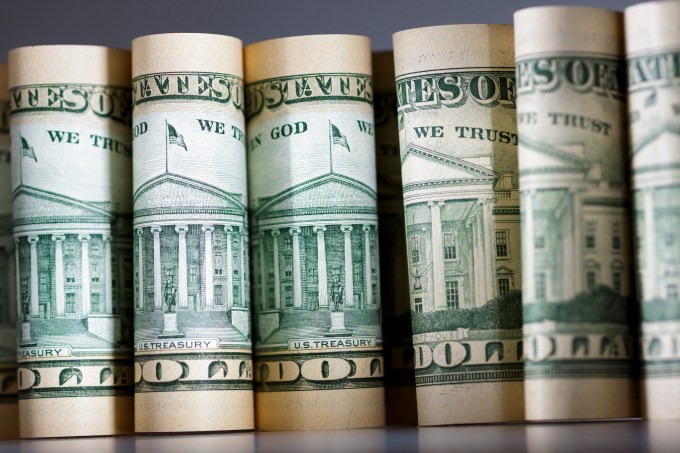
Dollar bills standing on a table in Berlin, Germany. (Photo by Thomas Trutschel/Photothek via Getty Images)

The EU’s (voluntary) Transparency Register records Google directly spending between $6M and $6.4M on regional lobbying activities in 2016 alone. (Although that covers not just copyright related lobbying but a full laundry list of “fields of interest” its team of 14 smooth-talking staffers apply their Little Fingers to.)

But the company also seeks to exert influence on EU political opinion via membership of additional lobbying organizations.

And the register lists a full TWENTY-FOUR organizations that Google is therefore also speaking through (by contrast, Facebook is merely a member of eleven bodies) — from the American chamber of Commerce to the EU to dry-sounding thinktanks, such as the Center for European Policy Studies and the European Policy Center. It is also embedded in startup associations, like Allied for Startups. And various startup angles have been argued by critics of the copyright reforms — claiming Europe is going to saddle local entrepreneurs with extra bureaucracy.

Google’s dense web of presence across tech policy influencers and associations amplifies the company’s regional lobbying spend to as much as $36M, music industry bosses contend.

Though again that dollar value would be spread across multiple GOOG interests — so it’s hard to sum the specific copyright lobbying bill. (We asked Google — it didn’t answer). Multiple millions looks undeniable though.

Of course the music industry and publishers have been lobbying too.

But probably not at such a high dollar value. Though Europe’s creative industries have the local contacts and cultural connections to bend EU politicians’ ears. (As, well, they probably should.)

Seasoned European commissioners have professed themselves astonished at the level of lobbying — and that really is saying something.

Yes there are actually two sides to consider…

Returning to the Society of Authors, here’s the bottom third of their points — which focus on countering the copyright reform critics’ counterarguments:

The proposals aren’t censorship: that’s the very opposite of what most journalists, authors, photographers, film-makers and many other creators devote their lives to.

Not allowing creators to make a living from their work is the real threat to freedom of expression.

Not allowing creators to make a living from their work is the real threat to the free flow of information online.

Not allowing creators to make a living from their work is the real threat to everyone’s digital creativity.

Stopping the directive would be a victory for multinational internet giants at the expense of all those who make, enjoy and enjoy using creative works.

Certainly some food for thought there.

But as entrenched, opposing positions go, it’s hard to find two more perfect examples.

And with such violently opposed and motivated interest groups attached to the copyright reform issue there hasn’t really been much in the way of considered debate or nuanced consideration on show publicly.

But being exposed to endless DEATH OF THE INTERNET memes does tend to have that effect.

What’s that about Article 3 and AI?

There is also debate about Article 3 of the copyright reform plan — which concerns text and data-mining. (Or TDM as the Commission sexily conflates it.)

The original TDM proposal, which was rejected by MEPs, would have limited data mining to research organisations for the purposes of scientific research (though Member States would have been able to choose to allow other groups if they wished).

This portion of the reforms has attracted less attention (butm again, it’s difficult to be heard above screams about dead memes). Though there have been concerns raised from certain quarters that it could impact startup innovation — by throwing up barriers to training and developing AIs by putting rights blocks around (otherwise public) data-sets that could (otherwise) be ingested and used to foster algorithms.

Or that “without an effective data mining policy, startups and innovators in Europe will run dry”, as a recent piece of sponsored content inserted into Politico put it.

That paid for content was written by — you guessed it! — Allied for Startups.

Aka the organization that counts Google as a member…

The most fervent critics of the copyright reform proposals — i.e. those who would prefer to see a pro-Internet-freedoms overhaul of digital copyright rules — support a ‘right to read is the right to mine’ style approach on this front.

So basically a free for all — to turn almost any data into algorithmic insights. (Presumably these folks would agree with this kind of thing.)

Middle ground positions which are among the potential amendments now being considered by MEPs would support some free text and data mining — but, where legal restrictions exist, then there would be licenses allowing for extractions and reproductions.


And now the amendments, all 252 of them…

The whole charged copyright saga has delivered one bit of political drama already —  when the European Parliament voted in July to block proposals agreed only by the legal affairs committee, thereby reopening the text for amendments and fresh votes.

So MEPs now have the chance to refine the parliament’s position via supporting select amendments — with that vote taking place next week.

And boy have the amendments flooded in.

There are 252 in all! Which just goes to show how gloriously messy the democratic process is.

It also suggests the copyright reform could get entirely stuck — if parliamentarians can’t agree on a compromise position which can then be put to the European Council and go on to secure final pan-EU agreement.

MEP Julia Reda, a member of The Greens–European Free Alliance, who as (also) a Pirate Party member is very firmly opposed to the copyright reform text as was voted in July (she wants a pro-web-freedoms overhauling of digital copyright rules), has created this breakdown of alternative options tabled by MEPs — seen through her lens of promoting Internet freedoms over rights extensions.

So, for example, she argues that amendments to add limited exceptions for platform liability would still constitute “upload filters” (and therefore “censorship machines”).

Her preference would be deleting the article entirely and making no change to the current law. (Albeit that’s not likely to be a majority position, given how many MEPs backed the original Juri text of the copyright reform proposals 278 voted in favor, losing out to 318 against.)

But she concedes that limiting the scope of liability to only music and video hosting platforms would be “a step in the right direction, saving a lot of other platforms (forums, public chats, source code repositories, etc.) from negative consequences”.

She also flags an interesting suggestion — via another tabled amendment — of “outsourcing” the inspection of published content to rightholders via an API”.

“With a fair process in place [it] is an interesting idea, and certainly much better than general liability. However, it would still be challenging for startups to implement,” she adds.

Reda has also tabled a series of additional amendments to try to roll back what she characterizes as “some bad decisions narrowly made by the Legal Affairs Committee” — including adding a copyright exception for user generated content (which would essentially get platforms off the hook insofar as rights infringements by web users are concerned); adding an exception for freedom of panorama (aka the taking and sharing of photos in public places, which is currently not allowed in all EU Member States); and another removing a proposed extra copyright added by the Juri committee to cover sports events — which she contends would “filter fan culture away“.

So is the free Internet about to end??

MEP Catherine Stihler, a member of the Progressive Alliance of Socialists and Democrats, who also voted in July to reopen debate over the reforms reckons nearly every parliamentary group is split — ergo the vote is hard to call.

“It is going to be an interesting vote,” she tells TechCrunch. “We will see if any possible compromise at the last minute can be reached but in the end parliament will decide which direction the future of not just copyright but how EU citizens will use the internet and their rights on-line.

“Make no mistake, this vote affects each one of us. I do hope that balance will be struck and EU citizens fundamental rights protected.”

So that sort of sounds like a ‘maybe the Internet as you know it will change’ then.

Other views are available, though, depending on the MEP you ask.

We reached out to Axel Voss, who led the copyright reform process for the Juri committee, and is a big proponent of Article 13, Article 11 (and the rest), to ask if he sees value in the debate having been reopened rather than fast-tracked into EU law — to have a chance for parliamentarians to achieve a more balanced compromise. At the time of writing Voss hadn’t responded.

Voting to reopen the debate in July, Stihler argued there are “real concerns” about the impact of Article 13 on freedom of expression, as well as flagging the degree of consumer concern parliamentarians had been seeing over the issue (doubtless helped by all those memes + petitions), adding: “We owe it to the experts, stakeholders and citizens to give this directive the full debate necessary to achieve broad support.”

MEP Marietje Schaake, a member of the Alliance of Liberals and Democrats for Europe, was willing to hazard a politician’s prediction that the proposals will be improved via the democratic process — albeit, what would constitute an improvement here of course depends on which side of the argument you stand.

But she’s routing for exceptions for user generated content and additional refinements to the three debated articles to narrow their scope.

Her spokesman told us: “I think we’ll end up with new exceptions on user generated content and freedom of panorama, as well as better wording for article 3 on text and data mining. We’ll end up probably with better versions of articles 11 and 13, the extent of the improvement will depend on the final vote.”

The vote will be held during an afternoon plenary session on September 12.

So yes there’s still time to call your MEP.

A year later, Equifax lost your data but faced little fallout

A lot can change in a year. Not when you’re Equifax.

The credit rating giant, one of the largest in the world, was trusted with some of the most sensitive data used by banks and financiers to determine who can be lent money. But the company failed to patch a web server it knew was vulnerable for months, which let hackers crash the servers and steal data on 147 million consumers. Names, addresses, Social Security numbers and more — and millions more driver license and credit card numbers were stolen in the breach. Millions of British and Canadian nationals were also affected, sparking a global response to the breach.

It was “one of the most egregious examples of corporate malfeasance since Enron,” said Senate Democratic leader Chuck Schumer at the time.

Yet, a year on from following the devastating hack that left the company reeling from a breach of almost every American adult, the company has faced little to no action or repercussions.

In the aftermath, the company’s response to the breach was chaotic, sending consumers scrambling to learn if they were affected but were instead led into a broken site that was vulnerable to hacking. And when consumers were looking for answers, Equifax’s own Twitter account sent concerned users to a site that easily could have been a phishing page had it not been for a good samaritan.

Yet, the company went unpunished. In the end, Equifax was in law as much a victim as the 147 million Americans.

“There was a failure of the company, but also of lawmakers,” said Mark Warner, a Democratic senator, in a call with TechCrunch. Warner, who serves Virginia, was one of the first lawmakers to file new legislation after the breach. Alongside his Democratic colleague, Sen. Elizabeth Warren, the two senators said their bill, if passed, would hold credit agencies accountable for data breaches.

“With Equifax, they knew for months before they reported, so at what point is that violating securities laws by not having that notice?,” said Warner.

“There was a failure of the company, but also of lawmakers.”
Sen. Mark Warner (D-VA)

“The message sent to the market is ‘if you can endure some media blowback, you can get through this without serious long-term ramifications’, and that’s totally unacceptable,” he said.

Lawmakers held hearings and grilled the company’s former chief executive, Richard Smith, who retired with his full $90 million retirement package, adding insult to injury. Equifax further shuffled its executive suite, including the hiring of a new chief information security officer Jamil Farshchi and former lawyer turned “chief transformation officer” Julia Houston to oversee “the company’s response to the cybersecurity incident.”

Equifax declined to make either executive available for interview or comment when reached by TechCrunch, but Equifax spokesperson Wyatt Jefferies said protecting customer data is the company’s “top priority.”

But there’s not much to show for it beyond superficial gestures of free credit monitoring — provided by Equifax, no less — and a credit locking app which, unsurprisingly, had its own flaws. In the year since, the company has spent more than $240 million — some $50 million was covered by cyber-insurance. That’s a drop in the ocean to more than $3 billion in revenue in the year since, according to quarterly earnings filings — or more than $500 million in profits. And although Equifax’s stock price initially collapsed in the weeks following, the price bounced back.

Financially, the company looks almost as healthy as it’s ever been. But that may change.

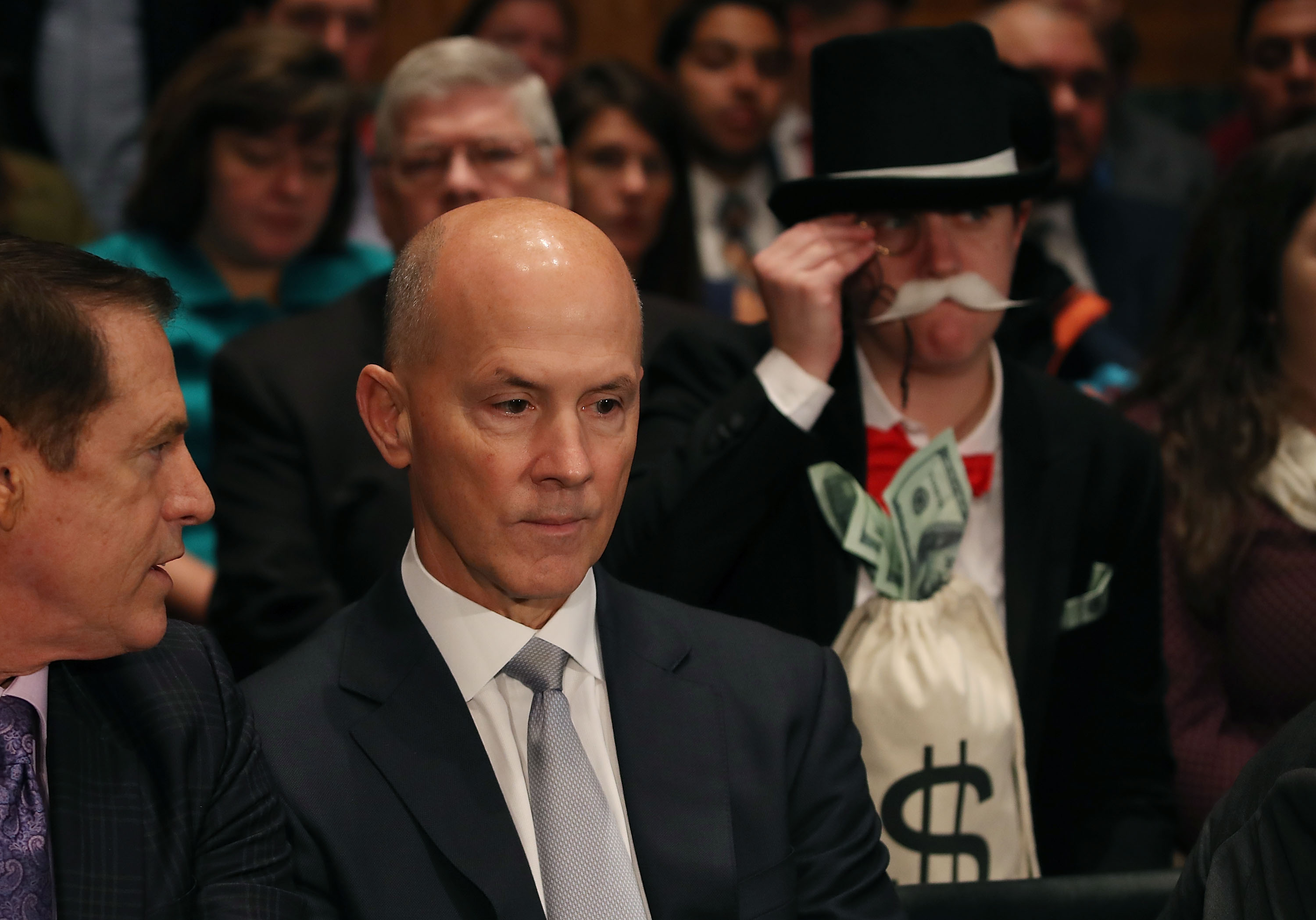
Former Equifax chief executive Richard Smith prepares to testify before the lawmakers. Smith later retired after hackers broke into the credit reporting agency and made off with the personal information of nearly 145 million Americans.

Earlier this year, the company asked a federal judge to reject claims from dozens of banks and credit unions for costs taken to prevent fraud following the data breach. The claims, if accepted, could force Equifax to shell out tens of millions of dollars — perhaps more. The hundreds of class action suits filed to date have yet to hit the courts, but historically even the largest class action cases have resulted in single dollar amounts for the individuals affected.

And when the credit agent giant isn’t fighting the courts, federal regulators have shown little interest in pursuit of legal action.

An investigation launched by a former head of the Consumer Financial Protection Bureau, responsible for protecting consumers from fraud, sputtered after the new director reportedly declined to pursue the company. And, although the company is under investigation by the Federal Trade Commission for the second time this decade, fines are likely to be limited — if levied at all.

Warren sent a letter Thursday to the heads of both agencies lamenting their lack of action.

“Companies like Equifax do not ask the American people before they collect their most sensitive information,” said Warren. “This information can determine their ability to access credit, obtain a job, secure a home loan, purchase a car, and make dozens of other transactions that are critical to their personal financial security.”

“The American people deserve an update on your investigations,” she said.

To date, only the Securities and Exchange Commission has brought charges — not for the breach itself, but against three former staffers for allegedly insider trading.

Escaping any local action, Equifax agreed with eight states, including New York and California, to take further cybersecurity steps and measures to prevent another breach, escaping any fines or financial penalties.

“The American people deserve an update on your investigations”
Sen. Elizabeth Warren (D-MA)

Warner blamed much of the inaction to the patchwork of data breach laws that vary by state.

“We’ve got different laws and you don’t have any standard, and part of the challenge around the data breach is that every industry wants to be exempted,” said Warner. It’s not a partisan issue, he said, but one where every industry — from telecoms to retail — wants to be exempt from the law.

“If we really want to improve our business cyber-hygiene, you have got to have consequences for failing to keep up those cyber-hygiene standards,” he said.

It’s a tough sell to posit Equifax, which fluffed almost every step of the breach process, before and after its disclosure, as a victim. While the millions affected can take solace in the beating Equifax got in the press, those demanding regulatory action might be in for a disappointingly long wait.

Only 48 hours left to apply for Startup Battlefield Africa 2018

It’s go-time people. As in go apply right now to compete in TechCrunch Startup Battlefield Africa 2018 — do it now because in 48 short hours, the application window slams shut for good. Think you have the best early-stage startup in Sub-Saharan Africa? Do you dream on a global scale? Then come to Lagos, Nigeria on December 11 and launch your business to the world in front of the influential people who help make big dreams come true. Apply right here no later than September 10 at 5 p.m. PT.

Up to 15 of the best pre-Series A startups across Sub-Saharan Africa will compete head-to-head for the Startup Battlefield Africa 2018 championship, $25,000 in non-equity cash plus a trip for two to compete in Startup Battlefield in San Francisco at TechCrunch Disrupt 2019 (assuming the company still qualifies to compete at the time).

One of the great things about Startup Battlefield is that all participants — win or lose — benefit from broad exposure to investor love, media attention and access to an incredible network of influential technologists and entrepreneurs. That network, our Startup Battlefield alumni community, consists of more than 750 companies — including names like Dropbox, Mint, Vurb and many more — that have competed and gone on to collectively raise more than $8 billion in funds and generate 102 exits. The experience and advice these folks bring to bear can be invaluable.

Clearly our editors have a knack for picking winning startups, and they’ll scrutinize every eligible application. The chosen founders will all receive extensive, expert pitch coaching to prepare them for the six minutes they’ll have onstage to present a live demo to a panel of distinguished judges — and then answer all questions the judges throw at them. Five teams will move on to a second round of pitching and inquisition in front of a fresh set of judges.

Ultimately, one winner will rise above the rest to be Sub-Saharan Africa’s best startup. Will it be yours? The first step — before you apply — is to check whether you’re eligible to compete. Startups should:

  • Be early-stage companies in “launch” stage
  • Be headquartered in one of our eligible countries*
  • Have a fully working product/beta that’s reasonably close to, or in, production
  • Have received limited press or publicity to date
  • Have no known intellectual property conflicts
  • Apply by September 10 at 5 p.m. PT

Pretty standard stuff, right? So now that you’ve got that detail out of the way, don’t waste another moment. We want to see you strut your startup stuff in Lagos, Nigeria on December 11. Apply right here to compete in Startup Battlefield Africa 2018. The application window closes on September 10 at 5 p.m. PT.

*Residents in the following countries may apply:

Angola, Benin, Botswana, Burkina Faso, Burundi, Cameroon, Cabo Verde, Central Africa Republic, Chad, Comoros, Republic of the Congo, Democratic Republic of the Congo, Cote d’Ivoire, Equatorial Guinea, Eritrea, Ethiopia, Gabon, Gambia, Ghana, Guinea, Guinea-Bissau, Kenya, Lesotho, Liberia, Madagascar, Malawi, Mali, Mauritania, Mauritius, Mozambique, Namibia, Niger, Nigeria, Rwanda, Sao Tome and Principe, Senegal, Seychelles, Sierra Leone, Somalia, South Africa, South Sudan, Sudan, Swaziland, Tanzania, Togo, Uganda, Zambia and Zimbabwe. Notwithstanding anything to the contrary in the foregoing language, the “Applicable Countries” does not include any country to or on which the United States has embargoed goods or imposed targeted sanctions.

Coinbase plots to become the New York Stock Exchange of crypto securities

The future of Coinbase looks something like the New York Stock Exchange. That’s according a vision laid out by CEO Brian Amstrong who was interviewed on stage at TechCrunch Disrupt in San Francisco today.

Coinbase is known for being the most popular exchange for converting fiat currency into crypto — most of the largest traded exchanges are crypto-to-crypto — but he foresees a future in which it plays host to a growing number of cryptocurrencies as it becomes standard for companies to create their own token, which runs alongside equity as an alternative investment system.

“It makes sense that any company out there who has a cap table… should have their own token. Every open source project, every charity, potentially every fund or these new types of decentralized organizations [and] apps, they’re all going to have their own tokens,” Armstrong said.

“We want to be the bridge all over the world where people come and they take fiat currency and they can get it into these different cryptocurrencies,” he added.

Brian Armstrong (Coinbase) says crypto regulation will result in the next version of the stock market #TCDisrupt pic.twitter.com/2kyxAmhPSZ

— TechCrunch (@TechCrunch) September 7, 2018

That tokenized future could see Coinbase host hundreds of tokens within “years” and even potentially “millions” in the future, according to Armstrong. That’s a big jump on the five cryptocurrencies that it currently supports today, and it would make it way larger than financial institutions like the New York Stock Exchange, which is actually a Coinbase investor and is getting into Bitcoin, or the NASDAQ.

One of the critical pieces of making this vision a reality is, of course, regulation. This week at Disrupt, others in crypto space have argued that a lack of clarity around crypto regulation is costing the U.S. as innovation and startups are being developed in overseas markets. As the founder of a U.S.-based crypto startup that is valued at over $1 billion and is hiring hard, Armstrong doesn’t subscribe to that thesis but he did admit that there is “a big open question” over whether the majority of the new rush of tokens he foresees will be securities or not.

Still, Coinbase has made moves to add security tokens to its portfolio with the acquisition of a securities dealer earlier this year.

“We do feel a substantial subset of these tokens will be securities,” he said. “Our approach has always been to be the most trusted [exchange] and the easiest to use. So we want to be the legal compliant place where you can start to trade these tokens that are classified as securities.”

“Web 1.0 was about publishing information, web 2.0 was about interaction and web 3.0 is going to be about value transfer on the internet because now the web has this native currency and so applications can be built that instantly tap into this global economy on the internet,” Armstrong added.

How international can crypto become? The Coinbase CEO thinks that the total number of people in the crypto ecosystem can reach one billion within the next five years, up from around 40 million today.

You can watch the full video from Armstrong’s interview below.

Note: The author owns a small amount of cryptocurrency. Enough to gain an understanding, not enough to change a life.

Coinbase’s Brian Armstrong: ‘I’d love to run a public company’

Brian Armstrong, the CEO of cryptocurrency trading platform Coinbase, wants to take his company public — maybe on the blockchain.

Onstage at TechCrunch Disrupt SF 2018, Armstrong dished on his ambitions for the future of Coinbase.

“We are self-sustaining,” Armstrong said. “You know, we’ve been profitable for quite a while. We don’t have any plans to raise additional capital at this point, but never say never … Someday I’d love to run a public company.”

Armstrong didn’t rule out going public on the blockchain. He said he’s even considered going public on his own platform.

“I think it would be very on mission for us to do that because, of course, we are creating an open financial system,” he said. “Companies could list their stock, which are really tokens, and instead of a cap table, you tokenize the cap table. But I don’t have any decisions on that to share at the moment.”

An innovative exit would be very on-brand for Coinbase. As one of the earliest players in crypto-mania, the company has certainly had to make things up as it goes. It’s worked, as Armstrong said; the company is profitable and was the first-ever cryptocurrency startup to garner a billion-dollar valuation.

Founded in 2012, Coinbase is backed by IVP, Spark Capital, Greylock Partners, Battery Ventures, Section 32, Draper Associates and more. The company was valued at $1.6 billion in August 2017 with a $100 million Series D last year. The financing was reportedly the largest-ever for a crypto startup.

Watch the full interview with Brian Armstrong below.

And the winner of Startup Battlefield at Disrupt SF 2018 is… Forethought

At the very beginning, there were 21 startups. After three days of incredibly fierce competition, we now have a winner.

Startups participating in the Startup Battlefield have all been hand-picked to participate in our highly competitive startup competition. They all presented in front of multiple groups of VCs and tech leaders serving as judges for a chance to win $100,000 and the coveted Disrupt Cup.

After hours of deliberations, TechCrunch editors pored over the judges’ notes and narrowed the list down to five finalists: CB Therapeutics, Forethought, Mira, Origami Labs and Unbound.

These startups made their way to the finale to demo in front of our final panel of judges, which included: Cyan Banister (Founders Fund), Roelof Botha (Sequoia Capital), Jeff Clavier (Uncork Capital), Kirsten Green (Forerunner Ventures), Aileen Lee (Cowboy Ventures) and Matthew Panzarino (TechCrunch).

And now, meet the Startup Battlefield winner of TechCrunch Disrupt SF 2018.

Winner: Forethought

Forethought has a modern vision for enterprise search that uses AI to surface the content that matters most in the context of work. Its first use case involves customer service, but it has a broader ambition to work across the enterprise.

Read more about Forethought in our separate post.

Runner-Up: Unbound

Unbound makes fashion-forward vibrators, and their latest is the Palma. The new device masquerades as a ring, offers multiple speeds, and is completely waterproof. And the team plans to add accelerometer features.

Read more about Unbound in our separate post.

Fortnite hits 15 million installs on Android

Circumventing the Google Play store wasn’t exactly a gamble for Epic, given the fact that Fortnite is essentially a license to print money. But even by its own standards, the game is posting some impressive numbers three weeks after hitting Android.

In a blog post this week, Epic noted that the wildly popular sandbox survival game hit 23 million players on Google’s mobile operating system, spread out across 15 million APK installs. Those numbers are arriving 21 days after the title launched on the OS.

This, like every other piece of Fortnite news, means big bucks for Epic. That’s especially the case here, however, given that the launch means the gaming company is cutting Google’s 30 percent take out of the equation.

Along with the numbers, Epic also highlighted some of its efforts to tackle potential malware threats — an added issue given that the game isn’t distributed through Google’s official channel.

“So far, Epic has instigated action on 47 unauthorized “Fortnite for Android’ websites,” the company writes, “many of which appear to be run by the same bad actors. We continue to police the situation with a goal of taking them offline, or restricting access by leveraging Epic’s connection to a network of anti-fraud partners.”

DARPA announces $2B investment in AI

At a symposium in Washington DC on Friday, DARPA announced plans to invest $2 billion in artificial intelligence research over the next five years.

In a program called “AI Next,” the agency now has over 20 programs currently in the works and will focus on “enhancing the security and resiliency of machine learning and AI technologies, reducing power, data, performance inefficiencies and [exploring] ‘explainability’” of these systems.

“Machines lack contextual reasoning capabilities, and their training must cover every eventuality, which is not only costly, but ultimately impossible,” said director Dr. Steven Walker. “We want to explore how machines can acquire human-like communication and reasoning capabilities, with the ability to recognize new situations and environments and adapt to them.”

Artificial intelligence is a broad term that can encompass everything from intuitive search features to true machine learning, and all definitions rely heavily on consuming data to inform their algorithms and “learn.” DARPA has a long history of research and development in this space, but has recently seen its efforts surpassed by foreign powers like China, who earlier this summer announced plans to become an AI leader by 2030.

In many cases these AI are still in their infancy, but the technology — especially machine learning — has the potential to completely transform not only how users interact with their own technology but how corporate and governmental institutions use this technology to interact with their employees and citizens.

One particular concern with machine learning is the potential bias that can be incorporated into these systems as a result of the data they consume during training. If the data contains holes or misinformation, the machines can come to incorrect conclusions — such as which individuals are “more likely” to commit crimes — that can have devastating consequences. And, even more frighteningly, when organically coming to these conclusions the “learning” a machine is obscured in something called a black box.

In other words, even the researchers who design the algorithms can’t quite know how machines are reaching their conclusions.

That said, when handled with care and forethought, AI research can be a powerful source of innovation and advancement as well. As DARPA moves forward with its research, we will see how they handle these important technical and societal questions.

Elon Musk shuffles Tesla’s executive team in email

After a string of executive departures over the past several months that continued Friday with the resignations of two people in high-profile positions, CEO Elon Musk announced a series of promotions and job updates in an email sent to employees. To be clear, these are not new hires and some of these promotions were already finalized before the most recent resignations reported earlier Friday.

In other words, Musk didn’t suddenly promote a bunch of executives in response to the negative market reaction Friday to the resignations or his marijuana-sampling during a live-streamed podcast with Joe Rogan.

Still, the promotions are notable because it gives rarely provided insight into the structure of the company — as well as who is left. It also shows the increasing workload placed on a few people.

For example, Kevin Kassekert previously headed up infrastructure development, a job that included leading the construction and development of Tesla’s gigafactory near Reno, Nevada. His new title is vice president of people and places, a position that gives him responsibility of human resources — a job that was once filled by Gaby Toledano — as well as facilities, construction and infrastructure. Tesla has more than 37,000 employees and facilities all over the world, including its factory in Fremont, California.

Musk also promoted Jérôme Guillen to president of automotive. Guillen, a former Daimler Freightliner executive, will oversee all automotive operations and program management, as well as coordinate Tesla’s supply chain. Guillen previously headed up Tesla’s truck program and worldwide sales and service.

Other promotions and position updates include:

  • Felicia Mayo, who was senior HR director and head of Tesla’s diversity and inclusion program, has been promoted to vice president level and will report to both Kassekert and Musk.
  • Laurie Shelby, Tesla’s vice president of environmental, health and safety will now report directly to Musk.
  • Cindy Nicola, who heads global recruiting at Tesla, will report to both Kassekert and Musk.
  • Dave Arnold has been promoted to head of communications. Arnold fills the role after Sarah O’Brien left this month.

The letter contained a few other forward-looking statements ahead of the company’s next quarterly earnings report.

“We are about to have the most amazing quarter in our history, building and delivering more than twice as many cars as we did last quarter,” Musk wrote. “For a while, there will be a lot of fuss and noise in the media. Just ignore them. Results are what matter and we are creating the most mind-blowing growth in the history of the automotive industry.”

Tesla produced 53,339 vehicles in the second quarter. If Tesla does build and deliver more than “twice” as many as cars as it did last quarter, that means the company would hit something like 107,000 vehicles.

Amazon’s cashier-free Go store is coming to NYC

A day after cutting the ribbon on its second (and largest) cashier-free convenience store in Seattle, Amazon has confirmed it will be bringing the Go concept to the City that Never Sleeps.

The Information first noted the news through a number of job listings last night. The company has since confirmed its plans in an email to TechCrunch.

“We plan to open Amazon Go in New York,” an Amazon spokesperson told TechCrunch. And that’s basically it for the statement. No information on key details like launch timeframe here, but at least the company really cut to the chase on this one.

The stores are a bit of an experiment for the company, which has been dipping its toes into the brick and mortar experience. Announced during the 2016 holiday season, Go still feels like a novelty for retail. The concept ditches cashiers, instead relying on cameras to track shoppers and charging their account when they walk out the door.

The New York store will be Amazon’s first outside of its native Seattle. Amazon does already have a retail presence, courtesy of a pair of bookstores in Manhattan. 

Pretty art screen startup Meural gets acquired by ugly wifi router company

The startup behind the Meural art frame has been acquired by Netgear. The deal was announced during the router company’s analyst day and was confirmed to TechCrunch by a Meural spokesperson. Terms of the deal weren’t disclosed.

Netgear may feel like an odd suitor for this consumer hardware startup, but they were an early investor in them and the buy is certainly no more strange than the last exit in this smart art space, when Giphy bought Electric Objects, torched the hardware business and made the subscription content free to existing users.

Meural has built some very nice hardware. At $595 the company’s art frames are a bit pricier than other products in the market, though its $40 annual subscription to its art network is much more palatable. The device’s gesture controls also offer some quality controls beyond the mobile app.

Netgear seems to have some real interest in bringing the Meural hardware into its plans to hide wifi routers in plain sight in people’s homes, an analyst at the event noted in Forbes.

It’s certainly an interesting prospect, this seems like an odd product to exercise this strategy with though. Smart art frames are at their ugliest when the power cord can’t be hidden and it’s probably going to be a tad difficult for you to hide ethernet cords on your wall unless you’re hiding them in the wall which doesn’t work great when so many smart home hubs need a direct connection to your router.

Meural raised $9.3 million in funding from investors including Corigin Ventures, Bolt, Forefront Ventures, Firstrock Capital and Netgear.

Vtrus launches drones to inspect and protect your warehouses and factories

Knowing what’s going on in your warehouses and facilities is of course critical to many industries, but regular inspections take time, money, and personnel. Why not use drones? Vtrus uses computer vision to let a compact drone not just safely navigate indoor environments but create detailed 3D maps of them for inspectors and workers to consult, autonomously and in real time.

Vtrus showed off its hardware platform — currently a prototype — and its proprietary SLAM (simultaneous location and mapping) software at TechCrunch Disrupt SF as a Startup Battlefield Wildcard company.

There are already some drone-based services for the likes of security and exterior imaging, but Vtrus CTO Jonathan Lenoff told me that those are only practical because they operate with a large margin for error. If you’re searching for open doors or intruders beyond the fence, it doesn’t matter if you’re at 25 feet up or 26. But inside a warehouse or production line every inch counts and imaging has to be carried out at a much finer scale.

As a result, dangerous and tedious inspections, such as checking the wiring on lighting or looking for rust under an elevated walkway, have to be done by people. Vtrus wouldn’t put those people out of work, but it might take them out of danger.

The drone, called the ABI Zero for now, is equipped with a suite of sensors, from ordinary RGB cameras to 360 ones and a structured-light depth sensor. As soon as it takes off, it begins mapping its environment in great detail: it takes in 300,000 depth points 30 times per second, combining that with its other cameras to produce a detailed map of its surroundings.

It uses this information to get around, of course, but the data is also streamed over wi-fi in real time to the base station and Vtrus’s own cloud service, through which operators and inspectors can access it.

The SLAM technique they use was developed in-house; CEO Renato Moreno built and sold a company (to Facebook/Oculus) using some of the principles, but improvements to imaging and processing power have made it possible to do it faster and in greater detail than before. Not to mention on a drone that’s flying around an indoor space full of people and valuable inventory.

On a full charge, ABI can fly for about 10 minutes. That doesn’t sound very impressive, but the important thing isn’t staying aloft for a long time — few drones can do that to begin with — but how quickly it can get back up there. That’s where the special docking and charging mechanism comes in.

The Vtrus drone lives on and returns to a little box, which when a tapped-out craft touches down, sets off a patented high-speed charging process. It’s contact-based, not wireless, and happens automatically. The drone can then get back in the air perhaps half an hour or so later, meaning the craft can actually be in the air for as much as six hours a day total.

Probably anyone who has had to inspect or maintain any kind of building or space bigger than a studio apartment can see the value in getting frequent, high-precision updates on everything in that space, from storage shelving to heavy machinery. You’d put in an ABI for every X square feet depending on what you need it to do; they can access each other’s data and combine it as well.

This frequency and the detail which which the drone can inspect and navigate means maintenance can become proactive rather than reactive — you see rust on a pipe or a hot spot on a machine during the drone’s hourly pass rather than days later when the part fails. And if you don’t have an expert on site, the full 3D map and even manual drone control can be handed over to your HVAC guy or union rep.

You can see lots more examples of ABI in action at the Vtrus website. Way too many to embed here.

Lenoff, Moreno, and third co-founder Carlos Sanchez, who brings the industrial expertise to the mix, explained that their secret sauce is really the software — the drone itself is pretty much off the shelf stuff right now, tweaked to their requirements. (The base is an original creation, of course.)

But the software is all custom built to handle not just high-resolution 3D mapping in real time but the means to stream and record it as well. They’ve hired experts to build those systems as well — the 6-person team already sounds like a powerhouse.

The whole operation is self-funded right now, and the team is seeking investment. But that doesn’t mean they’re idle: they’re working with major companies already and operating a “pilotless” program (get it?). The team has been traveling the country visiting facilities, showing how the system works, and collecting feedback and requests. It’s hard to imagine they won’t have big clients soon.

Wingly is carpooling for private planes

Don’t call Wingly the “Uber of the Sky” — Wingly co-fonder Emeric de Waziers would like to nip that little misinterpretation in the bud as the French startup looks to expand into the U.S. If anything, the startup’s mission is more akin to carpooling for small aircrafts, helping pilots fill up empty seats in small passenger planes.

The distinction is an important one, with regard to the company’s ability to operate. After all, allowing private pilots to turn a profit changes the math significantly, both with regard to specific licenses and the company’s ability to operate inside different countries. Ninety-five percent of pilots who use the service don’t have a commercial license.

“What often happens with hobby pilots is they set a budget for the year. They’re going to fly as many times as they can with this money. If they can fly four times cheaper, they can fly four times more. We have many pilots posting what we call ‘flexible flights,’ saying, ‘hey, I’m available for a roundtrip from San Francisco to Tahoe.’ The passenger says they’re interested and they book the flight.”

Founded in July 2015, the company faced regulatory challenges early on in its native France. It was enough to cause Wingly to relocate operations, setting up shop in Germany in February of the following year. That launch was a sort of a proof of concept for the novel flight booking app. It was successful enough to convince Wingly to take on its home country again, pushing back against French regulatory bodies.

These days, it operates in Germany, France and the UK, with those markets composing 45, 30 and 20 percent of the company’s business, respectively (with the other five percent belonging to various parts of Europe). Wingly’s flight matching service currently hosts around 2,000 passengers a month, with each flight averaging about 1.8 passengers.

It’s not a huge number, but, then, these aren’t huge planes, with the prop and twin-engine crafts sporting between two and six seats each. Profitability for Wingly means pushing into high volume numbers, but the current pace has been successful enough for the startup to begin pursuing the U.S. as its next major market — a move the company plans to begin in earnest as a Battlefield contestant at Disrupt today in San Francisco.

Currently, Wingly takes a 15-percent commission on each flight, along with a €5 charge. The company has also raised €2.5 million including a €2 million seed round back in December. It’s been enough funding to help the company thrive in Europe, but coming to the States will require additional cash, particularly its current launch time frame of early 2019. From there, Wingly hopes to reach numbers comparable to the business it’s doing in Europe by August/September of next year.