Kobo’s Forma e-reader takes on Kindle Oasis with an asymmetric design and premium price

Kobo’s latest e-reader is a complete about-face from its anonymous, cheap and highly practical Clara HD; the Forma is big, expensive and features a bold — not to say original — design. It’s clearly meant to take on the Kindle Oasis and e-reader fans for whom price is no object.

The $280 Forma joins a number of other e-readers in using a one-handed design, something which is, we might as well admit up front, isn’t for everyone. That said, I’ve found that my reading style on these devices has been able to adapt from one form factor to another — it’s not like they made it head-mountable or something. You still hold it like you would any other small device.

It uses an 8-inch E-Ink Carta display with 300 pixels per inch, which is more than enough for beautiful type. The frontlight — essentially a layer above the display that lights up and bounces light off it to illuminate the page — is a Kobo specialty, adjustable from very cold to very warm in cast and everywhere in-between.
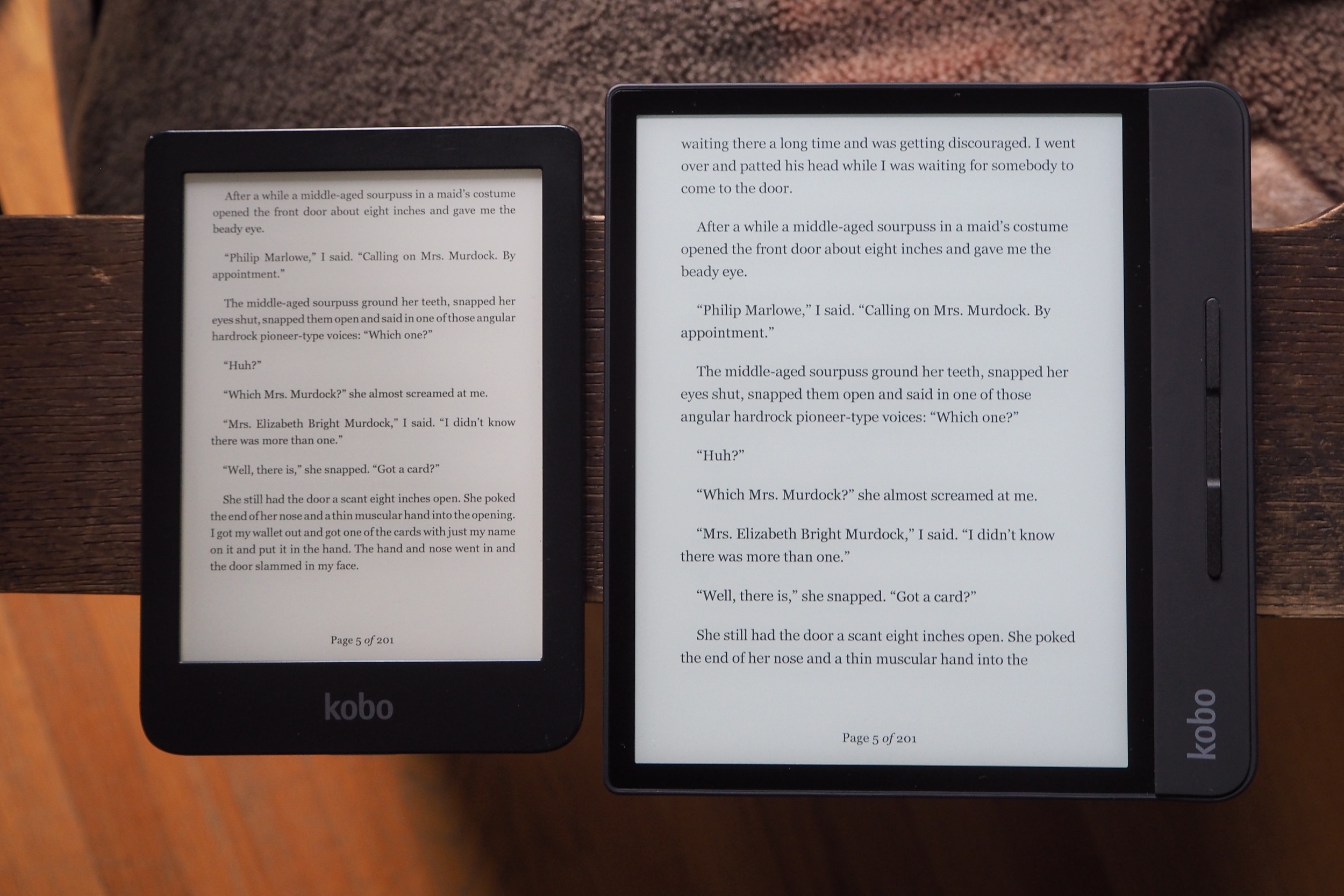
The Clara HD, Kobo’s best entry-level device, left, and the Forma. (The color cast of the screens is adjustable.)

The screen will be very similar to that of the Aura One, Kobo’s previous high-end reader, but the Forma’s asymmetric design gives it slightly closer to square dimensions.

Where it differs from the Kindle Oasis is in size and a couple important particulars of design. The Forma is slightly larger, by about 20 millimeters (3/4″ or so) in height and width, and is ever so slightly but not noticeably thicker. (I didn’t have one to compare on hand, unfortunately.)

It’s also worth saying that like all Kobo devices, there are no forced advertisements on this one, and you can load your own books as easy as that. To me Kindles aren’t even an option any more because of the “special offers” and limited file support.

Chin or ear?
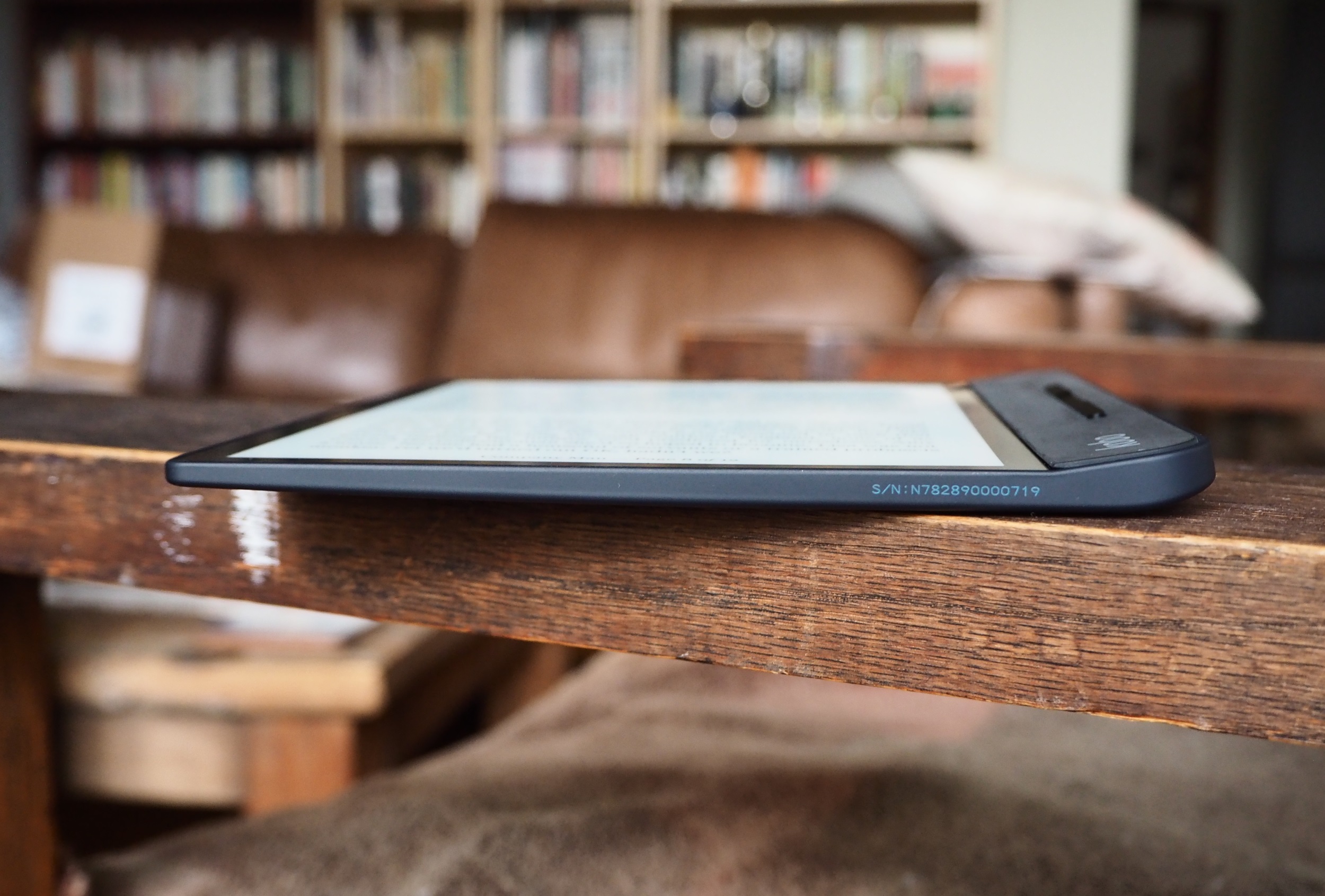
The shape is similar, as anyone can see, but the Kobo team decided to go against having a flush front side and instead give the device a “chin,” as we used to call it on HTC phones, though being on the side it would perhaps more accurately be termed an “ear.” The screen, of course, is flat, but the grip on the side rises up from it at a 15 degree angle or so.

Is this better or worse than having a flush front? Aesthetically I prefer the flush screen, but practically speaking it is better to have a flat back so it lies flat when you put it down or prop it against something. That the Oasis sits at a tilt when you set it down on a table is something that bothers me. (I’m very sensitive, as you can tell.)

It’s still very light, only 30 grams more than the Clara, the same amount less than the Aura One, and nearly equal to the Oasis. Despite being larger than any of those, it’s no less portable. That said, the Clara will fit in my back pocket, and this one most definitely will not.

The device is fully waterproof, like the Oasis, although liquid on the screen can disrupt touch functionality (this is just a physics thing). Nothing to worry about, just wipe it off. The USB port is just wide open, but obviously it’s been sealed off inside. Don’t try charging it underwater.

I am worried about the material the grip is made of: a satin-finish plastic that’s very nice to the touch but tends to attract fingerprints and oils. Look, everyone has oils. But the grip of the Forma won’t let you forget it.

Although the power button is mushy and difficult to tell if you’ve pressed it right, the page-turn buttons are pleasantly clicky, and despite their appearance of being lever-like, they can easily be pressed anywhere along their length — which goes forward and which backward switches automatically if you flip the reader over to use the other hand.

This flipping process happens more or less instantaneously, with rare exceptions in my brief testing. Neither side feels more “correct,” for instance because of the weight distribution or anything.
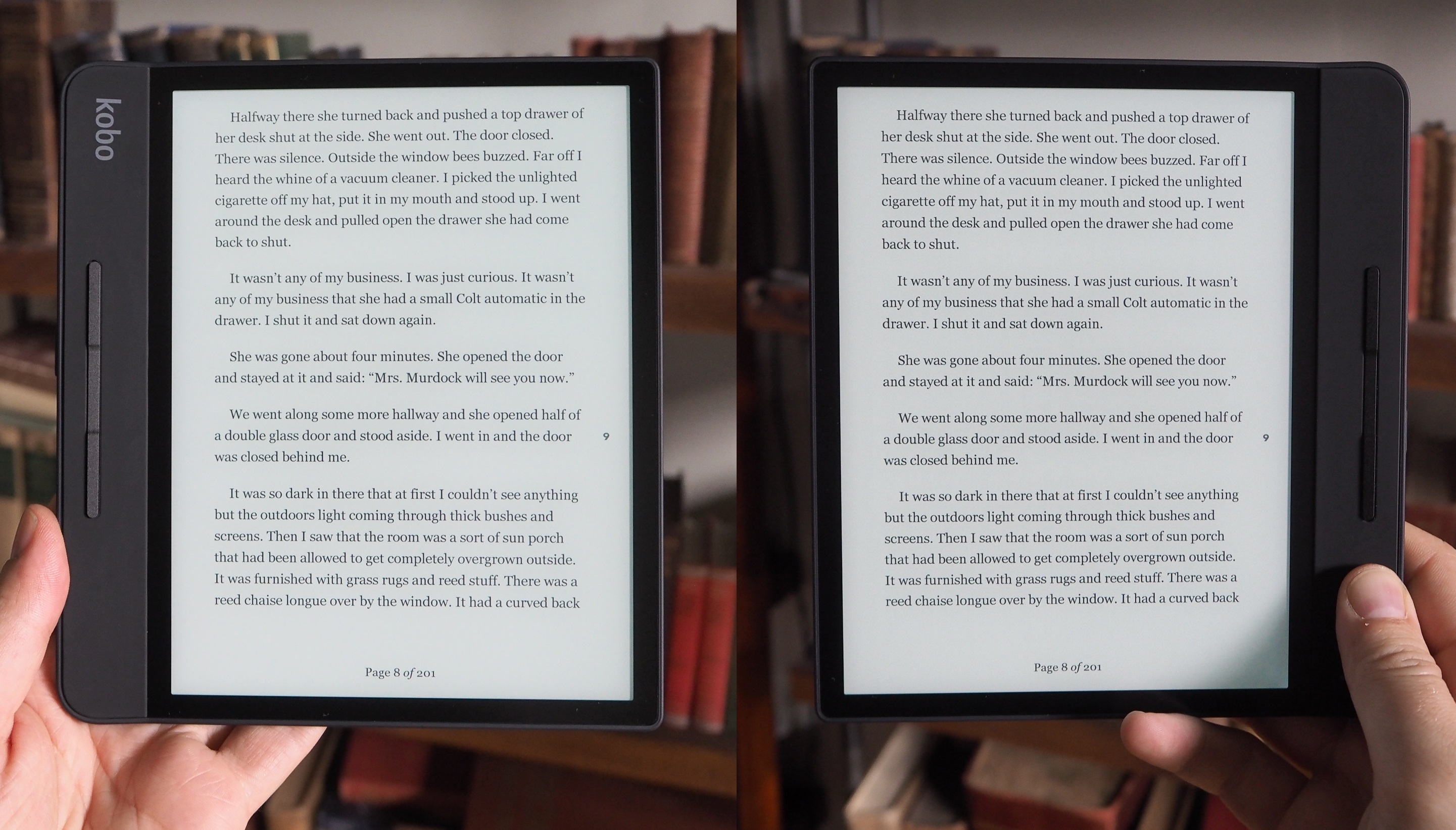
The only one that doesn’t feel correct is the landscape mode. I’m not sure why someone would want to read this way, though I’m sure a few will like it. It just seems like a missed opportunity. Why can’t I have two pages displayed side by side, like a little pocket paperback? I’d love that! I’ve already asked Kobo about this and I assume that because I have done so, they will add it. As it is, most books simply feel strange in this mode.

Familiar software, unfamiliar price

Text handling seems unchanged from Kobo’s other devices, which means it’s just fine — the typefaces are good and there are lots of options to adjust it to your taste, book by book.

Kobo’s much-appreciated drag-and-drop book adding and support for over a dozen formats (epub, cbr, mobi, etc.) is here as well, with no changes. Pocket integration is solid and extremely useful.

The Forma (like Kobo’s other readers) does have Overdrive support, meaning that with a library card and account there you can easily request and read books from your local branch’s virtual stock. This is an underutilized service in general (by me as well) and I need to take advantage of it more.
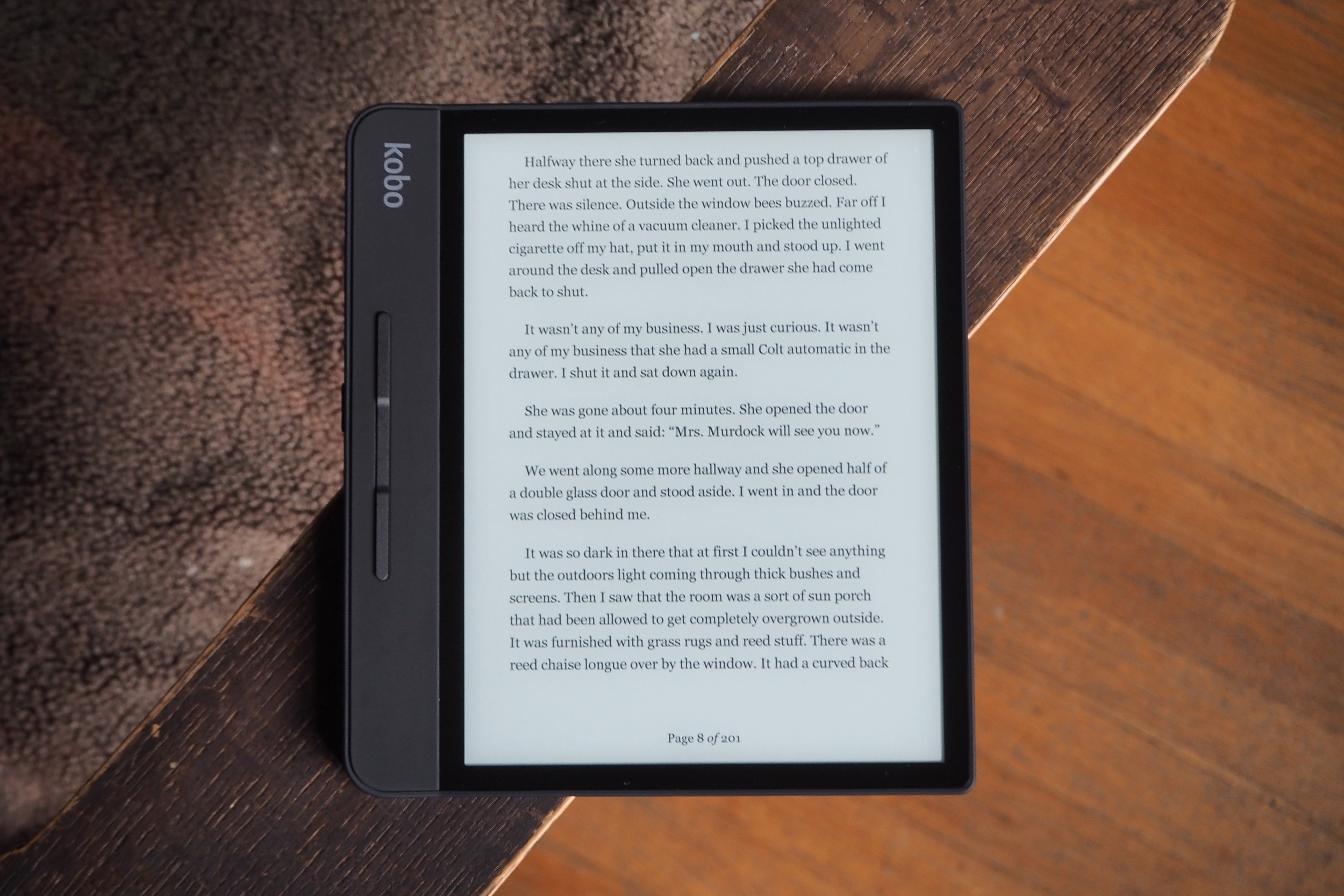
So far, so good. But the real question is whether this thing is worth the $280 they’re charging for it — $30 more than the Kindle Oasis and an even bigger jump over the Aura One. In my honest opinion, for most people, the answer is no. For the dollar you get a lot more from the Clara HD, which also has the advantage of being compact and pocketable.

But it must be said that the Forma is clearly a niche device aimed at people who use their e-reader a lot and want that bigger screen, the waterproofing, the thin profile, the one-handed design. There’s a smaller, but not necessarily small, number of people who are willing to pay for that. As it is, the Forma is among the most expensive e-readers out there, and it’s hard to justify that price for ordinary people who just want a good reader with the warmth control and good type.

The Forma is successful at what it aims to do — provide a credible competitor to Amazon’s most expensive device, and beat it at its own game in the ways Kobo usually beats Kindle. That much I can say for certain. Whether to buy it is between you and your wallet. Pre-orders start October 16.
Cloudera and Hortonworks announce $5.2 billion merger

Over the years, Hadoop, the once high-flying open-source platform, gave rise to many companies and an ecosystem of vendors emerged. It was long believed that some major companies would emerge from the pack, and, sure enough, Hortonworks went public in 2014. Cloudera followed three years later, but the market slowed down and the two companies announced today they are merging in a deal worth $5.2 billion, based on the price at the close of business yesterday.

Part of the problem with Hadoop, even though anyone could download it, was the sheer complexity of it. That’s where companies like Hortonworks and Cloudera came in. They packaged it for IT departments that wanted the advantage of a big data processing platform, but didn’t necessarily want to build Hadoop from scratch.

These companies offered different ways of helping to attack that complexity, but over time, with all the cloud-based big data solutions, rolling a Hadoop system seemed futile, even with the help of companies like Cloudera and Hortonworks.

Doug Henschen, an VP and principal analyst at Constellation Research sees the cloud eating into Hadoop’s market in a big way. “The move to the cloud is, in my view, sapping growth and revenue potential for these companies such that it won’t sustain three profitable players with strong, double-digit growth. Cloudera and Hortonworks have both moved to provide consistent hybrid- and multi-cloud capable services, but I see @AWS EMR and Spark services and similar Azure and Google services as capturing faster growth, and together, the lion’s share of the big data platforms market,” he explained.

Photo: Garrett Heath on Flickr. Used under CC by 2.0 license.

In an interview in 2017, Carl Olofson, an analyst at IDC, described the differences between the two companies, differences that may help them now as they become a single company:

Olofson described Hortonworks as a “pure open source company,” one that packages, coordinates and manages that open source as a product for a subscription fee, and also sells support. He [said] the company’s products are aimed mostly at “big data technologists.”

Cloudera is a bit different, he said. “[It] offers packages that are mostly open source, but with tooling that is proprietary, and that are aimed at various classes of business problems. They sell to business managers. So their approach is different, and as a result, they have a higher percentage of their income derived from software than does Hortonworks,” Olofson told TechCrunch.

Sometimes the best answer to a fragmented market is coming together, and that’s exactly what the two companies did today. The deal involves an all-stock merger in which each partner gets equal ownership, according to a statement announcing the deal.

Tom Reilly, the long-time CEO at Cloudera, certainly sees the two companies as complementary, offering customers something together that they couldn’t separately. “Our businesses are highly complementary and strategic. By bringing together Hortonworks’ investments in end-to-end data management with Cloudera’s investments in data warehousing and machine learning, we will deliver the industry’s first enterprise data cloud from the Edge to AI,” Reilly said in a statement.

As you might imagine, Hortonworks chief executive Rob Bearden concurred. “This compelling merger will create value for our respective stockholders and allow customers, partners, employees and the open source community to benefit from the enhanced offerings, larger scale and improved cost competitiveness inherent in this combination,” he said in a statement.

The combined companies will boast 2,500 customers, $720 million in revenue and $500 million in cash with no debt, according to the companies.

Cloudera, which was founded in 2008, raised over a billion dollars before going public, the vast majority coming in one major $740 million burst from Intel Capital in 2014. Hortonworks, founded three years later, raised $248 million.


How smartphone apps could help keep health records accurate

Ben Moscovitch
Contributor

Ben Moscovitch directs The Pew Charitable Trusts’ health information technology project.

Robert S. Rudin
Contributor

Robert S. Rudin is an information scientist with the nonprofit, nonpartisan RAND Corporation.

Suppose the next time you go to a new doctor’s office, you wouldn’t have to balance a clipboard on your knee, write down your whole medical history, remember the five-syllable name of every medication you’re taking and list all your allergies. Suppose that your smartphone could simply tap into the office’s computer system, where you could upload your entire medical history safely, securely and accurately.

Such an app could ease the frustration patients feel when they fill out the forms for a new doctor. More importantly, it could help solve a serious but lesser-known problem that plagues hospitals and clinics: While the increased use of electronic health records has helped streamline record-keeping, providers aren’t always able to reliably pull together records for the same patient that are held in different hospitals, clinics and doctor’s offices.

That was the scene in Boston in 2015, when emergency room doctors were struggling to treat a patient named Maureen Kelly — only to discover five different electronic records for Maureen Kelly, each with the same birthday and ZIP code. They had no way of knowing which record matched the patient in front of them. Was she the Maureen Kelly with diabetes? The Maureen Kelly who had only one kidney? And if they were to decide to send her record to a specialist outside the hospital, how could they know which of the five to send?

Fortunately, Maureen Kelly recovered. But to make the best possible medical decisions in cases like hers, doctors need immediate access to accurate patient data — including those from records held in other facilities. Digital systems should be able to seamlessly match records from a pediatrician in Pittsburgh or a surgeon in San Diego each and every time. An inability to do so — which could mean physicians not having important details, such as a patient’s drug allergies, chronic illnesses or past surgeries — can mean the difference between life and death.

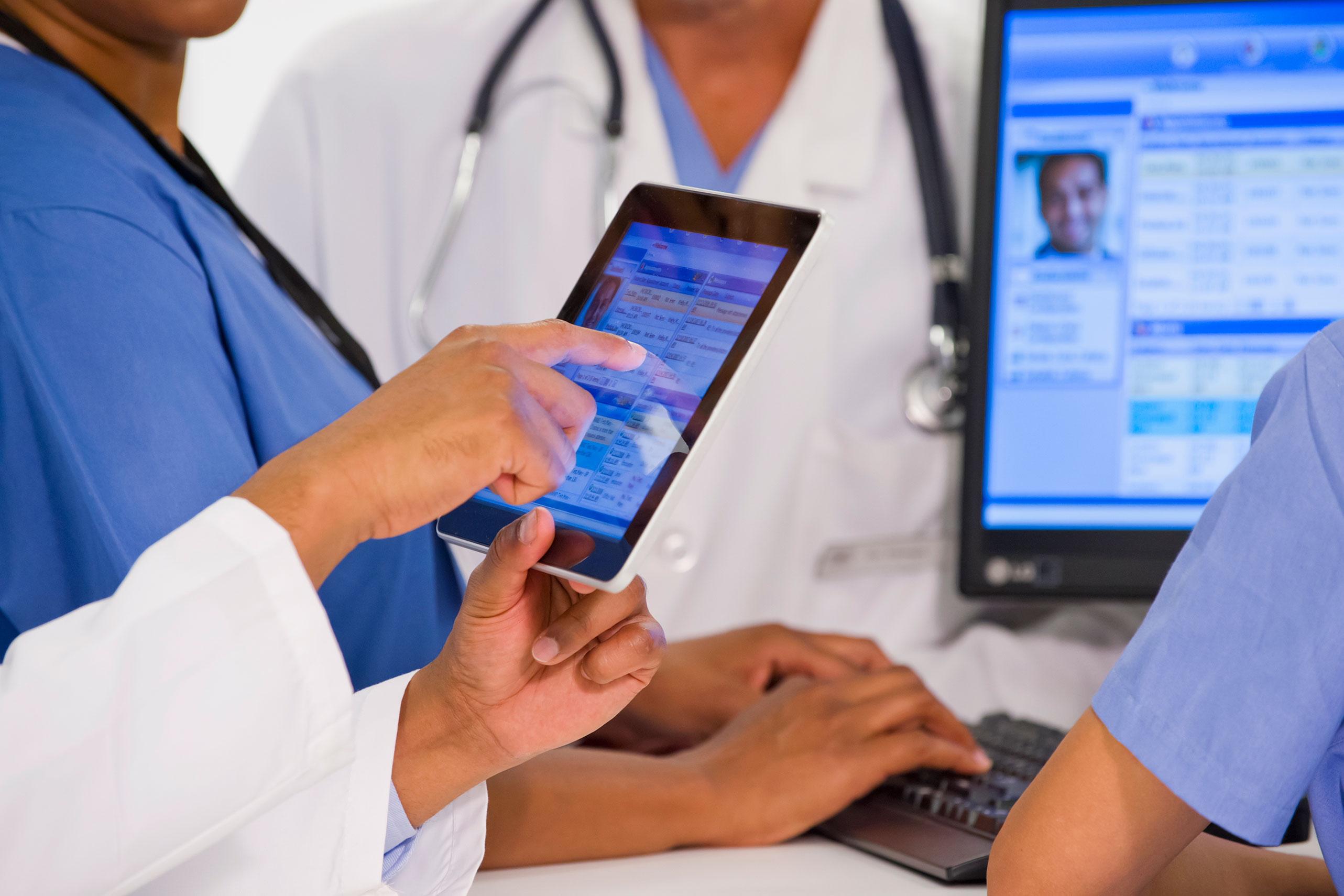
Doctors using digital tablet together in hospital (Photo: Ariel Skelley/Getty Images)

It’s hard enough keeping records straight within a single large hospital system; transferring them among different doctors’ offices and other hospitals is even more challenging. As digital healthcare systems have proliferated, they’ve used a variety of formats to record essential pieces of information, such as addresses and birth dates, that don’t easily transfer from one system to another. And, of course, patients’ identifying information isn’t static — birth dates don’t change, but people move, change names through marriage or adoption, and more. Matches among different systems have also been stymied by data entry errors.

And while patient harm is the primary risk posed by inaccurate records, cost is no small consideration. The Office of the National Coordinator for Health Information Technology reported that each instance of a misidentified record cost the Mayo Clinic roughly $1,200 — and that’s just within the Mayo system. These administrative costs are magnified when data are exchanged on a nationwide scale.

No one solution can solve every patient-matching problem. But The Pew Charitable Trusts is investigating several ideas. Pew recently asked the nonprofit RAND Corporation to evaluate solutions that would let patients exercise more control over how their records are matched. RAND looked at a variety of options and concluded that the growing use of smartphones offers a particularly promising opportunity to improve record matching in two ways.

Photo: Hero Images/Getty Images

First, smartphones could allow patients to verify their phone numbers at the point of care, perhaps by responding to a text message — a strategy already used in banking, travel, retail and other industries. Once a number was confirmed by the patient, the hospital’s computer could use it automatically to match other records against that number with a higher degree of certainty.

Second, patients could use an app to enter their information — such as an address or even a driver’s license number — and have that information sent directly to the hospital when they check in for their visit. This would let patients update their information and voluntarily provide more accurate data to facilitate a match. Smartphone apps could eventually aggregate and transfer even more information — such as medication lists or health histories — and replace the paper on clipboards used today.

The smartphone approach will not solve this problem by itself. There are potential limitations — patients would need to own phones and know how to use them, and the system might not work in emergency situations when a patient didn’t have or couldn’t operate a smartphone — but the Pew Research Center found earlier this year that more than three-quarters of Americans now use smartphones, including nearly half of people older than 65.

To address the larger problem of patient matching, stakeholders must pursue a variety of solutions, including smartphone apps. Technology developers would be wise to advance and start pilot projects now of smartphones and a variety of other solutions, and demonstrate how they could be used to save lives, improve care and reduce healthcare costs.

The V40 ThinQ is LG’s new five-camera smartphone

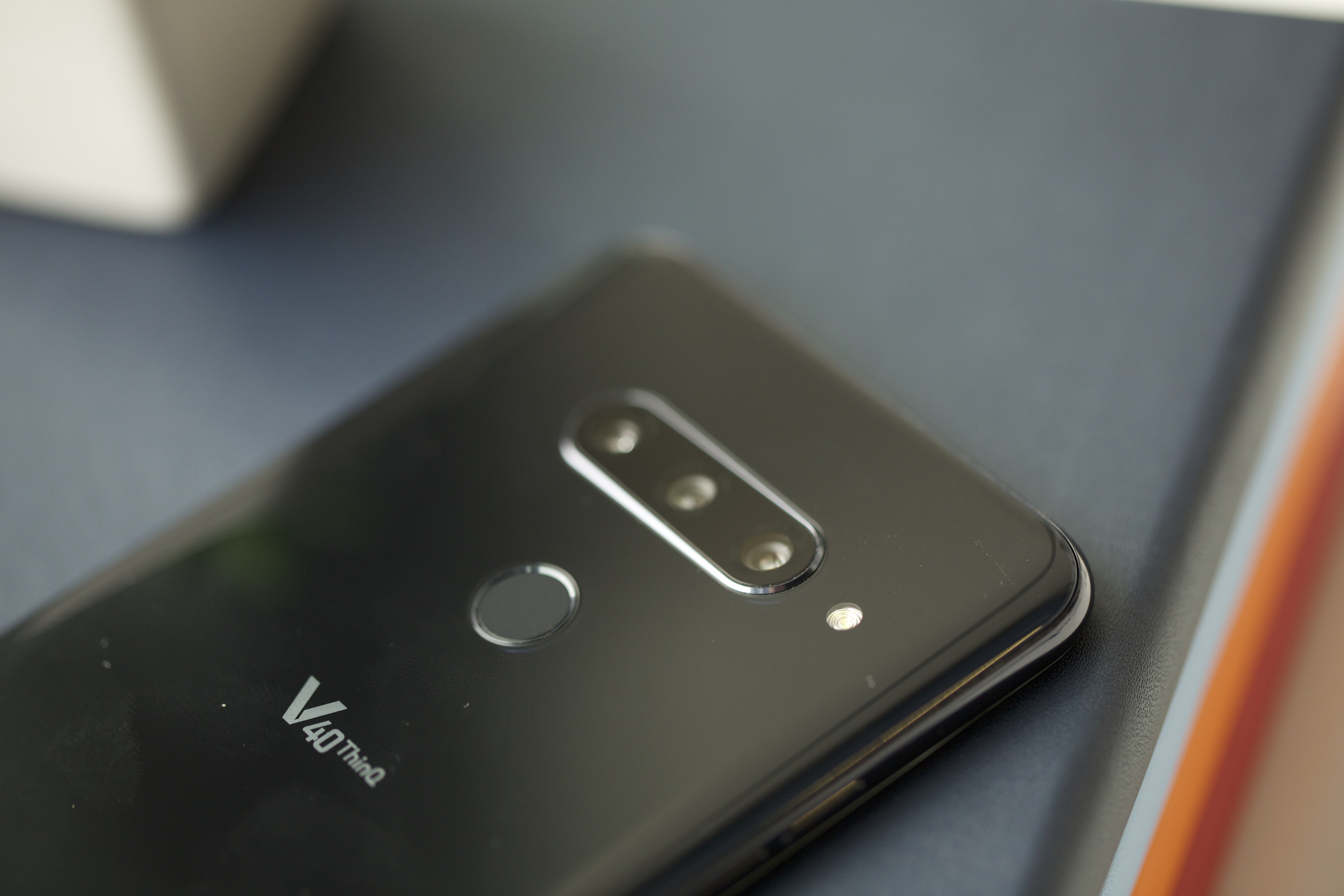
That’s two on the front and three on the rear. LG’s already teased the upcoming flagship quite a bit in the lead up to today’s announcement. Understandably so. It’s hard for a company like this to stand out in a world full of Apples and Samsungs — even with all of those lenses.

The South Korean company has never been afraid to push the envelope, and many of its smartphone innovations have become commonplace in recent years. Of course, LG’s not the first to bring a handset with three lenses to market — Huawei had the company beat by several months on that front with the P20.

Official images have been floating around for some time, but until now we haven’t actually seen them in action — or known precisely what each of the lenses does. Well, not officially, at least. The breakdown of the three horizontally oriented lenses is this: standard, super wide-angle and 2x optical zoom.

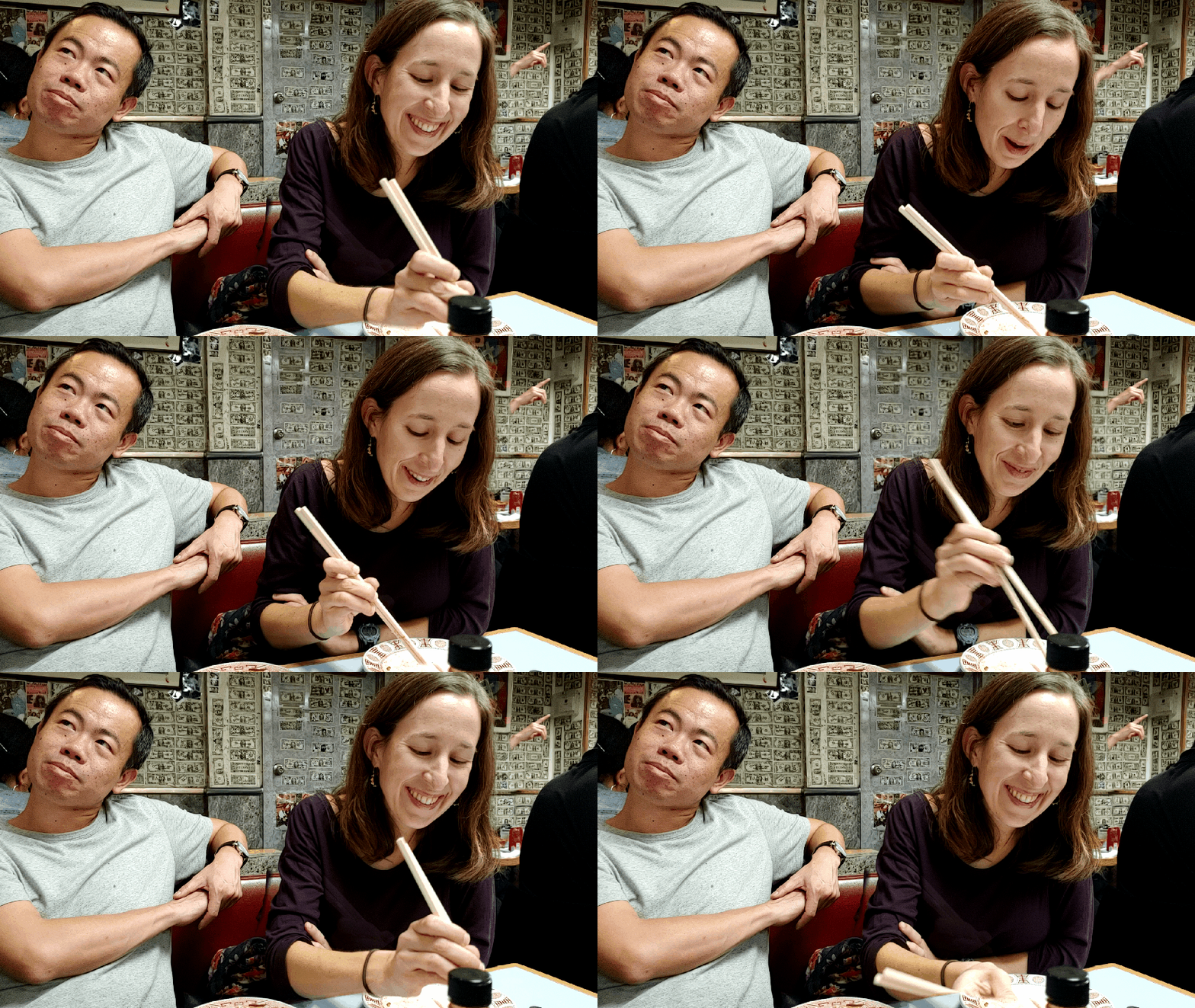
One click of a button and you can capture all three at once. Or you can just toggle between the three shots in preview mode. That’s really the easiest way, but it doesn’t afford you the bizarre Triple Shot function, which offers up an animated transition between shots. I’m still trying to figure out the real-world use for that bit.

It’s certainly less useful/interesting than the Cine Shot bit we wrote about earlier this week. That’s something I could certainly see myself using again, if only to fulfill my longtime goal of capturing the essence of Anthony singing karaoke. One day technology will catch up. Or maybe we’re just flying too close to the sun here.

The two front-facing cameras are 8 and 5 megapixels, taking standard and wide-angle shots, respectively. The phone retains the AI picture-taking features LG rolled out for its handsets back at Mobile World Congress, which adjust automatically, based on the sort of scenes they’re shooting.

The V40’s got a 6.4-inch QuadHD display, 6GB of RAM, 64GB of storage (plus a microSD slot) and sports a Snapdragon 845. Oh, and yep, there’s a headphone jack. 

Can LG’s strange hybrid smartwatch breathe life into Wear OS?

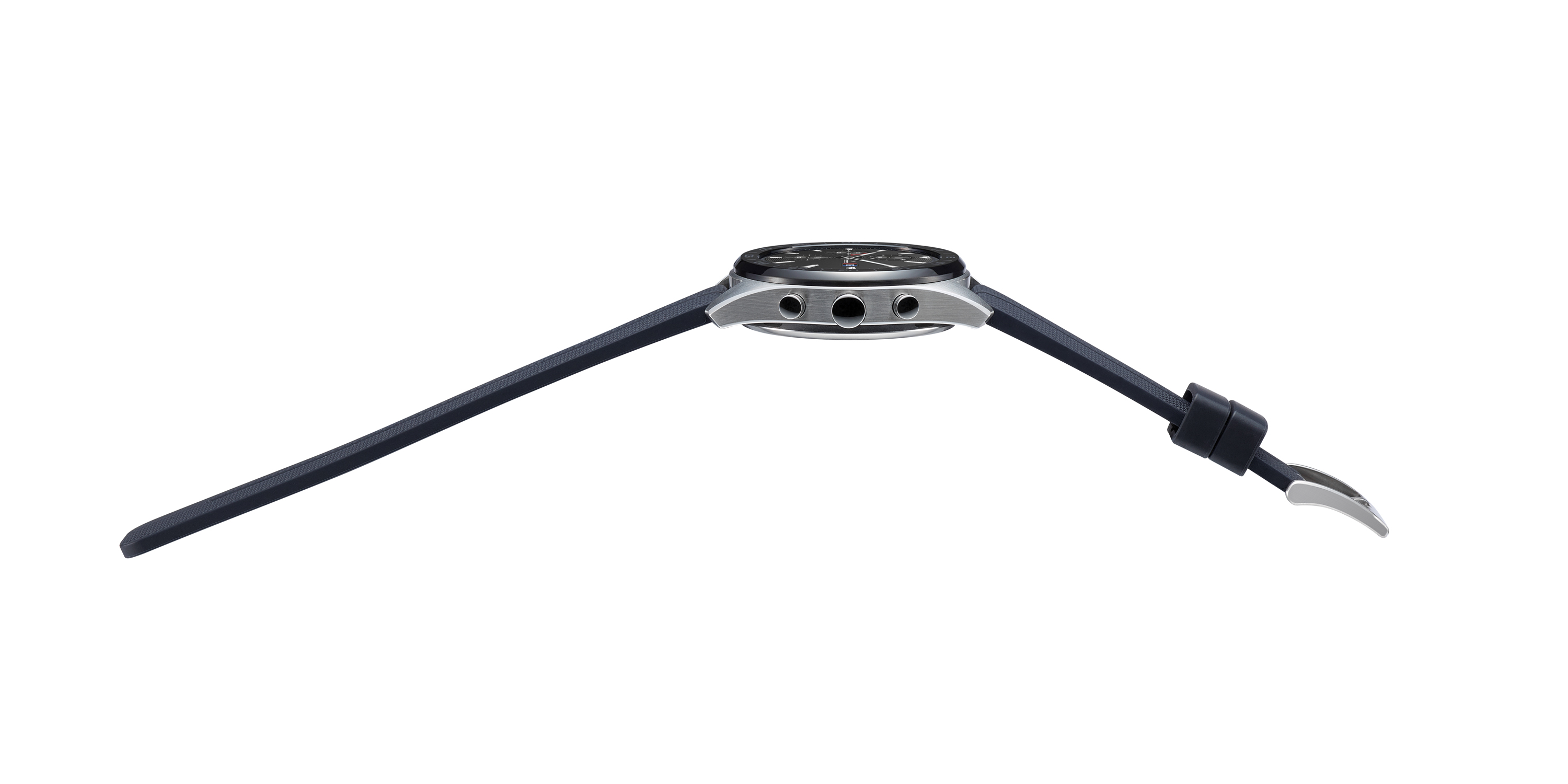
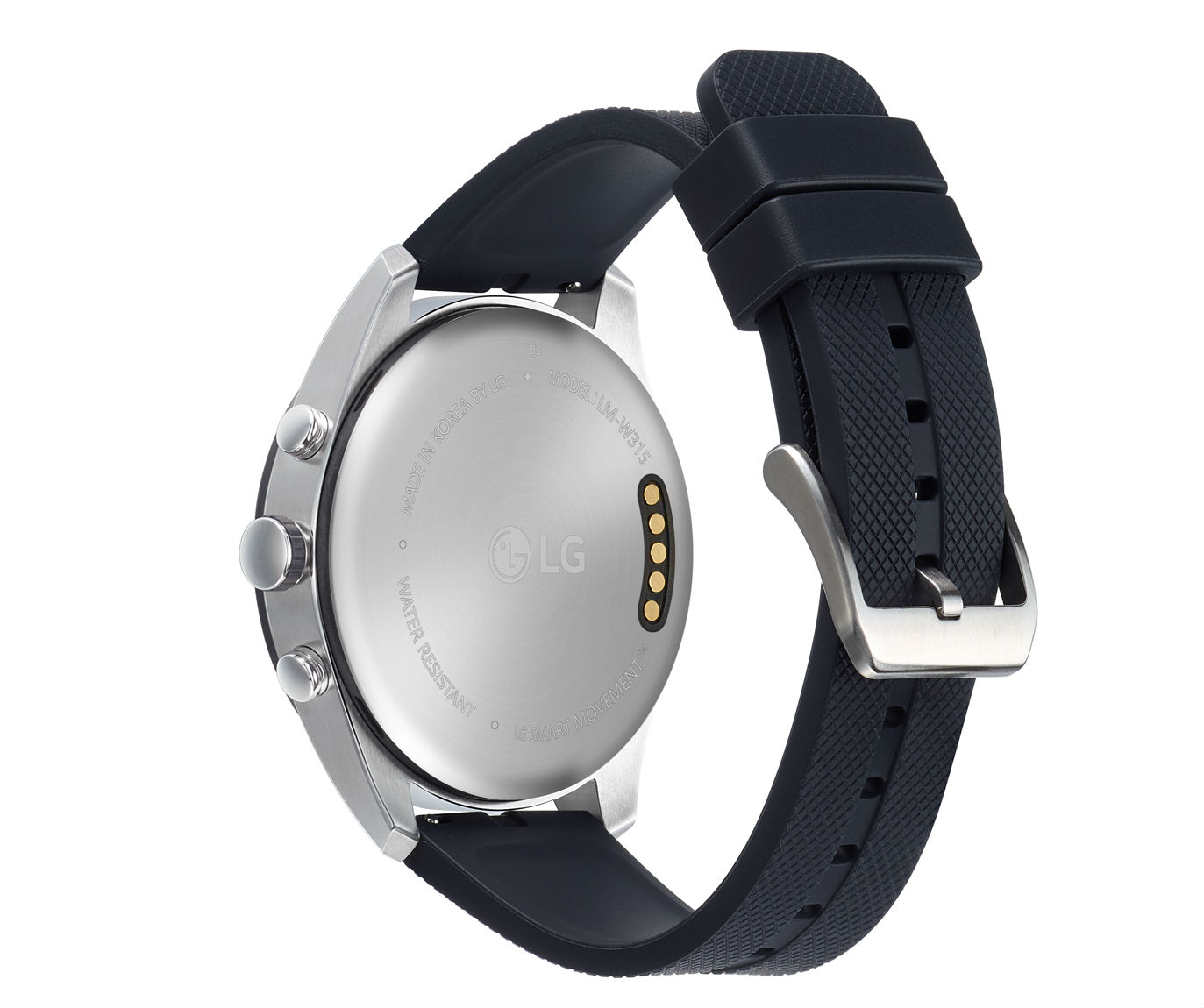
Along with the new V40 ThinQ, LG showed off this odd little addition. It’s true that hybrid smartwatches are no longer a novelty in and of themselves at this point, but the Watch W7 takes a bizarre approach to the category.

In fact, when the company first discussed the product at a briefing this week, we had a lot of questions — and unlike the phone, there weren’t any units present, lending more mystery to the thing.

The breakdown is basically this: it’s a Wear OS smartwatch with mechanical hands. So, like, a standard smartwatch display, with two physical watch hands doing their thing on top of it. You still interact via touch, though that actually happens via the glass on top. The hands, meanwhile, move to accommodate the text on the screen — and the text moves accordingly.

There’s a button on the side which, when pressed, move the hands out to 180 degrees. The text underneath then shifts up, so as to not be obscured by the physical parts. Also, the glass apparently lifts slightly when the hands realign. LG says the functionality was actually built into the latest version of Wear OS to accommodate LG’s Frankenstein watch.

It’s either a great idea or a terrible one. I’m honestly reserving judgement until we have a review unit in hand, though I will say I’m more excited to try this out than just about any mainstream wearable in recent memory. I mean, it’s nothing if not innovative.

During the briefing, LG said, “we’re trying to earn being on your wrist.” That’s a pretty tall order for Wear OS these days. After all, Apple is utterly dominant in the category, and while both Fitbit and Samsung have made strides on the Android side of the equation, neither one actually runs Google’s wearable operating system.

There’s certainly something to be said for mechanical hands — there’s the significant savings to battery life you get from not having to turn the display on to check the time. There’s also the fact that it actually looks pretty decent as a standard watch. The era of sporting a smartwatch for the sheer novelty has drawn to a close.

The W7 runs a pricey $450. Pre-orders for this weird thing open this Sunday. It hits stores on the 14th.

Welcome Kirsten Korosec, Kate Clark, Zack Whittaker and some guy named Eric

We’ve got some new faces around TechCrunch — some of them real fresh and some who you might know. Though you might have seen some of their bylines around the site, I thought it would be nice to officially welcome them.

First up is Kirsten Korosec, who leads our transportation and mobility reporting. Kirsten is an accomplished and seasoned journalist in the space and has been with us for a few months writing, hosting panels at Disrupt and scooping major news. You’ll want to stay tuned to her coverage of this wild area of coverage as she deciphers Elon tweets, filters startup coverage and figures out how much horsepower a scooter actually needs. You might have seen one of Kirsten’s great pieces of original reporting on TC already, like Comma.ai getting a new CEO, GM offering Cruise employees equity in Cruise, Skedaddle talking acquisition with the big ridesharing companies and outing Anthony Levandowski’s new stealthy self-driving startup called Kache.ai.

Kate Clark is one of our newest hires and is covering the startup and VC ecosystem in Silicon Valley alongside Danny Crichton, Connie Loizos, Megan Dickey and Lucas Matney. Kate comes to us from PitchBook and has hit the ground running with a host of great stories like raises and acquisitions both large and small, scooter drama, as well as clever posts on sex tech and VC pay.

Our new security reporter Zack Whittaker has been producing some great work in his time here, as well. Zack comes from a 10-year stint at ZDNet and brings with him a deep understanding of security and privacy issues that are affecting so many companies large and small. He’s required reading on the topic, and he’s been proving it with great scoops like this one on Texas voter records being exposed, this story about iPhone apps being caught quietly monetizing your location and a huge breach of credit card data by Newegg.

Next is a gent you might know: Eric Eldon. Eric, who previously served as the co-editor of TechCrunch until he cleverly managed to escape to go live the easy life of doing a startup (called Hoodline), is back to work on a special new project Danny Crichton is heading up that we’re not quite ready to announce yet. Eric, as many of you likely know, is a fantastic editor and has spent quality time in the ups and downs of startupland, a perspective that will help tremendously as we try to keep making TechCrunch the last word in startups and emerging tech, as well as a genuinely useful resource for every founder, engineer, executive and aspirant in tech.

We’ve also got some new columnists and writers on other specific topics joining the team.

Eric Peckham will be writing on media and tech, and has interest in ML and blockchain and how traditional media companies are adapting. You may be familiar with his Monetizing Media newsletter. Joyce Yang is a former equity analyst who now writes a newsletter on Asia blockchain, called Global Coin Research, and is already writing a great column for us today. Gregg Schoenberg, who is the founder of Wescott Capital and co-founder of The Financial Revolutionist newsletter, is doing an interview series with us with CEOs and founders in the fintech space. Conor Witt works at Citi’s strategy group and will be writing about fintech for us with a new column. Finally, Ziad Reslan, a lawyer who is interested in the harder questions of policy issues, as well as John Chen, a former venture investor at Emergence (where he sourced the investment for Crunchbase), have also been writing occasional columns.

New hires to come

We’ve also got some open positions at TechCrunch, so if you know a good candidate, or are one yourself, please apply. We’re looking for a solid senior writer with an insatiable curiosity and a critical eye to bolster our startup coverage in San Francisco, as well as a science writer with a focus on emerging biotech and health tech from a consumer and enterprise perspective with variable location. Here, there, Mars is OK. Since we now have events around the world, a desire for on-stage work is a plus. Feel free to use this link to apply for either or hit me up on Twitter @panzer.

In the engineering and product space, we’re in need of a Product Manager to oversee TC product, including our brilliant new site, events products, apps and more. We need an associate PM, as well, who has strong operational experience and a couple of additional engineers with strong front-end experience but with a major preference to those who have some WordPress and PHP experience, because we work across the full stack to make stuff happen here. We need these folks to work on existing stuff as well as exciting new products. We’re a forward-looking site that is going to be pushing the boundaries of what publishing on the web and other locations looks like. If that sounds interesting to you, you know what to do.

With these people, and more to be announced, you may notice that we are making a commitment to covering the ground that we know you care about the most. We’re not going broad, we’re going deep, accurate and, as always, scrappy as hell. It’s going to be fun; talk soon.

Northwest fast food chain hack exposed customer credit cards

A beloved regional burger chain in the Pacific Northwest is the latest fast food company to suffer a major data breach.

Burgerville, headquartered in Vancouver, Wash., disclosed today that any customers who used a credit or debit card from September 2017 to September 2018 at any of its locations may have had their card details stolen. The company operates 42 locations in the region.

In August, the FBI contacted Burgerville to notify the company that it had been targeted in a cyberattack. The company believed that intrusion to be “brief” until September 19, when an internal forensics team identified that the chain was still affected by malware running on its systems. Burgerville coordinated with the FBI to neutralize and contain the malware, working with an external cybersecurity firm.

“As soon as Burgerville learned the intrusion was still active, the company immediately began steps to completely eradicate this breach, necessitating that all Burgerville systems be taken offline and upgraded simultaneously without any warning to the criminals,” the company said in a press release.

TechCrunch contacted Burgerville and the FBI to ask how many customers might have been affected by the hack. The company declined to provide additional details at this time.

While the company has yet to disclose many technical details, it attributed the attack to Fin7, a “prolific” international cybercrime group. In August, the Department of Justice apprehended three members of Fin7 involved in “a highly sophisticated malware campaign targeting more than 100 U.S. companies, predominantly in the restaurant, gaming, and hospitality industries.” Believed to be a billion-dollar operation, Fin7 operates under the guise of a front company while selling stolen data in online marketplaces.

The attack on Burgerville was likely accomplished by malware that infected its point-of-sale systems — a common target in the recent surge of restaurant cyberattacks. In this case, the company confirms that attackers were able to exfiltrate names, credit card numbers, expiration dates and CVV numbers.

According to the Department of Justice report, Fin7 began many of its attacks with spear phishing campaigns that delivered attachments laced with an “adapted version” of the malware known as Carbanak. An FBI report provides more detail on the group’s methods.

As part of its August announcement, the Department of Justice noted that Fin7 was behind already disclosed hacks of Chipotle, Chili’s and other food chains, including local businesses in Western Washington that remained unnamed at the time.

KZen raises $4 million to bring sanity to crypto wallets

KZen, a company run by former TC editor Ouriel Ohayon, has raised $4 million in seed to build a “better wallet,” obviously the elusive Holy Grail in the crypto world.

Benson Oak Ventures, Samsung Next, Elron Ventures invested.

Ohayon, who has worked at Internet Lab and founded TechCrunch France and Appsfire, wanted to create an easy-to-use crypto wallet that wouldn’t confound users. The company name is a play on the Japanese word kaizen or improvement and it also points to the idea of the zero-knowledge proof.

Omer Shlomovits, Tal Be’ery, and Gary Benattar are deep crypto researchers and developers and helped build the wallet of Ohayon’s dreams.

“We wanted something that did not feel like a pre-AOL experience, that was incredibly superior in terms of security, and simple to use,” he said. “We wanted a solution that brings peace of mind and that did not force the user into compromising between convenience and security which is, unfortunately, the current state of affairs. We quickly realized that this mission would not be possible to achieve with the same tools and ideas other companies tried to use so far.”

The app is launching this month and is being kept under wraps until then. Ohayon is well aware that the world doesn’t need another crypto wallet but he’s convinced his solution is the best one.

“The market does not lack solutions,” he said. “On the contrary, there are software wallets, hardware wallets, paper wallets, vaults, hosted custody. But there is no great solution. To be able to use a crypto wallet you either need a good dose of Xanax or a master’s degree in computer science or both, unless you want to depend on a central entity, which is even worse as the news are reminding us weekly.”

We’ll see as they use the cash to launch a crypto wallet that anyone – not just Xanax-eaters – can use.

Facebook tests Snap Map-style redesign of Nearby Friends

Helping friends meet up offline has been a massive missed opportunity for Facebook . Whether because the brand is too creepy or the politely opt-in 2015 rollout of its location sharing feature wasn’t creepy enough, Facebook Nearby Friends never quite took off. Only 103 of my 1,120 friends in San Francisco have it turned on.

It’s not the only one struggling with “The quest to cure loneliness.” Foursquare Swarm, Glympse, Apple’s Find My Friends and Google Maps’ real-time coordinate-sharing option have all failed to become a ubiquitous standard.

The redesigned map homescreen of Facebook Nearby Friends

But last year, Snapchat launched a different take on the idea based on its biggest acquisition ever, French app Zenly. With Snap Map, it wasn’t just about the utility of seeing a list of friends’ locations like on Facebook, but also splayed them out across maps that you could dive into to see their latest geo-tagged Stories. It was as much about fun and content as it was about actually hanging out with people in person.

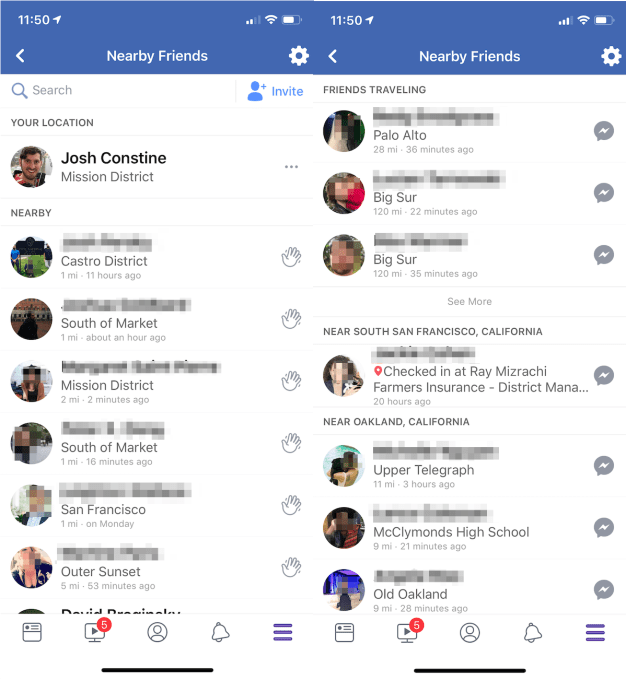
Now Facebook is testing a significant redesign of Nearby Friends that looks a lot more like Snap Map. It replaces the list view of the neighborhoods and cities friends are in with a map that groups friends together by city. A “view list” button opens up the former homescreen, though in both views you still can only see a friend’s approximate location in a neighborhood or city, not their exact coordinates. Facebook confirms to TechCrunch that “We’re testing a new design for Nearby Friends, a tool people have used for the past four years to meet with their friends in person. People have complete control over whether to use Nearby Friends or not. They can turn it on in the Nearby Friends bookmark.”

That statement both subtly promotes Facebook’s opt-in privacy setting for Nearby Friends while urging people to actually go back and activate it. The screenshot was generated from the code of Facebook’s Android app by mobile researcher and frequent TechCrunch tipster Jane Manchun Wong. Interestingly, after TechCrunch’s inquiry, Wong tells me Facebook appears to have deactivated server-side the ability to access the map feature.

The reason this matters is that Facebook is desperate for engagement, especially amongst younger users who are slipping away from it to Snapchat and Instagram. If revamped with this map and other improvements, Nearby Friends could become a more popular utility that keeps people opening Facebook. Getting more people to share their real-time location could open new opportunities for local ad targeting. And Facebook could benefit from showing it unlocks meaningful offline connections given its recent brand troubles following election interference and calls that it’s the opposite of “time well spent.”

The existing design of Facebook Nearby Friends

Snap Map was smart, but it’s sadly buried behind an awkward pinch gesture from Snapchat’s homescreen, or inside the search bar where some users wouldn’t expect it. Internal Snapchat usage data scored by Taylor Lorenz for The Daily Beast revealed that Snap Map had sunk from a high of 35 million daily unique viewers after its June 2017 launch to just 19 million by that September — merely 11 percent of Snapchat’s users at the time. Users never seemed to cease on it as a method of browsing Snapchat’s geo-tagged content.

Unfortunately, none of these location apps have figured out that meeting up isn’t all about location. It’s about availability. It doesn’t matter if I see my best friend is at a coffee shop right away if they’re not actually available to hang out. They could be on date, having a business meeting or trying to get some work done. If I drop in just because I see they’re close by, it could be awkward. You’d have to first message them, but you can come off seeming desperate if they can’t or don’t want to meet up with you.

Location apps need an availability indicator similar to the green “online” dot used by many chat apps. You could toggle that on if you wanted to show you’re interested in some spontaneous friend time.

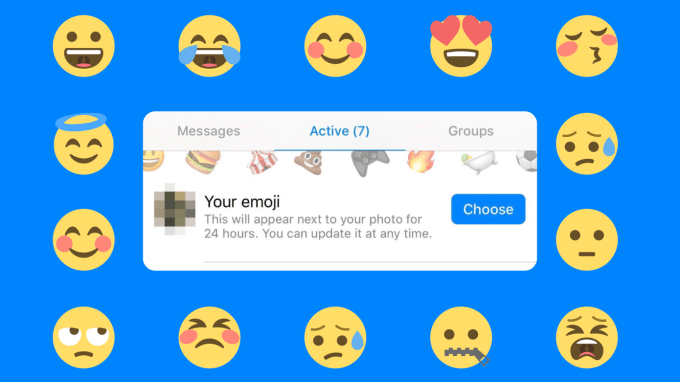
Facebook’s actually spent the last year trying to build this into Messenger in the form of “Your Emoji” status. It lets you pick an emoji like a martini, fork and knife or barbell that’s temporarily overlaid on your profile pic thumbnail to let people know you’re down for drinking, getting dinner or working out. The feature is yet to be widely tested, indicating that Facebook hasn’t quite cracked the nut of encouraging online meetups.

Ideally, Facebook would combine Nearby Friends and Your Emoji to help users share both approximately where they are and whether they want to hang out. The next step would be making it easy to watch a friend’s geo-tagged Facebook Story from wherever they are. And then, Facebook could further copy Snap Map by making public Stories and other location-based content accessible from the map so you could browse it for fun instead of the News Feed or Stories tray.

Still, making Nearby Friends work could require Facebook to rethink the privacy element. The friend graph has bloated to include family, co-workers, bosses and distant acquaintances with whom users might not want to share their real-time location. Finding a better way to let you share where you are with just your closest friends could make more people comfortable with the feature.

Facebook needs to rethink its entire product stack to embrace the high-definition cameras, big phone screens and fast network connections that make it easier to convey information through imagery than text. Visual communication is the future, and that goes far beyond Stories.

Twitter launches a ‘Data Saver’ mode that makes its main app more like Twitter Lite

An updated version of the Twitter mobile app will allow users to gain more control over their data usage – similar to how the Twitter Lite app designed for emerging markets works. Now, instead of having to download a separate app in order to limit data consumption or manually adjust various settings, users will be able to turn on a new ‘Data Saver’ option available in Twitter’s Settings.

Until today, Twitter offered Data Saver in Twitter for Windows, Twitter Lite, and its mobile website. Some users may have also seen the Data Saver option on iOS or Android, as well as on Twitter’s desktop website, because of a test Twitter had underway.

That desktop web test had also included moving other elements and features around, like putting Trends underneath the “Who To Follow” suggestions, for example, or making “Night Mode” a more visible option.

But with the launch today, the Data Saver feature is broadly available to all iOS and Android users, a company spokesperson confirmed.

To take advantage of Data Saver, you’ll visit the Data Usage settings in the iOS or Android mobile app and toggle the option on or off. When enabled, images will load in lower quality and videos won’t autoplay. If you’re browsing Twitter and want to see an image appear in higher quality, you can tap on the three-top menu and pick “Load High Quality” to change the setting on that particular piece of content.

The updated version includes a few other tweaks as well, including a change to make it easier to manage who’s in your group chats, plus VoiceOver improvements in polls, and better labels for some types of Twitter ads, according to the app’s update text in the App Store.

For those who really need to conserve, however, Twitter Lite is still the better option. While Data Saver will consume less data when turned on, Twitter Lite takes up less space on your phone, too.

The new Twitter app is live now, but the features themselves may still be rolling out at this time.

Twitter tells us its @TwitterSupport account will tweet the news later today as Data Saver rolls out to everyone.

MasterClass, the education platform featuring all-star instructors, will soon teach you how to run for office, too

In 2015, the San Francisco-based education platform MasterClass was founded to provide everyone access to “genius,” whether it be in filmmaking, directing, book writing, cooking, tennis, basketball, comedy, acting, screenwriting, photography — even producing electronic music. Toward that end, MasterClass, which is now selling a $180 all-you-can-eat yearly subscription, currently offers hours of instructional insights from Martin Scorsese, Ron Howard, James Patterson, Gordon Ramsay, Serena Williams, Steph Curry, Judd Apatow, Helen Mirren, Aaron Sorkin and Annie Leibovitz, among many experts in their respective fields.

Now, backed by $80 million in fresh funding that it closed on earlier this month, the fast-ballooning company is looking to expand on ways to attract new people to its platform, and two of those new areas center on business and politics. So said co-founder and CEO David Rogier at an industry event in San Francisco last week hosted by this editor. More specifically, he said to expect classes on how to run for office and how to govern with the next year, which is perhaps unsurprising given that a record number of people are running for Congress this year, including record numbers of women.

In fact, Rogier — who has taken some of MasterClass’s storytelling workshops — took attendees behind the scenes to share quite a bit about MasterClass, including how it is consumed by users, how it approaches marketing spend and why he thinks it’s five to eight times stickier than online education platforms that promise users credentials of one kind or another.

He was interviewed by Sarah McBride of Bloomberg; excerpts of their chat follow. You can also see video of their conversation below.


On which class Rogier might recommend to someone new, to give them a flavor of what MasterClass offers:

We did a class with Hans Zimmer, a film composer who has composed songs for every single film you’ve ever seen. I’d never heard of Hans Zimmer before [he signed on to do a MasterClass]. I’m also not very good with beats and rhythm. But he starts the class by saying, ‘Every time you play a note, it asks a question — then answers it.’ And I was like, what kind of crap is that? And then he plays it on the keyboard, and I was like, holy shit, and [the class] has changed the way that I hear music.

On how MasterClass decides on who to invite to the platform:

We do lots of work to figure out who people want to learn from. It’s a combination of: who is among the best in the world, and who is somebody who [customers] think they can actually learn from?

I maybe shouldn’t say this out loud, but one of the people who people love but they don’t want to learn from is Will Smith. I love him as an actor; I think he’s really great. But even though he has the most fans on Facebook and the world, people don’t want to learn from him, when you ask them, because they say he’s tall and handsome and charismatic and funny. Like, I can’t be those things!

[Meanwhile] I think of Steph Curry. I think I can be Steph Curry. Steph Curry is 6′ 1″, 180 pounds . . . obviously I can’t be Steph Curry [laughs], but there’s something about feeling that I can learn from somebody.

How Rogier and his team lined up talent for the MasterClass platform in its earliest days:

It probably took us a year [to line up the early talent]. I mean, we cold-emailed and cold-called everybody who we could.

I remember we wanted a class from James Patterson. James Patterson is the best-selling author in the world, and I cold-emailed everybody I could — his speaking agent, his [primary] agent, his PR person. The only response I got was from a guy who claimed to be his speaking agent. I got so excited. Me and my co-founder Aaron [Rasmussen] go and prepare a pitch. We pitch him. And the guy says, ‘Sorry, James isn’t interested.’ I was really heartbroken. It was the first hot lead we’d had in a long time. And then I’m walking down the street in Los Angeles, and I get a call from a number I don’t recognize, and I say, ‘Hey, this is David.’ And this guy goes, ‘Hi, I’m Jim Patterson.’ And I’m like, ‘The author?’ He’s like, ‘Yes.’ And I’m like, ‘I’m very surprised to hear from you.’ He’s like, ‘I’m a surprising guy.’ [Laughs.] And he said, ‘If the timing works, I’d love to teach.’ And I was like, ‘Sir, I’m pretty confused right now, because I thought I just got a no.’ And he asked who I’d spoken to, and he was like, ‘I don’t know who the f*ck that person is.’

On how MasterClass compensates its all-star instructors:

It’s a mix of structure, but we want to make a deal where they share in the upside. It’s a mix of either a fee or a back-end [royalty].

Why some of MasterClass’s courses may seem similar but are distinct, in his view: 

With Martin Scorsese, we were talking to him about what does he want to teach and how, and he’s like, ‘The only way to learn film is to watch film.’ So I think it’s a total of eight hours where you are sitting with Martin Scorsese as he breaks down film. Compare that to Ron Howard, who did a classroom on directing and who’s like, ‘The last thing you want to do is watch film. What you have to do is actually make film.’

On the evolving revenue model of MasterClass, which used to center around charging $90 per class:

By the end of last year, it started being expensive to take our classes, and a big part of our goal is to make it possible for anybody in the world to learn from the absolute best. So we did lots of testing, and what we rolled out was, for $180 a year, you get access to everything, and that has just blown up. That’s now over 80 percent of our revenue, and we raised [that] $80 million [Series D round] off that success.

Rogier on the classes whose popularity has most surprised him:

I’m not surprised that a cooking class from Chef [Gordon] Ramsay does well, or that Steph Curry’s class does well. I’m surprised by some other folks. We have a class from a guy by the name of Deadmau5 . . . and that class is phenomenal. And it’s like a total surprise. He is [an electronic music producer] and for those who don’t know, he wears an actual mouse helmet because he’s afraid of people.

He literally can’t play music, so when he writes songs, he drags the notes on the screen until he hears the sound he likes. I mean, that’s a crazy way to write a song! But his classes on how to write the tracks do really well. Another we just launched, Chris Hadfield, the former commander of the International Space Station, [who teaches about space exploration] — he’s much less well-known but that’s also doing great. So the ones I’m surprised by are the ones that are lesser-known.

On how much of the classes are actually consumed, start to finish (and why):

The average MOOC sees 4 percent of people finish a class. Our rate are five to eight times that.

I really think online social education is stuck where it was when we were all in school when, if you actually want to make great compelling education, it should be just as engaging as watching a movie. We actually bring aboard a lot of filmmakers to help us make the class, beside educators, so as a result, we see much higher rates [regarding] how people engage.

But one of the most interesting things for us is that, because it’s not for school credit, you actually follow what you’re interested in. And so as a result of that — and this is a crazy stat — but roughly one-third of the people who start with the Steph Curry class on basketball end up taking a class on screenwriting. All of us have things were care truly, deeply in, but there are also things that you just want to know a bit about.

Users want that breadth . . .[In fact] we’re also going to go into business and how to run for office and how to actually govern. Over the next year, there will be lots of new categories.

Rogier on what MasterClass has learned about its customers’ consumption habits (whether they are viewing on their phones, in extended sittings, etc.):

Before we launched the $180 yearly subscription, it was: you watch it and you take notes. [The new model] has totally changed how people consume [MasterClass]. Oftentimes, they’re still at home in front of a big screen or the iPad. Also, they usually [view] it in chunks. So they sit down for half an hour and consume; they then come back and consume more. [Last] people seem to consume one class at a time. You go through as much as you’re going to go through with Chef Ramsay before [moving on].

On when MasterClass began spending on marketing and where:

My rule around paid marketing is to only spend it if you’re going to make money off it. It just happens to be that on social and on the web, it’s a great market for us, because we can target people who like photography. And you know, especially early on, this wasn’t a thing that you searched for you. You never searched for the idea: ‘Can I take a photo class from Annie Leibovitz.” But [online] has been a really effective channel for us.

On MasterClass’s target audience:

It’s a tricky question because we don’t really see trends across age or gender.  How we talk about internally is, before the subscription, a big chunk of [our customers] were actually pros. It was, I’m a professional in that category and I want to get better for my job. The second group was, I love this as a passion. What we’ve seen now since launching this all-access pass is a new group of people that people just love to learn and believes that, if I learn, my life will be better.

Bumble to launch in India before year-end

On the heels of Tinder’s launch of a Bumble-like feature in India, which allows women to initiative the conversations, Bumble is today formally announcing its plans for an expansion into India. The company says it has been building up a local team in the region over the past nine months and defining its strategy. The app will be available later this fall, with marketing spend focused on major metropolitan regions.

Given that it’s already October, Bumble’s Indian arrival is only a matter of weeks at this point. While Bumble won’t commit to an exact launch date, it would say that the launch is planned for sometime before the end of the year.

The Indian market is a critical one, given the sizable population of over 1.3 billion and their rapid adoption of mobile devices. It’s been a battleground for device makers, like Apple, Samsung and Chinese brands, and bumped the U.S. to become the world’s second largest smartphone market last fall. All major tech companies are addressing the market as well, with “liteversions  of apps designed to save data, and other India-specific offerings.

In the dating space, it’s been more challenging for apps like Tinder and others, because of India’s traditional approach to dating and courtships, which in the past has involved concerns around parental acceptance, class differences and pre-arranged marriages. But India is changing. The country’s Supreme Court has been overturning colonial-era laws, and recently decriminalized same-sex relations and adultery, for example.

That’s paved the way for a number of dating apps including an extramarital affairs app Gleeden, matchmaking app Wingman, and LGBTQ dating app Grindr, The Economic Times reported.

Tinder, meanwhile, has established itself in the country to become the highest-grossing Android app, according to App Annie data.

For Bumble’s Indian launch, the company is partnering with actor, philanthropist and entrepreneur Priyanka Chopra (who also recently became engaged to Nick Jonas.) Chopra had worked with Bumble on the launch of Bumble Bizz, its business networking feature, which arrived last October.

“It’s rare to see a brand with this level of reach and relevance maintain a commitment to their values and mission in a manner that has global impact,” said Chopra, in a statement about her involvement in the Indian launch. “I’ve always believed that investing in women is key to social transformation and economic growth, and in working with Whitney and her team over the past year, I’m inspired by the real, positive change Bumble is creating and I’m proud to have the opportunity to contribute to this movement as a partner,” she added.

The Indian version of Bumble will be available in both Hinglish and Hindi for iOS and Android and will include yet-to-be-announced security features, beyond the photo verification and profile moderation offered today.

The move to launch in India comes at a time when Bumble and Tinder are head-to-head in a bitter rivalry. Bumble is now suing Tinder parent Match Group over fraudulently obtaining trade secrets, and Match is suing Bumble over patent infringement. The two companies have been unable to work out these differences and are headed to court.

Trump administration sues California over its brand-new net neutrality law

The Department of Justice announced on Sunday that it has filed a lawsuit against California to block its new net neutrality law, just hours after it was signed by governor Jerry Brown. The lawsuit was first reported by the Washington Post. Senior Justice Department officials told the newspaper it is filing the lawsuit because only the federal government can regulate net neutrality and that the Federal Communications Commission had been granted that authority by Congress to ensure states don’t write conflicting legislation.

In its announcement, the Justice Department stated that by signing California’s Senate Bill 822 into law, the state is “attempting to subvert the Federal Government’s deregulatory approach by imposing burdensome state regulations on the free Internet, which is unlawful and anti-consumer.”

Attorney General Jeff Sessions said “under the Constitution, states do not regulate interstate commerce—the federal government does. Once again the California legislature has enacted an extreme and illegal state law attempting to frustrate federal policy. The Justice Department should not have to spend valuable time and resources to file this suit today, but we have a duty to defend the prerogatives of the federal government and protect our Constitutional order.”

This is the latest of several legal showdowns between the Trump administration and California, the largest blue state.

Under Attorney General Sessions, the Justice Department has already filed separate lawsuits against California over immigrant sanctuary laws and a law meant to stop the Trump administration from selling or transferring federal land to private corporations. The Trump administration is also clashing with the state over environmental protection regulations.

Senate Bill 822 was introduced by Democratic Senator Scott Wiener to reinstate Obama-era net neutrality protections tossed out by the FCC last year.

Even though Washington and Oregon have also passed their own net neutrality laws, the outcome of the federal government’s battle with California will have ramifications throughout the country because the state’s new net neutrality law is the most stringent one so far, banning most kinds of zero-rating, which allows telecoms to offer services from certain providers for free.

As such, it has been the target of fierce lobbying by telecoms like AT&T and Comcast. While the FCC’s chairman Ajit Pai and telecoms argue that zero-rating allows them to offer better deals (Pai claimed in the Justice Department’s statement today that they have proven popular “especially among lower-income Americans,”) net neutrality advocates say it gives Internet service providers too much power by forcing users to rely on certain services, stifling consumer options and freedom of information.

The best gear for starting a small business

Editor’s note: This post was done in partnership with Wirecutter. When readers choose to buy Wirecutter’s independently chosen editorial picks, Wirecutter and TechCrunch may earn affiliate commissions.

When you’re ready to start a small business, having some helpful essentials will make the process a bit easier. Whether you need to print your own business cards or you’re ready to process orders on a reliable laptop, we’ve put together a few of our recommendations that will cover the basics.

Photo: Michael Hession                                                                                   

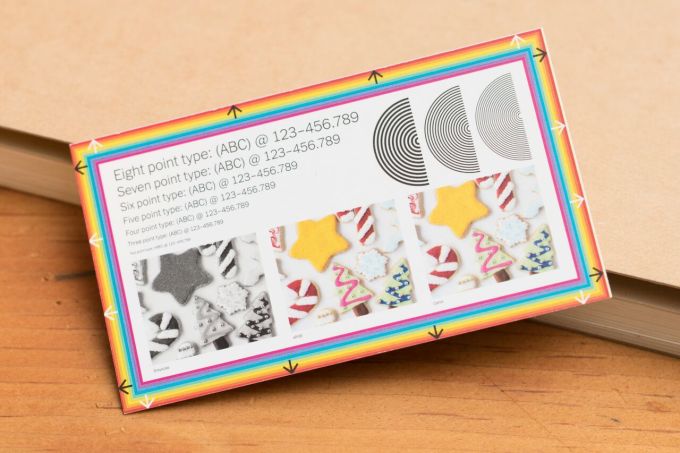
Business Card Printing Service: Vistaprint

Vistaprint has the best print quality of all the services we tested, and its website offers the best ordering and design experience. If you don’t need a large quantity of business cards, Vistaprint will allow you to order batches as small as 100. You can choose from thousands of templates and a variety of finishes. During printing testing, we were able to read small type and we found that the service’s colors and trimming were accurate.

Photo: Kyle Fitzgerald

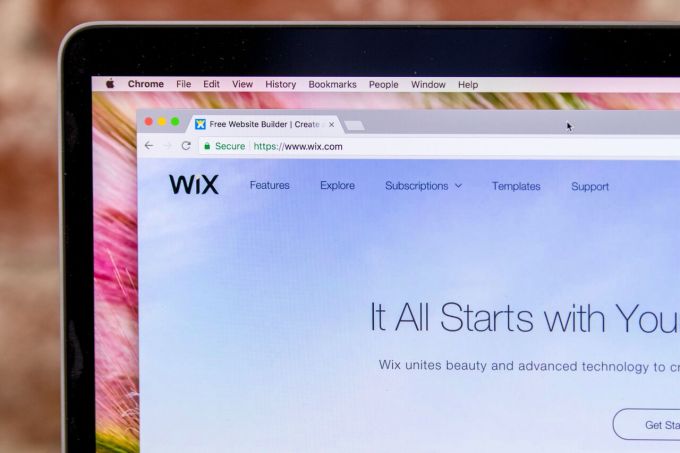
Website Builder for Small Businesses: Wix

For an easy-to-use website builder that makes editing, creating, and finding your business’ site manageable, we recommend Wix. Compared to other site builders we tested, Wix’s template-editing tools get a working site up and running fastest. The platform offers a broad range of plug-ins for integrating tools like Google Maps and OpenTable. Adding plug-ins for things like contact forms, menus and reservations is also painless. There aren’t an overwhelming number of website templates, but the ones that are available offer a good mix. Plus Wix has an intuitive editing interface and built-in SEO tools.

Photo: Kyle Fitzgerald

 Windows Ultrabook: Dell XPS 13

The Dell XPS 13 is a powerful laptop that can be used on the go or with your home office setup. It’s light, has a durable build, plus it’s equipped with an impressive 13.3-inch screen. Previous versions of the XPS 13 have been our top pick for over three years, because it offers the best balance of features and performance of any ultrabook we’ve tested. We like that it’s compact, comes with a good trackpad and keyboard, and that it has a mix of new and old ports. We recommend the configuration that has 8GB of RAM, a 256 GB PCIe solid-state drive, and an Intel Core i7-8550U processor.

Photo: Kyle Fitzgerald                                                                                                               

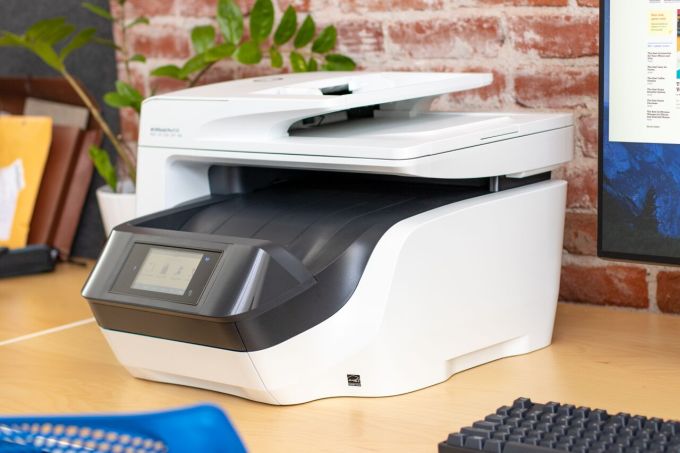
All-in-one Printer: HP OfficeJet Pro 8720

Having your own all-in-one printer will let you print and scan important documents whenever you need to. The HP OfficeJet Pro 8720 offers simple installation and it’s paired with intuitive software and ink that’s affordable. It has a durable build and a large, responsive touchscreen. In addition to handling everyday printing tasks, the OfficeJet Pro can produce colorful graphics and high-quality photos. You can connect to and operate the printer from a computer, tablet, mobile device or the printer control panel. In our tests over Wi-Fi, we didn’t experience any connectivity issues.                          

Photo: Kyle Fitzgerald

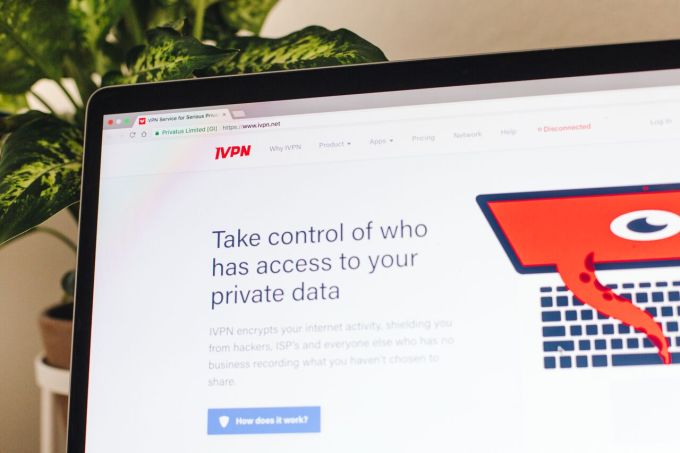
VPN Service: IVPN

A trusted virtual private network provides more online protection beyond device encryption, secure passwords and privacy plug-ins while using a home network or public Wi-Fi. After spending over 130 hours testing 32 VPN services, we chose IVPN as the best VPN provider for most people. It’s easy to set up, has easy-to-use apps, and can be used with most any device running macOS, Windows, iOS or Android. Overall, IVPN offers solid performance and doesn’t cut corners on security nor transparency. You don’t have to worry about your activity or logins being monitored. It’s pricier than competitors but worth the investment because it’s fast, stable, integrates with all major platforms, and comes with features that block data on unsecured connections.

These picks may have been updated by WirecutterWhen readers choose to buy Wirecutter’s independently chosen editorial picks, Wirecutter and TechCrunch may earn affiliate commissions.