They nearly went extinct with the decline of the DVD, but now filmmaker commentaries are back and better than ever.
Category: Tech news
hacking,system security,protection against hackers,tech-news,gadgets,gaming
How to Get Better at ‘Back of the Envelope’ Calculations
Estimating answers to everyday physics problems is an art form. Here’s one tip: learn to ignore what you don’t know.
Antibiotics May Soon Become Useless. Now What?
Antibiotics were one of the great innovations of the last century. Will we still use them 25 years from now?
‘First Man’ Review: Houston, We Have an Indie Blockbuster
By turns intimate and bombastic, it’s the perfect film for cerebral cinephiles and IMAX-loving space odyssey lovers.
Help WIRED Track How Political Ads Target You on Facebook
We’re partnering with ProPublica to collect and analyze political ads on Facebook with a simple browser extension you can install, too
Why Are Bear Cams So Magical? An Investigation
The salmon-snatching grizzlies of Katmai National Park delight the internet—and obscure the big marketing business behind them.
How to Watch the WIRED25 Festival and Summit
Can’t be in San Francisco for our 25th anniversary bash? Here’s how you can join the fun, wherever you are.
Magic Leap is real and it’s a janky marvel
After years of speculation, some mockery, and more than a little befuddlement, the Magic Leap augmented headset is arriving in the hands of developers and users — and its first product is a somewhat janky piece of magic.
After officially announcing the availability of the product for pre-orders last month, the company is pulling back the curtains on all of the prestidigitation it’s been cooking for the past several years.
The company’s first developer conference is slated for tomorrow, with a keynote bright and early in the morning, but the $2.3 billion dollar augmented reality headset manufacturer let a slew of VIPs, media types (including your humble reporter) take a look at the first official content partnerships to come from its formerly super secret studios.
Development studios like Weta Workshop (whose partnership began with Magic Leap nearly a decade ago) and Wingnut AR (the augmented reality development studio founded by Peter Jackson) have revealed new games that involve battling robots and spider infestations (respectively); while the medical imaging company Brainlab and the direct to consumer furniture retailer and design consulting service, Wayfair, pitched their augmented reality wares to show the business use case for Magic Leap’s magic leap into virtual reality.
In all some sixteen companies pitched demos at the curtain-raising event today.
Earlier this afternoon Weta just debuted their augmented reality game as a preview to the Magic Leap conference and it’s impressive. The robot battling Dr. Grordbort’s Invaders is the clearest vision of what Magic Leap’s platform can do.
Magic Leap teased the two companies’ vision for what immersive augmented game play could like in its promotional materials for years, but the culmination of the development work the two have undertaken is about three to five hours of gameplay battling robots that appear from the walls and floors and doors of any room. It’s (pardon the easy pun) magic.

According to Weta games director Greg Broadmore, the final game is the result of six years of collaboration between the creative studio and Magic Leap.
Rony Abovitz, Magic Leap’s visionary chief executive, first reached out to Weta with a vision for “Our Blue” a far-reaching, immersive, science fiction-influenced immersive world that Abovitz wanted Weta to help realize. Abovitz kept in touch with the Weta team and as he began putting the pieces together for Magic Leap, brought the studio on board to develop content.
Dr. Grodbort’s is the first fruits of that partnership and it’s pretty stunning.
Setting aside the problems that Magic Leap still has with field of view and with slight glitches in the game mechanics (which could entirely have been the fault of this author), Dr. Grordbort’s lays out the Magic Leap headset as a convincing gaming device (albeit at a somewhat price-prohibitive $2,295 apiece.
In the game, users are given a backstory by the eponymous Dr. Grordbort, who informs players that they’re the last best hope to save the world from a robotic alien invasion. From there on in, it’s about picking up a blaster and shooting the potential robot invaders who appear from portals around a room.
To start the game, a user maps their space by wandering around it with the Magic Leap on. Once the device has the lay of the land ( a process that can take up to four minutes — depending on size) the narrative will commence and the user is drawn into Dr. Grordbort’s world and gameplay.
“The game helped shape the platform,” said Brodmore. “Dr. Grordbort’s was the problem and Magic Leap is the solution.”
Without the close relationship to Magic Leap that Weta enjoyed, the game from Wingnut’s studio was far less robust, but no less enjoyable.
In their first foray into Magic Leap’s world, the augmented reality studio created a game that puts the user into the most bizarre job training session they’ve ever experienced.
As the new hire at an extermination company that deals with some fairly vicious and viscous insects, the user is put through some paces with how to kill virtual bugs in real space. The mapping engines and graphics are exceptional, the narrator walking a user through the game shows off Magic Leap’s exceptional use of sound technology and the humor in the game is reminiscent of some of the best Wallace and Gromit set pieces.
Beginning with a simple bat, and working up through a flamethrower, players were instructed in how to kill various creepy crawlies and concoct a serum to attract others. I’m not a fan of first person shooters (or much of a gamer in general), but that Wingnut game was damn fun.
And if gaming was one side of the spell that Magic Leap was hoping to weave with new users, business use cases were the other.
In partnership with Brainlab, the company is trying to show how its toolkit can be used in both educational and operational theaters for physicians and surgeons. In a demonstration users were encourage to take a look at a replica of a brain tumor patient’s brain scan in three dimensions. The device is aimed at helping doctors plan surgeries and understand the potential ramifications of different approaches to removing growths in a brain.
Meanwhile, the retailer Wayfair put users through a demonstration of its first Magic Leap application. A visualization tool that takes furniture from a virtual showroom into the real space that furniture would occupy.
It’s part of a longterm skunkworks development project set up within the online retailer to explore applications for augmented reality in a bit to sell more stuff to more folks without the need for a physical showroom (although Wayfair has launched a few popups earlier this month)

Behind all of this is a simple truth. Magic Leap needs content — almost as much as it needed to reduce the form factor and improve the usability of its first headset.
It has achieved those last two demands above the expectations of even the most hardened critic. Wearables still look goofy, but they feel good and the pack that powers the Magic Leap experience is among the best — lightweight and wearable, and with a three-hour battery charge, among the best in the industry.
There’s still some assembly required, as a user needs to determine the type of headset they’ll need and select a nosebridge that gives the headset the proper lift so its hardware can work properly. If a user wears glasses, it’s going to require a special prescription that can be ordered separately as an attachment that fits into the headset.
The other pieces of hardware packaged with the Magic Leap include a motion sensing hand controller (similar to what users have experienced as part of any video game console) and a hip pack with the processing power of a notebook computer.
The device doesn’t need to be tethered to a computer, but it does only work indoors.
Setting aside the limitations of the first generation of a hardware device, the Magic Leap is about as impressive a piece of augmented or virtual reality hardware as I’ve seen. Other companies may have better fields of view and a more compact device, but they lack the variety of content that makes Magic Leap’s offerings shine. The early partnerships the company has inked have, indeed, paid off.
And as it rolls out its offerings the company is learning the lessons of wearable headsets past.
Its initial customers — in Chicago, Los Angeles, Miami, New York, San Francisco, and Seattle — will receive a home visit from a Magic Leap employee who will walk them through the way the product works in a thirty minute to sixty minute demo. That’s the same level of bespoke treatment that Google Glass offered to its initial explorers.
One benefit of an AR headset like Magic Leap’s is that it’s much, much easier to navigate than a fully immersive VR headset. Another, is the flexibility it offers in terms of applications from a mixed reality setting.
“This is the evolution of computing,” said Shrenik Sadaigi, the director of next generation experiences at Wayfair — and the architect of the company’s experiments in augmented and virtual reality.
“We think of this as a productivity device,” Sadaigi said. “Browsing for stuff on the web. That’s the computing environment. Your space is your screen and your space becomes another variable on the computing platform. We want to make people love the space they live in. Using mixed reality to … the app that we’re presenting today we think of it as a design experience.”
One of the big breakthroughs in the company’s platform is the controller and how easy it is to use, as Sadaigi noted in our conversation. “The controller is doing a lot of work for you. [The company] is giving you something new… that is kind of the old, but in a new form. It’s simplified the experience to swiping and clicking.”
More complicated interactions can be handled by using the voice interface the company has built into the device and the eye scrolling feature that’s part of the inside out tracking the company uses.
Behind all of this is Abovitz and his crazy vision for a new platform for computing.
“That decision to start something new and bigger and more ambitious, to try to change all of computing, was a bit nuts. It’s like Bilbo Baggins having to step out of the Shire,” Abovitz told VentureBeat earlier this year. “If you spend enough hours in a Magic Leap system, it’s almost impossible to go back to your phone or computer or television. You realize that they’re very thin slices. Magic Leap gives you a giant volume of computing. When you actually get to play with it, spatial computing means you work within a volume, not just a slice.”
SoftBank is considering taking a majority stake in WeWork
SoftBank may soon own up to 50 percent of WeWork, a well-funded provider of co-working spaces headquartered in New York, according to a new report from The Wall Street Journal.
SoftBank is reportedly weighing an investment between $15 billion and $20 billion, which would come from its $92 billion Vision Fund, a super-sized venture fund led by Japanese entrepreneur and investor Masayoshi Son.
WeWork declined to comment.
SoftBank already owns some 20 percent of WeWork. The firm invested $4.4 billion in the company in August 2017, $1.4 billion of which was set aside to help WeWork expand in China, Japan and Southeast Asia.
This August, WeWork raised another $1 billion from SoftBank in convertible debt. At the same time, WeWork disclosed financials to a handful of media outlets, sharing that its revenue had doubled to $763.8 million in the first half of 2018 as losses increased to $723 million.
SoftBank, for its part, seems to have a hankering for real estate tech. Not only has it become a key stakeholder in WeWork, but it has deployed significant amounts of capital to Opendoor, Compass, Katerra and others.
Last month, the Vision Fund backed Opendoor, a platform for buying and selling homes, with $400 million. The same day, it led a $400 million round for Compass, valuing the real estate brokerage startup at $4.4 billion. As for Katerra, SoftBank poured $865 million into the construction tech business in January.
WeWork, founded in 2010 by Adam Neumann and Miguel McKelvey, has raised nearly $5 billion in a combination of debt and equity funding to date. It was valued at $20 billion in 2017, though reports earlier this summer estimated its valuation would fall somewhere between $35 billion and $40 billion with additional capital from SoftBank. A $40 billion valuation would make it the second most valuable VC-backed company in the U.S. behind only Uber.
WeWork has more than 268,000 members across 287 locations in 23 countries.
Divvy, an interesting new fractional home ownership startup, just raised a Series A round led by Andreessen Horowitz
Tech startups have found all kinds of ways to lend money to those hampered by either too little or not very good credit.
The approach of a nearly two-year-old, 15-person San Francisco-based startup called Divvy Homes is among the more creative we’ve seen, even while we question (for now) whether it’s good over the long term for potential customers.
How it works: In Cleveland, Memphis, and Atlanta, where Zillow estimates median home prices are $52,000, $82,000, and $242,000, respectively, Divvy will enable a person or family to select a home they’d like to someday own, then to buy that home with Divvy’s help. The family chips in at least two percent for a down payment. Divvy pays for the rest, then it collects a monthly amount that includes both market-rate rent and an equity payment.
It does this until the newly installed residents have amassed a 10 percent stake in the home. The reason, says the company: By partnering with Divvy, tenants — some of whom have credit scores as low as 550, which is considered “very poor” by the consumer credit ratings agency Experian — can build their credit scores and eventually land a mortgage insured by the Federal Housing Administration, which requires a credit score of at least 580.
According to CEO Brian Ma — who co-founded the startup at the company creation studio HVF Labs — the idea is for this to happen within three years, at which point Divvy will sell and transfer the property over to them.
It’s easy to appreciate why this might be attractive to potential homebuyers who can’t secure a traditional mortgage in the current market — not all of whom suffer from poor credit but who are sometimes contract and self-employed workers without months of salary stubs to show nervous bankers. For example, Divvy says that it charges less in rent as a buyer’s equity begins to add up. That equity, it insists, can later turn into the person or family’s first mortgage payment.
For largely self-serving reasons, Divvy does what it can to ensure that the house isn’t a dud, too. As Ma describes it, Divvy uses data science and algorithms to ensure that a property makes sense financially, meaning that it will likely appreciate and that the tenants aren’t paying so much that they can’t simultaneously build equity in their homes.
Divvy also works with inspectors to make doubly certain each home is “move-in ready and won’t have large unforeseen expenses during the lease, like major roof, structural, pest, or foundation issues,” says Ma, who previously co-founded three startups, as well as spent several years as a program manager with Zillow.
Still, it’s also easy to imagine that some of Divvy’s aspiring homeowners will never actually own their homes. Consider: While Divvy may help some percentage of them improve their credit score, roughly 62 percent of consumers with credit scores under 579 are “likely to become seriously delinquent (i.e. go more than 90 days past due on a debt payment) in the future,” says Experian.
Naturally, like any other property owner, Divvy will evict tenants who don’t pay, even if it does so reluctantly.
“If a rent payment is missed, we will follow up to see how we can help,” says Ma. “Most of the time, it’s immediately curable or curable within a couple days. If it’s been longer than a week and we believe the tenant is going through some hardship, we will work our best to offer alternatives, including allowing them to purely rent the property by dropping the equity payments to lower their monthly payment. If we can’t find a way to cure the situation, we will go through an eviction procedure.”
Divvy also establishes the buyback price at the time that it’s buying the home — which can work for, or against, the tenants who hope to own it someday.
Adena Hefets, another Divvy co-founder who worked previously in both VC and private equity, recently explained to us that Divvy has a back-end model that projects where the house would price three years down the line and it allows tenants to “buy it back at that price at any time.” Yet buying it back early would invariably mean overpaying. Moreover, in the cities where Divvy is operating, housing prices don’t move around a lot, so a tenant could be overpaying at any buyback price that’s north of where the home sells today. (Home prices in Northeast Ohio were rising as of last spring, but they were still at 2004 levels.)
With the broader housing market poised for a slowdown, tenants wanting to buy their homes might decide it’s cheaper in the end to just move out of them and find something else. They’d still get 10 percent of the sale of the home, even if they overpaid for it over their three-year commitment. But where would that leave Divvy? We’d guess it would leave it looking more like a modern residential real estate investment trust than a “rent-to-own innovator.”
That’s not a terrible thing for Divvy, even if it sounds a little less glamorous. In fact, the company — which says it’s already buying one home a day — is today disclosing that it has raised $30 million in equity and debt from Andreessen Horowitz (a16z) and a commercial bank called Cross River Bank that notably is backed by a16z.
Ma declines to say how much of the round is equity and how much is debt. But he says that Alex Rampell, an a16z investor whose other real estate-related bets include a different fractional ownership startup, Point, has joined the company’s board.
Pictured above (at TC headquarters), left to right: Divvy founders Nicholas Clark, Brian Ma and Adena Hefets.
Google Pixel’s product directors on single cameras and notches
Google hardware launches are never spec-fests. The search giant would rather just sit on the sideline while companies like Apple and Samsung battle it out on that front. In fact, numbers like screen resolution, processor speed and battery capacity were conspicuously absent from today’s presentation.
Instead, the company seems more content to have hardware serve the product’s software — it’s a strategy that certainly makes sense given the company’s background. That often means that products like the Pixel don’t offer major spec upgrades year over year, instead relying on breakthroughs in AI, ML and the like to take them to the next level.
As such, the company regularly tosses out words like “pragmatic” and “practical” when discussing the decisions made in service of producing the Pixel 3. One such move was the continued reliance on a single rear-facing camera, when the competition is adding two or three to get the job done.
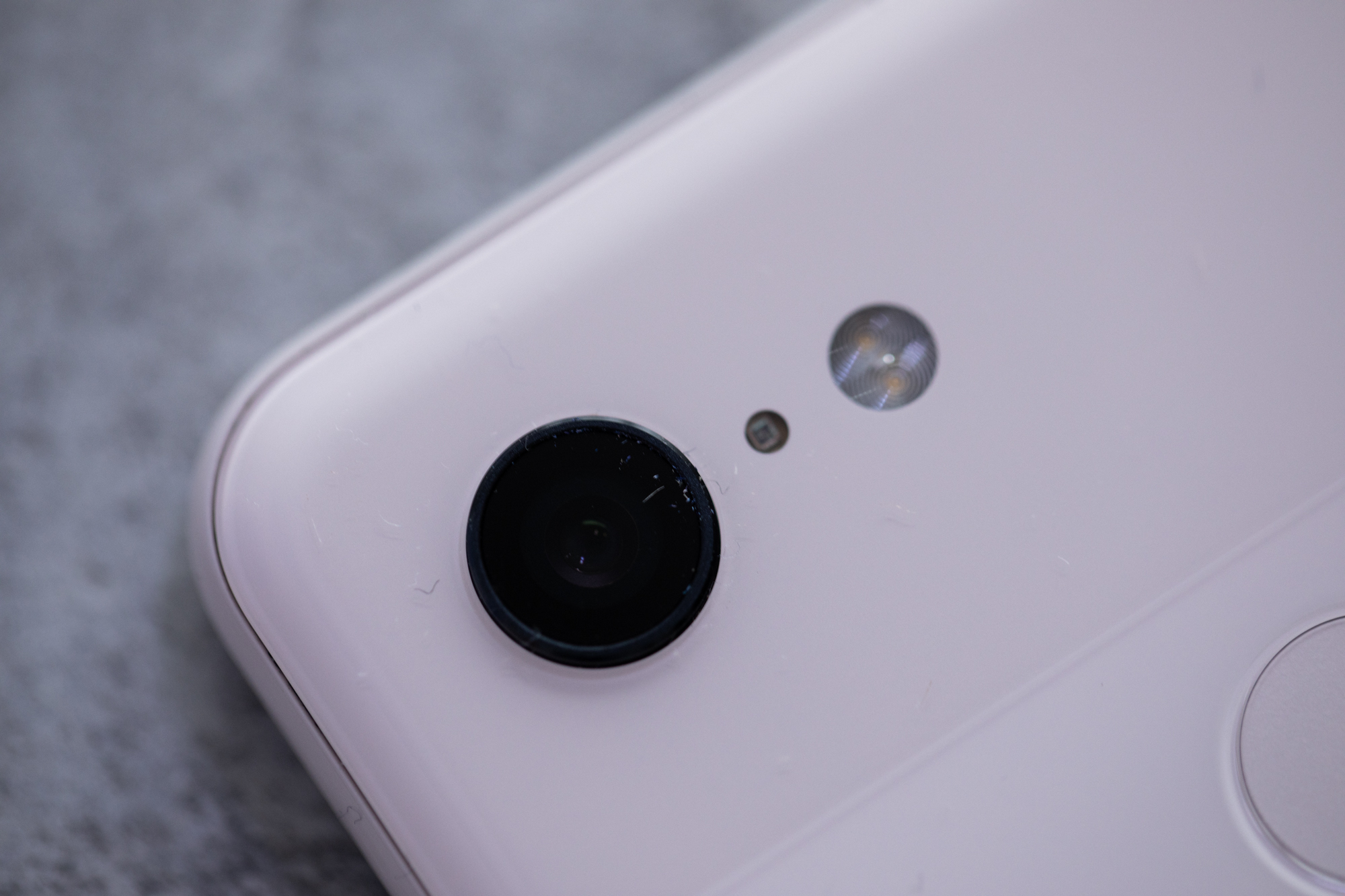
“We look at all of the different configurations we can get,” VP of Product Management Brian Rakowski tells TechCrunch. “If we would have added another lens, it would have given us no benefit over what we get with one really good lens.”
The simple answer is that the company was able to accomplish most of what it set out to do with a combination of “one really good camera” and software tricks like digital zoom, ultra low-light shooting and depth perception. That last bit is doubly important both for creating the bokeh effect in portrait mode and helping deliver augmented reality experiences through ARCore.
Senior Director of Product Management Sabrina Ellis says the company did consider a wide-angle lens for the rear of the device, but ultimately, “it wasn’t as much of a pain point.” It was, however, enough of an issue to warrant its addition to the front of the device.
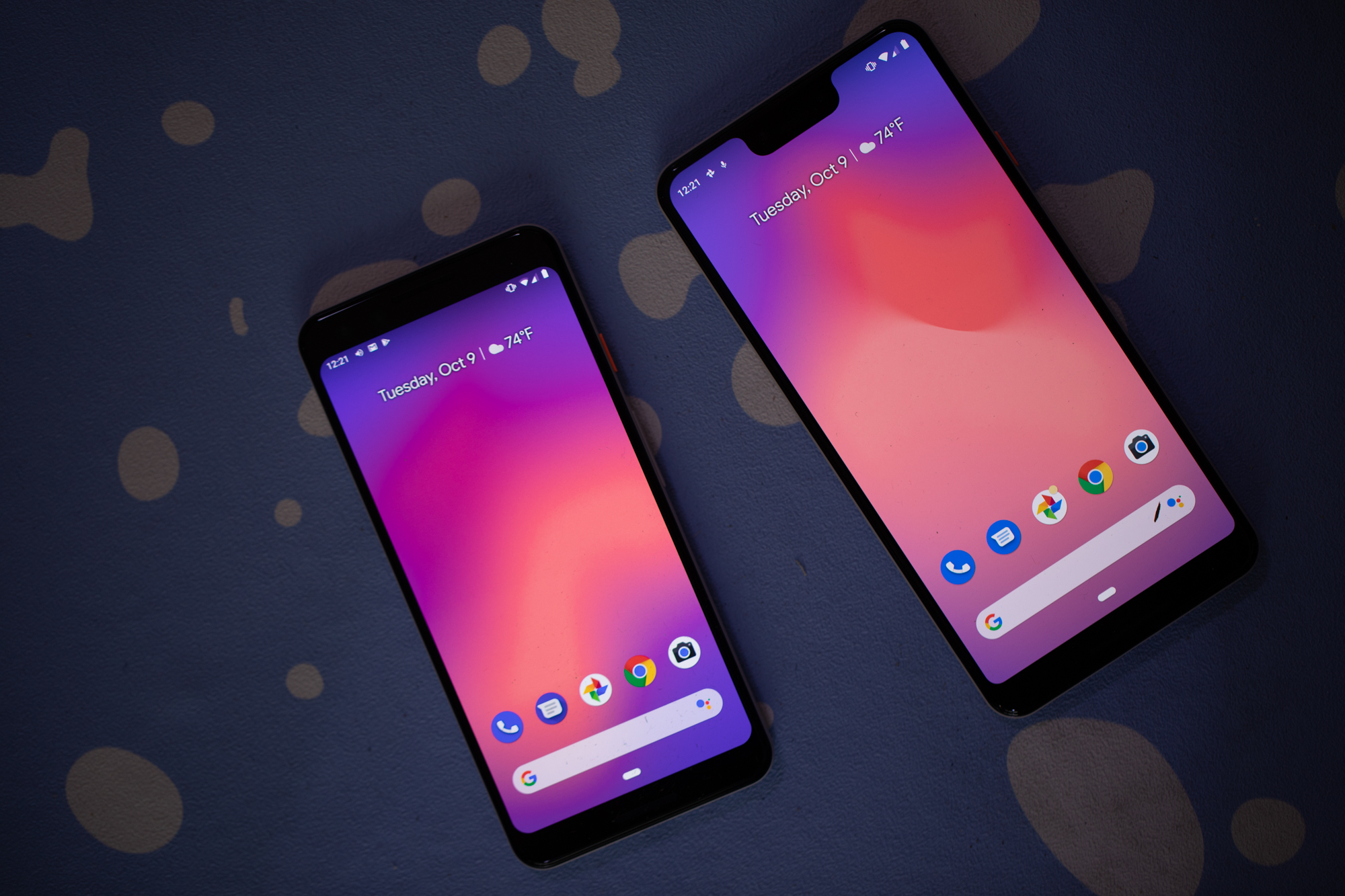
That decision is what lead to the mismatched notches on the Google Pixel 3 (no notch) and Pixel 3 XL (giant notch). While the company has happily embraced hashtag notch life in Android Pie, the smaller Pixel’s slim profile wouldn’t have benefited from the addition of a notch.
“With the small one,” Rakowski explains, “it turns out the space is just too small when you put the wide-angle lens in. It’s a narrower phone, so you have room for an icon or two, whereas on the bigger phone everything you need for the status icons is up there, and it’s a very good use of the space.”
When I suggested the company was “notch agnostic,” both execs laughed in agreement. The hardware, Rakowski explained, is secondary to the overall experience. “We’re not obsessed with the specs,” he says. “We’re obsessed with the features and experiences.”

Jennifer Garner’s baby food company Once Upon a Farm raises $20M Series B
CAVU Venture Partners has led the $20 million Series B for Once Upon a Farm, which sells organic, cold-pressed baby food in 8,500 grocery stores in the U.S.
The Berkeley-based startup was originally founded in 2015 by serial entrepreneurs Cassandra Curtis and Ari Raz. Today, it lists actress Jennifer Garner and former General Mills president John Foraker as co-founders, too.
Both Garner and Foraker — who was the chief executive officer of the popular organic mac & cheese brand Annie’s Homegrown for more than a decade — joined the company in September 2017. Foraker had been an angel investor in Once Upon a Farm and, after conversations with Garner, decided to accept the role of CEO. Garner, widely known for her roles in Alias, 13 Going on 30 and the upcoming HBO original series Camping, was already somewhat of a Once Upon a Farm evangelist when she signed on as chief brand officer a little over a year ago.
“I am proud of the innovative business that we have built,” Garner said in a statement. “It is incredibly exciting to see so many families embracing our products. This latest round of funding allows us to continue to help busy parents give their children the most nutritious foods possible and make life a little bit easier for families across the country.”
Foraker told TechCrunch that since he and Garner joined, the business has grown 10x. Last fall, the company’s products were for sale in 300 stores; today, as mentioned, they are available in more than 8,000.
“Because she has global celebrity, the power of that, she can really help us get the message out and help lots of moms and dads find [Once Upon a Farm],” Foraker said.
Once Upon a Farm sells smoothies and applesauce for kids up to age 12 directly to consumers through its online marketplace and in stores. Pouches of its signature baby food, smoothies and applesauce are $2.99 each.
As part of the deal, CAVU’s co-founder and managing partner Brett Thomas, along with CAVU investor Jared Jacobs, will join the company’s board. S2G Ventures and Beechwood Capital also participated in the round for the startup, which raised a $4 million Series A in June 2017.
The company plans to use the funds to expand its direct to consumer business, partner with more U.S. grocers and build out a wider assortment of baby products.
“You can buy fresh pet food now in almost 20,000 stores in the U.S.,” Foraker said. “We think fresh baby food has a long way to go.”
Brazil’s healthtech sector is new hot spot
Manoel Lemos
Contributor
Contributor
Manoel Lemos is a managing partner of Redpoint eventures, the Brazilian-focused arm of the Silicon Valley venture firm Redpoint.
More posts by this contributor
Solving big problems for many people is the kind of opportunity that both entrepreneurs and investors love. Like recent Brazilian investment booms focused on fintech innovation and new on-demand business models, there’s been a recent explosion in healthtech startups in Brazil. With tens of millions of the country’s people impacted by gigantic inequities in access to health services, some serious quality problems, burdensome costs and inefficiencies on all sides, entrepreneurs’ plates are full in bringing healthtech innovations to the market.
In a recent study by Liga Ventures, there are now more than 250 health-focused startups in Brazil, the world’s seventh-largest health market with more than $42 billion spent annually on private healthcare. Yet, with more than $18 billion wasted due to inefficiencies, and health-related costs doubling in the country during the last five years (with accumulated inflation at 38 percent), Brazilian healthcare is ripe for disruption. Healthtech startups are one of the five featured verticals at Cubo Itaú, one of world’s largest entrepreneurial hubs based in Vila Olímpia, in the southern zone of São Paulo.
Last year, healthtech was the second-fastest growing tech sector in Latin America, according to “Inside Latin America’s Breakout Year in Tech” published by LAVCA. There was a 250 percent increase in the number of healthtech deals compared to 2016. A $50 million investment in Dr. Consulta, a network of brick-and-mortar clinics in Brazil offering top-quality healthcare at an affordable price, was among the top venture capital deals for 2017.
The healthcare sector is a complex market that connects people, processes and products between patients, intermediaries, care providers, distributors and suppliers. Based on tech innovation in Brazil that’s having the biggest impact, here are some of the key categories and players bringing new business models to market.
Healthcare on demand
About 75 percent of Brazil’s population (approximately 150 million people) only have access to the public healthcare system, which is poorly managed and inefficient. Often times, to schedule a single consultation or exam, a patient needs to wait weeks or even months to see a care provider. Technology-driven startups are springing up to address better, more efficient access to healthcare for a large and aging population.
For example, Dr. Consulta’s chain of low-cost medical clinics have expanded in three years from one to 51 branches and now claim to have the country’s largest clinical data set drawn from more than one million patients. In comparison to other private-sector clinics that cost at least $90, consultations with doctors at Dr. Consulta cost $25. Others offering similar clinical services on demand in Brazil today include Clínica Sim, Dr. Sem Filas, Docway and GlobalMed.
Telehealth and mobile health apps
To help make healthcare advice, diagnosis and monitoring more accessible, telehealth services in Brazil are expanding. Brazil Telemedicine (Brasil Telemedicina), for example, provides a variety of services around the clock that include medical exams and doctor consultations, a remote monitoring system and psychological counseling.
Startups with B2B telehealth services to improve patient care include Telelaudo, which provides 24/7 radiology imaging analysis, and Ventrix, which provides specialty devices to monitor heart health, treat vacuum wounds and monitor babies’ breathing and well-being. Another São Paulo-based startup called NEO MED has launched a marketplace to make it easier and faster to generate medical reports for ECG and EEG exams, facilitate improved collaboration between clinics, laboratories and hospitals and support physicians seeking more income and flexibility in where they choose to work.
The key ingredients to create another boom sector like fintech in the region are abundant.
Mobile health apps have grown in popularity in Brazil, in part due to a high prevalence of diseases like diabetes and hypertension and a large number of internet users in the country. For example, a mobile app and online program called Diet and Health (Dieta e Saude) has helped more than 1,600,000 users make better nutrition choices and motivate them to exercise regularly. Youper, founded in Brazil and now based in San Francisco, is a virtual emotional health assistant that helps overcome social anxiety. It helps its users re-formulate thought patterns and arrive at healthier states of mind.
AI and data analytics
Like many industries, AI and data analytics are transforming healthcare in Brazil and beyond from improving the speed of patient diagnoses to managing healthcare costs.
Gesto is one such emerging innovator that’s using machine learning to sift through and make sense of a lot of data on more than 4.5 million patients in its database to help select better insurance plans for corporations that optimize patient care while controlling costs. Intensicare, the largest specialist in intensive care unit management in Brazil, uses AI to speed diagnosis and reduce patient stay time and mortality rates. Epitrack is a Recife-based startup that uses crowdsourced data, AI and predictive analysis to combat outbreaks and epidemics through computational epidemiology.
Electronic medical records
Last year, the Brazilian government launched a project to modernize patient records for more than 42,000 public health clinics across the country by the end of 2018. This digitization of records is estimated to save the federal government about $6.8 billion according to The World Bank. As of late last year, only 30 million Brazilians (out of 208 million) had electronic medical records (EMR), and nearly two-thirds of the family clinics in Brazil didn’t have any way of recording digital information about their patients.
iClinic, a SaaS EMR platform, is one of the top Brazilian startups that has made a big impact on modernizing healthcare. It helps health professionals organize patient records electronically, store all that data in the cloud and retrieve it from any device. iClinic provides an extremely easy-to-use system to make healthcare more efficient, reduce costs and improve the quality of patient care. It’s now used in many parts of Brazil and has begun to spread its usage outside Brazil in more than 20 countries.
Digitizing prescriptions
Another major issue caused by a lack of digitization is that close to 70 percent of medical prescriptions in Brazil have potential for errors, according to the World Health Organization. As a result, Brazil has thousands of deaths per year linked to medication errors. A good number of them could be avoided by scanning. In the U.S., more than 77 percent of prescriptions are already done digitally.
To address this life-and-death issue, Memed has emerged as a key player for managing e-prescriptions in Brazil. Its platform, now used by more than 55,000 doctors from all medical specialties in the country, helps cross-check for allergies and drug interactions, makes treatment adherence easier and improves health outcomes. It’s developed the most complete, reliable and updated drug database in Brazil.
Certainly, healthtech startups in Brazil have emerged as a sector to watch, and we’re only at the tip of the iceberg in terms of problems in the country to be addressed by healthtech innovation. The key ingredients to create another boom sector like fintech in the region are abundant. Healthtech in Brazil will surely remain a hot spot for entrepreneurs, and the investors who believe in them, for many years to come.
Disclosure: Redpoint eventures is an investor in Memed.
Indie farm-em-up Stardew Valley is coming to iOS and Android
Stardew Valley, the hit indie farming game made by one guy in his spare time, is coming to mobile. I’ve dropped dozens of hours into this charming little spiritual successor to Harvest Moon, and now I know how I’m going to spend my next few plane rides.
In case you’re not aware, Stardew Valley is a game where you inherit a farm near a lovely little town and must restore it, befriend (and romance) the locals, fish, fight your way through caverns, forage for spring onions and wild horseradish, mine ore, and… well, there’s a lot. Amazingly, it was created entirely by one person, Eric Barone, who taught himself to code, make pixel art, compose music and do literally everything. And yes, it took a long time. (GQ of all things wrote an interesting profile recently.)
Fortunately it was a huge hit, to Barone’s great surprise and no doubt pleasure, and deservedly so.

Originally released for the PC, Stardew Valley has since expanded (with the help of non-Barone teams) to the major consoles and is now coming to iOS — undiminished, Barone was careful to point out in a blog post. This game is big, but nothing is left out from the mobile port.
“It’s the full game, not a cut down version, and plays almost identically to all other versions,” he wrote. “The main difference is that it has been rebuilt for touch-screen gameplay on iOS (new UI, menu systems and controls).”
Barone has added a lot to the game since its release in early 2016, and the mobile version will include those updates up to 1.3 — meaning you’ll have several additional areas and features but not the multiplayer options most recently added. Those are planned, however, so if you want to do a co-op farm you’ll just have to wait a bit. No mods will be supported, alas.
In a rare treat for mobile ports, you can take your progress from the PC version and transfer it to iOS via iTunes. No need to start over again, which, fun as it is, can be a bit daunting when you realize how much time you’ve put into the game to start with.
I can’t recommend Stardew Valley enough, and the controls should be more than adequate for the laid-back gameplay it offers (combat is fairly forgiving). It’ll cost $8 in the App Store starting October 24 (Android version coming soon), half off the original $15 price — which I must say was amazingly generous to begin with. You can’t go wrong here, trust me.
Pixel 2 vs Pixel 3: Should you upgrade?
If you’re considering making the jump to Google’s newly announced Pixel 3 and Pixel 3 XL, you’re in the right place. Whether you’re a Pixel 2 owner eyeing greener pastures or a bargain type hunting for a last-gen smartphone that’s still top of the line, comparing new and old is often useful.
On specs alone, the Pixel 3 shares most of its DNA with the Pixel 2, but there are a handful of meaningful differences, and they’re not all obvious. What is obvious: The Pixel 3’s AMOLED screen is now 5.5 inches compared to the Pixel 2’s 5-inch display. The Pixel 3 XL now offers a 6.3-inch display, up .3 inches from the Pixel 2 XL.
The Pixel 3 and Pixel 3 XL upgrade the Pixel 2’s processor slightly and add an additional front-facing camera for some of the device’s newest tricks. The primary camera also gets an under-the-hood upgrade to its visual co-processing chip, called Visual Core. The Visual Core chip update is what powers some of the new camera features that we’ll get into in just a bit.
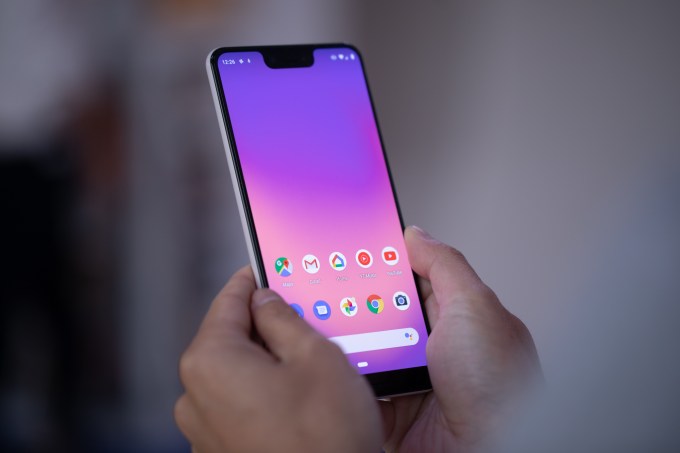
Pixel 3 XL
Beyond that, the hardware looks very similar for the most part, though the Pixel 3 and Pixel 3 XL do offer some changes in screen size, like we mentioned. Most noticeably, the Pixel 3 XL has an iPhone-like notch this time around, while the notchless Pixel 3 offers a reduced bezel but no edge-to-edge screen.
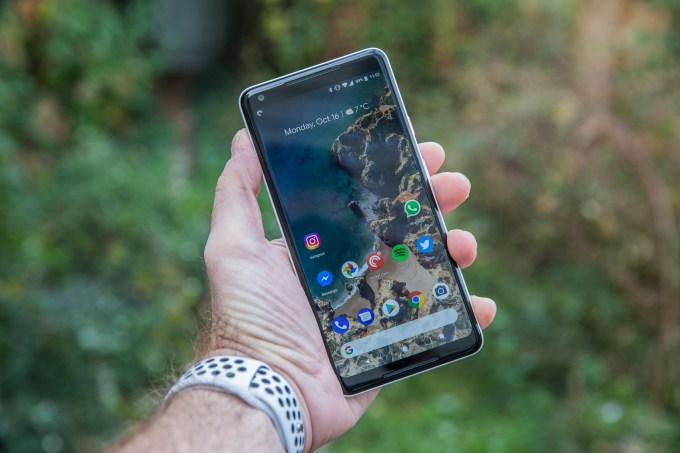
Pixel 2 XL
The Pixel 3 starts at $799 (64GB of storage) while the base model Pixel 2 is currently priced at $649, though more price drops could be in store. The Pixel 3 XL starts at $899 for 64GB of storage and offers 128GB for $999. The Pixel 2 XL is more deeply discounted than its smaller sibling at the moment, with a 64GB base option on sale for $699. If it sounds complicated, it’s not really. Each Pixel comes in two sizes: 64GB or 128GB and more storage costs $100 bucks extra.

The black and white Pixel 2 XL
With the Pixel 3, Google has unified the color scheme across both sizes of device, offering “Just Black,” “Clearly White” with an eye-catching seafoam colored button and a very Apple-like “Not Pink” that comes with a coral-colored button.
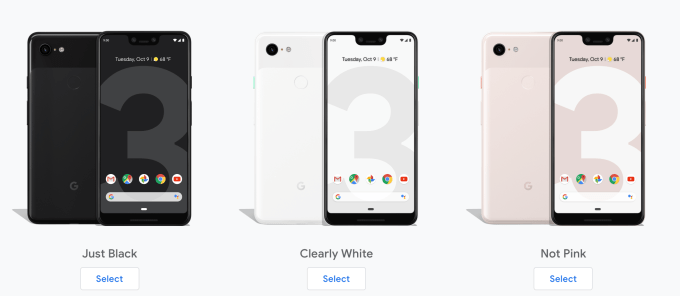
Google’s Pixel 2 also came in black and white but also a muted greyish-blue color, which was cool. The Pixel 2 XL came in all black or black and white with a brightly colored power button, so we’re a little sad to see that color go. Google also noted in its launch event that the new phones feel more comfortable to hold, though we’d have to try that out with the Pixel 3 XL to see if that really holds true.
Like we said, if you’re not vehemently anti-notch, the hardware isn’t that different. The dual front-facing camera is the most substantial change. But since we’re talking about Google phones, what we’re really talking about is software — and when it comes to software, Google has held some substantial perks exclusive to the Pixel 3.
We spoke to Google to clarify which features won’t be coming to the Pixel 2, at least not yet:
- Photobooth: The hands-free selfie mode that snaps photos when you smile.
- Top Shot: Burst photo mode that picks your best shots.
- Super Res Zoom: A new machine learning-powered camera mode that merges many burst images to fill in additional details.
- Wide-angle selfies: That extra front-facing camera wasn’t for nothing. Mark my words, this is the Pixel 3’s real killer feature, even if it takes a while to catch on.
- Motion Auto focus: A camera mode that allows you to tap a subject once and track it while it moves.
- Lens Suggestions: A new mode for Google Lens.
- Titan M: A new security chip with a cool name that Google touts for providing enterprise-level security.
- Wireless charging: Either a big deal to you or it’s not.

Thrift-minded shoppers and fairly content Pixel 2 owners fear not. There are plenty of new features that don’t rely on hardware improvements and will be coming to vintage Pixels. Those include Call Screen, Night Sight, Playground (the AR sticker thing) and Digital Wellbeing, already available in beta.
So, do you need to upgrade? Well, as always, that’s a very personal and often very nitpickily detail-oriented question. Are you dying for a slight but not unsubstantial bump in screen real estate? Does Google’s very solid lineup of cool new camera modes entice you? Is wireless charging an absolute dealmaker?
As for me, I’m perfectly happy with the Pixel 2 for now, but as someone who regularly takes front-facing photos with more than one human in them, that extra-wide group selfie mode does beckon. If I were still using a first-generation Pixel I’d be all over the Pixel 3, but my device has a ton of life left in it.
A Google spokesperson emphasized that as always with its flagship smartphone line, the company will “try to bring as many features as possible to existing phones so they keep getting better over time.”
The Pixel 2 is still one of the best smartphones ever made and it’s more affordable now than before. Even with last-gen hardware — often the best deal for smartphone shoppers — you can rest easy knowing that Google won’t abandon the Pixel 2.