This robot uses lasers to ‘listen’ to its environment

A new technology from researchers at Carnegie Mellon University will add sound and vibration awareness to create truly context-aware computing. The system, called Ubicoustics, adds additional bits of context to smart device interaction, allowing a smart speaker to know it’s in a kitchen or a smart sensor to know you’re in a tunnel versus on the open road.

“A smart speaker sitting on a kitchen countertop cannot figure out if it is in a kitchen, let alone know what a person is doing in a kitchen,” said Chris Harrison a researcher at CMU’s Human-Computer Interaction Institute. “But if these devices understood what was happening around them, they could be much more helpful.”

The first implementation of the system uses built-in speakers to create “a sound-based activity recognition.” How they are doing this is quite fascinating.

“The main idea here is to leverage the professional sound-effect libraries typically used in the entertainment industry,” said Gierad Laput, a PhD student. “They are clean, properly labeled, well-segmented and diverse. Plus, we can transform and project them into hundreds of different variations, creating volumes of data perfect for training deep-learning models.”

From the release:

Laput said recognizing sounds and placing them in the correct context is challenging, in part because multiple sounds are often present and can interfere with each other. In their tests, Ubicoustics had an accuracy of about 80 percent — competitive with human accuracy, but not yet good enough to support user applications. Better microphones, higher sampling rates and different model architectures all might increase accuracy with further research.

In a separate paper, HCII Ph.D. student Yang Zhang, along with Laput and Harrison, describe what they call Vibrosight, which can detect vibrations in specific locations in a room using laser vibrometry. It is similar to the light-based devices the KGB once used to detect vibrations on reflective surfaces such as windows, allowing them to listen in on the conversations that generated the vibrations.

This system uses a low-power laser and reflectors to sense whether an object is on or off or whether a chair or table has moved. The sensor can monitor multiple objects at once and the tags attached to the objects use no electricity. This would let a single laser monitor multiple objects around a room or even in different rooms, assuming there is line of sight.

The research is still in its early stages, but expect to see robots that can hear when you’re doing the dishes and, depending on their skills, hide or offer to help.

Ahead of midterm elections, Facebook expands ban on posts aimed at voter suppression

Facebook is expanding its ban on false and misleading posts that aim to deter citizens from voting in the upcoming midterm elections.

The social media giant is adding two more categories of false information to its existing policy, which it introduced in 2016, in an effort to counter new types of abuse.

Facebook already removes verifiably false posts about the dates, times and locations of polling stations — but will now exclude false posts that wrongly describe methods of voting — such as by phone or text message — as well as posts that aim to exclude portions of the population, such as based on a voter’s age, for example.

But other posts that can’t be immediately verified will be sent to the company’s fact checkers for review.

more 2018 US Midterm Election coverage

Facebook’s public policy manager Jessica Leinwand said in a blog post announcing the changes that users will also be given a new reporting option to flag false posts.

The expanded policy is part of the company’s ongoing work to counter misleading or maliciously incorrect posts that try to suppress voters from casting their ballot, which could alter the outcome of a political race.

The ban comes into effect with less than a month before the U.S. midterm elections, after facing heavy criticism from lawmakers that Facebook has not done enough to prevent election meddling and misinformation campaigns on its site. Facebook has largely shied away from banning the spread of deliberately false news and information, including about candidates and other political issues, amid concerns that the platform would be accused of stifling free speech and expression.

But the company didn’t have much room to maneuver after a prominent Democratic senator challenged Facebook’s chief operating officer Sheryl Sandberg during a congressional hearing about how the company planned to prevent content that suppresses votes.

During that hearing, Sandberg admitted the company could have done more to prevent the spread of false news on its platform, but argued that U.S. intelligence could have helped.

Wyden said in a statement that it was a “good step,” but that he’ll be looking for results. “We can’t have a repeat of 2016, when scammers micro-targeted lies at people of color to steal their right to vote,” the senator said.

Major browsers simultaneously drop support for old security standards

Firefox, Chrome, Edge, Internet Explorer and Safari are all dropping support for older versions of the online security protocol TLS, used in practically any encrypted exchange online. While few people or machines are using the long-unsafe TLS 1.0 and 1.1, they’re still permitted in many connections — but not for long.

Transport Layer Security is a community-developed standard that got its 1.0 release nearly 20 years ago. It and its close relative, 1.1, have known flaws that make them unsafe to use for any secure communications. 1.2 addressed these major flaws in 2008 and is currently used by the vast majority of clients. 1.3, released earlier this year, both improves and streamlines the standard, but as yet has only a limited presence online as many servers and services haven’t been updated to support it.

Mozilla, Google, Microsoft and WebKit all made separate but similar announcements on their blogs, essentially that the old versions, 1.0 and 1.1, will be phased out by early 2020 — March specifically for some, which we can take as a general indicator for the others.

“Two decades is a long time for a security technology to stand unmodified,” wrote Microsoft’s Kyle Pflug. “While we aren’t aware of significant vulnerabilities with our up-to-date implementations of TLS 1.0 and TLS 1.1, vulnerable third-party implementations do exist. Moving to newer versions helps ensure a more secure Web for everyone.”

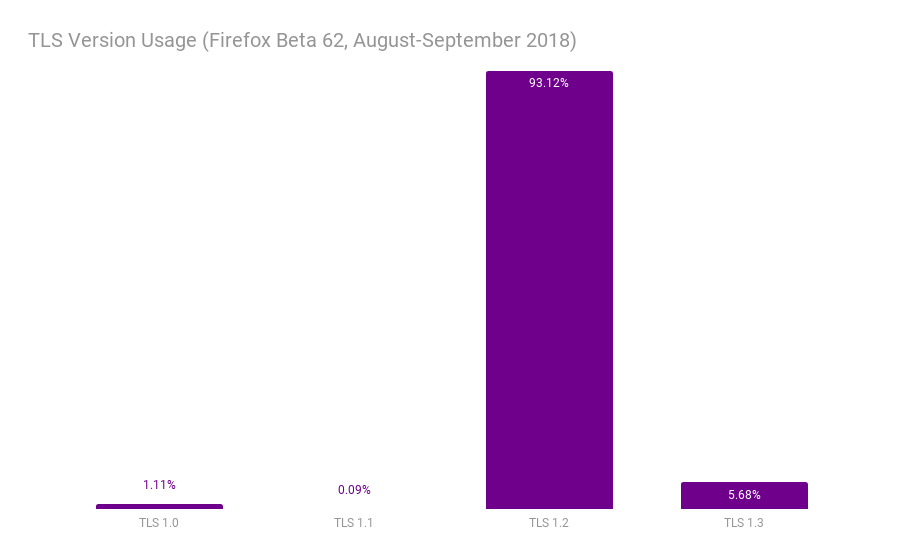
As a user you don’t need to do a thing. The browsers and apps you use will work just as they have before — chances are they’re all using 1.2 already. Mozilla shared a chart showing that only a smattering of connections it sees use the earlier versions:

These connections, low by proportion but still numerous, could be lots of things. Legacy machines embedded here are there; old apps for which the security stack hasn’t been updated in years; hacked devices. It’s almost certainly not you or even your parents.

The long lead time is given because of the possibility (nay, inevitability) that there are some critical systems (for example in aging municipal infrastructure) that will cease to work because of this change. People need time to do a real audit, although they probably should have done it years ago.

This move should make everyone a little safer online, though everything will continue to act exactly as it did before. That’s by design.

Docker has raised $92 million in new funding

Docker, the company that did more to create today’s modern containerized computing environment than any other independent company, has raised $92 million of a targeted $192 million funding round, according to a filing with the Securities and Exchange Commission.

The new funding is a signal that while Docker may have lost its race with Google’s Kubernetes over whose toolkit would be the most widely adopted, the San Francisco-based company has become the champion for businesses that want to move to the modern hybrid application development and information technology operations model of programming.

To understand the importance of containers in modern programming it may help to explain what they are. Put simply, they’re virtual application environments that don’t require an operating system to work. In the past, this type of functionality would have been created using virtual machines, which included software and an operating system.

Containers, by contrast, are more efficient.

Because they only contain the application and the libraries, frameworks, etc. they depend on, you can put lots of them on a single host operating system. The only operating system on the server is that one host operating system and the containers talk directly to it. That keeps the containers small and the overhead extremely low.

Enterprises are quickly moving to containers as they are looking to improve how they develop and manage software — and do so faster. But they can’t do that alone and need partners like Docker to help them make that transition.

What many people miss is that Docker is far more than the container orchestration layer — Kubernetes won that war — but a full toolchain for building and managing those containers.

With every open-source project, technology companies are quick to adopt (and adapt) the open-source project and be well-versed with how to use it. More mainstream big businesses that aren’t quite as tech-savvy will turn to a company like Docker to help them manage projects developed with the toolkits.

It’s the natural evolution of a technology startup that serves big business customers to become uninteresting while they become more profitable. Enterprises use them. They make money. The hype is gone. Because once a company sells to a big enterprise customer, they stick with that vendor forever.

When Docker’s founder and former chief executive, Solomon Hykes, left the company earlier this year, he acknowledged as much:

… Docker has quietly transformed into an enterprise business with explosive revenue growth and a developer community in the millions, under the leadership of our CEO, the legendary Steve Singh. Our strategy is simple: every large enterprise in the world is preparing to migrate their applications and infrastructure to the cloud, en masse. They need a solution to do so reliably and securely, without expensive code or process changes, and without locking themselves to a single operating system or cloud. Today the only solution meeting these requirements is Docker Enterprise Edition. This puts Docker at the center of a massive growth opportunity. To take advantage of this opportunity, we need a CTO by Steve’s side with decades of experience shipping and supporting software for the largest corporations in the world. So I now have a new role: to help find that ideal CTO, provide the occasional bit of advice, and get out of the team’s way as they continue to build a juggernaut of a business. As a shareholder, I couldn’t be happier to accept this role.

With the money, it’s likely that Docker will ramp up its sales and marketing staff to start generating the kind of revenue numbers it needs to go out for a public offering in 2019. The company has built up a slate of independent directors (in another clear sign that it’s trying to open a window for its exit into the public markets).

Docker is already a “unicorn” worth well over $1 billion. The last time Docker reportedly raised capital was back in late 2017, when The Wall Street Journal uncovered a filing document from the Securities and Exchange Commission indicating that the company had raised $60 million of a targeted $75 million round. Investors at the time included AME Cloud Ventures, Benchmark, Coatue Management, Goldman Sachs and Greylock Partners. At the time, that investment valued the company at $1.3 billion.

We’ve reached out to the company for comment and will update this post when we hear back.

Sneaky subscriptions are plaguing the App Store

Subscriptions have turned into a booming business for app developers, accounting for $10.6 billion in consumer spend on the App Store in 2017, and poised to grow to $75.7 billion by 2022. But alongside this healthy growth, a number of scammers are now taking advantage of subscriptions in order to trick users into signing up for expensive and recurring plans. They do this by intentionally confusing users with their app’s design and flow, by making promises of “free trials” that convert after only a matter of days, and other misleading tactics.

Apple will soon have an influx of consumer complaints on its hands if it doesn’t reign in these scammers more quickly.

However, the company’s focus as of late has been more so on getting developers to give subscriptions a try — even holding “secret” meetings where it evangelizes the business model that’s earning developers (and therefore Apple itself) a lot of money. In the meantime, a good handful of apps from bad actors have been allowed to flourish.

Utilities Top Grossing Apps are worst offenders 

Today, the majority of the Top Grossing apps on Apple’s App Store are streaming services, dating sites, entertainment apps or games. But when you get past the market leaders — apps like Fortnite, Netflix, Pandora, Tinder, Hulu, etc. — and down into the top hundreds on the Top Grossing chart, another type of app appears: Utilities.

How are apps like QR code readers, document scanners, translators and weather apps raking in so much money? Especially when some of their utilitarian functions can be found elsewhere for much less, or even for free?

This raises the question as to whether some app developers are trying to scam App Store users by way of subscriptions.

We’ve found that does appear to be true, in many cases.

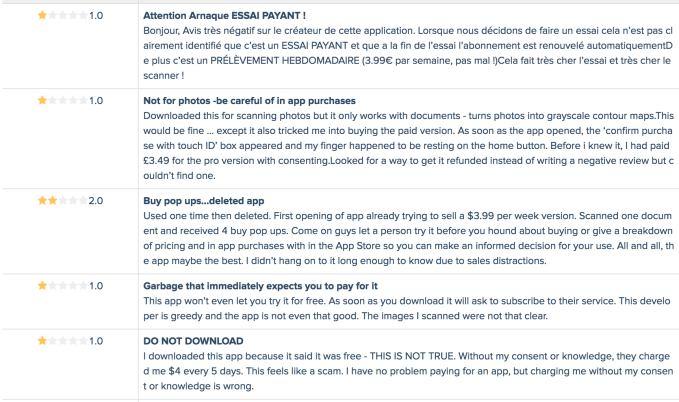
After reading through the critical reviews across the top money-making utilities, you’ll find customers complaining that the apps are too aggressive in pushing subscriptions (e.g. via constant prompts), offer little functionality without upgrading, provide no transparency around how free trials work and make it difficult to stop subscription payments, among other things.

Here are a few examples. This is by no means a comprehensive list, but rather a representative one, just to illustrate the problem. A recent Forbes article listed many more, if you’re curious.

Scanner AppThis No. 69 Top Grossing app is raking in a whopping $14.3 million per year for its document scanning utility, according to Sensor Tower data. It has an unbelievable number of customer reviews, as well — nearly 340,000 as of today, and a rating of 4.7 stars out of 5. That will lead most customers to believe this is a good and trustworthy app. But when you parse through the critical reviews, you’ll see some valid complaints.
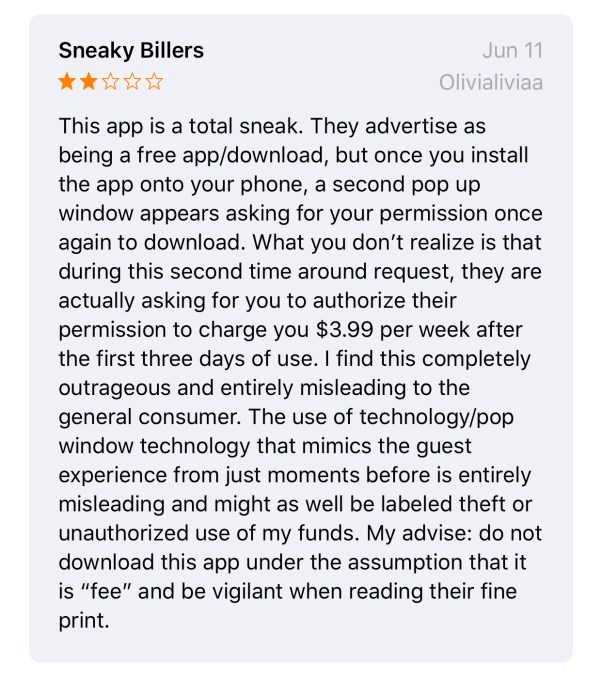
Tap around in the app and you’ll be constantly prompted to subscribe to a subscription ranging from $3.99 a week to $4.99 per month, or start a free trial. But the subscription following the free trial kicks in after only 3 days — something that’s detailed in the fine print, but often missed. Consumers clearly don’t understand what they’re agreeing to, based on their complaints. And many of the negative reviews indicate customers feel they got duped into paying.
QR Code Reader — Forbes recently found that TinyLab’s QR Code Reader was tricking users into a ridiculously priced $156 per year subscription. This has now earned the app the rank of No. 220 Top Grossing across the App Store, and annual revenue of $5.3 million.

QR Code Scanner, via Forbes 

Again, this “free” app immediately starts pushing you to upgrade by starting a “free trial.” And again, this trial converts to a subscription after only 3 days. Can you imagine paying $156 per year for QR code scanning — something the iPhone camera app now does natively?

Weather Alarms – With a 4-star rating after hundreds of reviews, this weather alerting app seems to be handy. But in reality, it’s been using a “dark pattern” to trick users into pushing a button that will start a free trial or sign them up for subscription. And it’s working — to the tune of over a million in annual revenue.

A full screen ad appears in the app, offering two buttons — try for free or pay. The small “X” to close the ad doesn’t even immediately appear! Users then end up paying some $20/month for weather alerts. That seems… excessive.

Legitimate developers have complained about this app for months, but Apple even featured it on its big screen at WWDC. (Watch the video embedded below. It’s incredible.)

This dark pattern is the best (stolen from full screen ads). The (x) close button animates in after a few seconds so that people don’t see they have a way to get off the page. Watch the upper left of the subscription page: pic.twitter.com/DaRJPvdu5Q

— David Barnard (@drbarnard) April 17, 2018

*After speaking to Apple about this app, Weather Alarms was removed from the App Store over the weekend. 

Translate Assistant – The same developer behind Weather Alarms offers this real-time translation app promising instant translations across more than 100 languages and has 4.7 stars after nearly 4,000 ratings.

But the app is also super aggressive about pushing its subscriptions. With every app launch, a splash screen appears with three different boxes — 1 month ($12.99/mo), 12 months ($44.99/year) or the “free trial,” which converts users to a pricey $7.99/week plan after only 3 days.

Meanwhile, the option to “continue with a limited version” is in small, gray text that’s intentionally been designed to be hard to see.

The app is making $1.3 million a year, per Sensor Tower data.

As you can tell, the issue with many of these scammy apps is that they capitalize on people not reading the fine print, or they allow an app’s design to guide them to the right button to tap. Trickery like this isn’t anything new — it’s been around on the web as long as software has been sold. It’s just that, now, subscriptions are the hip way to scam.

These developers also know that most people — especially if they’ve just downloaded a new app — aren’t going to immediately subscribe. So they push people to their “free trial” instead. But that “free trial” is actually just an agreement to buy a subscription unless you visit the iTunes Settings and cancel it right away.

Many of these “free trials” convert almost immediately, too, which is another way developers are cashing in. They don’t give you time to think about it before they start charging.

“It’s incredibly frustrating how little has been done to thwart these scams,” says Contrast founder and longtime developer David Barnard, whose apps include Weather Atlas and Launch Center Pro. “It erodes trust in the App Store, which ultimately hurts Apple and conscientious developers who use subscriptions,” he says.

Apple also buries Subscription management 

The issue of scam apps may not always be the failure of App Store review. It’s possible that the scammy apps sneak in their tricks after Apple’s App Review team approves them, making them harder to catch.

But for the time being, users have to take it upon themselves to cancel these sneaky subscriptions.

Unfortunately, Apple isn’t making it as easy for users to get to their subscriptions as it could be.

Compare Apple’s design with Google Play, where the option to manage Subscriptions is in the top-level navigation:
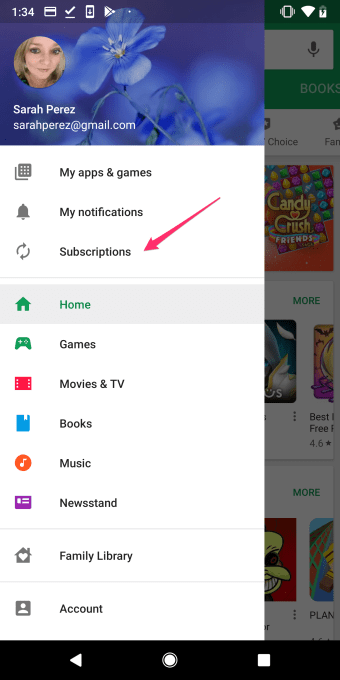
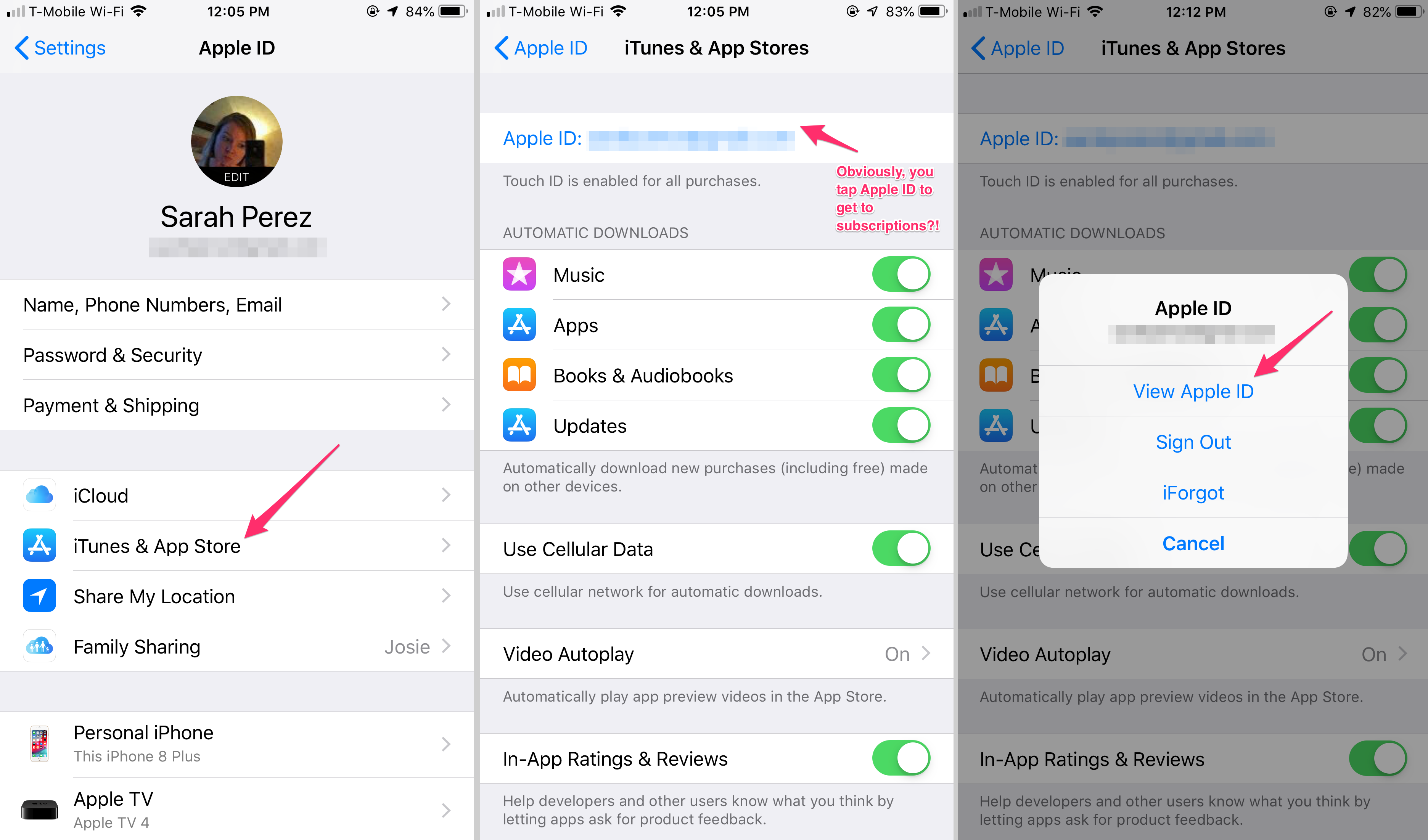
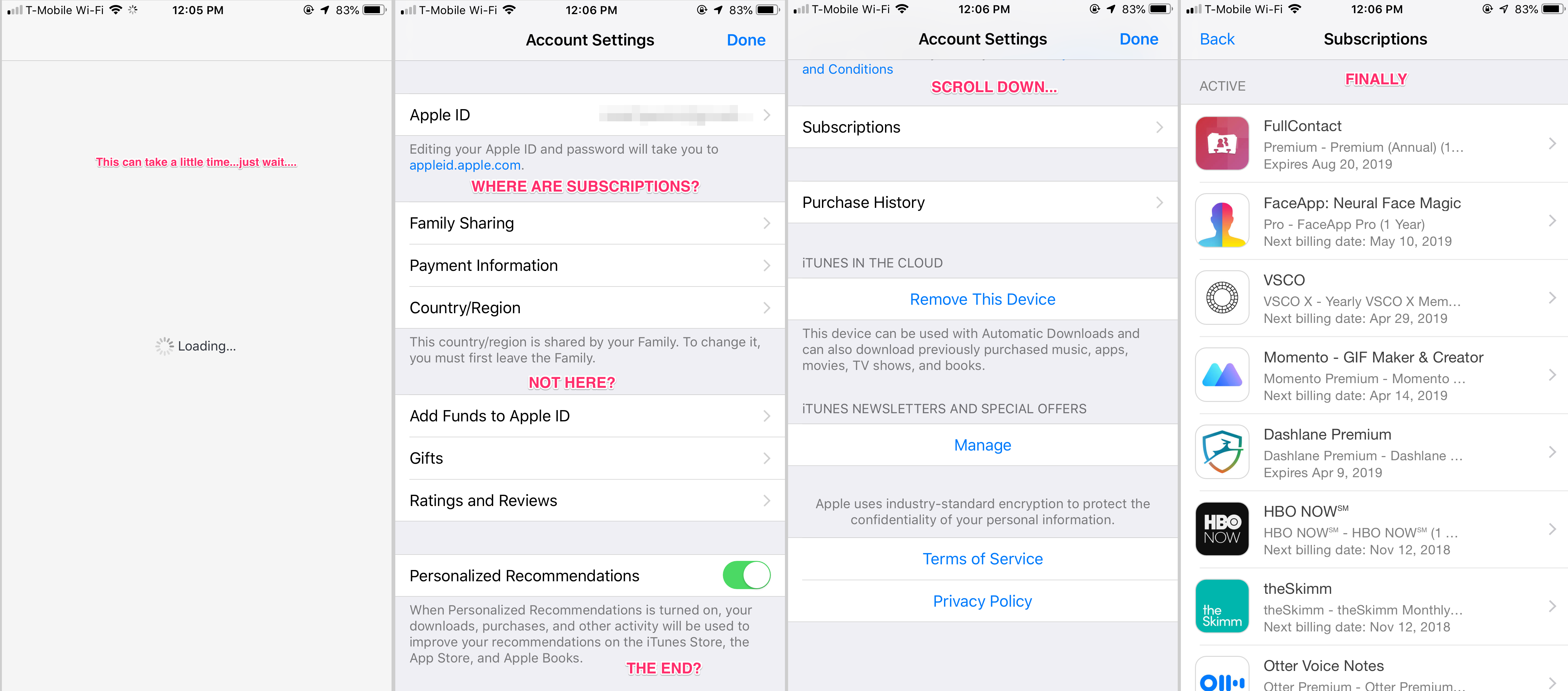
On the iPhone, it takes several more taps and a bit of scrolling to get to the same area in iOS Settings:
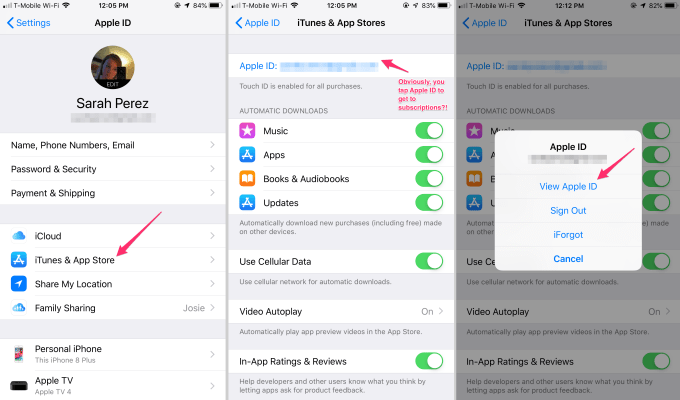
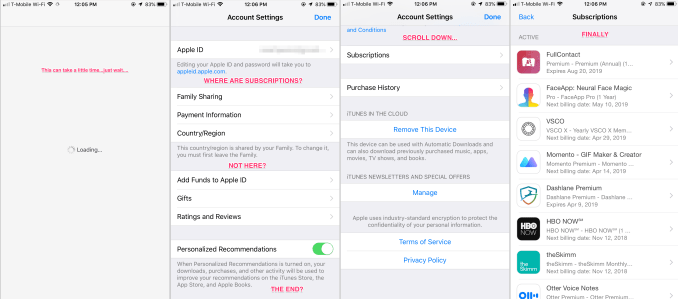
 

Above: Getting to subscriptions in the iPhone Settings (click images to view larger)

In the App Store itself, you can navigate to subscriptions in fewer taps, but it’s not obvious how. You first tap on your profile icon on the top right of the Home page, then your Apple ID, then scroll down to the bottom of the page. It’s still buried further than need be, considering how critical it is to manage these auto-payments.

“I firmly believe this is not the future we should be aspiring for in terms of user experience,” says Denys Zhadanov, VP at Readdle, makers of Scanner Pro, Spark, PDF Expert and other productivity apps, speaking about these scam apps. “Apple as a platform, as an ecosystem, has always been a symbol of trust. That means people can rely on it for personal life and work needs,” he continues.

“The App Store has always been a great place, overseen and curated by highly intelligent and ethical people. I believe the App Store can stay as it always has been, if the right measures are taken to deal with those developers who trick the system,” Zhadanov adds.

Today, most subscription-based businesses thriving on the App Store come from legitimate developers. But they know how scammers could easily ruin the market for everyone involved. If allowed to continue, these scams could lead to consumer distrust in subscriptions in general.

In a worst-case scenario, consumers may even go so far as to avoid downloading apps where subscriptions are offered as in-app purchases in order to protect themselves from scams.

For now, Apple is largely relying on user and developer reports via reportaproblem.apple.com — a site most probably don’t know exists — to help them fight scammers. It needs to do more.

In addition to making access to your subscriptions easier, it also needs to better police “Top Grossing” utilities and productivity apps — especially if the service’s value is questionable, and the 1-star reviews are specifically calling out concerns like “sneaky billing” or mentions other subscription tricks.

Apple declined to comment on the matter, but its Developer Guidelines clearly prohibit fraudulent behavior related to subscriptions, and insist that apps are clear about pricing. In other words, Apple has grounds to clear out these scammy subscription apps, if it chose to focus on this problem more closely in the future.


 

Y Combinator survey confirms what we already know — female founders are too often victims of sexual harassment

Y Combinator has released the results of a survey, completed in partnership with its portfolio company Callisto, highlighting the pervasive role of sexual harassment in venture capital and technology startups.

Callisto, a sexual misconduct reporting software built for victims, is a graduate of YC’s winter 2018 class. The company sent a survey to 125 of YC’s 384 female founders, asking if they had been “assaulted or coerced by an angel or VC investor in their startup career.”

Eighty-eight female founders completed the survey; 19 in total claimed to have experienced some form of harassment.

More specifically, 18 said that inappropriate experience consisted of “unwanted sexual overtures;” 15 said it was “sexual coercion;” four said it was “unwanted sexual contact.”

As part of the release of the survey findings, YC announced they’ve established a formal process for their founders to report harassment and assault within Bookface, the startup accelerator’s private digital portal for its founders.

“You can report at any time, even years after the incident took place,” YC wrote in the blog post. “The report will remain confidential. We encourage other investors to set up similar reporting systems.”

First Round Capital is another investor to recently poll its founders on issues of sexual misconduct. Similarly, the early-stage investor found that half of the 869 founders polled were harassed or knew a victim of workplace harassment.

As for Callisto, the 7-year-old non-profit said it will launch Callisto for founders, a new tool that will support victims. Using Callisto, founders can record the identities of perpetrators in the tech and VC industry. The company will collect the information and refer victims to a lawyer who will provide free advice and the option to share their information with other victims of the same perpetrator. From there, victims can decide if they want to go public together with their accusations.

Tech’s widespread sexual harassment problem is not new, but more women and victims of harassment have come forward in recent years as the #MeToo movement encourages them to name their harassers. Justin Caldbeck, formerly of Binary Capital, and former SoFi chief executive officer Mike Cagney are among the Silicon Valley elite to be ousted amid allegations of sexual misconduct in the #MeToo era.

A former Google+ UI designer suggests inept management played a role in the network’s demise (beyond Facebook’s impact)

A lot of people leave their jobs because of bosses they can’t stand. Yet it’s seldom the case that a former employee publicly badmouths management after the fact. The obvious risk in doing so: future employers might not want to gamble on this person badmouthing them at a later date.

That isn’t stopping Morgan Knutson, a UI designer who seven years ago, spent eight months at Google working on its recently shuttered social networking product Google+ and who, in light of the shutdown, decided to share on Twitter his personal experience with how “awful the project and exec team was.”

This will be a super slow burn that goes back many years. I’ll continue to add to over the next couple of days. I’ll preface it with a bunch of backstory and explain what I had left behind, which made me more unhappy about the culture I had come into.

— Morgan (@morganknutson) October 11, 2018

It’s a fairly long read, but among his most notable complaints is that former Google SVP Vic Gundotra, who oversaw Google+, ruled by fear and never bothered to talk with Knutson, whose desk was “directly next to Vic’s glass-walled office. He would walk by my desk dozens of times during the day. He could see my screen from his desk. During the 8 months I was there, culminating in me leading the redesign of his product, Vic didn’t say a word to me. No hello. No goodbye, or thanks for staying late. No handshake. No eye contact.”

Vic was powerful at Google. He had buy-in from the top and he wielded that stick aggressively. He made Plus as pervasive as he could. Each product org had a mandate to integrate its social features.

— Morgan (@morganknutson) October 12, 2018

He also says Gundotra essentially bribed other teams within Google to incorporate Google+’s features into their products by promising them handsome financial rewards for doing so atop their yearly bonuses. “You read that correctly, “tweeted Knutson. “A f*ck ton of money to ruin the product you were building with bloated garbage that no one wanted.”

Gundotra is today the cofounder and CEO of AliveCor, maker of a device that captures a “medical grade” E.K.G. within 30 seconds; AliveCor has gone on to raise $30 million from investors, including the Mayo Clinic.

Asked about Knutson’s characterization of him, Gundotra suggested the rant was “absurd” but otherwise declined to comment.

Knutson disparages even more strongly a former manager that he calls “Greg” and he portrays a fellow designer, Jim, as paranoid and vindictive. Indeed, in describing how his unit was organized, Knutson paints a picture of a political, haphazard, wasteful and ultimately disappointing division where it was never quite clear who should be working on what or why. In fact, though he says he thought he was “joining the big leagues” when recruited by Google, Knutson wound up taking a job with Dropbox shortly afterward in order to escape from the corporate leviathan.

It also sounds from his own telling like Knutson might have been canned eventually.

No matter what you think of the tweets, it’s an interesting narrative and it’s instructive as one insider’s view onto what — other than Facebook’s stranglehold on users — may have ultimately doomed Google+, which was shut down last week due to lack of user and developer adoption (even while a business version of the network lives on for the foreseeable future).

The biggest takeaway: like many other gigantic companies, Google has its fair share of flaws.

You can check out the full tweetstorm here.

Thread Reader has also published them in a more palatable format here.

Chinese electric automakers Nio exceeds Q3 delivery target for its ES8 SUV

Nio, the Chinese electric automaker aiming to compete with Tesla, reported that it delivered 3,268 of its new ES8 vehicles in the third quarter, beating its own target by 9 percent.

The company planned to deliver between 2,900 and 3,000 ES8s in the third quarter, according to Nio CFO Louis T. Hsieh.

Nio began deliveries of the ES8, a seven-seater high-performance electric SUV, in China on June 28. The company reported that its year-to-date ES8 deliveries, as of September 30, 2018, totaled 3,368 vehicles. The first 100 vehicles were delivered in the last days of the second quarter.

“Growing our monthly deliveries from 381 in July to 1,766 in September demonstrates our steady production ramp, strong demand from users and the initial acceptance of NIO as a premium brand,” William Li, founder, Chairman and CEO of Nio, said in a statement.

The company, which shut down its ES8 production line for 10 days for routine maintenance and to install equipment for its second production line, warned that deliveries in October will be lower.

However, the company said it remains on track to hit its delivery target of 10,000 ES8 vehicles for the second half of 2018.

The company is planning to release the ES6, a five-seater premium SUV,  in June/July 2019.

Nio, which raised $1 billion when it debuted on the New York Stock Exchange in September, has operations in the U.S., U.K. and Germany, although it only sells its ES8 vehicle in China. The seven-seater ES8 SUV is priced at 448,000 RMB, or around $65,000.

Baillie Gifford  & Co., the second-biggest shareholder of Tesla stock, owns an 11.44 percent stake in Nio, according to a regulatory filing posted October 9.

Pokémon GO maker Niantic is coming to TechCrunch Sessions AR/VR

Niantic is one of the few companies in the augmented reality world making some actual goddamn revenue.

As such, it didn’t feel right not to have the company that built Pokémon GO represented at our one-day Sessions AR/VR event this Thursday in LA. I’ll be sitting down with the company’s AR research lead Ross Finman at the event to talk about why augmented reality is so important to Niantic’s future and why AR tech can actually make tomorrow’s games and apps more engaging.

The game maker struck gold with Pokémon GO, but as it looks for lightning to strike twice with its upcoming Harry Potter title that’s being released later this year, the company has become a lot more vocal about the potential of AR tech to make users feel like the game world and the physical world are aligned.

Finman joined Niantic after the startup he co-founded, Escher Reality, was acquired by the company earlier this year. Prior to founding Escher, Finman spent 7 years at MIT researching 3D perception and mapping. There isn’t much in the augmented reality space he hasn’t directly interacted with.

We’ll chat with Finman about the challenges of scaling to a global user base some of these more experimental technologies, and what learnings Niantic has garnered from all of the success of Pokémon GO.

Final tickets are now on sale — book yours here and you’ll save 35 percent on general admission tickets. Student tickets are $45.


Winamp returns in 2019 to whip the llama’s ass harder than ever

The charmingly outdated media player Winamp is being reinvented as a platform-agnostic mobile audio app that brings together all your music, podcasts and streaming services to a single location. It’s an ambitious relaunch, but the company behind it says it’s still all about the millions-strong global Winamp community — and as proof, the original desktop app is getting an official update as well.

For those who don’t remember: Winamp was the MP3 player of choice around the turn of the century, but went through a rocky period during Aol ownership (our former parent company) and failed to counter the likes of iTunes and the onslaught of streaming services, and more or less crumbled over the years. The original app, last updated in 2013, still works, but to say it’s long in the tooth would be something of an understatement (the community has worked hard to keep it updated, however). So it’s with pleasure that I can confirm rumors that substantial updates are on the way.

“There will be a completely new version next year, with the legacy of Winamp but a more complete listening experience,” said Alexandre Saboundjian, CEO of Radionomy, the company that bought Winamp (or what remained of it) in 2014. “You can listen to the MP3s you may have at home, but also to the cloud, to podcasts, to streaming radio stations, to a playlist you perhaps have built.”

“People want one single experience,” he concluded. “I think Winamp is the perfect player to bring that to everybody. And we want people to have it on every device.”

Laugh if you want but I laugh back

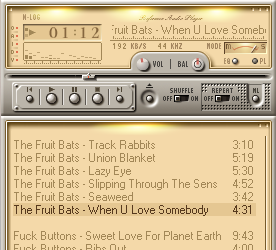
Now, I’m a Winamp user myself. And while I’ve been saddened by the drama through which the iconic MP3 player and the team that created it have gone (at the hands of TechCrunch’s former parent company, Aol), I can’t say I’ve been affected by it in any real way. Winamp 2 and 5 have taken me all the way from Windows 98 SE to 10 with nary a hiccup, and the player is docked just to the right of this browser window as I type this. (I use the nucleo_nlog skin.)

And although I bear the burden of my colleagues’ derisive comments for my choice of player, I’m far from alone. Winamp has as many as a hundred million monthly users, most of whom are outside the U.S. This real, engaged user base could be a powerful foot in the door for a new platform — mobile-first, but with plenty of love for the desktop too.

“Winamp users really are everywhere. It’s a huge number,” said Saboundjian. “We have a really strong and important community. But everybody ‘knows’ that Winamp is dead, that we don’t work on it any more. This is not the case.”

This may not come as a shock to Winamp users still plugged into the scene: Following years of rumors, an update to the desktop player leaked last month, bringing it from version 5.666 to 5.8. It was a pleasant surprise to users who had encountered compatibility problems with Windows 10 but had taken the “more coming soon” notice on the website with a massive grain of salt.

This kind of thing happens a lot, after all: an old property or app gets bought, promises are made and after a few years it just sort of fades away. So a free update — in fact, 5.8 eliminates all paid options originally offered in the Pro version — bringing a bucketful of fixes is like Christmas coming early. Or late. At any rate it’s appreciated.

The official non-leaked 5.8 release should come out this week (the 18th, to be precise), and won’t be substantially different from the one we’ve been using for years or the one that leaked. Just bug and compatibility fixes that should keep this relic trucking along for a few years longer.

The update to the desktop app is basically a good faith advance payment to the community: Radionomy showing they aren’t just running away with the property and slapping the brand on some random venture. But the real news is Winamp 6, which Saboundjian says should come out in 2019.

“What I see today is you have to jump from one player to another player or aggregator if you want to listen to a radio station, to a podcast player if you want to listen to a podcast — this, to me, is not the final experience,” he explained. It’s all audio, and it’s all searchable in one fashion or another. So why isn’t it all in one place?

The planned version of Winamp for iOS and Android will be that place, Saboundjian claims. On desktop, “the war is over,” he said, and between the likes of iTunes and web apps, there’s not much room to squeeze in. But mobile audio is fractured and inconvenient.

While Saboundjian declined to get into the specifics of which services would be part of the new Winamp or how the app would plug into, say, your Spotify playlists, your Google Music library, your Podcasts app, Audible and so on, he seemed confident that it would meet the needs he outlined. There are many conversations underway, he said, but licensing and agreements aren’t the main difficulty, and of course release is still quite a ways out. The team has focused on creating a consistent app across every platform you might want encounter mobile audio. A highly improved search will also play a role — as it ought to, when your media is all lumped into one place.

No word on whether it will retain its trademark intro upon installation — “WINAMP. It really whips the llama’s ass.” I certainly hope so.

This lack of specifics is a bit frustrating, of course, but I’m not worried about vaporware. I’m worried that other services will insist on the fragmented experience they’ve created that serves their interests better than ours. But if Radionomy can navigate these tricky waters and deliver a product even a little like what they’ve described, I’ll be thrilled (and my guess is tens of millions more will be, as well). And if not, well, we’ll always have the original.

Worries linger as Facebook withholds stolen searches & checkins

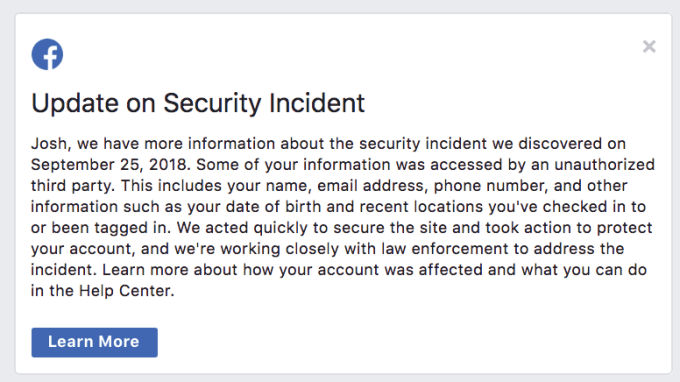
Hacked Facebook users still don’t know which 15 recent searches and 10 latest checkins were exposed in the company’s massive breach it detailed last week. The company merely noted that those were amongst the data sets stolen by the attackers. That creates uncertainty about how sensitive or embarrassing the scraped data is, and whether it could possibly be used to blackmail and stalk them.

Much of the scraped data from the 14 million most-impacted users out of 30 million total people hit by the breach was biographical and therefore relatively static, such as their birth date, religion or hometown. While still problematic because it could be used for unconsented ad targeting, scams, hacking attempts or social engineering attacks, at least users likely know what was illicitly grabbed.

Thankfully, some of the most sensitive data fields, such as sexual orientation, were not accessed, Facebook confirms to me. But the exposure of recent searches and checkins could threaten users in different ways.

Given the attack was so broad and impacted a wide variety of users, unlike say a targeted attack on the Democratic National Convention, there’s no evidence that blackmailing or stalking individual users was the purpose of the hack. For the average user hit by the breach, the likelihood of this kind of follow-up attack may be low.

But given that public figures, including Facebook CEO Mark Zuckerberg and COO Sheryl Sandberg, were victims of the attack, as well as many reporters (myself included), there remains a risk that the perpetrators paw through the data seeking high-profile people to exploit.

Stolen data on “the 15 most recent searches you’ve entered into the Facebook search bar” could contain embarrassing or controversial topics, competitive business research or potential infidelity. Many users might be mortified if their searches for racy content, niche political viewpoints or their ex-lovers were published in association with their real name. Hackers could potentially target victims with blackmail scams threatening to reveal this info to the world, especially since the hack included user contact info, including phone numbers and email addresses.

Scraped checkins could power real-world stalking or attacks. Users’ exact GPS coordinates were not accessible to the hackers, but they did grab 14 million people’s “10 most recent locations you’ve checked in to or been tagged in. These locations are determined by the places named in the posts, such as a landmark or restaurant, not location data from a device,” Facebook writes. If users checked in to nearby coffee shops, their place of work or even their home if they’ve given it a cheeky name as some urban millennials do, their history of visiting those locations is now in dangerous hands.

If users at least knew what searches or checkins of theirs were stolen, they could choose if or how they should modify their behavior or better protect themselves. That’s why amongst Facebook’s warnings to users about whether they were hacked and what types of data were accessed, it should also consider giving those users the option to see the specific searches or checkins that were snatched.

When asked by TechCrunch, a Facebook spokesperson declined to comment on its plans here. It is understandable that the company might be concerned that disclosing the particular searches and checkins could unnecessarily increase fear and doubt. But if it’s just trying to limit the backlash, it forfeited that right when it prioritized growth and speed over security.

As Facebook tries to recover from the breach and regain the trust of its audience of 2.2 billion, it should err on the side of transparency. If hackers know this information, shouldn’t the hacked users too?

No, Apple didn’t acquire music analytics startup Asaii, it hired the founders to work on Apple Music

On the heels of news of not one but two acquisitions from Apple last week, a report surfaced yesterday that Apple had picked up yet another company, the music analytics startup Asaii, for under $100 million; the report led to a “confirmation” from a shareholder in a separate report. But as it turns out, neither appear to be correct.

But we asked and Apple has declined to confirm the deal, and it gave no green light to use its usual statement — the one it often issues when smaller startups are acquired. (You can see a sample of it in this story about Apple buying computer vision startup Spektral last week, which we did get Apple to confirm.) That is, the company has not acquired the assets of the startup.

What it has done is hire a few employees of the company — specifically the three founders, Sony TheakanathAustin Chen and Chris Zhang — who are all now working at Apple at Apple Music. (Apple has done this before: for example, it hired a team from the mapping app PinDrop in the UK; at the time it was also misreported as an acquisition.)

It’s not clear if the three will be working on similar technology, or other kinds of tools to affect how music is discovered on Apple Music. Apple has already launched a beta of its own analytics service called Apple Music for Artists.

Asaii announced in September that it would shut down its service October 14 (yesterday). It also provided music analytics, but it focused on a wider picture across multiple platforms (not just a single silo like Apple Music or Spotify).

Spotify — the music streaming business that is currently Apple’s biggest rival — has added a number of features over the years (some built in-house, some by way of acquisition) to improve the services that it offers to artists to have more transparency on how well their music, and their “brands,” are performing on Spotify. For Spotify, it’s part of a suite of services to help them leverage Spotify as a distribution platform to improve their overall business as artists.

Some believe that Spotify will continue to ramp up these services over time to take on more of the functions of a traditional label in a bid to improve its margins, and also provide more utility to artists. It’s making those moves at a time when many musicians and songwriters have grown disillusioned with the music industry and how they can (or can’t, as the case may be) make money in it.

So it stands to reason that Apple, too, might be considering how it can build similar features into Apple Music — although the company has not confirmed that it will, nor will it be using Asaii’s existing tools to do so.

To be clear, Apple already has some features in place to help promote and understand how music performs on its platform. The beta of Apple Music for Artists, which launched in June of this year, currently provides details on plays, radio spins, song purchases and album purchases.

It also lets you look into trends around your music, control how your artist profile looks, and get insights into how and where your music gets discovered. Separately, it also provides various widgets you can use to promote your Apple Music tracks elsewhere, as well a guidelines on best practices.

But there is still a lot of ground to cover for Apple when it comes to music, both in terms of what it can provide artists as tools to improve their experience on there; and also in terms of how consumers discover and use music on the service. Both of these are potential areas that you might see getting developed over time.

Theakanath and Chen had both worked at Apple previously. PitchBook lists SkyDeck, an accelerator based at UC Berkeley, as its only investor. Meanwhile, Crunchbase lists The House Fund as its only investor, with no details on the amount raised.

SF judge denies Lime’s request to block electric scooter deployment

A judge today denied Lime’s request for a temporary restraining order that would block Skip and Scoot from deploying their electric scooters in San Francisco on Monday. This means San Franciscans will be able to use electric scooter services again first thing next week.

Following the SFMTA’s decision to grant Skip and Scoot electric scooter permits, Lime sent an appeal requesting the agency reevaluate its application. At the time, the SFMTA said it was “confident” it picked the right companies. Just yesterday, Lime said it believed “that it has no choice but to seek emergency relief in the court” and take legal action.

“We’re pleased the court denied Lime’s request for a temporary restraining order,” John Cote, communications director for City Attorney Dennis Herrera said in a statement to TechCrunch. “The bottom line is the judge said he would not stop the permits from being issued on Monday. The SFMTA’s permit program has been both fair and transparent. Lime just didn’t like the outcome. The reality is that Lime’s application fell notably short of its competitors. That’s why it didn’t get a permit. San Franciscans deserve scooter services that are safe, equitable and accountable, which is exactly what this pilot program was designed to do.”

While Lime didn’t quite get what it wanted, Lime says it still sees this as a victory. In a statement to TechCrunch, Lime Head of Communications Jack S. Song said:

The Honorable Harold E. Kahn voiced serious concerns about the San Francisco Municipal Transit Agency’s (SFMTA) permit process and ordered expedited discovery into the SFMTA’s selection process.  In a rare move, the Judge ordered five key SFMTA officials and staff — including Director of Transportation Ed Reiskin himself — to testify next week. There will be another public hearing on this issue before Judge Kahn in mid-November, where the SFMTA will be required to answer to the people of San Francisco, and explain exactly what happened in the SFMTA’s biased selection process.  

We look forward to having our preliminary injunction request heard in the coming days — to ensure that the people of San Francisco receive a transparent, fair and equitable process that best serves the entire City and County.

Our decision to file this lawsuit was not about preventing other operators from going forward; it was about exposing the biased and flawed process of the SFMTA, standing up for the rule of law, and serving Lime’s hometown.

Venmo bumps up instant transfer fee to 1 percent of the total amount

If you’re a frequent Venmo user, you might want to double-check your settings because the company just changed up their fee structure for instant transfers and it may result in more of your balance slipping away.

The fee for instant transfers where a user would move their Venmo balance to their bank account via debit card used to be just $0.25, but the company shared in an email to users late Friday that the fee is increasing to 1 percent of the transferred amount with the company taking at least a $0.25 fee.

So, basically, if you’re transferring any more than $25 in the future via this method, you’re going to end up paying Venmo more thanks to this new fee structure.

A PayPal spokesperson tells TechCrunch, in part, that “The change reflects the value that Venmo’s services offer – providing speed and convenience for customers that want to transfer their funds to their bank accounts in 30 minutes or less.”

For people using Venmo as a way to process big payments quickly or get some much needed cash into their account, this is a bummer that can result in more getting scraped away by fees. Additionally, if you were trying to avoid connecting your bank account details specifically, you now have another reason pushing you to do so.

Instant transfers works for users trying to quickly move their balance to their bank account in less than a half hour via a debit card. Importantly, if you’re just using the standard bank transfer there still aren’t any fees you have to worry about, it’s still free… for now.

Stephen Hawking’s final paper about black holes is now online

Stephen Hawking<a href=”https://techcrunch.com/2018/03/13/stephen-hawking-has-died-at-76/”> passed away earlier this year at the age of 76, but his incredible intellect isn’t yet done contributing to the scientific community. The acclaimed physicist’s final paper is now online for anyone to read and it revisits some mysteries of the physical world that came to define his illustrious career.

Titled “Black Hole Entropy and Soft Hair,” the paper was co-authored by Hawking collaborators Sasha Haco, Malcolm Perry and Andrew Strominger. The paper is available free on pre-publication repository ArXiv and includes a touching tribute to Hawking.

“We are deeply saddened to lose our much-loved friend and collaborator Stephen Hawking whose contributions to black hole physics remained vitally stimulating to the very end,” it reads.

The paper serves as a kind of bookend to Hawking’s career, collecting some of his final work on the quantum structure of black holes — a topic that Hawking pursued throughout the last 40 years.

It’s fitting that Hawking’s last paper would be a technical dive into one of the greatest unresolved questions in physics — and one he posed to begin with: Can matter that falls into a black hole truly disappear, even though according to the laws of physics that should be impossible? The paradox is troubling because it pits the laws of quantum mechanics against those of general relativity.

In the paper, Hawking and his colleagues proposed that something called “soft hair” could resolve that tension. The “hair” refers to photons at the event horizon, the edge of a black hole. In the soft hair version of events, the so-called hair on the black hole’s border would actually store information about the matter that had fallen into the black hole. That would mean the information attached to that matter wasn’t deleted from the universe at all, rather that it only appeared to vanish beyond an apparent horizon.

“It’s a step on the way, but it is definitely not the entire answer,” co-author Malcolm Perry told the Guardian. “We have slightly fewer puzzles than we had before, but there are definitely some perplexing issues left.”