Knotch launches Blueprint to help marketers find the best publishers of sponsored content

When I last wrote about Knotch, the company had just patented its color-based feedback system that helps advertisers measure the effectiveness of their sponsored content.

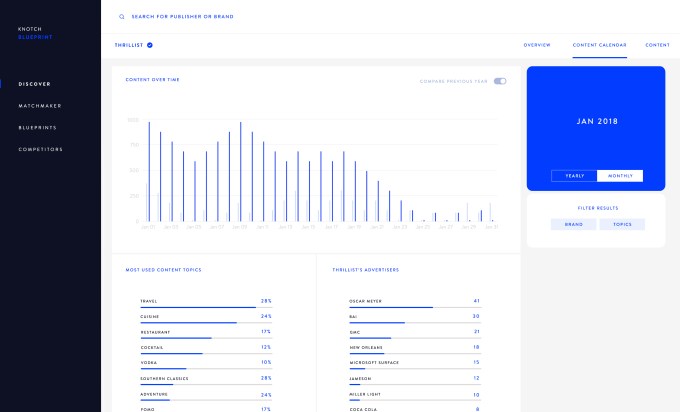
Since then, it’s added a competitive intelligence product and now Blueprint, a tool for marketers who want to find the best topics, formats and partners to reach their desired audience.

Lara Vandenberg, Knotch’s senior vice president of marketing and communications, told me that agencies had been asking the company to recommend which publishers to work with, so Blueprint is meant to meet that need. She described it as both “this ultimate content planning product” and as “a predictive matchmaker for brands as content becomes so much more of a focus.”

To accomplish this, she said Knotch is scouring the web for sponsored content, then automatically identifying elements like content, themes and trends.

Knotch Blueprint

Marketers can then access this data by browsing through different themes and publishers. They also can search based on the audience and metrics that they’re looking for, and Blueprint will recommend publishers that seem like a good fit. Blueprint offers detailed information about publishers, like how often they’re publishing sponsored content, who their advertisers are and what kind of response they’re getting.

In some cases, marketers can even click a button to send a message directly to the publisher’s sales team.

The initial brands using Blueprint include JP Morgan Chase and Ford. Vandenberg said the product will only be monetized on the brand side, but publishers can also claim their profiles, turning them into “verified” accounts where Knotch measures their sponsored content directly.

“The idea is for Knotch to be with a brand at every phase of the content cycle, except for the creating,” Vandenberg said. That means the company wants to be involved in “the measurement, the optimization, the distribution, the planning.”

Amazon says it will add 1,000 more employees in the UK, bringing the total to 28,500, bucking the Brexit chill

A lot of uncertainty hangs over the U.K. as it continues its slow march out of the European Union, but today one of the world’s biggest companies announced plans to expand its presence in the country. Amazon today said it would add another 1,000 workers in the U.K., including establishing its first corporate and R&D office in Manchester.

Amazon said it also plans to add more people to its R&D bases in Edinburgh and Cambridge — respectively known for developing search technology as well as the AI technology that powers Alexa, among other things. The company says it currently has 27,500 “roles” in the U.K.

The government is positioning Amazon’s news as a win at a time when many have been criticising how it has been handling Brexit negotiations. “Ensuring that the world’s best and brightest companies continue to invest and innovate in the UK is at the heart of our Global Britain agenda,” said Secretary of State for International Trade, Liam Fox, in a statement. “Amazon’s decision to create hundreds of highly-skilled jobs in Manchester, Edinburgh and Cambridge is an enormous vote of confidence in the UK and a signal to the world that the UK is very much open for business.”

The news was announced today as the company presented an “Innovation Day” to journalists, showcasing some of the different areas that are the focus of its R&D hubs in Austria, France, Germany, Ireland, Italy, Luxembourg, Netherlands, Poland, Romania, Spain and the U.K. I was at the event, and while I wouldn’t say the day was strong on news announcements around that work, it’s instructive to consider what Amazon chose to show (and perhaps not show, too).

For example, in one demo the company showed off today, a new computer vision-based system Amazon is building in Berlin will allow robots to identify what produce is ripe or rotten so that automatic pickers can select more robust fruit and vegetables to pack off to consumers, and identify what needs to be discarded. This underscores the company’s ambitions in the business of fresh food sales and delivery. Earlier this summer there were reports that Amazon was interested in bidding for a number of large retail locations that were due to be shut down by Homebase, a DIY chain, so that it could set up more delivery (or perhaps even retail) spots across key U.K. cities. However, so far nothing has materialised.

A walk through some of the company’s transportation work, meanwhile, focused more incremental developments rather than fundamental shifts for the company. The focus in the presentation was not on drones (which Amazon has also been building in Europe), nor on autonomous cars (which Amazon is also working on) but on its real-time street navigation services, and other tools to help delivery people make more accurate parcel drops.

While Amazon is continuing to add employees in the U.K., it has also had its share of employment controversies. Warehouse workers regularly strike during the company’s busiest sales periods to protest working conditions. And earlier this month, Reuters reported that the company had built an AI prototype to assist with finding and screening suitable candidates to help make its hiring spree more efficient. But the project had to be scrapped after it was found to be biased against women (highlighting some of the problems with “training” in machine learning). 

The company is also among the tech giants that might finally be held to task over taxes, although the issue has become very long in the tooth over the years, such that it has not been resolved. In the latest development, the EU commissioner who oversees taxes said that he was working on a deal that could be finalised before the end of this year, which could bring in about €5 billion in tax revenues from companies like Amazon, Google and Facebook, based on their “digital” presence rather than physical presence — the loophole that has kept American internet companies from paying large taxes on their profits up to now. However, if a deal isn’t reached soon, it could be pushed back by a year, since Brexit is expected to sidetrack everything in 2019.


Disruptive technology and organized religion

Avi Reichental
Contributor

Avi Reichental is founder and CEO of XponentialWorks. He is a leading authority on 3D printing and exponential tech convergence.

More or less since Nietzsche declared God “dead” nearly 140 years ago, popular wisdom has held that science and religion are irreparably misaligned. However, at a recent conference hosted by the Vatican, I learned that even in the era of artificial intelligence and gene splicing, religious institutions and leaders still have much to contribute to society as both moral compass and source of meaning.

In April this year, the Vatican launched Unite to Cure: A Global Health Care Initiative at the Fourth International Vatican Conference. This international event gathered some of the world’s leading scientists, physicians and ethicists — along with leaders of faith, government officials, businesspeople and philanthropists. The goal was to engage about the cultural, religious and societal implications of breakthrough technologies that improve human health, prevent disease and protect the environment. I had the privilege of participating as a board member of the XPRIZE Foundation.

We are living at a phenomenal point in human history. It’s a moment when our machines are flirting with godlike powers. AI and ever-accelerating innovations in medical technology are enabling humans to live longer than ever. Yet with increased machine capabilities and human longevity come heavy questions of morality and spirituality.

When bodies live longer, so do the souls inside of them. What are the spiritual implications for people who are given an additional 30 or even 50 years of life? Is enhanced longevity meddling with creation, or a complement to it?

As technology disrupts the way we relate to the few remaining physical and spiritual mysteries of humanity, it also disrupts the way we embrace religion.

It is here, at this nexus of technology and spirituality, that the Vatican wisely decided to bring together thinkers from both science and faith.

It was humbling to sit inside the tiny and unconventional country that we call Vatican City, surrounded by the world’s leading scientists, ethicists, venture capitalists and faith leaders. We talked about regenerative medicine, aging reversal, gene editing and cell therapy. We discussed how humanity is shifting from medicine that repairs and remediates toward a system that overtly changes our physical composition. We discussed the incredible augmentations available to the disabled — for example 3D-printed prosthetic limbs. How long before the able-bodied begin to exploit these enhancements to augment their own competitive advantage in an increasingly crowded world? To what extent, if any, should society attempt to control this paradigm shift?

One of the more interesting discussions surrounded how to ensure that humans don’t just live longer, but also better.

What exactly does “living better” entail? Does it imply physical comfort, spiritual well-being, financial security? At this moment in history, we have more instant and unlimited information than the kings and queens of ancient Greece or the Middle Ages could have ever imagined. That technological power is allowing more and more people to become enormously wealthy, at a speed and magnitude that would have been unthinkable for anyone other than a monarch just a century ago.

But are these people living “better”?

In as much as longer-living humans use their accrued wealth to support and encourage the creation of projects as audacious and ambitious as — for example — the Coliseum, I believe the answer is yes. If longevity and riches encourage the average human being to create change on a scale that matches the enormous potential of our exponential times — all the more so.

Yet, others in the room had a different take. For many religious leaders, “better” meant a more sharply defined relationship with God. For some scientists, “better” meant a life that creates fewer emissions and embraces better and smarter technology.

It was astounding, really. In one of the most hallowed spots on earth for the Catholic Church, sharing oxygen and ideas with cardinals and future saints, stood the world’s leading researchers, scientists and corporate leaders, who hold in their hands the technology to extend human life. Together with the clergy of the world’s great monotheistic religions, we held an open dialogue about how to improve the heart and soul of human life while the technology we create continues to advance beyond our ancestors’ wildest imaginations.

As technology disrupts the way we relate to the few remaining physical and spiritual mysteries of humanity, it also disrupts the way we embrace religion. In this conference, the Vatican very correctly leveraged the opportunity for organized religions to disrupt themselves by thinking about how they can be meaningful contributors to the conversation on spiritual, physical and mental well-being in the future.

6D.ai opens up its beta

After wrestling for more than a decade with the development of a technology that would create a three-dimensional map of the physical world, the team at 6D.ai is finally ready to open up to developers its toolkit that the company says has done exactly that.

When company chief executive Matt Miesnieks announced the launch of 6D in March, he laid out a vision for its growth that had three goals: The company would build APIs to capture the three-dimensional geometry of the world; it would apply that three-dimensional data to build semantic APIs so applications can understand the world; and it would partner and extend those APIs to create an operating system for reality.

Having achieved the first goal, the company is now working on the second.

“The whole purpose of this company wasn’t ‘Hey there’s this new technology!’ It’s what can AR do in its fully realized form and what is a native experience for AR that hadn’t worked in prior mediums and what’s stopping that stuff from being effective and how do you solve those problems,” says Miesnieks.

For Miesnieks the problems confronting augmented reality come down to creating believable visual objects that integrate seamlessly into the world. That act of creation depends on persistence, occlusion and interaction, according to Miesnieks.

Interactivity, to Miesnieks should happen seamlessly rather than requiring a multi-step process that the 6D chief executive calls “just a bridge too far.”

“What needs to happen is you say, ‘Hey join my game.’ And it just works.”

Miesnieks argues that the kind of precision that synchronization requires demands a kind of on-device localization, which is exactly what 6D has claimed it enables.

“Once you have that 3D model then the virtual content can bounce off the 3D model. You can do shadows correctly. Extend that over large areas so that it doesn’t just work in a corner of my living room, but that it can work everywhere,” Miesnieks said. “We need these models and the only way to get there is to use a depth camera or offline photogrammetry.”

6D has already done some work with bands like Massive Attack and Aphex Twin that put its technology through some early paces. And the Victoria and Albert Museum have also used the technology. Soon it will launch a game with an undisclosed Japanese game developer (which has intellectual property similar to Pokémon) and a virtual YouTube-like application with the Japanese social network, Gree.

For Miesnieks perhaps the most interesting application is with a big, undisclosed transportation company that is interested in navigation for terrestrial and other mobility.

“When we set the company up, we are pretty convicted that we want to say to the developers that this is reality. We will give you shared coordinates for multi-player,” said Miesnieks.

Underlying all of this are concerns about security related to who can see what in the space that users map. But Miesnieks said that the company had solved that problem as well.

“You can only get the data for a space if you’re physically in that space,” said Miesnieks. “I hold my phone up, it looks at your living room, based on what it sees it queries the server and if there’s a match it will serve that data up to that location.”

Based on research, the point cloud that 6D generates isn’t directly connected to the geographic structure. It’s slightly randomized so a user can’t look at the point cloud and see what is what.

“It’s unable to be reverse engineered by any known science into a human readable image,” said Miesnieks. “All the image would look like is a whole bunch of dots and blobs. That’s kind of what we’re doing so far.”

As the company builds out its three-dimensional map of the world, it’s encouraging developers to think of it as a new kind of augmented reality platform.

“Our business is web services meet Waze,” said Miesnieks.

MoviePass is under investigation for securities fraud in New York state

More bad news for MoviePass .

At the direction of New York Attorney General Barbara Underwood, MoviePass parent company Helios and Matheson is now the subject of a fraud probe in New York state.

“We’ve launched a securities fraud investigation into ?@MoviePass?’ parent company,” Underwood confirmed in a tweet. “My office is committed to protecting New York investors and the integrity of our financial markets.”

The probe will examine whether the company misrepresented its financial situation to investors. The probe will leverage the Martin Act, a powerful New York statute that allows the attorney general to aggressively pursue suspected instances of fraud in the state.

“We are aware of the New York Attorney General’s inquiry and are fully cooperating,” Helios and Matheson said in a statement provided to TechCrunch. “We believe our public disclosures have been complete, timely and truthful and we have not misled investors. We look forward to the opportunity to demonstrate that to the New York Attorney General.”

Underwood’s office declined to provide further details to TechCrunch, pointing us toward the CNBC report that originally reported the probe.

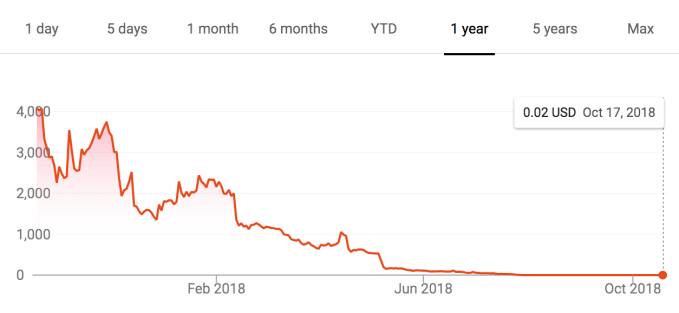
MoviePass and parent company Helios and Matheson (HMNY) has flailed wildly throughout 2018, abruptly making major changes to the movie subscription service, watching its stock prices walk off a cliff and seeking emergency infusions of cash in the process.

In Q2, Helios and Matheson posted losses of $126.6 million compared to a net loss of roughly $150 million in all of 2017. Its 2017 losses were attributed to its acquisition of a majority stake in MoviePass, but the 2018 losses are obviously a different story. Shares of Helios and Matheson were down 8.5 percent at the time of writing.

Uber is developing an on-demand staffing business

Uber is reportedly developing a short-term staffing business to offer 1099 independent contractors for events and corporate functions, the Financial Times first reported. Dubbed Uber Works, the service would provide waiters, security guards and other temporary staffers to business partners, a source close to Uber told TechCrunch.

Uber has been working on the project for several months in Chicago, after first trialing the project in Los Angeles. Uber already has a vast network of drivers — all of whom have become familiarized with the process of filing taxes as an independent contractor — who may be looking for additional work. However, Uber’s current pilot program does not include active Uber drivers.

Uber Works falls under the purview of Rachel Holt, who stepped into the role of head of new modalities in June. Holt, who has been with Uber since 2011, is tasked with ramping up and onboarding new mobility services like bikes, scooters, car rentals and public transit integration.

In a job posting for a general manager to lead special projects in Chicago, Uber says, “our business is based around providing a flexible, on-demand supply for our business partners – it’s imperative that we have intuitive and responsive account management to support for our business partners in addressing their needs promptly.”

Uber declined to comment for this story. But as the company gears up for its initial public offering next year, Uber is clearly trying to diversify its business. In the last year, Uber double-downed on multi-modal transportation with the acquisition and deployment of JUMP bike-share. And in the last month, Uber deployed electric scooters in Santa Monica, Calif.

Whether this effort launches remains to be seen, but it’s certainly something Uber is exploring and positioning as a business-to-business service. In a similar vein, Uber is also working to create a pipeline to hire some of its driver partners.

Researchers create virtual smells by electrocuting your nose

The IEEE has showcased one of the coolest research projects I’ve seen this month: virtual smells. By stimulating your olfactory nerve with a system that looks like one of those old-fashioned kids electronics kits, they’ve been able to simulate smells.

The project is pretty gross. To simulate a smell, the researchers are sticking leads far up into the nose and connecting them directly to the nerves. Senior research fellow at the Imagineering Institute in Malaysia, Kasun Karunanayaka, wanted to create a “multisensory Internet” with his Ph.D. student, Adrian Cheok. Cheok is Internet famous for sending electronic hugs to chickens and creating the first digital kisses.

The researchers brought in dozens of subjects and stuck long tubes up their noses in an effort to stimulate the olfactory bulb. By changing the intensity and frequency of the signals, they got some interesting results.

The subjects most often perceived odors they described as fragrant or chemical. Some people also reported smells that they described as fruity, sweet, toasted minty, or woody.

The biggest question, however, is whether he can find a way to produce these ghostly aromas without sticking a tube up people’s noses. The experiments were very uncomfortable for most of the volunteers, Karunanayaka admits: “A lot of people wanted to participate, but after one trial they left, because they couldn’t bear it.”

While I doubt we’ll all be wearing smell-o-vision tubes up our noses any time soon, this idea is fascinating. It could, for example, help people with paralyzed senses smell again, a proposition that definitely doesn’t stink.

There’s now proof that quantum computers can outperform classical machines

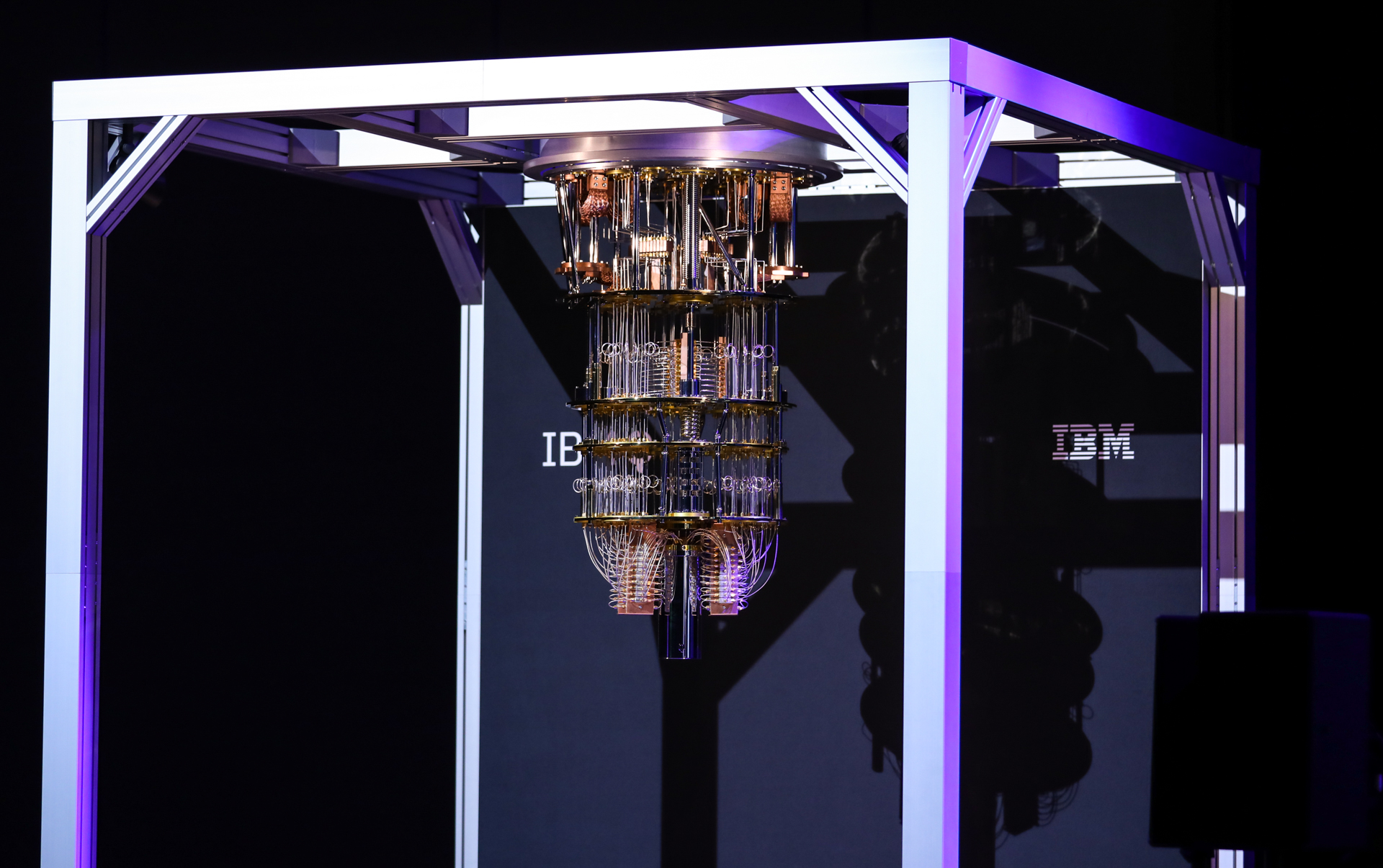
The hype around quantum computing is real. But to fully realize the promise of quantum computing, it’ll still take a few years of research and scientific breakthroughs. And indeed, it still remains to be seen if quantum computers will ever live up to the hype. Today, though, we got mathematical proof that there are really calculations that quantum computers will definitely be able to perform faster than any classical computer.

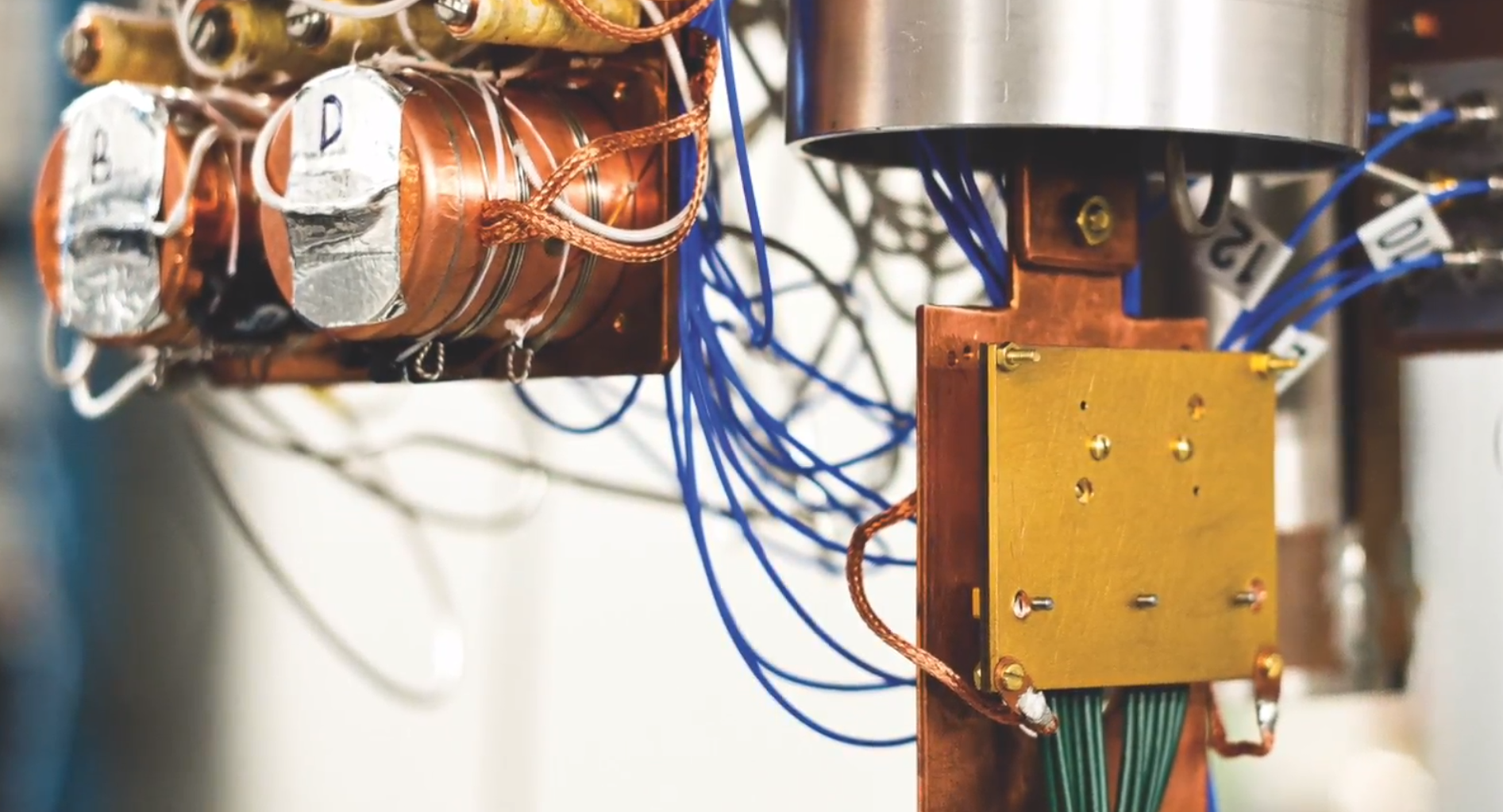
What we have today are quantum computers with a very limited number of qubits and short coherence time. Those limitations put a damper on the amount of computation you can perform on those machines, but they still allow for some practical work. Unsurprisingly, researchers are very interested in seeing what they can do with the current set of available machines. Because they have such short coherence time before the system becomes chaotic and useless for any computations, you can only perform a relatively small number of operations on them. In quantum computing speak, that’s “depth,” and today’s systems are considered shallow.

Science today published a paper (“Quantum advantage with shallow circuits”) by Sergey Bravyi of IBM Research, David Gosset of the University of Waterloo’s Institute for Quantum Computing and Robert König of the Institute for Advanced Study and Zentrum Mathematik, Technische Universität München. In this paper, the researchers prove that a quantum computer with a fixed circuit depth is able to outperform a classical computer that’s tackling the same problem because the classical computer will require the circuit depth to grow larger, while it can stay constant for the quantum computer.

There is very little that’s intuitive about quantum computing, of course, but it’s worth remembering that quantum computers are very different from classical computers.

“Quantum circuits are not just basically the same but different from classical circuits,” IBM Q Ecosystem and Strategy VP Bub Sutor told me. Classic circuits, […]they are bits, they are zeros and ones, and there’s binary logic, ANDs, ORs, NOTs and things like. The very, very basic gate sets, the types of operations you can do in quantum are different. When these qubit are actually operating, with this notion of superposition you have much, much more to operate elbow room, not just two bits. You actually have a tremendous amount of more room here.” And it’s that additional room you get, because qubits can encode any number and not just zeros and ones, that allows them to be more powerful than a classical computer in solving the specific kind of problem that the researchers tackled.

The question the researchers here asked was if constant-depth quantum circuits can solve a computational problem that constant-depth classical circuits cannot? The problem they decided to look at is a variation on the well-known Bernstein-Vazirani problem (well-known among quantum computing wonks, that is). You don’t need to jump into the details here, but the researchers show that even a shallow quantum computer can easily outperform a classical computer in solving this problem.

“We tried to understand what kinds of things we can do with a shallow quantum circuit and looked for an appropriate model for a type of computation that can be done on a near-term quantum device,” Bravyi told me. “What our result says is that there are certain computational problems for which you can solve on a quantum computer with a constant depth. So as you increase the number of input bits, the depth of the quantum algorithm that solves the problem remains constant.” A constant depth classical computer can not solve this problem, though.

Sutor was very quick to note that we shouldn’t over-hype the current state of quantum computing or this result, though. “We try to be extremely cautious and honest in terms of saying ‘this is what quantum computers can do today’ versus what classical computers will do,” he told me. “And we do this for a very specific reason in that that this is something that will play out over the next three to five years and decades — probably decades.” But what this result shows is that it’s worth exploring quantum algorithms.

As Sutor noted, “there is still this core question, which is, ‘why are you bothering?’” Today’s result should put that question to rest, but Sutor still stressed that he tries to stay grounded and never says quantum computing “will” do something until it does. “There’s a strategy through this, but there’s going to be little left turns and right turns along the way.”

Google Maps’ ETA sharing feature hits iOS

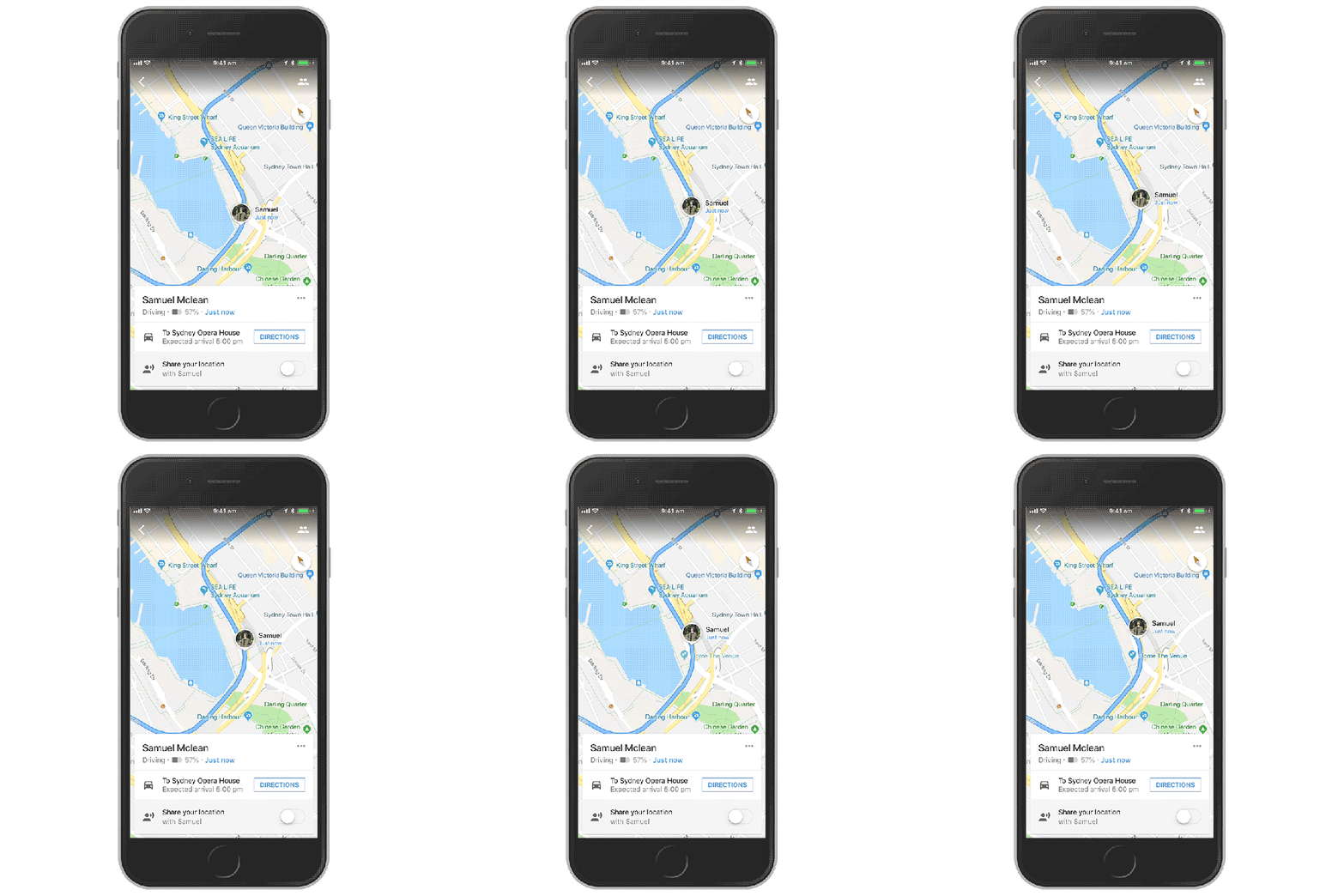
If you’re heading out to meet someone, there are plenty of ways to inform them of your location and estimated arrival. Chat apps like WhatsApp, Messenger, LINE and iMessage, for example, offer location-sharing functionality, while navigation apps like Waze and CityMapper and even ridesharing apps like Uber offer live updating ETAs. Now, Google Maps’ own ETA feature is at last coming to iOS. The feature is also getting a few tweaks following last year’s launch on Android, the company says.

In May 2017, Google Maps first introduced its own take on location and ETA sharing.

From a “Share Location” option in the app’s main navigation bar, you’re able to pick how long you want to share your location and choose with whom to share it — the latter from a set of frequent contacts or by entering someone’s name, number or email to pull from your address book.

Then, from the navigation screen, another option called “Share trip progress” allows users to share their live ETA with others as they start their trip.

Today, Google is bringing this ETA feature to Google Maps on iOS.

To try it out, tap on the ? button once you’ve begun navigation, then tap “Share trip progress.” This will allow you to share with favorite contacts your live location, route and your ETA, as before.

However, the feature is also being improved with today’s release to allow for sharing across third-party apps like Messenger, WhatsApp, LINE and others. That makes it easier to include in your text message threads and group chats, which are probably already underway.

The feature works for driving, walking and cycling navigation, says Google. It’s live now on iOS and Android.

Google improves Android App Bundles and makes building Instant Apps easier

Google is launching a number of new features for Android app developers today that will make it easier for them to build smaller apps that download faster and to release instant apps that allow potential users to trial a new app without having to install it.

Android App Bundles, a feature that allows developers to modularize their apps and deliver features on demand, isn’t a new feature. The company announced it a while ago; there are now “thousands of app bundles” in production with an average file size reduction of 35 percent. With today’s update, Google is making some changes to how app bundles handle uncompressed native libraries that are already on a device. Those will lead to downloads that are on average 8 percent smaller and take up 16 percent less space on a device.

Talking about size, Google now lets developers upload app bundles with installed APK sizes of up to 500 megabytes, though this is currently still in early access.

In addition, App Bundles are now supported in Android Studio 3.2 stable and Unity 2018.3 beta.

While small app sizes are nice, another feature Google is announcing today will likely have a larger impact on developers and users alike. That’s because the company is making some changes to Instant Apps, a feature that allows developers to ship a small part of their apps as a trial or to show a part of the app experience when users come in from search results — and there’s no need to download the full app and go through the (slow) install procedure.

With this update, Google is now using App Bundles to let developers build their instant apps. That means they don’t have to publish both an instant app and an installable app. Instead, they can enable their App Bundles to include an instant app and publish a single app to the store. Thanks to that, there’s also no additional code to maintain.

Developers also can now build instant apps for their premium titles and publish them for their pre-registration campaigns, something that wasn’t previously an option.

Other updates for Android developers include improved crash reports that now combine real-world data from users with that from the Firebase Test Lab when Google sees those crashes under both circumstances. There also are updates to how developers can set up subscription billing for their apps and a couple of other minor changes you can read about here.

Twilio launches a new SIM card and narrowband dev kit for IoT developers

Twilio is hosting its Signal developer conference in San Francisco this week. Yesterday was all about bots and taking payments over the phone; today is all about IoT. The company is launching two new (but related) products today that will make it easier for IoT developers to connect their devices. The first is the Global Super SIM that offers global connectivity management through the networks of Twilio’s partners. The second is Twilio Narrowband, which, in cooperation with T-Mobile, offers a full software and hardware kit for building low-bandwidth IoT solutions and the narrowband network to connect them.

Twilio also announced that it is expanding its wireless network partnerships with the addition of Singtel, Telefonica and Three Group. Unsurprisingly, those are also the partners that make the company’s Super SIM project possible.

The Super SIM, which is currently in private preview and will launch in public beta in the spring of 2019, provides developers with a global network that lets them deploy and manage their IoT devices anywhere (assuming there is a cell connection or other internet connectivity, of course). The Super SIM gives developers the ability to choose the network they want to use or to let Twilio pick the defaults based on the local networks.

Twilio Narrowband is a slightly different solution. Its focus right now is on the U.S., where T-Mobile rolled out its Narrowband IoT network earlier this year. As the name implies, this is about connecting low-bandwidth devices that only need to send out small data packets like timestamps, GPS coordinates or status updates. Twilio Narrowband sits on top of this, using Twilio’s Programmable Wireless and SIM card. It then adds an IoT developer kit with an Arduino-based development board and the standard Grove sensors on top of that, as well as a T-Mobile-certified hardware module for connecting to the narrowband network. To program that all, Twilio is launching an SDK for handling network registrations and optimizing the communication between the devices and the cloud.

The narrowband service will launch as a beta in early 2019 and offer three pricing plans: a developer plan for $2/month, an annual production plan for $10/year or $5/year at scale, and a five-year plan for $8/year or $4/year at scale.

A ton of people don’t know that Facebook owns WhatsApp

Americans looking to reduce their reliance on products from tech’s most alarmingly megalithic companies might be surprised to learn just how far their reach extends.

Privacy-minded browser company DuckDuckGo conducted a small study to look into that phenomenon and the results were pretty striking.

“… As Facebook usage wanes, messaging apps like WhatsApp are growing in popularity as a ‘more private (and less confrontational) space to communicate,’” DuckDuckGo wrote in the post. “That shift didn’t make much sense to us because both services are owned by the same company, so we tried to find an explanation.”

DuckDuckGo gathered a random sample of 1,297 adult Americans who are “collectively demographically similar to the general population of U.S. adults” (i.e. not just DuckDuckGo diehards) using SurveyMonkey’s audience tools. The survey found that 50.4 percent of those surveyed who had used WhatsApp in the prior six months (247 participants) did not know the company is owned by Facebook.

Similarly, DuckDuckGo found that 56.4 percent of those surveyed who had used Waze in the past six months (291 participants) had no idea that the navigation app is owned by Google. A similar study conducted back in April found the same phenomenon when it came to Facebook/Instagram and Google/YouTube, though for Instagram the effect was even stronger (wow).

If you’re reading TechCrunch it’s probably almost impossible to imagine that average people aren’t tracing the lines between tech’s biggest companies and the products scooped up or built under their wings. And yet, it is so.

Even as companies like Google and Facebook suffer blowback from privacy crises, it’s clear that they can lean on the products they’ve picked up along the way to chart a path forward. If this survey is any indication, half of U.S. consumers will have no idea that they’ve jumped ship from a big tech product into a lifeboat captained by the very same company they sought to escape.

And for the biggest tech companies, it’s at least one reason that keeping satellite products at arm’s length from their respective motherships is advantageous for maintaining trust — especially while aggressive data sharing happens behind the scenes.

Why so many tech companies are creating shows

Editor’s note: Jay Acunzo is the author of the new book Break the Wheel, which explores how the world’s best creators break from conventional thinking to think for themselves. He’s a former digital media strategist at Google, head of content at HubSpot, and VP of brand at the seed VC, NextView.

The deep tones of synth music begins to play. A crackling sound emerges, as if from static electricity, followed by a single strum from an electric guitar that shatters the silence. A man’s voice booms.

“I really didn’t get fascinated with design until I learned what it was and what it could actually do.”

These are the opening moments of InVision’s “Design Disruptors,” a now-famous film within the design community. This hour-long video features some of the biggest and brightest names in software design today, hailing from companies like Google, Lyft, Netflix, Dropbox, and more. The film launched in the summer of 2016, and although it was never aired online (the company debuted the film in 1,500 offline screenings worldwide), “Design Disruptors” helped InVision generate more than 70,000 leads and double its user base in a single year, according to sources within the firm.

While this may seem like an outlier project, it’s become part of a larger marketing trend we’re seeing proliferate around the tech world today: marketers creating films and shows. Why?

“Optimistically, I’d hope it’s because marketers are realizing that impressions and pageviews are BS metrics, and it’s a lot more valuable to get a smaller group of consumers hooked on a show that they’ll watch for a really long time,” said Joe Lazauskas, executive editor and head of content strategy at the marketing tech firm Contently. A journalist by background, Lazauskas now consults clients like Microsoft, IBM, and Autodesk for Contently, and while he clings to his optimism, he knows there’s a downside to any trend. “Pessimistically, I’d say that it’s because marketers still fall in love with big vanity projects without much thought to the return on investment.”

So what’s causing this trend, anyway?

Ultimately, Lazauskas concludes that the rise in branded shows is a combination of both his optimistic and pessimistic views. On the one hand, films and series are indeed strategic for some companies, enabling them to reap certain rewards that disparate pieces of content can’t provide. On the other hand, plenty of companies continue to glom onto the trend because, well, “it’s a thing.” Those in the former group, however, have identified a fundamental shift currently affecting how companies go to market. Most of us talk about the industry’s reaction to that shift: things like content marketing, influencer marketing, and similar experience-based approaches. The shift itself, though, is far more revealing. You see, the marketing mandate has changed. The goal is no longer to acquire attention. The goal is to hold it.

It used to be sufficient for marketers to describe the value of their products in a few disconnected interruptions. Marketers would leap out in front of the content a consumer actually wanted to consume in order to grab just a few seconds of their attention and deliver the right message, with the right promotion, at the right time. Of course, we all know what happened to that old marketing playbook: (insert mushroom cloud GIF). Along came the internet. Buyers of both B2C and B2B products now face seemingly infinite choice, from content to competing products, all accessible on multiple screens, whenever and wherever they want it. Additionally, technologies whose sole purpose is to block advertising signal a larger trend: As consumers, we don’t want to be interrupted. We control what we consume because we have all the choice, and we only choose experiences that create value in our lives, like content–not advertisements, which are messages that merely describe value. (I’m painting with broad strokes, but we’re all part of the technorati after all.)

If you’re a marketer today, and you’re stuck in acquisition mode, it’s like digging a hole in dry sand. Nothing you do sticks. The very best in our world are winning on customer experience, not brute-forcing their way into customers’ lives. We need to embrace the new marketing mandate: The job isn’t to acquire attention. The job is to hold it.

“If you’re willing to make the investment in some serialized, engaging content, rather than a bunch of disconnected pieces, you can start thinking in terms of hours spent with your company as opposed to ideas like impressions,” said Dan Mills, creative director at video software company Wistia. This fall, the company announced a new documentary series called “One, Ten, One Hundred,” a partnership with video agency Sandwich, which boasts clients like Facebook, Slack, Uber, and Square. The series explores the effects of constraints on creativity when creating videos.

Said Wistia’s cofounder and CEO, Chris Savage, “What’s interesting about a more substantial project like this is that instead of just moving on to the next piece of content to push out the door, we have the time and space to really invest in exploring all of the different angles and nuances of this complex topic.” First, the company asked Sandwich to create three videos to promote the same Wistia product (a Chrome extension called Soapbox): One ad for $1,000, one for $10,000, and one for $100,000 (hence the name “One, Ten, One Hundred”). Those videos launched in mid-September. In October, Wistia will release a four-part documentary series going behind-the-scenes of the entire process to examine exactly how changes in budget alter the quality of the videos. They believe that budget is a major reason why more marketing teams don’t prioritize video (and thus, buy Wistia). More specifically, they believe this is a perception problem and that teams don’t really need more money to create better videos in most cases. But it’s a messy subject.

“A blog post or a two minute video just wasn’t going to cut it,” Savage said. “We wanted to create something that was deeper and lasting. The most valuable thing that we learned through this process, and what we explore in “One, Ten, One Hundred,” is the complex relationship between money and creativity.”

InVision’s CEO and cofounder, Clark Valberg, seems to agree that holding significant audience attention means focusing on depth, not breadth. Like Wistia, InVision used its documentary, “Design Disruptors,” as well as its newer film with IBM called “The Loop,” to illuminate a large problem facing designers in their work and to rally the community around their brand to solve it. For Wistia, their customers struggle with budget. At InVision, they realized that product designers wanted a better sense of identity as a profession, as well as a seat at the proverbial table.

“We went out and talked to our best customers,” he said. “They had a lot more to tell us than just what they were doing with our products. There was a movement [in the field of product design], and they all felt it. They all understood their role within the company and their company’s role in the formation of this new market called digital product design. It was evolving here and now, and they had a lot to say about it.”

Wistia and InVision are not alone in creating shows and trying to spark movements in doing so. Other companies creating video series include Fuze, which will partner with CBS to create a new series about tech later this year, and LinkedIn’s sales and marketing solutions team, which debuted “B2B Dinner for Five” late last year. In audio, dozens of brands are breaking from the conventional wisdom of what a podcast has to sound like (namely, Q&A with experts) to create documentary series instead. These include Zendesk’s “Repeat Customer“ (created with the agency Pacific Content), Adobe’s upcoming “Wireframe” (Gimlet Media’s branded content studio Gimlet Creative), and “Exceptions,” a series exploring why high-growth SaaS companies are betting so heavily on brand marketing (which, full disclosure, I host and produce for my client Drift).

These companies all seek benefits from their shows that the usual marketing campaign or “piece” of content doesn’t offer. By holding attention for hours on end, shows develop a level of intimacy and trust similar to a one-on-one meeting that scales far better. Shows provide endless amounts of marketing efficiencies, too, allowing marketing teams to mine each episode for excerpts, lessons learned, and new ideas, all of which can fuel company blogs, newsletters, and social media profiles. At some point soon, I expect to see a brand-sponsored book with material pulled exclusively from their company’s show, there’s that much source material bottled up in episodes. Lastly, shows create customers through both word-of-mouth and thriving subscriber lists. After all, it’s far more powerful to say to a visitor, “Get the next episode,” than, “Subscribe for alerts” or “more of our content.”

According to the Edelman Trust Barometer, an annual report measuring consumer trust in big institutions like government and business, trust in companies continues to fall. To get any individual, let alone an entire audience, to spend 10, 30, or even 60 minutes with your company each week is more powerful than ever. But that’s the benefit these companies seek.

What would cause this trend to stick?

It’s hard to ignore Lazauskas’s pessimism about brands adopting this approach. After all, most companies barely know how to market a single blog post well, let alone build and promote an entire series. For example, in many B2B niches, competing shows feel like copycat programs. They’re all effectively “Talking Topics With Experts!” (If everyone claims to have the smartest show in a niche, does anyone?) Additionally, many shows lapse after a season or two, even after a public victory lap over their first few episodes. Slack’s “Work in Progress” hasn’t aired an episode since October 2017, despite being widely loved and even syndicated to satellite radio. But while Lazauskas hints at the potential negatives, Wistia’s Savage sees it differently. His company is investing heavily in serialized content, but he believes marketers need to shift how they track results to justify doing so.

“It starts with qualitative results: Are people talking about it, are they engaging and spending time with the content? Over a longer period of time, we expect to see that content like [“One, Ten, One Hundred”] brought in totally new and different audience that helps expand our customer base.” If most marketing focuses on reach with a broad group of people, then shows are all about resonance with the right people.

Additionally, as Clark Valberg of InVision told me, it has to be a “portfolio approach.” Brands shouldn’t aim to be purely Netflix any more than they should act exclusively like Don Draper in “Mad Men.” Some things are directly measurable, some things are not. Some marketing looks like a piece of content, some like a series. Finding the right mix for your business is what matters most.

Shows have long been a vehicle for holding attention, and marketers are finally catching up to what media companies realized long ago. Call it the Curse of Conventional Wisdom. As tech companies invent the future, marketers at those very same companies need to constantly question older norms and even the most tried-and-true best practice in order to keep up. After all, we may be at the start of something positive for companies and consumers alike—that is, if you’re optimistic.

“We definitely think this is the beginning of a trend,” said Savage. “It’s clear that companies are making investments in engaging their audiences with things like podcasts. We see video series content and storytelling as the next logical step for companies to connect at a deeper level.”

I’ve been a content marketer for a decade now, which makes me a grizzled vet in a relatively new career path. (In marketing, “grizzled vet” is code for “jaded as hell.”) But for once, I’m bullish on a trend. It’s not because the hype won’t fade. It will. But, refreshingly, this is an approach to marketing that can’t be gamed. When the goal is to hold attention, not merely acquire it, there’s no faking it. You have to earn that level of attention. Trust, influence, and hours of someone’s time aren’t things you can purchase or hack. Eventually, this wave will go out, and all who will be left will be companies like InVision and Wistia who truly dug into the ground, with real foundations of creativity and customer-focus. Those merely riding the wave will be washed away. When it comes to holding long periods of our attention, the hucksters and system-gamers have no power. Because fool me once, shame on you. Fool me twice—can’t get fooled again.