CEO Shishir Mehrotra and investor S. Somasegar reveal what sings in Coda’s pitch doc

Coda entered the market with an ambitious, but simple, mission. Since launching in 2014, it has seemingly forged a path to realizing its vision with $140 million in funding and 25,000 teams across the globe using the platform.

Coda is simple in that its focus is on the document, one of the oldest content formats/tools on the internet, and indeed in the history of software. Its ambition lies in the fact that there are massive incumbents in this space, like Google and Microsoft.

Co-founder and CEO Shishir Mehrotra told TechCrunch that that level of competition wasn’t a hindrance, mainly because the company was very good at communicating its value and building highly effective flywheels for growth.

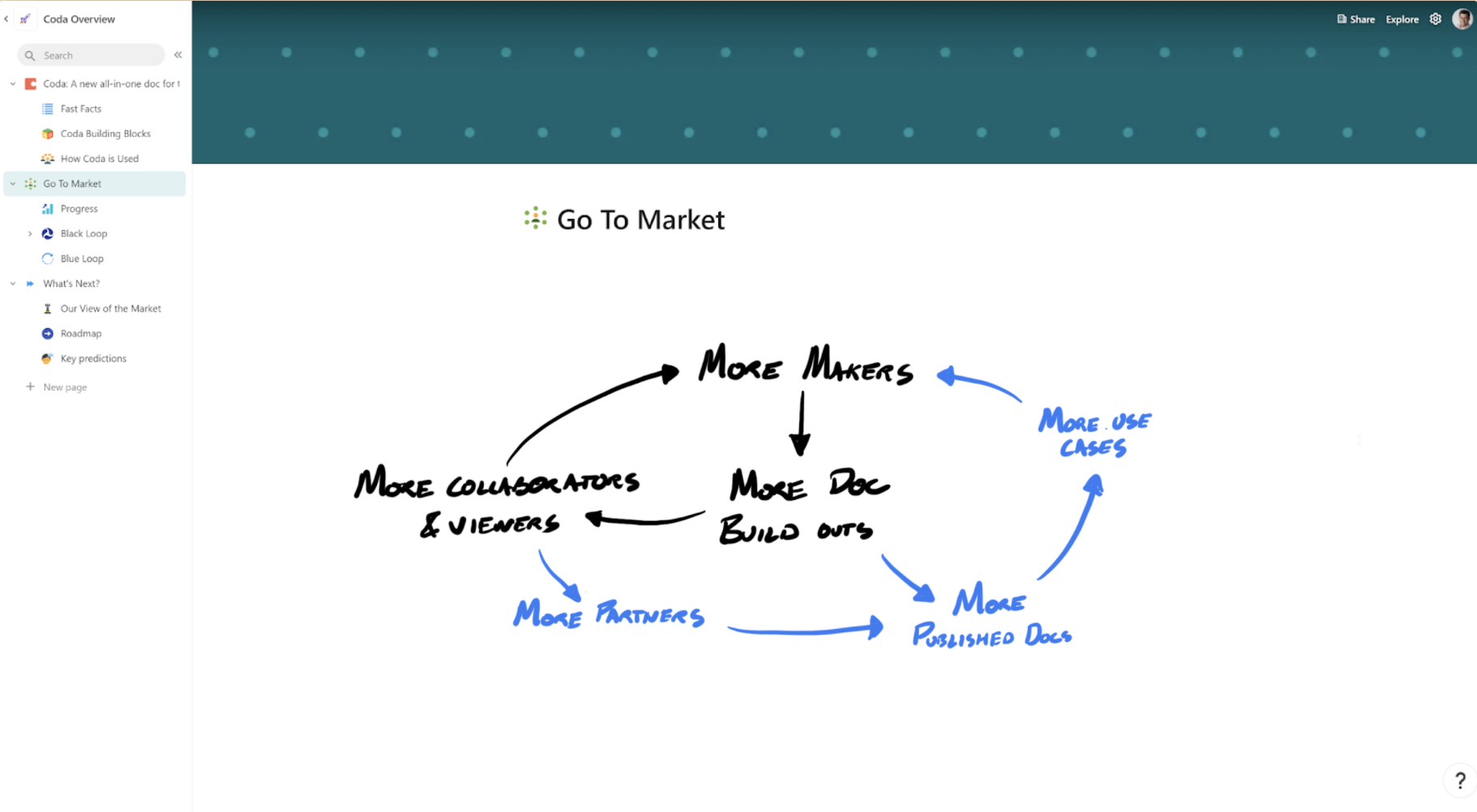
Mehrotra was generous enough to let us take a look through his pitch doc (not deck!) on a recent episode of Extra Crunch Live, diving not only into the factors that have made Coda successful, but how he communicated those factors to investors.

Coda Pitch Doc

A screenshot from Coda’s pitch doc.

Extra Crunch Live also features the ECL Pitch-off, where founders in the audience come “onstage” to pitch their products to our guests. Mehrotra and his investor, Madrona partner S. Somasegar, gave their live feedback on pitches from the audience, which you can check out in the video (full conversation and pitch-off) below.

As a reminder, Extra Crunch Live takes place every Wednesday at 3 p.m. EDT/noon PDT. Anyone can hang out during the episode (which includes networking with other attendees), but access to past episodes is reserved exclusively for Extra Crunch members. Join here.

The soft circle

Like many investors and founders, Mehrotra and Somasegar met well before Mehrotra was working on his own project. They met when both of them worked at Microsoft and maintained a relationship while Mehrotra was at Google.

In their earliest time together, the conversations centered around advice on the Seattle tech ecosystem or on working with a particular team at Microsoft.

“Many people will tell you building relationships with investors … you want to do it outside of a fundraise as much as possible,” said Mehrotra.

Eventually, Mehrotra got to work on Coda and kept in touch with Somasegar. He even pitched him for Series B fundraising — and ultimately got a no. But the relationship persisted.

US lawmakers want to restrict police use of ‘Stingray’ cell tower simulators

Igor Bonifacic
Contributor

Igor Bonifacic is a contributing writer at Engadget.

According to BuzzFeed News, Democratic Senator Ron Wyden and Representative Ted Lieu will introduce legislation later today that seeks to restrict police use of international mobile subscriber identity (IMSI) catchers. More commonly known as Stingrays, police frequently use IMSI catchers and cell-site simulators to collect information on suspects and intercept calls, SMS messages and other forms of communication. Law enforcement agencies in the US currently do not require a warrant to use the technology. The Cell-Site Simulator Act of 2021 seeks to change that.

IMSI catchers mimic cell towers to trick mobile phones into connecting with them. Once connected, they can collect data a device sends out, including its location and subscriber identity key. Cell-site simulators pose a two-fold problem.

The first is that they’re surveillance blunt instruments. When used in a populated area, IMSI catchers can collect data from bystanders. The second is that they can also pose a safety risk to the public. The reason for this is that while IMSI catchers act like a cell tower, they don’t function as one, and they can’t transfer calls to a public wireless network. They can therefore prevent a phone from connecting to 9-1-1. Despite the dangers they pose, their use is widespread. In 2018, the American Civil Liberties Union found at least 75 agencies in 27 states and the District of Columbia owned IMSI catchers.

In trying to address those concerns, the proposed legislation would make it so that law enforcement agencies would need to make a case before a judge on why they should be allowed to use the technology. They would also need to explain why other surveillance methods wouldn’t be as effective. Moreover, it seeks to ensure those agencies delete any data they collect from those not listed on a warrant.

Although the bill reportedly doesn’t lay out a time limit on IMSI catcher use, it does push agencies to use the devices for the least amount of time possible. It also details exceptions where police could use the technology without a warrant. For instance, it would leave the door open for law enforcement to use the devices in contexts like bomb threats where an IMSI catcher can prevent a remote detonation.

“Our bipartisan bill ends the secrecy and uncertainty around Stingrays and other cell-site simulators and replaces it with clear, transparent rules for when the government can use these invasive surveillance devices,” Senator Ron Wyden told BuzzFeed News.

The bill has support from some Republicans. Senator Steve Daines of Montana and Representative Tom McClintock of California are co-sponsoring the proposed legislation. Organizations like the Electronic Frontier Foundation and the Electronic Privacy Information Center have also endorsed the bill.

This article was originally published on Engadget.


Following lawsuits, Snapchat pulls its controversial speed filter

Lately, Snapchat’s 3D Cartoon lens has been all the buzz, making all of our friends look like Pixar characters. But since 2013, a staple filter on the ephemeral photo-sharing app has been the speed filter, which shows how fast a phone is moving when it takes a photo or video. Today, Snapchat confirmed that it will pull the filter from the app.

NPR first reported this today, calling it a “dramatic reversal” of Snap’s earlier defense of the feature. Over the years, there have been multiple car accidents, injuries and deaths that were related to the use of the filter. In 2016, for instance, an 18-year-old took a Snapchat selfie while driving, then struck another driver’s car at 107 miles per hour. The other driver, Maynard Wentworth, suffered traumatic brain injuries and sued Snap. His lawyer said that the 18-year-old “was just trying to get the car to 100 miles per hour to post it on Snapchat.”

Snapchat’s filter-related offenses don’t begin and end here. Last year on Juneteenth, a day that commemorates the end of slavery, Snapchat released a filter that prompted users to “smile to break the chains.” On 4/20 in 2016, Snapchat partnered with Bob Marley’s estate to release a feature that gave users dreadlocks and darker skin, committing blackface. And even after Snapchat’s speed filter was linked to fatal car accidents, it remained available in the app with a simple “don’t snap and drive” warning.

“Today the sticker is barely used by Snapchatters, and in light of that, we are removing it altogether,” a spokesperson from Snap said, adding that the feature had previously been disabled at driving speeds. The company has begun removing the filter, but it might take several weeks to take full effect.

This new stance from Snap comes after the Ninth Circuit Appeals Court found in May that the company can be sued for its role in a fatal car accident.

Generally, Section 230 of the Communications Decency Act protects websites, or “interactive computer services,” from lawsuits like this, providing immunity for these platforms from third-party content posted on them. But in 2019, the parents of two children killed in crashes — Landen Brown and Hunter Morby — filed another lawsuit. They argued that the app’s “negligent design” (including a speed filter to begin with) contributed to the crash. A California judge dismissed the case, citing Section 230, but in May of this year, three judges on the federal Ninth Circuit Appeals Court ruled that Section 230 actually doesn’t apply here. The conflict isn’t with Snapchat’s role as a social media platform, but rather, the app’s design, which includes a demonstrably dangerous speed filter.

So, the sudden removal of the speed filter isn’t as random as it may seem. Now that their Section 230 defense is no longer, it makes sense that keeping the filter isn’t worth the legal risk. You’d think that the filter-related accidents would have been enough for Snapchat to take down the filter years ago, but better late than never.

There are only a few spots left in Startup Alley at TC Disrupt 2021

Early-stage founders, a shipload of opportunity is about to set sail and you don’t want to miss the boat. We have only a few spots left to exhibit in Startup Alley at TechCrunch Disrupt 2021 (September 21-23). Buy a Startup Alley Pass and take advantage of all the exposure, perks and potential to help your startup cruise to the next level.

Every exhibiting startup gets a virtual booth where you can post a company video and links to your website and social media accounts. But don’t stop there. Hopin, the virtual platform, lets you get creative — and interactive. Schedule and host livestream product demos, tutorials or Q&A sessions. Or cook up some other amazing way to showcase your expertise.

And every exhibiting startup also gets two minutes to pitch live during a breakout session. Your audience? TechCrunch staff and thousands of Disrupt attendees from across the globe. Exposure, practice and invaluable feedback from the pitch-savvy TC crew — jump on board that opportunity.

Team TechCrunch will choose two exhibiting startups to be a Startup Battlefield Wild Card. Those founders will compete in Startup Battlefield for a chance at $100,000. You can’t beat that kind of global attention.

Exhibit in Startup Alley and you might be selected to join the Startup Alley+ cohort. TC staff will choose 50 startups to participate in a VIP experience designed to provide more exposure, education and opportunity — long before Disrupt even starts. The Startup Alley+ experience begins July 9 with free attendance to TechCrunch Early Stage: Marketing & Fundraising. Read more about the business development support you’ll receive as part of Startup Alley+.

Here’s another way exhibitors might gain invaluable exposure at TC Disrupt — a Startup Alley Crawl interview. TC editors will host a one-hour crawl for each business category. During a crawl, they select a few exhibiting startups from the relevant category and interview them live on the Disrupt stage.

Exhibiting in Startup Alley is one big boatload of opportunity and time’s running out to book passage. Buy your Startup Alley Pass today and chart a course for success — at TechCrunch Disrupt 2021 and beyond.

Is your company interested in sponsoring or exhibiting at Disrupt 2021? Contact our sponsorship sales team by filling out this form.

How to launch a successful RPA initiative

Kevin Buckley
Contributor

With more than 25 years of experience as a technical and business consultant, Kevin Buckley helps organizations improve business efficiencies, reduce business costs and improve business outcomes
through software automation.

Robotic process automation (RPA) is rapidly moving beyond the early adoption phase across verticals. Automating just basic workflow processes has resulted in such tremendous efficiency improvements and cost savings that businesses are adapting automation at scale and across the enterprise.

While there is a technical component to robotic automation, RPA is not a traditional IT-driven solution. It is, however, still important to align the business and IT processes around RPA. Adapting business automation for the enterprise should be approached as a business solution that happens to require some technical support.

A strong working relationship between the CFO and CIO will go a long way in getting IT behind, and in support of, the initiative rather than in front of it.

A strong working relationship between the CFO and CIO will go a long way in getting IT behind, and in support of, the initiative rather than in front of it.

More important to the success of a large-scale RPA initiative is support from senior business executives across all lines of business and at every step of the project, with clear communications and an advocacy plan all the way down to LOB managers and employees.

As we’ve seen in real-world examples, successful campaigns for deploying automation at scale require a systematic approach to developing a vision, gathering stakeholder and employee buy-in, identifying use cases, building a center of excellence (CoE) and establishing a governance model.

Create an overarching vision

Your strategy should include defining measurable, strategic objectives. Identify strategic areas that benefit most from automation, such as the supply chain, call centers, AP or revenue cycle, and start with obvious areas where business sees delays due to manual workflow processes. Remember, the goal is not to replace employees; you’re aiming to speed up processes, reduce errors, increase efficiencies and let your employees focus on higher value tasks.

Transform launches with $24.5M in funding for a tool to query and build metrics out of data troves

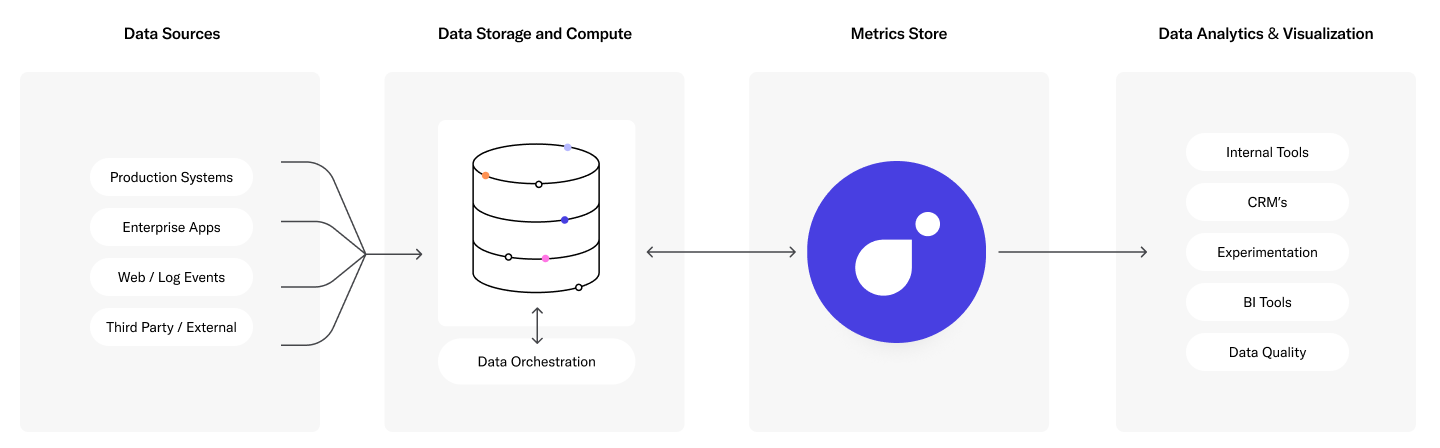
The biggest tech companies have put a lot of time and money into building tools and platforms for their data science teams and those who work with them to glean insights and metrics out of the masses of data that their companies produce: how a company is performing, how a new feature is working, when something is broken, or when something might be selling well (and why) are all things you can figure out if you know how to read the data.

Now, three alums that worked with data in the world of Big Tech have founded a startup that aims to build a “metrics store” so that the rest of the enterprise world — much of which lacks the resources to build tools like this from scratch — can easily use metrics to figure things out like this, too.

Transform, as the startup is called, is coming out of stealth today, and it’s doing so with an impressive amount of early backing — a sign not just of investor confidence in these particular founders, but also the recognition that there is a gap in the market for, as the company describes it, a “single source of truth for business data” that could be usefully filled.

The company is announcing that it has closed, while in stealth, a Series A of $20 million, and an earlier seed round of $4.5 million — both led by Index Ventures and Redpoint Ventures. The seed, the company said, also had dozens of angel investors, with the list including Elad Gil of Color Genomics, Lenny Rachitsky of Airbnb and Cristina Cordova of Notion.

The big breakthrough that Transform has made is that it’s built a metrics engine that a company can apply to its structured data — a tool similar to what Big Tech companies have built for their own use, but that hasn’t really been created (at least until now) for others who are not those Big Tech companies to use, too.

Transform can work with vast troves of data from the warehouse, or data that is being tracked in real time, to generate insights and analytics about different actions around a company’s products. Transform can be used and queried by nontechnical people who still have to deal with data, Handel said.

The impetus for building the product came to Nick Handel, James Mayfield and Paul Yang — respectively Transform’s CEO, COO and software engineer — when they all worked together at Airbnb (previously Mayfield and Yang were also at Facebook together) in a mix of roles that included product management and engineering.

There, they could see firsthand both the promise that data held for helping make decisions around a product, or for measuring how something is used, or to plan future features, but also the demands of harnessing it to work, and getting everyone on the same page to do so.

“There is a growing trend among tech companies to test every single feature, every single iteration of whatever. And so as a part of that, we built this tool [at Airbnb] that basically allowed you to define the various metrics that you wanted to track to understand your experiment,” Handel recalled in an interview. “But you also want to understand so many other things like, how many people are searching for listings in certain areas? How many people are instantly booking those listings? Are they contacting customer service, are they having trust and safety issues?” The tool Airbnb built was Minerva, optimised specifically for the kinds of questions Airbnb might typically have for its own data.

“By locking down all of the definitions for the metrics, you could basically have a data engineering team, a centralized data infrastructure team, do all the calculation for these metrics, and then serve those to the data scientists to then go in and do kind of deeper, more interesting work, because they weren’t bogged down in calculating those metrics over and over,” he continued. This platform evolved within Airbnb. “We were really inspired by some of the early work that we saw happen on this tool.”

The issue is that not every company is built to, well, build tools like these tailored to whatever their own business interests might be.

“There’s a handful of companies who do similar things in the metrics space,” Mayfield said, “really top flight companies like LinkedIn, Airbnb and Uber. They have really started to invest in metrics. But it’s only those companies that can devote teams of eight or 10, engineers, designers who can build those things in house. And I think that was probably, you know, a big part of the impetus for wanting to start this company was to say, not every organization is going to be able to devote eight or 10 engineers to building this metrics tool.”

And the other issue is that metrics have become an increasingly important — maybe the most important — lever for decision making in the world of product design and wider business strategy for a tech (and maybe by default, any) company.

We have moved away from “move fast and break things.” Instead, we now embrace — as Mayfield put it — “If you can’t measure it, you can’t move it.”

Transform is built around three basic priorities, Handel said.

The first of these has to do with collective ownership of metrics: by building a single framework for measuring these and identifying them, their theory is that it’s easier for a company to all get on the same page with using them. The second of these is to use Transform to simply make the work of the data team more efficient and easier, by turning the most repetitive parts of extracting insights into automated scripts that can be used and reused, giving the data team the ability to spend more time analyzing the data rather than just building data sets. And third of all, to provide customers with APIs that they can use to embed the metric-extracting tools into other applications, whether in business intelligence or elsewhere.

The three products it’s introducing today, called Metrics Framework, Metrics Catalog and Metrics API, follow from these principles.

Transform is only really launching publicly today, but Handel said that it’s already working with a small handful of customers (unnamed) in a small beta, enough to be confident that what it’s built works as it was intended. The funding will be used to continue building out the product as well as bring on more talent and hopefully onboard more businesses to using it.

Hopefully might be less a tenuous word than its investors would use, convinced that it’s filling a strong need in the market.

“Transform is filling a critical gap within the industry. Just as we invested in Looker early on for its innovative approach to business intelligence, Transform takes it one step further by providing a powerful yet streamlined single source of truth for metrics,” said Tomasz Tunguz, MD, Redpoint Ventures, in a statement.

“We’ve seen companies across the globe struggle to make sense of endless data sources or turn them into actionable, trusted metrics. We invested in Transform because they’ve developed an elegant solution to this problem that will change how companies think about their data,” added Shardul Shah, a partner at Index Ventures.

Anduril raises $450M as the defense tech company’s valuation soars to $4.6B

The AI-powered defense company founded by tech iconoclast Palmer Luckey has landed a $450 million round of investment that values the startup at $4.6 billion just four years in.

In April, reports suggested that the company was on the hunt for fresh investment and headed for a valuation between four and five billion, up from $1.9 billion in July 2020.

The new Series D round was led by angel investor and serial entrepreneur Elad Gil, a former Twitter VP and Googler with a track record of investments in companies with exponential growth. Andreessen Horowitz, Founders Fund, 8VC, General Catalyst, Lux Capital, Valor Equity Partners and D1 Capital Partners also participated in the round.

“Just as old incumbent institutions with little to no organizational renewal impacted our ability to respond to COVID, the defense industry has undergone significant consolidation over the last 30 years,” Gil wrote in a blog post on the investment. “There has not been a new defense technology company of any scale to directly challenge these incumbents in many decades…”

Anduril launched quietly in 2017 but grew quickly, picking up contracts with Customs and Border Protection and the Marine Corps during the Trump administration. Luckey, the young high-flying founder who sold Oculus to Facebook before being booted from the company, emerged as one of President Trump’s most prominent boosters in the generally Trump-averse tech industry.

The company makes defense hardware, including long-flying drones and surveillance towers that connect to a shared software platform it calls Lattice. The technology can be used to secure military bases, monitor borders and even knock enemy drones out of the sky, in the case of Anduril’s counter-UAS tech known as “Anvil.”

Anduril co-founder and CEO Brian Schimpf describes the company’s mission as one of “transformation,” pairing relatively affordable hardware with sensor fusion and machine learning technologies through a contract partner more nimble than established giants in the defense sector.

“This new round of funding reflects our confidence that the Department of Defense sees the same problems we do, and is serious about deploying emerging technologies at scale across land, sea, air and space domains,” Schimpf said.

The company set its sights on work with the Department of Defense from its earliest days and last year was one of 50 vendors tapped by the DoD to test tech for the Air Force’s own piece of the Joint All-Domain Command & Control (JADC2) project, which seeks to build a smart warfare platform to connect all service members, devices and vehicles that power the U.S. military.

The company’s work with U.S. Customs and Border Protection also matured from a pilot into a program of record last year. Anduril supplies the agency with connected surveillance towers capable of autonomously monitoring stretches of the U.S. border.

In April, Anduril acquired Area-I, a company known for small drones that can be launched from a larger aircraft. Area-I counted the U.S. Army, Air Force, Navy and NASA among its customers, relationships that likely sweetened the deal.

Early-stage venture firm The Fund launches in Australia

A group photo of The Fund Australia’s team (left to right): Elicia McDonald, Adrian Petersen, Georgia Vidler, Ed Taylor and Todd Deacon

The Fund Australia’s team (l to r): Elicia McDonald, Adrian Petersen, Georgia Vidler, Ed Taylor and Todd Deacon

The Fund, the early-stage investment firm focused on pre-seed and seed startups, is going Down Under for its latest expansion. The Fund was founded in New York in 2018, before launching in Los Angeles, London, the Rockies and the Midwest, too.

Co-founder Jenny Fielding, who is also managing director at Techstars New York, said The Fund decides on new areas for expansion based on demand from the local startup ecosystem, and earlier this year, it heard from a group of founders and operators who wanted to launch it in Australia, too.

In addition to participating in first check rounds, The Fund also builds communities of founders and other leaders from successful startups, who not only provide mentorship, but also capital as limited partners. The Fund now has a network of about 400 founders and has made around 120 investments across its funds.

In each of its regions, The Fund is led by an investment committee of four people. In Australia, they are: Techstars managing director Todd Deacon; venture firm AirTree principal Elicia McDonald; AfterWorks Ventures co-founder Adrian Petersen; and former Canva head of product Georgia Vidler. There will be 50 people in The Fund Australia’s limited partner base, including founders of startups like Culture Amp’s Rod Hamilton, Linktree’s Alex Zaccaria, Adore Beauty’s Kate Morris, and leaders from Canva and Safety Culture, too. The Fund Australia’s LPs will help source promising startups from their networks, and refer them to the investment committee for review.

The Fund is targeting $3.5 million USD and will invest in about 40 startups, writing check sizes of $50,000 to $100,000 USD over 24 months. Limited partners and other members of its community around the world will provide guidance as portfolio companies grow.

Deacon told TechCrunch that The Fund Australia’s focus on very early-stage startups is important because of the growing pre-seed/seed funding gap. He points to a report by StartupAus, an advocacy group for Australian startups, that angel and seed investment in Australia has fallen over the past few years, both in terms of number of deals and aggregate value.

The Fund’s hypothesis is that many early-stage funds, in Australia and other parts of the world, shift their focus to later stages as they raise larger funds, Deacon added. This happened in New York City, too, and was one of the contributing drivers for the creation of The Fund in the first place.

“There’s been this gap in early-stage funding. There’s those two points of building a really strong community—helping founders and then the funding gap, which we can help to solve to a certain degree. We’re bringing in checks in the early stage with a lot of power in providing founders access to that network,” he said.

Writing early checks lets The Fund see deal flow before other venture firms and limited partners, and small check sizes gives it an advantage with startups.

“We don’t take a huge proportion of their raise, yet we come with really high quality capital,” said Deacon. “We’ve got that investor network. For why some of our [LPs] are interested, it’s to generate a return, but they also want to give back and make Australia and New Zealand companies prosper.”

Being able to tap into The Fund’s international network is helpful for startups in Australia, where many companies eye international expansion from the start.

Australian unicorns like Atlassian and Canva are also helping strengthen Australia’s startup ecosystem, said Vidler. “It feels like an inflection point for me in the startup ecosystem, where now there’s all these original founders and a community of senior operators who are keen to give back and create and bolster the ecosystem here.”

The Fund Australia is sector agnostic and wants to create a diverse portfolio. The Fund has focused on gender parity since the start. Each region’s investment committee is comprised of two men and two women, about half of its LPs are women and over 40% of its total capital has gone to female founders. Vidler says this was a major draw for her.

“The pull for me, and I think for a big part of the network in Australia, and a lot of women in tech in Australia, is that they’re going to be super interested in investing in the next generation of female founders as well,” she said.

EV battery swapping startup Ample charges up operations in Japan, NYC

EV battery swapping startup Ample has locked in two partnerships this month that will help fuel an expansion into Japan and New York City after years of working on the technology. The startup, which was founded in 2014 and came out of stealth in March, said Tuesday it has partnered with Japanese petroleum and energy company Eneos to jointly deploy and operate battery swapping infrastructure in Japan.

Over the next year, the two companies will pilot Ample’s fully automated swapping technology with a focus on ride-hailing, taxi, municipal, rental and last-mile delivery companies. Ample and Eneos will also evaluate whether swapping stations can offer other uses, such as a backup source of power for the energy grid. It is still early days for the partnership and few details have been disclosed; Ample, for instance didn’t share when the pilot program would begin or where in Japan it would initially launch. However, even with these scant details, Eneos’ interest signals that battery swapping — at least for Ample — is gaining some believers. 

The Eneos announcement comes a few days after Ample launched a separate partnership with Sally, a New York City-based EV rental company for ride-hailing, taxi and last-mile deliveries. Ample and Sally will roll out five to 10 stations in NYC by the fourth quarter of this year, with plans to expand into other markets in 2021, according to Khaled Hassounah, founder and CEO of Ample

Ample’s partnership with Sally will also expand to San Francisco in the next couple of months. Depending on the cost of using both services, this might be an advantageous deal for ride-hailing drivers in California, at least, where the state just decreed 90% of Uber and Lyft drivers must be in EVs by 2030

“The goal is to ultimately make swapping stations as ubiquitous as gas stations,” Hassounah told TechCrunch.

Ample came out of stealth this March with five operational stations in the Bay Area and a partnership with Uber that entails drivers renting vehicles directly from Ample that have been retrofitted with the startup’s battery technology. 

“The Ample architecture is designed to be integrated into any modern electric vehicle,” Levi Tillemann, VP for policy and international outreach at Ample, told TechCrunch. “Unlike a standard electric vehicle, where you have a battery pack that is never meant to be removed from the car, with the Ample system, you replace the battery pack with an adapter plate that essentially shares the exact same dimensions as the OEM designed battery pack. That adapter plate is the architecture that allows for battery swap.”

Ample’s standardized battery modules work with every vehicle that has been configured to run on the Ample platform, says Tillemann. With Ample’s partnership with Sally, the company will begin stepping away from running its own fleet, which it essentially launched to prove its business model. The company will work with Sally and probably other fleet and rental companies in the future to make vehicles Ample-enabled.

“Ample’s battery swapping works with any electric vehicle and dramatically reduces the cost and time it takes to install EV infrastructure by being a drop-in replacement for the OEM battery and does not require any modification to the car (either hardware or software),” said Hassounah. 

One of the concerns that puts ride-hailing drivers off switching to EVs is the amount of time it takes to charge a battery. Hassounah says swapping a battery only takes 10 minutes, but that the company aims to reduce that to five minutes by the end of the year. Having a more efficient and seamless process might help ride-hailing drivers and logistics companies make the switch.

“Currently, drivers pay 10 cents per mile for swapping services, including energy, and the range varies based on the car model and battery size,” said Hassounah. “The price of the service varies depending on the price of electricity, but our goal is to have it be 10% to 20% cheaper than gas.”

When drivers want to swap a battery, they’ll use Ample’s app to find nearby stations and then initiate the autonomous swap. Each station can serve about five to six cars per hour, but the company expects to be able to serve double that by the end of the year. That said, this also depends on the amount of available power at a given site.

Tillemann says as Ample expands, the company aims to one day work with existing OEM partners to offer consumers the choice of having Ample production plates installed into their new vehicles on the production line.

“Our unit costs are very favorable for the battery swap systems,” he said. “They do not cost a lot to deploy, and that means, with a relatively low number of vehicles our battery swap architecture is economical and profitable.”

Eneos, which previously invested in Ample, according to the company, is committed to providing the next generation of energy supply. The company is also exploring hydrogen and recently partnered with Toyota’s Woven City, a futuristic prototype city that’s being built in Japan, to power the metropolis using hydrogen. 

Apna raises $70 million to help workers in India secure jobs

Indian cities are home to hundreds of millions of low-skilled workers who hail from villages in search of work. Many of them have lost their jobs amid the coronavirus pandemic that has slowed several economic activities in the world’s second-largest internet market.

Apna, a startup by an Apple alum, is helping millions of such blue and gray-collar workers upskill themselves, find communities and land jobs. On Wednesday it announced its acceptance by the market has helped it raise $70 million in a new financing round as the startup prepares to scale the 16-month-old app across India.

Insight Partners and Tiger Global co-led Apna’s $70 million Series B round, which valued the startup at $570 million. Existing investors Lightspeed India, Sequoia Capital India, Greenoaks Capital and Rocketship VC also participated in the round, which brings Apna’s to-date raise to over $90 million.

The startup, whose name is inspired from a 2019 Bollywood song, at its core is solving the network gap issue for workers. “Someone born in a privileged family goes to the best school, best college and makes acquaintance with influential people. Many born just a few kilometres away are dealt with a whole different kind of life and never see such opportunities,” said Nirmit Parikh, founder and chief executive of Apna, in an interview with TechCrunch.

Apna is building a scalable networking infrastructure, something that doesn’t currently exist in the market, so that these workers can connect to the right employers and secure jobs. “Apna’s focus on digitizing the process of job discovery, application and employer candidate interaction has the potential to revolutionize the hiring process,” said Griffin Schroeder, a partner at Tiger Global, in a statement.

The workers in India “already have a champion in them, we are just helping them find opportunities,” said Nirmit Parikh, founder and chief executive of Apna. (Apna)

The startup’s eponymous Android app, available in multiple languages, features more than 70 communities today for skilled professionals such as carpenters, painters, field sales agents and many others.

On the app, users connect to each other and help with leads and share tips to improve at their jobs. The app also offers people the opportunity to upskill themselves, practice with their interview performance, and become eligible for even more jobs. The startup said it’s building Masterclass-like skilling modules, outcome or job based skilling, and also enabling peer-to-peer learning via its vertical communities. It plans to launch career counselling and resume building feature.

And that bet is working. The startup has amassed over 10 million users and just last month it facilitated more than 15 million job interviews, said Parikh. All jobs listed on the Apna platform are verified by the startup and free of cost for the candidates.

Apna has partnered with some of India’s leading public and private organizations and is providing support to the Ministry of Minority Affairs of India, National Skill Development Corporation and UNICEF YuWaah to provide better skilling and job opportunities to candidates.

Apna app (Apna)

More than 100,000 recruiters — including Byju’s, Unacademy, Flipkart, Zomato, Licious, Burger King, Dunzo, Bharti-AXA, Delhivery, Teamlease, G4S Global and Shadowfax — in the country today use Apna’s platform, where they have to spend less than five minutes to post job posts and are connect to hyperlocal candidates with relevant skills in within two days.

Apna has built the “market leading platform for India’s workforce to establish digital professional identity, network, access skills training, and find high quality jobs,” said Nikhil Sachdev, managing director, Insight Partners, in a statement.

“Employers are engaging with Apna at a rapid pace to help find high quality talent with low friction which is leading to best in class customer satisfaction scores. We believe that our investment will enable Apna to continue their steep growth trajectory, scale up their operations, and improve access to opportunities for India’s workforce.”

The startup plans to deploy the fresh capital to scale across India and eventually take the app to international markets, said Parikh. Apna, which has recently seen high-profile individuals from firms such as Uber, BCG  and Swiggy join the firm, is also actively hiring for several tech roles in the South Asian market.

Apna has built the infrastructure and brand awareness in the market that it can launch in a new city within two days and drive over 10,000 interviews there in less than two days, it said.

“Our first goal is to restart India’s economy in the next couple of months and do whatever we can to help,” said Parikh, who was part of the iPhone product-operations team at Apple.

Lordstown Motors execs cite binding orders to restore confidence a day after CEO, CFO resignations

Lordstown Motors has enough “binding orders” from customers to fund limited production of its electric pickup truck through May 2022, executives at the company said Tuesday, just a day after an executive shakeup that included the resignation of the company’s CEO and CFO.

Reaching that goal will come at a cost. The company is putting all of its resources toward the Endurance pickup truck, which means other projects, including an electric recreational van, have been put on hold, according to comments made by Lordstown interim CEO Angela Strand and President Rich Schmidt during an automotive press event.

“We’re just focused currently on the Endurance truck,” Schmidt said at the event, according to a report by CNBC. “That’s our next goal for the next three months, to make sure we hit our production targets and stay within our budgets and drive forward to getting the vehicles ready for the market.”

What was meant to be the “first mass produced all-electric RV” should have been revealed this month, but with its money woes, Lordstown has pushed back the reveal and removed mention of the van from its amended annual filing — a change first noted earlier this month by the WSJ.

Investors responded to the company’s “we have enough capital” and “binding order” comments and put less weight on the “we’re punting on the electric van” part. Shares of Lordstown Motors were up 11.34% on the news to close at $10.31.

Lordstown’s Q1 report filed with the SEC last week showed a startling lack of capital that would have gotten in the way of manufacturing and delivering the EV pickup. In the filing, the company warned investors that it had “substantial doubt regarding [its] ability to continue” in the next year. The automaker has faced scrutiny in the past after investment research firm Hindenburg Research said the company had misled consumers and investors about Endurance’s preorders.

But Tuesday is a “new day” for the automaker-gone-SPAC, says Strand. Schmidt revealed the company has enough orders for limited production of the Endurance for 2021 and 2022, calling those orders “firm” and “binding.” The work truck will start at $55,000, he said. To compare, the Ford F-150 Lightning electric pickup truck, another truck aimed at commercial customers, will start below $40,000.

Schmidt said the company has $400 million in the bank, but would need more to increase its ability to build more than 20,000 vehicles per year. Lordstown is actively seeking additional capital from GM, which owns a small stake in the startup, and other early investors. In a statement to Reuters, GM said, “we are comfortable with our current relationship with LMC but we are willing to listen to proposals that make sense for both parties.”

10x, a UK fintech, raises $187M to build new services for old banks

As so-called neobanks continue to gain more traction in the market with their more modern takes on banking and other financial services, a startup that’s building technology to help incumbent players better compete is announcing a big round of funding.

10x Future Technologies, a London-based fintech that helps larger, established banks build both next-generation services as well as tools to help their older services work more efficiently, has raised $187 million. We understand from sources close to the company that 10x’s valuation with this round is in the range of $700 million.

(The amount raised and valuation also roughly line up with the figures from Sky News, which reported earlier this month that 10x was raising new funding.)

10x will be using the funds both to expand into new geographies like North America, as well as to continue building more technology for its flagship platform. SuperCore, as that platform is called, is an all-in-one system built from scratch to run a wide range of banking services such as payments, core banking, mortgages, analytics, security and marketing, which 10x’s bank customers can integrate into their existing tech by way of APIs, or 10x can use to build those clients new services from the ground up.

This Series C round is full of heavy hitters that speak to the credibility 10x has picked up in its five years in the market.

Co-led by BlackRock and Canada Pension Plan Investment Board (CPP Investments), it also includes existing investors JPMorgan Chase, Nationwide, Ping An and Australia’s Westpac.

The latter four include strategic backers: Antony Jenkins, the founder and CEO of 10x who himself used to work at big banks (his last role was CEO of Barclays, and although he left under a cloud, his prominence and track record are likely reasons for the company’s clout), tells us that 10x is currently building services for Westpac and Nationwide.

10x has two other banks as customers that it is not disclosing yet, which will be leading to more soon, Jenkins added, since the industry is “at a transitional moment” right now. Some of 10x’s engagements are already live, with “volume going over the platform,” he said. Others have yet to launch.

The opportunity that 10x is targeting is big, but also elusive.

Neobanks and other new-generation fintech providers are slowly chipping away at incumbent banks’ stronghold on consumer and business banking. They are typically doing this not by becoming fully fledged banks themselves, but by stitching together suites of traditional and more modern banking services by way of APIs from other fintechs; machine learning algorithms to personalise services to customers; and modern interfaces to make the whole experience more user-friendly than what you might get from a traditional bank.

Incumbent banks want to compete against these new upstarts with rival products of their own, but in many cases they can’t: their infrastructure is too old, and oftentimes the company culture is even older.

This is where 10x comes in, providing the tools and advice to help them get new services up and running.

Jenkins notes that currently, a lot of the engagements 10x is seeing involve banks bolting on completely new services rather than building services to replace those they already offer. One fitting analogy here is that it’s a little like putting a modern extension on a very old house, rather than remodelling and modernizing the whole of the old house from the ground up.

But, it seems that we are now, five years into 10x’s life as a business, starting to see the first signs of banks willing to explore how to migrate their core data to more modern systems to make it more extensible and usable in a wider range of new services, and 10x believes it can be a partner in that back-end transformation, too.

“The legacy systems are where banks’ issues sit, because they are all architected around product, not customers,” he said. “But we believe that the industry is ready to contemplate the process of migration now.” The company is not yet working on any projects of this kind, he added, but it expects to in the next 12 months.

And even with other fintech startups, like FintechOS, also building services aimed at helping incumbent banks be more modern, that expectation spells opportunity for investors.

“We have been impressed with 10x’s strategy and ambition to play a key role at the heart transformations taking place in financial services, driven by technology innovation, consumer expectations and regulatory reform,” said William Abecassis, BlackRock’s head of Innovation Capital, in a statement. “We are excited to be investing in the business as it scales into new markets.”

Leon Pedersen, MD and head of Thematic Investing, CPP Investments added: “10x is very well placed to change how big banks are built and deliver for their customers. 10x presents an attractive opportunity for a long-term investor like CPP Investments as we believe they will benefit from their exposure to the structural growth trend of financial institutions investing in digital initiatives and renewing core technology infrastructure, allowing banks to introduce new offerings and products much faster than using legacy platforms.”

Biden admin will share more info with online platforms on ‘front lines’ of domestic terror fight

The Biden administration is outlining new plans to combat domestic terrorism in light of the January 6 attack on the U.S. Capitol and social media companies have their own part to play.

The White House released on Tuesday a new national strategy on countering domestic terrorism. The plan acknowledges the key role that online platforms play in bringing violent ideas into the mainstream, going as far as calling social media sites the “front lines” of the war on domestic terrorism.

“The widespread availability of domestic terrorist recruitment material online is a national security threat whose front lines are overwhelmingly private-sector online platforms, and we are committed to informing more effectively the escalating efforts by those platforms to secure those front lines,” the White House plan states.

The Biden administration committed to more information sharing with the tech sector to fight the tide of online extremism, part of a push to intervene well before extremists can organize violence. According to a fact sheet on the new domestic terror plan, the U.S. government will prioritize “increased information sharing with the technology sector,” specifically online platforms where extremism is incubated and organized.

“Continuing to enhance the domestic terrorism-related information offered to the private sector, especially the technology sector, will facilitate more robust efforts outside the government to counter terrorists’ abuse of Internet-based communications platforms to recruit others to engage in violence,” the White House plan states.

In remarks timed with the release of the domestic terror strategy, Attorney General Merrick Garland asserted that coordinating with the tech sector is “particularly important” for interrupting extremists who organize and recruit on online platforms and emphasized plans to share enhanced information on potential domestic terror threats.

In spite of the new initiatives, the Biden administration admits that domestic terrorism recruitment material will inevitably remain available online, particularly on platforms that don’t prioritize its removal — like most social media platforms, prior to January 2021 — and on end-to-end encrypted apps, many of which saw an influx of users when social media companies cracked down on extremism in the U.S. earlier this year.

“Dealing with the supply is therefore necessary but not sufficient: we must address the demand too,” the White House plan states. “Today’s digital age requires an American population that can utilize essential aspects of Internet-based communications platforms while avoiding vulnerability to domestic terrorist recruitment and other harmful content.”

The Biden administration will also address vulnerability to online extremism through digital literacy programs, including “educational materials” and “skills-enhancing online games” designed to inoculate Americans against domestic extremism recruitment efforts, and presumably disinformation and misinformation more broadly.

The plan stops short of naming domestic terror elements like QAnon and the “Stop the Steal” movement specifically, though it acknowledges the range of ways domestic terror can manifest, from small informal groups to organized militias.

A report from the Office of the Director of National Intelligence in March observed the elevated threat to the U.S. that domestic terrorism poses in 2021, noting that domestic extremists leverage mainstream social media sites to recruit new members, organize in-person events and share materials that can lead to violence.

FamPay, a fintech aimed at teens in India, raises $38 million

How big is the market in India for a neobank aimed at teenagers? Scores of high-profile investors are backing a startup to find out.

Bangalore-based FamPay said on Wednesday it has raised $38 million in its Series A round led by Elevation Capital. General Catalyst, Rocketship VC, Greenoaks Capital and existing investors Sequoia Capital India, Y Combinator, Global Founders Capital and Venture Highway also participated in the new round, which brings FamPay’s to-date raise to $42.7 million.

The size of the new investment makes it one of the largest Series A rounds in India. TechCrunch reported early this month that FamPay was in talks with Elevation Capital to raise a new round.

Founded by Sambhav Jain and Kush Taneja (pictured above) — both of whom graduated from Indian Institute of Technology, Roorkee in 2019 — FamPay enables teenagers to make online and offline payments.

The thesis behind the startup, said Jain in an interview with TechCrunch, is to provide financial literacy to teenagers, who additionally have limited options to open a bank account in India at a young age. Through gamification, the startup said it’s making lessons about money fun for youngsters.

Unlike in the U.S., where it’s common for teenagers to get jobs at restaurants and other places and understand how to handle money at a young age, a similar tradition doesn’t exist in India.

After gathering the consent from parents, FamPay provides teenagers with an app to make online purchases, as well as plastic cards — the only numberless card of its kind in the country — for offline transactions. Parents credit money to their children’s FamPay accounts and get to keep track of high-ticket spendings.

In other markets, including the U.S., a number of startups including Greenlight, Step and Till Financial are chasing to serve the teenagers, but in India, there currently is no startup looking to solve the financial access problem for teenagers, said Mridul Arora, a partner at Elevation Capital, in an interview with TechCrunch.

It could prove to be a good issue to solve — India has the largest adolescent population in the world.

“If you’re able to serve them at a young age, over a course of time, you stand to become their go-to product for a lot of things,” Arora said. “FamPay is serving a population that is very attractive and at the same time underserved.”

The current offerings of FamPay are just the beginning, said Jain. Eventually the startup wishes to provide a range of services and serve as a neobank for youngsters to retain them with the platform forever, he said, though he didn’t wish to share currently what those services might be.

Image Credits: FamPay

Teens represent the “most tech-savvy generation, as they haven’t seen a world without the internet,” he said. “They adapt to technology faster than any other target audience and their first exposure with the internet comes from the likes of Instagram and Netflix. This leads to higher expectations from the products that they prefer to use. We are unique in approaching banking from a whole new lens with our recipe of community and gamification to match the Gen Z vibe.”

“I don’t look at FamPay just as a payments service. If the team is able to execute this, FamPay can become a very powerful gateway product to teenagers in India and their financial life. It can become a neobank, and it also has the opportunity to do something around social, community and commerce,” said Arora.

During their college life, Jain and Taneja collaborated and built an app and worked at a number of startups, including social network ShareChat, logistics firm Rivigo and video streaming service Hotstar. Jain said their work with startups in the early days paved the idea to explore a future in this ecosystem.

Prior to arriving at FamPay, Jain said the duo had thought about several more ideas for a startup. The early days of FamPay were uniquely challenging to the founders, who had to convince their parents about their decision to do a startup rather than joining firms or startups as had most of their peers from college. Until being selected by Y Combinator, Jain said he didn’t even fully understand a cap table and dilutions.

He credited entrepreneurs such as Kunal Shah (founder of CRED) and Amrish Rau (CEO of Pine Labs) for being generous with their time and guidance. They also wrote some of the earliest checks to the startup.

The startup, which has amassed over 2 million registered users, plans to deploy the fresh capital to expand its user base and product offerings, and hire engineers. It is also looking for people to join its leadership team, said Jain.

Edtech investors are flocking to SaaS guidance counselors

ApplyBoard, a startup that helps international students find opportunities to study abroad, announced today that it has nearly doubled its valuation in a little over a year. The Ontario-based company is now worth around $3.2 billion after raising a $300 million Series D round led by the Ontario Teachers’ Pension Plan Board.

Startups that help students navigate institutional bureaucracy so they can get more value out of their educational experience may become a growing focus for investors as consumer demand for virtual personalized learning increases.

ApplyBoard makes money from revenue-sharing agreements with colleges and universities. If a student attends a college after using their services, ApplyBoard receives a cut of the tuition. Meanwhile, the service, which helps students search and apply to schools, is free to use.

Co-founder and CEO Martin Basiri did not share specifics on revenue, but he confirmed that his company is growing its sales at a 400% year-over-year rate in 2021. For context, sales in 2019 hit $300 million, meaning that ApplyBoard is making at least $1.2 billion in sales this year.

These figures violate the prevailing edtech narrative from last year: Higher ed is dead! Students don’t want to attend college anymore. Bring back the gap year, but make it permanent!

Instead, this company is proving that the university tech stack is more lucrative than many assumed, especially if you look beyond content offerings and into back-end marketing support.

My take: Startups that help students navigate institutional bureaucracy so they can get more value out of their educational experience may become a growing focus for investors as consumer demand for virtual personalized learning increases.

“Students want a seamless and pain-free application process”

ApplyBoard’s recent fundraising efforts shed a light on its strategy to become, effectively, a tech-savvy guidance counselor for the approximately 200,000 students that it has served to date.

The company raised a $55 million extension round in September to bring on a partner, Education Testing Services (ETS) Strategy Capital, the venture arm of the world’s largest nonprofit education testing and assessment organization. ETS helps administer the TOEFL English-language proficiency test and the GRE graduate admissions test.

The synergies there led ApplyBoard to launch ApplyProof, a service that helps admissions and immigrant officers verify documents that international students need to apply to colleges around the world. Today’s financing event similarly brings in a strategic investor, Ontario Teachers’ Pension Plan.

“The demand remains high post-pandemic and we continue to see a strong, pent-up demand from students wishing to study abroad,” Basiri said. “Students want a seamless and pain-free application process and be able to have all the information they need to make an informed decision.”