Analysts weighing in on $8B SAP-Qualtrics deal don’t see a game changer

SAP CEO Bill McDermott was jacked up today about his company’s $8 billion Qualtrics acquisition over the weekend. You would expect no less for such a big deal. McDermott believes the data Qualtrics provides could bridge the gap between his company’s operational data and customer, data wherever that resides.

The idea behind Qualtrics is to understand customer sentiment as it happens. McDermott sees this as a key piece to the company’s customer management puzzle, one that could propel it into being not only a big player in customer experience, but also drive the company’s underlying cloud business. That’s because it provides a means of constant feedback from the customer, one that is hard to ascertain otherwise.

In that context, he saw the deal as transformative. “By combining this experience data with operations, we can combine this through Qualtrics and SAP in a way that the world has never done before, and I fundamentally believe it will change this world as we know it today,” McDermott told TechCrunch on Monday.

Others who follow the industry closely were not so convinced. While they liked the deal and saw the potential of combining these types of data, it might not be the game changer that McDermott is hoping for after spending his company’s $8 billion.

Paul Greenberg, who is managing principal at The 56 Group and author of the seminal CRM book, CRM at the Speed of Light, says it’s definitely a big acquisition for the company, but he says it takes more than an acquisition or two to challenge the market leaders. “This will be a beneficial acquisition for SAP’s desire to continue to pivot the company to the customer-facing side, but it isn’t a decisive one by any means,” Greenberg told TechCrunch.

Customer experience is a broad term that involves understanding your customer at a granular level, anticipating what they want, understanding who they are, what they have bought and what they are looking for right now. These are harder problems to solve than you might imagine, especially since they involve gathering data across systems from a variety of vendors that deal with different pieces of the puzzle.

Companies like Adobe and Salesforce have made this their primary business focus. SAP is at its heart an ERP company, which gathers data by managing key internal operational systems like finance, procurement and HR.

Tony Byrne, founder and principal analyst at Real Story Group, says he likes what Qualtrics brings to SAP, but he is not sure it’s quite as big a deal as McDermott suggests. “Qualtrics enables you to do more sophisticated forms of research which marketers certainly want, but the double benefit is that — unlike SurveyMonkey and others — Qualtrics has experience on the digital workplace side, which could complement some of SAP’s HR tooling.” But he adds that it’s not really the central CEM piece, and that his company’s research has found that SAP still has holes, particularly when it comes to marketing tools and technologies (MarTech).

Brent Leary, who is founder at CRM Essentials, agrees that SAP got a nice company, especially when combined with the $2.4 billion CallidusCloud purchase from earlier this year, but it has a ways to go to catch up with Salesforce and Adobe. “Qualtrics does provide a more broad perspective of customers because of operational data from back and front office systems. The Callidus acquisition helps to turn insights into certain B2B-focused customer experiences. But I think more pieces may be needed in terms of B2C experience creation tools that companies like Adobe and Salesforce are focusing on with the marketing/experience clouds,” he explained.

Whether this is an actual game changer as McDermott suggested remains to be seen, but the industry experts we spoke to believe it will be more of an incremental piece that helps move the company’s customer experience initiative forward. If they’re right, McDermott might not be finished shopping just yet.

These antique phones are precious, private Alexa vessels

Amazon’s Alexa may be in ten thousand different devices now, but they all have one other thing in common: they’re new. So for those of us that prefer old things but still want to be able to set timers and do metric-imperial conversions without pulling out our phones, Grain Design is retrofitting these fabulous old telephones to provide Alexa access with no other hints of modernity. There’s even a privacy angle!

The phones themselves (spotted by a BoingBoing tipster) are genuine antiques, and not even the mass-produced Bell sets you see so often. I personally love the copper-plated model, though I certainly wouldn’t say no to the candlestick.

Dick Whitney, who runs the company, modifies the hardware to make room for an Echo Dot inside. Pick up the phone and speak, and Alexa answers, just like the operators of yore! Except you can ask Alexa anything and it won’t be irritated. Some of the Alexaphones, as he calls them, will include the original audio hardware so you can experience the cognitive dissonance of talking to a virtual assistant and having them answer using a century-old speaker. (I bet it sounds terrible and brilliant.)

I’m also delighted to say that the microphone physically disconnects when the phone is on the hook, though — so Amazon won’t be listening in to your conversations and emailing them to random people.

“The Echo microphones have their connections severed or are removed completely, and the microphone in the handset is connected via the original switches in the base, so it’s only in contact when the handset is picked up,” explained Whitney in an email.

The modifications to the phones don’t end there: in the rear of each will be a 1/8″ audio port so you can plug in a real speaker. No one wants to sit at their telephone table (remember those?) and listen to a few songs in mono through vintage hardware. Although having written that sentence I do have to say I’d try it once. Right now all the audio would have to go out that way, but Whitney says he may have a trick to switch it back and forth in the future (you can always just unplug the audio for privacy).

There’s also an LED hidden on the front so you have that basic feedback of whether the device is on, listening and such. The rotary dial isn’t used, unfortunately, though more because it’s hard to apply its principles to a voice-operated device.

“It’s funny,” he wrote when I asked about the latter, “I’d actually built an installation for Android at MWC [Mobile World Congress] a few years ago that used a rotary dialer, so I know how to do it and have the hardware around (it’s very simple), but both couldn’t figure out a function that seemed interesting enough (dial 1 to increase the volume? Certainly open to suggestions) and didn’t want to add more complexity inside the telephones. Maybe in the future!”

No soldering or weird old tech stuff required on your part — the device will run on USB power and set up just like any other Alexa gadget. Of course, these things also cost $1,500. Yeah, kind of out of my price range, too. Still, they’re lovely and a great subversion of the “smart home” idea.

GM is going to allow Ford vehicles and other competitors on its Maven car-sharing platform

GM’s car-sharing subsidiary Maven is undergoing another expansion. This time, it’s not just to a new city.

Maven plans to open up its new peer-to-peer car rental service to allow owners to rent out non-GM vehicles.

It is also setting its sights on bigger changes in the future, according to Julia Steyn, vice president of GM Urban Mobility and Maven, said Monday during a presentation at the UBS Global Technology Conference in San Francisco.

By mid-2019, Maven will allow non-GM branded vehicles on the platform, Steyn said. That means a Maven member with a Tesla Model S or a Ford F-150 will be able to rent their vehicle out via the peer-to-peer car-sharing platform.

Steyn said Maven plans to open up the platform to micro-fleet entrepreneurs and add more services and expand its geographic footprint, including in Canada and other international markets.

Maven, which launched in January 2016 and has undergone a number of changes in its two-and-a-half years of existence. The mobility division initially launched as a car-sharing service akin to Zipcar. The company owns a fleet of GM vehicles and developed an app that lets customers rent the cars when they want and for short periods of time. In 2017, the company launched Maven Reserve in Los Angeles and San Francisco to allow customers to rent its GM-branded vehicles for a month at a time. It also has a program called Maven Gig that rents out vehicles to rideshare and delivery drivers who use apps like Instacart, Uber, Lyft and UberEATS.

Earlier this year, Maven launched a peer-to-peer car rental service, which operates similarly to how Turo and Getaround work, in Chicago, Detroit and Ann Arbor, Mich. At the time of the launch, the program only allowed owners to rent out their personal Chevrolet, Buick, GMC or Cadillac cars or trucks. To qualify, the vehicles have to be a GM model year 2015 and newer.

Unlike competitors, Maven is maintaining this dual car-sharing approach. It will continue to offer its own fleet of GM-branded cars for rent on the platform and expand the peer-to-peer option to more cities. In short, Maven, which has 170,000 members, is using the peer-to-peer car-sharing option to diversify its supply and to expand its market reach.

“Cars is where our heritage is, but I’ll tell you where else it’s going to go, Steyn said, before noting that there are a lot of assets out their such as boats that are under-utilized and could be monetized on a platform like Maven.

“If, at some point, there’s a UFO that you want shared and you want to be on the platform and it’s going to do a job for somebody, we’ll be able to put it on the platform,” Steyn said, emphasizing the flexibility of the Maven.

Airbnb ends forced arbitration days after Google, Facebook did the same

The Google employee walkout on Nov. 1 is leaving a lasting impact on the tech industry.

In the immediate aftermath of the walkout, which saw thousands of Googlers across the globe protest the company’s mishandling of sexual harassment and misconduct claims, the search giant said it would put an end to its policy of forced arbitration for employees claiming workplace harassment. Facebook followed suit, announcing the next day that it would allow its employees to pursue claims of sexual harassment in court.

Today, Airbnb and eBay confirmed to TechCrunch they too would no longer require sexual harassment claims to be settled through private arbitration. Their announcements follow a BuzzFeed News article exploring which tech companies were updating their policies in light of the Google protest.

Thousands of Google employees protested the company’s handling of sexual harassment & misconduct allegations on Nov. 1.

“We are a company who believes that in the 21st Century it is important to continually consider and reconsider the best ways to support our employees and strengthen our workplace,” a spokesperson for Airbnb said in a statement provided to TechCrunch. “From the beginning, we have sought to build a culture of integrity and respect, and today’s changes are just one more step to drive belonging and integrity in our workplace.”

Here’s what eBay had to say about its decision: “eBay takes great pride in fostering an inclusive culture that allows employees to feel comfortable and encouraged to report any workplace issues. We’ve adjusted our existing employee policy regarding sexual harassment claims to better reflect and encourage eBay’s values of being open, honest and direct.”

According to BuzzFeed, Pinterest, Oath, Twitter, Reddit and others have never required mandatory arbitration. Uber, Lyft and Microsoft each put an end to forced arbitration in the last year.

Arbitration is a private method of solving a dispute without a judge, jury or right to an appeal. Companies that require forced arbitration waive their employees’ rights to sue and to participate in a class-action lawsuit.

Throwing out its policy of forced arbitration was one of the five demands disgruntled employees had for Google. In a Medium post last week, the walkout organizers commended Google’s decision to end forced arbitration while emphasizing the company’s failure to address all of their demands.

…”The response ignored several of the core demands?—?like elevating the diversity officer and employee representation on the board?—?and troublingly erased those focused on racism, discrimination, and the structural inequity built into the modern day Jim Crow class system that separates ‘full time’ employees from contract workers. Contract workers make up more than half of Google’s workforce, and perform essential roles across the company, but receive few of the benefits associated with tech company employment. They are also largely people of color, immigrants, and people from working class backgrounds.”

Google employees began crafting a plan for a company-wide walkout in late October, days after a bombshell New York Times investigation revealed Google had given Android co-creator Andy Rubin a $90 million exit package despite multiple relationships with other Google  staffers and accusations of sexual misconduct.

Rubin, for his part, has said that the NYT’s story contained “numerous inaccuracies.”

What’s next? The top media executives on the job market

Keep an eye out for the next moves by these entrepreneurs and executives. A number of the biggest names in media left their jobs over the last year (or announced they will be leaving soon), including a handful of now-billionaires who have resources, ambition, and time on their hands to explore something new.

We are experimenting with new content forms at TechCrunch. This is a rough draft of something new —provide feedback directly to the author, Eric Peckham (@epeckham), our columnist focused on the intersection of media and technology.

Most notably, there are Instagram co-founders Kevin Systrom and Mike Krieger, 21st Century Fox CEO James Murdoch (with rumored plans to launch a VC firm), Beats co-founder Jimmy Iovine, VICE founder/CEO Shane Smith (who transitioned to a Chairman role), Oculus co-founder Brendan Iribe, and Oath’s CEO Tim Armstrong.

There’s also a long list of other names you may not recognize but should keep on your radar in the months ahead as they found new startups or take key leadership roles at top media/tech companies.

Today, Snap’s VP of Content Nick Bell announced he will be leaving the company by the end of the year. He oversaw all media partnerships and content operations for the Snapchat Discover section over the last 5 years. The 34-year old sold his first company, Teenfront.com, at age 16 and started multiple ventures afterward until joining global media conglomerate News Corp (where he became SVP of Digital Product). As a serial entrepreneur and one of the most sought-after experts in digital video, expect Bell’s next move to be noteworthy.

Nick Bell was one of the smartest, most in-tune people when it came to the future of content. His exit bodes poorly for Snapchat fixing Discover & winning at original content. Bet Instagram wouldn't mind having him run IGTV https://t.co/JBlAx6E7xr

— Josh Constine (@JoshConstine) November 12, 2018

Here are 12 other leaders at the intersection of media and technology who are currently available (publicly, at least) and plotting their next endeavor:
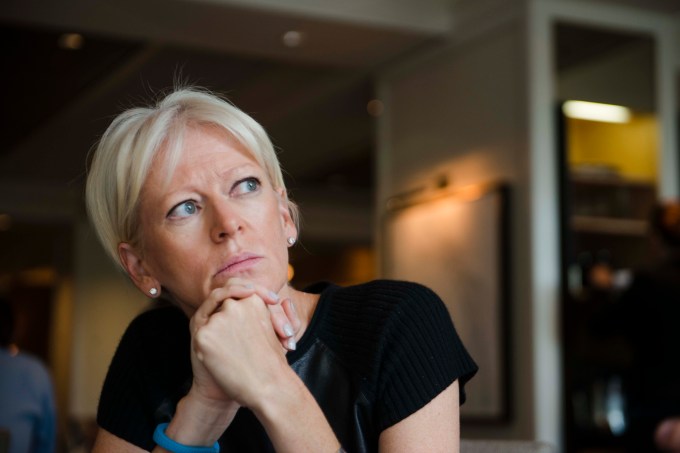
Joanna Coles, Photo by Amanda Voisard for The Washington Post via Getty Images.

Joanna Coles, former Chief Content Officer at Hearst
Joanna Coles, who oversaw all editorial operations for the 300-title global publishing group Hearst since September 2016, announced with a fun video on August 6 that she would be stepping down. The former editor-in-chief of Cosmopolitan and Marie Claire (as they shifted into a digital-first era) said she would announce her next adventure sometime this fall after taking a break. Coles has been a board member of Snap since 2015 and was appointed as an Officer of the Order of the British Empire.

Rich Battista, former CEO of Time Inc
Time Inc’s CEO left the helm of the publishing group upon its $2.8 billion acquisition by Meredith Corp in the spring. Battista held a range of major publishing, TV, and digital media roles before then, from leading Fox’s cable networks to running Mandalay Sports Media to turning around Gemstar-TV Guide and selling it for $2.3 billion. At various points in his career Battista has been a big company executive, an investor, and an entrepreneur.

Joel Stillerman, former Chief Content Officer at Hulu
Stillerman was one of several executives who departed Hulu in May in a leadership reshuffle by the company’s new CEO. Stillerman was previously President of Original Programming and Development for AMC and SundanceTV. At a time when nearly every major TV company is vying to compete with Netflix through another streaming video platform (on their own or in partnership with others), there’s a lot of expertise to be had from the executive to oversaw all content for Netflix’s top competitor.

George Strompolos, Founder and former CEO of Fullscreen
After AT&T acquired The Chernin Group’s remaining stake in Otter Media (Fullscreen’s parent company) in September, Fullscreen’s George Strompolos stepped down as CEO of the multi-channel network he founded in 2011. According to his LinkedIn profile, LA-based Strompolos in advising and investing in startups for the time being.

Erik Huggers, former CEO of VEVO
Huggers stepped down from VEVO in April after 3 years. He was previously an SVP at Verizon and President of Intel Media (which Verizon acquired). As a supervisory board member of Germany’s largest broadcasting group, ProSiebenSat.1, Huggers has also recently joined the board of ProSiebenSat.1’s streaming TV service 7TV, which is a joint venture with Discovery Inc.

Photo courtesy of Sophie Watts.

Sophie Watts, former President of STX Entertainment
Sophie Watts joined investor Robert Simonds in 2011 to develop a new film/TV studio with backing from TPG Growth. According to the WSJ, STX Entertainment has been planning a $500 million IPO in Hong Kong. As president, she primarily oversaw unscripted TV, digital, and VR operations. She left in January to explore new opportunities. Watts—who started her career in London producing videos for Beyoncé, Elton John, Madonna, Mariah Carey, and others—was named to Fortune’s 40 Under 40 in 2016 and is still just 33.

Jonathan Carson, former President of Mic
Carson founded 3 startups (music social network Outer Sound, interactive media consultancy Intercities, and social media intelligence company BuzzMetrics) before becoming the “CEO of Digital” at Nielsen and then the Chief Revenue Officer at VEVO. In July, he stepped down from VC-backed news startup Mic after one year as President. Expect his next move to be within the same realm of video, social, mobile, and data that he’s worked in thus far.

Colin Carrier, former Chief Strategy Officer at Twitch
Carrier joined Twitch in 2013, leaving the Eversport Media startup he co-founded to become General Manager of Justin.TV which operated independently from the rest of Twitch. He transitioned to become Twitch’s Chief Strategy Officer in 2014 upon Amazon’s $1 billion acquisition of the live-streaming platform. While CSO, he oversaw the acquisition of CurseMedia and ClipMine and developed a personal angel investment portfolio of over 30 startups (including Cruise, which GM acquired for over $1B). He departed Twitch over the summer.
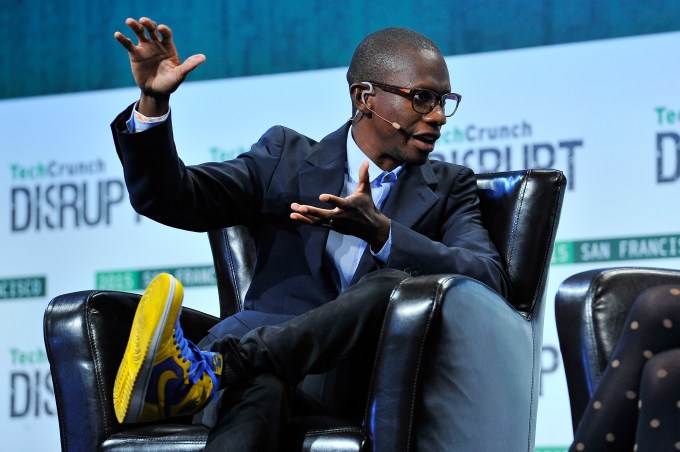
Troy Carter speaks onstage during TechCrunch Disrupt SF 2015 (Photo by Steve Jennings/Getty Images for TechCrunch)

Troy Carter, former Global Head of Creator Services at Spotify
A career talent manager in the music industry who worked with artists like Lady Gaga, John Legend, and Meghan Trainor, Carter joined Spotify in June 2016 as the face of the streaming service within the music industry. Having stepped down in September, he is among several top executives who have left Spotify in 2018 before and after it listed on the NYSE. Carter—who also built an angel investing portfolio of over 40 startups—hasn’t announced his next endeavor but appears to still be making investments through the VC fund he co-founded, Cross Culture Ventures.

Stefan Blom, former Chief Content Officer of Spotify
Blom left Spotify early this year just before the music streaming service went public with a $29 billion market cap. He had been Chief Strategy Officer and Chief Content Officer over the prior 4 years, working in part on Spotify’s early steps into original video (which it retreated from). Before Spotify, he was CEO of the Nordic division at EMI (a notable record label group).

Matthew Ball, former Head of Strategy at Amazon Studios
Ball joined Amazon Studios as Head of Strategy in 2016 after working within The Chernin Group as Director of Strategy & Business Development for Otter Media (which is now fully owned by AT&T). Since leaving Amazon earlier this year, he has continued to publish widely-read blog posts about the future of media for MediaREDEF—which he has been doing since 2014—and, according to his Twitter bio, is currently “tinkering away on a small idea that could be more”.

Matt Pincus, Founder and former CEO of SONGS Music Publishing
Last December, Pincus sold his innovative music publishing firm SONGS Music Publishing, which had become the largest independent publishing of contemporary music in the US, to Kobalt for a rumored $150 million. He departed in March and has since become a Special Advisor to Snap Inc and taken an Entrepreneur-in-Residence title at leading digital media merchant bank LionTree.

Who are other top executives at the intersection of media + tech who are launching new companies or available to fill open CEO roles? Let me know on Twitter at @epeckham.

Comics legend Stan Lee has died

Stan Lee, likely the best-known and most beloved comics writer of all time, has died at the age of 95.

“Stan Lee was as extraordinary as the characters he created,” said Disney CEO Bob Iger in a statement. “A super hero in his own right to Marvel fans around the world, Stan had the power to inspire, to entertain, and to connect. The scale of his imagination was only exceeded by the size of his heart.”

Lee was the pen name of Stanley Martin Lieber — he later said that he was saving his real name for the serious writing he planned to do one day, but it’s as Stan Lee that he’ll be remembered.

Along with artists Jack Kirby and Steve Ditko, Lee was one of the primary creative forces at Marvel Comics during an extraordinary run in the 1960s, which saw the launch of a mind-boggling list of popular characters, including Spider-Man, the Fantastic Four, Iron Man, the Incredible Hulk, the Mighty Thor (granted, he had some mythological inspiration for that one), the X-Men and Black Panther.

At first glance, those classic storylines might seem primitive when compared to modern comics, to say nothing of the big-budget cinematic blockbusters that they inspired. But with their flawed heroes and real-world themes, not to mention their emphasis on a shared universe (specifically a New York City teeming with superheroes), they represented a major breakthrough. And they can still be read with pleasure today, thanks to the bold, energetic art and the bombastic charm of Lee’s writing: Face front, true believers!

It was also during these years that Lee became the face of Marvel Comics. Through his editorials, his interviews and his tongue-in-cheek appearances in the comics themselves, he created the legend of the Marvel Bullpen, and of Stan Lee, the team’s friendly, alliteration-loving leader.

There’s been some reassessment of Lee’s legacy in recent years, as his subsequent ventures became entangled in legal and financial issues, and as fans and critics argued that his talent for self-promotion had obscured the contributions of others, particularly Ditko and Kirby.

Nonetheless, to the world at large, Stan Lee remained synonymous with Marvel, an association cemented by his recent cameos in Marvel films. Even when those cameos failed to make me laugh, I enjoyed them as a reminder that these billion-dollar franchises began in the fertile imaginations of individual writers and artists.

Plus, they suggested that Lee remained charming and funny well into his 90s, and they even made me hope that he might live for as long as his characters survived. Sadly, that wasn’t the case.

Okay, one final Form D note

Some more comments from readers on the changing culture around startups filing their Form Ds with the SEC, and then a short update on SoftBank and a bunch more article reviews.

We are experimenting with new content forms at TechCrunch. This is a rough draft of something new – provide your feedback directly to the authors: Danny at [email protected] or Arman at [email protected] if you like or hate something here.

Lawyers are pretty uniform that disclosure is no longer ideal

If you haven’t been following our obsession with Form Ds, be sure to read our original piece and follow up. The gist is that startups are increasingly foregoing filing a Form D with the SEC that provides details of their venture rounds like investment size and main investors in order to stay stealth longer. That has implications for journalists and the public, since we rely on these filings in many cases to know who is funding what in the Valley.

Morrison Foerster put together a good presentation two years ago that provides an overview of the different routes that startups can take in disclosing their rounds properly.

Traditionally, the vast majority of startups used Rule 506 for their securities, which mandates that a Form D be filed within 15 days of the first money of the round closing. These days though, more and more startups are opting to use Section 4(a)(2), which doesn’t require a Form D, but also doesn’t provide a “blue sky” exception to start securities laws, which means that startups have to file in relevant state jurisdictions and no longer have preemption from the SEC.

David Willbrand, who chairs the Early Stage & Emerging Company Practice at Thompson Hine LLP, read our original articles on Form Ds and explained by email that the practices around securities disclosures have indeed been changing at his firm and others:

We started pushing 4(a)(2) very hard when our clients kept getting “outed” thru the Form D and upset about it. In my experience, for 99% is the desire to remain in stealth mode, period.

[…]

When I started in 1996, Form Ds were paper, there was no internet, and no one looked. Now they are electronic and the media and blogs scrape daily and publish the information. It actually really is true disclosure! And it’s kind of ironic, right, which goes to your point – now that it’s working, these issuers don’t want it.

[…]

What I find is that the proverbial Series A is the brass ring, and issuers wants to call everything seed rounds (saving the title) until something chunky shows up, and stay below the radar too. So they pop out of the cake publicly for the first time with a big “Series A” that they build press around – and their first Form D.

Another piece of feedback we received was from Augie Rakow, the co-founder and managing partner of Atrium, which bills itself as a “better law firm for startups” that TechCrunch has covered a few times before. He wrote to us that in addition to the media concerns, startups also have to be aware of the broad cross-section of interested parties to Form Ds that hasn’t existed in the past:

Today, there is a bigger audience in terms of who cares about venture backed companies. Whether this spun off from the launch of the Facebook movie or the fact that over two billion people across the global have the internet at their fingertips via smartphones, people are connected and curious. The audience is not only larger but also encompasses more national and international interests. This means there are simply more eyes on trends, announcements, and intel on privately held companies whether they are media, investors, or your competitors. Companies that have a good reason to stay stealth may want to avoid attracting this attention by not making a public Form D filing.

For startups, the obvious advice is to just consult your attorney and consider the tradeoffs of having a very clean safe harbor versus more work around regulatory filings to stay stealthy.

But the real message here is for journalists. Form Ds are no longer common among seed-stage startups, and indeed, startup founders and venture investors have a lot of latitude in choosing how and when they file. You can no longer just watch the SEC’s EDGAR search platform and break stories anymore. Building up a human sourcing capability is the only way to get into those early investment rounds today.

Finally — and this is something that is hard to prove one way or the other — the lack of disclosure may also mean that the fears around seed financing dropping off a cliff may be at least a little bit unfounded. Eliot Brown at the Wall Street Journal reported just yesterday that the number of seed financings is down 40 percent, according to PitchBook data. How much of that drop is because of changing macroeconomic conditions, versus changes in filing disclosures?

Quick follow up on SoftBank

Tokyo Stock Exchange. Photo by electravk via Getty Images

Last week, I also got obsessed with SoftBank. The company confirmed today that it intends to move forward with the IPO of its Japanese mobile telecom unit, according to WSJ and many other sources. The company is targeting more than $20 billion in proceeds, and its overallotment could drive that above $25 billion, or roughly the level of Alibaba’s record IPO haul.

One interesting note from Taiga Uranaka at Reuters on the public issue is that everyday investors will likely play an outsized role in the IPO process:

Yet SoftBank’s brand name is still likely to draw retail investors long accustomed to using SoftBank’s phone and internet services. Many still see CEO Son as a tech visionary who challenged entrenched rivals NTT DoCoMo Inc ( 9437.T ) and KDDI, and brought Apple Inc’s ( AAPL.O ) iPhone to Japan.

Japanese households are commonly seen as an attractive target in IPOs with their 1,829 trillion yen in financial assets, even if they are traditionally risk-averse with over 50 percent of assets in cash and deposits.

More than 80 percent of the shares will be offered to domestic retail investors, a person with knowledge of the matter told Reuters.

Pavel Alpeyev at Bloomberg noted that “SoftBank is looking to tempt investors with a dividend payout ratio of about 85 percent of net income, according to the filing. Based on net income in the last fiscal year, that would work out to an almost 5 percent yield at the indicated IPO price.” A higher dividend ratio is particularly attractive to retired individual investors.

Despite SoftBank’s horrifying levels of debt, Japanese consumers may well save the company from itself and allow it to effectively jump start its balance sheet yet again. Complemented with a potential Vision Fund II, Masayoshi Son’s vision for a completely transformed SoftBank seems waiting for him in the cards.

Notes on Articles

Tech C.E.O.s Are in Love With Their Principal Doomsayer – Nellie Bowles writes a feature on Yuval Noah Harari, the noted philosopher and popular author of Sapiens. Bowles investigates the paradoxical popularity of Harari, who sees technology as creating a permanent “useless class” and criticizes Silicon Valley with his now enduring popularity in the region. Interesting personal details on the somewhat reclusive Israeli, but ultimately the question of the paradox remains sadly mostly unanswered. (2,800 words)

Why Doctors Hate Their Computers – Atul Gawande discusses learning and using Epic, the dominant electronic medical records software platform, and discovers the challenges of building static software for the complex adaptive system that is health care. His observations of the challenges of software engineering will be well-known to anyone who has read Fred Brooks, but the piece does an excellent job of exploring the balancing act between the needs of technocratic systems and the human design needed to make messy and complicated professions work. Worth a read. (8,900 words)

Picking flowers, making honey: The Chinese military’s collaboration with foreign universities – An excellent study by Alex Joske at the Australia Strategic Policy Institute on the hundreds of military scientists from China who use foreign academic exchanges as a means of information acquisition for critical scientific and engineering knowledge, including in the United States. China’s government under Xi Jinping has made indigenous technology development a chief domestic priority, and the U.S. innovation economy is encouraged to increasingly guard its intellectual property. (6,500 words)

The Digital Deciders – New America report by Robert Morgus who investigates the fracturing of the internet, which I have written about at some length. Morgus finds that a small group of countries (the “digital deciders”) will determine whether the internet continues to be open or whether nationalist interests will close it off. Let’s all hope that Iraq believes in freedom of expression and not Chinese-style surveillance. Worth a skim. (45 page report, but with prodigious tables)

Reading Docket

Twitter, those ‘verified’ bitcoin-pushing pillocks are pissing everyone off

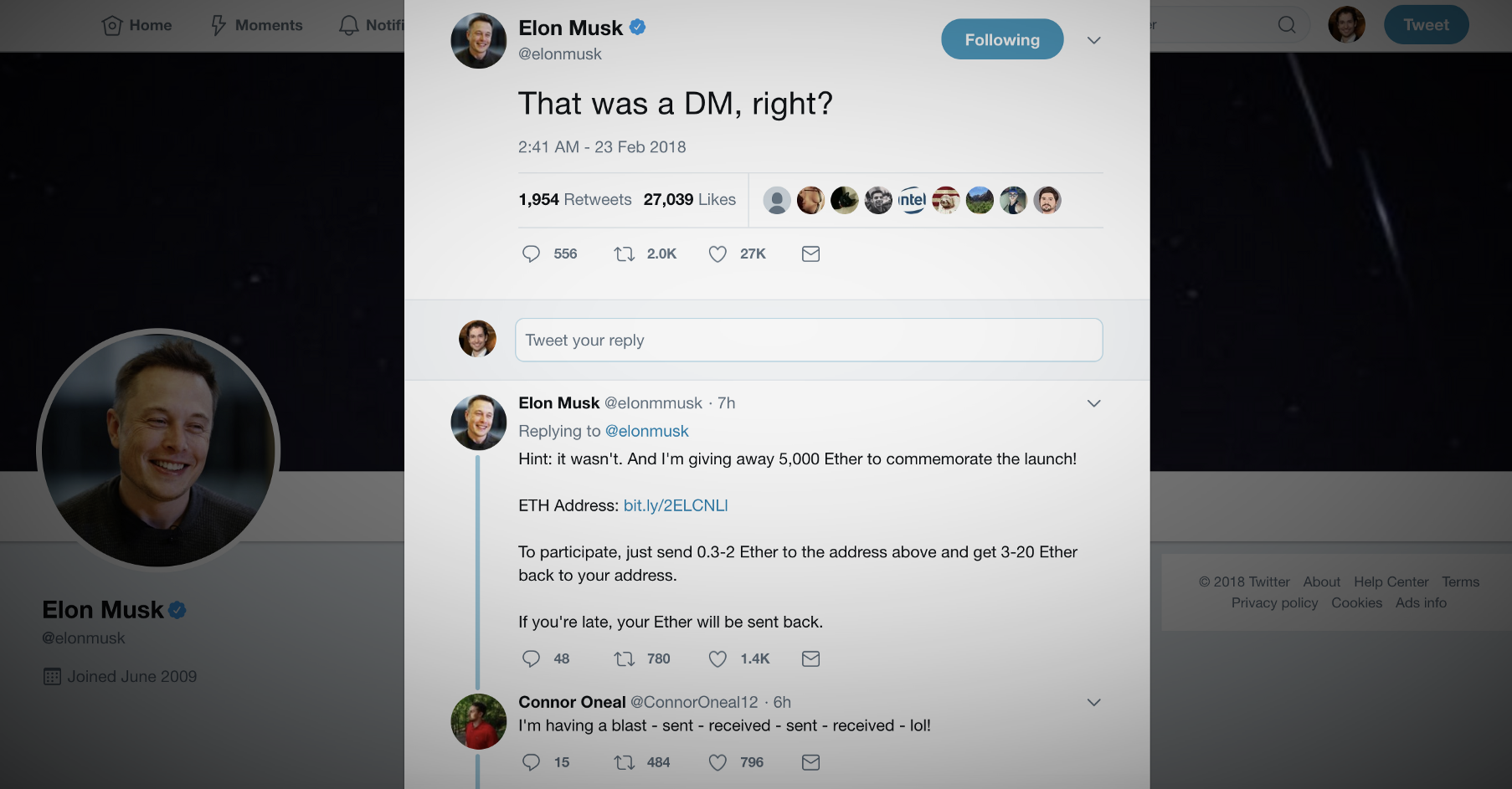
Elon Musk’s tweets piss me off for two reasons.

When he’s not accusing actual heroes of sex crimes or trolling the federal government, it’s what comes after that drives me batshit. The top reply to most of his tweets is some asshat impersonating him to try to trick his followers into falling for a bitcoin scam.

These “get rich quick” scams are fairly simple. A hacker hijacks a verified Twitter account using stolen or leaked passwords. Then, the hacker swaps the account’s name, bio and photo — almost always to mirror Elon Musk — and drops a reply with “here’s where to send your bitcoin,” or something similar.

The end result appears as though Musk is responding to his own tweet, and nudging hapless bitcoin owners to drop their coins into the scammer’s coffers.

One of the latest “victims” was @FarahMenswear. The clothing retailer — with some 15,500 followers — was hacked this morning to promote a “bitcoin giveaway.” In the short time the scam began, the bitcoin address already had more than 100 transactions and over 5.84 bitcoins — that’s $37,000 in just a few hours’ work. Many Twitter users said that the scammers “promoted” the tweet — amplifying the scam to reach many more people.

On one hand, this scam is depressingly easy to pull off that even I could’ve done it. Depressing on the other, because that’s half a year’s wages for the average reporter.

Still, that $37,000 is a drop in the ocean to some of the other successful scam artists out there. One scammer last week, this time using @PantheonBooks, made $180,000 in a single day by tricking people into turning over their bitcoin and promising great returns.

Another day, another Elon Musk-themed bitcoin scam. (Image: screenshot)

Why is the scam so easy?

Granted, it’s clever. But it’s a widespread problem that can be largely attributed to Twitter’s nonchalant, “laissez-faire” approach to account security.

The common thread to all of these cryptocurrency scams involve hijacking accounts. Often, hackers use credential stuffing — that’s using the same passwords stolen from other breaches on other sites and services — to break into Twitter accounts. In nearly all successful cases, the hacked Twitter accounts aren’t protected with two-factor authentication. Brand accounts shared by multiple social media users almost never use two-factor, because it’s hard to share access tokens.

A Twitter spokesperson said it’s improved how it handles cryptocurrency scams and has seen a significant reduction in the amount of users who see scammy tweets. The company also said that scammers are constantly changing their methods, and Twitter is trying to stay one step ahead. In many cases, these scams are nuked from the site before they’re even reported.

And, Twitter said it regularly reminds account owners to switch on stronger security settings, like two-factor authentication.

Well, enough’s enough, Twitter. You can lead a horse to water but you can’t make it drink. So maybe it’s about time you bring the water a little closer.

Until something better comes along, Twitter should make two-factor authentication mandatory for verified accounts, especially high-profile accounts — like politicians. It’s no more of an inconvenience than switching on two-factor for your email inbox or other social networking account. The settings are already there — it even rolled out the more secure app-based authentication a year ago to give users the option of switching from the less-secure text message system.

If the only other option is to stop Elon Musk from tweeting…

BlaBlaCar to acquire Ouibus and offer bus service

French startup BlaBlaCar is announcing plans to acquire Ouibus, the bus division of France’s national railway company SNCF. For the first time, BlaBlaCar is moving beyond carpooling and plans to offer both long-distance carpooling rides and bus rides.

BlaBlaCar already ran a test with Ouibus for the past six months on popular corridors. It looks like both companies are happy with this test, as SNCF is willing to let BlaBlaCar run Ouibus from now on.

As part of this deal, BlaBlaCar is announcing a new $114 million investment (€101 million) from SNCF and existing BlaBlaCar investors. I’d guess that this isn’t just cash but probably cash and shares as part of the move with SNCF. Yes, you read that correctly, SNCF is now an investor in BlaBlaCar.

Ouibus has transported more than 12 million passengers over the past few years in France and Europe. Many thought that buses would hurt BlaBlaCar over the long run. By offering buses on BlaBlaCar directly, the company can capitalize on its brand and huge community to counter that trend. BlaBlaCar is now a marketplace for road travel.

BlaBlaCar is taking a risk, as Ouibus has been relentlessly losing money. Just like other bus companies, Ouibus relies heavily on contractors, which means that BlaBlaCar could quickly adjust the offering. It’ll also depend on product integrations on BlaBlaCar, OUI.sncf and other platforms.

BlaBlaCar currently has 65 million users in 22 countries and is about to reach profitability. And you can expect to find ridesharing offers on OUI.sncf in the coming months.

Chappy, the Bumble-backed dating app for gay men, inks partnership with GLAAD

Chappy, the dating app for gay men, has today announced a partnership with GLAAD. As part of the partnership, Chappy will make a donation to GLAAD for each conversation initiated on the dating app, from now throughout 2019.

The company won’t disclose the amount of the donation, but said that it hopes to raise “hundreds of thousands of dollars.”

Chappy launched in 2017 to give gay men an authentic, discrimination-free way to connect with one another. The app uses a sliding scale to let users indicate what they’re looking for in a relationship, ranging from “Cute” to “Sexy.” The app has more than 650,000 registered users, and has seen more than 1 billion swipes.

Chappy is backed by Bumble and controlled by Bumble shareholders, falling under the Badoo umbrella of dating apps. Last month, Bumble named Chappy its official dating app for gay men. As part of that relationship, Bumble and Chappy will be cross-promoting each other’s apps.

Adam Cohen-Aslatei, managing director at Chappy, says the donations to GLAAD will be unrestricted, and can be used by GLAAD however they see fit. Cohen-Aslatei also hopes to contribute to GLAAD’s research projects, and said that he sees the opportunity for the Chappy community to provide data-based insights to that research.

Cohen-Aslatei joins the Chappy team from Jun Group, where he was vice president of marketing. He was appointed to the position last month.

“There are a lot of dating apps out there and a lot of gimmicks out there,” said Cohen-Aslatei. “We’re trying to improve the way the gay community meets each other and thinks about relationships, but also the way they think about their commitment to the community. We’re a relationship and advocacy app, and we want to partner with the right organizations to drive awareness to what we are.”

With the Paris Call, Macron wants to limit cyberattacks

French President Emmanuel Macron gave a speech at the Internet Governance Forum at UNESCO in Paris. While the IGF has been around for a while, it hasn’t been as active as some would have hoped.

That’s why the French government is issuing the Paris Call, a three-page document on cybersecurity. President Macron hopes to foster the IGF and create a subgroup of countries (and companies) that can agree on cybersecurity issues.

“First, internet works and is here. And even though news bulletins are riddled with cyber incidents, we blindly trust tech tools,” Macron said.

And yet, according to him, if the global community can’t agree on appropriate regulation, there’s a risk for the integrity of democratic processes. He thinks that there are currently two sides. Authoritarian governments already filter internet requests to restrict the web to a subset of the internet, while democratic countries let anyone browse a (mostly) unfiltered web.

“Today’s cyberattacks can compromise health services. And if we don’t know for sure that the system is secure at all times, the system is going to fragment into multiple spaces.”

In other words, cyberattacks could lead democratic countries to imitate China and block many web services in order to protect the network.

“That’s why I came today to suggest a new collegiate method. This forum should produce more than debates and talks. It should become something new to support concrete decisions,” Macron said.

He’s suggesting that the IGF should report to the Secretary-General of the United Nations directly. And he’s also supporting the Paris Call, an agreement between countries, companies and NGOs.

Hundreds of organizations have already signed the Paris Call, such as most European countries, Microsoft, Cisco, Samsung, Siemens, Facebook, Google, the ICANN, the Internet Society, etc. But China and the U.S. have yet to sign the Paris Call.

You can read the full text of the Paris Call here. Members of the Paris Call mostly agree to prevent cyberattacks of all sorts — it’s a peace offer.

When it comes to content, Macron didn’t want to say that he was against the web. He mentioned that the web enabled the Democratic Spring, greater mobilization against climate change and women’s rights. But he also said that extremists are now leveraging the web for hate speech.

“Giant platforms could become not just gateways but also gatekeepers,” Macron said.

There have been efforts in the past when it comes to removing terrorist content and hate speech. But Macron now thinks that it should go further.

That’s why Facebook and the French government are going to cooperate to look at Facebook’s efforts when it comes to moderation.

Finally, Macron used this opportunity to talk once again about France’s digital efforts. The French government has been working hard on a new way to tax tech giants in Europe so that they’re taxed more fairly. Macron framed it as a way to protect smaller companies from unfair competition. But negotiations are stuck for now.

Macron also defended a third way when it comes to artificial intelligence investments and innovation.

Enterprise shopping season starts early with almost $50B in recent deals

Black Friday may still be 10 days away, but shopping season started early in the enterprise this year. We have seen acquisitions totaling almost $50 billion in the last couple of months alone, topped by the mega $34 billion IBM-Red Hat deal two weeks ago. What exactly is going on here?

While not every deal has been for that kind of money, we are seeing an unusually large number of mega deals this year, something that some folks were predicting would happen when the big tech companies were allowed to repatriate their money as part of last year’s tax deal.

Let’s look at some of the multi-billion deals we have seen so far this year:

Supply and demand

Big companies are opening their checkbooks in a big way right now, buying everything from marketing to analytics to security companies. They are grabbing open source and proprietary. They are looking at ways to bridge the cloud and on-prem. There is a whole host of software and not much rhyme or reason across the deals.

What they have in common is that they are enormous offers that are simply too huge to refuse. These companies flush with cash see opportunities to fill holes, and they are going for one piece after another.

One of the reasons the prices are going so high is that there is a limited number of companies available to buy, and that is driving up the price, says Ray Wang, founder and principal analyst at Constellation Research. As he sees it, there are only 3-5 decent players per category right now. He compares that with 10 years ago when we were seeing 10-15 players per category. With a limited number of viable startups, companies seem to be going after these companies harder. Combine that with fat wallets full of cash, and you suddenly have this wave of super-sized deals.

The companies being acquired by large organizations can justify selling in the usual ways. They can reward shareholders and investors. These larger organizations allow them to push their product roadmaps much more quickly than they could on their own. They give them access to international markets and mega sales teams.

Buy versus build

Still, companies have been spending unusually large sums for relatively small amounts of revenue. In deals over the last three weeks, we have seen IBM pay $34 billion for a company with around $3 billion in revenue. We saw SAP paying $8 billion for a mere $400 million in revenue.

This certainly seems on its face to be a massive overpay, but Constellation’s Wang says ultimately this often comes down to a classic build versus buy decision. SAP could build a similar product to Qualtrics, or they could simply buy it and put the massive SAP salesforce to bear on it. “SAP can sell into 100,000 customers. They only have a 10 percent overlap with Qualtrics. The numbers work, and it beats taking a new product to market,” Wang told TechCrunch.

Wang believes this could be the strategy behind many of these acquisitions, while admitting that the numbers sound a bit crazy. As he says, the formula used to be three times, three years trailing revenues. Now it’s 15-20 times. While those may be hard numbers to justify, he believes it’s a win-win for buyer and acquired — and investors win big too, of course.

Staying the course

In many instances like Red Hat, GitHub and Qualtrics, the companies will likely remain separate, independent units inside the larger organization, at least for the time being, while looking for meaningful crossover inside the larger company when it makes sense.

But Tony Byrne, founder and principal analyst at Real Story Group, says these large companies tend to listen to Wall Street, and customers should be wary of what they hear when it comes to their favorite products and services. “You cannot trust the initial pleasantries about continuity that come out of the first press release. These are huge vendors that listen first and foremost to Wall Street. If there’s an offering that doesn’t totally align with their story to investors, it is not going to get much love and is at risk for getting eliminated or calved off,” Byrne explained.

It’s also hard to know how well two companies are going to fit together until the deal actually closes. Sometimes the acquiring company doesn’t know what they have or how to sell it. Sometimes the two companies don’t fit well together or the founders or key executives don’t fit smoothly into the new hierarchy. They try to figure this all out beforehand, but it’s not always easy to know how it will play out in reality.

Regardless, we are seeing an unusually high level of massive acquisitions, and chances are, there are more coming.

Audioburst turns the best part of podcasts into personalized news briefs

Tel Aviv-based Audioburst has been developing a search engine for audio news, which allows users to locate audio content within podcasts and other talk radio programs. Today, the company is capitalizing on its technology to launch personalized playlists that deliver custom news briefs that get better over time the more you use the product.

The feature has been built using deep AI learning, the company says.

The content itself is drawn from top podcasts and the radio stations in Audioburst’s index, and will alert you to new information based on your chosen keywords and topics.

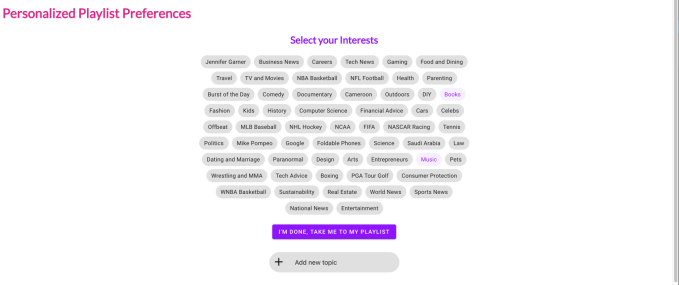
To use the feature, you first sign up on the Audioburst website, then select from a set of interests or add your own. When you’re finished with the selection process, you just hit the “I’m done” button to be taken to your personalized playlist of audio clips.

The end result is being able to listen to the parts of the podcasts or other audio programs you would actually care about, rather than slogging through half an hour or more of chatter for the one tidbit of news you were interested in.

For example, when testing the feature this morning, I chose a variety of topics like “tech news,” “movies,” “entertainment,” “science,” “parenting” and more, and was delivered a set of audio clips that included a discussion of Disney’s “Star Wars” spin-off series starring Diego Luna; a chat about the 2018 MacBook Air overhaul; an assessment of the smog in L.A.; and a lot of other clips I chose to skip (but will hopefully train the AI further).

You can try the feature yourself at search.audioburst.com by clicking on “Personalized Playlist” in the top left.

The results were hit or miss, which is expected — to some extent — fresh out of the gate. But there were also times when the clips didn’t actually serve up too much information. That is, you’d still need to turn to the podcast itself for the full story.

However, the feature itself isn’t necessarily going to be used by consumers directly on Audioburst’s website. Instead, its development came about thanks to requests from partners using its API.

The company says you can expect to see the personalized playlists integrated into its partners’ products in the smart speaker, mobile, in-car infotainment, and wearable tech spaces in 2019.

Audioburst currently has partnerships with ByteDance, Nippon, Bose, Harman, Samsung and more.

“Our mission is to deliver the most interesting news and audio content to our users wherever they are and personalization is the key ingredient. Through this feature, Audioburst is changing the way people consume audio in the same way that users consume music on Spotify,” said Assaf Gad, VP Marketing and Strategic Partnerships at Audioburst. “Expanding this experience through our partnerships with top OEMs, media companies and content creators means this has the power to reach users wherever they are,” he added.

Lyft is launching a rider loyalty program in December

Ridesharing service Lyft is today announcing its new plan to encourage repeat use: the launch of Lyft Rewards, a loyalty program for riders. The program, which will begin rolling out next month to select riders across the U.S., will let riders earn points for each dollar spent, which can then be used for upgrades to nicer cars or savings on future rides, among other things.

The company already caters to its regular riders in several ways, including through its recently launched subscription service, a program that rewards business users, and its partnership with Delta that allows riders to earn Delta airline miles with Lyft.

The new rewards program will aim for everyday riders, in order to better retain their business as a part of Lyft’s larger battle with Uber .

According to Lyft, riders will soon be able to earn points as they ride with Lyft, which can be accumulated over time and then used for upgrades. Initially, this includes getting upgraded to Lyft Lux or getting discounts on future rides. The company says it’s considering how to offer other passenger perks, like access to more experienced drivers and double-points days, for example. It’s also listening to customer feedback to hear about other rewards people may want.

The company says the program will launch in December 2018 and be available to select riders in various cities to start, before rolling out to more riders in 2019. If invited to join, riders will have an email or a notification from Lyft with the offer. Once enrolled in the program, riders will be able to check their points progress in the app.

The launch of Lyft’s loyalty program comes shortly after the company announced its “1 billion rides” milestone in September, a couple of months after Uber hit 10 billion trips.

Uber, meanwhile, has also been working on ways to better cater to its most frequent customers, including with last year’s launch of an Uber credit card that offers cash back on rides and UberEats dining. It has also dabbled with merchant offers, and rolled out its own subscription program.

Tiger Global returns with a $3M investment to help restaurants deal with delivery apps

Tiger Global has returned to backing early-stage Indian startups after it wrote a $3 million check for CheckMate, a U.S.-Indian startup that helps restaurants deal with the pain of multiple food ordering platforms.

The Series A and it represents the first time that CheckMate has raised outside funding for its business. It is also a return to early-stage investing in India — where CheckMate’s largest office is — for Tiger Global following a period of relative inactivity.

Founded two-and-a-half years ago initially as a bill-splitting app, CheckMate provides a platform that unifies food and payments to ease the chaos of working with modern consumer platforms. In this current age, restaurants simply must work with platforms like Uber Eats, Postmates, GrubHub, DoorDash and others to get orders, but the services don’t play together, or even with, existing restaurant systems.

That means that each service requires its own tablet for managing orders. On top of that, none integrate with order systems that print receipts for chefs or point-of-sale software. That means that restaurant staff must not only operate a bunch of iPads to handle the orders, but they have to manually enter them into their ordering systems (to ensure the ticket is processed so the order is cooked), then handle point of sale and bank the order for accounts.

That’s a lot of manual hassle, and it’s the core issue that CheckMate aims to solve.

It effectively operates like a bridge that connects the various delivery platforms to a restaurant’s management system. It automatically feeds orders from multiple food delivery services into the ordering system, and feeds the sales back into the restaurant management system. That helps keep the orders moving quickly, whilst managing account and sales without manual input.

“Online orders are still treated as a stepchild that’s alien to the business,” CheckMate founder and CEO Vishal Agarwal told TechCrunch in an interview. “With our solution, we inject online orders into the true heart and center of these businesses.”

A ‘wall’ of tablets is commonplace in restaurants as food delivery apps become an increasingly important source of orders

Headquartered in New York where Agarwal is based, CheckMate has rolled out to more than 1,000 locations in the U.S., and it counts Five Guys among its customers. The company recently expanded to Australia with its first customers, and Agarwal — previously with e-commerce company Choxi.com — said he is looking for further international growth. The plan to get it, however, is by piggybacking the POS systems it supports, including Brink, Toast and Revel, rather than establishing CheckMate’s own sales team.

That makes a lot of sense since the POS providers have a major incentive for linking their restaurant customers with CheckMate because it streamlines their operations and makes their life easier. It also helps keep CheckMate lean and mean.

The team itself is already lean and international. While Agarwal, who comes from India, is based in New York, the rest of his 10-person U.S. team is distributed, while the operations and tech team of 25 is located in CheckMate’s India office.

Because there are no public APIs, CheckMate has built its own platform in conjunction with food delivery services, and now Agarwal — who said he has invested his own money in CheckMate — plans to double down on R&D, and in particular more integrations, by using this Series A raise for hiring.

“Technology in the restaurant sector is under-utilized — I was coming from an e-commerce background where technology is everywhere,” he explained. “We quickly realized how much resistance to tech there is and we want to make it as easy as possible for operators to adopt our product.”

That simplicity also applies to CheckMate’s pricing model, which was recently adjusted. Previously, the company charged a set-up fee, but that has been abolished in favor of two tiers: $85 per restaurant for up to two platforms, and $100 for unlimited platforms per location.

“As restaurants streamline their operations to take advantage of rapidly increasing online orders, we
expect hundreds of thousands of restaurants to benefit from Checkmate’s unique solution,” Tiger Global partner Scott Shleifer said in a prepared statement.

The deal is an interesting one for Tiger Global, the 17-year-old New York investment firm that just closed a new $3.75 billion fund. The firm became well-known for writing bold checks that backed ambitious startups in India a couple of years ago before it put the brakes on that strategy.

According to a multitude of media reports, the firm’s management grew concerned that it was overexposed in India, where it had deployed some $2 billion via deals in unicorns like Flipkart and Uber rival Ola. Flipkart’s exit via a majority investment from Walmart, however, made the firm around $3 billion in returns, while it also retained a small stake in the business, which is tipped to have its own IPO in the future.

Tiger Global executive Lee Fixel, who spearheaded the India strategy, is said to have spent the last year working closely with Flipkart to realize the deal. Now that it is done, Tiger Global is said to be returning to investment mode in India, according to a recent Economic Times story. That means that CheckMate may be the first of many as the tiger begins to roar again.