Unicorns aren’t special anymore

When Aileen Lee, the former Kleiner Perkins partner and founder of the seed-stage venture capital firm Cowboy Ventures, coined the term “unicorn” in 2013 on this very site, there were just 39 companies that had earned the title.

She called them “the lucky/genius few.” Her definition: U.S. software startups launched since 2003 worth more than $1 billion. When she authored the viral post, just four companies were garnering valuations that high each year, according to her calculations. Five years later, the rate at which startups are becoming unicorns has increased 353.1 percent, according to PitchBook’s latest research.

Today, there are 145 “active unicorns” in the U.S. alone, worth an aggregate valuation of $555.9 billion.

Why? A couple of reasons. Namely, because companies are staying private longer and longer, allowing the unicorn count to continue to swell with very few companies transitioning out and into another club — the public markets club. Plus, there is so much capital available in the market, $80.1 billion, to be exact, that late-stage companies are opting for “mini-IPOs” sponsored by SoftBank instead of airing their dirty laundry in an S-1 filing.

There are no signs pointing to a slowdown in new unicorns. The latest data shows that it only took the average U.S. unicorn six years to achieve such status, versus 7.5 years only three years ago. I can think of several examples of companies that did it much faster than that: Brex, Lime and Bird are some recent companies to be worth $1 billion or more in record time.

Valuation step-ups are meatier than ever, too. The median late-stage valuation has increased by 50.7 percent year-over-year. Meanwhile, early-stage and seed-stage median valuations have jumped roughly 28 percent and 12 percent, respectively. Not to mention venture capital investment in 2018 is expected to reach highs not seen since the dot-com boom.

At the end of the day, a startup’s valuation, regardless of how large it is or how quickly it reached the billion-dollar milestone, shouldn’t matter. But these are metrics in which others in the startup ecosystem measure success and they determine the worth of a company — or at least the amount an investor is willing to pay for a piece. 

As much as I’d like to do away with the term, even the concept entirely, the proliferation of billion-dollar companies isn’t something I can ignore.

Feeling left out of a hot market? This new outfit has a fund with shares of 30 top ‘unicorns’ to sell you

When Equidate, a venture-backed secondaries marketplace based in San Francisco, closed its most recent round of funding with $50 million four months ago, it was hardly a surprising bet on the part of its backers. As startups linger ever longer as private companies, more people are looking to lock up shares wherever they can find them.

Investors have plenty of platforms from which to choose. In addition to Equidate, other companies that match investors with “pre-IPO” company shares include EquityZen, SharesPost and Seedrs. Still, individual investors have mostly been relegated to choosing this or that company on a piecemeal basis as shares have become available. Among few exceptions to this rule include investors in venture funds like 137 Ventures, whose express aim is creating a portfolio of secondary shares that have been acquired from earlier investors, founders, and employees, or in Industry Ventures, which has been buying up later-stage secondary shares since its founding in 2000. (Investing in SoftBank’s Vision Fund, which is piecing together a portfolio of unicorn companies, might be another option for people with enough access, though it comes with certain strings attached.)

No wonder Equidate thinks there’s a better way. And with the financial wind at its back, it just began testing out its theory. How? By spinning off a new asset management business whose sole purpose is to acquire shares in the “top” companies that are currently valued at more than a billion dollars but that still trade privately.

It isn’t going to buy five or 20 or 100 stakes. Instead, the portfolio will maintain positions in exactly 30 companies, and these will be adjusted on a quarterly basis, led by the person leading this new spin-off: Ziad Makkawi, a longtime investment advisor who recently spent two years as CEO of Qatar First Bank.

As Equidate founder and president Sohail Prasad sees it, his company is already spending time learning an awful lot about Palantir and Stripe and WeWork and Pinterest. It tracks bid and ask activity, along with how pricing and valuations are reflected by both new transactions and time decay. To underscore how much data is coursing through Equidate, he says that company now sees $1 billion in transaction volume on its platform annually.

After a point, he and the rest of Equidate’s management concluded that it made sense to create an index to track the health of these companies in a way that makes it easier to understand their performance relative to their peers (it rolled this out yesterday). It also decided to create a product around the index. Enter its new fund and accompanying asset management firm.

“We’re excited,” says Prasad. “This is going to let people buy for the first time a basket of all of these companies, which are vetted and that are already in their growth stages and in, really, in previous years, would have been public already.”

It’s easy to see other investors getting excited about a kind of exchange-traded fund filled with unicorns, too. But first things first. The new fund is still being raised, sounds like. It’s looking to close with between $50 million and $100 million in capital. It’s also worth noting that although SEC Chairman Jay Clayton has said he’d like the agency to allow more retail investors a shot at companies that have been out of their reach, Equidate’s new spin-off, Equiam, will still only accept checks from accredited investors, and they need to invest at least $250,000.

There’s also the prickly question of whether the companies that investors want most are accessible to Equiam. Unsurprisingly, Prasad, argues that it’s not an issue. “Because we’ll be a larger fund, we’ll be able to buy blocks of preferred stock where traditionally a person might not have access. We do have access at this scale.”

Well, if it’s able to raise its fund, maybe.

As for what Equiam is charging in management fees, the fund is “incredibly low cost,” says Prasad. Investors will have to decide whether they agree, but those who write the fund a $1 million or bigger check will pay a 1.5 percent management fee. Investors who come in at between $250,000 and $1 million will pay a 2.5 percent management fee.

If you’re curious, you can learn more by checking out Equiam’s site here.

Tidal arrives on the Amazon Echo

One key thing the HomePod has on the competition: streaming service synergy. It’s an important advantage at the heart of the premium smart speaker. While both Amazon and Google have their own streaming options, they pale in comparison to the top services, so third-parties are really the way to go.

Amazon’s just added another key offering to its arsenal. Tidal, the music streaming service that Jay-Z built, is now available on Echo devices courtesy of Amazon’s recently introduced Music Skill API. The move is likely to be more of a boon for Tidal than Amazon, of course, but the more options the better, naturally.

The service has been making an aggressive push to make its way to more devices, including the recent addition of a Samsung Wearable app. Tidal is clearly looking toward strategic outreach on Apple’s chief competition. The enemy of my enemy is my hardware partner and all of that good stuff.

The new skill makes it possible to set Tidal as your default Echo streaming service, so long as you’ve got a premium account.

Tinder tests ‘Swipe Surge’ in US to connect users during peak times

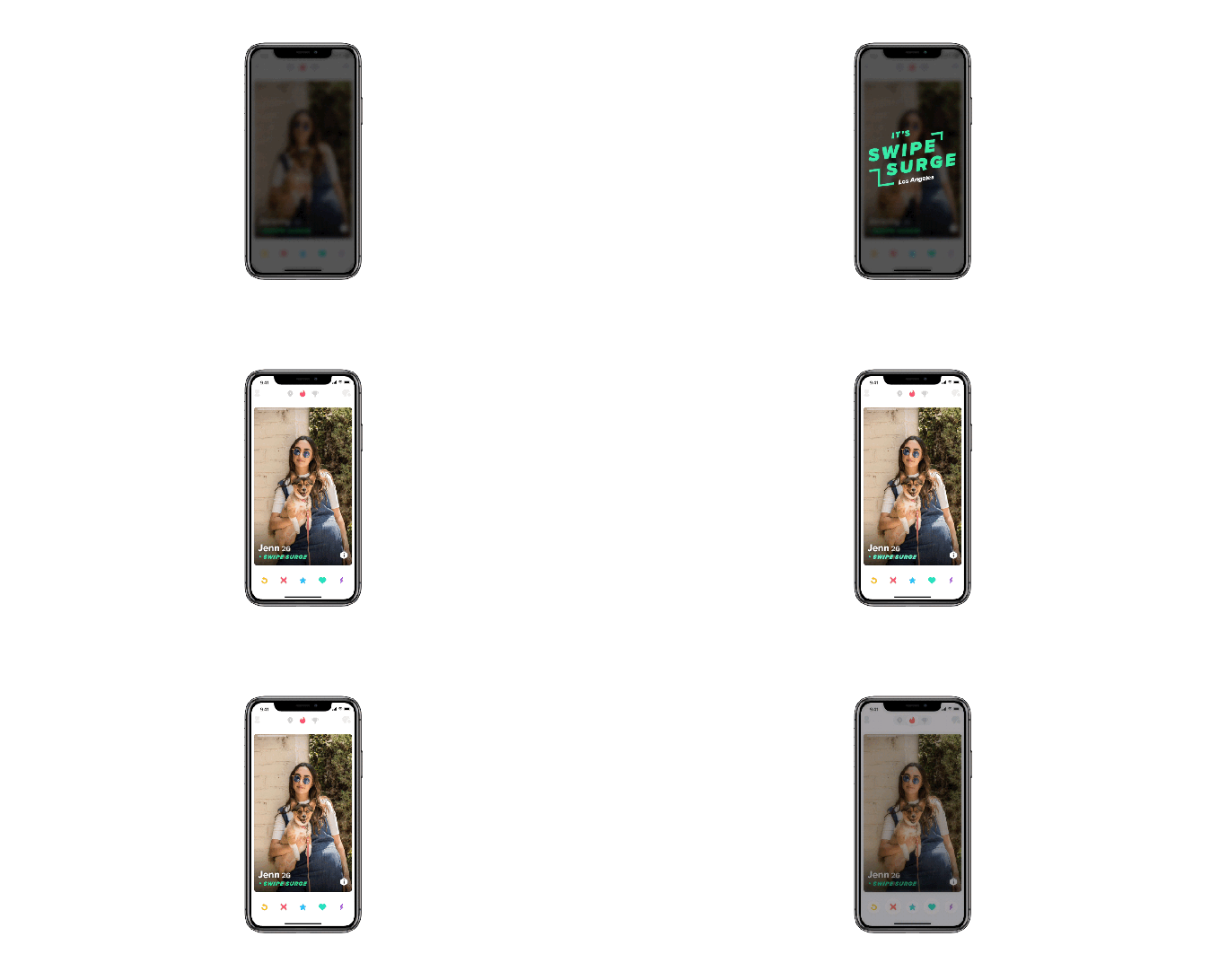
Tinder today announced the test of a new in-app experience it’s calling “Swipe Surge,” that will send notifications to users when there’s a spike in Tinder usage in their area. The feature is designed to allow Tinder to better capitalize on real-world events that drive increased usage – like music festivals, parties, or spring break holidays, for example.

The company says that it tested out sending push notifications to alert users about surge periods in its app back in 2016, and found that it resulted in users forming 2.5x more matches during a swipe surge.

Users also received nearly 20 percent more right swipes during these events, and they were 2.6x more likely to receive a message, Tinder noted.

Now it’s turning these push notifications into a real product with Swipe Surge.

In addition to the alerts designed to draw Tinder users into the app at the same time, the app will include “Swipe Surge” branding during the event. People who already joined the surge by responding to the push notification will then move to the front of the match queue, and Tinder will show you who’s currently active in the app.

Tinder says that activity during a surge is 15x higher overall, and increases matchmaking potential by 250%.

The company has been working to promote Tinder as a dating app for the younger demographic in recent months, with its marketing campaign focused on the “single lifestyle,” media publication “Swipe Life,” and a test expansion of Tinder U, its college student product.

The Swipe Surge test is underway now in major U.S. markets, says Tinder.


Shyft raises $6.5M to help retail and service workers swap shifts

Anyone that has experience in the service or retail industry knows swapping shifts can be a logistical nightmare that leaves employees in trouble with management or stuck working during a friend’s birthday party. As a former Old Navy “sellebrity” myself, I can confirm there’s a huge need for an efficient tool to solve this problem.

That’s where Shyft, a Seattle-based startup that helps connect shift workers, comes in. Using Shyft, employees can message each other, pick up each other’s shifts and ultimately earn more money by picking up available slots that might have otherwise gone unstaffed.

The startup has raised a fresh round of funding — a $6.5 million Series A co-led by Ignition Partners and Madrona Venture Group — to continue developing its workforce management tool. As part of the financing, Ignition managing partner Bob Kelly and Madrona managing director S. Somasegar will join its board of directors.

Shyft co-founder and chief executive officer Brett Patrontasch got the idea for the web and mobile app for workers from his last company, called Scholars at your Service, which employed 250 students-turned house painters. The students had no way of messaging or communicating with one another aside from their personal phone lines.

“It kind of seemed obvious that enterprise social should extend to shift workers,” Patrontasch told TechCrunch. “We are trying to bring a really consumer-friendly mobile experience to the front lines. [Employees] need products that solve their problems and we are really dedicated to helping that worker.”

So far, Shyft has partnered with Gap Inc. to provide the service to workers at its fleet of retail stores, which include Old Navy, Banana Republic and Athleta. Patrontasch says Shyft works with a “handful” of other national retailers, too.

Shyft, a Techstars accelerator graduate, has previously raised $1.5 million in seed funding from Madrona, Flying Fish Partners’ co-founder Heather Redman, former Seattle Seahawks offensive lineman Russell Okung and former Major League Baseball player Edgar Martinez.

Amazon launches ‘Alexa-hosted skills’ for voice app developers

Amazon on Thursday launched a new service aimed at Alexa developers that automatically provisions and helps them to manage a set of AWS cloud resources for their Alexa skill’s backend service. The service is intended to help developers speed the time it takes to launch their skills, by allowing them to focus on their skills’ design and unique features, and not the cloud services they need.

“Previously you had to provision and manage this back-end on your own with a cloud endpoint, resources for media storage, and a code repository,” explained Amazon on its company blog post, announcing the new service. “Alexa-hosted skills offer an easier option. It automatically provisions and hosts an AWS Lambda endpoint, Amazon S3 media storage, and a table for session persistence so that you can get started quickly with your latest project.”

Developers will also be able to use a new code editor in the ASK Developer Console to edit their code, while AWS Lamdba will handle routing the skill request, executing the skill’s code, and managing the skill’s compute resources.

Amazon S3, meanwhile, can be used for things the skill needs to store – like media files, such as the images being used for the skill’s Echo Show, Echo Spot and Fire TV versions.

The service comes at a time when Amazon Alexa and Google Home are in a race to grab market share – and mind share – in the smart speaker industry. A lot of this will come down to how useful these devices are for customers – and well-designed skills are a part of that.

Smart speaker adoption is growing fast in the U.S., having recently reaching 57.8 million adults, according to a report from Voicebot. But in terms of third-party development of voice apps, Amazon leads Google Home, having passed 40,000 U.S. skills in September.

Amazon says Alexa-hosted skills are available to developers in all Alexa locales. Developers can apply to join the preview here.

Walmart and Target embrace in-store mobile checkout for the holidays

Two of the U.S.’s largest brick-and-mortar retailers, Walmart and Target, are launching new mobile checkout systems in their stores to accommodate the influx of shoppers expected during the 2018 holiday season. Walmart says it’s expanding its “Check Out With Me” service to every Supercenter by Black Friday, while Target’s recently launched “Skip the Line” mobile checkout service is available nationwide and will have extra staff throughout the store during the busier shopping days.

Walmart first began testing Check Out With Me in April this year across hundreds of U.S. stores.

The system involves store staff wearing a small carrying case equipped with a Bluetooth receipt printer, and a cellular device that works as both a barcode scanner and credit card swiper for transactions.

Initially, Walmart tested the solution in its Lawn & Garden centers across 350 stores, where there’s more need for a mobile checkout solution.

Instead of customers having to lug heavy items – like bags of mulch and potted plants – to a checkout station, a Walmart team member could instead just scan the item on the shelf, so it can be loaded directly into the customer’s car afterwards.

Now that checkout system will make its way to Walmart’s over 3,000 Supercenters across the U.S. Starting on Black Friday, store associates will be positioned in the busiest areas of the stores, including not only the garden center as before, but also in other high-traffic areas like electronics and “action alley” – the areas featuring special promotions in the aisles.

“Associates will help customers pay and go by simply swiping their credit card and providing them with a paper or electronic receipt for their purchase,” the retailer explained.

The expansion of mobile checkout was one of several holiday plans Walmart announced, including also an expanded assortment of brands, digital maps inside the Walmart app, the updated Walmart.com website, free two-day shipping from marketplace sellers, and more.

Meanwhile, Target is recently said it’s launching mobile checkout in its stores in time for the holidays, as well.

The company had begun testing its “Skip the Line” mobile checkout experience in select stores in February 2018, but has expanded that as of last month to all Target stores nationwide.

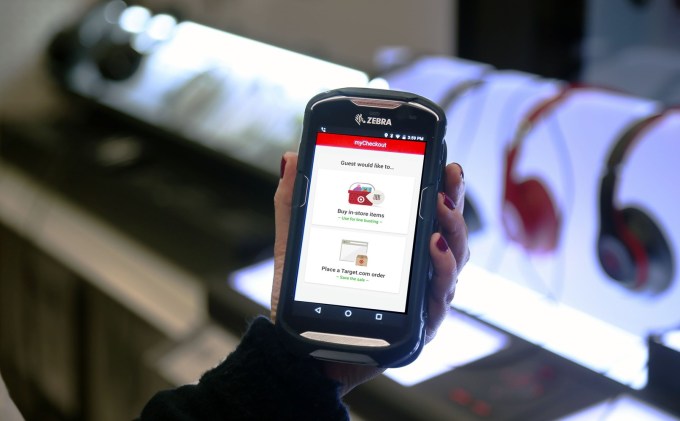
Similar to Walmart, Target’s solution includes equipping store staff with special handheld devices they can use to scan merchandise and process payments. From this same device, staff can also help customers place online orders if the store doesn’t carry an item they want.

During peak events – like Thanksgiving, Black Friday and others – team members will be positioned in the busiest areas of the store, including at the front-of-the-store and in the electronics department, the retailer says.

Today, more consumers are turning to e-commerce – and particularly to Amazon – for their holiday shopping needs out of convenience.

Now, those customers are looking for similar conveniences when they shop brick-and-mortar retailers, too. Stores are now catering to customer demand for faster, easier shopping by offering services like ship-to-store for online order pickup, same day order pickup (and driveup), and more.

With mobile checkout, retailers can address one of the remaining challenges of shopping in-store – those long checkout lines – without having to invest in expensive Amazon Go-like technology like camera systems and shelf sensors for a cashier-less experience.


A leaky database of SMS text messages exposed password resets and two-factor codes

A security lapse has exposed a massive database containing tens of millions of text messages, including password reset links, two-factor codes, shipping notifications and more.

The exposed server belongs to Voxox (formerly Telcentris), a San Diego, Calif.-based communications company. The server wasn’t protected with a password, allowing anyone who knew where to look to peek in and snoop on a near-real-time stream of text messages.

For Sébastien Kaul, a Berlin-based security researcher, it didn’t take long to find.

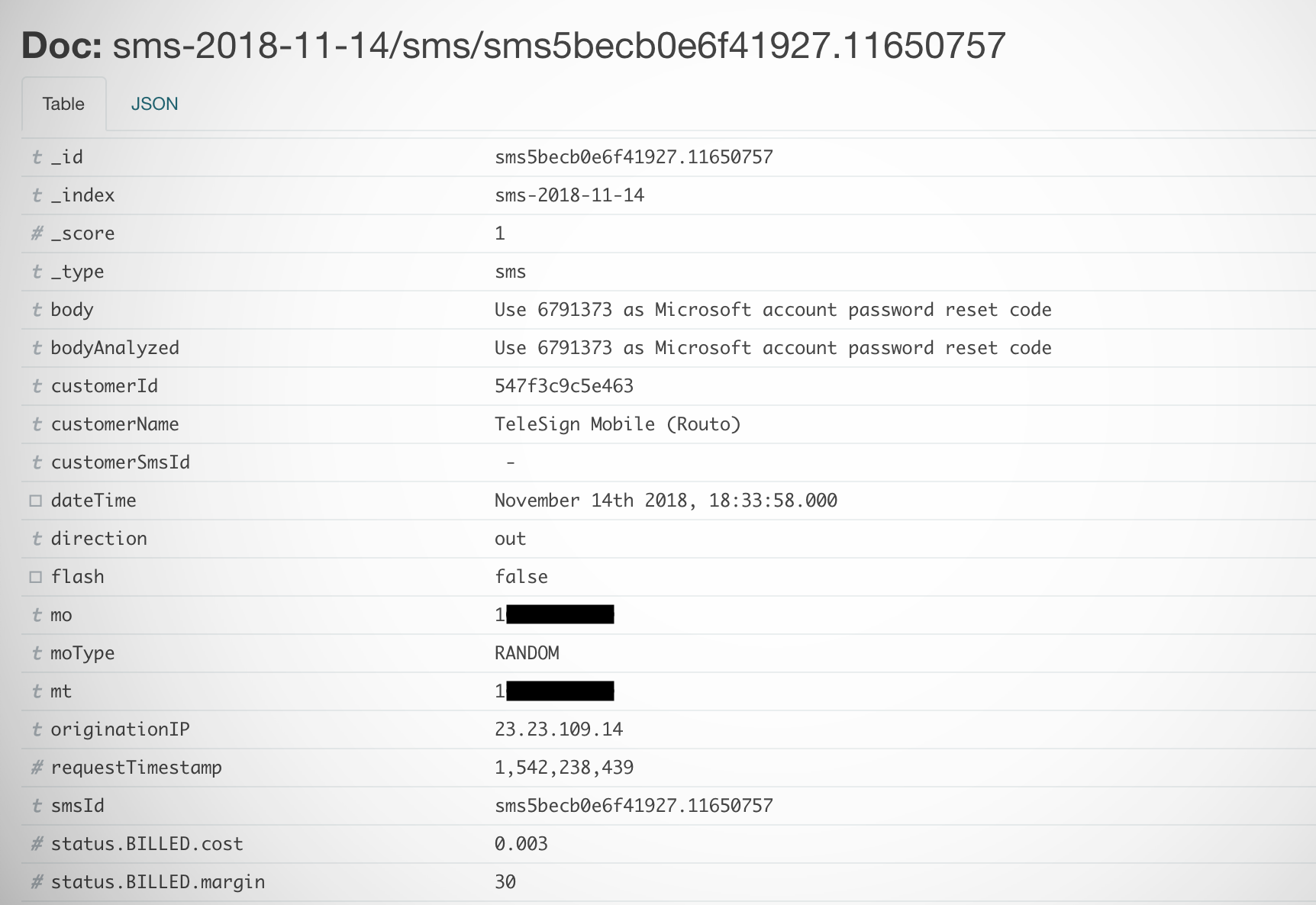
Although Kaul found the exposed server on Shodan, a search engine for publicly available devices and databases, it was also attached to to one of Voxox’s own subdomains. Worse, the database — running on Amazon’s Elasticsearch — was configured with a Kibana front-end, making the data within easily readable, browsable and searchable for names, cell numbers and the contents of the text messages themselves.

An example of one text message containing a user’s phone number and their Microsoft account reset code. (Image: TechCrunch)

Most don’t think about what happens behind the scenes when you get a text message from a company, whether it’s an Amazon shipping notification or a two-factor code for your login. Often, app developers — like HQ Trivia and Viber — will employ technologies provided by firms like Telesign and Nexmo, either to verify a user’s phone number or to send a two-factor authentication code, for example. But it’s firms like Voxox that act as a gateway and converting those codes into text messages, to be passed on to the cell networks for delivery to the user’s phone.

After an inquiry by TechCrunch, Voxox pulled the database offline. At the time of its closure, the database appeared to have a little over 26 million text messages year-to-date. But the sheer volume of messages processed through the platform per minute — as seen through the database’s visual front-end — suggests that this figure may be higher.

Each record was meticulously tagged and detailed, including the recipient’s cell phone number, the message, the Voxox customer who sent the message and the shortcode they used.

Among our findings from a cursory review of the data:

  • We found a password sent in plaintext to a Los Angeles phone number by dating app Badoo;
  • Several Booking.com partners were sent their six-digit two-factor codes to log in to the company’s extranet corporate network;
  • Fidelity Investments also sent six-digit security codes to one Chicago Loop area code;
  • Many messages included two-factor verification codes for Google accounts in Latin America;
  • A Mountain View, Calif.-based credit union, the First Tech Federal Credit Union, also sent a temporary banking password in plaintext to a Nebraska number;
  • We found a shipping notification text sent by Amazon with a link, which opened up Amazon’s delivery tracking page, including the UPS tracking number, en route to its destination in Florida;
  • Messenger apps KakaoTalk and Viber, and quiz app HQ Trivia use the service to verify user phone numbers;
  • We also found messages that contained Microsoft’s account password reset codes and Huawei ID verification codes;
  • Yahoo also used the service to send some account keys by text message;
  • And, several small to mid-size hospitals and medical facilities sent reminders to patients about their upcoming appointments, and in some cases, billing inquiries.

“Yeah, this is very bad,” said Dylan Katz, a security researcher, who reviewed some of the findings.

The exposure to personal information and phone numbers notwithstanding, the ability to access two-factor codes in near-real-time could have put countless number of accounts at risk of hijack. In some cases, websites will only require a phone number to reset an account. With access to the text message through the exposed database, hijacking an account could take seconds.

“My real concern here is the potential that this has already been abused,” said Katz. “This is different from most breaches, due to the fact the data is temporary, so once it’s offline any data stolen isn’t very useful.”

Kevin Hertz, Voxox’s co-founder and chief technology officer, said in an email that the company is “looking into the issue and following standard data breach policy at the moment,” and that the company is “evaluating impact.”

Many companies, including Facebook, Twitter and Instagram, have rolled out app-based two-factor authentication to thwart SMS-based verification, which has long been seen as vulnerable to interception.

If ever there was an example, this latest exposure would serve well.

E3 slouches towards irrelevance again as Sony announces it’s skipping the show

I like E3 . I really do. But it’s also monumentally dumb: game companies spending millions to show off essentially faked content to an increasingly jaded audience. And it’s increasingly out of step with how the gaming industry works. So it should come as no surprise that Sony will be skipping the show more or less altogether this year, joining Nintendo in taking a step back from spectacle.

Sony has been a part of CES for 20 years and this will be the first one it’s ever missed. I’ve gone to their events every time I’ve attended; I was there for their historic putdown of Microsoft after the latter announced some hugely unpopular restrictions on used games. I think you can actually see me near the front in the broadcast of that one. (You can! I’m at 1:29.)

And E3 has been a part of Sony’s yearly cadence as well. Like other companies, for years Sony hoarded information to debut at E3, TGS and Gamescom, but E3 was generally where you saw new consoles and flagship titles debut. But as even E3’s organizers have admitted over and over again, that’s not necessarily a good thing.

Too often we have seen half-finished games onstage at E3 that end up cancelled before the year is out, or commitments made to dates the companies can’t possibly keep. Assigning a complex, creative industry to a yearly schedule of major announcements is a great way to burn them out, and that’s exactly what’s happening.

Variety first noticed Sony’s absence from ESA communications. In a statement issued to multiple outlets, Sony said:

As the industry evolves, Sony Interactive Entertainment continues to look for inventive opportunities to engage the community. PlayStation fans mean the world to us and we always want to innovate, think differently and experiment with new ways to delight gamers. As a result, we have decided not to participate in E3 in 2019. We are exploring new and familiar ways to engage our community in 2019 and can’t wait to share our plans with you.

They won’t be alone. Nintendo hasn’t had a real proper E3 press conference in years. Instead, they host a live stream around the event and have a big booth where people mainly just play games. Their Nintendo Direct videos come out throughout the year, when the titles and developers are good and ready.

Microsoft is still there, and still puts on quite a show. I remember the original announcement of the Kinect, probably one of the weirdest and dumbest things I’ve ever taken part in. It was memorable, at least.

But Microsoft is also doing its own thing, announcing throughout the year and on its own terms. The Xbox One X was only hinted at during E3, and announced in full much later. I wouldn’t be surprised if Microsoft also announced they were taking it easy this year at E3 — though this might also be a good opportunity for them to double down. With the schedules these huge shows go on, they might already be committed to one course or another.

Sony actually has its own PlayStation Experience event where it announces things and lets gamers and press play the latest, but even that was cancelled ahead of its expected December date. Is Sony just getting shy?

More likely they are leveraging their dominance in the console market to be a market leader and “decider,” as they say. They have no shortage of amazing games coming out, including lots of hot-looking exclusives. What have they got to prove? Although Sony itself is not participating in E3, the developers it backs will almost certainly be there. What better way to school the competition than to not show up and still have everyone talking about you?

With the PS4 Pro out there and a solid line-up already confirmed, Sony is sitting pretty for 2019, and the company probably feels this is a safe time to experiment with “inventive opportunities to engage the community,” as the statement put it. E3 will still be big, and it will still be fun. But the trend is clear: it just won’t be necessary.

Cassette decks from Crosley take aim at tape-hoarding nostalgia-seekers

Crosley, makers of the “good enough” record players you see in Urban Outfitters and Target, have turned their retro novelty eye on the next obvious format: cassettes. These two new decks from the company have all the latest features from 1985, but also a handful of modern conveniences.

Let’s get one thing clear at the outset: these are certainly ridiculous. And yes, you can buy a boom box with a cassette deck right now, new, for $30 or so. But having browsed the stock I can tell you that most of them are pretty ugly. There are vintage ones too, but not all have aged well and may have unfixable issues like corrosion or motor problems.

And believe it or not, tapes are still around. People are manufacturing and recording on them because they’re fun and retro and analog. I’ve bought a few myself at shows in the last year.

So there is actually a market for a new, decent-looking, portable cassette player and radio.

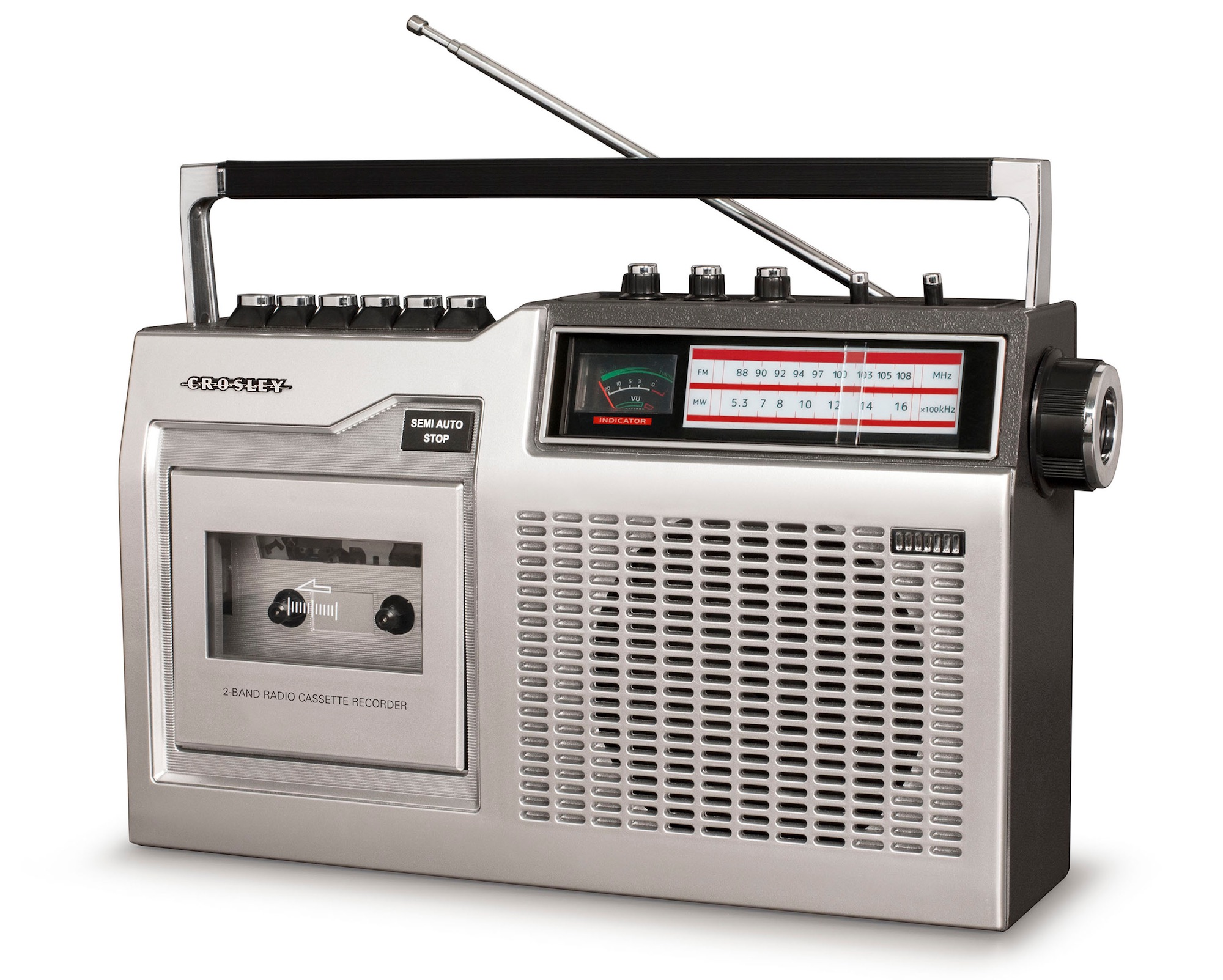
The Crosley devices are pretty straightforward. There are two models; each has a big mono speaker, a single-direction deck (meaning you’ll have to flip the tape), an AM/FM radio and a built-in mic. The $60 CT100 model (top) has shortwave radio bands as well, and the capability to play music from an SD card or USB drive, while the $70 CT200 has treble and bass dials and a VU meter for easier recording of cassette-based podcasts. Both have handles.

Of the two I’d definitely go with the CT100, since presumably you can use the SD/USB player to record mixtapes of stuff you’ve downloaded. Record a little intro with the mic or pretend you’re the DJ between songs, and boom, it’s like you’re me in 1994. Plus you never know when shortwave will come in handy.

It’s silly, but it’s a silly world we live in. Silly and horrible. Maybe bringing back cassettes will help. Keep an eye out for these players wherever fake Ray-Bans plaid scarves are sold.

Overnight success now requires a little more time

Rishi Garg
Contributor

Rishi Garg is a partner at Mayfield who invests in driven, product-centric entrepreneurs looking to impact millions of lives. He led corporate development and strategy at Twitter, Square and MTV Networks.

Ten years ago the iOS App Store launched — and the mobile revolution was off. Entrepreneurs everywhere rallied to take advantage, building category-defining consumer companies like Twitter, Uber, Lyft and Square, among many others.

There’s no better time for an entrepreneur to start a company than when a new platform like mobile emerges. The rising tide in these moments becomes a tsunami: Eager customers descend on services through word of mouth and new acquisition channels; there’s outsized press interest; and sales take off in part due to growth of the platform itself.

Now is not one of these periods. Mobile appears mature, and the next great enabling platform is still just past the horizon. That’s why many early-stage VCs have shifted their focus away from consumer and to other new enabling technologies, such as autonomous vehicles, blockchain and AI/ML.

I have a different view. I think now is a great time to build consumer companies, even without a new platform. There are three reasons for this. First, the internet has created big problems for humans, organizations and society, which entrepreneurs can attack at scale. Second, the first wave of mobile-enabled companies have laid a foundation — including processes, seasoned executives and business models — that new entrepreneurs can borrow. And third, mobile technology is still changing and evolving.

Let’s take a closer look at all three.

Solving big problems

The last wave of breakout companies created interactive platforms (Twitter, Snapchat, Instagram, etc.) that have entertained many. They didn’t solve big societal problems. There’s now a big need — and big opportunity — for companies that can help people save time, money and sanity, even as they build great businesses.

Most of us now realize the major problems that a connected, mobile, always-on world has wrought. These include:

  • Income inequality. Lower-income Americans are struggling more than ever. Entrepreneurs should be thinking of ways to help folks where they need it the most: the pocketbook. That might mean unlocking found money, ensuring that available financial resources are being used wisely or saving consumers from the growing number of “gotchas” imposed by financial institutions.
  • Too many choices. When you can buy or choose anything, it’s hard to pick what you actually want. There are wide-open opportunities for concierges, curation and trusted guides.
  • A lack of intimacy. With everything online and available at the touch of a keypad, genuine human interaction has become more rare. There’s a need for companies that can provide real care and curation for matters that affect our daily lives.

Newly available resources

After a decade of building companies for mobile, there are now untold stories, battle scars and people available for future companies to learn from. This makes it easier for startups to assemble playbooks and experienced teams. It also reduces the downside risk for investors, opening new paths to capital for companies that need it.

For instance, it’s now clear that consumer brands must define, own and curate an end-to-end experience. A great new example is GOAT, the online sneakerhead marketplace. Faced with a sneaker market full of rampant knock-offs, the founders invested in a capital- and time-intensive process to manually inspect every shoe for authenticity. The result is an experience that every sneakerhead loves and a breakthrough consumer brand.

Building a breakout consumer platform will be more complex, more challenging and often more capital-intensive than it was for the prior generation.

There are also lots of executives and teams that know how to lead and manage complex operations, especially on the ground. This is crucial to scale logistically complex ideas like Opendoor, Instacart and others.

The other thing needed to help scale these companies is capital. And right now, there are two particularly relevant new kinds of investors: 1) mega equity funds like SoftBank Vision Fund, and 2) alternative lending funds that provide non-dilutive capital to companies to finance the acquisition of traditional assets. Those capital sources enable companies like Opendoor (disclosure: I’m a personal investor) to own and manage a truly delightful end-to-end experience.

Mobile today is not mobile tomorrow

Mobile devices have come a long way over the last decade. And there will be many more meaningful improvements in the near future, allowing for new uses and new companies.

I anticipate breakthroughs that will boost the ability of the chips and subsystems on a phone to perform optimally for far longer. Right now, these are throttled due to heating issues and other problems. As companies solve these issues, they’ll create order of magnitude improvements on what our phones are capable of, bringing technologies like VR and AR, to take two examples, far forward into everyday use.

On the network side, 5G and subsequent buildouts will meaningfully change what kinds of bandwidth we can handle, enabling even more data and compute to be in the cloud.

Mobile today is about one-to-many broadcast platforms like Instagram, Twitter and Facebook. Tomorrow’s great consumer companies will leverage a better vector: one-to-one customer intimacy. Companies like Grove Collaborative (disclosure: Mayfield is an investor) are experiencing hypergrowth in part by using real people connecting with consumers over text to bring a curated, personalized experience to shopping for household staples. I expect this to be a major trend, with the companies that earn the right to communicate more with customers the ones that win.

Building a breakout consumer platform will be more complex, more challenging and often more capital-intensive than it was for certain titans of the prior generation. But for those with the vision and substance to bring a valuable service to the world that solves real problems, the resources and emerging technologies will be there to help create the next groundbreaking consumer brand.

FCC approval of Europe’s Galileo satellite signals may give your phone’s GPS a boost

The FCC’s space-focused meeting today had actions taken on SpaceX satellites and orbital debris reduction, but the decision most likely to affect users has to do with Galileo . No, not the astronomer — the global positioning satellite constellation put in place by the E.U. over the last few years. It’s now legal for U.S. phones to use, and a simple software update could soon give your GPS signal a major bump.

Galileo is one of several successors to the Global Positioning System that’s been in use since the ’90s. But because it is U.S.-managed and was for a long time artificially limited in accuracy to everyone but U.S. military, it should come as no surprise that European, Russian and Chinese authorities would want their own solutions. Russia’s GLONASS is operational and China is hard at work getting its BeiDou system online.

The E.U.’s answer to GPS was Galileo, and the 26 (out of 30 planned) satellites making up the constellation offer improved accuracy and other services, such as altitude positioning. Test satellites went up as early as 2005, but it wasn’t until 2016 that it began actually offering location services.

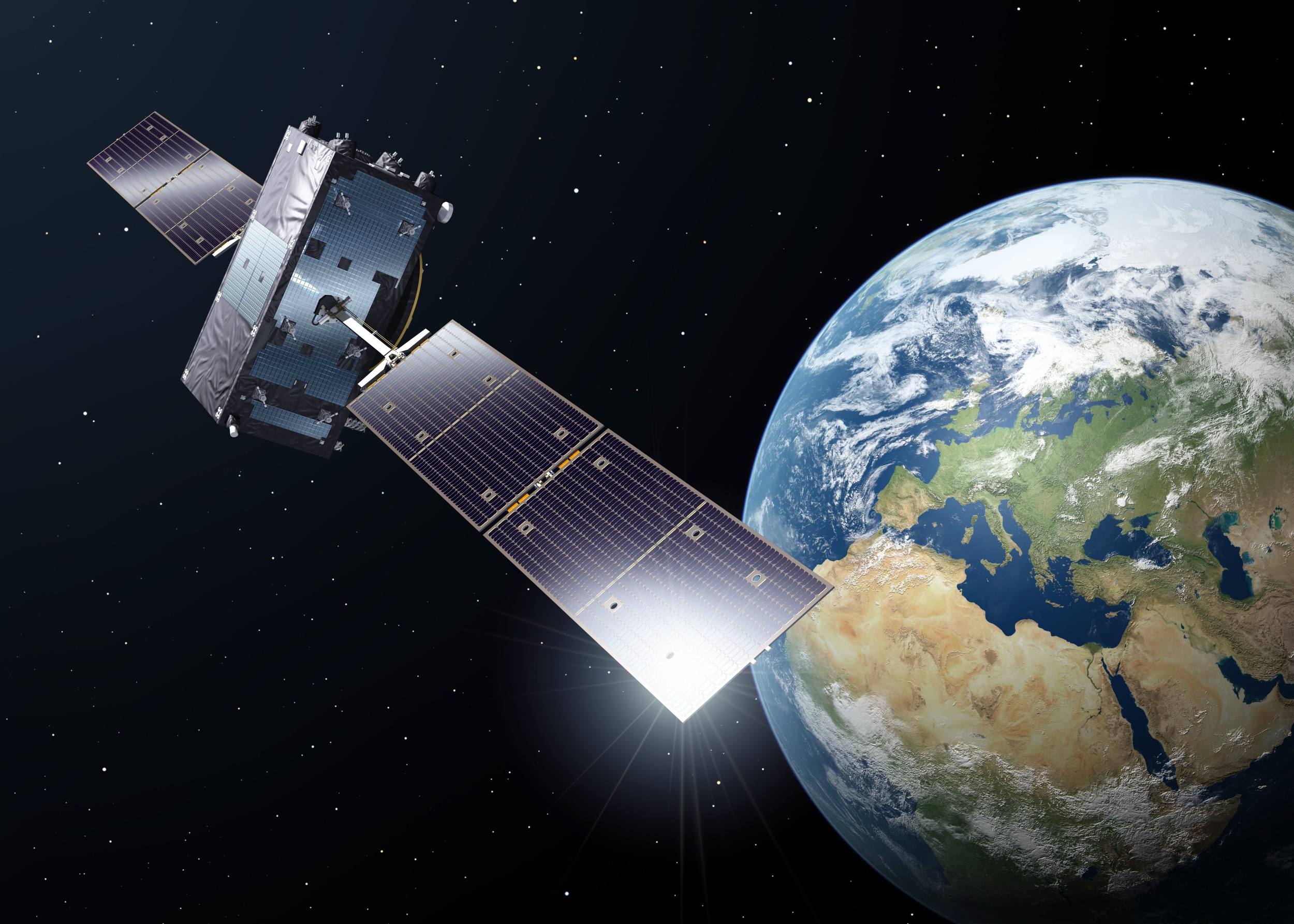
A Galileo satellite launch earlier this year.

Devices already existed that would take advantage of Galileo signals — all the way back to the iPhone 6s, the Samsung Galaxy S7 and many others from that era forward. It just depends on the wireless chip inside the phone or navigation unit, and it’s pretty much standard now. (There’s a partial list of smartphones supporting Galileo here.)

When a company sells a new phone, it’s much easier to just make a couple million of the same thing rather than make tiny changes like using a wireless chipset in U.S. models that doesn’t support Galileo. The trade-off in savings versus complexity of manufacturing and distribution just isn’t worthwhile.

The thing is, American phones couldn’t use Galileo because the FCC has regulations against having ground stations being in contact with foreign satellites. Which is exactly what using Galileo positioning is, though of course it’s nothing sinister.

If you’re in the U.S., then, your phone likely has the capability to use Galileo but it has been disabled in software. The FCC decision today lets device makers change that, and the result could be much-improved location services. (One band not very compatible with existing U.S. navigation services has been held back, but two of the three are now available.)

Interestingly enough, however, your phone may already be using Galileo without your or the FCC’s knowledge. Because the capability is behind a software lock, it’s possible that a user could install an app or service bringing it into use. Perhaps you travel to Europe a lot and use a French app store and navigation app designed to work with Galileo and it unlocked the bands. There’d be nothing wrong with that.

Or perhaps you installed a custom ROM that included the ability to check the Galileo signal. That’s technically illegal, but the thing is there’s basically no way for anyone to tell! The way these systems work, all you’d be doing is receiving a signal illegally that your phone already supports and that’s already hitting its antennas every second — so who’s going to report you?

It’s unlikely that phone makers have secretly enabled the Galileo frequencies on U.S. models, but as Commissioner Jessica Rosenworcel pointed out in a statement accompanying the FCC action, that doesn’t mean it isn’t happening:

If you read the record in this proceeding and others like it, it becomes clear that many devices in the United States are already operating with foreign signals. But nowhere in our record is there a good picture of how many devices in this country are interacting with these foreign satellite systems, what it means for compliance with our rules, and what it means for the security of our systems. We should change that. Technology has gotten ahead of our approval policies and it’s time for a true-up.

She isn’t suggesting a crackdown — this is about regulation lagging behind consumer tech. Still, it is a little worrying that the FCC basically has no idea, and no way to find out, how many devices are illicitly tuning in to Galileo signals.

Expect an update to roll out to your phone sometime soon — Galileo signals will be of serious benefit to any location-based app, and to public services like 911, which are now officially allowed to use the more accurate service to determine location.

Tesla acquires trucking companies to squeeze in more deliveries before Dec. 31

Tesla CEO Elon Musk tweeted Thursday that the electric automaker had “acquired trucking capacity,” a move aimed to boost deliveries of its Model 3 vehicles before the federal tax credit begins to wind down December 31.

Musk at first didn’t explain what “acquired trucking capacity” meant. The company hasn’t posted any regulatory filings of an acquisition and Tesla has yet to respond to TechCrunch’s inquiry on the matter.

Musk later tweeted that Tesla had both purchased trucking companies and secured contracts with major haulers to “avoid trucking shortage mistakes of last quarter.”

Tesla just acquired trucking capacity to ensure Model 3 can be delivered in US by Dec 31 if ordered by Nov 30 https://t.co/npmPuSXNWC

Elon Musk (@elonmusk) November 15, 2018

We bought some trucking companies & secured contracts with major haulers to avoid trucking shortage mistake of last quarter

— Elon Musk (@elonmusk) November 15, 2018

It’s imperative that Tesla squeeze as many sales as it can before the end of the year. The federal electric vehicle tax credit gives consumers a $7,500 credit when they buy an all-electric vehicle. Once an automaker has sold 200,000 electric vehicles, the credit begins to wind down.

Earlier this year, Tesla delivered its 200,000th electric vehicle. The achievement activated a countdown for the $7,500 federal tax credit offered to consumers who buy new electric vehicles. Under these rules, Tesla customers must take delivery of their new Model S, Model X or Model 3 by December 31 to get the full credit.

“Take delivery” is the key term here. A failure to meet the delivery timeline could create a backlash among customers who make those last-minute purchases in hopes of securing the federal tax credit.

And deliveries have been a challenge for the company as it’s ramped up production of its Model 3 vehicle. Delivery logistics was the primary pinch point for the company in the third quarter. Customers reported delays and confusion over how to pick up their new Model 3s. Hundreds of Tesla owners ended up heading down to various Tesla showrooms where Model 3s were being handed over to customers in an effort to help the company meet its goal.

Several sources within the trucking industry speculated that Tesla likely purchased one or more smaller trucking companies, particularly ones that the company has done business with before.

Developing…