The character’s identity—rooted in sexually fluid Norse mythology—goes far beyond any form of queerness TV has ever seen.
Category: Tech news
hacking,system security,protection against hackers,tech-news,gadgets,gaming
25 Last-Minute Father’s Day Gifts on Sale Now
Yes, the big day is here. You can still grab Dad a late present with these deals on electronics, cooking gear, and more.
Extra Crunch roundup: influencer marketing 101, spotting future unicorns, Apple AirTags teardown
With the right message, even a small startup can connect with established and emerging stars on TikTok, Instagram and YouTube who will promote your products and services — as long as your marketing team understands the influencer marketplace.
Creators have a wide variety of brands and revenue channels to choose from, but marketers who understand how to court these influencers can make inroads no matter the size of their budget. Although brand partnerships are still the top source of revenue for creators, many are starting to diversify.
If you’re in charge of marketing at an early-stage startup, this post explains how to connect with an influencer who authentically resonates with your brand and covers the basics of setting up a revenue-share structure that works for everyone.
Full Extra Crunch articles are only available to members
Use discount code ECFriday to save 20% off a one- or two-year subscription
Our upcoming TC Early Stage event is devoted to marketing and fundraising, so expect to see more articles than usual about growth marketing in the near future.
We also ran a post this week with tips for making the first marketing hire, and Managing Editor Eric Eldon spoke to growth leader Susan Su to get her thoughts about building remote marketing teams.
We’re off today to celebrate the Juneteenth holiday in the United States. I hope you have a safe and relaxing weekend.
Walter Thompson
Senior Editor, TechCrunch
@yourprotagonist
As the economy reopens, startups are uniquely positioned to recruit talent

Image Credits: ballyscanlon (opens in a new window) / Getty Images
The pandemic forced a reckoning about the way we work — and whether we want to keep working in the same way, with the same people, for the same company — and many are looking for something different on the other side.
Art Zeile, the CEO of DHI Group, notes this means it’s a great time for startups to recruit talent.
“While all startups are certainly not focused on being disruptive, they often rely on cutting-edge technology and processes to give their customers something truly new,” Zeile writes. “Many are trying to change the pattern in their particular industry. So, by definition, they generally have a really interesting mission or purpose that may be more appealing to tech professionals.”
Here are four considerations for high-growth company founders building their post-pandemic team.
Refraction AI’s Matthew Johnson-Roberson on finding the middle path to robotic delivery
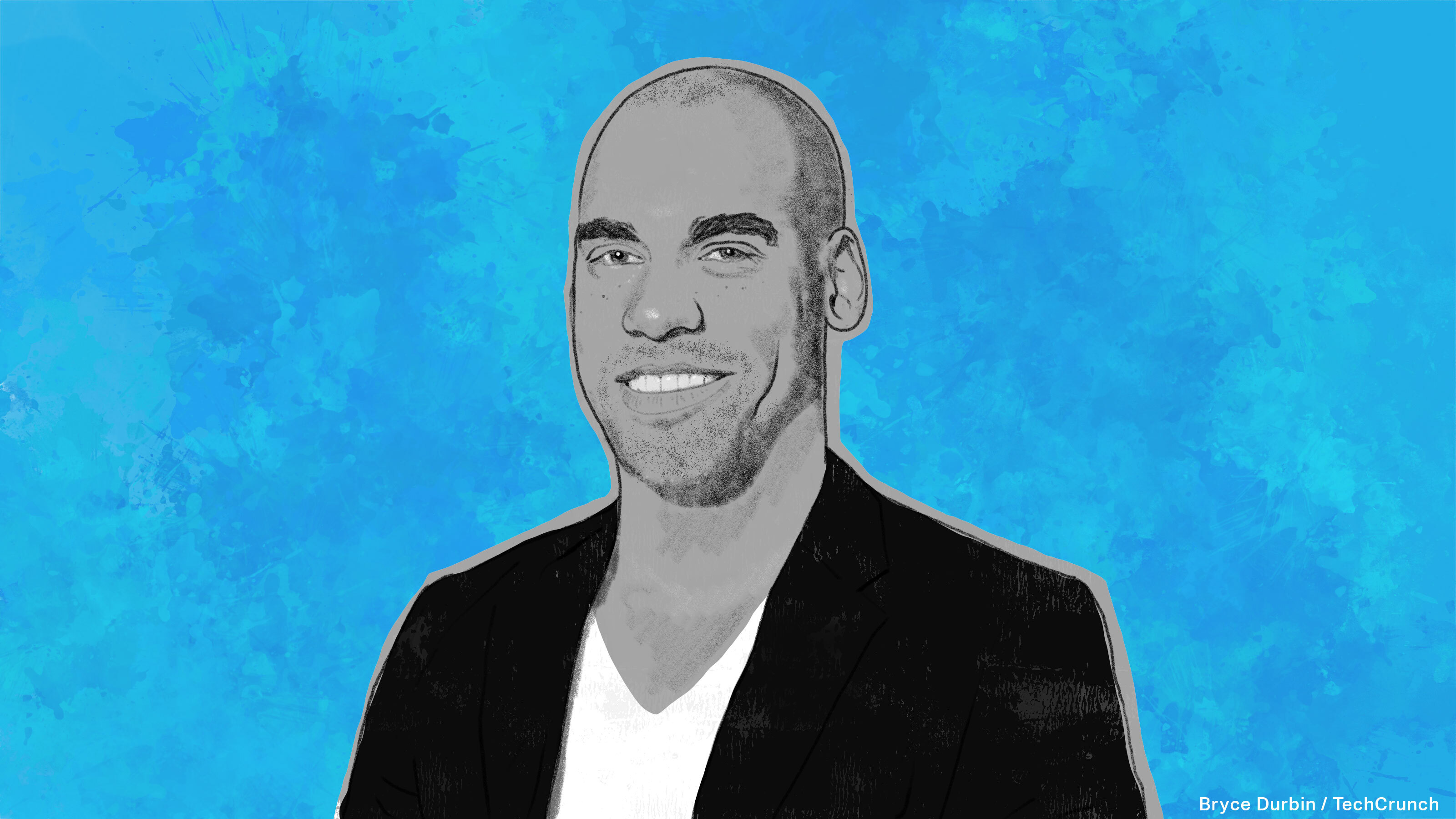
Image Credits: Bryce Durbin
“Refraction AI calls itself the Goldilocks of robotic delivery,” Rebecca Bellan writes. “The Ann Arbor-based company … was founded by two University of Michigan professors who think delivery via full-size autonomous vehicles (AV) is not nearly as close as many promise, and sidewalk delivery comes with too many hassles and not enough payoff.
“Their ‘just right’ solution? Find a middle path, or rather, a bike path.”
Rebecca sat down with the company’s CEO to discuss his motivation to make “something that is useful to the general public.”
How to identify unicorn founders when they’re still early-stage

Image Credits: RichVintage (opens in a new window)/ Getty Images
What are investors looking for?
Founders often tie themselves in knots as they try to project qualities they hope investors are seeking. In reality, few entrepreneurs have the acting skills required to convince someone that they’re patient, dedicated or hard working.
Johan Brenner, general partner at Creandum, was an early backer of Klarna, Spotify and several other European startups. Over the last two decades, he’s identified five key traits shared by people who create billion-dollar companies.
“A true unicorn founder doesn’t need to have all of those capabilities on day one,” Brenner, writes “but they should already be thinking big while executing small and demonstrating that they understand how to scale a company.”
Founders Ben Schippers and Evette Ellis are riding the EV sales wave

Image Credits: TechCrunch
EV sales are driving demand for services and startups that fulfill the new needs of drivers, charging station operators and others.
Evette Ellis and Ben Schippers took to the main stage at TC Sessions: Mobility 2021 to share how their companies capitalized on the new opportunities presented by the electric transportation revolution.
Scale AI CEO Alex Wang weighs in on software bugs and what will make AV tech good enough

Image Credits: Alexandr Wang
Scale co-founder and CEO Alex Wang joined us at TechCrunch Sessions: Mobility 2021 to discuss his company’s role in the autonomous driving industry and how it’s changed in the five years since its founding.
Scale helps large and small AV players establish reliable “ground truth” through data annotation and management, and along the way, the standards for what that means have shifted as the industry matures.
Even if two algorithms in autonomous driving might be created more or less equal, their real-world performance could vary dramatically based on what they’re consuming in terms of input data. That’s where Scale’s value prop to the industry starts, and Wang explains why.
Edtech investors are flocking to SaaS guidance counselors

Image Credits: Getty Images / Vertigo3d
The prevailing post-pandemic edtech narrative, which predicted higher ed would be DOA as soon as everyone got their vaccine and took off for a gap year, might not be quite true.
Natasha Mascarenhas explores a new crop of edtech SaaS startups that function like guidance counselors, helping students with everything from study-abroad opportunities to swiping right on a captivating college (really!).
“Startups that help students navigate institutional bureaucracy so they can get more value out of their educational experience may become a growing focus for investors as consumer demand for virtual personalized learning increases,” she writes.
Dear Sophie: Is it possible to expand our startup in the US?

Image Credits: Bryce Durbin/TechCrunch
Dear Sophie,
My co-founders and I launched a software startup in Iran a few years ago, and I’m happy to say it’s now thriving. We’d like to expand our company in California.
Now that President Joe Biden has eliminated the Muslim ban, is it possible to do that? Is the pandemic still standing in the way? Do you have any suggestions?
— Talented in Tehran
Companies should utilize real-time compensation data to ensure equal pay

Image Credits: Rudzhan Nagiev (opens in a new window) / Getty Images
Chris Jackson, the vice president of client development at CompTrak, writes in a guest column that having a conversation about diversity, equity and inclusion initiatives and “agreeing on the need for equality doesn’t mean it will be achieved on an organizational scale.”
He lays out a data-driven proposal that brings in everyone from directors to HR to the talent acquisition team to get companies closer to actual equity — not just talking about it.
Investors Clara Brenner, Quin Garcia and Rachel Holt on SPACs, micromobility and how COVID-19 shaped VC

Image Credits: TechCrunch
Few people are more closely tapped into the innovations in the transportation space than investors.
They’re paying close attention to what startups and tech companies are doing to develop and commercialize autonomous vehicle technology, electrification, micromobility, robotics and so much more.
For TC Sessions: Mobility 2021, we talked to three VCs about everything from the pandemic to the most overlooked opportunities within the transportation space.
Experts from Ford, Toyota and Hyundai outline why automakers are pouring money into robotics
Image Credits: TechCrunch
Automakers’ interest in robotics is not a new phenomenon, of course: Robots and automation have long played a role in manufacturing and are both clearly central to their push into AVs.
But recently, many companies are going even deeper into the field, with plans to be involved in the wide spectrum of categories that robotics touch.
At TC Sessions: Mobility 2021, we spoke to a trio of experts at three major automakers about their companies’ unique approaches to robotics.
Apple AirTags UX teardown: The trade-off between privacy and user experience

Image Credits: James D. Morgan/Getty Images
Apple’s location devices — called AirTags — have been out for more than a month now. The initial impressions were good, but as we concluded back in April: “It will be interesting to see these play out once AirTags are out getting lost in the wild.”
That’s exactly what our resident UX analyst, Peter Ramsey, has been doing for the last month — intentionally losing AirTags to test their user experience at the limits.
This Extra Crunch exclusive helps bridge the gap between Apple’s mistakes and how you can make meaningful changes to your product’s UX.
How to launch a successful RPA initiative
Image Credits: NanoStockk (opens in a new window) / Getty Images
Robotic process automation (RPA) is no longer in the early-adopter phase.
Though it requires buy-in from across the organization, contributor Kevin Buckley writes, it’s time to gather everyone around and get to work.
“Automating just basic workflow processes has resulted in such tremendous efficiency improvements and cost savings that businesses are adapting automation at scale and across the enterprise,” he writes.
Long story short: “Adapting business automation for the enterprise should be approached as a business solution that happens to require some technical support.”
Mobility startups can be equitable, accessible and profitable

Image Credits: TechCrunch
Mobility should be a right, but too often it’s a privilege. Can startups provide the technology and the systems necessary to help correct this injustice?
At our TC Sessions: Mobility 2021 event, we sat down with Revel CEO and co-founder Frank Reig, Remix CEO and co-founder Tiffany Chu, and community organizer, transportation consultant and lawyer Tamika L. Butler to discuss how mobility companies should think about equity, why incorporating it from the get-go will save money in the long run, and how they can partner with cities to expand accessible and sustainable mobility.
CEO Shishir Mehrotra and investor S. Somasegar reveal what sings in Coda’s pitch doc

Image Credits: Carlin Ma / Madrona Venture Group/Brian Smale
Coda CEO Shishir Mehrotra and Madrona partner S. Somasegar joined Extra Crunch Live to go through Coda’s pitch doc (not deck. Doc) and stuck around for the ECL Pitch-off, where founders in the audience come “onstage” to pitch their products to our guests.
Extra Crunch Live takes place every Wednesday at 3 p.m. EDT/noon PDT. Anyone can hang out during the episode (which includes networking with other attendees), but access to past episodes is reserved exclusively for Extra Crunch members. Join here.
Perspectives on tackling Big Tech’s market power
The need for markets-focused competition watchdogs and consumer-centric privacy regulators to think outside their respective ‘legal silos’ and find creative ways to work together to tackle the challenge of big tech market power was the impetus for a couple of fascinating panel discussions organized by the Centre for Economic Policy Research (CEPR), which were livestreamed yesterday but are available to view on-demand here.
The conversations brought together key regulatory leaders from Europe and the US — giving a glimpse of what the future shape of digital markets oversight might look like at a time when fresh blood has just been injected to chair the FTC so regulatory change is very much in the air (at least around tech antitrust).
CEPR’s discussion premise is that integration, not merely intersection, of competition and privacy/data protection law is needed to get a proper handle on platform giants that have, in many cases, leveraged their market power to force consumers to accept an abusive ‘fee’ of ongoing surveillance.
That fee both strips consumers of their privacy and helps tech giants perpetuate market dominance by locking out interesting new competition (which can’t get the same access to people’s data so operates at a baked in disadvantage).
A running theme in Europe for a number of years now, since a 2018 flagship update to the bloc’s data protection framework (GDPR), has been the ongoing under-enforcement around the EU’s ‘on-paper’ privacy rights — which, in certain markets, means regional competition authorities are now actively grappling with exactly how and where the issue of ‘data abuse’ fits into their antitrust legal frameworks.
The regulators assembled for CEPR’s discussion included, from the UK, the Competition and Markets Authority’s CEO Andrea Coscelli and the information commissioner, Elizabeth Denham; from Germany, the FCO’s Andreas Mundt; from France, Henri Piffaut, VP of the French competition authority; and from the EU, the European Data Protection Supervisor himself, Wojciech Wiewiórowski, who advises the EU’s executive body on data protection legislation (and is the watchdog for EU institutions’ own data use).
The UK’s CMA now sits outside the EU, of course — giving the national authority a higher profile role in global mergers & acquisition decisions (vs pre-brexit), and the chance to help shape key standards in the digital sphere via the investigations and procedures it chooses to pursue (and it has been moving very quickly on that front).
The CMA has a number of major antitrust probes open into tech giants — including looking into complaints against Apple’s App Store and others targeting Google’s plan to depreciate support for third party tracking cookies (aka the so-called ‘Privacy Sandbox’) — the latter being an investigation where the CMA has actively engaged the UK’s privacy watchdog (the ICO) to work with it.
Only last week the competition watchdog said it was minded to accept a set of legally binding commitments that Google has offered which could see a quasi ‘co-design’ process taking place, between the CMA, the ICO and Google, over the shape of the key technology infrastructure that ultimately replaces tracking cookies. So a pretty major development.
Germany’s FCO has also been very active against big tech this year — making full use of an update to the national competition law which gives it the power to take proactive inventions around large digital platforms with major competitive significance — with open procedures now against Amazon, Facebook and Google.
The Bundeskartellamt was already a pioneer in pushing to loop EU data protection rules into competition enforcement in digital markets in a strategic case against Facebook, as we’ve reported before. That closely watched (and long running) case — which targets Facebook’s ‘superprofiling’ of users, based on its ability to combine user data from multiple sources to flesh out a single high dimension per-user profile — is now headed to Europe’s top court (so likely has more years to run).
But during yesterday’s discussion Mundt confirmed that the FCO’s experience litigating that case helped shape key amendments to the national law that’s given him beefier powers to tackle big tech. (And he suggested it’ll be a lot easier to regulate tech giants going forward, using these new national powers.)
“Once we have designated a company to be of ‘paramount significance’ we can prohibit certain conduct much more easily than we could in the past,” he said. “We can prohibit, for example, that a company impedes other undertaking by data processing that is relevant for competition. We can prohibit that a use of service depends on the agreement to data collection with no choice — this is the Facebook case, indeed… When this law was negotiated in parliament parliament very much referred to the Facebook case and in a certain sense this entwinement of competition law and data protection law is written in a theory of harm in the German competition law.
“This makes a lot of sense. If we talk about dominance and if we assess that this dominance has come into place because of data collection and data possession and data processing you need a parameter in how far a company is allowed to gather the data to process it.”
“The past is also the future because this Facebook case… has always been a big case. And now it is up to the European Court of Justice to say something on that,” he added. “If everything works well we might get a very clear ruling saying… as far as the ECN [European Competition Network] is concerned how far we can integrate GDPR in assessing competition matters.
“So Facebook has always been a big case — it might get even bigger in a certain sense.”
France’s competition authority and its national privacy regulator (the CNIL), meanwhile, have also been joint working in recent years.
Including over a competition complaint against Apple’s pro-user privacy App Tracking Transparency feature (which last month the antitrust watchdog declined to block) — so there’s evidence there too of respective oversight bodies seeking to bridge legal silos in order to crack the code of how to effectively regulate tech giants whose market power, panellists agreed, is predicated on earlier failures of competition law enforcement that allowed tech platforms to buy up rivals and sew up access to user data, entrenching advantage at the expense of user privacy and locking out the possibility of future competitive challenge.
The contention is that monopoly power predicated upon data access also locks consumers into an abusive relationship with platform giants which can then, in the case of ad giants like Google and Facebook, extract huge costs (paid not in monetary fees but in user privacy) for continued access to services that have also become digital staples — amping up the ‘winner takes all’ characteristic seen in digital markets (which is obviously bad for competition too).
Yet, traditionally at least, Europe’s competition authorities and data protection regulators have been focused on separate workstreams.
The consensus from the CEPR panels was very much that that is both changing and must change if civil society is to get a grip on digital markets — and wrest control back from tech giants to that ensure consumers and competitors aren’t both left trampled into the dust by data-mining giants.
Denham said her motivation to dial up collaboration with other digital regulators was the UK government entertaining the idea of creating a one-stop-shop ‘Internet’ super regulator. “What scared the hell out of me was the policymakers the legislators floating the idea of one regulator for the Internet. I mean what does that mean?” she said. “So I think what the regulators did is we got to work, we got busy, we become creative, got our of our silos to try to tackle these companies — the likes of which we have never seen before.
“And I really think what we have done in the UK — and I’m excited if others think it will work in their jurisdictions — but I think that what really pushed us is that we needed to show policymakers and the public that we had our act together. I think consumers and citizens don’t really care if the solution they’re looking for comes from the CMA, the ICO, Ofcom… they just want somebody to have their back when it comes to protection of privacy and protection of markets.
“We’re trying to use our regulatory levers in the most creative way possible to make the digital markets work and protect fundamental rights.”
During the earlier panel, the CMA’s Simeon Thornton, a director at the authority, made some interesting remarks vis-a-vis its (ongoing) Google ‘Privacy Sandbox’ investigation — and the joint working it’s doing with the ICO on that case — asserting that “data protection and respecting users’ rights to privacy are very much at the heart of the commitments upon which we are currently consulting”.
“If we accept the commitments Google will be required to develop the proposals according to a number of criteria including impacts on privacy outcomes and compliance with data protection principles, and impacts on user experience and user control over the use of their personal data — alongside the overriding objective of the commitments which is to address our competition concerns,” he went on, adding: “We have worked closely with the ICO in seeking to understand the proposals and if we do accept the commitments then we will continue to work closely with the ICO in influencing the future development of those proposals.”
“If we accept the commitments that’s not the end of the CMA’s work — on the contrary that’s when, in many respects, the real work begins. Under the commitments the CMA will be closely involved in the development, implementation and monitoring of the proposals, including through the design of trials for example. It’s a substantial investment from the CMA and we will be dedicating the right people — including data scientists, for example, to the job,” he added. “The commitments ensure that Google addresses any concerns that the CMA has. And if outstanding concerns cannot be resolved with Google they explicitly provide for the CMA to reopen the case and — if necessary — impose any interim measures necessary to avoid harm to competition.
“So there’s no doubt this is a big undertaking. And it’s going to be challenging for the CMA, I’m sure of that. But personally I think this is the sort of approach that is required if we are really to tackle the sort of concerns we’re seeing in digital markets today.”
Thornton also said: “I think as regulators we do need to step up. We need to get involved before the harm materializes — rather than waiting after the event to stop it from materializing, rather than waiting until that harm is irrevocable… I think it’s a big move and it’s a challenging one but personally I think it’s a sign of the future direction of travel in a number of these sorts of cases.”
Also speaking during the regulatory panel session was FTC commissioner Rebecca Slaughter — a dissenter on the $5BN fine it hit Facebook with back in 2019 for violating an earlier consent order (as she argued the settlement provided no deterrent to address underlying privacy abuse, leaving Facebook free to continue exploiting users’ data) — as well as Chris D’Angelo, the chief deputy AG of the New York Attorney General, which is leading a major states antitrust case against Facebook.
Slaughter pointed out that the FTC already combines a consumer focus with attention on competition but said that historically there has been separation of divisions and investigations — and she agreed on the need for more joined-up working.
She also advocated for US regulators to get out of a pattern of ineffective enforcement in digital markets on issues like privacy and competition where companies have, historically, been given — at best — what amounts to wrist slaps that don’t address root causes of market abuse, perpetuating both consumer abuse and market failure. And be prepared to litigate more.
As regulators toughen up their stipulations they will need to be prepared for tech giants to push back — and therefore be prepared to sue instead of accepting a weak settlement.
“That is what is most galling to me that even where we take action, in our best faith good public servants working hard to take action, we keep coming back to the same questions, again and again,” she said. “Which means that the actions we are taking isn’t working. We need different action to keep us from having the same conversation again and again.”
Slaughter also argued that it’s important for regulators not to pile all the burden of avoiding data abuses on consumers themselves.
“I want to sound a note of caution around approaches that are centered around user control,” she said. “I think transparency and control are important. I think it is really problematic to put the burden on consumers to work through the markets and the use of data, figure out who has their data, how it’s being used, make decisions… I think you end up with notice fatigue; I think you end up with decision fatigue; you get very abusive manipulation of dark patterns to push people into decisions.
“So I really worry about a framework that is built at all around the idea of control as the central tenant or the way we solve the problem. I’ll keep coming back to the notion of what instead we need to be focusing on is where is the burden on the firms to limit their collection in the first instance, prohibit their sharing, prohibit abusive use of data and I think that that’s where we need to be focused from a policy perspective.
“I think there will be ongoing debates about privacy legislation in the US and while I’m actually a very strong advocate for a better federal framework with more tools that facilitate aggressive enforcement but I think if we had done it ten years ago we probably would have ended up with a notice and consent privacy law and I think that that would have not been a great outcome for consumers at the end of the day. So I think the debate and discussion has evolved in an important way. I also think we don’t have to wait for Congress to act.”
As regards more radical solutions to the problem of market-denting tech giants — such as breaking up sprawling and (self-servingly) interlocking services empires — the message from Europe’s most ‘digitally switched on’ regulators seemed to be don’t look to us for that; we are going to have to stay in our lanes.
So tl;dr — if antitrust and privacy regulators’ joint working just sums to more intelligent fiddling round the edges of digital market failure, and it’s break-ups of US tech giants that’s what’s really needed to reboot digital markets, then it’s going to be up to US agencies to wield the hammers. (Or, as Coscelli elegantly phrased it: “It’s probably more realistic for the US agencies to be in the lead in terms of structural separation if and when it’s appropriate — rather than an agency like ours [working from inside a mid-sized economy such as the UK’s].”)
The lack of any representative from the European Commission on the panel was an interesting omission in that regard — perhaps hinting at ongoing ‘structural separation’ between DG Comp and DG Justice where digital policymaking streams are concerned.
The current competition chief, Margrethe Vestager — who also heads up digital strategy for the bloc, as an EVP — has repeatedly expressed reluctance to impose radical ‘break up’ remedies on tech giants. She also recently preferred to waive through another Google digital merger (its acquisition of fitness wearable Fitbit) — agreeing to accept a number of ‘concessions’ and ignoring major mobilization by civil society (and indeed EU data protection agencies) urging her to block it.
Yet in an earlier CEPR discussion session, another panellist — Yale University’s Dina Srinivasan — pointed to the challenges of trying to regulate the behavior of companies when there are clear conflicts of interest, unless and until you impose structural separation as she said has been necessary in other markets (like financial services).
“In advertising we have an electronically traded market with exchanges and we have brokers on both sides. In a competitive market — when competition was working — you saw that those brokers were acting in the best interest of buyers and sellers. And as part of carrying out that function they were sort of protecting the data that belonged to buyers and sellers in that market, and not playing with the data in other ways — not trading on it, not doing conduct similar to insider trading or even front running,” she said, giving an example of how that changed as Google gained market power.
“So Google acquired DoubleClick, made promises to continue operating in that manner, the promises were not binding and on the record — the enforcement agencies or the agencies that cleared the merger didn’t make Google promise that they would abide by that moving forward and so as Google gained market power in that market there’s no regulatory requirement to continue to act in the best interests of your clients, so now it becomes a market power issue, and after they gain enough market power they can flip data ownership and say ‘okay, you know what before you owned this data and we weren’t allowed to do anything with it but now we’re going to use that data to for example sell our own advertising on exchanges’.
“But what we know from other markets — and from financial markets — is when you flip data ownership and you engage in conduct like that that allows the firm to now build market power in yet another market.”
The CMA’s Coscelli picked up on Srinivasan’s point — saying it was a “powerful” one, and that the challenges of policing “very complicated” situations involving conflicts of interests is something that regulators with merger control powers should be bearing in mind as they consider whether or not to green light tech acquisitions.
(Just one example of a merger in the digital space that the CMA is still scrutizing is Facebook’s acquisition of animated GIF platform Giphy. And it’s interesting to speculate whether, had brexit happened a little faster, the CMA might have stepped in to block Google’s Fitibit merger where the EU wouldn’t.)
Coscelli also flagged the issue of regulatory under-enforcement in digital markets as a key one, saying: “One of the reasons we are today where we are is partially historic under-enforcement by competition authorities on merger control — and that’s a theme that is extremely interesting and relevant to us because after the exit from the EU we now have a bigger role in merger control on global mergers. So it’s very important to us that we take the right decisions going forward.”
“Quite often we intervene in areas where there is under-enforcement by regulators in specific areas… If you think about it when you design systems where you have vertical regulators in specific sectors and horizontal regulators like us or the ICO we are more successful if the vertical regulators do their job and I’m sure they are more success if we do our job properly.
“I think we systematically underestimate… the ability of companies to work through whatever behavior or commitments or arrangement are offered to us, so I think these are very important points,” he added, signalling that a higher degree of attention is likely to be applied to tech mergers in Europe as a result of the CMA stepping out from the EU’s competition regulation umbrella.
Also speaking during the same panel, the EDPS warned that across Europe more broadly — i.e. beyond the small but engaged gathering of regulators brought together by CEPR — data protection and competition regulators are far from where they need to be on joint working, implying that the challenge of effectively regulating big tech across the EU is still a pretty Sisyphean one.
It’s true that the Commission is not sitting on hands in the face of tech giant market power.
At the end of last year it proposed a regime of ex ante regulations for so-called ‘gatekeeper’ platforms, under the Digital Markets Act. But the problem of how to effectively enforce pan-EU laws — when the various agencies involved in oversight are typically decentralized across Member States — is one key complication for the bloc. (The Commission’s answer with the DMA was to suggest putting itself in charge of overseeing gatekeepers but it remains to be seen what enforcement structure EU institutions will agree on.)
Clearly, the need for careful and coordinated joint working across multiple agencies with different legal competencies — if, indeed, that’s really what’s needed to properly address captured digital markets vs structural separation of Google’s search and adtech, for example, and Facebook’s various social products — steps up the EU’s regulatory challenge in digital markets.
“We can say that no effective competition nor protection of the rights in the digital economy can be ensured when the different regulators do not talk to each other and understand each other,” Wiewiórowski warned. “While we are still thinking about the cooperation it looks a little bit like everybody is afraid they will have to trade a little bit of its own possibility to assess.”
“If you think about the classical regulators isn’t it true that at some point we are reaching this border where we know how to work, we know how to behave, we need a little bit of help and a little bit of understanding of the other regulator’s work… What is interesting for me is there is — at the same time — the discussion about splitting of the task of the American regulators joining the ones on the European side. But even the statements of some of the commissioners in the European Union saying about the bigger role the Commission will play in the data protection and solving the enforcement problems of the GDPR show there is no clear understanding what are the differences between these fields.”
One thing is clear: Big tech’s dominance of digital markets won’t be unpicked overnight. But, on both sides of the Atlantic, there are now a bunch of theories on how to do it — and growing appetite to wade in.
Mediflash is a freelancer marketplace for health professionals
Meet Mediflash, a new French startup that wants to improve temp staffing in healthcare facilities, such as nursing homes, clinics and mental health facilities. The company positions itself as an alternative to traditional temp staffing agencies. They claim to offer better terms for both caregivers and institutions.
“It costs a small fortune to health facilities while caregivers are paid poorly,” co-founder Léopold Treppoz told me.
Traditional temp staffing agencies hire caregivers and nurses on their payroll. When a facility doesn’t have enough staff, they ask their usual temp staffing agency. The agency finds someone and charges the facility.
“When we started, we thought we would do a temp staffing agency, but more digital, more tech,” Treppoz said. But the startup realized they would face the same issues as regular temp staffing agencies.
Instead, they looked at other startups working on freelancer marketplaces for developers, project managers, marketing experts and more. In France, a few of them have been quite successful, such as Comet, Malt, StaffMe and Brigad — some of them even run a vertical focused on health professionals. But Mediflash wants to focus specifically on caregivers.
Professionals signing up to Mediflash are freelancers. Mediflash only acts as a marketplace that connects health facilities with caregivers. The company says caregivers can expect more revenue — up to 20% — while facilities end up paying less.
Of course, it’s not a fair comparison as temp staffing agencies hire caregivers. As a freelancer, you don’t have the same benefits as a full-time employee. And in particular, you can’t get unemployment benefits.
“But a lot of caregivers say that this isn’t an issue because there is a lot of demand [from health facilities],” Treppoz said. On the platform, you’ll find students in nursing school who want to earn a bit of money, professionals who already have a part-time job looking for additional work as well as full-time substitute caregivers.
Usually, facilities just want someone for three days because they’re running short on staff. Mediflash is well aware that health facilities usually work with one temp staffing agency and that’s it. That’s why the startup has a sales team that has to talk with each facility one by one. Right now, the startup is mostly focused on Metz, Nancy and Strasbourg.
Mediflash recently raised a $2 million funding round (€1.7 million) led by Firstminute Capital. Several business angels are also participating, such as Alexandre Fretti (Malt), Alexandre Lebrun (Nabla), Simon Dawlat (Batch.com) and Marie Outtier (Aiden.ai, acquired by Twitter).
So far, the company has managed 1,400 substitute days. Mediflash takes a cut on each transaction. The company now plans to expand to other cities all around the country.
Owning the paycheck is the key to fintech success
Hello and welcome back to Equity, TechCrunch’s venture capital-focused podcast, where we unpack the numbers behind the headlines.
This week, Natasha and Danny, otherwise known as your two new favorite Book influencers (inside joke, you’ll get if you listen to the show), hopped on the mics to take everyone through the news, with Grace and Chris in the background.
Here’s what we got into:
- Wise announced plans to go public via direct listing, making it the biggest company to use this route to debut on the London Stock Exchange.
- Andreessen Horowitz goes into publishing with Future, so Danny and Natasha took turns fawning over why everyone has hot takes about a blog, and what could be in the future for Future.
- Harry Stebbings turned up the volume on 20VC with new $140M fund. Natasha broke down why it matters for emerging fund managers, and why it might quiet some concerns about the growth potential of micro-funds.
- After we left our usually programmed media and venture conversation, we turned to community. Commsor bought Meetsy to build community tools for all for an undisclosed price.
- Danny found hobby-market fit with BookClub, a startup that just raised $20 million to make reading experiences more engaging with author-led discussions. Then, the edtech convo continued with Formative’s $70 million financing event from this week.
- Danny had the scoop on Gusto’s first-ever acquisition as well as Clair, a tool that is skipping the direct deposit and heading straight for the paycheck.
- To close out the funding round section, we spoke about Carbyne making emergencies more streamlined, and what Natasha argued is the headline o’ the week: Neo4j raises Neo$325m as graph-based data analysis takes hold in enterprise.
- To close, we spoke to HBCUvc’s $1 million fund to back overlooked founders, and onramp aspiring investors.
Well, as you can tell, it’s been a busy writing and speaking week for your humble hosts. We’re grateful for the opportunity, and will be back in your ears on Monday.
Equity drops every Monday at 7:00 a.m. PST and Thursday afternoon as fast as we can get it out, so subscribe to us on Apple Podcasts, Overcast, Spotify and all the casts.
P.S. We can’t wait to see you all at our live show next week. If you haven’t grabbed free tickets, GET THEM!
Tiger Global in talks to back BharatPe at $2.5 billion valuation
Indian fintech startup BharatPe is in advanced stages of talks to raise about $250 million in a new financing round led by Tiger Global, two sources familiar with the matter told TechCrunch.
The new round, a Series E, is giving the three-year-old New Delhi-headquartered firm a pre-money valuation of $2.5 billion, sources said, requesting anonymity as the matter is private. The round hasn’t closed, so terms may change, sources cautioned.
BharatPe, which prior to the new round had raised about $233 million in equity and $35 million in debt, was valued at about $900 million in its Series D round in February this year, and $425 million last year.
Indian news outlet the CapTable first reported about the talks between Tiger Global and BharatPe and said the round would value the startup at over $2 billion. BharatPe, which counts Coatue, Ribbit Capital, and Sequoia Capital India among its existing investors, declined to comment.
BharatPe operates an eponymous service to help offline merchants accept digital payments and secure working capital. Even as India has already emerged as the second-largest internet market, with more than 600 million users, much of the country remains offline.
Among those outside of the reach of the internet are merchants running small businesses, such as roadside tea stalls and neighborhood stores. To make these merchants comfortable with accepting digital payments, BharatPe relies on QR codes and point of sale machines that support government-backed UPI payments infrastructure.
The startup, which serves more than 6 million merchants, said it had deployed over 50,000 PoS machines by November of last year, and enables monthly transactions worth more than $123 million. It does not charge merchants for universal QR code access, but is looking to make money by lending. And it should now be able to achieve many of those goals more easily.
Becoming a bank
On Friday, India’s central bank RBI granted an in-principle licence to Centrum Financial Services, which acquired a struggling bank earlier this year, to set up a small finance bank. Centrum Financial Services has collaborated with BharatPe for the license, and the Indian startup said in a statement that two are “equal” partners.
Fintechs are becoming Banks faster than Banks are becoming Fintechs.
— pj (@BeingPractical) June 18, 2021
In a statement, Jaspal Bindra, Executive Chairman of Centrum Group, said the two firms will work to create a “new age bank.”
This is a big one! @bharatpeindia and Centrum at the final leg of a its Small Finance Bank license after receiving its 'in-principle' license.
First fintech in the offing to get a banking license in India! Changing face of fintech!https://t.co/d84GEM4NzH
— Osborne Saldanha (@os7borne) June 18, 2021
The startup is additionally also working to launch two new apps, one of which is called PostPe and enables credit on QR UPI, while the other B2C app will facilitate peer-to-peer lending at up to 12% interest (without any collateral; though BharatPe will serve as an intermediator), another source familiar with the matter told TechCrunch. The new products will launch as soon as this month, the source said.
6 out of top-10 most valuable public companies in India are financials.
combined market cap of a massive $360B !
still wondering why fintech is a hot sector?
— miten sampat (@miten) June 18, 2021
UK’s ICO warns over ‘Big Data’ surveillance threat of live facial recognition in public
The UK’s chief data protection regulator has warned over reckless and inappropriate use of live facial recognition (LFR) in public places.
Publishing an opinion today on the use of this biometric surveillance in public — to set out what is dubbed as the “rules of engagement” — the information commissioner, Elizabeth Denham, also noted that a number of investigations already undertaken by her office into planned applications of the tech have found problems in all cases.
“I am deeply concerned about the potential for live facial recognition (LFR) technology to be used inappropriately, excessively or even recklessly. When sensitive personal data is collected on a mass scale without people’s knowledge, choice or control, the impacts could be significant,” she warned in a blog post.
“Uses we’ve seen included addressing public safety concerns and creating biometric profiles to target people with personalised advertising.
“It is telling that none of the organisations involved in our completed investigations were able to fully justify the processing and, of those systems that went live, none were fully compliant with the requirements of data protection law. All of the organisations chose to stop, or not proceed with, the use of LFR.”
“Unlike CCTV, LFR and its algorithms can automatically identify who you are and infer sensitive details about you. It can be used to instantly profile you to serve up personalised adverts or match your image against known shoplifters as you do your weekly grocery shop,” Denham added.
“In future, there’s the potential to overlay CCTV cameras with LFR, and even to combine it with social media data or other ‘Big Data’ systems — LFR is supercharged CCTV.”
The use of biometric technologies to identify individuals remotely sparks major human rights concerns, including around privacy and the risk of discrimination.
Across Europe there are campaigns — such as Reclaim your Face — calling for a ban on biometric mass surveillance.
In another targeted action, back in May, Privacy International and others filed legal challenges at the controversial US facial recognition company, Clearview AI, seeking to stop it from operating in Europe altogether. (Some regional police forces have been tapping in — including in Sweden where the force was fined by the national DPA earlier this year for unlawful use of the tech.)
But while there’s major public opposition to biometric surveillance in Europe, the region’s lawmakers have so far — at best — been fiddling around the edges of the controversial issue.
A pan-EU regulation the European Commission presented in April, which proposes a risk-based framework for applications of artificial intelligence, included only a partial prohibition on law enforcement’s use of biometric surveillance in public places — with wide ranging exemptions that have drawn plenty of criticism.
There have also been calls for a total ban on the use of technologies like live facial recognition in public from MEPs across the political spectrum. The EU’s chief data protection supervisor has also urged lawmakers to at least temporarily ban the use of biometric surveillance in public.
The EU’s planned AI Regulation won’t apply in the UK, in any case, as the country is now outside the bloc. And it remains to be seen whether the UK government will seek to weaken the national data protection regime.
A recent report it commissioned to examine how the UK could revise its regulatory regime, post-Brexit, has — for example — suggested replacing the UK GDPR with a new “UK framework” — proposing changes to “free up data for innovation and in the public interest”, as it puts it, and advocating for revisions for AI and “growth sectors”. So whether the UK’s data protection regime will be put to the torch in a post-Brexit bonfire of ‘red tape’ is a key concern for rights watchers.
(The Taskforce on Innovation, Growth and Regulatory Reform report advocates, for example, for the complete removal of Article 22 of the GDPR — which gives people rights not to be subject to decisions based solely on automated processing — suggesting it be replaced with “a focus” on “whether automated profiling meets a legitimate or public interest test”, with guidance on that envisaged as coming from the Information Commissioner’s Office (ICO). But it should also be noted that the government is in the process of hiring Denham’s successor; and the digital minister has said he wants her replacement to take “a bold new approach” that “no longer sees data as a threat, but as the great opportunity of our time”. So, er, bye-bye fairness, accountability and transparency then?)
For now, those seeking to implement LFR in the UK must comply with provisions in the UK’s Data Protection Act 2018 and the UK General Data Protection Regulation (aka, its implementation of the EU GDPR which was transposed into national law before Brexit), per the ICO opinion, including data protection principles set out in UK GDPR Article 5, including lawfulness, fairness, transparency, purpose limitation, data minimisation, storage limitation, security and accountability.
Controllers must also enable individuals to exercise their rights, the opinion also said.
“Organisations will need to demonstrate high standards of governance and accountability from the outset, including being able to justify that the use of LFR is fair, necessary and proportionate in each specific context in which it is deployed. They need to demonstrate that less intrusive techniques won’t work,” wrote Denham. “These are important standards that require robust assessment.
“Organisations will also need to understand and assess the risks of using a potentially intrusive technology and its impact on people’s privacy and their lives. For example, how issues around accuracy and bias could lead to misidentification and the damage or detriment that comes with that.”
The timing of the publication of the ICO’s opinion on LFR is interesting in light of wider concerns about the direction of UK travel on data protection and privacy.
If, for example, the government intends to recruit a new, ‘more pliant’ information commissioner — who will happily rip up the rulebook on data protection and AI, including in areas like biometric surveillance — it will at least be rather awkward for them to do so with an opinion from the prior commissioner on the public record that details the dangers of reckless and inappropriate use of LFR.
Certainly, the next information commissioner won’t be able to say they weren’t given clear warning that biometric data is particularly sensitive — and can be used to estimate or infer other characteristics, such as their age, sex, gender or ethnicity.
Or that ‘Great British’ courts have previously concluded that “like fingerprints and DNA [a facial biometric template] is information of an ‘intrinsically private’ character”, as the ICO opinion notes, while underlining that LFR can cause this super sensitive data to be harvested without the person in question even being aware it’s happening.
Denham’s opinion also hammers hard on the point about the need for public trust and confidence for any technology to succeed, warning that: “The public must have confidence that its use is lawful, fair, transparent and meets the other standards set out in data protection legislation.”
The ICO has previously published an Opinion into the use of LFR by police forces — which she said also sets “a high threshold for its use”. (And a few UK police forces — including the Met in London — have been among the early adopters of facial recognition technology, which has in turn led some into legal hot water on issues like bias.)
Disappointingly, though, for human rights advocates, the ICO opinion shies away from recommending a total ban on the use of biometric surveillance in public by private companies or public organizations — with the commissioner arguing that while there are risks with use of the technology there could also be instances where it has high utility (such as in the search for a missing child).
“It is not my role to endorse or ban a technology but, while this technology is developing and not widely deployed, we have an opportunity to ensure it does not expand without due regard for data protection,” she wrote, saying instead that in her view “data protection and people’s privacy must be at the heart of any decisions to deploy LFR”.
Denham added that (current) UK law “sets a high bar to justify the use of LFR and its algorithms in places where we shop, socialise or gather”.
“With any new technology, building public trust and confidence in the way people’s information is used is crucial so the benefits derived from the technology can be fully realised,” she reiterated, noting how a lack of trust in the US has led to some cities banning the use of LFR in certain contexts and led to some companies pausing services until rules are clearer.
“Without trust, the benefits the technology may offer are lost,” she also warned.
There is one red line that the UK government may be forgetting in its unseemly haste to (potentially) gut the UK’s data protection regime in the name of specious ‘innovation’. Because if it tries to, er, ‘liberate’ national data protection rules from core EU principles (of lawfulness, fairness, proportionality, transparency, accountability and so on) — it risks falling out of regulatory alignment with the EU, which would then force the European Commission to tear up a EU-UK data adequacy arrangement (on which the ink is still drying).
The UK having a data adequacy agreement from the EU is dependent on the UK having essentially equivalent protections for people’s data. Without this coveted data adequacy status UK companies will immediately face far greater legal hurdles to processing the data of EU citizens (as the US now does, in the wake of the demise of Safe Harbor and Privacy Shield). There could even be situations where EU data protection agencies order EU-UK data flows to be suspended altogether…
Obviously such a scenario would be terrible for UK business and ‘innovation’ — even before you consider the wider issue of public trust in technologies and whether the Great British public itself wants to have its privacy rights torched.
Given all this, you really have to wonder whether anyone inside the UK government has thought this ‘regulatory reform’ stuff through. For now, the ICO is at least still capable of thinking for them.
Ford acquires Electriphi as it prepares to woo EV fleet customers
Ford has two electric vehicles in the pipeline — the E-Transit cargo van and F-150 Lighting Pro —aimed at commercial customers. Now, the automaker is rounding out its future EV commercial business with the acquisition of battery management and fleet monitoring software startup Electriphi.
Terms of the acquisition weren’t disclosed. Ford is betting that the software developed by the three-year-old San Francisco startup will help it capture more than $1 billion in revenue just from charging by 2030.
Electriphi, along with its 30-person team, will be folded into the newly minted Ford Pro business unit, which is focused on providing services to commercial customers of its electric Transit van and F-150 Lightning Pro pickup truck. Ford will start shipping E-Transit to customers later this year. The F-150 Lightning Pro, a commercial variant of the all-electric Lightning pickup truck, is expected to come to market in spring 2022.
Ford Pro has financial ambitions beyond charging. The business unit said it expects to generate $45 billion in revenue from hardware and adjacent and new services by 2025 — up from $27 billion in 2019.
“As commercial customers add electric vehicles to their fleets, they want depot charging options to make sure they’re powered up and ready to go to work every day,” said Ford Pro CEO Ted Cannis. “With Electriphi’s existing advanced technology IP in the Ford Pro electric vehicles and services portfolio, we will enhance the experience for commercial customers and be a single-source solution for fleet-depot charging.”
Electriphi launched in 2018 when it became obvious that upcoming state and federal mandates would drive heavy duty vehicles and mid-sized commercial fleets towards electrification, co-founder and CEO Muffi Ghadiali told TechCrunch in a recent interview. The company has focused on segments deploying commercial electric vehicles in the U.S. and internationally, a list that includes school buses and transit buses.
“If you just think about what’s going to happen in the next 10 years — it’s a massive transformation in mobility for energy and software,” Ghadiali said. “The stakes are incredibly high and time is running out.” He noted fleet operators are nervous about that upcoming mandates that will require moving to zero-emissions vehicles by the end of the decade. “To turn over your entire fleet in 10 years, you have to start now; they’re going, ‘I have to make sure that my fleet operations don’t skip a heartbeat, while this transition is happening.’”
Ford first approached Electriphi in early 2021. The startup had raised just $4.2 million at a valuation of about $11 million prior to the deal with autoomaker.
While Ford’s focus is building out the software for its E-Transit and Lightning Pro, it is possible that it will also continue to serve Electriphi’s customer base.
“Interestingly, as it turns out, the underlying Ford platform is used across many different vehicle types as well as school buses,” Ghadiali said. “So it’s hard to say which segments we won’t still be in because they are you know they are very relevant to what we do. Of course, our focus will be the large volume that the Ford is going to ship in the next year.”
Delivery service Gopuff acquires rideOS for $115 million
On-demand goods, food and alcohol delivery service Gopuff has acquired fleet management platform rideOS for $115 million, sources familiar with the deal say.
This acquisition comes just a few months after the Philadelphia-based startup announced a $1.15 billion funding round at a $8.9 billion valuation, up from $3.9 billion in October. Last fall, the company also raised $380 million and bought BevMo, a beverage retailer. Gopuff did not share its updated valuation with this new acquisition.
Gopuff provides delivery of everything from cleaning and pet products to over-the-counter medication and food in more than 650 U.S. cities, charging $1.95 for delivery that happens in 30 minutes or less and is available either very late or even 24/7.
This will be incredibly important as the company looks to expand into New York this year, a place where residents expect high rent prices to come with the opportunity to have anything from hummus to diapers delivered at 4 a.m. Speaking of diapers, Gopuff told TechCrunch it has just doubled its baby category and added hundreds of new local products, and that it has expanded to delivering beauty products and “better-for-you” products, which seem to be a mix of organic stuff and healthier snacks.
Gopuff also acquired U.K.-based Fancy Delivery in May, marking its first entrance into international markets. As the company prepares to expand in more complex and high-density cities and enter into new verticals, Gopuff says rideOS’s tech geared toward advanced routing, complex dispatch and fleet optimization will be essential. The company aims to use its new IP to better power multimodal deliveries and reduce delivery times.
By acquiring rideOS, Gopuff also hopes to improve its unit economics and develop new tools to help both its delivery managers and partners be more organized and efficient on the ground, the company says. RideOS, a platform created and led by former Uber, Google and Apple employees in the mapping and ride-hailing space, sees this acquisition as a chance to scale and stay at the forefront of defining the Instant Needs economy.
“Gopuff’s mission and global ambition to be the world’s go-to solution for immediate everyday needs is a natural extension of rideOS’ vision to build software that efficiently moves people and things throughout the world,” said Justin Ho, co-founder and CEO of rideOS, in a statement. “Given Gopuff’s exponential growth, we expect to significantly increase our headcount by the end of this year, expanding our presence in Silicon Valley, Pittsburgh, and Berlin.”
This article was updated to reflect the confirmed pricing of the acquisition.
Spotify acquires Podz, a podcast discovery platform
Podcasts are all the rage, but podcast discovery is a challenge. Today, Spotify announced its acquisition of Podz, a startup that’s trying to solve the problem of podcast discovery.
“At Spotify, we are investing to build and scale the world’s best (and most personalized) podcast discovery experience,” the company said. “We believe that Podz’ technology will complement and accelerate Spotify’s focused efforts to drive discovery, deliver listeners the right content at the right time, and accelerate growth of the category worldwide.”
Since podcasts are usually upward of 30 minutes long, it’s hard for listeners to browse new shows — listening to an episode of a podcast isn’t as easy as trying out a song by a new artist. So, Podz developed what it called “the first audio newsfeed,” presenting users with 60-second clips from various shows. Podcasters often use apps like Headliner to create clips to promote on their social media accounts, and Podz follows the same idea. But instead of podcasters manually choosing how to promote their show, Podz chooses a clip using its machine learning model, which was trained on more than 100,000 hours of audio in consultation with journalists and audio editors.

Image Credits: Podz
Before its acquisition by Spotify, Podz raised $2.5 million in pre-seed funding from M13, Canaan Partners, Charge Ventures, and Humbition. Celebrities like Katie Couric and Paris Hilton also invested.
“Already, the average podcast listener subscribes to seven podcasts but follows almost 30 on Podz,” M13 General Partner Latif Peracha told TechCrunch via email in February. “Early signals make us optimistic the team can build a transformative product in the category.”
This acquisition marks yet another sign of Spotify’s ambition to corner the podcasting market, and audio entertainment in general — just yesterday, Spotify debuted Greenroom, its live audio Clubhouse rival. And when it comes to driving revenue from podcast subscriptions, Spotify and Apple are neck and neck. In April, Apple announced its expansion into podcast subscriptions, and the following week, Spotify began rolling out its subscription platform after teasing it in February. Apple said it will take 30% of podcast revenue in the first year, which will drop to 15% in the second. On the other hand, Spotify’s program won’t take any cut from creators until 2023, when it will take 5%.
Though podcast creators can quickly determine that it might prove more beneficial to surrender 5% of their subscription earnings than 30%, listeners will likely just flock to whatever app provides the best user experience — and if Spotify’s investment in discovery pays off, it could pose trouble for Apple’s longstanding dominance in the podcasting medium.
KeepTruckin raises $190 million to invest in AI products, double R&D team to 700
KeepTruckin, a hardware and software developer that helps trucking fleets manage vehicle, cargo and driver safety, has just raised $190 million in a Series E funding round, which puts the company’s valuation at over $2 billion, according to CEO Shoaib Makani.
G2 Venture Partners, which just raised a $500 million fund to help modernize existing industries, participated in the round, alongside existing backers like Greenoaks Capital, Index Ventures, IVP and Scale Venture Partners and funds managed by BlackRock.
KeepTruckin intends to invest its new capital back into its AI-powered products like its GPS tracking, ELD compliance and dispatch and workflow, but it’s specifically interested in improving its smart dashcam, which instantly detects unsafe driving behaviors like cell phone distraction and close following and alerts the drivers in real time, according to Makani.
The company says Usher Transport, one of its clients, says it has seen a 32% annual reduction in accidents after implementing the Smart Dashcam, DRIVE risk score and Safety Hub, products that the company offers to increase safety.
“KeepTruckin’s special sauce is that we can build complex models (that other edge cameras can’t yet run) and make it run on the edge with low-power, low-memory and low-bandwidth constraints,” Makani told TechCrunch. “We have developed in-house IPs to solve this problem at different environmental conditions such as low-light, extreme weather, occluded subject and distortions.”
This kind of accuracy requires billions of ground truth data points that are trained and tested on KeepTruckin’s in-house machine learning platform, a process that is very resource-intensive. The platform includes smart annotation capabilities to automatically label the different data points so the neural network can play with millions of potential situations, achieving similar performance to the edge device that’s in the field with real-world environmental conditions, according to Makani.
A 2020 McKinsey study predicted the freight industry is not likely to see the kind of YOY growth it saw last year, which was 30% up from 2019, but noted that some industries would increase at higher rates than others. For example, commodities related to e-commerce and agricultural and food products will be the first to return to growth, whereas electronics and automotive might increase at a slower rate due to declining consumer demand for nonessentials.
Since the pandemic, the company said it experienced 70% annualized growth, in large part due to expansion into new markets like construction, oil and gas, food and beverage, field services, moving and storage and agriculture. KeepTruckin expects this demand to increase and intends to use the fresh funds to scale rapidly and recruit more talent that will help progress its AI systems, doubling its R&D team to 700 people globally with a focus on engineering, machine vision, data science and other AI areas, says Makani.
“We think packaging these products into operator-friendly user interfaces for people who are not deeply technical is critical, so front-end and full-stack engineers with experience building incredibly intuitive mobile and web applications are also high priority,” said Makani.
Much of KeepTruckin’s tech will eventually power autonomous vehicles to make roads safer, says Makani, something that’s also becoming increasingly relevant as the demand for trucking continues to outpace supply of drivers.
“Level 4 and eventually level 5 autonomy will come to the trucking industry, but we are still many years away from broad deployment,” he said. “Our AI-powered dashcam is making drivers safer and helping prevent accidents today. While the promise of autonomy is real, we are working hard to help companies realize the value of this technology now.”
Daily Crunch: Google’s first retail location opened today in NYC
To get a roundup of TechCrunch’s biggest and most important stories delivered to your inbox every day at 3 p.m. PDT, subscribe here.
Welcome back to the Daily Crunch for Thursday, June 17. Thank you to Walter Thompson and the Extra Crunch staff for taking the reins I took from Alex. I was released from jury duty, so I’ll be seeing you through the remainder of the week, and we’ll be back to regularly scheduled Alex in no time.
But before we get on with the show, I want to let you know that Duolingo’s director of engineering will join us at our City Spotlight: Pittsburgh event in just two weeks. Karin Tsai joined the company in 2012 as one of its first engineers, and saw the company grow from a scrappy startup into a 400-person global business.
— Henry

The TechCrunch Top 3
Google recently discovered a bug in its Android app that could have allowed an attacker to quietly steal personal data from a device. The company caught it, plugged it and confirmed that it had no evidence that anyone’s data was compromised.
Senator Kirsten Gillibrand (D-NY) has revived a bill that would establish a new U.S. federal agency to shield Americans from the invasive practices of tech companies operating in their own backyard.
The AI-powered defense company founded by Oculus founder and seller-to-Facebook Palmer Luckey has landed a $450 million round of investment that values the startup at $4.6 billion just four years in.
Startups and VC
Unit has raised $51 million in a Series B round to further its goal of making it possible for non-fintech and fintech companies alike to build banking products “in minutes.”
Disrupting job recruitment disruption: Beamery raised $138 million to continue building out more technology and shake up online job recruitment as we know it. Ingrid reports today that the company calls itself a “talent operating system,” describing that thusly: “A way to manage sourcing, hiring and retaining of people, plus analyzing the bigger talent picture for an organization.”
Nylas, which created an effective way to integrate email, calendars and other tools into other apps using APIs, is announcing a big round of funding to expand its business — $120 million big.
Data analytics for HR is what eqtble is offering, and it just raised a $2.7 million seed round to do it. There is a lot of data to capture when it comes to a company’s staff, and eqtble wants to help you snag it.
The industrial side of cybersecurity: Claroty, a late-stage company that protects big companies, including Pfizer (which it helped to secure its COVID-19 vaccine supply chain — raised $140 million.
5 tips for brands that want to succeed in the new era of influencer marketing
A small startup with the right message can connect with established and emerging stars on TikTok, Instagram and YouTube who will promote your company’s products and services — as long as they understand the influencer marketplace.
Creators have plenty of brands and revenue channels to choose from, but growth marketers who understand how to court influencers will make inroads no matter how small their budget. Although brand partnerships are still the top source of revenue for creators, many of them are starting to diversify.
If you’re in charge of marketing at an early-stage startup, this post explains how to connect with an influencer who authentically resonates with your brand and covers the basics of setting up a revenue-share structure that works for everyone.
(Extra Crunch is our membership program, which helps founders and startup teams get ahead. You can sign up here.)
Big Tech Inc.
If you live in New York, you can now make your way to Google’s new store, which opened today in Chelsea. The giant’s new brick-and-mortar presence joins the likes of Apple, Microsoft, Samsung and Amazon so people can peruse its hardware offerings, as well as those of selected not-Google offerings.
It’s an advertising world, and we’re just living in it: Instagram today announced the global launch of ads in Reels, its TikTok rival. Sarah Perez says in her reporting that the ads will be up to 30 seconds in length and vertical in format. Like Reels, the new ads will loop, and people will be able to like, comment on and save them, the same as other Reels videos.
Google this morning announced a line of new virtual machines built on AMD’s third-gen EPYC processor. The new line, called Tau, is x86-compatible and offers a 42% price-performance boost over standard VMs. Google, of course, claims the Tau family “leapfrogs” existing cloud VMs.
Amazon this week announced its Appstore Small Business Accelerator Program, which will reduce the commissions Amazon takes on app developer revenues for qualifying smaller businesses. Previously, Amazon’s Appstore took a 30% cut of revenue, including that from in-app purchases. Now, it will take only 20% from developers who earned up to $1 million in the prior calendar year. The program will additionally offer AWS credits.
E3 2021, virtual style, wrapped this week, and, according to Brian Heater, Microsoft won the week with the announcement of 30 games. Nintendo followed with added Switch software.
TechCrunch Experts: Growth Marketing

Image Credits: SEAN GLADWELL (opens in a new window) / Getty Images
TechCrunch is building a shortlist of the top growth marketers in tech. If you’re a founder, we’d love to hear who you’ve worked with.
If you’re curious about how these surveys are shaping our coverage, check out this interview Extra Crunch Managing Editor Eric Eldon did with Susan Su, head of Portfolio at Sound Ventures, about growth marketing in 2021.
Canoo wants to connect owners to all of their vehicles — not just Canoo’s
Electric vehicle startup Canoo detailed some of the features that may be on its app on Thursday, foremost of which is a one-stop shop functionality that customers could use for their Canoo vehicles — and all their other cars, as well.
This unusual approach to its branded vehicle app could potentially pay off big-time for Canoo in terms of user data and revenue via sales on services like tire replacements and insurance. If the average Canoo driver owns two other vehicles, that could mean that 50,000 sold Canoos could yield data on up to 150,000 vehicles total, Canoo’s senior VP of global customer journey and aftersales Christian Treiber said.
“Let’s think about the opportunity overall,” he said. “The Canoo ecosystem, but for the entire customer garage.”
For all vehicles — Canoo or not — that are hooked into the app, the driver will be able to see details on range and battery life for their EVs, as well as the odometer, miles per gallon and total range for their internal combustion engine vehicles. Treiber said this could be accomplished simply using an ODB connector.
“We know how to translate data in cars, we know how to take that metadata and put in service maintenance, repair and asset information, because that’s what we’ve done, we’ve built a multibillion dollar business doing this,” Canoo CEO Tony Aquila told TechCrunch. “So we can take that data and do that for you. It’s nothing for us on our platform. It’s just an OBD dongle. OEMs spend money on stupid stuff, we’d rather give you a dongle for your second car. If you want to connect it, you can run it all off the same app.”
Aquila took the helm at Canoo in April, after co-founders Stefan Krause and Ulrich Kranz departed in June 2020 and April, respectively. (Kranz was hired by Apple to help with the development of its first car.) Aquila founded Solera Holdings in 2005, a risk management and asset protection software company.
Canoo’s hoping to use its app to drive revenue in other ways as well. For Canoo cars, drivers can access the Maintenance and Upgrades section to instantly upgrade the horsepower of their vehicle, schedule a service appointment or check for software updates. Up to 94% of the electronic control units will have wireless updating capability. The app will also make predictive wear and tear reminders for when you’ll likely need new tires — and it will push special offers for these services in advance.

Image Credits: Canoo (opens in a new window)
Drivers will also be able to order other vehicle upgrades for the Canoo, like a roof rack or floor or seat protection.
Much of these features — especially the services for non-Canoo vehicles — will likely come together through partnerships with service providers, insurance companies and vehicle detailers. Trieber hinted at other potential partnerships as well, such as using the Canoo app as a digital wallet to pay for a meal at a restaurant, for example.
“The single greatest opportunity for the automotive industry is monetizing data, and we want to be part of it, and we will be part of it,” he said.
The news was announced during the company’s investor day presentation Thursday, where Aquila also revealed Oklahoma as the site for its first factory. That location is expected to open in 2023. Canoo’s debut lifestyle vehicle, which is expected to be delivered in the fourth quarter of 2022, will be manufactured by Netherlands-based contract manufacturer VDL Nedcar while the factory is being built.
Mobile dialysis startup eyes human trials in 2022 following encouraging animal study
This past year, three sheep in Canada have been wearing their kidneys on their sleeves. Or more aptly, in jackets on their fluffy backs.
These three sheep are part of an ongoing animal study run by the Buffalo, New York-based startup Qidni Labs, a company pursuing waterless and mobile blood purification systems. Qidni Labs was founded in 2014, has raised $1.5 million and is currently in the due diligence process leading up to another round of funding. Qidni Labs was also an award winner at the 2019 KidneyX Summit for developing an air removal system for a wearable renal therapy device.
The jackets are a prototype of Qidni’s mobile hemodialysis machine called Qidni/D. The idea behind Qidni/D is that it will be significantly smaller than a traditional hemodialysis setup and use fewer fluids, allowing patients to be more mobile.
“We see this device, and this technology, to be a bridge to a blood purification technology that allows the patients to be mobile, although we do not anticipate that to be the first product,” says Morteza Ahmadi, the founder and CEO of Qidni Labs.
Per the CDC, about one in seven people in the US have some type of chronic kidney disease. Over time, that could progress kidney failure, at which point it’s recommended that patients start dialysis or receive a transplant. That threshold is typically symptom based; people might experience weight loss, shortness of breath or an irregular pulse to name a few symptoms.
There are two major types of dialysis: hemodialysis or peritoneal dialysis. Hemodialysis passes blood through a filter and a liquid called dialysate, whereas peritoneal dialysis inserts fluid into the body, which absorbs toxins, then drains it out. Qidni/D is a hemodialysis machine that can fit into a sheep sized jacket, and uses its own cartridges and gel-based system to cut down on the amount of liquid needed to perform dialysis. (TechCrunch reviewed images of the device).
In an early animal trial – the results of which have not yet been published in a peer-reviewed journal – the device was able to reduce levels of urea in sheep’s blood at the threshold of an adequate dose of traditional dialysis. TechCrunch reviewed data from the study over Zoom.
These sheep had no functioning kidneys, and were hooked up to the machine for between four and eight and a half hours. Morteza adds that the data so far suggests that four hours of treatment should be sufficient to cleanse the sheep’s blood.
This is just one small animal study, so it’s hard to draw massive conclusions from it. It didn’t include an active control arm, for instance, and instead compared the amount of urea and electrolytes removed from the sheep’s blood to published standards from other studies on dialysis.
The study alone is far from enough to suggest that the technology is ready for market, but those within the company are taking it as a good sign that the design of Qidni’s mobile dialysis machine bears further testing.
“We can say that in this study, we could replace daily dialysis based on the data,” he says.
The team will continue to tweak the technology in more sheep-based studies this year, and is aiming to begin human trials in 2022. The overall goal is to file for FDA approval, provided that clinical studies can demonstrate safety and efficacy, by the second half of 2023.
The kidney treatment landscape is dominated by dialysis, which is an onerous treatment – despite the fact that a kidney transplant, in many cases, could relieve that burden.
At the moment, far more people with end stage renal disease are on dialysis than receive kidney transplants. The CDC estimates that 786,000 people in the US live with end stage renal failure, of which 71 percent are on dialysis and 29 percent have received transplants.
The dialysis industry, and in particular Fresenius and DaVita, the two giants that control about 70 percent of the industry, also has a controversial and complicated history of poor performance.
The kidney treatment landscape is also notable because it’s covered by Medicare, however, it remains expensive. Dialysis and transplants make up about seven percent of Medicare’s budget. Because of this complex landscape, startups have been pursuing alternatives like implantable kidneys.
Qidni’s current product is not an artificial kidney in that it could live forever in the body of a participant and replace a non-functional organ. Rather, it’s a more mobile take on dialysis. Qidni/D, the blood purification device, is the company’s main focus for the time being.
That said, Qidni/D does have some unique elements that may make it as “disruptive” as Morteza hopes it will be. Namely, its small size, and low water requirements.
During an average week of dialysis treatment, the average person is exposed to about 300 to 600 liters of water, per the CDC. Some of that water is used in the dialysate solution that helps to leach toxins out of the blood. Per Morteza, Qidni/D uses just one cup of water per treatment session, most of which is contained with the dialysate solution.
“In our understanding, this is probably one of the first times in the world that waterless technology is useful for blood purification over a long period of time in a large animal model,” he says.
Removing the liquid components of dialysis may streamline an already onerous process. Morteza, for one, hopes that this would make at-home dialysis more attainable (fewer stringent water safety requirements) and limit risks of infection (water-related infections sometimes occur during dialysis).
It’s also a small step towards creating an implantable kidney, which would, ideally, not require massive amounts of external fluid – though mobile dialysis remains Qidni’s current focus. The company’s upcoming round will be focused on testing their cartridge technology in small human trials.
“In this round of funding we would be raising $2.5 million, and that should take us to a point that we can test this technology in a small group of patients, connected to an existing dialysis machine using our own cartridges instead of existing dialysate,” he says.
It’s ultimately a step towards a machine that functions more like the organ it’s supposed to mimic, though the holy grail for patients is a solution that ends the need for dialysis in the first place.