Upflow turbocharges your invoices

Meet Upflow a French startup that wants to help you deal with your outstanding invoices — the company first started at eFounders. If you’re running a small business, chances are you’re either wasting a ton of time or a ton of money on accounts receivable.

Most companies currently manage invoices using Excel spreadsheets, outdated banking interfaces and unnecessary conversations. Every time somebody signs a deal, they generate an invoice and file it in a spreadsheet somewhere.

Some companies will pay a few days later. But let’s be honest. Too many companies wait 30 days, 40 days or even more before even thinking about paying past due invoices. You end up sending emails, calling your clients and wasting a ton of time just collecting money. You might even feel bad about asking for money even though you already signed a deal.

In France, most companies use bank transfers to pay invoices. But business banking APIs are not there yet. It means that you have to log in to a slow banking website every day to check if somebody paid you. You can then tick a box in an Excel spreadsheet.

If everything I described resonates with you, Upflow wants to manage your invoices for you. It doesn’t replace your bank account, it doesn’t generate invoices for you. It integrates seamlessly with your existing workflow.

After signing up, you can send invoices to your client and cc Upflow in your email thread. Upflow then uses optical character recognition and automatically detects relevant data — the customer name, the amount, the due date, etc.

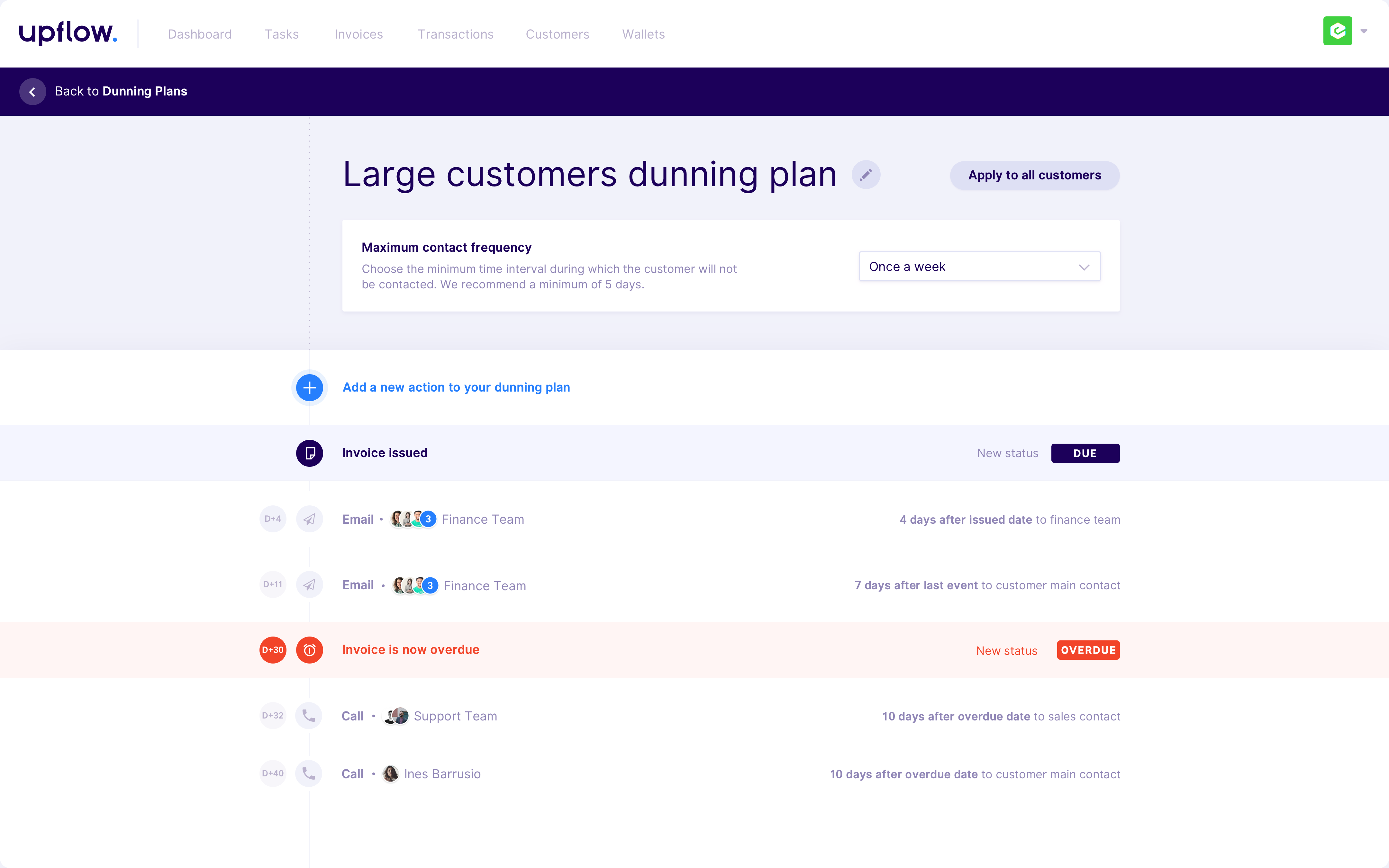
You can view all your outstanding invoices in Upflow’s interface to see where you stand. The service gives you a list of actionable tasks to get your money. For instance, Upflow tells you if you have overdue payments and tells you to contact your client again.

You can set up different rules depending on your clients. For instance, if you have many small clients, you can automate some of those messages. But if you only work with a handful of clients, you want to make sure that somebody has manually reviewed each message before Upflow sends them.

By default, you write your emails in Upflow so that your other team members can see what happened. You can browse invoices by client to see if somebody has multiple unpaid invoices. Upflow lets you assign actions to a particular team member if they’re more familiar with this specific client.

But all of this is just one part of the product. Upflow also generates banking information with the help of Treezor. This way, you can put your Upflow banking information on your invoices.

When a customer pays you, Upflow automatically matches invoices with incoming payments. This feature alone lets you save a ton of time. The startup transfers money back to your company’s bank account every day.

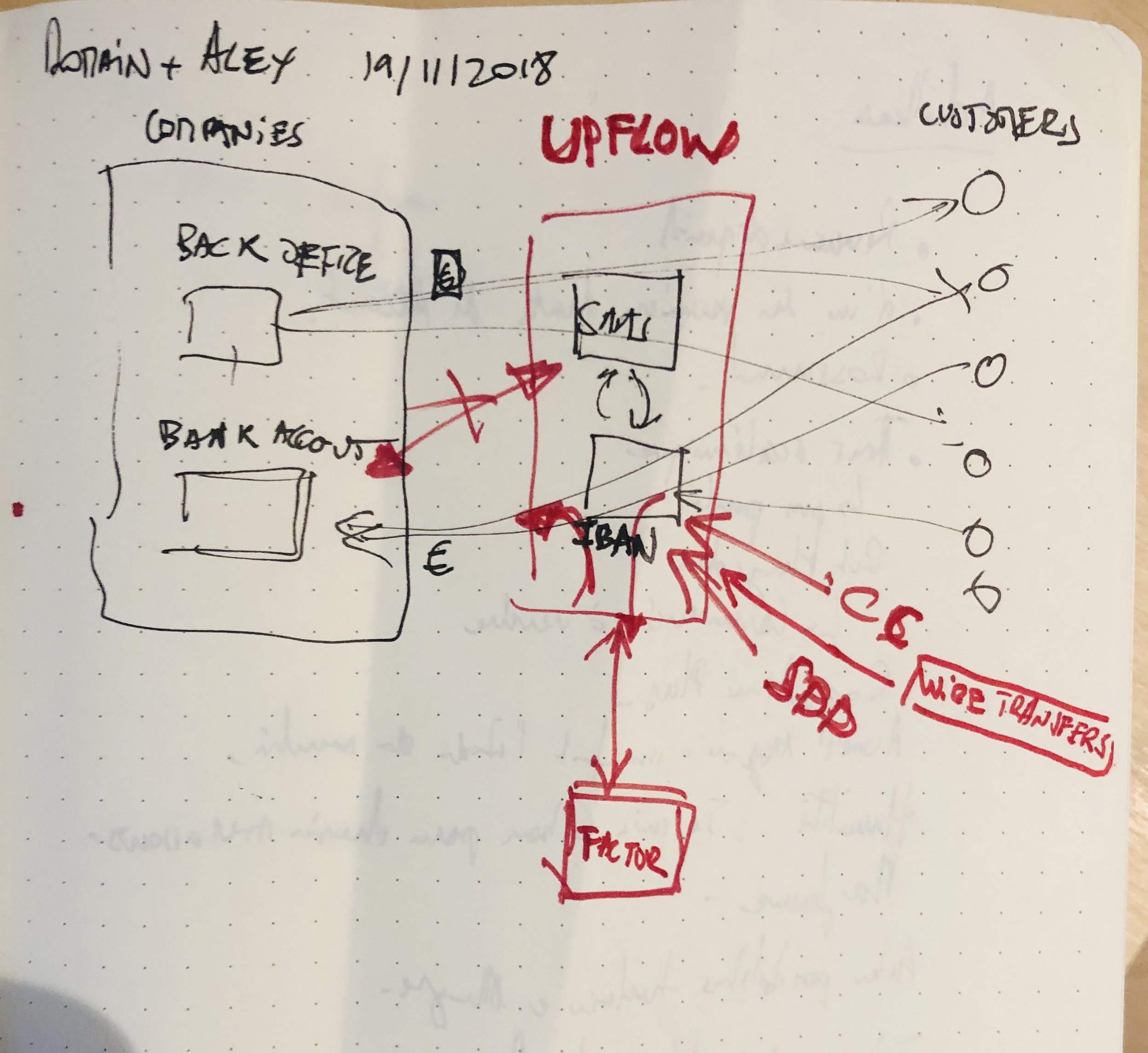
Upflow co-founder and CEO Alexandre Louisy drew me the following chart when we met. It’s probably easier to understand after reading my explanations:

In other words, Upflow has created a brick that sits between your company’s back office and your customers. Eventually, you could imagine more services built on top of this brick as Upflow is learning many things on your company.

According to Louisy, small and medium companies really need this kind of product — and not necessarily tech companies. Those companies don’t have a lot of money on their bank accounts, don’t have a big staff and need to save as much time as possible.

Now let’s see if it’s easy to sell a software-as-a-service solution to a family business that has been around for decades.

Cards Against Humanity is selling diamonds and TVs for 99% off and totally winning (?) Black Friday

Half of my family (and half of the Internet, it seems) all has eyes and phones locked on the same Black Friday sales page right now — and, likely to the disappointment of the big retailers, it’s not any of theirs.

In the latest in a streak of wild Black Friday stunts, Cards Against Humanity (the wonderfully offensive fill-in-the-blank “party game for horrible people”) is selling a different ridiculous item for 99 percent off every 10 minutes. It could be a life-size cut out of Orlando Bloom for 75 cents… or it could be a 1.5 carat diamond for $32.

Some of the other things they’ve put on sale this morning:

  • A $20 bill for 20 cents
  • An 85-Inch Sony TV for $35
  • A five-day Fiji vacation for two for $71.60
  • 600 live ants for 66 cents
  • A 2015 Ford Fiesta for $97.50
  • A Poncho toilet, which is… well, a “poncho you can poop in,” for 9 cents
  • An $800 Applebees Gift Card for $8 which tbh I’m still not 100 percent certain I’d want.
  • Bill Pullman’s actual flight suit from Independence Day

In many of these cases the items are one-of-a-kind, going to whoever managed to hit the buy button and answer a trivia question (to “prove you’re not a robot”) first.

“But wait!” you say. “How is CAH making money here?”

They’re not. From their FAQ:

Is this real?
Yes. All of these products are actually available for 99% off, and if you purchase something we will actually ship it to you.

But the deals seem too good to be true!
We’ve chosen to make them true. That’s the miracle of Black Friday.

Can the global financial system handle these deals?
Most economic indicators suggest “no.”

Surely you must be losing a lot of money on this promotion.
Oh dear yes. This is a financial catastrophe for our company.

If it was anyone else doing this, no one would believe it, but over-the-top Black Friday stunts are sort of Cards Against Humanity’s MO. Part protest, part publicity stunt, and part joke, the stunts always manage to highlight the absurdity of Black Friday while making everyone laugh.

Last year they pivoted into a potato chip company, temporarily dropping out of the game biz to instead focus on selling “Prongles.” For Black Friday of 2016, they convinced people to spend $100,000 to dig a hole so that in coming years you might think back and chuckle about that time you spent money digging a hole. In 2015, they made over $70,000 selling nothing — literally, you give them $5 for nothing (and they made it very clear it really was nothing and they weren’t going to surprise you by actually sending something).

And to prevent anyone from walking away empty handed just because they weren’t first to click the “buy” button on Dan Aykroyd’s Cone Head from the movie “Coneheads” (another actual item they sold this morning), they’ve also got a (gasp) actual product of their own for sale starting today. Called the “Absurd Box,” it’s a pack of 200 new cards for $20 — which, they note, would otherwise go for $2,000.

New US report says that climate change could cost nearly $500B per year by 2090

A new report from the U.S. government on the impacts of climate change on society indicates that unless action is taken, climatological events could cost the country nearly half a trillion dollars annually by 2090.

The National Climate Assessment is a Congressionally mandated report on the impacts of climate change and was culled from the work of 300 authors in a dozen federal agencies. The 1,000-page report covers the effect of climate change on agriculture, labor, geography and health in the United States.

It’s the second volume of a report intended to give federal policymakers information on how global warming will impact the United States. 

It also comes at a time when the current administration is doing everything to refute the mounting evidence coming from inside its own agencies and shirk its national and international commitments to mitigating the effects of global climate change.

The report provides a stark picture of what’s to come for the United States if action isn’t taken. Many of the changes that climate change will bring to the country will be irreversible, according to the study.

In the absence of more significant global mitigation efforts, climate change is projected to impose substantial damages on the U.S. economy, human health, and the environment. Under scenarios with high emissions and limited or no adaptation, annual losses in some sectors are estimated to grow to hundreds of billions of dollars by the end of the century. It is very likely that some physical and ecological impacts will be irreversible for thousands of years, while others will be permanent.

There is hope that the world can still change course and reverse the effects associated with climate change. In fact, the study says that near-term mitigation efforts should begin showing results by the middle of the century. Ideally, it’ll let scientists know what steps they’re taking are working and what aren’t.

Many climate change impacts and associated economic damages in the United States can be substantially reduced over the course of the 21st century through global-scale reductions in greenhouse gas emissions, though the magnitude and timing of avoided risks vary by sector and region. The effect of near-term emissions mitigation on reducing risks is expected to become apparent by mid-century and grow substantially thereafter.

But for the scientists that collected the data and assembled the report, the evidence of the human impact of climate change is now incontrovertible.

Observations from around the world show the widespread effects of increasing greenhouse gas concentrations on Earth’s climate. High temperature extremes and heavy precipitation events are increasing. Glaciers and snow cover are shrinking, and sea ice is retreating. Seas are warming, rising, and becoming more acidic, and marine species are moving to new locations toward cooler waters. Flooding is becoming more frequent along the U.S. coastline. Growing seasons are lengthening, and wildfires are increasing.

While the federal government may not be willing to take action to curb the emissions that contribute to global warming, states, led by California, increasingly are developing legislation to mitigate or reduce carbon emissions and to create adaptation strategies for dealing with a warming climate.

Venture capitalists also are beginning to commit significant capital to technologies focused on alternative energy generation, energy storage, emissions reduction and energy conservation that all fall under the category of sustainable solutions.

Indeed, the public offering for the vegetarian consumer food company, Beyond Meat, shows that there’s a growing market for investments in companies that promote a more sustainable lifestyle.

And early-stage accelerator programs like Y Combinator are getting into the game, calling for startups that are developing technologies to reduce the emissions that are contributing to global warming.

The new report from the government paints a dire picture for the future if nothing is done, but, as the investment and technology community once again mobilizes to develop potential solutions, there’s a chance that things may not be completely hopeless yet.

The critical step will be if the U.S. government will heed the advice of its own scientists and take steps to encourage greater action to what is increasingly looking like the biggest threat to human welfare.

Daily Crunch: Black Friday’s online sales are projected to hit $5.9B

The Daily Crunch is TechCrunch’s roundup of our biggest and most important stories. (This one’s a little shorter than usual — it’s a holiday weekend in the United States.) If you’d like to get this delivered to your inbox every day at around 9am Pacific, you can subscribe here:

1. Black Friday predicted to hit $5.9B in online sales, $645M spent so far

After a record-breaking Thanksgiving with $3.7 billion in digital sales across desktop and mobile devices, it looks like Black Friday will also pull in a bumper year for e-commerce. Adobe — which tracks trillions of transactions across a range of retail sites — says that as of 7am Pacific Time, there has already been $645 million spent online.

Shopify, which provides a real-time sales visualisation for some 600,000 merchants on its platform, notes that the average sales per minute for those merchants is hovering at just over $400,000 per minute.

2. Amazon warehouse workers in Europe stage ‘we are not robots’ protests

They’ve timed the latest protest for Black Friday, one of the busiest annual shopping days online as retailers slash prices and heavily promote deals to try to spark a seasonal buying rush.

3. Be a Thanksgiving security hero with these family-friendly tips

If you’re reading this, chances are you’re: Pretty good at tech stuff, spending time with your family for Thanksgiving and bored because you’re reading this newsletter right now.

4. Silentmode’s PowerMask is a $200 connected relaxation mask

Someone described the PowerMask as a kind of small scale take on a sensory deprivation tank — and sure, why not?

5. BlueCargo optimizes stacks of containers for maximum efficiency

Under current sorting methods, yard cranes end up moving a ton of containers just to reach a container sitting at the bottom of the pile. BlueCargo wants to optimize those movements by helping you store containers at the right spot.

6. Gift Guide: 16 fantastic computer bags

Yep, it’s another TechCrunch gift guide, this one focused on Matt Burns’ favorite subject.

Facebook policy VP Richard Allan to face the international ‘fake news’ grilling that Zuckerberg won’t

An unprecedented international grand committee comprising 22 representatives from seven parliaments will meet in London next week to put questions to Facebook about the online fake news crisis and the social network’s own string of data misuse scandals.

But Facebook founder Mark Zuckerberg won’t be providing any answers. The company has repeatedly refused requests for him to answer parliamentarians’ questions.

Instead it’s sending a veteran EMEA policy guy, Richard Allan, now its London-based VP of policy solutions, to face a roomful of irate MPs.

Allan will give evidence next week to elected members from the parliaments of Argentina, Brazil, Canada, Ireland, Latvia, Singapore, along with members of the UK’s Digital, Culture, Media and Sport (DCMS) parliamentary committee.

At the last call the international initiative had a full eight parliaments behind it but it’s down to seven — with Australia being unable to attend on account of the travel involved in getting to London.

A spokeswoman for the DCMS committee confirmed Facebook declined its last request for Zuckerberg to give evidence, telling TechCrunch: “The Committee offered the opportunity for him to give evidence over video link, which was also refused. Facebook has offered Richard Allan, vice president of policy solutions, which the Committee has accepted.

“The Committee still believes that Mark Zuckerberg is the appropriate person to answer important questions about data privacy, safety, security and sharing,” she added. “The recent New York Times investigation raises further questions about how recent data breaches were allegedly dealt with within Facebook, and when the senior leadership team became aware of the breaches and the spread of Russian disinformation.”

The DCMS committee has spearheaded the international effort to hold Facebook to account for its role in a string of major data scandals, joining forces with similarly concerned committees across the world, as part of an already wide-ranging enquiry into the democratic impacts of online disinformation that’s been keeping it busy for the best part of this year.

And especially busy since the Cambridge Analytica story blew up into a major global scandal this April, although Facebook’s 2018 run of bad news hasn’t stopped there…

The evidence session with Allan is scheduled to take place at 11:30am (GMT) on November 27 in Westminster. (It will also be streamed live on the UK’s parliament.tv website.)

Afterwards a press conference has been scheduled during which DCMS says a representative from each of the seven parliaments will sign a set of ‘International Principles for the Law Governing the Internet’.

It bills this as “a declaration on future action from the parliaments involved” — suggesting the intent is to generate international momentum and consensus for regulating social media.

The DCMS’s preliminary report on the fake news crisis, which it put out this summer, called for urgent action from government on a number of fronts — including floating the idea of a levy on social media to defence democracy.

However, UK ministers failed to leap into action, merely putting out a tepid ‘wait and see’ response. Marshalling international action appears to be DCMS’s alternative action plan.

At next week’s press conference, grand committee members will take questions following Allan’s evidence, so expect swift condemnation of any fresh equivocation, misdirection or question-dodging from Facebook (which has already been accused by DCMS members of a pattern of evasive behavior).

Last week’s NYT report also characterized the company’s strategy since 2016, vis-a-vis the fake news crisis, as ‘delay, deny, deflect’.

The grand committee will hear from other witnesses, too, including the UK’s information commissioner Elizabeth Denham who was before the DCMS committee recently to report on a wide-ranging ecosystem investigation it instigated in the wake of the Cambridge Analytica scandal.

She told it then that Facebook needs to take “much greater responsibility” for how its platform is being used, and warning that unless the company overhauls its privacy-hostile business model it risks burning user trust for good.

Also giving evidence next week: Deputy information commissioner Steve Wood; the former Prime Minister of St Kitts and Nevis, Rt Hon Dr Denzil L Douglas (on account of Cambridge Analytica/SCL Elections having done work in the region); and the co-founder of PersonalData.IO, Paul-Olivier Dehaye.

Dehaye has also given evidence to the committee before — detailing his experience of making Subject Access Requests to Facebook — and trying and failing to obtain all the data it holds on him.

BlueCargo optimizes stacks of containers for maximum efficiency

Meet BlueCargo, a logistics startup focused on seaport terminals. The company was part of Y Combinator’s latest batch and recently raised a $3 million funding round from 1984 Ventures, Green Bay Ventures, Sound Ventures, Kima Ventures and others.

If you picture a terminal, chances are you see huge piles of containers. But current sorting methods are not efficient at all. Yard cranes end up moving a ton of containers just to reach a container sitting at the bottom of the pile.

BlueCargo wants to optimize those movements by helping you store containers at the right spot. The first container that is going to leave the terminal is going to be at the top of the pile.

“Terminals spend a lot of time making unproductive or undesired movements,” co-founder and CEO Alexandra Griffon told me. “And yet, terminals only generate revenue every time they unload or load a container.”

Right now, ERP-like solutions only manage containers according to a handful of business rules that don’t take into account the timeline of a container. Empty containers are all stored in one area, containers with dangerous goods are in another area, etc.

The startup leverages as much data as possible on each container — where it’s coming from, the type of container, if it’s full or empty, the cargo ship that carried it, the time of the year and more.

Every time BlueCargo works with a new terminal, the startup collects past data and processes it to create a model. The team can then predict how BlueCargo can optimize the terminal.

“At Saint-Nazaire, we could save 22 percent on container shifting,” Griffon told me.

The company will test its solution in Saint-Nazaire in December. It integrates directly with existing ERP solutions. Cranes already scan container identification numbers. BlueCargo could then instantly push relevant information to crane operators so that they know where to put down a container.

Saint-Nazaire is a relatively small port compared to the biggest European ports. But the company is already talking with terminals in Long Beach, one of the largest container ports in the U.S.

BlueCargo also knows that it needs to tread carefully — many companies already promised magical IT solutions in the past. But it hasn’t changed much in seaports.

That’s why the startup wants to be as seamless as possible. It only charges fees based on shifting savings — 30 percent of what it would have cost you with the old model. And it doesn’t want to alter workflows for people working at terminals — it’s like an invisible crane that helps you work faster.

There are six dominant players managing terminals around the world. If BlueCargo can convince those companies to work with the startup, it would represent a good business opportunity.

Amazon warehouse workers in Europe stage ‘we are not robots’ protests

Amazon warehouse workers in several countries in Europe are protesting over what they claim are inhuman working conditions which treat people like robots. It’s the latest in a series of worker actions this year.

They’ve timed the latest protest for Black Friday, one of the busiest annual shopping days online as retailers slash prices and heavily promote deals to try to spark a seasonal buying rush.

In the UK, the GMB Union says it’s expecting “hundreds” to attend protests timed for early morning and afternoon at Amazon warehouses in Rugeley, Milton Keynes, Warrington, Peterborough and Swansea.

At the time of writing the union had not provided details of turnout so far. 

Protests are also reported to be taking place in Spain, France and Italy today. Although, when asked about strikes at its facilities in these countries, Amazon claimed: “Our European Fulfilment Network is fully operational and we continue to focus on delivering for our customers. Any reports to the contrary are simply wrong.”

The demonstrations look intended to not only apply pressure on Amazon to accept collective bargaining but encourage users of its website to think about the wider costs involved in packing and dispatching the discounted products they’re trying to grab.

This #BlackFriday Amazon workers worldwide have come together with one message for billionaire Jeff Bezos. We are not robots, treat us with dignity and respect.

Please share their message ?#AmazonWeAreNotRobots pic.twitter.com/jwwSndkiOt

— GMB UNION (@GMB_union) November 23, 2018

Spanish newspaper El Diario reports that today’s protests by workers at Amazon’s largest logistics center in the country, in San Fernando, Madrid, mark the fourth round of strikes over working conditions in Spain.

Protestors in Madrid this morning reportedly chanted: “We will not accept discounts to our rights.”

@AmazonESP paralizada en San Fernando de Henares hoy sin trabajadores en el #blackfriday porque @AmazonEnLucha defiende un convenio digno para la plantilla #HuelgaAmazon pic.twitter.com/XLLzOJKLnk

— CCOO-FSC Madrid (@CCOO_FSCMadrid) November 23, 2018

A report by AP quotes the spokesman of the protest group in Spain, Douglas Harper, claiming that around 90 percent of workers at a logistics depot in near Madrid joined the walkout — leaving just two people at the loading bay. Though Amazon reportedly diverted cargo deliveries to its other 22 depots in the country.

Update: Amazon disputes the 90 percent figure. A spokesman told us: “The numbers released by the unions are categorically wrong. Today, the majority of our associates at Amazon’s Fulfillment Center in San Fernando de Henares (Madrid) are working and processing our customers’ orders, as they do every day.”

French press also reports warehouse workers striking locally, and a union representing Amazon logistics workers calling for a national strike.

In the UK the GMB Union is calling on Amazon to recognize its representation of workers, and has attacked the company for what it dubs “Victorian working practices”. 

This summer an investigation by the Union revealed ambulances had been called to Amazon’s UK warehouses 600 times during the past three financial years.

Earlier this month the Union also revealed a total of 602 reports have been made from Amazon warehouses to the Health and Safety Executive since 2015/16 — with workers reported to have suffered fractures, head injuries, contusions and collisions with heavy equipment.

It added that one report detailed a forklift truck crash caused by a ‘lapse of concentration possibly due to long working hours’.

In a statement on Wednesday announcing the Black Friday protest, Tim Roache, the GMB’s general secretary, said: “The conditions our members at Amazon are working under are frankly inhuman. They are breaking bones, being knocked unconscious and being taken away in ambulances. We’re standing up and saying enough is enough, these are people making Amazon its money. People with kids, homes, bills to pay — they’re not robots.”

“Jeff Bezos is the richest bloke on the planet; he can afford to sort this out,” he added. “You’d think making the workplace safer so people aren’t carted out of the warehouse in an ambulance is in everyone’s interest, but Amazon seemingly have no will to get round the table with us as the union representing hundreds of their staff. Working people and the communities Amazon operates in deserve better than this. That’s what we’re campaigning for.”

We're staging #BlackFriday protests across the UK in anger at the awful conditions people work under at @Amazon warehouses.

Workers are breaking bones, being knocked unconscious and being taken away in ambulances.

Make sure people see this. Hit retweet ?#AmazonWeAreNotRobots pic.twitter.com/pBT1ksFgdG

— GMB UNION (@GMB_union) November 23, 2018

In a further update today the GMB Union said Amazon has not replied to a joint plea, backed by a shadow minister, for a health and safety review to reduce the hundreds of ambulance call outs to its warehouses.

Two UK MPs wrote to Amazon’s director of public policy for UK and Ireland last week to suggest a joint audit with the union and also a meeting hosted by them in parliament — to discuss the issues. But the union said Amazon has so far failed to respond.

Ahead of tomorrow's protest at Amazon Rugeley, I’m calling on the company to sit down with @GMB_union to talk about union recognition and decent conditions for Amazon workers. Do the decent thing, or wait for a Labour govt to do it for you. #AmazonWeAreNotRobots @GMBWestMidlands pic.twitter.com/FoU6EgcncK

— Tom Watson (@tom_watson) November 22, 2018

Responding to today’s protest action, a spokesman for Amazon UK provided us with the following statement:

Amazon has created in the UK more than 25,000 good jobs with a minimum of £9.50/hour and in the London area, £10.50/hour on top of industry-leading benefits and skills training opportunities.

All of our sites are safe places to work and reports to the contrary are simply wrong. According to the UK Government’s Health and Safety Executive, Amazon has over 40% fewer injuries on average than other transportation and warehousing companies in the UK. We encourage everyone to compare our pay, benefits, and working conditions to others and come see for yourself on one of the public tours we offer every day at our centers across the UK uk.amazonfctours.com.

The spokesman declined to respond to additional questions.

In October, facing rising political pressure on its home turf after senator Bernie Sanders introduced legislation targeting low rates of pay at the coal face of Amazon’s business, the e-commerce giant said it would raise the minimum wage of its US workers to $15 per hour. That change went into effect at the start of this month.

In another change to its business announced yesterday, also just before the Black Friday spending binge kicked off, Amazon reversed a decision that had been triggered by a change in Australian tax law earlier this year, when it had shuttered its U.S. store to shoppers in the country to avoid paying a 10 percent levy — deciding to suck up the charge to lift a geoblock that had proved unpopular with customers.

Equity podcast: A Thanksgiving-ish special episode

Hello and welcome back to Equity, TechCrunch’s venture capital-focused podcast, where we unpack the numbers behind the headlines.

It’s the day after Thanksgiving, so if you are reading this in America I hope there is a pet leaned up against your legs and that you are sitting next to a fire while staring down one more plate of leftovers.

We made this episode for just such a moment. Welcome to our take on a relaxed episode of Equity, a show normally featuring four people arguing about this or that. This week, it’s just TechCrunch’s Kate Clark and myself digging into some of the strangest and most interesting rounds of the year. Thus far, at least.

So what made our cut?

We hope that you are well and that the holidays are as delightful and full of joy as they can be. And if you are having a bad run of the end of the year, big hugs from the Equity crew. We think you are just perfect.

Stay warm!

Equity drops every Friday at 6:00 am PT, so subscribe to us on Apple PodcastsOvercast, Pocket Casts, Downcast and all the casts.

Black Friday hits $6.2B in US online sales, smartphones accounted for $2.1B

After a record-breaking Thanksgiving with $3.7 billion in digital sales across desktop and mobile devices, Black Friday pulled in a bumper year for e-commerce. Adobe — which tracks trillions of transactions across a range of retail sites — says that $6.22 billion was spent in the day, up just over 23 percent on a year ago.

That was in line with estimates earlier in the day, after tracking sales that saw $4.1 billion was already spent online by 5pm Pacific time.

More than one-third — 33.5 percent — of all sales are coming from smartphones, totalling $2.1 billion. With another 10 percent coming from tablets, mobile overall is coming close to accounting for nearly half of all transactions, a major milestone.

Shoppers have made more purchases online during Black Friday than during all of Thanksgiving the day before, when $3.7 billion was spent (a record amount for the holiday).

Adobe says the day is on track to be the second-largest e-commerce day in US history, behind Cyber Monday 2017, which brought in $6.6 billion. This year’s Cyber Monday is expected to bring in $7.8 billion.

“Black Friday will come very close to eclipsing last year’s Cyber Monday in terms of online sales,” said Taylor Schreiner, director, Adobe Digital Insights.

But interestingly, Adobe had revised down its full-day projection for Black Friday. The analysts’ $6.2 billion was down from its previous projection of $6.4 billion. In all, it’s a a big leap on 2017, when shoppers spent $5.03 billion online.

However, these figures are still far behind another major national shopping day. Alibaba alone made $31 billion in sales on Singles Day earlier this month.

Mobile moves ahead

In keeping with overall trend of people increasingly using their smartphones to make financial transactions, Black Friday this year is on track to pass its previous record of $1.4 billion in one day of e-commerce spend, Adobe says, accounting for 34.4 percent of all purchases being made today.

If you add around 10 percent of sales on tablets into that (which has been the rough proportion so far for November), mobile is now accounting for nearly half of all e-commerce on Black Friday.

Why are smartphones doing so well? It’s partly because phones continue to get more functionality and bigger screens, but also because e-commerce technology has improved to make the mobile shopping experience faster and easier. That has led also to people not only buying with more frequency, but spending more per transaction on smartphones.

In a nod to that evolution, mobile sessions were 5.2 percent shorter, but conversion is up, with 7.6 percent more visits leading to purchases.

“As retailers invest in improving mobile experiences, consumers are clearly feeling more confident in buying higher-ticket items their smartphones,” Schreiner said. “While some Americans might have been waiting in lines at stores today, the data suggests that at least some of them joined their peers in shopping on their phones — and buying more than they did in years past.”

As in previous years, Adobe said that iPhone users are buying more than Android users — currently they are 12 percent more likely to purchase after reaching a website, and they bought 14 percent more than Android users. That trend could be for different reasons: the user experience might be different, but it might also tap into the different demographics that typically use the respective platforms.

“Mobile shopping continues to skyrocket and see increased conversion,” Schreiner said. “Retailers understand that shopping and buying on smartphones is now the norm for consumers, and as a result are delivering better experiences and optimization on mobile devices.”

Adobe hasn’t released figures yet for conversion rates on Black Friday, but on Thanksgiving desktop was still seeing a higher rate of people who would buy after browsing: five percent on desktop versus around three percent for smartphones.

And while tablets are not nearly as popular for people to use — they account for only around eight percent of traffic and purchases — conversion rates on these are essentially on par with desktop.

At the smaller-retailer end of the scale, things are also doing well. Shopify, which provides a real-time sales visualisation for some 600,000 merchants on its platform — typically smaller retailers than the 80 biggest tracked by Adobe — said that average sales per minute for those merchants peaked at around $870,000 per minute, a rise on earlier today, with the average shopping cart order price clocking in at $89.37. Black Friday Shopify GMV, it say, had already surpassed the total Shopify GMV of Black Friday 2017 by 2:30 Pacific time.

Black Friday — once the traditional ‘start’ of the holiday sales period — has downshifted somewhat in importance as retailers have brought up their seasonal promotions earlier and earlier, tapping into a key aspect of e-commerce: shopping anytime you please, not just when a store is open.

At the same time, while Thanksgiving brings online retailers a captive audience — physical stores are mostly closed — Black Friday really sees the two going head-to-head, with the added competitive twist that people get days off after Thanksgiving and use them to take to the stores.

Adobe surveyed shoppers ahead of today, and it found that 60 percent planned to shop online — same as last year — and 43 percent planned to go to physical stores.

The competitiveness at physical stores has had a dark undercurrent, too, with pictures of crazed shoppers trampling over others to get to the best bargains an annual theme in the media.

Interestingly, Adobe notes that there has been a sharp rise in “buy online, pick up in store” transactions, with people buying twice as much on Thursday as on Wednesday to pick up starting Friday. That might go some way to alleviating some of the heated moments in shops.

Adobe says that so far this month, it looks like there has been $44.2 billion spent online, up 19.2 percent on a year ago.

We’ll update this post more with data as we get it.

Meituan, China’s ‘everything app,’ walks away from bike sharing and ride hailing

A major player in the race to transport Chinese people around is losing steam. Meituan Dianping, the Tencent-backed, all-encompassing platform for local services, continues to put the brakes on bike-sharing and ride-hailing, the company said on its earnings call on Thursday.

The eight-year-old firm is best known for competing with Alibaba-owned Ele.me in food deliveries — the segment that makes up the majority of its sales — and hotel booking, but it’s aggressively branched into various fronts like transportation.

In April, Meituan entered the bike-sharing fray after it scooped up top player Mobike for $2.7 billion to face off Alibaba-backed Ofo. Over the past few years, Mobike and Ofo were burning through large sums of investor money in a bid to win users from subsidized rides, but both have shown signs of softening their stance recently

Mobike is downsizing its fleets to “avoid an oversupply” as the bike-sharing market falters, Meituan’s chief financial officer Chen Shaohui said during the earnings call. Ofo has also scaled back by closing down many of its international operations.

In the meantime, Meituan said it has no plans to expand car-hailing beyond its two piloting cities — Shanghai and Nanjing — after venturing into the field to take on Didi Chuxing last December. The update is consistent with what the firm announced in its prospectus ahead of a blockbuster $4.2 billion initial public offering in Hong Kong this September.

The halt is likely related to changing dynamics in the country’s shared rides. Following two passenger murders on Didi, the Softbank-backed transportation platform that took over Uber China in 2016, Chinese regulators launched their strictest verification requirements for drivers across all ride-hailing apps. The mandate has squeezed driver numbers, making it harder to hire rides on Didi and its competitors.

During its third quarter that ended September 30, Meituan posted a 97.2 percent jump on revenues to 19.1 billion yuan, or $2.75 billion, on the back of strong growth in food delivery transactions. The firm’s investments in new initiatives – including ride-hailing and bike-sharing – took a toll as operating losses nearly tripled to 3.45 billion yuan compared to a year ago. Meituan shares plunged as much as 14 percent on Friday, the most since its spectacular listing.

Silentmode’s PowerMask is a $200 connected relaxation mask

I barely slept my second night at Chunking Mansions. The loud neighbors, the hot Hong Kong air, the landlord banging on the door after midnight: None of these things are particularly conducive to a peaceful rest, and for once in my life I actually looked forward to attempts at shut eye on the 15-plus hour flight home in the morning.

For all the dread of returning to the notorious Hong Kong hostiles that evening, after a day of exploring the area, I was actually looking forward to strapping Silentmode’s PowerMask to my head — closing my eyes and embracing the luxury of forgetting where I was for a few precious minutes.

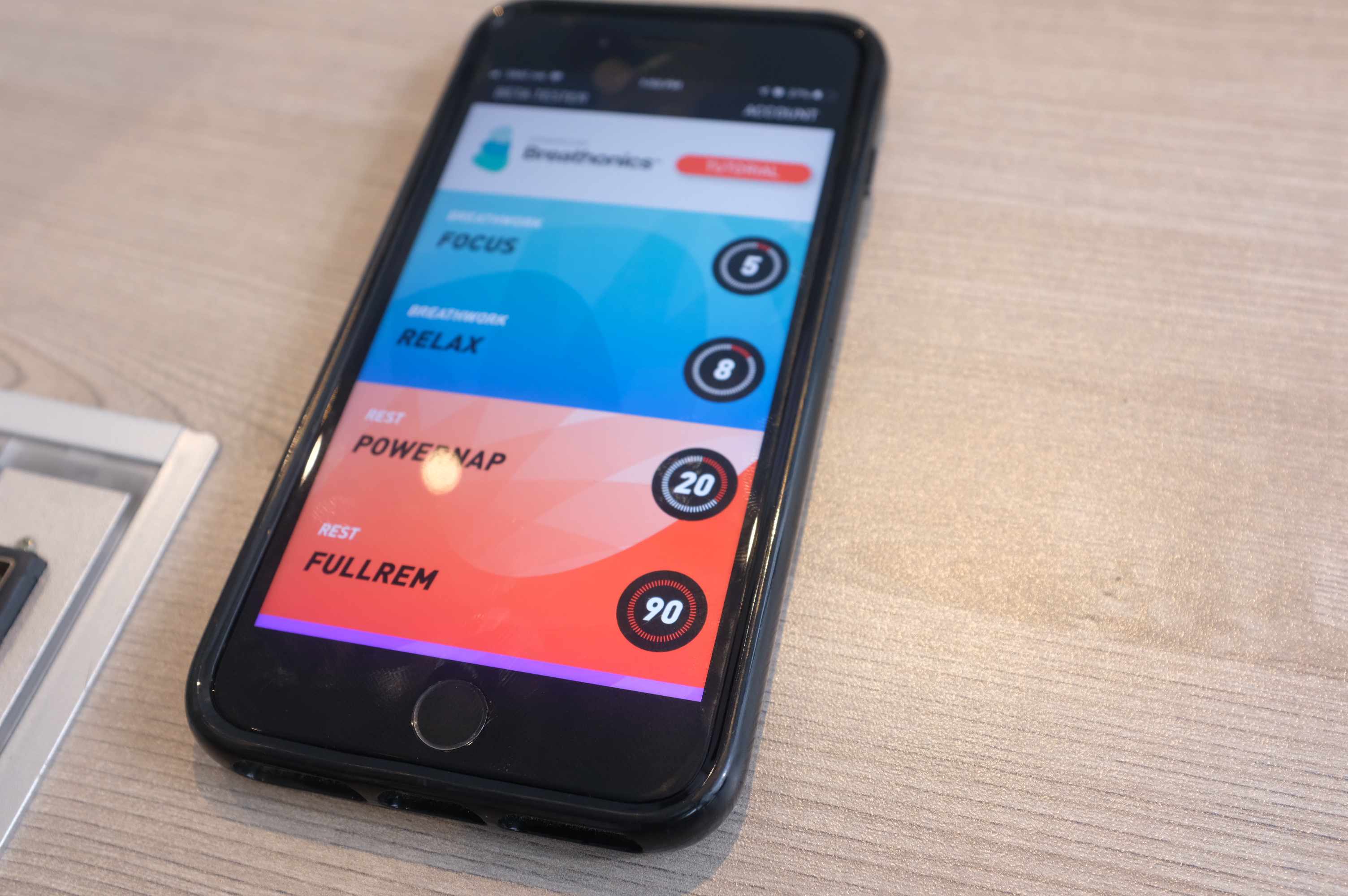
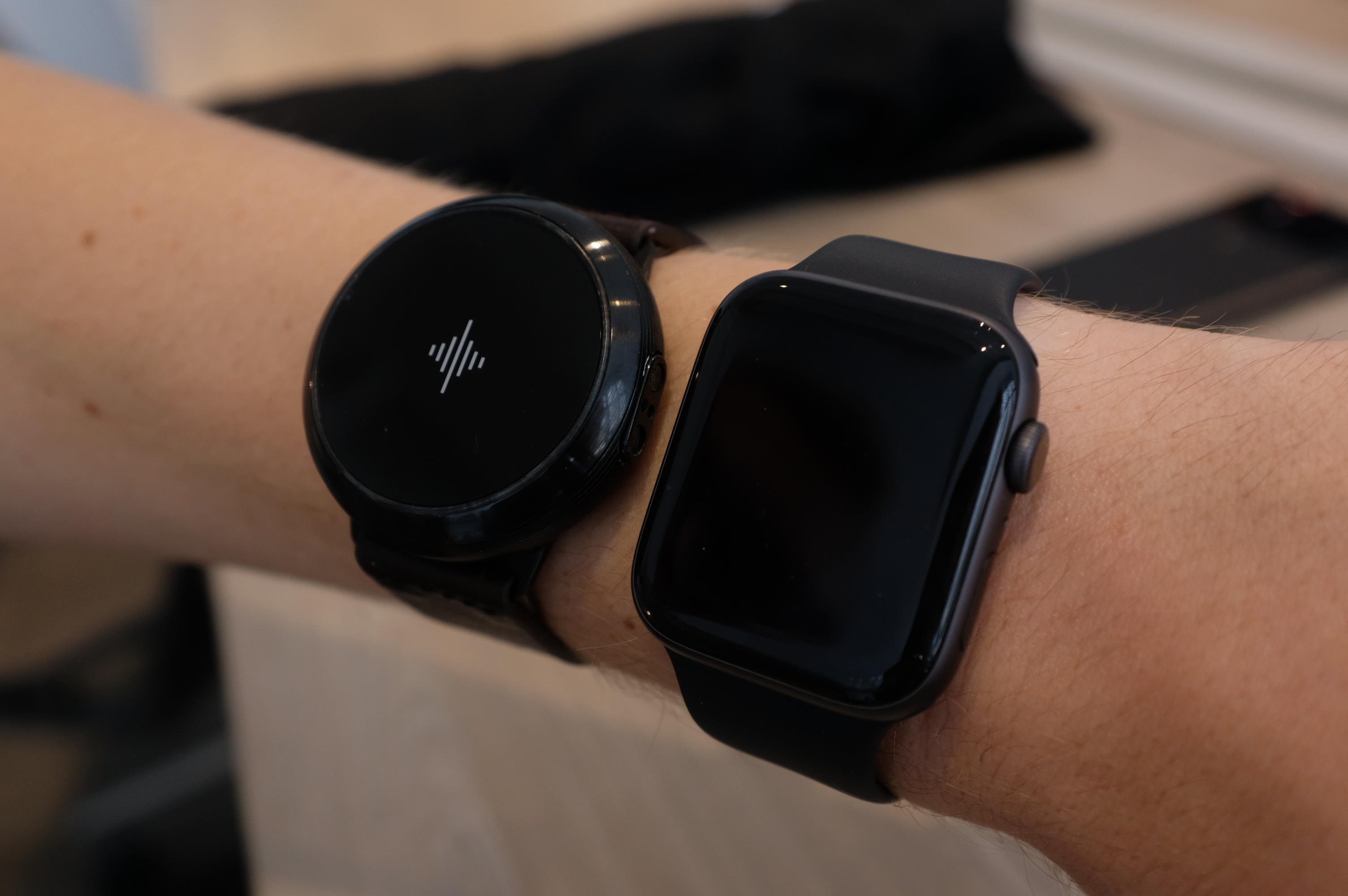
I’d tried this weird thing earlier in the day, in the middle of the Brinc accelerator’s well-lit meeting room. The whole thing was oddly soothing, if fairly awkward — a big, foam black-out mask with headphones embedded on either side. Probably not the sort of thing you want to wear out in the open, though Lucas Matney happily modeled it above — because we clearly don’t have enough pictures of our in-house VR guy wearing weird crap on his head over at TechCrunch.com.

I’d be lying if I said I didn’t enjoy the minute or two I spent with the mask on, wondering if this is how pet parrots feel when you cover their cages with a blanket for the night. Maybe that’s just the jet lag talking.

It’s a momentary respite from the cloying terrors of the world, a way to briefly trick our overactive brains into thinking, yeah, sure, everything is just fine with some New Age music, breathing exercises and, most importantly, just complete and utter darkness.

I’m a sucker for this stuff. I have the Calm app on my phone and started getting pretty into the Muse headset before leaving for my two-week trip. I’ve shared the fact that I’m a bad and anxious meditator plenty of times before on these pages, but find even my failed attempts to be useful.

Someone described the PowerMask as a kind of small-scale take on a sensory deprivation tank, and sure, why not? I’ve had worse nights.

A bit of a wrinkle in all of this: it isn’t a sleep device, exactly. Or at least the company isn’t branding it as such. Initially pitched as a “Power Nap” product, there does appear to be some in-house confusion with regard to how exactly to position the product. Certainly the startup wants to distinguish itself from the 8 million connected sleep masks I see at tech events, particularly when traveling in Asia.

The company surprisingly doesn’t discuss current zeitgeisty startup phrases like meditation or mindfulness, either.

“We are on a much bigger mission to train the world in the art of relaxation,” co-founder Bradley Young writes in a followup email. The company’s site is far less subtle, with language rarely heard outside of supplement ads. “Reach peak state,” it writes in bold all caps font, “become a peak human.” I mean, sure, why not?

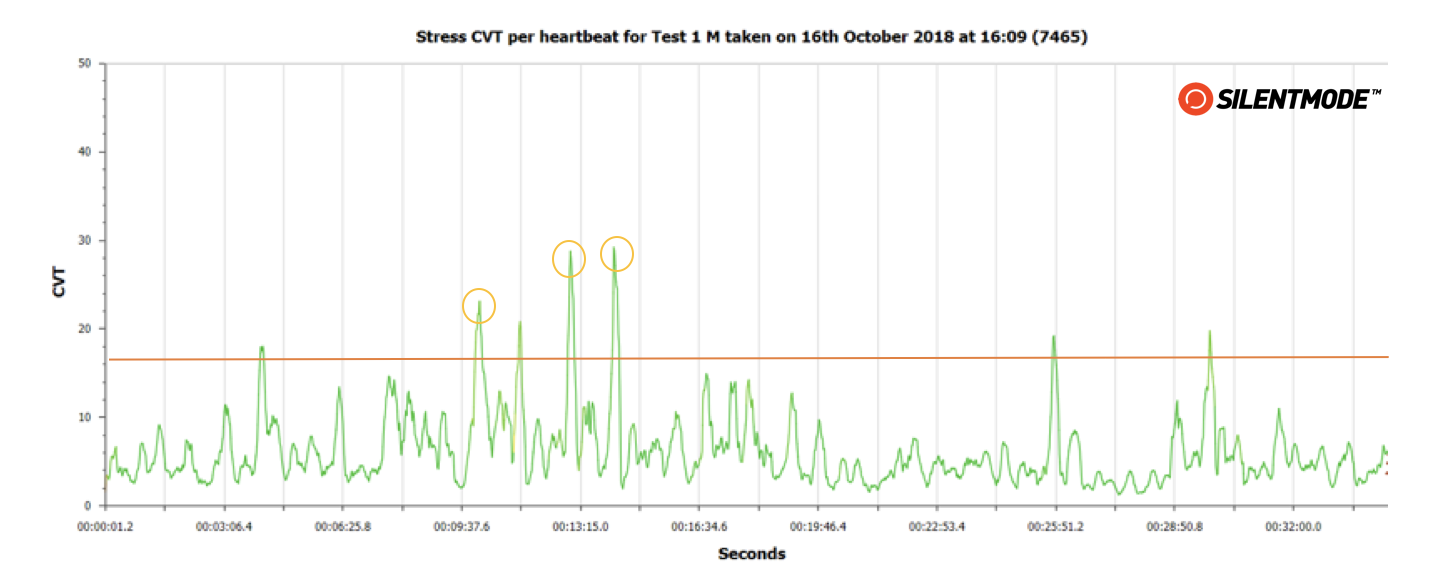
That last bit of hyperbole is courtesy of the company’s focus on something called CVT (Cardiac Vagal Tone). Silentmode claims the device can be used to help us normal folk achieve the resting heart rate of an athlete. Look, here’s a graph:

I won’t go too deep into that stuff here, because frankly, I don’t know what I’m talking about. Though I can see how buying some blackout curtains for your head b/w “psychoacoustic and therapeutic sonic experiences” could go a ways toward helping one chill the eff out. It did bring a momentary and much needed respite from my vaguely horrific lodging experiences.

Despite the company’s move away from sleep talk, it also went a ways toward helping me crash on this flight. The music is soothing, and while the padded headset isn’t a pillow exactly, it’s a lot more comfortable than just leaning your head on the seat in front of you. Assuming you can get over the awkwardness of wearing a giant thing on your head. Of course, no one looks good sleeping on a plane, weird head accessory or no.

At $199, it’s not cheap. And the company plans to offer premium audio through an additional app subscription. Silentmode is also working with some large companies to pilot these products in office spaces where relaxation is a rare commodity, indeed.

Black Friday only: 2-for-1 Innovator passes to Disrupt Berlin 2018

We love a great deal almost as much as we love early-stage startups. So, we decided to combine both into an awesome Black Friday mashup for Disrupt Berlin 2018. Europe’s premier tech startup conference takes place next week on 29-30 November, and this is your chance to save some serious euros.

For the next 24 hours, you can buy two Innovator passes to Disrupt Berlin for the price of one — that’s €1,184, VAT included. The clock runs out on this Black Friday special at midnight, CET, so don’t wait. Buy your 2-4-1 Innovator passes now.

Innovator passes are perfect for software engineers, product managers, marketers, consultants and all-around tech enthusiasts. They grant you access to all the Disrupt stages where you’ll hear from tech titans, startup veterans, up-and-coming founders and innovative investors.

Don’t miss compelling topics from the likes of Raycho Raychev, EnduroSat’s CEO — he’ll discuss making satellites more affordable. And that’s just one example of our stellar speaker lineup. You’ll find the full Disrupt Berlin agenda here.

Use your 2-for-1 Innovator passes to go watch Startup Battlefield, where a cadre of exceptional founders will launch their early-stage startups to the world while competing for the legendary Disrupt Cup, $50,000 in non-equity cash, media exposure and life-changing investor love.

Since 2007, Startup Battlefield has helped launch 778 companies — including the likes of Mint, Dropbox and Yammer — that have gone on to collectively raise $8.5 billion and generated 105 exits. Be in the room to cheer on the next generation of Startup Battlefield warriors and, who knows, you might witness the birth of the next tech unicorn.

Innovator passes also open the door to Startup Alley — our famed exhibition hall — where you’ll find more than 400 early-stage startups plying innovative tech products, platforms and services.

When you’re in the Alley, be sure to visit our TC Top Picks. These exceptional startups represent exciting innovations in the following tech categories: AI/Machine Learning, Blockchain, CRM/Enterprise, E-commerce, Education, Fintech, Healthtech/Biotech, Hardware, Robotics, IoT, Mobility and Gaming.

You’ll find networking opportunities everywhere at Disrupt Berlin, so take advantage of CrunchMatch and save your shoe leather. Our free business match-matching platform makes quick work of connecting you with tech service providers, product managers, developers, marketers or engineers, founders or investors — the choice is yours. CrunchMatch is curated, automated and efficient, and it’s all based on the criteria you provide.

Disrupt Berlin 2018 takes place on 29-30 November, and this is your last chance to get two Innovator passes for the price of one. Our Black Friday mashup offer disappears at 12 midnight CET, so buy your discounted Innovator passes right now. We’ll see you next week in Berlin!

Soundbrenner’s wearable metronome gets a modular upgrade

It took all of 14 minutes for the Soundbrenner Core to hit full funding. Not too shabby. Last week, the wearable maker closed out its campaign with more than 10x its $50,000 goal. A few days later, we sat down with the startup at the headquarters of Hong Kong-based accelerator, Brinc.

Soundbrenner has already made a bit of a name for itself with Pulse. The connected, wrist-worn device brought some clever innovation to the metronome, that old familiar piano-mounted accessory long banished to the dustiest corners of the music shop. The wearable offers haptic feedback that can be synced across an entire band to keep everyone on the beat. The company sold 60,000 of the things.

Admittedly, simplicity is one of the best things the product has going for it, but Soundbrenner figured it could take things a bit further — and apparently 2,477 Kickstarter backers agreed. The Core (which can be pre-ordered through the a separate Indiegogo page), is being positioned as a “4-in-1 tool.”

First is the vibrating metronome, which allows up to five musicians to sync to a beat, via feedback that’s around 7x that of a standard smartwatch. Wearers can also tap the screen to create a manual beat.

The most interesting bit here is probably the modularity (which arrives, fittingly, around the time the company started receiving mentorship from Mistfit co-founder Sonny Vu). The magnetic display snaps off and attaches to guitar tuning pegs, where it can test tuning via vibration. There’s also a built-in decibel meter and some standard push notifications — though it’s far from full smartwatch functionality, which is probably for the best.

The Core is smaller than its predecessor, but it’s not small, exactly. The company says this was intentional, at least in part, as these devices have become a kind of calling card among musicians. Beats a secret handshake, I guess.

Thanksgiving online spend hits a record $3.7B, mobile accounted for one-third of sales

Thanksgiving, a day when brick-and-mortar stores tend to be closed, has become a big one for online spending, and this year did not disappoint, with a surge of consumers rushing to digital platforms to grab sale items while physical stores were closed. This year, US consumers spent a record $3.7 billion on Thanksgiving, according to analysts, with smartphones driving 54.4 percent of traffic to retail sites and 36.7 percent of all e-commerce sales.

Thanksgiving also became the first day of the year to see $1 billion in sales completed on smartphones, Adobe said. It wasn’t the first time this has ever happened, but usually it’s only on Cyber Monday that we’ve seen that shift take place.

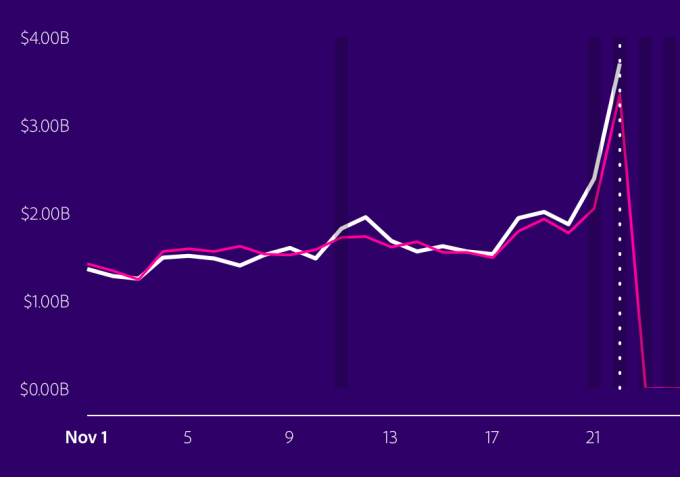
Adobe, which puts out real-time analytics tracking e-commerce sales, said that as of 2pm Pacific Time, $1.75 billion was spent online, up from $406 million at 7am — representing respective growth of 28.6 percent growth and 23.2 percent over the same periods in 2017.

This year’s $3.7 billion was nearly 28 percent up on the $2.9 billion that was spent online a year ago. Notably, stronger-than-expected activity led to Adobe revising this figure up after initially projecting $3.1 billion for Thanksgiving sales earlier this month.
(Adobe tracks e-commerce transactions across 80 of the top 100 US online retailers and says its analytics are based on over 1 trillion visits to retail sites and 55 million SKUs.)

“Black Friday” — the day after Thanksgiving — was once considered the official start of the holiday shopping season, but that start has come earlier and earlier each year, with brick-and-mortar stores kicking off their sales earlier to compete more with internet-based shopping sites.

Between November 1 and Thanksgiving, a total of $38 billion will already have been spent online, up 18.6 percent, with Thanksgiving giving a one percent bump to the whole period overal. Notably, all 22 days in November have hit more than $1 billion in sales, with three days each seeing over $2 billion in spend.

That high spend reaches a kind of zenith in the next four days, when one out of every five dollars will be spent, working out to $23.4 billion in sales (or 19 percent of all holiday season shopping).

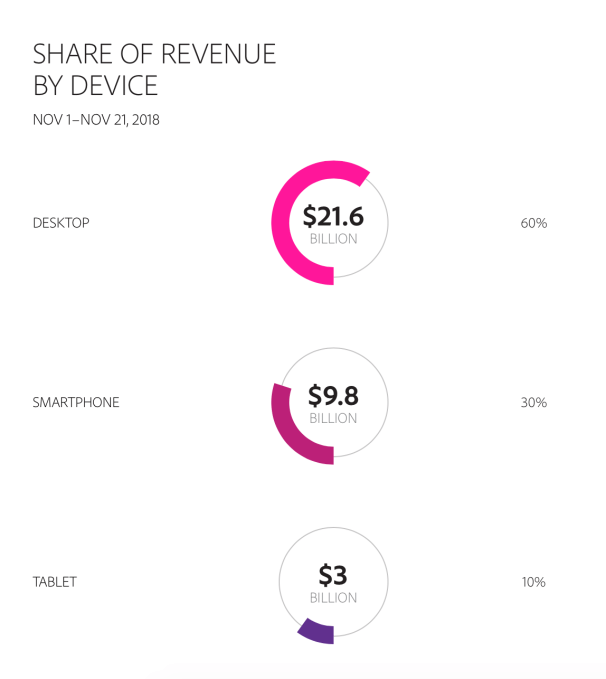
Thanksgiving is the first day of the “big five” for holiday shopping. Figures from Internet Retailer research predict that the total amount that will be spent over the period between Thanksgiving and Cyber Monday will be $21.6 billion.

But while rising tides might lift all boats, the biggest will reap the most rewards: it also estimates that Amazon will account for nearly one-third of all sales.

Indeed, Adobe’s figures are extrapolated from what it describes as the 80 biggest online retailers in the US.

So for a closer look at how smaller online retailers are doing, Shopify — which has some 600,000 merchants on its platform has also provided some data. It says that more than $250 million was spent in total with smaller merchants, with peak shopping seeing $465,000 per minute sold during the day. Top purchasing states were those that are the biggest: California, followed by Texas, New York and Florida.

The overall picture, interestingly, is that e-commerce continues to account for between 10 and 20 percent of all retail sales, largely the same proportion that we’ve seen for years. In other words, while the overall pie is growing in size, the proportion of the piece for online commerce does not appear to be changing for the moment.

Figures from eMarketer put overall US holiday sales at retailers at over $1 trillion for this season, while e-commerce will be around $123 billion, or around 12 percent of all sales.

Mobile

Thanksgiving — when physical stores are mostly closed — continues to be a big holiday for e-commerce, and within that we’re continuing to swing to more mobile commerce with record numbers this year.

“Mobile stole the show Thanksgiving Day with smartphones representing more than 50% of traffic to retail sites, as well as record amount of revenue,” said Taylor Schreiner, director, Adobe Digital Insights.

Adobe said that more than half — 54.4 percent — of all traffic to retail sites on Thanksgiving Day came from smartphones, up from 46.1 percent on the same day in 2017, and even growing throughout Thanksgiving day (earlier Adobe had said they were accounting for 48.4 percent).

Inevitably, that boost means less traffic on other platforms. Desktop was down to 36.5 percent (44.3 percent in 2017), while tablets were at 9.1 percent (9.6 percent in 2017).

Smartphones also surged on the sales side, taking 36.7 percent of all e-commerce sales by 2pm yesterday (earlier in the day: it was 28.2 percent). Desktop remained in the lead at 52.8 percent, but the gap is narrowing. Tablets accounted for 10.5 percent of sales.

The large lag in traffic and sales for tablets really underscores how these devices have failed to become a category to regard in and of themselves. At one point, it looked like they would give smartphones a run for their money in e-commerce because they had bigger screens, making shopping easier. But as smartphones have gotten bigger and stronger, and commerce technology has moved along, the market hasn’t moved the way people thought it would.

Still, Adobe points out that some $4.3 billion of goods will get left on the table, so to speak, on smartphones: people are still abandoning their carts before checking out, a sign that the experience still has a lot of room for improvement.

These numbers are largely in line with how spending has played out the rest of the month, although smartphones have seen a bump:
The 2018 holiday season has been predicted to be a bumper year for e-commerce, helped by economic forces like lower unemployment and underlying trends like more shoppers opting to spend their money online.

“Pre-Thanksgiving deals appear to have enticed consumers to spend a little earlier as we saw our second $2 billion day of the holiday shopping season,” said Schreiner.

Adobe said that this year will see an even higher total than previous years because of how the calendar works out: there will be an extra day between Thanksgiving and Christmas, working out to $284 million spent.

In terms of products that are doing well so far, Adobe singled out the Nintendo Switch, Fingerlings Hugs, Little Live Pets and L.O.L Surprise, HP Laptops, Chromecast and Drones. The top game is Call of Duty Black Ops 4.

Discounts will be coming in strong through Cyber Monday, but they are already starting. Average savings, Adobe noted, include 16.3 percent for computers, 4.7 percent for TVs and 12.2 percent for toys.

I am not sure how and why retailers would coalesce around these trends, but apparently today is best for sporting goods (discounted on average by 13 percent). Black Friday is best for computers (16 percent) and tablets (33 percent). The Sunday before Cyber Monday will see the best deals for apparel (22 percent), appliances (18 percent) and jewelry (5 percent) (seems to be a “female” theme there), and the biggest discounts for toys will happen Cyber Monday (19 percent), when kids are back at school and can’t peek over their parents’ shoulders as they are snapping up stuff to put under the tree. 

Updated with latest sales figures

Be a Thanksgiving security hero with these family-friendly tips

If you’re reading this, chances are you’re:

  • Pretty good at tech stuff
  • Spending time with your family for Thanksgiving
  • Bored because you’re reading this article right now

You may not celebrate Thanksgiving where you live, but most of our readers are American. So let’s use this opportunity to review the tech setup of your family. You don’t want to get a call in a few months because your aunt’s computer caught a nasty ransomware and she can’t find her photos again.

Updates

If you want to get the latest security patches for a phone or a computer, you have to turn on automatic updates. Modern devices are pretty good at enabling automatic updates by default, but make sure it’s turned on.

  • On Windows 10, search for “Windows update settings” in the search bar, click on “Advanced options” and select “Automatic”.
  • On macOS, open the App Store and install the latest version of macOS (10.14 Mojave). Then open System Preferences, click on “Software Update” and turn on automatic updates. Turn on automatic updates in the preferences of the App Store as well so that apps keep working over the years.
  • On iOS, open the Settings app, go to General > Software Update and update to iOS 12. Go to the same menu after the update and turn on automatic updates. You can also turn on automatic updates in “iTunes & App Stores” so that apps keep working over the years.
  • On Android, it’s a bit more… complicated. Manufacturers and carriers push operating system update themselves, so look for system updates in the phone settings — it may vary from one phone to another. After that, open Google Play, go to the settings and turn on automatic updates so that apps keep working over the years.

Backups

There are many ways to backup a computer and a phone, so I won’t list them all. On a computer, you can buy a cheap external hard drive and set up automatic backups using Time Machine (macOS) or File History (Windows 10).

You can also configure a cloud backup solution in case you want to make sure you can access backups and see that everything is working. Backblaze and Arq Backup are pretty good solutions.

Ideally, you should find a way so that it’s completely transparent for your family. If you tell your in-laws that they have to make a backup every week, chances are they won’t do it. Giving a hard drive is not enough.

As for phones, it’s a different story. If it’s an iPhone, turn on iCloud for contacts, calendars and other sensitive data. Most people don’t backup their phone to iCloud though because the 5GB limit is too low. You can either pay for an iCloud plan ($1 per month for 50GB) or set up a photo backup solution using an app. Dropbox, OneDrive and Google’s services offer photo backup services.

On Android, many people now use Google Photos. It’s a good way to make sure your photos are saved somewhere. Make sure that contacts, calendars and other sensitive data are also synchronized with a Google account.

Disk encryption

On a Mac, go to System Preferences > Security & Privacy > FileVault and turn on disk encryption. If your sibling loses their laptop and FileVault is not enabled, anybody could get the data on that computer and use it against your sibling. It’s completely transparent once it’s set up.

On Windows, turn on BitLocker. Microsoft doesn’t include BitLocker with Windows 10 Home edition. Install VeraCrypt in that case.

Passcodes

If you see a phone without a passcode, say something. It’s important because nasty things could happen if they lose their phone. Passcodes are also tied to disk encryption and various security features.

Six digits are better than four digits, but anything is better than nothing.

Security has always been about finding the right compromise between usability and perfect protection. Those tips aren’t going to make your family members perfectly secure, but it’s a good first step. Once you’re done with that, you can put all those devices down and spend some time with your family. Enjoy!