Google is building digital art galleries you can step into

Google wants to help you take a closer look at the art world.

The company’s Arts & Culture app has long been one of the company’s cooler niche apps and one that I often feel guilty about overlooking every time I rediscover it. Today, the company has added another experience into the mix focused on collecting the known works of Dutch master artist Johannes Vermeer and curating them in a single place.

The feature looks a lot like many of the company’s other deep dives, including listicles of factoids, interviews with experts and editorials. What makes this presentation unique is that the company actually constructed a miniature 3D art gallery that can utilize your phone’s AR functionality to plop into physical space in front of you.

With ARCore or ARKit, you can move through the “Pocket Gallery” and get close to the high-resolution captures of the paintings while also bringing up information about the works.

Having just tried it, this is one of those things that honestly doesn’t make a ton of sense to do with phone AR. Having a fully rendered gallery pop on your coffee table is an interesting gimmick, but they probably could have ditched the AR for a fully rendered 3D environment that’s more of a traversable object or just left the immersive views for VR and stuck with 2D exploration on your phone.

Nevertheless, it all makes for some interesting experimentation, and it’s just cool to see Google trying out new things with experiencing digital art in a more immersive way. Google’s Arts & Culture app is available on iOS and Android.

Apple launches online store with 10 percent discount for active military and veterans

Just in time for holiday shopping, Apple announced the launch of an online store offering a 10 percent discount off all products for active military and veterans.

“At Apple we are deeply grateful to the men and women of our armed forces,” the company said in a statement offered to TechCrunch. “We’re proud to offer active military and veterans a new dedicated online store with special pricing as an expression of our gratitude for their brave service.”

Apple has long offered education and student pricing discounts on various hardware offerings, along with select pricing through its federal employee and military personnel government purchase program. A number of other companies, including Microsoft, Lenovo and Samsung also offer some version of military personnel discounts.

Like your standard discount, the page features an opt-in. From there it will redirect to a store page, featuring the company’s current product lineup.

Tumblr will delete all porn from its platform

Tumblr, a microblogging service that’s impact on internet culture has been massive and unique, is preparing for a massive change that’s sure to upset many of its millions of users.

On December 17, Tumblr will be banning porn, errr “adult content,” from its site and encouraging users to flag that content for removal. Existing adult content will be set to a “private mode” viewable only to the original poster.

What does “adult content” even mean? Well, according to Tumblr, the ban means the removal of any media that depicts “real-life human genitals or female-presenting nipples, and any content—including photos, videos, GIFs and illustrations—that depicts sex acts.”

This is a lot more complicated than just deleting some hardcore porn from the site; over the past several years Tumblr has become a hub for communities and artists with more adult themes. This has largely been born out of the fact that adult content has been disallowed from other multimedia-focused social platforms. There are bans on nudity and sexual content on Instagram and Facebook, though Twitter has more relaxed standards.

Why now? The Tumblr app was removed from the iOS app store several weeks ago due to an issue with its content filtering that led the company to issue a statement. “We’re committed to helping build a safe online environment for all users, and we have a zero tolerance policy when it comes to media featuring child sexual exploitation and abuse,” the company had detailed. “We’re continuously assessing further steps we can take to improve and there is no higher priority for our team.”

We’ve reached out to Tumblr for further comment.

Update: In a blog post titled “A better, more positive Tumblr,” the company’s CEO Jeff D’Onofrio minimized claims that the content ban was related to recent issues surrounding child porn, and is instead intended to make the platform one “where more people feel comfortable expressing themselves.”

“As Tumblr continues to grow and evolve, and our understanding of our impact on our world becomes clearer, we have a responsibility to consider that impact across different age groups, demographics, cultures, and mindsets,” the post reads. “Bottom line: There are no shortage of sites on the internet that feature adult content. We will leave it to them and focus our efforts on creating the most welcoming environment possible for our community.”

The imminent “adult content” ban will not apply to media connected with breastfeeding, birth or more general “health-related situations” like surgery, according to the company.

Tumblr is attempting to make aims to minimize the impact on the site’s artistic community as well, but this level of nuance is going to be incredibly difficult for them to enforce uniformly and will more than likely lead to a lot of frustrated users being told that their content does not qualify as “art.”

Tumblr is also looking to minimize impact on the more artistic storytelling, “such as erotica, nudity related to political or newsworthy speech, and nudity found in art, such as sculptures and illustrations, are also stuff that can be freely posted on Tumblr.”

I don’t know how much it needs to be reiterated that child porn is a major issue plaguing the web, but a blanket ban on adult content on a platform that has gathered so many creatives working with NSFW themes is undoubtedly going to be a pretty controversial decision for the company.

Corporate food catering startup Chewse raises $19 million

Chewse, a food catering and company culture startup, just announced a $19 million fundraising round as it gears up to expand its operations in the Silicon Valley area. This brings Chewse’s total funding to more than $30 million. Chewse’s investors include Foundry Group, 500 Startups and Gingerbread Capital.

Instead of plopping down meals in the office and bouncing, Chewse aims to create a full experience for its customers by offering family-style meals. In order to ensure quality, Chewse employs drivers and meal hosts so that it can provide them with training. Chewse also offers it drivers and meal hosts benefits.

“We initially started with a contractor model but then very quickly started to realize our customers often mentioned the host or the driver in their feedback,” Chewse CEO and co-founder Tracy Lawrence told TechCrunch.

“I know there’s a lot of other companies that are like food tech or logistics but for us, it’s all about elevating and improving company culture,” Lawrence said. “We have technology but we’re investing in it to create an exceptional real-life experience.”

“On the tech side, we’re using a ton of machine learning and algorithms to learn what people like to eat and create custom meal schedules,” Lawrence said.

To date, Chewse has hundreds of customers across three markets. Chewse initially launched in Los Angeles, but paused operations for a little over one year in order to focus on achieving market profitability in San Francisco. Chewse has since relaunched in Los Angeles, in addition to launching in cities like Palo Alto and San Jose. As part of the Silicon Valley launch, Chewse has partnered with restaurants like Smoking Pig, HOM Korean Kitchen and Oren’s Hummus Shop.

Within the next year, the goal is to double the number of markets where Chewse operates. But Chewse faces tough competition in the corporate meal catering space.

Earlier this year, Square acquired Zesty to become part of its food delivery service, Caviar. The aim of the acquisition was to strengthen Caviar’s corporate food ordering business, Caviar for Teams.

At the time, Zesty counted about 150 restaurant customers in San Francisco, which is the only city in which it operates. Some of Zesty’s customers include Snap, Splunk and TechCrunch. Zesty, which first launched in 2013 under a different name, had previously raised $20.7 million in venture funding.

“Zesty is a direct competitor of ours for sure,” Lawrence said. “When we’re thinking about the things that set us apart from Zesty and ZeroCater, the investment in using the technology and building a meal algorithm — which is something we know they’re doing by hand — and then automatically calibrate when we’re getting feedback because we employ our hosts and our drivers. Yes, it’s more expensive for us but because it provides such a superior experience, we retain our customer longer.”

*Zesty has reached out to clarify it, too, has an algorithm at play to determine best foods and meals to serve.

Sleep-tracking ring Oura surpasses $20 million in funding

Oura Health, a sleep-tracking and sleep-improvement platform, just surpassed $20 million* in a funding round led by MSD Capital with participation from YouTube co-founder Steve Chen, Twitch co-founder Kevin Lin, Sunrise founder Dave Morin, JUMP founder Ryan Rzepecki and others. This round comes a couple of years after the Finnish company raised €5 million from MIT Media Lab Director Joi Ito and others.

Oura is a smart ring that tracks your sleep habits to help you achieve better sleep. It does this by measuring the blood volume pulse from your finger’s palmar arteries, detecting the direction and intensity of your body’s movements using a 3D accelerometer and gyroscope and by measuring your temperature through three NTC temperature sensors.

“I believe Oura has identified a challenge that faces us all, namely getting enough high-quality sleep,” Michael Dell of MSD Capital said in a statement. “Oura’s design and technology show tremendous craftsmanship, and now more consumers around the world will be able to get their own Oura ring.”

The star-studded funding group also includes Shaquille O’Neil, Lance Armstrong and Will Smith (via The Dreamer’s Fund).

“We are thrilled to have such a talented group of builders, champions, and creators join us as investors,” Oura Health CEO Harpreet Rai said in a statement. “It’s amazing to see how such a diverse group of investors all recognize the universal importance of sleep.”

To be clear, sleep tracking and improvement is an area many startups and large companies have tried. You may remember Basis Health, which eventually sold to Intel. And then there’s Fitbit, smart ring Motiv and other wearables that track your sleep.

We have yet to try this out, but we’ll report back if we do. Oura Health is currently shipping to more than 100 countries and retails from $299-$999, depending on the material you select. Meanwhile, Motiv retails for $199.

*Oura’s PR team initially sent over the wrong information, hence the update.

Skype launches real-time captions and subtitles

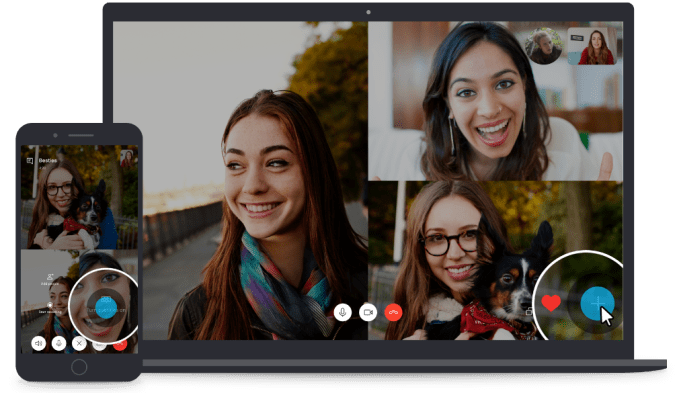
Alongside news that PowerPoint is getting real-time captions and subtitles in 2019, Microsoft announced similar technology is now available in Skype. Launching today to coincide with the UN International Day of Persons with Disabilities, the new feature allows those who are deaf or hard of hearing to read the words that are spoken during audio or video calls in Skype .

The option is enabled in Skype’s settings by selecting the more (+) button during the call and choosing “turn subtitles on.”

It can also be set as the default under Settings, the company says. (To do so, click your Profile picture, then Settings, then Calling, then Call Subtitles, then toggle on Show Subtitles for all voice and video calls.)

Once turned on, live captions and subtitles will auto-scroll during the call, but Microsoft says it’s working to offer other viewing options in the future. Specifically, Skype will soon allow you to scroll through the captions in a side window.

The company claims the new AI-powered live captions and subtitles have been optimized to be “fast, continuous, and contextually update as people speak.”

Real-time captions is only one way Skype has been working to make it easier to communicate. It also expanded its real-time translation capabilities a couple of years ago, and today says it’s releasing translations that support more than 20 languages and dialects in the weeks ahead.

When toggled on, Skype users will be able to read the subtitles in the language of their choosing during every call.

The real-time captions and subtitles feature is available in Skype version 8 on Android (6.0+), Android tablet, iPhone, iPad, Linux, Mac, Windows and Skype for Windows 10 (version 14). However, it may not be immediately live for you, even if you’re on the correct version, as it’s being gradually rolled out over the weeks ahead.

Report: Amazon is testing cashierless checkout for larger stores

Amazon’s cashierless checkout technology is now being tested for use in larger stores, according to a report from The Wall Street Journal on Sunday. The system, which involves an array of cameras to track shoppers’ purchases alongside weight sensors on shelves, has been rolling out this year to smaller convenience stores across the U.S. in markets including Seattle, Chicago, San Francisco and soon New York.

The new report says Amazon is now trying out the same technology in a larger space in Seattle, where the ceilings are higher and there are more products to choose from — things that make the system more challenging to implement.

The obvious use case here would be for Amazon-owned Whole Foods, which Amazon has been leveraging to grow its own grocery pickup and delivery business in the U.S. The business challenges rival grocers, as well as Walmart and grocery delivery services like Target’s Shipt, Instacart and others.

In particular, it could be difficult to get a cashierless system to work with items where the size, shape and weight varies — like fresh produce, WSJ notes. Whole Foods stores are also larger, as they’re typically 40,000 sq. ft. and house some 34,000 items.

But if the system were perfected, it could allow Amazon to cut or repurpose store staff at Whole Foods, as well as get a better handle on inventory levels for its delivery business. One of the challenges with ordering groceries today from places like Instacart or Shipt is that the stock levels in the app don’t match what’s actually on store shelves. Longer-term, solutions like Amazon’s Go technology could improve that.

Meanwhile, a system for grocery shopping without waiting in a checkout line could save people time.

Walmart is doing something to address this problem at Sam’s Club stores, where its Scan-and-Go app lets customers skip the line. But it’s still more labor-intensive than simply picking up items and placing them in a cart. Walmart also ended a test of Scan-and-Go that was taking place across its flagship stores earlier this year. Instead, it has begun testing new technologies, including a cashierless checkout system, in a Dallas Sam’s Club store.

Investors still don’t understand the fundamentals of US/China relations

This weekend, Presidents Donald Trump and Xi Jinping agreed to something of a détente around American tariffs on Chinese goods. Stocks across Asia swooned, for reasons that make no sense to me. Plus, Bloomberg’s spy story redux and Berlin airport fun.

We are experimenting with new content forms at TechCrunch. This is a rough draft of something new — provide your feedback directly to the author (Danny at [email protected]) if you like or hate something here.

Chinese stocks swoon over tariff slowdown — but why?

Trump and Xi agreed to delay the implementation of tariffs for 90 days while China offered to buy more American goods (particularly agricultural) as the two administrations try to hammer out a longer-term agreement.

In Asia, stocks rallied. Chinese stocks have been pummeled over the past few months as the trade dispute between the Chinese and the Americans crescendoed. Tencent, as one example, has lost about a third of its value from its peak back in January. ZTE has lost about half of its value on its Hong Kong ticker since the beginning of the year. It makes complete sense for these stocks to take a bit of a breather now that the tariffs are going to slow down.

Actually, no not really. Here’s the challenge: What exactly has changed? To me the market is deeply misjudging not only the Chinese economy, but also the American leadership as well.

Chinese stocks like Tencent have slid not because of tariffs, but because of new regulations from government agencies that have limited the launch of new video games in China. Video games are at the core of the company’s revenue mix, and new rules and controls on the industry has crushed its stock far more than a distant trade conflict.

It is clear that the Chinese government is going to continue tightening social and technological controls over the country, whether through the ballyhooed social credit system, VPN restrictions or cloud infrastructure policies. These controls are predominantly about keeping the state in charge over social and economic affairs, although also have the key benefit of preventing American internet companies from entering the Chinese market.

In what world do these controls disappear? The White House said in its statement about the dinner that “President Trump and President Xi have agreed to immediately begin negotiations on structural changes with respect to forced technology transfer, intellectual property protection, non-tariff barriers, cyber intrusions and cyber theft, services and agriculture.” (Emphasis mine). I am sure they will discuss these issues, but I am just very, very skeptical that anything will change.

Meanwhile, ZTE stock is up almost 10 percent today on its Hong Kong ticker. But tariffs have never really been the challenge for the company, which faces tremendous scrutiny from American as well as Five Eyes countries around whether its telecommunications equipment is really just a spying front for Beijing. ZTE was nearly shut down this year due to American export bans (mostly as retaliation for industrial espionage). More recently, ZTE and Huawei have faced renewed prohibitions from entering markets like Australia, and just this weekend, New Zealand.

In what world do these prohibitions disappear? The U.S. national security agencies aren’t going to allow Huawei and ZTE to deploy their equipment in America. Like ever. Quite frankly, if the choice was getting rid of all of China’s non-tariff barriers and allowing Huawei back into America, I think the U.S. negotiators would walk out.

And so the market misjudges all the fundamentals. Good to know we have become sophisticated on the most important economic relationship of the 21st century.

Bloomberg spy story keeps trundling along

WaPo media critic Erik Wemple reported this weekend that Bloomberg is still investigating its bombshell story on Chinese chip spying:

One person who spoke with [Bloomberg reporter Ben] Elgin told the Erik Wemple Blog that the Bloomberg reporter made clear that he wasn’t part of the reporting team that produced “The Big Hack.” The goal of this effort, Elgin told the potential source, was to get to “ground truth”; if Elgin heard from 10 or so sources that “The Big Hack” was itself a piece of hackery, he would send that message up his chain of command.

I think there are a couple of points worth hashing out here:

  1. I am still on the (very lonely) side that the original report was accurate. Bloomberg is a reputable news organization with very strict editorial controls. The story would have gone through extensive reviews from editors and lawyers to be published, particularly given that it graced the front cover of its magazine. It still hasn’t retracted the story, which tells me that the sources underpinning its original reporting — whether people or documents — are sufficiently credible to make the company denials from Apple, Elemental and Amazon circumspect.
  2. That said, it’s smart for them to do an additional deep-dive investigation with a separate team to try to understand what’s happening here. My hunch is that there is way more to this story than meets the eye.
  3. We should be careful not to take too much insight from outreach emails from journalists about their true intentions. Journalists rarely are direct in asking their key questions in an outreach email, particularly in sensitive investigation work.

This to me remains one of the most fascinating slow burn stories of the year. Can’t wait to see what ends up happening here.

Observations on Berlin prices and airports

Berlin cityscape. Photo by Reinhard Link used under Creative Commons via Flickr.

I was at TechCrunch Disrupt Berlin last week, which was my first time in the city. Berlin is trending among hipster circles, as well as Chinese dissidents. I can see why: great cultural institutions from high-brow to street, cheap but great food and reasonable cost of living, all things considered.

Berlin’s airports are also something of a national disgrace. The city has two airport relics, and its third airport, Brandenburg, has been under construction for almost two decades and still hasn’t managed to open. Compare that to China, which will construct Beijing’s second airport in about five years and is slated to handle almost 72 million passengers by 2025.

But an unintentional side effect of having a world-class city connected to others through airports that make LaGuardia’s main terminal seem hospitable is that it really prevents the global moneyed class from reaching the city. As one American VC mentioned to me at dinner, Berlin “is just impossible” to get to, and he visits “rarely.” There are very few direct flights between American cities and Berlin, as most carriers fly through their alliance hub (Delta through SkyTeam’s Amsterdam hub, etc.).

I talk about “infrastructure” a lot particularly when it comes to startups, and perhaps one of the most important lessons is that convenience matters. Whether it is a direct flight or a first check for a startup, those little conveniences add up very, very quickly. A little friction in the system can cause disproportionately large outcomes for a company and a region.

Valve changes revenue-sharing tiers on Steam

Valve announced new Steam rules over the weekend. It might sound like a small change, but it’s the first time the company is changing revenue-sharing tiers.

Before the change, Valve would keep 30 percent of all revenue on Steam, including full games, DLCs, etc. Microsoft, Sony and Nintendo also take similar cuts on their own consoles.

But the PC is a different market. You can install any app you want and you’re not limited to Steam for your digital games. While Steam is still the dominant platform, there are now many alternatives, such as GOG, Discord’s store and more. Game publishers also have their own stores, such as EA’s Origin, Activision Blizzard’s Battle.net and Ubisoft’s Uplay.

In other words, Valve is now facing competition from other companies and game publishers themselves. Some big titles aren’t available on Steam (Fortnite, Overwatch, League of Legends…) and game publishers increasingly feel like they don’t get much out of Steam.

That’s why Steam now takes a 30 percent cut on sales under $10 million, then a 25 percent cut on sales between $10 million and $50 million, then a 20 percent cut on sales above $50 million. Valve wants to show big-game publishers that it is willing to give them a bigger cut if they list their popular games on Steam.

Of course, independent developers will think that the rich are getting richer with this move. And they’re right that it won’t change anything for small games. This is a message for big video game companies.

Prime members ordered 2 billion products for one-day or faster delivery this year

In Amazon’s year-end wrap-up released on Monday, the retailer offered details about its best-selling products of 2018, as well as a few new metrics related to its delivery business. The company said that Prime members worldwide this year ordered more than 2 billion products for one-day or faster delivery — the first time it’s shared numbers for faster-than-two-day delivery — and that more new members signed up for Prime in 2018 than in years prior.

That latter metric has been fairly consistent — Amazon said the same in its 2017 wrap-up, as well.

While the retailer had historically kept the number of Prime members under wraps, that changed this April when Amazon announced a milestone of passing 100 million Prime members worldwide, which it cited again today.

Amazon last year had also offered some figures related to its Prime shipping business, but then focused on its two-day delivery service. In 2017, more than 5 billion items were shipping with Prime worldwide.

It’s notable then, in the course of a year, that Prime’s one-day or faster shipping is now nearing half the size of Prime two-day.

However, Amazon did not say how many total Prime deliveries were made this year, nor did it break-out its two-day figures. (We’ve asked, and it declined to share those numbers.) Instead, it touted the expanded reach of its faster-than-two-day delivery offerings, including Prime Now (two-hour), Prime one-day and Prime same-day.

It said that one-day and same-day delivery is now available across 8,000 cities and towns, while two-hour delivery now reaches more than 30 major cities. The traditional Prime two-day shipping, meanwhile, is available across 100 million items, Amazon also said.

These are the same figures Amazon reported last year, we should note.

However, Amazon’s focus in 2018 was more so on its grocery delivery business via Whole Foods, which is now available in more than 60 cities across the U.S. and still expanding. The top markets for Whole Foods delivery this year were Austin, San Francisco and Boston, the retailer said.

Amazon detailed its top-sellers across product categories, too, and offered a few other figures related to its efforts in video, music, reading and more.

Most notably, its investment in bringing NFL live streams to Prime Video reached 20 million total viewers across more than 200 countries and all 50 U.S. states across the nine Thursday Night Football games. Last year, the 10 games it streamed reached 18 million viewers, so there’s been a slight increase here.

Its most-binged Prime Original series worldwide to date were Tom Clancy’s Jack Ryan starring John Krasinski and Homecoming starring Julia Roberts.

It also said that its top-selling product in the U.S. was the Fire TV Stick with Alexa Voice Remote, followed by the Echo Dot. Both got a big bump thanks to Amazon Prime Day and Black Friday week discounts. The Dot was also the top seller during the Black Friday-Cyber Monday weekend.