TransferWise keeps growing money transfers despite global turbulence

You don’t have to follow the financial technology industry or work with developers in faraway lands to know TransferWise, arguably the world’s leading peer-to-peer money-transferring startup. Thanks to its presence in more than 70 countries, low-cost rates for moving money internationally and, of course, its famous “nothing to hide” PR campaign that featured its semi-naked employees running through the streets of London and New York, TransferWise has become one of the world’s most recognizable fintech brands. Along the way, the company helped usher in the age of the rebel-fintech adolescent startup that could compete and win against dusty incumbents on the basis of transparency, value, technology and, perhaps most importantly, moxy.

But today, the macroeconomic, business and political conditions that served as the feedstock to co-founders Kristo Käärman and Taavet Hinrikus when they launched TransferWise are ancient history. Can it keep scaling amidst heightened trade tensions, the unfortunate rise of xenophobia and capital controls? Will it continue to grow profits in the face of competition from other well-funded fintech startups and incumbents that look less dusty? Does the company, which has recently launched important partnerships, a revamped “borderless” business offering and a Mastercard debit card, have aspirations to provide other financial services? And, why isn’t TransferWise public? In the interview below, CEO Käärman addresses these questions head-on. In doing so, the Estonian native makes the case for his company’s future as a trusted partner for its dedicated (and growing) customer base.

Gregg Schoenberg: It’s good to connect, Kristo. I recently took a look at your financials, which show that despite your fairly large size, you’re still growing at a very fast pace.

Kristo Käärman: Yes, things are going very well. Tracking back to the very early days when we started, our hypothesis was that we can service customers about 10 times cheaper than banks. That was really proven out about two years ago when we reached break-even, which is an important proof point: tech that’s paying for itself. It’s not paid for with investors.

GS: So it actually works.

KK: Yes, this thing actually works. In fact, in our original hypothesis, we thought that we could probably do our biggest trade routes for 0.5 percent in fees. We’ve now revised this and are now operating at 0.3 percent in our largest routes.

GS: I assume that’s all in? Because TransferWise always uses the mid-market or spot rate.

KK: Yes, and from the beginning, we’ve taken the approach that we never hide anything in the spread.

GS: Before we leave the topic of your financials, is there any color that you would care to give on how things are going subsequent to when you reported your numbers?

KK: Things are going in the same direction, which is consistent with the mission of the company: Grow the volume and the customer base, which gives us more scale to enable us to charge skinnier and skinnier margins.

GS: Taavet has said that he knows the moment when TransferWise’s transaction volumes will surpass Western Union’s. When is that?

KK: We’re a little bit behind Western Union, but give us a few years.  

What’s more powerful? Anti-trade factions or the natural forces leading us to become more global?

GS: So it won’t be in 2019?

KK: It might be, but I doubt it. Actually, you can kind of work it out, because Western Union is a public company and their volumes aren’t really growing very much. Today, our volumes are still smaller than Western Union’s. Then again, Western Union’s volumes are not very big compared to Citibank’s or HSBC’s.

GS: Speaking of volume, do you disclose your biggest foreign exchange (FX) crosses? I couldn’t find them on your site.

KK: It’s not disclosed, but we make no secret about this either. Let me also preface this by saying that whenever we’re in the U.S., everyone’s brain immediately goes to U.S. to Mexico. But it’s not the biggest channel by far.

GS: Is dollar-peso high on the list?

KK: Definitely, but the volumes there are much smaller. Our biggest volumes are in between the large developed countries. So you’ve got pound-euro, euro-pound, euro-dollar, pound-dollar, dollar-euro. That’s the biggest triangle. Then you’ve got Australia, Canada, Switzerland, Japan, Singapore, Hong Kong, etc.

GS: On that note, how big of a concern is it to when you see a weakening of overall relations between the U.S. and Mexico and China and the Brexit saga? To me, TransferWise has always been predicated on more frictionless, cross-border commerce. As you know, geopolitical forces are reversing those trends.

KK: Certainly, if everyone decided that they weren’t going to trade in other currencies, there wouldn’t be a need for us. And I appreciate what you’re describing in terms of the public narrative that’s the intent of some factions. Whenever I get asked about trade tensions, I wonder, what’s more powerful? Anti-trade factions or the natural forces leading us to become more global? Technology is one of those forces. Because it’s very hard these days to be a local tech business. So while not every future business will be a tech business, most will either be tech or have a lot more tech elements, which are naturally more global.
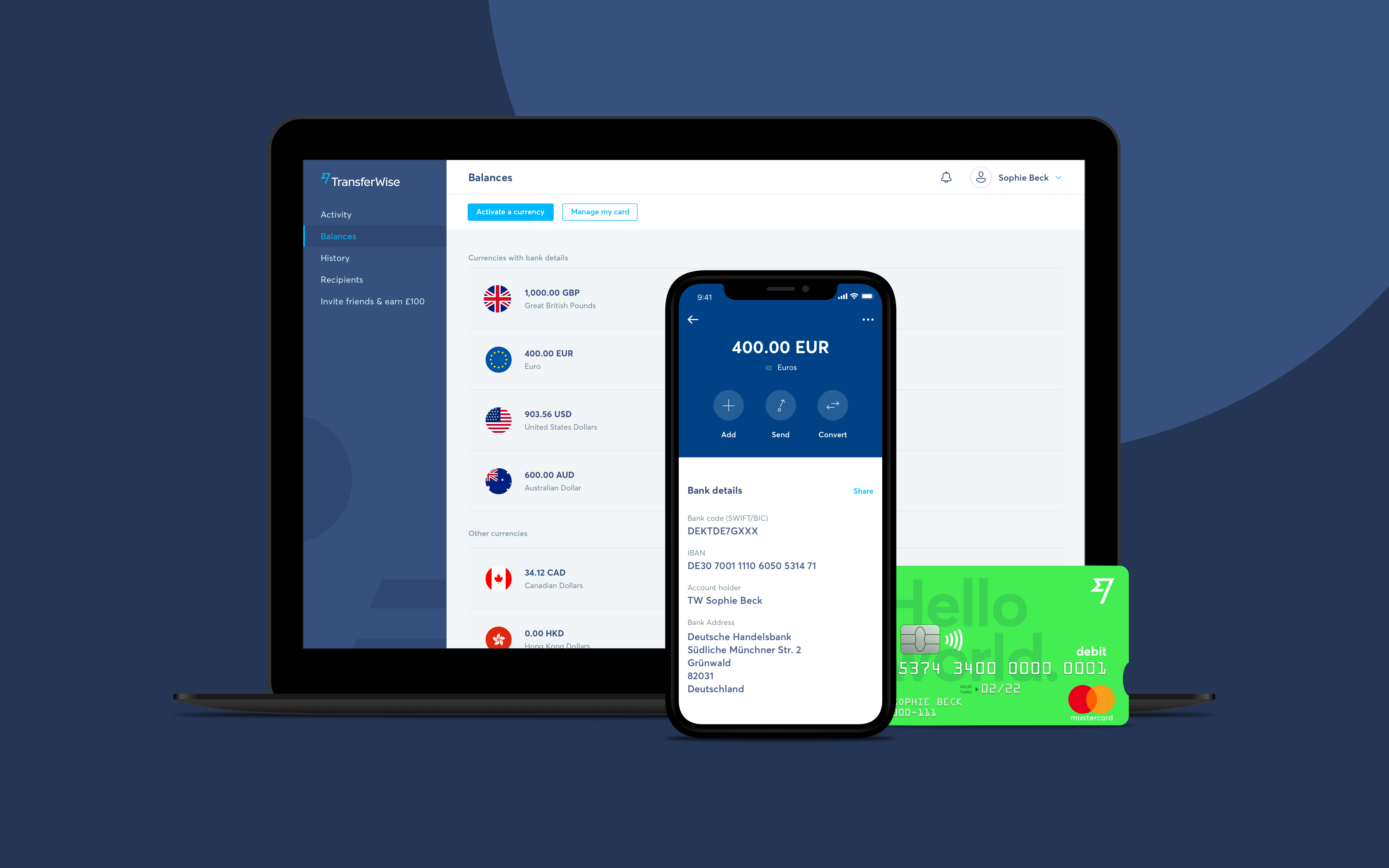
TransferWise’s borderless account mobile card

GS: You’re saying that the global game of tariff-chicken and overall decline in immigration between certain major countries isn’t on your CEO headache list and that they haven’t impacted flows?

KK: No and no. Here’s a practical example: China has put into place capital controls, preventing residents from taking more than $50,000 U.S. dollars per year out of the country. As a result, they have already closed down the country from some aspects of money movement. I might disagree with that, but it’s their right.

GS: That sounds like it can create quite a headache for you guys.

KK: It’s a bit of a headache for us, but we’re not that worried about compliance requirements. We just won’t bother with the Chinese market. I mean, we’re operating in so many countries around the world. It’s business as usual for us.

GS: Is a global recession and/or a global shock higher up your list?

KK: I’ll answer that question by telling you about the month of the Brexit vote, which was an outsized month for us in terms of volumes.

GS: High volume?

KK: Yes, incredibly high volume, but we didn’t market anything and we didn’t do anything. In fact, we closed down the service. Actually, you’ll appreciate this as a Wall Street guy

GS: Ex.

KK: Ha, my apologies. So a couple of days before the vote happened, we knew that whichever way the vote would go, there was going to be volatility that night, and when volatility happens, the price rises, the smarter banks make a lot of money, which is usually not the case for consumers.

GS: Of course.

KK: A few days beforehand, we told our customers that a storm is coming, and that if they needed to move money between pound and euro or pound and something else, do it in the next 24 hours because we’re going to shut things down.

GS: You gave people fair warning.

KK: Yes, but we were actually very stressed on the day we put out the notice. Would people accuse us of crippling the service? Instead, people started thinking about how exchange rates were going to move. It ended up going really well and earned us kudos when things calmed down.

GS: What you’re saying is that in a recession, which will likely accompany global freak-outs, you’ll protect your customers. But what you’re also saying is that volatility can be a good thing from the standpoint of trade flows going higher.

KK: Yes, but I don’t like a recession.

There are cases where people who can transact internationally can switch from PayPal to us. If they can, they’re jubilant.

GS: Of course not. But some of the criticism hurled at TransferWise is that it’s a great service for when the weather is nice. And while large institutions charge too much for FX when times are good, in periods of volatility, they have more tools to manage risk and ease volatility.

KK: In financial services, risk is expensive, and if we’re building a product where margins are getting thinner and thinner — and we think they can get close to zero — it means that we see zero risk involved in it. So everything that we do is designed in a way that would take as little risk as possible. And I think you’re referring to mostly FX exposure, which is one of the types of risk that emerges if you don’t have balance on both sides.

GS: Right.

KK: Then you either leave some people waiting for a little bit until you can match it out somehow on the market, or you’re willing to cover that position until you’re able to take it off.

GS: Yes.

KK: So your assumption is correct, and it can be worth it to make payments instant by taking a very tiny bit of a position. We’ve comfortably managed that. I can’t disclose the numbers, but you’d be surprised how small that position is compared to our volumes. Now, in the early days, when we were running the company on my money and Taavet’s, we had no way to put up capital to facilitate transfers. But we had a trick we used then, because we often had more transfers coming in from, say pounds to euros than from euros to pounds.

GS: A big mismatch.

KK: We basically made a very large limit on the euro side — I think you could transfer like 50,000 euros at a single time — and a smaller limit on the pound side, so you could only transfer 3.000 pounds.

GS: Is that something that you would still do if a mismatch got bad enough?

KK: We haven’t done this now for five or six years, but it’s an idea to create a balance synthetically.

GS: Let’s talk about where the business is headed. I’ve seen a number of announcements that you guys have made. On one hand, you’ve hooked up with BCPE, and have deals in place with some challenger banks to help them facilitate FX transactions. These partnerships can enhance your volumes and take you one step closer to becoming the Amazon of FX for retail. But you also now offer a “borderless” multi-currency account for people and businesses that can be linked to a Mastercard debit card, which seems to constitute an expansion of your relationship with some customers.

KK: In terms of integrations with the customers of our banking partners, they now see how much they’re actually paying for a transfer. Plus, they get the same pricing as they would on TransferWise but with greater transparency.

GS: You’re trading margin for dollars, right? Because you have to share the fees with partners like BPCE, but that’s okay because they’re bringing you lots of customers.

KK: Yes, but they also share in the cost. In terms of the debit card, it comes from two ideas. Think of an individual customer who often sends money to their own account abroad, or to their family. Why do they do this? The answer is that they probably have a student loan or a mortgage to pay back at home.

GS: Just like you did.

KK: Right. So we asked ourselves, why don’t we make it easier for our customers to do it directly? Avoid this hop from their bank in the U.S. to TransferWise, then from TransferWise to their bank in the U.K. and then from their bank in the U.K. to pay the mortgage. Why don’t we let them do it from within TransferWise? Because we actually have the payments infrastructure in 70 countries.

GS: Let’s talk about your small business customers specifically.

KK: From the beginning, we’ve always accepted businesses as users. Over time, maybe the small business side has gotten more focus because it’s a little trickier and it needs more features. Specifically, while freelancers and businesses have always been very happy to use TransferWise to pay their suppliers, they still have an issue when they get paid, or when they invoice their customers.

GS: Can you give me an example?

KK: Let’s take a Swedish furniture maker, when they sell their beautiful tables in the U.S. like the one we’re sitting at. That company would put their Swedish account number on the invoice, and then depending on how bold they are, they would ask you to pay it in either Swedish krona or in U.S. dollars. Either way, one of the banks is going to do that conversion, while the customer is going to pay three or four percent of the invoice value. So now, with the borderless account, the furniture maker can hold the balance in different currencies.

GS: That’s helpful, but not unique.

KK: It’s not exciting. HSBC has been able to do this for decades. But what they also get is a local account number in many countries, eventually in 40 countries. So now, they put their TransferWise account number on the invoice and it gets paid as a local business in the U.S.

GS: So you’re not trying to compete against domestic-oriented banks, or for that matter, even PayPal. It’s just an outgrowth of who your clients are that you offer this.

KK: That’s fair, but I think we’ll overlap with PayPal a little bit. There are cases where people who can transact internationally can switch from PayPal to us. If they can, they’re jubilant.

I think the journey of money could be something similar to email.

GS: Well, they like your fees, right?

KK: Yes, exactly. On a related point, the card is a way to give people access to that money that they have in the borderless account. So the thought process wasn’t to do a bank and start with a card. The thought process was to make it easier to facilitate international lives and international flows within the borderless account.

GS: You can’t even pay interest on that cash, because you’re not a bank.

KK: Correct.

GS: Taavet likes to give interesting quotes. One was, “We want to be as cheap as email one day.” As we all know, email is free. We also all know that when something is free, you’re the customer. It’s true in search and in trading stocks. With this in mind, have you been approached yet to sell your data?

KK: No one’s ever approached me on data, and yes, we would like to be as cheap as email one day. Actually, I think the journey of money could be something similar to email. But to be honest, my visibility goes from being able to move from a 0.5 percent charge to a 0.3 percent charge. I also think I know how to get from 0.3 percent to 0.2 percent. But going from 0.2 percent to 0.1 percent is going to be really hard, I can tell you that now. And going from 0.1 percent to 0, that I don’t have an answer for.

TransferWise’s Mastercard debit card

GS: If you want to remain transparent, it will be tough. I mean, you guys used to parade through London without your clothes on to make the point that there’s no secret to how you earn money.

KK: Well, I don’t know if we need to get to zero cost; maybe 0.1 percent is completely fine. But if some people want zero for some reason, then we could also transparently subsidize it from something else that they are willing to pay for, or maybe someone else is willing to pay for them.

GS: Let’s talk about the future, then. Why aren’t you public?

KK: But, why?

GS: To do acquisitions, motivate employees, raise capital. There are all sorts of reasons why it could make sense for a growing, diversified company like TransferWise. I guess you’ve dipped your toe in those waters a little on the debt side, and I recognize that being public isn’t a walk in the park. Still, I’m sure you’re well aware that some megafund VC out there might one day pump mounds of equity into a competitor.

KK: It’s a fair and relevant question, and we do want to be pragmatic about this. So the first question we’ve asked ourselves is: Do our customers care if we’re a public company or not? The answer is that they don’t care too much. Then, we’ve asked ourselves whether it will enable us to do more. Of course, being public probably makes our capital cheaper, but we’re not really capital-intensive. You’re right that we might need that currency to make acquisitions—

Everyone had to create something so that they could live.

GS: —But I understand that it reduces your flexibility and long-term planning a lot.

KK: Regarding a fund that would put a huge amount of money into a competitor, let’s say a half a billion dollars, for example. I think if it was important, I should’ve done this already, but we haven’t. Plus, in order to deploy 500 million pounds, our customers are going to be paying interest on this, eventually. So we’d have to have a bloody good place to deploy that kind of capital.

GS: To close, I want to ask you about Estonia, because I’ve never asked an Estonian this question: Your small nation has hatched Skype, Pipedrive and Taxify in addition to TransferWise. What’s in the water in your home country? Because not all former Soviet republics have had Estonia’s success. And while Israel may be known as the startup nation, I think Estonia could also lay claim to that title.

KK: That’s a three-hour discussion by itself. I’ll say this: When I was a kid, the economy didn’t matter for people; independence mattered. And after having another country rule over you for 50 years, against your will, you don’t really care about how you’re going to eat next month.

GS: And then the Soviet Union collapsed.

KK: Which resulted in half the population basically becoming unemployed. Plus, we didn’t have an industry that was useful for putting food on the table or making a living at that time. Everyone had to create something so that they could live.

GS: You’re saying that it was a combination of this fierce independent streak that was embedded into Estonia’s DNA combined with the lack of industry to rely on.

KK: Yes. It’s called entrepreneurship.

GS: Ha, well in your case, it was perhaps a gift. Thanks for your time, Kristo, and great luck.

KK: Thank you, Gregg.

Lightspeed hires 5 new partners from Slack, Twitter and more

Lightspeed Venture Partners, one of the best-performing VC firms in Silicon Valley, is closing out 2018 with a slew of new hires.

The firm has brought on five additional investing partners: Jana Messerschmidt, Ashley Brasier, Merci Victoria Grace (pictured above), Jerry Ye and Jay Madheswaran. Neetzan Zimmerman, a former senior editor at Gawker, has also joined as vice president of growth, as first reported by Forbes.

The additions are 50 percent female, a good move for Lightspeed, which like many VC firms, has been long short on female partners. Founded in 2000, Lightspeed has had just two female partners, Nicole Quinn and Natalie Luu, who joined in 2016 and 2018, respectively.

Two of its newest hires, Messerschmidt and Grace, are particularly active advocates of women in tech, too.

Jana Messerschmidt, one of Lightspeed’s newest partners

Messerschmidt joins from Twitter, where she was vice president of global business development and platform. She’s also held business and engineering roles at Netflix and DivX, and is a co-founder of #Angels, a group of early-stage investors focused on getting more women on cap tables. Messerschmidt already has a number of consumer tech companies in her portfolio, including Bird, Winnie, Carrot, TruStory and Cameo.

Brasier, also tapped to support Lightspeed’s consumer investing practice, joins straight out of Stanford Business School. Before that, she was a manager at on-demand services marketplace Thumbtack, where she ran the events and weddings category.

On top of that, Lightspeed has poached Slack’s head of growth Merci Victoria Grace, who’s also a founder of Women in Product, a community for women in the field that has grown to 5,000 members since 2015. She’ll join the firm’s enterprise team.

Ye, a founding partner and former head of data science at SignalFire, a data-focused venture firm, will support Lightspeed’s growth team and will help support the firm’s data science practice. Madheswaran, for his part, will specialize in open source and cloud software. He was most recently at Lightspeed portfolio company Rubrik, where he was a founding engineer and head of product engineering.

Finally, the firm has brought on Zimmerman, the former Gawker editor, as VP of growth. Until recently, he was a senior director of audience and strategy at The Hill. Previously, he was editor-in-chief of Whisper, a Sequoia-backed AI-enabled storytelling platform.

The hiring news comes hot off the feels of Lightspeed’s $1.8 billion fund announcement. The pool of capital is the 18-year-old firm’s largest to date.

Lightspeed, the first institutional investor to throw support behind Snap, has also written early checks to MuleSoft and Stitch Fix, which both completed successful IPOs this year.

Google partners with media outlets to provide on-demand news audio

Getting news in the morning has long been my most used feature on Google Assistant. Asking Home “what’s in the news” brings up a quick flash briefing from a handful of selected outlets. It’s quick, it’s easy and it helps fill me in on the way out the door.

Google’s long promised to improve on this feature, offering an on-demand take on news radio. Over the past year or so, it’s been working with a handful of publishers — including The Associated Press, Hollywood Reporter, Universo Online and the South China Morning Post — to create news playlists. The audio feed adapts to the time of day and the listener’s preference, using a similar AI model to the one that currently powers Google News.

“It starts with a briefing of top stories and updates on topics you care about, and extends into longer-form content that dives deeper into more stories,” the company writes in a blog post. “At any point in your day when you want to listen to the latest news—as a morning wake-up, during your commute, or while jogging—the Google Assistant will be ready with new stories and updates to the ones you’ve already heard.”

Like the current offering, users can ask Google to skip or repeat certain stories.

In addition to its existing partnerships, the company has created a template for news outlets to record stories that can be plugged into the feed. There’s also the new Google News Initiative, which is designed to help outlets create more audio offerings.

The feature is starting to roll out now to users in the U.S.

Update: Google has reached out to note that the product is still in the early stages, so don’t exact to see a wide release of the final version just yet.

Mozilla and Qualcomm are bringing a native version of Firefox to Windows 10 on ARM

Microsoft is working with Google to bring a native ARM64 version of Chrome to Windows 10 on ARM and as Mozilla announced today, it, too, is working on bringing a native version of Firefox to Windows 10 on ARM. The organization is doing so in cooperation with Qualcomm.

Typically, to make any Windows 10 application run on ARM-based machines, Microsoft uses a number of emulation techniques. Those work quite well, but they do incur both power and performance cost. Native applications obviously don’t need emulation, so they run faster and more efficiently. Given that browsers are among the most-used applications, it’s no surprise that the major browser vendors are interested in offering the best support for the platform, even if we’re still talking about a very small niche for the time being.

We asked Mozilla for a release date for this Windows 10 on ARM version, but the organization has yet to provide us with this information. We’ll update this post once we learn more.

Qualcomm also today announced its new premium 8cx platform for PCs, which extends the company’s bet on the PC market. It’s probably no surprise that Mozilla chose today to make its announcement. In addition, though, Microsoft also today announced that it will move to the Chromium engine for its Edge browser. That leaves Firefox’s Gecko engine and WebKit, which Apple’s Safari uses, as the last two competitors with any major market share in the browser space.

Qualcomm expands its PC bet with its new 7nm 8cx platform

Qualcomm wants to become a major player in the PC/laptop market. Now that there is Windows 10 on ARM, that’s more than a pipe dream, but in its earliest iterations, those Qualcomm-based Windows 10 laptops used the Snapdragon 850 system on a chip that was specifically designed for PCs but still very much a direct descendant of its smartphone platform.

Today, the company announced its Snapdragon 8cx platform, “the most extreme Snapdragon ever,” in Qualcomm’s parlance, which still leverages some of the company’s mobile expertise and building blocks, but which was built from the ground up to power PCs.

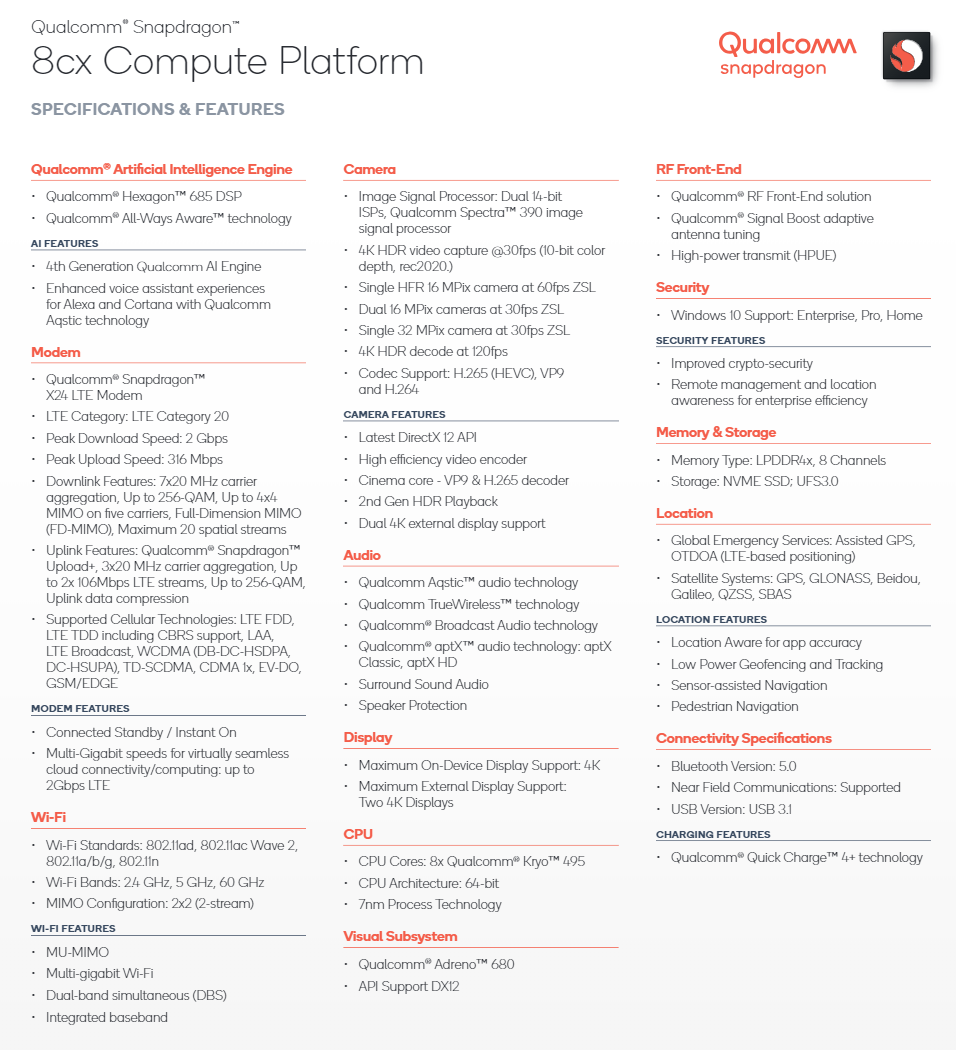
The 8cx is very much tailored toward the PC, down to how it handles peak performance and multitasking. It’s also the first 7nm PC platform, the company claims, though the first devices won’t hit the market until Q3 of 2019.

The promise of using Qualcomm Snapdragon platform for a PC (which Qualcomm and Microsoft brands as “always connected PCs”) is that you’ll get multi-day battery life and a performance that is comparable to what you’d get with an Intel chip. The first generation of devices delivered great battery life, but performance wasn’t quite up to par. With this new release, Qualcomm promises to change that. Without saying Intel, Qualcomm argues that its 7nm chips are “multiple generations ahead of the traditional PC space.”

Despite launching the 8cx platform, Qualcomm is keeping the 850 around. It’s positioning the 8cx as a premium platform that complements the existing 850 platform in order to allow vendors to offer PCs at a wide range of different price points.

The new 8cx will feature Qualcomm’s Kryo 495 CPU and the Adreno 860 GPU, which will be able to power two 4K HDR monitors. It’ll also feature Qualcomm’s latest quick charging technology and all the usual connectivity options, ranging from Bluetooth to USB-C and LTE (for that always connected connectedness).
“With performance and battery life as our design tenets, we’re bringing 7nm innovations to the PC space, allowing for smartphone-like capabilities to transform the computing experience,” said Alex Katouzian, senior vice president and general manager of mobile for Qualcomm, in today’s announcement. “As the fastest Snapdragon platform ever, the Snapdragon 8cx will allow our customers to offer a powerful computing experience of multi-day battery life and multi-gigabit connectivity, in new thin, light and fanless design for consumers and the enterprise.”


Artie aims to bring you closer to your digital idols with autonomous AR avatars

If you spend enough time scrolling through manicured photos of manicured lives on social media, you might come to the realization that maybe the fakeness of the online world has started to look too real.

This might be why so many investors are starting to stare headlong into the world of avatars and digital influencers that aren’t real people but can learn from their audiences in real time. Earlier this week, I chatted with a pair of interesting founders from the startup Artie. The team is basically trying to create an interaction engine for digital avatars to sit in the real world and have some sort of meaningful interaction with users through phone-based AR.

The startup’s backers include Founders Fund and YouTube co-founder Chad Hurley. Co-founders Armando Kirwin and Ryan Horrigan both come from some top startups in the VR media space.

The Artie team

Artie’s sort of autonomous storytelling platform really focuses in on a couple of emerging trends.

One is this big idea of digital influencers revving up in Japan and Korea that’s basically leveraging all of these new face-tracking capabilities of smartphones to allow users to craft 3D avatars that are sort of animated, abstracted online personalities. It’s started to make waves stateside, but it’s a slower grind. Artie isn’t necessarily looking at user-generated content at this moment, but the company’s work in more branded moments with already leveraged IP is an interesting first step toward something bigger.

Artie is also an AR company. The phone AR market really seems to have a number of usage obstacles to overcome. Despite the excitement coming from Apple and Google, platforms like ARKit and ARCore have mostly arrived with a thud. There are a few companies trying to build out some more fundamental backend capabilities to enable shared experiences that adjust to their surroundings, but it’s unclear where the missing link really is in getting people to use a feature that’s really just sitting dormant on their smartphone.

The company is working with WebXR standards that will basically allow anyone to tap a link on their phone and plunge straight into an experience where the avatar is inside their physical space. The video below gives some early insight into what their platform is going to offer.

As niche as this market sounds, Artie isn’t totally alone here, Google has actually flirted with this in its Playground release on Pixel phones, where users can jump into photos with 3D characters who are somewhat aware of their environments. For Artie, the deeper interactions between the avatar and characters is really where they hope the magic comes into view. Their platform carries out emotion tracking and object detection to give Unity developers some freedom to let users interrupt the avatars and send them on tangents, all while learning from the user in how they interact with the character and want them to act.

“Think of it like how YouTube, back in the day, established this notion where content creators could for the first time get closer to their audiences through the comments, but it always happens post-mortem after the video was published and would inform what would happen next week,” Horrigan told TechCrunch. “So the difference here is that we’re actually bringing that intimacy between audience and content creator in real time.”

The co-founders both share some big ideas for the direction of storytelling that leverages deep learning to tell the content creators more about the world and audience they’re building for. Artie is at the forefront of some interesting but deeply odd market trends, ones that are probably driven as much by the state of pop culture as they are by tech capabilities, though it’s all still early tech coming from a small team.

The founders say they’ll start working with some early “power users” like media companies and celebrities in the first quarter of next year to start building out the first experiences for Artie on their “Wonderfriend” engine.

Netflix tops other streamers with most Golden Globes nods, but Amazon beats it on TV

Netflix is having another good year when it comes to racking up the Golden Globe nominations. Last year, Netflix topped the list of the most-nominated networks alongside HBO with 12 nods, even if that didn’t translate to many wins for the streaming service. This time around, Netflix has scored eight nominations for its TV series and another five in the film category.

However, Netflix is not the most-nominated “TV” network. This year, that honor goes to FX Networks, which accumulated 10 nominations for its shows like “Atlanta,” “Pose” and “The Americans.”

FX is followed by HBO and Amazon Prime Video, each with nine nominations apiece.

HBO is usually further ahead because of its top vote-getter “Games of Thrones,” but the show’s hiatus meant it wasn’t eligible to compete this year. So, consider this a glimpse of how HBO will fare in the years ahead, when the “Game of Thrones” final season has wrapped.

Instead, HBO shows like “Barry” and “Sharp Objects” helped HBO score.

While Netflix led all streaming services by earning 13 total nominations across film and television, Amazon Prime Video was ahead on the TV side of things. It grabbed nominations for shows like “Homecoming,” featuring Julia Roberts; popular comedy “The Marvelous Mrs. Maisel;” and the limited series “A Very English Scandal,” with Hugh Grant. (Perhaps Hollywood star power still sells on the small screen?)

Netflix, meanwhile received nods for Chuck Lorre’s comedy “The Kominsky Method,” starring Michael Douglas and Alan Arkin, which is up for best comedy series. Netflix’s “Bodyguard” is also up for best drama, and actors from “Glow,” “Ozark” and “Seven Seconds,” were nominated, as well.

Like HBO, Netflix this year was missing the chance to compete with some of its top shows, like “Stranger Things” and “The Crown.” Plus, post-scandal, longtime favorite “House of Cards” didn’t get any nominations for its last season.

Netflix’s eight nominations put it ahead of Hulu, though, which only pulled in two nominations this year — both for “The Handmaid’s Tale.” Though Hulu also invests in original content, it does so on a smaller scale than Netflix and Amazon, which in part accounts for its meager showing. (It could also do better with what it greenlights…”The Handmaid’s Tale” is arguably very good, but difficult to watch. And its other shows don’t have as big a following, except perhaps those from Stephen King.)

On the film side of things, Netflix’s Oscar hopeful “Roma” received three nominations, including best foreign language film, best director (Alfonso Cuarón) and best screenplay. The foreign language film “Girl” (Belgium) and “Dumplin’” also helped Netflix earn more shots this year.

(via Engadget, Deadline)

Let’s meet in Poland this month

I’m heading back to Europe to run a pitch-off in Wroclaw and Warsaw, Poland. Are you ready?

The Wrocwal event, called In-Ference, is happening on December 17 and you can submit to pitch here. The team will notify you if you have been chosen to pitch. The winner will receive a table at TC Disrupt in San Francisco.

The Warsaw event, here, is on the 19th. You can sign up to pitch here. I’ll notify the folks I’ve chosen to pitch and the winner gets a table as well.

Special thanks to Dermot Corr and Ahmad Piraiee for putting these things together. It’s always fun to get back to the stary kraj.

Walgreens enlists FedEx to offer speedy drug delivery

Walgreens is gearing up for a battle with Amazon. The country’s second-largest pharmacy chain announced this week that it’s teaming up with FedEx to offer quick drug delivery.

Through Walgreens Express, patients will be able to get prescriptions delivered to their home as quickly as the next day. Customers will get a text notification when prescriptions are filled and can opt to get them sent to their home or pick them in one of the company’s locations via an Express pickup line.

Walgreens also offers some same-day deliver in a handful of cities, including New York, Chicago, Dallas, Miami, Gainesville, Tampa and Fort Lauderdale. It will expand that selection in the coming year.

The features find Walgreens stepping up its services to compete with both established pharmacies and newcomers in the space. Walgreens’ chief competitor (and top U.S. chain) CVS struck a partnership with the U.S. Postal Service early this year. Like Walgreens Express, CVS’ offering runs $4.99 for a delivery, with a one- to two-day turnaround time.

Amazon, meanwhile, acquired pharmacy startup PillPack over the summer, with plans to disrupt the drugstore business with online prescription shipping.

Ericsson software problem has been causing widespread cell phone outages

A problem with the software in Ericsson equipment is causing outages across the world, including O2 users in Great Britain and SoftBank users in Japan, according to a report in the Financial Times earlier today.

Ericsson took blame for the outage in a press release. It apparently involves faulty software on certain Ericsson equipment used on the affected company’s mobile networks. While Ericsson indicated it involved multiple countries, it appeared to try to minimize the impact by stating it involved “network disturbances for a limited number of customers.” The FT report indicated that it was actually affecting millions of mobile customers worldwide.

Regardless, the company said that an initial analysis attributed the problem to an expired software certificate on the affected equipment. Börje Ekholm, Ericsson president and CEO, said they were working to restore the service as soon as possible, which probably isn’t soon enough for people who don’t have a working cell phone at the moment.

“The faulty software that has caused these issues is being decommissioned and we apologize not only to our customers but also to their customers. We work hard to ensure that our customers can limit the impact and restore their services as soon as possible,” Ekholm said in a statement.

While the press release went on to say they are working to restore the service throughout the day, as of publishing this article, the O2 outage maps still showed problems in the London area and throughout Great Britain.

The AT&T and Verizon outage pages are also currently showing outages in the U.S, but Ericsson reports that these are unrelated to today’s issues with their equipment, which are only affecting customers outside of the US.

(Note that Verizon owns this publication.)

Contentful raises $33.5M for its headless CMS platform

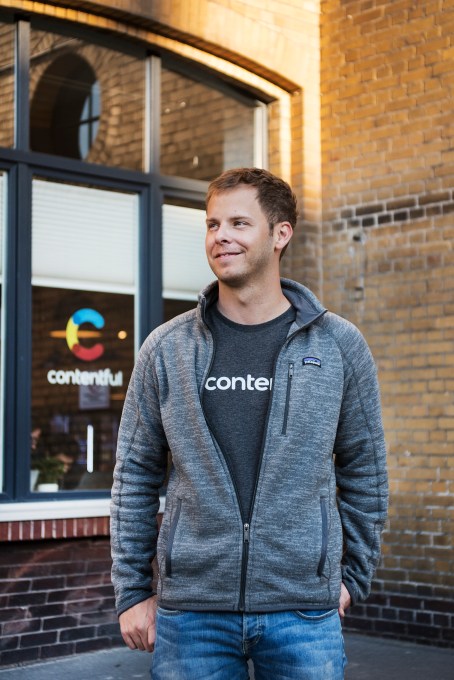
Contentful, a Berlin- and San Francisco-based startup that provides content management infrastructure for companies like Spotify, Nike, Lyft and others, today announced that it has raised a $33.5 million Series D funding round led by Sapphire Ventures, with participation from OMERS Ventures and Salesforce Ventures, as well as existing investors General Catalyst, Benchmark, Balderton Capital and Hercules. In total, the company has now raised $78.3 million.

It’s been less than a year since the company raised its Series C round and, as Contentful co-founder and CEO Sascha Konietzke told me, the company didn’t really need to raise right now. “We had just raised our last round about a year ago. We still had plenty of cash in our bank account and we didn’t need to raise as of now,” said Konietzke. “But we saw a lot of economic uncertainty, so we thought it might be a good moment in time to recharge. And at the same time, we already had some interesting conversations ongoing with Sapphire [formerly SAP Ventures] and Salesforce. So we saw the opportunity to add more funding and also start getting into a tight relationship with both of these players.”

The original plan for Contentful was to focus almost explicitly on mobile. As it turns out, though, the company’s customers also wanted to use the service to handle its web-based applications and these days, Contentful happily supports both. “What we’re seeing is that everything is becoming an application,” he told me. “We started with native mobile application, but even the websites nowadays are often an application.”

In its early days, Contentful focused only on developers. Now, however, that’s changing, and having these connections to large enterprise players like SAP and Salesforce surely isn’t going to hurt the company as it looks to bring on larger enterprise accounts.

Currently, the company’s focus is very much on Europe and North America, which account for about 80 percent of its customers. For now, Contentful plans to continue to focus on these regions, though it obviously supports customers anywhere in the world.

Contentful only exists as a hosted platform. As of now, the company doesn’t have any plans for offering a self-hosted version, though Konietzke noted that he does occasionally get requests for this.

What the company is planning to do in the near future, though, is to enable more integrations with existing enterprise tools. “Customers are asking for deeper integrations into their enterprise stack,” Konietzke said. “And that’s what we’re beginning to focus on and where we’re building a lot of capabilities around that.” In addition, support for GraphQL and an expanded rich text editing experience is coming up. The company also recently launched a new editing experience.

FB QVC? Facebook tries Live video shopping

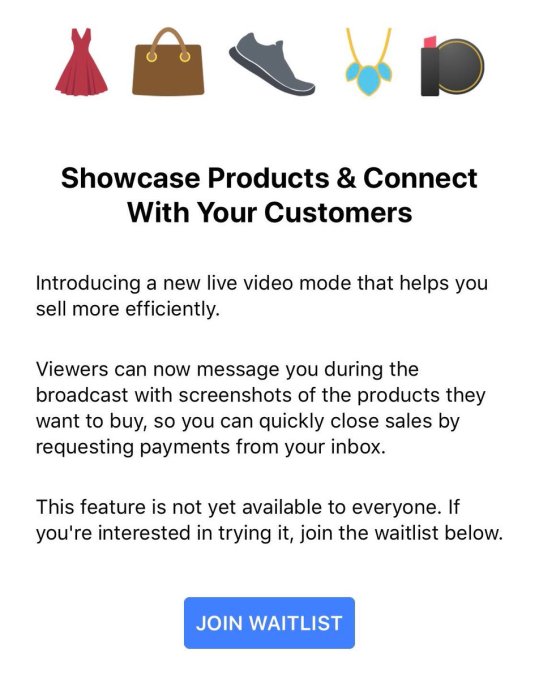
Want to run your own home shopping network? Facebook is now testing a Live video feature for merchants that lets them demo and describe their items for viewers. Customers can screenshot something they want to buy and use Messenger to send it to the seller, who can then request payment right through the chat app.

Facebook confirms the new shopping feature is currently in testing with a limited set of Pages in Thailand, which has been a testbed for shopping features. The option was first spotted by social media and reputation manager Jeff Higgins, and re-shared by Matt Navarra and Social Media Today. But now Facebook is confirming the test’s existence and providing additional details.

The company tells me it had heard feedback from the community in Thailand that Live video helped sellers demonstrate how items could be used or worn, and provided richer understanding than just using photos. Users also told Facebook that Live’s interactivity let customers instantly ask questions and get answers about product specifications and details. Facebook has looked to Thailand to test new commerce experiences like home rentals in Marketplace, as the country’s citizens were quick to prove how Facebook Groups could be used for peer-to-peer shopping. “Thailand is one of our most active Marketplace communities” says Mayank Yadav, Facebook product manager for Marketplace.

Now it’s running the Live shopping test, which allows Pages to notify fans that they’re broadcasting to “showcase products and connect with your customers.” Merchants can take reservations and request payments through Messenger. Facebook tells me it doesn’t currently have plans to add new partners or expand the feature. But some sellers without access are being invited to join a waitlist for the feature. It also says it’s working closely with its test partners to gather feedback and iterate on the live video shopping experience, which would seem to indicate it’s interested in opening the feature more widely if it performs well.

Facebook doesn’t take a cut of payments through Messenger, but the feature could still help earn the company money at a time when it’s seeking revenue streams beyond News Feed ads as it runs out of space there, Stories take over as the top media form and user growth plateaus. Hooking people on video viewing helps Facebook show lucrative video ads. The more that Facebook can train users to buy and sell things on its app, the better the conversion rates will be for businesses, and the more they’ll be willing to spend on ads. Facebook could also convince sellers who broadcast Live to buy its new Marketplace ad units to promote their wares. And Facebook is happy to snatch any use case from the rest of the internet, whether it’s long-form video viewing or job applications or shopping to boost time on site and subsequent ad views.

Increasingly, Facebook is setting its sights on Craigslist, Etsy and eBay. Those commerce platforms have failed to keep up with new technologies like video and lack the trust generated by Facebook’s real-name policy and social graph. A few years ago, selling something online meant typing up a generic description and maybe uploading a photo. Soon it could mean starring in your own infomercial.

[PostScript: And a Facebook home shopping network could work perfectly on its new countertop smart display Portal.]

Join TechCrunch for our 2nd Annual Winter Party

After last year’s stellar turn out of almost 1,000 Silicon Valley shakers and movers at our inaugural Winter Party, TechCrunch is returning with the 2nd Annual Winter Party in San Francisco on February 8.

The party will feature tasty cocktails and canapés, party games and activities, plenty of photo ops, giveaways and some fun surprises. As you network your way across the sea of attendees, you’ll also get to check-out a handful of promising early-stage startups just waiting for their big break.

The shindig will be held in the multi-level facility at Galvanize in San Francisco on Friday, February 8. While the venue is large, it won’t be able to hold all of Silicon Valley, so tickets are very limited and will be released on a rolling basis for $85 each. If you’re a startup and want to demo your product at this event, demo tables are available for purchase at $1,500 each. Demo tickets are limited too, so get yours before we sell out!

More about the Winter Party:

When? Friday, February 8, 6:00 p.m. – 9:00 p.m.

Where? Galvanize, 44 Tehama St., San Francisco, CA 94105

How? Get tickets here for just $85 each. There are only a limited number of tickets for this event. Tickets will be released in batches, so if you don’t see any availability, stay tuned to TechCrunch for our next release (following us on Facebook or Twitter works great), as they sell out quickly. TechCrunch parties have a history of being the place you want to meet your future investor, acquirer or co-founder. And to top it all off, we’re going to give away some really great door prizes, like TC swag and tickets to Disrupt SF, our flagship event this October.

Hope to see you all there!

Our sponsors help make TechCrunch events happen. If you are interested in learning more about sponsorship opportunities, please contact our sponsorship team by filling out this form.

Rideshare advertising startup Firefly launches with $21.5M in funding

Firefly, a startup that allows rideshare drivers to make money through digital advertising, is officially launching today. It’s also announced that it has raised $21.5 million in seed funding.

The idea of sticking advertising on a cab isn’t new, but Firefly offers drivers what it calls a “digital smart screen,” allowing advertisers to run targeted, geofenced campaigns. The company has apparently run more than 50 ad campaigns already, during a beta testing period in San Francisco and Los Angeles, with hundreds of cars on the road.

“Being the first at building out the IP is going to be the main differentiator,” said co-founder and CEO Kaan Gunay. “Over half our team are engineers, and we have been extremely focused on developing core IP to make sure it’s scalable.”

In addition, Gunay said that thanks to the combination of Firefly’s targeting capabilities with its “strict” advertising policies (it won’t accept ads for strip clubs, tobacco and cannabis companies, among others), “We’re working with a lot of advertisers who might not even have advertised outdoors before. We believe we are expanding the market.”

One of the main goals is to allow drivers for Uber, Lyft and other ride-hailing services to make more money. In fact, Firefly says the average driver in its network makes an additional $300 per month.

Firefly

Gunay explained that if the driver meets a certain threshold for hours on the road, the company will pay them a flat fee to carry its advertising — but he also said the company is exploring different ways to “maximize the revenue that we share with the drivers and give the maximum benefit to the drivers.”

It’s an issue on regulators’ minds as well, with New York recently approving new rules around driver compensation.

Earlier this year, Uber partnered with a startup called Cargo to allow drivers to make additional income by selling goods like gum, snacks and phone chargers. Firefly doesn’t have an official relationship with the ride-hailing companies, but Gunay said, “In our conversations with these large companies … they’ve said the drivers are free to do what they want to do. This is why it’s a win for everyone.”

Gunay also said these displays will become the foundation for a “smart city data network.” In other words, they will collect data that Firefly plans to share with local governments and nonprofit groups. For example, he said the company has already been sharing air quality data with the Coalition for Clean Air, and it’s also looking to include temperature sensors and accelerometers.

Apparently Gunay doesn’t plan to make money from this side of the business. He told me, “We want to be able to add value to how cities operate … We’re not planning to monetize that.”

Getting back to the funding, $21.5 million is a huge seed round, but Gunay said the company’s success thus far was able to”justify a larger raise and a higher valuation.” The round was led by NFX with participation from Pelion Venture Partners, Decent Capital (founded by Tencent’s Jason Zeng) and Jeffrey Housenbold of SoftBank Vision Fund (yes, that SoftBank Vision Fund).

Microsoft Edge goes Chromium (and macOS)

The rumors were true: Microsoft Edge is moving to the open-source Chromium platform, the same platform that powers Google’s Chrome browser. And once that is done, Microsoft is bringing Edge to macOS, too. In addition, Microsoft is decoupling Edge from the Windows update process to offer a faster update cadence — and with that, it’ll bring the new Edge to Windows 7 and 8 users, too.

It’ll be a while before any of this happens, though. There’s no code to test today and the first previews are still months away. But at some point in 2019, Microsoft’s EdgeHTML and Chakra will go away and Blink and V8 will take its place. The company expects to release a first developer preview early next year.

Obviously, there is a lot to unpack here. What’s clear, though, is that Microsoft is acknowledging that Chrome and Chromium are the de facto standard today, both for users and for developers.

Over the years, especially after Microsoft left the Internet Explorer brand behind, Edge had, for the most part, become a perfectly usable browser, but Microsoft acknowledges that there were always compatibility issues. While it was investing heavily in fixing those, what we’re hearing from Microsoft is a very pragmatic message: it simply wasn’t worth the investment in engineering resources anymore. What Microsoft had to do, after all, was reverse engineer its way around problems on certain sites.

microsoft edge on surface

In part, that’s because Edge never quite gained the market share where developers cared enough to test their code on the platform. And with the web as big as it is, the long tail of incompatible sites remains massive.

Because many web developers work on Macs, where they don’t have access to Edge, testing for it became even more of an afterthought. Hence Microsoft’s efforts to bring Edge to the Mac, 15 years after it abandoned Internet Explorer for Mac. The company doesn’t expect that Edge on Mac will gain any significant market share, but it believes that having it available on every platform will mean that more developers will test their web apps with Edge, too.

Microsoft also admits that it didn’t help that Edge only worked on Windows 10 — and that Edge updates were bound to Windows updates. I was never quite sure why that was the case, but as Microsoft will now happily acknowledge, that meant that millions of users on older Windows versions were left behind, and even those on Windows 10 often didn’t get the latest, most compatible version of Edge because their companies remained a few updates behind.

For better or worse, Chrome has become the default and Microsoft is going with the flow. The company could have opted to open source EdgeHTML and all of its JavaScript engine (some parts already are open source). That option was on the table, but in the end, it opted not to. The company says that’s due to the fact that the current version of Edge has so many hooks into Windows 10 that it simply wouldn’t make much sense to do this if Microsoft wants to take the new Edge to Windows 7 and the Mac. To be fair, this probably would’ve been a fool’s errand anyway, since it’s hard to imagine that an open-source community around Edge would’ve made much of a difference in solving the practical problems anyway.

With this move, Microsoft also plans to increase its involvement in the Chromium community. That means it’ll bring to Chromium some of the work it did to make Edge work really well with touchscreens, for example. But also, as previously reported, the company now publicly notes that it is working with Google and Qualcomm to bring a native implementation of the Chrome browser to Windows 10 on ARM, making it snappier and more battery friendly than the current version that heavily relies on emulation.

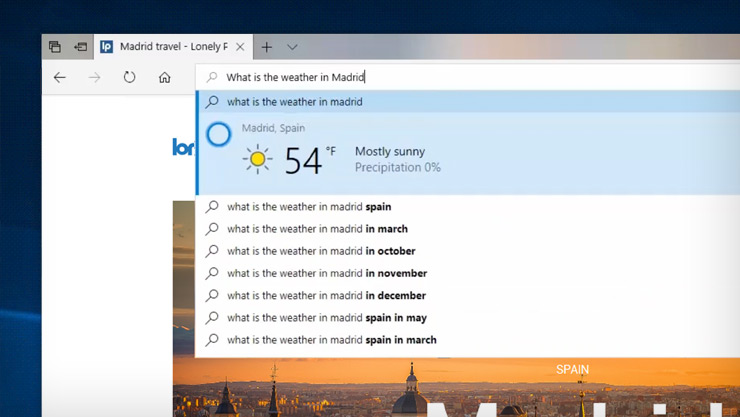
Microsoft hopes that if it can make the compatibility issues a thing of the past, users will still gravitate to its browser because of what differentiates it. Maybe that’s its Cortana integration or new integrations with Windows and Office. Or maybe those are new consumer services or, for the enterprise users, specific features that make the lives of IT managers a bit easier.

When the rumors of this change first appeared a few days ago, a number of pundits argued that this isn’t great for the web because it gives even more power over web standards to the Chromium project.

I share some of those concerns, but Microsoft is making a very pragmatic argument for this move and notes that Edge’s small market share didn’t allow it to make a dent in this process anyway. By becoming more active in the Chromium community, it’ll have more of a voice — or so it hopes — and be able to advocate for web standards and bring its own innovations to Chromium.

You’re browser is probably the most complex piece of software running on your computer right now. That means switching out engines is anything but trivial. The company isn’t detailing what its development process will look like and how it’ll go about this, but we’re being told that the company is looking at which parts of the Edge experience to keep and then will work with the Chromium community to bring those to the Chromium engine, too.

Microsoft stresses that it isn’t giving up on Edge, by the way. The browser isn’t going anywhere. If you’re a happy Edge user today, chances are this move will make you an even happier Edge user in the long run. If you aren’t, Microsoft hopes you’ll give it a fresh look when the new Chromium-based version launches. It’s on Microsoft now to build a browser that is differentiated enough to get people to give it another shot.