Listen to the soothing sounds of Martian wind collected by NASA’s InSight lander

The InSight Mars lander accomplished a perfect landing last week on the Elysium Planitia region of the planet, where it is hard at work preparing to drill into the surface (and taking selfies, of course). But one “unplanned treat” is a recording of the wind rolling across the Martian plains — which you can listen to right here.

Technically the lander isn’t rigged to detect sound, at least in the way you’d do it if you were deliberately trying to record it. But the robotic platform’s air pressure sensor and seismometer are both capable of detecting the minute variations as the wind rolls over it. The air pressure sensor, inside that silver dome you see above, produced the most normal-sounding signal, though it still had to be adjusted considerably to be like what you’d hear if you were there (and somehow surviving the Martian atmosphere).

“The InSight lander acts like a giant ear,” explained InSight science team member Tom Pike in a NASA news release. “The solar panels on the lander’s sides respond to pressure fluctuations of the wind. It’s like InSight is cupping its ears and hearing the Mars wind beating on it.”

Curious what it sounds like? The resulting recording can be listened to on SoundCloud or below:


Sounds a lot like regular wind, right? Well, what were you expecting? Like so many aspects of space exploration, the prosaic nature of the thing itself — a rock, a landscape feature, a breath of wind — is offset by the fact that it’s occurring millions of miles away on an alien world and relayed here by a high-tech robot. Wind on Mars might not sound much different than wind on Earth — but surely that’s not the point!

If you’re curious, the air movement in the recording is a northwesterly one, “consistent with the direction of dust devil streaks” in the area. Good to know we can rely on InSight’s “ears” for that purpose, though its science target is below the surface, not skimming above it.

We’ll have more recordings soon, I’m sure, so you can use it as noise to fall asleep to. But even better sounds are forthcoming: the Mars 2020 rover will have actual high-quality microphones on board, and will record the sounds of its landing as well as the Martian ambience.

Huawei CFO, accused of fraud, faces up to 30 years in prison

At a bail hearing today, new details emerged surrounding Huawei chief financial officer Meng Wanzhou’s arrest in Vancouver, Canada over the weekend.

The daughter of Huawei founder Ren Zhengfei is accused of fraud with a maximum penalty of 30 years in prison, according to journalists present at the hearing. The U.S. Department of Justice alleges Meng allowed SkyCom, an unofficial Huawei subsidiary, to do business in Iran, violating U.S. sanctions against the country and misleading American financial institutions in the process.

Tensions between U.S. authorities and Huawei have been high since 2016, aggravated by an ongoing U.S.-China trade war. The U.S. has long viewed Huawei and its close ties to the Chinese government as a threat to national security. Speaking on CNBC today, Larry Kudlow, the director of the White House’s National Economic Council, said the U.S. had given Huawei several warnings.

“We’ve warned them for quite some time of violating the Iranian sanctions … We have these sanctions on Iran, it runs against our policy, why shouldn’t we enforce that,” he said.

The Canadian Justice Department argued today against granting Meng bail, claiming she has incentive to flee Canada. Her lawyer, on the other hand, said “Meng would not embarrass her father by breaching a court order,” according to The AP.

Meng may be extradited to the U.S., a process that can take several weeks to months to complete. The United States Justice Department has 60 days to make the extradition request, which then must be approved by the Canadian court.

In a statement provided to TechCrunch days after Meng’s arrest, a spokesperson for Huawei said the company was “not aware of any wrongdoing by Ms. Meng.”

“The company has been provided very little information regarding the charges and is not aware of any wrongdoing by Ms. Meng. The company believes the Canadian and U.S. legal systems will ultimately reach a just conclusion. Huawei complies with all applicable laws and regulations where it operates, including applicable export control and sanction laws and regulations of the UN, US and EU.”

The Chinese Ministry of Foreign affairs has firmly requested Meng’s release, meanwhile, a spokesperson for which has said that her detention needed further explanation to “effectively protect the legitimate rights and interests of the person concerned,” per reports.

Huawei, headquartered in Shenzhen, China, is the world’s largest telecom equipment manufacturer and second-largest smartphone maker.

Huawei did not respond to our request for comment.

AI desperately needs regulation and public accountability, experts say

Artificial intelligence systems and creators are in dire need of direct intervention by governments and human rights watchdogs, according to a new report from researchers at Google, Microsoft and others at AI Now. Surprisingly, it looks like the tech industry just isn’t that good at regulating itself.

In the 40-page report (PDF) published this week, the New York University-based organization (with Microsoft Research and Google-associated members) shows that AI-based tools have been deployed with little regard for potential ill effects or even documentation of good ones. While this would be one thing if it was happening in controlled trials here and there, instead these untested, undocumented AI systems are being put to work in places where they can deeply affect thousands or millions of people.

I won’t go into the examples here, but think border patrol, entire school districts and police departments, and so on. These systems are causing real harm, and not only are there no systems in place to stop them, but few to even track and quantify that harm.

“The frameworks presently governing AI are not capable of ensuring accountability,” the researchers write in the paper. “As the pervasiveness, complexity, and scale of these systems grow, the lack of meaningful accountability and oversight – including basic safeguards of responsibility, liability, and due process – is an increasingly urgent concern.”

Right now companies are creating AI-based solutions to everything from grading students to assessing immigrants for criminality. And the companies creating these programs are bound by little more than a few ethical statements they decided on themselves.

Google, for instance, recently made a big deal about setting some “AI principles” after that uproar about its work for the Defense Department. It said its AI tools would be socially beneficial, accountable and won’t contravene widely accepted principles human rights.

Naturally, it turned out the company has the whole time been working on a prototype censored search engine for China. Great job!

So now we know exactly how far that company can be trusted to set its own boundaries. We may as well assume that’s the case for the likes of Facebook, which is using AI-based tools to moderate; Amazon, which is openly pursuing AI for surveillance purposes; and Microsoft, which yesterday published a good piece on AI ethics — but as good as its intentions seem to be, a “code of ethics” is nothing but promises a company is free to break at any time.

The AI Now report has a number of recommendations, which I’ve summarized below but really are worth reading in their entirety. It’s quite readable and a good review, as well as smart analysis.

  • Regulation is desperately needed. But a “national AI safety body” or something like that is impractical. Instead, AI experts within industries like health or transportation should be looking at modernizing domain-specific rules to include provisions limiting and defining the role of machine learning tools. We don’t need a Department of AI, but the FAA should be ready to assess the legality of, say, a machine learning-assisted air traffic control system.
  • Facial recognition, in particular questionable applications of it like emotion and criminality detection, need to be closely examined and subjected to the kind of restrictions as are false advertising and fraudulent medicine.
  • Public accountability and documentation need to be the rule, including a system’s internal operations, from data sets to decision-making processes. These are necessary not just for basic auditing and justification for using a given system, but for legal purposes should such a decision be challenged by a person that system has classified or affected. Companies need to swallow their pride and document these things even if they’d rather keep them as trade secrets — which seems to me the biggest ask in the report.
  • More funding and more precedents need to be established in the process of AI accountability; it’s not enough for the ACLU to write a post about a municipal “automated decision-making system” that deprives certain classes of people of their rights. These things need to be taken to court and the people affected need mechanisms of feedback.
  • The entire industry of AI needs to escape its engineering and computer science cradle — the new tools and capabilities cut across boundaries and disciplines and should be considered in research not just by the technical side. “Expanding the disciplinary orientation of AI research will ensure deeper attention to social contexts, and more focus on potential hazards when these systems are applied to human populations,” write the researchers.

They’re good recommendations, but not the kind that can be made on short notice, so expect 2019 to be another morass of missteps and misrepresentations. And as usual, never trust what a company says, only what it does — and even then, don’t trust it to say what it does.

Gift Guide: So your [friend, partner, kid, parent] wants to be a Twitch streamer…

Though many people still scratch their head at the idea of watching people play video games, Twitch and its content creators have proven that the platform is attractive to (even beloved by) tens of millions of people.

Got a friend or loved one who believes they have the skill, personality and wide open schedule to be successful on Twitch? The right gift might get the ball rolling.

(Note: It should go without saying that there is one piece of gear that a Twitch streamer truly needs, and that’s a computer or console to play the game on. Generally, this will either be a gaming PC, a PlayStation 4 or an Xbox One. Chances are if someone wants to stream games, they’ve already got a platform of choice, so we’re not going to go into detail on what type of PC or console to buy.)

Microphones

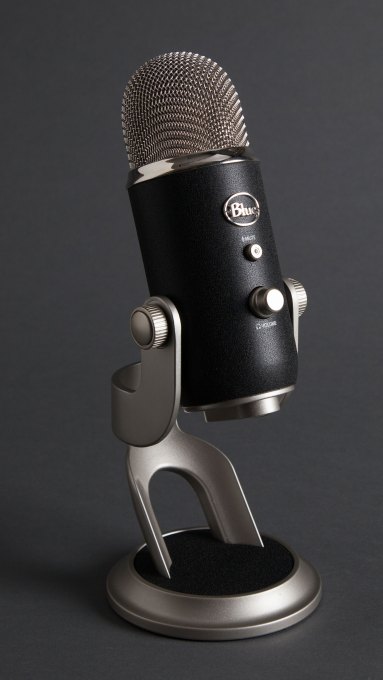
Blue Yeti Pro microphoneThe best place to start when investing in a streaming setup is the mic. Yes, webcams are important (and we’ll get to that), but it’s really taxing to listen to poor audio for any lengthy amount of time, and most gaming headphones just won’t cut it.

Our top choice for a reasonably priced, high-quality mic is the Blue Yeti Pro ($250). It’s a relatively simple plug-and-play product that sounds great. It supports both USB and XLR, giving users plenty of flexibility if they want to use it for multiple purposes (like, say, podcasting) or across various audio interfaces.

It’s not cheap — the Blue Yeti Pro costs $250 on Amazon — so folks looking for a less flexible mic that will simply work with a PC or console, the stepped-down Blue Mics Yeti ($130) should get the job done.

Webcams

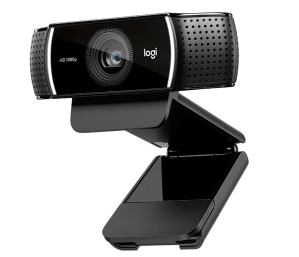
Logitech C922 HD Pro StreamWhile the point of streaming is arguably to watch the game, and not the gamer, there is something special about seeing someone’s reactions to the game or to the Twitch chat on a stream.

General consensus among the community points to the Logitech C922 HD Pro Stream ($99). It captures 1080p/30fps or 720p/60fps video and offers a 78-degree field of view, with particularly good low-light capabilities and solid autofocus. Oddly, streaming under the blue light of the monitor in complete darkness is pretty common, and this webcam can handle just that. As a bonus, the C922 offers background replacement, letting users green screen out everything behind the streamer to show even more of the game. The lower-cost alternative is the Logitech HD Pro C920 ($79), which doesn’t offer background replacement or some other bonus features, like 720p/60fps capture or autofocus.

The C922 also comes with a three-month free trial of XSplit (broadcasting software that will likely be necessary for PC gamers/streamers, but is less necessary for console streamers).

Monitors

ASUS VG245H 24” Full HD 1080p gaming monitorMost people think of a couch and a TV when they think of playing video games, but that is most certainly not ideal for a streamer. For one, where does the webcam go? Secondly, your vision just isn’t as good from 10 feet away on a 40-inch+ screen. Many pros tend to use a 24- to 27-inch monitor roughly two feet from their face — so sitting at a desk is often preferred.

Super high-performance gaming monitors are very expensive, and there are very real trade-offs each time the price comes down. But the ASUS VG245H ($190) is a solid contender at a reasonable price point, managing to pack a punch where it counts.

The 24-inch monitor comes with a TN type panel (which can wash out colors more than ISP) but has a 144Hz refresh rate at a 1920×1080 resolution. At $190 on Amazon, this monitor is a bargain.


Beyond strictly streaming equipment, there are plenty of gadgets that can take a skilled gamer to the next level. Here are a few suggestions:

Inputs

A gamer that dominates the competition with entry-level inputs (be it a mouse or controller) will absolutely crush it with a gaming-specific mouse or controller.

Finalmouse Ultralight Pro gaming mouseThere are many schools of thought when it comes to PC gaming mice — some think customization is king, while others are drawn to RGB lighting or wireless functionality. At the end of the day, personal preference plays a huge role. For folks switching over from a standard mouse, the best option might be the Finalmouse Ultralight Pro ($70).

It acts and feels like a standard mouse, but happens to be just 67 grams, with the Pixart pmw3360 eSports sensor, integrated illumination, enhanced tracking and a higher framerate. And as a bonus, this is the same mouse that streaming star Ninja uses. If it’s good enough for him, it’s probably good enough for your dear recipient.

For console gamers, there is a clear favorite if you’re looking to upgrade beyond the standard Xbox or PlayStation controller. Scuf Gaming controllers (starting at $150) allow players to use paddles on the underside of the controller. This means that gamers can use their middle and ring fingers instead of multitasking with their thumbs, meaning their thumbs never leave the joysticks.

Headset

Stealth 700 Headset - PS4Switching from standard headphones to high-quality gaming headphones feels like cheating. Suddenly, you can hear everything around you. I’ve personally played with a variety of headphones, and my favorite by a mile is the Astro A50 wireless headset with base station ($300). Tech specs aside, these are some of the most comfortable headphones out there, perfect for those hours-long streaming sessions.

For folks looking for something more affordable, Turtle Beach also has a nice selection of wireless headphones, including the Stealth 700 ($150).

Smaller stuff

Once they’re streaming, then what? The best thing you can do for your new favorite streamer is interact with their new channel. Subscribe. Watch the broadcast and chat in the stream. And if you have a little extra cash to spare, gift subs to the channel so folks who show up and want to subscribe have no barrier to entry when they get there.

Leica releases the CL Street Kit for all of your decisive moments

Leica’s pricey — but sexy — CL camera is the closest thing you can get to an original portable luxury shooter without spending more than a used Toyota Corolla. The CL, which launched last year, is essentially a pared-down M series camera that has gotten rave reviews over the past year. Now, in time for Noel, Leica is offering a Street Kit that includes the CL along with a Leica Summicron-TL 23 mm f/2 lens. This flat pancake lens gives you a “tried and true 35 mm equivalent focal length for the quintessential reportage style of shooting” and should suffice for street shots taken on the wing while wandering the darkened alleyways of certain Central European cities.

Now for the bad news. Leica is traditionally some of the most expensive and best-made camera gear on the market, and this is no different. While you get a camera that should last you well into the next millennium, you’ll pay a mere $4,195 for the privilege, making it considerably less than the M series but considerably more than the camera on your phone. The package saves you a little over $800 if you purchased each item separately.

That said, it’s nice to see a bundle like this still exists for a solid, beautifully wrought camera, a nice lens and even a leather carrying strap. Besides, isn’t the creation of photographic art worth the price of admission? As noted Leica lover Henri Cartier-Bresson said, “Au fond, ce n’est pas la photo en soi qui m’interesse. Ce que je veux c’est de capter une fraction de seconde du reel.” Preach, brother.

7 things to think about voice

The next few years will see voice automation take over many aspects of our lives. Although voice won’t change everything, it will be part of a movement that heralds a new way to think about our relationship with devices, screens, our data and interactions.

We will become more task-specific and less program-oriented. We will think less about items and more about the collective experience of the device ecosystem they are part of. We will enjoy the experiences they make possible, not the specifications they celebrate.

In the new world I hope we relinquish our role from the slaves we are today to be being back in control.

Voice won’t kill anything

The standard way that technology arrives is to augment more than replace. TV didn’t kill the radio. VHS and then streamed movies didn’t kill the cinema. The microwave didn’t destroy the cooker.

Voice more than anything else is a way for people to get outputs from and give inputs into machines; it is a type of user interface. With UI design we’ve had the era of punch cards in the 1940s, keyboards from the 1960s, the computer mouse from the 1970s and the touchscreen from the 2000s.

All four of these mechanisms are around today and, with the exception of the punch card, we freely move between all input types based on context. Touchscreens are terrible in cars and on gym equipment, but they are great at making tactile applications. Computer mice are great to point and click. Each input does very different things brilliantly and badly. We have learned to know what is the best use for each.

Voice will not kill brands, it won’t hurt keyboard sales or touchscreen devices — it will become an additional way to do stuff; it is incremental, not cannibalistic.

We need to design around it

Nobody wanted the computer mouse before it was invented. In fact, many were perplexed by it because it made no sense in the previous era, where we used command lines, not visual icons, to navigate. Working with Nokia on touchscreens before the iPhone, the user experience sucked because the operating system wasn’t designed for touch. 3D Touch still remains pathetic because few software designers got excited by it and built for it.

What is exciting about voice is not using ways to add voice interaction to current systems, but considering new applications/interactions/use cases we’ve never seen.

At the moment, the burden is on us to fit around the limitations of voice, rather than have voice work around our needs.

A great new facade

Have you ever noticed that most company desktop websites are their worst digital interface; their mobile site is likely better and the mobile app will be best. Most airline or hotel or bank apps don’t offer pared-down experiences (like was once the case), but their very fastest, slickest experience with the greatest functionality. What tends to happen is that new things get new cap ex, the best people and the most ability to bring change.

However, most digital interfaces are still designed around the silos, workflows and structures of the company that made them. Banks may offer eight different ways to send money to someone or something based around their departments; hotel chains may ask you to navigate by their brand of hotel, not by location.

The reality is that people are task-oriented, not process-oriented. They want an outcome and don’t care how. Do I give a crap if it’s Amazon Grocery or Amazon Fresh or Amazon Marketplace? Not one bit. Voice allows companies to build a new interface on top of the legacy crap they’ve inherited. I get to “send money to Jane today,” not press 10 buttons around their org chart.

It requires rethinking

The first time I showed my parents a mouse and told them to double-click on it I thought they were having a fit on it. The cursor would move in jerks and often get lost. The same dismay and disdain I once had for them, I now feel every time I try to use voice. I have to reprogram my brain to think about information in a new way and to reconsider how my brain works. While this will happen, it will take time.

What gets interesting is what happens to the 8-year-olds who grow up thinking of voice first, what happens when developing nations embrace tablets with voice not desktop PCs to educate. When people grow up with something, their native understanding of what it means and what it makes possible changes. It’s going to be fascinating to see what becomes of this canvas.

Voice as a connective layer

We keep being dumb and thinking of voice as being the way to interact with “a” machine and not as a glue between all machines. Voice is an inherently crap way to get outputs; if a picture states a thousand words, how long will it take to buy a t-shirt. The real value of voice is as a user interface across all devices. Advertising in magazines should offer voice commands to find out more. You should be able to yell at the Netflix carousel, or at TV ads to add products to your shopping list. Voice won’t be how we “do” entire things, it will be how we trigger or finish things.

Proactivity

We’ve only ever assumed we talked to devices first. Do I really want to remember the command for turning on lights in the home and utter six words to make it happen? Do I want to always be asking. Assuming devices are select in when they speak first, it’s fun to see what happens when voice is proactive. Imagine the possibilities:

  • “Welcome home, would you like me to select evening lighting?”
  • “You’re running late for a meeting, should I order an Uber to take you there?”
  • “Your normal Citi Bike station has no bikes right now.”
  • “While it looks sunny now, it’s going to rain later.”

Automation

While many think we don’t want to share personal information, there are ample signs that if we get something in return, we trust the company and there is transparency, it’s OK. Voice will not develop alone, it will progress alongside Google suggesting emails replies, Amazon suggesting things to buy, Siri contextually suggesting apps to use. We will slowly become used to the idea of outsourcing our thinking and decisions somewhat to machines.

We’ve already outsourced a lot; we can’t remember phone numbers, addresses, birthdays — we even rely on images to jar our recollection of experiences, so it’s natural we’ll outsource some decisions.

The medium-term future in my eyes is one where we allow more data to be used to automate the mundane. Many think that voice is asking Alexa to order Duracell batteries, but it’s more likely to be never thinking about batteries or laundry detergent or other low consideration items again nor the subscriptions to be replenished.

There is an expression that a computer should never ask a question for which it can reasonably deduce the answer itself. When a technology is really here we don’t see, notice or think about it. The next few years will see voice automation take over many more aspects of our lives. The future of voice may be some long sentences and some smart commands, but mostly perhaps it’s simply grunts of yes.

Microsoft calls on companies to adopt a facial recognition code of conduct

Over the summer, Microsoft President Brad Smith called for governments to take a closer look at how facial detection technology is being implemented across the globe. This week, he returned with a similar message — only this time the executive is calling out fellow technology purveyors to help address myriad issues around the technology before it becomes too pervasive.

It’s easy enough to suggest that the ship has sailed. After all, facial recognition is already fairly ubiquitous on everything from Facebook to Apple Animojis. But if the past year has taught us anything, it’s that the governments of the world can’t wait to implement the tech in a broader way — and plenty of tech firms are more than happy to help.

Smith points to a trio of potential pitfalls for the tech: biased outcomes, invasion of privacy and mass surveillance. The ACLU has been raising red flags on that first point for some time, asking Congress to implement a moratorium on surveillance technologies. The group found that Amazon’s Rekognition software wrongly associated headshots of members of Congress with criminal mugshots.

The new letter finds Microsoft frustrated at regulatory foot-dragging, instead placing the burden on tech regulation on the companies themselves. “We believe that the only way to protect against this race to the bottom is to build a floor of responsibility that supports healthy market competition,” writes Smith. “And a solid floor requires that we ensure that this technology, and the organizations that develop and use it, are governed by the rule of law.”

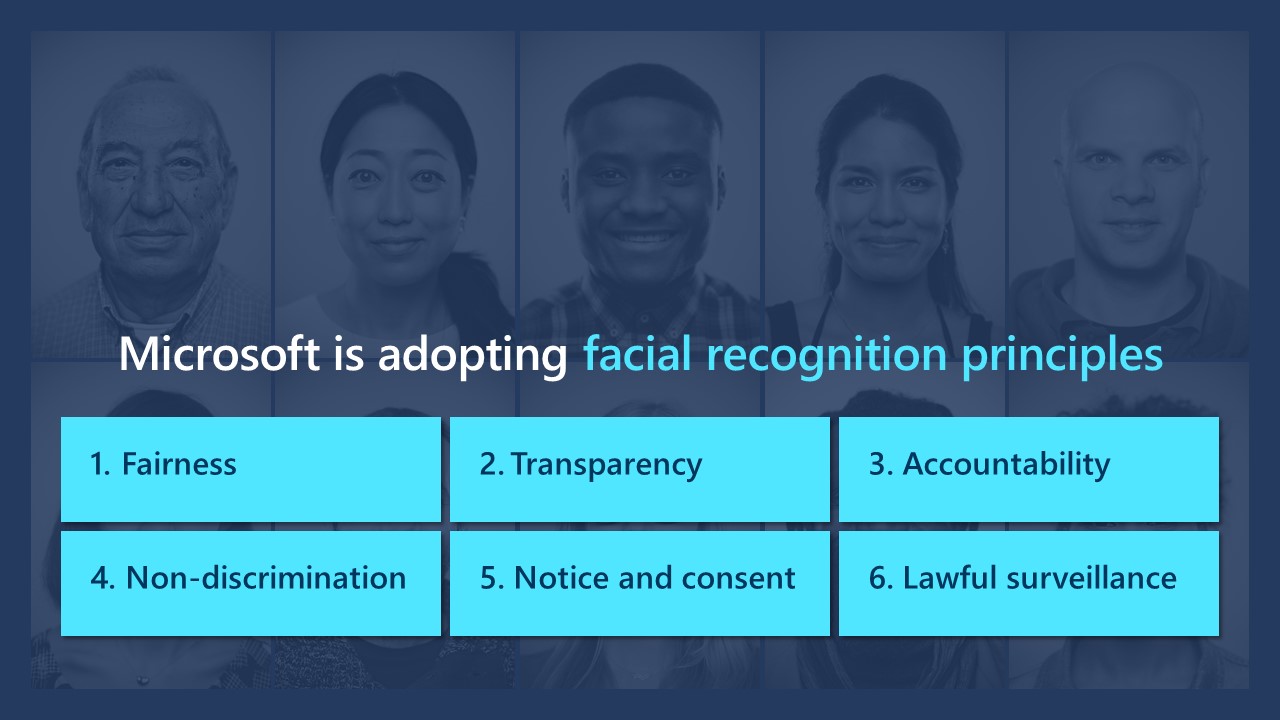
In other words, as Smith puts it, “you can’t put the genie back in the bottle.” So Microsoft is looking to set the tone here, committing to its own code, which it plans to implement by the first quarter of next year.

The piece details a number of safeguards and vetting that companies can implement to help avoid some of the more troubling pitfalls here. Among the recommendations are some fairly straightforward suggestions, like transparency, third-party testing, technology reviews by humans and properly identifying where and when the technology is being implemented. All of the above honestly sound pretty straightforward and doable.

Microsoft is set to follow up these suggestions with a more detailed document arriving next week that will more thoroughly detail its plans, while soliciting suggestions from people and groups about how to more broadly implement them.

MoviePass announces new pricing plans for 2019

It’s been a rocky year for MoviePass, something that CEO Mitch Lowe acknowledged in an interview this week with Variety.

“We have a lot to prove to all our constituents,” Lowe said. “We don’t just have to prove ourselves to our members, we also have to prove ourselves to the investment community, our employees, and our partners. We believe we’re doing everything that we possibly can to deliver a great service and we’re in the process of fixing all the things that went wrong.”

To that end, the company is launching a new pricing structure that will take effect in January. If you like paying $9.95, don’t worry: You’ll still be able to do that (at least in some geographies). If, on the other hand, you’re willing to pay a little more, you’ll no longer be limited by the ever-changing list of movies that MoviePass is supporting on a given day.

So there are now three tiers, each of them offering three movie tickets each month. There’s Select, which will cost between $9.95 and $14.95 per month (depending on geography), and will only allow viewers to watch certain movies on certain days; All Access, which costs between $14.95 and $19.95 and allows you to go to any standard screening; and Red Carpet, which costs between $19.95 and $24.95 and includes one IMAX, 3D or other large-format screening each month.

The company says that this new structure will allow it to break even on the tickets it’s selling — a key step to making the business model work.

MoviePass fans will likely remember that the company appeared to be running out of money over the summer, leading it to announce a price increase, only to back away from the price hike in favor of adding limitations on how many movies and which movies subscribers could see.

Meanwhile, the New York attorney general’s office said it was investigating MoviePass for possible securities fraud, and parent company Helios and Matheson said it would spin off MoviePass into a separate company. (TechCrunch’s parent company has a stake in MoviePass.)

The competition is growing. And app store intelligence company Sensor Tower says MoviePass only added 12,000 new users to its mobile app last month, down 97 percent from the growth it was seeing at its high point in January.

In addition to rethinking its pricing, MoviePass is also making organizational changes. The company told The New York Times that although Lowe will remain CEO, he’ll be handing over responsibility for day-to-day operations to Executive Vice President Khalid Itum.