Facebook settles Oculus VR lawsuit with ZeniMax

Nearly five years after announcing its acquisition of Oculus VR, Facebook is finally ready to put behind it the drama surrounding its founding.

Gaming giant ZeniMax Media’s lawsuit against Facebook over the misuse of intellectual property related to the founding of Oculus VR has finally been settled.

In a statement, ZeniMax CEO Robert Altman confirmed the settlement, saying, “We are pleased that a settlement has been reached and are fully satisfied by the outcome. While we dislike litigation, we will always vigorously defend against any infringement or misappropriation of our intellectual property by third parties.”

At the trial’s conclusion, the judge awarded ZeniMax $500 million in damages to be paid by the defendants, including Facebook and some of the Oculus VR co-founders, a figure that Facebook appealed and had reduced to $250 million. Following the initial verdict, ZeniMax sought an injunction on sales of Facebook’s Oculus Rift headset, claiming the device violated key IP. Terms of this settlement weren’t disclosed.

The trial was notable in that it offered a rare moment on the stand for a number of Facebook executives, including CEO Mark Zuckerberg. It also gave rare insight into the details surrounding the company’s founding and acquisition.

“We’re pleased to put this behind us and continue building the future of VR,” a Facebook spokesperson told TechCrunch.

Report: Apple’s news and magazine subscription service to launch in early 2019

Bloomberg today updated its earlier reporting on Apple’s plans for a news and magazine subscription service. Earlier this year, the outlet said Apple would relaunch the digital newsstand business Texture, which it acquired this spring, as part of the Apple News app. Now, Bloomberg confirms the launch time frame could be “as soon as this spring.” It also detailed some of the industry reaction, which is cautious at best.

Apple is said to be courting paywalled newspapers like The Wall Street Journal and The New York Times to join Texture, and is working on a new design for the magazine content. Instead of trying to mimic what a magazine looks like in print, as it does today, Apple is making the content look more like typical online news articles, Bloomberg said.

The report also noted publishers were proceeding with trepidation, in many cases. Because Apple is offering a lower pricing — $9.99 per month for all-you-can-eat news and magazine content, similar to the Netflix model — publishers are worried Apple’s service will eat into their revenues. This $10 price point, after all, is cheaper than a subscription to a single publication — like The NYT’s digital subscription — in some cases

Instead, publishers prefer a platform that lets them build their own paywalls right into Apple’s app.

But Apple’s counterpoint during negotiations has been that the subscriber growth it could bring would make up for the lost revenues from publishers’ own subscription businesses, the report also said. The company compared its potential to that of Apple Music, which is nearing 60 million users, according to the latest from Billboard.

Texture today offers access to more than 200 magazines, including Vanity Fair, EW, GQ, Vogue, Forbes, Time, People, Rolling Stone, Cosmopolitan, Sports Illustrated and many others, including Bloomberg Businessweek.

Some things Jack Dorsey didn’t mention in his Myanmar meditation travelogue

Twitter co-founder and chief executive officer Jack Dorsey recently went on a birthday trip to Myanmar. As Dorsey recounted in a series of tweets to his 4.1 million followers, he studied Vipassana meditation. The practice’s “singular objective is to hack the deepest layer of the mind and reprogram it,” Dorsey wrote, and it is “likely be good for those suffering chronic pain to help manage it.”

Myanmar has denied citizenship to Rohingya people, a minority in the country, for decades. In 2016, the systemic persecution of the Rohingya, the majority of whom are Muslim, escalated into wide-scale rapes and massacres. As more than 720,000 Rohingya people fled to neighboring Bangladesh, the United Nation High Commissioner for Human Rights described the atrocities against them as a “textbook example of ethnic cleansing.” UN-appointed investigators have called for top military officials in Myanmar to be prosecuted for genocide, crimes against humanity and war crimes.

Even though the crimes against Rohingya people have been well-documented in articles by major media outlets around the world (three of which are excerpted below), not once did Dorsey mention them in the more than a dozen tweets he wrote about his trip, which are also included.

(Article excerpts below from “Rohingya Recount Atrocities: ‘They Threw My Baby Into a Fire’,” written by Jeffrey Gettleman and published on Oct. 11, 2017 by the New York Times)

‘Hundreds of women stood in the river, held at gunpoint, ordered not to move.

A pack of soldiers stepped toward a petite young woman with light brown eyes and delicate cheekbones. Her name was Rajuma, and she was standing chest-high in the water, clutching her baby son, while her village in Myanmar burned down behind her.

“You,” the soldiers said, pointing at her.”‘

For my birthday this year, I did a 10-day silent vipassana meditation, this time in Pyin Oo Lwin, Myanmar ??. We went into silence on the night of my birthday, the 19th. Here’s what I know ??

— jack (@jack) December 9, 2018

‘She froze.

“You!”

She squeezed her baby tighter.’

Vipassana is a technique and practice to “know thyself.” Understanding the inner nature as a way to understand…everything. It was rediscovered by Gautama the Buddha 2,500 years ago through rigorous scientific self-experimentation to answer the question: how do I stop suffering?

— jack (@jack) December 9, 2018

‘In the next violent blur of moments, the soldiers clubbed Rajuma in the face, tore her screaming child out of her arms and hurled him into a fire. She was then dragged into a house and gang-raped.’

Vipassana’s singular objective is to hack the deepest layer of the mind and reprogram it: instead of unconsciously reacting to feelings of pain or pleasure, consciously observe that all pain and pleasure aren’t permanent, and will ultimately pass and dissolve away.

— jack (@jack) December 9, 2018

‘By the time the day was over, she was running through a field naked and covered in blood. Alone, she had lost her son, her mother, her two sisters and her younger brother, all wiped out in front of her eyes, she says.’

Most meditation methods end with a goal of strengthening concentration: focus on the breath. This was not Gautama’s goal. He wanted to end his attachment to craving (of pleasure) and aversion (of pain) by experiencing it directly. His theory was ending attachment ends his misery.

— jack (@jack) December 9, 2018

‘Rajuma is a Rohingya Muslim, one of the most persecuted ethnic groups on earth, and she now spends her days drifting through a refugee camp in Bangladesh in a daze.’

Imagine sitting on a concrete floor cross-legged for an hour without moving. Pain arises in the legs in about 30-45 minutes. One’s natural reaction is to change posture to avoid the pain. What if, instead of moving, one observed the pain and decided to remain still through it?

— jack (@jack) December 9, 2018

Many people in the refugee camps have been eerily stoic — seemingly traumatized past the ability to feel. In dozens of interviews with survivors who said their loved ones had been killed in front of them, not a single tear was shed.

But as she reached the end of her horrible testimony, Rajuma broke down.

Vipassana would likely be good for those suffering chronic pain to help manage it. That’s not the goal of course, but definitely a simple practice to help. Being able to sit without moving at all for over an hour through pain definitely teaches you a lot about your potential.

— jack (@jack) December 9, 2018

“I can’t explain how hard it hurts,” she said, tears rolling off her cheeks, “to no longer hear my son call me ma.”

Meditation is often thought of as calming, relaxing, and a detox of all the noise in the world. That’s not vipassana. It’s extremely painful and demanding physical and mental work. I wasn’t expecting any of that my first time last year. Even tougher this year as I went deeper.

— jack (@jack) December 9, 2018

(The following article excerpts are from “Bangladesh: Rohingya rape survivors battle stigma” by Linah Alsaafin, Aug. 8, 2018, Al Jazeera)

‘Last year’s Eid al-Adha holiday is a nightmarish memory Fatima wishes she could block forever.

Instead, she is forced to live with the horror and shame every time she recalls what happened.’

I did my meditation at Dhamma Mahimã in Pyin Oo Lwin. This is my room. Basic. During the 10 days: no devices, reading, writing, physical excercise, music, intoxicants, meat, talking, or even eye contact with others. It’s free: everything is given to meditators by charity. pic.twitter.com/OhJqXKInD3

— jack (@jack) December 9, 2018

‘Fatima, whose real name was changed to protect her privacy, is a widow and mother of five girls. She fled her village of Merula, in Myanmar’s Rakhine state, as a government-backed attack on the minority Rohingya population escalated, in what the United Nations described as “textbook ethnic cleansing”.’

I woke up at 4 am every day, and we meditated until 9 pm. There were breaks for breakfast, lunch, and walking. No dinner. Here’s the sidewalk I walked for 45 minutes every day. pic.twitter.com/xDI7gLx6mW

— jack (@jack) December 9, 2018

‘Fatima’s daughters crossed into Bangladesh before her, as it is the custom for Rohingya women to send their children ahead with the village men making their way to the border. As the violence spiralled into chaos, she decided to leave.’

On day 11, all I wanted to do was listen to music, and I again turned to my favorite poet, @kendricklamar and his album DAMN. The greatest effect coming out of silence is the clarity one has in listening. Every note stands alone. https://t.co/FliDncWfnC

— jack (@jack) December 9, 2018

‘In August last year, she reached Daungkhali Char, an island in Myanmar across the Naf River from Bangladesh, before her luck ran out.

She said two Myanmar soldiers dragged her away to a field and for the next two days raped her repeatedly, sometimes to the point where she lost consciousness.’

Myanmar is an absolutely beautiful country. The people are full of joy and the food is amazing. I visited the cities of Yangon, Mandalay, and Bagan. We visited and meditated at many monasteries around the country. pic.twitter.com/wMp3cmkfwi

— jack (@jack) December 9, 2018

‘”I don’t know how many times they violated my body,” Fatima said in a voice barely above a murmur.’

The highlight of my trip was serving monks and nuns food, and donating sandals and umbrellas. This group of young nuns in Mandalay and their chanting was breathtaking and chilling. pic.twitter.com/E2nHFOsHu2

— jack (@jack) December 9, 2018

‘When the soldiers decided to move on, she crossed the Naf River into Bangladesh, numb to the bone and dazed out of her mind.

“I was unaware of my senses for a while,” she said. “I found out five months later I was pregnant. I tried to have an abortion by swallowing pills, but that didn’t work.”‘

We also meditated in a cave in Mandalay one evening. In the first 10 minutes I got bit 117 times by mosquitoes ? They left me alone when the light blew a fuse, which you can see in my heart rate lowering. pic.twitter.com/rz59Wx9yHF

— jack (@jack) December 9, 2018

‘She looked down at the baby nestled in the crook of her arm. “I didn’t tell anyone he was conceived through rape.”

Four-month-old Bilal fussed and started wailing. Distractedly, Fatima rubbed his back in circular motions until he fell quiet again.’

I also wore my Apple Watch and Oura ring, both in airplane mode. My best meditations always had the least variation in heart rate. When I wasn’t focused, it would jump around a lot. Here’s a night of sleep on the 10th night (my resting heart rate was consistently below 40). pic.twitter.com/9fiz8s8DR5

— jack (@jack) December 9, 2018

(The following excerpts are from “The Survivors of the Rohingya Genocide” by Jason Motlagh, Aug. 9, 2018, Rolling Stone)

‘The Rohingya have been called the “world’s most persecuted minority.” An estimated 1.1 million lived in Myanmar before the crisis, the descendants of Muslim traders who settled in the region more than 1,000 years ago. Though many Rohingya families have documentation going back generations, they are denied citizenship and basic rights.’

Vipassana is not for everyone, but if any of this resonates with you even in the slightest, I’d encourage you to give it a try. If in the US, this center in Texas is a great start: https://t.co/4Brke5RU85

— jack (@jack) December 9, 2018

‘Two months after the country’s first modern elections, in June 2012, anti–Muslim pogroms broke out in Rakhine following the rape and murder of a Buddhist woman; 140,000 Rohingya were forced into open-air concentration camps. Squeezed between barbed wire and the sea, tens of thousands fled by boats to Thailand and Malaysia, only to become ensnared by traffickers and tortured for ransom.’

Thanks for reading! Always happy to answer any questions about my experience. Will track responses to this thread. I’ll continue to do this every year, and hopefully do longer and longer each time. The time I take away to do this gives so much back to me and my work. ?????????

— jack (@jack) December 9, 2018

‘In May 2015, the crisis made global headlines when boats packed with starving Rohingya were stranded at sea. For weeks, no country would accept them. “That’s the unique burden stateless people carry,” says Wade. “Even those nations most vociferously condemning the military know it’s not their problem.”’

A repatriation agreement between Bangladesh and Myanmar was put on hold in November as refugees protested that they would not return unless their demands for citizenship and human rights are met.

Tencent-backed fleet manager G7 racks up $320M in funding

A sizable funding round is poised to heat up a race to automate China’s logistics infrastructure. Beijing-based fleet management company G7 announced on Monday that it has banked $320 million to drive technological development, bringing its total capital raised to around $500 million.

G7, which runs a proprietary connected platform for trucks, shippers, fleet manager and drivers, received the proceeds from lead investor HOPU Investments, one of the most high-profile private equity firms in China.

Other participants included new investors China Broadband Capital, Intelligent Fund of Funds, Mount Morning Capital, Total Energy Ventures and TH Capital, who are joined by existing investors GLP, Bank of China Investment and Tencent.

G7 claims that its latest funding round marks the highest among Internet of Things startups worldwide. The eight-year-old company declined to disclose its post-money valuation but says the fresh injection makes it one of the most valuable IoT companies in the world.

“Artificial intelligence in IoT is reinventing transportation and logistics equipment. Intelligent equipment and asset-as-a-service are the next big waves,” says G7 president Julian Ma, who formerly served as a vice president at Tencent overlooking location-based services, search, and autonomous driving for five years.

G7 has worked closely with its partners to build out connected networks serving everything from logistics, commercial vehicles, energy to payments. For instance, it’s joined hands with strategic investor NIO, a Chinese electric carmaker, on a trucking network. It’s also leveraging the global network of Total Energy Ventures, a French venture capital firm focused on the renewable energy sector.

Together, G7 claims to reach 60,000 customers and 800,000 commercial vehicles worldwide while 85 percent of China’s biggest logistics providers are its clients.

In recent years, China’s internet behemoths have upped the ante in how goods move around as they look offline for growth. In May, ecommerce giant Alibaba and a fold of other investors poured $1.38 billion into express delivery company ZTO. In February, the logistics arm of JD.com, Alibaba’s close rival backed by Tencent, got a huge boost after raising $2.5 billion.

Alibaba Group takes majority control of loss-making movie unit Alibaba Pictures with $160M share purchase

Alibaba Group announced today that it will increase its stake in Alibaba Pictures from 49% to 50.92%, making it the loss-making movie production company’s controlling shareholder. Under the agreement, Alibaba Pictures will issue one billion new shares, priced at HKD $1.25 each share for a total of HKD $1.25 billion (about $160 million), to Alibaba Group.

The announcement of Alibaba Group’s new share purchases comes the week after Alibaba Pictures chairman and chief executive officer Fan Luyuan took charge of Youku, Alibaba Group’s video streaming unit, after its former president Yang Weidong stepped down. Yang is currently under investigation as part of a police anti-corruption probe.

Now that it has majority control over the movie company, Alibaba Group said there will be more integration between Alibaba Pictures and its services, including Youku. In a press release, Fan said “Alibaba Pictures is excited to become a subsidiary of Alibaba Group. As an internet film and TV company, we can leverage the Group’s edge in big data technology and e-commerce and enhance cooperation with other Alibaba’s digital media and entertainment businesses such as Youku, Damai and Alibaba Literature.”

In his statement about the deal, Alibaba CEO Daniel Zhang said “the proposed share purchases is a vote of confidence in Alibaba Pictures, and we will continue to invest resources and take full advantage of our ecosystem to help Alibaba Pictures tap into the promising growth prospects of China’s film industry.”

Founded in 2014 to capitalize on China’s burgeoning movie market, expected to be the largest in the world soon, Alibaba Pictures has turned out to be a costly, money-burning venture. Despite doubling its revenue and posting its first profit in 2017, Alibaba Pictures’ losses also grew to $165 million in the same period. It’s misfortunes continued this year when its big-budget fantasy picture “Asura” became “the most expensive flop in Chinese history,” according to Variety.

Payment service Toss becomes Korea’s newest unicorn after raising $80M

South Korea has got its third unicorn startup after Viva Republica, the company beyond popular payment app Toss, announced it has raised an $80 million round at a valuation of $1.2 billion.

This new round is led by U.S. firms Kleiner Perkins and Ribbit Capital, both of which cut their first checks for Korea with this deal. Others participating include existing investors Altos Ventures, Bessemer Venture Partners, Goodwater Capital, KTB Network, Novel, PayPal and Qualcomm Ventures. The deal comes just six months after Viva Republica raised $40 million to accelerate growth, and it takes the company to nearly $200 million raised from investors to date.

Toss was started in 2013 by former dentist SG Lee who grew frustrated by the cumbersome way online payments worked in Korea. Despite the fact that the country has one of the highest smartphone penetrations rates in the world and is a top user of credit cards, the process required more than a dozen steps and came with limits.

“Before Toss, users required five passwords and around 37 clicks to transfer $10. With Toss users need just one password and three steps to transfer up to KRW 500,000 ($430),” Lee said in a past statement.

Working with traditional finance

Today, Viva Republica claims to have 10 million registered users for Toss — that’s 20 percent of Korea’s 50 million population — while it says that it is “on track” to reach a $18 billion run-rate for transactions in 2018.

The app began as Venmo -style payments, but in recent years it has added more advanced features focused around financial products. Toss users can now access and manage credit, loans, insurance, investment and more from 25 financial service providers, including banks.

Fintech startups are ‘rip it out and start again’ in the West –such as Europe’s challenger banks — but, in Asia, the approach is more collaborative and assistive. A numbe of startups have found a sweet spot in between banks and consumers, helping to match the two selectively and intelligently. In Toss’s case, essentially it acts as a funnel to help traditional banks find and vet customers for services. Thus, Toss is graduating from a peer-to-peer payment service into a banking gateway.

“Korea is a top 10 global economy, but no there’s no Mint or Credit Karma to help people save and spend money smartly,” Lee told TechCrunch in an interview. “We saw the same deep problems we need to solve [as the U.S.] so we’re just digging in.”

“We want to help financial institutions to build on top of Toss… we’re kind of building an Amazon for the financial services industry,” he added. “We try to aggregate all those activities, covering saving accounts, loan products, insurance etc.”

Former dentist SG Lee started Toss in 2013.

Lee said the plan for the new money is to go deeper in Korea by advancing the tech beyond Toss, adding more users and — on the supply side — partnering with more companies to offer financial products.

There’s plenty of competition. Startups like PeopleFund focus squarely on financial products, while Kakao, Korea’s largest messaging platform, has a dedicated fintech division — KakaoPay — which rivals Toss on both payment and financial services. It also counts the mighty Alibaba in its corner courtesy of a $200 million investment from its Ant Financial affiliate.

Alibaba and Tencent tend to move in pairs as opposites, with one naturally gravitating to the rivals of the other’s investees as recently happened in the Philippines. It’s tricky in Korea, though. Tencent is caught in limbo since it is a long-standing Kakao backer. But might the Ant Financial deal spur Tencent into working with Toss?

Lee said his company has a “good relationship” with Tencent, including the occasional home/away visits, but there’s nothing more to it right now. That’s intriguing.

Overseas expansion plans

Also of interest is future plans for the business now that it is taking on significantly more capital from investors who, even with the most patient money out there, eventually need a return on their investment.

Lee is adamant that he won’t sell, despite Viva Republica increasingly looking like an ideal entry point for a payment or finance company that has missed the Korean market and wants in now.

He said that there are plans to do an IPO “at some point,” but a more immediate focus is the opportunity to expand overseas.

When Toss raised a PayPal-led $48 million Series C 18 months ago, Lee told TechCrunch that he was beginning to cast his eyes on opportunities in Southeast Asia, the region of over 650 million consumers, and that’s likely to see definitive action next year. The Viva Republica CEO said that Vietnam could be a first overseas launchpad for Toss.

“We’re thinking seriously about going beyond Korea because sooner or later we will hire saturation point,” Lee said. “We think Vietnam is quite promising. We’ve talked to potential partners and are currently articulating ideas and strategy materialized next year.

“We already have a very successful playbook, we know how to scale among users,” Lee added.

While the plan is still being put together, Lee suggested that Viva Republica would take its time expanding across Southeast Asia, where six distinct countries account for the majority of the region’s population. So, rather than rapidly expanding Toss across those markets, he indicated that a more deliberate, country-by-country launch could be the strategy with Vietnam kicking things off in 2019.

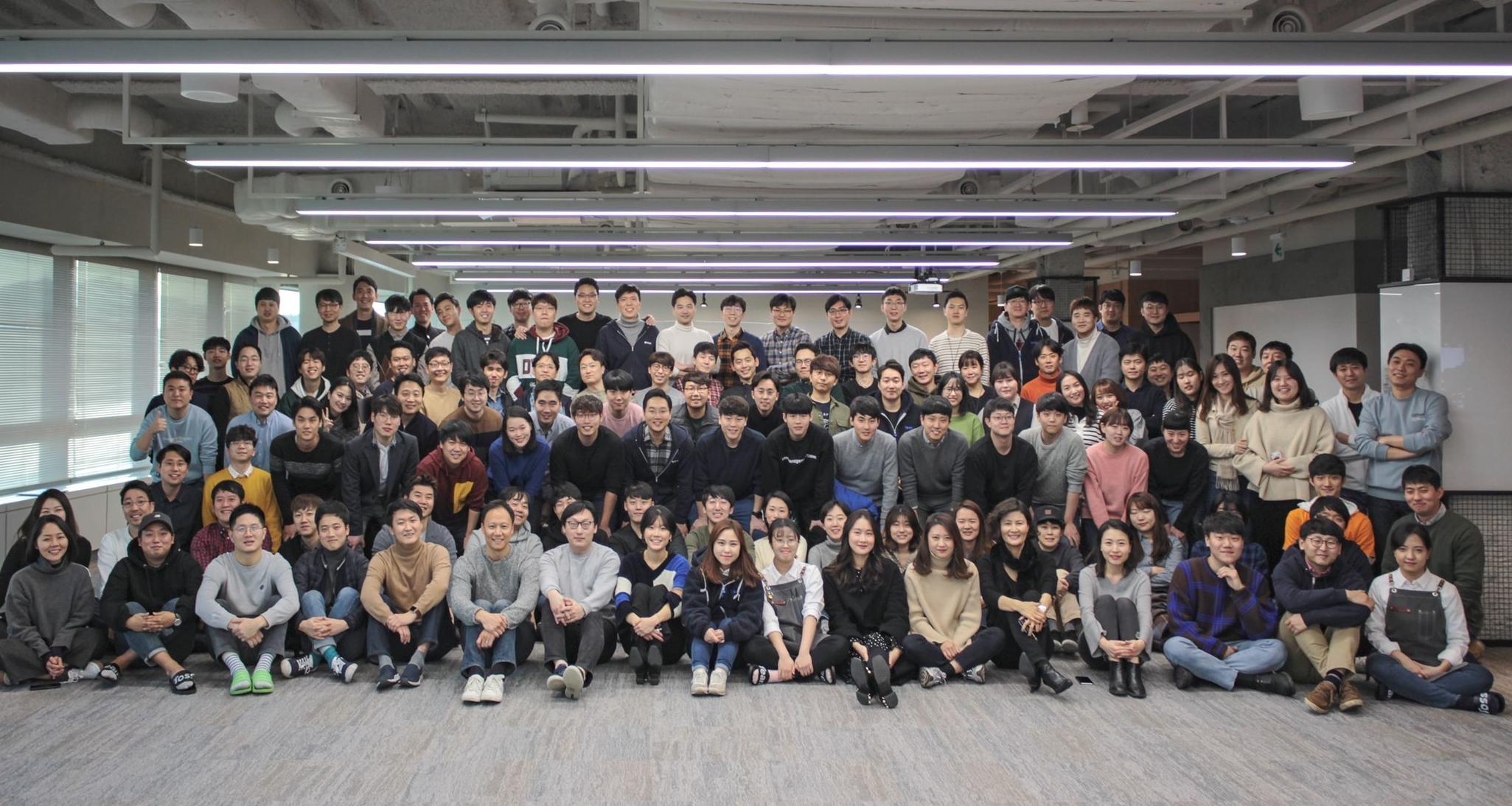
The Toss team at HQ in Seoul, Korea

Korea rising

Toss’s entry into the unicorn club — a vaunted collection of private tech companies valued at $1 billion or more — comes weeks after Coupang, Korea’s top e-commerce company, raised $2 billion at a valuation of $9 billion.

While that Coupang round came from the SoftBank Vision Fund — a source of capital that is threatening to become tainted given its links to the murder of journalist Jamal Khashoggi — it does represent the first time that a Korea-based company has joined the $100 billion mega-fund’s portfolio.

Some milestones can be dismissed as frivolous, but these two coming so close together are a signal of increased awareness of the potential of Korea as a startup destination by investors outside of the country.

While Lee admitted that the unicorn valuation “doesn’t change a lot” in daily terms for his business, he did admit that he has seen the landscape shift for Korea’s startup ecosystem — which has only two other privately-held unicorns: Coupang and Yello Mobile.

“More and more global VCs are aware that South Korea is a really good opportunity to do a startup. It is getting easier for our fellow entrepreneurs to pitch and get access to global funds,” he said, adding that Korea’s top 25 cities have a cumulative population (25 million) that matches America’s top 25.

Despite that potential, Korea has tended to focus on its ‘chaebol’ giants like Samsung — which accounts for a double-digital percentage of the national economy — LG, Hyundai and SK. That means a lot of potential startup talent, both founders and employees, is locked up in secure corporate jobs. Throw in the conservative tradition of family expectations, which can make it hard for children to justify leaving the safety of a big company, and it is perhaps no wonder that Korea has relatively fewer startups compared to other economies of comparable size.

But that is changing.

Coupang has been one of the highest profile examples to follow, alongside the (now public) Kakao business. But with Viva Republica, Toss and a charismatic dentist-turned-founder, another startup story is being written and that could just inspire a future generation of entrepreneurs to rise up and be counted in South Korea.

JIRA is an antipattern

Atlassian’s JIRA began life as a bug-tracking tool. Today, though, it has become an agile planning suite, “to plan, track, and release great software.” In many organizations it has become the primary map of software projects, the hub of all development, the infamous “source of truth.”

It is a truism that the map is not the territory. Alas, this seems especially true of JIRA. Its genesis as a bug tracker, and its resulting use of “tickets” as its fundamental, defining unit, have made its maps especially difficult to follow. JIRA1 is all too often used in a way which makes it, inadvertently, an industry-wide “antipattern,” i.e. “a common response to a recurring problem that is usually ineffective and risks being highly counterproductive.”

One thing that writing elegant software has in common with art: its crafters should remain cognizant of the overall macro vision of the project, at the same time they are working on its smallest micro details. JIRA, alas, implicitly teaches everyone to ignore the larger vision while focusing on details. There is no whole. At best there is an “Epic” — but the whole point of an Epic is to be decomposed into smaller pieces to be worked on independently. JIRA encourages the disintegration of the macro vision.

What’s more, feature-driven JIRA does not easily support the concept of project-wide infrastructure which does not map to individual features. A data model used across the project. A complex component used across multiple pages. A caching layer for a third-party interface. A background service providing real-time data used across multiple screens. Sure, you can wedge those into JIRA’s ticket paradigm … but the spiderweb of dependencies which result don’t help anyone.

Worst of all, though, is the endless implicit pressure for tickets to be marked finished, to be passed on to the next phase. Tickets, in the JIRA mindset, are taken on, focused on until complete, and then passed on, never to be seen again. They have a one-way lifecycle: specification; design; development; testing; release. Doesn’t that sound a little … um … waterfall-y? Isn’t agile development supposed to be fundamentally different from waterfall development, rather than simply replacing one big waterfall with a thousand little ones?

Here’s an analogy. Imagine a city-planning tool which makes it easy to design city maps which do include towers, residential districts, parks, malls, and roads … but which doesn’t easily support things like waterworks, sewers, subway tunnels, the electrical grid, etc., which can only be wedged in through awkward hacks, if at all.

Now imagine this tool is used as a blueprint for construction, with the implicit baked-in assumption that a) the neighborhood is the fundamental unit of city construction b) cities are built one neighborhood at a time, and neighborhoods one block at a time. What’s more, one is incentivized to proceed to the next only when the last is absolutely complete, right down to the flowers growing in the median strips.

Now imagine that the city’s developers, engineers, and construction workers are asked to estimate and report progress purely in terms of how many neighborhoods and blocks have been fully completed, and how far along each one is. Does that strike you as a particularly effective model of urban planning? Do you think you would like to live in its result? Or, in practice, do you think that the best way to grow a city might be just a little more organic?

Let’s extend that metaphor. Suppose you began to build the city more organically, so that, at a certain significant point, you have a downtown full of a mix of temporary and permanent buildings; the skyscrapers’ foundations laid (i.e. technical uncertainty resolved); much of the core infrastructure built out; a few clusters of initial structures in the central neighborhoods, and shantytowns in the outskirts; a dirt airstrip where the airport will be; and traffic going back and forth among all these places. In other words, you have built a crude but functioning city-in-the-making, its skeleton constructed, ready to be fleshed out. Well done!

But if measured by how many blocks and neighborhoods are absolutely finished, according to the urban planners’ artistic renditions, what is your progress? By that measure, your progress is zero.

So that is not how JIRA incentivizes you to work. That would look like a huge column of in-progress tickets, and zero complete ones. That would look beyond terrible. Instead JIRA incentivizes you to complete an entire block, and then the next; an entire neighborhood, and then the next; to kill off as many different tickets as possible, to mark them complete and pass them on, even if splicing them together after the fact is more difficult than building them to work together in the first place,.

(If you prefer a smaller-scale model, just transpose: city → condo building, neighborhood → floor, block → unit, etc.)

And so people take tickets, implement them as written, pass them off to whoever is next in the workflow, consider their job well done, even if working on scattered groups of them in parallel might be much more effective … and without ever considering the larger goal. “Implement the Upload button” says the ticket; so that is all that is done. The ticket does not explain that the larger goal of the Upload button is to let users back up their work. Perhaps it would actually be technically easier to automatically upload every state change, such that the user gets automatic buttonless backups plus a complete undo/redo stack. But all the ticket says is: “Implement the Upload button.” So that is all that is done.

All too often, the only time anyone worries about the vision of the project as a whole is at the very beginning, when the overworked project manager(s) initially deal(s) with the thankless task of decomposing the entire project into a forest of tickets. But the whole point of agile development is to accept that the project will always be changing over time, and — albeit to a lesser extent — for multiple people, everyone on the team, to help contribute to that change. JIRA has become a tool which actually works against this.

(And don’t even get me started on asking engineers to estimate a project that someone else has broken down, into subcomponents whose partitioning feels unnatural, by giving them about thirty seconds per feature during a planning meeting, and then basing the entire project plan on those hand-waved un-researched off-the-top-of-the-head half-blind guesses, without ever revisiting them or providing time for more thoughtful analysis. That antipattern is not JIRA’s fault … exactly. But JIRA’s structure contributes to it.)

I’m not saying JIRA has no place. It’s very good when you’re at the point where breaking things down into small pieces and finishing them sequentially does make sense. And, unsurprisingly given its history, it’s exceedingly good at issue tracking.

Let me reiterate: to write elegant software, you must keep both the macro and the micro vision in your mind simultaneously while working. JIRA is good at managing micro pieces. But you need something else for the macro. (And no, a clickable prototype isn’t enough; those are important, but they too require descriptive context.)

Allow me to propose something shocking and revolutionary: prose. Yes, that’s right; words in a row; thoughtfully written paragraphs. I’m not talking about huge requirements documents. I’m talking about maybe a ten-page overview describing the vision for the entire project in detail, and a six-page architectural document explaining the software infrastructure — where the city’s water, sewage, power, subways, and airports are located, and how they work, to extend the metaphor. When Amazon can, famously, require six-page memos in order to call meetings, this really doesn’t seem like too much to ask.

Simply ceasing to treat JIRA as the primary map and model of project completion undercuts a great deal of its implicit antipatternness. Use it for tracking iterative development and bug fixes, by all means. It’s very good at that. But it is a tool deeply ill-suited to be the map of a project’s overall vision or infrastructure, and it is never the source of truth — the source of truth is always the running code. In software, as in art, the micro work and the macro vision should always be informed by one another. Let JIRA map the micro work; but let good old-fashioned plain language describe the macro vision, and try to pay more attention to it.


1Atlassian seems to have decapitalized JIRA between versions 7.9 and 7.10, but descriptively, all-caps still seems more common.

Awaken offers meditations focused on healing from systems of oppression

A mindful, contemplative approach to internalized racism and sexism is a necessary piece of the puzzle of dismantling systems of oppression, Awaken founder and CEO Ravi Mishra says. That’s the entire point of Awaken, a mindfulness and meditation app specifically geared toward helping people cope with the harsh realities of today’s society.

Awaken got its roots in the aftermath of the 2016 U.S. presidential election, Mishra told TechCrunch. The election surfaced these “larger questions that have to do with race, gender, sexuality and power, and how they live inside of us.”

Through Awaken, Mishra hopes to offer mindfulness and meditation practices that help cultivate stability within marginalized communities. These contemplative practices center around sitting with certain questions and identity construction. Awaken’s founding teachers are Rev. Angel Kyodo Williams, Lama Rod Owens and Sensei Greg Snyder — three leaders focused on the intersection of mindfulness and social change.

Similar to meditation app Headspace, which is valued at $320 million, Awaken has a freemium plan in place. For full access to content, Awaken charges $8.99 a month. While Awaken does seek to make money, Mishra says he’s not doing it for profit. Instead, the plan is to use all the money Awaken makes for activist work.

“We’re currently running at a loss and figuring out how to break even,” he told me. “The hope and idea is once we are fully profitable, we’ll move that into activist work.”

Awaken has plans to close a round of funding from mission-aligned angel investors early next year.