TNB Aura closes $22.7M fund to bring PE-style investing to Southeast Asia’s startups

TNB Aura, a recent arrival to Southeast Asia’s VC scene, announced today that it has closed a maiden fund at SG$31.1million, or around US$22.65 million, to bring a more private equity-like approach to investing in startups in the region.

The fund was launched in 2016 and it is a joint effort between Australia-based venture fund Aura and Singapore’s TNB Ventures, which has a history of corporate innovation work. It reached a final close today, having hit an early close in January. It is a part of the Enterprise Singapore ‘Advanced Manufacturing and Engineering’ scheme which, as you’d expect, means there is a focus on hardware, IO, AI and other future-looking tech like ‘industry 4.0.’

The fund is targeting Series A and B deals and it has the firepower to do 15-20 deals over likely the next two to three years, co-founder and managing partner Vicknesh R Pillay told TechCrunch in an interview. There’s around $500,000-$4 million per company, with the ideal scenario being an initial $1 million check with more saved for follow-on rounds. Already it has backed four companies including TradeGecko, which raised $10 million in a round that saw TNB Aura invest alongside Aura, and AI marketing platform Ematic.

The fund has a team of 10, including six partners and an operating staff of four. It pitches itself a little differently to most other VCs in the region given that manufacturing and engineering bent. That, Pillay said, means it is focused on “hardware plus software” startups.

“We are very strong fundamentals guys,” Pillay added. We ask what is the valuation and decide what we can get from a deal. It’s almost like PE-style investing in the VC world.”

A selection of the TNB Aura team [left to right]: Samuel Chong (investment manager), Calvin Ng, Vicknesh R Pillay, Charles Wong (partners), Liu Zhihao (investment manager)

Another differentiator, Pillay believes, is the firm’s history in the corporate innovation space. That leads it to be pretty well suited to working in the B2B and enterprise spaces thanks to its existing networks, he said.

“We particularly like B2B saas companies and we believe we can assist them through of our innovation platforms,” Pillay explained.

Outside of Singapore — which is a heavy focus thanks to the relationship with Enterprise Singapore — TNB Aura is focused on Indonesia, the Philippines, Thailand and Vietnam, four of the largest markets that form a large chunk of Southeast Asia’s cumulative 650 million population. With an internet population of over 330 million — higher than the entire U.S. population — the region is set to grow strongly as internet access increases. A recent report from Google and Temasek tipped the region’s digital economy will triple to reach $240 billion by 20205.

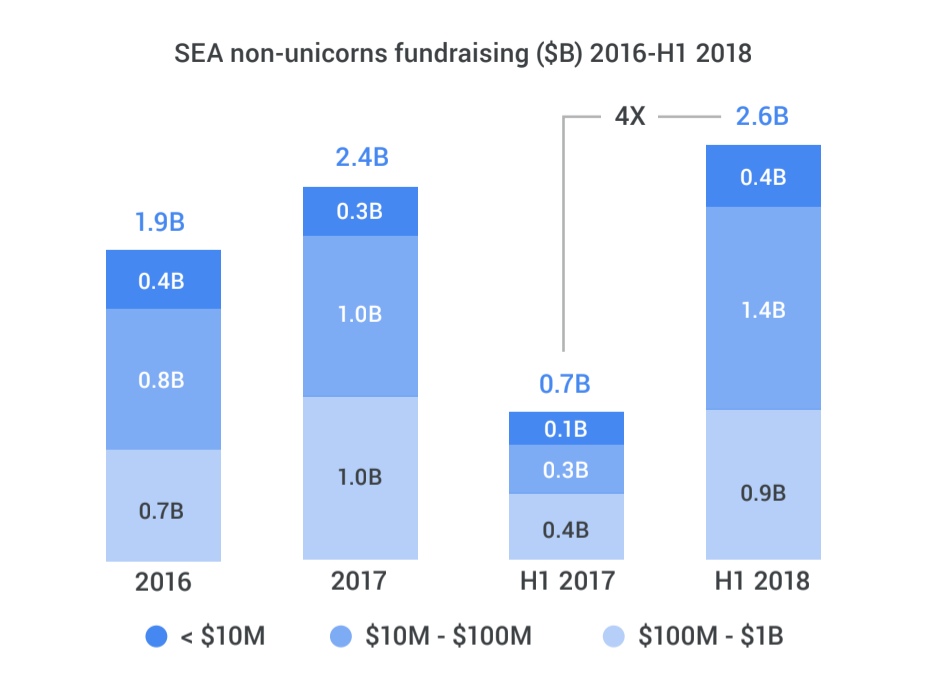
The report also found that VC funding in Southeast Asia is developing at a fast clip. Excluding unicorns, which distort the data somewhat, startups raised $2.6 billion in the first half of this year, beating the $2.4 billion tally for the whole of 2017.

There are plenty of other Series A-B funds in the region, including Jungle Ventures, Golden Gate Ventures, Openspace Ventures, Monks Hill Ventures, Qualgro and more.

Revolut gets European banking license in Lithuania

Fintech startup Revolut is now officially a bank. While the startup initially expected to get its European banking license during the first half of 2018, the company has finally come out of the regulatory tunnel with a license in hand.

As expected, Revolut applied for a license through the Bank of Lithuania and is leveraging passporting rules to operate in other European countries. Users will see some changes over the coming months.

First, the company expects to roll out new features in the U.K., France, Germany and Poland. Right now, Revolut is more like an e-wallet that you can top up in many different ways. Users in those countries will get a true current account and a non-prepaid debit card in a few months.

After transferring your money to Revolut’s own infrastructure, funds will be covered up to €100,000 under the European Deposit Insurance Scheme. It should convince more users to switch to Revolut for their salaries and big sums of money.

Eventually, the startup expects to be able to offer overdrafts and loans. All fintech startups end up offering credit at some point as it’s a good way to generate revenue.

There are currently 8,000 to 10,000 people opening a Revolut account per day. Users generate $4 billion in monthly transaction volume.

It’s going to be interesting to see if current accounts will affect growth. It’s currently quite easy to open a Revolut account as users don’t need to go through a lot of KYC processes. This is going to change once the startup starts opening current accounts.

Watch Rocket Lab launch 10 cubesats into orbit tonight for NASA

It’s been just over a month since Rocket Lab’s inaugural (and long-delayed) commercial launch, “It’s Business Time,” and it’s about to take another customer to space: NASA. Tonight’s 8PM scheduled launch will take 10 small satellites to orbit as part of NASA’s Educational Launch of Nanosatellites (ELaNa) XIX mission.

This is not only Rocket Lab’s first all-NASA launch, but the first launch from NASA under its “Venture Class Launch Services” initiative, which is taking advantage of the new generation of smaller, quick-turnaround launch vehicles.

“The NASA Venture Class Launch Service contract was designed from the ground up to be an innovative way for NASA to work and encourage new launch companies to come to the market and enable a future class of rockets for the growing small satellite market,” said Justin Treptow, ELaNa XIX’s mission manager in a Rocket Lab press release.

Last week our team completed fairing encapsulation in our shiny new clean rooms at LC-1 for this week's NASA #ELaNa19 mission. All CubeSats are now installed on the kick stage payload plate inside Electron's fairing & ready for lift-off. Launch window opens 13 Dec UTC. pic.twitter.com/WqB4LfVdMY

— Rocket Lab (@RocketLab) December 9, 2018

On board tonight’s launch are four satellites from NASA researchers, plus six from various universities and institutions around the country. NASA Spaceflight has a good roundup of the projects, as well as some technical details about the rocket, if you’re curious. They’ll all go their separate ways once the Electron rocket takes them up to the appropriate altitude.

The launch vehicle is named “This One’s For Pickering,” after former JPL head Sir William Pickering, who led the team that created Explorer I, the first U.S. satellite in space. Sir Pickering was born in New Zealand, where Rocket Lab is based and where the launch will take place.

Liftoff will take place no sooner than about 8 PM Pacific time, and payload deployment should be just short of an hour after T-0; you can watch the live stream at Rocket Lab’s website.

Stratim, formerly known as valet startup Zirx, sues co-founder for theft

Stratim, the mobility services company formerly known as Zirx, is suing its co-founder and now-former COO Shmulik Fishman for breach of fiduciary duties, civil conversion, criminal conversion, theft, criminal mischief, deception, unjust enrichment and fraud. The lawsuit’s co-plaintiff is Adesa, a subsidiary of KAR Auction Services, which acquired Stratim earlier this year.

Stratim powers fleet management for more than 50 companies, including BMW (DriveNow), General Motors (Maven), Ford (Chariot) and Toyota, to power their respective mobility services. Through STRATIM’s vendor marketplace, for example, Ford can request gas fill-ups for its Chariot shuttles. The next day, a fuel company will come to fill up the tanks and then send that information back into the system.

Stratim alleges Sean Behr, the company’s CEO, noticed unusual activity in Fishman’s expense reports and notified Adesa. That led to an investigation, which allegedly found Fishman did not properly file his expenses.

“In order to further his embezzlement scheme and avoid having these expenses rejected for failure to attach receipts, Fishman uploaded sham files including indiscernible black, red or blue images, the KAR logo, pictures of trees, images of the Stratim vision statement, a bath towel, and even a Val Pak envelope with a New York City address,” the lawsuit states.

Fishman also, allegedly, reimbursed himself for flights, hotel stays, restaurants, Apple products, Uber and other expenses that were “all unrelated to any legitimate business purpose for Stratim.”

This went unnoticed, the lawsuit states, because Fishman had administrative rights in the expense reports system. In total, Stratim alleges Fishman reimbursed himself $738,942.80 in unauthorized expenses. After a conversation with Fishman, Stratim says it terminated him on December 6, 2018.

Zirx had previously raised more than $36.4 million from investors, like Bessemer Venture Partners, Norwest Venture Partners, BMW’s iVentures and others. That funding rolled into Stratim’s operations.

I’ve reached out to Stratim and Fishman, and will update this story if I hear back.

‘The Mandalorian’ cast includes Pedro Pascal, Gina Carano … and Werner Herzog

Lucasfilm has released an initial cast list for “The Mandalorian,” the live-action Star Wars series that Jon Favreau is creating for the upcoming streaming service Disney+.

Pedro Pascal, who had a brief-but-glorious run on “Game of Thrones” as Oberyn Martell, will star in the title role — Lucasfilm describes his character as “a lone Mandalorian gunfighter in the outer reaches of the galaxy.” (In the Star Wars universe, the Mandalorians are a group of warriors that includes Jango and Boba Fett.)

Pedro PascalThe cast also includes Gina Carano, Giancarlo Esposito, Nick Nolte and legendary director Werner Herzog. Sadly, it appears that Herzog will only be acting in the series, not directing any episodes.

However, there will be some impressive names behind the camera, including Dave Filoni (the creative force behind the recent Star Wars animated series), Bryce Dallas Howard and Taika Waititi.

So far, “The Mandalorian” is looking like it will be the marquee title for Disney+ when it launches late next year — a New York Times report over the summer suggested that the series could cost $100 million for a 10-episode season. There will also be at least one other live-action Star Wars series about Cassian Andor (played by Diego Luna) from “Rogue One,” as well as a Marvel series with Tom Hiddleston returning to the role of Loki.

Scoot unveils new lock to prevent scooter theft

During the first two weeks of Scoot’s operations of shared, electric scooters in San Francisco, more than 200 scooters were either stolen or damaged beyond repair, Scoot CEO Michael Keating wrote in a blog post. As a temporary fix, Scoot attached cable locks to some of its scooters in San Francisco. Now, the company is unveiling its permanent solution.

The solution still relies on a cable lock, but instead of using a padlock to unlock the scooter, you just use the Scoot app. These locks will be deployed sometime this month.

“This will not prevent all theft and vandalism, but it will reduce the rate to one that is sustainable, both operationally and environmentally,” Keating wrote. “It will also have the benefit of keeping Kicks locked to street infrastructure out of the way of pedestrians. We wish we didn’t need this lock but the reality of operating in San Francisco and many other cities is that assets like shared EVs need to be secured so that they can be used.”

These kick scooters are a valuable asset for Scoot. So far, people use these scooters more than any other type of Scoot vehicle. Scoot also offers mopeds and bikes in certain markets.

Wellness giant Life Time targets co-working, shopping malls for next act

Founded in 1990 by CEO Bahram Akradi, Minnesota-based Life Time used to be known as a premier health club that operated large gyms mainly in affluent suburbs in Midwestern and Southern states. Its success was memorialized in 2015 when two leading private equity firms, Leonard Green & Partners and TPG Capital, led a $4-billion deal to take the company private. But rather than retire or move on to new challenges, Akradi chose to remain in his leadership post and continue to build the Life Time brand.

Just a few years later, Life Time, which has always been profitable — even in the depths of the Great Recession — is enjoying double-digit top-line growth, which should enable it to top $2 billion in revenues next year. With the median household income of its members topping $100,000 throughout its 139 clubs, Life Time has sought to build a central relationship with its discriminating clientele by adding extensive health, wellness, spa and sports offerings.

For the company’s next act, Akradi plans to make a big leap into co-working and residential living, and he’s spending considerable time with shopping mall landlords as they look to replace struggling anchor stores with vibrant new tenants. A one-time immigrant who has overcome his fair share of adversity, Akradi understands that he will encounter formidable competitors as he adds new services that are not within the typical scope of a company with fitness roots. But Akradi doesn’t have time to dwell on his boundary-busting ways. Instead, he’d rather talk to you about his Four Seasons-esque vision for his company and his desire to serve a customer’s mind, body and soul at play, at work and at home.

Gregg Schoenberg: It’s great to see you, Bahram. Let me kick things off by asking you how you found your way here from Iran.

Bahram Akradi: I came here one year before the revolution [1978] to get an engineering degree and go back. Of course, a year later, there was nothing to go back to.

GS: Now, 40 years later, Life Time is a great American brand. But for those not familiar with it, what’s the elevator pitch?

BA: We’re thinking about your health, your nutrition, your spiritual wellness, anything that touches your life. With that in mind, we wanted to focus on the member point of view, to create something where the member felt like our club was designed with them in mind.

GS: Two things are notable about Life Time relative to a lot of other health and wellness-related companies. One is that you have more clubs in the suburbs than in the cities, and two, you have more clubs in America’s heartland versus the coasts. What was the thesis? Did you say, “Let Equinox and others duke it out in New York, D.C. and California. Let’s be aggressive in Minnesota, Texas and Indiana”?

BA: That’s a great question. Actually, I left the company that I had sold to Bally’s in 1988 to build new clubs. The first target market for me was San Francisco. In fact, I spent three years of my life traveling back and forth to San Francisco trying to secure sites and financing. For one reason or another, things just would not come together. So, finally, I was able to start a tiny little club that had been vandalized and closed—

GS: —in Minnesota.

BA: Yes, in Minnesota. But the idea wasn’t originally to be a Midwestern company, and then kind of accidentally get to the coasts. We had always planned to be a national company. The benefit of starting on the coasts is that people know your brand. Your brand gets built, and then you can go everywhere.

GS: But there are offsetting benefits to starting in the Midwest, no?

BA: Starting in the Midwest is tougher. The economies and market can be less robust. Plus, you can do magical things and nobody talks about it. But the benefit is that today, we go to the East Coast, we go to the West Coast, we go to Miami, to all of these hot markets, and we get to build our best product in the hottest markets.

This isn’t a noble idea. It’s been done for hundreds of years in other countries where they have had massive populations.

GS: Actually, I hadn’t heard of Life Time because of that best product. Instead, I have this friend who lives in the suburbs of Philadelphia, who one day told me that he was working at this terrific co-working facility launched by Life Time. So with that backstory, let me ask you this loaded question: Is it easier to start a co-working facility when you already have health clubs, or is it easier to start health clubs when you’re already in the co-working business?

BA: Co-working is a substantially less complicated business to operate than a health club. We both rent space. We both have to fit that space to the needs of the customer, and then we have to provide the programs and everything else. But the health club business is significantly more work than the co-working business.

GS: It sounds like you view them in similar fashion.

BA: Like the club business, we think of co-working as a subscription business. I see it as a continuation of what I wanted to do at the beginning: make things more convenient for my customers. Some of those people would like to work in an environment where they can go downstairs and get their massage or workout. For us, tying it together is a completely natural move.

GS: In five years’ time, how many co-working facilities would you like to have?

BA: I’d say 50 to 60.

GS: Wow. So, a good part of your business?

BA: Yes, but our clubs are so large that even at 50, they’re not equal to 50 of our clubs in terms of revenue. But we think we have a great approach to co-working at the very high end.

GS: What does very high-end mean to you?

BA: The one company we admire and regularly give accolades to at Life Time is Four Seasons. I love their execution. I love their consistency. I love the way each employee is certified and trained to give you the Four Seasons brand of service. We constantly work on delivering that at Life Time, and that extends to Life Time Work.

GS: You are the largest private operator of swimming pools in the country, right?

BA: That’s correct.

GS: So, in the future, if I’m choosing between Life Time Work and WeWork or another co-working brand, one benefit of your offering is that there’s is a decent shot that you’ll be able to go for a swim in the middle of your workday, right?

BA: That’s right.

GS: That is something that, I would imagine, is not so easy for anybody else, including WeWork, to replicate.

But it’s not as easy as you may think to deliver the feeling of our club into one of those boxes.

BA: I will tell you this: I think WeWork is a phenomenal entity. They have to get credit for what they have done. Co-working existed long before WeWork showed up. They made it the real thing. They put it on the map, and they have created enough size and momentum for other people to step in.

GS: To that point, as you know, WeWork has made a modest foray into residential living. Is that also on your roadmap?

BA: It’s called Life Time Living.

GS: Would that residential offering be integrated alongside the clubs and the co-working facilities?

BA: Yes, and the concept is to bring Life Time Work, Life Time Living, Life Time Resort and sports all together under one roof, and create basically the Life Time Village. This Life Time Village is naturally and intuitively environmentally friendly because you have a car, but you don’t have to use your car for as many trips as you do if you live in disjointed places. This isn’t a noble idea. It’s been done for hundreds of years in other countries where they have had massive populations.

GS: A modern-day town square of sorts.

BA: Exactly.

GS: On that note, I watched the videos associated with your Oklahoma City opening. A few of the people featured said, “I can cancel my country club membership” or, “I can cancel my golf club membership.” That resonated with me, because I’ve always felt like when I’m in an elegant golf club, some guy in a Kelly green blazer is going to tap me on the shoulder and ask me to leave. Do you see Life Time as sort of the alt golf club?

BA: Yes, except I think there’s a place for the country club with golf, because there are some people who want golf.

GS: Sure.

BA: But there are also people like you who don’t want golf. I don’t golf, but my nephew golfs. Compared to athletics, however, golf is played by a much smaller percentage of the population on a regular basis.

GS: Your new club in the Baybrook Mall near Houston and your club in Oklahoma City were both mall-based properties. As you well know, people attribute what’s going on with shopping malls to e-commerce in general and Amazon specifically. Do you see an opportunity for Life Time to become the new anchor of a reimagined shopping mall?

BA: Yes, exactly. Think of the size and the scale that we can deliver. We have approximately 3,000 to 4,000 people with a very high median household income come to each club per day. That’s a lot of foot traffic with money to do other shopping. So, yes, we can play that role. But it’s not as easy as you may think to deliver the feeling of our club into one of those boxes. We generally don’t. Instead, just as we did in Oklahoma City, we need to build on a freestanding piece of a shopping center, and it takes a lot of work.

GS: So if there’s a Sears that is closing in a mall, you can’t just go in and inhabit that box.

BA: Well, it’s not going to be the experience that we have developed for our brand. But it doesn’t mean that we can’t make it work in some locations.

I would literally pay to do my job.

GS: Do you create that experience in-house?

BA: Actually, Life Time has its own development company. We have over 120 architects and engineers. We have our own construction company. We have our own mill shop. So, we’re also a vertically integrated development company.

GS; Given that team and the particulars involved, I’d imagine you’re spending a lot of time with mall owners today.

BA: Oh, regularly. We are in the think tank with them about the opportunities where it makes sense. And I think that there’s at least one thousand locations of the big retailers, like a Sears, or Macy’s, or JCPenney that will become available. But that doesn’t mean you can put a thousand clubs there…

GS: Sure.

BA: In some of those locations, you will find opportunity to build our type of product, and some places it could be apartments. Some places could be office buildings. In some places, it could be all of the above. It’s definitely additive to our traditional opportunity, where we’d go find a raw piece of land to build our club on 12 or 14 acres.

GS: A few years ago, I know you launched a foray into an integrated health solution, and you ran into some challenges. Can you talk a little bit about that?

BA: I still feel passionate about that integrated health model. The problem with our healthcare system is that it’s neither driven 100 percent by government nor 100 percent by private enterprise. And right now, it’s in a train wreck. At this point, we kept one of our clinics open for primary care, in which we deliver this integrated, optimal health model. I do remain passionate about it, but from a business model perspective, it just doesn’t work.

GS: What does work is your overall financial model. Do you ever look at the metrics of some of the unicorns that have never approached profitability and think to yourself, “My company is growing very quickly, has scale and is well-diversified across the country. If it were a start-up, positioned as a tech company and had a few large Silicon Valley VCs on the cap table, my company would be worth a stratospheric amount”?

BA: (Laughs) My job is to serve Life Time and its causes, mission and vision. And while I can see the folks who have become billionaires on paper, I don’t ever think about somebody else being worth more money. When we die, we all go away with absolutely nothing. And right now, I am so lucky to live the life I live and to do what I do. Not only would I do it for free, I would literally pay to do my job.

GS: You ran Life Time as a public company, and now as a private company. Does that represent a major difference for you ? The quarter-to-quarter pressure, the conference calls, grinding non-deal roadshows, etc….

BA: The quarterly conference calls were just never a concern of mine, because I think we either beat or met the street expectations in 41 of the 44 quarters we were public. We have impressive discipline inside of the company, and it extends beyond me. So we’re not worried about it. If we have to be public, we’ll be public. If we have to have other shareholders, we’ll get them in.

GS: It sounds like either way, you’ve got plenty of room to grow. Best of luck to you.

BA: Thanks very much, Gregg.

Bowery, an indoor farming startup, raises $90 million more, including to counter a SoftBank-funded rival

When in July of last year, SoftBank’s Vision Fund led a whopping $200 million round in the Silicon Valley startup Plenty, investors behind a competing indoor farming startup across the country, New York-based Bowery, were left reeling. Just one month earlier, they’d closed on a round that brought Bowery’s total funding to $31 million. As one of Bowery’s backers told us in the immediate aftermath of Plenty’s enormous round, SoftBank’s involvement “definitely gives you pause.”

Its involvement has not, however, prompted investors to give up. On the contrary, Bowery just today announced that it has raised $90 million in fresh funding led by GV, with participation from Temasek and Almanac Ventures; the company’s Series A investors, General Catalyst and GGV Capital; and numerous of its seed investors, including First Round Capital.

It’s easy to understand investors’ unwavering interest in the company and the space, given the opportunity that Bowery, and Plenty, and hundreds of other indoor farming startups, are chasing. As Bowery outlined in a post this morning, “traditional agriculture uses 700 million pounds of pesticides annually, and fresh food takes weeks” and sometimes longer to land on the dinner table. Along the way, terrible things sometimes happen, including E.coli outbreaks, like the kind recently linked to the sale of romaine lettuce in the U.S.

Meanwhile, Bowery, which is growing crops inside two warehouses in New Jersey, can promise people in New York that their bok choy didn’t travel far at all.

Bowery also appears to be gaining the kind of momentum that VCs want to see. According to the company, it started life with five employees three years ago; today its staff has ballooned to 65 people. It has established a distribution partnership with Whole Foods. It has partnered with sweetgreen, the fast-food chain known for its farm-to-table salad bowls, and Dig Inn, a New York- and Boston-based chain of locally farm-sourced restaurants.

Unsurprisingly, the company says it plans to partner with new retail, food service and restaurant partners in the new year, too.

Bigger picture, Bowery says it plans to build a “global distributed network of farms” that are connected to each other through a kind of operating system, and that it has already begun work on the first of these outside the tri-state area.

Whether it succeeds in that vision is anyone’s guess at this point. It’s hard to know how big an impact that Bowery, or Plenty (which plans to build 300 indoor farms in or near Chinese cities) or any of its many competitors will ultimately have. But given that we’ll need to feed two billion more people by 2050 without overwhelming the planet, it’s also easy to understand from a humanitarian standpoint why investors might be keen to write these companies big checks. In fact, the rest of us should probably be rooting them on, too.

Changing consumer behavior is the key to unlocking billion-dollar businesses

Jonathan Golden
Contributor

Jonathan Golden is a partner at NEA and a former director of product at Airbnb.

In the summer of 2012, I had just learned of a new service where a driver would pick you up in their own car, not a taxi or licensed town car. You’d be able to recognize the car by the pink mustache strapped to the front. I quickly downloaded the new app called Lyft and, intrigued, started to share it with others around the Airbnb offices.

Almost everyone gave me the same response: “I would never use it.” I asked why. “Well, I wouldn’t feel comfortable getting into someone else’s car.” I said, “Wait a minute, you are comfortable allowing others into your home and staying in others’ homes while you travel, but you don’t want to get into someone else’s car?” The reply was always a version of “Yeah, I guess that’s it — a car is different than a home.”

I was dumbfounded. Here was a collection of adventurous individuals — who spent their days at Airbnb expanding the boundaries of what it means to trust another person — but they were stuck on the subtle behavior change of riding shotgun with a stranger. I then had another quick reaction: this product was going to be huge.

Behavior shifts in consumer internet

Truly transformative consumer products require a behavior shift. Think back to the early days of the internet. Plenty of people said they would never put their credit card credentials online. But they did, and that behavior shift allowed e-commerce to flourish, creating the likes of Amazon.

Fast-forward to the era when Myspace, Facebook and other social networks were starting out. Again, individuals would commonly say they would never put their real names or photos of themselves online. It required only one to two years before the shift took hold and the majority of the population created social media profiles. The next wave included sharing-economy companies like Airbnb, Lyft and Uber, prompting individuals to proclaim they would never stay in someone else’s home or get into their car. In short order, times changed and those behaviors are now so commonplace, these companies are transforming how people travel and move about the world.

The behavior shifts were a change in socially accepted norms and previously learned behavior. They alone don’t create stratospheric outcomes, but they do signal that there could be something special at play.

Build an enhanced experience

Still, just because a product creates a behavior shift does not mean that it will be successful. Often, though a handful of loyal users may love them, there is ultimately no true advantage to these products or services.

One prime example comes to mind in the product Blippy. In late 2009, the team built a product to live stream a user’s credit card transactions. It would show the purchase details to the public, pretty much anyone on the internet, unlocking a new data stream. It was super interesting and definitely behavior shifting. This was another case where many people were thinking, “Wow, I would never do that,” even as others were happily publishing their credit card data. Ultimately there was little consumer value created, which led Blippy to fold. The founders have since gone on to continually build interesting startups.

In successful behavior-shifting products, the shift leads to a better product, unlocking new types of online interactions and sometimes offline activities in the real world. For instance, at Airbnb the behavior shift of staying in someone else’s home created a completely new experience that was 1) cheaper, 2) more authentic and 3) unique. Hotels could not compete, because their cost structure was different, their rooms were homogenized and the hotel experience was commonplace. The behavior shift enabled a new product experience. You can easily flip this statement, too: a better experience enabled the behavior shift. Overall, the benefits of the new product were far greater than the discomfort of adopting new behavior.

Revolutionary products succeed when they deliver demonstrable value to their users. The fact that a product creates a behavior shift is clearly not enough. It must create enormous value to overcome the initial skepticism. When users get over this hurdle, though, they will be extremely bought in, commonly becoming evangelists for the product.

Unlock greenfield opportunity

One key benefit of a behavior-shifting product is that it commonly creates a new market where there is no viable competition. Even in cases where several innovative players crop up at the same time, they’re vying for market share in a far more favorable environment, not trying to unseat entrenched corporations. The opportunity then becomes enormous, as the innovators can capture the vast majority of the market.

Other times, the market itself isn’t new, but the way the product or service operates in it is. Many behavior-shifting products were created in already enormous markets, but they shifted the definition of those markets. For instance, e-commerce is an extension of the regular goods market, which is in the trillions. Social media advertising is an extension of online advertising, which is in the hundreds of billions. Companies that innovated within those markets created new greenfield, but also continued to grow the existing market pie and take market share away from the incumbents. The innovators retrain the consumer to expect more, forcing the incumbents to respond to a new paradigm.

(Photo by Carl Court/Getty Images)

Shape the future

A behavior shift also allows the innovator to shape the future by creating a new product experience and pricing structure.

When it comes to product experience, there are no prior mental constructs. This is a huge advantage to product development, as it allows teams to be as creative as possible. For instance, the addition of ratings in Uber’s and Lyft’s products changed the dynamic between driver and rider. Taxi drivers and passengers could be extremely rude to each other. Reviews have altered that experience and made rudeness an edge case, as there are ramifications to behaving badly. Taxis can’t compete with this seemingly small innovation because there is no mechanism to do so. They can’t enhance quality of interaction without taking the more manual approach of driver education.

Another benefit to the innovator is that they can completely change the economics of the transaction, shaping the future of the market. Amazon dictated a new shopping experience with online purchasing, avoiding the costs of a brick-and-mortar location. They could undercut pricing across the board, focusing on scale instead of margin per product. This shifted the business model of the market, forcing others to respond to follow suit. In many cases, that shift ultimately eroded the competition’s existing economic structure, making it extremely challenging for them to participate in the new model.

Expect unintended consequences

It can be difficult to imagine at the outset, but if your product is encouraging massive behavior shifts, you will undoubtedly encounter many unintended consequences along the way. It is easy to brush off a problem you did not directly and intentionally create. But as the social media companies are learning today, very few problems go away by ignoring them. It is up to you to address these challenges, even if they are an unintended byproduct.

One of the most common unintended consequences nearly all behavior-shifting companies will run into is government regulation. Regulation is created to support the world as it is today. When you introduce a behavior shift into society, you will naturally be operating outside of previously created societal frameworks. The sharing-economy companies like Airbnb and Uber are prime examples. They push the boundaries of land-use regulation and employer-employee relationships and aggravate unions.

I want to emphasize that you should not ignore such matters or think that their regulation is silly. Regulation serves a purpose. Startups must work with regulators to help define new policy structures, and governments must be open to innovation. It’s a two-way street, and everyone wins when we work together.

What’s next

My advice is to start by thinking about existing categories that represent people’s biggest or most frequent expenditures. The amount of money you spend on your home, transportation and clothes, for example, is enormous. Is there an opportunity to grow and capture part of these markets by upending old commercial models and effecting a behavior shift?

Scooter networks are a real-time example of a behavior-shifting innovation that is just getting going. It has the same explosive opportunity of prior game-changing innovations. There are still many individuals who state that they will never commute on a scooter. But applying this framework tells me that it is just a matter of time before it is more widely adopted as the technology keeps evolving and maturing.

There is no magical formula for uncovering massive, behavior-shifting products. But if you come up with an innovative idea, and everyone initially tells you that they would never use it, think a little harder to make sure they are right…

Fortnite developer Epic Games to release SDK for cross-platform profiles

Epic Games unveiled plans for a new developer framework for online services. This framework will let other game developers add cross-platform support into their games. The SDK will be free and roll out in multiple parts over 2019.

Fortnite has been one of the best examples of cross-platform gameplay. A single player can install Fortnite on a console, a PC and a phone and find their profile on all platforms. Many games support multiplayer matches between players on multiple platforms, but very few games “port” your profile from one platform to another.

That’s why Epic Games wants to make that easier. The SDK will work with all game engines (not just Unreal Engine) and support many identification methods (Facebook, Google, Xbox Live, PSN, Nintendo accounts and Epic accounts).

After you sign up, you can customize your profile, add friends and win items. Everything you do on one platform shows up on another. User data is stored in the cloud and you can track achievements across platforms.

And, of course, you can create parties with players on different platforms and start playing together. Epic has also developed its own voice communications service.

This is an intriguing move. It sounds like Epic wants to control your video game identity. The company could also potentially get a lot of insight on user habits even if they’re playing non-Epic games.

Maybe Rocket League was waiting for this SDK to roll out cross-platform IDs…

Senators aim to give internet companies doctor-like duties to protect our data

Consumers are increasingly entrusting online services with all kinds of personal data — but that trust has been repeatedly abused or taken for granted. If a doctor or a lawyer did that, they’d be kicked to the curb, because they have a legally defined duty to protect privileged data. Why don’t Facebook and Google? They might soon, via the Data Care Act.

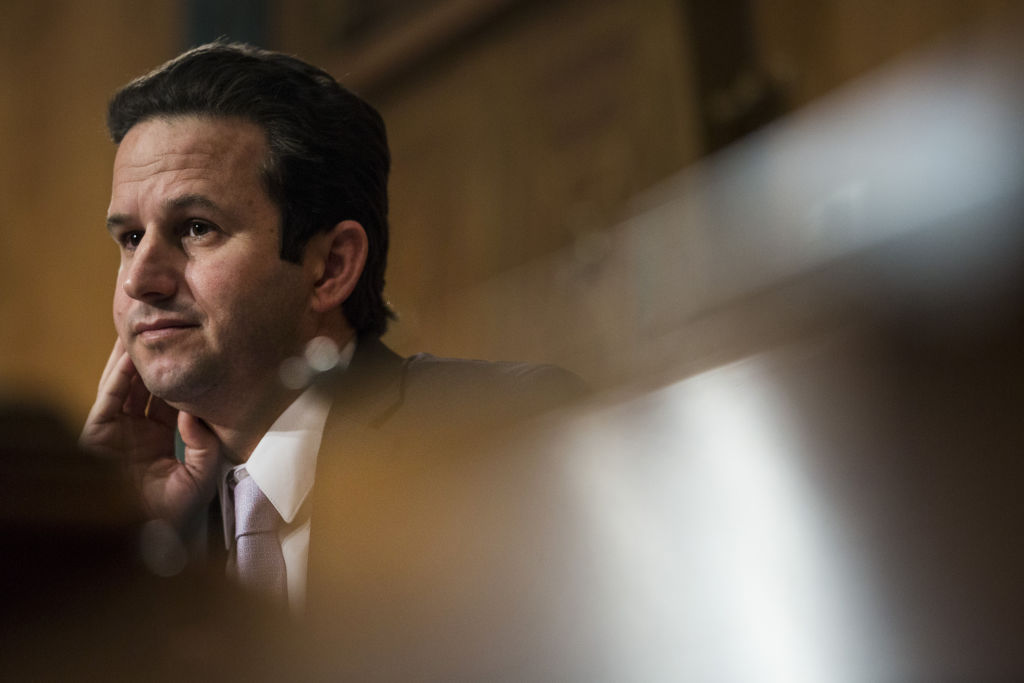
This bill, proposed today by Senator Brian Schatz (D-HI) and co-sponsored by 14 more Democrats in the Senate, would essentially establish a set of consumer protection duties, defined and enforced by the Federal Trade Commission, preventing tech companies from knowingly doing harm to their users.

Do no harm

It’s inspired by, though very different from, what is called a “fiduciary,” a concept that encompasses doctors and lawyers, among others, whom people really have no choice but to trust. When you go into the doctor’s office or meet with your lawyer, you don’t sign waivers saying which parts of the conversation can be used to target you for advertising or build a database for an AI paralegal. You just trust that the person you’re giving your personal information to won’t use it in a way that causes you any harm.

Sure, doctors take an oath — but there are legal protections as well, and serious consequences for those who act in bad faith from a position of power over their clients or patients. Senator Schatz and his co-sponsors feel that a company like Facebook is now in a similar position, in which consent isn’t meaningful: the balance of power has tilted too far to the companies’ side.

“It is not realistic in today’s digital world to suggest that people could simply forgo online services and websites if they object to the way their data is being used,” said co-sponsor Sen. Maggie Hassan (D-NH) in a press release announcing the bill. “Online service providers should be required to act in the best interests of their customers, just like providers of other critical services.”

“A lot of attention, appropriately, has been paid on the privacy front to transparency and control,” Sen. Schatz explained in a press call. “Those are important conversations but there’s been very little in the public policy setting — not enough conversation about what happens after the data has been collected. And to me that ‘s a more important and consequential problem.”

The idea has been brought up before, notably by Yale’s Jack Bardin and Harvard’s Jonathan Zittrain, whom Sen. Schatz has previously cited.

His proposal, obviously now only in the earliest stages since it has only just been announced, is to establish some basic “duties” companies must make reasonable efforts to fulfill. As the release puts them:

  • Duty of Care – Must reasonably secure individual identifying data and promptly inform users of data breaches that involve sensitive information;
  • Duty of Loyalty – May not use individual identifying data in ways that harm users;
  • Duty of Confidentiality – Must ensure that the duties of care and loyalty extend to third parties when disclosing, selling, or sharing individual identifying data.

If those seem a little woolly, that’s on purpose (though they’re considerably more specific in the text). The bill isn’t meant to create the specifics of those duties, only the general shape of them, at the same time authorizing the FTC to figure out the details, creating and modifying rules as it sees fit.

Limits of legislation

“The moment we’re too prescriptive in the statute about what’s allowed and not allowed, the general councils and chief soft engineers will sit down and start to code around it.”

Sen. Schatz took this approach because he was has seen firsthand tech’s agility when it comes to regulation.

“From my observation and experience, the moment we’re too prescriptive in the statute about what’s allowed and not allowed, the general councils and chief software engineers will sit down and start to code around it,” he said. The solution is to “lay down broad principles and then empower the expert agency,” which is standard practice for regulating fast-moving industries.

If the bill became law, the FTC would go through the normal rulemaking process, consulting experts, industry, and political authorities to figure out what constitutes, for example, “reasonable” security measures. Once those were in place, it would have the authority to enforce them as well.

“One of the reasons I like using the FTC is they’re hard-nosed regulators that know what they’re doing and have not become a political lightning rod,” Sen. Schatz said. Notably the law does not actually call or classify these companies as fiduciaries, because “when we said fiduciary, every lawyer’s head exploded,” the Senator explained.

One major difference between this and existing fiduciaries is that lawyers have bars and doctors have medical licenses, among other things — local expert authorities that examine and judge conduct. Obviously there’s no such thing for tech or internet companies.

I asked the Senator about this; his feeling was that fractured authorities like those work in some ways but with tech and internet issues jurisdiction is much more naturally federal or interstate. It would be (and is) a mess trying to figure out whether to apply Illinois’s Biometric Information Privacy Act to a person in an airport in Ohio using a VPN in New York to use a service hosted in Chicago. Better leave it to the feds.

The political landscape this bill will have to navigate is not exactly a friendly one. Though he has the support of many Democrats in the Senate, he has no House collaborator or Republican co-sponsors, though he said that he has not encountered any “instinctive” opposition to his idea.

Rather, the opposing party is more concerned with the growing power of states like California and Illinois to project on the rest of the country their local, highly progressive views on privacy and regulation. Even though California’s privacy bill technically only affects citizens of that state, companies will build national and international policy around it to avoid getting taken to court by litigious Californian billionaires.

The idea of a federal internet privacy policy that could pre-empt California’s and others’ in case of conflict is attractive to many in D.C., and it’s likely, Schatz said, that his bill would end up as part of a bipartisan package along those lines. Not that he wants to pre-empt California’s rules, but that it may be a reasonable compromise in order to put consumer protection laws in place at a national level.

The bill is co-sponsored by Michael Bennet (D-CO), Tammy Duckworth (D-IL), Amy Klobuchar (D-MN), Patty Murray (D-WA), Cory Booker (D-NJ), Catherine Cortez Masto (D-NV), Martin Heinrich (D-NM), Ed Markey (D-MA), Sherrod Brown (D-OH), Tammy Baldwin (D-WI), Doug Jones (D-AL), Joe Manchin (D-WV) and Dick Durbin (D-IL).

You can read the full text of the bill here.

Data Care Act of 2018 (PDF)

Data Care Act of 2018 (Text)

Farfetch bets on sneakers with $250M Stadium Goods acquisition

The lines between streetwear and luxury fashion have blurred in recent years, especially as excitement around sneaker brands like Yeezy and Off-White has soared.

A marriage between a luxury fashion marketplace and a sneaker and streetwear reseller seems like a natural way to wrap up M&A in 2018. With that said, Farfetch has acquired New York-based Stadium Goods, opting to pay $250 million for the sneaker startup in a combination of cash and Farfetch stock. Headquartered in London, Farfetch went public on the New York Stock Exchange in September, pricing its shares at $20 apiece and raising $885 million in the process.

What’s more impressive is Stadium Goods’ journey to exit. The company, which sells new and deadstock products online and in a brick-and-mortar store in New York’s Soho neighborhood, was founded in 2015 by John McPheters and Jed Stiller and had only raised $4.6 million in venture capital funding from Forerunner Ventures, The Chernin Group and Mark Cuban, who is an advisor to the startup.

“There was a time not that long ago when you couldn’t wear sneakers and streetwear to nightclubs and restaurants,” McPheters, Stadium Goods’ chief executive officer, told TechCrunch. “But adoption of the stuff we are selling has continued to grow at a very large clip.”

The sale to Farfetch not only provides a major boost to the sneaker tech ecosystem, which is surprisingly much larger than those who aren’t familiar with it might have guessed, but it’s yet another successful e-commerce exit for Kirsten Green, the founding partner of Forerunner Ventures, who’s also backed Dollar Shave Club and Bonobos — direct-to-consumer retailers that sold for $1 billion and $310 million, respectively.

Stadium Goods founders John McPheters (left) and Jed Stiller

Farfetch boarded the sneaker and streetwear hype train a while ago when it incorporated brands like Nike’s Jordan, pairs of which sell for more than $1,000 on the site. The company doubled down on sneakers earlier this year when it began integrating Stadium Goods products. After noticing high-demand, Farfetch founder and CEO José Neves tells TechCrunch, they began acquisition talks with the startup. Stadium Goods will remain independent as part of the deal, with McPheters and Stiller staying on to lead the brand forward. The company’s portfolio of shoes and apparel will be fully available on Farfetch’s e-commerce platform in the coming months.

“Luxury streetwear is a significant part of our business,” Neves said. “For many years now, we have had the largest collection of Off-White, for example, on the internet … What we did not have was the resale, secondary market. It was clear this was an interesting opportunity.”

Together, Farfetch and Stadium Goods will focus on international growth. McPheters tells TechCrunch Stadium Goods already had a significant international base of customers, but a partnership with Farfetch gives them the tools to go places they’ve never been.

“In my mind, we are only just beginning,” McPheters said. “As more and more customers get comfortable with purchasing aftermarket items, we are going to continue to grow.”

The global athletic footwear industry is expected to be worth $95 billion by 2025. Meanwhile, sneaker resale is a $1 billion market and growing, fueled by a cohort of startups making it easier than ever for sneakerheads to locate rare shoes online and have them delivered to their doorsteps. That includes Stadium Goods, Flight Club, GOAT and StockX.

All four of these resellers, which ensure authentication of their products, are backed by VCs. Flight Club merged with GOAT earlier this year and together the pair raised a $60 million Series C. Before that, GOAT had brought in $30 million for its secondary market for collectible shoes from Accel, Upfront Ventures, Matrix Partners and more. StockX, for its part, has raised just over $50 million from Mark Wahlberg, Scooter Braun, Wale, Eminem, SV Angel and others.

According to Crunchbase data, VCs have funneled more than $200 million into sneaker startups in the past two years. Now, given the size of Stadium Goods’ exit, investment in the space will likely pick up significantly as other VCs hope to land an exit multiple that substantial.

Whether the reselling market will continue to expand is in question. Some have called it a bubble poised to burst, claiming it’s at its “height in popularity.” Why? Because corporate shoe brands like Nike and Adidas are keenly aware of the secondary market for their products and how they, too, can profit from it. If they decide to increase the supply of particular shoe models hot on the secondary market, they can radically disrupt the reseller economy. McPheters, however, says this doesn’t concern him.

“Brands need to strangle the demand to keep driving excitement in the space,” McPheters said. “They count on that hype to really move the needle.”

Oracle is suing the US government over $10B Pentagon JEDI cloud contract process

Oracle filed suit in federal court last week alleging yet again that the decade-long $10 billion Pentagon JEDI contract with its single-vendor award is unfair and illegal. The complaint, which has been sealed at Oracle’s request, is available in the public record with redactions.

If all of this sounds familiar, it’s because it’s the same argument the company used when it filed a similar complaint with the Government Accountability Office (GAO) last August. The GAO ruled against Oracle last month stating, “…the Defense Department’s decision to pursue a single-award approach to obtain these cloud services is consistent with applicable statutes (and regulations) because the agency reasonably determined that a single-award approach is in the government’s best interests for various reasons, including national security concerns, as the statute allows.”

That hasn’t stopped Oracle from trying one more time, this time filing suit in the United States Court of Federal Claims this week, alleging pretty much the same thing it did with the GAO, that the process was unfair and violated federal procurement law.

Oracle Senior Vice President Ken Glueck reiterated this point in a statement to TechCrunch. “The technology industry is innovating around next generation cloud at an unprecedented pace and JEDI as currently envisioned virtually assures DoD will be locked into legacy cloud for a decade or more. The single-award approach is contrary to well established procurement requirements and is out of sync with industry’s multi-cloud strategy, which promotes constant competition, fosters rapid innovation and lowers prices,” he said, echoing the language in the complaint.

The JEDI contract process is about determining the cloud strategy for the Department of Defense for the next decade, but it’s important to point out that even though it is framed as a 10-year contract, it has been designed with several opt-out points for DOD with an initial two-year option, two three-year options and a final two-year option, leaving open the possibility it might never go the full 10 years.

Oracle has complained for months that it believes the contract has been written to favor the industry leader, Amazon Web Services. Company co-CEO Safra Catz even complained directly to the president in April, before the RFP process even started. IBM filed a similar protest in October, citing many of the same arguments. Oracle’s federal court complaint filing cites the IBM complaint and language from other bidders including, Google (which has since withdrawn from the process) and Microsoft that supports their point that a multi-vendor solution would make more sense.

The Department of Justice, which represents the U.S. government in the complaint, declined to comment.

The DOD also indicated it wouldn’t comment on pending litigation, but in September spokesperson Heather Babb told TechCrunch that the contract RFP was not written to favor any vendor in advance. “The JEDI Cloud final RFP reflects the unique and critical needs of DOD, employing the best practices of competitive pricing and security. No vendors have been pre-selected,” she said at the time.

That hasn’t stopped Oracle from continually complaining about the process to whomever would listen. This time they have literally made a federal case out of it. The lawsuit is only the latest move by the company. It’s worth pointing out that the RFP process closed in October and a winner won’t be chosen until April. In other words, they appear to be assuming they will lose before the vendor selection process is even completed.

Confirmed VPN wants to bring transparency to the VPN industry

The VPN industry sucks. Dozens of companies promise you the impossible dream of perfect privacy. But it’s simply a big lie. A company called Confirmed VPN wants to change that by holding VPN companies accountable.

VPN companies let you establish an encrypted tunnel between your device and a server in a data center somewhere. While nobody can see what’s inside the tunnel, the VPN company can see everything on their servers.

Many shady companies use that to analyze your browsing habits, sell them to advertisers, inject their own ads on non-secure pages or steal your identity. The worst of them can hand to authorities a ton of data about your online life.

They lie in privacy policies and often don’t even have an About page with the names of people working for those companies. They spend a ton of money buying reviews and endorsements.

Don’t trust any of them.

In other words, VPN services don’t make you more secure on the internet. Install HTTPS Everywhere, install an ad blocker and change your DNS settings to Quad9 or Cloudflare’s 1.1.1.1. Those are better steps to secure your connection.

Now that I got that out of the way, Confirmed VPN is yet another VPN service that wants to try something new. The team behind it (Duet Display’s Rahul Dewan and former iCloud engineer Johnny Lin) has open-sourced the code of its clients and server-side components. It then automatically deploys new commits on Amazon Web Services.

The company uses AWS CloudWatch to monitor unusual activity on the server to prove that they’re not downloading logs or anything like that. Security experts can also log into AWS using read-only credentials. Confirmed VPN has also completed two security audits and has a bug bounty program.

I’m not a security expert, so I can’t endorse or recommend Confirmed VPN — remember, I still think you shouldn’t use a VPN service. But this transparent approach is interesting by itself. Now let’s see how competitors react.

Android users can now donate to charities through the Google Play Store

The Google Play Store is receiving an update today that will allow customers to make charitable donations to nonprofits from their Android device. While it may seem odd to be rallying for support for charities within the same marketplace where users download apps and games, it’s not uncommon — Apple for years has collected donations for the American Red Cross in the wake of natural disasters like the California wildfires and hurricanes, for example.

Google’s implementation, however, isn’t a launch tied to a single event. And it’s rolling out support for several charities, not just the Red Cross.

Users in the U.S., Canada, Mexico, Germany, Great Britain, France, Spain, Italy, Taiwan and Indonesia will soon see the option to make a donation to a number of organizations, including also charity:water, Doctors Without Borders USA, Girls Who code, International Rescue Committee, Room to Red, Save the Children, UNICEF, World Food Program USA and World Wildlife Fund US, in addition to the American Red Cross.

To access the feature Android users can head to play.google.com/donate to read about the organizations or to make a donation using the payment card they have on file for the Play Store.

To be clear, this is about the Play Store itself collecting charitable donations, not allowing Android app developers to do so. Google Play is covering all the transaction and disbursement costs, so the organizations receive 100 percent of users’ donations.

The feature’s launch has been timed with the holiday season, which often inspires charitable giving. It’s also a sort of belated nod to Giving Week 2018, the movement that encourages people to volunteer, fundraise and donate to worthy causes. (Giving Week this year wrapped on December 5).

The donations feature may offer a different selection of nonprofits in the future, we understand, though Google is not announcing any planned additions at this time.

Google says the feature will begin to roll out to Android users in the supported markets over the next few days.