SEC slaps startups Wealthfront and Hedgeable with fines for making false disclosures

The Securities and Exchange Commission appears to be keeping a close eye on financial services startups, with today’s news that the agency has settled cases with two robo-advisory companies over allegations that they misled investors.

Wealthfront Advisers, one of the darlings of the fintech investment sector with $11 billion under management and roughly $200 million in venture capital backing, was fined $250,000 for making false statements to investors about one of its newer automated financial services products. The company consented to the SEC’s censure without confirming or denying the SEC’s claims.

The SEC also fined New York-based startup Hedgeable, a company with $81 million in assets under management, for inflating performance figures for its service. Hedgeable also agreed to the SEC’s censure order without confirming or denying any wrongdoing.

“Technology is rapidly changing the way investment advisers are able to advertise and deliver their services to clients,” said C. Dabney O’Riordan, chief of the SEC Enforcement Division’s Asset Management Unit, in a statement. “Regardless of their format, however, all advisers must take seriously their obligations to comply with the securities laws, which were put in place to protect investors.”

The charges against Redwood City, Calif.-based Wealthfront Advisers stems from alleged false statements the company made about a tax-loss harvesting strategy that the company offered to its clients.

Wealthfront told its customers that it would look for transactions in its automated service that might trigger a “wash sale” — which has tax implications and can limit the benefits of a tax-harvesting strategy.

According to the SEC, the company actually failed to monitor the accounts accurately, and roughly 31 percent of Wealthfront account holders enrolled in the tax harvesting strategy were subject to penalties associated with wash sales.

Additionally, the company promoted prohibited client testimonials and paid bloggers for client referrals without disclosing and documenting the payments. The company also failed to maintain appropriate compliance programs designed to prevent violations of securities laws, according to the SEC.

Wealthfront issued the following statement about the SEC action:

We take our regulatory duties seriously at Wealthfront and are happy to have reached a settlement with the SEC. The settlement order addressed Wealthfront’s retweets of clients’ positive tweets from our corporate account and compensation to some bloggers for client referrals without proper disclosures.

Additionally, Wealthfront did not have proper disclosure in its tax-loss harvesting whitepaper concerning monitoring for any and all wash sales that could occur in client accounts.

For example, a wash sale can be triggered by infrequent events outside of tax-loss harvesting trading including a client changing their risk score or a withdrawal. During the period January 1, 2014 to December 31, 2016, wash sales made up approximately 2.3% of tax losses harvested for the benefit of clients. Therefore the average Wealthfront client received 5.67% in total annual harvesting yield versus 5.8%.

At Hedgeable, another, much smaller robo-advisor, the SEC found that the company had manipulated results it reported to the public by cherry-picking the best-performing accounts it managed. Hedgeable then compared these rates of return with figures that were not based on its competitors’ training models to skew results in its favor. The company also lacked proper compliance programs that would prevent the company from violating securities laws. 

These penalties follow a crackdown that the SEC imposed on cryptocurrency companies that were also illegally promoting themselves via social media channels and famous influencers like DJ Khaled and Floyd Mayweather.

While Wealthfront and Hedgeable are real companies offering tangible services (unlike many of the obviously fraudulent cryptocurrency schemes that the SEC has been monitoring), the SEC investigations coupled with the botched rollout of brokerage accounts from the free trading service Robinhood show that even viable fintech companies are under the regulatory microscope.

As these services become more popular and their assets under management continue to grow, they may find that more regulators will be knocking at startups’ doors.

Layer1 wants to thrive in the age of the crypto crash

A year ago, crypto was reaching ever new highs, and I was talking about whether ICOs would supplant the VC funding round and warning about Kim Jong Un’s crypto trading operations.

And then the world turned upside down.

Crypto prices are near rock-bottom prices, with Bitcoin hanging around $4,000 and Ethereum around $113, down from their highs earlier this year of around $16,600 and $1,400, respectively.

While that has put a dampener on the enthusiasm of a lot of cryptocurrency retail investors, the bigger question is how do institutional players work through this market? What’s the strategy for finding value in this technology sector long-term?

I chatted with Alexander Liegl, who may just have at least part of the answer. He’s the founder of Layer1, which announced a $2.1 million fundraise this week from Peter Thiel, Digital Currency Group and Jeffrey Tarrant.

Liegl saw a huge challenge in the blockchain and cryptocurrency spaces: too many good ideas and not enough developers working on product development work. So he decided to create an “activist fund for cryptocurrencies” that would “take concentrated bets on protocols that we think have a need in this world.” Layer1 then supplies developers and other experts to provide “infrastructure and support,” he explained. “An operating entity like us can have a lot of influence in moving the needle.” He describes Layer1 as “a combination of Polychain and Blockstreet” and “the Rocket Internet of crypto.”

That might sound vaguely similar to ConsenSys, the loosely coupled group of startups and infrastructure engineers trying to build out Ethereum, which has run into very hard times recently. Unlike ConsenSys, which was founded by Ethereum co-founder Joe Lubin and is directly focused on that ecosystem, Layer1 isn’t wedded to one blockchain or ecosystem, and instead selects a single project at a time through a mix of financial analysis and thesis development.

With capital in the bank, Layer1 has backed Grin as its first cryptocurrency. Grin is designed to be a completely private and censorship-resistant transaction medium, and Liegl says that “conceptually it really reconciles with our view in the space.” He particularly liked that Grin has an anonymous founder like Bitcoin, as no founder controls the governance of the project. Grin is intending to publicly launch in mid-January.

I asked Liegl how he was responding to the crypto crunch this year in the markets, and he considered it far more of an opportunity than a detriment to his work. “I’m really pumped about all of this,” he explained. “A lot of the bad actors have to be flushed out.” He noted that the low of the bear market may not be reached yet, but that Layer1 was in a good position to take advantage of the timing. “We raised the newest dollars, so we are not suffering from any of these ICO-induced problems,” he said.

Liegl, who graduated from Stanford in 2015 and briefly worked at Stanford’s endowment, has certainly seen the vagaries of the cryptocurrency markets. He learned about Bitcoin during its first popular run-up in 2013, even convincing his parents to invest in the budding project.

Now, he has his eyes set on Grin, and then additional projects. He thinks Layer1 will invest in a new project roughly every six to nine months, which will accelerate over time with additional capital.

While these “platform” models have struggled a bit in the venture world, I think it’s reasonable that blockchain projects, which often suffer from a lack of attention from developers and end uses, could use a strong engineering and popularization boost. Layer1 isn’t the first in the blockchain world to take this approach nor I am sure will it be the last, but it might be just the ticket forward for a world that has struggled to pay its employees and bills in a crash.

Spot is a cryptocurrency app to control all your wallets and exchange accounts

Meet Spot, a beautifully designed mobile app to control your cryptocurrencies. Spot looks like a portfolio-tracking app. But the company has built a strong foundation to add more features in the coming months. Spot wants to be your unique gateway to the world of cryptocurrencies.

“Spot’s vision isn’t to build a portfolio tracker — we went a bit overboard with this feature,” co-founder and CEO Edouard Steegmann told me. “Eventually, we want to become the app to manage all your cryptos, a sort of Revolut but with a crypto DNA.”

When you first install the app, you can connect it to your existing wallets by adding public addresses. Even if you store your tokens on a hardware wallet, Spot can read the public details of your wallet to show them in the app.

“We have our own nodes on Ethereum, Bitcoin, Litecoin, Stellar and others to recover the amount on your wallet,” Steegmann said. Data is also cross-checked with third-party services to make sure that everything is fine.

Spot also lets you connect to an exchange account using API keys. Right now, the app supports Binance, Kraken, Bitfinex and Poloniex, but the company already plans to add more exchanges.

The app then gives you a detailed overview of your holdings across all services and wallets. You can see detailed charts, and discover which token is performing better than the rest. It’s also one of the most well-designed mobile apps I’ve seen this year — the animations and interactions are gorgeous.

But Spot doesn’t rely on an API to get pricing information for each token. “We’ve rebuilt CoinMarketCap from the ground up, and we’re one of the few companies that have done it,” Steegmann said. The company stores pricing information for dozens of tokens across 150 exchanges. That’s a lot of pairings.

If you tap on the Spot logo at the top of the app, you can see the maximum value of your portfolio if you cash out on exchanges with the highest prices for your tokens. The company makes sure that there’s enough volume to show you coherent prices.

Spot thinks that controlling your own data is too important to rely on API calls. When you have your own data, you don’t have any API rate limits, you don’t have a major dependency and you can scale more calmly.

Up next, you’ll be able to trade directly in the app. The company isn’t going to build its own exchange, but you can expect to buy and sell tokens on a third-party exchange without having to visit the website.

“We think that many things will be tokenized and that there’s no user-friendly interface to transfer, receive, buy and sell,” Steegmann said.

The company raised a $1.2 million round (€1.056 million to be exact) from Kima Ventures and business angels, including Eric Larchevêque and Thomas France from Ledger, Jean-Daniel Guyot, Thibaud Elzière, Eduardo Ronzano, Nicolas Steegmann, Sébastien Lucas and Nicolas Debock.

Disclosure: I own small amounts of various cryptocurrencies.

The GPS wars have begun

Where are you? That’s not just a metaphysical question, but increasingly a geopolitical challenge that is putting tech giants like Apple and Alphabet in a tough position.

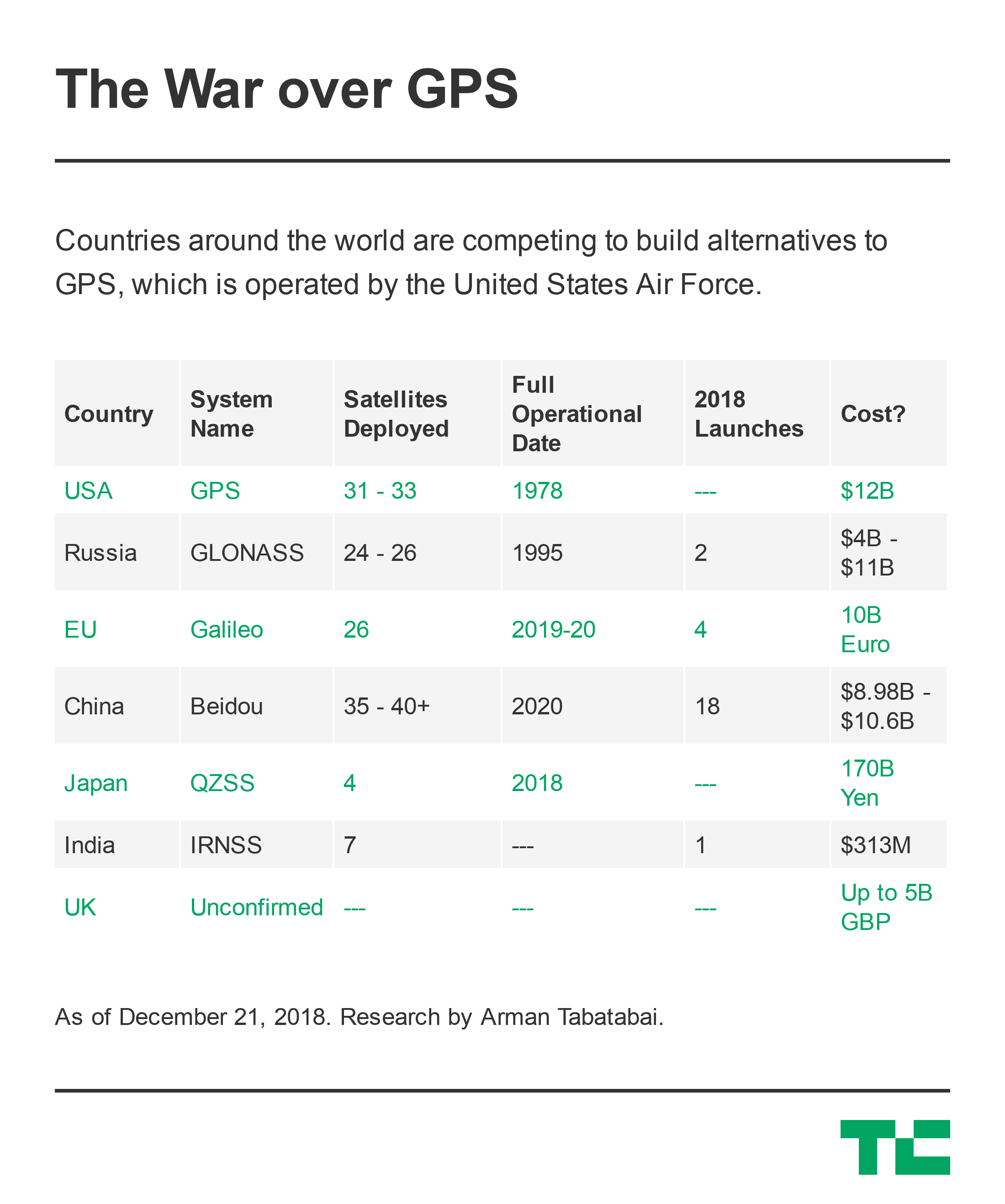
Countries around the world, including China, Japan, India and the United Kingdom plus the European Union are exploring, testing and deploying satellites to build out their own positioning capabilities.

That’s a massive change for the United States, which for decades has had a practical monopoly on determining the location of objects through its Global Positioning System (GPS), a military service of the Air Force built during the Cold War that has allowed commercial uses since mid-2000 (for a short history of GPS, check out this article, or for the comprehensive history, here’s the book-length treatment).

Owning GPS has a number of advantages, but the first and most important is that global military and commercial users depend on this service of the U.S. government, putting location targeting ultimately at the mercy of the Pentagon. The development of the technology and the deployment of positioning satellites also provides a spillover advantage for the space industry.

Today, the only global alternative to that system is Russia’s GLONASS, which reached full global coverage a couple of years ago following an aggressive program by Russian president Vladimir Putin to rebuild it after it had degraded following the break-up of the Soviet Union.

Now, a number of other countries want to reduce their dependency on the U.S. and get those economic benefits. Perhaps no where is that more obvious than with China, which has made building out a global alternative to GPS a top national priority. Its Beidou (?? – “Big Dipper”) navigation system has been slowly building up since 2000, mostly focused on providing service in Asia.

Now, though, China hopes to accelerate the launch of Beidou satellites and provide worldwide positioning services. As Financial Times noted a few weeks ago, China has launched 11 satellites in the Beidou constellation just this year — almost half of the entire network, and it hopes to expand by another dozen satellites by 2020. That would make it one of the largest systems in the world when fully deployed.

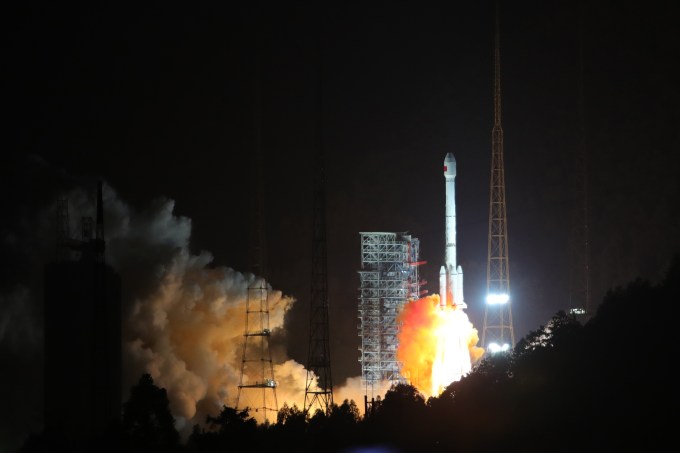
A Long March-3B carrier rocket carrying the 24th and 25th Beidou navigation satellites takes off from the Xichang Satellite Launch Center on November 5, 2017 in Xichang, China. Photo by Wang Yulei/CHINA NEWS SERVICE/VCG via Getty Images

China is not just putting satellites into orbit though, but demanding that local smartphone manufacturers include Beidou positioning chips in their devices. Today, devices from a number of major manufacturers, including Huawei and Xiaomi, use the system, along with GPS and Russia’s GLONASS as well.

That puts American smartphone leaders like Alphabet and particularly Apple in a bind. For Apple, which prides itself on providing one unified iPhone device worldwide, the disintegration of the monopoly around GPS presents a quandary: Does it offer a unique device for the Chinese market capable of handling Beidou, or does it add Beidou chips to its phones worldwide and run into trouble with U.S. national security authorities?

The complexity doesn’t stop there. China may be the most aggressive in launching its alternative to GPS and also the most bullish in providing worldwide coverage, but it is not alone in pursuing its own system.

Japan has made launching a space program a national priority to compete with China and rejuvenate its economy, and one critical component of that program is building out a positioning system. The Quasi-Zenith Satellite System (?????????), which has cost ¥120 billion ($1.08 billion) to date, is designed to augment GPS with more coverage of Japan and also trigger an estimated ¥2.4 trillion ($21.58 billion) in economic benefits.

Using this new system comes at a huge cost due to lack of manufacturing scale. As the Nikkei Asian Review noted a few weeks ago, “The high price of receivers is a hurdle, however. Mitsubishi Electric on Thursday began selling receivers accurate to within a few centimeters — at a price of several million yen, or tens of thousands of dollars, apiece.” The additional location accuracy in Japan may well be necessary for autonomous cars, but auto manufactures will need to lower costs quickly if they want to include the technology in their vehicles.

Like Japan, India has similarly pursued a GPS-augmenting system known as IRNSS, and it has now launched seven satellites to increase coverage of the subcontinent. Meanwhile, the United Kingdom, which is expected to leave the European Union in March following the referendum over Brexit, will most likely lose access to the EU’s Galileo positioning system, and is planning to launch its own. As for Galileo itself, it is expected to be fully operational in 2019.

In short, the world has moved from one system (GPS) to arguably seven. And while Chinese manufacturers increasingly have GPS, GLONASS and Beidou installed on one chip, that scale may only work in a country the size of China. In Japan, where the smartphone market is saturated and the population is less than a tenth of China, the scale required to lower prices may well be harder to find. It will be even tougher in the United Kingdom, for the same reasons.

Theoretically, one positioning chip could be designed to incorporate all of these different systems, but that might run afoul of U.S. national security laws, particularly in regards to GLONASS and Beidou. Which means that much as the internet is fragmenting into disparate poles, we might soon find that our smartphone positioning chips need to fragment as well in order to handle these local markets. That will ultimately mean higher prices for consumers, and tougher supply chains for manufacturers.

CherryHome raises $5.2M to apply AI to home care cameras, detecting behavior changes

A new startup using AI to look after elderly people at home has raised a new round of funding to apply its platform to detect changes in gait or behavior, falls or stumbles. In other words, it could start to predict changes in long-term health.

CherryHome, the home AI security system created by startup Cherry Labs, has raised $5.2 million in funding from GSR Ventures to drive the technology’s use for in-home senior care. CherryHome uses its proprietary computer vision algorithms to interpret camera data into virtual “skeletons.” These are used by the AI to understand and analyze home events and people’s behaviors, such as how someone might develop a limp over time, for instance.

The startup competes with Safely You, which sends alerts in response to very obvious falls; Nest and Lighthouse, which tend to only offer very basic AI over its imaging; and Amazon’s Ring, which only offers outdoor security.

With CherryHome, all information is processed locally, so the video doesn’t leave the house, while the senior citizen is replaced in the video with a virtual “stick-person” to preserve their privacy. This last aspect, in particular, is a really good idea.

With this new round of funding, CherryHome has signed pilot deals with TheraCare in-home care-giving service and TriCura, a tech ecosystem for care agencies. Both are based in the Bay Area.

Max Goncharov, CEO and co-founder of CherryHome says: “Understanding human behavior has a long list of applications, from home security to in-home senior care to the overall goal of making smart homes totally autonomous. But improving senior care is arguably one of the most important areas for technological improvement.” He says seniors currently make up 15 percent of the U.S. population, and by 2030, one in five Americans will be of retirement age. Several studies show the majority of those people wish to remain at home, as opposed to moving into an assisted-living facility.

Join us in Las Vegas during CES

We will be holding a small event during CES in Las Vegas and we want to see you! We’re looking to meet some cool hardware and crypto startups, so the good folks at Work In Progress have opened up their space to us and 200 of you all to hold a meetup and pitch-off.

The event will be held at Work In Progress, 317 South 6th Street on Wednesday, January 9, 2019 between 6:00 PM – 9:00 PM PST.

There are only 200 tickets, so if you want to come please pick one up ASAP. The meetup is open to everyone, so head over if you’d like to talk tech. You can pick up a ticket here.

If you’d like to pitch at the event I’ll be picking 10 companies that will have three minutes to pitch without slides. Because this is a hardware event I recommend bringing a few of your items to show off. If you’d like to pitch, fill this out and I will contact those who will be coming up on stage.

See you in Vegas!

Launch Center Pro now lets you tap stickers to launch tasks on your iPhone

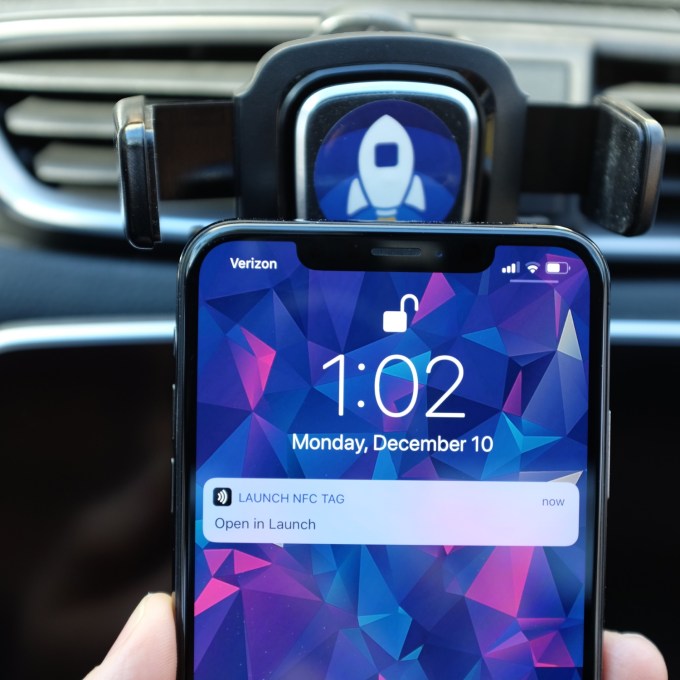
Before there were Siri Shortcuts, there was Launch Center Pro — a clever iOS utility that for years has allowed iPhone users to automate more complex tasks by creating shortcuts. For example, you could search Yelp for the nearest coffee shop, jump straight to the camera in Instagram or message a loved one, among other things — and all right from a widget in the Notification Center. Now, the company has come up with a new twist on app automation. Instead of just widgets and buttons to tap, the app has rolled out support for NFC stickers.

NFC, if you’re unfamiliar, is the same technology that powers wireless payments, like Apple Pay.

And at long last, with the release of iOS 12 this fall, Apple opened up NFC capabilities to app developers. This means iPhone owners with newer model devices can tap NFC tags to trigger actions — like app launches. It currently works on iPhone XS, XS Max and XR. (iPhone 7 and newer can only use in-app NFC scanning, not NFC tags.)

Launch Center Pro was quick to take advantage of this new functionality by creating NFC tags of its own, in the form of stickers.

The stickers, which are sold online and in the app, add a physical link to digital tasks, explains Launch Center Pro developer David Barnard.

“I’ve heard it said that if your goal is to run every morning, put your running shoes next to your bed so you see them every morning,” he says. “You can still choose to not go running, but the shoes are a reminder of the commitment you made to yourself. Same with the stickers; they provide that extra visual cue to take action — even if you could accomplish the same thing without the sticker,” Barnard adds.

Plus, the stickers are also a faster way to launch your tasks, compared with swiping to view then tapping on the Today View Widget on your device.

During the beta, testers used the stickers for a variety of tasks, like launching directions to their next event from a sticker placed in the car, or one that sent their ETA to their loved one and launched directions home. Other testers put a sticker in the fridge to launch a shopping list to add new items to; or placed stickers around the home to trigger HomeKit shortcuts; or placed a sticker by their bedside to help them set alarms, and more.

Basically, anything you do all the time on your iPhone could be linked to one of the stickers.

The support for stickers is part of a broader 3.0 release, which also adds new features like themes, support for alternate app icons, advanced scheduling of tasks (tasks can now have multiple schedules), support for “Add to Siri” and more.

Notably, the app is now shifting to a free-to-use business model, where a one-time purchase or subscription will unlock all the features.

For those who bought the paid app in the past, you can continue to use the features you paid for without a subscription, and only have to purchase access to the new 3.0 features you want to use. These can be bought as a one-time purchase, if you choose.

For new users, the app is $9.99/year or $30 as a one-time purchase to unlock all the features. For any sort of automation fans, it’s a worthy investment in saving yourself time.