Stock markets suffer their worst Christmas Eve trading day

Twas the last trading day before Christmas, and on the trading floor,
Most stocks were falling, and then falling some more,
Treasury Secretary Steven Mnuchin all the banks had called,
In hopes that full coffers were still in their vaults.

Bruising #stock selloff continues, as Treasury sec #Mnuchin tries to calm jittery #markets https://t.co/Ejcurl74nV via @WSJ

— Cameron McWhirter (@cammcwhirter) December 24, 2018

The analysts were shaken by news of the call,
which initially caused the stock market to fall,
Then President Trump took to Twitter, to blame the Federal Reserve,
Which was something the Fed chairman just didn’t deserve.

The only problem our economy has is the Fed. They don’t have a feel for the Market, they don’t understand necessary Trade Wars or Strong Dollars or even Democrat Shutdowns over Borders. The Fed is like a powerful golfer who can’t score because he has no touch – he can’t putt!

— Donald J. Trump (@realDonaldTrump) December 24, 2018

So banks and traders rushed to their phones with a clatter,
Causing stock market value further to shatter,
Markets don’t like decisions made in a flash,
And criticizing sound economic policy can exacerbate a crash.

This is amazing. It's as if Mnuchin was trying to create a panic over something nobody was worried about until this release 1/ https://t.co/YJsGnEyOQD

— Paul Krugman (@paulkrugman) December 23, 2018

Mnuchin made his call with banks from a tropical isle,
and analysts criticized his decision’s lack of guile,
They were more concerned with policy stupidity,
Since there’s already enough administrative volatility.
Like threatening to oust the chairman of the Federal Reserve,
Someone whose position it would be better to preserve.

So now the Dow has fallen some 653 points,
And doctors may advise traders to light up their joints,
Because U.S. indices are on track for their worst December,
Since the 1930s, which almost no one alive remembers.

Silicon Valley’s year of reckoning

Tech companies have always branded themselves as the good guys. But 2018 was the year that the long-held belief that Silicon Valley is on the right side of progress and all things good was called into question by a critical mass.

As startups grow bigger and richer, amassing more power and influence outside of the Valley, a reckoning has played out in government and business. Mission statements like “connecting the world” and “don’t be evil” no longer hold water.

A look at a few of this year’s most impactful news themes underscore why; we’ve racked up too many examples to the contrary.

Android co-creator Andy Rubin’s $90 million payout and sexual misconduct revealed

Since the #MeToo movement opened the floodgates on the importance of fighting for gender equality and fair treatment of women and underrepresented minorities at a large scale, the tech industry was rightfully singled out as a microcosm for rampant misconduct.

In October, a New York Times investigation detailed how Android co-creator Andy Rubin was paid out a $90 million exit package when he left Google in 2014. At the time, Google concealed that the executive had multiple relationships with Google staffers and that credible accounts of sexual misconduct had been filed against him during his time at the company. It was an all-too-familiar story recounting how women in tech aren’t safe at work and misbehaved executives are immune from penalty. Google employees didn’t stand for it. 

At a rally in San Francisco, Google staffers read off their list of demands, which included an end to forced arbitration in cases of harassment and discrimination, a commitment to end pay and opportunity inequity and a clear, inclusive process for reporting sexual misconduct safely and anonymously, reported Kate Clark.

Rubin has since taken leave from his smartphone company, Essential.

The first self-driving car fatality occurred when an Uber SUV struck and killed a woman in Arizona

Dara Khosrowshahi, chief executive officer of Uber, arrives for a morning session at the Allen & Co. Media and Technology Conference in Sun Valley, Idaho, U.S., on Wednesday, July 10. Photographer: Scott Eells/Bloomberg via Getty Images

In March, the first self-driving car fatality occurred in Tempe, Arizona when 49-year-old pedestrian Elaine Herzberg was struck by an Uber autonomous test SUV. The car was in self-driving mode, and there was a safety driver behind the wheel who failed to intervene.

Investigators determined the driver had looked down at a phone 204 times during a 43-minute test drive, and that the driver was streaming “The Voice” on Hulu, according to a police report released by the Tempe Police Department. Law enforcement determined her eyes were off the road for 3.67 miles of the 11.8 total miles driven, or about 31 percent of the time.

Uber paused all of its AV testing operations in Pittsburgh, Toronto, San Francisco and Phoenix as a result, and released a safety report detailing how it will add precautions to its testing of self-driving cars. Two employees will be required to sit in the front seat at all times, and an automatic braking system will be enabled.

The incident immediately raised questions about insurance and liability, along with the investigation from the National Transportation Safety Board. As mobility companies charge full speed ahead in developing solutions that will shape the future of urban transportation, tragedies like this remind us that while AVs and humans share the roads, these programs are rife with risk. Has Uber learned a lesson? We’ll find out soon, as the company received permission by the state of Pennsylvania to resume autonomous vehicle testing.

Jamal Khashoggi was assassinated by Saudi agents, prompting Silicon Valley to think about how it got so rich

JIM WATSON/AFP/Getty Images

Silicon Valley companies are used to getting away with a lot. Larger orgs like Uber, Tesla and Facebook rotate in and out of the hot seat as security breaches wreak havoc and sexual harassment scandals are exposed, only to be washed out of the news cycle by a viral image of Elon Musk sampling marijuana the next day.

But one story shocked the public for weeks, after agents of the Saudi government assassinated Washington Post columnist Jamal Khashoggi at the Saudi Arabian consulate in Istanbul as he was trying to obtain marriage license papers.

The tech industry was collectively upset by its proximity to a government and funding source that blatantly misused its power. Silicon Valley gets most of its money through SoftBank’s Vision Fund and by proxy the Saudi kingdom. About half of SoftBank’s massive $93 billion tech-focused fund is powered by a $45 billion commitment from the Saudi kingdom. This means the total invested by the kingdom alone into U.S. startups is far greater than the total raised by any single VC fund. Did we see a single example of a startup that refused to work with SoftBank in the aftermath? No. Will we? Probably not. Because Silicon Valley players are mostly only political and activist when it’s convenient for them.

Silicon Valley companies that have accepted money from this source have a vested interest in keeping the peace with Saudi Arabia and its Crown Prince Mohammed bin Salman — the leader known for getting friendly with tech CEOs in the past. But where does this leave us now as Saudi Arabian money continues to distort American venture? SoftBank has sustained countless startups with round after round of funding as it plunges into debt.

With SoftBank money inflating round sizes and therefore valuations, tech founders and CEOs are faced with the age-old question of whether or not it’s okay to use dirty money to do “good things.” SoftBank’s 2018 culminated in a record IPO that saw a 15 percent drop in value on its debut. Regardless, the aftermath of the Khashoggi assassination could signify the end of an era in American venture if founders begin to think critically about the source of their funding — and act on it. 

Facebook’s struggle

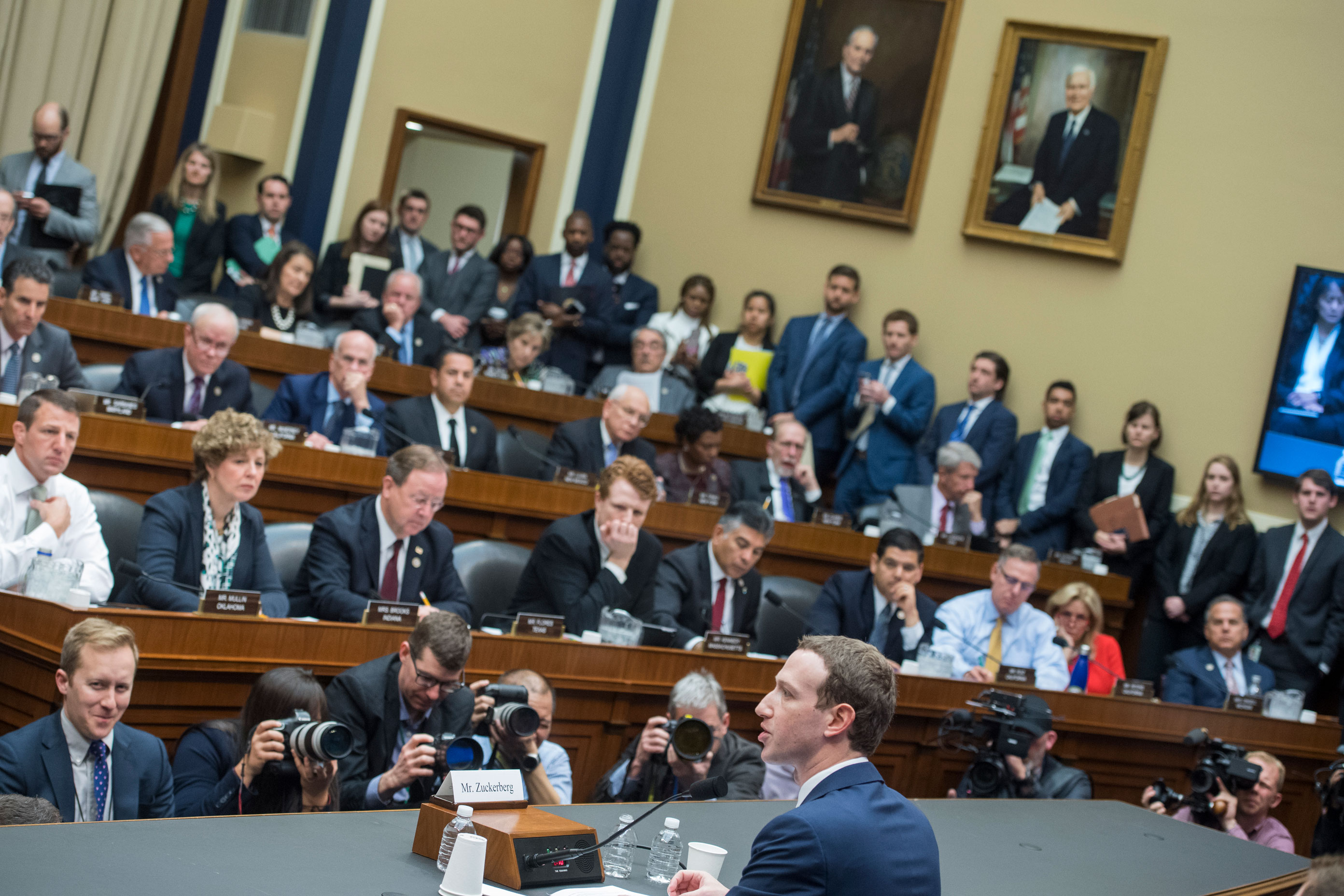
UNITED STATES – APRIL 11: Facebook CEO Mark Zuckerberg testifies before a House Energy and Commerce Committee in Rayburn Building on the protection of user data on April 11, 2018. (Photo By Tom Williams/CQ Roll Call)

Facebook’s 2018 kicked off with Zuckerberg’s wishful, vague post about his personal challenge to “fix Facebook.” The social network bowed out of 2017 with critics saying Zuckerberg hadn’t done enough to combat the proliferation of fake news on Facebook or block Russian interference in the 2016 U.S. election. Online abuse had never been so bad. All of this was happening just as people started to realize that mindlessly browsing the newsfeed — Facebook’s core product — is a total waste of time.

What better timing for not one, but two massive security scandals?

Zuckerberg answered to Congress after Facebook was infiltrated by Cambridge Analytica, a data organization with ties to the Trump administration. In the beginning of 2014, the organization obtained data on 50 million Facebook users in a way that deceived both the users and Facebook itself. 

If that weren’t enough, just months later Facebook revealed at least 30 million users’ data were confirmed to be at risk after attackers exploited a vulnerability allowing them access to users’ personal data. Zuckerberg said that the attackers were using Facebook developer APIs to obtain information, like “name, gender, and hometowns” linked to a user’s profile page. Queue #deletefacebook

A Pew report detailed how Facebook users are becoming more cautious and critical, but they still can’t quit. News and social networking are like oil and water — they can’t blend into coexistence on the same news feed. In 2018, Facebook was caught in a perfect storm. Users started to understand Facebook for what it actually is: powered by algorithms that coalesce fact, opinion and malicious fake content on a platform designed to financially profit off the addictive tendencies of its users. The silver lining is that as people become more cautious and critical of Facebook, the market is readying itself for a new, better social network to be designed off the pioneering mistakes of its predecessors.

Apple hits a $1 trillion market cap and celebrates the anniversary of the iPhone with design changes

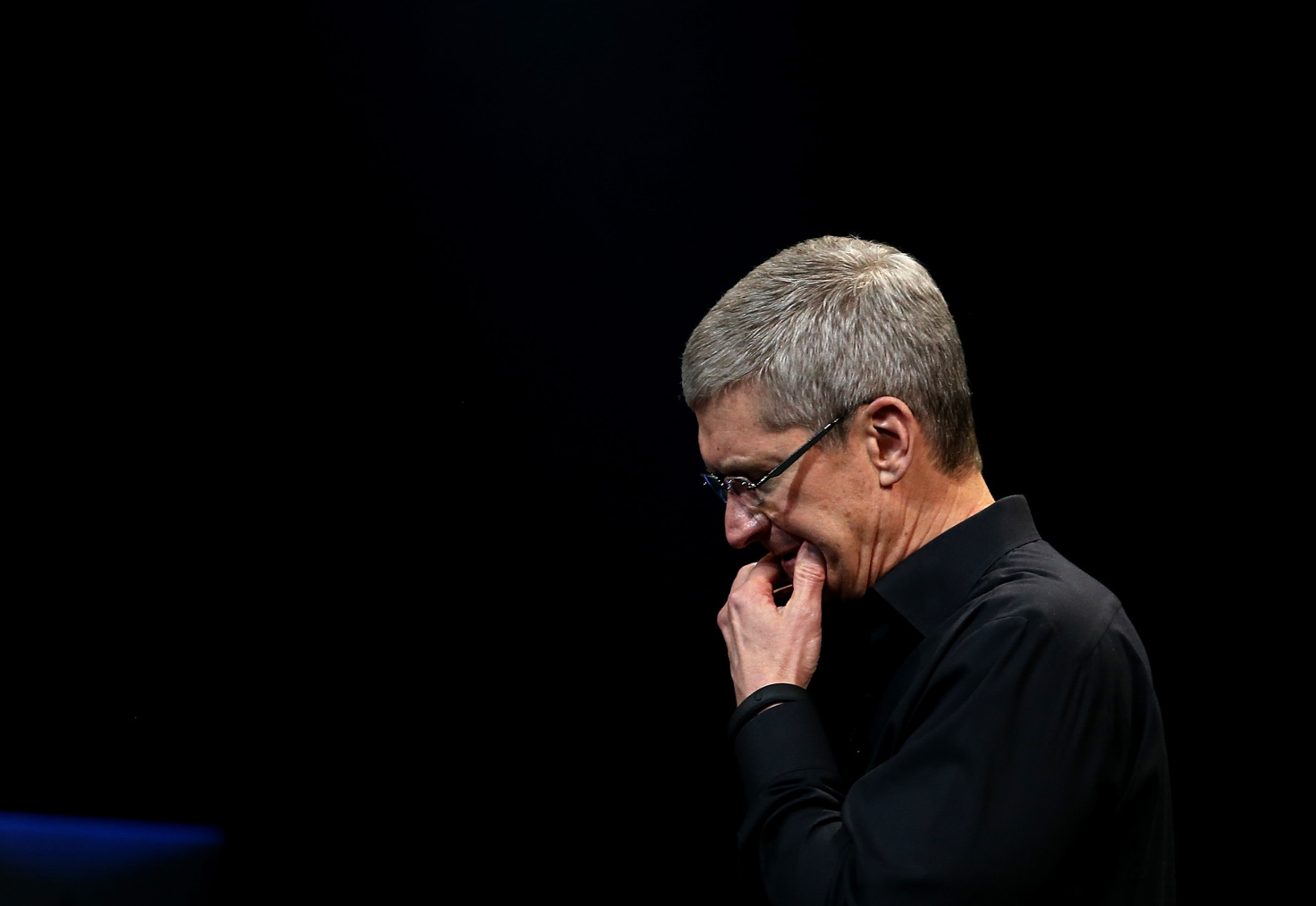
SAN FRANCISCO, CA – OCTOBER 22: Apple CEO Tim Cook speaks during an Apple announcement. (Photo by Justin Sullivan/Getty Images)

This was a hardware-heavy year for Apple. The MacBook Air got Retina Display. The Apple Watch got a big redesign. The iPad Pro said farewell to the home button. We met the new mac Mini and an updated Apple Pencil. In September, Apple held its annual hardware event in Cupertino to announce three new iPhone models, the XS (the normal one), XR (the cheap one) and the XS Max (the big one). We also learned that the company went back to the drawing board on the Mac Pro.

In August, Apple won the race to $1 trillion in market cap. It wasn’t the frayed cords or crappy keyboards that boosted the company past this milestone, but rather price hikes in its already high-margin iPhone sales. But while Apple remains wildly profitable, growth is slowing notably.

Tech stocks took a beating toward the end of the year, and although Apple seems to have weathered the storm better than most companies, it may have reached a threshold for how much it can innovate on its high-end hardware. It may be wise for the company to focus on other methods of bringing in revenue like Apple Music and iCloud if it wants to shoot for the $2 trillion market cap.

As the biggest, richest companies get bigger and richer, questions about antitrust and regulation rise to ensure they don’t hold too much economic power. Tim Cook has more authority than many political leaders. Let’s hope he uses it for good.

Tesla CEO Elon Musk sued by the SEC for securities fraud

CHICAGO, IL – JUNE 14: Engineer and tech entrepreneur Elon Musk of The Boring Company listens as Chicago Mayor Rahm Emanuel talks about constructing a high speed transit tunnel at Block 37 during a news conference on June 14, 2018 in Chicago, Illinois. Musk said he could create a 16-passenger vehicle to operate on a high-speed rail system that could get travelers to and from downtown Chicago and O’Hare International Airport under twenty minutes, at speeds of over 100 miles per hour. (Photo by Joshua Lott/Getty Images)

In August, Tesla CEO Elon Musk announced in a tweet heard around the internet that he was considering taking Tesla private for $420 per share and that he’d secured funding to do so. The questioning started. Was it legit? Was it a marijuana joke? The tweet caused Tesla’s stock price to jump by more than 6 percent on August 7. Musk also complained that being a public company “subjects Tesla to constant defamatory attacks by the short-selling community, resulting in great harm to our valuable brand.”

Turns out, Musk had indeed met with representatives from the Saudi sovereign wealth fund, and that the fund’s lead rep told Musk that they’d bought about 5 percent of Tesla’s stock at a stake worth $2 billion, were interested in taking the company private and confirmed that this rep had the power to make these kinds of investment decisions for the fund. However, nothing was written on paper, and Musk did not notify the Nasdaq — an important requirement.

At the end of September, the SEC filed a lawsuit against Musk for securities fraud in regards to his “false and misleading” tweets, seeking to remove him from Tesla. Musk settled with the SEC two days after being charged, resigning from his chairman position but remaining CEO. Musk and Tesla were also ordered to pay separate $20 million fines to “be distributed to harmed investors under a court-approved process,” according to the SEC.

Public companies are supposed to value the interests of their shareholders. Pulling the trigger on an impulsive tweet breaks that trust — and in Musk’s case, cost $40 million and a board seat. This is why we should never put too much fear or faith in our leaders. Musk is brilliant and his inventions are changing the world. But he is human and humans are flawed and the Tesla board should have done more to balance power at the top. 

The great Amazon HQ2 swindle

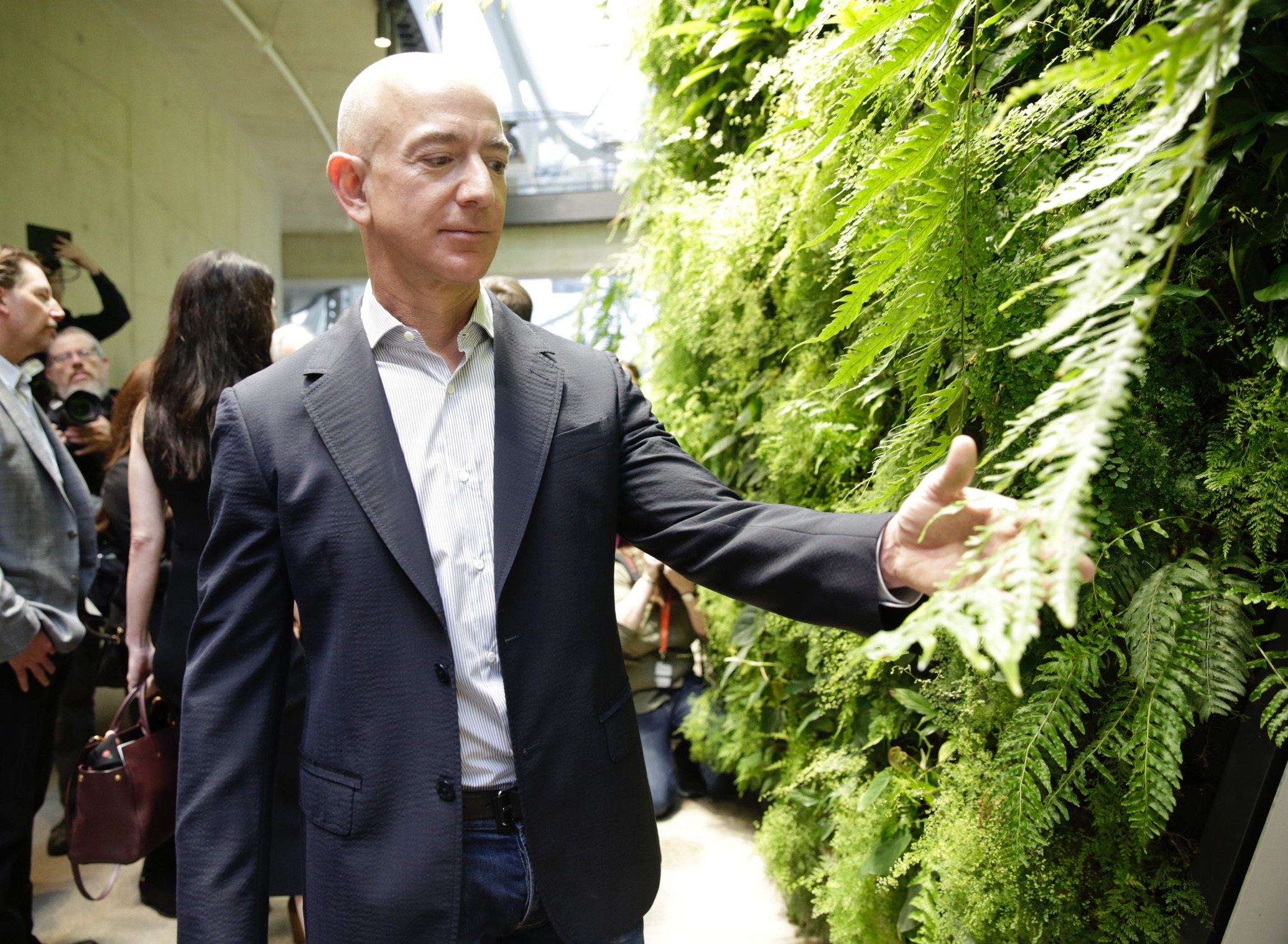
Chief Executive Officer of Amazon, Jeff Bezos, tours the facility at the grand opening of the Amazon Spheres, in Seattle, Washington on January 29, 2018. Amazon opened its new Seattle office space which looks more like a rainforest. The company created the Spheres Complex to help spark employee creativity. (Photo: JASON REDMOND/AFP/Getty Images)

Tech jobs bring new wealth to cities. Amazon set out on a roadshow across America in what the company described as a search for its second headquarters, or “HQ2.” The physical presence of Amazon’s massive retail and cloud businesses would undoubtedly bring wealth, innovation, jobs and investment into a region.

There was initial hope that the retail giant would choose a city in the American heartland, serving as a catalyst for job growth in a burgeoning tech hub like Columbus, Ohio, Detroit, Mich., or Birmingham, Ala. But in the end, Amazon split the decision between two locations: New York (Long Island City) and Arlington, Virginia, as the sites for its new offices. The response? Outrage.

Jon Shieber noted that cities opened their books to the company to prove their viability as a second home for the retailing giant. In return, Amazon reaped data on urban and exurban centers that it could use to develop the next wave of its white-collar office space, and more than $2 billion worth of tax breaks from the cities that it will eventually call home for its new offices.

Danny Crichton argued that Amazon did exactly what it should have with its HQ2 process. Crichton wrote that Amazon is its own entity and therefore has ownership of its decisions. It allowed cities to apply and provide information on why they might be the best location for its new headquarters. Maybe the company ignored all of the applications. Maybe it was a ploy to collect data. Maybe it wanted publicity. Regardless, it allowed input into a decision it has complete and exclusive control over.

Let’s hope that in 2019, Silicon Valley will hold on to some of its ethos as a venture-funded sandbox for brilliant entrepreneurs who want to upend antiquated industries with proprietary tech inventions. But let it be known that sleeping at the wheel while your company gets breached, turning a blind eye to the evil doings of your largest funding sources and executive immunity from sexual misconduct violations no longer have their place here. 

Alphabet spins off moonshot project Malta with backing from Gates’s BEV fund

Malta, the renewable energy storage project born in Alphabet’s moonshot factory X, is now on its own and flush with $26 million from a Series A funding round led by Breakthrough Energy Ventures .

Concord New Energy Group and Alfa Laval also invested in the round.

Project Malta launched last year in Alphabet’s X (formerly Google X) with an aim to build energy storage facilities that can support full-scale power grids. The independent company spun out of Alphabet is now called Malta Inc.

Malta Inc. has developed a system designed to keep power generated from renewable energy or fossil fuels in reserve for longer than lithium-ion batteries. The electro-thermal storage system first captures energy generated from wind, solar or fossil generators on the grid. The collected electricity drives a heat pump, which converts the electrical energy into thermal energy. The heat is stored in molten salt, while the cold is stored in a chilled antifreeze liquid. A heat engine is used to convert the energy back to electricity for the grid when it’s needed.

The system can store electricity for days or even weeks, Malta says.

Malta is going to use the funds to work with industry partners to turn the detailed designs developed and refined at X into industrial-grade machinery for its first pilot system.

BEV, the lead investor in Malta’s Series A round, was created in 2016 by the Breakthrough Energy Coalition, an investor group that includes Microsoft co-founder Bill Gates, John Doerr, chairman of venture firm Kleiner Perkins Caufield & Byers, Alibaba founder Jack Ma, Amazon founder and CEO Jeff Bezos, and SAP co-founder Hasso Plattner.

Dolls Kill is raising up to $15 million for its edgy fashion brand made for ‘misfits’

When founder Bobby Farahi met Shaudi “Shoddy” Lynn, it was at a rave in L.A. Farahi has said he was immediately drawn to the fashion sense of Lynn, who was a DJ at the time; she, meanwhile, might have appreciated the business acumen of Farahi, who had already sold a broadcast monitoring service called Multivision to a rival company.

As Farahi told Inc. magazine several years ago, the couple, now married, decided to try their hand at business together, calling it Dolls Kill and selling foxtail keychains before eventually evolving the brand into an online boutique that sells edgy, risqué clothes and accessories from companies like Killstar and Motel, both in the U.K., as well as makeup from another London company called Skinnydip.

Shoppers like what they see, seemingly. Back in 2014, Inc. reported, Dolls Kill, which is based in San Francisco, generated $7.6 million in sales. It was enough to elicit the attention of the consumer-focused venture firm Maveron, which wrote the company a check for $5 million. Now, shows an SEC filing, seven-year-old Dolls Kill is raising $15 million in new equity funding, and it has secured at least $10.7 million toward that end.

Some of that capital is seemingly being used to test out offline stores. Dolls Kill already has one brick-and-mortar store in San Francisco’s famous Haight neighborhood. In August, the company opened a second concept store in a 6,000-square-foot space on Fairfax Avenue in Los Angeles.

Dolls Kill is sometimes likened to Nasty Gal, founded in 2006 by Sophia Amoruso. Nasty Gal had filed for bankruptcy protection in 2016 after raising tens of millions of dollars from investors and reportedly spending heavily on marketing; two storefronts in L.A.; a downtown L.A. headquarters that quadrupled the size of an earlier HQ; and a fulfillment center in Kentucky.

At the time, industry analyst Richie Siegel told the L.A. Times that a central challenge to the company’s growth was Nasty Gal’s target market, suggesting that there is a ceiling to the number of women to whom a brand like Nasty Gal appeals. The company, since acquired by British online retailer Boohoo, continues as an online business only.

On Christmas Eve, Chevrolet drivers can track Santa from their cars

North American Aerospace Defense Command, or NORAD, has been tracking Santa’s progress around the globe every Christmas Eve for more than 60 years. Even a government shutdown won’t prevent NORAD from completing its once-a-year mission.

Now, General Motors is getting in on the annual tradition.

On December 24, owners of the company’s Chevrolet -branded vehicles, including the Traverse and Tahoe SUVs, Silverado truck and Cruze sedan, can push the OnStar button and get a real-time update on Santa’s whereabouts. Only Chevrolet owners with an active OnStar plan can push their blue OnStar button to request a Santa Update and learn Santa’s current location.

The location service uses NORAD’s official Santa location data. Santa update calls can be made anytime between 6 a.m. ET on Dec. 24  through 5 a.m. ET on December 25. Advisor staffing is adjusted to accommodate increased call volume from Santa Update requests, GM said.

“Each year we receive thousands of Santa Update requests,” said Stacey Unold, director of Contact Center Operations supporting Chevrolet. “It’s a fun way for Chevrolet owners to use technology to connect their families with important information about Santa’s journey and spread holiday cheer.”

Chevrolet and OnStar plan to donate $1 to the American Red Cross for each Santa Update button push received in the United States.

Remembering the startups we lost in 2018

There are few things in this world more difficult than launching a successful startup. It takes talent, know-how, money and a hell of a lot of good timing and luck. And even with all of those magical components in place, the odds may still be against you.

At TechCrunch, we take pride in covering the best and brightest of the startup world. But while covering the startup world is one of the most exciting and fulfilling parts of our job, death is a part of any life cycle. Sadly, not all startups that burn bright ultimately make it. In fact, most don’t.

As we wrap up this year and look forward to the next, let’s take a moment to remember some of those startups we lost in 2018.

Airware (2011-2018)

Total Raised: $118 million

Airware created a cloud software system to help construction companies, mining operations and other enterprise customers use drones to inspect equipment for damage. It also tried to build its own drones, but found that it couldn’t compete with giants like China’s DJI.

The shutdown appears to have been very sudden, coming just four days after Airware opened a Tokyo office, with an investment and partnership from Mitsubishi. In a statement, the company said, “Unfortunately, the market took longer to mature than we expected. As we worked through the various required pivots to position ourselves for long-term success, we ran out of financial runway.”

Blippar (2011-2018)

Total Raised: $131.7 million

Blippar was one of the early pioneers in augmented reality, but unfortunately the AR market has yet to live up to the hopes for mainstream adoption. And despite raising a funding round earlier this year, the startup was apparently losing money quickly as it sought new customers.

Not helping matters was some shareholder drama, where an emergency influx of $5 million was blocked by Khazanah, a strategic investment fund from the Malaysian government. In a blog post, the company said this was “an incredibly sad, disappointing, and unfortunate outcome.”

Bluesmart (2013-2018)

Total Raised: $25.6 million

One of the major casualties of the FAA’s ban on smart luggage, this New York-based startup was forced to close its doors in May. CEO Tomi Pierucci was extremely outspoken when airlines started to enforce the new rules early this year, calling the news “an absolute travesty.”

From the standpoint of Bluesmart, he was right. The startup went all-in on connected luggage, and ultimately found it impossible to adapt when battery packs were no longer allowed on flights. The startup ended all sales and manufacturing, selling what was left of its tech, designs and IP to luggage giant TravelPro.

Doughbies (2014-2018)

Total Raised: $760,000

Things came crumbling down for San Francisco-based Doughbies in July, when the 500 Startups-backed, same-day cookie delivery service announced it was shutting down immediately. But it wasn’t because the startup ran out of money. Doughbies was actually profitable. Rather, its founders, Daniel Conway and Mariam Khan, just wanted to move onto something new.

TechCrunch’s Josh Constine argued at the time that Doughbies really didn’t need venture backing and that pressure to deliver adequate returns may have weighed more heavily on Doughbies than it was willing to admit. RIP Doughbies.

Lantern (2012-2018)

Total Raised: $21.5 million

Like many failed startups before it, San Francisco-based Lantern was forced to shutter operations after an acquisition deal fell through. The mental health startup, founded by Nicholas Bui LeTourneau and Alejandro Foung, had raised millions in venture capital funding from the University of Pittsburgh Medical Center’s venture arm, Mayfield and SoftTechVC, but failed to follow through on its promise.

What was that promise? To offer personalized tools to deal with stress, anxiety and body image based on cognitive behavioral therapy techniques via a mobile application. Despite being an early mover in a now overly crowded field of mental wellness apps, Lantern wasn’t able to find enough customers to survive.

Lighthouse AI (2014-2018)

Total Raised: $17 million

Smart security camera maker Lighthouse AI had a promising product with a natural language processing system that allowed users to navigate their footage. But it also faced a crowded market, and it seems consumers didn’t embrace the product. The company announced this month that it’s winding down.

“I am incredibly proud of the groundbreaking work the Lighthouse team accomplished – delivering useful and accessible intelligence for our homes via advanced AI and 3D sensing,” wrote CEO Alex Teichman. “Unfortunately, we did not achieve the commercial success we were looking for and will be shutting down operations in the near future.”

Mayfield Robotics (2015-2018)

Total Raised: N/A

Mayfield, which was originally part of Bosch, created the adorable home robot Kuri. However, it announced in July that it would stop manufacturing Kuri, and followed with an announcement that it would cease operations altogether.

“Our team is beyond disappointed,” the company said in a blog post. “Together we’ve spent the past four years designing and building not just Kuri, but also an equally incredible company culture and spirit.”

Rethink Robotics (2008-2018)

Total Raised: $149.5 million

A major player in industrial robotics, Rethink was founded by iRobot co-founder Rod Brooks and former MIT CSAIL staff researcher Ann Whittaker. The Boston area startup grew into one of the most important players in both the collaborative and educational robotics space, courtesy of creations like Baxter and Sawyer.

Ultimately, however, the company served as yet another testament to just how difficult it is to launch a robotics startup. Even with brilliant minds and nearly $150 million in funding, the company couldn’t turn enough profit to stay afloat. A last-minute planned acquisition fell through, and Rethink was forced to close up shop in October.

Theranos (2003-2018)

Total Raised: $1.4 billion

Startup stories don’t come more film-ready than this. Even before it officially closed its doors, Theranos was set to be the subject of a book, documentary and an Adam McKay-directed feature film starring Jennifer Lawrence as founder Elizabeth Holmes. Holmes founded the company in 2003, promising a breakthrough in blood testing. By age 31, she became the world’s youngest self-made billionaire.

Theranos would go on to raise $1.4 billion, with a $10 billion valuation at its peak. In 2015, medical professionals began to mount criticism against the company’s methods. The following year, the SEC began investigating Theranos, ultimately charging it with “massive fraud.” In September, the company finally called it quits, with Holmes agreeing to pay a $500,000 penalty, while being barred from serving as an officer or director of a public company for 10 years.

Shyp (2013-2018)

Total Raised: $62 million

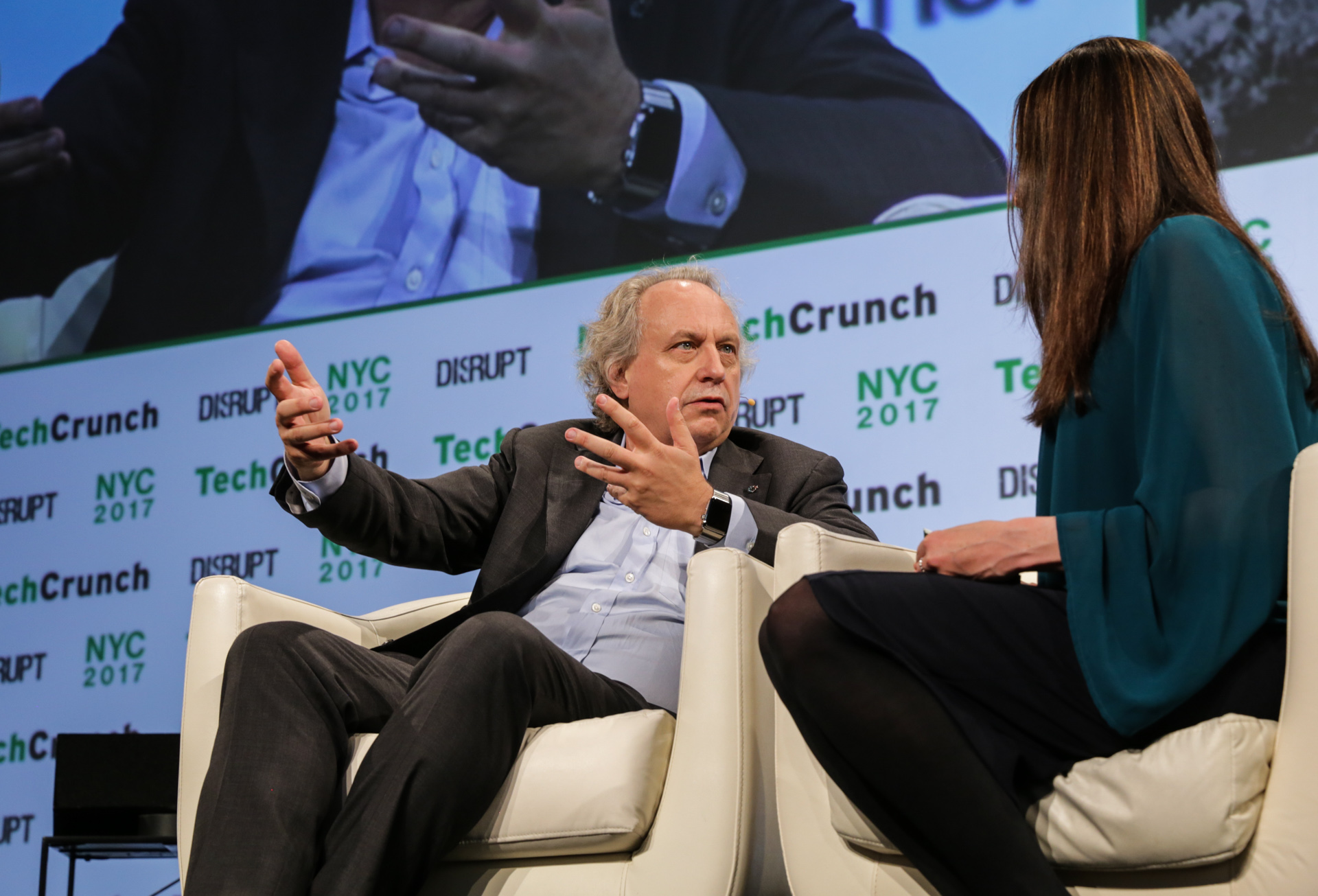
NEW YORK, NY – MAY 06: Co-founder and CEO of Shyp, Kevin Gibbons speaks onstage during TechCrunch Disrupt NY 2015 – Day 3 at The Manhattan Center on May 6, 2015 in New York City. (Photo by Noam Galai/Getty Images for TechCrunch)

A $250 million valuation and capital from some of the best investors (Kleiner Perkins, Slow Ventures) failed to keep on-demand shipping startup Shyp from dissolving. The San Francisco-based startup raised multiple rounds of venture capital amid a major hype cycle for on-demand shipping companies, but wasn’t able to scale successfully beyond the Bay Area.

“To this day, I’m in awe of the vigor the team possessed in tackling a 200-year-old industry,” CEO Kevin Gibbon wrote at the time. “But, growth at all costs is a dangerous trap that many startups fall into, mine included.”

Telltale Games (2005-2018)

Total Raised: $54.4 million

Over the past few years, Telltale Games seemed to reinvent adventure gaming, adapting big franchises like The Walking Dead, Game of Thrones and Batman into episodic stories where players’ choices seemed to have real weight. It even partnered with Netflix to bring a version of “Minecraft: Story Mode” to the streaming service.

But it seems the company has had longstanding business issues, with 90 employees laid off in November 2017, then another 250 let go in September of this year. Although a skeleton crew remained employed to finish the work for Netflix, it looks like Telltale is dead. And the fact that those employees were let go without severance seems to reinforce an earlier report of toxic management.

Captiv8 report highlights data for spotting fake followers

Captiv8, a company offering tools for brands to manage influencer marketing campaigns, has released its 2018 Fraud Influencer Marketing Benchmark Report. The goal is to give marketers the data they need to spot fake followers — and thus, to separate the influencers with a real following from those who only offer the illusion of engagement.

The report argues that that this a problem with a real financial impact (it’s something that Instagram is working to crack down on), with $2.1 billion spent on influencer marketing on Instagram in 2017 and 11 percent of the engagement coming from fraudulent accounts.

“For influencer marketing to truly deliver on its transformative potential, marketers need a more concrete and reliable way to identify fake followers and engagement, compare their performance to industry benchmarks, and determine the real reach and impact of social media spend,” Captiv8 says.

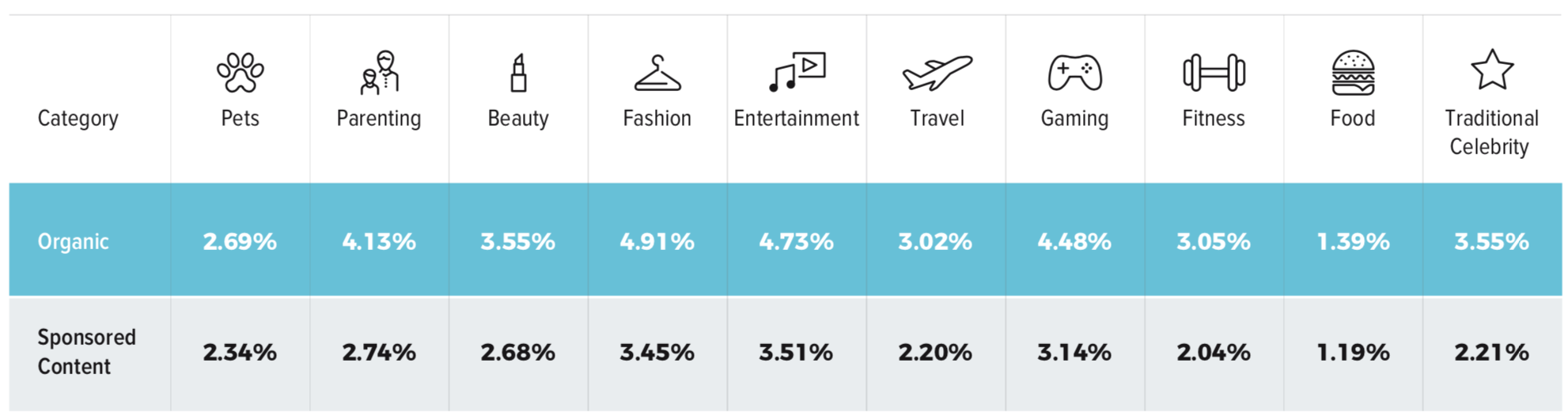
So the company looked at a range of marketing categories (pets, parenting, beauty, fashion, entertainment, travel, gaming, fitness, food and traditional celebrity) and randomly selected 5,000 Instagram influencer accounts in each one, pulling engagement from August to November of this year.

The idea is to establish a baseline for standard activity, so that marketers can spot potential red flags. Of course, everyone with a significant social media audience is going to have some fake followers, but Captiv8 suggests that some categories have a higher rate of fraud than others — fashion was the worst, with an average of 14 percent of fake activity per account, compared to traditional celebrity, where the average was just 4 percent.

Captiv8 report

So what should you look out for? For starters, the report says the average daily change in follower counts for an influencer is 1.2 percent, so be on the lookout for shifts that are significantly larger.

The report also breaks down the average engagement rate for organic and sponsored content by category (ranging from 1.19 percent for sponsored content in food to 3.51 percent in entertainment), and suggests that a lower engagement rate “shows a high probability that their follower count is inflated through bots or fake followers.”

Conversely, it says it could also be a warning sign if a creator’s audience reach or impressions per user is higher than the industry benchmarks (for example, image posts in fashion have an average audience reach of 23.69 percent, with 1.32 impressions per unique user).

You can download the full report on the Captiv8 website.

Facebook is not equipped to stop the spread of authoritarianism

Yael Grauer
Contributor

Yael Grauer is an independent tech journalist and investigative reporter based in Phoenix. She’s written for The Intercept, Ars Technica, Breaker, Motherboard, WIRED, Slate and more.

After the driver of a speeding bus ran over and killed two college students in Dhaka in July, student protesters took to the streets. They forced the ordinarily disorganized local traffic to drive in strict lanes and stopped vehicles to inspect license and registration papers. They even halted the vehicle of the chief of Bangladesh Police Bureau of Investigation and found that his license was expired. And they posted videos and information about the protests on Facebook.

The fatal road accident that led to these protests was hardly an isolated incident. Dhaka, Bangladesh’s capital, which was ranked the second least livable city in the world in the Economist Intelligence Unit’s 2018 global liveability index, scored 26.8 out of 100 in the infrastructure category included in the rating. But the regional government chose to stifle the highway safety protests anyway. It went so far as raids of residential areas adjacent to universities to check social media activity, leading to the arrest of 20 students. Although there were many images of Bangladesh Chhatra League, or BCL men, committing acts of violence on students, none of them were arrested. (The BCL is the student wing of the ruling Awami League, one of the major political parties of Bangladesh.)

Students were forced to log into their Facebook profiles and were arrested or beaten for their posts, photographs and videos. In one instance, BCL men called three students into the dorm’s guest room, quizzed them over Facebook posts, beat them, then handed them over to police. They were reportedly tortured in custody.

A pregnant school teacher was arrested and jailed for just over two weeks for “spreading rumors” due to sharing a Facebook post about student protests. A photographer and social justice activist spent more than 100 days in jail for describing police violence during these protests; he told reporters he was beaten in custody. And a university professor was jailed for 37 days for his Facebook posts.

A Dhaka resident who spoke on the condition of anonymity out of fear for their safety said that the crackdown on social media posts essentially silenced student protesters, many of whom removed from their profiles entirely photos, videos and status updates about the protests. While the person thought that students were continuing to be arrested, they said, “nobody is talking about it anymore — at least in my network — because everyone kind of ‘got the memo,’ if you know what I mean.”

This isn’t the first time Bangladeshi citizens have been arrested for Facebook posts. As just one example, in April 2017, a rubber plantation worker in southern Bangladesh was arrested and detained for three months for liking and sharing a Facebook post that criticized the prime minister’s visit to India, according to Human Rights Watch.

Bangladesh is far from alone. Government harassment to silence dissent on social media has occurred across the region, and in other regions as well — and it often comes hand-in-hand with governments filing takedown requests with Facebook and requesting data on users.

Facebook has removed posts critical of the prime minister in Cambodia and reportedly “agreed to coordinate in the monitoring and removal of content” in Vietnam. Facebook was criticized for not stopping the repression of Rohingya Muslims in Myanmar, where military personnel created fake accounts to spread propaganda, which human rights groups say fueled violence and forced displacement. Facebook has since undertaken a human rights impact assessment in Myanmar, and it also took down coordinated inauthentic accounts in the country.
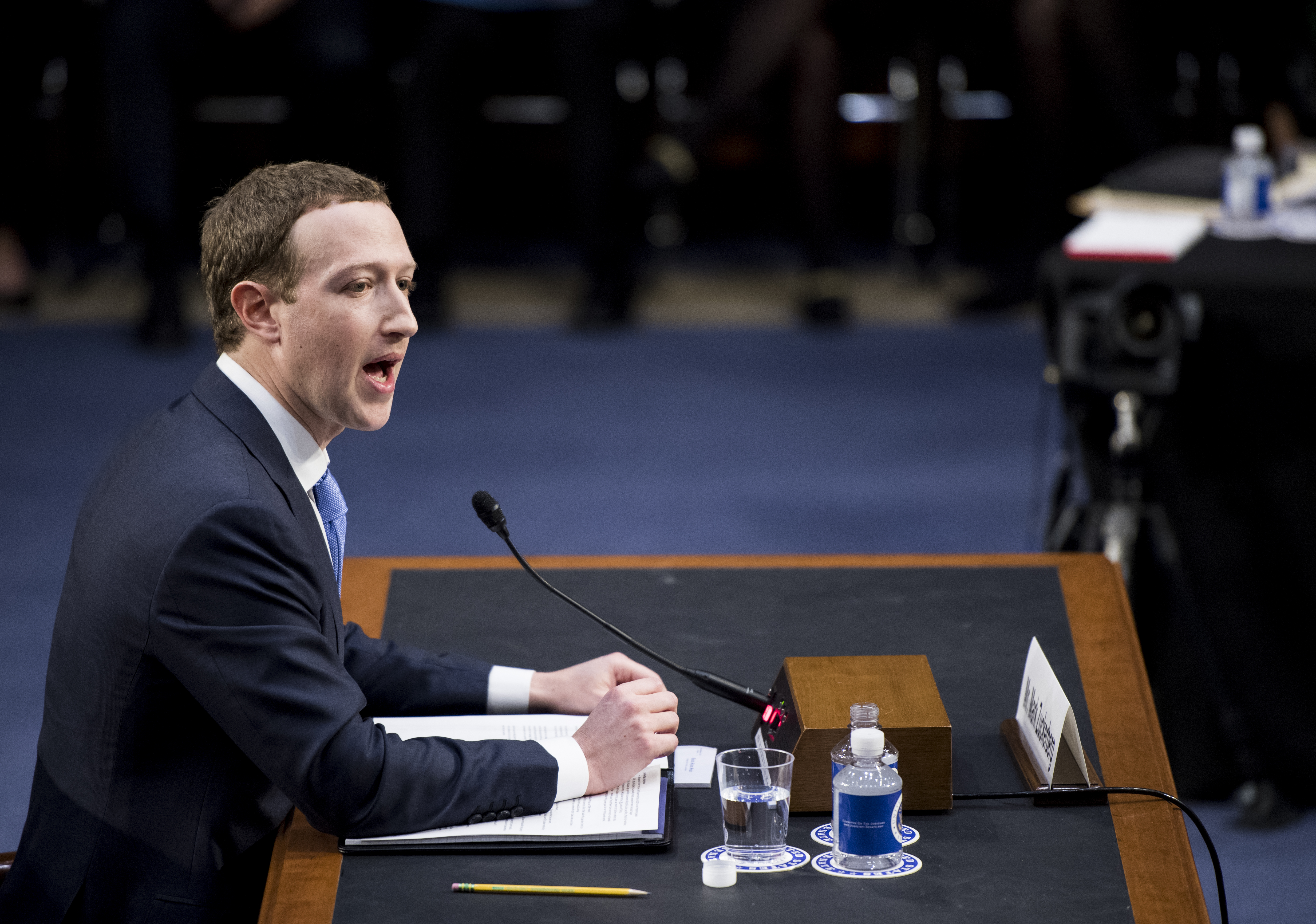
UNITED STATES – APRIL 10: Facebook CEO Mark Zuckerberg testifies during the Senate Commerce, Science and Transportation Committee and Senate Judiciary Committee joint hearing on “Facebook, Social Media Privacy, and the Use and Abuse of Data” on Tuesday, April 10, 2018. (Photo By Bill Clark/CQ Roll Call)

Protesters scrubbing Facebook data for fear of repercussion isn’t uncommon. Over and over again, authoritarian-leaning regimes have utilized low-tech strategies to quell dissent. And aside from providing resources related to online privacy and security, Facebook still has little in place to protect its most vulnerable users from these pernicious efforts. As various countries pass laws calling for a local presence and increased regulation, it is possible that the social media conglomerate doesn’t always even want to.

“In many situations, the platforms are under pressure,” said Raman Jit Singh Chima, policy director at Access Now. “Tech companies are being directly sent takedown orders, user data requests. The danger of that is that companies will potentially be overcomplying or responding far too quickly to government demands when they are able to push back on those requests,” he said.

Elections are often a critical moment for oppressive behavior from governments — Uganda, Chad and Vietnam have specifically targeted citizens — and candidates — during election time. Facebook announced just last Thursday that it had taken down nine Facebook pages and six Facebook accounts for engaging in coordinated inauthentic behavior in Bangladesh. These pages, which Facebook believes were linked to people associated with the Bangladesh government, were “designed to look like independent news outlets and posted pro-government and anti-opposition content.” The sites masqueraded as news outlets, including fake BBC Bengali, BDSNews24 and Bangla Tribune and news pages with Photoshopped blue checkmarks, according to the Atlantic Council’s Digital Forensic Research Lab.

Still, the imminent election in Bangladesh doesn’t bode well for anyone who might wish to express dissent. In October, a digital security bill that regulates some types of controversial speech was passed in the country, signaling to companies that as the regulatory environment tightens, they too could become targets.

More restrictive regulation is part of a greater trend around the world, said Naman M. Aggarwal, Asia policy associate at Access Now. Some countries, like Brazil and India, have passed “fake news” laws. (A similar law was proposed in Malaysia, but it was blocked in the Senate.) These types of laws are frequently followed by content takedowns. (In Bangladesh, the government warned broadcasters not to air footage that could create panic or disorder, essentially halting news programming on the protests.)

Other governments in the Middle East and North Africa — such as Egypt, Algeria, United Arab Emirates, Saudi Arabia and Bahrain — clamp down on free expression on social media under the threat of fines or prison time. And countries like Vietnam have passed laws requiring social media companies to localize their storage and have a presence in the country — typically an indication of greater content regulation and pressure on the companies from local governments. In India, WhatsApp and other financial tech services were told to open offices in the country.

And crackdowns on posts about protests on social media come hand-in-hand with government requests for data. Facebook’s biannual transparency report provides detail on the percentage of government requests with which the company complies in each country, but most people don’t know until long after the fact. Between January and June, the company received 134 emergency requests and 18 legal processes from Bangladeshi authorities for 205 users or accounts. Facebook turned over at least some data in 61 percent of emergency requests and 28 percent of legal processes.

Facebook said in a statement that it “believes people deserve to have a voice, and that everyone has the right to express themselves in a safe environment,” and that it handles requests for user data “extremely carefully.”

The company pointed to its Facebook for Journalists resources and said it is “saddened by governments using broad and vague regulation or other practices to silence, criminalize or imprison journalists, activists, and others who speak out against them,” but the company said it also helps journalists, activists and other people around the world to “tell their stories in more innovative ways, reach global audiences, and connect directly with people.”

But there are policies that Facebook could enact that would help people in these vulnerable positions, like allowing users to post anonymously.

“Facebook’s real names policy doesn’t exactly protect anonymity, and has created issues for people in countries like Vietnam,” said Aggarwal. “If platforms provide leeway, or enough space for anonymous posting, and anonymous interactions, that is really helpful to people on the ground.”
BERLIN, GERMANY – SEPTEMBER 12: A visitor uses a mobile phone in front of the Facebook logo at the #CDUdigital conference on September 12, 2015 in Berlin, Germany. (Photo by Adam Berry/Getty Images)

A German court in February found the policy illegal under its decade-old privacy law. Facebook said it plans to appeal the decision.

“I’m not sure if Facebook even has an effective strategy or understanding of strategy in the long term,” said Sean O’Brien, lead researcher at Yale Privacy Lab. “In some cases, Facebook is taking a very proactive role… but in other cases, it won’t.” In any case, these decisions require a nuanced understanding of the population, culture, and political spectrum in various regions — something it’s not clear Facebook has.

Facebook isn’t responsible for government decisions to clamp down on free expression. But the question remains: How can companies stop assisting authoritarian governments, inadvertently or otherwise?

“If Facebook knows about this kind of repression, they should probably have… some sort of mechanism to at the very least heavily try to convince people not to post things publicly that they think they could get in trouble for,” said O’Brien. “It would have a chilling effect on speech, of course, which is a whole other issue, but at least it would allow people to make that decision for themselves.”

This could be an opt-in feature, but O’Brien acknowledges that it could create legal liabilities for Facebook, leading the social media giant to create lists of “dangerous speech” or profiles on “dissidents,” and could theoretically shut them down or report them to the police. Still, Facebook could consider rolling a “speech alert” feature to an entire city or country if that area becomes volatile politically and dangerous for speech, he said.

O’Brien says that social media companies could consider responding to situations where a person is being detained illegally and potentially coerced into giving their passwords in a way that could protect them, perhaps by triggering a temporary account reset or freeze to prevent anyone from accessing the account without proper legal process. Some actions that might trigger the reset or freeze could be news about an individual’s arrest — if Facebook is alerted to it, contact from the authorities, or contact from friends and loved ones, as evaluated by humans. There could even be a “panic button” type trigger, like Guardian Project’s PanicKit, but for Facebook — allowing users to wipe or freeze their own accounts or posts tagged preemptively with a code word only the owner knows.

“One of the issues with computer interfaces is that when people log into a site, they get a false sense of privacy even when the things they’re posting in that site are widely available to the public,” said O’Brien. Case in point: this year, women anonymously shared their experiences of abusive co-workers in a shared Google Doc — the so-called “Shitty Media Men” list, likely without realizing that a lawsuit could unmask them. That’s exactly what is happening.

Instead, activists and journalists often need to tap into resources and gain assistance from groups like Access Now, which runs a digital security helpline, and the Committee to Protect Journalists. These organizations can provide personal advice tailored to their specific country and situation. They can access Facebook over the Tor anonymity network. Then can use VPNs, and end-to-end encrypted messaging tools, and non-phone-based two-factor authentication methods. But many may not realize what the threat is until it’s too late.

The violent crackdown on free speech in Bangladesh accompanied government-imposed internet restrictions, including the throttling of internet access around the country. Users at home with a broadband connection did not feel the effects of this, but “it was the students on the streets who couldn’t go live or publish any photos of what was going on,” the Dhaka resident said.

Elections will take place in Bangladesh on December 30.

In the few months leading up to the election, Access Now says it’s noticed an increase in Bangladeshi residents expressing concern that their data has been compromised and seeking assistance from the Digital Security hotline.

Other rights groups have also found an uptick in malicious activity.

Meenakshi Ganguly, South Asia director at Human Rights Watch, said in an email that the organization is “extremely concerned about the ongoing crackdown on the political opposition and on freedom of expression, which has created a climate of fear ahead of national elections.”

Ganguly cited politically motivated cases against thousands of opposition supporters, many of which have been arrested, as well as candidates that have been attacked.

Human Rights Watch issued a statement about the situation, warning that the Rapid Action Battalion, a “paramilitary force implicated in serious human rights violations including extrajudicial killings and enforced disappearances,” and has been “tasked with monitoring social media for ‘anti-state propaganda, rumors, fake news, and provocations.’” This is in addition to a nine-member monitoring cell and around 100 police teams dedicated to quashing so-called “rumors” on social media, amid the looming threat of news website shutdowns.

“The security forces continue to arrest people for any criticism of the government, including on social media,” Ganguly said. “We hope that the international community will urge the Awami League government to create conditions that will uphold the rights of all Bangladeshis to participate in a free and fair vote.”


The Yule Log Channel

My aunt and uncle lived up the hill from Martins Ferry, Ohio, high above the river. My uncle ran a used car lot — Snezek’s — and so it was understood that they had a little bit of money and a bigger house than the rest of the family in the Valley.

We would drive there every year at Christmas; first the two and a half hours to Martins Ferry, a pit-stop at my grandmother’s, and then a drive up the woods that covered the winding upper roads like a dark cloud. These were family gatherings before distractions, before everyone carried their lives with them in their pocket, so you had to prepare.

I always brought a few books or some Christmas presents to play with. One year I brought my entire Dungeons & Dragons set in an effort to learn how to play — even though I had no one to play with.

We’d shiver in the backseat as we wound up the hill. House windows faced us, candles aglow. White glowing reindeer and sleighs peeked between pines. At the house we’d coast into the driveway and hop out into the crystalline cold. A few steps more and we would be warm.

Walking into the house through the door next to the garage, into the warmth of a home fired with cooking and laughter, is one of my fondest memories. The family made pierogi and lasagna, two staples in the pot-luck rotation of those old coal and steel towns. There would be plates of cookies and plenty of ginger ale and Buckeyes, the best candy on earth. There were jars of pretzels and nuts here and there, a sprinkling of gumdrops or hard candy for the old folks. There was fried chicken someone made and wedding soup my mother made. As you walked into that warm place you heard the clack of billiard balls and the roar of the game in the other room. My dad cracked a beer. I got kissed by my aunts a few times and then hid, perhaps in a corner or maybe upstairs by their big tree in a darkened room lit only by a fire roaring on a tube television.

That was the height of interactivity, then: a live fire on TV (or, more likely, a looped fire). You imagined what it must be like on the other end of that picture, how much technology you needed to make something so primal and imperative appear on a glass tube. It was as if we had traversed space into a strange craft outfitted with the comforts of home and none of the discomforts. Nestled on the couch, the TV crackling, you were on a space station and safe, a self-sufficient place where memories of cold were far distant.

They aired the first Yule log in 1966 from New York’s Gracie Mansion. By the time I was watching it had been around for 20 years. It was a holdover from the early days of broadcast, from the days when the air was dead if there was no one to play in front of the cameras. In a few years the tradition would vanish, but in 2001, in the wake of 9/11, it came back, a reminder of simpler times.

There was something about it that could change your outlook. A distant roaring fire was almost as good as one in the house, and far less work. I’d curl up, read, and nod off, the voices of the adults below lulling me to sleep.

Now we carry things that burn brightly in our pockets. We don’t need these camera tricks to see fires everywhere. We don’t curl up to the magnet hum of a cathode ray tube and the tinny crackle and pop of facsimile logs. We’re beyond that.

Maybe we aren’t, though. Maybe there’s still a warm place, the umbilicus to get there a crystalline moment between the backseat of a car and warm basement rec room. And maybe upstairs there’s a dozing kid watching the last drops of Christmas burn away into the country dark.

I think there still is. I hope there still is.

Merry Christmas.

LetsTransport raises $13.5M to digitize and improve last-mile logistics in India

India’s B2B supply chain is slowly shifting into the digital era. Following a $23 million investment for Moglix, which helps bring business and manufacturing procurement online, LetsTransport, a startup that brings increased efficiency to logistics and business transportation, has raised $13.5 million for growth.

Founded in 2015 by IIT Kharagpur graduates Pushkar Singh, Sudarshan Ravi and Ankit Parasher, Bangalore-based LetsTransport has surface-level comparisons with Uber and other on-demand services, as it pairs companies with trucks to carry out their last-mile distribution.

But that is really a cosmetic comparison. LetsTransport offers a range of product modules to manage fleets, including intelligent routing. Then, on the business side, its unit economics are far superior to Uber and Co. since the business customers it caters to are not cost-motivated and will happily pay for a consistent service with guarantees.

For the truck operations, the service is designed to increase their average utility and get more jobs completed in quicker times. Singh, the company’s CEO, told TechCrunch in an interview that operating partners are typically seeing 40 percent efficiency improvements with a 30 percent reduction in distribution cost for the brands and retailers on the other side. Routing, he explained, is currently “done primitively by the driver,” which is where LetsTransport tries to add value.

The service currently operates in seven cities in India, and has been used by big-name customers like Coca-Cola, Amazon, Metro Cash & Carry and Big Bazaar, while some 20,000 truckers have carried out jobs on its platform to date. To help sweeten its appeal, the company goes beyond providing work to help trucking operators with insurance, after sale care and other maintenance services.

This Series B funding round was led by Bertelsmann India Investments with participation from China’s Fosun International and others. The company’s other investors include Japan duo GMO Venture Partners and Mitsui Sumitomo Insurance Venture Capital, as well as Rebright Partners and NB Ventures.

Singh told TechCrunch the capital will go toward expanding to 20 new cities in tier-two India, as well as looking into global opportunities.

“We’re trying to consolidate our position in India and [are] looking at products that can be offered internationally,” he said, explaining that markets in Southeast Asia and Africa could be in the pipeline. “The needs of an emerging market are quite similar… it needs a little localization but we have a great product.”

In particular, he added, LetsTransport has received expansion requests from its existing client base, which would help when it comes to new launches. For now, though, the plan is to test specific modules in new markets before bringing other, more significant operational aspects of the business overseas.

Those modules could include the company’s smart routing system, which companies can deploy for their own transportation solutions. That’s a good way to reach new customers and develop a moat around those who use its marketplace business, too.

Pointing out that 14 percent of India’s GDP is spent on logistics versus 7.5 percent in the U.S. — Singh is bullish that there is plenty of scope to digitize the system and make significant improvements to efficiencies.

“It’s a very large industry that’s ripe for disruption,” he said. “There are inefficiencies that should be dead by now.”

China’s WeChat is the latest to get Snap-like ‘Stories’

WeChat, the Chinese messaging giant with more than 1 billion monthly active users around the world, just added a Snap-like ephemeral video feature as part of its biggest overhaul since 2014.

The revamp comes as Tencent, which owns stakes in Snap, sees increasing rivalry from up-and-comers like video app TikTok and news app Jinri Toutiao. WeChat has, over the years, morphed beyond a straight-up messenger to include many utility purposes. With more than 1 million lightweight apps up and running, users can accomplish a long list of tasks, ranging from shopping to ride-hailing, without ever having to leave WeChat.

Meanwhile, some have expressed frustration over WeChat’s core as a social app. Moments, a feature akin to Facebook News Feed, was once a haven for close friends to share articles, photos and videos. But newsfeed content became blander over time as people’s contact list grew to include their bosses and their local fruit seller who needs to be added as a friend to process WeChat payments.

WeChat founder Allen Zhang is known for his obsession with user experience and has been cautious with tweaks, so a major redesign to the super app is effectively a guidebook for where WeChat is headed for the next few years.

The new off-the-cuff video feature, aptly named “Time Capsule,” is one of WeChat’s more noticeable updates. In the past, users shared videos to three main destinations: A friend, a group chat or Moments. This route remains unchanged, but with Time Capsule, users also can upload videos of up to 15 seconds that disappear after 24 hours, similar to how Snap Stories and its slew of clones, including Instagram Stories, work. Meanwhile, Snap also has drawn inspiration from Chinese apps in a recent redesign.

A blue ring will appear near the profile of those who have recorded an instant story. Screenshot by TechCrunch

Different from Instagram, which recently started allowing users to share Stories to close friends, WeChat doesn’t let users share Time Capsule videos to friends yet. Instead of lining up all the instant videos at the top of the app as Instagram does, WeChat is asking users to find them in less conspicuous ways: On Moments, in a group chat or in one’s starred friend list, a blue ring will appear near the profile of those who have recorded instant stories.

These secret entry points mean users are prompted to watch videos of those they know well, as they rarely click on the profile of, say, a fruit vendor.

Time Capsule is also a step up from WeChat’s old video sharing tool, with additional features such as locations and music, functions that are ubiquitous in TikTok and other short-form video apps. Users also can react to Time Capsule videos by blowing virtual “bubbles,” whereas the old video format doesn’t allow such interaction.

Time Capsule is a step up from WeChat’s old video sharing tool, with additional features such as locations and music. Screenshot by TechCrunch

While Time Capsule is not necessarily a direct challenger to TikTok — a product of the world’s most valuable startup ByteDance — it enriches the video experience for users who want to give close friends a window into their life. TikTok, by comparison, delivers content by relying on artificial intelligence to read users’ past habits rather than studying their social graphs.

That said, WeChat has shown signs to catch up with TikTok by rolling out a dozen video apps this year. While Tencent blocks TikTok videos from being shared to WeChat, its own proprietary video app Weishi gets preferential treatment. When users choose to record a video on WeChat, there’s an option to record it via Weishi. But Tencent’s short video fleet has a long way to go before they reach TikTok’s global dominance of 500 million monthly active users.

Another WeChat update also appears as a response to a popular ByteDance app. While WeChat users could show appreciation for an article by clicking on a “like” button, there was no effective way in the past to know what their friends enjoyed. The revamped WeChat now lets people see all the articles their friends have liked under one single stream called “Wow.”

That’s a feature that ByteDance’s Jinri Toutiao news app cannot rival, as Wow is built on billions of users who know each other, unlike Jinri Toutiao, which relies on AI personalization like its sibling TikTok. WeChat is already colossal and can never please every user, but its new move shows that it’s paying close attention to whoever that may steal its users’ eyeball time away.

UK police release airport drone suspects and admit there may not have been any drones after all

Less than a week after mystery drones grounded flights at the U.K.’s second largest airport, wreaking havoc on as many as 140,000 people’s travel plans for the Christmas period, police have admitted that there may in fact not have been any drones at all.

Gatwick airport reopened on Friday after a one-day shutdown but it appears that investigators are no closer to knowing what actually took place.

The Guardian reports that police released and exonerated a couple who had been detained as suspects, while a senior police spokesperson said there is “always a possibility that there may not have been any genuine drone activity in the first place.”

Indeed, the police are reliant on eyewitness accounts — 67 of them, to be precise — to piece together what happened. The BBC reported last week that two drones flying “over the perimeter fence and into where the runway operates from” were spotted by bystanders late Wednesday, with a third reportedly seen on Thursday morning. Runways were shut for around six hours between Wednesday evening and the early hours of Thursday, before a fuller suspension came into effect after the alleged sighting of the third drone.

Police released suspects Elaine Kirk and Paul Gait on Sunday evening after concluding that they were not responsible for the incident. Their arrest had prompted British newspapers and commentators to berate the pair even before they were charged. The Mail on Sunday shamed them for “ruining Christmas” while TV presenter and former tabloid journalist Piers Morgan was forced to apologize for an earlier tweet that labeled Kirk and Gait as “clowns.”

Despite going down the wrong avenue with the arrest, investigators do have more to work with after they recovered a fallen and damaged drone from the north side of the airport. It is being tested for clues on who piloted it, according to The Guardian .

As we explained last week, the U.K. has specific laws around flying drones near an airport, although it remains unclear exactly what did take place.

The U.K. made amendments to existing legislation this year to make illegal flying a drone within 1km of an airport after a planned drone bill got delayed.

The safety focused tweak to the law five months ago also restricted drone flight height to 400 ft. A registration scheme for drone owners is also set to be introduced next year.

Under current U.K. law, a drone operator who is charged with recklessly or negligently acting in a manner likely to endanger an aircraft or a person in an aircraft can face a penalty of up to five years in prison or an unlimited fine, or both.

Although, in the Gatwick incident case, it’s not clear whether simply flying a drone near a runway would constitute an attempt to endanger an aircraft under the law. Even though the incident has clearly caused major disruption to travelers as the safety-conscious airport takes no chances.

10 key lessons about tech mergers and acquisitions from Cisco’s John Chambers

Cyril Ebersweiler
Contributor

Cyril Ebersweiler is co-founder and managing partner of HAX, and a general partner at SOSV.

Benjamin Joffe
Contributor

Benjamin Joffe is a partner at HAX.

John Chambers, chairman emeritus of Cisco (now founder of JC2 Ventures), knows a thing or two about tech acquisitions: he bet his career on a first one in ’93, and went on to complete 180 M&As during his 20 years tenure.

His latest message for large corporations is an alarm bell. In a fireside chat at the HAX M&A Masterclass that followed the publication of his book: Connecting the Dots: Lessons for Leadership in a Startup World, Chambers issued a clear warning: learn about tech M&As or the future might happen without you.

Here are the key lessons to take away (video and transcript are here):

1. M&As Are A Vaccine Against Irrelevance

When stepping down from Cisco in 2015, John Chambers said that 40% of companies will be dead in 10 years. And 10 years might now be conservative.

It took about 20 years to Amazon to challenge WalMart, barely 10 to Airbnb with hotels and to Uber with taxis and car ownership. The next wave might just take 4–5 years. Since no company can invent everything?—?even Apple or Google buy startups routinely?—?you’ll need to either buy or partner seriously with startups (more on that later).

2. Tech Is Entering Every Sector

‘Every company you’ll acquire over this next decade will probably be indirectly or directly a tech company’, said Chambers.

Non-tech companies need to get up to speed on how to work with tech, and startups. Many of the corp dev executives who attended our last event were not from tech.

I met recently power tool companies from US and Europe . They had just set up CVC arms. They were looking into acquisitions, saying ‘we don’t know software’. They’d better tackle that M&A learning curve quickly!

Where do you fit the software?

3. Your Customers Can Tell You What To Buy

There was only one Steve Jobs, who just knew what to build. For others, your customers will might you what to buy. Listen to them and pay special attention to market transitions to buy next generation products.

Like Chambers experienced early in his career at IBM with mainframes, and at Wang Laboratories with mini-computers, missing a critical shift might be the end of you! The corollary for startups is: do something cool for key customers of a corporate, and you’ll get on their radar in no time!

4. Pick The Right Match

“When you buy a company, everything is negotiable except strategy and culture”said Chambers.

Oracle has mastered takeovers but for most others, acquisitions can fail due to a poor alignment of vision for the industry and each company’s role, cultural mismatch, geographic distance or lack of integration of systems (once you scale your number of acquisitions, having different divisions or subsidiaries use different software will make your CFO insane).

There is generally more than one possible M&A target, and Cisco often walked away from potential buys for the above reasons. It also developed efficient processes‘I used to view process at bureaucracy, but process done right can give you speed that others cannot match’, Chambers added.

Are they customer-focused and share their success with their employees?

5. Build Your Playbook(s)

Back in the 90’s tech M&As were often failures. Chambers and his team researched why and built Cisco’s playbook, then tweaked it for 2 decades. According to Chambers, most of it can apply to other companies. So save yourself some time and costly attempts by getting his book 😉

Interestingly, they approached the leadership transition in the same way: they studied what made them work or fail, and made it as smooth as could be when John stepped down in 2015.

6. Do Your Homework

One common trait of experienced corp dev teams is the amount of work they put in before they approach a startup.

Not only are they aware of many through their own research, their customers, business units, CVC arms or the media, but also via extensive networks, including with VC firms.

Like investors, you’re only as good as your deal flow. Corp devs then model the value a startup might bring, and pay the right price for it (more on this below).

7. Pay For What The Value Is To You

A hot startup can command a high price, but is it worth it for you?

If it offers no complementarity or synergies, it might in fact be of negative value. On the opposite, the current revenue of a startup might be irrelevant if you can blow their product through your channels and make it 10x or 100x.

The company Chambers bought in ’93 for close to US$100million only had US$10 million in revenue. It paid off in droves.

8. Keep The Talent

When you buy a tech company, you must try and keep the talent?—?especially founders, emotional leaders and engineers.

Understand ‘Leaders Currency: Track record, Trust and Relationships. So involve your HR team to answer key questions and help define attractive career paths within your organization for the acquired teams. If you fail to do so, people will leave or underperform, and you will not get the new products you hope for.

At Cisco, about 1/3 of the top leadership came from internal promotions, 1/3 from recruiting and 1/3 from acquisitions. At peak it likely had about 100 former CEOs on payroll!

9. Expect Some Failures

Despite its stellar track record, about 1/3 of Cisco’s were failures. Reasons may vary, and some might be caused by market changes. When it decided to shut down Flip Video within 2 years after its $590 million acquisition: Apple had just added cloud video capabilities, it was game over.

Expect them, learn from them, and be ready to cut losses and, ideally, redeploy people.

10. In The Future, M&As Might Not Be Enough

As the pace of innovation accelerates, and top talent joins startups rather than large companies, startups might become threats faster than you can buy them.

Chambers suggested that the next-level skill to develop is the ability to form strategic partnerships very early on with startups, such as this recent JV between Boeing and the much smaller 5-year-old A.I. startup SparkCognitionfor urban aerial mobility.

Joint Ventures Between Startups And Corporates Might Become More Common

Thanks to speakers, participants and supporters of this Masterclass series, in particular: Natasha Ligai (Logitech), Todd Neville (IBM), Christina LaMontagne(Johnson & Johnson), Anne Samak de la Cerda (former CFO, Withings), Dan Fairfax, (former CFO, Brocade), Amanda Zamurs and Larry Chu (Goodwin), Kate Whitcomb and Ethan Haigh (HAX).

The year social networks were no longer social

The term “social network” has become a meaningless association of words. Pair those two words and it becomes a tech category, the equivalent of a single term to define a group of products.

But are social networks even social anymore? If you have a feeling of tech fatigue when you open the Facebook app, you’re not alone. Watching distant cousins fight about politics in a comment thread is no longer fun.

Chances are you have dozens, hundreds or maybe thousands of friends and followers across multiple platforms. But those crowded places have never felt so empty.

It doesn’t mean that you should move to the woods and talk with animals. And Facebook, Twitter or LinkedIn won’t collapse overnight. They have intrinsic value with other features — social graphs, digital CVs, organizing events…

But the concept of wide networks of social ties with an element of broadcasting is dead.

From interest-based communities to your lousy neighbor

If you’ve been active on the web for long enough, you may have fond memories of internet forums. Maybe you were a fan of video games, Harry Potter or painting.

Fragmentation was key. You could be active on multiple forums and you didn’t have to mention your other passions. Over time, you’d see the same names come up again and again on your favorite forum. You’d create your own running jokes, discover things together, laugh, cry and feel something.

When I was a teenager, I was active on multiple forums. I remember posting thousands of messages a year and getting to know new people. It felt like hanging out with a welcoming group of friends because you shared the same passions.

It wasn’t just fake internet relationships. I met “IRL” with fellow internet friends quite a few times. One day, I remember browsing the list of threads and learning about someone’s passing. Their significant other posted a short message because the forum meant a lot to this person.

Most of the time, I didn’t know the identities of the persons talking with me. We were all using nicknames and put tidbits of information in bios — “Stuttgart, Germany” or “train ticket inspector.”

And then, Facebook happened. At first, it was also all about interest-based communities — attending the same college is a shared interest, after all. Then, they opened it up to everyone to scale beyond universities.

When you look at your list of friends, they are your Facebook friends not because you share a hobby, but because you’ve know them for a while.

Facebook constantly pushes you to add more friends with the infamous “People you may know” feature. Knowing someone is one thing, but having things to talk about is another.

So here we are, with your lousy neighbor sharing a sexist joke in your Facebook feed.

As social networks become bigger, content becomes garbage.

Facebook’s social graph is broken by design. Putting names and faces on people made friend requests emotionally charged. You can’t say no to your high school best friend, even if you haven’t seen her in five years.

It used to be okay to leave friends behind. It used to be okay to forget about people. But the fact that it’s possible to stay in touch with social networks have made those things socially unacceptable.

Too big to succeed

One of the key pillars of social networks is the broadcasting feature. You can write a message, share a photo, make a story and broadcast them to your friends and followers.

But broadcasting isn’t scalable.

Most social networks are now publicly traded companies — they’re always chasing growth. Growth means more revenue and revenue means that users need to see more ads.

The best way to shove more ads down your throat is to make you spend more time on a service. If you watch multiple YouTube videos, you’re going to see more pre-roll ads. And there are two ways to make you spend more time on a social network — making you come back more often and making you stay longer each time you visit.

And 2018 has been the year of cheap tricks and dark pattern design. In order to make you come more often, companies now send you FOMO-driven notifications with incomplete, disproportionate information.

I created a new Facebook account just so I could access an Oculus thing. Despite having no friends, apparently I'm really missing out on a whole lot of "fun" activity from all these specifically-named people I don't know. And I have two notifications already! "Cool." pic.twitter.com/uBHicji3pj

— Nick Farina (@nfarina) October 1, 2018

This isn’t just about opening an app. Social networks now want to direct you to other parts of the service. Why don’t you click on this bright orange banner to open IGTV? Look at this shiny button! Look! Look!

This navigation bar makes no sense Facebook. Also it’s an insult to trick people’s brains with animated ? to foster engagement pic.twitter.com/eMGxbh7r4a

— Romain Dillet ? (@romaindillet) November 27, 2018

And then, there’s all the gamification, algorithm-driven recommendations and other Skinner box mechanisms. That tiny peak of adrenaline you get when you refresh your feed, even if it only happens once per week, is what’s going to make you come back again and again.

Don’t forget that Netflix wanted to give kids digital badges if they completed a season. The company has since realized that it was going too far. Still, U.S. adults now spend nearly six hours per day consuming digital media — and phones represent more than half of that usage.

Given that social networks need to give you something new every time, they want you to follow as many people as possible, subscribe to every YouTube channel you can. This way, every time you come back, there’s something new.

Algorithms recommend some content based on engagement, and guess what? The most outrageous, polarizing content always ends up at the top of the pile.

I’m not going to talk about fake news or the fact that YouTubers now all write titles in ALL CAPS to grab your attention. That’s a topic for another article. But YouTube shouldn’t be surprised that Logan Paul filmed a suicide victim in Japan to drive engagement and trick the algorithm.

In other words, as social networks become bigger, content becomes garbage.

Private communities

Centralization is always followed by decentralization. Now that we’ve reached a social network dead end, it’s time to build our own digital house.

Group messaging has been key when it comes to staying in touch with long-distance family members. But you can create your own interest-based groups and talk about things you’re passionate about with people who care about those things.

Social networks that haven’t become too big still have an opportunity to pivot. It’s time to make them more about close relationships and add useful features to talk with your best friends and close ones.

And if you have interesting things to say, do it on your own terms. Create a blog instead of signing up to Medium. This way, Medium won’t force your readers to sign up when they want to read your words.

If you spend your vacation crafting the perfect Instagram story, you should be more cynical about it. Either you want to make a career out of it and become an Instagram star, or you should consider sending photos and videos to your communities directly. Otherwise, you’re just participating in a rotten system.

If you want to comment on politics and life in general, you should consider talking about those topics with people surrounding you, not your friends on Facebook.

Put your phone back in your pocket and start a conversation. You might end up discussing for hours without even thinking about the red dots on all your app icons.

Original Content podcast: Netflix’s ‘Roma’ might be the best movie of the year

A number of critics have declared that “Roma” is the best movie of the year. Naturally, we had to weigh in on the latest episode of the Original Content podcast.

Director Alfonso Cuarón’s recent (and excellent) films were all fantasy and science fiction (“Harry Potter and the Prisoner of Azkaban,” “Children of Men” and “Gravity”). But with “Roma,” he returns to the realist mode of his breakthrough “Y Tu Mamá También.”

Here, Cuarón tells the story of his childhood in Mexico City — but through the eyes of Cleo (played by Yalitza Aparicio), based on the real maid who played a crucial role in raising Cuarón and his siblings. It’s a largely plotless film (particularly in its first half), beautifully shot in black-and-white, capturing the rhythms and subtle power dynamics of everyday family life.

To discuss “Roma,” we’re joined by Brian Heater, who said he was hard-pressed to think of a better movie released this year. We had a few reservations — about the film’s pace, about some of the plotting and about whether Cleo is depicted as a fully three-dimensional person — but none of us denied that Cuarón has staged scenes here that are suspenseful as anything in “Gravity.” And as the credits rolled, at least one of your hosts found himself in tears.

"Roma" (2018) review:

????????????

— Brian Heater (@bheater) December 19, 2018

Also this week: Brian used the recording to test out the Rodecaster Pro, which is why we’re accompanied by random sound effects. There wasn’t much streaming news to recap, but we did discuss Netflix’s tease for a long, possibly interactive episode of “Black Mirror,” as well as Anthony’s review of the new “Aquaman” movie.”

You can listen in the player below, subscribe using Apple Podcasts or find us in your podcast player of choice. If you like the show, please let us know by leaving a review on Apple. You also can send us feedback directly. (Or suggest shows and movies for us to review!)