Syfy’s new series doesn’t reflect the influence of the man who wrote the novella on which it’s based.
Category: Tech news
hacking,system security,protection against hackers,tech-news,gadgets,gaming
Bell’s V-280 Valor Tiltrotor Flies Through a Year of Testing
The V-22 Osprey-inspired aircraft, bidding to replace the Army’s Black Hawk helicopter, has spent the past 12 months bagging a series of milestones.
Going Dumb: My Year With a Flip Phone
The upsides of a downgrade.
The Year in Robots (2018): Boston Dynamics, Baxter, and More
Look back on the biggest moments in robotics in 2018, from the continued ascendance of SpotMini to the rapid rise and fall of the home robot.
California Could Soon Have Its Own Version of the Internet
In 2018, the state reimposed net neutrality, established a privacy regime, and set bot rules. Will the moves splinter the net, or will others follow?
2018 Tech in Memoriam: Goodbye to the iPhone SE, Google+, and More
Pour one out for this year’s tech casualties.
Alibaba-backed Hellobike bags new funds as it marches into ride-hailing
2018 has been a rough year for China’s bike-sharing giants. Alibaba-backed Ofo pulled out of dozens of international cities as it fought with a severe cash crunch. Tencent-backed Mobike puts a brake on expansion after it was sold to neighborhood services provider Meituan Dianping. But one newcomer is pedaling against the wind.
Hellobike, currently the country’s third-largest bike-sharing app according to Analysys data, announced this week that it raised “billions of yuan” ($1 = 6.88 yuan) in a new round. The company declined to reveal details on the funding amount and use of the proceeds when inquired by TechCrunch.
Leading the round were Ant Financial, the financial affiliate of Alibaba and maker behind digital wallet Alipay, and Primavera Capital, a Chinese investment firm that’s backed other mobility startups including electric automaker Xpeng and car trading platform Souche. The fledgling startup also got SoftBank interested in shelling out an investment, The Information reported in November. The fresh capital arrived about a year after it secured $350 million from investors including Ant Financial.
As China’s bicycle giants burn through billions of dollars to tout subsidized rides, they’ve gotten caught up in financial troubles. Ten months after Ofo raised $866 million, the startup is reportedly mulling bankruptcy. Meanwhile, Mobike is downsizing its fleet to “avoid an oversupply,” a Meituan executive recently said.
It’s interesting to note that while both Ofo and Hellobike fall under the Alibaba camp, they began with different geographic targets. By May, only 5 percent of Hellobike’s users were in China’s Tier 1 cities, while that ratio was over 30 percent for both Mobike and Ofo, a report by Trustdata shows.
This small-town strategy gives Hellobike an edge. As the bike-sharing markets in China’s major cities become crowded, operators began turning to lower-tier cities in 2017, a report from the China Academy of Information and Communications Technology points out.
The new contender is still dwarfed by its larger competitors in terms of user number. Ofo and Mobike command 43 million and 38 million unique monthly mobile installs, respectively, while Hellobike stands at 8 million, accroding to iResearch.
Hellobike’s ambition doesn’t stop at two-wheelers. In September, it rebranded its Chinese name to HelloTransTech to signify an extension into other transportation means. Aside from bikes, the startup also offers shared electric bikes, ride-hailing and carpooling, a category that became much contested following high-profile passenger murders on Didi Chuxing .
In May and August, two female customers were killed separately when they used the Hitch service on Didi, China’s biggest ride-hailing platform that took over Uber’s China business. The incidents sparked a huge public and regulatory backlash, forcing Didi to suspend its carpooling service up to this day. But this week, its newly minted rival Hellobike decides to forge ahead with a campaign to recruit carpooling drivers. Time will tell whether the latecomer can grapple with heightened security measures and fading customer confidence in riding with strangers.
TechCrunch’s Favorite Things of 2018
2018! We did it! Way to go, Earth! We’re number one! We’re number one!
As we do each year, the TechCrunch Staff — our writers, our illustrators, our editors and more — have gathered together and come up with a mega list of our favorite things of 2018.
“Things” here is intentionally defined rather loosely. “Things” here can be a book, or a game, or a concept, or a thought, or an album, or anything else. It can be something that popped up for the first time in 2018, or it can be something we’ve had for a while but found a new appreciation for this year. We tried to limit it to things you, too, might be able to enjoy (so no people from our respective lives, for example) — but beyond that, if it left a positive mark in our lives in 2018, it can make the list.
Here goes!
Greg Kumparak, Editor
Google’s Night Sight Mode

Google recently added a low-light photography mode to its Pixel phones, and it’s just ridiculously good. It’s one of those “Hahaha there’s no way it really works like thaaaOH MY GOD WAIT HOW DID IT DO THAT” features. Other phone makers will be chasing this feature in 2019.
The magical combo that is the Kindle Oasis with a PopSocket
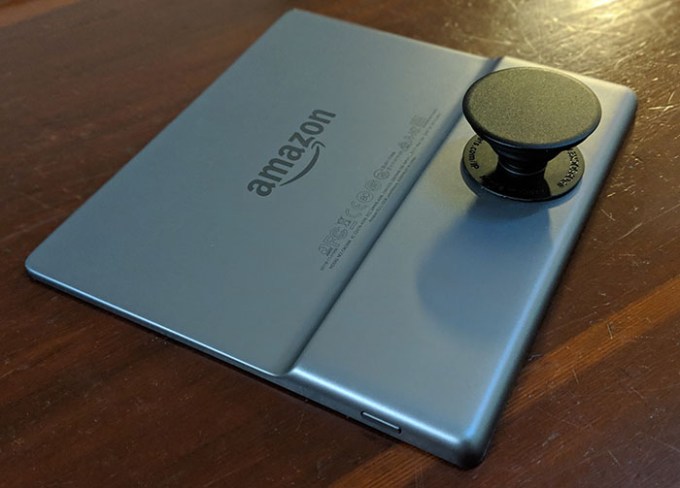
I liked my Kindle Oasis in 2017. It’s light! It’s waterproof! The battery lasts for-freakin’-ever! But the more I use it, the less certain I am that it was actually designed for human hands. The back is slippery smooth, with a weird ridge that looks like it should be easy to hold onto for extended periods of time but isn’t really.
In 2018 I stuck a PopSocket on the back and it changed everything — I’m reading more often, and for much longer stretches. My Kindle has gone from something that lives on my nightstand to something that is always with me. Between the light weight of the Oasis and the flexibility of the PopSocket, it’s the most comfortable reading experience I’ve ever had.
99% Invisible
I’ve been commuting more this year, with the upside being that I’m finally able to catch up on a thousand podcasts I’ve been wanting to listen to forever.
My favorite right now is 99% Invisible — it’s one that friends have been suggesting to me for years, and now I’m sort of mad I didn’t start listening sooner. Each episode focuses on something that we tend to overlook; the history of the places around us, the clothes we wear, the tools we use, etc. They start most episodes with a bit of narrative, then throw you face-first into a rabbit hole. They present a little dangling thread, then spend the next 20-30 minutes tugging on it until your understanding of that thing unravels and reforms. I’m hooked.
Spider-Man for PS4

This game. Just… damn.
I can’t remember the last single player game I enjoyed quite this much. It’s the first game that convinced me to pre-order all of the DLC long before I was even done with the main campaign. It’s the first game I’ve been drawn back to after completing every storyline, side quest and collectible.
There’s too much right about this game to fit into a little blurb like this, but above it all: that webswinging, though. Insomniac Games built a webswinging system that’s intuitive enough to immediately make sense, but complex enough that you can get more adept and precise every time you sit down to play. What could’ve been deeply frustrating instead feels very natural and, before long, wired in. Sequel please.
Devin Coldewey, Writer

Return of the Obra Dinn
At once an interactive storybook, a maddening logic puzzle and a beautiful game, Lucas Pope’s Return of the Obra Dinn bucks pretty much every gaming trend and is a resounding success. Tasked with investigating the fates of all hands aboard the derelict Obra Dinn using an artifact that shows you the scenes of their deaths, you work your way backwards and forward through a strange, compelling story told in freeze frame, snippets of audio and your imagination. Not for quitters — this game is hard.
Vita Nostra

I’ve been disappointed by modern sci-fi, fantasy and magical realism for years, and thought I’d try my luck with this newly translated novel touted as “Harry Potter meets metaphysics in backwater Russia.” A girl is approached by a mysterious stranger offering entrance to a mysterious school… but instead of magic the students seem to be having their minds systematically broken. I was very pleasantly surprised by the freshness, weirdness and intelligence of Vita Nostra, which is nothing like anything else I’ve read, and certainly not in the increasingly overcrowded YA genre, which this only barely fits into. I’d recommend this to anyone over 16 who’s okay with having their mind bent a bit.
My trusty iPhone SE
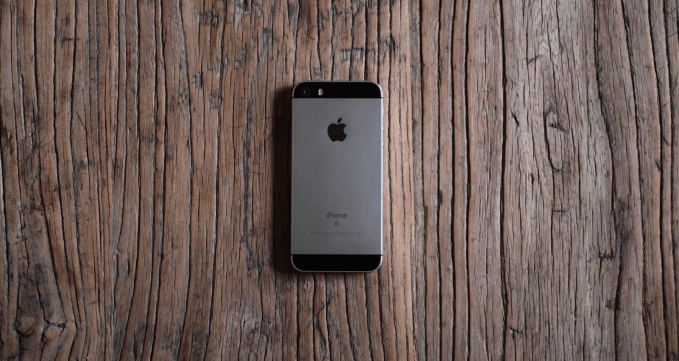
As everyone in the world fusses about the latest, largest phones, which notch is best and how to get the most out of your virtual assistant, I’m content with my years-old, pocket-sized iPhone SE, in my opinion the zenith of Apple’s design philosophy. It’s been discontinued (I suspect because it was still showing up newer models) and that’s a shame. I wish more things in the tech world worked as well and lasted as long as this phone.
Catherine Shu, Writer
Trekz Air
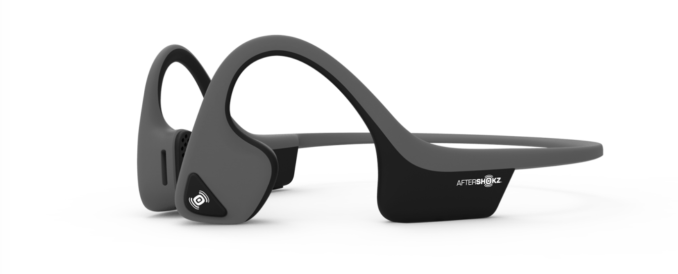
I belong to a group for fans of true crime podcasts who are also parents of young children. We were wondering how to indulge that interest without traumatizing our offspring and someone suggested bone-conduction headphones, which send sound vibrations through the bones of your cheeks and jaw, keeping your ears open so you remain aware of surrounding noises.
I bought a pair of wireless Trekz Air and they have totally changed my life. Fine, that’s hyperbole, but I love being able to listen to things while keeping an ear out for my toddler, deliveries or traffic. Not surprisingly, the sound quality doesn’t match traditional headphones, but it’s more than clear enough for spoken words. Trekz Air are lightweight and a good option for people who find earbuds uncomfortable but don’t want to lug around over-the-ear headphones. The vibrations tickle at first, but you get used to them.
Paprika (the app, not the spice)

Before downloading Paprika, using online recipes meant printing them out or smearing grease, flour and possible traces of salmonella on my iPhone. Paprika makes everything easier by downloading recipes, cutting out the 2,000 word essays and dozens of photos many food sites publish, and sorting ingredients and directions into organized sections. You also can keep an inventory of ingredients you already own and match that against meal or menu plans to automatically create grocery shopping lists. The iOS and Android apps cost a very reasonable $4.99.
NPR’s Believed podcast

Believed is often painful to listen to, but it is one of the most important podcasts released this year. Through interviews with survivors, their parents, advocates and law enforcement officials, Michigan Radio reporters Kate Wells and Lindsey Smith not only examine how Larry Nassar was able to get away with sexually abusing hundreds of girls and women for so many years, but also how his young victims eventually found their voices and succeeded in bringing him to justice. (For people raising kids, the “Gaslighting” and “The Parents” episodes are essential listening.)
BBC Radio 3 Slow Radio’s episode “Forgotten Sounds”
The episode captures many of the noises that once formed the ambient soundtrack of daily life, but are disappearing as technology advances, including typewriters, printing machines and looms. All are combined by composer Iain Chambers into a gentle medley that’s awesome for background noise if you find music too distracting while you work.
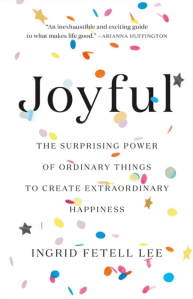
Joyful by Ingrid Fetell Lee
Lee, a designer, breaks down the aesthetic elements that induce feelings of contentment, wonder and glee: lush bouquets and bright colors, balloons bobbing in the air, gardens hidden in the city neighborhoods, the glow of sunlight against pale yellow walls, a silly pair of socks, the perfect harmony of a Rockettes’ kick line. Her book makes a solid argument for the link between good design and social well-being, while serving as a guide for how you can create more moments of transcendence and joy in your life.
Rookie on Love edited by Tavi Gevinson
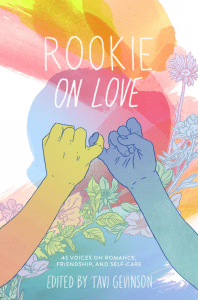
I’m more than a decade older than their target age bracket, but I loved Rookie, the online magazine for teenagers edited by Tavi Gevinson, because it was the kind of thing I longed for in high school and I was just happy it existed. It also brought exposure to an amazing group of young writers and artists, including Jenny Zhang, Hazel Cills, Petra Collins and Rachel Hodgson (to name just a very truncated list).
Though the site recently announced it will stop publishing new content, this year also marked the release of Rookie on Love, an anthology of essays, interviews and comics about all kinds of love — romantic, platonic, familial, self — and heartbreak. It is just as remarkable as the Rookie Yearbook series and cements the legacy Gevinson and her colleagues built over the last seven years.
Bougainvillea

Photo by Leonora (Ellie) Enking
Want a plant you can’t kill? Screw succulents. Get a bougainvillea instead. I bought four potted ones and they make me feel like a gardening genius. The bright pink perennial blooms also add a happy note to my balcony on cold and grey days.
Romain Dillet, Writer
VanMoof bike

2018 has been an interesting year for people living in Paris and who love bikes. In 2017, I was using Paris’ bike-sharing system (Vélib) constantly, but couldn’t anymore because the new provider made the whole system unusable.
After a lot of Ofo and Mobike rides, I became frustrated with the unpredictable nature of free-floating services. Will I find a bike? Is the bike broken? And let’s be honest, those bikes tend to suck.
So I switched to a VanMoof Smart X and I love this bike. It’s a solid, connected bike that doesn’t need a ton of attention.
People
This weekend, maybe you can leave your phone in your pocket and talk with people around you. After countless examples of Facebook missteps, multiple digital well-being dashboards and many #quitfacebook hashtags, it’s time to act.
If you were waiting for proof that social networks, ad companies and addictive engagement tricks were hurting your social behavior, now you have it. A tiny little red number shouldn’t stop you from engaging in an interesting conversation with your family, your neighbor, your Uber driver or the person waiting in line in front of you for a concert.
I’m not perfect on this front. The goal isn’t to reach perfection — being mediocre at something is OK. But trying to talk a tiny bit more with people around you is already better than clearing your Instagram feed multiple times a day.
Natasha Lomas, Writer
Open DMs on Twitter
It’s a bit of a love-hate “favorite” because my Twitter account’s noise to signal ratio has inexorably taken a (small) hit after I opened up DMs this year. But, on balance, having to tune out a bit of spam PR/worthless crypto pitches/random “suspicious” photo-messages (which are helpfully autoblocked from being displayed by Twitter anyway) has been worth it to allow some interesting new signals to filter through via direct message.
Email is an alternative channel for this, of course. But the level of inbox noise makes it challenging for this type of “alien signal” to break through. Ditto LinkedIn, which also only offers the messaging feature to paying users or existing contacts. So Twitter — at least for now — offers a decent alternative where interesting strangers can whisper in your ear. There’s no predicting what might happen to the calibre and cadence of these alien signals in the future though. Much like Slack used to claim to aid productivity until it became a self-replicating, attention-sucking virus, comms technologies work until they break from overuse (and/or corporate growth targets…).
Travis Bernard, Audience Development
Sonos’ 5.1 Surround Sound Set
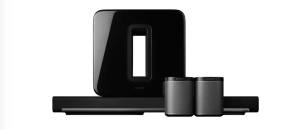
My sound system stopped working this year, so I looked into getting a Sonos system. The price was initially a turn-off, but after using it for the last few months I can honestly say it’s well worth the steep price tag. The sound is stellar, but what’s more impressive was that it only took 30 minutes to set up a 5.1 surround sound system.
Megan Rose Dickey, Writer
OWL Two-way Dash Cam

It’s an always-on camera for my car that gives me peace of mind that no one is smashing my windows or towing my car.
Otter, a transcription service
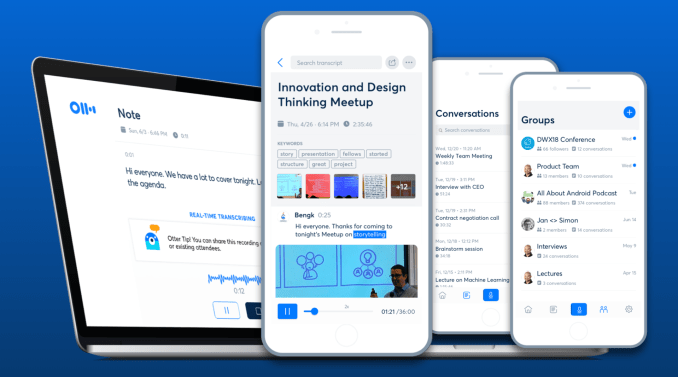
These transcriptions are the actual best. This tool has become my go-to for transcribing recorded interviews.
Super Mario Party for Nintendo Switch

It’s a fun, pick-up-and-play kind of game that’s great for groups — even if half the group isn’t usually super into games.
Brian Heater, Writer
Hell-On by Neko Case
“God is not a contract or a guy / God is an unspecified tide” is one of the great opening lines, on-par with Patti Smith’s “Gloria” and Nick Cave’s “Into My Arms.”
I don’t know how, but seven records into her solo career, the sometime New Pornographer keeps getting better. Hell-On is an intricately layered and deeply personal expression from an immensely talented singer-songwriter.
Sorry to Bother You
If you haven’t had this spoiled yet, congrats. Turn off all internet notifications and go watch it immediately. Sorry to Bother You is such a beautiful brainfuck in ways the trailer, thankfully, doesn’t begin to approach. True, there’s all of the social commentary one would expect from the directorial debut of Coup frontman Boots Riley, but the movie explores the subjects through shockingly hilarious unexpected avenues.
Muse 2 headset
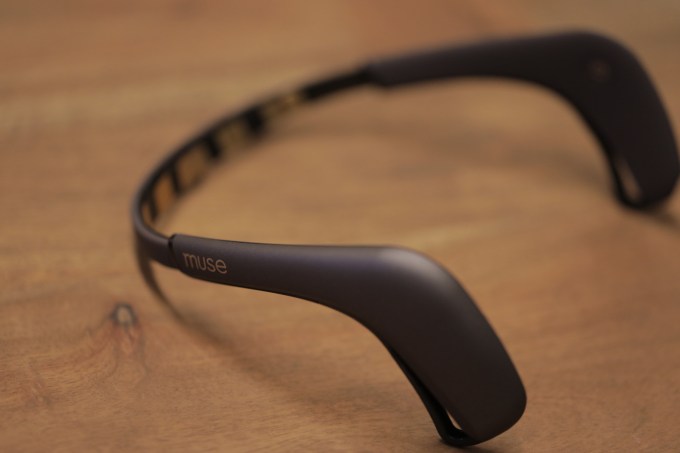
I’m bad at meditation. Like really, really bad. I may be the only person in the world who actually gets MORE anxious when I sit quietly with my thoughts. I’ve had mixed results with apps (Calm has been my go-to, of late), and while I initially balked at the idea of gamifying the process, I’ve actually found this wearable a useful tool in helping regain my focus, even when not wearing it.
Nancy by Olivia Jaimes

Nancy, Olivia Jaimes’ take on the octogenarian newspaper strip, feels too good for this world. Or at very least, too good for the hate-spewing comments section that follows it around on GoComics.com. You see, newspaper strips are like Ghostbusters or Star Wars. People want a fresh take on something familiar that’s somehow exactly the same as the original. Jaimes has the unenviable task of being the first woman to take on Ernie Bushmiller’s beloved strip, and some of the angrier corners of the internet have not been so kind — causing her to take on a forced anonymity. It’s not for lack of brilliance. Her take on the strip is often hilarious and frequently meta — exactly the sort of stuff we’d hope for Nancy and Sluggo.
Sharp Objects

I travel a lot and do around 75 percent of my movie watching on planes. Turns out you run out of reasonable movie choices pretty fast. Thankfully, I discovered this Showtime series at the beginning of a 16-hour flight back from Hong Kong and proceeded to watch the entire thing, front to back in one leg-cramping binge. It’s the only show that’s held my increasingly short attention span since last year’s Twin Peaks reunion. Sharp Objects leans less on the weird, but has enough left-field twists and turns to make it one of the most engaging series in recent memory.
Sarah Perez, Writer
DoublePane for macOS
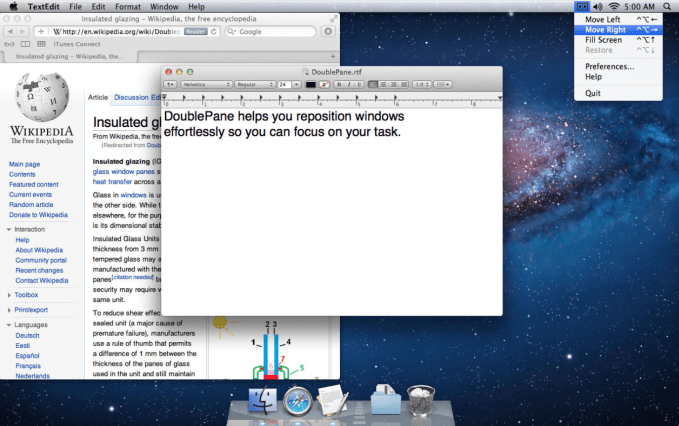
I’ve used this for years as a window manager for when I have to drop from 2 screens to 1. I realized how important it was to me this year, when it was one of the first installs on a new Mac.
This $11 clear case for my iPhone XR
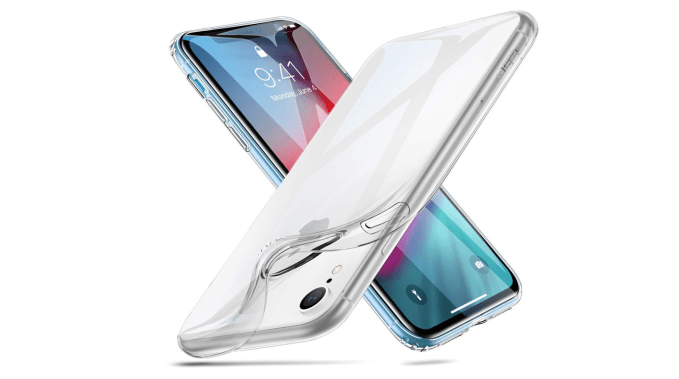
I mean, I drop my phone a lot and it’s not cracked yet, but feel free to spend 3x more on Apple’s version.
(also, +1 to what Greg said about PopSockets)
Bryce Durbin, Illustrator
All the Answers by Michael Kupperman
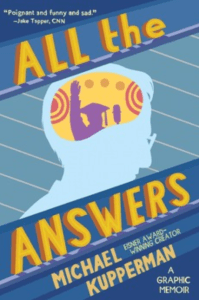
Michael Kupperman is known for hilarious, absurd comics such as Snake ‘n’ Bacon and Mark Twain’s Autobiography 1910-2010, but the author opens up about his own family history in this graphic memoir. His father is “quiz kid” Joel Kupperman, who became world-famous in his youth but retreated from the spotlight after adolescence. The memoir is beautifully rendered in stark black and white drawings as Kupperman tells his father’s life story in an effort to understand his own. Buy it here.
Meet My Friends The Friends
Meet My Friends The Friends is ostensibly a recap podcast about Friends, but you don’t have to like or know the ’90s sitcom to enjoy this.
Tom Scharpling (who also hosts The Best Show) tries to run a smooth ship that seems to be coming apart right from its launch due to infighting with his engineer(s). Running jokes about music cues, sound effects bumpers and fake ads for ridiculous companies and products build throughout the series. Unlike the sprawling Best Show, each episode of MMFTF is about 15 minutes.
Jordan Crook, Editor
Nanette by Hannah Gadsby

I’m a huge fan of stand-up comedy, but no special has ever touched my heart the way that Nanette did. Hannah Gadsby reimagines what a stand-up special can be. She feeds information to the audience bite by bite, whether it’s the sad reality of art history legends or her own personal stories, all the while narrating the underlying meaning of the special. Bottom line: Is it funny? Yes. Very. Does it go beyond funny to something more meaningful? Indeed, it does, and with a combination of authenticity and grace that are rarely paired so well.
Red Dead Redemption 2

If the holidays are a time for rest and reflection, heading into the new year means taking on new challenges. Red Dead Redemption 2 is great for both. It’s a laid back beautiful game that at times feels much more like a movie than a game, and yet the sheer volume of the game is most certainly a vast undertaking. It follows the story of a man, Arthur Morgan, but also the story of a time and place.
Brooklinen sheets

Growing up, my parents’ bed was always the best bed in the house. Not only was it a giant California King (which feels like a cruise ship to a six-year-old), but it was beautiful and had the most luxurious, soft sheets. The older I get, the more I feel pushed to make my bed just as luxurious, and Brooklinen has paved the way. The mix-and-match sheet sets are adorable, and they feel amazing. Plus, they’re pretty affordable.
Lucas Matney, Writer
Apple HomePod
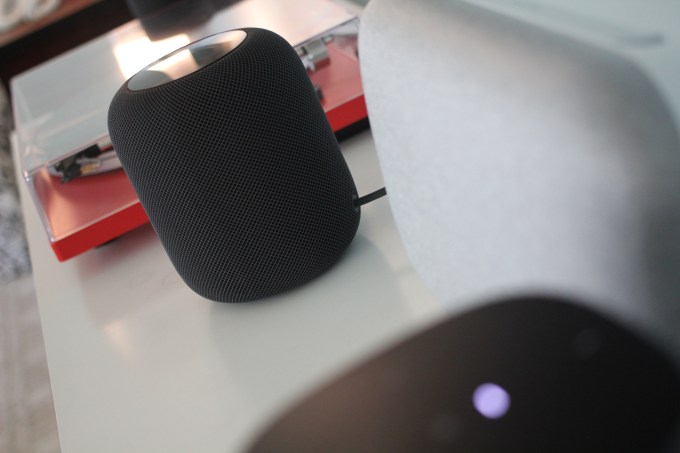
I am what most would call a smart speaker power user. Despite living in an apartment with few distinct rooms, I’ve somehow gotten addicted and am situated with a dwelling that has twice as many smart speakers as it does doors.
As such, I was super intrigued by the HomePod when it came out. I was already an Apple Music user because of the enhanced support for other devices, but I’ve really enjoyed the capabilities of the HomePod beyond its nepotistic relationship with Apple Music. The voice command isolation usurps similarly priced speakers, and the speaker is incredibly well-balanced, with solid bass and volume that fits my needs. Siri’s capabilities are getting there and hopefully Apple gets a little bit more aggressive with what bits are Siri-enabled in the next iOS release. Overall, I am still a big fan of Siri’s most custom-built hardware home.
Logitech Harmony Home Hub
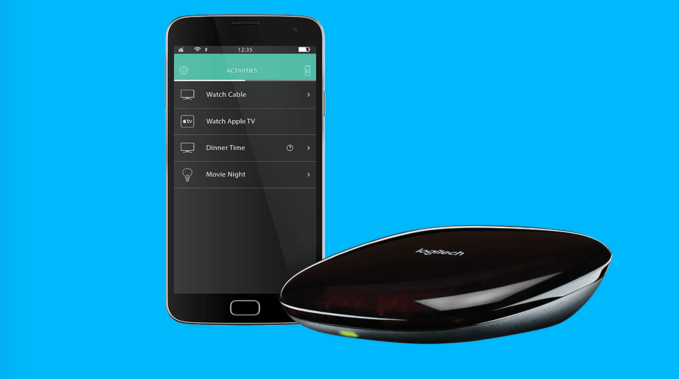
Combining home theater gear into a unified smart system is often the most frustrating tech task you can attempt. This year I picked up a Harmony Home Hub for about $50 and made everything a lot easier. The idea of controlling all of your gear with your phone is sometimes better in theory than it is in practice, but by using the IFTTT app you can create custom Google Assistant or Alexa controls for the Harmony Hub so that you can easily switch between audio and video outputs. I still keep my remotes around, but I’m able to do a good chunk of what I want with my voice.
Oculus Go

The perfect flight companion. I have spent a ton of time with VR headsets and, for the most part, it’s been time I wish I could get back. That being said, I’ve really liked traveling with Facebook’s Oculus Go headset on my last couple long-haul flights. A lack of self-awareness is something Santa can’t put under your tree, but spending 7 or 8 hours with a VR headset strapped to your face binging movies on an airplane is borderline magical if you can stomach the fact that you’ll end up being ridiculed in about a dozen tweets by the end of your flight.
Anthony Ha, Writer
The Leftovers

Friends — and regular listeners of our Original Content podcast — know that it takes a lot for me to stick around for more than one season of a TV show, even a show that I’m enjoying. (There’s just so much else to watch!) But this year, I finally caught up on seasons two or three of HBO’s The Leftovers, and I can now confidently state that it’s one of the best shows ever made.
Aside from maybe Twin Peaks, I can’t think of anything else that mixes goofy humor and existential despair, the surreal and the mundane, so effectively. Carrie Coon delivers an all-time great performance as Nora Durst, a woman whose entire family disappeared in the mysterious Sudden Departure, and when Justin Theroux sings “Homeward Bound,” it’s probably the most emotionally devastating karaoke performance you’ll ever see.
Forest
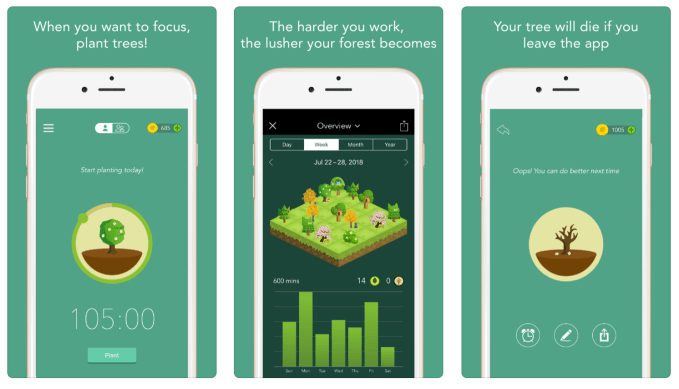
Like everyone whose working life has moved online, my concentration has been shot to hell, which is why I’ll happily try out anything with a halfway-decent chance of making me less distractible and more productive.
The Pomodoro technique (basically: you work without interruption in 25-minute intervals, then take short breaks) turns out to be less-than-ideal for covering breaking news, but it’s great for other, longer-form writing, like fiction. And while there are plenty of Pomodoro timers in the App Store, Forest has become my favorite, thanks to its playful design, and the cheerful scolding you get when you’re tempted to break concentration by checking your phone.

A year’s worth of Porsche Taycans are already reserved, mostly by Tesla owners
Porsche’s first all-electric sports car might be the most hotly anticipated vehicle of 2019. Even Tesla owners are hooked.
In a recent interview with CNET, Porsche North America president and CEO Klaus Zellmer said if everyone who has placed a deposit to pre-order the car actually buys it, the Taycan will be sold out in its first year of production.
Who are these early reservation customers? According to Zellmer, more than half have not owned or do not own a Porsche. More specifically, Zellmer said these potential customers are coming from Tesla .
The quote from CNET:
Typically, if we look at our source of business, people coming from other brands, it’s Audi, BMW, or Mercedes. The no. 1 brand now is Tesla. That’s pretty interesting, to see that people that were curious about the Tesla for very good reasons obviously don’t stop being curious.
Zellmer didn’t share any numbers or further details, however. It’s unclear how many deposits have been made or the number of Taycan vehicles Porsche will ultimately produce per year. Porsche previously planned to produce about 20,000 Taycans per year. Porsche CEO Oliver Blume told WirtschaftsWoche in November that demand for the Taycan prompted the automaker to increase production capacity without indicating by how much.
The Taycan is due to launch at the end of 2019.
Mark Zuckerberg is ‘proud’ of how Facebook handled its scandals this year
After the year Mark Zuckerberg’s had, you’d think he’d struggle to appear so chipper.
“I’m proud of the progress we’ve made,” he said in an end-of-year note posted on his Facebook page for everyone to see. Acknowledging that the social network played its part in the spread of hate speech, election interference and misinformation, Zuckerberg’s note seemed more upbeat about his response to the hurricane of hurt caused by the company’s laissez-faire attitude to world affairs and less concerned about showing contrition and empathy for the harm Facebook caused in the past year — including its inability to keep its users’ data safe and, above all else, its failure to prevent its site from being used to incite ethnic violence and genocide.
Zuckerberg’s tone-deaf remarks read like 1,000 words of patting himself on the back.
But where the Facebook co-founder pledged to “focus on addressing some of the most important issues facing our community,” he conveniently ignored some of the most damaging, ongoing problems that the company has shown little desire to solve, opting instead for quick fixes or simply pretending they don’t exist.
“More than 30,000 people working on safety…” isn’t enough to police the platform
A decade ago, Facebook had just 12 people moderating its entire site — some 120 million users. Now, the company relies largely on an army of underpaid contractors spread out across the world to moderate millions of potentially rule-breaking posts on the site each week.
Zuckerberg said the company has this year increased those working on safety to “more than 30,000 people.” That’s on top of the 33,600 full-time employees that Facebook had as of the end of September. But that’s a massive task to police Facebook’s 2.27 billion monthly active users. Those 30,000 new safety contractors equates to about one moderator for every 75,660 users.
Facebook’s contractors have long complained about long hours and low pay, and that’s not even taking into account the thousands of gruesome posts — from beheadings to child abuse and exploitation — they have to review each day. Turnover is understandably high. No other social network in the world has as many users as Facebook, and it’s impossible to know what the “right number” of moderators is.
But the numbers don’t add up. Facebook’s army of 30,000 safety staffers isn’t enough to combat the onslaught of vitriol and violence, let alone against an advanced adversary like the nation-state actors that it’s constantly blaming.
Facebook lost its chief security officer this year — and doesn’t want a replacement
Zuckerberg made no mention of the photo data exposure and account breaches that the company had to contend with this year, even if he couldn’t avoid mentioning Cambridge Analytica, the voter research firm that misused 87 million Facebook users’ information, just the once.
Yet, Zuckerberg made no commitment to doubling down on the company’s efforts to secure the platform, despite years of its “move fast and break things” mentality. Since the departure of former chief security officer Alex Stamos in August, the company hasn’t hired his replacement. All signs point to nobody taking the position at all. While many see a chief security officer as a figurehead-type position, they still provide executive-level insight into the threats they face and issues to handle — no more than ever after a string of embarrassing and damaging security incidents.
Zuckerberg said that the company invests “billions of dollars in security yearly.” That may be true. But without an executive overseeing that budget, it’s not confidence-inducing knowing that there’s nobody with the years of experience needed to oversee a company’s security posture in control of where those billions go.
There was no acknowledgement of Facebook’s role in Myanmar’s genocide
Fake news, misinformation and election meddling is one thing, but Zuckerberg refused to acknowledge the direct impact Facebook had on Myanmar’s ethnic violence — which the United Nations is calling genocide.
It can’t be much of a surprise to Zuckerberg. The UN said Facebook had a “determining role” in inciting genocide in the country. He faced questions directly from U.S. lawmakers earlier this year when he was told to testify to senators in April. Journalists are regularly arrested and murdered for reporting on the military-backed government’s activities. The Facebook boss apologized — which human rights groups on the ground called “grossly insufficient.”
Facebook said last week that it has purged hundreds of accounts, pages and groups associated with inciting violence in Myanmar, but continues to refuse setting up an office in the country — despite groups on the ground saying would be necessary to show it’s serious about the region.
“That doesn’t mean… people won’t find more examples of past mistakes before we improved our systems.”
Zuckerberg said in his note that the company “didn’t focus as much on these issues as we needed to, but we’re now much more proactive.”
“That doesn’t mean we’ll catch every bad actor or piece of bad content, or that people won’t find more examples of past mistakes before we improved our systems,” he said. Some have seen that as a hint that some of the worst revelations are yet to come. Perhaps it’s just Zuckerberg hedging his bets as a way to indemnify his remarks from criticism when the next inevitable bad news break hits the wires.
In his 1,000-word post, Zuckerberg said he was “proud” three times, he talked of the company’s “focus” four times and how much “progress” was being made five times. But there wasn’t a single “sorry” to be seen. Then again, he’s spent most of his Facebook career apologizing for the company’s fails. Any more at this point would probably come across as trite.
Zuckerberg ended on as much as a cheery note as he began, looking to the new year as an opportunity for “building community and bringing people together,” adding: “Here’s to a great new year to come.”
Well, it can’t be much worse than this year. Or can it?
‘Bird Box’ breaks a Netflix record with 45M+ people watching in its first week
Sandra Bullock’s star power can still sell a movie, apparently. Though reviews for the Netflix horror film “Bird Box” have been lukewarm — the movie has a respectable, but not outstanding, score of 65 percent on Rotten Tomatoes — it has still managed to break records for the streaming service, Netflix said this afternoon.
The company announced in a tweet that more than 45 million Netflix accounts have now streamed “Bird Box,” which set a new record for the best-ever first week for a Netflix film.
Took off my blindfold this morning to discover that 45,037,125 Netflix accounts have already watched Bird Box — best first 7 days ever for a Netflix film! pic.twitter.com/uorU3cSzHR
— Netflix Film (@NetflixFilm) December 28, 2018
Of course, many Twitter users then proceeded to joke that means well over 45 million have actually watched the movie because of Netflix password sharing.
That actually means 135,111,375 people have watched it
— Patty (@pmcakes22) December 28, 2018


And out of those 45 million accounts, 1 billion people have seen the movie. pic.twitter.com/gYTwZsqbmw
— Malika Parker (@MalikanParker) December 28, 2018
Netflix doesn’t tend to reveal its streaming numbers for its movies or its TV shows, except in cases like this when they’re worth sharing.
But for comparison’s sake, Nielsen’s third-party measurement service estimated that Netflix’s original movie “Bright” starring Will Smith saw 11 million viewers in its first three days — less than “Stranger Things” Season 2’s first three days, which pulled in 15.8 million viewers. Meanwhile, “The Cloverfield Paradox,” which Netflix acquired first-run rights to from Paramount, saw 5 million viewers in its first week.
“Bird Box” is doing much better.
Netflix, however, has always disputed Nielsen’s figures, because they don’t count mobile devices or computers, and only measure data in the U.S. But they’re all the industry has to go on for now.
As another less direct point of comparison, Netflix said this June that its Oscar-winning film “Mudbound,” released in November 2017, had been streamed for 20 million hours. And in October, Netflix said that more than 80 million subscribers watched at least one of its summer rom-coms over the past few months, like “Kissing Booth” or “To All the Boys I’ve Loved Before.”
“Bird Box’s” setting of a new Netflix streaming record is likely due to a combination of factors, none of which have much to do with it being a great film, in the traditional sense.
For starters, audiences seemed to like the film more than critics did, with a 74 percent audience score on Rotten Tomatoes. The film is boosted by the star talent of Sandra Bullock, who can still draw a crowd. The cast includes other known names, too, like “Get Out” star Lil Rel Howery, along with “Moonlight” stars Trevante Rhodes and John Malkovich.
That's the power of Sandra, baby. pic.twitter.com/hKp2JV9FKP
— andrew sanford (@arsnford) December 28, 2018
“Bird Box” is also riding a wave of high-concept horror movies. The film has been compared to the successful thriller “A Quiet Place,” which had monsters that hunted by sound while “Bird Box” monsters are a threat only if they’re seen — hence all the blindfolds.
The film has benefited from word-of-mouth recommendations, too, including one from Stephen King who suggested horror fans should ignore the critics‘ bad reviews. And it has been the subject of numerous memes, which made it something of a viral, cult sensation across social media. That could have prompted more people to watch just to get in on the joke.
Plus, the movie is a holiday release — it dropped on Netflix on December 21 — a time when many people are off work and have the time to stream.
The Very Slow Movie Player shows a film over an entire year
It seems someone took Every Frame a Painting literally: The Very Slow Movie Player is a device that turns cinema into wallpaper, advancing the image by a single second every hour. The result is an interesting household object that makes something new of even the most familiar film.
The idea occurred to designer and engineer Bryan Boyer during one of those times we all have where we are sitting at home thinking of ways to celebrate slowness.
“Can a film be consumed at the speed of reading a book?” he asked himself, slowly. “Slowing things down to an extreme measure creates room for appreciation of the object… but the prolonged duration also starts to shift the relationship between object, viewer, and context. A film watched at 1/3,600th of the original speed is not a very slow movie, it’s a hazy timepiece. A Very Slow Movie Player (VSMP) doesn’t tell you the time; it helps you see yourself against the smear of time.”
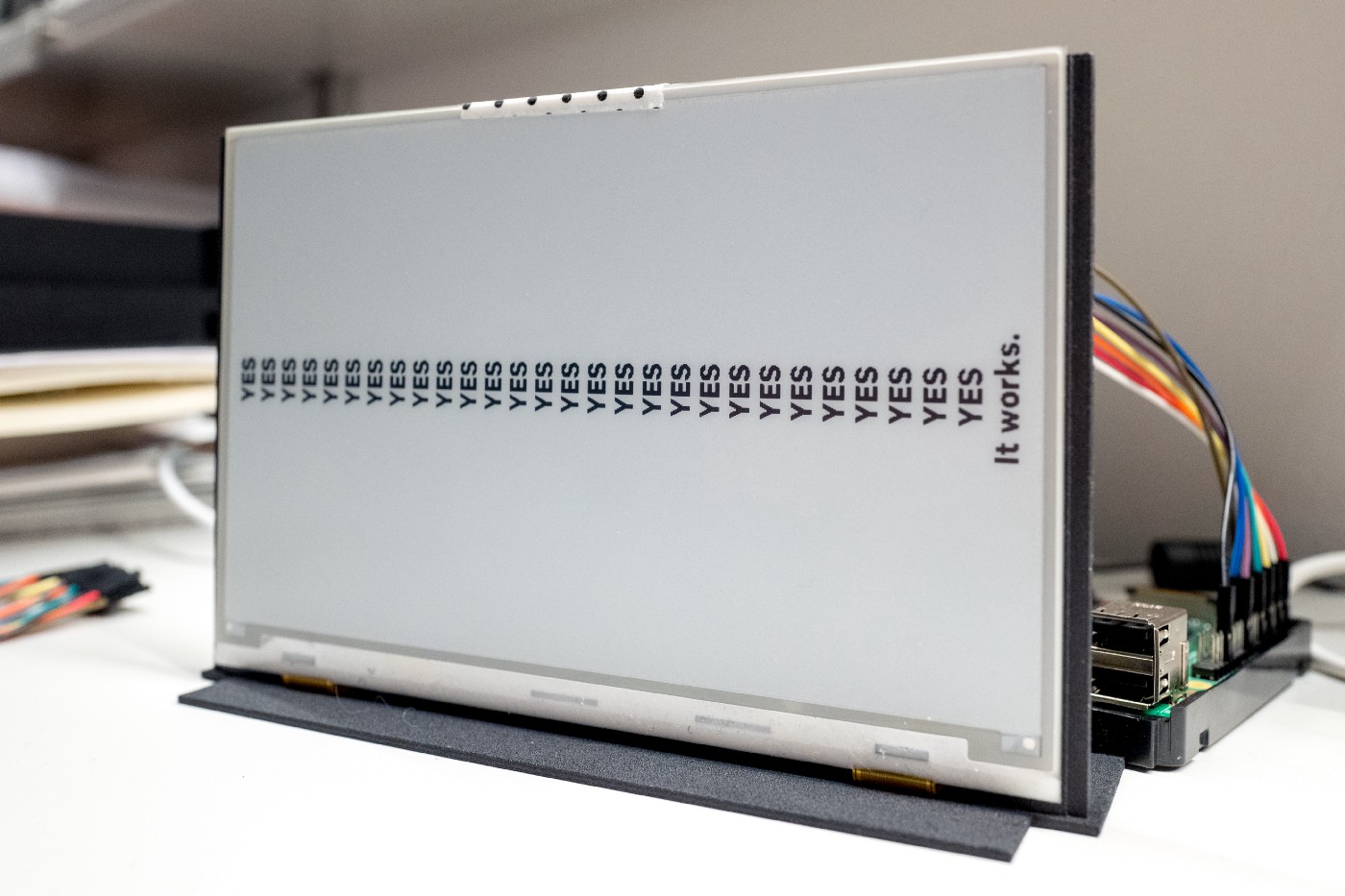
The Very Slow Movie Player is an e-paper display attached to a Raspberry Pi board; you load a movie onto the latter, and it processes and displays a single frame at a time, updating the screen with a new one every two and a half minutes.
That adds up to 24 frames per hour, as opposed to the usual 24 frames per second — 3,600 times slower than normal viewing, and producing a (perhaps) 7-or-8,000-hour tableau you view over the course of a year or so.
“It is impossible to ‘watch’ in a traditional way because it’s too slow. In a staring contest with VSMP you will always lose,” writes Boyer in a post explaining the project. “It can be noticed, glanced at, or even inspected, but not watched.”
He compares it to the work of Bill Viola, whose super-slow-motion portraits are similarly impossible to watch from start to finish (unless you’re very, very patient) and therefore exist in a sort of limbo between motion picture and still image.
The image itself leaves something to be desired, of course: e-paper is essentially 1-bit color depth — black and white. So the subtleties of color you might see in any film, color or no, will be lost to dithering.
The way it’s done helps highlight the contrasts and zones of a scene, though if you really want to appreciate Rear Window as cinema, you can watch it any time you like. But if you want to appreciate it as a process, as a relationship with time, as an object and image that exists in the context of the rest of the world and your life… for that, you have the Very Slow Movie Player.
Samsara banks $100M at a $3.6B valuation for its internet-connected sensors
Sensor data platform Samsara confirmed this morning that it had closed a new round of funding from existing investors Andreessen Horowitz and General Catalyst that values the startup at $3.6 billion.
The news was first reported by Cheddar, which spotted a filing with the state of Delaware on December 21 disclosing Samsara’s intent to raise a $100 million round at more than double the valuation it garnered upon its $50 million Series D this March.
“Our growth comes from bringing transformational new technologies to solve the problems of operational businesses, a massive segment of the economy that has long been underserved by the technology industry,” wrote Kiren Sekar, Samsara’s vice president of marketing and products, in the funding announcement. “Today, the advent of inexpensive sensors, high-bandwidth wireless connectivity, smartphones, and cloud computing enable these businesses to fully reap the benefits of 21st century technology.”
Founded in 2015, Samsara supports the transportation, logistics, construction, food production, energy and manufacturing industries with its internet-connected sensor systems, which helps businesses collect data and derive insights to improve the efficiency of physical operations.
The company’s co-founders are Sanjit Biswas and John Bicket, who previously launched Meraki, an enterprise Wi-Fi startup acquired by Cisco in an all-cash $1.2 billion deal in 2012.
Samsara’s latest financing brings the company’s total raised to $230 million. According to PitchBook, Andreessen Howoritz and General Catalyst are the only two private investors in the company, with Marc Andreessen and Hemant Taneja of General Catalyst representing the venture capital firms as lead investors on several Samsara deals.
San Francisco-based Samsara says revenue grew 250 percent in 2018 as its customer base swelled to 5,000. As for how it will deploy the new capital, the company plans to hire 1,000 employees, double down on AI and computer vision technology and open its first East Coast office in Atlanta.
The startup has yet to spend a dime of its last financing round, evidence it, like many other venture-funded startups, is pulling in capital before a market downturn strikes the industry and makes it increasingly difficult to raise hefty sums at impressive valuations.
“While the company already had a healthy balance sheet – we hadn’t dipped into our previous round of funding – the new capital enables us to accelerate long-term product investments and expand into new markets while continuing to maintain a strong balance sheet over the long term,” wrote Sekar.
Capsicum launches a beautiful daily planner for iOS
Calendaring and note-taking apps have never really filled the void left behind when we moved away from our old, paper-based daily planners to digital devices. But a newly launched iOS app called Capsicum may help to change that. Like real-world daily planners from years ago, Capsicum lets you not only track your events and to-dos, it also offers a place to track other things not tied to a specific date and time — like your larger, longer-term goals, journal entries and even your daily habits — like whether you made it to the gym, or remembered to take your vitamins.
The idea for the app comes from U.S. software engineer Ish ShaBazz, who was featured in the 2017 documentary “App: The Human Story,” and Australian designer Heidi Helen Pilypas. Both love beautiful planners and iOS apps, so around three years ago, they decided to work on a project that has now become Capsicum.
The app’s name refers to a bell pepper, which is why it’s in the logo.
However, the name was chosen because the Latin root “capsa” means “box.” And the app uses individual boxes — components — throughout its design for things like the weather, your events, to-dos and more.
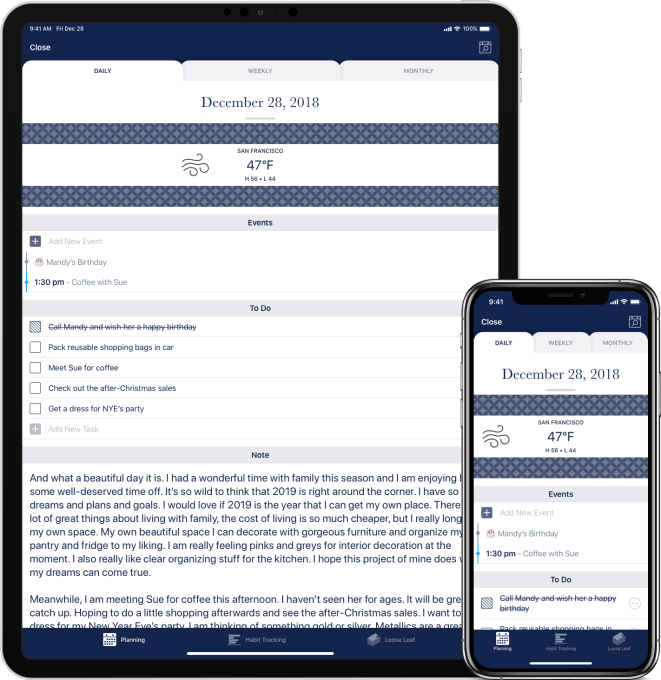
There are three main use cases for Capsicum, each with their own tab at the bottom of the home screen.
The daily planner section offers a home to your monthly, weekly and daily to-do lists.
This feels like a more natural way to plan things, in some cases — especially for writing down things that don’t have an exact time, like a reminder to make a doctor appointment or return your library books, for example. But you still need to slot those in around other events, like meetings or scheduled calls. Calendaring apps don’t have this sort of flexibility, which means we today turn to other apps — like to-do lists, Apple’s Notes or Reminders.
Capsicum, on the other hand, lets all these to-dos coexist in one place. Plus, you can sync Capsicum with Apple’s Calendars so you won’t miss your scheduled events.
As you complete your daily to-dos, you can check them off just as you could a list in Apple’s Notes.
However, if you don’t get them done, they can be moved over to another day.
Another section of the daily planner lets you jot down free-form notes. This can be used for journaling or just writing down other things you need to remember — like your thoughts, moods or health concerns, perhaps.
The app’s center tab allows you to get a better handle on your habits. This is a particularly handy feature for anyone with a list of New Year’s resolutions in search of a tracking app. Here, you can log when you complete a habit — like working out, hydrating, reading, etc. — which you can do with a tap or a Siri Shortcut.
You also can add notes to your habits and look back at patterns over time to see if you’re meeting your goals.
The other main tab in the app is “Loose Leaf,” which offers a larger page than the one in the daily planner’s notes section, for writing long-form journal entries or anything else you want to remember. This can be a place for personal writing, or a place to make lists that don’t belong on a particular day — like your bucket list, travel ideas, redecorating plans or others that aren’t immediate “to-dos.”
In time, the team says the Loose Leaf section will also include a sketch pad, too.
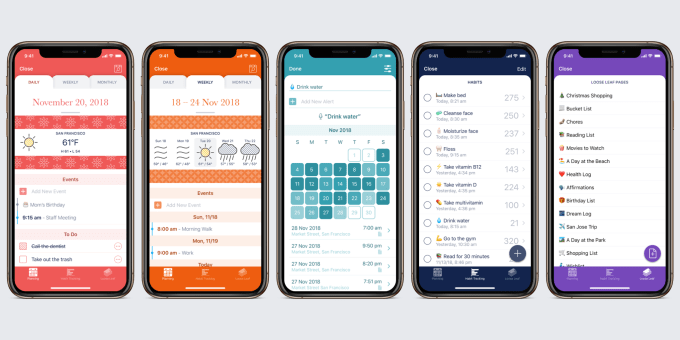
Capsicum can be personalized with beautiful covers, decorative tapes and headings to match your style, to make it feel more like your own notebook and not a generic app. And you can create more than one notebook in the app — in case you want to maintain separate notebooks by year or for work and personal life, for instance.
The app is well-designed and feels like it fits somewhere in-between the simplicity of jotting down an item in Notepad and the structure of adding events in Calendar. That said, it’s still hard to abandon a history of notes and reminders from other apps, which makes it hard to switch. Plus, the search feature is a time travel option where you have to put in a date — which means you may not want to use it for things you need to pull up by keyword.
Capsicum is a subscription-based app, offered at either $1.99 per month or $19.99 per year.
The app provides a 14-day trial, but unlike all other subscription apps, it doesn’t immediately begin charging you when the trial ends. If you decide you want to continue with Capsicum, you can choose to subscribe at any time.
911 emergency services go down across the US after CenturyLink outage
911 emergency services in several states across the U.S. went down after a massive outage at a CenturyLink data center.
The outage began after 12pm ET on Thursday, according to CenturyLink’s status page, and caused disruption across 911 call centers through Friday. Some states saw their services restored throughout the day. CenturyLink did not sy what caused the outage beyond an issue with a “network element,” but said around 11am ET on Friday that the company said that it was “seeing good progress, but our service restoration work is not complete.”
After 8pm on Friday, more than a day later, CenturyLink confirmed that “all consumer services impacted by this event, including voice and 911, have been restored.”
CenturyLink, one of the largest telecommunications providers in the U.S., provides internet and phone backbone services to major cell carriers, including AT&T and Verizon. Data center or fiber issues can have a knock-on effect to other companies, cutting out service and causing cell site blackouts.
In this case, the outage affected only cellular calls to 911, and not landline calls.
Several states sent emergency alerts to residents’ cell phones warning of the outage.
Who is #CRESA and what does this mean? How is 911 down. I don’t need to call but this is alarming pic.twitter.com/MB7f6iZTnn
— its_lady_kc (@its_lady_kc) December 28, 2018
Among the areas affected included Seattle, Washington and Salt Lake City, Utah. Several other states, including Idaho, Oregon, Arizona and Missouri, were also affected, local news has reported.
Many other police departments tweeted out alternative numbers for 911 in the event of an emergency.
Police in Boston, Massachusetts tweeted that their service was restored this morning.
UPDATE: Technical issues with the 911 system, and the resulting wireless capability outages, have been resolved. Massachusetts callers may resume using 911 from their cell phones for public safety emergencies. https://t.co/6AAeRdVxeN
— Mass State Police (@MassStatePolice) December 28, 2018
Ajit Pai, chairman of the Federal Communications Commission, which regulates and monitors 911 services, said the commission is investigating the outage.
“When an emergency strikes, it’s critical that Americans are able to use 911 to reach those who can help,” said Pai in a statement. “The CenturyLink service outage is therefore completely unacceptable, and its breadth and duration are particularly troubling.”
“I’ve directed the Public Safety and Homeland Security Bureau to immediately launch an investigation into the cause and impact of this outage. This inquiry will include an examination of the effect that CenturyLink’s outage appears to have had on other providers’ 911 services,” he said.
Updated at 9pm ET on Friday: with an update from CenturyLink, confirming the outage was resolved.