Apple’s App Store pulled in $1.22B over the holidays plus a record $322M on New Year’s

Apple today is sharing some good news in the wake of yesterday’s reveal of a significant, market-moving cut to its revenue forecast, attributed to declining iPhone sales in China’s slowing economy. The company says its App Store, at least, was having a good holiday. This year, customers spent $1.22 billion during the 2018 holiday season and broke a new single-day record on New Year’s Day.

The $1.22 billion in App Store spending occurred between Christmas Eve and New Year’s Eve, Apple said. This is typically the peak season for App Store consumer spend, as customers load up new iPhones and iPads with apps, and use their App Store Gift Cards to buy paid apps and games.

Apple also said customers spent more than $322 million on New Year’s Day 2019, which set a new record for single-day spend.

Over the holidays, games and self-care apps were the most popular categories, with Fortnite and PUBG among the most downloaded games, along with Brawl Stars, Asphalt 9 and Monster Strike, Apple said.

Meanwhile, as the New Year kicks off, customers are now turning to health and fitness apps, educational apps and productivity apps — likely to some extent inspired by their New Year’s resolutions. The apps leading these categories include 1Password, Sweat and Lumosity.

Last year, Apple also announced a record-breaking holiday season, with $890 million spent during the week of Christmas Eve and $300 million on New Year’s Day 2018.

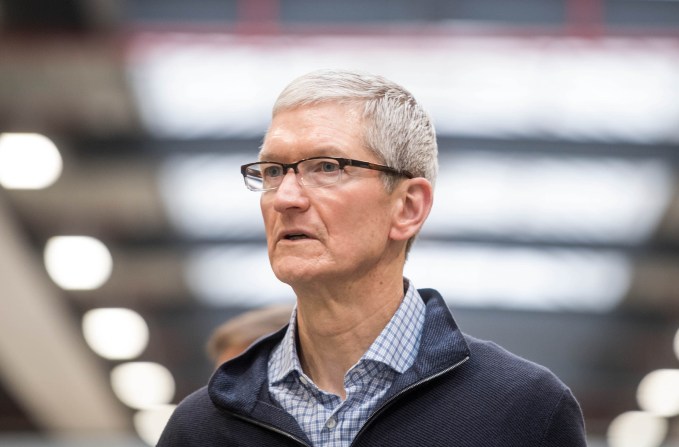
Apple CEO Tim Cook, in his letter yesterday, signaled that the App Store remains one of the bright spots in the company’s “Services” category, even as he delivered the crushing news of a slowdown in iPhone sales.

The company said it is now expecting $84 billion in the quarter that ended Saturday, down from its earlier estimate of $89 billion to $93 billion. However, “Services” generated more than $10.8 billion in revenue during the quarter, with each geography hitting a new quarterly record. The company noted, too, it’s still on track to achieve its goal of doubling the size of this business from 2016 to 2020.

Today, Apple said the “Services” business set all-time records beyond the App Store in Apple Music, Cloud Services, App Pay and the App Store’s search ad business.

A record-breaking end of the year for the App Store shouldn’t come as a surprise, given that the overall app economy is continuing to grow, with mobile games still driving revenues and the subscription app business also making gains. App Annie recently predicted app stores will surpass $122 billion globally in 2019, including the App Store, Google Play and third-party Android app stores in China, combined.

Prior to Apple’s report, app store intelligence firm Sensor Tower had last week noted that the U.S. App Store broke spending records on Christmas, with a record of $54 million on that day alone — up 31 percent over the year before. It had also passed the $52 million spent on Black Friday 2018, the firm said.

Apple typically releases an App Store holiday report at this time of the year, so its release today isn’t necessarily an attempt to create good press a time when its stock is crashing. But given Apple’s usual attempts at spin, it may be seen that way.

Scratch 3.0 is now available

The only kids’ programming language worth using, Scratch, just celebrated the launch of Scratch 3.0, an update that adds some interesting new functionality to the powerful open-source tool.

Scratch, for those without school-aged children, is a block-based programming language that lets you make little games and “cartoons” with sprites and animated figures. The system is surprisingly complex, and kids have created things like Minecraft platformers, fun arcade games and whatever this is.

The new version of scratch includes extensions that allow you to control hardware, as well as new control blocks.

Scratch 3.0 is the next generation of Scratch – designed to expand how, what, and where you can create with Scratch. It includes dozens of new sprites, a totally new sound editor, and many new programming blocks. And with Scratch 3.0, you are able to create and play projects on your tablet, in addition to your laptop or desk computer.

Scratch is quite literally the only programming “game” my kids will use again and again, and it’s an amazing introduction for kids as young as pre-school age. Check out the update and don’t forget to share your animations with the class!

Cloudera and Hortonworks finalize their merger

Cloudera and Hortonworks, two of the biggest players in the Hadoop big data space, today announced that they have finalized their all-stock merger. The new company will use the Cloudera brand and will continue to trade under the CLDR symbol on the New York Stock Exchange.

“Today, we start an exciting new chapter for Cloudera as we become the leading enterprise data cloud provider,” said Tom Reilly, chief executive officer of Cloudera, in today’s announcement. “This combined team and technology portfolio establish the new Cloudera as a clear market leader with the scale and resources to drive continued innovation and growth. We will provide customers a comprehensive solution-set to bring the right data analytics to data anywhere the enterprise needs to work, from the Edge to AI, with the industry’s first Enterprise Data Cloud.”

The companies describe the deal as a “merger of equals,” though Cloudera stockholders will own about 60 percent of the equity in the company.

The combined company expects to generate more than $720 million in revenue from its 2,500 customers that rely on it to help them manage the complexities of processing their data. While Hadoop itself is open source and freely available, Cloudera and Hortonworks abstract away most of the infrastructure. Both focused on slightly different markets, though, with Hortonworks going after a more technical user and a pure open-source approach, while Cloudera also offered some proprietary tools.

“Together, we are well-positioned to continue growing and competing in the streaming and IoT, data management, data warehousing, machine learning/AI and hybrid cloud markets,” said Hortonworks CEO Rob Bearden back when the deal was first announced. “Importantly, we will be able to offer a broader set of offerings that will enable our customers to capitalize on the value of their data.”

Daily Crunch: AR startups face an uneasy future in 2019

The Daily Crunch is TechCrunch’s roundup of our biggest and most important stories. If you’d like to get this delivered to your inbox every day at around 9am Pacific, you can subscribe here:

1. Magic Leap and other AR startups have a rough 2019 ahead of them 

2018 was supposed to be the year where the foundation of AR was set to expand, but now it looks like momentum has been sucked out of the industry’s heavy hitters.

2. Sorry I took so long to upgrade, Apple 

Apple missed Wall Street’s Q1 sales projections yesterday and the company blamed faltering sales in China for the reason behind the drop. But let’s not kid ourselves; anyone who has an iPhone now is part of the problem. As essential as these devices have become to our lives, it’s too hard for many consumers around the world to justify spending more than $1,000 for a new phone.

BERND THISSEN/AFP/Getty Images

3. China’s lunar probe makes history by successfully soft-landing on the far side of the moon

China crossed a major milestone in space exploration last night by becoming the first country to land a probe on the far side of the moon. Named after the Chinese moon goddess, Chang’e 4 will use a low-frequency radio to survey the terrain of the moon.

4. Mary Meeker targets $1.25B for debut fund, called Bond

With Bond, Meeker is set to be the first woman to raise a $1 billion-plus VC fund.

5. Money is no object: China’s Luckin sets sights on rivaling Starbucks 

Caffeinated drinks are taking off in the tea-drinking nation. Luckin, which is only a year old, has announced an ambitious plan to topple Starbucks and expand to 6,000 stores by 2022.

6. 10 predictions on the future of gaming in 2019 

Will the gaming industry clutch up in 2019?

7. Segway unveils a more durable electric scooter and autonomous delivery bot 

Segway’s Model Max scooter is designed to help services like Bird and Lime reduce their respective operating and maintenance costs, while its new Loomo delivery bot is made for autonomous deliveries for food, packages and other items.

The NFL launches its first standalone voice app with ‘A Rookie’s Guide to the NFL’ for Alexa

The NFL is giving voice assistants a go. Earlier this year, the organization tested the waters with the launch of a flash briefing called “NFL in :60,” but today the company is debuting its first standalone voice-enabled app. The new Alexa skill, “A Rookie’s Guide to the NFL,” is designed to serve as a companion that guides fans through the 2019 NFL playoffs and postseason, the organization says.

The skill itself was built in-house over the past several months by the NFL’s Digital Lab, an area within the league’s media group that develops tech products and features to advance the fan experience. Voice technology is currently an ongoing area of focus for this group.

And today’s launch of the “A Rookie’s Guide to the NFL” voice skill for Alexa is only the first phase of the NFL’s larger voice strategy, the league notes.

Fans who enable the skill will have access to more than 1,000 football and NFL-related terms, across areas like the rules, positions, formations, equipment, players and key personnel. This aspect of the skill is aimed more at getting newcomers up to speed with football jargon, like “pistol,” “screen pass,” “nickel” and other terms.

Fans also can ask for general information about the players, like “Who is Tom Brady?” or “Where did Lamar Jackson go to college?” or “How tall is Russell Wilson?,” for example. And they can ask for game schedules, matchups, game times, TV network, scores, as well as information about the stadiums, which teams are in a given conference or division, who the head coaches are and much more.

The skill is able to recall Super Bowl history, too, offering the score, location and date of any of the past 52 Super Bowls, as well as the Super Bowl MVP and the halftime act from every game.

When responding to questions, the skill can return answers in a variety of forms, including both as short and longer (“Go Long”) definitions, or as videos and images on Alexa devices with screens.

The skill additionally includes a five-minute podcast called “Game Plan” that preps fans for each round of the playoffs and the Super Bowl. The audio program is hosted by former New York Giants defensive end Osi Umenyiora and other NFL talent. The game previews will offer player and coach audio, key stats and audio from a great historical play, among other things.

The podcast will add new episodes every Monday during the postseason through the Super Bowl, the NFL says.

The previously launched NFL flash briefing is now integrated as a part of this skill, and is updated multiple times per day with news from the NFL Network’s news desk. To access it from the skill, fans can just say, “give me the news.”

This isn’t the first time that Alexa has been able to offer NFL news and information to fans, however.

Last fall, an Alexa update allowed the smart assistant to answer questions about the major NFL teams. Alexa can also answer sports trivia, give predictions on games, provide updates on team transactions and injuries, recap NFL games and more.

The Alexa skill store is also filled with a number of unofficial third-party skills, like trivia apps, quizzes, flash cards, Q&A apps, news readers, countdowns and more.

It seems the NFL now wants to more directly own that customer experience, rather than leaving it up to Alexa or other developers to handle.

The new skill is launching today, January 3, across the Alexa Skill Store in the U.S., U.K. and other countries. The rollout to the U.S. was delayed but the app has now gone live. 

Image credit: NFL via NFL.com/voice; post updated after publication to indicate when the U.S. skill launched.

Apple stock has dropped 38 percent in 90 days

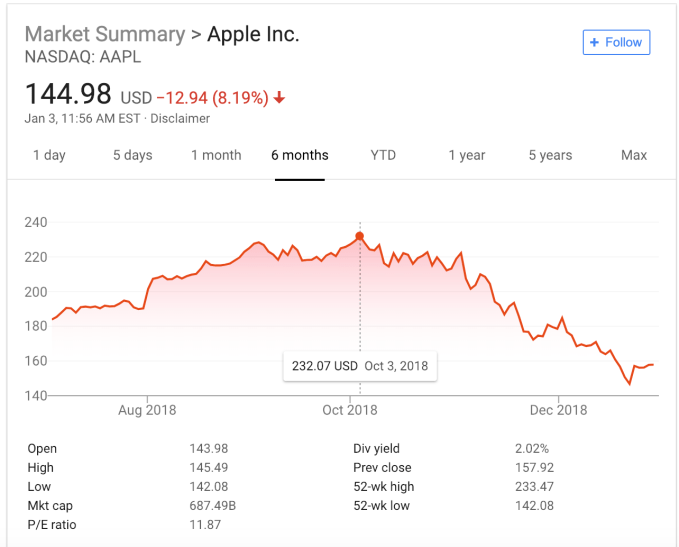
Apple stock was down more than 9 percent overnight and continued the downward trend in trading this morning. In fact, the company’s stock price is down a total of 38 percent since October. This, after the company halted trading yesterday afternoon to provide lower guidance for upcoming earnings. As the iPhone upgrade market softened, it was having a big impact on revenue, at least in the short term, and Apple stock took a big hit as a result.

On October 3, the stock was selling at 232.07 per share, and while the price has fluctuated and the market in general has plunged in that time period, the stock has been on a downward trend for the past couple of months and has lost approximately $87 a share since that October high point.


Last night, before the company briefly stopped trading to make its announcement, the stock stood at $157.92 a share. This morning as we went to publication, it was recovering a bit, but was still down 8.19 percent to $144.981.

D.A. Davidson senior analyst Tom Forte says yesterday’s announcement, while not completely unexpected, was surprising, given Apple’s traditionally strong position. “We knew that iPhone unit sales were weak, but just not how weak,” he said.

The biggest factor in yesterday’s announcement, in Forte’s view, was China, where he says the company generates 20 percent of its sales. As the U.S.-China trade war drags on, it’s having an impact on these sales. This could be because of a combination of factors, including a weakening Chinese economy as a result of the trade war, or patriotism on the part of Chinese consumers, who are choosing to buy Chinese brands over of the iPhone.

This also comes at a time when Apple had already indicated that iPhone sales were weak in other worldwide markets, including India, Russia, Brazil and Turkey. This already helped weaken the iPhone sales worldwide, although Forte still sees the Chinese market as the biggest factor in play here.

Forte says that in spite of the soft iPhone performance, the good news is the rest of the product portfolio is up 19 percent, and that could bode well for the future. What’s more, the company has set aside $100 billion for stock buy-back purposes. “They have the balance sheet. They have the stock buy-back program. They still generate very significant free cash flow, and if the individual investor won’t buy the stock, then the company will buy the stock,” he explained.

In a report released this morning, financial analysts Canaccord Genuity believe that in spite of yesterday’s report, the company is still fundamentally sound and they continue to recommend a BUY for Apple stock. “We maintain our belief Apple can expand its leading market share of the premium-tier smartphone market and the iPhone installed base (excluding refurbished iPhones) will exceed 700M in 2018. This impressive installed base should drive iPhone replacement sales and earnings, as well as cash flow generation to fund strong long-term capital returns. We reiterate our BUY rating but decrease our price target to $190 based on our lowered estimates,” the company wrote in a report released this morning.

Forte says the unknown-unknown here is how the U.S.-China trade war plays out, and as long as that situation remains fluid, the company might not recover that income in the near term in spite of stronger sales across the catalog.

GE adds a bunch of Google Assistant-friendly smart home products

This year’s CES is already shaping up to be another big show for smart home devices, with the Amazon Alexa/Google Assistant showdown in the center ring. GE bought into the Alexa ecosystem fairly early on and got on-board with Google Assistant more recently.

At the Pixel 3 event back in October, the company announced that its C by GE bulbs were the first to carry Made by Google certification with Home functionality built-in right out of the box. At CES this year, the company will show a bunch more products, effectively tripling the size of the C by GE line.

In addition to the standard bulbs announced in the fall, the company’s also releasing full-color lights with millions of color options, available in a handful of configurations, including a lighting strip.

Also new is a GE light switch, which allows for remote dimming of standard bulbs, along with a smart plug and a motion sensor that controls the room’s lighting via movement and ambient light. All of the above are compatible with Home devices without the need for a separate smart home hub. They’ll also work with Amazon Alexa and Apple’s HomeKit. The lights aren’t cheap, running between $40 and $75. The smart plug, meanwhile, costs $25. Other prices are still TBA. 

A look inside the Taipei 101 New Year’s Eve fireworks show as it goes green

One of the tallest buildings in the world, Taipei 101’s New Year’s Eve fireworks have become an iconic celebration since the first show at the end of 2004. But despite being a major tourism draw, the fireworks haven’t been immune from criticism.

Over the past couple of years, as poor air quality becomes an increasingly serious issue throughout the country, the show has been targeted by Taiwanese environmental groups. The major of Taipei City, Ko Wen-je, said at the beginning of this year that the fireworks show should continue and other, more permanent measures against air pollution should be taken. “There are 365 days in a year,” he told reporters. “But the firework display was only 300 seconds, so we need a long-term plan to solve this problem.”

As one of the tallest LEED-certified buildings, however, Taipei 101 often serves as a case study for how landmark skyscrapers can reduce their carbon footprint, and it has been taking steps to reduce pollution from the show while keeping it a spectacle. A couple weeks ago, a group of bloggers and reporters was invited to take a look at this year’s preparations. (All photos in this story, with the exception of the one at the bottom featuring last year’s show, are by Garret Clarke.)

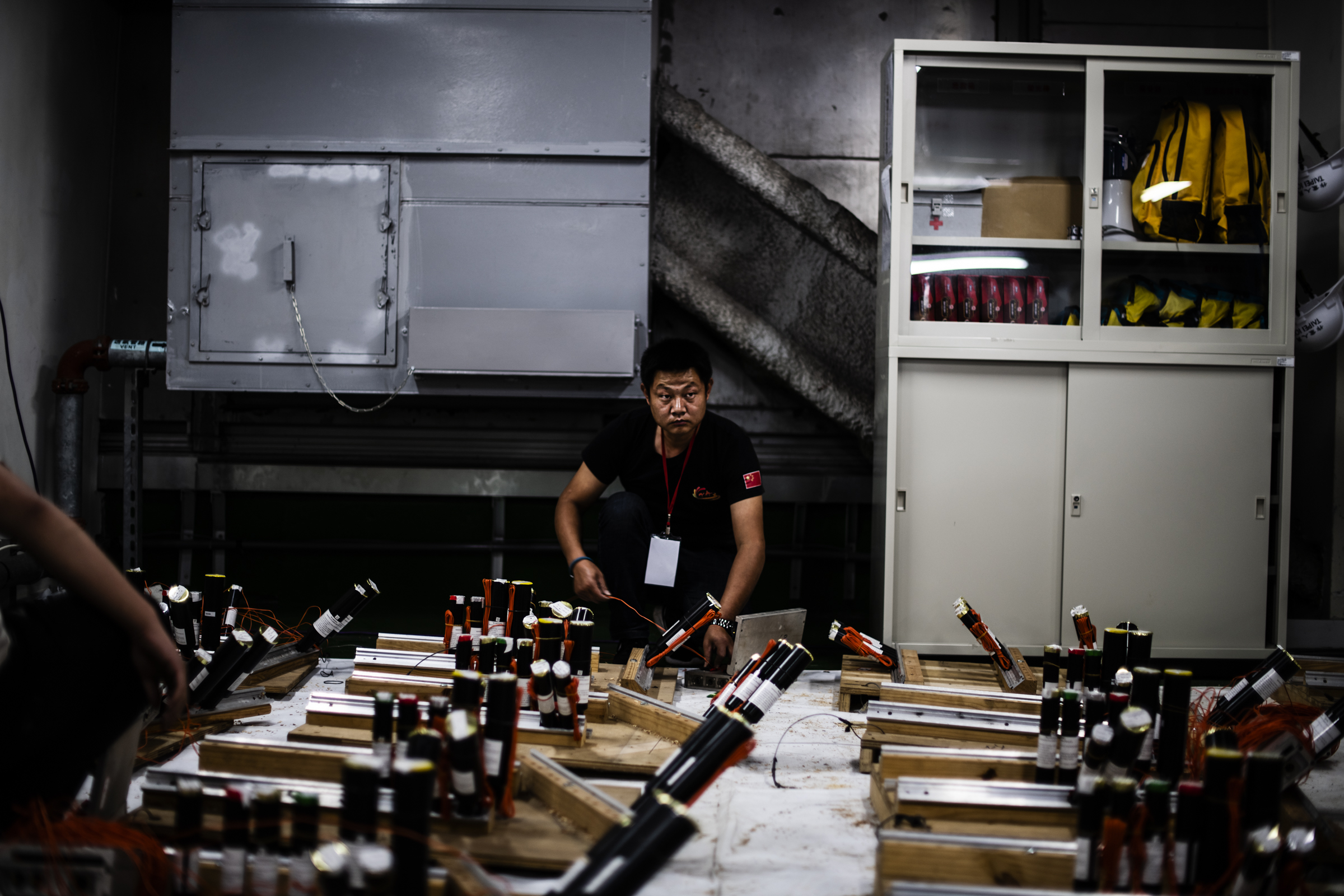
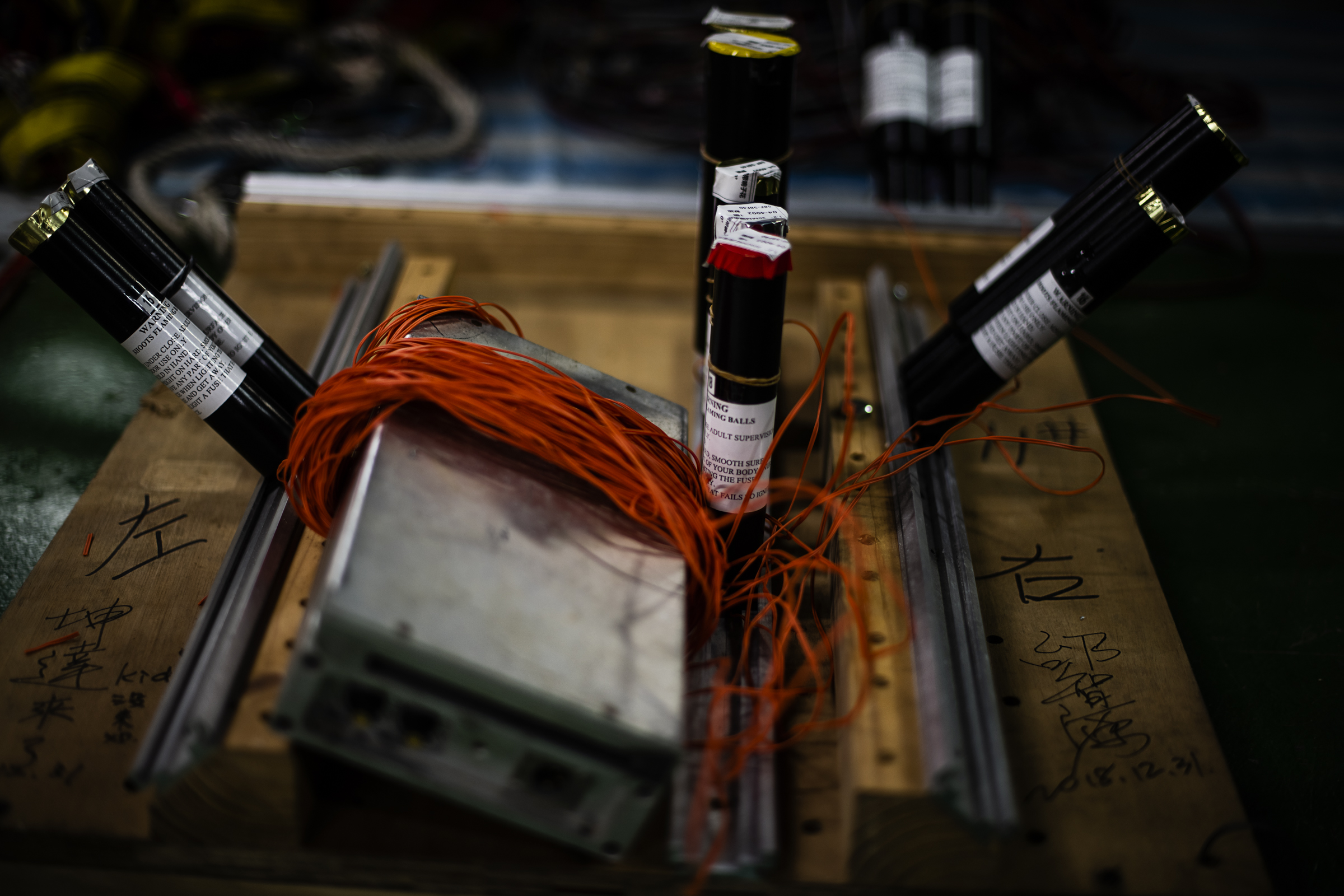
A technician with some of the fireworks that will be part of Taipei 101’s show.

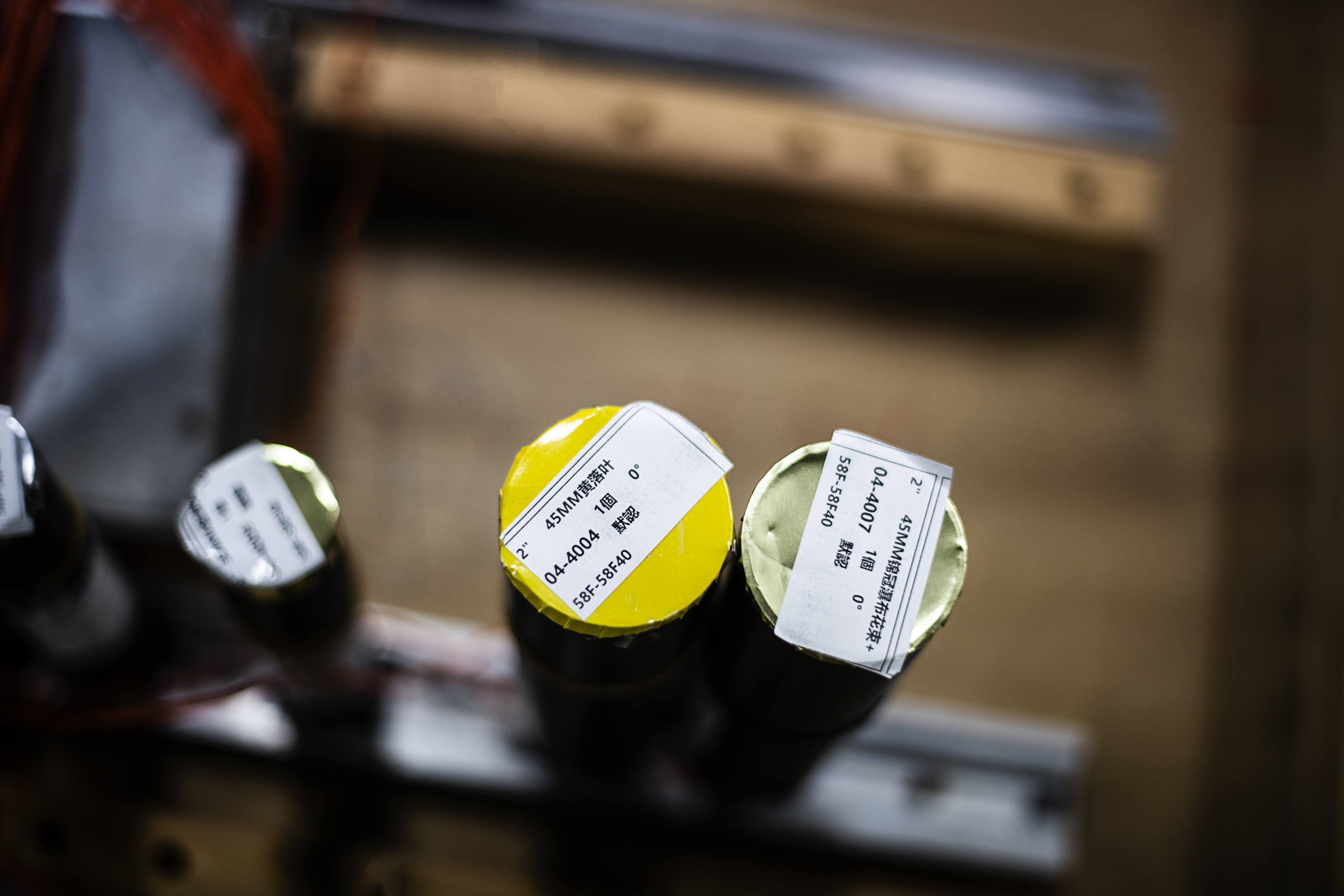
16,000 fireworks will be used in this year’s show and preparations are usually finished by Dec. 28.

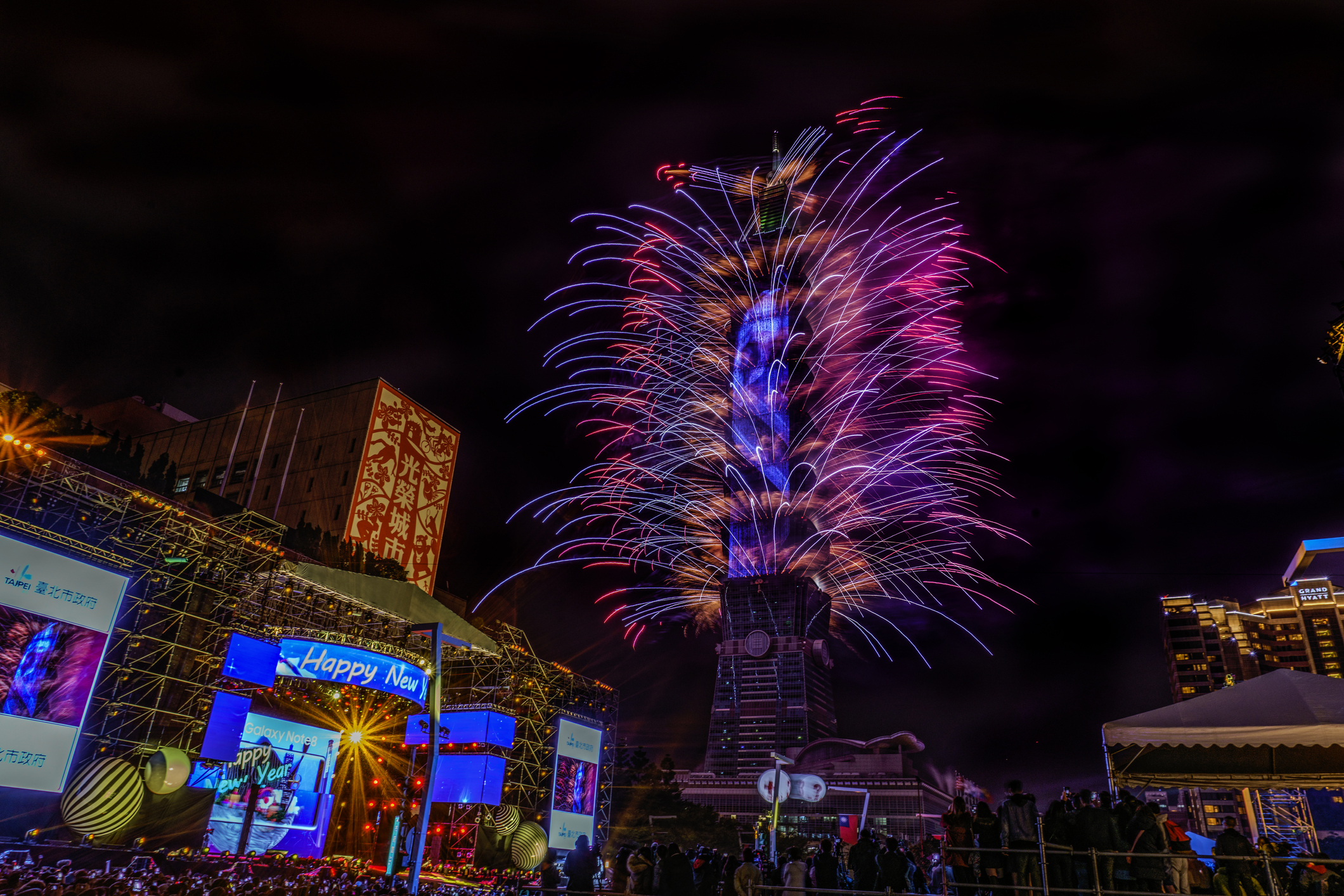
Over the past couple of years, the organizers of Taipei 101’s fireworks show have taken several measures to reduce pollution. Starting with last year’s show, the number of fireworks was reduced from 30,000 to 16,000. To add oomph to the reduced pyrotechnics, a 55-story-tall mesh screen made up of 140,000 LEDs, called a T-Pad, was installed by Taipei 101 fireworks contractor Giant Show on the north side of the skyscraper. The LED screen overlooks the plaza outside of Taipei City Hall where a New Year’s Eve concert is held every year and showcases animations that coordinate with the music and fireworks.

The LED screen is used during the rest of the year for promotions, advertisements and holiday messages

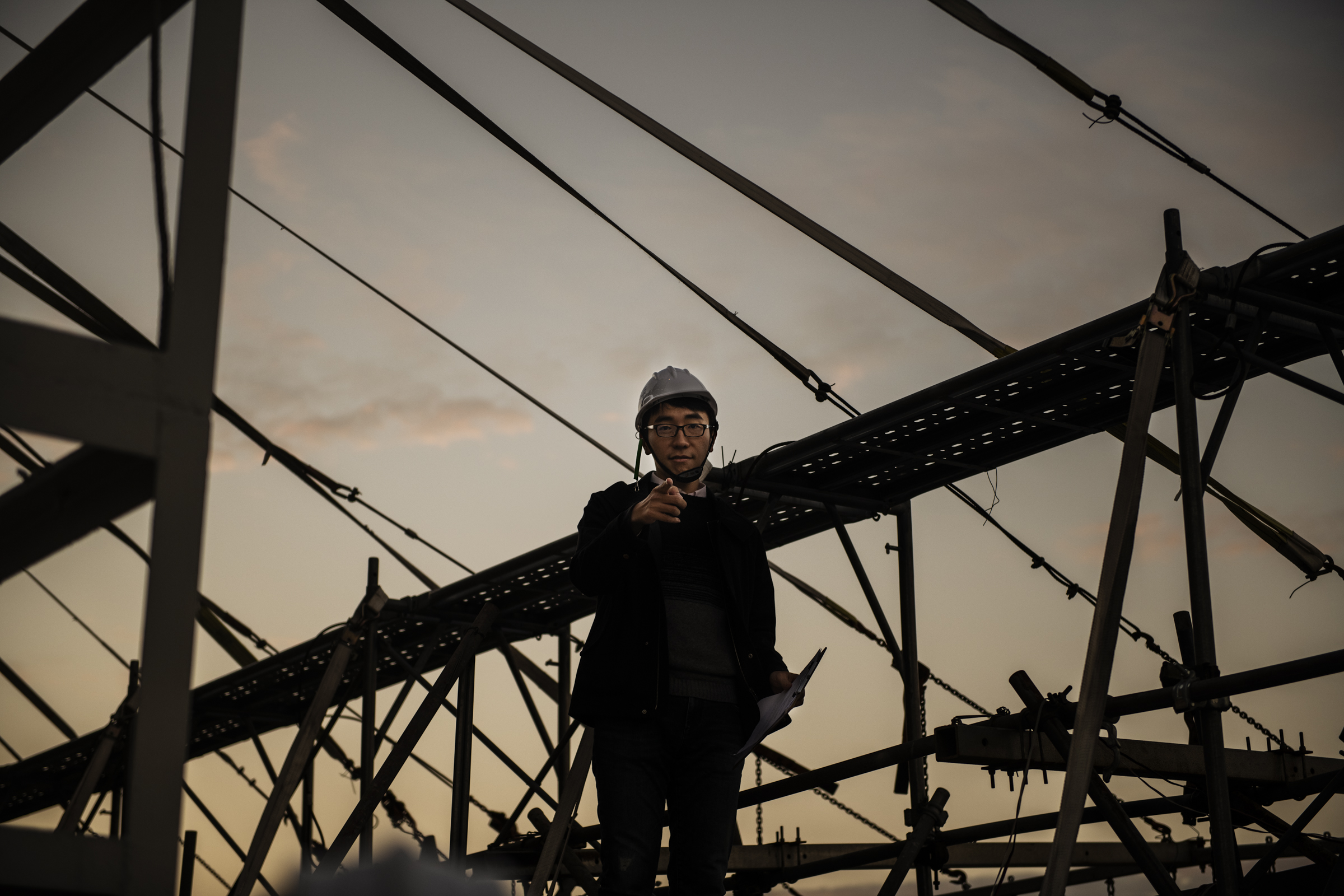
Andy Yang, head of corporate branding and communications for the Taipei Financial Center Corp., Taipei 101’s owner, told TechCrunch that this year’s show cost a total of about NTD $60 million (about USD $1.96 million). It will also include 16,000 fireworks, installed from the 34th to 91st floors of Taipei 101, and animations on the T-Pad. The team that plans the show includes 10 to 15 designers and about 50 pyrotechnicians who install the fireworks on the exterior of the building. Preparations are typically completed by Dec. 28.

Andy Yang stands in front of the scaffolding that leads up to Taipei 101’s 55-story-tall LED mesh screen

Yang says Taipei 101 has been decreasing the number of fireworks used year by year. The LED screen is currently only on one side of Taipei 101, but Taipei 101’s management is exploring the possibility of extending it to other sides of the building.

Taipei 101’s fireworks show at the end of 2017, with the LED screen in view. (kecl/Getty Images)

Taipei 101 also instates an “all lights off” policy, turning off all exterior lights before and after the show in order to reduce carbon emissions. The LED screen not only enables Taipei 101 to reduce the number of fireworks used, but also enables the integration of pyrotechnics, animations, music, and lights into one show, “which brings more design and content opportunities and possibilities for Taipei 101 and Taiwan,” he says.

Here’s how to play a game from Black Mirror’s Bandersnatch episode

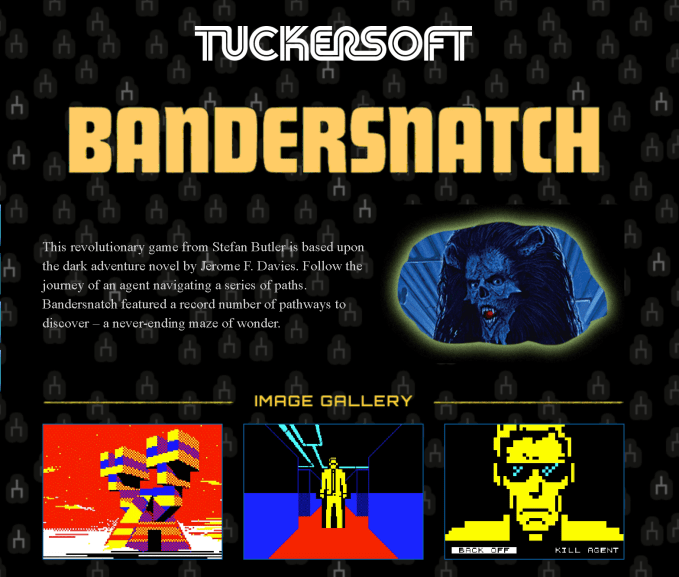
If you’ve gone down the rabbit hole with Netflix’s latest Black Mirror release, there’s (at least) one more easter egg out there. As some intrepid Reddit users discovered, you can actually visit two different versions of fictional software company Tuckersoft’s website and… spoilers ahead.

On the regular Tuckersoft site, discovered through a QR code embedded in the show itself, Tuckersoft advertises its game lineup including Bandersnatch, a “revolutionary game from Stefan Butler.” In this timeline, Tuckersoft released both Nohzdyve and Bandersnatch and Stefan eventually eclipsed his gaming idol Colin’s own fame, driving the company forward. As the site notes:

“While Colin Ritman was Tuckersoft’s leading man, it was Stefan Butler’s 1984 release, Bandersnatch, that catapulted the company to new heights. The innovative narrative and gameplay transformed interactive entertainment forever.”

If you visit the Tuckersoft site but strip out the www., the company never released Colin’s game due to a tragic incident. If you’ve seen the episode, you can probably guess what that was. This version of the site includes the following text:

“A bleak turn of events would lead to the abrupt cancellation of Colin Ritman’s highly-anticipated game, Nohzdyve, and the end of Stefan Butler’s promising career.

“Metl Hedd remains a classic, but the world will have to wonder what Nohzdyve was like. Rumour has it, an early version of the game is somewhere out there, waiting to be played for the first time.”

Black Mirror fans will note that the fictionalized site for Colin’s other major title, Metl Hedd, depicts the BigDog-like robots that terrorized humans in season four’s particularly harrowing episode “Metalhead.” Tuckersoft’s other games contain plenty of references to Black Mirror episodes too.

In the timeline in which Colin was able to finish Nohzdyve, the game’s sub-page has a download link for a file called nohzdyve.tap and the instructions to “Play Nohzdyve on your ZX Spectrum emulator.” Apparently, the file works and if you run Windows and you’re willing to install an emulator (like Speccy) for the obscure British 8-bit console, you can actually play Colin’s rather prescient release. We’re told it might work on a Commodore 64 emulator too, but haven’t tested that out (yet).

So far it doesn’t look like Bandersnatch is playable anywhere, but given that the episode itself is a game and the game itself results in certain horror, that’s probably for the best.

Investors and entrepreneurs need to address the mental health crisis in startups

Colin Kroll, was the co-founder of Vine and HQ Trivia, both consumer sensations that brought joy to millions; Anthony Bourdain, had been a chef, journalist and philosopher, who brought understanding and connectedness to millions of lives; while Robin Williams built a career as a brilliant comedian and actor.

What these three share in common is that they were all people at the pinnacle of their industry and they all died too soon. Their premature loss is a tragedy.

The most brilliant and creative amongst us are sometimes the most troubled and nowhere is that clearer than in the entrepreneurial ecosystem. With each passing unnecessary death the importance of mental health comes briefly into focus… but that focus lasts no longer than a news cycle and nothing changes. The time for lip service came and went long ago. We must take these issues seriously and we need to act.

The mental health epidemic is real. There are 18.5% Americans that will suffer from mental illness this year, 4% of them will suffer so acutely that it will substantially limit their ability to live their lives.

That means it is extremely likely you or someone you know is suffering right now and could use support. Moreover, unlike many of the challenges we face today, the most common expressions of mental health disorder (anxiety, depression, substance abuse and imposter syndrome) are largely addressable through individual action. Not only should we all take action, we all cantake action.

While national mental health statistics are troubling, they are downright terrifying for entrepreneurs. According to a study by Michael Freeman, entrepreneurs are 50% more likely to report having a mental health condition with some specific conditions being incredibly prevalent amongst founders.

Founders are:

  • 2X more likely to suffer from depression
  • 6X more likely to suffer from ADHD
  • 3X more likely to suffer from substance abuse
  • 10X more likely to suffer from bi-polar disorder
  • 2X more likely to have psychiatric hospitalization;
  •  and 2X more likely to have suicidal thoughts

Photo courtesy of Flickr/Thomas Shahan

Addressing the ongoing mental health catastrophe in entrepreneurship is a moral imperative, and for wise investors, it should be a function of doing business.

Venture capitalists make their living off of the blood, sweat, and tears of founders. It is through their passion and efforts that we succeed or fail. We can either choose to see founders purely as a means to an end (generating returns) or we can see them as the whole people they are.

When I make an effort to get to know our founders beyond the most superficial level then I cannot help but be moved by their personal struggles. Seeing founders in our portfolio succeed on a personal level is just as rewarding for me as sharing in their professional success. Luckily, I believe the two are intrinsically linked, which means we don’t have to choose.

 As Michael Freeman writes:

“Mental health is as essential for knowledge work in the 21st century as physical health was for physical labor in the past. Creativity, ingenuity, insight, brilliance, planning, analysis, and other executive functions are often the cognitive cornerstones of breakthrough value creation by entrepreneurs.”

Depression, anxiety and mood disorders all actively work to undermine founder performance. They often contribute to burnout, co-founder conflict, toxic company culture, increased employee turnover, an inability to hire top talent, an inability to “show up” for important meetings and pitches and poor decision making in general. According to Noam Wasserman at HBS, 65% of failed startups fail for avoidable reasons like co-founder conflict. All of these experiences are exacerbated when founders are in a time of high mental and emotional strain.

Let’s assume that in a portfolio of 20 companies 15 of them fail or underperform and that Noam Wasserman’s 65% statistic holds true. That would mean that 10 of the 15 companies (65%) failed for avoidable “human centric” reasons. If a firm were able to help even half of those companies avoid failure caused by burnout and mental strain that would mean an additional five companies would be successful, doubling the number of successful outcomes in the portfolio.

Even if you’re a huge pessimist, to help change the trajectory for one out of ten companies, changes the portfolio from five winners to six. In other words, supporting founders before their “people problems” become business problems yields a 20% improvement in performance. Even if one were indifferent to the personal lives of the portfolio founders, they should care about founder health if they care about portfolio returns.

It’s great that investors profess to care about founders’ mental health, but words are not enough. We must act to reduce founders’ mental and emotional suffering. It’s the right thing to do and it’s good for business.

Photo courtesy of Flickr/Thomas Shahan

Why do entrepreneurs suffer so much more acutely? 

Mental health problems permeate every industry not just the tech industry, but the statistics above would seem to indicate that we have a particular problem. What causes entrepreneurs to suffer at substantially higher than average rates? It’s a hard question to answer, and soon research from progressive labs like that of the Founder Central Initiative will help us to identify these drivers. For now, based on our own observations of founders, we believe there are several explanations which may contribute.

Self-Selection: Most founders are smart, driven and skilled people whose resume could almost certainly land them a job with a higher lifetime expected value (the median salary at Facebook is now $240,000) but they still choose the grueling, uncertain and more creative founder journey. Founders are almost certainly pre-disposed towards certain conditions (like ADHD) for example, Garret Loporto, in his book, “The Davinci Method” cites Fortune Magazine as claiming that people with ADHD are 300% more likely to start their own company than others.

Poisonous industry tropes: The narratives our industry tells are less real than pictures that grace the front of fashion magazines and are just as destructive. Photoshopped pictures of “perfect people” create an unattainable standard of beauty, the constant stream of stories about “overnight success” and “crushing it” create an unattainable standard for founders.

Startups are hard: The magic of a great team is in building a group with complementary skills. When just starting out founders don’t have a complete team and are required to do things they are not well suited to do. Working on projects that do not fit within a leader’s innate skills tends to be emotionally draining. It’s not uncommon in an early startup for introverts in the company to have to pitch and make sales calls while extroverts are forced to sit at a desk and grind away in a CRM.

Startups are alienating: The all-encompassing nature of a startup often causes founders to spend less time with family, friends and significant others and many are required to re-locate away from these support networks for funding or strategic reasons. As stress at a company builds, founders are more inclined to double down at work (a natural response to an emergency).  This tendency only further burdens the founder by muting their supportive relationships and reduces their ability to cope with company pressures.

A founder must be a rock: There’s a lot of pressure put on founders to stay steady in times of company turmoil.  As a result, they are often alone when they need others the most.  Founders report that they feel that they cannot talk with their co-founders, especially when the problem is with the co-founder, they cannot pass the burden of their worry on to their employees, and feel that their friends and family do not understand or are tired of hearing about the company.

The “I am my company” syndrome: Founders blur the line between themselves and their companies in such a way that company failures often are felt as personal failures. Losing a customer contract or receiving a “no” from an investor can feel like a deeply personal rejection.

Founders eat last: I have yet to meet a founder who has a budgeted line item for self-care or who takes guilt free vacations. In almost every other skilled industry there is recognition that people have a right to take care of themselves and that a little bit of self-care actually leads to a more productive workforce. Investors, founders and poorly trained middle managers all perpetuate a myth in the startup ecosystem that the only way to be successful is to grind yourself inexorably to the bone.

Financial risk: In addition to opportunity cost, founders often go without a pay check and pour a significant portion of their personal capital into their businesses. This creates enormous financial stress and anxiety that sets up a scenario in which a business failure also creates personal financial ruin. A certain amount of “skin in the game” can be positive but founders are often already all-in emotionally with their businesses. A founder with too much skin in the game may live under a Sword of Damocles and be unable to focus on the key tasks, ironically bringing about their own worst fears.

Imposter Syndrome: Founders often suffer from the sense that they don’t belong where they are and that eventually they will be exposed as frauds. This leads founders to chalk success up to luck but to take all the blame for any failures. 58% of tech workers suffer from Imposter Syndromeand I suspect the number is substantially higher among founders.

Moving the goalposts: Founders find it difficult to celebrate the small wins, each victory brings on the next, greater challenge. The second most stressful time for founders is right before they are able to secure a major fundraise, the most stressful time is right afterwards.

Substance Abuse: Our industry is awash in alcohol and other substances that founders and tech workers are encouraged to consumer freely for bonding, as a social crutch, and for performance optimization. These substances are both a cause and a symptom of broader problems in the ecosystem.

I wager that simply reading the above list left you stressed out and self-identifying with a number of the factors that cause founders stress. Luckily there are some things we can all do to combat mental health strain.

Photo courtesy of Flickr/Thomas Shahan

What can investors and founders do about founder mental health?

Each of us who participates in the startup ecosystem contributes to the problem of poor founder health.  This puts each of us in a position to positively impact this experience by acting. Here are a few things we can do:

Destigmatize

o  Investors should make sure that the founders they work with know that they take mental health issues seriously. One way to do this is to take the Investors Pledge developed by Erin Frey and Ti Zhao at Kip. Just taking the pledge sends a powerful signal to founders that it’s OK for them to seek help. Better yet, investors, in their onboarding process with founders should explicitly touch on their support for the founders’ seeking mental health services when they feel compelled to do so.

o  Drop the act. Being an investor is different from being a founder but it isn’t easy and investors suffer in many of the same ways. If investors want to support their founders, they need to be authentic and vulnerable in front of them. Investors need to show founders its ok to open up and that it’s ok to have doubts or to struggle with mental health.

o  For founders, don’t spread or buy into the myths. When you’ve been grinding away on your business for years in anonymity and then have a major breakthrough, make sure your PR campaign accurately reflects the journey. You suffered to bring your company to the pinnacle of success and you had to invest heavily in yourself to survive the trip. Make sure when other founders read about your success they understand how you really got there.

Provide Resources

o  It’s easy for people to forget how financially constrained most founders are. Just because they’ve raised $5 million in a recent financing doesn’t mean they necessarily have the personal capital to seek help and support. A portion of financing rounds should be earmarked for the founders themselves and investors should hold founders accountable for investing in their wellbeing and development.

o  Founders need to include a line item in their P&L for wellness or self-care. Budgets are moral documents and they set the priorities of a company. If there is no line item for supporting the mental/physical/emotional well-being of the founders and employees, then the company will be devoid of the resources to offer this type of support. We, the participants in this ecosystem, need to put our money where our mouths are when we say that we are “founder friendly” and “invest in founders first”.

Don’t forget the mind body connection 

o  Mental, emotional and physical wellbeing are all deeply linked to one another. Just as mental health issues often lead to substance abuse, a lack of physical exercise or nutrition can also lead to depressive mood states and a lack of focus. The founder fifteen is as real as the freshman fifteen but it’s much more destructive.

Founders need to make sure to incorporate their physical activity of choice into their life, need to watch their nutritional intake and should consider activities such as yoga, meditation and intentional breathing that research shows help boost mood, sharpen focus and enhance emotional resilience. (Short plug, at Atlaswe work on addressing the whole person because we believe effective leaders are those who are both physically and emotionally fit.)

Connect, connect, connect 

o  Founders need to remain anchored in a support network. They should join a peer group, engage with old friends, go out on date nights with their significant other and make new friends. Not only is it a fun way to unload some of the pressure they’re under, but it’s a great reminder to founders that they have a separate existence from their company.

o  Founders should take an intentional vacation away from work, tech, and business. If, like me, a founder can’t voluntarily disconnect even while on vacation, they should consider joining a community like Soulscapeor traveling off the grid so that they are forced to disconnect and recharge. Burnout rarely appears as the primary track in startup postmortems, but a trained ear can usually find its influence.

o  Set a culture that is supportive of self-care. If everyone from the receptionist to the CEO is willing to seek help and take care of themselves, it creates a company-wide habit that enables everyone to thrive. A healthy culture will pay for itself a thousand times over in recruitment, lower turnover and happier, more productive people who are willing to sacrifice for the company when sacrifice is called for.

Set priorities not tasks

o  Founders and A-type personalities tend to live and die by their calendar and their task lists. Unfortunately, task lists are just reminders that there are countless things to be done. For most of us our task lists are quite literally infinite. This is a recipe for unbearable mental strain and unmanageable cognitive load. The definition of anxiety is when we perceive that our ability to achieve is overwhelmed by the tasks at hand, which is inevitable when our tasks are ill defined, too large or seemingly unending.  Instead of a task list, switch to a daily priorities list where only the urgent AND important items are listed. Completing these items may be more difficult but getting them off your plate is infinitely more satisfying.

 Be vigilant 

o  Learn the warning signs of depression and burnout. People who are drowning don’t wave their hands in the air and shout for help, they slip silently beneath the waves and only trained life guards tend to spot people in trouble. It’s the same way with depression. Depressed people don’t mope around and they aren’t necessarily sad so much as numb. Here are things to look out for:

  • Persistent feelings of pessimism
  • Sad, anxious or empty mood
  • Change in behavior and loss of interest in previously enjoyed activities
  • Change in diet or eating schedule
  • Change in sleep schedule
  • Irritability
  • Inability to make decisions or concentrate
  • You can also use this validated self-assessment for depression

Building companies is inherently hard mentally, physically and emotionally but our ecosystem is a toxic one with dozens of factors all contributing to make it even more so. We are quite literally killing ourselves and thereby sabotaging our long-term competitiveness. There are tangible actions each one of us can take to start fixing this toxicity but at the end of the day but I believe most of those actions boil down to treating each other and ourselves as human beings. If we recognize and embrace our weaknesses and support one another in our imperfections, we will start seeing a healthier more sustainable entrepreneurial ecosystem.

Resources:

National Suicide Prevention Hotline: 1-800-273-8255

Depression resources: https://www.everydayhealth.com/depression/guide/resources/

Free/Cheap Peer Groups: https://www.evryman.cohttps://www.chairmanmom.com; Atlas Events and Peer Groups

(if anyone knows of similar free resources, please share them in the comments)