The state of the foldable

You’d be forgiven for being cynical. I’ve been seeing foldable display concepts for as long as I’ve been attending tech trade shows (which, quite frankly, is longer than I care to mention). Big names like Samsung and LG have been pumping countless R&D dollars into the technology in hopes of being first to next step in the evolution of the smart phone form factor.

The concept is nothing new, of course. The flip phone pre-dates the ubiquitous smartphone slab by decades. And a number of companies have tried to cheat the system. 2017’s Axon M was one of the more memorable attempts in recent memory — though that device amounted to little more than two screens jammed together on a hinge.

It bold and brash, but more than anything it was completely silly with an execution that left a lot to be desired. In my review, I called it “a fascinating mess.” But hey, ZTE deserves at least some credit for a run of products that attempted — with varying degrees of success — to buck the trend of samey smartphones.

There are plenty of reasons to be pessimistic about the state of technology in 2019, but I humbly offer you a beacon of light. This is the year smartphones become fun again. With their back to the corner, facing flagging sales, smartphone makers are taking leaps. Hell, it’s still January, and we’ve already caught a glimpse of what’s to compete.

At the front of the charger are foldables. That seems to be the term we’ve settled on for now — and it suits the category just fine. What convertibles were to the laptop category, foldables are to phones. True foldables require the display itself to do the folding, so devices can ostensibly transform from a one-handed smartphone to a larger tablet.

The Axon M didn’t fit the description for a number of reason, not the least of which was the gap between the two displays, which, quite frankly, made for a pretty crappy movie viewing experience, among others.

The first real foldable we’ve seen was a surprise contender. If the name “Royole” meant anything to you, prior to the Flex Pai, it was probably followed by the phrase “with cheese.” From the moment we first saw grainy footage of the handset, it was clear that being first and being best are rarely one and the same. “Folding screens are here,” I wrote at the time, “and they look crappy.”

I got some time with an updated version of the handset about a month later in China, and reappraised my initial impressions a bit. Even still, the Flex Pai didn’t and doesn’t strike me as much more than a little known company’s push bid to make a name for itself simply by being first.

Romain spent a bit more time with the device at CES, and appears to have come to similar conclusions. Royole does get credit for actually making the device a reality — even if it’s one that’s more developer focused than consumer. That does, of course, speak to a broader issue around usability.

It was a cause Google was happy to take up in November, when the company announced Android support for foldable displays. Like the notch before it, Google was attempting to get out ahead of the looming trend.

We just announced support for foldables at #AndroidDevSummit, a new form factor coming next year from Android partners.

Android apps run seamlessly as the device folds, achieving this form factor's chief feature: screen continuity. pic.twitter.com/NAfOmCOY26

— Android Developers (@AndroidDev) November 7, 2018

Here’s how Android VP Dave Burke described the category at the time, “You can think of the device as both a phone and a tablet, Broadly, there are two variants — two-screen devices and one-screen devices. When folded, it looks like a phone, fitting in your pocket or purse. The defining feature for this form factor is something we call screen continuity.”

It’s going to be fascinating to see if the industry coalesces around a single form factor here. The Flex Pai is one of the simpler ones — essentially operating like a sheet of paper that (somewhat awkwardly) folds in half so you can slip it in your pocket.
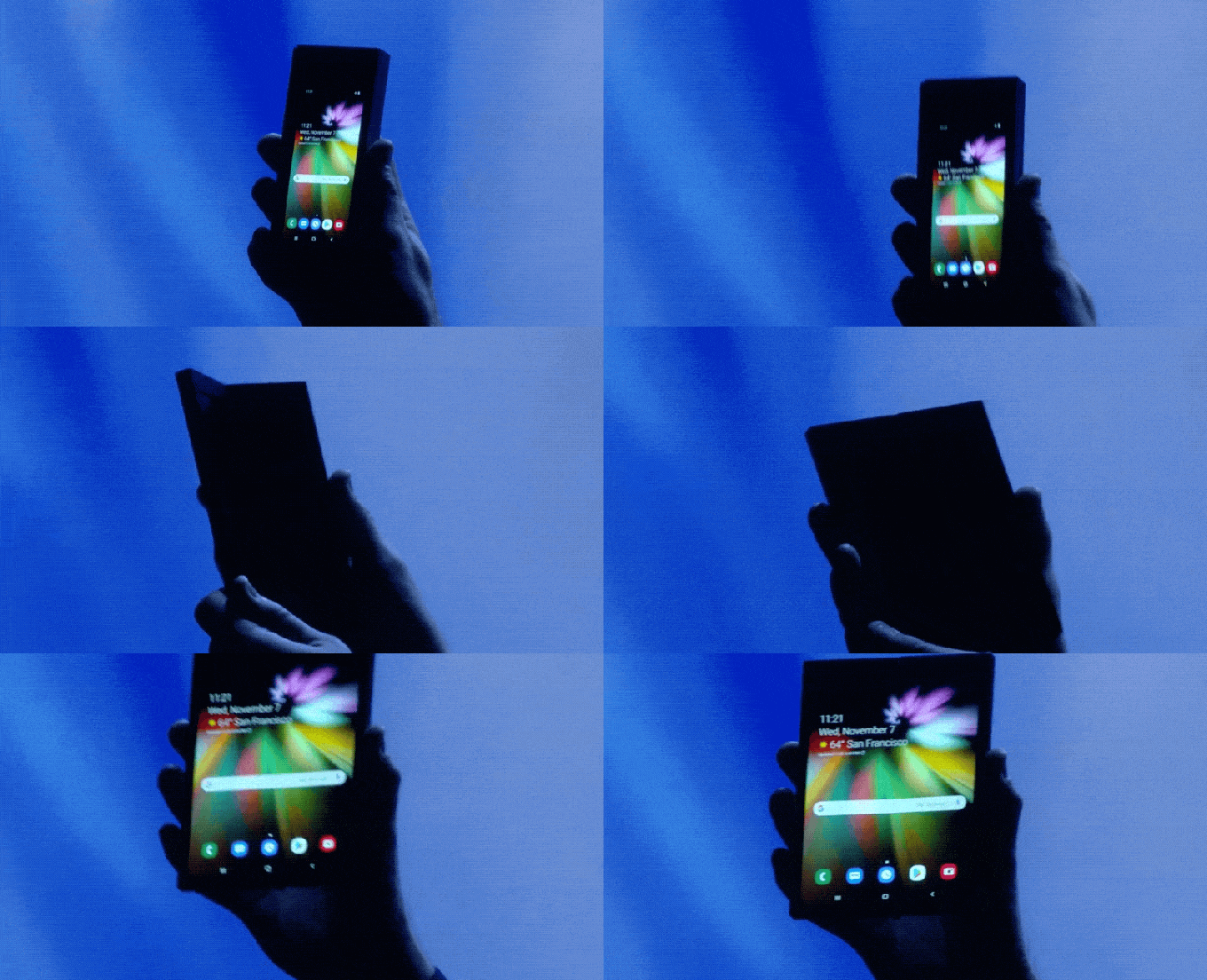
The same day that Google announced Android support, Samsung (briefly) showed off its own version of the technology. In the whooping 45 seconds the company devoted to it during a its two-hour keynote, we caught a glimpse of what looks to be an early prototype. Here, the device sports a display on the outside and unfolds to reveal a larger display within.

The “Infinity Flex Display” appeared at first glance to be more sophisticated than Royole’s — but “glance” is really the operative word here. It was a big, blocky prototype that we’ll be hearing more about at Unpacked next month.

Excited to share this video of a special Xiaomi smartphone from our President and Co-founder Bin Lin. It is the world’s first ever double folding phone — that’s pretty cool, isn’t it? #xiaomi #foldingphone #technology pic.twitter.com/iBj0n3vIbW

— Wang Xiang (@XiangW_) January 23, 2019

Earlier this week, meanwhile, Xiaomi debuted what’s since come to be regarded as the most advanced of the bunch, but like Samsung, we only got a glimpse. And here it was in a much more controlled environment of a short, pre-recorded clip and extremely low resolution. That said, “the world’s first ever double folding phone” looks like a thing out of a sci-fi film.

The company, telling, tossed around the word “prototype” quite liberally there.

And then there’s Huawei. Mobile Chief Richard Yu highlight plans to announce a 5G folding phone at Mobile World Congress next month. As ever, details are scarce. Same goes for Motorola’s Razer, a $1,500 folding throwback, which is firmly in the rumor stages.

If that price point gives you pause, well, get used to it. The Flex Pai is already available at $1,300, and most other handsets are appear on track to hit roughly the same price point, making the latest iPhone and Samsung Galaxy devices look like a downright bargain.
Startups Weekly: Is Munchery the Fyre Festival of startups?

It was a tough week. Journalists around the U.S. were hit hard by layoffs, from HuffPost to BuzzFeed News to Verizon Media Group, which owns this very site. The government entered day 35 of the shutdown before President Donald Trump agreed to a short-term deal to reopen it for three weeks. And in the startup world, a once high-flying, venture-subsidized food delivery startup crashed and burned, leaving a cluster of small businesses in its wreckage.

Some good things happened too — we’ll get to those.

  1. Munchery fails to pay its debts

In an email to customers on Monday, Munchery announced it would cease operations, effective immediately. It, however, failed to notify any of its vendors, small businesses in San Francisco that had supplied baked goods to the startup for years. I talked to several of those business owners about what they’re owed and what the sudden disappearance of Munchery means for them.

  1. #Theranos #Content

If you haven’t read John Carreyrou’s “Bad Blood,” stop reading this newsletter right now and go get yourself a copy. If you love to read, watch and listen to the Theranos saga as much as I do, you’ll be glad to hear there’s some fresh Theranos content released to the world this week. Called “The Dropout,” a new ABC documentary and an accompanying podcast about Theranos features never-before-aired depositions. Plus, TechCrunch’s Josh Constine reviews the Theranos documentary, “The Inventor,” which premiered at the Sundance Film Festival this week.

  1. Deal of the week

Confluent, the developer of a streaming data technology that processes massive amounts of information in real time, announced a $125 million Series D round on an enormous $2.5 billion valuation (up 5x from its Series C valuation). The round was led by existing investor Sequoia Capital, with participation from other top-tier VCs Index Ventures and Benchmark.

  1. Wag founders ditch dogs for bikes

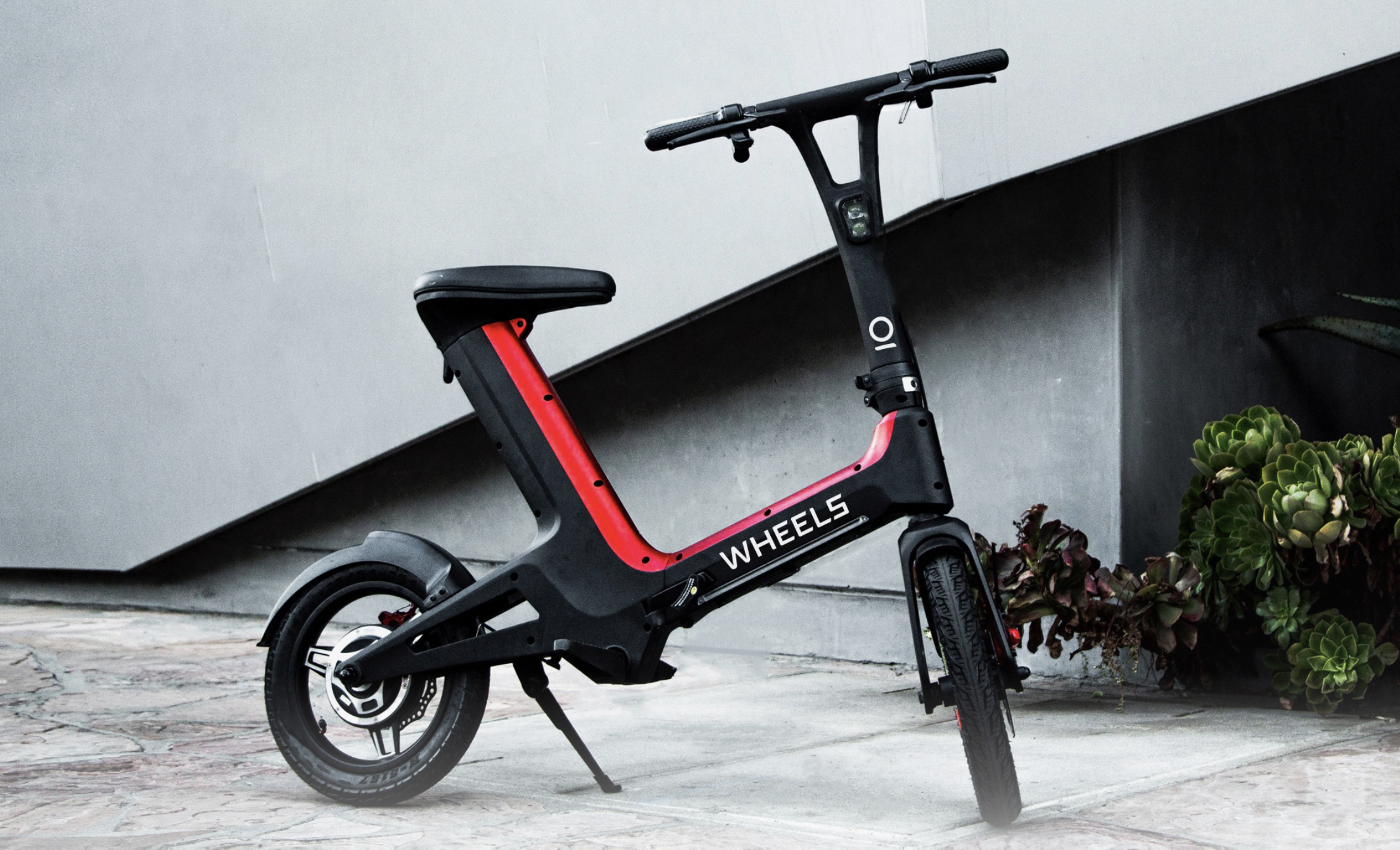
Jonathan and Joshua Viner, the founders of the SoftBank-backed dog walking startup Wag, launched Wheels this week, an electric bike-share startup with a $37 million funding from Tenaya Capital, Bullpen Capital, Naval Ravikant and others.

Not that I think we need ANY more bike-share startups, at least they are getting a bit savvier. This one says its different because of its modular design, which includes swappable parts and batteries, resulting in a 4x longer product life cycle. https://t.co/iDXepjf0BK

— Kate Clark (@KateClarkTweets) January 23, 2019

  1. Go-Jek makes progress on a $2B round

Indonesia-headquartered Go-Jek has closed an initial chunk of what it hopes will be a $2 billion round after a collection of existing investors, including Google, Tencent and JD.com, agreed to put around $920 million toward it, according to TechCrunch’s Southeast Asia reporter Jon Russell. The deal, which we understand could be announced as soon as next week, will value Go-Jek’s business at around $9.5 billion.

  1. Knowledge center

There’s been a lot of chatter around direct listings since Spotify opted to go public via the untraditional route in 2018, but what exactly is a direct listing… We asked a panel of six experts: “What are the implications of direct listing tech IPOs for financial services, regulation, venture capital and capital markets activity?” 

Here’s your weekly reminder to send me tips, suggestions and more to [email protected] or @KateClarkTweets

  1. Contraceptive deserts

Through telemedicine and direct-to-consumer sales platforms, startups are streamlining the historically arduous process of accessing contraception. The latest effort to secure a significant financing round is The Pill Club, an online birth control prescription and delivery service. This week, the consumer-focused investor VMG Partners led its $51 million Series B. 

  1. More startup cash
  1. Fundraising activity

Sunil Nagaraj spent years investing in startups at Bessemer Venture Partners, but he was itching to meet with younger companies and strike out on his own. So in the summer of 2017, he did, and now, Nagaraj said he’s closed Ubiquity Ventures’ debut fund with $30 million. March Capital Partners, the Los Angeles-based venture capital firm, raised $300 million for its latest fund. Plus, Zynga founder Mark Pincus is reportedly raising up to $700 million for a new investment fund, called Reinvent Capital, that will focus on publicly traded tech companies in need of strategic restructuring.

  1. Finally, meet the startups in Alchemist’s 20th cohort

A mental health startup, a construction tech business and a fintech company, among others. Take a quick look at the startups that just completed Alchemist’s six-month accelerator program.

  1. Listen to me talk

If you enjoy this newsletter, be sure to check out TechCrunch’s venture-focused podcast, Equity. In this week’s episode, available here, Crunchbase editor-in-chief Alex Wilhelm, TechCrunch’s Silicon Valley editor Connie Loizos and I chatted about Munchery’s downfall, The Pill Club’s mission to make birth control more accessible and the VC slowdown in China.


The Predictive Index brings in $50M to help businesses create winning teams

Funding will get you a long way, but people, at the end of the day, are the key to a successful business.

The Predictive Index, which develops behavioral and cognitive employee assessments, has raised a $50 million round of growth-stage capital from venture capital firm General Catalyst to help companies choose the right talent.

Holly Maloney, a managing director at General Catalyst, led the deal and will take a board seat alongside Kirk Arnold, an executive-in-residence. The firm says the round is the largest first check they’ve ever written a company. Predictive Index declined to disclose the valuation.

The workplace analytics service was founded in 1955, making it just a bit older than your typical growth-stage business. Current chief executive officer Mike Zani (pictured, right) acquired the company in 2014 with Predictive Index president and chairman Daniel Muzquiz (pictured, left). Prior to the acquisition, the pair were clients of the business.

With the infusion of VC funding, Zani said he’ll double employee headcount, create a playbook on how to “successfully design, hire and inspire winning teams” and create a talent optimization industry conference, amongst other big plans.

“Most companies are losing the talent war, and not because of the lack of fight, but rather because strategic talent strategies are non-existent or broken,” Zani told TechCrunch. “The irony is that talent is one of the only lasting differentiators in business today. Most tools in the marketplace help with process or tactical aspects of people and ignore the strategic. At [Predictive Index] we offer the strategic talent discipline, or talent optimization, to the hands of those who want to use talent as a business performance lever.”

Headquartered in Boston, Predictive Index says it counts some 7,000 customers in 142 countries, including Nissan, DocuSign and Blue Cross Blue Shield.

“This year, low unemployment and high turnover will further magnify the importance of talent,” Arnold said in a statement. “Having a talent strategy which aligns and supports business strategy is a requirement for any business to be successful.”

BioWare’s ambitious Anthem is off to a rough start as players bring servers to their knees

The gaming world is excited to play Anthem, BioWare’s answer to Destiny and other big-budget online shooters — but an exclusive preview weekend for the mech-flying game has struggled to get off the ground. Of course, it wouldn’t be a game launch these days without a few hiccups to spice things up, but it is a little embarrassing.

The 40-gigabyte demo was made available today to those who had pre-ordered the game, as well as press and other “VIPs.” The game, announced last year at E3, is a loot-focused shooter where you pilot mechs through a huge open world, engage in cooperative combat and exploration and all that.

At least, so they say. Reports immediately came flooding in on forums and social media that not only was Origin, the service on which the demo is offered, failing to function properly, but that the game itself wasn’t connecting to servers, or if it did, wouldn’t load beyond the intro sequence.

I encountered this myself; after eventually getting loaded and logged in, I managed to get into the starting town area where you will, in the full game, upgrade your gear, accept quests and so on. But when I attempted to launch the first mission or otherwise enter the actual game world, the loading bar would stop about 95 percent of the way done and stay there forever (I waited about five minutes and reloaded a couple times to make sure it wasn’t just my aging rig). Those who made it all the way in complained of lag and glitches.

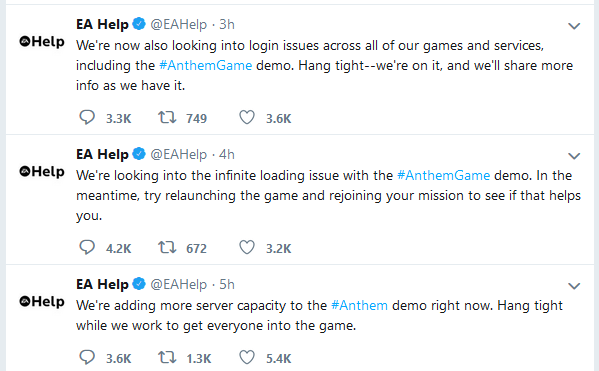
No one really ever expects a major title, especially one with a major online components, to launch even in a limited way without a few speed bumps, but something like this can really put the brakes on a hype train. Publisher EA admitted to the laundry list of issues from a support Twitter account:

Funnily enough EA Help’s own servers were having trouble as well, so not only could people not play Anthem, they couldn’t report that they couldn’t play Anthem.

Patience is a necessary virtue in today’s AAA game launches, but the people hoping to play this weekend aren’t randos but paying customers; this preview demo weekend was supposed to be a pre-order bonus, but the first day is a bust so far. Considering BioWare and EA knew exactly how many players could be trying to connect today — and those numbers are likely far less than those who will try the open beta or connect on launch day — it’s rather odd that they were seemingly caught so off-guard.

Anthem is certainly promising and the developers have gone out of their way to assure players that many of the hated practices of online games these days would not find a home on their platform. But launch problems always jar the confidence of undecided buyers, and there’s almost no question that the game will be better a month or two after its actual debut. Launch numbers could be affected by players not believing the game is ready to play, and therefore not being willing to pay.

I fully anticipate these issues getting resolved at some point soon, however, and will collect my impressions of the game in a separate post when that happens.

Tinder agrees to settle age discrimination lawsuit

Tinder recently agreed to settle a $23 million class-action age discrimination lawsuit. The lawsuit, filed last April in California, alleged Tinder charged people over 30 years old twice the amount for its subscription services.

The class consists of every person 29 years of age or older at the time who subscribed to Tinder Plus or Tinder Gold between March 2, 2015 and the date of preliminary approval, according to the proposed order granting motion for preliminary approval of the class-action settlement.

“Under the Settlement, Defendants agree to a multifaceted Settlement structure, which includes a universal participation component (automatic benefits to all Class Members);” the settlement states. “An additional cash or cash-equivalent payout to Class Members who submit timely valid claims; and an agreement to substantially halt Defendants’ allegedly discriminatory practices going forward.”

Filed on behalf of about 230,000 class members, each person will be able to receive either $25 in cash, 25 additional Super Likes or a one-month subscription to either Tinder Plus or Tinder Gold. As part of the settlement, Tinder must distribute $11.5 million to all class members, as well as $5.75 million in potential cash or cash-equivalents (e.g. Super Likes) to every class member who submits a claim.

Tinder has also agreed to stop charging people — just those located in California — different prices based on their age. That carries a value of at least $5.75 million, according to the settlement. In total, this amounts to a $23 million settlement.

I’ve reached out to Tinder and will update this story if I hear back. In the meantime, feel free to check out the settlement below.

Trump agrees to reopen the federal government through mid-February

On Friday, President Trump announced his intentions to back off of his demand for border wall funding, allowing the federal government to reopen for three weeks through February 15. The president touted the decision to reopen the government as a deal in spite of his failure to obtain a multi-billion-dollar agreement toward a physical perimeter for the southern border.

At 35 days, the federal shutdown has been the lengthiest to ever grind the U.S. government to a halt. Under the current terms of the proposal, the federal government would re-open, bringing hundreds of thousands of federal employees back to work, as negotiations around a border wall compromise take place. It would also provision back pay for the roughly 800,000 federal workers who have missed paychecks as part of the ordeal.

https://t.co/RUFlgMxOUq

— Donald J. Trump (@realDonaldTrump) January 25, 2019

The Senate is expected to bring the proposal to reopen the government to a vote soon, with the House likely to quickly follow suit. While Trump’s decision on Friday shows the president backing down, he again raised the spectre of declaring a national emergency if his demands are not met.

Often framed as a political standoff between House Speaker Nancy Pelosi and the president, the shutdown resulted in far-reaching potential consequences for American safety, from unpaid TSA agents to understaffed intelligence agencies unable to monitor and respond to ongoing cybersecurity threats.

The #TrumpShutdown has already pushed hundreds of thousands of Americans to the breaking point. Now it's pushing our airspace to the breaking point too.

.@realDonaldTrump, stop endangering the safety, security and well-being of our nation. Re-open government now!

— Nancy Pelosi (@SpeakerPelosi) January 25, 2019

Though less consequential, companies have also seen their IPO plans put on ice, waiting out the shutdown to see how to proceed. Even with the government poised to reopen, the SEC remains clogged up with a pile of IPO filings that must be processed before companies can move forward with their plans, making for an unpredictable landscape for companies like Uber, Lyft, Cloudflare and other big-name anticipated 2019 IPOs. Even with the government reopening, a three-week window might not offer enough stability for companies eager to set the paperwork into motion.

Between lapsed cybersecurity and derailed IPO timelines, it may be some time before we know the true damage that the nearly month-long shutdown caused, but the implications will likely stretch well beyond the considerable emotional and financial toll on workers and their families.

Pentagon stands by finding of no conflict of interest in JEDI RFP process

A line in a new court filing by the Department of Defense suggests that it might reopen the investigation into a possible conflict of interest in the JEDI contract RFP process involving a former AWS employee. The story has attracted a great deal of attention in major news publications, including The Washington Post and The Wall Street Journal, but a Pentagon spokesperson has told TechCrunch that nothing has changed.

In the document, filed with the court on Wednesday, the government’s legal representatives sought to outline its legal arguments in the case. The line that attracted so much attention stated, “Now that Amazon has submitted a proposal, the contracting officer is considering whether Amazon’s re-hiring Mr. Ubhi creates an OCI that cannot be avoided, mitigated, or neutralized.” OCI stands for Organizational Conflict of Interest in DoD lingo.

When asked about this specific passage, Pentagon spokesperson Heather Babb made clear the conflict had been investigated earlier and that Ubhi had recused himself from the process. “During his employment with DDS, Mr. Deap Ubhi recused himself from work related to the JEDI contract. DOD has investigated this issue, and we have determined that Mr. Ubhi complied with all necessary laws and regulations,” Babb told TechCrunch.

She repeated that statement when asked specifically about the language in the DoD’s filing. Ubhi did work at Amazon prior to joining the DoD and returned to work for them after he left.

The Department of Defense’s decade-long, $10 billion JEDI cloud contract process has attracted a lot of attention, and not just for the size of the deal. The Pentagon has said this will be a winner-take-all affair. Oracle and IBM have filed formal complaints and Oracle filed a lawsuit in December alleging, among other things, that there was a conflict of interest by Ubhi, and that they believed the single-vendor approach was designed to favor AWS. The Pentagon has denied these allegations.

The DoD completed the RFP process at the end of October and is expected to choose the winning vendor in April.

Theranos documentary review: The Inventor’s horrifying optimism

A blood-splattered Theranos machine nearly pricks an employee struggling to fix it. This gruesome graphical rendering is what you’ll walk away from HBO’s “The Inventor” with. It finally gives a visual to the startup’s laboratory fraud detailed in words by John Carreyrou’s book “Bad Blood”.

The documentary that premiered tonight at Sundance Film Festival explores how the move fast and break things ethos of Silicon Valley is “really dangerous when people’s lives are in the balance” as former employee and whistleblower Tyler Shultz says in the film. Theranos promised a medical testing device that made a single drop of blood from your finger more precise than a painful old-school syringe in your vein. What patients ended up using was so inaccurate it put their health in jeopardy.

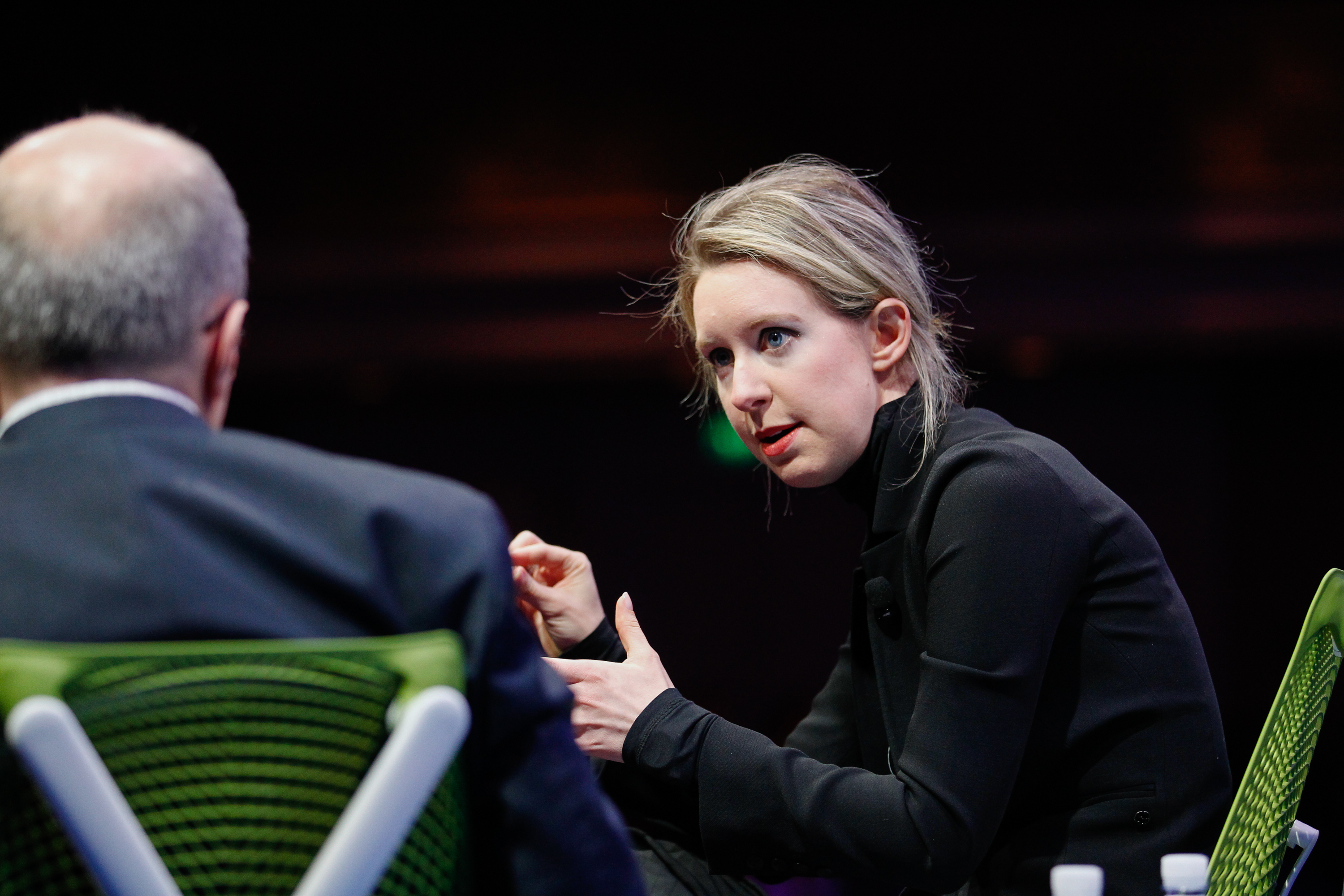
But perhaps even more frightening is the willingness of Theranos CEO Elizabeth Holmes to delude herself and everyone around her in service of a seemingly benevolent mission. The documentary captures how good ideas can make people do bad things.

“The Inventor: Out For Blood In Silicon Valley” juxtaposes truthful interviews with the employees who eventually rebelled against Holmes with footage and media appearances of her blatantly lying to the world. It manages to stick to the emotion of the story rather than getting lost in the scientific discrepancies of Theranos’ deception.
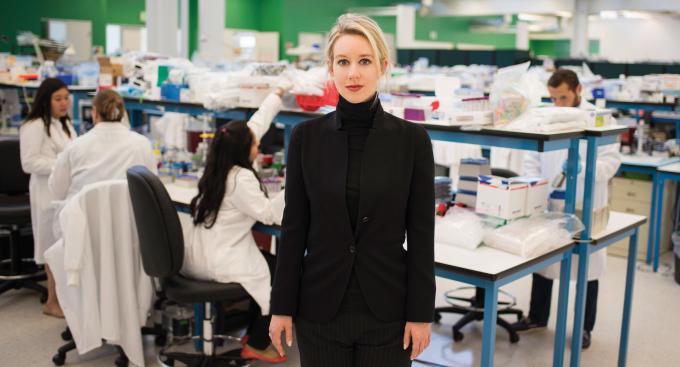

The film opens and closes with close-ups of Holmes, demonstrating how the facts change her same gleaming smile and big blue eyes from the face of innovative potential to that of a sociopathic criminal. “I don’t have many secrets” she tells the camera at the start.

Though the film mentions early that her $9 billion-plus valuation company would wind up worth less than zero, it does a keen job of building empathy for her that it can tear down later. You see her tell sob stories of death in the family and repeat her line about building an end to having to say goodbye to loved ones too soon. You hear how she’s terrified of needles and how growing up, “my best friends were books.”

But then cracks start to emerge as old powerful men from professors to former cabinet members faun over Holmes and become enthralled in her cult of personality as validation snowballs. Oscar-winning director Alex Gibney has a knack for creeping dread from his experience making “Enron: The Smartest Guys In The Room” and “Going Clear: Scientology and the Prison of Belief.” He portrays Holmes’ delusions of grandeur with shots of her portrait beside those of Archimedes, Beethoven, and her idol Steve Jobs.

The first red flag comes when Holmes names her initial device Edison after the historic inventor the film assures you was quite a fraud himself. Soon, sources from inside the company relay how the Edison and subsequent Theranos hardware never worked right but that demos were faked for customers and investors. Instead of sticking to a firm timeline, Gibney bounces around to hammer home the emotional arcs of employees from excited to dubious, and of Holmes from confidence to paranoia.

Carreyrou’s “Bad Blood” meticulously chronicled every tiny warning sign that worried Theranos’ staff in order to build a case. But the author’s Wall Street Journal day job bled through, sapping the book of emotion and preventing it from seizing the grandeur of the tale’s climactic moments.

Gibney fills in the blanks with cringe-inducing scenes of Theranos’ faulty hardware. A ‘nanotainer’ of blood rolls off a table and fractures, a biohazard awaiting whoever tries to pick it up. The depiction of working in Theranos’ unregulated laboratory scored the biggest gasps from the Sundance audience. Former employees describe how Theranos recruited drifters they suspected of hepatitis as guinea pigs. Their stale blood evaporates into the air surrounding machines dripping with inky red, covered in broken test tubes. Gibney nails the graphics, zooming in on a needle spraying droplets as a robotic arm sputters through malfunctions. I almost had to look away as the film renders a hand reaching into the machine and only just dodging an erratic syringe.

A still from The Inventor: Out For Blood in Silicon Valley by Alex Gibney, an official selection of the Documentary Premieres program at the 2019 Sundance Film Festival. Courtesy of Sundance Institute | photo by Drew Kelly.

At times, Gibney goes a bit too melodramatic. The toy music box twinkling foreshadows a dream becoming a nightmare, but it gets maddening after an hour straight. The pacing feels uneven, sometimes bogged down in Holmes’ personal relationships when later it seems to speed through the company’s collapse.

Though elsewhere, the director harnesses the nervous laughter coping mechanism of the former employees to inject humor into the grim tale. With accuracy so low, Shultz jokes that “if people are testing themselves for syphilis with Theranos, there’s going to be a lot more syphilis in the world.” Visual dramatizations of journalists’ audio recordings of Holmes and the eventual legal disputes bring this evidence to life.

Alex Gibney, director of The Inventor: Out For Blood in Silicon Valley, an official selection of the Documentary Premieres program at the 2019 Sundance Film Festival. Courtesy of Sundance Institute.

The most touching scene sees Fortune’s Roger Parloff on the brink of implosion as he grapples with giving Holmes her first magazine cover story — momentum she used to eventually get Theranos’ useless hardware in front of real patients who depended on its results.

The Inventor succeeds at instilling the lesson without getting too preachy. It’s fine to be hopeful, but don’t ignore your concerns no matter how much you want something to be real. It takes an incredibly complex sequence of events and makes it at once gripping and informative. If you haven’t read “Bad Blood” or found it drab, “The Inventor” conveys the gravity of the debacle with a little more flare.

Yet the documentary also gives Holmes a bit too much benefit of the doubt, suggesting that hey, at least she was trying to do good in the world. In the after-film panel, Gibney said “She had a noble vision . . . I think that was part of why she was able to convince so many people and convince herself that what she was doing was great, which allowed her to lie so effectively.” Carreyrou followed up that “she was not intending to perpetrate a long con.”

Yet that’s easier to say for both the director and the author when neither of their works truly investigated the downstream health impacts of Theranos’ false positives and false negatives. If they’d tracked down people who delayed critical treatment or had their lives upended by the fear of a disease they didn’t have, I doubt Holmes would be cut so much slack.

Some degree of ‘Fake it ’til you make it’ might be essential to build hard technology startups. You must make people believe Inc something that doesn’t exist if you’re to pull in the funding and talent necessary to make it a reality. But it’s not just medical, hardware, or “atoms not bits” startups that must be allegiant to the truth. As Facebook and WhatsApps’ role in spreading misinformation that led to mob killings in India and Myanmar proved, having a grand mission doesn’t make you incapable of doing harm. A line must be drawn between optimism and dishonesty before it leads to drawing chalk outlines on the ground.

Go-Jek makes first close of $2 billion round at $9.5 billion valuation

Southeast Asia-based ride-sharing firm Go-Jek is making progress with its plan to raise up to $2 billion in fresh capital to fund its battle with close rival Grab .

Indonesia-headquartered Go-Jek has closed an initial chunk of that round after a collection of existing investors, including Google, Tencent and JD.com, agreed to invest around $920 million towards it, three sources with knowledge of the investment told TechCrunch.

The deal, which we understand could be announced as soon as next week, will value Go-Jek’s business at around $9.5 billion, one source told TechCrunch. With existing investors on board, the company is now actively soliciting checks from other backers to take it to its target. The capital is likely to go towards deepening its presence in new markets and furthering its fintech push.

A Go-Jek representative declined to respond when contacted by TechCrunch for comment on its fundraising efforts.

This incoming round excluded, Go-Jek has raised more than $2 billion from investors to date, including a $1.4 billion round that closed last year and valued its business at $5 billion.

Founded in 2015, Go-Jek began in motorbike taxis before expanding to four-wheels, service on demand and fintech. It decided to go after a $2 billion raise last year — having seen Grab gobble up Uber’s local business in Southeast Asia — but it has taken some time to make progress. That’s partially down to an effort to ‘clean the cap table’ by buying out some early investors and longer-serving or former staff with equity, two sources told TechCrunch.

Likewise, there has also been discussion around including the acquisition of JD.com’s local JD.id business, valued at over $1 billion, in the deal. As far as we know, a resolution hasn’t been found despite lengthy talks.

An acquisition of JD.id would not only see JD.com’s influence deepen with Go-Jek, but it would give the ride-railing startup a strong position in Indonesia’s e-commerce space, which includes three other unicorns: Alibaba-owned Lazada, Tokopedia — which is backed by Alibaba and SoftBank’s Vision Fund — and Bukalapak, which also recently raised money for growth.

There is some doubt, however. Speaking to Reuters this week, co-founder Kevin Aluwi denied Go-Jek has plans to enter e-commerce.

Fundraising for Southeast Asia’s ride-sharing companies went up a few notches last year after Uber decided to exit the region through a deal with Grab, which saw the U.S. firm pick up a potentially-lucrative 27.5 percent stake in Singapore-based Grab.

Grab raised a $2 billion Series H round, anchored by a $1 billion injection from Toyota, but the company plans to increase that fundraising effort to as much as $5 billion, as we reported at the tail end of last year.

Why all the huge checks? At stake is a dominant position within a fast-growing online market.

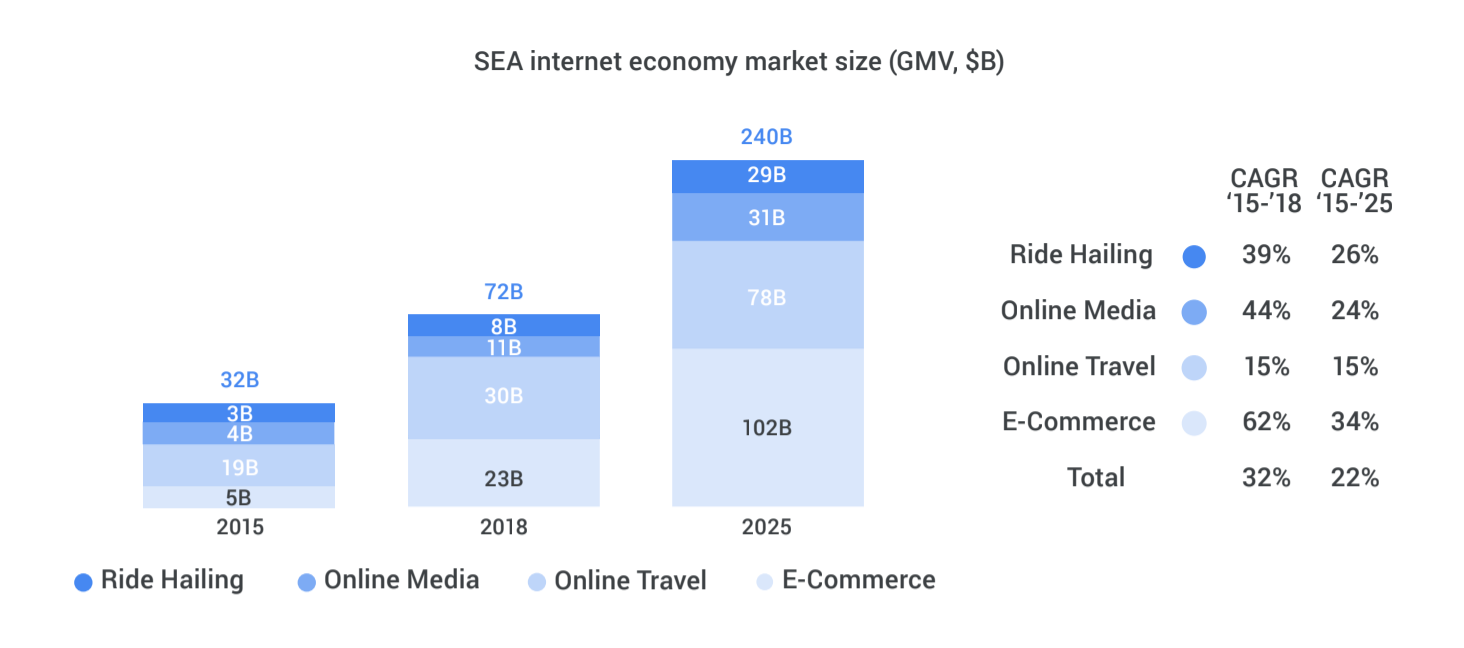
Ride-hailing in Southeast Asia is poised to grow from an $8 billion annual business in 2018 to $31 billion by 2025, according to a report from Google and Temasek. Indonesia alone is tipped to account for nearly half of that figure.

The report from Google and Temasek forecasts major growth for ride-hailing in Southeast Asia

With a cumulative population of more than 620 million people and increasing internet access, Southeast Asia has emerged from the shadows of China and India to become an attractive market for startups and tech companies. Chinese giants like Tencent and Alibaba have stepped up investment areas in recent years, with e-commerce, fintech and other ‘ground zero’ infrastructure services among their targets as the region begins to turn digital in the same way China has.

That’s where Grab and Go-Jek get interesting because, beyond simply catering to transportation, both companies have expanded to offer services on-demand, like e-groceries, as well as payments and financial services such as loans, remittance and insurance. The goal is to become the region’s one-stop ‘super app’ like WeChat, Alipay and Meituan in China.

So far, Go-Jek has fanned out beyond ride-hailing to offer fintech and other services in Indonesia, but it is still getting to grips with the regional play. It expanded to Vietnam, Thailand and Singapore last year while the Philippines is a work in progress following a setback after it was denied an operating permit earlier this month.

Already, though, it is making plans for the Philippines after it acquired Coins.ph, a fintech startup that is likely to be the base for a local push into payments and financial services. The deal was officially undisclosed, but sources told TechCrunch that Go-Jek has paid around $72 million — that potentially makes it the company’s largest acquisition to date. That shows how serious Go-Jek is both about its expansion efforts and its fintech business.

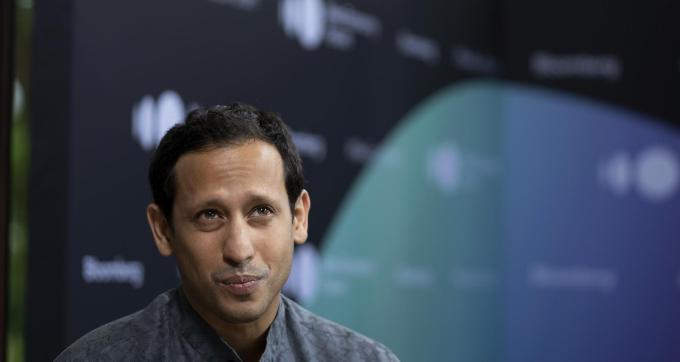
Go-Jek CEO Nadiem Makarim worked at McKinsey for three years before starting the companyn[Photographer: Wei Leng Tay/Bloomberg]

In the here and now, Go-Jek claims more than 125 million downloads in Indonesia, over a million drivers and some 300,000 food merchants. It claims to process 100 million transactions per month, while Aluwi told Reuters that total transactions on its platforms crossed $12.5 billion last year. That doesn’t mean net income, however, since the company takes only a slice of customer’s ride-sharing fares and payment volumes.

Grab, meanwhile, operates in eight markets in Southeast Asia. It claims over 130 million downloads and more than 2.5 billion completed rides to date. Grab is assumed to not yet be profitable but it has said that it made $1 billion in revenue in 2018. It projects that the figure will double this year.

The company has raised around $6.8 billion from investors, according to data from Crunchbase, and Grab was last valued at $11 billion.

Ultima Thule shows its lumps in latest images from New Horizons flyby

The rendezvous between the New Horizons probe and the distant object known as Ultima Thule was an historic moment, but after the mind-blowing imagery the craft sent back from Pluto, you could be forgiven for being a little disappointed in how indistinct the early imagery was. Those concerns should be partly alleviated by the latest image from the probe, which shows the rocky world in considerably greater detail.

It’s still not exactly poster quality, but remember, this is being beamed back bit by bit from four billion miles away. And it isn’t just sending the best stuff, but a huge series of images it took during the brief flyby on January 1. Not only that, but there are multiple imagers and instruments whose information must be collated and adjusted for human viewing.

In this case the image was taken by the Multicolor Visible Imaging Camera, or MVIC; the previous ones were taken with LORRI, a long-range reconnaissance camera. It was taken from a distance of about 4,200 miles away, just a minutes before the probe’s closest approach.

Earlier imagery wasn’t as clear, but showed the rust-red color of the object.

The lighting is fortuitous, and helps show off the topography of Ultima Thule, or 2014 MU69, as it was previously known. To give you a sense of scale, the big concavity in what you might call the head of the snowman is about 4 miles across. The team writes in a blog post:

Not clear is whether these pits are impact craters or features resulting from other processes, such as “collapse pits” or the ancient venting of volatile materials.

Both lobes also show many intriguing light and dark patterns of unknown origin, which may reveal clues about how this body was assembled during the formation of the solar system 4.5 billion years ago. One of the most striking of these is the bright “collar” separating the two lobes.

Principal Investigator of the New Horizons mission Alan Stern, whom I spoke with about the flyby and other topics some months before New Year’s, says in the same post that we have even more to look forward to:

“This new image is starting to reveal differences in the geologic character of the two lobes of Ultima Thule, and is presenting us with new mysteries as well. Over the next month there will be better color and better resolution images that we hope will help unravel the many mysteries of Ultima Thule.”

Hidden screen in iOS 12.2 beta hints at AirPods that can handle ‘Hey Siri’

It’s a weird quirk of the current generation of AirPods: they support Siri, but only if you double-tap one of the earbuds first. Unlike with iPhones, iPads, Apple Watches and HomePods, you can’t just say “Hey Siri” and babble out your request.

Rumors have been floating around for a while suggesting that a new iteration of AirPods — AirPods 2, the rumor mill is calling them — would bring “Hey Siri” functionality. Now a screen hiding in the latest iOS beta seems to suggest the same.

While it’s not a publicly accessible screen, Guilherme Rambo of 9to5mac managed to trigger the following prompt in the just-released iOS 12.2 beta:

(Image Credit: 9to5Mac)

“Talk to Siri with your AirPods or iPhone by saying ‘Hey Siri’,” it reads.

Its absence from the current generation of AirPods presumably boils down to a matter of battery life. Apple figured out how to make “Hey Siri” work with minimal impact on battery life with the iPhone 6s, then broke down how it all works in a post on its Machine Learning Journal in April of 2018. But to pull off the same trick in a tiny earbud — each having a battery capacity of 93 milliwatt hours, or roughly 1 percent of that of an iPhone — is an entirely new challenge. For the first gen, it was just easier to let the headphones wait for that double-tap, queueing it up as a new selling point whenever Apple figured out how to pull it off.

Rumors have also hinted at other features for the eventual AirPods sequel, from waterproofing to sensors that help track health data. Alas, no sneaky hidden prompts hinting at any of that have been found yet.

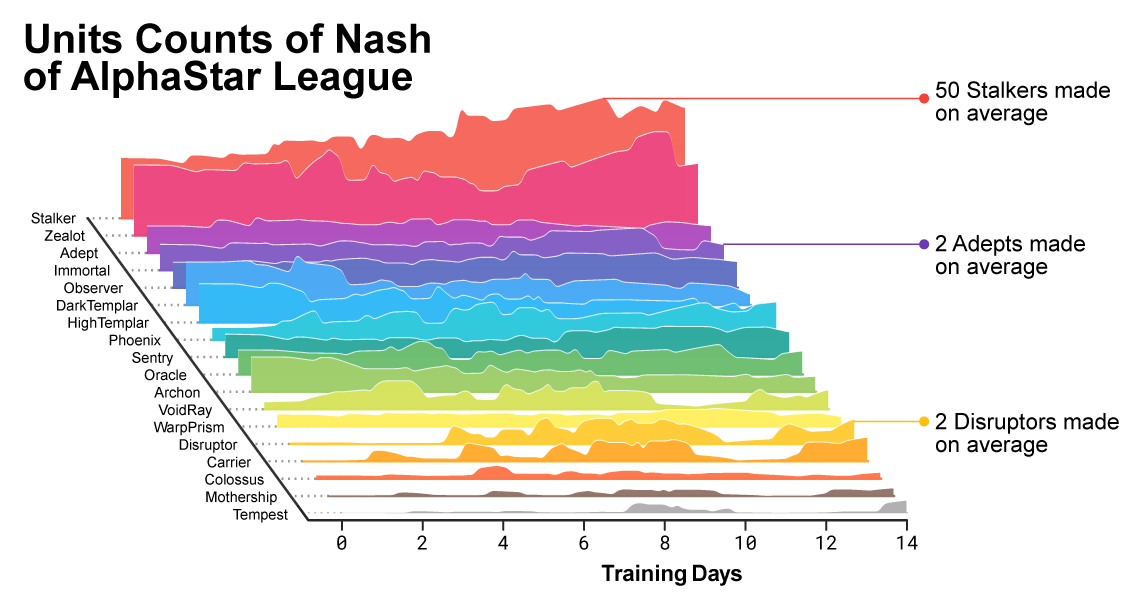
StarCraft II-playing AI AlphaStar takes out pros undefeated

Losing to the computer in StarCraft has been a tradition of mine since the first game came out in 1998. Of course, the built-in “AI” is trivial for serious players to beat, and for years researchers have attempted to replicate human strategy and skill in the latest version of the game. They’ve just made a huge leap with AlphaStar, which recently beat two leading pros 5-0.

The new system was created by DeepMind, and in many ways it’s very unlike what you might call a “traditional” StarCraft AI. The computer opponents you can select in the game are really pretty dumb — they have basic built-in strategies, and know in general how to attack and defend and how to progress down the tech tree. But they lack everything that makes a human player strong: adaptability, improvisation and imagination.

AlphaStar is different. It learned from watching humans play at first, but soon honed its skills by playing against facets of itself.

The first iterations watched replays of games to learn the basics of “micro” (i.e. controlling units effectively) and “macro” (i.e. game economy and long-term goals) strategy. With this knowledge it was able to beat the in-game computer opponents on their hardest setting 95 percent of the time. But as any pro will tell you, that’s child’s play. So the real work started here.

Hundreds of agents were spawned and pitted against each other.

Because StarCraft is such a complex game, it would be silly to think that there’s a single optimal strategy that works in all situations. So the machine learning agent was essentially split into hundreds of versions of itself, each given a slightly different task or strategy. One might attempt to achieve air superiority at all costs; another to focus on teching up; another to try various “cheese” attempts like worker rushes and the like. Some were even given strong agents as targets, caring about nothing else but beating an already successful strategy.

This family of agents fought and fought for hundreds of years of in-game time (undertaken in parallel, of course). Over time the various agents learned (and of course reported back) various stratagems, from simple things such as how to scatter units under an area-of-effect attack to complex multi-pronged offenses. Putting them all together produced the highly robust AlphaStar agent, with some 200 years of gameplay under its belt.

Most StarCraft II pros are well younger than 200, so that’s a bit of an unfair advantage. There’s also the fact that AlphaStar, in its original incarnation anyway, has two other major benefits.

First, it gets its information directly from the game engine, rather than having to observe the game screen — so it knows instantly that a unit is down to 20 HP without having to click on it. Second, it can (though it doesn’t always) perform far more “actions per minute” than a human, because it isn’t limited by fleshy hands and banks of buttons. APM is just one measure among many that determines the outcome of a match, but it can’t hurt to be able to command a guy 20 times in a second rather than two or three.

It’s worth noting here that AIs for micro control have existed for years, having demonstrated their prowess in the original StarCraft. It’s incredibly useful to be able to perfectly cycle out units in a firefight so none takes lethal damage, or to perfectly time movements so no attacker is idle, but the truth is good strategy beats good tactics pretty much every time. A good player can counter the perfect micro of an AI and take that valuable tool out of play.

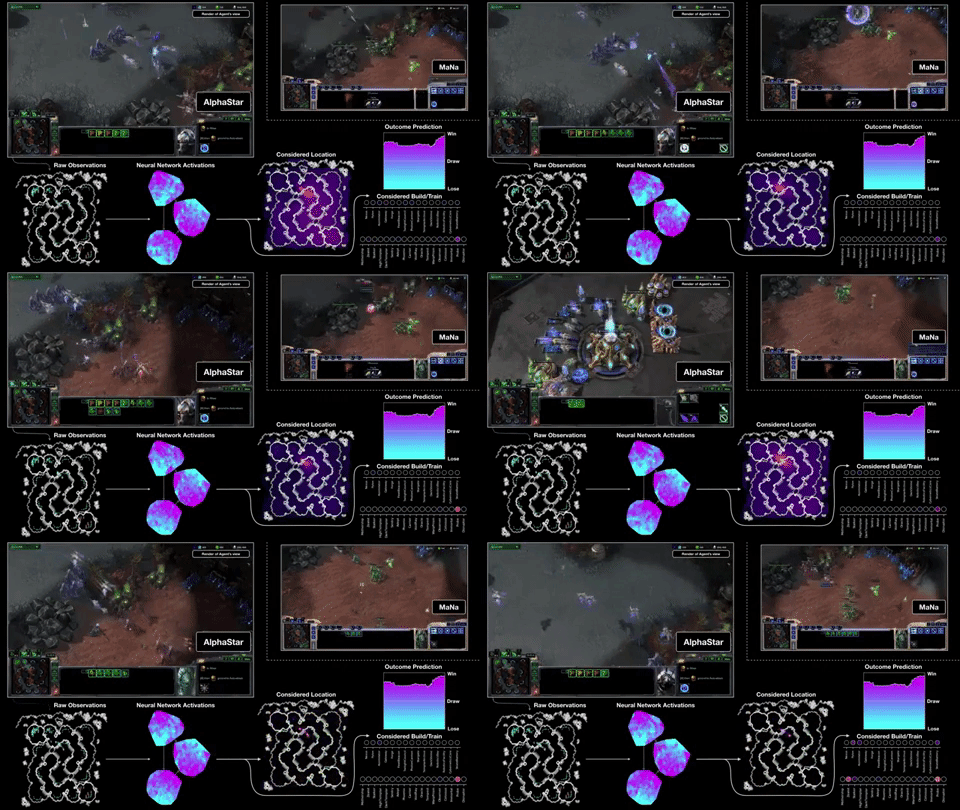
AlphaStar was matched up against two pro players, MaNa and TLO of the highly competitive Team Liquid. It beat them both handily, and the pros seemed excited rather than depressed by the machine learning system’s skill. Here’s game 2 against MaNa:

In comments after the game series, MaNa said:

I was impressed to see AlphaStar pull off advanced moves and different strategies across almost every game, using a very human style of gameplay I wouldn’t have expected. I’ve realised how much my gameplay relies on forcing mistakes and being able to exploit human reactions, so this has put the game in a whole new light for me. We’re all excited to see what comes next.

And TLO, who actually is a Zerg main but gamely played Protoss for the experiment:

I was surprised by how strong the agent was. AlphaStar takes well-known strategies and turns them on their head. The agent demonstrated strategies I hadn’t thought of before, which means there may still be new ways of playing the game that we haven’t fully explored yet.

You can get the replays of the matches here.

AlphaStar is inarguably a strong player, but there are some important caveats here. First, when they handicapped the agent by making it play like a human, in that it had to move the camera around, could only click on visible units, had a human-like delay on perception and so on, it was far less strong and in fact was beaten by MaNa. But that version, which perhaps may become the benchmark rather than its untethered cousin, is still under development, so for that and other reasons it was never going to be as strong.

AlphaStar only plays Protoss, and the most successful versions of itself used very micro-heavy units.

Most importantly, though, AlphaStar is still an extreme specialist. It only plays Protoss versus Protoss — probably has no idea what a Zerg looks like — with a single opponent, on a single map. As anyone who has played the game can tell you, the map and the races produce all kinds of variations, which massively complicate gameplay and strategy. In essence, AlphaStar is playing only a tiny fraction of the game — though admittedly many players also specialize like this.

That said, the groundwork of designing a self-training agent is the hard part — the actual training is a matter of time and computing power. If it’s 1v1v1 on Bloodbath maybe it’s stalker/zealot time, while if it’s 2v2 on a big map with lots of elevation, out come the air units. (Is it obvious I’m not up on my SC2 strats?)

The project continues and AlphaStar will grow stronger, naturally, but the team at DeepMind thinks that some of the basics of the system, for instance how it efficiently visualizes the rest of the game as a result of every move it makes, could be applied in many other areas where AIs must repeatedly make decisions that affect a complex and long-term series of outcomes.

Lightning Motorcycles is taking reservations for its $12,998 electric motorcycle

A teaser image of headlights plus a few details about the upcoming electric Strike motorcycle from Lightning Motorcycles was apparently too much for some to bear. The company, prompted by an unexpectedly high number of customer requests, has now opened reservations for U.S. customers.

Customers will still have to wait until March to see what the Strike electric motorcycle looks like. No early peeks, even for reservations holders.

Two versions of Strike reservations are available: a carbon edition and standard version. Customers can put down a $500 fully refundable reservation deposit for the standard model, which starts at $12,998.

For those who want the Strike carbon edition, they’ll have to plunk down a $10,000 refundable deposit.

Lightning Motorcycles, which is known for its LS-218 superbike, says its Strike electric motorcycle has 150 miles of range on a single charge and can reach a top speed of 150 miles per hour. The motorcycle’s battery can be charged in 35 minutes with a DC fast charger.

Lightning Motorcycles is one of several companies that have announced plans to sell mass-market electric motorcycles.

Harley-Davidson, which first showed off a concept electric motorcycle four years ago, plans to sell a production-ready electric bike called LiveWire this coming August. LiveWire is supposed to be the first in what will be a portfolio of electric Harley-Davidson motorcycles. The LiveWire is more than double the cost of what Lightening Motorcycles plans to bring to market.

The battery-powered LiveWire will do 0-60 mph in just over 3 seconds and go 110 miles on a charge; the base price is $29,799 MSRP.

Cannabis startup Caliva raises $75M from former Yahoo CEO Carol Bartz and Joe Montana

San Jose cannabis company Caliva is proving that weed’s still hot, even as some markets cool off.

The company is announcing a $75 million round of investment that includes participation from former Yahoo CEO Carol Bartz and football legend Joe Montana . If that pair seems unlikely, it just goes to show that cannabis attracts an eclectic mix.

With what the company itself refers to as a “war chest,” Caliva intends to expand its portfolio of products as well as ramping up its efforts courting cannabis users in California through a combination of branded brick and mortar stores, direct to consumer sales and sales to distributors. While state regulations slowed the overall market over the last year, Caliva grew its revenues by 350 percent, growing its company to 440 workers.

A general partner at Liquid 2 Ventures, Montana isn’t new to cannabis investing. In 2017, the former quarterback participated in a seed round for Herb, a cannabis-focused media company. Given the extreme toll pro sports take on the human body, it’s not uncommon for former athletes to get involved in the cannabis business, particularly with CBD products.

“As an investor and supporter, it is my opinion that Caliva’s strong management team will successfully develop and bring to market quality health and wellness products that can provide relief to many people and can make a serious impact on opioid use or addiction,” Montana said of his interest in the cannabis industry.

Caliva currently operates a popular retail location situated conveniently for Silicon Valley’s droves of weed acolytes, but the company is more than just a well-liked dispensary. Beyond just carrying popular brands, Caliva sells its own products at its own stores — everything from vape pen oil cartridges to pre-rolls — in addition to operating a distribution center nearby.

“I know great opportunities when I see them,” said Bartz, who will also join the company’s board.