UPDATE: Snopes quits and AP in talks over Facebook’s fact-checking partnership

Snopes, which recently rebuffed reports that its relationship with Facebook was strained, has stopped working for the program and the Associated Press is in negotiations over its role.

Snopes joined Facebook’s group of third-party fact checkers in 2016, at first volunteering its services and the next year accepting a lump $100,000 payment for their work. But the company said in a statement that it’s rethinking providing services like this at all:

At this time we are evaluating the ramifications and costs of providing third-party fact-checking services, and we want to determine with certainty that our efforts to aid any particular platform are a net positive for our online community, publication, and staff.

Snopes founder David Mikkelson added in a statement to TechCrunch that “we felt that the Facebook fact check partnership wasn’t working well for us as an organization.” I’ve asked Facebook for comment.

The news comes hot on the heels of a recent article in the Guardian by former Snopes employees who described the partnership as being “in disarray.”

But the Snopes founder strongly disagreed with that characterization, and the suggestion that Facebook had been interfering with or otherwise unduly influencing the fact-checking program. Mikkelson described the work as “literally just data entry,” and said that Facebook never told them what they should check, with a handful of exceptions like bringing high-profile hoaxes to checkers’ attention during the 2018 election.

In fact, Mikkelson said the main problem was a lack of engagement from Facebook. The tools, he said, were rudimentary, and checkers were limited in the number of articles they could evaluate. Meanwhile, the effect of the fact-checking program was poorly communicated both to partners and users. Was it working? How well? In what way? What changes are being made, if any, to the algorithms and systems involved?

In comments to Poynter, Snopes VP of operations Danny Green said the process needed to be improved:

With a manual system and a closed system — it’s impossible to keep on top of that stuff… It doesn’t seem like we’re striving to make third-party fact checking more practical for publishers — it seems like we’re striving to make it easier for Facebook. At some point, we need to put our foot down and say, ‘No. You need to build an API.’

This surely formed at least part of the reason why Snopes declined to renew its yearly contract with Facebook. It seems to be a coincidence that the announcement came shortly after yet another bad week for the latter; the contracts seem to be for calendar years so the decision not to rejoin would have been made some time ago.

It’s not the only U.S. fact checker not doing the work. The Associated Press confirmed to TechCrunch that it too is “not currently doing fact-checking work for Facebook.” In a statement, the news organization said that it “constantly evaluates how to best deploy its fact-checking resources, and that includes ongoing conversations with Facebook about opportunities to do important fact-checking work on its platform.”

Update: The AP representative contacted TechCrunch to say that although it is not doing fact checking work for the program now, it is not leaving it altogether, later adding that “AP is in talks with Facebook and we fully expect to be doing fact check work for Facebook in 2019.” I’ve updated the headline and story throughout to reflect this.

Politifact confirmed it is staying with the program; I’ve also asked Factcheck.org (the fourth U.S. fact-checker); AFP, which does fact-checking work in multiple countries, also confirmed its continuing work.
This light-powered 3D printer materializes objects all at once

3D printing has changed the way people approach hardware design, but most printers share a basic limitation: they essentially build objects layer by layer, generally from the bottom up. This new system from UC Berkeley, however, builds them all at once, more or less, by projecting a video through a jar of light-sensitive resin.

The device, which its creators call the replicator (but shouldn’t, because that’s a MakerBot trademark), is mechanically quite simple. It’s hard to explain it better than Berkeley’s Hayden Taylor, who led the research:

Basically, you’ve got an off-the-shelf video projector, which I literally brought in from home, and then you plug it into a laptop and use it to project a series of computed images, while a motor turns a cylinder that has a 3D-printing resin in it.

Obviously there are a lot of subtleties to it — how you formulate the resin, and, above all, how you compute the images that are going to be projected, but the barrier to creating a very simple version of this tool is not that high.

Using light to print isn’t new — many devices out there use lasers or other forms of emitted light to cause material to harden in desired patterns. But they still do things one thin layer at a time. Researchers did demonstrate a “holographic” printing method a bit like this using intersecting beams of light, but it’s much more complex. (In fact, Berkeley worked with Lawrence Livermore on this project.)

In Taylor’s device, the object to be recreated is scanned first in such a way that it can be divided into slices, a bit like a CT scanner — which is in fact the technology that sparked the team’s imagination in the first place.

By projecting light into the resin as it revolves, the material for the entire object is resolved more or less at once, or at least over a series of brief revolutions rather than hundreds or thousands of individual drawing movements.

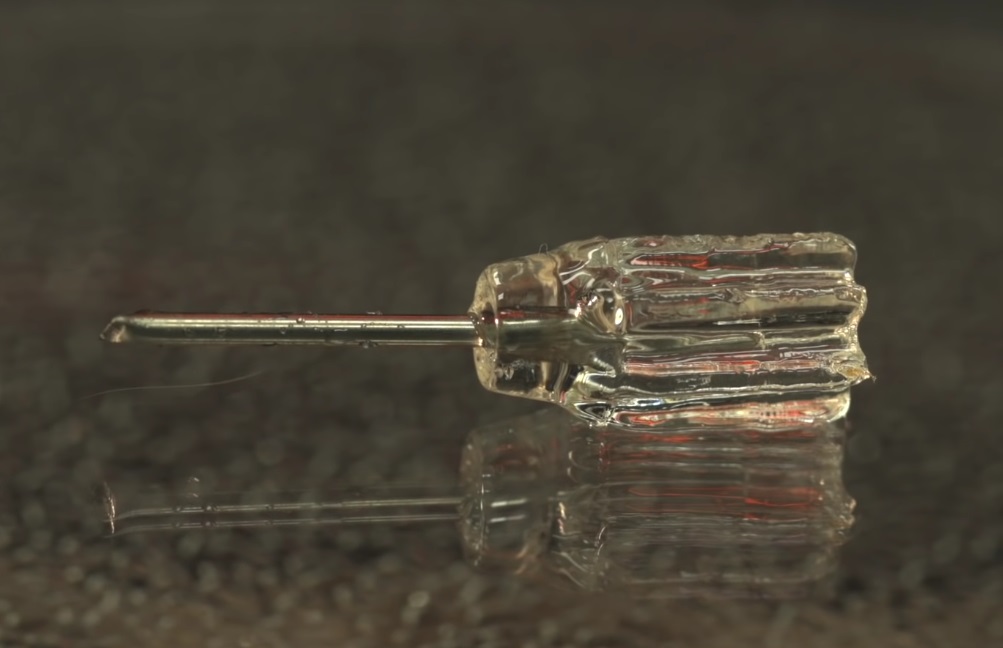
This has a number of benefits besides speed. Objects come out smooth — if a bit crude in this prototype stage — and they can have features and cavities that other 3D printers struggle to create. The resin can even cure around an existing object, as they demonstrate by manifesting a handle around a screwdriver shaft.

Naturally, different materials and colors can be swapped in, and the uncured resin is totally reusable. It’ll be some time before it can be used at scale or at the level of precision traditional printers now achieve, but the advantages are compelling enough that it will almost certainly be pursued in parallel with other techniques.

The paper describing the new technique was published this week in the journal Science.

LittleBits lays off employees as it shifts focus toward education

New York City open-source maker startup LittleBits began to lay off staff last month, TechCrunch has learned. The loss of jobs comes as the company looks to shift more focus toward the K-12 market.

Education-specific offerings have been lucrative for the company in its eight-year existence, but recent products have found the company embracing licensed products, courtesy of its involvement with Disney’s hardware accelerator.

LittleBits confirmed the layoffs as part of an internal restructuring, in a statement offered to TechCrunch.

“The true potential that littleBits provides teachers, parents, and the children is far beyond your standard ‘off the shelf’ gift or toy. In order to have the greatest impact in shaping the next generation of Changemakers, we are prioritizing our business around the K-12 education market,” the company says. “As you can imagine, the education market’s needs are vastly different than that of retail. Given this, we had to re-shape our internal structure, which ultimately led to a reduction in staff.”

It has yet to offer a specific number, but TechCrunch believes the number to be around 15. Not huge in the grand scheme of things, but no doubt a hit to a staff of this size, which numbered around 100, after its acquisition of DIY Co, last summer. That acquisition, LittleBits’ first, will no doubt play a role in the restructuring, going forward.

It’s hard not to see echoes of the difficult decision Sphero made roughly this time last year. The robotics startup went all-in on licensed Disney brands like Star Wars and Marvel, but ultimately pivoted to an education-only focus, after a disappointing holiday season. Education, on the other hand, can prove a lucrative and stable path forward, as schools and districts tend to buy products in bulk. 

Another thing both Sphero and LittleBits have in common is a knack for truly innovative tech products that could do extremely well in the educational space with the right positioning.

Twitter bug makes it look like random retweets are appearing in your timeline

A number of Twitter users have been complaining that tweets that were retweeted by people they don’t follow are now showing in their timeline. The issue, thankfully, is not related to a new Twitter algorithm or recommendation system, as some had feared. Instead, the company confirmed that a bug affecting Android users was mislabeling the “social proof” tag on Retweets.

This is the part of the Retweet that tells you who, among the people you already do follow, had retweeted the post in question.

The company says that the social proof label is wrong, so the Android users were seeing tweets that looked like they had been retweeted by someone they don’t know.

why do i keep getting randos i'm not following retweeting themselves on my timeline??

— z a c h (@unktions) January 31, 2019

Seriously @Twitter , why am I seeing these? I'm not following these people and their tweets are clogging up my timeline. pic.twitter.com/5RJ4TrjLBs

— Graze ?Meme Star? (@GrazeTwitch) January 31, 2019

Can you stop, Twitter? This is worse than ranked newsfeed on Facebook pic.twitter.com/04jRu9z3FU

— Jane Manchun Wong (@wongmjane) February 1, 2019

@TwitterSupport Why is my timeline full of users I'm not following retweeting themselves?

— christian cain (@TN_WINS) February 1, 2019

Above: some example complaints

Twitter says the Retweets that showed up were actually tweeted by someone the people did knew, but their social proof label was wrong, which made them seem out of place. Its engineers are aware of the problem and are working to fix this now. The bug has been live for a few days, Twitter also confirmed.

The company’s @TwitterSupport account had not yet replied to those asking about this problem, which may have led to some user confusion.

After all, Twitter has been known to put what some consider extraneous information in the timeline — like posts that show you when many people you follow have now all followed another Twitter user, or posts that tell you that several people have shared the same link, for example. But even in those cases, that was in-network activity — not something like putting random retweets in your main feed.

Until the bug is fixed, Twitter users who don’t like the content of the seemingly random retweets can tap on the down arrow on the right side of the tweet to tell Twitter it wants to see less content like this.

Foxconn says Wisconsin factory plans are back on after talk with Trump

It seems Foxconn’s plans for a $10 billion Wisconsin plant are back on. After a couple of years of back and forths, the manufacturing giant says it’s recommitting to plans for a plant in the upper Midwest. A statement today cited a phone call between chairman/founder Terry Gou and Donald Trump.

“After productive discussions between the White House and the company, and after a personal conversation between President Donald J. Trump and Chairman Terry Gou, Foxconn is moving forward with our planned construction of a Gen 6 fab facility, which will be at the heart of the Wisconsin Valley Science and Technology Park,” the statement reads. “This campus will serve both as an advanced manufacturing facility as well as a hub of high technology innovation for the region.”

Earlier this week, the company noted that it was reconsidering its plans for the TV plant, noting that it was more interested in hiring researchers and engineers than the manufacturing jobs that were initially noted. “In terms of TV, we have no place in the U.S.,” Gou said at the time. “We can’t compete.”

An influx of manufacturing jobs would be a win for Trump at a vital time, as support has eroded over the country’s longest government shutdown and tariffs have made for icy relations with China. As CNBC notes, state government has sweetened the deal considerably with $4 billion in tax breaks.

Initial plans for the 20 million-square-foot campus, unveiled at a White House event in 2017, noted that it would bring 13,000 jobs — a nice bump as the U.S. has struggled to maintain manufacturing facilities.

Details, however, are still pretty thin.

“Our decision is also based on a recent comprehensive and systematic evaluation to help determine the best fit for our Wisconsin project among TFT technologies,” the statement continues. “We have undertaken the evaluation while simultaneously seeking to broaden our investment across Wisconsin far beyond our original plans to ensure the company, our workforce, the local community, and the state of Wisconsin will be positioned for long-term success.”

The next big bet for former Uber CEO Travis Kalanick may be cloud kitchens — in China

Former Uber CEO Travis Kalanick may have been nudged out of one of the world’s most highly valuable private companies by investors frustrated over its troubled culture, but his moves remain of great interest given how far he’d driven the rideshare giant.

One such move, according to a new report in the South China Morning Post, looks to be to help foster the growing concept of cloud kitchens in China.

We’ve reached out to Kalanick for more information, but per the SCMP’s report, Kalanick is partnering with the former COO of the bike-sharing startup Ofo, Yanqi Zhang. Their apparent project involves Kalanick’s L.A.-based company, CloudKitchens, which enables restaurants to set up kitchens for the purposes of catering exclusively to customers ordering in, as that’s how many people are consuming restaurant food in increasing numbers. (More on the movement here and here.) The kitchens are established in underutilized real estate that Kalanick is snapping up through a holding company called City Storage Systems.

According to The Spoon, a food industry blog, the trend is beginning to gain momentum in particular regions, including India, where it says many restaurants struggle to afford the traditional restaurant model, which often involves paying top dollar for rent, as well covering wages for employees, from dishwashers to cooks to servers. Using so-called cloud kitchens enables these restaurateurs to share facilities with others, and to do away with much of their other overhead.

Some are even being promised more affordable equipment. For example, according to The Spoon, the restaurant review site Zomato, through its now two-year-old service called Zomato Infrastructure Services, aims to create kitchen “pods” that restaurants can rent, and it’s using data to identify recently closed restaurants that may be looking to offload their kitchen equipment for whatever they can get for it.

Shared kitchens have also been taking off in China, as notes the SCMP, which cites Beijing-based Panda Selected and Shanghai-based Jike Alliance as just two companies that Kalanick would be bumping up against.

Kalanick wasn’t the first here in the U.S. to spy the trend bubbling up, but he seems to be taking it as seriously as any entrepreneur. Last year, he spent $150 million to buy a controlling stake in City Storage Systems, the holding company of CloudKitchens, through a fund that he established around the same time, called the 10100 fund. The money was used to buy out most of the company’s earlier backers, including venture capitalist Chamath Palihapitiya, according to a report last year by Recode.

That same report said that Kalanick now has a controlling interest in City Storage Systems. It also said that serial entrepreneur Sky Dayton — who previously founded EarthLink, co-founded eCompanies and founded Boingo — is a co-founder.

City Storage Systems isn’t interested in on-demand kitchens alone, reportedly. The idea behind it is to buy distressed real estate, including parking lots, and repurpose it for a number of online-focused ventures.

While the China twist looks like a new development, it wouldn’t be a wholly surprising move. Having had to back out of China with Uber in 2016, Kalanick may be of a mind to jump into the country faster this time around, and with a local partner with whom he has a relationship. Indeed, Zhang spent two years as a regional manager for Uber in China before co-founding Ofo, which has since run into problems of its own.

We’ve also reached to Zhang for this story and hope to update it when we learn more.

The Super Bowl gets voice-enabled

Amazon, Dish, Comcast and others are hoping to turn Super Bowl 2019 into a way to show off the potential for their voice technologies and TV integrations. The companies this week have been touting new features and a variety of voice commands that will allow viewers to get prepared for the big game, learn about players and teams, tune into NFL news and highlights, set their recordings and more.

In some cases, this may be as simple as asking your TV to tune to the Super Bowl, record the event or get more information about the game, as is the case with Dish. Customers can press the button on their Dish voice remote, then say “Super Bowl” or “Super Bowl 53” to watch, find information or record the game, the company says.

Comcast and Amazon are taking things further, however.

Comcast’s Xfinity X1 customers can now use their voice remote to get the latest stats, get pre-game news and post-game highlights or even turn on an app that tracks real-time stats on the screen during the big game.

For example, X1 customers can say “Tom Brady vs. Jared Goff,” “The Patriots vs. the Rams,” “Show me Julian Edelman,” “Show me Rams leaders” and other sorts of commands to get stats on teams or to learn about the players. They also can say “Super Bowl” or “NFL” to be taken to news and highlights, or say “X1 Sports app” to launch the stat-tracking feature on their TV screen.

Smart home users with Xfinity Home can even turn their lighting to their favorite team’s colors by saying “Xfinity Home, go Patriots!” or “go Rams!,” as desired.

Alexa’s Super Bowl feature set is more robust, offering the ability to ask for trivia and quizzes, background on the players and teams, stats, jokes and burns, track the odds, get historical data and more.

These sorts of questions can range from the basic — like, “where is the Super Bowl this year?” — to the more complex, like “what is the Patriots yards per carry this season?” or “how many times has Tom Brady been to the Super Bowl?”

You can also ask Alexa for a Super Bowl quiz, fact or past game recaps, in addition to more informational questions. Alexa can give you football jokes and “burns,” too.

What was surprising was that some of the stat-related questions Alexa could answer herself weren’t answered on Google Home, when asked the same way — for example, the above yards per carry question, and number of Super Bowls that Tom Brady has been to.

Both Alexa and Google Assistant will give you their own opinion on who they want to win, however. Google says it’s cheering for the underdog, the Rams. Alexa says as much as she wants to cheer for the Rams, she thinks the Patriots will win.

Grab raises $200M from Thailand-based retail conglomerate Central Group

Grab’s fundraising push continues unabated after the Southeast Asian ride-hailing firm announced that it has raised $200 million from Central Group, a retail conglomerate based in Thailand.

Central’s business covers restaurants, hotels and more than 30 malls in Thailand, while it has operations in markets that include Vietnam and Indonesia. Its public-listed holding companies alone are worth more than $15 billion.

Singapore-based Grab confirmed that this deal is not part of its ongoing Series H fundraising, but is instead an investment into its Thailand-based business. Rumors of the deal were first reported by Reuters last year.

Following this investment, Central said it will work with Grab in a number of areas in Thailand, including bringing its restaurants into the Grab Food service, adding Grab transportation to its physical outlets and bringing Grab’s logistics service into its businesses.

The investment represents the first time an investor has bought into a local Grab country unit, and the goal is to strengthen Grab’s position in Thailand — a market with 70 million consumers and Southeast Asia’s second-largest economy. Grab is under threat from Go-Jek, which expanded to Thailand at the end of 2018. While Go-Jek’s ‘Get’ service is currently limited to motorbikes on-demand in Thailand, its ambition is to recreate its Indonesia-based business that covers four-wheeled cars, mobile payments, on-demand services and more.

Central is a huge presence in the country, and in recent years it has raised its efforts to translate that offline retail presence into the digital space. Past deals have included the acquisition of Rocket Internet’s Zalora fashion business in 2016, and — more recently — a $500 million joint venture with Chinese e-commerce firm JD.com to create online retail and fintech businesses in Thailand.

Grab, meanwhile, is pushing on with its $3 billion Series H funding round. That deal is anchored by a $1 billion investment from Toyota but it also includes contributions from the likes of Microsoft, Booking Holdings and Yamaha Motors. More capital is waiting in the wings, however, with existing investor SoftBank in the process of transferring its investment to its Vision Fund with a view to investing a further $1.5 billion. The total fundraising effort is targeted at a lofty goal of $5 billion, sources told TechCrunch.

To date, Grab has raised $6.8 billion from investors, according to data from Crunchbase. That makes it Southeast Asia’s most capitalized tech startup and it was most recently valued at $11 billion. The company recently announced it has completed three billion rides; it claims 130 million downloads across its eight markets.

Go-Jek, meanwhile, closed the first portion of a $2 billion funding round last week, sources told TechCrunch. The new financing is aimed at growing out its presence in new market expansions which, beyond Thailand, include Singapore, Vietnam and the Philippines.

New York cracks down on companies that sell fake followers

On Wednesday New York Attorney General Letitia James announced that her office had reached a settlement with Devumi, a company that made millions selling fake followers to unsuspecting customers. The state of New York found that Devumi had engaged in illegal deception and illegal impersonation in the course of fluffing up social media profiles with its automated accounts.

First reported by CNN, the settlement follows a New York state probe into the company after reports of suspicious activity and potentially deceptive business practices first surfaced. Almost exactly a year ago, The New York Times reported a big feature on the company that prompted the state’s probe.

In that piece, the Times describes Devumi as “an obscure American company… that has collected millions of dollars in a shadowy global marketplace for social media fraud.” The reported detailed how the company used a stable of 3.5 million bots to fuel a business that boiled down to making people look important on platforms including Twitter. Like any bot worth its sticker price, those accounts often came with names and profile images culled from real people to help them blend in and appear legitimate.

Devumi shut down operations mid-last year in the face of the state probe and slack sales. While some customers of the company and its affiliates were aware they were buying fake followers, many others were not. That deception is central to the state’s case.

The AG’s actions set an interesting precedent for a newly defined category of potential cyber crime — one that may strike fear into the hearts of sketchy social media companies the web over.

“Bots and other fake accounts have been running rampant on social media platforms, often stealing real people’s identities to carry out fraud,” James said of the settlement. “As people and companies like Devumi continue to make a quick buck by lying to honest Americans, my office will continue to find and stop anyone who sells online deception.”

Tesla says the Model Y is coming in 2020

The Tesla Model Y — the SUV electric vehicle that CEO Elon Musk has been teasing and talking about since 2015 — will begin volume production by the end of 2020, the company said Wednesday in a letter to shareholders.

The automaker, which has yet to show a prototype of the vehicle, said it will begin tooling for the Model Y this year. And unlike Tesla’s other electric vehicles, the Model Y will most likely be produced at the company’s massive “gigafactory” in Nevada, Musk said during an earnings call.

Musk struck a bullish tone for the Model Y, predicting sales volume for the vehicle will be higher than its new Model 3.

Tesla also forecast that the cost of the Model Y production line should be substantially lower than the Model 3 line in Fremont, California because it will be built on the same platform and share about 75 percent of its components with Model 3.

The production ramp for the Model Y should also be faster, the company predicted.

Producing the Model Y at the gigafactory should reduce the company’s risk of execution as well as the cost of transferring parts from Nevada to California, where the Model 3 is assembled, Musk said.

“This year should be a truly exciting one for Tesla,” the company said in the shareholder letter. “Model 3 will become a global product, the profitability of our business should become sustainably positive, our new Gigafactory Shanghai should start producing cars, and we will start tooling for Model Y production.”

With its Greenlots acquisition, Shell is moving from gas stations to charging stations

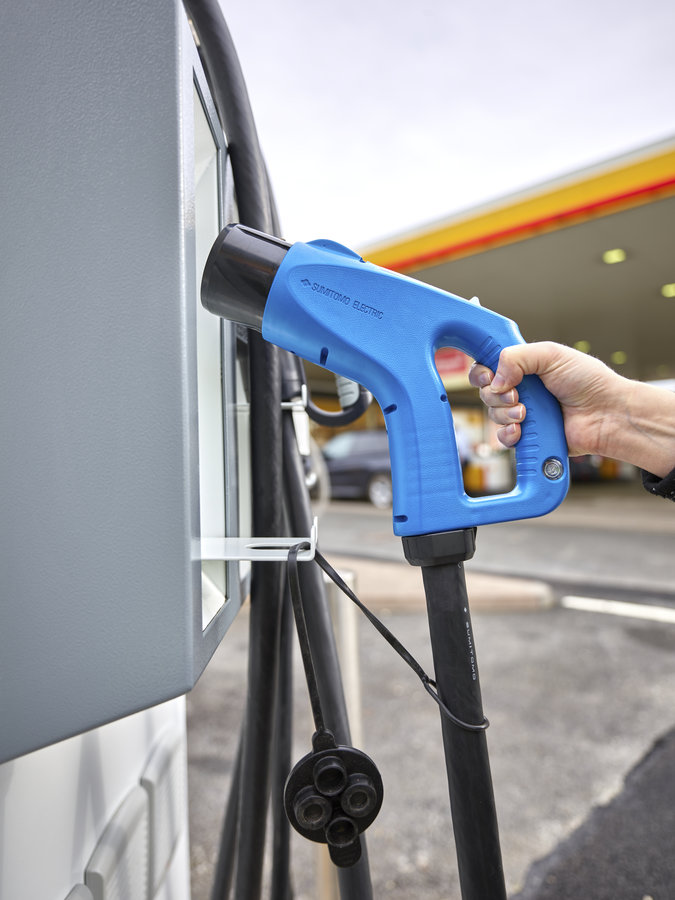
In a bid to show that it’s getting ready for the electrification of American roads, Royal Dutch Shell is buying Greenlots, a Los Angeles-based developer of electric vehicle charging and energy management technologies.

Shell, which is making the acquisition through its Shell New Energies US subsidiary, snatched the company from Energy Impact Partners, a cleantech-focused investment firm.

“As our customers’ needs evolve, we will increasingly offer a range of alternative energy sources, supported by digital technologies, to give people choice and the flexibility, wherever they need to go and whatever they drive,” said Mark Gainsborough, Executive Vice President, New Energies for Shell, in a statement. “This latest investment in meeting the low-carbon energy needs of US drivers today is part of our wider efforts to make a better tomorrow. It is a step towards making EV charging more accessible and more attractive to utilities, businesses and communities.”

Courtesy of Ed Robinson/Shell

Since Greenlots raised its cash from Energy Impact Partners, the company has become the partner of choice for utilities for electric vehicle charging, according to the firm. Greenlots was selected as the sole software provider for VolksWagen’s “Electrify America” charging program  last January.

“Utilities are playing a pivotal role in accelerating the transition to a future electric mobility system that is safer, cleaner and more efficient,” said Greenlots CEO Brett Hauser, adding, “We look forward to now working with the resources, scale and reach of Shell to further accelerate this transition.”

“Greenlots is on an incredible trajectory and, in the hands of a company with the resources such as Shell, will be able to advance the important electrification of transportation even faster,” said EIP managing partner Hans Kobler in a statement.

For Shell, the deal adds to a portfolio of electric charging assets including the Dutch-based company, NewMotion.

Across the board energy companies are spending more time and money backing and deploying electric charging technology companies. ChargePoint, a Greenlots competitor, raised $240 million in a November financing that included Chevron Technology Ventures, while BP bought the UK-based public charging network Chargemaster last year.

Despite pushback in some corners of America to the increasing electrification of U.S. highways and byways, the future of mobility needs to be electric if there’s any hope of slowing (and ideally halting and reversing) climate change globally.

Some signs of hope can be found in the latest earnings statement from Tesla, which points to increased uptake of its electric vehicles.  The teased release of an electric truck could potentially even help win converts among those drivers who like to “roll coal” in the presence of hybrids or electric cars.


States are already investing heavily in electric infrastructure themselves to promote the adoption of vehicles. California, New York, and New Jersey announced last June a total of $1.3 billion in new infrastructure projects focused on electric vehicle charging.

That’s still not enough to meet the goals necessary to reduce greenhouse gases significantly enough. In all, the U.S. needs to put roughly 13 million electric vehicles on the road in order to meet the targets put forward in the Paris Accords climate treaty (which the U.S. walked away from last year).

According to estimates from the Center for American Progress, the U.S. needs to spend $4.7 billion through 2025 to buy and install the 330,000 public charging outlets the nation will need to meet that electric demand.

“As power and mobility converge, there will be a seismic shift in how people and goods are transported,” said Brett Hauser, Chief Executive Officer of Greenlots. “Electrification will enable a more connected, autonomous and personalized experience. Our technology, backed by the resources, scale and reach of Shell, will accelerate this transition to a future mobility ecosystem that is safer, cleaner and more accessible.”