Daily Crunch: Spotify buys Gimlet and Anchor

The Daily Crunch is TechCrunch’s roundup of our biggest and most important stories. If you’d like to get this delivered to your inbox every day at around 9am Pacific, you can subscribe here:

1. Spotify buys Gimlet and Anchor in podcast push, earmarks $500M for more deals

Spotify is going after podcasts in a major way in 2019.

The music streaming service confirmed that it has snapped up two podcast networks — Gimlet and Anchor — in undisclosed deals. But that’s not all: Spotify also said it has plans to spend a further $400 to $500 million “on multiple acquisitions in 2019” to get even deeper into the space.

2. Meditation app Calm hits unicorn status with fresh $88 million funding

As meditation grows in popularity across the U.S. — the CDC says it tripled from 4.1 percent in 2012 to 14.2 percent in 2017 — Calm has capitalized on the craze by offering a suite of mindfulness and wellness tools, from guided meditation sessions to a product called “Sleep Stories,” via a subscription.

3. Instacart faces class-action lawsuit regarding wages and tips

The suit alleges Instacart “intentionally and maliciously misappropriated gratuities in order to pay plaintiff’s wages even though Instacart maintained that 100 percent of customer tips went directly to shoppers. Based on this representation, Instacart knew customers would believe their tips were being given to shoppers in addition to wages, not to supplement wages entirely.”

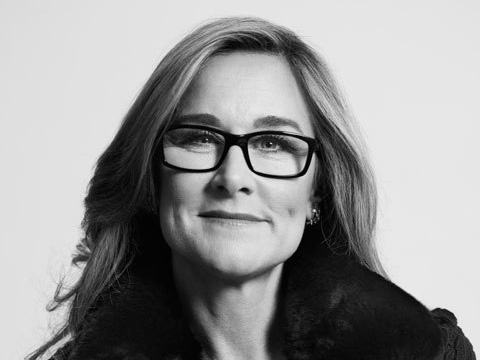
4. Angela Ahrendts is leaving Apple

Ahrendts joining Apple in 2014 was massive news, with her having served as the CEO of the luxury fashion brand Burberry from 2006 to 2014. She led the charge to “reimagine” Apple’s retail stores, shifting them to what she hoped felt more like a “modern-day town square.”

5. YouTube’s CEO says it will continue addressing monetization issues, admits Rewind 2018 was ‘cringey’

The letter seems unlikely to satisfy creators who are still trying to recover revenue or gain a better understanding of how YouTube’s policies are enforced.

6. Reddit is raising a huge round near a $3 billion valuation

Reddit is raising $150 million to $300 million to keep the front page of the internet running, according to multiple sources. Leading the round is Chinese tech giant Tencent.

7. Snapchat shares soar as it stops losing users, shrinks losses in Q4

Snapchat isn’t growing again, but at least it didn’t hemorrhage any more users in its Q4 earnings report — the company stayed flat at 186 million daily users.

Spotify, eBay set standard for fertility benefits, study finds

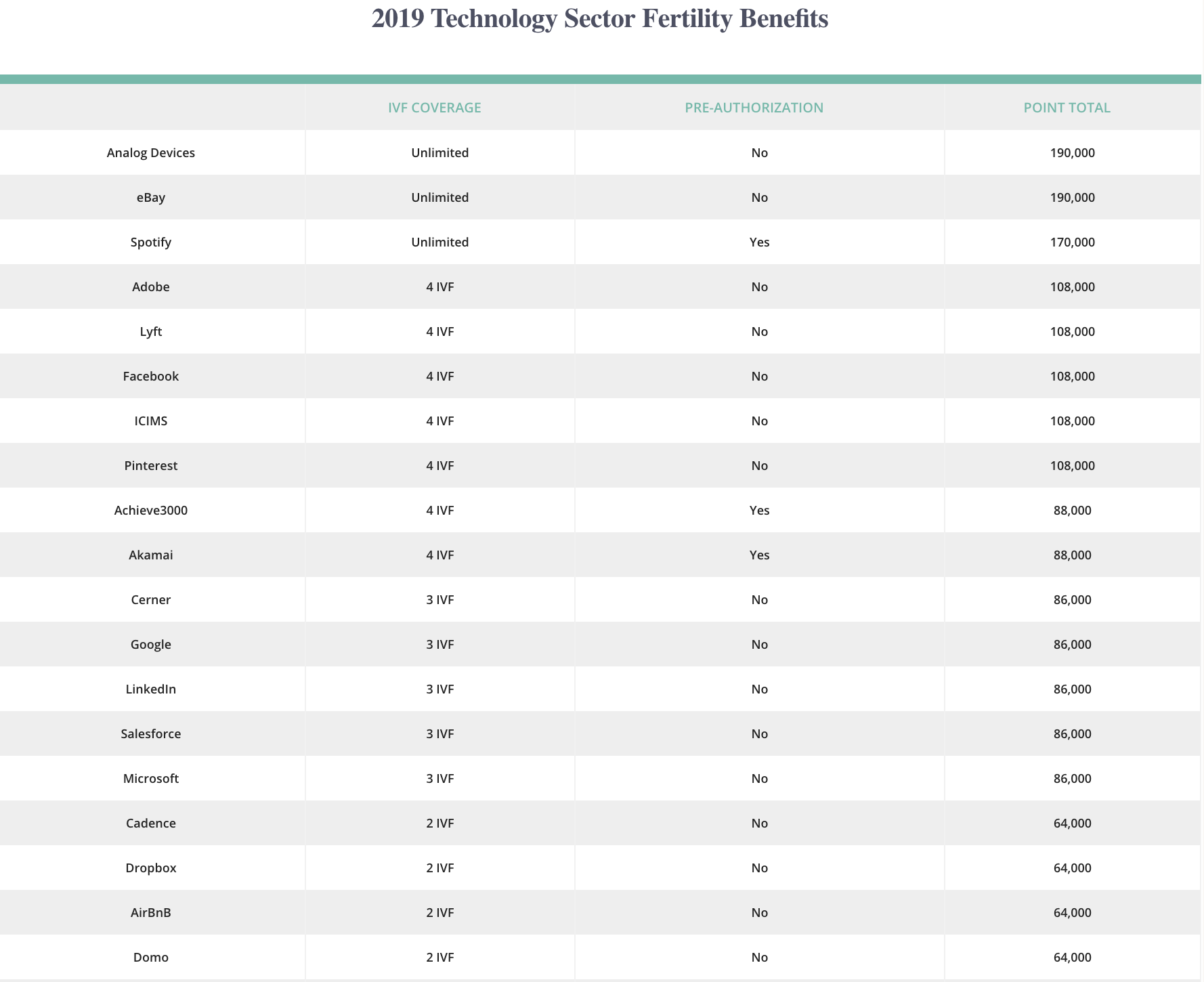
The technology sector awards women and same-sex couples the most comprehensive fertility benefit packages, according to a survey by FertilityIQ, an online platform for fertility patients to review doctors and research treatments.

The company asked 30,000 in vitro fertilisation (IVF) patients across industries about their employers’ — or their spouse’s employer’s’ — 2019 fertility treatment policy, and allocated points based on their support for IVF procedures and egg freezing, among other services.

Silicon Valley semiconductor business Analog Devices and eBay led the ranking. The two companies offer employees unlimited IVF cycles with no pre-authorization requirement, meaning employees do not need permission from insurance providers before seeking certain medical services. Pre-authorization has historically impacted lesbian, gay or unpartnered employees from accessing care quickly or at all, FertilityIQ co-founder Jake Anderson explained

Spotify, Adobe, Lyft, Facebook and Pinterest were amongst the highest-ranked technology businesses, too.

“I think a lot of people see the tech sector as being unenlightened when it comes to family values but it’s still the sector that makes the fertility benefits the most widely acceptable,” Anderson, a former consumer internet investor at Sequoia Capital, told TechCrunch.

FertilityIQ’s fertility benefits survey results.

Despite an initial outpouring of skepticism, Facebook and Apple became leaders in the fertility benefit category when they began paying for their female employees to freeze their eggs in 2014. Since then, smaller firms have opted to beef up those benefits to stay competitive with their much larger and richer counterparts.

“The Lyfts, the Airbnbs and the Ubers of the world, who clearly need to compete for those companies for talent, have effectively matched those companies dollar-for-dollar despite a much smaller war-chest,” Anderson said. “These companies that are worth 1/1000th of these bigger companies are effectively going toe-to-toe to offer whatever women need.”

Anderson and his wife, FertilityIQ co-founder Deborah Anderson, noticed improved benefits in 2018 from companies implicated by the #MeToo movement, such as Vice Media, Under Armour and Uber.

“Silicon Valley is notorious for talent moving around on you but it’s probably not coincidental that some of the companies that were in the spotlight in the #MeToo movement have added really generous benefits,” Deborah Anderson told TechCrunch.

Uber, for example, now pays for its employees to complete two IVF cycles but still requires pre-authorization.

One in 7 Americans struggle with infertility and the rate of IVF procedures only continues to increase, with the latest data indicating a 15 percent year-over-year growth rate. IVF costs roughly $22,000 per cycle, per FertilityIQ’s survey, a cost which has similarly increased 15 percent since 2015.

That’s a whole lot of cash for a fertility patient to dole out. If companies foot the bill, they’ll have a better shot at retaining talent.

“Best we can tell, there is no question that employees that get this benefit and use it are more loyal and more likely to stick around,” Jake Anderson said. “The company that helps you build your family is the company that you remain committed to.”

Bud raises $20M to connect banks to fintechs and other financial service providers

Bud, the U.K. fintech that helps banks connect their apps and data to other fintech companies and financial service providers, has closed over $20 million in further funding.

The Series A round sees the company pick up backing from a number of banks: HSBC (which, via First Direct, it also counts as a customer), Goldman Sachs, ANZ, Investec’s INVC fund, and InnoCells (the corporate venture arm of Banco Sabadell).

Others participating include Lord Fink (the former chief executive of hedge fund Man Group), and 9Yards Capital (the VC firm to which George Osborne is an advisor).

Originally launched back in 2016 as a consumer app that wanted to make various financial services accessible from a single aggregated interface, the London-based startup has since pivoted to a tech platform it offers to banks to help them remain more competitive in the Open Banking/PSD2 era. Its tech lets banks create new apps and services that enable customers to manage all of their financial products within a single app.

Essentially, Bud acts as the tech layer that intelligently connects bank account data to third-party financial services, including those provided by fintechs and more traditional financial providers, as well as doing a lot of the other heavy-lifting required to create new consumer experiences from bank data.

“The work we have done with First Direct… is a showcase of features and functionalities made possible by new regulation, data science and relevant connections to fintech and banking services,” Bud CTO and co-founder George Dunning tells me.

“We have built a number of data enrichment features using transactional data to make people’s lives that little bit easier. Connection and aggregation of people’s accounts is the standard now, so we focussed on things like increasing financial literacy. ‘Smart Balance’ is a feature that shows users what they can safely spend and ‘Goals’ help them plan ahead. Our advanced regular payment finder filters and tracks bill payments and if you can save money Bud connects you to a service that will make it happen”.

Many of these features are powered by Bud’s ability to use data to detect patterns and behaviours. “Something as simple as detecting if someone is going abroad and helping them get insurance for their trip using one of our partners from within the app is much better than if you do it the traditional way,” says Dunning.

Other than HSBC-owned First Direct, the Bud co-founder isn’t able to disclose any of the company’s other bank customers. “We are working with a handful of banks across the industry, using open banking and our marketplace of services to solve problems for their customers which couldn’t be solved before now,” he says.

On the fintech and financial services side, Bud currently works with 85 different companies. These include fintechs Wealthify and PensionBee to more established companies like Hiscox and AJ Bell.

One other partner Dunning can talk about is the U.K. government, which Bud is working with as part of the Rent Recognition Challenge to create new solutions for people wishing to get on the housing ladder. “First-time buyers have it harder now than ever before. Work we are just finalising with The Treasury uses rent payments to help people grow their credit history to buy a home,” he says.

Meanwhile, Bud says the new capital will support the expansion of the Bud team, as the company moves to double its headcount creating what it claims will be the “largest team dedicated to Open Banking in the world”. Its current headcount is 62.

Cue statement from Raman Bhatia, Head of digital bank at HSBC Retail Banking and Wealth Management: “Since the start of our partnership with Bud back in 2017, we’ve been impressed with the team’s approach to innovation. They have helped to shape our approach to open banking, working with us to deliver services that makes banking easier for our customers. They stand out as motivated by their mission to help people have a better relationship with financial services”.

As rocket companies proliferate, new enabling tech emerges as the next wave in the space race

Blue Origin, Rocket Lab, Relativity Space, Slingshot Aeropsace, SpaceX and Virgin Orbit have raised billions of dollars to create new vehicles to launch payloads into space, but as the private space industry develops in the U.S. investors are beginning to back enabling technologies boost the next wave of innovation.

Whether it’s satellite manufacturers, new propulsion systems for satellites, antennae for data transmission or actually building out the networks themselves, the new space race will be building the next generation of services that the increasing access to space provides.

Last year, investors put at least $2.3 billion into companies angling for their own corner of outer space.

By 2040, Morgan Stanley estimates that the space economy to be worth more than $1 trillion in 2040 — as well as for SpaceX to double, or even quintuple, its valuation — “are significantly tied to the developments related to satellite broadband.”

For the moment, the next wave is still focused on terrestrial applications.

Already, landmark deals are being signed to provide new space-based internet networking services like the agreement between the startup company Astranis and Pacific Dataport to provide high-speed, lower-cost broadband services to Alaska.

With only around $14 million in financing, Astranis has managed to sign its first deal to provide high speed internet to Alaskans by 2020, while OneWeb (which has raised over $1.7 billion) expects its networks to come online by 2022. SpaceX will launch the first Starlink satellites this year, with service coming online in the following years.

Astranis’ decision to work directly with a single customer rather than deploying a massive network points to the fact that companies can start generating real revenues relatively quickly — without the need for global ambitions off the bat.

Indeed, some space investors note that there are significant questions that remain unanswered for both SpaceX and OneWeb .

In a blog post earlier this month, Josephine Millward, the head of research at London-based space investment firm Seraphim Capital wrote:

After years of development, OneWeb and SpaceX will begin to deploy their Low Earth Orbit (LEO) mega-constellations in 2019, albeit their full constellation targets will take several more years. Both are planning global coverage to provide internet broadband to the billions of unconnected. Crucially both still need to define their “go-to-market” strategy and solve the ground segment element of their proposition ahead of commercial roll-out.

Astranis’ satellite-based service is expected to triple the amount of capacity that’s available to Alaskans for internet services and, with a price tag worth tens of millions of dollars, represents the largest contract signed by an early stage startup in the space business to date.

But networking services aren’t the only space-based applications that will gain additional traction in 2019. Using satellite imagery for data analysis, already a big pitch from companies like Satellogic and Planet — and newer companies like Capella Space and Iceye — is an industry that will come into its own, according to Seraphim Capital’s Chief Executive Mark Boggett. Meanwhile, companies like Cloud Constellation are pitching satellite-based data storage as inherently safer than their earthbound cloud computing counterparts.

“These satellite networks are now in place and they’re gathering massive amounts of data,”  says Boggett. “What we’re going to start seeing is companies start using this data.”

Boggett says stay tuned for big fundraising rounds across the board, not only in the satellite networks themselves, but in the services that enable them to refine their data collection techniques and increase the efficiency and power of their transmission capabilities.

These would be what Boggett calls “downlinking” companies and companies that manage satellite mobility in space. Startups like Kymeta, Bridgesat, Ansur, RBC Signals and the Japanese startup Infostellar are all focused on downlinking — taking data from satellites and transmitting it to receivers on earth so the information can be used effectively, or optimizing data collection and transmissions in space.

It’s a market that’s attracted the attention of one of the largest tech companies in the world — Amazon . Viewing the data collection business as an extension of its cloud services, late last year Amazon partnered with Lockheed Martin to announce a base station as a service business called Amazon Base Station (no one accused them of being branding geniuses).

“Customers said that we have so much data in space with so many applications that want to use that data. Why don’t you make it easier,” said Amazon Web Services’ chief executive, Andy Jassy, at the time of the new service’s launch.

Propulsion technologies for satellites once they’re in space are another potential area for increased investment in 2019, according to investors.

Companies like Momentus, which raised $8.3 million in November; Tesseract, a European startup developing propulsion technologies; and Phase Four, the El Segundo, Calif.-based developer of a plasma-based propulsion system, are all bringing products to market.

Phase Four, which is in the middle of raising a new round right now, has actually inked its first supply deals with Capella Space and Tyvak, a division of the startup Terran Orbital, for its thrusters.

“It is an infrastructure arms race to get things efficiently built and deployed into space,” says M. Umair Siddiqui, the chief technology officer at Phase Four. “Now the next companies are racing to own who can manufacture the hardware that is going to generate the revenue in space.”


Bird CEO on scooter startup copycats, unit economics, safety and seasonality

Bird’s electric scooters were on full display at the Upfront Summit in Malibu last week, a two-day event that brings together the likes of Hollywood, Silicon Valley and Washington, DC’s elite. 

Not only were a dozen or so brand spanking new scooters available to ride throughout the event but Upfront general partner Mark Suster, an investor in the startup, was seen riding a Bird on stage to the tune of Chamillionaire’s ‘Ridin’ Dirty.’ Plus, Bird founder and chief executive officer Travis VanderZanden was on site to mingle with attendees before closing the summit with a fireside chat with Suster himself.

The pair hit on a number of topics, including the unit economics, safety and seasonality of the scooter business. Neither confirmed Bird’s latest raise; the startup is said to be in the process of securing another $300 million at a $2.3 billion valuation, according to PitchBook. In a 12-month period, the company brought in more than $250 million at a roughly $1 billion valuation.

On unit economics: When Bird bursted onto the scene in 2017, VanderZanden knew he had to move quickly to beat copycats, he explained. Operating under Reid Hoffman’s ‘Blitzscaling’ philosophy, he dispersed hundreds of Alibaba-imported electric scooters that were, well, pretty shitty.

“Those things were fragile,” VanderZanden told Suster. “Clearly the unit economics didn’t work on those scooters but that was a test anyway … Once we knew people liked riding them, we quickly scrambled and started creating our own scooters. Bird Zero is the first iteration of that. What we see on the unit economics of those, it’s like night and day.”

The company unveiled Bird Zero, in October, equipped with a digital screen to display riders’ speed, a tougher exterior and improved battery life.

“2018 was about scaling,” he said. “2019 is about really focusing on the unit economics of the business.”

On seasonality: Some have critiqued Bird for poor unit economics, while others have pointed out that the success of the business is heavily dependent on…weather. No one wants to ride a Bird in the snow, slashing its revenue potential in the cold months. VanderZanden said he’s not concerned with seasonality and revealed Bird operates on a $100 million revenue run rate even in the winter. He did not, however, clarify if that run rate is based on fourth quarter 2018 projections — when Bird introduced Bird Zero — or 2018 annual revenue.

“Obviously, there is seasonality in the scooters business, there’s no doubt about that,” he said. “Yes, it’s slower in December but this market is so big, even in our slow [weeks] most companies would love to have that in their best [month] … We used to say when we’re heading into the holiday season that the Birds would migrate south but it turns out the logistics are really expensive, so the Birds hibernate. That’s a lesson we learned.”

On safety: In the year or so that scooters hit the mainstream in the U.S., there were casualties. Moreover, many — kids included — realized just how easy it is to get away with scootering sans helmet, while others rode throughout the night. Bird, to keep children off scooters, at least, requires customers to provide a driver’s license when they sign up. Given the number of issues that have arisen as scooters become increasingly popular, improved safety measures are bound to be in the news in the year ahead.

“Safety has to be prioritized over growth,” VanderZanden said. 

On electric bikes: Bird is one of few scooter businesses that doesn’t offer bikes. With all the capital its raised, will Bird make the leap? VanderZanden seemed lukewarm toward the prospect.

“Yeah, we think about it,” he said. “We [aren’t] religious [about] scooters per se, we just think it’s the thing people like the most so that’s where we started and we think that’s the best thing to do now. We get excited about micromobility generally… We are open and looking at all sorts of different short-range electric vehicles in the future.”

On Bird Platform: Last year, Bird began selling its electric scooters to entrepreneurs and small business owners, who can then rent them out as part of a service called Bird Platform. VanderZanden said the service has opened Bird up to tons of new markets.

“From early on at Bird, we had people asking ‘hey, how do we take Bird to my city,’” he said. “We thought why don’t we empower the local entrepreneurs to take Bird to their market… Now we have people from 77 countries from around the world that are interested in taking Bird to their market, which is exciting because there is no way we as a company could get there in the short-term. This is a way to bring Bird to the world.”

On growth: Given the number of stories on Bird and its competitors in the tech press, it’s easy to forget that most of the startups in the space have launched in the last year or so. VanderZanden took a moment to remind the venture capitalists in the audience that in that time, Bird has expanded to 100 cities. Impressive, yes, but let’s remember the manner in which Bird introduced scooter fleets to new markets. The company showed up unannounced in Santa Monica, for example, a decision that resulted in a lawsuit in the startup’s own hometown.

“It’s pretty incredible that 100 cities have opened their arms and embraced electric scooters,” VanderZanden said.

On Bird’s future: VanderZanden explained that despite a long-held interest in transportation — his mother was a public school bus driver for 30 years — he’s only recently come to understand the industry’s most urgent needs. He plans to put more energy in transportation infrastructure in 2019 as a result.

“The deeper I get into transportation, the more I realize we don’t need autonomous vehicles, we don’t need tunnels, all we need are more bike lanes,” he said.


Watch the tech-centric Super Bowl ads from Amazon, Microsoft and others

Another year, another batch of Super Bowl commercials from tech giants like Amazon, Google and Microsoft.

In fact, Amazon will have different ads focusing on different areas of the business: one highlighting products that won’t be taking advantage of its voice-powered assistant Alexa, and another previewing “Hanna,” an upcoming show on Amazon Prime.

Microsoft, meanwhile, is highlighting some of the ways technology can actually make people’s lives better — perhaps as a corrective to the ongoing backlash against the tech industry.

There will be star-studded spots from somewhat less ubiquitous companies too, with Bumble enlisting Serena Williams to deliver a message of empowerment and Squarespace depicting Idris Elba’s attempts to build his own website.

This year, we’ve also got commercials from non-tech companies like Pringles that place voice assistants and robots front-and-center. And while there are plenty of car commercials, I tried to stick to the ones that actually focused on new tech.

I’ve rounded up the tech-related ads that were released before the game below. Some companies are holding back until the actual Super Bowl, so if necessary, I’ll update this post after the game.

Amazon Alexa

Amazon Prime/”Hanna”

Audi

Bumble

Expensify

Google

Michelob Ultra

Microsoft

Pringles

Squarespace

TurboTax (teaser)

Coastal startups don’t have a monopoly on raising big at early-stage

Jason Rowley
Contributor

Jason Rowley is a venture capital and technology reporter for Crunchbase News.

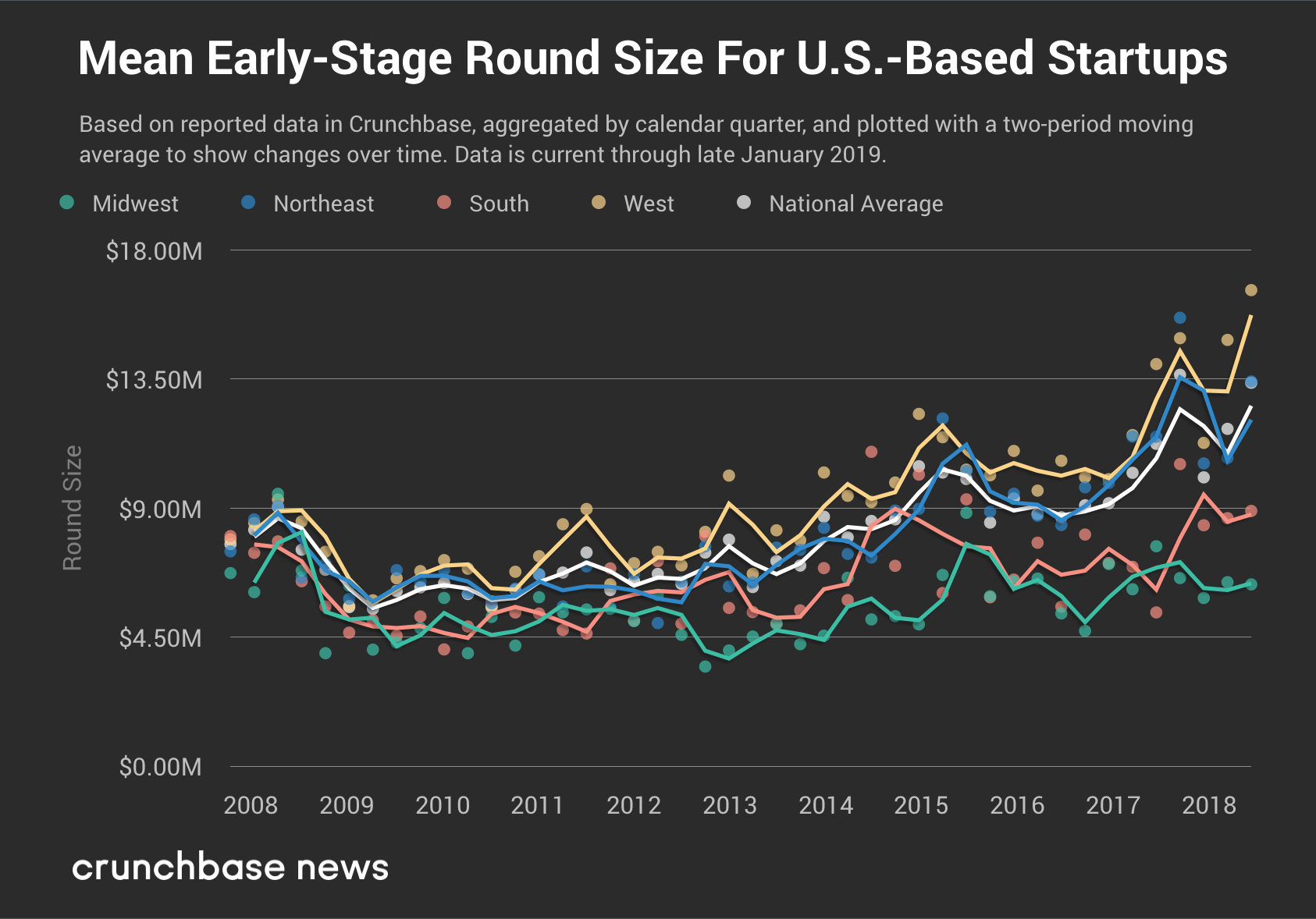
Early-stage startups throughout much of the U.S. are able to raise larger sums today than any other point in at least a decade, and there are more early-stage rounds than ever, both in North America and globally. (Note: “Early-stage” is defined here as Series A and Series B rounds, plus smaller rounds from several other round types, including equity crowdfunding and convertible notes.)

In analysis published earlier this week, we found that the nationwide average early-stage deal grew more than 20 percent between 2017 and 2018. We quantified that companies on the coasts raise more than their inland counterparts and found some indications that the Midwest lags the rest of the nation.

To find this and more, we aggregated round size data for more than 30,000 early-stage venture rounds struck with U.S.-based companies between the start of 2008 and the end of 2018. We segmented the data by the U.S. Census Bureau’s map of regions and “divisions” (basically, subregions by a different label), took the mean (average) early-stage deal size for each calendar quarter and displayed each region against the national average.

Below, you can see how early-stage rounds around the country compare to the national average. To make it easier to see trends, we display a two-period simple moving average line alongside individual data points.


Although the average has certainly crept up, part of that is attributable to a newer trend in companies raising huge sums of money. In the report, we indicated that many of the largest early-stage rounds were raised by companies in the West and Northeast. But startups in these regions don’t hold a monopoly on raising lots of money from venture capitalists.

Here, we wanted to highlight some of the biggest early-stage rounds struck by Midwestern and Southern companies. After all, the coasts tend to dominate the media’s conversation concerning tech. So, here’s some love for the middle of the country, and its biggest deals:

The five biggest early-stage VC rounds raised by Southern startups in 2018 and January 2019

  1. Hailing from Atlanta, Knock, a company aiming to help homeowners streamline the process of trading up for a new house, raised $400 million in Series B funding in a deal announced on January 15, 2019. Crunchbase News covered the transaction, which was led by Foundry Group and was composed of an undisclosed blend of equity and debt.
  2. Viela Bio, based in Gaithersburg, Maryland (which, by the Census Bureau’s definition, is in the South), is a clinical-stage therapeutics company developing novel molecules for treating severe inflammation and autoimmune disorders. The company announced $282.2 million in Series A venture funding in February 2018. Viela Bio was spun out of biopharmaceutical conglomerate AstraZeneca.
  3. Another company entering the home-flipping market is Austin-based Bungalo, which announced $250 million in Series A funding back in September 2018. Austin-based financial services company Amherst Holdings and its real estate investment subsidiary were the sole sources of capital on the deal.
  4. Another Atlanta company, Bakkt, raised $182.5 million in a Series A round announced on December 31, 2018. A number of blockchain-focused investors participated in the round, alongside Microsoft’s early-stage VC arm M12 and the Boston Consulting Group.
  5. Crunchbase News broke the story of Raleigh, NC-based gene editing company Precision BioSciences’s $110 million Series B round based on an SEC filing spotted back in June 2018. The company formally announced the round several weeks after the initial filing. The round was led by ArrowMark Partners, which was joined by nearly two dozen other new and prior investors that participated in the round.

The five biggest early-stage VC rounds raised by Midwestern startups in 2018 and January 2019

  1. Bind, a Minneapolis-based “on-demand” health insurance company, raised $60 million in a Series A round in February 2018. The company offers a core plan to cover the basics, plus the option to purchase coverage for, say, a surgery, only when that coverage is needed.
  2. Sollis Therapeutics, based in Columbus, Ohio, is developing non-opioid pain treatments. The pharmaceutical company raised $50 million in a Series A round announced in April 2018. Opioid overdoses killed 200 Americans per day in 2017. With nearly 33 deaths for every 100,000 people, Ohio is one of the states worst-affected by the surge in opioid abuse.
  3. Detroit-based sneaker and streetwear marketplace company StockX copped $44 million in Series B funding back in September 2018. Battery Ventures and GV co-led the round.
  4. Clearcover, a Chicago-based auto insurance marketplace platform, raised $43 million in a Series B round. Crunchbase News covered the transaction, which was led by Cox Enterprises. Local firm Lightbank and angel ring Hyde Park Angels participated in the round.
  5. TradingView, also based in Chicago, raised $37 million in Series B funding announced in May 2018. The company builds data analysis and social networking tools for financial market participants.

It’s true that the Bay Area is responsible for a huge chunk of the supergiant venture market, but it by no means accounts for all of it. The above should lay to rest the idea that there’s no tech in between EWR and SFO.

The infrastructural humiliation of America

I’m flying back to the USA today, and as an infrastructure aficionado, it’s nice to be going home, but I’m dreading the disappointment. I just spent two weeks in Singapore and Thailand; last year I spent time in Hong Kong and Shenzhen; and compared to modern Asia, so much American infrastructure is now so contemptible that it’s hard not to wince when I see it.

The USA is nine times wealthier than Thailand, per capita, but I’d far rather ride Bangkok’s SkyTrain than deal with NYC’s subway nowadays. I’d much prefer to fly into Don Muang, Bangkok’s ancient second-tier airport — which was actually closed for years, before being reopened to handle domestic flights and low-cost airlines — than the hostile nightmare that is LAX. And those are America’s two primary gateway cities!

So imagine what it’s like coming to America from wealthy Asian nations, and their gleaming, polished, metronomically reliable subways, trains, and airports. I don’t think Americans understand just how that comparison has become a quiet ongoing national humiliation. If they did, sheer national (and civic) pride would make them want to do something about it. Instead there’s a learned helplessness about most American infrastructure nowadays, a wrong but certain belief that it’s unrealistic to dream of anything better.

It’s not just those two cities. Compare Boston’s T to, say, Taipei, or San Francisco’s mishmash of messed-up systems — Muni, where I have waited 45 minutes for a T-Third; CalTrain, which only runs every 90 minutes on weekends; BART, which squandered millions on its useless white-elephant Millbrae station — to Shenzhen. And it’s not just age; Paris’s metro was inaugurated in 1900, but its well-maintained system continues to run excellently and expand continuously.

Americans still tend to think of themselves as an example to other nations. Ha. I assure you, over the last few years nobody has flown from Seoul or Taipei or Tokyo or Singapore or Hong Kong or Shenzhen into Newark Airport; taken the AirTrain to the NJ Transit station; waited for the rattling, decrepit train into the city; walked through the repellent ugliness of Penn Station to the subway; waited for its ever-increasing delays; ridden to their destination; and finally emerged into New York City — the nation’s alpha city! — still thinking of the USA as anything other than a counterexample, or maybe a cautionary tale.

This goes beyond transport infrastructure. Airport security measures are much more sensible in Asia. Payments are increasingly separately structured, and better, too — in many places, credit cards (which already barely exist as a concept in China) are beginning to slowly wither away, replaced by Alipay and to a lesser extent WeChat Pay. (Not least because an ever-growing proportion of the tourist population is Chinese rather than Western, nowadays.)

That’s admittedly an example of leapfrogging, not decay, and American infrastructure does still have some bright spots. American roads are mostly still superb. Lyft and Uber are much better than their Southeast Asian equivalent Grab, which, whenever I checked it during this latest trip, was invariably both slower and more expensive than a taxi (never mind a tuk-tuk) despite the infamous Thai taxi mafias. International mobile connectivity is excellent and user-friendly and reasonably priced, at least if you’re on T-Mobile like me, and as an added bonus, due to a technical quirk, mobile data roaming bypasses China’s Great Firewall.

But that doesn’t change the fact that the state of much of America’s infrastructure is appalling on its face, and even moreso when compared to nations which are on paper nowhere near as rich. The money other nations spend on urban infrastructure (don’t even get me started on intercity trains) is instead siphoned off to somewhere else. It makes the USA — still by far the wealthiest country in the world! — seem like an dying empire, one beginning to visibly crack and crumble as it is slowly hollowed out from within.

What happened? A cascading series of failures of imagination; failures to invest in the future; paralyzed or ideologically blinkered or simply idiotic governance; and, perhaps most of all, cost disease. (It frequently costs a whopping 4x as much per mile to build a subway in the USA as it costs in, say, Paris or Seoul. Sometimes even more.) What can be done? I’m pretty sure the first step is for Americans to believe that something can be done. Clearly it can. Just look across the Pacific.

Here’s the first trailer for the VR sequel to Groundhog Day

Sony Pictures is taking audiences back to Punxsutawneythis time in virtual reality.

Whether it’s an abomination and a perversion of one of the best movies in the Bill Murray oeuvre or a great way to immerse a viewer in one of the most perfectly realized worlds brought to the silver screen (I unrepentantly love Groundhog Day) is TBD. That’s for players to decide.

In Groundhog Day: Like Father Like Son players embody Phil Connors Jr., the son of Groundhog Day’s central character.

For anyone not familiar with the film, Bill Murray’s character was forced to relive the same day until he made all of the right choices to change the trajectory of his life.

In the sequel, his kid faces the same dilemma, reliving the same day over and over until, as Sony’s messaging puts it, “he learns the true value of friends and family.”

Published and produced by Sony Pictures Virtual Reality, the VR Groundhog Day sequel is co-produced by MWM Immersive, the division of Madison Wells Media — which also made Chained: A Victorian Nightmare — and developed by Tequila Works, the Madrid-based video game developer behind Deadlight and RiME.


Austin in January: Cash rich and maturing

Mary Ann Azevedo
Contributor

Mary Ann Azevedo covers startups and tech at Crunchbase News.

2019 has been good to the Austin startup scene so far.

Combined, Austin startups have raised $240.3 million in January. That’s not much less than the nearly $300 million raised in all of Q4 2018. And since the beginning of the year, the Texas capital has seen a number of double-digit funding rounds and a nearly quarter of a billion dollar acquisition.

Out of 10 known rounds, six were for $10 million or over. In recent years, Austin has historically been known for having more early-stage companies that raised more seed and Series A rounds. But if this month is any indication, its venture scene is maturing.

Just today, RigUp — an on-demand staffing platform for the oil and gas industry — announced it has secured $60 million in a Series C round. The financing was raised at a $300 million post-money valuation, according to Axios. Founders Fund led the round, which also included participation from existing backers Bedrock Capital and Quantum Energy Partners.

Also of interest is who has been investing in the city. Silicon Valley-based Bessemer Venture Partners put money into at least two of the 10 rounds: legal tech software provider DISCO’s $83 million Series E and ScaleFactor’s $30 million Series B. So, Austin startups are definitely attracting money outside of the local venture ecosystem.

Paul O’Brien, CEO of Austin-based MediaTech Ventures, believes the past few weeks provide validation for venture capitalists who have invested in the area.

“The timing is right on the mark. Just a few years into the nascent local startup scene, we witnessed the growth and enthusiasm of local mentorship and angel investment, and years later, the presence of sophisticated startup programs like Techstars, Mass Challenge and Founder Institute… and now, as if on schedule for investors, we’re seeing substantial outcomes,” he told Crunchbase News. “What’s most exciting about being a part of the local startup community is experiencing that this is really just the beginning.”

Here’s a quick rundown of some of the other big deals that were announced in Austin this month:

  • On January 3, AlertMedia closed on a $25 million Series C. The company has created a cloud-based mass notification system that aims to streamline notifications across devices and platforms.
  • Pensa Systems announced a $5 million Series A toward its mission of making retail more efficient with the use of drones.
  • On January 17, as mentioned above, back office automation startup ScaleFactor closed on a $30 million Series B led by Bessemer. The company told me at the time it saw 700 percent customer growth from 2017 to 2018, and its headcount grew by four times during the same period.
  • Dosh, maker of a cashback app, on January 22 closed on a $20 million Series B.
  • On January 23, Cision, a public relations software company, acquired Austin-based TrendKite, a media monitoring company that leverages AI, for $225 million. TrendKite will continue to be based in the Texas capital and will keep its name, according to this Austin Business Journal piece. And, its CEO Erik Huddleston, becomes president of publicly traded, Chicago-based Cision.
  • And, on January 24, Houston transplant DISCO revealed it had raised $83 million. Now, with more than $133 million in VC raised to date, DISCO says it has raised “more than any other enterprise legal tech company.”

With such a great month, Austin now has a lot of pressure to continue the momentum for the rest of the year.

Featured image credit: Mary Ann Azevedo

Facebook warned over privacy risks of merging messaging platforms

Facebook’s lead data protection regulator in Europe has asked the company for an “urgent briefing” regarding plans to integrate the underlying infrastructure of its three social messaging platforms.

In a statement posted to its website late last week the Irish Data Protection Commission writes: “Previous proposals to share data between Facebook companies have given rise to significant data protection concerns and the Irish DPC will be seeking early assurances that all such concerns will be fully taken into account by Facebook in further developing this proposal.”

Last week the New York Times broke the news that Facebook intends to unify the backend infrastructure of its three separate products, couching it as Facebook founder Mark Zuckerberg asserting control over acquisitions whose founders have since left the building.

Instagram founders, Kevin Systrom and Mike Krieger, left Facebook last year, as a result of rising tensions over reduced independence, according to our sources.

While WhatsApp’s founders left Facebook earlier, with Brian Acton departing in late 2017 and Jan Koum sticking it out until spring 2018. The pair reportedly clashed with Facebook execs over user privacy and differences over how to monetize the end-to-end encrypted platform.

Acton later said Facebook had coached him to tell European regulators assessing whether to approve the 2014 merger that it would be “really difficult” for the company to combine WhatsApp and Facebook user data.

In the event, Facebook went on to link accounts across the two platforms just two years after the acquisition closed. It was later hit with a $122M penalty from the European Commission for providing “incorrect or misleading” information at the time of the merger. Though Facebook claimed it had made unintentional “errors” in the 2014 filing.

A further couple of years on and Facebook has now graduated to seeking full platform unification of separate messaging products.

“We want to build the best messaging experiences we can; and people want messaging to be fast, simple, reliable and private,” a spokesperson told us when we asked for a response to the NYT report. “We’re working on making more of our messaging products end-to-end encrypted and considering ways to make it easier to reach friends and family across networks.”

“As you would expect, there is a lot of discussion and debate as we begin the long process of figuring out all the details of how this will work,” the spokesperson added, confirming the substance of the NYT report.

There certainly would be a lot of detail to be worked out. Not least the feasibility of legally merging user data across distinct products in Europe, where a controversial 2016 privacy u-turn by WhatsApp — when it suddenly announced it would after all share user data with parent company Facebook (despite previously saying it would never do so), including sharing data for marketing purposes — triggered swift regulatory intervention.

Facebook was forced to suspend marketing-related data flows in Europe. Though it has continued sharing data between WhatsApp and Facebook for security and business intelligence purposes, leading to the French data watchdog to issue a formal notice at the end of 2017 warning the latter transfers also lack a legal basis.

A court in Hamburg, Germany, also officially banned Facebook from using WhatsApp user data for its own purposes.

Early last year, following an investigation into the data-sharing u-turn, the UK’s data watchdog obtained an undertaking from WhatsApp that it would not share personal data with Facebook until the two services could do so in a way that’s compliant with the region’s strict privacy framework, the General Data Protection Regulation (GDPR).

Facebook only avoided a fine from the UK regulator because it froze data flows after the regulatory intervention. But the company clearly remains on watch — and any fresh moves to further integrate the platforms would trigger instant scrutiny, evidenced by the shot across the bows from the DPC in Ireland (Facebook’s international HQ is based in the country).

The 2016 WhatsApp-Facebook privacy u-turn also occurred prior to Europe’s GDPR coming into force. And the updated privacy framework includes a regime of substantially larger maximum fines for any violations.

Under the regulation watchdogs also have the power to ban companies from processing data. Which, in the case of a revenue-rich data-mining giant like Facebook, could be a far more potent disincentive than even a billion dollar fine.

We’ve reached out to Facebook for comment on the Irish DPC’s statement and will update this report with any response.

Here’s the full statement from the Irish watchdog:

While we understand that Facebook’s proposal to integrate the Facebook, WhatsApp and Instagram platforms is at a very early conceptual stage of development, the Irish DPC has asked Facebook Ireland for an urgent briefing on what is being proposed. The Irish DPC will be very closely scrutinising Facebook’s plans as they develop, particularly insofar as they involve the sharing and merging of personal data between different Facebook companies. Previous proposals to share data between Facebook companies have given rise to significant data protection concerns and the Irish DPC will be seeking early assurances that all such concerns will be fully taken into account by Facebook in further developing this proposal. It must be emphasised that ultimately the proposed integration can only occur in the EU if it is capable of meeting all of the requirements of the GDPR.

Facebook may be hoping that extending end-to-end encryption to Instagram as part of its planned integration effort, per the NYT report, could offer a technical route to stop any privacy regulators’ hammers from falling.

Though use of e2e encryption still does not shield metadata from being harvested. And metadata offers a rich source of inferences about individuals which, under EU law, would certainly constitute personal data. So even with robust encryption across the board of Instagram, Facebook and WhatsApp the unified messaging platforms could still collectively leak plenty of personal data to their data-mining parent.

Facebook’s apps are also not open source. So even WhatsApp, which uses the respected Signal Protocol for its e2e encryption, remains under its control — with no ability for external audits to verify exactly what happens to data inside the app (such as checking what data gets sent back to Facebook). Users still have to trust Facebook’s implementation but regulators might demand actual proof of bona fide messaging privacy.

Nonetheless, the push by Facebook to integrate separate messaging products onto a single unified platform could be a defensive strategy — intended to throw dust in the face of antitrust regulators as political scrutiny of its market position and power continues to crank up. Though it would certainly be an aggressive defence to more tightly knit separate platforms together.

But if the risk Facebook is trying to shrink is being forced, by competition regulators, to sell off one or two of its messaging platforms it may feel it has nothing to lose by making it technically harder to break its business apart.

At the time of the acquisitions of Instagram and WhatsApp Facebook promised autonomy to their founders. Zuckerberg has since changed his view, according to the NYT — believing integrating all three will increase the utility of each and thus provide a disincentive for users to abandon each service.

It may also be a hedge against any one of the three messaging platforms decreasing in popularity by furnishing the business with internal levers it can throw to try to artifically juice activity across a less popular app by encouraging cross-platform usage.

And given the staggering size of the Facebook messaging empire, which globally sprawls to 2.5BN+ humans, user resistance to centralized manipulation via having their buttons pushed to increase cross-platform engagement across Facebook’s business may be futile without regulatory intervention.


Startups Weekly: Even Gwyneth Paltrow had a hard time raising VC

I spent the week in Malibu attending Upfront Ventures’ annual Upfront Summit, which brings together the likes of Hollywood, Silicon Valley and Washington, DC’s elite for a two-day networking session of sorts. Cameron Diaz was there for some reason, and Natalie Portman made an appearance. Stacey Abrams had a powerful Q&A session with Lisa Borders, the president and CEO of Time’s Up. Of course, Gwyneth Paltrow was there to talk up Goop, her venture-funded commerce and content engine.

“I had no idea what I was getting into but I am so fulfilled and on fire from this job,” Paltrow said onstage at the summit… “It’s a very different life than I used to have but I feel very lucky that I made this leap.” Speaking with Frederic Court, the founder of Felix Capital, Paltrow shed light on her fundraising process.

“When I set out to raise my Series A, it was very difficult,” she said. “It’s great to be Gwyneth Paltrow when you’re raising money because people take the meeting, but then you get a lot more rejections than you would if they didn’t want to take a selfie … People, understandably, were dubious about [this business]. It becomes easier when you have a thriving business and your unit economics looks good.”

In other news…

The actor stopped by the summit to promote his startup, HitRecord . I talked to him about his $6.4 million round and grand plans for the artist-collaboration platform.

Backed by GV, Sequoia, Floodgate and more, Clover Health confirmed to TechCrunch this week that it’s brought in another round of capital led by Greenoaks. The $500 million round is a vote of confidence for the business, which has experienced its fair share of well-publicized hiccups. More on that here. Plus, Clutter, the startup that provides on-demand moving and storage services, is raising at least $200 million from SoftBank, sources tell TechCrunch. The round is a big deal for the LA tech ecosystem, which, aside from Snap and Bird, has birthed few venture-backed unicorns.

Pinterest, the nine-year-old visual search engine, has hired Goldman Sachs and JPMorgan Chase as lead underwriters for an IPO that’s planned for later this year. With $700 million in 2018 revenue, the company has raised some $1.5 billion at a $12 billion valuation from Goldman Sachs Investment Partners, Valiant Capital Partners, Wellington Management, Andreessen Horowitz, Bessemer Venture Partners and more.

Kleiner Perkins went “back to the future” this week with the announcement of a $600 million fund. The firm’s 18th fund, it will invest at the seed, Series A and Series B stages. TCV, a backer of Peloton and Airbnb, closed a whopping $3 billion vehicle to invest in consumer internet, IT infrastructure and services startups. Partech has doubled its Africa VC fund to $143 million and opened a Nairobi office to complement its Dakar practice. And Sapphire Ventures has set aside $115 million for sports and entertainment bets.

The co-founder of Y Combinator will throw a sort of annual weekend getaway for nerds in picturesque Boulder, Colo. Called the YC 120, it will bring toget her 120 people for a couple of days in April to create connections. Read TechCrunch’s Connie Loizos’ interview with Altman here.

Consumer wellness business Hims has raised $100 million in an ongoing round at a $1 billion pre-money valuation. A growth-stage investor has led the round, with participation from existing investors (which include Forerunner Ventures, Founders Fund, Redpoint Ventures, SV Angel, 8VC and Maverick Capital) . Our sources declined to name the lead investor but said it was a “super big fund” that isn’t SoftBank and that hasn’t previously invested in Hims.

Five years after Andreessen Horowitz backed Oculus, it’s leading a $68 million Series A funding in Sandbox VR. TechCrunch’s Lucas Matney talked to a16z’s Andrew Chen and Floodgate’s Mike Maples about what sets Sandbox apart.

Here’s your weekly reminder to send me tips, suggestions and more to [email protected] or @KateClarkTweets

In a new class-action lawsuit, a former Munchery facilities worker is claiming the startup owes him and 250 other employees 60 days’ wages. On top of that, another former employee says the CEO, James Beriker, was largely absent and is to blame for Munchery’s downfall. If you haven’t been keeping up on Munchery’s abrupt shutdown, here’s some good background.

Consolidation in the micromobility space has arrived — in Brazil, at least. Not long after Y Combinator-backed Grin merged its electric scooter business with Brazil-based Ride, it’s completing another merger, this time with Yellow, the bike-share startup based in Brazil that has also expressed its ambitions to get into electric scooters.

If you enjoy this newsletter, be sure to check out TechCrunch’s venture-focused podcast, Equity. In this week’s episode, available here, Crunchbase editor-in-chief Alex Wilhelm, TechCrunch’s Silicon Valley editor Connie Loizos and Jeff Clavier of Uncork Capital chat about $100 million rounds, Stripe’s mega valuation and Pinterest’s highly anticipated IPO.

Japan’s “Society 5.0” initiative is a roadmap for today’s entrepreneurs

Mark Minevich
Contributor

Mark Minevich is a digital fellow at IPSoft.

Japan, still suffering the consequences of its ‘Lost Decade’ of economic stagnation, is eyeing a transformation more radical than any the industrialized world has ever seen.

Boldly identified as “Society 5.0” Japan describes its initiative as a purposeful effort to create a new social contract and economic model by fully incorporating the technological innovations of the fourth industrial revolution. It envisions embedding these innovations into every corner of its ageing society. Underpinning this effort is a mandate for sustainability, bound tightly to the new United Nations global goals, the SDG’s. Japan wants to create, in its own words, a ‘super-smart’ society, and one that will serve as a roadmap for the rest of the world.

Japan hosts its first ever G20 summit in 2019 and this grand initiative will be on the agenda at the official B20 (Business 20) summit headed by the chairman of Hitachi .

Components of Society 5.0 and its implications for the US

Society 5.0 addresses a number of key pillars: infrastructure, finance tech, healthcare, logistics, and of course AI. The markets being grown in Japan are impressive. In robotics they predict $87 billion in investments and the IoT market is poised to hit $6 Billion in 2019

This means we are behind. We have not put enough focus on what AI can do not only for industry, but what it can do to move society forward and solve many of our most pervasive problems.

It isn’t just a problem of lack of investment by the United States government. Just this past September the Department of Defense announced a commitment of  $2 billion over the next five years toward new programs advancing artificial intelligence. This issue lies in the lack of a complete partnership between the United States Government and the private sector. But, why is Japan in the lead?

Full Fledged Embrace of AI and Cutting Edge Technology

Along with $1.44 billion from the government for AI funding, the Innovation Network Corp. of Japan is reorganizing to focus on AI and big data. They are projected to grow to $4 billion and operate to at least 2034. Much like in Britain and France, the government has made it a point to team with the private sector to move all of society forward.

Fresh Ideas to address Persistent Societal Problems

Along with the governmental and private partnership, Society 5.0 harnesses AI to address problems that continue to plague society. They are looking at how AI can help with the trappings of an aging population, pollution, and most importantly, how create such a sweeping initiate that is also agile enough to adjust to constant change of society everyday.

The goal of the work being done at Hitachi now on Society 5.0 is to create a Human-Centered Society. Technologies and innovations need to be leveraged to aid humans and our advancement, not to replace us in anyway.

How do American Technologists Close the Gap and partner with Japan?

First, in Silicon valley and beyond, American technologists and entrepreneurs must create a partnership between themselves and the U.S. government. Only when working together can we reach our full potential.

Take the British government as a model. This past April they announced a that it had put together “an AI deal worth more than £1 billion” that includes public and private funding.

France sees the opportunity and is betting on AI as well. This past spring President Emmanuel Macron announced an AI plan that includes $1.6 billion in funding, new research centers, data-sharing initiatives. The road has been clearly mapped for the U.S., just follow the path.

Next, American technologists and entrepreneurs must focus on certain industries and their ability to improve society in its entirety. There are 4 major industries technologists and entrepreneurs can focus on, and disrupt by modeling Japan’s Society 5.0 ideas and approach.

Healthcare

Japan’s society is more heavily weighted towards people over 60 than the rest of the world. In turn, more healthcare is needed to support people for a longer period of time as people live longer.

American technologists and entrepreneurs can capitalize by investing in and developing cognitive AI technologies that will greatly lessen the time needed to complete administrative tasks to allowing medical professionals to concentrate more on actually providing healthcare.

A UK  report suggests approximately 10% of NHS operational expenses could be saved through AI and automation. If this can be mirrored and then improved in the US the rising cost of healthcare, and declining public health can be tackled simultaneously.

Mobility

While the population in urban centers is growing, rural areas are being left with diminished access to everyday needs like, transportation, stores, hospitals, and community centers.
Continue to invest and develop autonomous vehicles, drones and single-driver cargo truck convoys. Access to basic everyday needs will not be a given for those residing far from urban centers. Here lies another dual opportunity for technologists and entrepreneurs, service those in need while simultaneously moving tech and society forward.

Infrastructure

28 percent of major U.S. roads are rated “poor” or in need of a complete rebuild. AI and other technologies such as robots, drones, sensors and IoT will help solve these problems. How? If only 10 percent of cars in the  U.S. became self-driving, those 26 million vehicles would generate 38.4 zettabytes of data annually.  In one year that would create over eight times the volume of the world’s current data.

Not only must we increase investment in autonomous vehicles, but we must make a concerted effort to leverage the data they will produce. Technologists and entrepreneurs will have an unprecedented advantage to leverage this data to predict everything from needs of infrastructure improvements to all bridges and roads being used by the autonomous vehicles. Companies like Hitachi are the ones you should look to work with. They’re doing amazing things in infrastructure today. How can this be translated to the U.S.? That is a question for you to ask and ultimately solve.

Mass transit is far ahead in Japan as well. Japan’s maglev train set a world record speed of 375 mph. With vast expanses of the United States landscape, and the ever growing challenges of flying, the rail transport industry is ripe for the picking. Plans for the midwest and the west coast have seem to come and go. What will be the plan that actually works?

Fintech

Blockchain is a  solution that will advance security, transparency and fraud prevention in society. Cognitive AI is producing results towards the goals of Society 5.0, ether it be a cashless society or a consumer focused one. Voice prompted AI assistants are currently providing consumer support by depositing money, performing trades, mastering trading platforms, networking, and onboarding of customers. This Omni-channel integration will result in finance and banking evolving to grow around customers needs. With this evolution we will see far less needs for cash and brick and mortar banks.

In the end, data alone is just code without meaning to its user. But, when technologists and entrepreneurs implement AI to its max potential a true difference will be seen. In Society 5.0, humanity and machines will solve the greatest issues society faces in the 21st century. We must embrace what Japan is creating with Society 5.0, or we will simply become a vestige of the technological past.


Apple’s long-time Siri leader reportedly no longer in charge

The man who has headed up Siri at Apple since 2012 is no longer at the helm, according to The Information. Bill Stasior remains at the company in a different role, the report states.

We’ve reached out to Apple for comment.

Stasior joined Apple to take over Siri in 2012 after being poached from Amazon’s A9 retail search team. At this in time, most of the original Siri co-founders had already left Apple and Stasior was tasked with taking on the mantle of deciding where the digital assistant should move next.

Siri has had a troubled history at Apple. Though the voice assistant arrived with a big splash, the company’s inability to iterate the product quickly left its competitors ample opportunity to leapfrog its capabilities. Something that both Amazon and Google clearly have with their Alexa and Google Assistant platforms.

This past April, Apple hired Google’s John Giannandrea to lead AI and machine learning efforts at the company, a division that includes Siri and CoreML. Giannandrea is expected to be leading the search for a new leader for the Siri team, the report says.