HiHello raises $2.5 million to finally fix contact management

HiHello, the latest startup to take aim at business cards with its own digital alternative, has raised a $2.5 million seed round to continue its efforts in building a better contact management solution designed for the mobile era. The new financing was led by August Capital, K9 Ventures and TenOneTen Ventures, and will see Villi Iltchev from August Capital joining the HiHello board as a result.

The round closed last year, but hadn’t been announced.

The now six-month-old startup was dreamed up by K9 Ventures founder Manu Kumar, along with co-founder and Caltech and Columbia alum Hari Ravi. Notably, Kumar has been trying to solve the problem of contact management for years, having co-founded and sold his startup CardMunch to LinkedIn — a decision he later regretted, saying last year he was “still peeved” at LinkedIn for ruining and eventually killing the product. (LinkedIn later pawned off its ashes to Evernote.)

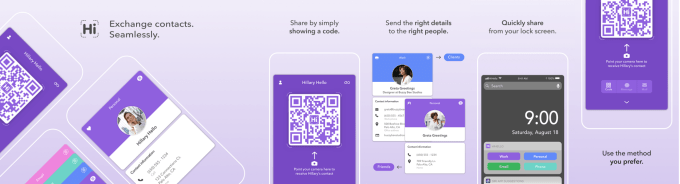
With HiHello, Kumar is giving contact management and business networking another shot. Version 1 of the app offered a simple solution that lets users exchange contact information by way of scanning a QR code with their phone’s native camera app, or by sharing information using SMS or email. The mobile app lets you create custom profiles in order to share with another person either your work contact information, personal details or any other custom profiles you want.

As HiHello enters its next phase, the company aims to pick up some of the better ideas from past apps in this space — like Plaxo, Bump and even CardMunch — while also overcoming their limitations.

For example, Bump had once required that both people have the app installed in order to work. HiHello today already works if only one person has the app. But it will roll out a more elegant solution for when two HiHello users are present. A “Nearby” screen in the app will allow people to share contact information with one another based on a dual opt-in system.

From Plaxo, HiHello will adopt the idea of automatically updating contact information for everyone who has the user in their address book when information is changed.

The startup is taking a different approach to privacy than Plaxo did, saying it won’t spam or sell user data, nor will it ask permission to access your contacts. Instead, HiHello will act as an address book provider whose database of contacts you can add to your device. This keeps it isolated and separate from other address sources, and ensures it won’t “mess up” your own contacts in the process.

“There will be a base level of features that are available for free, but our goal is to build a sustainable (and profitable) company that delivers value to customers,” says Kumar. “The full functionality will come with paid subscription to HiHello. We’re never going to sell users data or rely on advertising and such. We’re not ready to talk about pricing and other details just yet, as we’re still in build mode.”

Kumar says he doesn’t want to make the same mistake he did with CardMunch. Instead, he wants the company to be sustainable, “so that we never have to sell HiHello to an acquirer who will then proceed to ruin the service and kill it.”

Yep, that LinkedIn deal still stings, it seems… Hopefully HiHello will meet a better fate.

Instagram’s fundraiser stickers could lure credit card numbers

Mark Zuckerberg recently revealed that commerce is a huge part of the 2019 road map for Facebook’s family of apps. But before people can easily buy things from Instagram etc., Facebook needs their credit card info on file. That’s a potentially lucrative side effect of Instagram’s plan to launch a Fundraiser sticker in 2019. Facebook’s own Donate buttons have raised $1 billion, and bringing them to Instagram’s 1 billion users could do a lot of good while furthering Facebook’s commerce strategy.

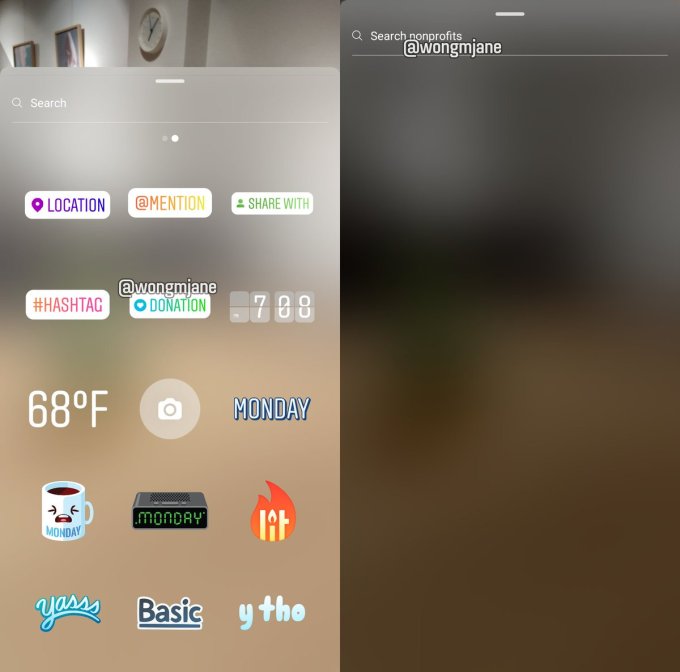
New code and imagery dug out of Instagram’s Android app reveals how the Fundraiser stickers will allow you to search for nonprofits and add a Donate button for them to your Instagram Story. After you’ve donated to something once, Instagram could offer instant checkout on stuff you want to buy using the same payment details.

Back in 2013 when Facebook launched its Donate button, I suggested that it could add a “remove credit card after checkout” option to its fundraisers if it wanted to make it clear that the feature was purely altruistic. Facebook never did that. You still need to go into your payment settings or click through the See Receipt option after donating and then edit your account settings to remove your credit card. We’ll see if Instagram is any different. We’ve also asked whether Instagrammers will be able to raise money for personal causes, which would make it more of a competitor to GoFundMe — which has sadly become the social safety net for many facing healthcare crises.

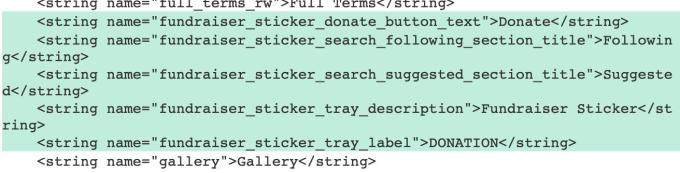
Facebook mentioned at its Communities Summit earlier this month that it’d be building Instagram Fundraiser stickers, but the announcement was largely overshadowed by the company’s reveal of new Groups features. This week, TechCrunch tipster Ishan Agarwal found code in the Instagram Android app detailing how users will be able search for nonprofits or browse collections of Suggested charities and ones they follow. They can then overlay a Donate button sticker on their Instagram Story that their followers can click through to contribute.

We then asked reverse-engineering specialist Jane Manchun Wong to take a look, and she was able to generate the screenshots seen above that show a green heart icon for the Fundraiser sticker plus the nonprofit search engine. A Facebook spokespeople tells me that “We are in early stages and working hard to bring this experience to our community . . . Instagram is all about bringing you closer to the people and things you love, and a big part of that is showing support for and bringing awareness to meaningful communities and causes. Later this year, people will be able to raise money and help support nonprofits that are important to them through a donation sticker in Instagram Stories. We’re excited to bring this experience to our community and will share more updates in the coming months.”

Zuckerberg said during the Q4 2018 earnings call last month that “In Instagram, one of the areas I’m most excited about this year is commerce and shopping . . . there’s also a very big opportunity in basically enabling the transactions and making it so that the buying experience is good.” Streamlining those transactions through saved payment details means more people will complete their purchase rather than abandoning their cart. Facebook CFO David Wehner noted on the call that “Continuing to build good advertising products for our e-commerce clients on the advertising side will be a more important contributor to revenue in the foreseeable future.” Even though Facebook isn’t charging a fee on transactions, powering higher commerce conversion rates convinces merchants to buy more ads on the platform.

With all the talk of envy spiraling, phone addiction, bullying and political propaganda, enabling donations is at least one way Instagram can prove it’s beneficial to the world. Snapchat lacks formal charity features, and Twitter appears to have ended its experiment allowing nonprofits to tweet donate buttons. Despite all the flack Facebook rightfully takes, the company has shown a strong track record with philanthropy that mirrors Zuckerberg’s own $47 billion commitment through the Chan Zuckerberg Initiative. And if having some relatively benign secondary business benefit speeds companies toward assisting nonprofits, that’s a trade-off we should be willing to embrace.

Google Assistant Actions up 2.5x in 2018 to reach 4,253 in the US

In addition to competing for smart speaker market share, Google and Amazon are also competing for developer mindshare in the voice app ecosystem. On this front, Amazon has soared ahead — the number of available voice skills for Alexa devices has grown to top 80,000 the company recently announced. According to a new third-party analysis from Voicebot, Google is trailing that by a wide margin with its own voice apps, called Google Assistant Actions, which total 4,253 in the U.S. as of January 2019.

For comparison, 56,750 of Amazon Alexa’s total 80,000 skills are offered in the U.S.

The report notes that the number of Google Assistant Actions have grown 2.5 times over the past year — which is slightly faster growth than seen on Amazon Alexa, whose skill count grew 2.2 times during the same period. But the total is a much smaller number, so growth percentages may not be as relevant here.

In January 2018, there were 1,719 total Google Assistant Actions in the U.S., the report said. In 2017, the number was in the low hundreds in the beginning of the year, and reached 724 by October 2017.

Voicebot also examined which categories of voice apps were popular on Google Assistant platforms.

It found that three of the 18 categories accounted for more than one-third of all Google Assistant Actions: Education & Reference; Games & Fun; and Kids & Family.

The Education category topped the list with more than 15 percent of all Actions, while Games & Fun was 11.07 percent and Kids & Family was 9.29 percent.

Local and Weather were the least popular.

On Alexa, the top categories differ slightly. Though Games & Fun is popular on Google, its Alexa equivalent — Games & Trivia — is the No. 1 most popular category, accounting for 21 percent of all skills. Education was second most popular at around 14 percent.

It’s interesting that these two top drivers for voice apps are reversed on the two platforms.

That could indicate that Alexa is seen to be the more “fun” platform, or one that’s more oriented toward use by families and gaming. Amazon certainly became aware of the trend toward voice gaming, and fanned the flames by making games the first category it paid developers to work on by way of direct payments. That likely encouraged more developers to enter the space, and subsequently helped boost the number of games — and types of gaming experiences — available for Alexa.

Voicebot’s report rightly raises the question as to whether or not the raw skill count even matters, though.

After all, many of the Alexa skills offered today are of low quality, or more experimental attempts from developers testing out the platform. Others are just fairly basic — the voice app equivalent of third-party flashlight apps for iPhone before Apple built that feature into iOS. For example, there now are a handful of skills that turn on the light on Echo speakers so you can have a nightlight by way of the speaker’s blue ring.

But even if these early efforts sometimes fall short, it does matter that Alexa is the platform developers are thinking about, as it’s an indication of platform commitment and an investment on developers’ part. Google, on the other hand, is powering a lot of its Assistant’s capabilities itself, leaning heavily on its Knowledge Base to answer users’ questions, while also leveraging its ability to integrate with Google’s larger suite of apps and services, as well as its other platforms, like Android.

In time, Google Assistant may challenge Alexa further by capitalizing on geographic expansions, but for the time being, Alexa is ahead on smart speakers as well as, it now seems, on content.

SoftBank and Mubadala grow closer

The Japanese conglomerate SoftBank and Mubadala, the Abu Dhabi state investment company, have a closely intertwined relationship, and it’s one that the two are further cementing. According to the Financial Times, SoftBank has just committed half the capital for a new $400 million fund from Mubadala that aims to back European startups.

Industry observers might remember that Mubadala committed $15 billion to SoftBank’s massive Vision Fund as it was first being put together in 2017. Soon after, Mubadala opened a San Francisco office, as well as structured a $400 million fund designed to invest in early-stage startups to which SoftBank committed some capital.

The pact was understandable, including because Mubadala’s early-stage fund could theoretically provide SoftBank with a better idea of what’s happening at companies that are earlier in their trajectories than SoftBank typically sees. The move was also meant to better enable Mubadala to oversee the money it committed to SoftBank.

The newer fund appears to be raising questions, however. At least, the FT notes that the timing is “unusual,” given that SoftBank is currently saddled with $154 billion in gross debt. The new fund also “raises the prospect that Mubadala’s influence with the Vision Fund will only grow by allowing it to shape SoftBank’s tech investments,” as suggest by the FT’s sources.

Yet SoftBank may not have much choice but to work increasingly closely with Abu Dhabi. As the company’s CEO, Masayoshi Son, said earlier this month, the Vision Fund has spent about $50 billion of its approximately $99 billion in capital. Given the rate at which it has been investing (it just plugged nearly $1 billion into a company last week), its remaining funds might not last through 2020.

Meanwhile, it isn’t clear whether SoftBank enjoys the solid relationship that it once did with the Vision Fund’s biggest anchor investor, the kingdom of Saudi Arabia, which provided SoftBank with a $45 billion commitment for its current fund and that SoftBank was largely counting on to be its biggest backer in a second Vision Fund.

On October 3rd of last year, Bloomberg journalists talked with Saudi Arabia’s Crown Prince Mohammed bin Salman (or MBS), and he said he planned to invest a further $45 billion in SoftBank. Yet what few knew then was that five days earlier, journalist and Saudi regime critic Jamal Khashoggi had vanished after going into the Saudi consulate in Istanbul. As questions, and concern, began to spread over MBS’s involvement in the disappearance, many business executives canceled plans to visit Riyadh, where Saudi Arabia hosted an investment conference in the middle of October. Son was among them, even as he tried hedging his bets by visiting privately with MBS in Riyadh the night before the event began.

Whether that move angered MBS remains to be seen. It also isn’t clear whether the CIA’s eventual findings that MBS ordered Khashoggi’s murder, or the unflattering attention paid to Saudi Arabia because of that murder, is impacting where SoftBank is able to invest its capital.

Son, for his part, declined to say earlier this month whether he would consider taking more money from Saudi sources — which is perhaps telling in itself.

In the meantime, it’s barreling ahead with Mubadala, which will reportedly use its new fund to write to European startups checks of between $5 million and $30 million.

As with Mubadala’s San Francisco-based team, the idea appears to be to act as a funnel for SoftBank’s Vision Fund, steering it deals that Mubadala’s team sees as the most promising in its portfolio.

Mubadala’s European venture fund will be run out of a new office in London, which is expected to open this spring. The Vision Fund is currently also headquartered in London, with another office in San Francisco and, soon, offices expected in Shanghai, Beijing and Hong Kong.

VPN protocol WireGuard now has an official macOS app

WireGuard could be the most promising VPN protocol in years. It lets you establish a connection with a VPN server that is supposed to be faster, more secure and more flexible at the same time. The developers launched a brand new app in the Mac App Store today.

WireGuard isn’t a VPN service, it’s a VPN protocol, just like OpenVPN or IPsec. The best thing about it is that it can maintain a VPN connection even if you change your Wi-Fi network, plug in an Ethernet cable or your laptop goes to sleep.

But if you want to use WireGuard for your VPN connection you need to have a VPN server that supports it, and a device that supports connecting to it. You can already download the WireGuard app on Android and iOS, but today’s release is all about macOS.

The team behind WireGuard has been working on a macOS implementation for a while. But it wasn’t as straightforward as an app. You could install WireGuard-tools using Homebrew and then establish a connection using a command line in the Terminal.

It’s much easier now, as you just have to download an app in the Mac App Store and add your server profile. The app is a drop-down menu in the menu bar. You can manage your tunnel and activate on-demand connections for some scenarios. For instance, you could choose to activate your VPN exclusively if you’re connected to the internet using Wi-Fi, and not Ethernet.

I tried the app and it’s as snappy and reliable as expected. The app leverages Apple’s standard Network Extension API to add VPN tunnels to the network panel in the settings.

If you want to try WireGuard yourself, I recommend building your own VPN server using Algo VPN. Don’t trust any VPN company that sells you a subscription or lets you access free VPN servers. A VPN company can see all your internet traffic on their own servers, which is a big security risk.

Assume that those companies analyze your browsing habits, sell them to advertisers, inject their own ads on non-secure pages or steal your identity. The worst of them can hand to authorities a ton of data about your online life.

They lie in privacy policies and often don’t even have an About page with the names of people working for those companies. They spend a ton of money buying reviews and endorsements. You should avoid VPN companies at all costs.

If you absolutely need a VPN server because you can’t trust the Wi-Fi network or you’re traveling to a country with censored websites, make sure you trust the server.

YouTube under fire for recommending videos of kids with inappropriate comments

More than a year on from a child safety content moderation scandal on YouTube and it takes just a few clicks for the platform’s recommendation algorithms to redirect a search for “bikini haul” videos of adult women towards clips of scantily clad minors engaged in body contorting gymnastics or taking an ice bath or ice lolly sucking “challenge.”

A YouTube creator called Matt Watson flagged the issue in a critical Reddit post, saying he found scores of videos of kids where YouTube users are trading inappropriate comments and timestamps below the fold, denouncing the company for failing to prevent what he describes as a “soft-core pedophilia ring” from operating in plain sight on its platform.

He has also posted a YouTube video demonstrating how the platform’s recommendation algorithm pushes users into what he dubs a pedophilia “wormhole,” accusing the company of facilitating and monetizing the sexual exploitation of children.

We were easily able to replicate the YouTube algorithm’s behavior that Watson describes in a history-cleared private browser session which, after clicking on two videos of adult women in bikinis, suggested we watch a video called “sweet sixteen pool party.”

Clicking on that led YouTube’s side-bar to serve up multiple videos of prepubescent girls in its “up next” section where the algorithm tees-up related content to encourage users to keep clicking.

Videos we got recommended in this side-bar included thumbnails showing young girls demonstrating gymnastics poses, showing off their “morning routines,” or licking popsicles or ice lollies.

Watson said it was easy for him to find videos containing inappropriate/predatory comments, including sexually suggestive emoji and timestamps that appear intended to highlight, shortcut and share the most compromising positions and/or moments in the videos of the minors.

We also found multiple examples of timestamps and inappropriate comments on videos of children that YouTube’s algorithm recommended we watch.

Some comments by other YouTube users denounced those making sexually suggestive remarks about the children in the videos.

Back in November 2017, several major advertisers froze spending on YouTube’s platform after an investigation by the BBC and the Times discovered similarly obscene comments on videos of children.

Earlier the same month YouTube was also criticized over low-quality content targeting kids as viewers on its platform.

The company went on to announce a number of policy changes related to kid-focused video, including saying it would aggressively police comments on videos of kids and that videos found to have inappropriate comments about the kids in them would have comments turned off altogether.

Some of the videos of young girls that YouTube recommended we watch had already had comments disabled — which suggests its AI had previously identified a large number of inappropriate comments being shared (on account of its policy of switching off comments on clips containing kids when comments are deemed “inappropriate”) — yet the videos themselves were still being suggested for viewing in a test search that originated with the phrase “bikini haul.”

Watson also says he found ads being displayed on some videos of kids containing inappropriate comments, and claims that he found links to child pornography being shared in YouTube comments too.

We were unable to verify those findings in our brief tests.

We asked YouTube why its algorithms skew toward recommending videos of minors, even when the viewer starts by watching videos of adult women, and why inappropriate comments remain a problem on videos of minors more than a year after the same issue was highlighted via investigative journalism.

The company sent us the following statement in response to our questions:

Any content — including comments — that endangers minors is abhorrent and we have clear policies prohibiting this on YouTube. We enforce these policies aggressively, reporting it to the relevant authorities, removing it from our platform and terminating accounts. We continue to invest heavily in technology, teams and partnerships with charities to tackle this issue. We have strict policies that govern where we allow ads to appear and we enforce these policies vigorously. When we find content that is in violation of our policies, we immediately stop serving ads or remove it altogether.

A spokesman for YouTube also told us it’s reviewing its policies in light of what Watson has highlighted, adding that it’s in the process of reviewing the specific videos and comments featured in his video — specifying also that some content has been taken down as a result of the review.

However, the spokesman emphasized that the majority of the videos flagged by Watson are innocent recordings of children doing everyday things. (Though of course the problem is that innocent content is being repurposed and time-sliced for abusive gratification and exploitation.)

The spokesman added that YouTube works with the National Center for Missing and Exploited Children to report to law enforcement accounts found making inappropriate comments about kids.

In wider discussion about the issue the spokesman told us that determining context remains a challenge for its AI moderation systems.

On the human moderation front he said the platform now has around 10,000 human reviewers tasked with assessing content flagged for review.

The volume of video content uploaded to YouTube is around 400 hours per minute, he added.

There is still very clearly a massive asymmetry around content moderation on user-generated content platforms, with AI poorly suited to plug the gap given ongoing weakness in understanding context, even as platforms’ human moderation teams remain hopelessly under-resourced and outgunned versus the scale of the task.

Another key point YouTube failed to mention is the clear tension between advertising-based business models that monetize content based on viewer engagement (such as its own), and content safety issues that need to carefully consider the substance of the content and the context in which it has been consumed.

It’s certainly not the first time YouTube’s recommendation algorithms have been called out for negative impacts. In recent years the platform has been accused of automating radicalization by pushing viewers toward extremist and even terrorist content — which led YouTube to announce another policy change in 2017 related to how it handles content created by known extremists.

The wider societal impact of algorithmic suggestions that inflate conspiracy theories and/or promote bogus, anti-factual health or scientific content have also been repeatedly raised as a concern — including on YouTube.

And only last month YouTube said it would reduce recommendations of what it dubbed “borderline content” and content that “could misinform users in harmful ways,” citing examples such as videos promoting a fake miracle cure for a serious illness, or claiming the earth is flat, or making “blatantly false claims” about historic events such as the 9/11 terrorist attack in New York.

“While this shift will apply to less than one percent of the content on YouTube, we believe that limiting the recommendation of these types of videos will mean a better experience for the YouTube community,” it wrote then. “As always, people can still access all videos that comply with our Community Guidelines and, when relevant, these videos may appear in recommendations for channel subscribers and in search results. We think this change strikes a balance between maintaining a platform for free speech and living up to our responsibility to users.”

YouTube said that change of algorithmic recommendations around conspiracy videos would be gradual, and only initially affect recommendations on a small set of videos in the U.S.

It also noted that implementing the tweak to its recommendation engine would involve both machine learning tech and human evaluators and experts helping to train the AI systems.

“Over time, as our systems become more accurate, we’ll roll this change out to more countries. It’s just another step in an ongoing process, but it reflects our commitment and sense of responsibility to improve the recommendations experience on YouTube,” it added.

It remains to be seen whether YouTube will expand that policy shift and decide it must exercise greater responsibility in how its platform recommends and serves up videos of children for remote consumption in the future.

Political pressure may be one motivating force, with momentum building for regulation of online platforms — including calls for internet companies to face clear legal liabilities and even a legal duty care toward users vis-à-vis the content they distribute and monetize.

For example, U.K. regulators have made legislating on internet and social media safety a policy priority — with the government due to publish this winter a white paper setting out its plans for ruling platforms.

Apple could be looking for its next big revenue model

Apple has always been an evolving company. While it never really invented any product categories, it always seemed to make those product categories work better and smarter. It also found a way to make us want them, even when they were more expensive. Today, the WSJ reports, Apple is trying to find its way to a future without the iPhone at the center of its revenue model.

This shift happens as Apple reported lower revenue for the first time in years against a backdrop of flagging iPhone demand. Part of the problem is a shifting Chinese market, but it’s also due to people simply taking longer to refresh their phones. As that happens, and the price of iPhones soared to more than $1,000, there has been a decline in sales.

With iPhone sales down 15 percent, this was not a typical Apple earnings report, but it was something the company had anticipated when it announced lower Q1 guidance at the beginning of the year. If The Wall Street Journal story is accurate, Apple is already trying to take steps to move the company into its next phase, possibly as a services business.

If that’s the case, it would mark a radical departure from the company’s history in which it has redesigned various types of hardware, bucking popular design trends along the way. Back in the 1970s and 1980s when it was called Apple Computer, Steve Jobs and Steve Wozniak made computers with a GUI when most people were working from the DOS prompt.

In the early 2000s, Apple came out with an MP3 player called the iPod and opened a music store called iTunes. By 2006, the year before it would introduce the iPhone, Apple had sold more than 42 million units and 850 million songs. It was a combination of hardware and services that helped transform a flagging company into a powerhouse.

In 2007, when Apple introduced the iPhone, it knew that it would begin to eat into iPod sales, and it eventually did, but it didn’t matter because it was the next logical step forward. When it introduced the App Store in 2008, the iPhone became more than a standalone piece of hardware. It was a new kind of hardware-service model and it would generate incredible wealth for the company.

The iPad came along in 2009 and the Apple Watch five years later, in 2014. While each has done reasonably well, nothing has touched the success of the iPhone. Keep in mind that analysts estimated that Apple sold 71 million iPhones last quarter, and this was in a quarter in which sales declined. It’s hard to sell 71 million units of anything in a three-month period and have it be a down quarter.

What comes next is probably some combination of entertainment/content and making use of advancing technologies like AR/VR, driverless cars and artificial intelligence. It’s unclear which direction Apple will take in these areas, but we do know that recent hires and acquisitions point in these directions.

There has long been speculation that Apple could make a splashy acquisition in the content area. When Eddie Cue, Apple senior vice president of internet software and services was interviewed by CNN’s Dylan Byers at South by Southwest last year, Buyers specifically asked Cue about buying a property like Netflix or Disney. He implied that it was about taking the Apple TV and combining that with a big-name content production company.

Cue indicated that the two companies were great partners for Apple TV, but he wasn’t ready to commit to anything along those lines. “Generally, in the history of Apple, we haven’t made huge acquisitions.” He went on to explain, from Apple’s perspective, it wants to figure out where the future is and to build something to get it there, rather than buying something that is working for the current state of affairs.

It’s worth noting that Apple TV has not matched the huge success of its other devices, but service revenue has been growing steadily. In the most recent earnings report, Apple reported services revenue of $10.9 billion, up 19 percent year over year. That’s still a small percentage of the overall $84.3 billion the company reported for the quarter, but it is growing.

Regardless, nobody can know if Apple can approach the success with any product that it has had with the iPhone. But it knows that in spite of its vast riches, it’s dangerous for any company to rest on its past success. So it looks ahead and hires new blood and looks for a future with less dependence on the iPhone because it knows, as the Grateful Dead once sang, “You can’t go back and you can’t stand still. If the thunder won’t get you, then the lightning will.” Apple is hoping to avoid that fate, and perhaps it is some new combination of hardware, content and services that could lead the way.

Daily Crunch: Stop repeating this privacy lie

The Daily Crunch is TechCrunch’s roundup of our biggest and most important stories. If you’d like to get this delivered to your inbox every day at around 9am Pacific, you can subscribe here.

1. Stop saying, ‘We take your privacy and security seriously’

Zack Whittaker says that in his years covering cybersecurity, there’s one variation of the same lie that floats above the rest: “We take your privacy and security seriously.”

The truth is, most companies don’t care about the privacy or security of your data. They care about having to explain to their customers that their data was stolen. And when they use this line, it shows that they don’t know what to do next.

2. SeaBubbles shows off its ‘flying’ all-electric boat in Miami

We were promised flying cars but, as it turns out, “flying” boats were easier to build. And by “flying,” I mean “raising the hull of the boat out of the water with foils.”

3. Australia’s government and political parties hit by cyberattack from ‘sophisticated state actor’

PM Scott Morrison said the computer network of the country’s parliament, and those belonging to Liberal, Labor and Nationals parties, were targeted by an attack that took place a few weeks ago, according to The Sydney Morning Herald. Australia is months away from federal elections.

Jeff Bezos - WIRED25 Summit: WIRED Celebrates 25th Anniversary With Tech Icons Of The Past & Future

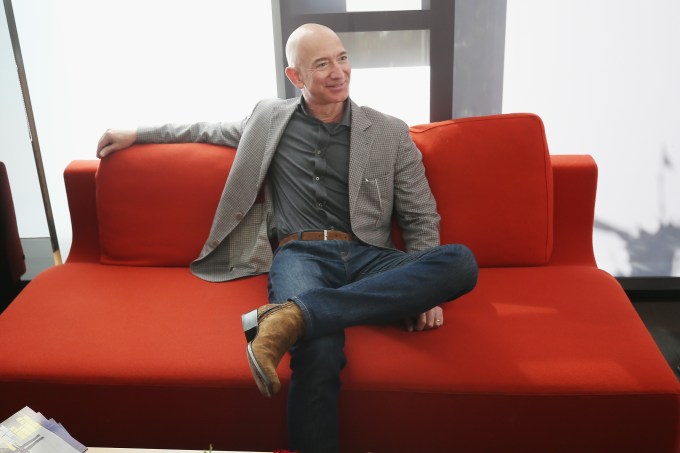
SAN FRANCISCO, CA – OCTOBER 15: Jeff Bezos attends WIRED25 Summit: WIRED Celebrates 25th Anniversary With Tech Icons Of The Past & Future on October 15, 2018 in San Francisco, California.

4. What business leaders can learn from Jeff Bezos’ leaked texts

Wickr’s Joel Wallenstrom makes the case that when corporate executives take a laissez-faire approach to digital privacy, their employees and organizations will follow suit.

5. China tells teachers to quit assigning homework through WeChat

The regional call to action follows a set of national guidelines released by the Ministry of Education in October directing teachers and schools to take more responsibilities rather than shift the load onto parents.

6. Razer is closing its game store after less than a year

The Razer Game Store launched worldwide in April 2018 with the aim of taking a slice of a business dominated by Steam. The company didn’t comment on why the store is closing, but you’d imagine that it didn’t go as well as Razer had hoped.

7. Monday podcast roundup

This week, Equity discusses Peloton’s plans for an IPO, while Original Content reviews “Russian Doll” and interviews the filmmakers behind “The Breaker Upperers.”

Netflix cancels ‘Jessica Jones’ and ‘The Punisher,’ its last Marvel shows

Netflix is no longer in the Marvel superhero business, with the cancellation of “Jessica Jones” and “The Punisher.”

The writing has been on the wall since last fall, when the streaming service canceled its other three Marvel shows — “Iron Fist,” “Luke Cage” and “Daredevil.” Plus, showrunner Melissa Rosenberg was already announced to leave “Jessica Jones” after the upcoming third season.

There have been conflicting reports about which company ultimately decided to pull the plug, but this does seem to be part of a broader corporate rift, with Disney ending its overall deal with Netflix and producing Marvel shows for its yet-to-launch streaming service.

Disney has also announced a slate of animated Marvel series on Hulu (where Disney will become the majority owner, post-Fox acquisition), following a similar structure to the Netflix shows — four separate series followed by a big crossover.

Netflix, meanwhile, just released the first season of “The Umbrella Academy,” an offbeat superhero series based on the comics by Gerard Way and Gabriel Bá.

In a statement, Netflix said:

Marvel’s The Punisher will not return for a third season on Netflix. Showrunner Steve Lightfoot, the terrific crew, and exceptional cast including star Jon Bernthal, delivered an acclaimed and compelling series for fans, and we are proud to showcase their work on Netflix for years to come.

In addition, in reviewing our Marvel programming, we have decided that the upcoming third season will also be the final season for Marvel’s Jessica Jones . We are grateful to showrunner Melissa Rosenberg, star Krysten Ritter and the entire cast and crew, for three incredible seasons of this groundbreaking series, which was recognized by the Peabody Awards among many others. We are grateful to Marvel for five years of our fruitful partnership and thank the passionate fans who have followed these series from the beginning.

Amazon aims to make half of its shipments carbon neutral by 2030

Perhaps hoping to distract from Greenpeace’s latest report on its “dirty cloud,” Amazon this morning announced a new environmental commitment, focused on reducing its carbon footprint. The company says it aims to reach 50 percent of all Amazon shipments with net zero carbon by 2030.

The company is calling this program “Shipment Zero.” Details on this long-term project weren’t yet available, but Amazon says it plans to share its company-wide carbon footprint “along with related goals and programs,” at a later date. That seems to indicate Amazon will offer an update on the progress of its other sustainability goals, as well.

It’s important for Amazon to be transparent on these plans, as the size of its business means its impact to the environment, energy consumption and, ultimately climate change, is significant.

The company today runs programs including Frustration-Free Packaging and Ship in Own Container, and has a network of solar and wind farms, solar on its fulfillment center rooftops and investments in the circular economy the company noted in the announcement. It said it employs more than 200 scientists, engineers and product designers who are dedicated to developing new ways to leverage Amazon’s scale for the “good of the customers and the planet.”

For example, Amazon has been able to pressure suppliers to reduce their environmental impact with the frustration-free packaging and ship in own container programs.

But Amazon doesn’t have the cleanest environmental record, according to Greenpeace.

The organization dinged the internet giant only days ago for failing to deliver on its commitment to shifting to renewable energy. Its new report said Amazon’s data centers in Virginia are powered by only 12 percent renewable energy, compared with Facebook’s 37 percent and Microsoft’s 34 percent.

In-between the lines of this morning’s news, Amazon briefly addressed the Greenpeace report.

“Amazon has a long-term goal to power our global infrastructure using 100 percent renewable energy, and we are making solid progress,” its corporate blog post read.

Amazon did, however, offer a longer statement to Windpower Engineering shortly after the report’s publication, claiming Greenpeace’s data was inaccurate. In particular, it pointed out that the report had failed to highlight AWS and Amazon’s investment in solar projects in Virginia.

Amazon says it will offer more details on Shipment Zero and its other programs later this year.

Apple could release a 16-inch MacBook Pro and a 31-inch 6K display

Apple analyst Ming-Chi Kuo is quite reliable when it comes to Apple’s road map. And he shared a ton of information over the weekend in a new report obtained by 9to5mac. In 2019, you can expect a bigger MacBook Pro, a new display and upgrades to iPhones, iPads and AirPods.

Let’s start with the Mac. According to Kuo, Apple has been working on a MacBook Pro with an all-new design. It’s unclear if those future models will retain the same keyboard, as many users have been complaining about the reliability of the butterfly keyboard.

But Kuo learned there will be a bigger model, with a 16 to 16.5-inch display. Let’s hope that Apple is going to trim down the bezels around the display.

TechCrunch already reported that Apple will release a new Mac Pro in 2019. But Kuo believes the company is also going to release a high-end display to go with this Mac Pro. It could be a gigantic 31.6-inch display with a 6K resolution.

When it comes to iPhones, Kuo believes that Apple will release three models just like in 2018. They should retain the same screen sizes and Lightning connector. Some models may have three camera sensors on the back of the device. Face ID and wireless charging could both receive an upgrade with bilateral wireless charging.

It means that you could charge a second device using your phone, which is a great idea when you know that updated AirPods with a wireless charging case are also coming in 2019.

On the iPad front, the entry-level 9.7-inch iPad could become a 10.2-inch iPad with slimmer bezels. iPad Pro models will receive an update with faster processors.

As previously reported, a new iPad mini is still on the road map, as well as an updated iPod touch. Finally, it sounds like the Apple Watch might only receive a minor update with ECG coming to international markets as well as a return of the ceramic option for the next version of the Apple Watch.

Original Content podcast: ‘The Breaker Upperers’ filmmakers know that breaking up is the worst

“The Breaker Upperers” kicks off with an ingenious premise: What if you could pay an agency to take care of your awkward romantic break-ups? And what if that agency was run by two longtime friends who are starting to drift apart?

The film was a big hit in New Zealand last year and is now available to global audiences on Netflix. Jackie van Beek and Madeleine Sami joined this week’s Original Content podcast to talk about writing, directing and starring in the movie together.

“I was thinking about how many conversations I’d had with people about the level of dread that they have when they realize they have to break up with their partner,” van Beek said. “I mean, nobody enjoys it. I thought, you could make a lot of money doing that for somebody or offering to do that for somebody.”

The pair also discussed shooting a sex scene with Jemaine Clement of “Flight of the Conchords,” and finding room for improvisation on a relatively short, low-budget shoot.

The movie was executive produced by Taika Waititi, director of “Thor: Ragnarok,” a film that Sami credited with exposing global audiences to a similar style of humor. Both filmmakers said they never expected “The Breaker Upperers” to find an audience outside New Zealand, so they’re delighted to be launching on Netflix .

“It’s fun, it’s colorful, it’s not too long, it’s just the right length,” van Beek added. “I reckon it’s the most amazing movie to watch on a chair, or on a couch, or even lying down on a sheepskin with your legs in the air. Like any kind of position, I think.”

After the interview, we’re joined by Brian Heater to follow-up on last week’s brief review of “Russian Doll” — this time, we go deep into spoilers, discussing the twists that kept us hooked and how the “Groundhog Day”-style storyline ultimately wrapped up.

You can listen in the player below, subscribe using Apple Podcasts or find us in your podcast player of choice. If you like the show, please let us know by leaving a review on Apple. You also can send us feedback directly. (Or suggest shows and movies for us to review!)

Apple partners with Oakland nonprofit Dream Corps on Swift coding initiative

Apple this morning announced a new partnership designed to train more people to code using its own programming language, Swift. The company says it’s now working with the Oakland-based nonprofit organization Dream Corps on the initiative, which will see Apple providing technology along with curriculum guidance, professional support and advocacy to individuals in middle and high schools, college and beyond.

The nonprofit currently operates its own learn-to-code program called #YesWeCode, which has graduated 100 people to date and placed around 60 percent in tech jobs. Its long-term goal is to help 100,000 young people from underrepresented backgrounds to be able to train for jobs in tech.

“I see Dream Corps as a Peace Corps for the American Dream,” said CEO Vien Truong, in a statement. Truong joined the organization in 2015, and is herself the youngest of 11 children born to an immigrant couple who migrated from Vietnam in the 1970s, Apple also noted.

“It’s about making sure that we can help support people who lived or grew up in communities like mine. And this partnership with Apple will help unlock the untapped genius and talent within those communities, which will allow a new generation to achieve their dreams,” she added.

Dream Corps is now working with the Mayor’s Office and City of Oakland to find a location for a dedicated space to support the program with Apple and other workforce development initiatives. Apple says it’s expected to launch its program later this year in the Bay Area.

Apple’s investment in programming training and development is part of its larger Community Education Initiative. But partnerships like this aren’t the only way Apple is pushing people to learn to code with Swift.

Since the language’s introduction in 2014, Apple has rolled out several programs and tools aimed at helping introduce more people to Swift, including the 2016 launch of kids coding app Swift Playgrounds; expansions of its own “Everyone Can Code” program across the U.S. and elsewhere in the world; the addition of free coding sessions at its retail stores; and it has offered educational tools, software and curriculum for teachers.

For Apple, all of this is about ensuring there’s a new generation of developers learning its tools and Swift, in order to develop new apps for its platforms, iOS, macOS, watchOS and tvOS.

At last year’s WWDC event, Apple CEO Tim Cook said there were 20 million registered developers on iOS who collectively made about $100 billion in revenues, while the App Store saw some 500 million visitors per week.

As more of Apple’s business shifts to its growing Services business instead of just iPhone sales, it’s critical to ensure the developer pipeline remains open and accessible.

Study says US Twitch streamers raked in roughly $87 million in 2017

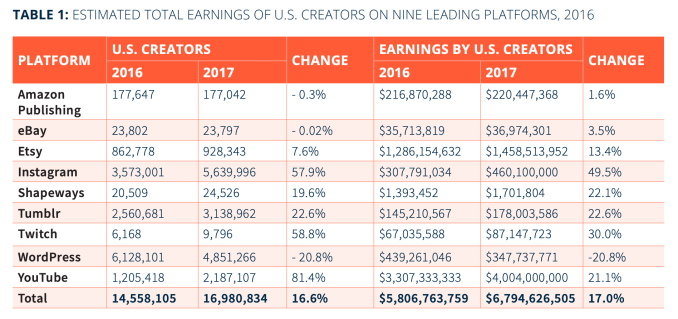
A new study estimates that revenue-earning American Twitch streamers grew to nearly 9,800 in 2017 (a 59 percent increase from 2016) and made an estimated $87.1 million (representing a 30 percent YOY increase).

Twitch is one of the fastest-growing platforms for American content creators. In terms of year over year growth in number of creators themselves, Twitch falls just behind Instagram and YouTube, and ranks second behind Instagram in YOY revenue growth for those creators. (Fun Fact: Instagram’s creator-based revenue growth grew nearly 50 percent from 2016 to 2017 to $460 million, according to the study.)

Recreate Coalition says these numbers are very conservative based on the methodology of the study and the fact that it’s limited to the U.S.

The growth of Twitch is predicated on a few obvious trends, as well as a very nuanced relationship between a streamer and his or her respective audience.

In the case of the former, “live” digital experiences continue to be a fascination for startups and consumers alike. While Twitch and YouTube have offered live broadcasts for a while, social media companies have followed along with their own live-streaming products. In fact, Betaworks dedicated a season of its accelerator program to “live” startups, calling the program LiveCamp.

With regards to the latter, things get more interesting. The relationship between a viewer and a streamer is similar to our relationships with other famous celebrities, artists and athletes, but puts the viewer far closer to the action.

Streamers don’t just pop up briefly in articles, TV interviews or on Twitter or Instagram. They spend hours and hours each day just sitting there, doing whatever it is they do on stream and chatting with their viewers. You can get to know their personality, talk to them and they talk back to you!

It’s a bizarre combination that has proven financially fruitful for these streamers, especially at a time when the gaming industry itself is growing by double-digit percentages YOY for the past two years.

A tier of elite, hyper-popular streamers such as Shroud, DrDisrespect, Dakotaz and of course Ninja are leading the way for others as they continue to gain followers. In fact, Ninja just partnered with Wicked Cool Toys to introduce to the market a line of actual toys. Ninja himself made nearly $10 million in 2018.

But as the gaming world explores new genres and esports grow, there seems to be plenty of room for streamers to make a name (and a pretty penny) for themselves.

Editor’s Note: An earlier version of this post included a few too many zeroes, stating that U.S. Twitch streamers made $87 billion instead of $87 million. It has been corrected for accuracy with my apologies.

Australia’s government and political parties hit by cyberattack from ‘sophisticated state actor’

The Australia government suffered a cyberattack that it suspects is the work of a “sophisticated state actor,” according to the country’s prime minister.

PM Scott Morrison said today the computer network of the country’s parliament, and those belonging to Liberal, Labor and Nationals parties, were targeted by an attack that took place a few weeks ago, The Sydney Morning Herald reports. Australia is months away from federal elections, which will take place in May.

Morrison said there is “no evidence of any electoral interference.”

“We have put in place a number of measures to ensure the integrity of our electoral system,” he said, adding that security services “acted decisively to confront it.”

There is apparently no indication that data was accessed following the attack.

Where exactly it originated from remains unclear.

Sources told SMH that the sophistication of the attack was “unprecedented,” but nobody in the government is naming suspects. Reportedly, the incident sports “the digital fingerprints of China,” but there remains the possibility that the attack was framed to look like it originated from China.

The incident recalls the hacking of the Democrat Party around the U.S. presidential election in 2016. The attackers, who are widely suspected to be linked to the Russian government, accessed 19,252 emails and 8,034 attachments from DNC email accounts, said John Podesta, who was the campaign chairman for Hillary Clinton.

Australia itself has a history of parliamentary hacks. The national government was attacked in 2015 by a “foreign government” (later named as China) that reportedly used computers at the Bureau of Meteorology as its entry point. The incident is said to have given China the records of 14 million federal employees.