Women’s social network Peanut launches microfund StartHER to invest in pre-seed stage startups

Peanut, the maker of a social networking app for women, is entering into the investing space with today’s launch of a microfund called StartHER. As the name implies, the new fund will focus on investing in women, as well as other historically excluded founders “of all ages, life stages, ethnicities and sexual orientations,” the company says. In particular, StartHER aims to tackle the difficulties specific groups have in raising their first capital — something typically referred to as the “friends and family round.”

Peanut argues there’s inherent bias in assuming that every startup founder has access to what are, essentially, wealthy friends or family who can spare a little startup capital. These rounds often range in size from $10,000 to as large as $150,000 or more, and can make a difference when it comes to getting a new company off the ground.

“The assumption that founders should have networks able to invest in their businesses creates an unfair starting line for most groups. If we don’t remove barriers to that initial funding by providing access to capital, how can we ever hope to see a changing founder profile further through the fundraising funnel?” says Peanut CEO Michelle Kennedy, in a statement about the fund’s launch. “Peanut’s StartHER fund opens the door to founders looking for that early funding. It’s our opportunity to finally level the playing field. We want to be the family these founders can turn to, opening the door to our professional networks too.”

The lack of access to funds for female founders may have gotten worse during the pandemic. Crunchbase data indicates female-founded startups globally saw a 27% decrease in funding in 2020 as compared to 2019. The pandemic shut down access to in-person networking opportunities and disproportionately impacted the family caretakers who tend to be women, as schools, daycares and other childcare assistance businesses closed their doors. These changes may have contributed to the decline, though it’s hard to pinpoint.

But even outside the pandemic’s impacts, women are underrepresented in venture investing — including on the firm’s side. Only 13% of decision-makers at VC firms are women, which can influence what startups receive funding.

“It’s no secret that the venture capital industry is dominated by those with privilege and lucrative connections. As a member of the Female Founders Fund, I’m excited to be a part of StartHER’s investment committee to help these entrepreneurs, who have not been adequately recognized, grow their networks in the venture capital community,” said Anu Duggal, Founding Partner of Female Founders Fund, who joined SheHER’s investment committee.

StartHER says it’s looking to step in to fill that gap by offering small investments to early-stage, pre-seed businesses focused on making a positive impact on society, healthcare, or the environment. According to its online application, StartHER will write checks of between $25,000 and $50,000 — likely one of the first checks a new startup may receive. The overall fund is $300,000 in size, and will make 3-4 investments in 2021. Peanut will not take an equity stake in the companies it invests in.

“Moving forward, we’ll be considering other factors such as deal flow to help inform how we invest and the companies we choose to invest in,” explains Kennedy. We’re heavily focused on making the right investments that will have the most impact versus simply making returns. For StartHER, our goal is not to make X number of investments for X returns, but to diversify the VC funnel by serving as an entry point to capital for underrepresented founders,” she says.

Along with Duggal and Kennedy, the investment committee for the fund includes journalist and angel investor Bérénice Magistretti; Chief Business Officer at Conde Nast Britain, Vanessa Kingori MBE; Founder of Shiffon Co. and Startup Girl Foundation, Shilpa Yarlagadda; and author, columnist and Brand Strategist, Elizabeth Uviebinene.

Applications are accepted on a rolling basis, and the committee meets every six months to consider the fund’s applications. Beyond the investment, startups who receive SheHER funds will also be given access and office hours to the networks of the committee members, the website says.


Volvo Cars sets the tone for its next-gen vehicles with ‘Concept Recharge’ EV

Volvo Cars wants to completely electrify its lineup by 2030 and on Wednesday offered a glimpse into how it plans to get there and what its next generation of vehicles might look like.

But it’s not going to do it alone. Although the automaker plans on developing its own in-car operating system and other parts of the car, Volvo Cars detailed how it plans to work with partners like Northvolt, Google and Luminar to build out its future vehicles lineup. It also unveiled the first images of “Concept Recharge,” a concept EV that has flat floors, two interior screens and rear “suicide doors” that open from the middle of the vehicle.

Volvo Concept Recharge. Image Credits: Volvo Cars

The Concept Recharge is also outfitted with Luminar sensors, in line with an announcement earlier this month that Volvo Cars’ forthcoming flagship electric SUV will be equipped with Luminar’s technology stack as standard.

On the battery front, Volvo Cars is working with Swedish battery developer Northvolt on a pack that it says will enable a range of up to around 621 miles — a massive achievement of energy density, should Northvolt pull it off. The two companies are aiming to build a gigafactory in Europe by 2026 in a new 50-50 joint venture, with a potential annual capacity of up to 50 gigawatt hours. Volvo Cars will also source 15 GWh of batteries from Northvolt’s battery plant in Skellefteå, Sweden from 2024.

Future Volvo Cars vehicles will be capable of bidirectional charging, a capability that can turn the EV into a mobile generator or a mini power plant, offloading excess energy to the electricity grid.

Volvo said its OS, VolvoCars.OS, will act as an “umbrella system” for underlying operating systems, including its infotainment system led by Google and tech from Linux, QNX and AUTOSAR. While the vehicle will contain up to 100 electrical control units, these will run on a core computing system made up of three main computers being developed in partnership with Nvidia.

The automaker also discussed in more detail its plans to equip its flagship electric SUV with Luminar’s sensor suite and technology from Volvo’s software arm Zenseact. Executives shirked questions asking to specify the level of the autonomous system — referring to the scale developed by the Society of Automobile Engineers to measure the level of autonomy in a driving system — saying that they preferred to discuss the forthcoming AV driving system in terms of supervised or unsupervised. Under those terms, Volvo said the two modes — Cruise and Ride— would require driver supervision and no supervision, respectively. It said it would gradually launch unsupervised functionality at some point in the future.

The forthcoming system will generate tons of driving data from customers, and Volvo doesn’t intend on it to go to waste. The automaker said it aims to build a data factory to process information it collects from customers that use its autonomous drive safety features (with their consent). It would use this data to make improvements on the system, which it would push to vehicles via over-the-air updates.

“We need to transform this company from just a premium conventional company. We need to transform it into a leader in the new premium electric segment, which is growing very fast,” Volvo CEO Håkan Samuelsson said. “We need to understand batteries in the same way we understand the combustion engine.”

How to cut through the promotional haze and select a digital building platform

Brian Turner
Contributor

Brian Turner, LEED-AP BD&C, leads strategic planning for product development and project work at Buildings IOT. Throughout his career, Brian has provided hands-on expertise to architects, engineers and building owners to design and implement integrated building systems.

Everyone from investors to casual LinkedIn observers has more reasons than ever to look at buildings and wonder what’s going on inside. The property industry is known for moving slowly when it comes to adopting new technologies, but novel concepts and products are now entering this market at a dizzying pace.

However, this ever-growing array of smart-building products has made it confusing for professionals who seek to implement digital building platform (DBP) technologies in their spaces, let alone across their entire enterprise. The waters get even murkier when it comes to cloud platforms and their impact on ROI with regard to energy usage and day-to-day operations.

Breaking down technology decisions into bite-sized pieces, starting with fundamental functions, is the most straightforward way to cut through the promotional haze.

Facility managers, energy professionals and building operators are increasingly hit with daily requests to review the latest platform for managing and operating their buildings. Here are a few tips to help decision-makers clear through the marketing fluff and put DBP platforms to the test.

The why, how and what

Breaking down technology decisions into bite-sized pieces, starting with fundamental functions, is the most straightforward way to cut through the promotional haze. Ask two simple questions: Who on your team will use this technology and what problem will it solve for them? Answers to these questions will help you maintain your key objectives, making it easier to narrow down the hundreds of options to a handful.

Another way to prioritize problems and solutions when sourcing smart-building technology is to identify your use cases. If you don’t know why you need a technology platform for your smart building, you’ll find it difficult to tell which option is better. Further, once you have chosen one, you’ll be hard put to determine if it has been successful. We find use cases draw the most direct line from why to how and what.

For example, let’s examine the why, how and what questions for a real estate developer planning to construct or modernize a commercial office building:

  • Why will people come? — Our building will be full of amenities and technological touches that will make discerning tenants feel comfortable, safe and part of a warm community of like-minded individuals.
  • How will we do it? — Implement the latest tenant-facing technology offering services and capabilities that are not readily available at home. We will create indoor and outdoor environments that make people feel comfortable and happy.
  • What tools, products and technology will we use?

This last question is often the hardest to answer and is usually left until the last possible moment. For building systems integrators, this is where the real work begins.

Focus on desired outcomes

When various stakeholder groups begin their investigations of the technology, it is crucial to define the outcomes everyone hopes to achieve for each use case. When evaluating specific products, it helps to categorize them at high levels.

Several high-level outcomes, such as digital twin enablement, data normalization and data storage are expected across multiple categories of systems. However, only an enterprise building management system includes the most expected outcomes. Integration platform as a service, bespoke reports and dashboarding, analytics as a service and energy-optimization platforms have various enabled and optional outcomes.

The following table breaks down a list of high-level outcomes and aligns them to a category of smart-building platforms available in the market. Expanded definitions of each item are included at the end of this article.

Look out language teachers, a synthetic human could be about to take your job

Hour One, a startup that allows businesses to create ‘photoreal’ presenters that can speak pre-set any text or any language in a highly realistic manner, has signed a deal with Berlitz. The language learning giant will use the platform to augment its instructor-led services and grow its online language training programs in a way that would normally be impossible, without hiring thousands of human teachers.

“Berlitz has built our methodology and brand on delivering the best outcomes for students serious about fluency, which requires a very human-centric experience,” Curt Uehlein, Berlitz’s CEO, said in a statement. “Our digital experiences had to replicate the classroom experience. Doing that successfully means Berlitz can extend our reach into new markets, and be more accessible to students, removing barriers of location and affordability.”

Hour One has been able to almost recreate the in-person instructor experience for Berlitz, with highly-realistic photoreal characters who have (in my opinion) very natural facial expressions and gestures, and – crucially – perfectly synced speech. I’ve seen the software in operation myself and it is extremely convincing. Instead of course content being created in a studio with a human speaker, it can now be generated using AI. Look out language teachers…

Oren Aharon, CEO, Hour One said: “Where other brands keep innovation at the periphery, Berlitz has fully embraced our technology to scale its business and propel it into the new era.”

Originally from Israel and new in New York, Hour One has raised $5 million from Galaxy Interactive, Kindred Ventures and Remagine Ventures.

Slack’s new voice, video tools should fit nicely on Salesforce platform after deal closes

It’s easy to forget, but Salesforce bought Slack at the end of last year for almost $28 billion, a deal that has yet to close. We don’t know exactly when that will happen, but Slack continues to develop its product roadmap adding new functionality, even while waiting to become part of Salesforce eventually.

Just this morning, the company made official some new tools it had been talking about for some time, including a new voice tool called Slack Huddles, which is available starting today, along with video messaging and a directory service called Slack Atlas.

These tools enhance the functionality of the platform in ways that should prove useful as it becomes part of Salesforce whenever that happens. It’s not hard to envision how integrating Huddles or the video tools (or even Slack Atlas for both internal and external company organizational views) could work when integrated into the Salesforce platform.

Slack CEO Stewart Butterfield says the companies aren’t working together yet because of regulatory limits on communications, but he could definitely see how these tools could work in tandem with Salesforce Service Cloud and Sales Cloud among others and how you can start to merge the data in Salesforce with Slack’s communications capabilities.

“[There’s] this excitement around workflows from the big system of record [in Salesforce] into the communication [in Slack] and having the data show up where the conversations are happening. And I think there’s a lot of potential here for leveraging these indirectly in customer interactions, whether that’s sales, marketing, support or whatever,” he said.

He said that he could also see Salesforce taking advantage of Slack Connect, a capability introduced last year that enables companies to communicate with people outside the company.

“We have all this stuff working inside of Slack Connect, and you get all the same benefits that you would get using Huddles to properly start a conversation, solve some problem or use video as a better way of communicating with [customers],” he said.

These announcements seem to fall into two main categories: the future of work and in the context of the acquisition. Bret Taylor, Salesforce president and COO certainly seemed to recognize that when discussing the deal with TechCrunch when it was announced back in December. He sees the two companies directly addressing the changing face of work:

“When we say we really want Slack to be this next generation interface for Customer 360, what we mean is we’re pulling together all these systems. How do you rally your teams around these systems in this digital work-anywhere world that we’re in right now where these teams are distributed and collaboration is more important than ever,” Taylor said.

Brent Leary, founder and principal analyst at CRM Essentials says that there is clearly a future of work angle at play as the two companies come together. “I think moves like [today’s Slack announcements] are in response to where things are trending with respect to the future of work as we all find ourselves spending an increasing amount of time in front of webcams and microphones in our home offices meeting and collaborating with others,” he said.

Huddles is an example of how the company is trying to fix that screen fatigue from too many meetings or typing our thoughts. “This kind of ‘audio-first’ capability takes the emphasis off trying to type what we mean in the way we think will get the point across to just being able to say it without the additional effort to make it look right,” he said.

Leary added, “And not only will it allow people to just speak, but also allows us to get a better understanding of the sentiment and emotion that also comes with speaking to people and not having to guess what the intent/emotion is behind the text in a chat.”

As Karissa Bell pointed out on Engadget, Huddles also works like Discord’s chat feature in a business context, which could have great utility for Salesforce tools when it’s integrated with the Salesforce platform

While the regulatory machinations grind on, Slack continues to develop its platform and products. It will of course continue to operate as a stand-lone company, even when the mega deal finally closes, but there will certainly be plenty of cross-platform integrations.

Even if executives can’t discuss what those integrations could look like openly, there has to be a lot of excitement at Salesforce and Slack about the possibilities that these new tools bring to the table — and to the future of work in general — whenever the deal crosses the finish line.


Apple just released the first iOS 15 beta to everyone

This is your opportunity to get a glimpse of the future of iOS, iPadOS and watchOS. Apple just released the first public beta of iOS 15, iPadOS 15 and watchOS 8. Those releases are the next major versions of the operating systems for the iPhone, iPad and Apple Watch. Unlike developer betas, everyone can download these betas — you don’t need a $99 developer account. But don’t forget, it’s a beta.

The company still plans to release the final version of iOS 15, iPadOS 15 and watchOS 8 this fall. But Apple is going to release betas every few weeks over the summer. It’s a good way to fix as many bugs as possible and gather data from a large group of users.

As always, Apple’s public betas closely follow the release cycle of developer betas. Apple also released the second developer beta of iOS and iPadOS 15 today. So it sounds like the first public beta is more or less the same build as the second developer build.

But remember, you shouldn’t install a beta on your primary iPhone or iPad. The issue is not just bugs — some apps and features won’t work at all. In some rare cases, beta software can also brick your device and make it unusable. You may even lose data on iCloud. Proceed with extreme caution.

But if you have an iPad, iPhone or Apple Watch you don’t need, here’s how to download it. Head over to Apple’s beta website from the device you want to use for the beta and download the configuration profile — do that from your iPhone for the watchOS beta. It’s a tiny file that tells your device to update to public betas like it’s a normal software update.

Once it’s installed, reboot your device, then head over to the Settings (or Watch) app. You should see an update. In September, your device should automatically update to the final version of iOS 15, iPadOS 15 or watchOS 8 and you’ll be able to delete the configuration profile.

The biggest change of iOS 15 is a new Focus mode. In addition to “Do not disturb,” you can configure various modes — you can choose apps and people you want notifications from and change your focus depending on what you’re doing. For instance, you can create a Work mode, a Sleep mode, a Workout mode, etc.

There are many new features across the board, such as a new Weather app, updated maps in Apple Maps, an improved version of FaceTime with SharePlay and more. Safari also has a brand-new look.


Common Sense Networks launches Sensical, a free, hand-curated streaming service for kids

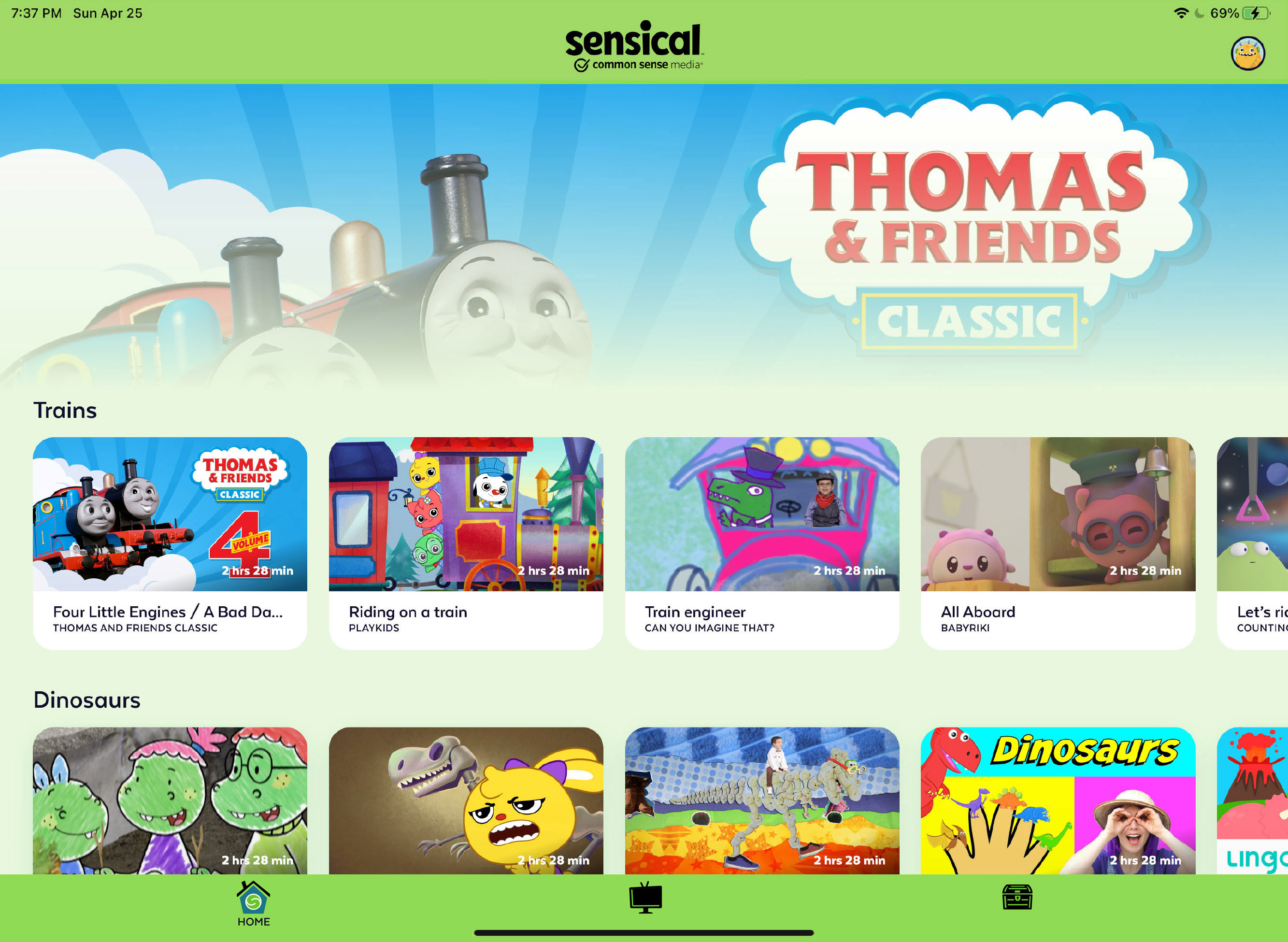
Common Sense Media has made a name for itself among parents as a useful resource for vetting entertainment and technology in terms of its age-appropriateness. Now, the organization’s for-profit affiliate, Common Sense Networks, is taking inspiration from those kid-friendly recommendations with the launch of a new streaming service called Sensical. The service offers age-appropriate, entertaining, and educational videos for children ages 2 through 10.

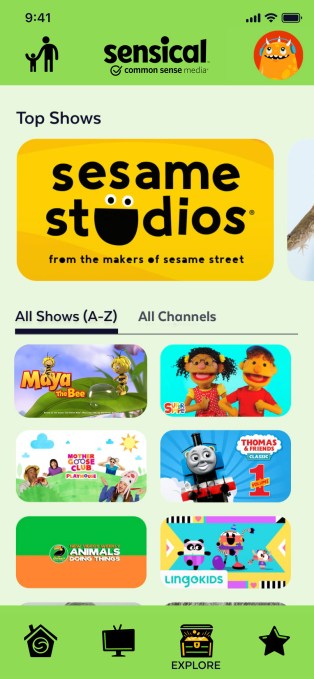
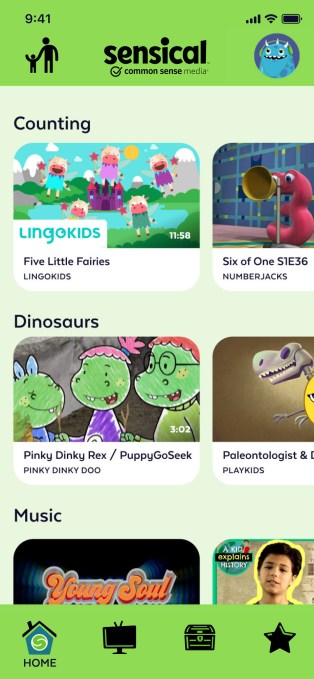
At launch, the free, ad-supported service includes over 15,000 hand-curated videos and over 50 topic-based channels for children to explore. And unlike other platforms, like Netflix or YouTube, Sensical doesn’t use algorithms to make content recommendations. Instead, kids are encouraged to follow their own interests and passions across over 50 topic-based channels. This includes things like Adventures, Animals, Arts & Crafts, Music, Science, Sports, Video Games, and other sorts of kid-friendly topics.

Kids can star these channels, or individual videos or series, in order to keep up with their favorite content in a dedicated Favorites section within the app.

They will see a selection of these channels based on their age, but the company is working to expand the channel lineup so there will be even more specific categories in the future. For example, instead of just “sports,” there could be channels like “soccer” or “gymnastics.” Instead of “Arts,” there could be “drawing” or “origami.” Instead of just “science,” it could include channels like “geography” or “robotics,” and so on.

Image Credits: Common Sense Networks

The app also features a Live TV section, which is programmed throughout the day with kid-friendly content, so kids don’t have to browse to find something to quickly watch.

While other streaming services on the market offer kid-friendly content — as that’s a huge selling point for subscribers — it’s not always organized in a way that makes sense. Sometimes, all the content gets lumped into a general “Kids” category where videos for little kids are mixed in with content for older children. Sensical, meanwhile, curates the content recommendations into three different experiences, including preschool (2-4), little kids (5-7), and big kids (8-10).

What the child sees is based on how parents configure their profiles. Plus, parents can use the service’s ParentZone in-app dashboard to set screen-time limits, extend limits as needed, and view daily reports on what the child has watched.

The service’s best feature, however, is that the content is assured to be age-appropriate — even the ads.

This is possible because the curation approach Sensical takes is very different from YouTube Kids. YouTube’s app for kids leans on algorithms to filter out adult content from YouTube’s broader library, but the company doesn’t manually review all the videos it includes. It warns parents that some inappropriate content could slip through. (And it has.)

Common Sense Networks, meanwhile, says dozens of trained child-development experts view, vet and rate “every single frame of video” that goes live on its service using its proprietary IP and patent-pending process. This system involves tagging content with specific child-developmental benefits, too.

Sensical also vets its advertising, which is how the service is supported, with similar direct oversight. Its experts review the sponsor’s content to ensure it’s appropriate for children — an area that’s often overlooked on other services.

Image Credits: Common Sense Networks

To fill its library, Common Sense Networks partnered with dozens of studios and distribution partners, as well as digital-first creators.

Studio and distribution partners include CAKE (Poppy Cat), Cyber Group Studios (Leo The Wildlife Ranger), The Jim Henson Company (The Wubbulous World of Dr. Seuss, Jim Henson’s Animal Show with Stinky and Jake), Mattel (Kipper, Pingu, Max Steel), Raydar Media (Five Apples’ limited series, Apple Tree House), Superights (Bo Bear, Handico), WildBrain (Teletubbies, Rev & Roll), Xilam Animation (Learn and Play with Paprika, Moka’s Fabulous Adventures), ZDF Enterprises (Lexi & Lottie, School of Roars), Zodiak Kids (Mister Maker, Tee and Mo), ABC Commercial, CBC & Radio-Canada Distribution, Jetpack Distribution, Nelvana, 9 Story Distribution International, Sesame Workshop, Serious Lunch, and Studio 100.

Digital creators, meanwhile, include ABCMouse, Aaron’s Animals, Alphabet Rockers, batteryPOP, California Academy of Sciences, GoldieBlox, The Gotham Group’s Gotham Reads, Guggenheim Museum, Howdytoons, Kids’ Black History, MEL Science + Chemistry, N*Gen, Pinkfong, Penguin Random House’s Brightly Storytime, Studio71 (Parry Gripp, Maymo, Hyper Roblox), Tankee, Ubongo Kids, Vooks, Bounce Patrol, Hevesh5, Mother Goose Club, StacyPlays, Super Simple Songs and The Whistle.

The service abides by the U.S. children’s privacy laws (COPPA), and is certified by the kidSAFE Seal Program.

Image Credits: Common Sense Networks

Having briefly toyed around with the mobile app, it appears Sensical works as described. If I had any complaints personally, it would only be that the experience could be dismissed as “baby stuff” by older kids approaching their tween years, due to the cute pictures and youthful iconography used in the app’s design. Kids in older age groups take issue with being treated as if they’re younger — and they take particular notice of anything that does so.

The same complaint goes for the Live TV programming, which was clearly aimed at littler kids when we checked it out, despite testing the app as a child profile whose age was set to “10.”

I also think it would be nice if there were a better way to track Favorite channels and see when they’re updated with new videos, as kids moving to Sensical from YouTube will want to “feel” like they’re still connected to new and fresh content and not a library. But Sensical isn’t YouTube. There’s a trade-off between hand-curation and timeliness, and Sensical is favoring the former.

Sensical had been first introduced this spring during a closed beta, but is now publicly available to stream across web and mobile on iOSAndroid, RokuAmazon Fire TV and Apple TV. This summer, it will expand to more distribution platforms, including VIZIO.

Demand Curve: 7 ad types that increase click-through rates

Stewart Hillhouse
Contributor

Stewart Hillhouse writes actionable growth marketing insights as senior content lead at Demand Curve. By night, he interviews marketers and creatives on his podcast, Top Of Mind. Before getting into marketing, Stewart was a semi-professional lumberjack. He also writes at stewarthillhouse.com.

We’ve spent millions of dollars running ads for brands like Outschool, Imperfect Produce and Microsoft. At Demand Curve, we’ve worked with over 500 startups, meticulously documenting growth tactics for all growth channels. This post also incorporates what we’ve learned from our agency, Bell Curve.

Here are seven ad types that have proven to increase click-through rates (CTR), with examples of each. Clone them to test in your own social ad campaigns.

Address common complaints and questions directly in your ads, as they will help eliminate objections upfront and encourage clicking to learn more.

Customer reactions

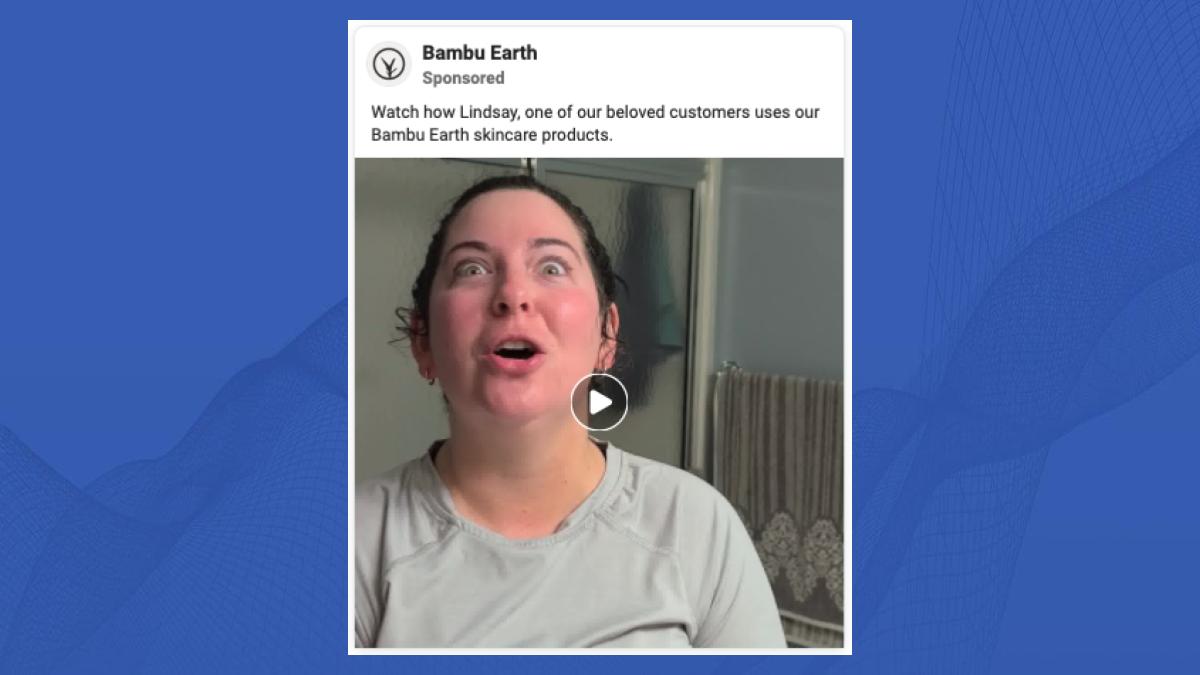
If you’re selling a consumer product, it’s likely that some of your customers have posted product reviews, unboxings or recommendation videos on their social media accounts. You can use your customers’ user-generated videos in your social ads — with permission.

Search through Twitter, Instagram and Facebook for posts that mention your product. Reach out to the customer and ask them if you can use their content in an ad campaign, and subsequently, compile the most positive reactions into a video ad.

This works well because dramatic faces are attention magnets. Make sure the thumbnail photo shows a strong emotional image. People will click because they can’t help but want to see what provoked the emotion. User-generated reaction videos also highlight your products’ “Moment of Wow.” If users care enough about your product to make a positive reaction video, their energy is contagious. Your ad audience will connect your product with a strong positive emotion.

Customer reactions make for great ads

Customer reactions make for great ads. Image Credits: Demand Curve

You versus the competition

Comparison ads anchor your product against something your audience already knows. This works well for both ads and the landing page your ad will lead to when clicked on. Try positioning your strongest value proposition — the most valuable promise you’re making to your customer — against your generic competitors.

Pietra raises $15M from Founders Fund to help creators launch their own product lines

In the white-hot creator economy space, startups are increasingly looking to build paint-by-numbers platforms to help budding creators more easily execute on what were once seemingly insurmountable business challenges.

The ex-Uber team at Pietra is cashing in on this vision with a plan to build a backend for launching and scaling creator product lines.

The startup, which previously acted as a marketplace for jewelry sellers, has changed a bit since they announced a seed round from Andreessen Horowitz in early 2019. Now, the company has pivoted from hocking diamonds to building a broad platform for creators that are looking to scale sales of physical goods, from interfacing with suppliers, handling orders and fulfillment and setting up online storefronts.

Pietra tells TechCrunch they’ve just raised a $15 million Series A led by Founders Fund with additional participation from Andreessen Horowitz, TQ Ventures and Abstract Ventures. The deal was led by Founders Fund’s Keith Rabois.

“We were initially focused on jewelry and luxury and the rise of creators in this luxury segment,” CEO Ronak Trivedi tells TechCrunch. “When we launched our beta last fall we had this platform that had evolved from a marketplace to a creator hub where any size creator could come in, use the platform, marketplace and tools to effectively launch a digital-first consumer business in the most efficient, cost-effective way possible.”

Pietra allows customers to shop around with a network of suppliers, find which one is best for them and move through the process from crafting samples through order fulfillment with a tech platform to guide them through the process. Trivedi says the ultimate goal is to “find the best suppliers in the world and try and bring them on the platform at the lowest minimum orders, so that it allows the most people to try to start a business.”

The startup is trying to help small creators scale their product distribution, but also handle all of the bits that can determine success when it comes to launching a brand in the first place, including building a pre-sale website and building up some attractive marketing images of products.

Early on, Pietra has a pretty distinct list of product verticals that they’re specializing in, including swimwear, makeup, apparel, fragrances and jewelry, among a few others. Overall, their platform seems pretty centered on the types of products that have been broadly successful with influencers who are looking to build out their first brands.

Pietra’s pricing depends on how many of their services you’re using and what the scale of your operation is, but most services are charged on a per-unit basis, with the startup also taking a percentage fee on goods sold through their marketplace. The startup is also working on a Pro offering with differentiated pricing designed for slightly more established brands that are doing multiple production runs per year.


Amazon betrays its fear with petition to sideline FTC Chair and antitrust hawk Lina Khan

Amazon has petitioned that the newly minted Chair of the FTC and implacable critic of the company, Lina Khan, be recused from decisions relating to the company. The company argues that she has been too outspoken about the failure to regulate Amazon to handle matters impartially.

It will be for the FTC to decide, and its oversight committee to supervise, whether Khan will recuse herself; an agency spokesperson declined to comment on the matter.

Amazon’s argument (which you can read below) is that Khan has simply gone too far in her criticism of Amazon prior to her confirmation at the FTC, creating an effective “prejudgment” that precludes her ability to consider cases relating to the company objectively.

Although Amazon profoundly disagrees with Chair Khan’s conclusions about the company, it does not dispute her right to have spoken provocatively and at great length about it in her prior roles. But given her long track record of detailed pronouncements about Amazon, and her repeated proclamations that Amazon has violated the antitrust laws, a reasonable observer would conclude that she no longer can consider the company’s antitrust defenses with an open mind.

But it’s equally plain to “a reasonable observer” that Amazon, one of the largest and most powerful companies in the world, is a natural target for analysis by an expert whose professional opinion is that antitrust regulation is inadequate and dated.

And it was arguably this very idea that set her on the path to her nomination and sudden ascendance to Chair. Her “Amazon’s Antitrust Paradox” paper was not the manifestation of a vendetta against the online services giant — it was an indictment of the aging antitrust doctrine that permitted what she argued amounted to legalized monopolistic behavior.

Amazon may have been the one in the crosshairs, but it was only a stand-in for an entire school of regulatory thought that, Khan has persuasively argued in numerous papers and articles, mindlessly pursued a narrow definition of consumer harms and benefits. There are other ways that a company might act against consumer interests, such as crushing competition in a market by subsidizing costs through dominance of another market — something Amazon has made core to its entire business model.

Furthermore, the position of Chair at the FTC is one of leadership and priority setting, not utter impartiality. The impartiality comes in the form of legal arguments that show a company has, for example, broken the law. Long-held opinions count for nothing with a judge, including Khan’s own public and professionally expressed opinions; should she lead the agency in an effort against Amazon, she will have to support her interpretation of the law with facts and systematic argument.

While one can only speculate at the administration’s true reasoning for its rapid elevation of Khan, it’s hard to imagine that it’s anything but a whole-hearted endorsement of the philosophy and change she advocates.

Khan’s expertise and perspective on antitrust have made Amazon a natural antagonist, not because Khan is a monomaniacal crusader, but because Amazon could very well represent one of the largest regulatory failures in history. To point that out is not grounds for recusal — it may however be grounds for making history.

You can read the full Amazon petition below:

SWORD Health closes on $85 million Series C for virtual MSK care

SWORD Health, a virtual musculoskeletal care platform founded in 2015, announced today that it has raised an $85 million Series C funding round led by General Catalyst. Other participating investors included BOND, Highmark Ventures, BPEA, Khosla Ventures, Founders Fund, Transformation Capital and Green Innovations. The funding comes months after the company raised a $25 million Series B round – which, put differently, means that the New York-based company has now raised $110 million across six months.

CEO and founder of SWORD Health, Virgílio Bento, said that company was not actively having conversations with external VCs when it raised the round. The Series C closed within three weeks of the first anchor investor’s check.

“Given the interest of the market, given the valuations, and given the ability to bring other stellar investors [who] can help us grow even faster and more efficiently – that’s why we decided to raise again,” he said.

SWORD Health’s massive tranche of capital comes as the world of MSK digital health startups continues to boom, thanks to the broad rise of virtual care. Venture-backed startups such as Kaia Health, which saw its business grow by 600% in 2020 and Hinge Health, which was last valued at $3 billion, are hitting growth stage. SWORD Health, while founded in 2015, has only been in the market for 18 months. Bento declined to share the company’s exact valuation, but he confirmed that it was north of $500 million.

MSK conditions, which can range from a sprained ankle to a disc compression, are diverse and, unfortunately, universally felt. The sheer expansiveness of the condition has triggered a crop of entrepreneurs to create solutions that help people avoid surgery or addictive opioids, two of the mainstream ways to deal with MSK conditions.

SWORD Health’s solution looks like this: The platform connects consumers to a virtual physical therapist who is accessible via traditional telemedicine. Beyond that, the company gives each consumer a tablet and motion sensors. The consumers are promoted to go through the motions, and get feedback and tips through a SWORD HealthDigital Therapist.

Nikhil Krishnan, the founder of Out-of-Pocket, explained how it all works through a first-person account:

As you go through them, the sensors + digital therapist can tell if the movements are correct and how far you’re moving in each direction. The digital therapist has 5000 different types of feedback messages like “don’t bend your knee,” “lean forward more,” and “your squat form is more embarrassing than your Facebook etiquette circa 2009.” You get a score of 1-5 stars depending on how far you move in a direction for a given exercise. My regimen was usually between 17-25 exercises and in total would take me 20-25 minutes.

SWORD Health sells to insurers, health systems and employers in the United States, Europe and Australia.

SWORD Health’s biggest competitor is Hinge Health, last valued at $3 billion. However, for now, Bento isn’t too worried about the behemoth.

“It’s really two different studies on how to build a healthcare company,” Bento said. He pointed to how SWORD Health spent its first four years as a company developing its sensor, while he claims that Hinge went out to the market with “a half-baked solution” in sensor technology.

That said, in March 2021, Hinge acquired medical device maker Enso to grow its non-invasive, musculoskeletal therapy tech, and continues to have the biggest marketshare among private startups in the sector.

The company touted that it has increased its number of treated patients 1,000% year over year, which has led to 600% year-over-year revenue growth. Given the fact that it’s only been in the market for 18 months, these metrics don’t provide an entirely holistic picture into the business, but instead offer a snapshot into the recent growth of an early-stage tool. With millions more, the SWORD Health founder is set to invest more in the company, and continue to not focus too much on profitability.

“This is a big problem that we want to solve, so we really want to reinvest all of the gross profit that we are generating into building a platform that is able to deliver more value to patients,” he said.


Virgin Orbit successfully launches its first commercial payloads to space

Virgin Orbit had a successful first commercial launch, meaning there’s now officially another small satellite launch provider in operation with a track record of delivering payloads to space. Virgin Orbit’s LauncherOne rocket took off from its carrier aircraft at around 11:45 AM EDT today, and the spacecraft had a successful series of engine fires and stage separations to make the trip to low Earth orbit.

On board, Virgin Orbit carried seven payloads, including the first-ever defense satellite for the Netherlands, as well as cubsats developed by the U.S. Department of Defense for its Rapid Agile Launch initiative. The initiative is seeking to test the viability of flying small spacecraft to space on relatively short notice on launch platforms with increased flexibility, which Virgin Orbit’s provides thanks to its ability to take off horizontally from more or less conventional runways.

Virgin Orbit also carried two Earth observation satellites for Polish startup SatRevolution, and it will be delivering more in future flights to help build out that company’s planned 14-spacecraft constellation.

In January, Virgin Orbit completed its final demonstration mission, reaching orbit for the first time with LauncherOne. That paved the way for this mission, and the company plans to increase the pace and frequency of its commercial missions, with at least one more planned tentatively for later this year and many more in 2022.

In terms of payload capacity, Virgin Orbit’s Launcher One can carry around 1,100 pounds to low Earth orbit, which compares favorably with the capacity of Rocket Lab’s Electron, which can carry around 661 pounds to the same destination.

It fits a niche for small satellite operators that currently have a lot of demand, served in part by SpaceX, as well with its ridesharing missions, but Virgin Orbit has the potential to provide more dedicated services for operator looking to launch just a few small spacecraft for a modest constellation. And as mentioned, its potential for varying its take-off location in future could be a big competitive advantage in the defense and security industries.

Slice raises $20 million to go after the credit card industry in India

Slice, an Indian fintech startup that has built a “super card” for millennials in India, said on Monday it has raised $20 million in a new financing round and is adding new features to change how people engage with their credit cards.

Existing investors Gunosy, Blume Ventures and others financed the new round in the Bangalore-headquartered startup, it said.

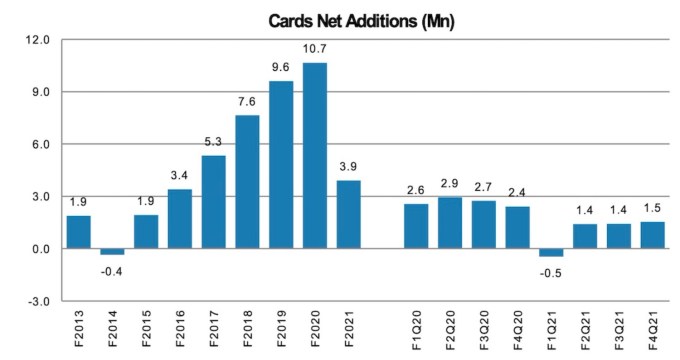
Even as hundreds of millions of Indians today have a bank account, only about 30 million have a credit card. Most people in the South Asian market are not eligible to get a credit card, and even many of those who are don’t bother to get one because the experience of signing up is too clumsy, time consuming, and the rewards don’t make up for it.

Slice has made it easier for far more people — even those without a traditional full-time job — to get a card, and the signup process doesn’t take forever.

New credit card additions in India. Data: Reserve Bank of India, Morgan Stanley. Image: Morgan Stanley

Rajan Bajaj, founder and chief executive of Slice, said in an interview with TechCrunch that the startup, which has already amassed over 3 million users, is now bringing rewards to its app as it attempts to turn the plastic card into a larger financial instrument.

“You use your card more often than you use Uber, Ola, Swiggy and Zomato combined. But the payment experience on the card leaves a lot to be desired. Eventually, if customers don’t see a value, they will abandon the card and move elsewhere,” he said.

“Banks treat credit cards like a loan product instead of a high frequency payment instrument and make money through late charges and interest rates. You see a random charge on your credit card statement, you don’t recognize it so now you have to deal with a customer representative. More than half such users give up and just accept those charges,” he said.

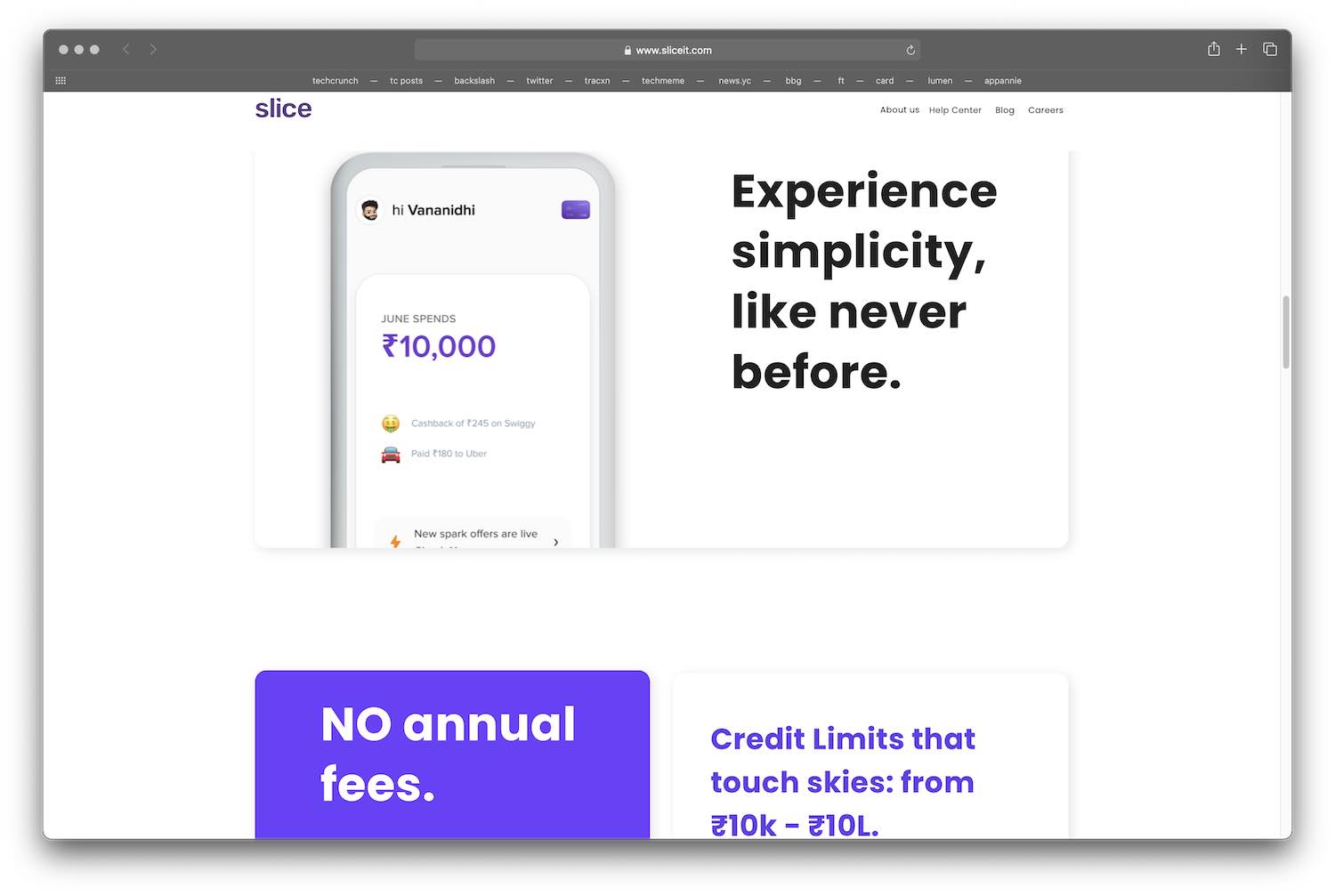
“We are upfront about all of this. There’s no such thing as a joining fee or annual fee for Slice members and there’s no minimum amount they are required to pay each month,” he said, adding that the startup is also profitable. “As we were building our platform, we recognized that there were many things that a credit card firm engages in that didn’t make sense for the customers, so we didn’t include those,” he said.

Slice’s eponymous app shows hyperlocal deals from restaurants and also gives back up to 2% cashback on each transaction that is instantly redeemable to cash, he said.

One of the ideas behind the rewards, said Bajaj, is to have people engage with the app more often so that they know how much money they are spending. Customers can also use the app to make several purchases (for instance, by scanning a QR code).

“We see the card as a payment product, and we are solving it as a consumer experience problem with a customer first approach in mind,” he said. Within six months of joining Slice, more than 65% member’s credit score climbs to 730, he said.

To make it easier for members to pay their bills and not worry about any additional charges, Slice now offers them the ability to split their bill and make the payment in a duration of up to three months — the longest in the industry — at no interest.

Slice has also become a formidable rival to established credit card firms in recent years. Bajaj said about 50% of new customers who are joining Slice today hold a credit card from a competing firm, he said. More than half of these customers switch to Slice as their primary card, he added.

“With the new features, which are very competitive, we expect to switch more than 80% of customers who own other cards to use Slice as their primary card in the next six to eight months,” he said, adding that the startup is able to offer better rewards than most credit cards because it spends just a fraction of its rivals in acquiring new customers.

“Our existing customers tell their friends about Slice. We don’t have to stand in malls and airports to advertise our product,” he said.

The coronavirus pandemic has significantly shrunk people’s spending habits and hence hurt several fintech startups. But the Bangalore-based startup said not only has it recovered but it’s also growing. Slice said the month of May was its best month since inception, and June has shown 25% growth.

The startup, which provides users credit limit through its own balance sheet, said it will deploy the fresh funding into developing more features for customers.

“Slice’s biggest advantage is how well they understand millennials and gen z. Their approach to solving their issues has been truly refreshing and building something simple and hassle-free has been a part of their DNA since inception. The Slice super card has the potential to fundamentally change the way the next generation thinks about the concept of credit cards altogether and we, at Gunosy, are glad to be a part of their growth story,” said Shinji Kimura, chairman and chief executive of Gunosy, in a statement.

Egypt’s Minly raises $3.6M to connect celebrities and fans through personalized experiences

In the past couple of years, we’ve seen a growing trend of creators adopting digital and social media, not just as a supplement to their media presence but also as a cornerstone of their personal brand.

The pandemic has surely accelerated creator economy trends. Many popular artists and figures have had to postpone concerts and live events, subsequently using social media to carry out these activities and engage their fans. Proliferating through Western and far East markets, the creator economy bug, which has made platforms like Cameo and Patreon unicorns, is beginning to take centre stage in MENA.

Today, Minly, an Egypt-based creator economy platform, is announcing that it has closed a $3.6 million seed round to allow stars across the MENA region to create authentic, personalized connections with their fans.

The round, which Minly says was oversubscribed, was co-led by 4DX Ventures, B&Y Venture Partners and Global Ventures. It also included participation from unnamed regional funds and angel investors like Scooter Braun, founder of SB Projects; Jason Finger, co-founder of Seamless and GrubHub; Anthony Saleh and Jeffrey Katzenberg of WndrCo; Arieh Mimran of Groupe Mimran; and Tamim Jabr. 

Experts say time spent viewing social media surpassed time spent viewing TV within the MENA region. But one shortcoming with social media is that its content often feels mass-produced. When creators make posts, it’s most times void of personalization. In a way, this dilutes the fan experience and limits the extent and number of ways the creator can monetize.

This is where Minly, founded last year by Mohamed El-Shinnawy, Tarek Hosny, Tarek ElGanainy, Ahmed Abbas, and Bassel El-Toukhy, comes in. It provides tools for creators to craft what it calls ‘authentic connections’ with their superfans and audience at scale. “In short, our goal is to eventually deliver tens of millions of unique, unforgettable experiences to fans each year,” El-Shinnawy told TechCrunch.

Shinnawy, who brings more than 15 years of media and technology experience to the table, is the chief technology officer at Minly. He sold his first company, Emerge Technology, to a U.S.-based media company. He has also delivered work for Hollywood’s top studios, such as Sony Pictures, Universal, Disney, Fox and Warner Brothers, while playing a role in the global expansion of Apple TV+, Disney+, and Netflix to the MENA region.

Minly

Mohamed El-Shinnawy (co-founder and CTO, Minly)

Minly has experienced rapid growth since launching late last year. It has more than 50,000 users and an impressive list of popular regional celebrities ranging from actors and athletes like Fifi Abdou and Mahmoud Trezeguet to musicians and internet influencers like Assala Nasri and Tamer Hosny.

On the platform, users can buy personalized video messages and shoutouts from these celebrities, and they, in turn, connect with their fans on a more personal level.

We think that we have already differentiated ourselves from other creator economy platforms in the region. We do this by offering the best catalogue of stars and user experience. And our entire team is working hard to grow this gap even further,” said El-Shinnawy on the crop of celebrities Minly has onboarded to the platform

Some of the instances where celebrities connected with their fans on Minly include when actress and dancer Fifi Abdou sent a personal message to one of her biggest fans who has Down syndrome and when Egyptian singer Tamer Hosny made a surprise appearance at two fans’ engagement party in March.

Minly takes a small commission on transactions made through its platform. However, the majority of the transaction price, a figure Minly didn’t disclose, goes directly to creators. And at the same time, Minly urges celebrities to automatically donate a portion of their earnings to partner charities on the platform.

Minly’s knack for creating a personalized experience is why Pan-African VC firm 4DX Ventures invested. The firm’s co-founder and general partner Peter Orth, who will be joining Minly’s board, said the company is fundamentally changing the relationship between celebrities and fans in the MENA region. “The team has both the ambition and the expertise to build a full-stack digital interaction platform that could change the way digital content is created and consumed in the region,” he added. 

The creator economy market surpassed $100 billion in value this year and is still growing at an impressive rate. The pace of content creation will only speed up since surveys suggest that being a YouTuber or TikTokker or the most common term, vlogger, is one the most desirable careers among Gen Zs. VC heavyweights like Andreessen Horowitz, Kleiner Partners, and Tiger Global have also heralded this growth considerably, contributing to the more than $2 billion invested in creator economy platforms this year.

In MENA, there’s a huge opportunity for Minly. The region has over 450 million people, of which 30% are between the ages of 18 to 30. This demographic is known to have a deep connection with social media, and El-Shinnawy believes MENA will soon contribute to a large part of the total creator economy.

For Minly, the goal is to capture a huge portion of that spend and become a multibillion-dollar, category-leading company. The creator platform has a case to do so. As it stands, the opportunity to build a creator economy one-stop-shop in MENA is huge compared to other regions that already have multiple entrenched incumbents. Also, Minly is one of the few platforms in the region with meaningful venture funding.

“The creator economy is in its infancy and growing at lightning speed. We have the opportunity to build this category’s first unicorn in MENA,” the CTO remarked.

With this investment, Minly is doubling down on building local celebrity acquisition teams in Egypt and other parts across MENA and the GCC, where it has seen significant traction. The company will also scale its engineering team to churn out more products to build a horizontal creator platform.

This Week in Apps: Android apps on Windows 11, App Store Search Ads hit China, Apple argues against sideloading

Welcome back to This Week in Apps, the weekly TechCrunch series that recaps the latest in mobile OS news, mobile applications and the overall app economy.

The app industry continues to grow, with a record 218 billion downloads and $143 billion in global consumer spend in 2020. Consumers last year also spent 3.5 trillion minutes using apps on Android devices alone. And in the U.S., app usage surged ahead of the time spent watching live TV. Currently, the average American watches 3.7 hours of live TV per day, but now spends four hours per day on their mobile devices.

Apps aren’t just a way to pass idle hours — they’re also a big business. In 2019, mobile-first companies had a combined $544 billion valuation, 6.5x higher than those without a mobile focus. In 2020, investors poured $73 billion in capital into mobile companies — a figure that’s up 27% year-over-year.

This week, there’s big news with the expansion of Android apps to Windows. Apple also came out swinging against sideloading and expanded its profitable Search Ads business to China…with more than a few caveats. Meanwhile, TikTok launched its own take on mini-apps after tests, making its videos more interactive.

This Week in Apps will soon be a newsletter! Sign up here: techcrunch.com/newsletters

Top Stories

Microsoft brings Android apps to Windows 11
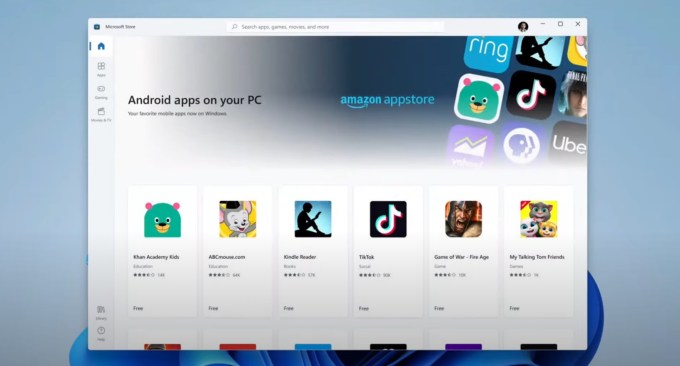
Image Credits: Microsoft

Microsoft surprised industry observers this week at its Windows 11 event with news that it will make Android apps available on the next version of its operating system. The apps will run natively on Windows 11 and can be downloaded from Amazon’s Appstore through the new Windows Store included in the updated OS. They’ll also be able to be integrated into the Start menu and pinned to the taskbar, and can tile or “window” as part of the OS’s new application placement user interface.

The Amazon partnership will bring increased attention to the Amazon Appstore, whose importance has somewhat fizzled over the years given the general lack of investment and its close ties to Amazon Fire devices, which are outsold by iPad. App developers today tend to focus initially on the App Store and Google Play, not Amazon’s Appstore. However, bringing some 3 million Android apps to Windows users opens up a huge new potential market for Android. But could it actually make coding for “iOS first” less of a given for certain types of applications — like those that complement the productivity environment enabled by a Windows PC, perhaps?

In the near-term, more consumers may begin to sideload the Amazon Appstore app on their Android devices for their paid app installs in order to gain access to the cross-platform support a Google Play version would not necessarily provide.

Microsoft noted during the event that it’s partnering with Intel to use its Intel Bridge technology to make this Appstore integration possible on x86 systems. However, the Intel-powered apps will also run on AMD and Arm processors, The Verge noted, though the technical details of how that will work were not immediately available.

Microsoft during the event demonstrated how the app integration would work by showing off TikTok running in a vertical format on the new Windows OS. This may not have been the best example, as TikTok has a fairly usable website for watching videos. Meanwhile, the image of the Amazon Appstore in the Windows Store showed other apps including those from Ring, Uber, Yahoo, Khan Academy, Kindle, Game of War: Fire Age, My Talking Tom Friends, and more, which indicates this is a comprehensive rollout.

Ahead of this news, Amazon announced it would soon lower its cut on app developer revenues from 30% to 20%, as part of a new program for small businesses. The program, which also includes promotional credits for AWS, could help boost developer support for the Appstore. Plus, on the larger Windows Store, non-game developers can keep 100% of their revenue if they use their own payment platforms for in-app purchases. Apps and games using Microsoft’s payment platform split revenue with the company at 85%/15% and 88%/12%, respectively. This sort of commission structure combined with the introduction of Android apps makes the Windows Store seem more developer-friendly than Apple’s App Store, which Microsoft likely hopes will keep it out of antitrust crosshairs.

Apple launches Search Ads in China

Apple this week brought its search advertising business to China five years after its U.S. debut. The system allows developers to bid on an advertising slot based on keywords users search for in the App Store. Though the move opens up a major new market for app developers, the system in China is fairly complex and comes with several caveats. Developers will need to upload documents, including business licenses and other files, that confirm their account has been approved before being able to run ads. Apple may then submit these documents to third-party databases and government entities for validation.

According to Apple’s guidelines, the industry-specific licenses required exclude most foreign businesses from directly advertising in mainland China. Instead, they’ll need to work with local partners who will run ads on their behalf.

The expansion for now only includes the Search Ads in the App Store and not the newly added Search Tab ads, where developers can bid on a slot directly on the Search tab in the App Store itself.

Weekly News

Platforms: Apple

Apple released iOS 15 beta 2 and iPadOS 15 beta 2 for app developers. New features include support for SharePlay, updated Memoji outfits, a new Maps icon, a welcome screen in the updated Weather app, access to launch Quick Note with a swipe from bottom-right on iPad, Shortcuts improvements, bug fixes for iCloud Private Relay, and more. WatchOS 8 beta 2 was also released.

The iOS 15 beta code also revealed Apple is working on a feature that will allow users to update to a beta release when restoring a device from backup instead of being told that you can’t use backups of newer iOS versions.

iOS and iPad apps will now be able to request privileged access to more RAM in iOS 15, exceeding normal system memory limits, 9to5Mac also discovered.

? Apple this week published a white paper (PDF) where it presents its argument against any legislation that would force the company to allow sideloading of apps on iOS or iPadOS devices outside its App Store. While there are consumer benefits to allowing for choice — like getting your hands on apps that don’t fit Apple’s rules, for example — Apple makes the case that sideloading could compromise user privacy and security in a number of ways, including potentially opening up users to being scammed and making it more difficult for parents to lock down kids’ iPhones, among other things. Pirated apps could also eat into legitimate developer revenue, not to mention Apple’s own. Apple’s Director of User Privacy Erik Neuenschwander went into further detail with Fast Company about Apple’s position, noting attackers could even trick users into thinking they were downloading from the App Store when they were not.

Platforms: Google

Google’s Android Essentials is now generally available through additional partners in the U.S., the U.K, Japan, France and Germany, with more countries coming soon after a more limited testing period. Essentials makes it easier for companies to manage and secure Android devices in the workplace by enabling features like remote wiping of lost or stolen devices, enforcing a screen lock, and preventing sideloading of applications.

Google opened its Play Media Experience Program globally. The program allows developers to invest in scaling their services beyond mobile to reach other devices including experiences across Video (Android TV, Google TV, Google Cast); Audio (Wear OS, Android Auto, Android TV, Google Cast); and Books (tablets, foldables, integration with the new Entertainment Space.)

E-commerce

Facebook announced a trio of new commerce features this week, including the expansion of its Shops service to WhatsApp as well as Marketplace in the U.S.; Shop Ads, including AR try-on ads in the U.S., and an A.I.-based Visual Search feature on Instagram, where users can upload photos to find similar items.

Augmented Reality

Apple launches an AR-enabled Snapchat Lens to promote Apple Pay Express Transit in New York. The Lens lets users ride the subway through Kings Theater in Flatbush, the Sea Glass Carousel in Battery Park, and the Great Hall at the New York City Hall of Science.

TikTok and Spotify teamed up with makeup brand MAC on a digital campaign that offers an AR lens with lip colors users can virtually try on. The campaign involves MAC’s Love Me Liquid Lipcolor and is running in the U.K. across both apps.

Social

TikTok launched its own mini-app integrations. With its new Jump feature, creators can add interactive third-party integrations to their videos from services like Whisk, Quizlet, Breathwrk, StatMuse, Tabelog, BuzzFeed, Jumprope, IRL and WATCHA.

Instagram said it’s testing a new feature in English-speaking markets that will mix Suggested Posts into your Feed. The company will use its algorithmic suggestions to help point people to accounts they may want to follow, with an apparent goal of increasing time spent in the app.

Twitter announced a new feature will make it possible to share tweets directly to Instagram Stories. To use the feature, which is only on iOS for now, you’ll tap the share icon on a tweet and select “Instagram Stories.” When the Instagram app opens, you can resize or reposition the tweet sticker before posting.

Snap made a deal with Universal Music Group. The deal allows Snapchat users to add song clips from the UMG catalog to their Snaps and on Spotlight, Snap’s TikTok rival.

Twitter has opened up applications for U.S. users who want to test its Ticketed Spaces and Super Follows features. The company said only a “small group” will be able to test the features for the time being. Super Follows lets creators charge $2.99, $4.99, or $9.99 per month for exclusive content. Ticketed Spaces lets creators charge between $1-$999 for access to live audio rooms.

Messaging

Newly relaunched mobile app Squad debuted an audio-based mobile messenger that allows friends to send voice messages to one another that expire after 14 hours.

Dating

After a handful of competitors took on Tinder with video-based dating, Tinder this week introduced a feature that allows daters to upload up to nine videos to their profiles. It also added a speed-dating feature called “Hot Takes” that lets unmatched users chat for a short period before swiping left or right, from 6 pm to midnight on weekdays.

Streaming & Entertainment

YouTube for iOS is officially gaining support for picture-in-picture in the U.S. The feature will allow all users, both free and paid, to watch YouTube while using other apps on their iPhone.

Clubhouse was spotted working on DM text chat feature called Backchannel that would allow users a new way to connect.

Kuaishou, the operator of China’s second-largest short-form video app behind TikTok (Douyin in China), reaches 1 billion monthly active users. The company says the MAU figure includes all of its existing platforms in China, plus its Kwai and Snack Video apps in international markets.

Wattpad and WEBTOON merged their studio divisions to create Wattpad WEBTOON Studios. The deal follows South Korea-based Naver’s recent acquisition of Wattpad in a transaction estimated to be more than USD$600 million, which aligns the two storytelling and entertainment divisions. Both will benefit from the company’s data-driven approach to sourcing content from storytelling apps to turn into TV shows, movies and books.

Gaming

New titles came to Google Stadia, including Madden NFL 2022 — the first sports title to launch on a cloud gaming platform. Google Stadia’s Android TV app also launched on the Play Store with a “Coming Soon” message.

Player spending in U.S. mobile sports games rose 16% year-over-year to $648.8 million, according to Sensor Tower data. The top app by player spending in the U.S. between June 1, 2020 and May 31, 2021 was Golf Clash from Playdemic, which generated $132.8 million. The No. 2 and No. 3 grossing Sports titles were 8 Ball Pool from Miniclip and Fishing Clash from Ten Square Games.

More than half of the $175 billion earned by the games industry this year will come from mobile games, per Newzoo and Arm’s annual report. Mobile games will be increasingly high-fidelity and cross-platform, the report said.

Classic mobile game Jetpack Joyride is also being added to Apple Arcade, following a recent announcement that more classic games would be soon added to the subscription gaming service.

Health & Fitness

Google and the state of Massachusetts got busted by silently installing the state’s COVID-tracking service, MassNotify, on users’ devices without consent. The auto-installed version isn’t an app and instead is only available as a setting users could enable or disable.

Government & Policy

Indian microblogging app Koo is selling itself as a partisan Twitter alternative in Nigeria by supporting government restrictions on social media platforms.

A French court has set a date in the case over allegedly abusive App Store developer contracts brought by the finance ministry against Apple. The hearing will take place Sept 17, 2021, and could influence Apple’s decision to change developer terms and agreements.

Google may soon face antitrust claims over its Play Store from several U.S. states, Reuters reported. A group of state attorneys general may file a lawsuit against Google as early as next week, the report claims, citing sources. The investigation is being led by Utah, Tennessee, North Carolina and New York.

Security & Privacy

Enterprise customers using Jamf to manage Macs gained access to a new Jamf Unlock app for iPhone, which allows users to unlock their Macs using Face ID on their iPhone.

Funding and M&A

? MAJORITY raised $19 million in seed funding for its mobile banking service for migrants. The app offers a $5 per month subscription that offers an FDIC-insured bank account, debit card, mobile credit, and at-cost international calls. The round was led by Valar Ventures, with participation from Avid Ventures, Heartcore Capital and several Nordic fintech founders.

? Mobile commerce startup Via raised $15 million in Series A funding for its suite of mobile marketing tools for e-commerce apps. The round was led by led by Footwork, the new venture firm co-founded by former Stitch Fix COO Mike Smith and former Shasta Ventures investor Nikhil Basu Trivedi. The startup has generated $51 million in sales since May 2020.

? Viva Republica, the maker of Korean financial super app Toss, raised $410 million at a $7.4 billion valuation. The app offers standard neobanking features, as well as P2P payments, money transfers, loans and more.

? Sporttrade raised $36 million for its sports betting and stock trading combo service, which is set to release its app in New Jersey later this year. Investors included former heads of Nasdaq and MGM Resorts.

? EA is acquiring Warner Bros. Games’ Playdemic mobile games studio for $1.4 billion in cash. Playdemic is best known for “Golf Clash,” a top mobile game in the U.S. and U.K. with over 80 million installs to date.

? Charlotte, N.C.-based mobile payments platform Payzer raised $19.5 million according to an SEC filing. The company offers an end-to-end management platform for contractors on a subscription basis.

? Happs raised $4.7 million in post-seed funding for its multicast livestream platform aimed at the creator economy. Users can broadcast live to Facebook, YouTube, Twitter and Twitch simultaneously via the app, and view live comments from all supported social media sites.

? Amazon’s AWS is acquiring  the secure messaging app Wickr, which has been providing services to government and military groups and enterprises. Wickr had raised just under $60 million in funding, per Pitchbook data.

Downloads

Brave
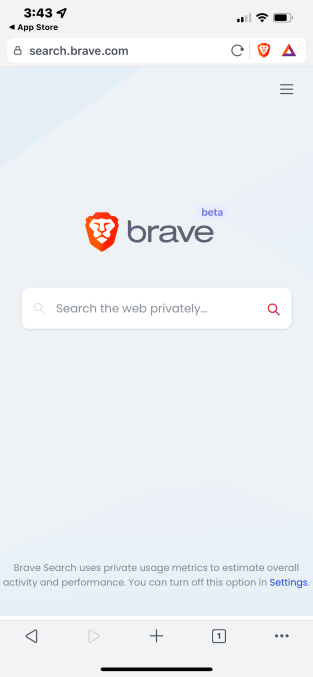
Image Credits: Brave

Alternative browser Brave this week introduced its own search service, Brave Search, now available in beta across all platforms — including web, Android and iOS. The service is different from other search engines because it does not track or profile users, and it leverages its own search index for answering queries instead of relying on other providers. Its ranking algorithms will be community-curated and open. Soon, it will also offer options for both an ad-free paid search and an ad-supported search option, allowing users to decide how they want to proceed.

Brave Search was announced in March when Brave acquired Tailcat. The company says the new service will later this year become the default in the Brave browser.

Moonbeam
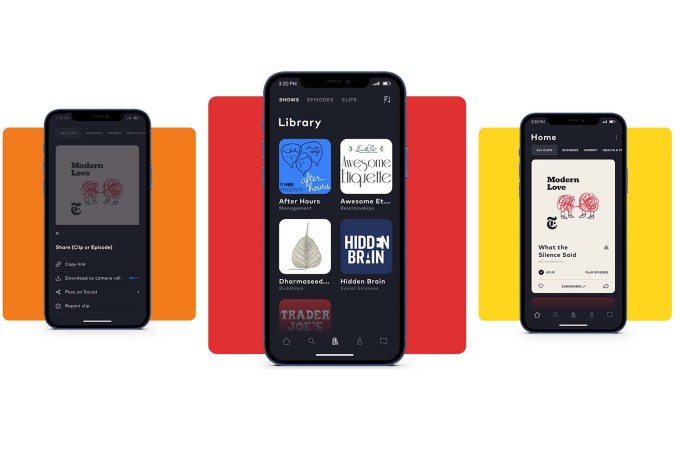
Image Credits: Moonbeam

Kayak’s co-founder Paul English this week officially launched Moonbeam, a podcast discovery app that leverages a combination of machine learning and human curation to create a newsfeed-style stream of audio content, similar to Podz. Podcasters can also select clips of their shows to feature on the app. Plus, the app allows fans to tip creators directly — and Moonbeam doesn’t take a cut. The app learns what sort of podcasts you may like based on how you interact with those it features, so your recommendations improve over time. Moonbeam can also serve as your podcast player, offering the ability to play back full episodes.

Reading Rec’s

Tweets

Feels very much like Amazon and Microsoft trying to team up to take on Apple. https://t.co/ELWCrYcK0c

— Dan Moren (@dmoren) June 24, 2021

Gives a boost to Amazon for more developers who will want apps there to leverage Windows. Probably most important partnership announced

— Michael Gartenberg (@Gartenberg) June 24, 2021

App Store revolution has been temporarily delayed.
Screenshots are back for the installed apps in the search results in iOS 15.0 beta 2 pic.twitter.com/DDvk1brQgK

— ilia kukharev (@ilyakuh) June 25, 2021

(Quick, painful aside: On the podcast I explained that Apple completely broke the method @LaunchCenterPro has been using for Home Screen customization. We now have to remove the feature from the app and somehow explain it to our users who paid for that feature. It’s crushing.) pic.twitter.com/k5nOVZHDXz

— David Barnard (@drbarnard) June 23, 2021