LG gets a 5G flagship, making the world’s longest phone name even longer

For a company with a two letter name, LG loves nothing so much as an unwieldy title. A form of overcompensation, perhaps? Whatever the case, the lengthening of LG phone names is one of this world’s few constants, and as such, it ought to be no surprise that the company’s first 5G handset happily continues the trend as the LG V50 ThinQ 5G.

The phone will be available for Verizon and Sprint customers “this summer”. As for price, I’d put that somewhere in the admittedly vague ballpark of “more expensive that a regular LG phone.”

The device looks to be pretty premium, sporting a 6.4 inch OLED display, Snapdragon 855 and a beefy 4,000-mAh battery. The company isn’t revealing how 5G will impact battery drain, but it’s pretty safe to say it will take a hit. On the upside, anyone who picks up a 5G phone in 2019 will almost certainly be spending a lot of their time still riding the LTE rails.

The phone could eventually be available to additional U.S. carriers.

Microsoft promises an open HoloLens ecosystem

At its MWC keynote in Barcelona today, Microsoft promised to keep the HoloLens ecosystem open. That means third-party app stores and browsers, for example, with Mozilla already announcing its Firefox browser for HoloLens today.

“Developers will have the freedom to create their own stares as first-class citizens,” Microsoft’s HoloLens chief Alex Kipman said today and stressed that developers will also have the freedom to create great web browsers.

All of this should be obvious, but there have, of course, been times in Microsoft’s history where an open ecosystem was not exactly what the company focused on. And browser competition was surely not on the top of the company’s list during the browser wars. That cost the company dearly, both financially and in terms of developer goodwill. Maybe that’s why it is now making this announcement, too.

“We believe in an open API surface area and driver model,” Kipman said. “We will continue to participate in guiding open standards like OpenXR so anyone can innovate with our headset from the sensors that are being used to the differentiated experiences that are being created.”

Unreal Engine 4 support is coming to HoloLens 2

Microsoft closed out today’s big HoloLens 2 debut with a surprise appearance by Epic Games CEO, Tim Sweeney. The gaming exec was clearly impressed by the technology’s future for both developement and consumer augmented reality.

“I believe that AR is going to be the primary platform of the future for both work and entertainment,” he told the crowd at the event.

The Fortnite creator is kicking things off on the development side, announcing that Unreal Engine 4 support will be coming to the headset. The move is part of a larger strategy for Microsoft to open the system up, as it looks to grow its key foray into the world of mixed reality.

For Epic, meanwhile, it’s part of a larger embrace of both Microsoft’s solution and all things AR. Sweeney noted that the company is not ready to announce any kind of consumer-facing AR offering, that they’re certainly on the way, and the company “will support HoloLens in all of our endeavors.”

Microsoft and Trimble made a hardhat with HoloLens built-in

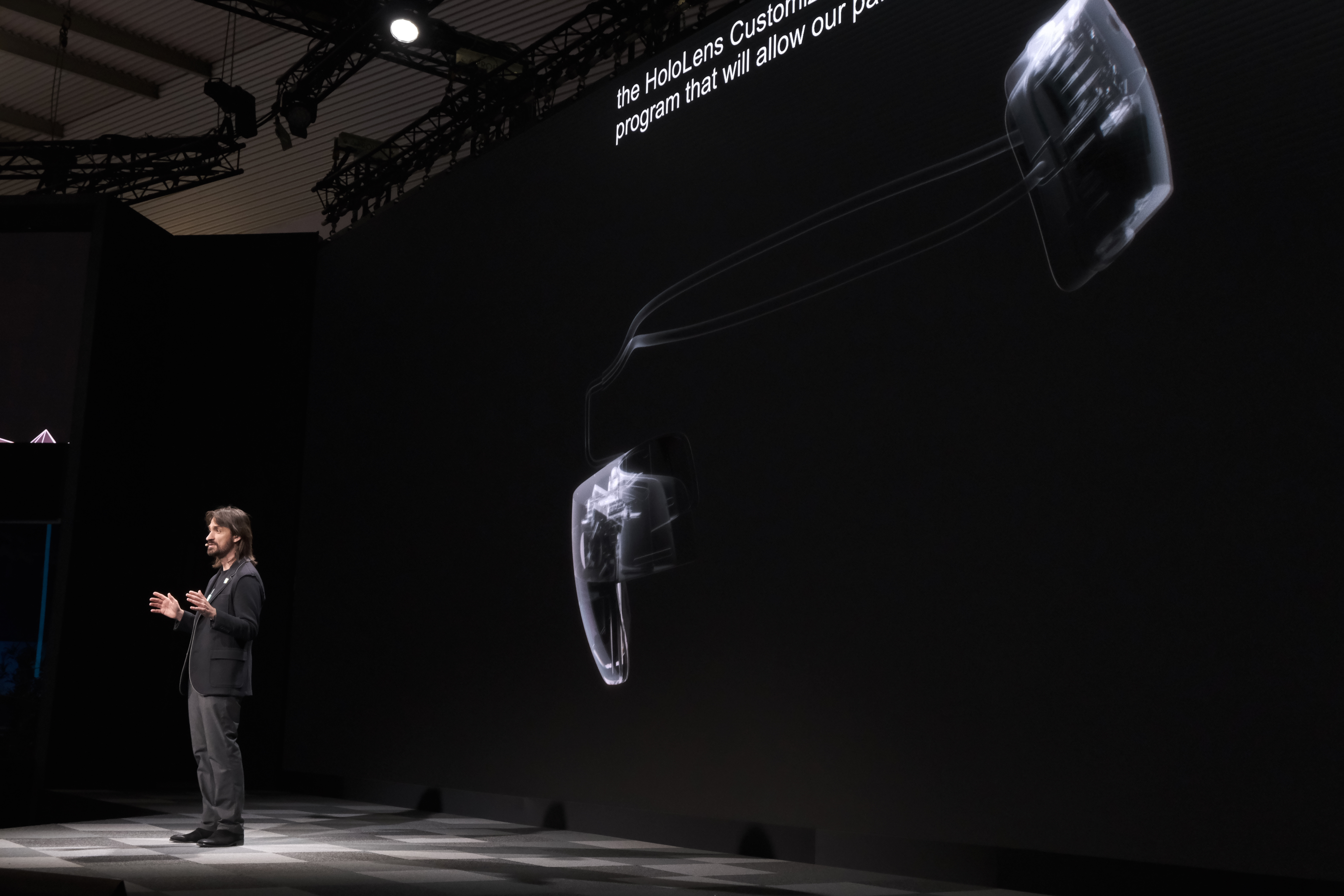
Microsoft is really hoping to get down to business with the next version of the Hololens. In fact, the software giant announced a new customization program for the HoloLens 2.

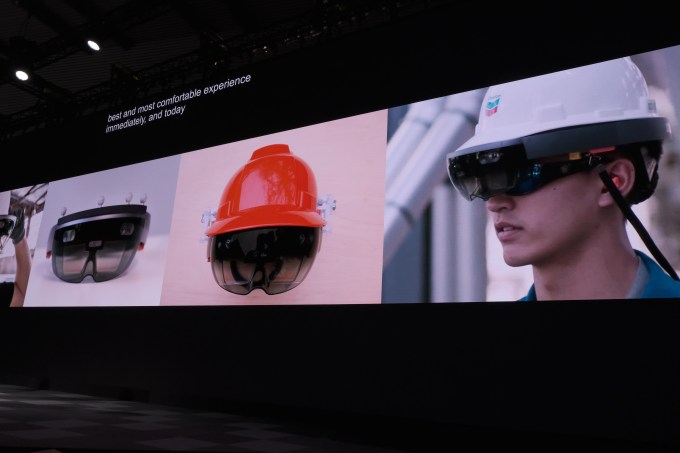
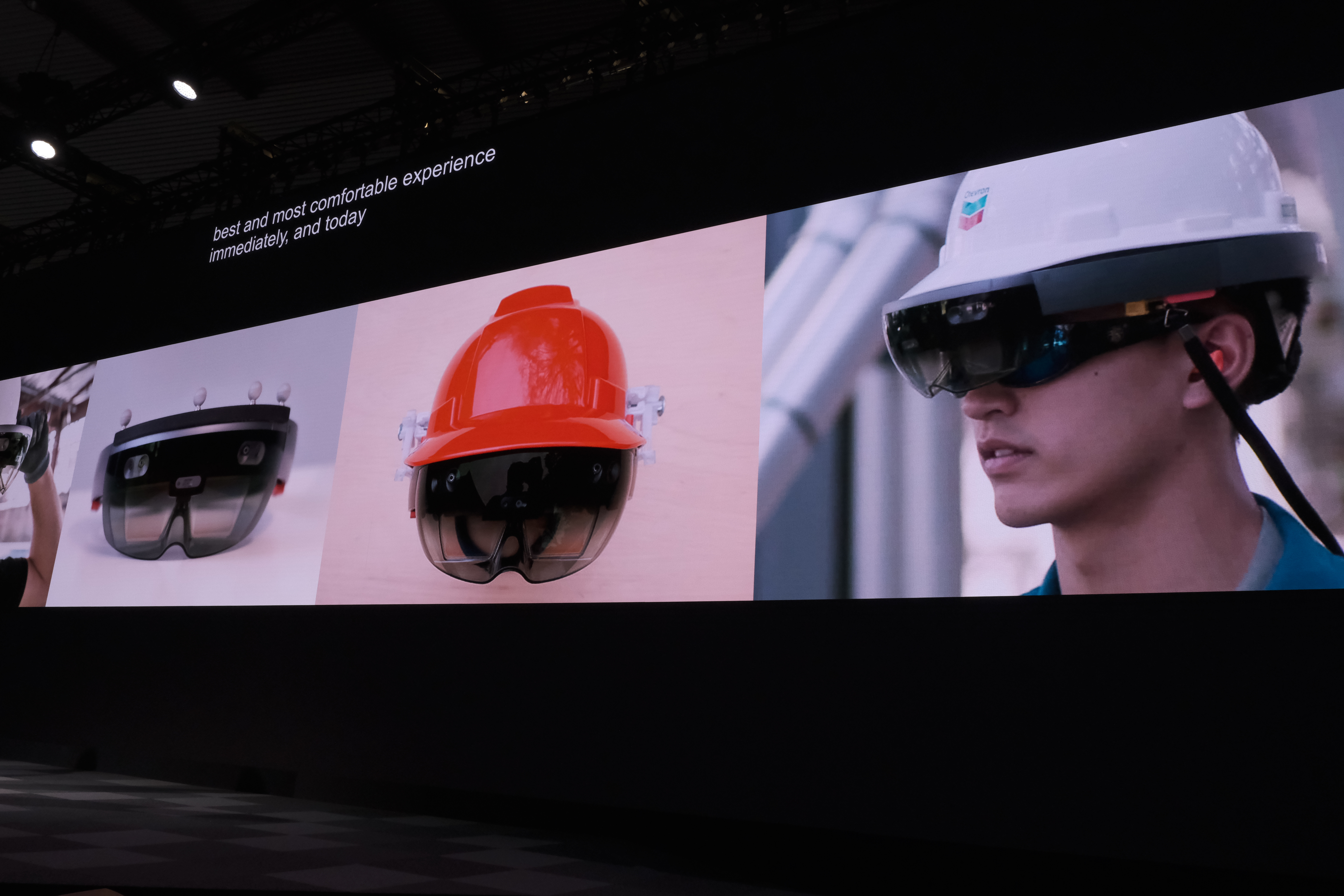
How, precisely such customized versions of the XR headset will look remains to be seen, but the company’s first partner, construction hardware company Trimble, is offering a pretty interesting glimpse. The company joined Microsoft on-stage to debut a new collaboration.

The XR10 is a customized hardhat with a swiveling HoloLens 2 built-in, so construction works can get a heads-up display on site. This first partnership is a clear sign of where Microsoft hopes to go with this second generation of its headset, bringing the technology beyond the confines of the office and into real world site. 

Pricing is still TBD, but the headset will be available at the same time as the regular Hololens 2.

Microsoft announces an Azure-powered Kinect camera for enterprise

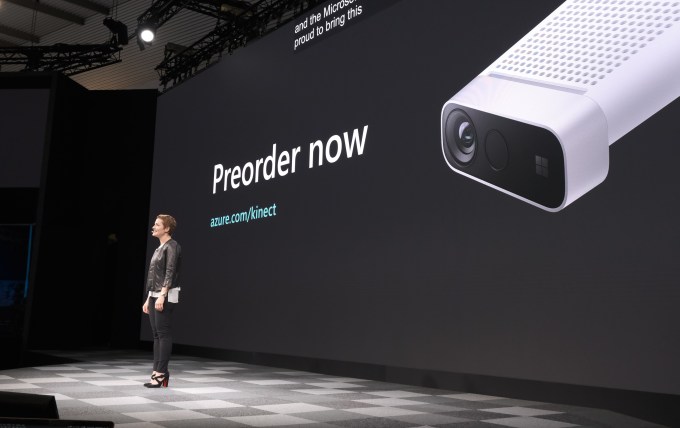
Today’s Mobile World Congress kickoff event was all about the next Hololens, but Microsoft still had some surprises up its sleeve. One of the more interesting additions is the Azure Kinect, a new enterprise camera system that leverages the company’s perennially 3D imaging technology to create a 3D camera for enterprises.

The device is actually a kind of companion hardware piece for Hololens in the enterprise, giving business a way to capture depth sensing and leverage its Azure solutions to collect that data.

“Azure Kinect is an intelligent edge device that doesn’t just see and hear but understands the people, the environment, the objects and their actions,” Azure VP Julia White said at the kick off of today’s event. “The level of accuracy you can achieve is unprecedented.”

What started as a gesture-based gaming peripheral for the Xbox 360 has since grown to be an incredibly useful tool across a variety of different fields, so it tracks that the company would seek to develop a product for business. And unlike some of the more far off Hololens applications, the Azure Kinect is the sort of product that could be instantly useful, right off the the shelf.

A number of enterprise partners have already begun testing the technology, including Datamesh, Ocuvera and Ava, representing an interesting cross-section of companies. The system goes up for pre-order today, priced at $399. 

Say hello to Microsoft’s new $3,500 HoloLens with twice the field of view

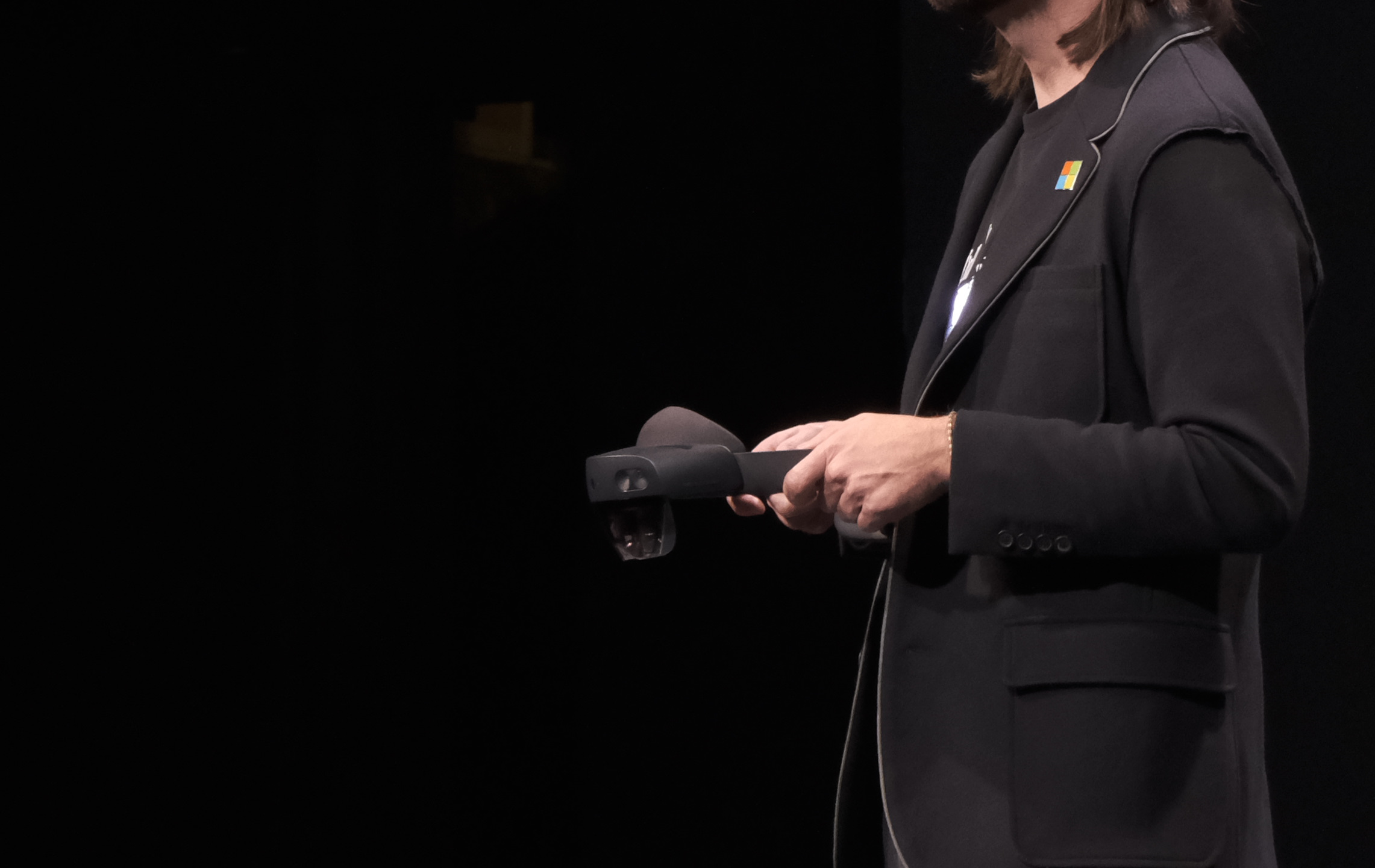
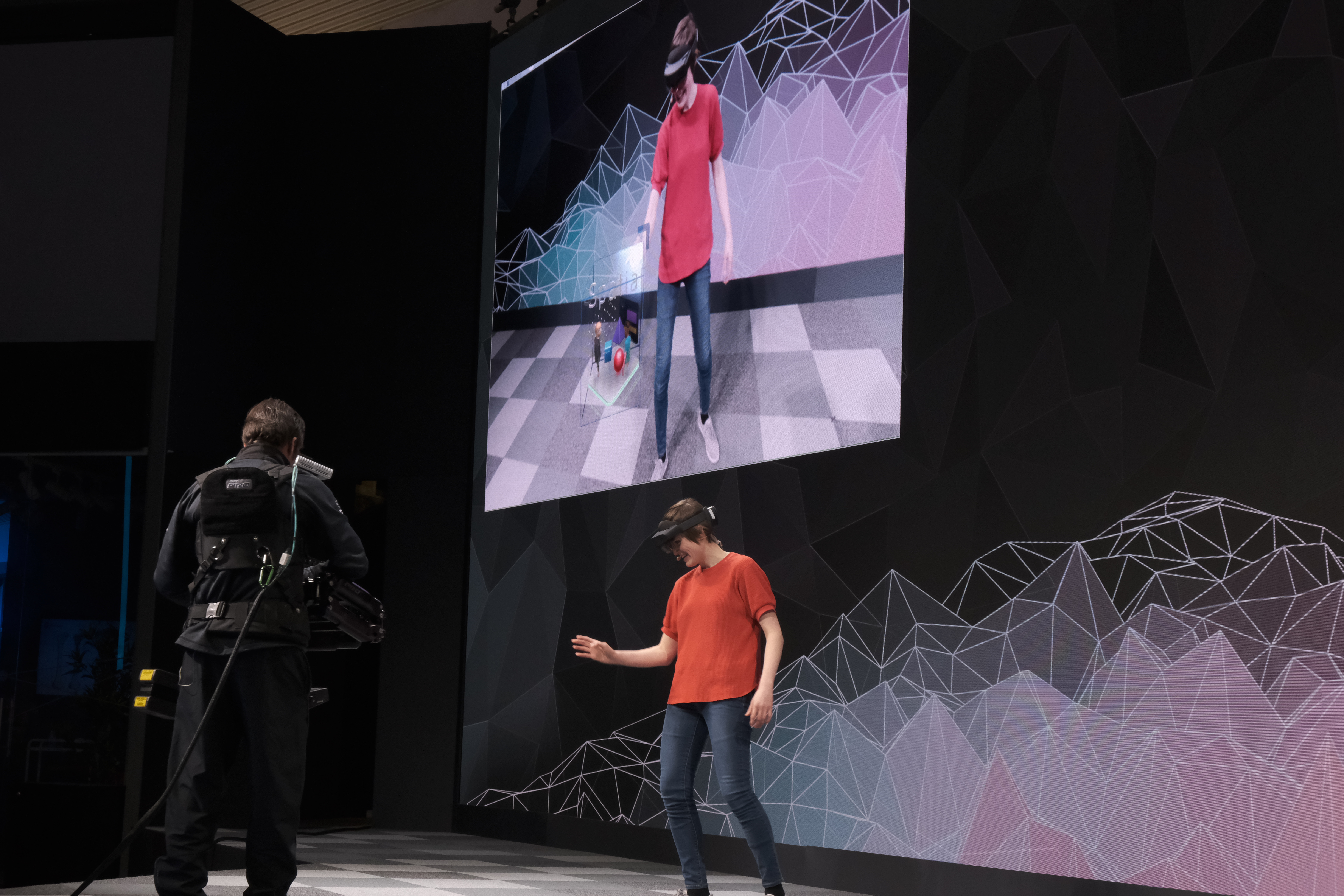
Microsoft unveiled the latest version of its HoloLens ‘mixed reality’ headset at MWC Barcelona today. The new HoloLens 2 features a significantly larger field of view, higher resolution and a device that’s more comfortable to wear. Indeed, Microsoft says the device is three times as comfortable to wear (though it’s unclear how Microsoft measured this).

Later this year, HoloLens 2 will be available in the United States, Japan, China, Germany, Canada, United Kingdom, Ireland, France, Australia and New Zealand for $3,500.

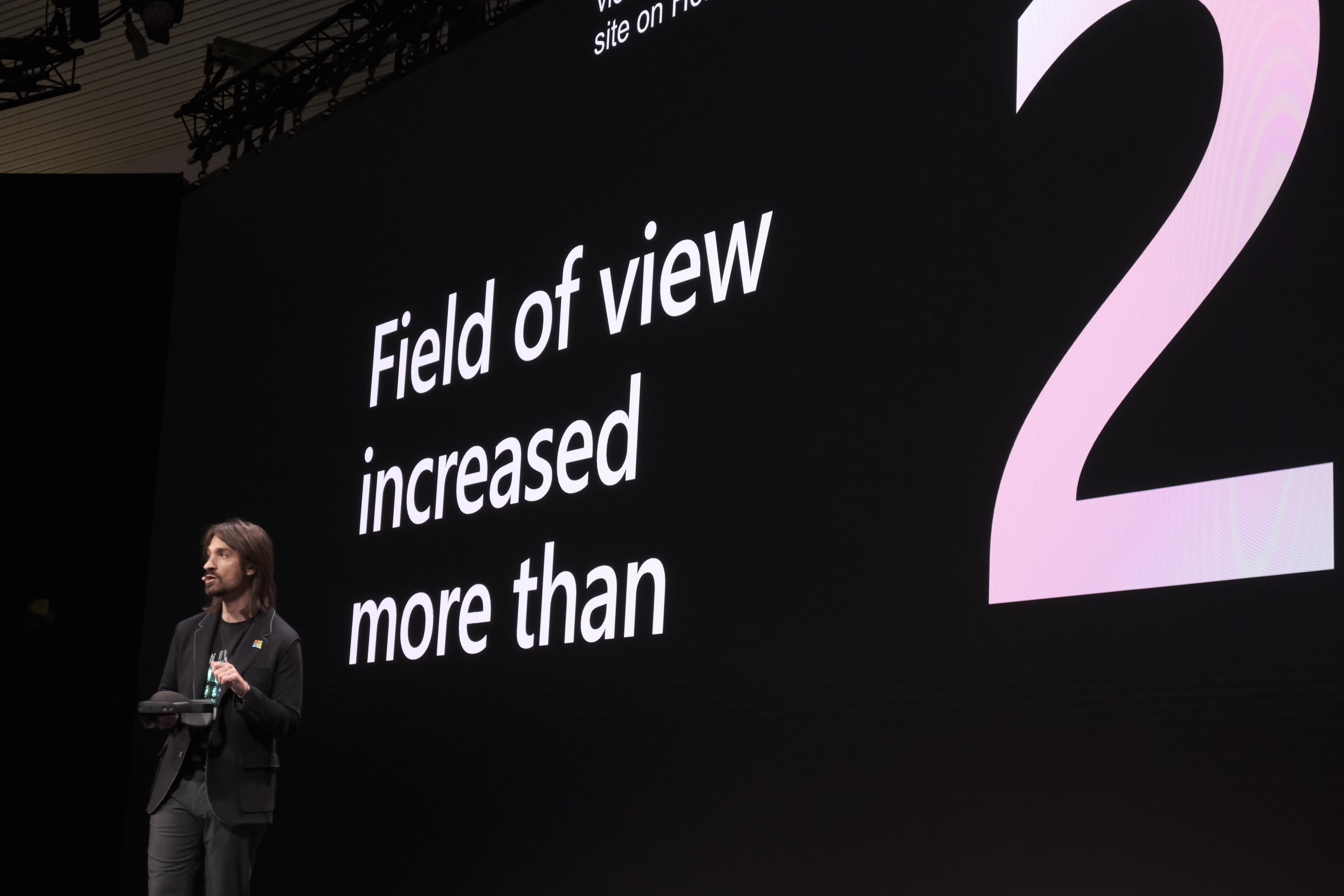
One of the knocks against the original HoloLens was its limited field of view. When whatever you wanted to look at was small and straight ahead of you, the effect was striking. But when you moved your head a little bit or looked at a larger object, it suddenly felt like you were looking through a stamp-sized screen. HoloLens 2 features a field of view that’s twice as large as the original.

“Kinect was the first intelligent device to enter our homes,” HoloLens chief Alex Kipman said in today’s keynote, looking back the the device’s history. “It drove us to create Microsoft HoloLens. […] Over the last few years, individual developers, large enterprises, brand new startup have been dreaming up beautiful things, helpful things.”

The HoloLens was always just as much about the software as the hardware, though. For HoloLens, Microsoft developed a special version of Windows, together with a new way of interacting with the AR objects through gestures like air tap and bloom. In this new version, the interaction is far more natural and lets you tap objects. The device also tracks your gaze more accurately to allow the software to adjust to where you are looking.

“HoloLens 2 adapts to you,” Kipman stressed. “HoloLens 2 evolves the interaction model by significantly advancing how people engage with holograms.”

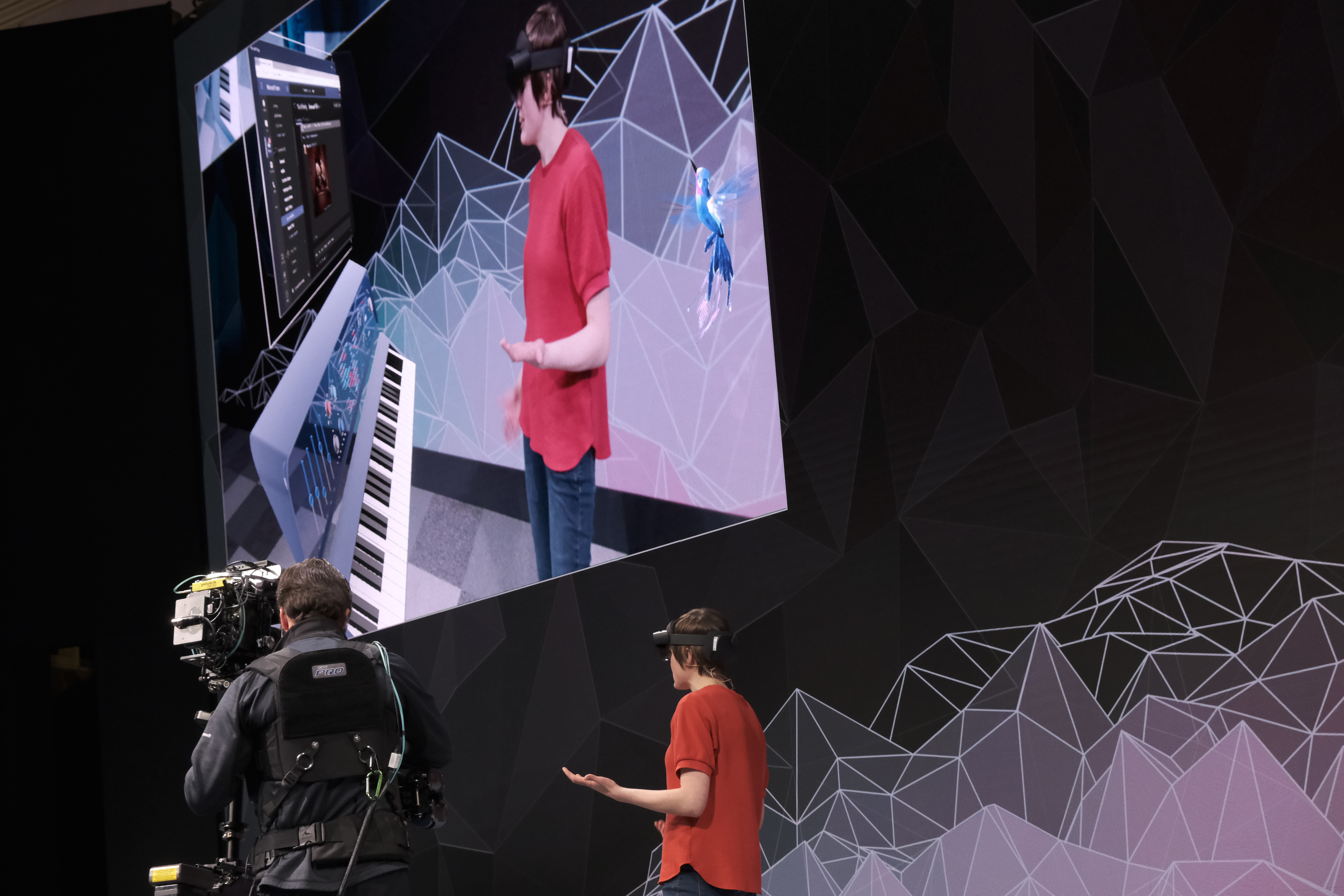
In its demos, the company clearly emphasized how much faster and fluid the interaction with HoloLens applications becomes when you can use slides, for example, by simply grabbing the slider and moving it, or by tapping on a button with either a finger or two or with your full hand. Microsoft event built a virtual piano that you can play with ten fingers to show off how well the HoloLens can track movement. The company calls this ‘instinctual interaction.’

Microsoft first unveiled the HoloLens concept at a surprise event on its Redmond campus back in 2015. After a limited, invite-only release that started days after the end of MWC 2016, the device went on sale to everybody in August  2016. Four years is a long time between hardware releases, but the company clearly wanted to seed the market and give developer a chance to build the first set of HoloLens applications on a stable platform.

To support developers, Microsoft is also launching a number of Azure services for HoloLens today. These include spatial anchors and remote rendering to help developers stream high-polygon content to HoloLens.

It’s worth noting that Microsoft never positioned the device as consumer hardware. I may have shown off the occasional game, but its focus was always on business applications, with a bit of educational applications thrown in, too. That trend continued today. Microsoft showed off the ability to have multiple people collaborate around a single hologram, for example. That’s not new, of course, but goes to show how Microsoft is positioning this technology.

For these enterprises, Microsoft will also offer the ability to customize the device.

“When you change the way you see the world, you change the world you see,” Microsoft CEO Satya Nadella said, repeating a line from the company’s first HoloLens announcement four years ago. He noted that he believes that connecting the physical world with the virtual world will transform the way we will work.

Gillmor Gang: Social Studies

The Gillmor Gang — Keith Teare, Frank Radice, Denis Pombriant, Michael Markman, and Steve Gillmor . Recorded live Saturday February 23, 2019. Podcast M-and-A as smart speakers wag the video dog. Permission-based metadata thrives in the next generation of bidirectional socialcasting.

Produced and directed by Tina Chase Gillmor @tinagillmor

@kteare, @denispombriant, @fradice, @mickeleh, @stevegillmor

Liner Notes

Live chat stream

The Gillmor Gang on Facebook

Watch Microsoft unveil the HoloLens 2 live right here

Microsoft is set to announce a brand new hardware device at MWC in Barcelona — the new HoloLens headset. The conference starts at 6:00 PM CET (5:00 AM GMT, 12:00 PM ET, 9:00 AM PT).

If you’ve ever tried the HoloLens, you know that this it is a magical device. But Microsoft quickly realized that it had more potential for industrial use cases. It is now positioned as a B2B device.

Let’s see what Microsoft has in mind with the second-generation HoloLens. The company is also going to talk about its mobile strategy when it comes to apps and services on iOS and Android.

You can check it out live via Microsoft’s official stream above, and stay tuned on TechCrunch.com for ongoing coverage of all the news coming out of MWC.

New flaws in 4G, 5G allow attackers to intercept calls and track phone locations

A group of academics have found three new security flaws in 4G and 5G, which they say can be used to intercept phone calls and track the locations of cell phone users.

The findings are said to be the first time vulnerabilities have affected both 4G and the incoming 5G standard, which promises faster speeds and better security, particularly against law enforcement use of cell site simulators, known as “stingrays.” But the researchers say that their new attacks can defeat newer protections that were believed to make it more difficult to snoop on phone users.

“Any person with a little knowledge of cellular paging protocols can carry out this attack,” said Syed Rafiul Hussain, one of the co-authors of the paper, told TechCrunch in an email.

Hussain, along with Ninghui Li and Elisa Bertino at Purdue University, and Mitziu Echeverria and Omar Chowdhury at the University of Iowa are set to reveal their findings at the Network and Distributed System Security Symposium in San Diego on Tuesday.

“Any person with a little knowledge of cellular paging protocols can carry out this attack… such as phone call interception, location tracking, or targeted phishing attacks.” Syed Rafiul Hussain, Purdue University

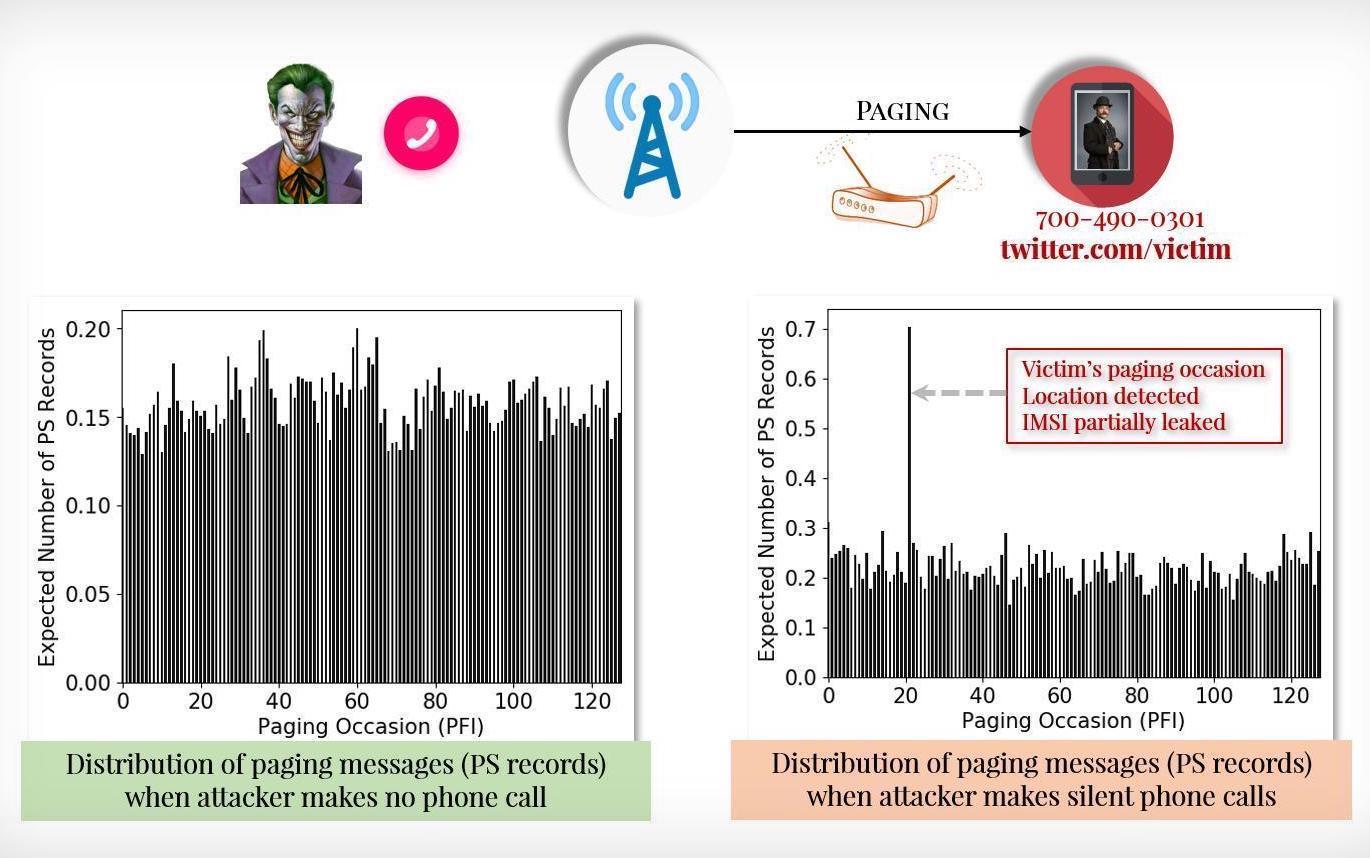
The paper, seen by TechCrunch prior to the talk, details the attacks: the first is Torpedo, which exploits a weakness in the paging protocol that carriers use to notify a phone before a call or text message comes through. The researchers found that several phone calls placed and cancelled in a short period can trigger a paging message without alerting the target device to an incoming call, which an attacker can use to track a victim’s location. Knowing the victim’s paging occasion also lets an attacker hijack the paging channel and inject or deny paging messages, by spoofing messages like as Amber alerts or blocking messages altogether, the researchers say.

Torpedo opens the door to two other attacks: Piercer, which the researchers say allows an attacker to determine an international mobile subscriber identity (IMSI) on the 4G network; and the aptly named IMSI-Cracking attack, which can brute force an IMSI number in both 4G and 5G networks, where IMSI numbers are encrypted.

That puts even the newest 5G-capable devices at risk from stingrays, said Hussain, which law enforcement use to identify someone’s real-time location and log all the phones within its range. Some of the more advanced devices are believed to be able to intercept calls and text messages, he said.

According to Hussain, all four major U.S. operators — AT&T, Verizon (which owns TechCrunch), Sprint and T-Mobile — are affected by Torpedo, and the attacks can carried out with radio equipment costing as little as $200. One U.S. network, which he would not name, was also vulnerable to the Piercer attack.

The Torpedo attack — or “TRacking via Paging mEssage DistributiOn. (Image: supplied)

We contacted the big four cell giants, but none provided comment by the time of writing. If that changes, we’ll update.

Given two of the attacks exploit flaws in the 4G and 5G standards, almost all the cell networks outside the U.S. are vulnerable to these attacks, said Hussain.  Several networks in Europe and Asia are also vulnerable.

Given the nature of the attacks, he said, the researchers are not releasing the proof-of-concept code to exploit the flaws.

It’s the latest blow to cellular network security, which has faced intense scrutiny no more so than in the last year for flaws that have allowed the interception of calls and text messages. Vulnerabilities in Signaling System 7, used by cell networks to route calls and messages across networks, are under active exploitation by hackers. While 4G was meant to be more secure, research shows that it’s just as vulnerable as its 3G predecessor. And, 5G was meant to fix many of the intercepting capabilities but European data security authorities warned of similar flaws.

Hussain said the flaws were reported to the GSMA, an industry body that represents mobile operators. GSMA recognized the flaws, but a spokesperson was unable to provide comment when reached. It isn’t known when the flaws will be fixed.

Hussain said the Torpedo and IMSI-Cracking flaws would have to be first fixed by the GSMA, whereas a fix for Piercer depends solely on the carriers. Torpedo remains the priority as it precursors the other flaws, said Hussain.

The paper comes almost exactly a year after Hussain et al revealed ten separate weaknesses in 4G LTE that allowed eavesdropping on phone calls and text messages, and spoofing emergency alerts.

TCL will launch its first foldable next year

Last week a bunch of TCL foldable concepts leaked out — and honestly, a few of them looked pretty cool. But alas, concepts are just concepts, and certainly no guarantee that the things will ever make it to market. The company did have some foldable news to share this week at Mobile World Congress, but the reality of it is probably a bit of a let down after seeing phone that turns into a watch.

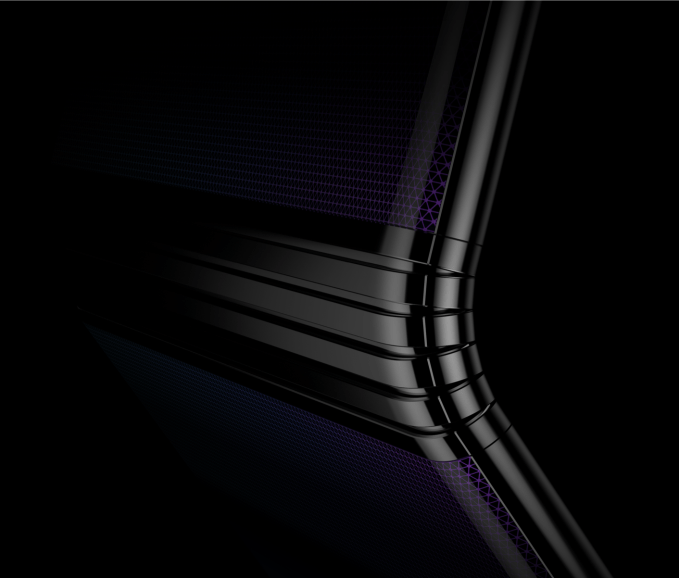
Today a the show, the company took the wraps off of DragonHinge. The new patented tech uses a mechanical hinge that allows flexible devices to be used in a number of different ways. That tech, when powered with display technology from TCL’s sister company CSOT, will power its future devices.

TCL will be showing off some of these at this week’s event, including the above render. Though that looks to be more inline with current foldables, letting the device double as either a smartphone or tablet. The company noted in a press release today that we can start to expect some form of these devices to be available in 2020.

In addition to its own brand, TCL also releases devices under the Alcatel name and BlackBerry. The company was responsible for the release of the well received KeyOne, which launched a couple of Mobile World Congresses ago. Where foldable will live in the portfolio, however, remains to be seen.

Transportation Weekly: Tesla astroturfs, Softbank flexes, BMW and Daimler hookup, What is a Jelbi?

Welcome back to Transportation Weekly; I’m your host Kirsten Korosec, senior transportation reporter at TechCrunch. This is the third edition of our tome, I mean newsletter, and this week let’s settle in for a mind meld on why logistics is the new Hansel, a curious Tesla subsidiary, and discover a new mobility species called the Jelbi.

Never heard of TechCrunch’s Transportation Weekly? Catch up here and hereAs I’ve written before, consider this a soft launch. Follow me on Twitter @kirstenkorosec to ensure you see it each week. (An email subscription is coming).

Brrruummmmm.


ONM …

There are OEMs in the automotive world. And here, (wait for it) there are ONMs — original news manufacturers. (Cymbal clash!) This is where investigative reporting, enterprise pieces and analysis on transportation lives.Tesla-EFCA graphic

This week, Mark Harris is back with a story about Tesla. This focuses on the company’s energy business, or more specifically, the opaqueness around its lobbying efforts in the energy sector. Follow him on Twitter @meharris.

Inside Tesla’s solar energy astroturfing

Yes, this is a transportation newsletter. We get it. But Tesla has long pushed itself as a sustainable energy company that covers the entire ecosystem — solar power, energy storage, and electric vehicles. We’ll continue to look through the dozens of Tesla subsidiaries, most of them related to solar, to see what else pops up.

In other Tesla news, ARK Invest has CEO Elon Musk on a podcast; Tesla files its 10K, Consumer Reports pulls its recommendation for the Model 3 and data firm JATO Dynamics declares that the Tesla Model 3 was the best-selling electric car in the world in 2018.


Dig In
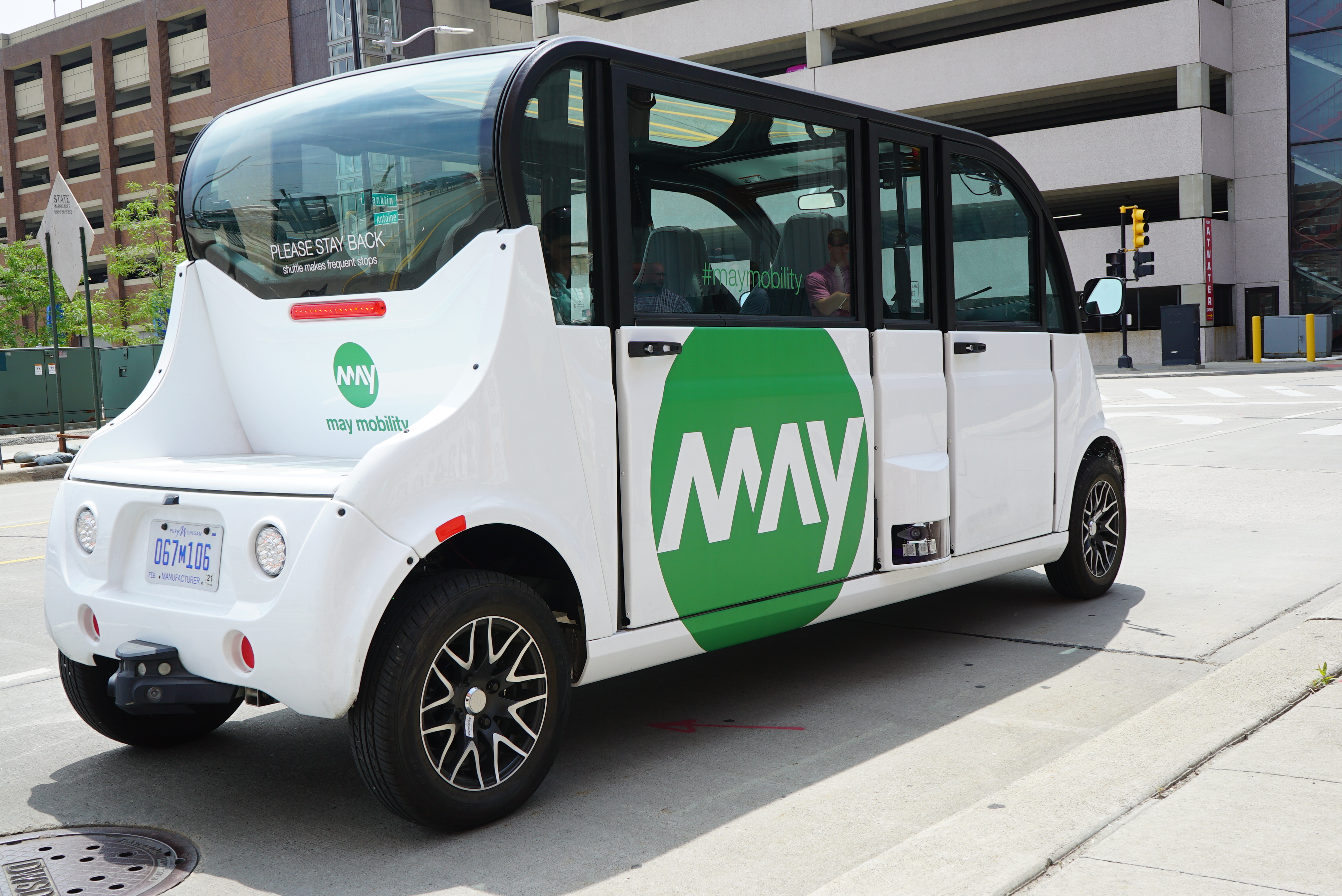
This week, I wanted to highlight a recent conversation with May Mobility co-founder and COO Alisyn Malek. 

May Mobility, an autonomous shuttle company, announced last week a $22 million funding round. This week, the company started testing its third AV shuttle service; this time, it’s in Rhode Island.

May Mobility’s AV shuttle will travel a 5-mile route, its longest to date, along the Woonasquatucket River corridor with 12 stops, from Olneyville to Providence Station. The “Little Roady Shuttle,” as it’s being called, can carry up to five passengers and an attendant. The vehicles began testing this week on low-volume roads as the initial phase of a pilot project scheduled to launch this spring.

Malek said a curious thing to me when we last spoke. In the midst of explaining the differences in complexity between its route in Detroit and Rhode Island, she referred to May Mobility as a transportation service provider.
That’s not unusual, this is an AV shuttle company after all. Except that unlike so many AV startups, May Mobility seems to put the transportation service part ahead of, or at least on equal footing, with its AV efforts.

Malek spent so much time explaining the logistics piece of managing the service, I had to jump in and say “I realize the AV component is important for May Mobility, but it seems almost incidental in the problem you’re trying to solve.”

Malek responded. “Yeah.”

She elaborated. “It’s going to take 10 to 15 years for an AV to cover a whole urban area,” she added. “When you think about the validation and the reliability  that needs to have been done and demonstrated before you pull that safety driver, well that’s a really big cross section of things you need to validate and verify.”

Malek also told me that May Mobility will continue to expand into new markets and double down on places it’s already operating, which includes Columbus, Ohio and Detroit.


A little bird …

We hear a lot. But we’re not selfish. Let’s share.

blinky-cat-bird

Thanks for all the tips everyone. I’ll be vetting these over the next few weeks or so.

We’ve heard from a couple of sources that top engineers are fleeing one of the larger self-driving car startups. Poaching between AV startups is common. We’re looking into whether something else is at play.

Also … not a tip, but something worth tracking, and perhaps a tidbit that not everyone noticed.

Under the Flexport-Softbank deal, Softbank’s Michael Ronen will join Flexport’s board and director Ed Shrager comes on as a board observer. Here’s the interesting part: CEO Ryan Petersen will retain majority control of the company, as Forbes reports. That’s notable considering investors are giving up so much control to founders, even while drowning them in capital.

Got a tip or overheard something in the world of transportation? Email me or send a direct message to @kirstenkorosec.


Deal of the week

Another day, another Softbank Vision Fund deal.

This time, Softbank led a $1 billion funding round in Flexport, a San Francisco-based full-service air and ocean freight forwarder.  

Logistics” they’re so hot right now. If Amazon is the Derek Zoolander of logistics, perhaps Softbank is Hansel. Just go with it.

Softbank put $2.25 billion into self-driving car startup GM Cruise last year. It is also backing ride-hailing companies Didi and Uber, peer-to-peer car-sharing company Getaround, Alibaba Local Services, DoorDash, Full Truck Alliance, Grofers, autonomous delivery robot startup Nuro and ParkJockey.

I reached out to Softbank dealmaker Michael Ronen and asked what’s the big idea? His response:
Transportation and logistics are massive markets that are being disrupted by technology. Ride-sharing companies have used mobile computing and AI to create a whole new market for moving people and goods. We see additional opportunities in long-haul trucking, warehouse management, robotics inside and outside warehouses, last-mile logistics (including parking), and other areas.
We believe the opportunities to modernize these pieces of the value chain are very significant and still largely untapped. Similar to the shift in TV and media consumption to on-demand and on-the-move, consumers are more and more expecting to get what they want, when they want it, where they want it – with little to zero delivery costs. Amazon has created a massive ecosystem to enable such an experience. The rest of the world is playing catch up. We believe the companies we’ve backed are making significant strides to enable such experiences, and that there’s still a lot of opportunity ahead both in the U.S. and abroad.
So it looks like it’s shaping up to be “all the transportation and logistics companies backed by Softbank” versus Amazon.

Other deals that got our attention this week:


SnapshotDaimler-BMW merge
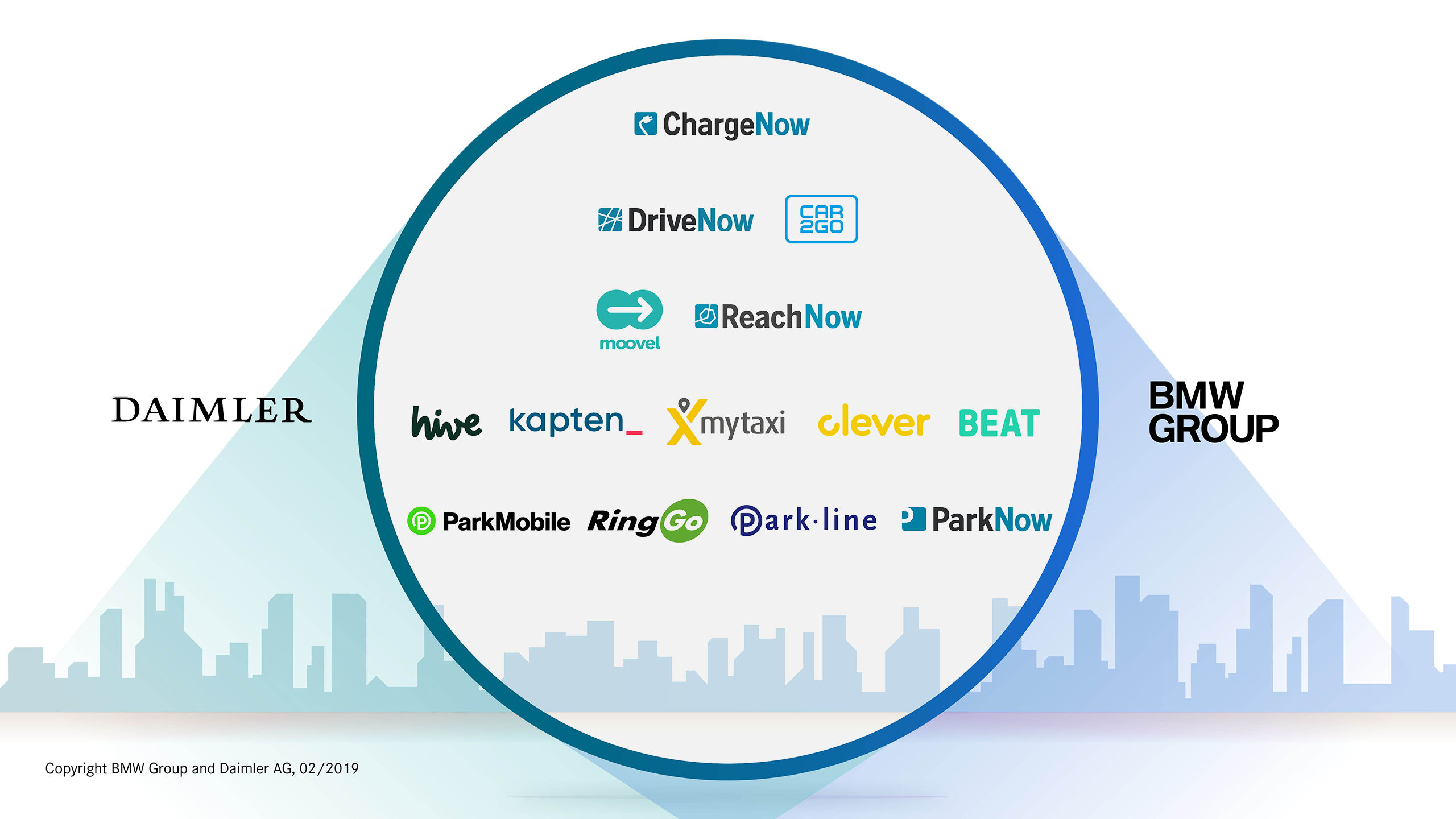
If this image leaves you scratching your head, you’re not alone.

BMW and Daimler, which had agreed last year to merge their urban mobility services into a single holding company, announced Friday plans to unify these services and sink $1.1 billion into the effort. Also this week: Daimler moves its big date platform to the cloud.

TechCrunch’s Romain Dillet chimes in on what this all means. In short: a hot mess.

Daimler and BMW know how to make cars, but they really don’t know how to brand mobility services. Last year, they both agreed to merge their mobility services under one roof with each company owning a 50 percent stake.

But after many acquisitions and poor branding decisions, it became a confusing mess. You know how they could have cleaned up their mess? By choosing descriptive names and leaving the past behind. Instead, they’re creating five joint ventures with names that look like some services that already exist, but not quite. They’re also investing $1.1 billion in those services.

The best way to avoid a headache is by looking at this chart. Each line represents a joint venture. ChargeNow is now Charge Now, free-floating rental services DriveNow and Car2Go are now Share Now (yes, Drive Now wasn’t good enough), all the parking services are now unified under Park Now (that one was easy), all the ride-hailing services are regrouped under Free Now, and ReachNow and moovel are becoming Reach Now (even though ReachNow is a ride-hailing service but I give up).

It gets a lot more confusing when you realize that some services will merge while others won’t. mytaxi announced that it would become Free Now, but Chauffeur-Privé just changed its name to Kapten for instance. Goodbye now.

— Romain Dillet


Tiny but mighty micromobility

Scooters have received mixed responses in cities. But data from cities’ respective pilot programs generally show that people like them more than they hate them.

A survey from the city and county of Denver, Colo. found that 32 percent of respondents (bike riders, scooter riders and non-riders) “love” scooters in the city, with 26 percent saying they don’t like them, but may like them if some changes are made.

Meanwhile, over in Los Angeles, the city’s Department of Transportation received applications from 11 dockless mobility companies to operate in the city. Collectively, those 11 companies sought permission to operate 37.7K dockless bikes and scooters.

For the operators selected, LADOT requires them to conform to its Mobility Data Specification, which entails the collection of data pertaining to vehicle type, trip duration, trip cost, trip parking verification and more.

LADOT started accepting permit applications in January and required companies to submit by February 15. LADOT says it expects to make a decision next month pertaining to which companies can participate in the one-year pilot.


Notable reads

One item this week. Trucks. (One side note, I was going to include Apple’s ADS report issued to NHTSA. And then I read it. Not much there except a tiny insight in what they require for their safety drivers. But in case you’re interested, read it here.

A recent report from McKinsey called Route 2030 – The Fast Track to the Future of Commercial Industry report, got our attention. It charts out the rise of e-commerce and shortage of truck drivers as well as the emerging trend of autonomous trucks.

  • New opportunities are driven by three major trends: alternative powertrains, autonomous vehicles, and connectivity. These could add another $3 billion to the profit pool by 2030.
  • Total global OEM profits to increase by $5.6 billion to about $18.3 billion by 2030, resulting in a slight industry profitability increase from 6.6 percent in 2017 to 6.7 percent in 2030.

Other quotable notables:

Wired’s take on self-driving car jargon; The Information’s organizational chart on GM Cruise; and Lytx, which provides fleet management services like video telematics and vehicle tracking for fleets, crunched data that identifies the top 10 roads for cell phone use in the U.S.


Testing and deployments

Deployments don’t always mean AVs. This week, Berlin’s public transit authority, BVG introduced Jelbi.

What is a Jelbi? It’s is a mobility app (powered by technology from Trafi and branded under BVG) that is designed to cover all the ways people travel, including by public train and bus, bike share, car-sharing, scooters and ride-hailing.

These one-stop mobility apps are a bit like rainbows. We can see them and they’re beautiful, but they don’t last. That’s not to say they’re not valuable. THEY ARE. Seamless travel for everyone from Point A to Point B is the goal.

But some struggle to get every mode, or every competitor within a particular mode, onto one app. Sometimes the app just isn’t so great. Or it’s great and no ones knows about it.

In the case of Jelbi, it looks like it’s off to a good start. People tell me that BVG and Trafi want to get 25 providers onto the app. So far, they have about 15, including Cambio, Emmy, Lime, Jump, Mobileeee, Miles, Mobike, and Taxi Berlin to name a few. Will the new combined and confusing Daimler-BMW joint venture add its Berlin-based services to the app? We’ll watch for it.

Other interesting stuff:

Citymapper announces subscription service for multiple transportation methods


On our radar

The Geneva Auto Show is coming up and there will be no shortage of electric vehicle concepts. Volkswagen, Peugeot, Kia are teasing them. But there’s one reveal preceding Geneva that TechCrunch is particularly interested in and that’s Polestar.

I met Polestar CEO Thomas Ingenlath in August during Monterey Car Week. I meet lots of passionate CEOs and co-founders. And Ingenlath didn’t disappoint. As we chatted over dinner I was struck by his design background and his ideology. Ingenlath is a car designer by trade and he had some interesting ideas about what people want and what works.

On Feb. 27, Polestar is going to live stream an unveiling of the Polestar 2, the first fully-electric car from the Volvo Group and the world debut of Google’s new in-car HMI system. Just set your alarm (for U.S. and Canada folks) and head to their website. The reveal starts at 4 am PT.

Thanks for reading. There might be content you like or something you hate. Feel free to reach out to me at [email protected] to share those thoughts, opinions or tips. 

Nos vemos la próxima vez.

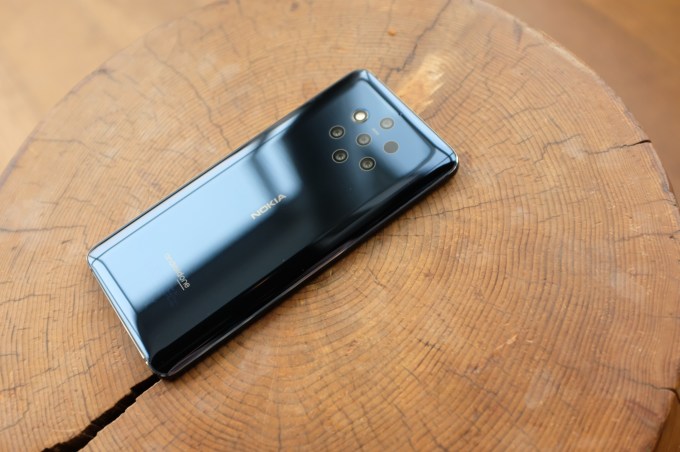
Need cameras? The Nokia 9 PureView has lots

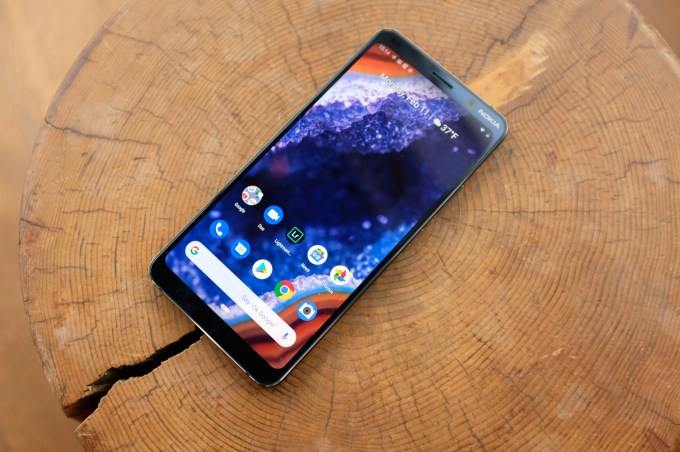
You want camera? The Nokia 9 PureView has them — more than you could ever possibly need, really. The latest premium device from HMD sports a five camera hexagonal array, along with the flash and color sensors. The two front-facing cameras, meanwhile, bring the total up to seven.

Overkill? Yeah, probably. But the device certainly maintains the Nokia brand’s legacy of pushing mobile imaging to its limits. What’s most interesting here, is how it all works. Rather than, say, switching between different focal points, the device takes shots on all five at once, fusing them together into one big picture.

Working in tandem, the cameras capture more than 60-megapixels worth of data. The system builds on the expertise of Light (the name of the even more silly nine-camera array) and Qualcomm to process the information into one complex photo that allows for tremendous editing leeway and deep depth maps. Users can shoot in RAW format and edit those images with the mobile version of Lightroom, made available through a partnership with Adobe.

The phone’s design is nice — certainly one of the newly reborn Nokia brand’s nicer to date. Though the rest of the aspects are fairly middling, including a 5.99 inch POLED display and a Snapdragon 845 chipset.

The price is right. At $699, it’s a decent mid-range phone with a heck of a gimmick. HMD, however, seems to be keenly aware that this one will have a relatively niche appeal. The company says it’s a limited edition device with a “defined production run.” No word what that means in terms of numbers, and it seems pretty reasonable to expect HMD to make this manner of device more widely available should it sell.

No word on timing, but HMD says we should expect the product to be available in the States.

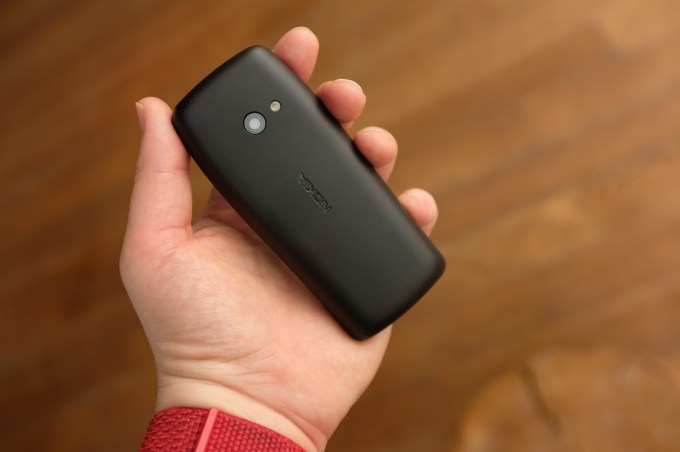
HMD keeps feature phones and Snake alive with the Nokia 210

HMD was something of an instant success when it launched at Mobile World Congress two years back. That rapid rise owed to a few key things: price, familiar branding and its predecessor’s long time commitment to the feature phone.

Those who’ve been following the industry for some time will recall that the original Nokia mobile wasn’t particularly quick to adopt the smartphone lifestyle, but the company maintained marketshare by catering to the low end of the market. HMD has continued to embrace the category by re-releasing some familiar designs and creating altogether new non-smart phones.

While it shares a number with the QWERTY-sporting Asha, the Nokia 210 is more burner than BlackBerry. The Palm-sized handset sports a small screen, surrounded by thick casing and some big buttons. The handset can access the internet via Opera mini, so users can do some light social network.

And yes, it runs Snake.

HMD promises an impressive month of battery life, packed into a handset that should run around €30 ($34).

Watch HMD unveil Nokia phones live right here

HMD is holding a press conference at MWC in Barcelona to showcase some Nokia-branded phones. The conference starts at 4:00 PM CET (3:00 PM GMT, 10:00 AM EST).

HMD licenses the Nokia brand so that the company can release smartphones under the Nokia brand. It isn’t the company we used to know and love, but it still says Nokia. So get ready for some new Nokia phones running Android.

You can check it out live via HMD’s official stream above, and stay tuned on TechCrunch.com for ongoing coverage of all the news coming out of MWC.

This is what a foldable phone case looks like

Foldable phones are having their moments at this year’s Mobile World Congress. A few days after Samsung debuted the Galaxy Fold on stage at an event in San Francisco, Huawei has just shown off its solution, the Mate X.

On the face of it, the device looks like it may well be a step up from the Galaxy device, right down to its three large screens. Of course, all of that display real estate presents some key new challenges, beyond the underlying technology. Namely, how to avoid getting those surfaces scratched to hell.

Huawei’s got a solution for that, too — albeit not quite as elegant as the phone itself. In one of the earliest examples we’ve seen indicating what foldable cases may look like, going forward, the company quickly showed us a slip case.

The accessory opens to accept the folded up phone, snapping shut to protect both sides of the device. That means it doesn’t unfold to protect the eight-inch display — which, to be fair, won’t be exposed when you’re carrying the device around in your pocket.

Of course, this is just an early solution developed in house. No doubt future cases will be every bit as varied — if not more so — than the devices themselves. This, at least, probably won’t run to $2,600