SpaceX launches first Crew Dragon capsule mission in preparation for astronaut flights

SpaceX caught itself a “W” early this morning with a successful launch of the Falcon 9 rocket with Crew Dragon capsule. Crew Dragon represents SpaceX’s first spacecraft meant to transfer humans to and from the International Space Station. This flight is the final test check for the spacecraft, and will include launch, docking with the ISS, and reentry into the Earth’s atmosphere for recovery.

Thus far, SpaceX has completed a successful launch of the Crew Dragon, complete with a test dummy and a very high-tech zero-g indicator.

Earth floats gently in zero gravity pic.twitter.com/XUH3KeDPVe

— Elon Musk (@elonmusk) March 2, 2019

Tomorrow morning, the craft will attempt to dock with the International Space Station, and after that, it will attempt re-entry.

NASA gave SpaceX approval for the launch earlier this week.

In case you missed the live stream last night, you can watch the full stream below:

SpaceX Crew Dragon recap https://t.co/MmQmctxRSo

— Elon Musk (@elonmusk) March 2, 2019

LIFTOFF! The next big leap in a new chapter of U.S. human spaceflight systems has left the pad. @SpaceX’s #CrewDragon demo flight will be the 1st commercially-built & operated American spacecraft designed for humans to dock at the @Space_Station. Watch: https://t.co/Fm5NQSfAXJ pic.twitter.com/YoiOf67kQL

— NASA (@NASA) March 2, 2019

Startups Weekly: Lyft’s S-1, cash for fertility startups and litigious VCs

Startups reporters everywhere rejoiced Friday morning when the first unicorn S-1 of 2019 emerged from under lock and key for us all to unpack, analyze and enjoy. The TechCrunch office, at least Megan Rose Dickey’s and my corner, was buzzing with excitement, and Crunchbase News editor-in-chief, (my Equity co-host), apparently had to make himself a cup of Earl Grey tea to calm down post-S-1 deep dive.

I’ve already said a lot about the filing on Equity’s latest episode, available here, and in my story on the document, so I will keep this short. Here are the nuts and bolts:

Lyft’s revenue grew from $1.06 billion to nearly $2.2 billion from 2017 to 2018. Lyft’s costs rose dramatically during 2018, compared to the year prior. In fact, Lyft’s total cost profile rose from $1.77 billion in 2017 to a staggering $3.13 billion in 2018. And as far as losses, the business posted a net loss of $911 million in 2018 and $688 million in losses the previous year.

Lyft’s key stakeholders: Rakuten (13% pre-IPO stake), General Motors (7.76%), Fidelity (7.1%), Andreessen Horowitz (6.25%) and Alphabet (5.3%): https://t.co/AQyu18AILQ

— Kate Clark (@KateClarkTweets) March 1, 2019

Onwards.

VCs want to help you get pregnant 

This week, I published a sweeping report on startups focused on improving various pain points in a women’s fertility journey. I spent months reporting on the space, learning from the founders of FertilityIQ, Kindbody, Nurx, Natural Cycles and more. Check it out here and be warned, you need an Extra Crunch subscription to read the entire piece. You can purchase an Extra Crunch subscription here.
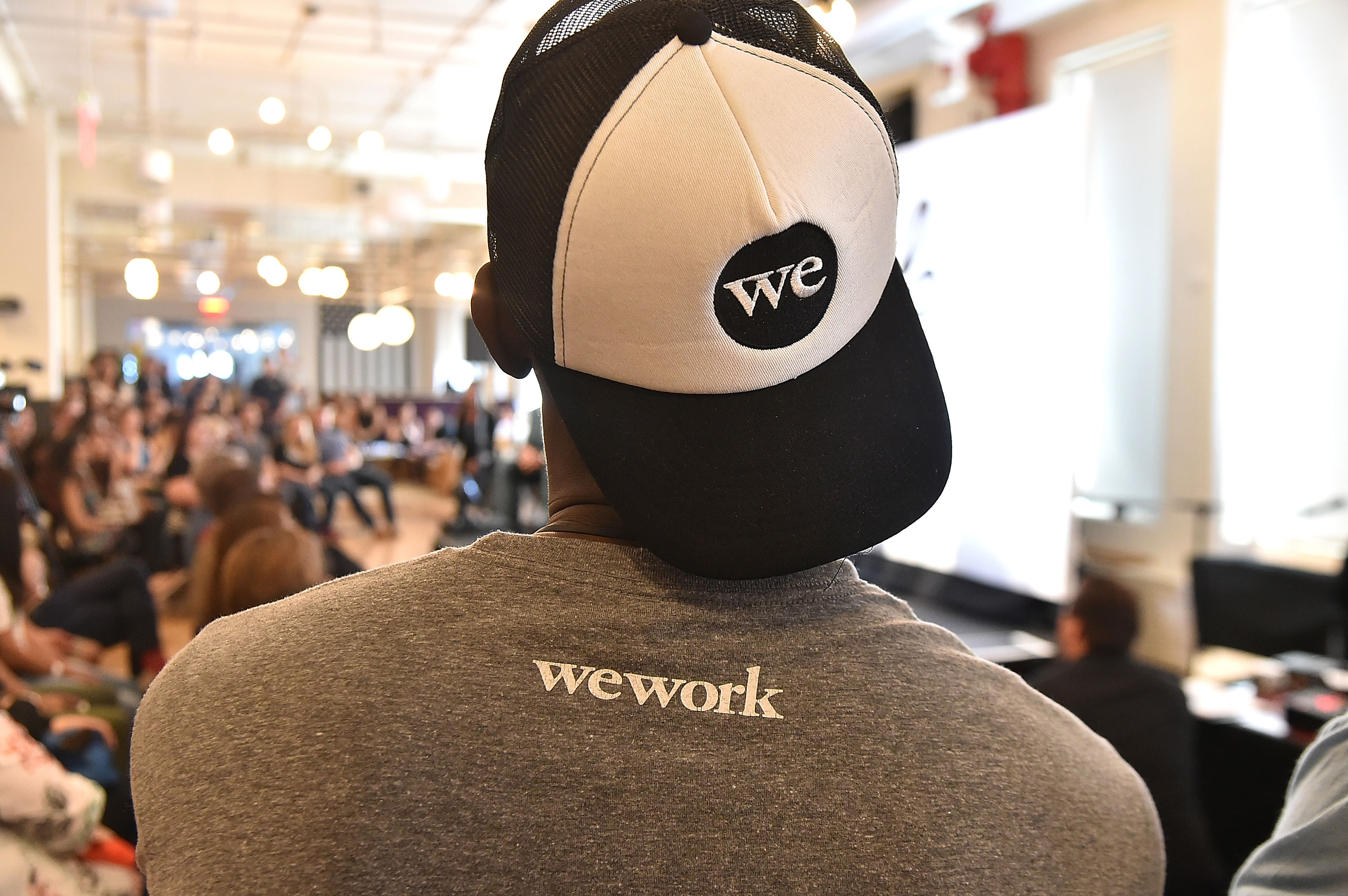
iHeartMedia And WeWork's "Work Radio" Launch Party

WeWork sheds weak talent

Despite its mountain of venture capital funding, WeWork confirmed layoffs that affected 3 percent of its global workforce on Friday. The company told TechCrunch the cuts were part of an annual performance review process and that they still plan to wildly increase the size of their workforce in 2019. And while we’re on the subject of layoffs, Rackspace, the hosted private cloud vendor, let go of around 200 workers, or 3 percent of its worldwide workforce of 6,600 employees.

Deal of the week

SoftBank’s Vision Fund is pouring $1.5 billion into online car trading group Chehaoduo, which literally means “many cars” in Chinese. The startup, based in Beijing, operates peer-to-peer online marketplace Guazi for used vehicles, and Maodou, which retails new sedans through direct sales and financial leasing. TechCrunch’s Rita Liao reports “the sizable funding round arrived at a time when China’s softening economy is sapping consumer confidence, but the company’s two-pronged strategy makes sure it covers a broad range of consumer demands.”

Binary Capital’s implosion

You thought it was over; Binary Capital has shut down after all. But here’s the latest: Binary co-founder Justin Caldbeck has sued his former co-founder Jonathan Teo, alleging breach of contract, breach of fiduciary duty, fraud and more. Caldbeck, accused of sexual harassment and unwanted sexual advances in 2017, took an indefinite leave of absence from Binary, leaving to Teo all the responsibilities of the $175 million fund. Shortly after, Teo offered to step down in a last-ditch effort to keep the firm afloat. Ultimately, neither of them could save the fallen firm.

Startup cash

Sequoia-backed Medallia raises $70M at a $2.4B valuation
SoFi founder Mike Cagney’s new company Figure just raised another $65M
ThirdLove, the direct-to-consumer lingerie startup, gets a $55M boost
Zum, a ridesharing service for kids, raises $40M
ClassDojo, an app to help teachers and parents communicate better, raises $35M
Presto raises $30M to bring its AI platform and tabletop ordering hardware to restaurant chains
Two Chairs nabs $7M for its client-therapist matching app and brick-and-mortar clinics
Dipsea raises $5.5M for short-form, sexy audio stories

Senior tech

I think tech for seniors will be amongst the hottest sectors for venture capital investment in the next few years, and HAX Labs looks to be on top of the trend. The accelerator program, located in San Francisco and Shenzhen, announced the launch of an initiative targeted at helping startups advance the state of tech for people over the age of 65. The program will invest $250,000 in the startups, as well as provide mentorship, office space, education and the other standard accelerator offerings.

Can a term sheet be too long?

Short answer: No. According to TechCrunch’s Danny Crichton, a shorter term sheet isn’t always better, despite popular beliefs. “Here’s the thing, term sheets have an incredibly important purpose, which is to set forth in clear language the terms of a deal. Unfortunately in modern venture capital, there are a lot of terms that have to be negotiated in any equity round, from financial terms to option pools, to board structure, to voting rights on major business decisions like selling the company, and much more. Simpler term sheets either relegate many of these items to ‘standard venture capital terms apply’ or some other vague language, or just wholly don’t mention them at all.” Keep reading here.

Uber and Lyft’s discount war

OK, just a little more on the ride-hailing giants before we close out. If you’ve been wondering why Uber and Lyft have been sending you push notifications complete with sweet discounts, here’s the deal: To gain market share in the final weeks ahead of their respective IPOs, Uber and Lyft have been deploying discounts to riders to encourage them to take additional rides. The strategy appears to be working; Lyft reportedly increased its market share from 30 to 34 percent amid the discount campaign.

Listen to me talk

If you enjoy this newsletter, be sure to check out TechCrunch’s venture-focused podcast, Equity. In this week’s episode, available here, Crunchbase editor-in-chief Alex Wilhelm, TechCrunch’s Silicon Valley editor Connie Loizos and I chatted with NEA’s Jonathan Golden about female-founded startup cash, Lyft and Uber’s discounts and more.

Want more TechCrunch newsletters? Sign up here.


Equity Shot: Lyft files to go public and we’re stoked

Hello and welcome to an Equity Shot, a short-form episode of the show where we dive into a single breaking news story. Guess what we’re talking about today?! It’s Lyft . You guessed correctly.

The Lyft S-1 is the very first major S-1 event of 2019. As you might recall, the government shutdown gummed the IPO process by halting the Securities and Exchange Commission, an agency that plays the most active role in helping a company go public. Now the government is open, and Lyft’s formerly private filing is now a public filing.

You can read Kate’s deep dive here or mine here, but what follows is an overview of what we chatted about on the show. Here’s the SEC filing if you want to follow along.

Up top are revenue and growth. Lyft’s revenue grew from $1.06 billion to nearly $2.2 billion from 2017 to 2018. That’s impressive.

Next is costs. Lyft’s costs rose dramatically during 2018, compared to the year prior. In fact, Lyft’s total cost profile rose from $1.77 billion in 2017 to a staggering $3.13 billion in 2018. That’s a lot, and each figure is far higher than its revenue.

Which lead us to losses. Sure those revenue numbers look hot, but Lyft, at the same time, lost $911 million on 2018 revenue and $688 million the previous year. Though, as Alex points out, that ratio is improving, pointing to a positive (maybe even profitable???) future for Lyft.

However, while the S-1 had its ups and downs, two data points stood out that weren’t GAAP, but did make us appreciate Lyft’s work a bit more. As we explain, Lyft’s share of bookings (total value of services) from its platform is rising as is its revenue-per-rider. Those bode well for the future, too.

We closed the episode with some chatter on Lyft’s plan to reward its drivers. The business is helping drivers — the core of its business — earn a piece of that tasty IPO pie with a $10,000 bonus. TechCrunch’s Megan Rose Dickey has more on that here. Plus, we’d have been remiss not to discuss Lyft’s scooter play, which it apparently spent $60 million on last year.

All that and we got an S-1 done. Let’s have a few more, and quickly.

Equity drops every Friday at 6:00 am PT, so subscribe to us on Apple PodcastsOvercast, Pocket Casts, Downcast and all the casts.

Facebook sues four Chinese companies over trademark infringement

Facebook is taking legal action against a cluster of Chinese websites that sell fake accounts, likes and followers both on Facebook itself and on Instagram. The company announced the legal action in a short blog post late Friday afternoon (a move unusual enough to pique our curiosity a little). Of course, the fact that Facebook isn’t allowed in China might be a complexifier, in Bezos-speak.

The lawsuit, filed with the Northern District of California, alleges that starting in 2017 four Chinese companies and three individuals based in China “operated a series of websites promoting the sale of fake accounts (e.g. using fake names or other false identifiers) and inauthentic accounts (e.g. used for inauthentic activity),” infringing on Facebook and Instagram’s trademarks and terms of service in the process.

The lawsuit names Xiu Network Science and Technology Company, Xiu Feishu Science and Technology Company, Xiufei Book Technology Co., Home Network (Fujian) Technology Co., Ltd. and three people affiliated with those operations. TechCrunch reached out to Facebook for clarification about the scope of the fraudulent activity and the reason behind its decision to escalate these concerns, though didn’t receive much clarification.

Trademark infringement is certainly nothing new for the biggest social network on the planet, so our guess is that the activity must have been on a fairly large scale to attract Facebook’s legal ire. The company is asking for $100,000 in damages each for six websites it lists in the complaint for trademark infringement, terms of service violations and cybersquatting domains using its name. At the time of writing, the domains in question mostly still appeared online and operational — another factor that may have contributed to Facebook’s choice to pursue legal action. Some of the websites also sell accounts for services from Google, Twitter other American tech companies.

As Facebook notes in the filing, “According to their websites, these Defendants… engage in the registration and sale of accounts, in bulk, for various social networking sites.” When we looked into one of the websites, 9xiufacebook.com, we found that most people discovered it through a Chinese web search for “Facebook account purchase.”

The court filing is embedded below.