Podcasts, smart speakers soar as social media stalls, based on new survey

The 2019 edition of a popular annual survey shows usage of social media by Americans is stalling while ownership of smart speakers and tablets has soared over the last year, as has consumer engagement with podcasts. The results are promising for Amazon and Spotify in particular.

Earlier today, Edison Research and Triton Digital presented their Infinite Dial report with findings from a phone survey of 1,500 Americans (age 12+) during January and February. Since 1998, the report has tracked the adoption of mobile devices, social media services, and online audio.

Here are my key takeaways from it:

1. Social Media: Consistent with the trend from last year, the market for social media users appears to be saturated. The percent of Americans who say they have ever used social media is 79%, up from 78% last year but down from the 80% peak in 2017.

Among Facebook, Instagram, Pinterest, Snapchat, LinkedIn, and Twitter, only Instagram saw an increase in the percent of the population who say they use it (39% compared to 36% in 2018). Facebook lost roughly 15 million users since 2017 based on this survey data. While the majority of people age 55+ now say they use Facebook, that doesn’t make up for the drop in usage among those age 12-34 from 79% in 2017 to 67% in 2018 to 62% now.

Pinterest, which recently filed to go public, also appears to be losing popularity among that key demographic. Now only 31% of Americans in the 12-34 age group say they use the social pinning platform, compared to 36% last year, and only 1% say Pinterest is their most used social app (compared to 3% in 2015). In this context, potential competition from Instagram looks especially threatening.

2. Smart Speakers: 23% of Americans now own a smart speaker, with 16% of them owning an Amazon Alexa device (that’s more than twice the percent who own a Google Home device). Just two years ago, only 7% reported owning a smart speaker. The percent of those owners who have 3 or more devices has more than doubled from 11% last year to 26% this year as well. Many consumers are crossing a threshold from testing these speakers to making them a ubiquitous presence throughout their home.

3. Tablets: While ownership of smartphones is flat, there was a 12% year-over-year increase in the population of tablet owners from 50% of the population to 56%. According to Triton president John Rosso’s commentary, Amazon’s Fire tablet led the pack with 23% year-over-year growth.

4. Online Audio: 24% of respondents said they used Spotify and 12% said they used Amazon Music in the last month. That compares to 20% and 9%, respectively, last year and places Amazon Music on equal footing with Apple Music.

5. Podcasts: 32% of Americans are monthly podcast listeners compared to 26% in 2018, representing the largest year-over-year growth in that statistic since Infinite Dial began. The format saw a 33% surge in popularity among young people (age 12-24) from 30% listening monthly to 40% doing so.

A full 22% of Americans are weekly podcast listeners and those people consume an average of seven episodes per week. Also, in a notable symbolic shift, the majority (51%) of Americans now say they have listened to a podcast at least once.

Amazon’s gains: The explosion in smart speaker ownership is disproportionately benefiting Amazon with its Alexa devices and the same scenario is occurring in tablets with the Amazon Fire. The company is the most immediate winner in the growth of these markets.

Moreover, people who own a smart speaker are dramatically more likely to use Amazon Music as their primary music streaming service (16% vs. 9% for the general population of people who have used online audio).

This could be a mere correlation that Amazon Music has an older demographic (according to this data, it does) and smart speakers are bought by an older demographic; on the other hand, it may suggest causation that people who buy smart speakers often adopt the default Amazon Music streaming service. If the latter is true to a substantial degree, it suggests Amazon Music’s momentum against Apple Music (and other streaming services) is likely to only pick up.

Spotify’s podcast push is working: Spotify is making a big play into podcasting. Its market share is growing substantially, it surpassed Apple’s podcast app in popularity in several countries, and just announced a major commitment to the format that included acquiring Anchor and Gimlet.

According to the Infinite Dial survey, the percent of Spotify users aged 12-24 who listen to podcasts monthly jumped from 32% last year to 54% this year. That’s 69% year-over-year growth. This shows Spotify’s users are buying into its new promotion of podcast content. It also lends credibility to the argument that Spotify is expanding the market of podcast listeners, not just poaching users from other podcast apps.

As I argued in my analysis about the entry of music streaming services and Hollywood into podcasting, Spotify has the ability to rapidly ingrain podcast listening among its 207 million monthly active users and to make premium (subscriber-only) podcasts mainstream by bundling them into a music subscription that 96 million people already pay for.

You can review the the full Infinite Dial deck here.

Nintendo brings virtual reality to the Switch with its new Labo kit

Google showed off virtual reality designed around cardboard in 2014, but it looks like Nintendo is ready to get in on the action now as well with a new Labo VR kit for the Switch that puts the system inches from your face.

In Labo fashion, there are some pretty outlandish projects to be built here. One of the projects involves the headset turning into an elephant mask with the controllers mounted to the trunk. The main VR kit retails for $79.99 which contains all six of the toy-con projects including the afore-mentioned elephant, VR goggles, a blaster, camera, bird and a wind pedal. You can also buy a $39.99 starter kit and purchase additional kits online after.


This is hardly PlayStation VR, but like Nintendo’s other Labo demos, it looks like the aim is more around building out a fun concept rather than seriously engaging with a new form factor or gameplay mechanic.

The Switch isn’t a natural fit for virtual reality, largely due to the fact that a 720p screen split for two eyes results in an incredibly low-res experience. Though the content look like a lot of fun, this doesn’t sound very comfortable in my opinion. You don’t have to use the Switch in VR mode to play with the Labo VR projects though, Nintendo says you can also play without mounting your Switch to your face.

Experience a new dimension with the latest #NintendoLabo kit! With more games & creations than any previous kit, Nintendo Labo Toy-Con 04: VR Kit is a unique first VR experience kids & families can build themselves! Arriving 4/12, only on #NintendoSwitch.https://t.co/PCxm9sZSed pic.twitter.com/B21Fa2FLCQ

— Nintendo of America (@NintendoAmerica) March 7, 2019

The kit is a way to “introduce virtual reality in a way that’s fun and approachable for both kids and kids at heart,” Nintendo of America incoming President Doug Bowser said in a statement. The sets launch April 12.

Huawei is suing the US government over ‘unconstitutional’ equipment ban

Huawei has decided to go on the legal offence against the United States government after defending itself against alleged espionage and bank frauds linked to American sanctions on Iran. During a press conference late Wednesday, Huawei announced that it has filed a lawsuit against the U.S. government, arguing that a ban on the use of its products by federal agencies and contractors violated due process and is unconstitutional.

The company is the world’s largest maker of telecommunications equipment and a growing threat to Apple in the global smartphone race. At the center of the suit, which is filed with a federal court in Huawei’s U.S. home base Texas, is the company’s claim that Section 889 in the National Defense Authorization Act, passed in August 2018, is unconstitutional.

Section 889 contains restrictions that prevent federal agencies from procuring Huawei equipment or services, working with contractors that use Huawei equipment or services or awarding grants and loans that would be used to procure Huawei products.

During today’s press conference, Huawei‘s rotating chairman Guo Ping said Congress has failed to provide evidence to support the restrictions or allowed Huawei due process of law. The company is seeking a permanent injunction against the restrictions.

“For three decades, we have maintained a solid track record in security,” said Guo. “Huawei has not and never installed backdoors and we will never allow others to install backdoors in our equipment. The U.S. government branded our services a threat. The U.S. government has never provided any evidence supporting their accusations that Huawei poses a serious security threat. The U.S. government is sparing no effort to smear the company. Even worse, it is trying to block us in other countries.”

U.S. officials have long warned domestic companies and other governments against using Huawei equipment over threats that China could be using its tech for spying. A law passed in 2017 requires all organizations and citizens to “support, assist, and cooperate with national intelligence efforts in accordance with law, and shall protect national intelligence work secrets they are aware of.”

Huawei’s legal action compares with a reconciliation reached between its rival ZTE and the U.S. government last year. The U.S. announced in July that it would lift a ban preventing ZTE from selling to American suppliers after ZTE agreed to pay a $1 billion fine. The penalty followed an investigation showing that the Chinese maker of telecommunications devices had violated U.S. sanctions by doing business with Iran and North Korea.

Growing threats

Concerns around Huawei have escalated as the Chinese company grows to play a key role in 5G, the network solution crucial to driverless cars, remote surgeries and other futuristic technologies. In the backdrop is China’s ambition to lead the global 5G evolution, which has seen Beijing fast-track the issuance of 5G commercial licenses to spur consumer interests.

Earlier this year, the U.S. Justice Department filed criminal charges against Huawei and its financial executive Meng Wanzhou over business practices that allegedly circumvent U.S. sanctions over Iran. Meng announced this week she is suing the Canadian government and police for violating her rights when they detained her on behalf of the U.S. government in December.

Huawei executives, including founder Ren Zhengfei who rarely speaks out publicly, have firmly denied the presence of any backdoors in its equipment. Ren recently declared that the U.S. won’t hamper his company’s trajectory and that the arrest of Meng — his daughter — is a “politically motivated act [that] is not acceptable.”

The Huawei controversy comes as the U.S. and China are engaged in a prolonged trade dispute. Critics have warned that escalating tensions between the world’s largest economies could strangle innovation breakthroughs, as countries around the world become increasingly reliant on China for investment, supply chain resources and skilled labor while many of them depend on the U.S. for security alliance.

Update (March 7, 2019, 11:30 am): Added context on ZTE and trade war.

Personalized wine? This Milwaukee company just raised $8.5 million to prove it’s the future

Wine buying is daunting for most people, whether it’s online or off a menu or in an aisle filled with so many brands that it’s hard not to buy the same products time after time, just to stay sane.

Therein lies the opportunity for Bright Cellars, a nearly four-year-old, 40-person Milwaukee, Wisconsin-based startup that sells wines directly to consumers on a subscription basis. Other monthly wine clubs have been at things longer, sending out award-winning wines, or hand-selected wines, or small-batch wines paired with craft meats and artisanal cheeses. But Bright Cellars is trying to educate members about what wine they might like so can figure out these decisions for themselves.

More interesting, to us: Bright Cellars is also quietly building a portfolio of its own wines based on member feedback, even while Bright Cellars doesn’t use its own label. In short, it’s going the way of wine giants like Gallo and Constellation and creating a number of different brands with the help of different suppliers. (Gallo, for example, owns Alamos and Barefoot Cellars, among roughly two dozen other brands. Constellation owns Cooper & Thief and Clos du Bois, among others.)

Taking a step back, the company starts to appear more ambitious than might seem based on its website, which immediately invites users to take a quiz aimed at discerning their particular taste profile. Think questions like: Do you like milk chocolate or dark or are you Reese’s type of person? Do you like you like your tea with lemonade and ice, or hot served with a lemon slice?

Despite the whimsical approach, Bright Cellars founders Richard Yau and Joe Laurendi insist the data they’re collecting is valuable, and not just potentially for winemakers. (Yau says Bright Cellars doesn’t sell its findings, but suggests the company might consider offering its aggregated insights at a later date.) It’s helping them figure out how tastes are changing, and, ostensibly, putting them in a better position to cater to those changes than companies that are dictating to their customers, instead of listening to them.

It’s a good enough story that Revolution Ventures just led an $8.5 million Series A round for the company. Bright Cellars’s seed investor, the Milwaukee-based venture firm, CSA Partners, which has a range of consumer-facing companies in its portfolio, also joined the round.

It also helps that the company is based in the Midwest, where Revolution is largely focused on helping startups compete with their East and West Coast peers. Yau, a native of San Francisco, says he never expected to live in Milwaukee, but after Bright Cellars was admitted in its earliest days to a local, three-month accelerator program called gener8tor, he and Laurendi decided to stay put.

“I really like it, I really like the people,” says Yau. “It’s definitely a smaller entrepreneurial community, but the founders here are very passionate and very supportive and in a larger ecosystem, we might not be connected to all the pieces here that make it work.”

That Yau and Laurendi were roommates at MIT is a nice twist, too. Though most MIT grads might be expected to work on AI-driven companies in cybersecurity, mental health, urbanization, or improving ed-tech, Yau isn’t shy about the fact that both he and Laurendi were aways more interested in starting a consumer company. Indeed, though they once worked on a parking app at a school hackathon, it was during a two-semester-long course in wine studies at neighboring Boston University to satisfy Yau’s burgeoning interest in wine that Bright Cellars was born. Says Yau, “We just realized that not a lot of people have time to take two semesters to learn enough about wine to feel like they understand it. We wanted to find an easier and more accessible way for people to get comfortable” with what they’re ordering.

Certainly, the market they’re looking to disrupt is a sizable one. According to data compiled by ShipCompliant/Sovos, which gathers data for the wine community each year, consumers spent roughly $3 billion on wine delivered to their doorsteps last year. Meanwhile, direct-to-consumer wine shipments jumped 9 percent between 2017 and 2018 to 6.3 million cases.

The outfit says that one minor challenge to that growth are new, urban tasting rooms. It says a bigger change to which the industry is still adjusting is the growing number of customers who demand a more personalized experience.

Right now, it seems unlikely that the broader industry has actual personalized wine in mind. If Bright Cellars takes off, that might change.

Omidyar Network spins out its fintech investment arm as Flourish, with up to $300 million

After 12 years spent investing in impact-oriented financial services startups around the globe, the Omidyar Network, which serves as the family investment office for eBay founder Pierre Omidyar, is spinning off its financial inclusion investment arm as Flourish Ventures.

Equipped with up to $300 million in capital for operations and investments, the new Flourish will continue to invest around the Network’s core mission of backing companies with a dual focus of making a social impact and achieving quality financial returns.

Already, the new firm is one of the most active financial services investors globally, according to a report from FT Partners.

This double-bottom line approach has already yielded results for the company.

“After 10 or 12 years with people becoming more broadly interested in the impact investment space, we had an opportunity to reinvent ourselves,” says Tilman Ehrbeck, a managing partner at the newly independent Flourish.

Flourish is actually the third spin-out from Omidyar Network’s investment and philanthropic arms. Two years ago, Omidyar spun out its U.S. emerging technology initiative as Spero, and last year launched a governance and citizen engagement-focused group called Luminate.

Now the organization, financed by Pam and Pierre Omidyar, will launch Flourish as the latest independent entity.

“We feel that we are the right team at the right place at the right time,” says Ehrbeck.

Flourish, he says, is launching into a financial services environment that looks far different than it did when the Omidyar Network first identified financial services and inclusion as a focus area for its operations.

In the wake of the global financial crisis, financial services organizations indicated that they could not, or would not, deliver necessary access to consumers and small businesses. There was an erosion of trust, says Ehrbeck, and against a backdrop of stagnating wages and the changing nature of work, low and middle-income consumers and would-be entrepreneurs in emerging and established financial markets need all the help they can get.

Indeed, an entire generation of entrepreneur is leveraging a slew of technologies, from blockchain to the platforms that Omidyar Network has helped create through its earliest investments in the market.

That includes companies like Lenddo, an online lender using alternative sources of social media data to determine the creditworthiness of applicants raised its first institutional capital in 2012 with capital from investors, including the Omidyar Network. That investment and the company’s subsequent merger with another Omidyar Network company, EFL, is indicative of the formative role that Omidyar — and now Flourish — can play in the growth of a business.

We knew each other for three years. As we were looking to identify and scale we started to look at where there synergistic opportunities between smaller companies and could we put something together that would allow us to grow,” says Lenddo chief executive Richard Eldridge. 

That scaling has paid off in Lenddo’s expansion into more markets and a more robust product offering.

Stories like those repeat across the Flourish portfolio of companies, and speak to the kind of value the company provides to portfolio companies, said Eldridge.

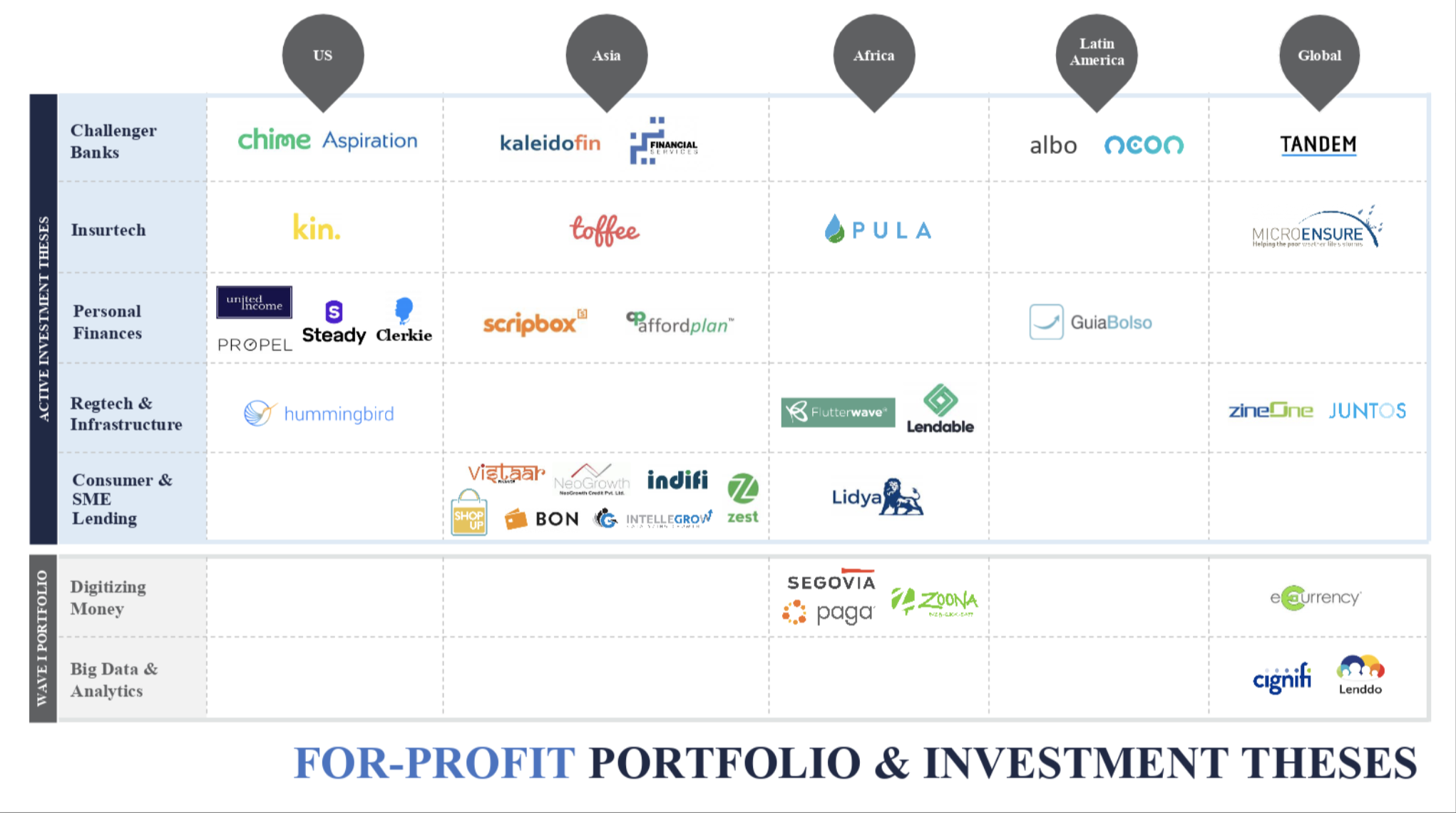
Indeed, Flourish’s global portfolio holds at least 40 fintech companies helping low and middle-income households and small businesses. From challenger banks like Chime, Aspiration, Neon, Albo and Tez; to insurance technology companies like MicroEnsure and Kin; and asset optimization tools, including United Income and Scripbox.

Given the explosion of interest in financial services offerings across challenger banks and through insurance technology offerings, Ehrbeck said it was a no-brainer for the company to spin out, focus and potentially expand.

With the spin-off, Flourish is taking the existent $200 million portfolio the team had built at Omidyar and expanding that with the additional capital commitment from the Omidyar Group.

The firm is also starting to realize its first exits. The firm realized a 3x return on its investment in Asian Networks and has had another exit in the sale of Ruma to Go-Jek.

“It’s a carve out of a successful team that has momentum and that Pierre wants to double down on,” Ehrbeck says. “What’s carved out is the existing portfolio and a commitment to fund the next wave. The reason the number has a flexibility. Pierre gives us the capital we think we can deploy against opportunity.”

Flourish will do more than commit capital to financial services startups. It also has the opportunity to provide grants and encourage research around financial inclusion.

Some recent work from the firm included the financing of a study of 240 households called the U.S. Financial Diaries, which provided hard data around the illness that pervades a large swath of the U.S. population.

Investments from Flourish will fall into similar buckets as the firm’s previous operations under the umbrella of the Omidyar Network. Including alternative credit, challenger banks, insurance technologies and low-cost digital infrastructures that can level the playing field for financial services providers. 

“We find a gap in the system and try to fill it and improve it,” says Arjuna Costa, another partner on the new Flourish team coming over from Omidyar’s financial services group. 

“We have the impact of companies scaling and reaching and serving people and led to replicators and competitors and widespread adoption,” Costa says.

Lenddo and its credit-scoring business is a perfect example of the trend, according to Costa.

We started investing behind a number of companies that were coming up with using nontraditional data sets to try and score people,” he said. “We picked different data sets… we invested in the pioneering company using mobile payment data, the pioneering company using social media data, and the pioneering company using psychometric data.”

As those companies gained traction and new customers, proving the market demand, Omidyar’s investments could scale to higher value offerings around financial services.

“Initially talking about those deals other people in the industry looked at us and said that you’re nuts. And now it’s become the table stakes if you’re getting into lending,” Costa says. “After building this digital infrastructure to enable credit… now there’s version two and version three of the infrastructure that’s coming up.”

Those higher value services are things like the agricultural lending business Rose Goslinga has launched for farmers in Africa.

“We bootstrapped our business for the first two years. They were the largest investor in our seed round,” Goslinga says of the Flourish commitment to her company, Pula Advisors

“Omidyar is extremely well-known in the financial inclusion space. They had the first investment in micro-insurance 10 or 15 years ago. They are really seen as the blue chip of financial or insurtech investors,” Goslinga said. 

With their investment, it validated Goslinga’s attempt to provide credit and working capital loans to small farmers.

“We had quite a number of clients at that point but we didn’t have any kind of institutional or financial investors at that point,” Goslinga says. “It was a stamp of approval for a lot of people later in.”

In mature markets like the U.S., Flourish’s approach is bit more nuanced, to serve a market with significant inefficiencies and baseline inequality, but one where the disparities manifest in different ways.

That’s why Flourish has gravitated toward businesses like Aspiration, which helps people bank more ethically — promoting sustainable investment portfolios and offering pay-your-own-fee for services; and Propel, which helps American consumers manage their public assistance benefits.

“At the highest level we look at the same criteria, we care about financial health and technology to promote financial health,” says Emmalyn Shaw, a partner managing the firm’s U.S. portfolio. “The U.S. as a more mature market tends to be a lot more competitive.”

Trump called Apple’s CEO ‘Tim Apple’ by mistake

The president has to remember a lot of names! Some he remembers, some he forgets. But we will never forget today in the Year of Our Lord 2019 when President Trump called Apple CEO Tim Cook “Tim Apple.”

Maybe we’re just losing our minds waiting for a good meme, but there’s something relentlessly good and pure about calling the executive formerly known as Tim Cook “Tim Apple.” Tim Cook: Great guy, great phones. Tim Apple though? Man, where do we start!

In the video from Cook’s appearance with the American Workforce Policy Advisory Board, Trump invents Tim Apple at 1:03 before launching into a tirade on unspecified murders in Mexico.

“You’ve really put a great investment in our country. We really appreciate it very much, Tim Apple,” Trump said.

As the Verge pointed out, Trump once called Lockheed Martin’s CEO “Marillyn Lockheed,” which is fine, but not good and pure like Tim Apple.

For evidence that Trump in fact knows the “true” identity of Tim Apple, you can rewind to 40:43 when he calls the Apple chief executive “Tim Cook” (his old name). Usually it’s cheap to give someone a hard time for forgetting a name or making a minor mistake in extemporaneous speech. But Tim Apple is so much more than a mistake.

If you’d prefer, watch the clip over and over again. We can’t recommend it enough.

… here's the president of the united states calling tim cook, ceo of apple, "tim apple." pic.twitter.com/RTc45RFm5e

— fake nick ramsey (@nick_ramsey) March 6, 2019

Pioneer Square Labs is invigorating Seattle’s startup ecosystem

Three miles from Seattle’s South Lake Union neighborhood — better known as Amazonia to locals — sits Pioneer Square. The original heart of the city, the area has managed to hold on to its decades-old charm as other parts of town are besieged by Amazon-contracted architects.

On a mission to champion Seattle’s unique entrepreneurial DNA, startup studio Pioneer Square Labs has not only adopted the neighborhood’s moniker but established its fast-growing HQ at its center.

Pioneer Square Labs, or PSL, cropped up in 2015 to create, launch and fund technology companies headquartered in the Pacific Northwest. Operating under the startup studio model, PSL’s team of former founders and venture capitalists, including Rover and Mighty AI founder Greg Gottesman, collaborate to craft and incubate startup ideas, then recruit a founding CEO from their network of entrepreneurs to lead the business. The team uses an innovative method of rapidly ideating, testing and, if necessary, scrapping ideas, dubbed its “validation engine.”

The model differs from an accelerator or incubator. Y Combinator, for example, admits existing business into its months-long program, deploying its expertise and capital to bolster early-stage startups. PSL, on the other hand, creates startups and provides would-be founders with a derisked platform for company building.

“It’s a dream job,” PSL co-founder Greg Gottesman told TechCrunch. “If someone would say to you ‘hey, you can come into work every day, think about all the problems that are interesting to solve, all the tech that’s available and you have the resources to build companies,’ that’s just a dream come true … It’s just been a very fun ride.”

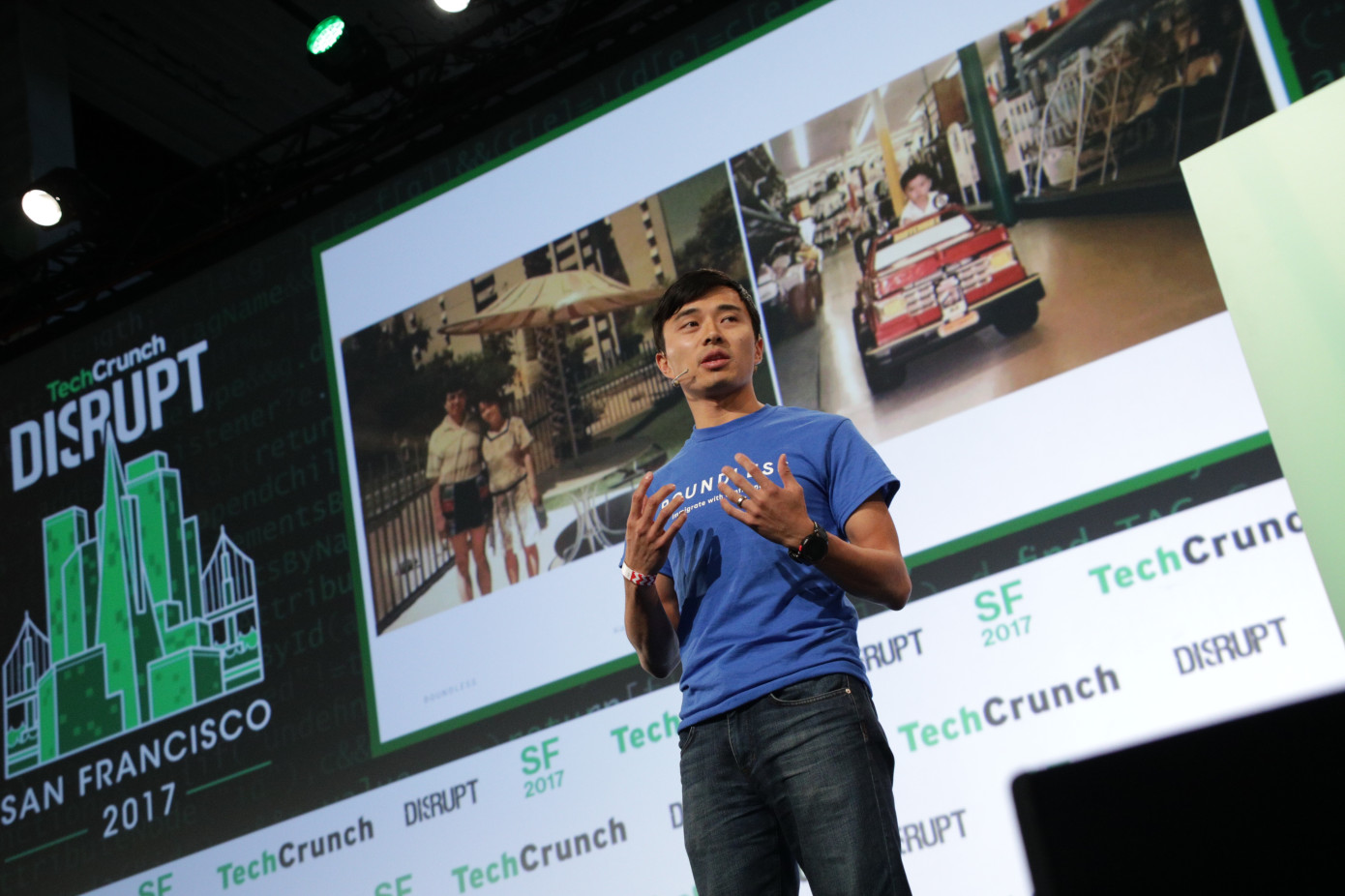
Xiao Wang, the CEO of Pioneer Square Labs spin-out Boundless, pitching at TechCrunch Disrupt SF 2017

The startup studio model is working for PSL. To date, it has raised $27.5 million in equity funding to build out its platform, in addition to an $80 million fundraise for its debut venture fund, which invests in PSL companies and other Pacific Northwest businesses. Of the 13 companies to emerge from PSL in the last three years, all have raised follow-on rounds from venture capital firms at an aggregate valuation of $200 million. According to PitchBook, PSL companies comprised 14.3 percent of all early-stage VC deals in Washington state in 2018.

Among PSL’s portfolio companies are cloud security compliance platform Shujinko, which closed a $2.8 million seed round from Unusual Ventures, Defy Ventures, Vulcan Capital and more last year. Plus, Boundless, a platform that facilitates the process of applying for immigrant status in the U.S., and Tally, a sports-prediction app spearheaded by football star Russell Wilson. Other recent spin-outs include Remarkably, a marketing and analytics software provider, and Attunely, a debt-collection-tech platform.

Meet the team

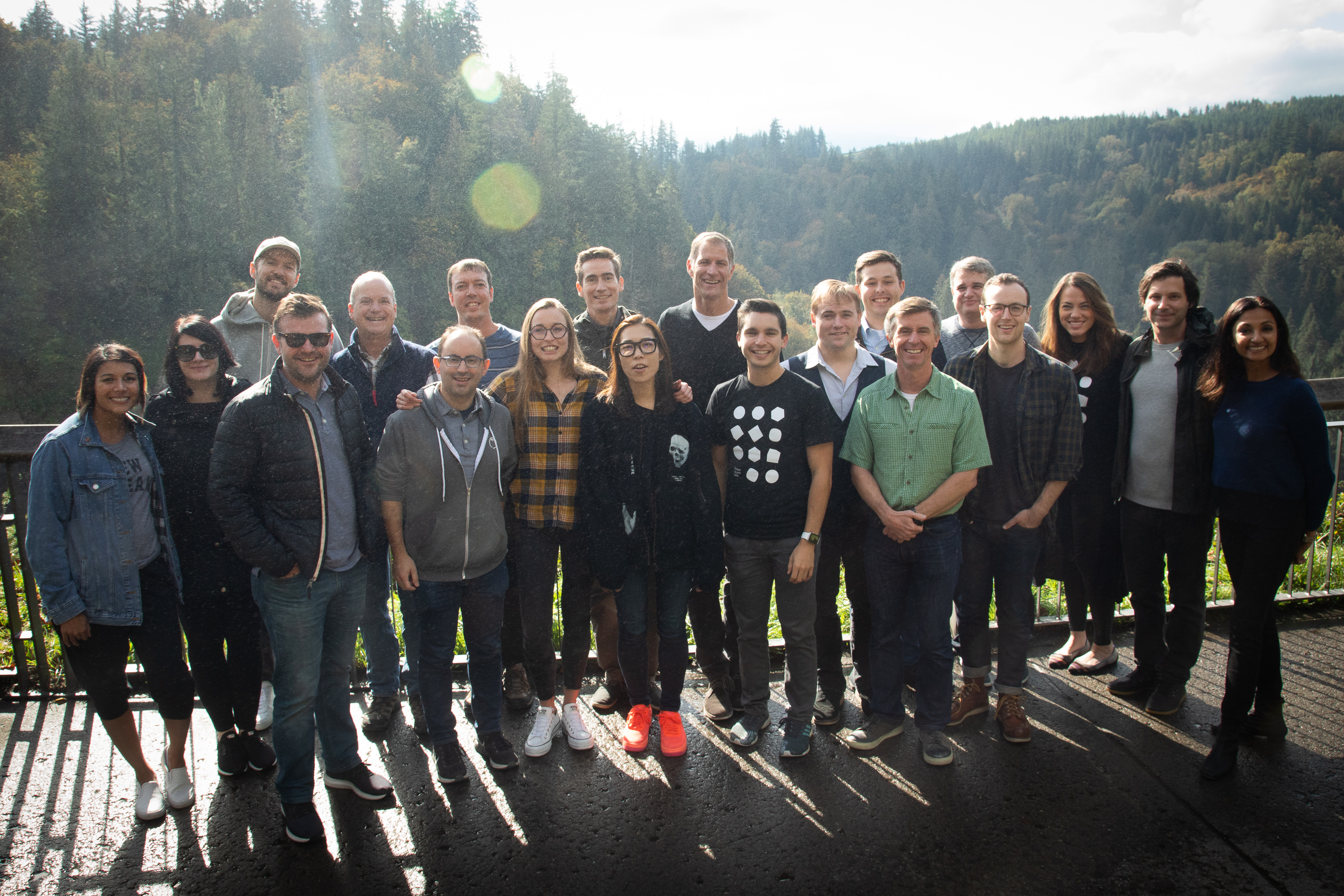
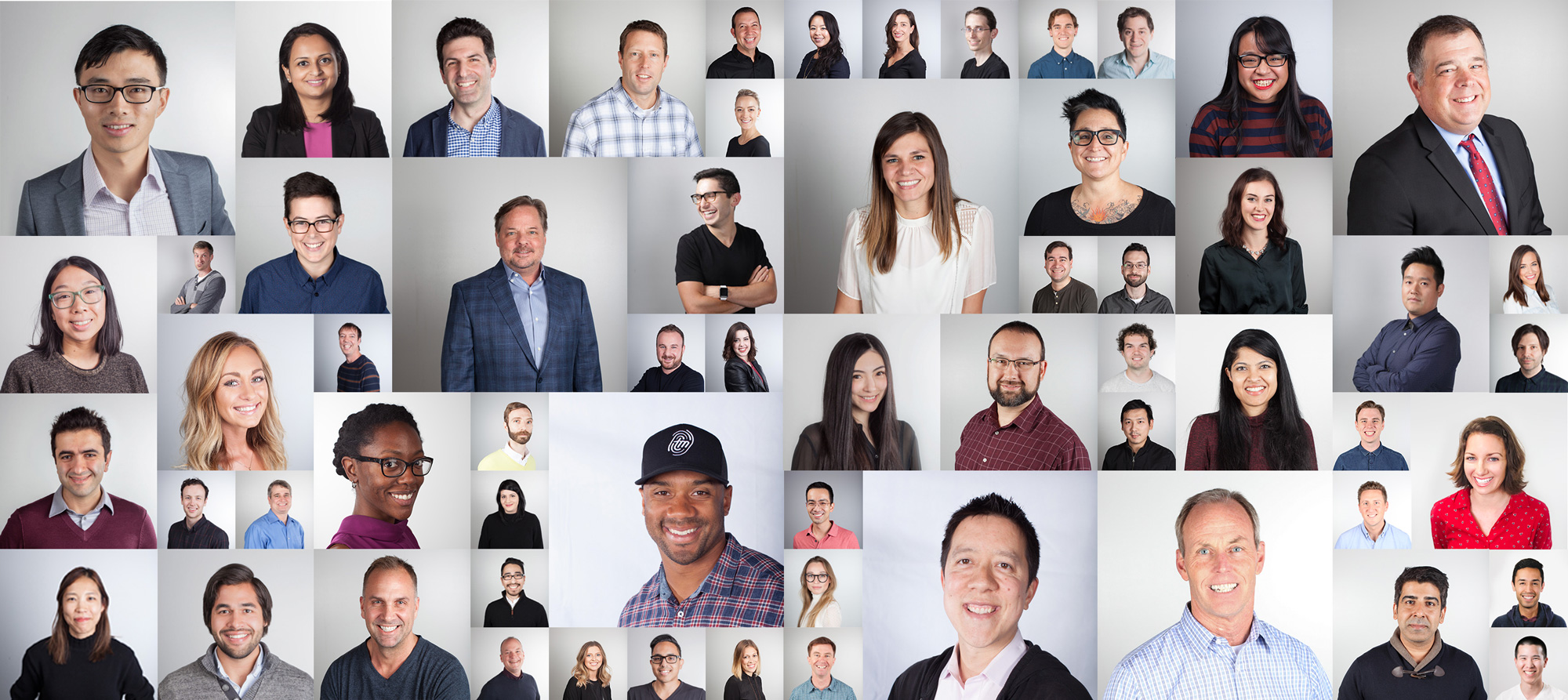
Pioneer Square Labs’ growing team of former operators, VCs, data scientists, engineers and more

Greg Gottesman, a former managing director at Seattle VC fund Madrona Venture Group, and the founder of its startup studio Madrona Venture Labs, leads PSL alongside a team of seasoned Pacific Northwest investors and entrepreneurs.

Rounding out PSL’s team of managing directors is Julie Sandler, a former investor at Madrona; Geoff Entress, a former venture partner with Voyager Capital and Madrona; Mike Galgon, the founder of the Microsoft-acquired digital agency aQuantive; and T.A. McCann, a serial entrepreneur behind Google-acquired Senosis and BlackBerry-acquired Gist. Ben Gilbert, who runs product at PSL, is another Madrona alum.

After nearly two decades investing in early-stage startups at Madrona, Gottesman made a peaceful exit with ambitions to launch a scalable startup studio independent of any existing VC firm. Madrona, alongside an additional 13 venture firms and Seattle angel investors, like Jeff Bezos and Zillow -founder Rich Barton, bolstered PSL with seed capital right off the bat.

The validation engine

Pioneer Square Labs’ network of entrepreneurs

To differentiate itself from competing company builders and maintain a high level of efficiency, PSL uses a proprietary strategy of rapidly testing and validating business ideas dubbed its “validation engine.” Its special sauce, PSL leverages digital marketing to validate customer demand before they begin real work on any of their ideas.

Long-time marketer Peter Denton leads the effort. Denton, who joined PSL in early 2017, manages day-to-day market validation, growth strategies and market research for the firm’s portfolio companies.

“We joke in some ways [Denton] is the grim reaper,” PSL’s Ben Gilbert told TechCrunch. “He’s responsible for much more kills than anyone else.”

Among the validation engine’s strategies is to build a website for a “company” to test demand for a potential product. Denton and his team market the website to target customer segments through a variety of digital channels, then measure customer resonance with the messaging. They ask potential customers if they are interested in learning more about a new concept or product when it “becomes available” to help understand how much interest a potential business might have before PSL allocates additional time and resources to a project.

To date, PSL has killed more than 100 ideas.

“A lot of studios ultimately won’t be successful because they don’t kill things fast enough,” Gottesman explained. “We kill nine out of 10 of the companies we start. Most of our ideas don’t make it to the promised land.”

In a sense, they are catfishing potential customers, luring them in with a new idea that more than likely will never come to fruition. But the strategy saves PSL the heartache that comes with investing a lot of time into a business idea that never finds its market.

This way, when an idea does pass the tests posed by the validation engine, PSL and its team of engineers and data scientists are ready to build with knowledge of market demand in tow.

By the numbers

A glimpse of Seattle’s Pioneer Square neighborhood where Pioneer Square Labs is headquartered

In three years, PSL has spun-out 13 companies, ideas for six of which came from the PSL team and seven originated from founders in the PSL network. All of those companies have secured venture funding — $71 million in total for an aggregate valuation of $200 million.

“The most important lesson we learned is it’s all about the people and the talent,” Gottesman said. “If we have an A-plus idea and partner with a B team, the company isn’t going to be successful. On the other hand, if we partner with the best talent, we are likely to be successful even if we fail on other dimensions.”

PSL’s goal is to invigorate the Seattle tech ecosystem and given the aforementioned stats (PSL companies comprised 14.3 percent of all early-stage VC deals in Washington state in 2018) they are well on their way. In 2019, PSL hopes to spin out between six and nine additional businesses.

“We believe we are building the center for early-stage tech innovation in the Pacific Northwest,” PSL’s Julie Sandler told TechCrunch.

Seattle, home to two of the most valuable businesses in the world, has not created as many founders as anticipated. Amazon’s entrepreneurial culture has succeeded in keeping top talent from pursuing their own businesses. PSL’s derisked platform, the firm hopes, will entice those founders, like Boundless CEO Xiao Wang, a former senior product manager at Amazon.

“The studio model lends itself really well to people who are 99 percent there, thinking ‘damn, I want to start a company,’” Gilbert said. “These are people that are incredible entrepreneurs but if not for the studio as a catalyst, they may not have [left].”

Venture capital investment in Washington state is increasing year-over-year, reaching a high of nearly $3 billion in 2018 across roughly 400 deals, per PitchBook. The Seattle tech scene, given its proximity to tech heavyweights and a growing number of satellite engineering offices, only has room to grow.

“We do think Seattle is the most exciting market in the country because of the amount of technical talent you have,” Gottesman said. “You have to believe that if engineering is at the heart of these startups then Seattle will ultimately be a key city in the world in terms of creating great technology startups.”

“We think part of the issue is a lack of capital and a lack of help,” Gottesman added. “If we can provide a little bit of both of those things, we can really put Seattle where it deserves to be, should be and will be.”

Mark Zuckerberg discovers privacy

With the swelling confidence of a colonial power happening upon a long-settled distant land, today Mark Zuckerberg discovered the concept of privacy.

In a ballooning 3,225 words — a roughly average word count for the terminally verbose Facebook founder — Zuckerberg informed his miserably loyal 2.3 billion plus subjects that his company has happened upon a concept known as privacy, and, in doing so, it sees an opportunity. But can Facebook reform its 15-year legacy as devourer of all things private with a single sweeping, underedited screed from its copycat visionary and dark-pattern technocrat?

Fuck no, of course it can’t.

In articulating his vision, all 3,225 words’ worth, Zuckerberg predictably failed to own the fact that his company singlehandedly created the modern concept of social media as a cash-printing machine that mines our innermost thoughts, desires and connections. The whole thing is a self-parody so on the nose it’s almost boring. And it’s a bummer, because “A Privacy-Focused Vision for Social Networking” could be a compelling declaration (please deliver us!) from nearly any company that isn’t Facebook.

“I believe there’s an opportunity to set a new standard for private communication platforms — where content automatically expires or is archived over time,” Zuckerberg wrote, thinking about privacy for the third time. “…This philosophy could be extended to all private content.”

Unfortunately, no company can build anything interesting in the social media space because Facebook’s well-established wildly aggressive stance toward competitors means that the game is over before the game even begins. If the big blue acquirer doesn’t capture, it kills.

Regulation looms

Surely it’s pure coincidence that Facebook’s sudden interest in privacy comes as the company faces an ever-cresting tidal wave of public backlash and heavy breathing from thirsty regulators in Congress. Sated after sopping up all of the ad dollars drifting around the wreckage of a soul-crushingly monetized social web, Facebook realizes it’s probably time to chart a different path forward. Luckily, it picked up some brands people hate less along the way.

Milking Facebook’s stewardship of WhatsApp for all it’s worth, Zuckerberg was intentional about pitching his new centralized yet private future for Facebook around the model of the encrypted messaging app, a platform so antithetical to Facebook’s broad mission that its founders left in disgust after cashing their checks.

In recent years, the company realized that it’s easier to just to let someone else innovate, build a product and attract users than doing anything very interesting itself. Facebook’s contemporary role in the tech landscape is to either build a functional facsimile of it or swoop in and buy that innovation and keep it at arm’s length from the core Facebook brand for long enough for users to get sort of complacent (users are very good at this).

It’s different with privacy. Privacy is about philosophy. It’s about how you handle things from the start. Facebook effectively stole a whole bunch of shit over a long period of time, relying on intentional obfuscation, legal muscle and user ignorance to pull off the heist. Now, the company is trying to make it out of the store with all that contraband stuffed under its shirt before the security guard ambles back. Unfortunately for Facebook, its hands are stained with a decade and a half of data wrung out of a now cumulative 2.3 billion users.

That’s a lot of exploded fucking ink tags.

This is a company that can barely give us a straight answer about what happens when someone wants their data deleted. One that waited 15 years to introduce something that lets users clear traces of their history, except by most accounts that tool won’t even wipe those records from its servers.

I’m just going to leave these links here.

WhatsApp and encryption are still good

But what about WhatsApp, you (Facebook PR) might gasp, mawkishly. What about that? WhatsApp is the world’s largest encrypted messaging platform — and that’s great. More encryption is good, no matter who owns the wiring. Even Facebook!

Facebook hasn’t killed WhatsApp or hamstrung its encryption and that’s been good too. Still, we don’t owe Facebook anything, least of all our faith that the patron saint of personal data strip-mining does anything good for reasons beyond simply buying up goodwill or getting caught red handed.

In declaring that “people increasingly also want to connect privately in the digital equivalent of the living room,” Zuckerberg senses no irony in the idea that people might not want more privacy within Facebook — they want more privacy because Facebook. Namely, because the company laid waste to the concept of user privacy so thoroughly before apparently flitting off just now to refashion itself into “a privacy-focused messaging and social networking platform” and stuffing users into the WhatsApp-branded life rafts.

Thus, Zuckerberg stumbles out of his great boat, awful blue flag limp on a breezeless shore. All of this is ours, he mutters, gesturing to all of it.

Elon Musk’s Boring Company wants to move people beneath Vegas

Elon Musk’s Boring Company could land a deal to construct and operate a “people mover” for the Las Vegas Convention Center that will theoretically shuttle people in autonomous electric vehicles at high speeds in a loop of underground tunnels.

It’s not a done deal quite yet. The Las Vegas Convention and Visitors Authority has recommended that the Boring Company be selected. The LVCVA board will vote March 12 whether to approve the recommendation.

The initial design would focus on the Las Vegas Convention Center, which is currently in the midst of an expansion that is expected to be complete in time for CES 2021. The newly expanded Las Vegas Convention Center will span about 200 acres once completed. The LVCVA estimates that people walking the facility would travel two miles from one end to the other, a distance that prompted officials to find a transportation solution.

Potential LVCC Loop Station Locations-Final configuration to be determined by the LVCVA Board

The initial phase of the Boring Company system could be in use by Las Vegas Convention Center guests within one year, company president Steve Davis said.

The project could someday connect downtown, the Las Vegas Convention Center, the Las Vegas Boulevard Resort Corridor and McCarran International Airport.

LVCVA began the process in 2018 with a request for information and an official request for proposal.  Interviews with the qualified respondents were conducted by an evaluation team, which determined the recommended company, according to LVCVA. The evaluation team consisted of representatives from the LVCVA, private organizations (including a Las Vegas resort property and consultants in transportation systems) and automated people-mover construction and operations industries, the agency said.

In December, The Boring Company showcased a 1.14-mile test tunnel in the city of Hawthorne to demonstrate Musk’s vision for a network of low-cost tunnels that could be used for transportation, utilities or water and built for millions of dollars, or even billions, less than those constructed for subways or trains.

The test tunnel was built for $10 million using a modified boring machine called Godot. (That $10 million figure includes the cost of building the tunnel, all internal infrastructure, lighting, communication and video, safety systems, ventilation and track, according to the company.)

Some cities, including Chicago and now Las Vegas, have taken an interest in The Boring Company . In Los Angeles, however, there’s been resistance. The Boring Company announced in November that it would abandon plans to dig a massive tunnel beneath Los Angeles’ 405 freeway and Sepulveda Boulevard after local lawsuits threatened to hamstring the project.

The Boring Company had sought to fast-track the proposed 2.7-mile tunnel, and a pair of city council members agreed.

Sonos refreshes Sonos One with better components

Sonos is launching the most minor of minor updates. The company is launching a revision to its flagship speaker, the Sonos One. Sonos is calling this new speaker the Sonos One Gen 2, and it is nearly identical to the existing Sonos One.

When it comes to sound and design, the second generation looks just like the first one. You’ll have to tear down the speaker to spot the differences.

Sonos is upgrading the internals of the device with a more powerful processor and increased memory. It should perform slightly better, especially with big files on slow networks. But if you’re mostly using Sonos with a streaming service on a good Wi-Fi network, you likely won’t notice the difference.

Interestingly, Sonos is also adding Bluetooth Low Energy to the device. The company doesn’t plan to use Bluetooth Low Energy to stream music. But it should make the pairing process with your Wi-Fi network much easier. After that, Sonos speakers rely on your Wi-Fi network just like before.

It sounds like Sonos wanted to quietly warn geeks that there will be different versions of the Sonos One starting tomorrow. The Sonos One Gen 2 will cost $199 and some retailers will keep selling the first generation for $179 (a $20 discount).

Sonos plans to support both generations of the Sonos One with software updates.

Court dismisses Paris lawsuit against Airbnb for illegal listings

A court in Paris has dismissed a case against Airbnb, as Le Monde reported. Last month, the City of Paris sued Airbnb for 1,010 illegal listings. According to the mayor’s office, Airbnb failed to comply with regulation in Paris.

Paris has been trying to limit the effect of Airbnb on the housing market in Paris. Paris is one of the top cities for Airbnb in the world. A few years ago, many people stopped renting their apartments the traditional way in favor of Airbnb. The average rental price in some areas of Paris has increased as a result.

Mayor of Paris Anne Hidalgo didn’t want to ban Airbnb altogether. Instead, the city asked hosts to get an ID number so the city can track how many nights someone is listing their apartment on Airbnb. You can’t rent an apartment more than 120 days a year.

But many listings still don’t have that ID number. The mayor’s office flagged around 1,000 apartments, saying that Airbnb was also responsible by dragging their feet.

But the court has said that screenshots are not enough to prove that these apartments without an ID number are permanently available on Airbnb. Maybe some of these apartments are available for less than 120 days a year, after all.

The case is not over, as this is just a summary judgement. But it sounds like the case is not strong enough to condemn Airbnb.

Google gives Android developers new tools to make money from users who won’t pay

Google today is introducing a new way for Android developers to generate revenue from their mobile applications. And no, it’s not subscription-related. Instead, the company is launching a new monetization option for apps called “Rewarded Products.” This will allow non-paying app users to contribute to an app’s revenue stream by sacrificing their time, but not their money. The first product will be rewarded video, where users can opt to watch a video ad in exchange for in-game currency, virtual goods or other benefits.

The feature may make developers happy, but it remains to be seen how users react. Reception will depend on how the videos are introduced in the app.

Even in Google’s example of the rewarded product in action — meant to showcase a best-design practice, one would think — the video interrupts gameplay between levels with a full-screen takeover. This is not a scenario users would respond well to unless this was presented as the only way to play a popular, previously paid-only game for free, perhaps.Rewarded video has worked for some apps where users have come to expect a free product. That could include free-to-play games or other services where subscribing is an option, not a requirement.

For example, Pandora’s music streaming service was free and ad-supported for years, as it was radio-only. After it introduced tiers offering on-demand streaming to compete with Spotify, it rolled out a rewarded video product — so to speak — of its own. Today, Pandora listeners can choose to watch a video ad to access on-demand music for a session as an alternative to paying a monthly subscription.

Android app developers, of course, are already using advertisements to supplement, or as a means of, monetization, but this launch creates an official Google Play “product.” This makes implementation easier on developers and gives Google a way to compete with third parties offering something similar.

Rewarded products can be added to any app using the Google Play Billing Library or AIDL interface with only a few additional API calls, the company says. It won’t require an SDK.

The launch comes at a time when Apple has been seeing success with subscriptions, which it has fully embraced, pushed and sometimes even let run amok. Subscriptions are now one of the biggest factors, outside of games, in app store revenue growth.

But Android users, historically, have been more averse to paying for apps than those on iOS. Apple’s store has even seen nearly double that of Google Play in terms of revenue — despite having far fewer downloads. That means Android developers will not be able to tap into the subscription craze at the same scale as their iOS counterparts. And it means cross-platform developers may further prioritize building for iOS, as a result.

Rewarded products offer those developers an alternative path to monetization on a platform where that’s often been more difficult, outside of running ads.

Google says the rewarded video product is launching into open beta, and is available in the Play Console for developers.

Zuckerberg wants messages to auto-expire to make Facebook a ‘living room’

On feed-based “broader social networks, where people can accumulate friends or followers until the services feel more public . . . it feels more like a town square than a more intimate space like a living room” Facebook CEO Mark Zuckerberg explained in a blog post today. With messaging, groups, and ephemeral stories as the fastest growing social features, Zuckerberg laid out why he’s rethinking Facebook as a private living room where people can be comfortable being themselves without fear of hackers, government spying, and embarrassment from old content — all without encryption allowing bad actors to hide their crimes.

Perhaps this will just be more lip service in a time of PR crisis for Facebook. But with the business imperative fueled by social networking’s shift away from permanent feed broadcasting, Facebook can espouse the philosophy of privacy while in reality servicing its shareholders and bottom line. It’s this alignment that actually spurs product change. We saw Facebook’s agility with last year’s realization that a misinformation- and hate-plagued platform wouldn’t survive long-term so it had to triple its security and moderation staff. And in 2017, recognizing the threat of Stories, it implemented them across its apps. Now Facebook might finally see the dollar signs within privacy.

The New York Times’ Mike Isaac recently reported that Facebook planned to unify its Facebook, WhatsApp, and Instagram messaging infrastructure to allow cross-app messaging and end-to-end encryption. And Zuckerberg discussed this and the value of ephemerality on the recent earnings call. But now Zuckerberg has roadmapped a clearer slate of changes and policies to turn Facebook into a living room:

-Facebook will let users opt in to the ability to send or receive messages across Facebook, WhatsApp, and Instagram

-Facebook wants to expand that interoperability to SMS on Android

-Zuckerberg wants to make ephemerality automatic on messaging threads, so chats disappear by default after a month or year, with users able to control that or put timers on individual messages.

-Facebook plans to limit how long it retains metadata on messages once it’s no longer needed for spam or safety protections

-Facebook will extend end-to-end encryption across its messaging apps but use metadata and other non-content signals to weed out criminals using privacy to hide their misdeeds.

-Facebook won’t store data in countries with a bad track record of privacy abuse such as Russia, even if that means having to shut down or postpone operations in a country

You can read the full blog post from Zuckerberg below:

A Privacy-Focused Vision for Social Networking

My focus for the last couple of years has been understanding and addressing the biggest challenges facing Facebook. This means taking positions on important issues concerning the future of the internet. In this note, I’ll outline our vision and principles around building a privacy-focused messaging and social networking platform. There’s a lot to do here, and we’re committed to working openly and consulting with experts across society as we develop this.

Over the last 15 years, Facebook and Instagram have helped people connect with friends, communities, and interests in the digital equivalent of a town square. But people increasingly also want to connect privately in the digital equivalent of the living room. As I think about the future of the internet, I believe a privacy-focused communications platform will become even more important than today’s open platforms. Privacy gives people the freedom to be themselves and connect more naturally, which is why we build social networks.

Today we already see that private messaging, ephemeral stories, and small groups are by far the fastest growing areas of online communication. There are a number of reasons for this. Many people prefer the intimacy of communicating one-on-one or with just a few friends. People are more cautious of having a permanent record of what they’ve shared. And we all expect to be able to do things like payments privately and securely.

Public social networks will continue to be very important in people’s lives — for connecting with everyone you know, discovering new people, ideas and content, and giving people a voice more broadly. People find these valuable every day, and there are still a lot of useful services to build on top of them. But now, with all the ways people also want to interact privately, there’s also an opportunity to build a simpler platform that’s focused on privacy first.

I understand that many people don’t think Facebook can or would even want to build this kind of privacy-focused platform — because frankly we don’t currently have a strong reputation for building privacy protective services, and we’ve historically focused on tools for more open sharing. But we’ve repeatedly shown that we can evolve to build the services that people really want, including in private messaging and stories.

I believe the future of communication will increasingly shift to private, encrypted services where people can be confident what they say to each other stays secure and their messages and content won’t stick around forever. This is the future I hope we will help bring about.

We plan to build this the way we’ve developed WhatsApp: focus on the most fundamental and private use case — messaging — make it as secure as possible, and then build more ways for people to interact on top of that, including calls, video chats, groups, stories, businesses, payments, commerce, and ultimately a platform for many other kinds of private services.

This privacy-focused platform will be built around several principles:

Private interactions. People should have simple, intimate places where they have clear control over who can communicate with them and confidence that no one else can access what they share.

Encryption. People’s private communications should be secure. End-to-end encryption prevents anyone — including us — from seeing what people share on our services.

Permanence. People should be comfortable being themselves, and should not have to worry about what they share coming back to hurt them later. So we won’t keep messages or stories around for longer than necessary to deliver the service or longer than people want it.

Safety. People should expect that we will do everything we can to keep them safe on our services within the limits of what’s possible in an encrypted service.

Interoperability. People should be able to use any of our apps to reach their friends, and they should be able to communicate across networks easily and securely.

Secure data storage. People should expect that we won’t store sensitive data in countries with weak records on human rights like privacy and freedom of expression in order to protect data from being improperly accessed.

Over the next few years, we plan to rebuild more of our services around these ideas. The decisions we’ll face along the way will mean taking positions on important issues concerning the future of the internet. We understand there are a lot of tradeoffs to get right, and we’re committed to consulting with experts and discussing the best way forward. This will take some time, but we’re not going to develop this major change in our direction behind closed doors. We’re going to do this as openly and collaboratively as we can because many of these issues affect different parts of society.

Private Interactions as a Foundation

For a service to feel private, there must never be any doubt about who you are communicating with. We’ve worked hard to build privacy into all our products, including those for public sharing. But one great property of messaging services is that even as your contacts list grows, your individual threads and groups remain private. As your friends evolve over time, messaging services evolve gracefully and remain intimate.

This is different from broader social networks, where people can accumulate friends or followers until the services feel more public. This is well-suited to many important uses — telling all your friends about something, using your voice on important topics, finding communities of people with similar interests, following creators and media, buying and selling things, organizing fundraisers, growing businesses, or many other things that benefit from having everyone you know in one place. Still, when you see all these experiences together, it feels more like a town square than a more intimate space like a living room.

There is an opportunity to build a platform that focuses on all of the ways people want to interact privately. This sense of privacy and intimacy is not just about technical features — it is designed deeply into the feel of the service overall. In WhatsApp, for example, our team is obsessed with creating an intimate environment in every aspect of the product. Even where we’ve built features that allow for broader sharing, it’s still a less public experience. When the team built groups, they put in a size limit to make sure every interaction felt private. When we shipped stories on WhatsApp, we limited public content because we worried it might erode the feeling of privacy to see lots of public content — even if it didn’t actually change who you’re sharing with.

In a few years, I expect future versions of Messenger and WhatsApp to become the main ways people communicate on the Facebook network. We’re focused on making both of these apps faster, simpler, more private and more secure, including with end-to-end encryption. We then plan to add more ways to interact privately with your friends, groups, and businesses. If this evolution is successful, interacting with your friends and family across the Facebook network will become a fundamentally more private experience.

Encryption and Safety

People expect their private communications to be secure and to only be seen by the people they’ve sent them to — not hackers, criminals, over-reaching governments, or even the people operating the services they’re using.

There is a growing awareness that the more entities that have access to your data, the more vulnerabilities there are for someone to misuse it or for a cyber attack to expose it. There is also a growing concern among some that technology may be centralizing power in the hands of governments and companies like ours. And some people worry that our services could access their messages and use them for advertising or in other ways they don’t expect.

End-to-end encryption is an important tool in developing a privacy-focused social network. Encryption is decentralizing — it limits services like ours from seeing the content flowing through them and makes it much harder for anyone else to access your information. This is why encryption is an increasingly important part of our online lives, from banking to healthcare services. It’s also why we built end-to-end encryption into WhatsApp after we acquired it.

In the last year, I’ve spoken with dissidents who’ve told me encryption is the reason they are free, or even alive. Governments often make unlawful demands for data, and while we push back and fight these requests in court, there’s always a risk we’ll lose a case — and if the information isn’t encrypted we’d either have to turn over the data or risk our employees being arrested if we failed to comply. This may seem extreme, but we’ve had a case where one of our employees was actually jailed for not providing access to someone’s private information even though we couldn’t access it since it was encrypted.

At the same time, there are real safety concerns to address before we can implement end-to-end encryption across all of our messaging services. Encryption is a powerful tool for privacy, but that includes the privacy of people doing bad things. When billions of people use a service to connect, some of them are going to misuse it for truly terrible things like child exploitation, terrorism, and extortion. We have a responsibility to work with law enforcement and to help prevent these wherever we can. We are working to improve our ability to identify and stop bad actors across our apps by detecting patterns of activity or through other means, even when we can’t see the content of the messages, and we will continue to invest in this work. But we face an inherent tradeoff because we will never find all of the potential harm we do today when our security systems can see the messages themselves.

Finding the right ways to protect both privacy and safety is something societies have historically grappled with. There are still many open questions here and we’ll consult with safety experts, law enforcement and governments on the best ways to implement safety measures. We’ll also need to work together with other platforms to make sure that as an industry we get this right. The more we can create a common approach, the better.

On balance, I believe working towards implementing end-to-end encryption for all private communications is the right thing to do. Messages and calls are some of the most sensitive private conversations people have, and in a world of increasing cyber security threats and heavy-handed government intervention in many countries, people want us to take the extra step to secure their most private data. That seems right to me, as long as we take the time to build the appropriate safety systems that stop bad actors as much as we possibly can within the limits of an encrypted service. We’ve started working on these safety systems building on the work we’ve done in WhatsApp, and we’ll discuss them with experts through 2019 and beyond before fully implementing end-to-end encryption. As we learn more from those experts, we’ll finalize how to roll out these systems.

Reducing Permanence

We increasingly believe it’s important to keep information around for shorter periods of time. People want to know that what they share won’t come back to hurt them later, and reducing the length of time their information is stored and accessible will help.

One challenge in building social tools is the “permanence problem”. As we build up large collections of messages and photos over time, they can become a liability as well as an asset. For example, many people who have been on Facebook for a long time have photos from when they were younger that could be embarrassing. But people also really love keeping a record of their lives. And if all posts on Facebook and Instagram disappeared, people would lose access to a lot of valuable knowledge and experiences others have shared.

I believe there’s an opportunity to set a new standard for private communication platforms — where content automatically expires or is archived over time. Stories already expire after 24 hours unless you archive them, and that gives people the comfort to share more naturally. This philosophy could be extended to all private content.

For example, messages could be deleted after a month or a year by default. This would reduce the risk of your messages resurfacing and embarrassing you later. Of course you’d have the ability to change the timeframe or turn off auto-deletion for your threads if you wanted. And we could also provide an option for you to set individual messages to expire after a few seconds or minutes if you wanted.

It also makes sense to limit the amount of time we store messaging metadata. We use this data to run our spam and safety systems, but we don’t always need to keep it around for a long time. An important part of the solution is to collect less personal data in the first place, which is the way WhatsApp was built from the outset.

Interoperability

People want to be able to choose which service they use to communicate with people. However, today if you want to message people on Facebook you have to use Messenger, on Instagram you have to use Direct, and on WhatsApp you have to use WhatsApp. We want to give people a choice so they can reach their friends across these networks from whichever app they prefer.

We plan to start by making it possible for you to send messages to your contacts using any of our services, and then to extend that interoperability to SMS too. Of course, this would be opt-in and you will be able to keep your accounts separate if you’d like.

There are privacy and security advantages to interoperability. For example, many people use Messenger on Android to send and receive SMS texts. Those texts can’t be end-to-end encrypted because the SMS protocol is not encrypted. With the ability to message across our services, however, you’d be able to send an encrypted message to someone’s phone number in WhatsApp from Messenger.

This could also improve convenience in many experiences where people use Facebook or Instagram as their social network and WhatsApp as their preferred messaging service. For example, lots of people selling items on Marketplace list their phone number so people can message them about buying it. That’s not ideal, because you’re giving strangers your phone number. With interoperability, you’d be able to use WhatsApp to receive messages sent to your Facebook account without sharing your phone number — and the buyer wouldn’t have to worry about whether you prefer to be messaged on one network or the other.

You can imagine many simple experiences — a person discovers a business on Instagram and easily transitions to their preferred messaging app for secure payments and customer support; another person wants to catch up with a friend and can send them a message that goes to their preferred app without having to think about where that person prefers to be reached; or you simply post a story from your day across both Facebook and Instagram and can get all the replies from your friends in one place.

You can already send and receive SMS texts through Messenger on Android today, and we’d like to extend this further in the future, perhaps including the new telecom RCS standard. However, there are several issues we’ll need to work through before this will be possible. First, Apple doesn’t allow apps to interoperate with SMS on their devices, so we’d only be able to do this on Android. Second, we’d need to make sure interoperability doesn’t compromise the expectation of encryption that people already have using WhatsApp. Finally, it would create safety and spam vulnerabilities in an encrypted system to let people send messages from unknown apps where our safety and security systems couldn’t see the patterns of activity.

These are significant challenges and there are many questions here that require further consultation and discussion. But if we can implement this, we can give people more choice to use their preferred service to securely reach the people they want.

Secure Data Storage

People want to know their data is stored securely in places they trust. Looking at the future of the internet and privacy, I believe one of the most important decisions we’ll make is where we’ll build data centers and store people’s sensitive data.

There’s an important difference between providing a service in a country and storing people’s data there. As we build our infrastructure around the world, we’ve chosen not to build data centers in countries that have a track record of violating human rights like privacy or freedom of expression. If we build data centers and store sensitive data in these countries, rather than just caching non-sensitive data, it could make it easier for those governments to take people’s information.

Upholding this principle may mean that our services will get blocked in some countries, or that we won’t be able to enter others anytime soon. That’s a tradeoff we’re willing to make. We do not believe storing people’s data in some countries is a secure enough foundation to build such important internet infrastructure on.

Of course, the best way to protect the most sensitive data is not to store it at all, which is why WhatsApp doesn’t store any encryption keys and we plan to do the same with our other services going forward.

But storing data in more countries also establishes a precedent that emboldens other governments to seek greater access to their citizen’s data and therefore weakens privacy and security protections for people around the world. I think it’s important for the future of the internet and privacy that our industry continues to hold firm against storing people’s data in places where it won’t be secure.

Next Steps

Over the next year and beyond, there are a lot more details and trade-offs to work through related to each of these principles. A lot of this work is in the early stages, and we are committed to consulting with experts, advocates, industry partners, and governments — including law enforcement and regulators — around the world to get these decisions right.

At the same time, working through these principles is only the first step in building out a privacy-focused social platform. Beyond that, significant thought needs to go into all of the services we build on top of that foundation — from how people do payments and financial transactions, to the role of businesses and advertising, to how we can offer a platform for other private services.

But these initial questions are critical to get right. If we do this well, we can create platforms for private sharing that could be even more important to people than the platforms we’ve already built to help people share and connect more openly.

Doing this means taking positions on some of the most important issues facing the future of the internet. As a society, we have an opportunity to set out where we stand, to decide how we value private communications, and who gets to decide how long and where data should be stored.

I believe we should be working towards a world where people can speak privately and live freely knowing that their information will only be seen by who they want to see it and won’t all stick around forever. If we can help move the world in this direction, I will be proud of the difference we’ve made.


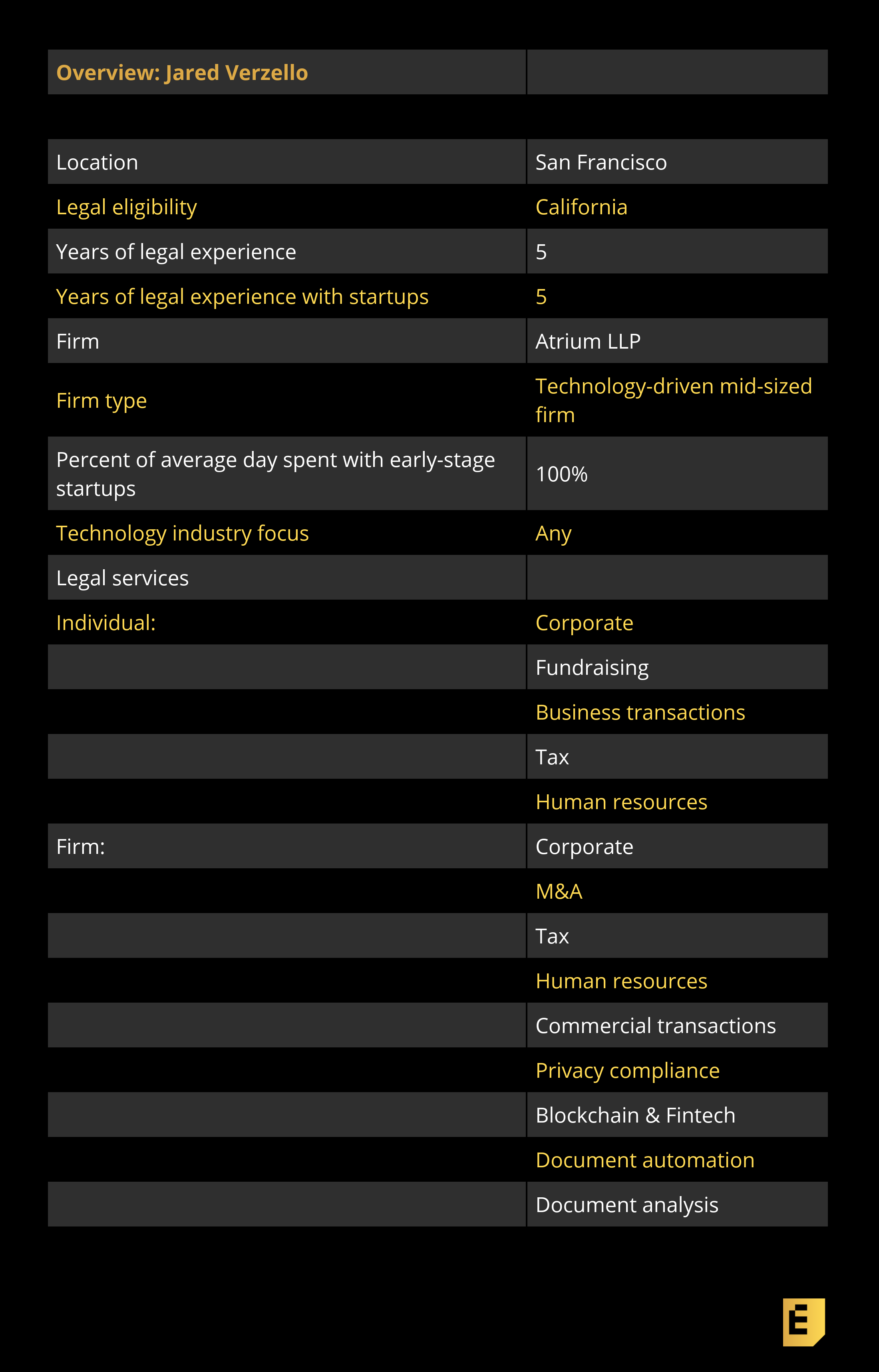
Verified Expert Lawyer: Jared Verzello

TechCrunch is profiling great startup lawyers wherever they may be working — and that includes within new companies built from the ground up around tech. Today, we’re interviewing Jared Verzello of Atrium. While even the most old-line of law firms have begun integrating document automation and analysis software, Atrium started that way. Around two years old, it’s both a full-service corporate law firm, Atrium LLP, and a technology startup, Atrium Legal Technology Services, that focuses on building tech for its clients and lawyers.

For his part, Verzello joined Atrium 18 months ago from Silicon Valley law firm Cooley LLP, and heads up the seed stage practice. In the interview below, he tells us how he got into this position, how he works with startups from within Atrium, and trends he’s seeing in the market today.


On common founder mistakes:

“Having represented over 20% of Y Combinator (YC) companies for the last few batches, I come across many of the same founder mistakes. One of the more common is that a founder will choose to incorporate as an LLC because they can write off a bit of the losses on their personal tax return.

“As a very early-stage company, one can be exposed to so many vulnerabilities and even potential bullies when it comes to legality. Jared (my attorney) has been knowledgable, understanding, and adaptable and the value of that to a startup cannot be overstated.” Leslie Fong, San Francisco, founder and CEO, VENIM

“But by the time they’ve decided to work with YC, they usually have raised money — often in the form of a convertible note — and they end up having to flip their LLC to a Delaware corporate (YC only invests in Delaware C-corps). What founders don’t realize is there are partnership tax issues for converting with debt outstanding in the business. We end up having to do conversions with $25,000 or $30,000 in legal fees and bring in tax and accounting specialists because a founder got some misguided advice at the very beginning.

“What I advise is that founders should not cut small short-term corners like incorporating as an LLC vs Delaware C-corp if they know they want to be venture-backed.”

On his approach:

“My goal, and Atrium’s goal, is to provide both legal and business advice so that our founders can worry about finding product-market fit or keeping money in the bank versus worrying about legal. My objective is for our clients to be protected but to spend little or no time thinking about legal.

“I always advise my clients that they should not be interested in being innovative in their legal structure. In order for startups to move quickly, the legal should be simple to administer, simple to understand, simple for investors to get on board with, so they can focus all of their brain power into the products and competitive advantage of the business.”

On Atrium:

“When engaging with Atrium, our clients are first and foremost engaging with a law firm but to know if it’s the right fit, I usually try to gauge what type of firm and relationship they want. For example: do you want a firm that’s doing business the same way they’ve always done business, for decades, or do you want a firm that thinks innovatively, like you, and has a key objective to improve their services and operational efficiency over time?”

Below, you’ll find founder recommendations, the full interview, and more details like their pricing and fee structures.

This article is part of our ongoing series covering the early-stage startup lawyers who founders love to work with, based on this survey and our own research — the survey is open indefinitely so please fill it out if you haven’t already. If you’re trying to navigate the early-stage legal landmines, be sure to check out our growing set of in-depth articles, like this checklist of what you need to get done on the corporate side in your first years as a company.


The Interview

Eric Eldon: You’ve ended up in a pretty unique place, in terms of a legal career. Tell me more about how that happened.

Jared Verzello: I’m not a Silicon Valley insider. I’m not from this area. I grew up in Georgia and Connecticut, and I knew nothing about technology companies or any of that stuff when I chose to go to law school. I had an independent reason for going to law school, which is I thought I wanted to do courtroom and trial work, and a lot of the things that you would see lawyers portrayed as in the media, and that’s a whole other can of worms about making long-term education decisions early in life, when you have limited life experience.

But suffice it to say that, once I was in law school, I quickly found out that I was not interested in those more formulaic areas of law. I found them very constraining and not very interesting or creative. Every year students go out and they find the best internships and placement programs that they can get into, they build their resume, as do we all in our schooling, and I found that I wasn’t interested in anything that was available to first-year law students.

I went to Brigham Young University. I was in Utah. I was not in Silicon Valley exposed to all this stuff. But all of my peers were going to go work for judges or volunteer at one institute or another, and I just could not find anything that was interesting to me. But I had a friend who had come out to Silicon Valley several years earlier and ended up raising some money, and they actually raised a decent Series A. This was back in 2011. They were a super lean team and suddenly the biggest blocker for them was hiring. They needed to hire engineers. So long story short, I spent my entire summer here working in Palo Alto, helping them recruit engineers and we recruited over a dozen engineers in four months, which was pretty phenomenal.

Google brings its Duplex AI restaurant booking assistant to 43 states

No moment wowed the audience at last year’s I/O more than Duplex. The demo of the artificial intelligence restaurant and appointment booking program left many in the audience wondering whether Google had just pulled a fast one over on them.

Turns out, it’s real.

Over the summer, I got a chance to test drive Duplex at a Thai restaurant in Manhattan. And later in the year, the company rolled out the program in limited testing to restaurants in four U.S. cities. Today, it announced that it’s opening things up even more.

Starting this week, Pixel 3 owners in 43 U.S. states will be able to use the Duplex technology to book appointments. The tech should work with any restaurants that use booking services that partner with the Reserve with Google Program that accept reservations but do not have an online system to complete the booking.

In the coming weeks, the service will be rolled out to users on other Android and iOS devices, as the company continues to tweak the program based on user feedback. Meanwhile, that may or may not give the rest of us time to come to grips with the creepily natural interactions of Google’s new AI.

Updated to correct the types of restaurants that can use Duplex .